

Italian dialogue with translation · B1 · 17 lines
Quante ne hai prese? How many did you get?
Comic · 17 panels

- Davide
Prendi il carrello, Luca. Stasera siamo in quattro: viene anche Tommaso.
Get the cart, Luca. There are four of us tonight: Tommaso's coming too.
- Luca
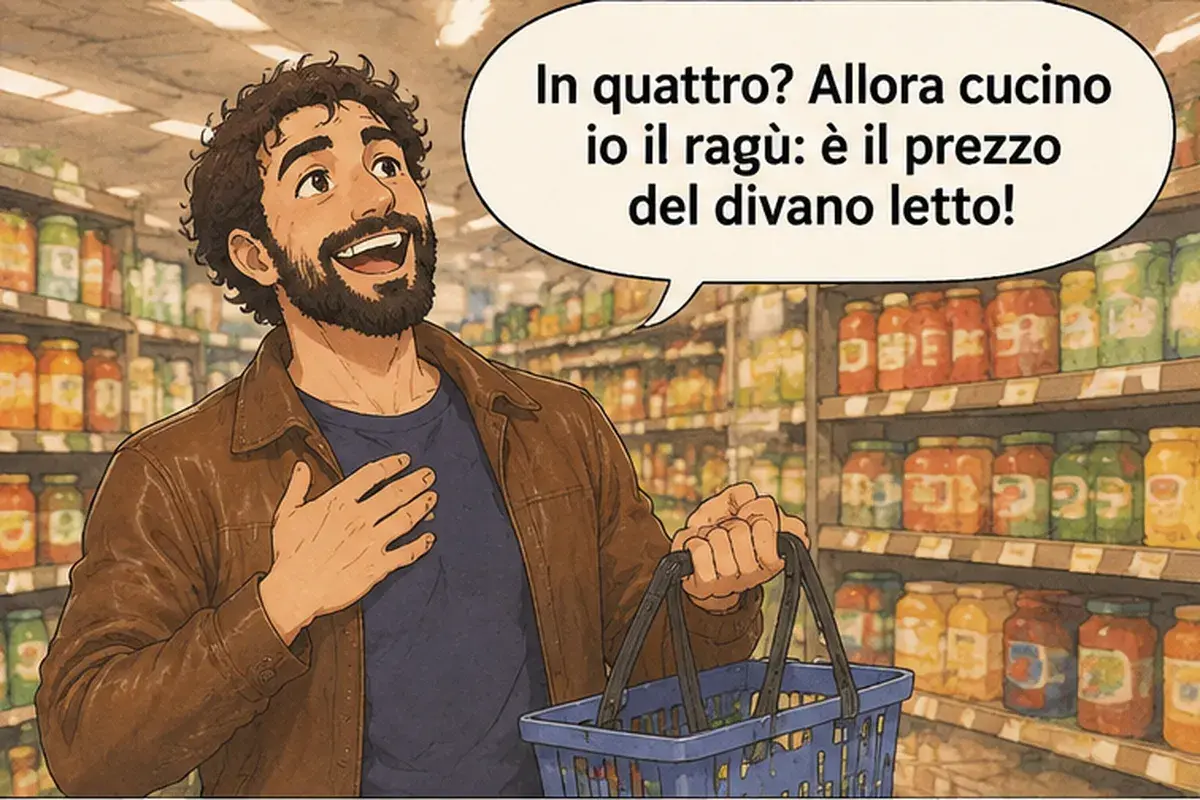
In quattro? Allora cucino io il ragù: è il prezzo del divano letto!
Four of us? Then I'll cook the ragù: it's the price for the sofa bed!

- Misha
Sulla lista ci sono le uova. Ne prendo una confezione?
There are eggs on the list. Should I get a pack?

- Davide
Ne abbiamo ancora sei.
We still have six.

- Misha
Quindi non compro uova.
So I'm not buying eggs.
- Luca
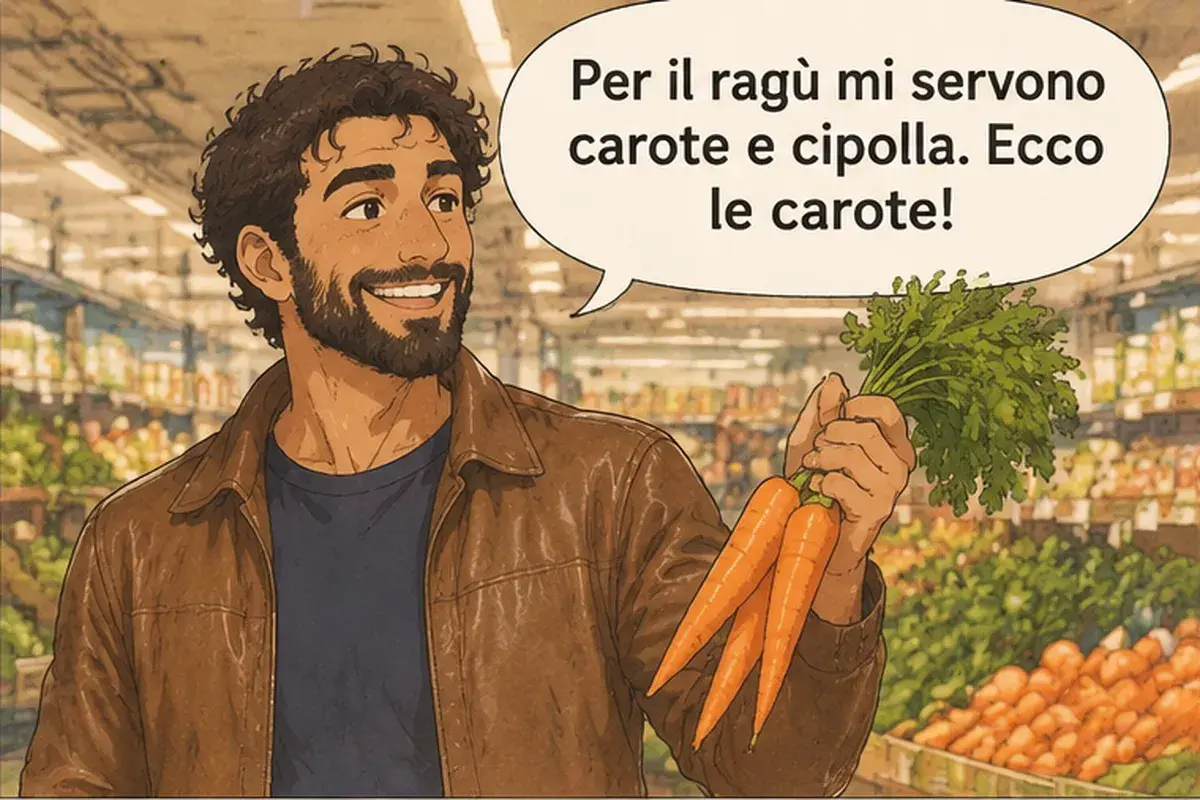
Per il ragù mi servono carote e cipolla. Ecco le carote!
For the ragù I need carrots and onion. Here are the carrots!

- Davide
Quante ne hai prese?
How many did you get?
- Luca
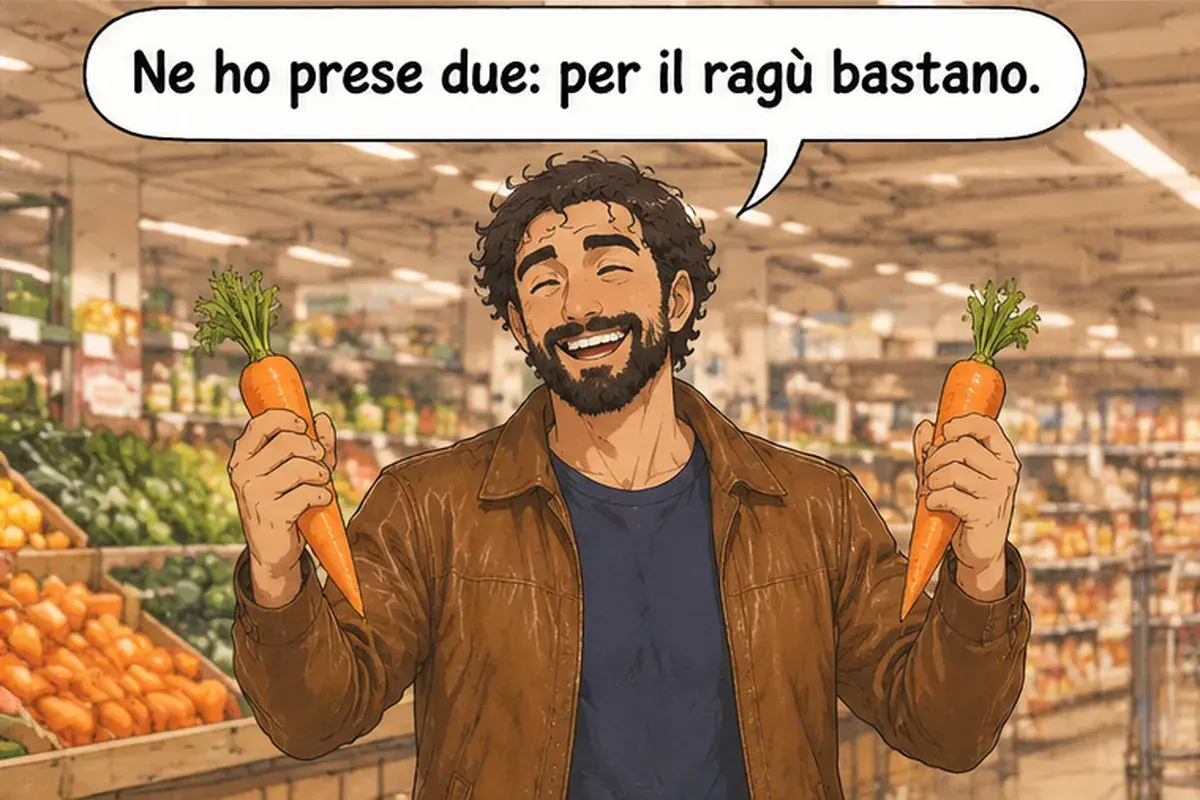
Ne ho prese due: per il ragù bastano.
I got two: they're enough for the ragù.
- Davide
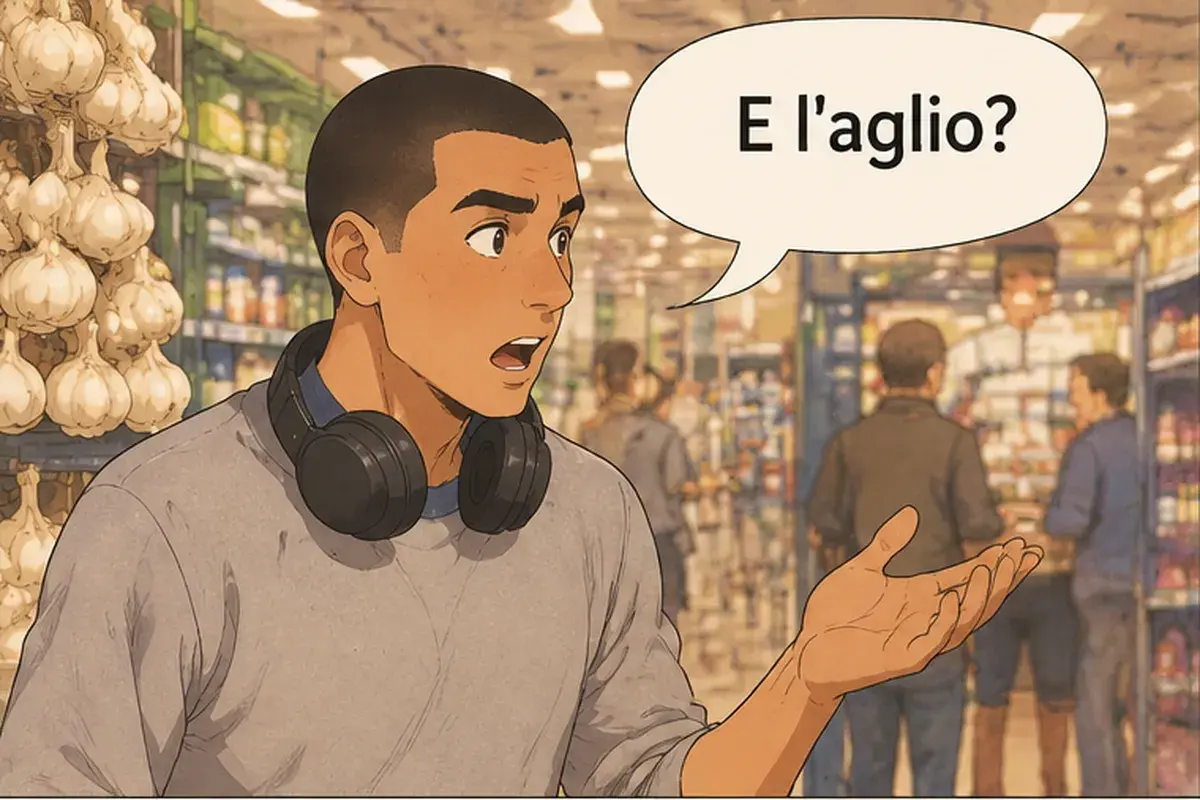
E l'aglio?
What about the garlic?
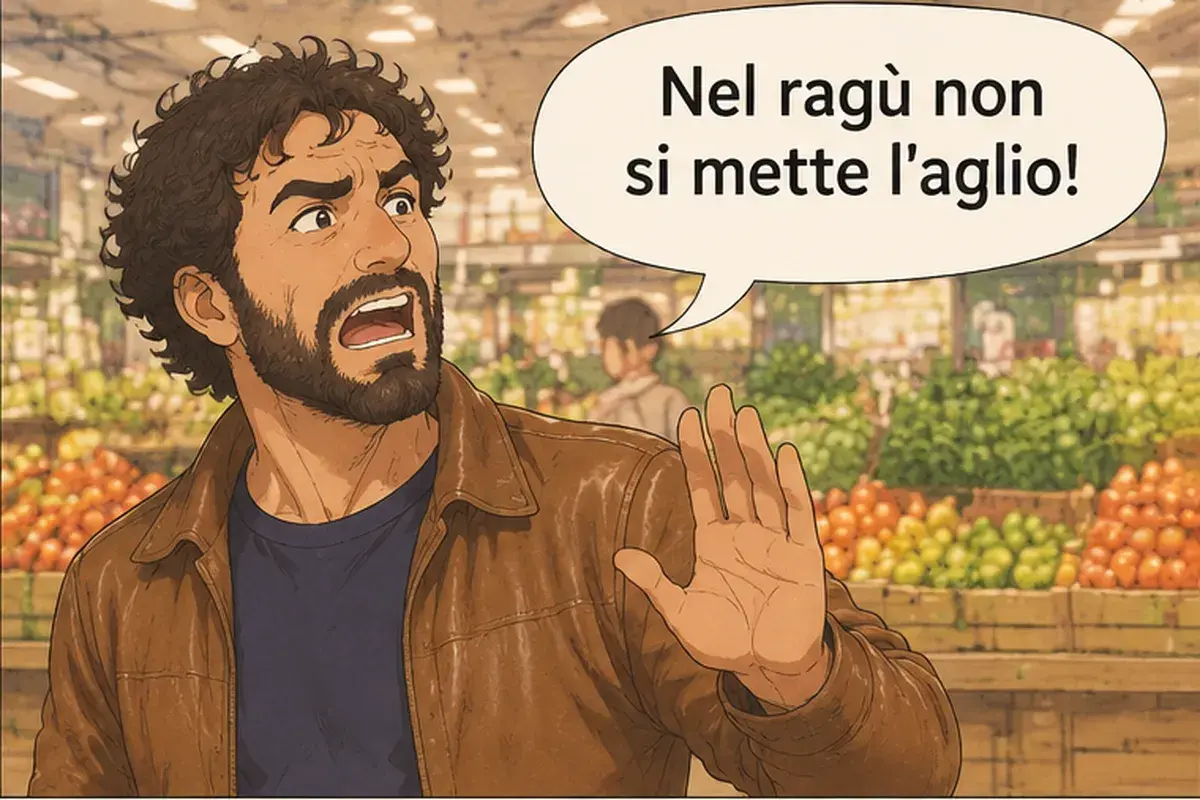
- Luca
Nel ragù non si mette l'aglio!
You don't put garlic in ragù!

- Davide
Lo prendo io per domani. Condisco la pasta con un sugo di zucchine e melanzane.
I'll get it myself for tomorrow. I'll dress the pasta with a zucchini and eggplant sauce.

- Luca
Guarda il volantino: tre yogurt al prezzo di due! Sfruttiamo l'offerta e facciamo scorta.
Look at the flyer: three yogurts for the price of two! Let's take advantage of the deal and stock up.

- Misha
Ne abbiamo bisogno? Questa marca è biologica e costa addirittura il doppio delle altre.
Do we need them? This brand is organic and actually costs twice as much as the others.

- Luca
Hai ragione, non sprechiamo soldi! Ma le lattine di birra sono in offerta: ne prendo sei.
You're right, let's not waste money! But the cans of beer are on sale: I'll take six.

- Misha
Va bene, ma mi sa che manca la carne per il ragù.
OK, but I have a feeling the meat for the ragù is missing.

- Luca
La carne! Tranquillo, ne prendo un chilo e torno subito.
The meat! Don't worry, I'll get a kilo and be right back (to a man).

- Davide
Con tutte queste offerte non torna più: il divano letto resta libero.
With all these deals he won't come back: the sofa bed stays free.
Grammar for this text
- Quante ne hai prese? — here
nemeans "of them": the carrots (carote), which aren't repeated. The past participlepreseis feminine plural: it matches whatnereplaced. That's why the answer is Ne ho prese due (the rule is in this unit's grammar). - Ne abbiamo ancora sei. — "we still have six": the number is there, the noun isn't.
seihere means "six", not "you are". - Ne abbiamo bisogno? — here
nemeans "of them": "do we need them?". It comes fromavere bisogno di(to need): "di + them" becomesne. - Nel ragù non si mette l'aglio! — impersonal
si: "you don't put garlic in it". The verb is singular because the thing isl'aglio; for carrots it would besi mettono(unit 5). - Lo prendo io per domani. —
lomeans "it" (the garlic), before the verb;ioafter the verb means "I'll be the one". Condisco la pasta con un sugo di zucchine e melanzane. —condiscois theioform ofcondire(to dress, to season), likefiniscofromfinire. - Mi sa che manca la carne —
mi sa cheis a casual "I have a feeling that", for friends.mancameans "is missing": the meat is missing, so the verb is singular. - tre yogurt al prezzo di due —
al prezzo dimeans "for the price of";yogurtdoesn't change in the plural.
Words and grammar of the unit: Talk about where your money goes.
Learn the words from the texts with flashcards
In the app, you can tap any word in a text to see its translation, forms and examples, and new words stick with flashcards. 15 minutes a day.
Start for freeEverything is open for free. No card needed to sign up.