
Italian story with translation · B1 · 17 lines
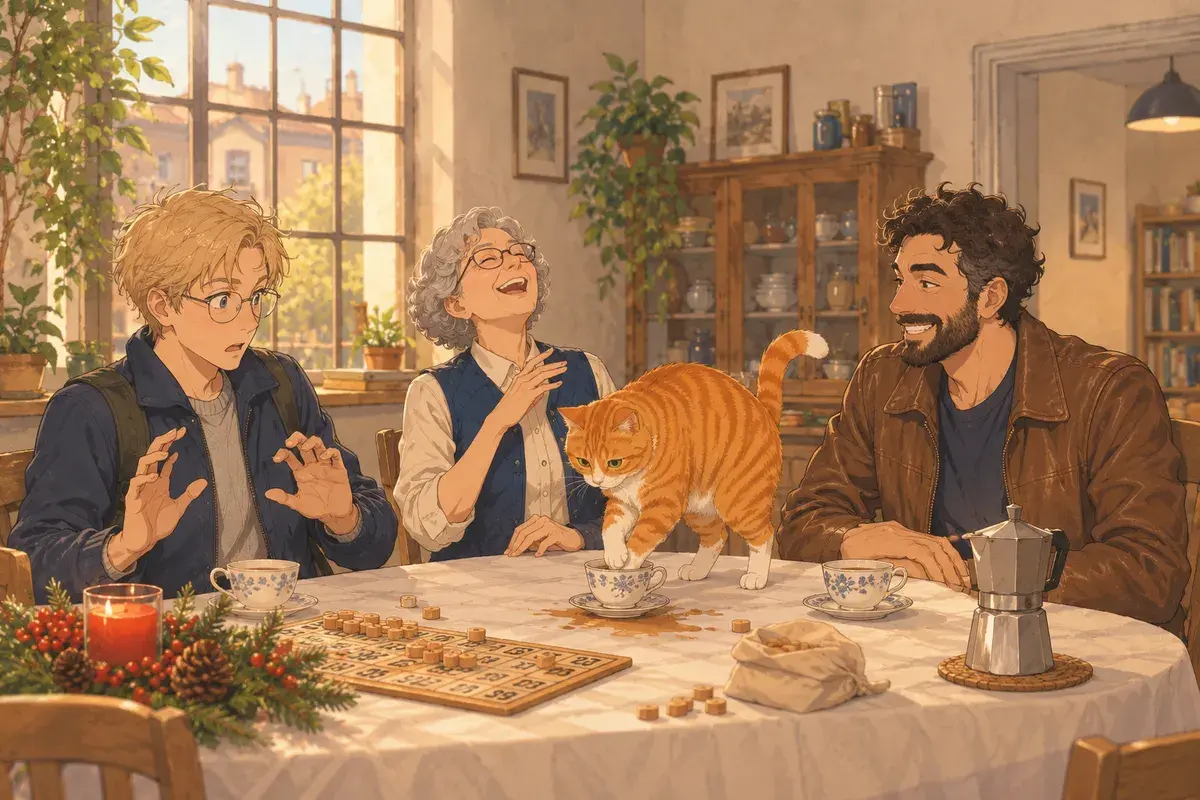
Stavamo giocando a tombola quando Ragù è salito sul tavolo We were playing tombola when Ragù jumped up on the table
Comic · 16 panels
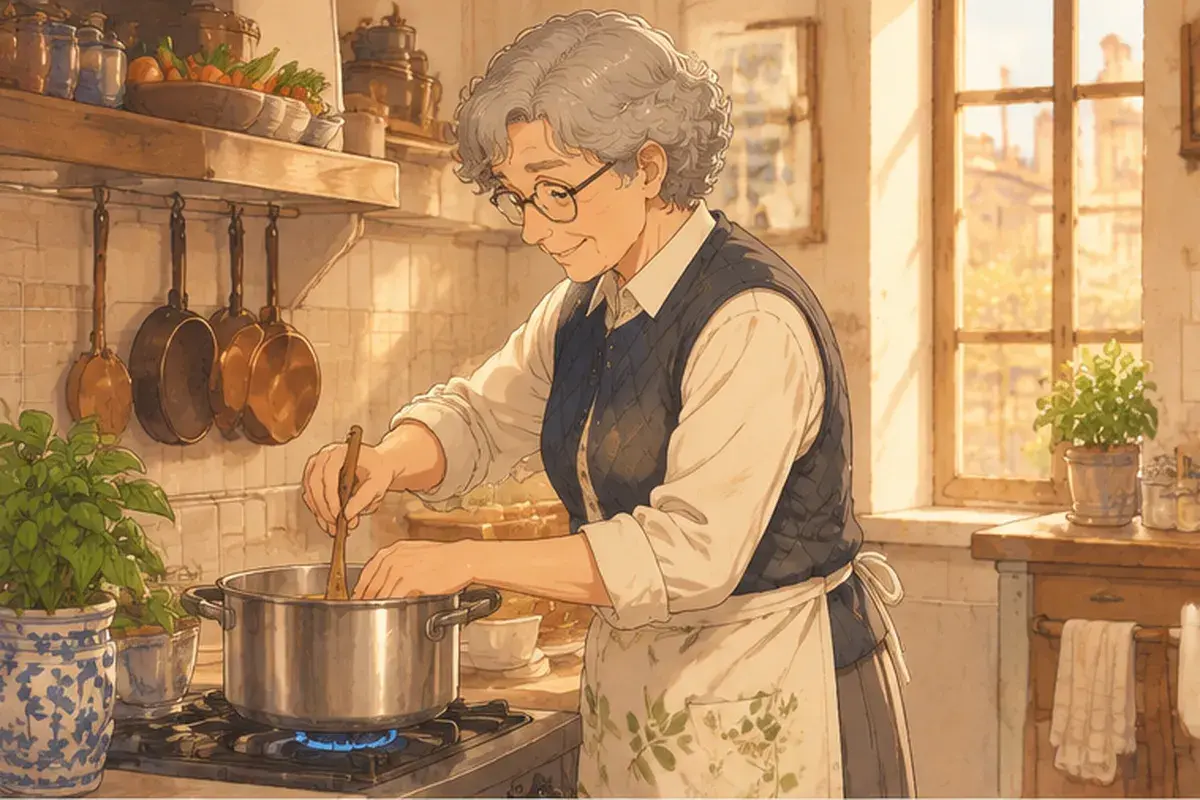
A Natale la signora Paola ha cucinato tutta la mattina, a casa di Luca: tortellini in brodo e poi l'arrosto.
At Christmas Signora Paola cooked all morning at Luca's house: tortellini in broth and then the roast.

Prima di mangiare abbiamo fatto «Cin cin!» con un bicchiere di vino.
Before eating we said "Cheers!" with a glass of wine.

Dopo che abbiamo finito l'arrosto, ho scartato il mio regalo: un paio di calzini fatti a mano dalla signora Paola.
After we finished the roast, I unwrapped my present: a pair of socks handmade by Signora Paola.
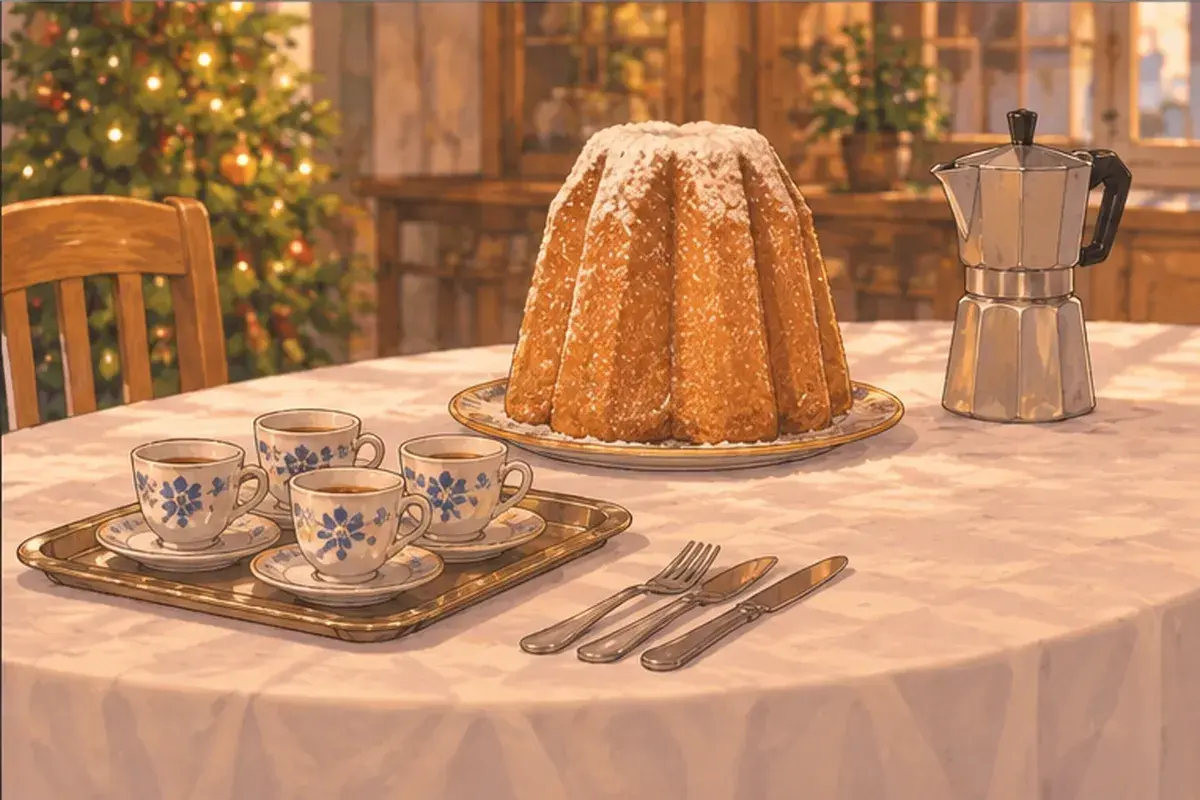
Sul tavolo c'erano il vassoio con il caffè, le posate e il premio della tombola: un pandoro intero.
On the table there were the tray with the coffee, the silverware, and the tombola prize: a whole pandoro.
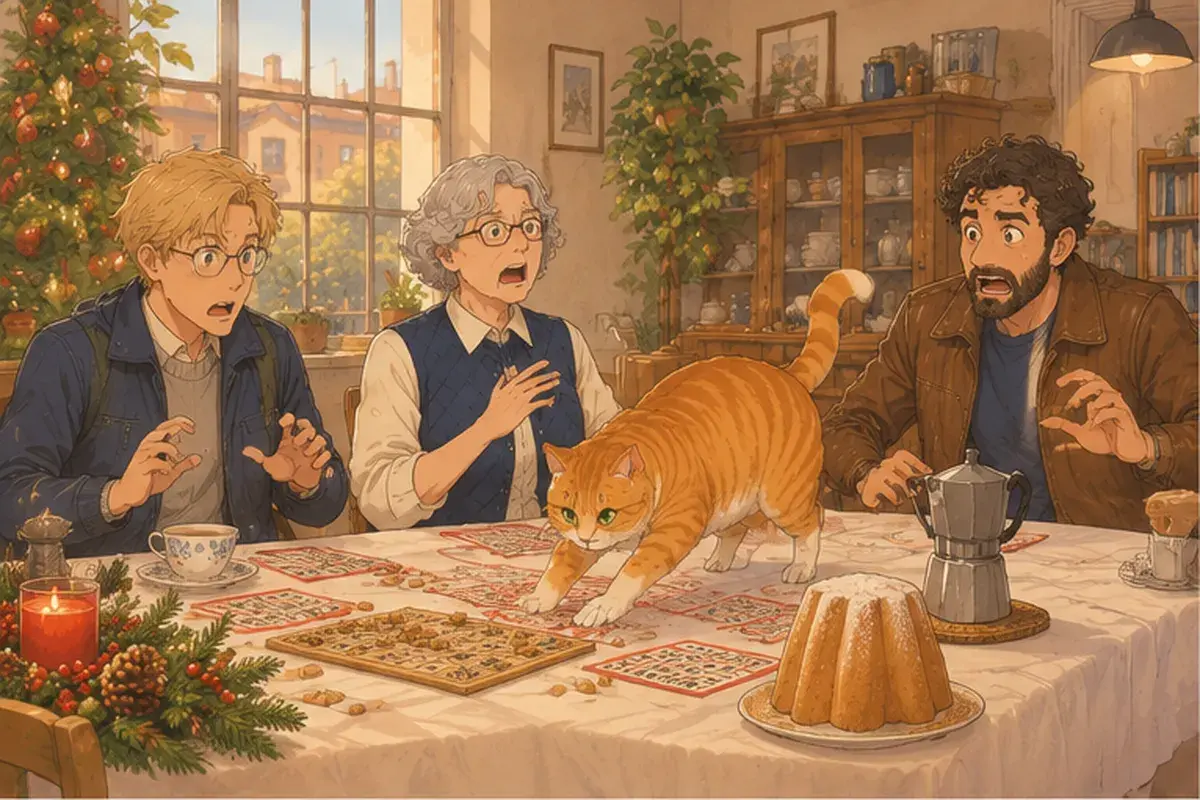
Stavamo giocando a tombola quando Ragù è salito sul tavolo.
We were playing tombola when Ragù jumped up on the table.
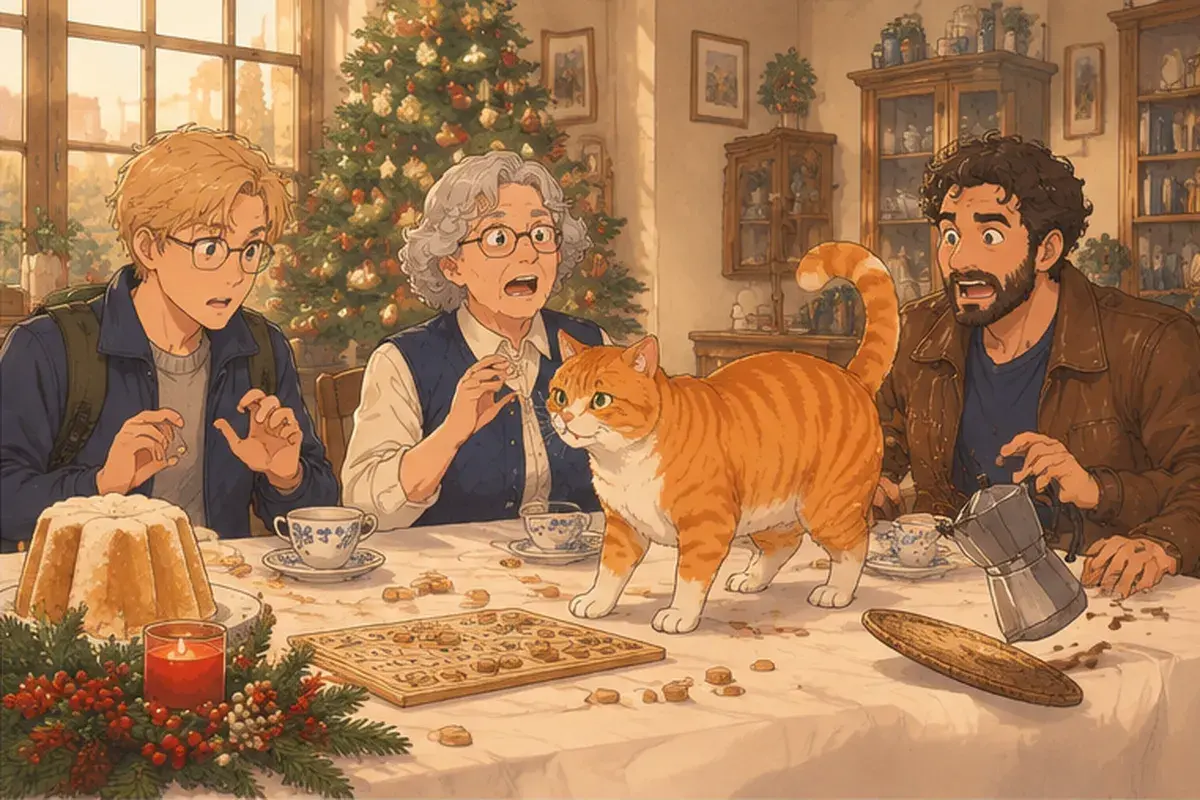
Ragù è affettuoso, ma non guarda dove mette la coda: ha rovesciato il vassoio!
Ragù is affectionate, but he doesn't look where he puts his tail: he knocked over the tray!
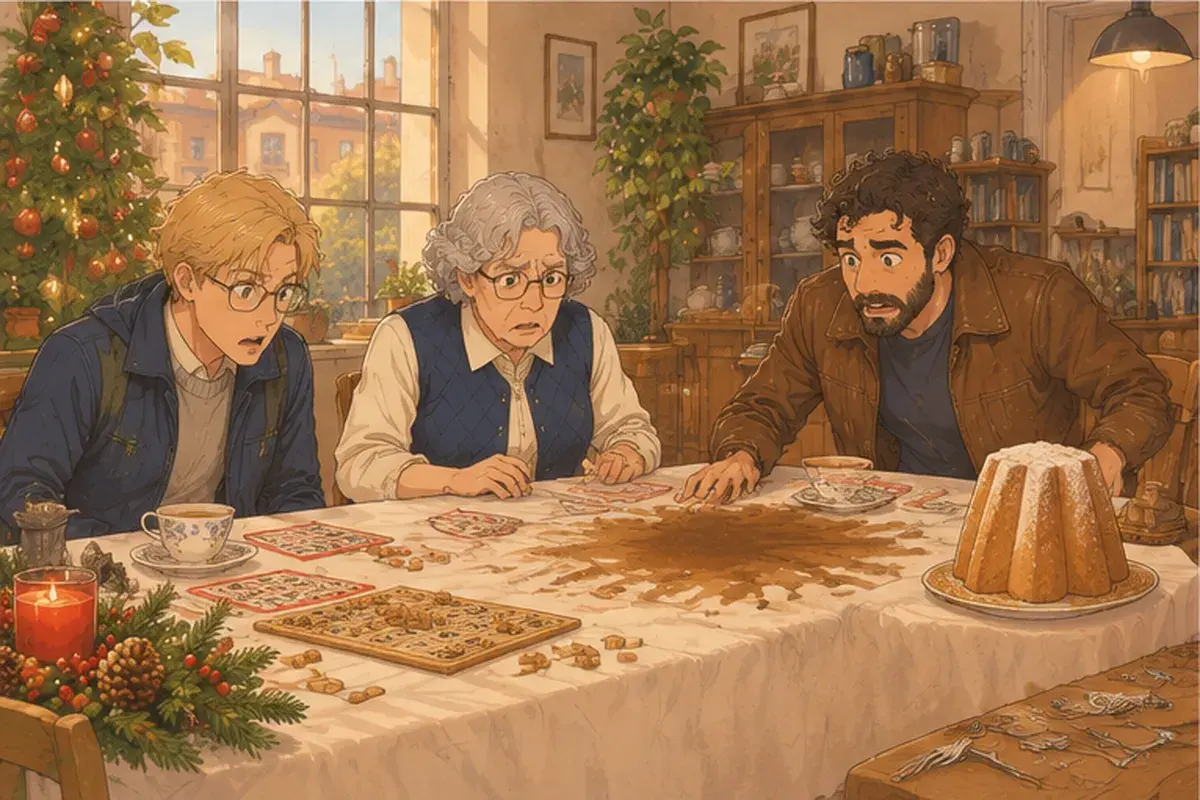
Le posate sono cadute per terra e il caffè ha fatto una grande macchia sulla tovaglia bianca.
The silverware fell on the floor and the coffee made a big stain on the white tablecloth.
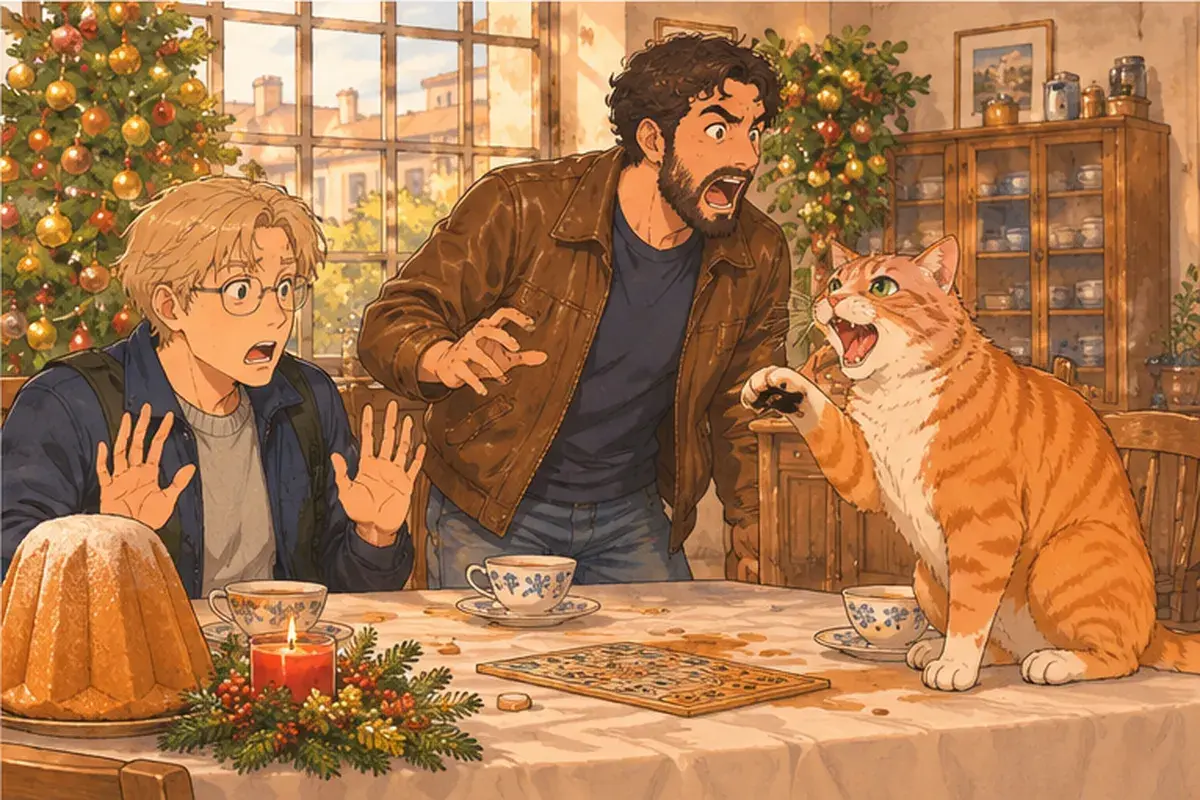
Io mi sono spaventato, Luca ha gridato e Ragù, con una zampa nel caffè, ha miagolato.
I got scared, Luca yelled, and Ragù, with a paw in the coffee, meowed. (man speaking)
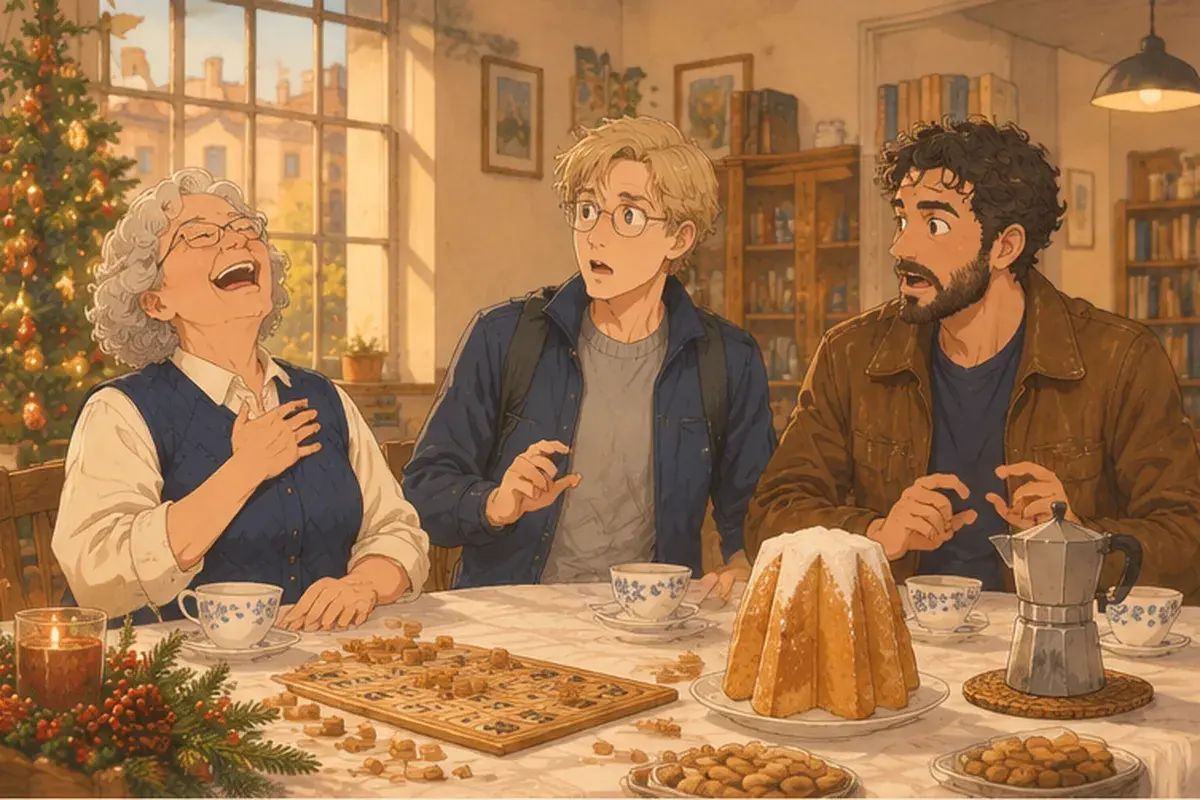
Per un attimo nessuno ha parlato. Poi la signora Paola è scoppiata a ridere: che risata!
For a moment nobody spoke. Then Signora Paola burst out laughing: what a laugh!
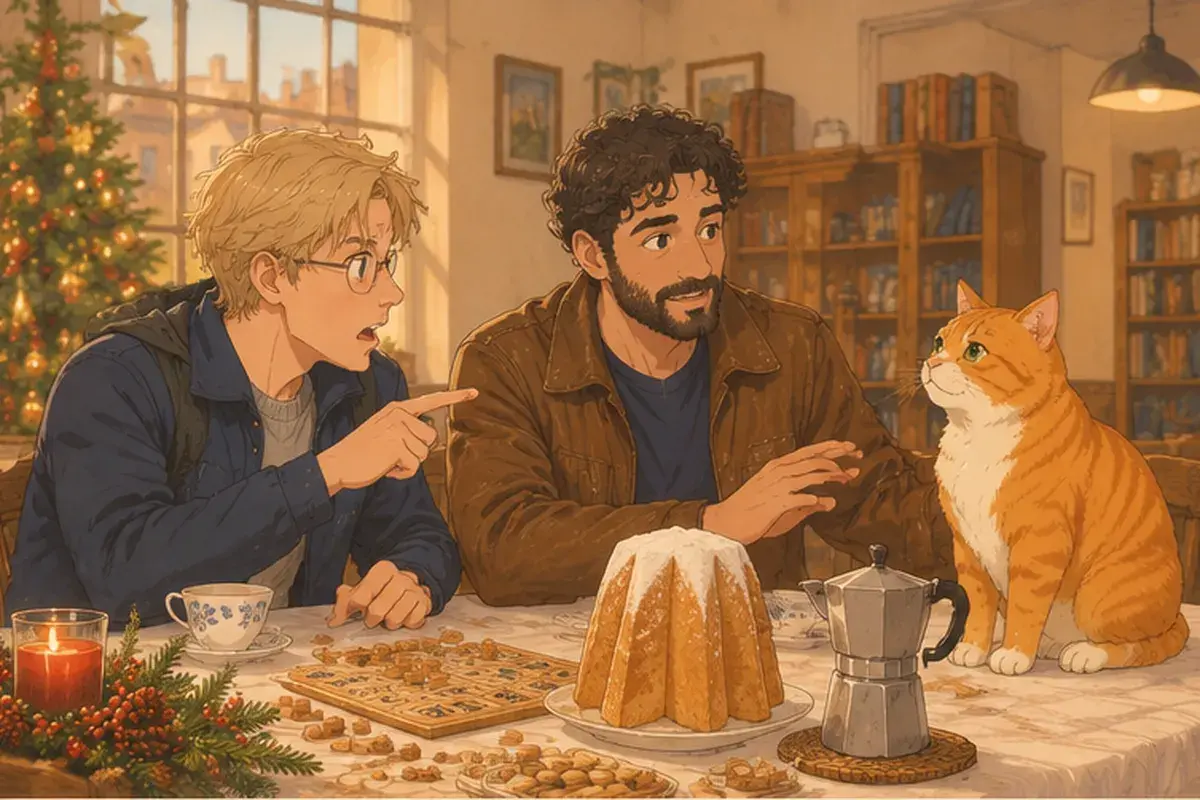
Io ho accusato Ragù, ma Luca ha difeso il gatto: «È innocente! È dispettoso, non cattivo!»
I accused Ragù, but Luca defended the cat: "He's innocent! He's mischievous, not mean!"
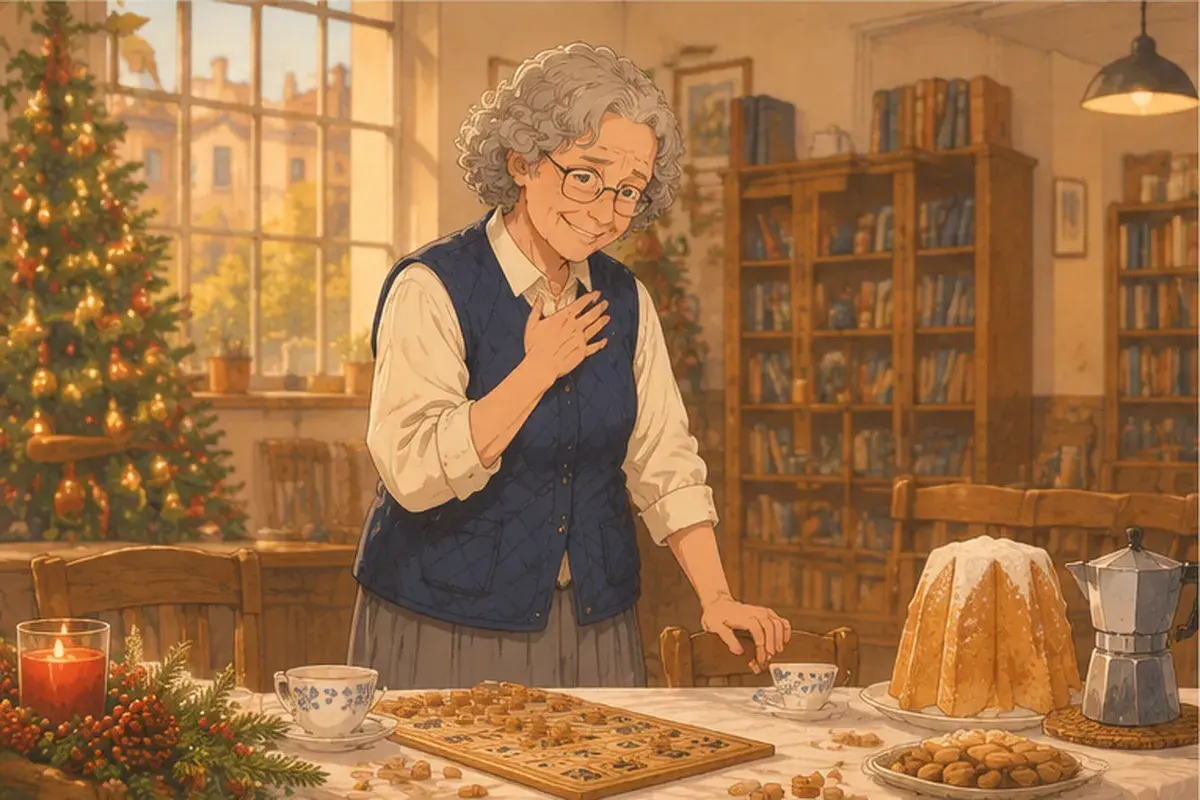
Allora la signora Paola ha confessato: «Non date la colpa a Ragù. La colpevole sono io: ho messo io il vassoio sull'angolo del tavolo!»
Then Signora Paola confessed: "Don't blame Ragù (to several people). I'm the guilty one (woman speaking): I'm the one who put the tray on the corner of the table!"
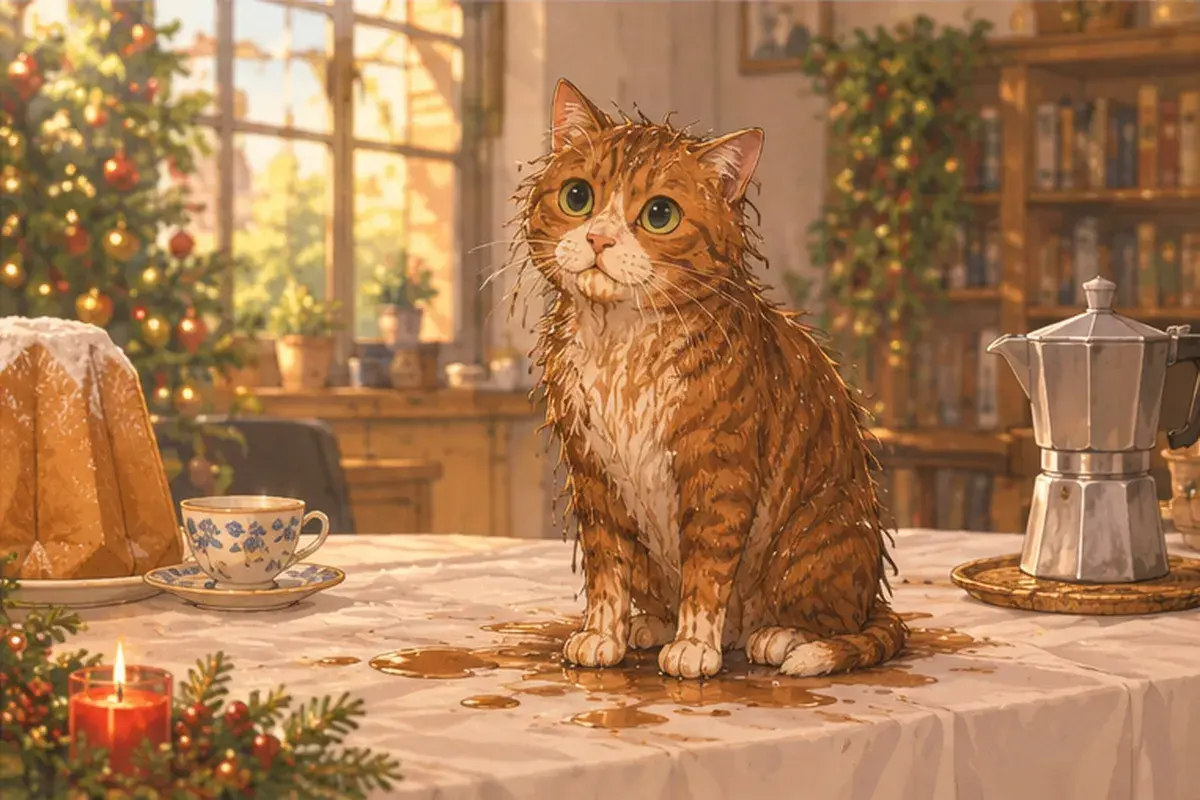
Intanto Ragù, con il pelo bagnato di caffè, sembrava un cappuccino con le zampe.
Meanwhile Ragù, with his fur soaked in coffee, looked like a cappuccino with paws.
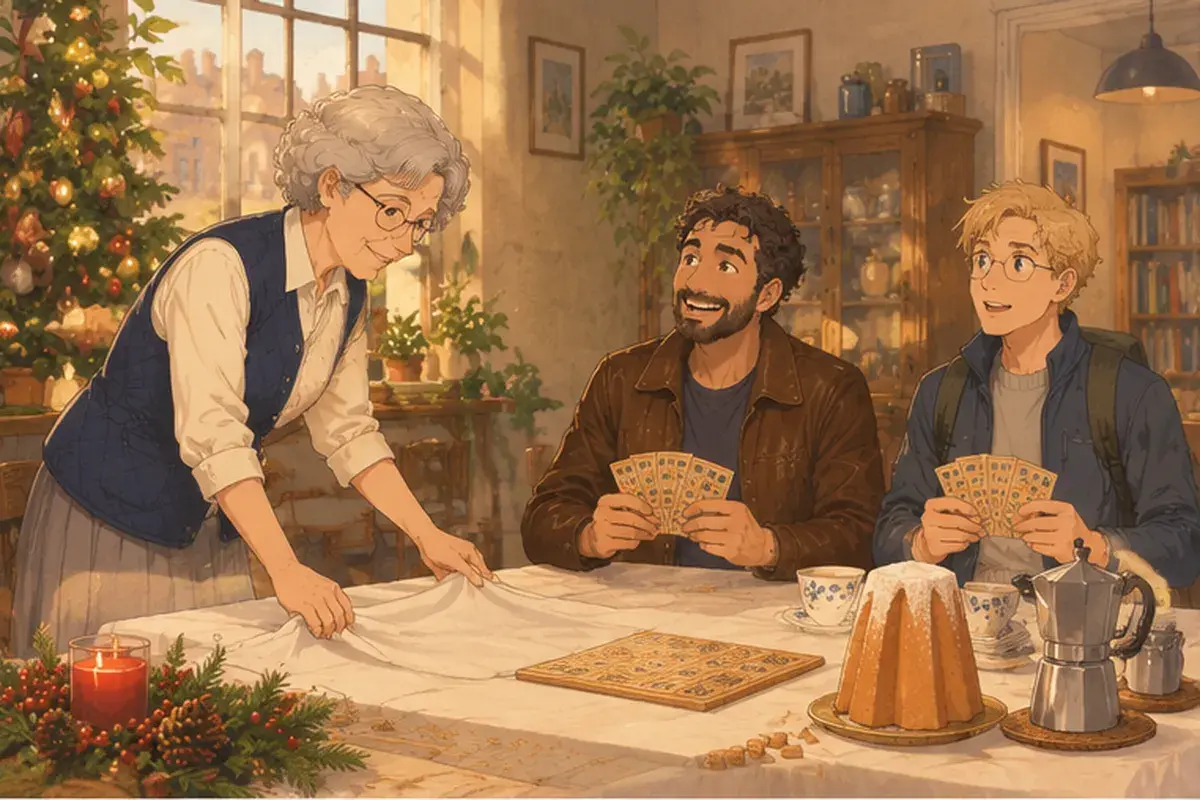
Appena la signora Paola ha cambiato la tovaglia, abbiamo ricominciato a giocare.
As soon as Signora Paola changed the tablecloth, we started playing again.
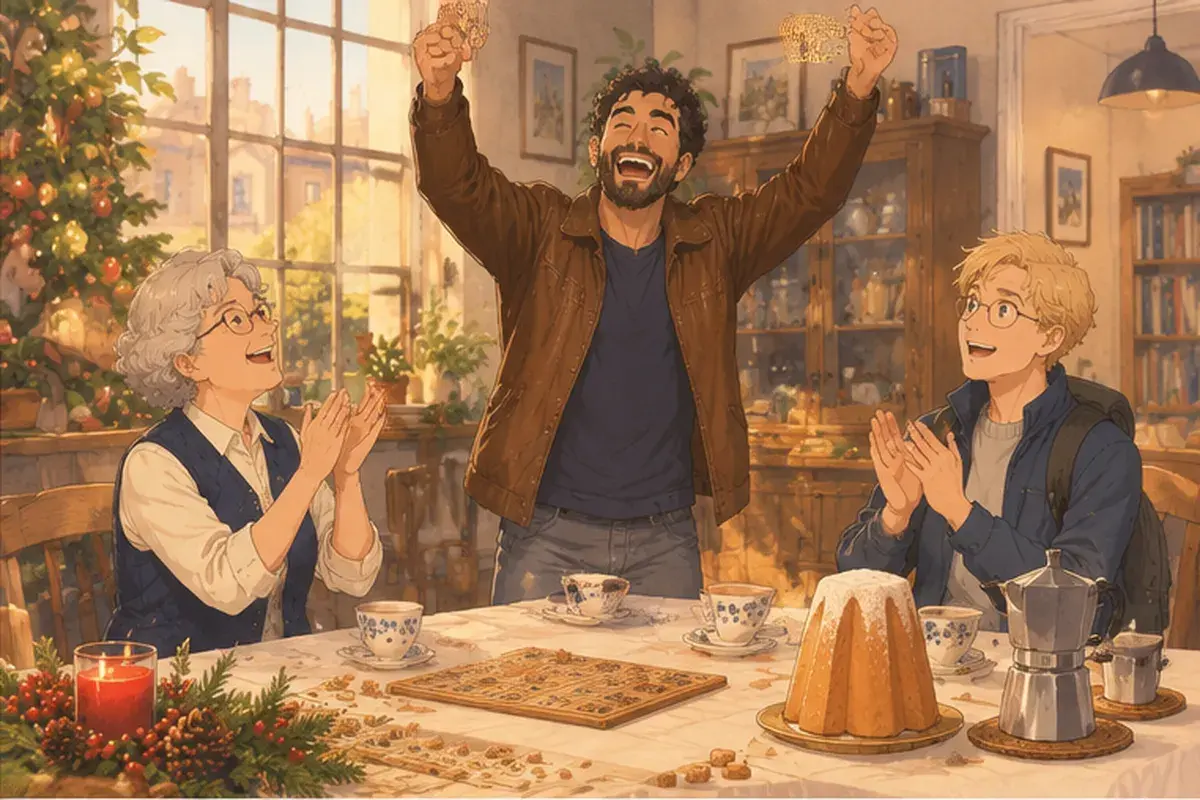
Il numero seguente era il 90: l'ultimo che mi mancava! Ho vinto io il pandoro.
The next number was 90: the last one I was missing! I won the pandoro.
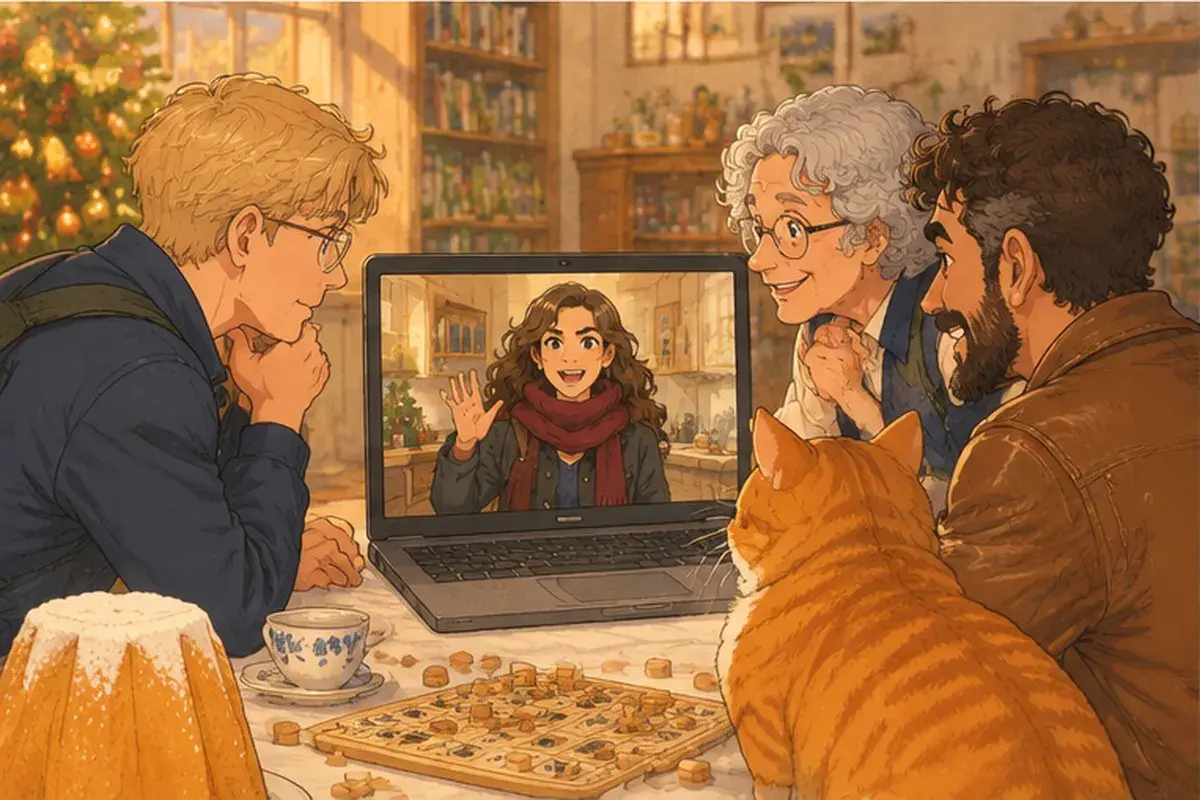
Più tardi Giulia ci ha chiamati da Roccalta in videochiamata. Ha guardato Ragù e ha detto: «Mi manchi, Ragù!»
Later Giulia called us from Roccalta on a video call. She looked at Ragù and said: "I miss you, Ragù!"
«Vi voglio bene, ragazzi!» ha aggiunto.
"I love you, guys!" she added.

Quella tovaglia ha ancora la macchia: per la signora Paola è un quadro di Ragù.
That tablecloth still has the stain: for Signora Paola it's a painting by Ragù.
Grammar for this text
- Stavamo giocando a tombola quando Ragù è salito sul tavolo. —
stavamo giocandomeans "we were in the middle of playing":starein the past (imperfetto) + the gerundiogiocandofromgiocare. That is the background.è salitois what happened and cut in. Block 1. - Ha cucinato tutta la mattina — the length of time is given, so passato prossimo, not
cucinava. Block 1. - Dopo che abbiamo finito… —
dopo chemeans "after". Block 2. - Appena la signora Paola ha cambiato la tovaglia… —
appenahere is a linking word: "as soon as". Block 2. - Calzini fatti a mano —
fattiis the past participle offare, matchingcalzini(masculine, plural). - un paio di — means "a pair of", as in "a pair of socks".
- Il mio regalo — here
regalois the noun "gift", not "I give" fromregalare. - È scoppiata a ridere —
scoppiare a+ infinitive means "to burst out laughing". The past tense usesessere, and here it is the feminine form. - Mi manchi, Ragù! —
mancareagain (block 3): "I miss you". - Vi voglio bene —
volere benemeans "to love" friends and family;viis "you" (plural).
Words and grammar of the unit: Tell a funny story at the dinner table.
Learn the words from the texts with flashcards
In the app, you can tap any word in a text to see its translation, forms and examples, and new words stick with flashcards. 15 minutes a day.
Start for freeEverything is open for free. No card needed to sign up.