
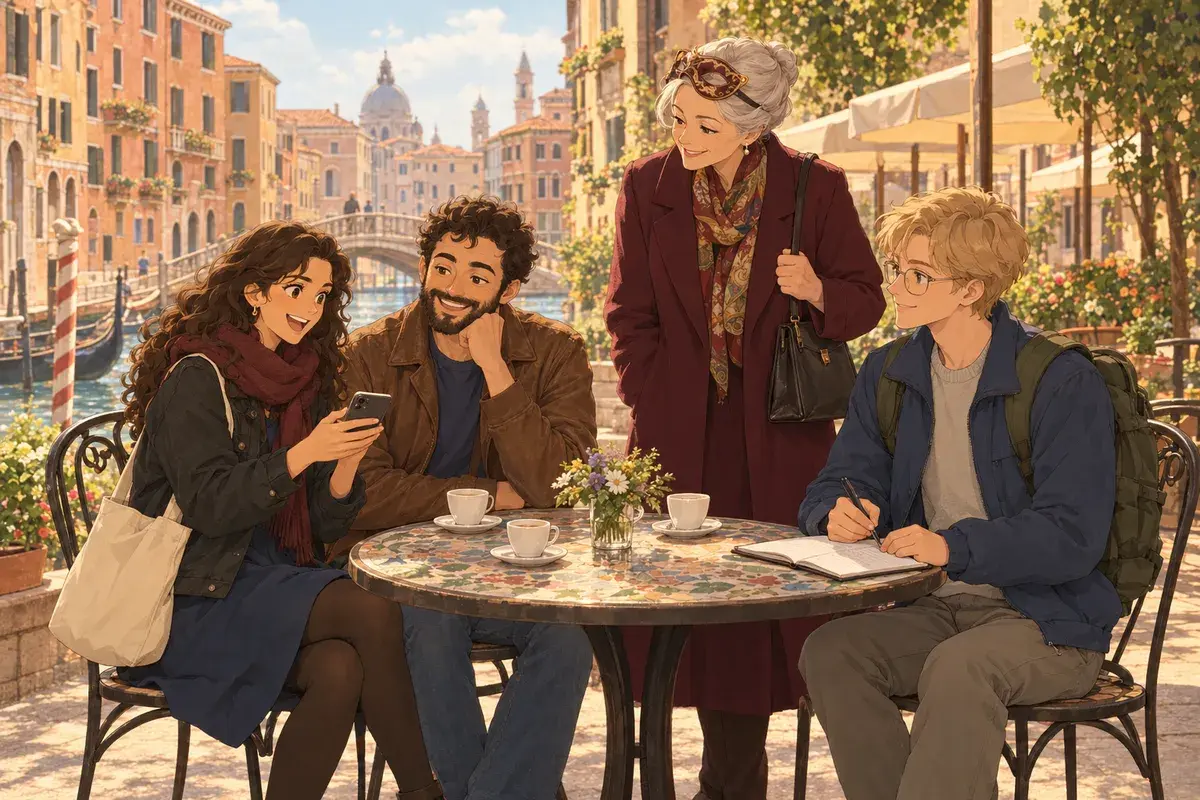
Italian dialogue with translation · A2 · 16 lines
C'erano solo turisti, come noi There were only tourists, like us
Comic · 15 panels
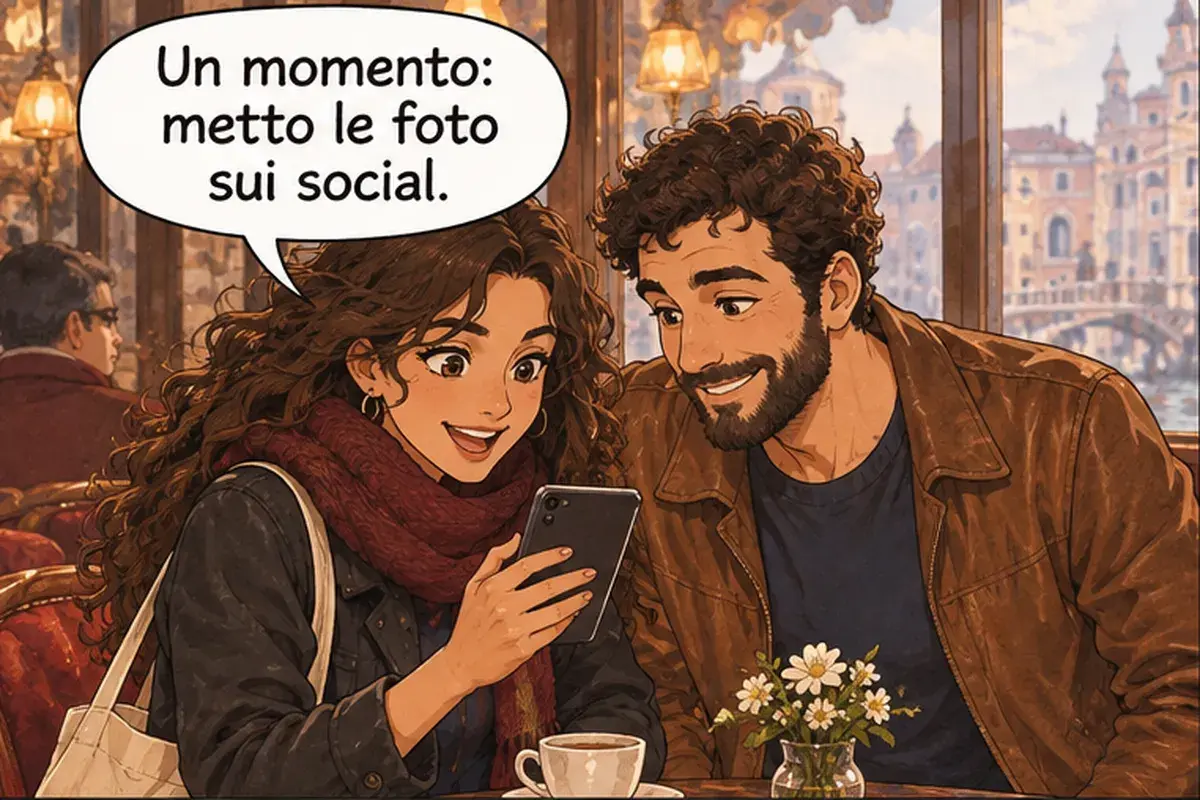
- Giulia
Un momento: metto le foto sui social.
Just a moment: I'm posting the photos on social media.
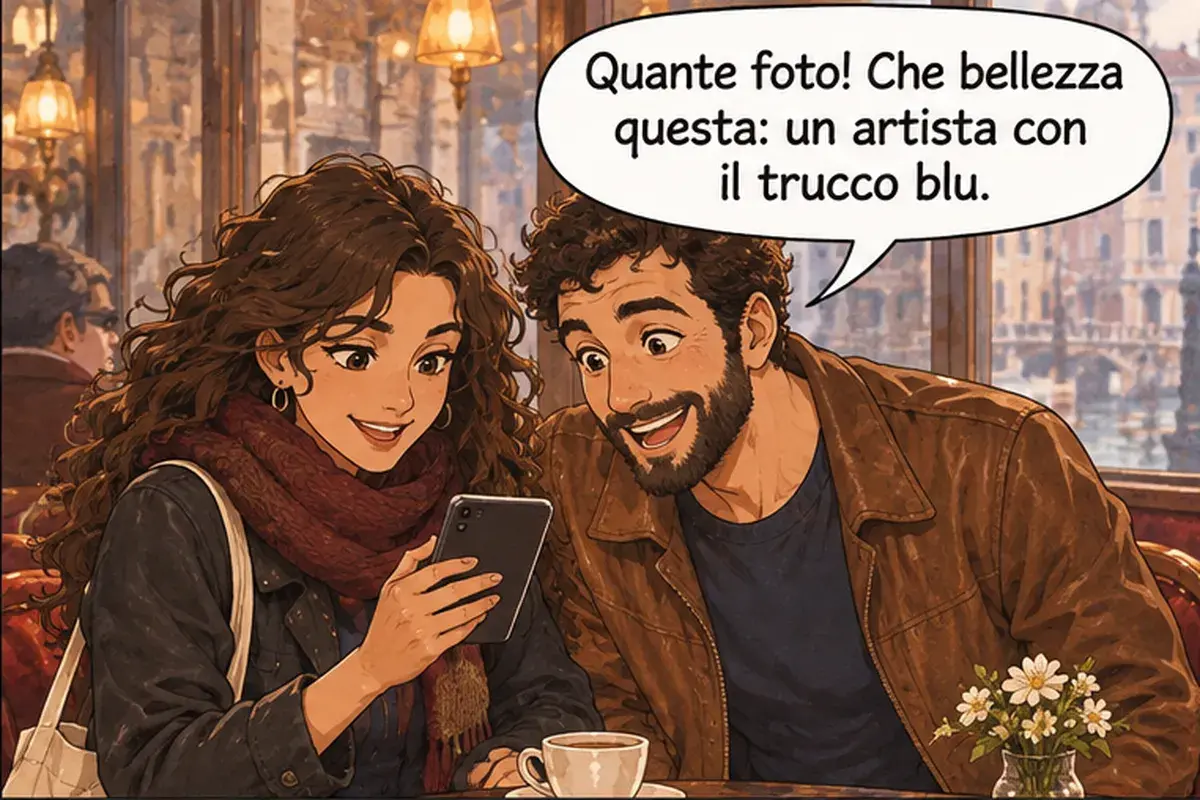
- Luca
Quante foto! Che bellezza questa: un artista con il trucco blu.
So many photos! This one's a beauty: an artist with blue makeup.
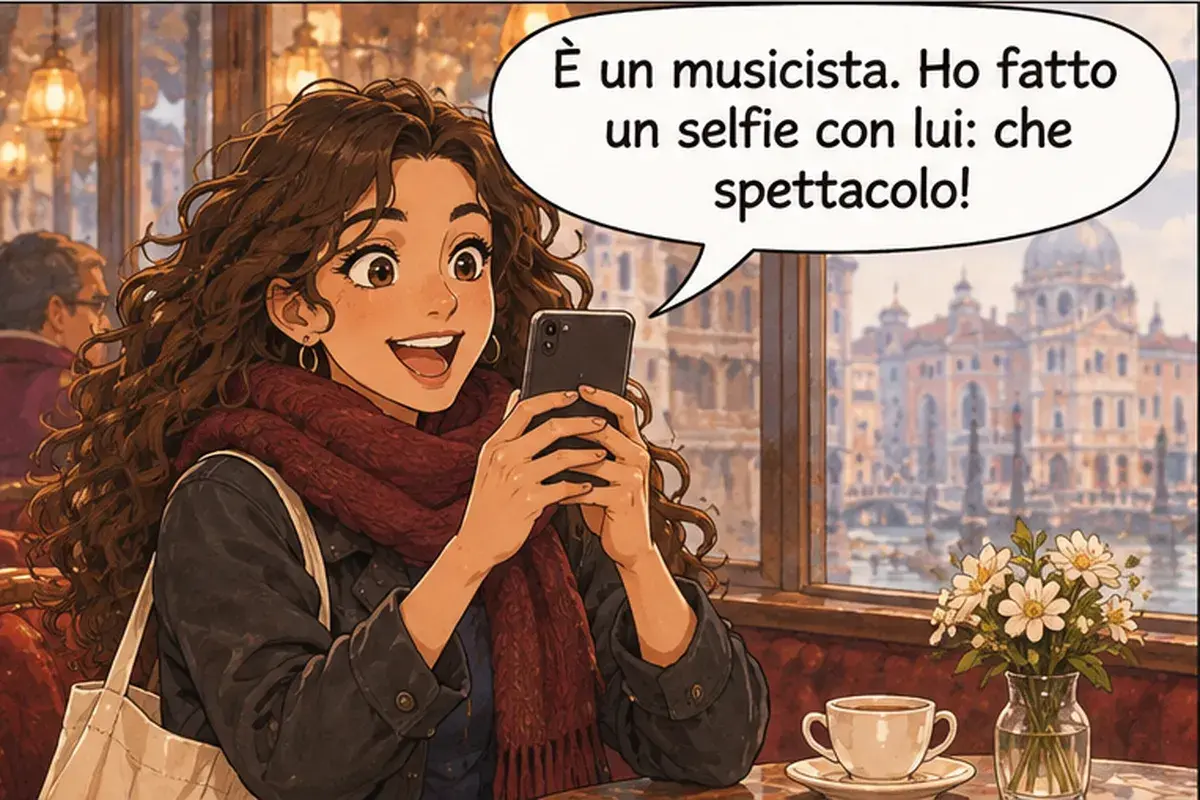
- Giulia
È un musicista. Ho fatto un selfie con lui: che spettacolo!
He's a musician. I took a selfie with him: what a show!
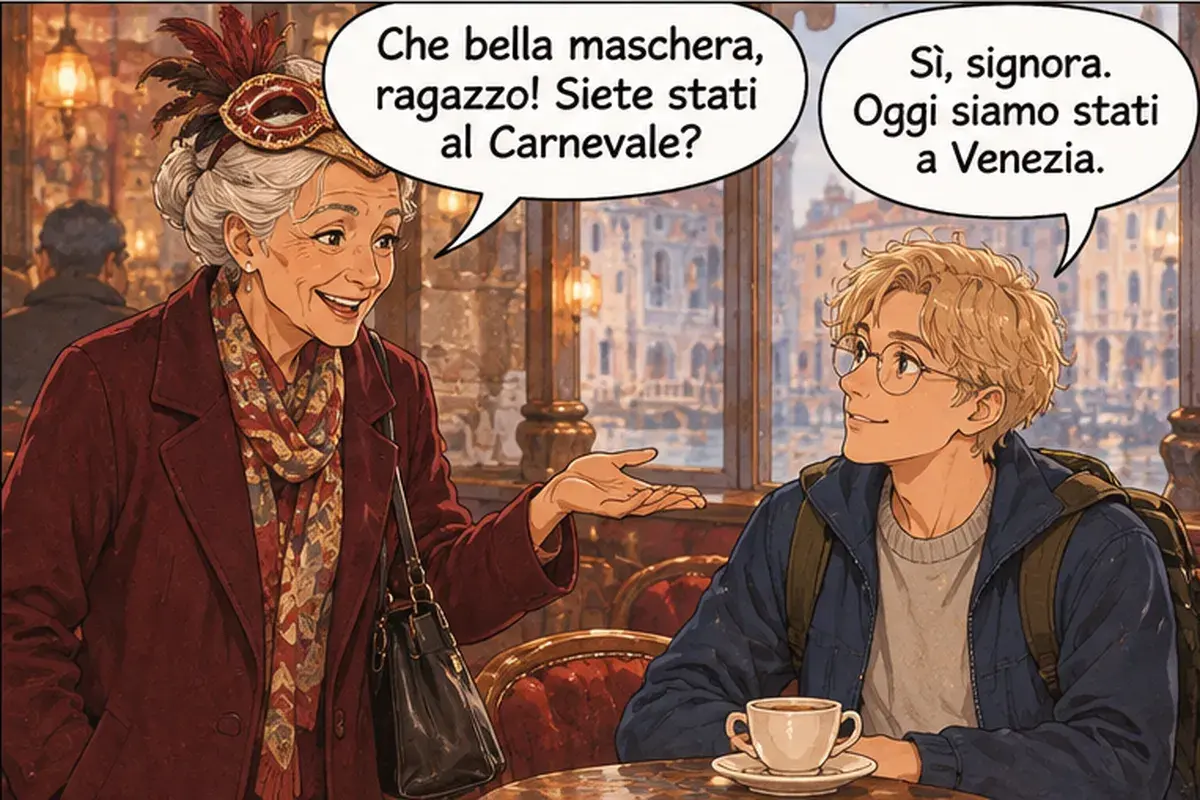
- Signora
Che bella maschera, ragazzo! Siete stati al Carnevale?
What a beautiful mask, young man! Have you been to Carnival? (to several people)
- Misha
Sì, signora. Oggi siamo stati a Venezia.
Yes, ma'am. We've been to Venice today.
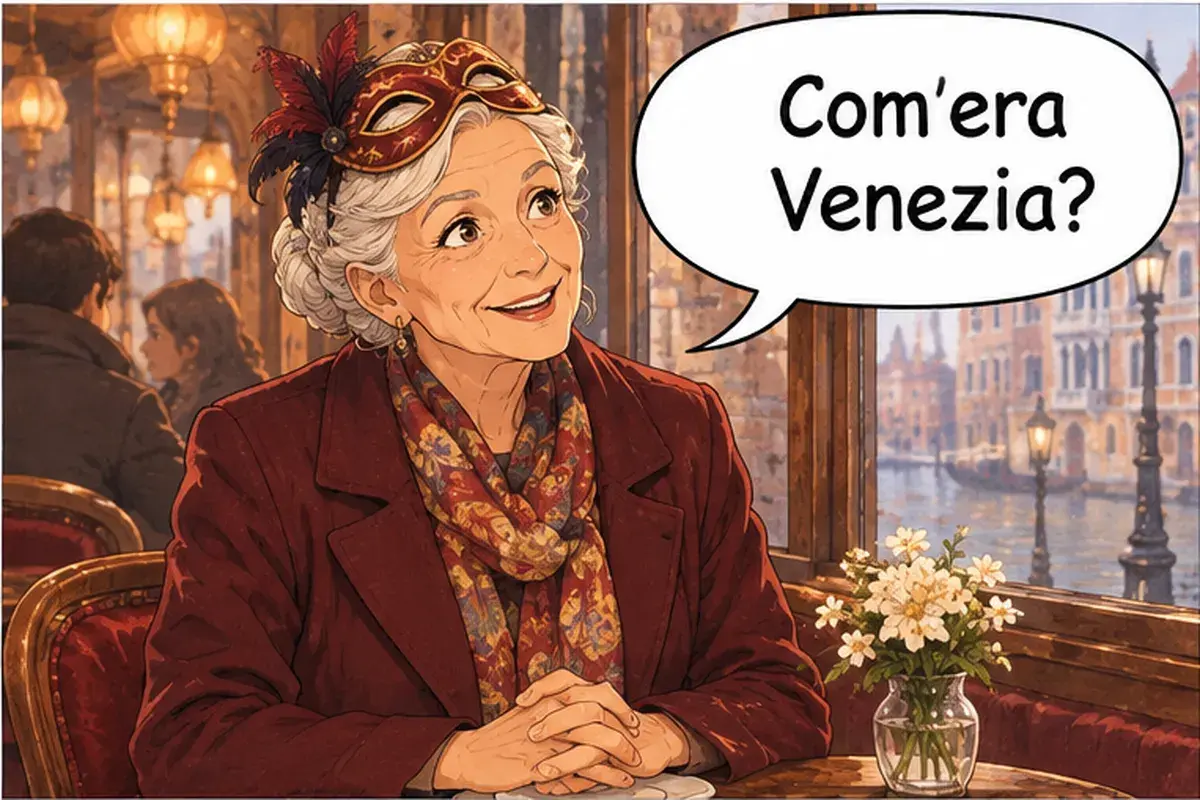
- Signora
Com'era Venezia?
How was Venice?
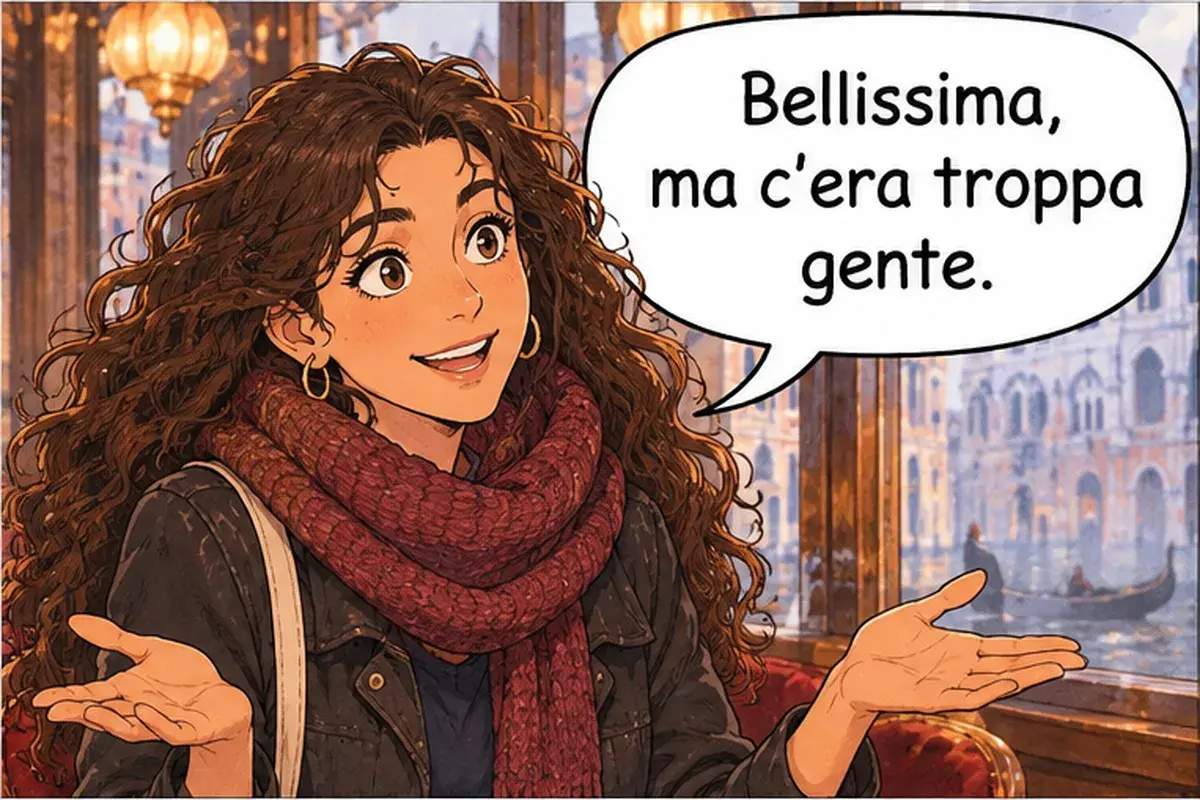
- Giulia
Bellissima, ma c'era troppa gente.
Beautiful, but there were too many people.
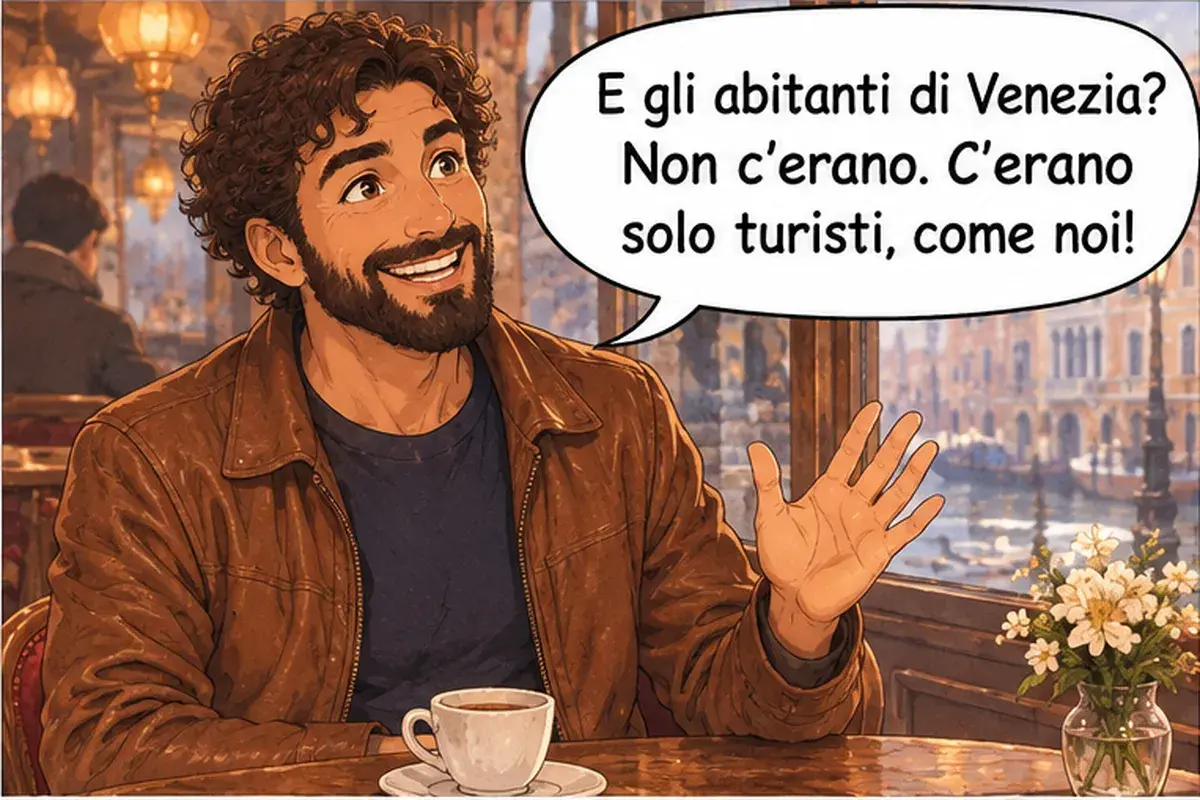
- Luca
E gli abitanti di Venezia? Non c'erano. C'erano solo turisti, come noi!
And the residents of Venice? They weren't there. There were only tourists, like us!
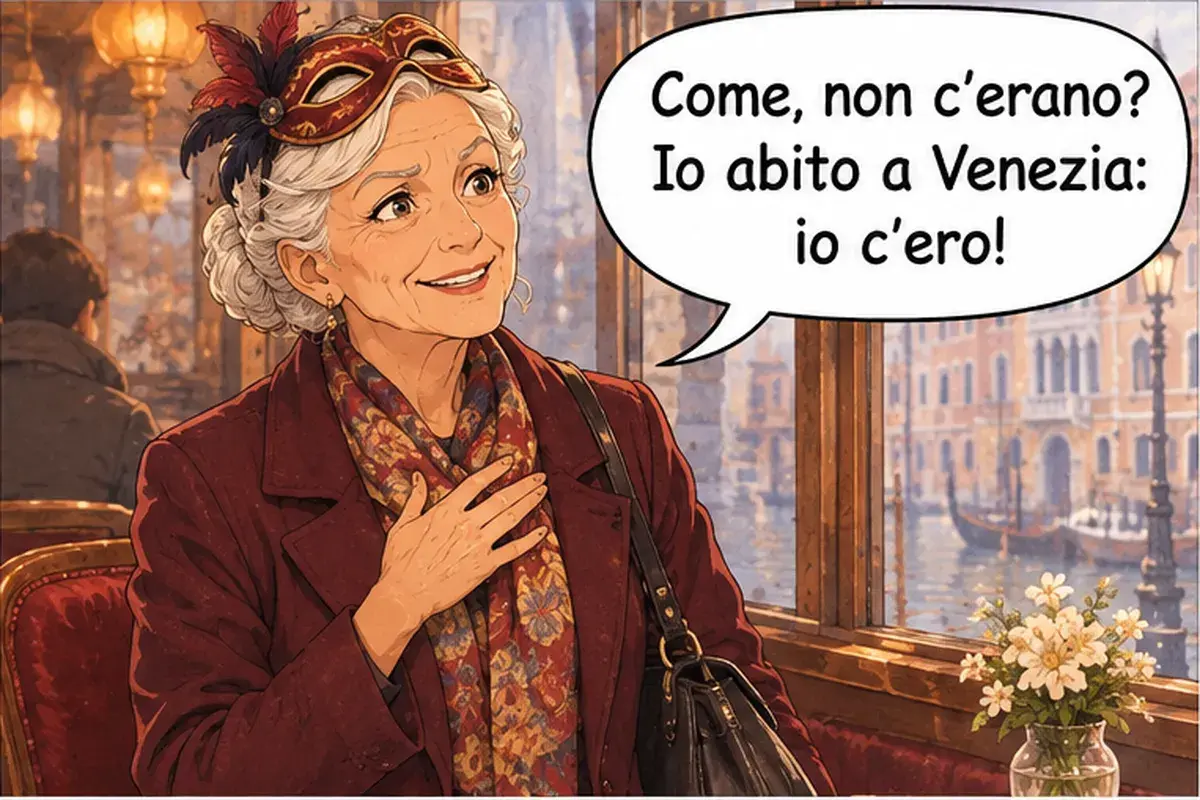
- Signora
Come, non c'erano? Io abito a Venezia: io c'ero!
What do you mean, they weren't there? I live in Venice: I was there!
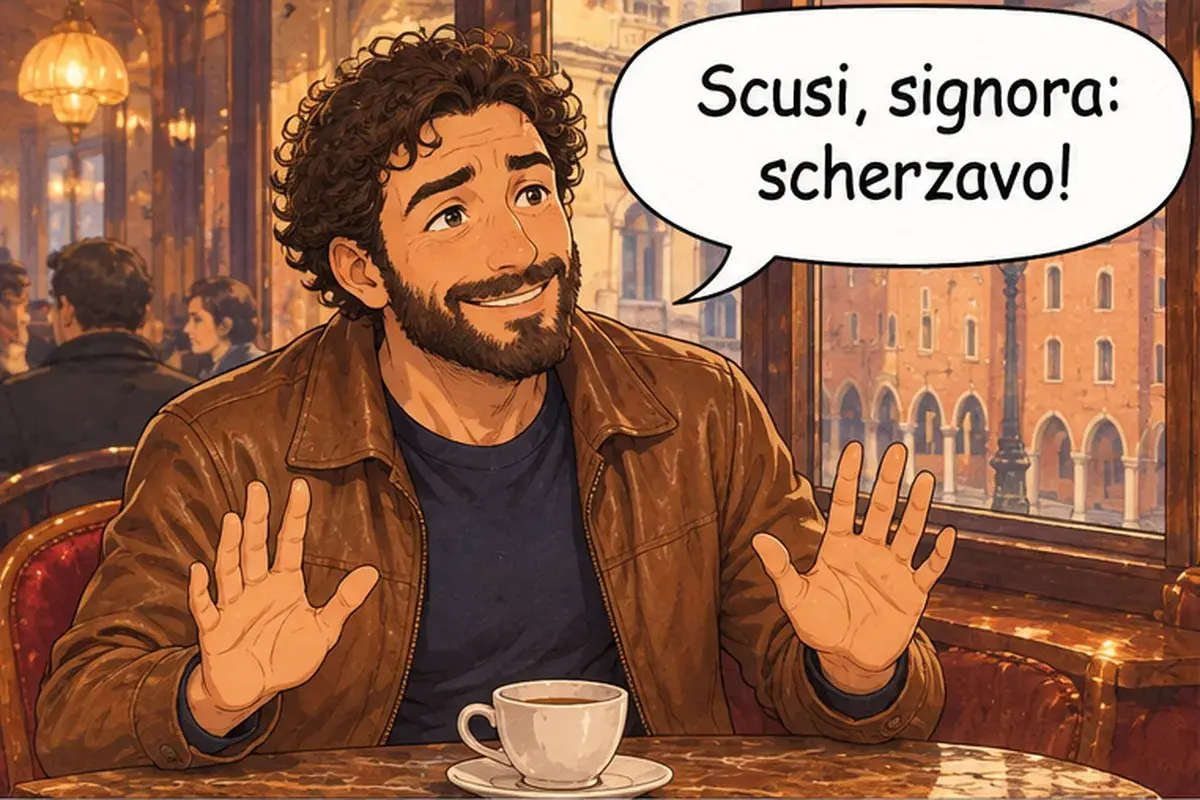
- Luca
Scusi, signora: scherzavo!
Sorry, ma'am: I was joking! (formal)
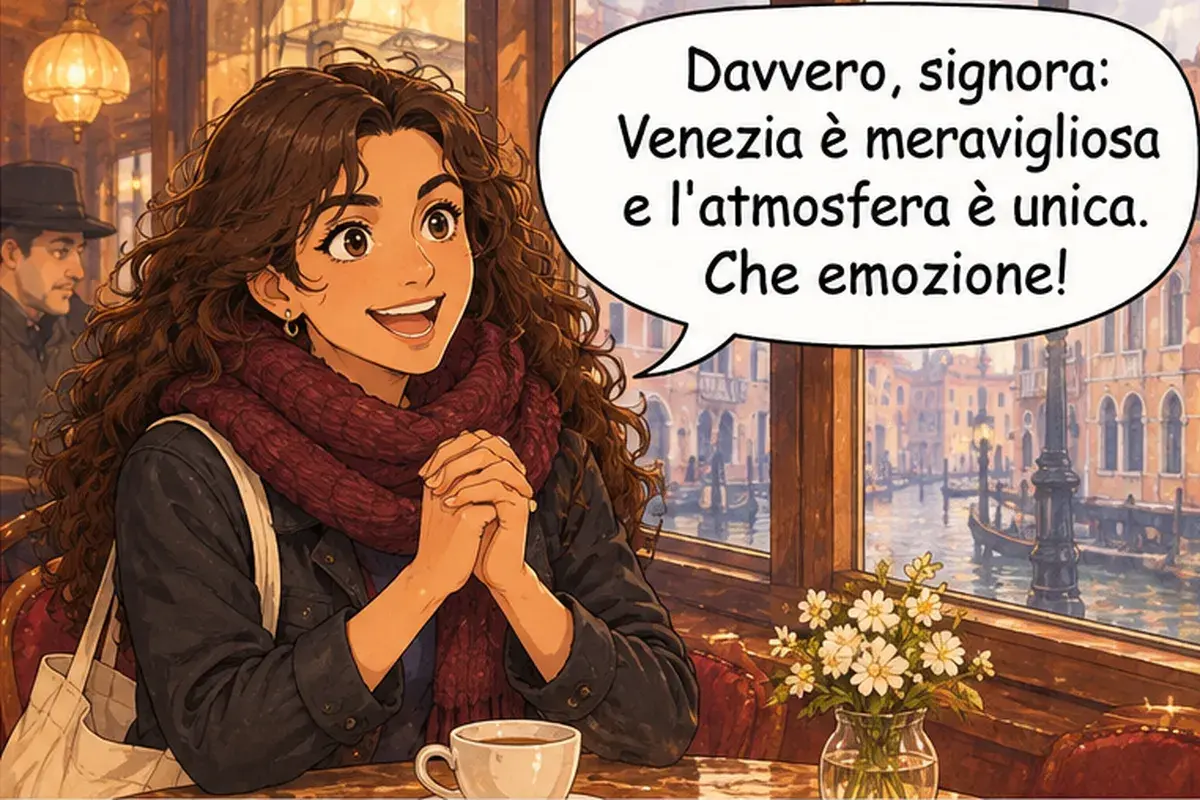
- Giulia
Davvero, signora: Venezia è meravigliosa e l'atmosfera è unica. Che emozione!
Really, ma'am: Venice is wonderful and the atmosphere is unique. How exciting!
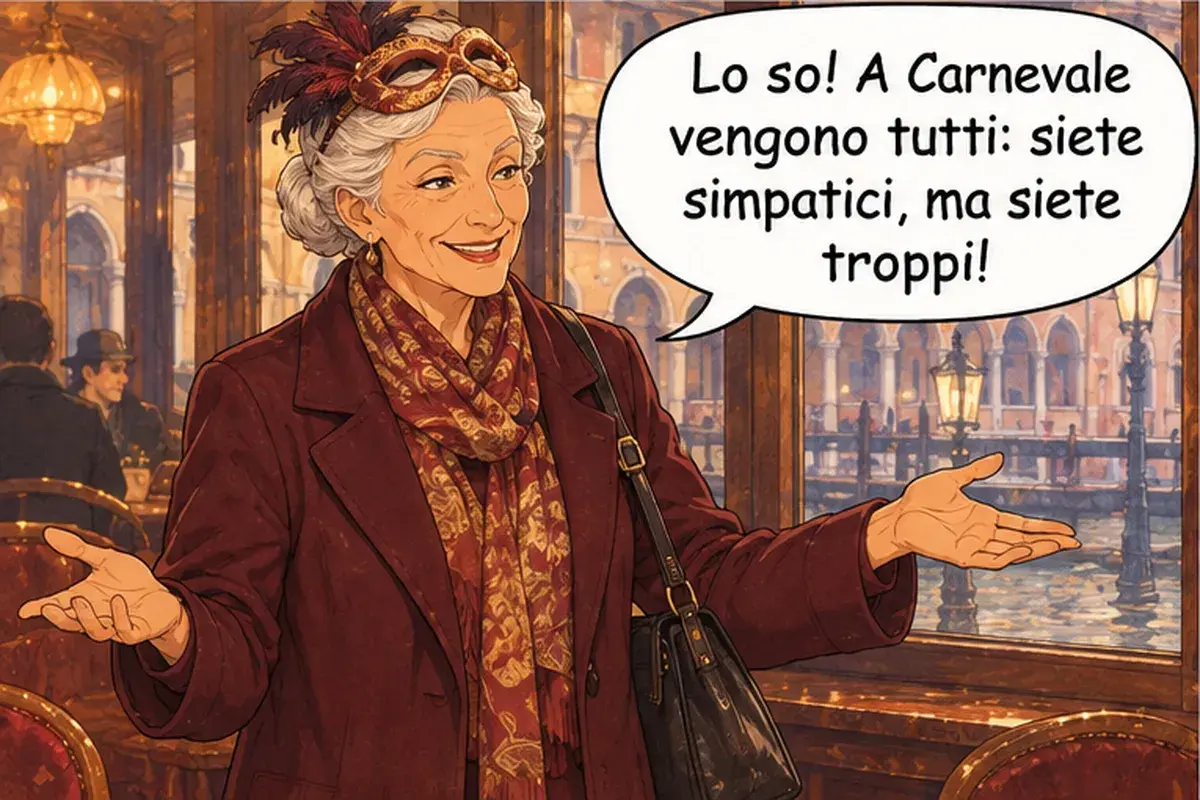
- Signora
Lo so! A Carnevale vengono tutti: siete simpatici, ma siete troppi!
I know! Everyone comes for Carnival: you're nice, but there are too many of you! (to several people)
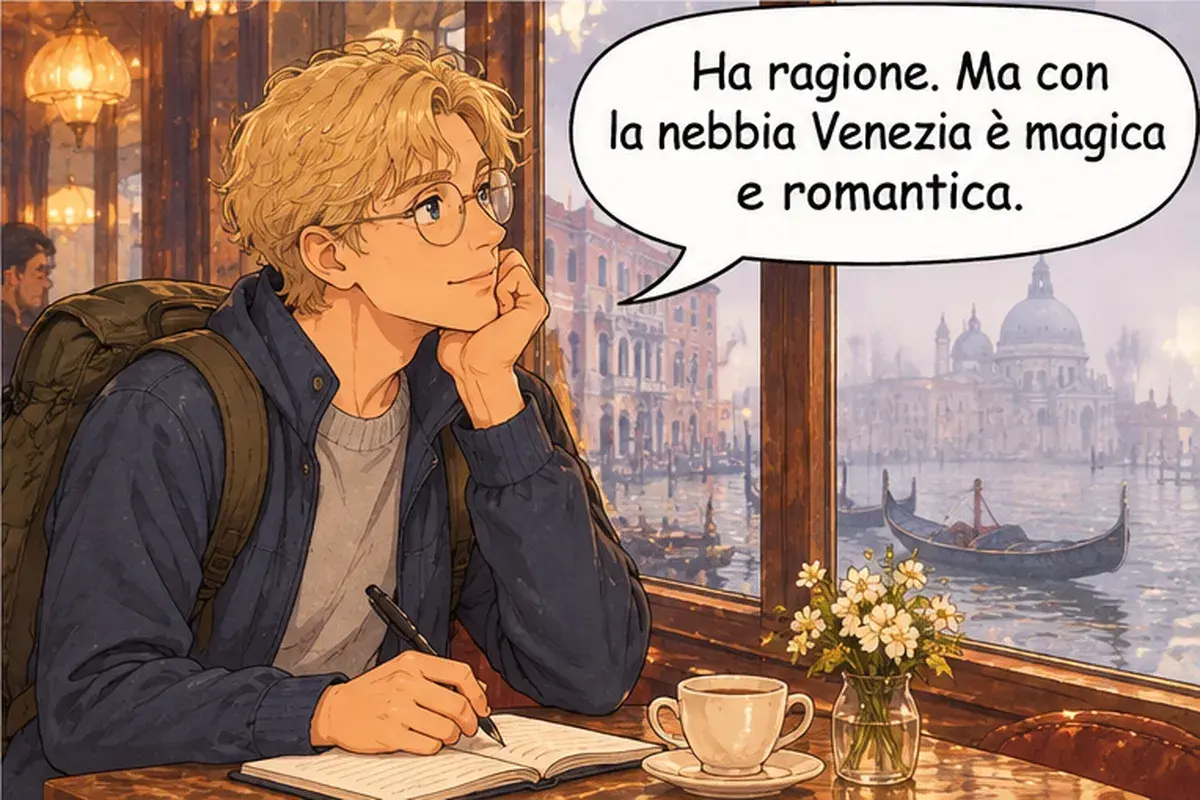
- Misha
Ha ragione. Ma con la nebbia Venezia è magica e romantica.
You're right (formal). But in the fog Venice is magical and romantic.
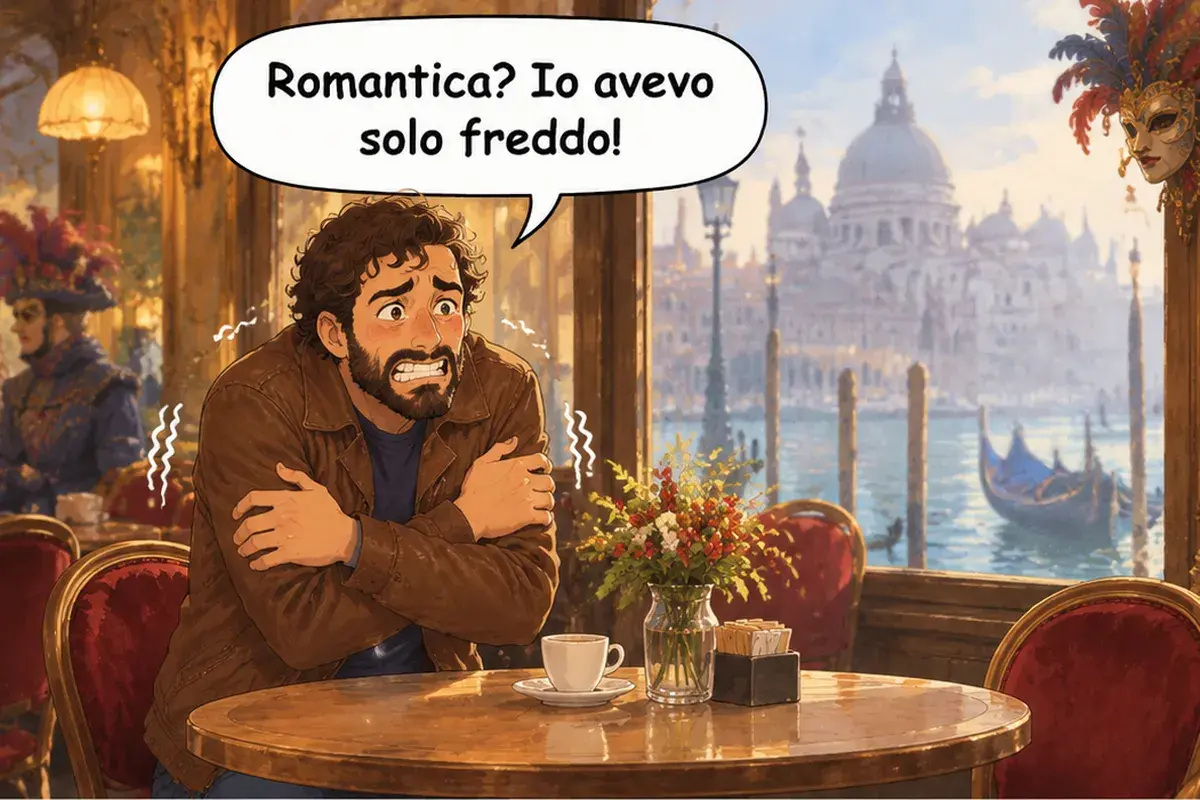
- Luca
Romantica? Io avevo solo freddo!
Romantic? I was just cold!
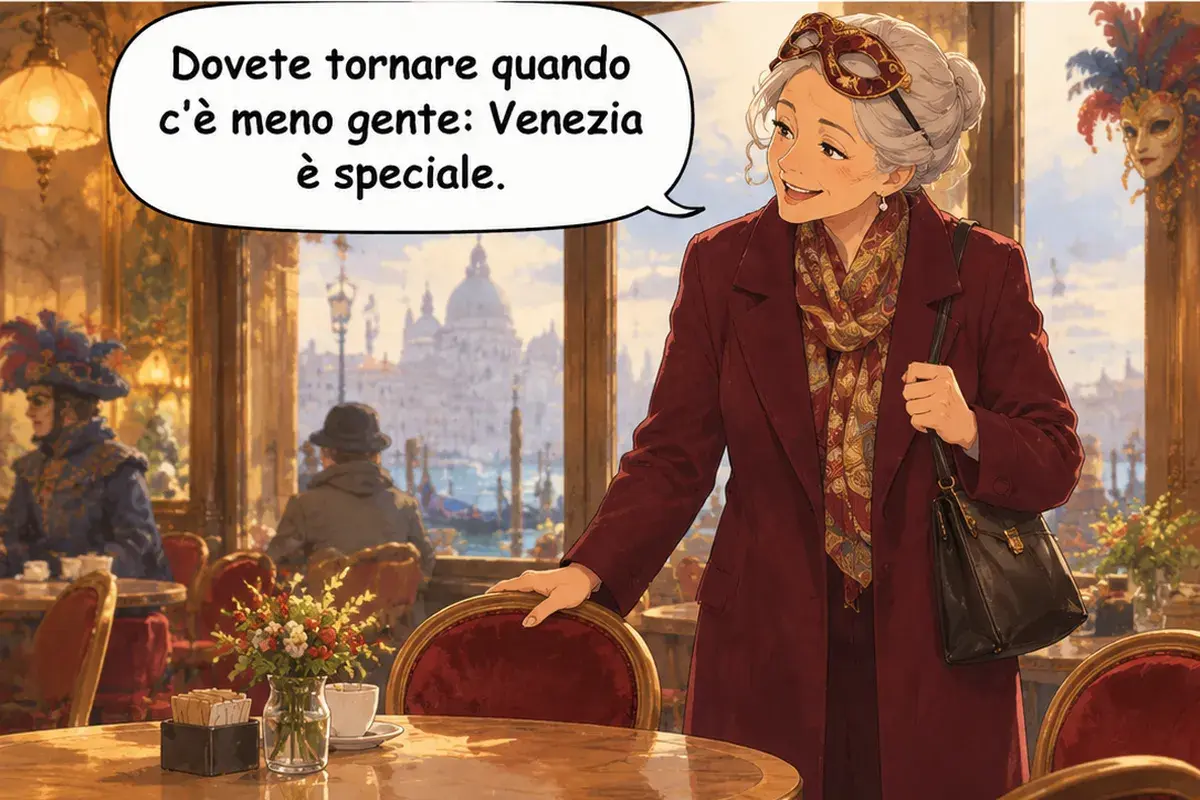
- Signora
Dovete tornare quando c'è meno gente: Venezia è speciale.
You have to come back when there are fewer people: Venice is special. (to several people)
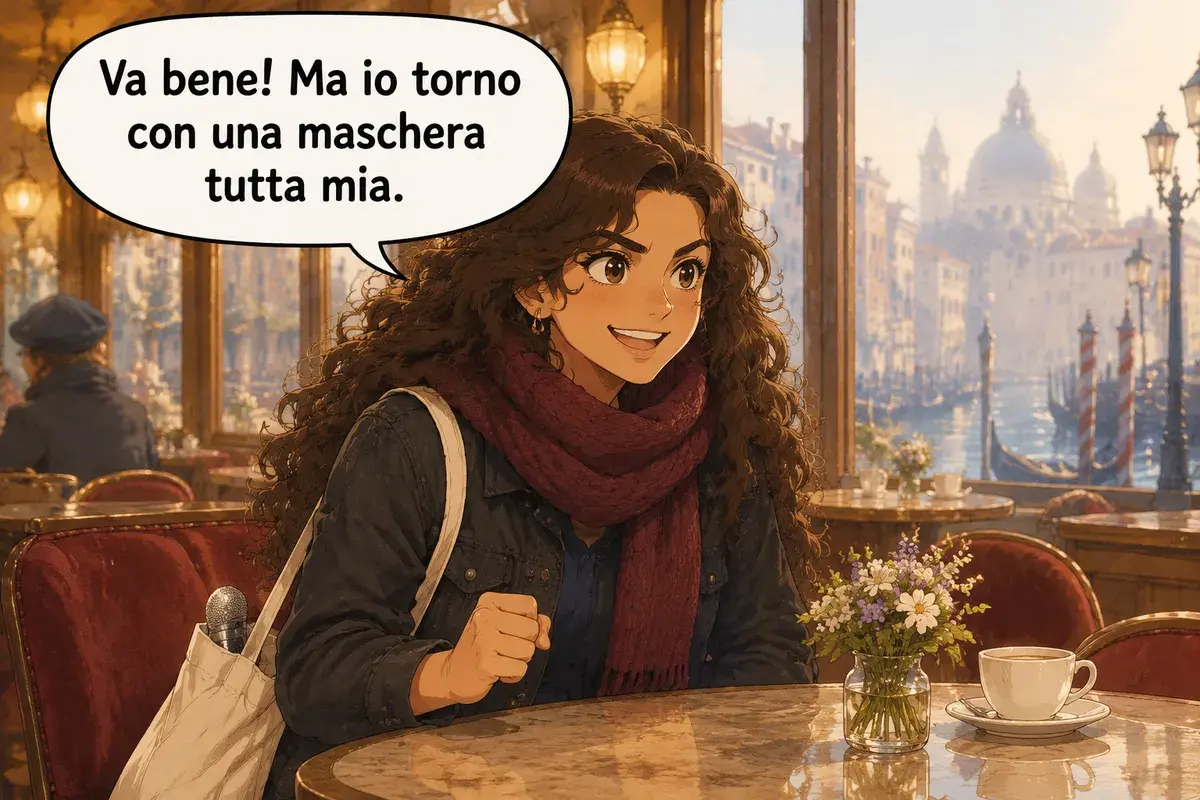
- Giulia
Va bene! Ma io torno con una maschera tutta mia.
OK! But I'm coming back with a mask of my own.
Grammar for this text
- Com'era Venezia? — com'era = come + era: era is the imperfetto of essere. The question "what was it like?" and the answer c'era troppa gente are both in the imperfetto; troppa changes its ending before the feminine word gente.
- C'erano solo turisti, come noi! — c'erano is the plural of c'era: there are many turisti. io c'ero! — c'ero = ci + ero (the io form of essere): "I was there".
- Come, non c'erano? — Come? at the start of a sentence shows surprise: "what do you mean?"
- Scusi, signora, Ha ragione — the young people use Lei with a lady they don't know, so the verb takes the he/she form: ha, not hai. She uses voi with them: Siete stati al Carnevale? (stati is the past participle of essere; al = a + il), Dovete tornare (dovete — you (plural) have to, from dovere).
- siete troppi — "there are too many of you": troppi agrees with the masculine voi.
- Ho fatto un selfie — fatto is the past participle of fare, A1, unit 15.
- scherzavo! — "I was joking": just like English, Italian uses the imperfetto here ("I was joking"), not ho scherzato.
Words and grammar of the unit: Describe a place you've visited.
Learn the words from the texts with flashcards
In the app, you can tap any word in a text to see its translation, forms and examples, and new words stick with flashcards. 15 minutes a day.
Start for freeEverything is open for free. No card needed to sign up.