
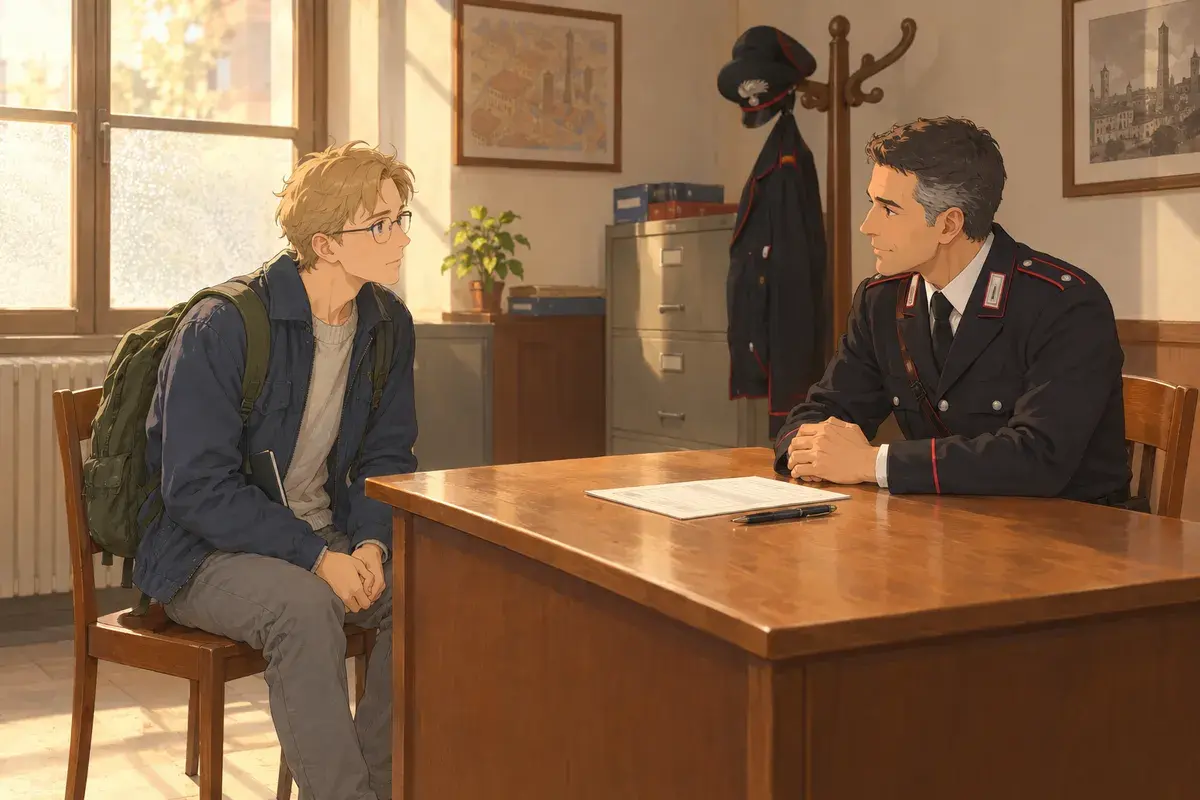
Italian dialogue with translation · A2 · 16 lines
Può descrivere il portafoglio? Can you describe the wallet?
Comic · 15 panels
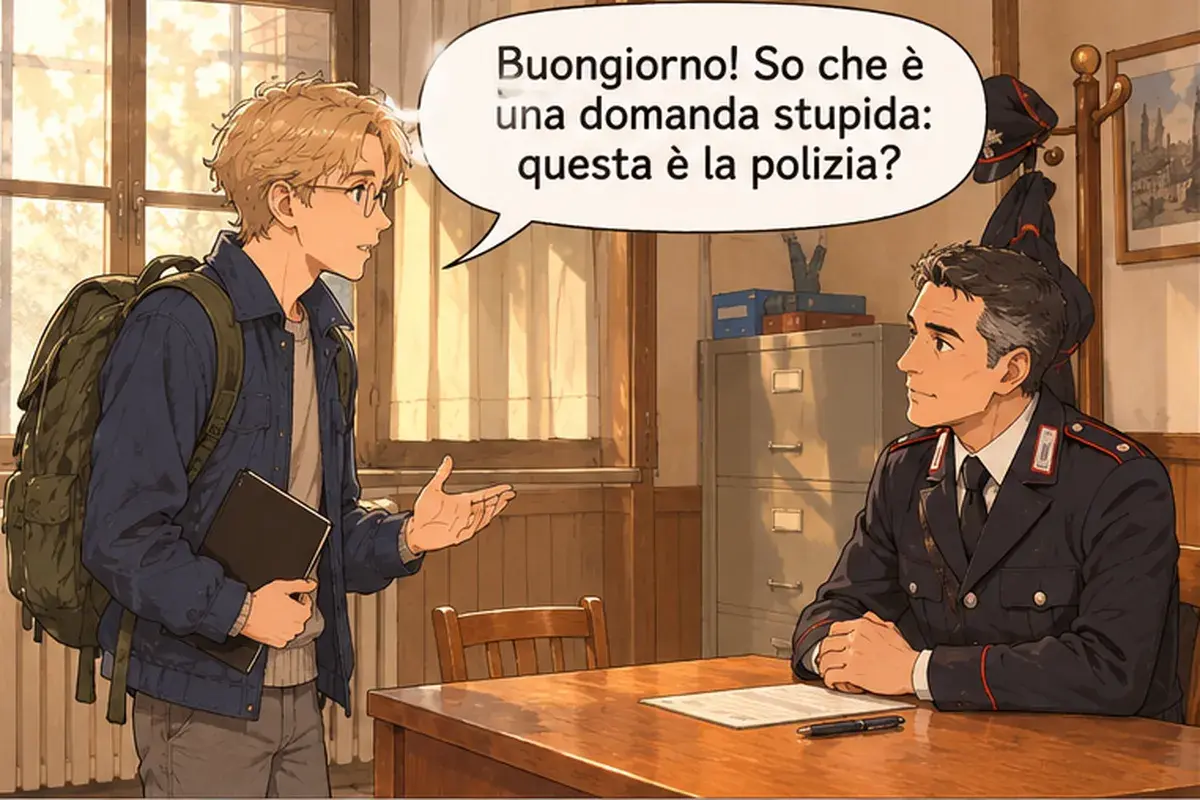
- Misha
Buongiorno! So che è una domanda stupida: questa è la polizia?
Good morning! I know it's a stupid question: is this the police?
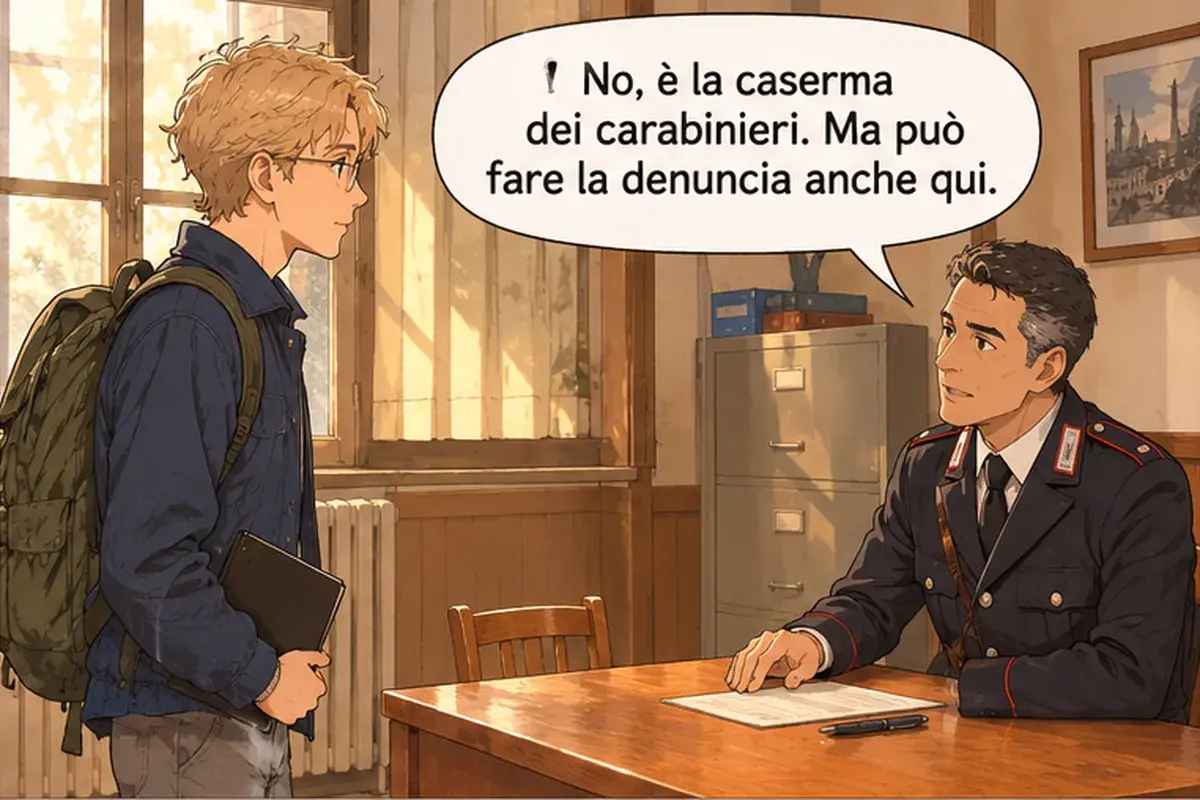
- Carabiniere
No, è la caserma dei carabinieri. Ma può fare la denuncia anche qui.
No, this is the Carabinieri station. But you can file the report here too. (formal)
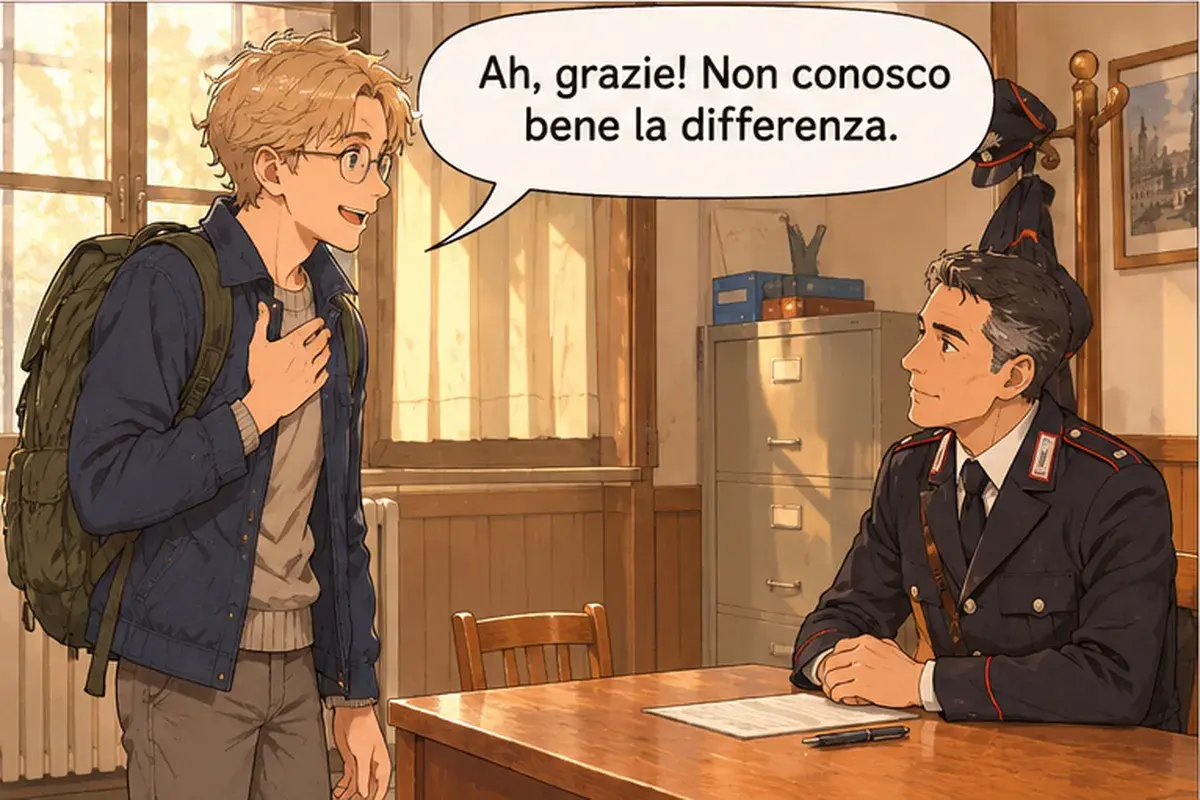
- Misha
Ah, grazie! Non conosco bene la differenza.
Oh, thanks! I don't really know the difference.
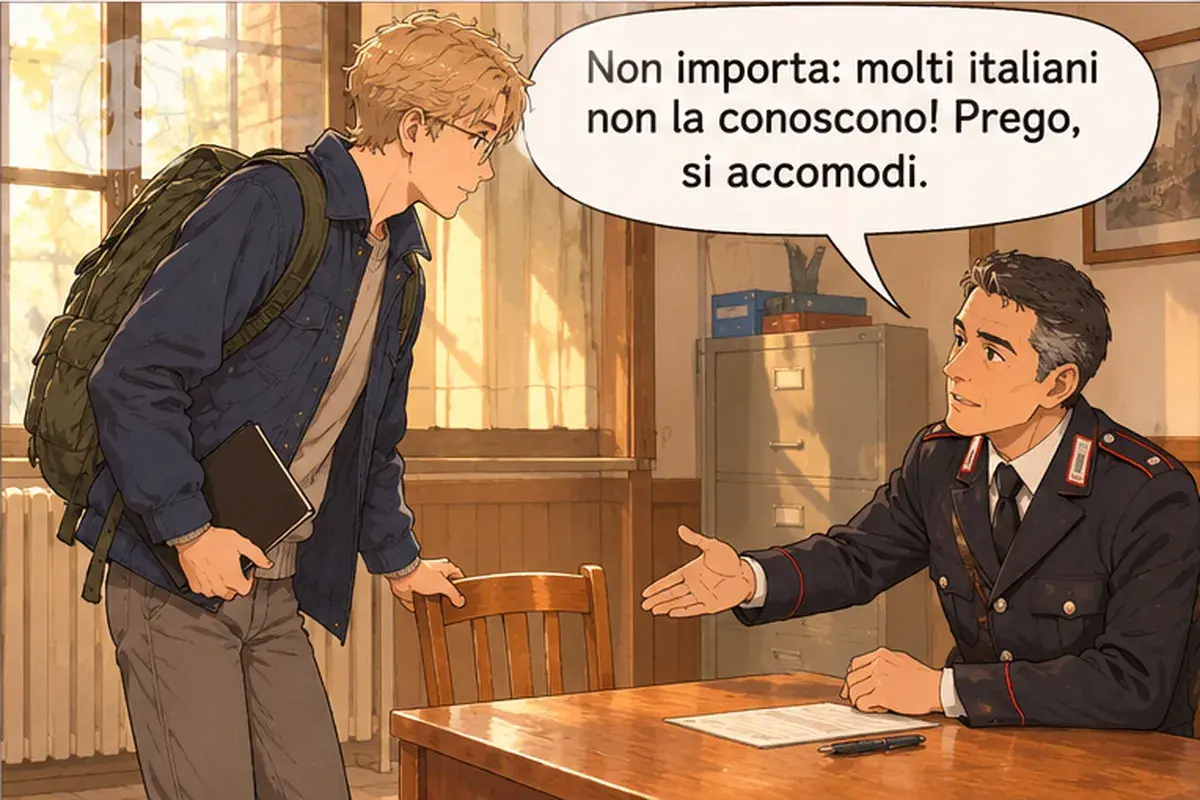
- Carabiniere
Non importa: molti italiani non la conoscono! Prego, si accomodi.
Never mind: lots of Italians don't know it! Please, have a seat. (formal)
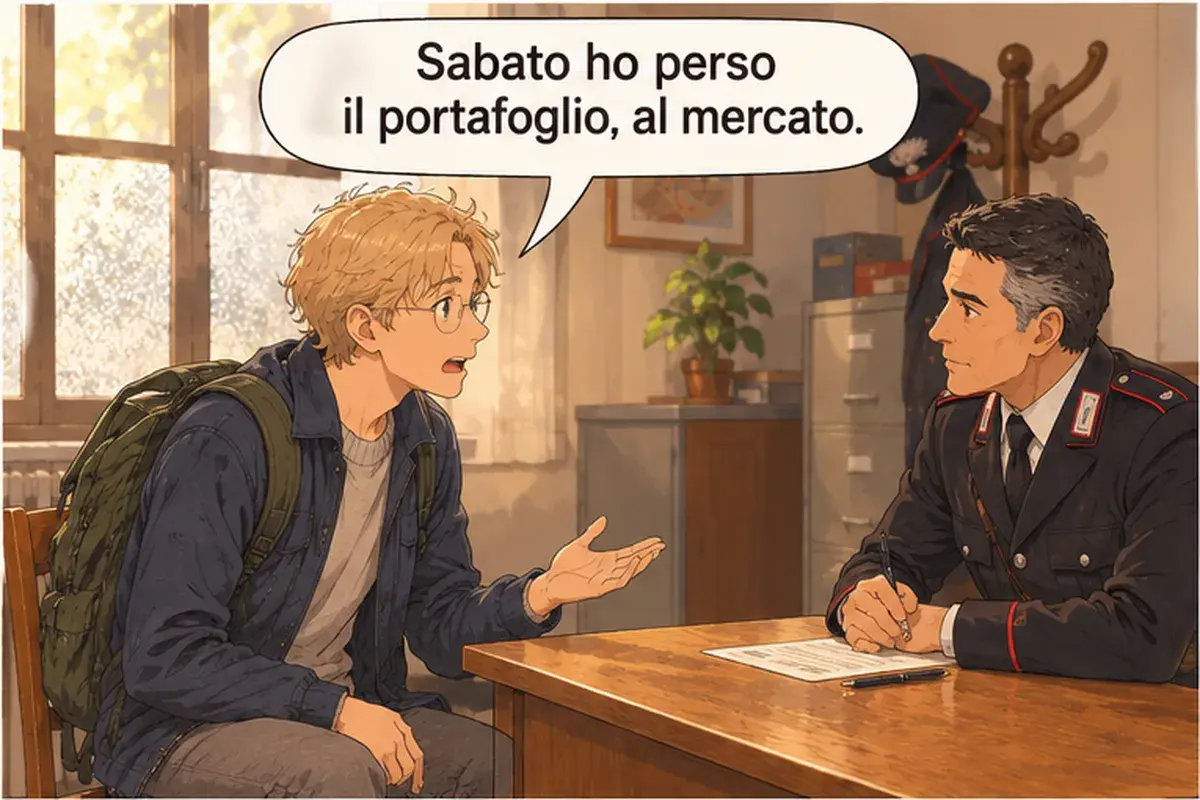
- Misha
Sabato ho perso il portafoglio, al mercato.
On Saturday I lost my wallet, at the market.
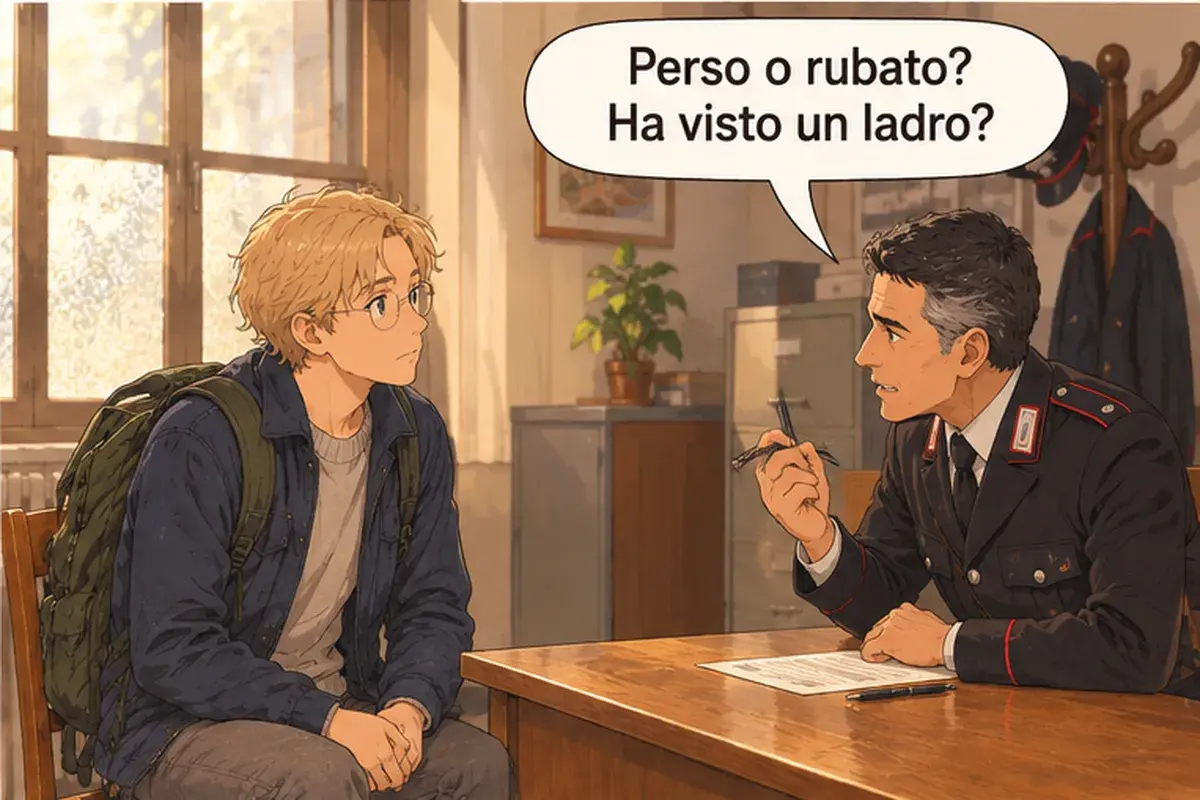
- Carabiniere
Perso o rubato? Ha visto un ladro?
Lost or stolen? Did you see a thief? (formal)
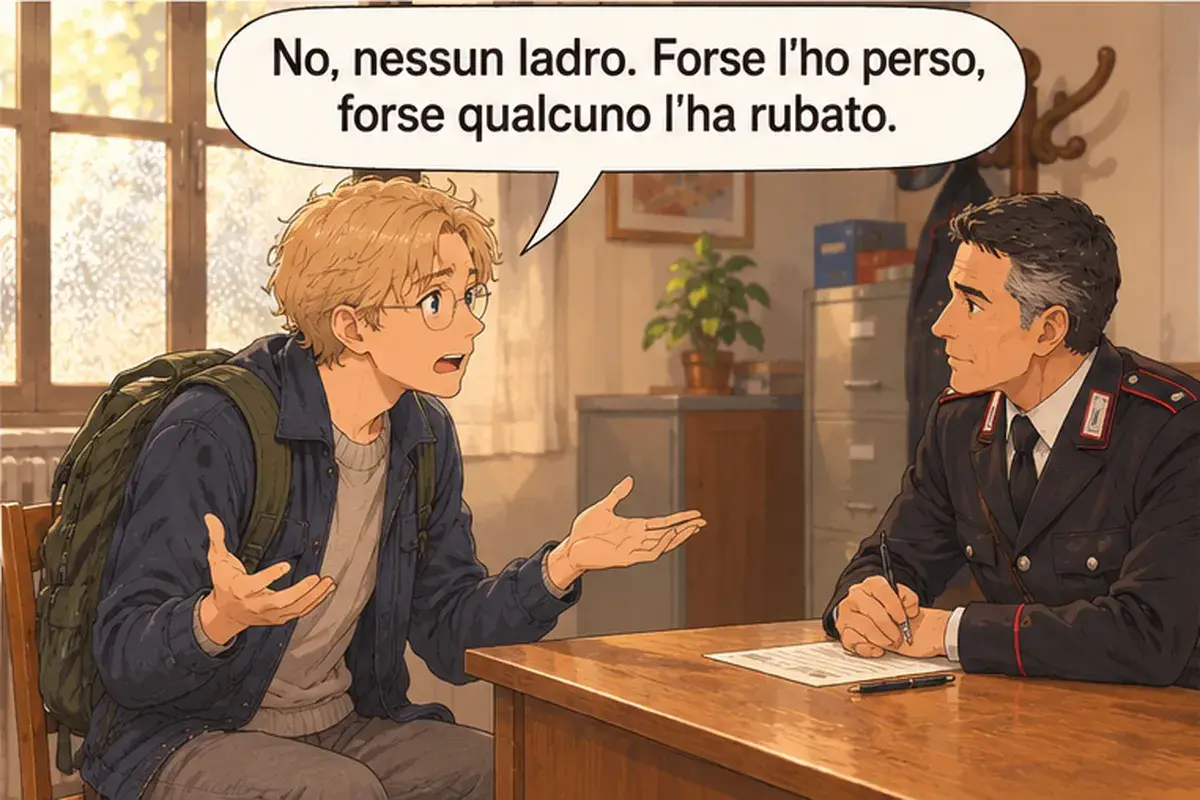
- Misha
No, nessun ladro. Forse l'ho perso, forse qualcuno l'ha rubato.
No, no thief. Maybe I lost it, maybe someone stole it.
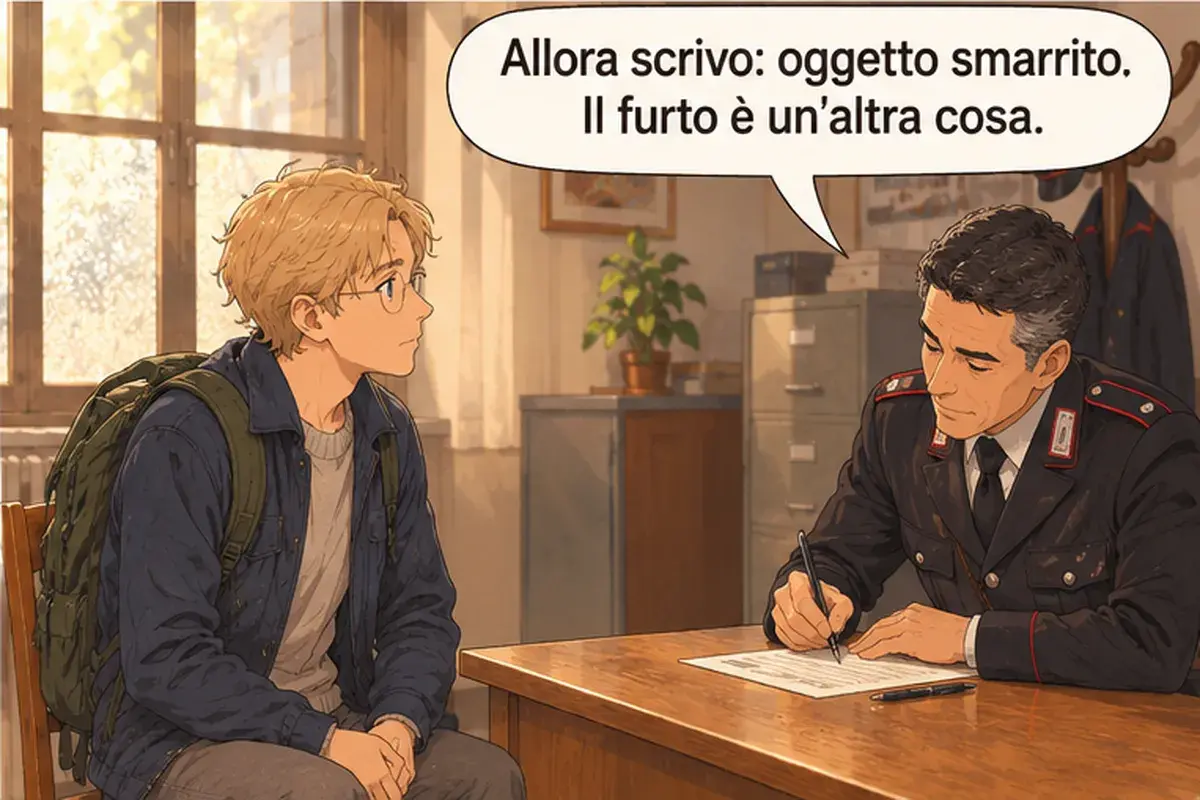
- Carabiniere
Allora scrivo: oggetto smarrito. Il furto è un'altra cosa.
Then I'll write: lost item. Theft is something else.
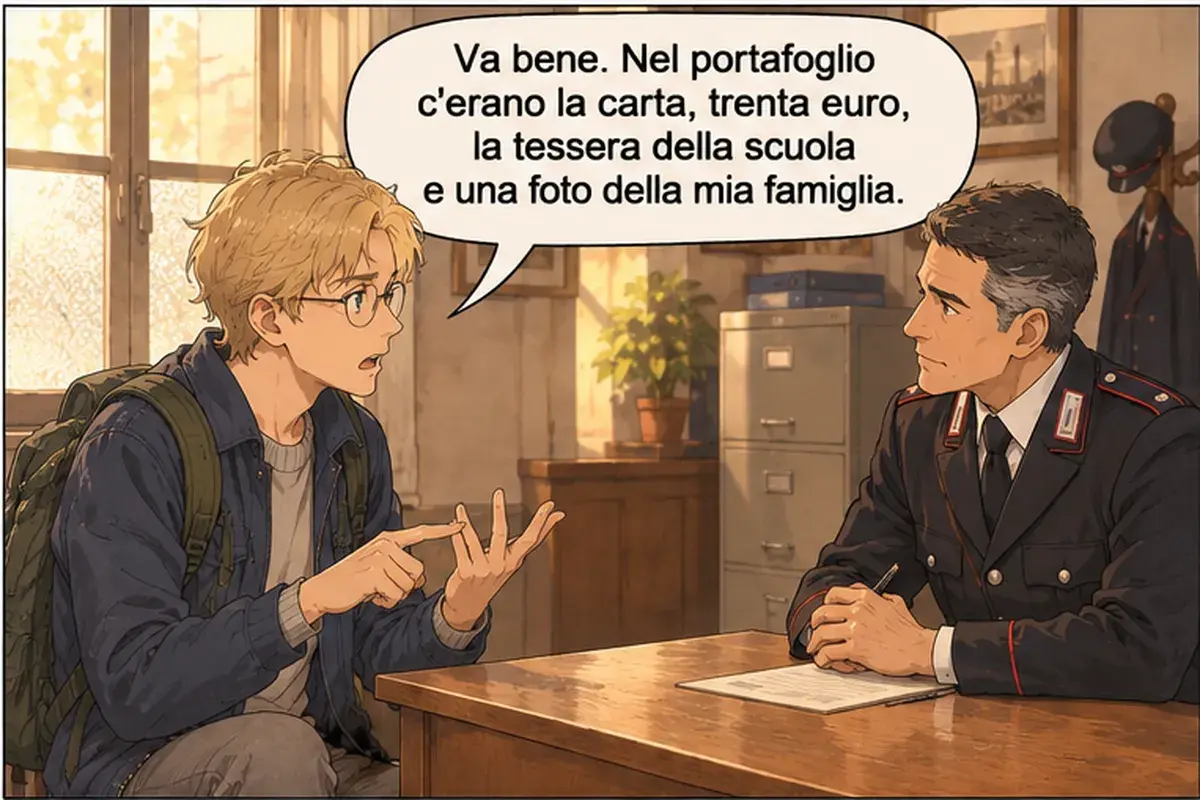
- Misha
Va bene. Nel portafoglio c'erano la carta, trenta euro, la tessera della scuola e una foto della mia famiglia.
OK. In the wallet there were my card, thirty euros, my school ID and a photo of my family.
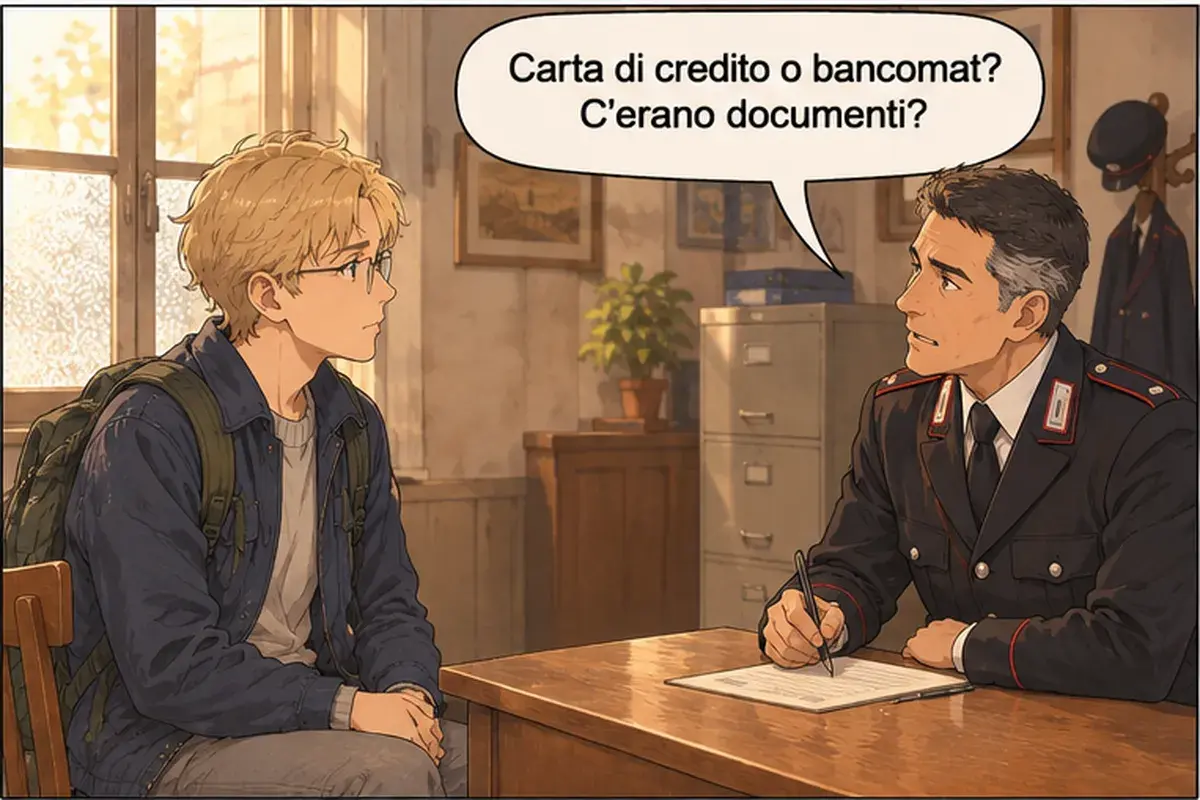
- Carabiniere
Carta di credito o bancomat? C'erano documenti?
Credit card or debit card? Were there any documents?
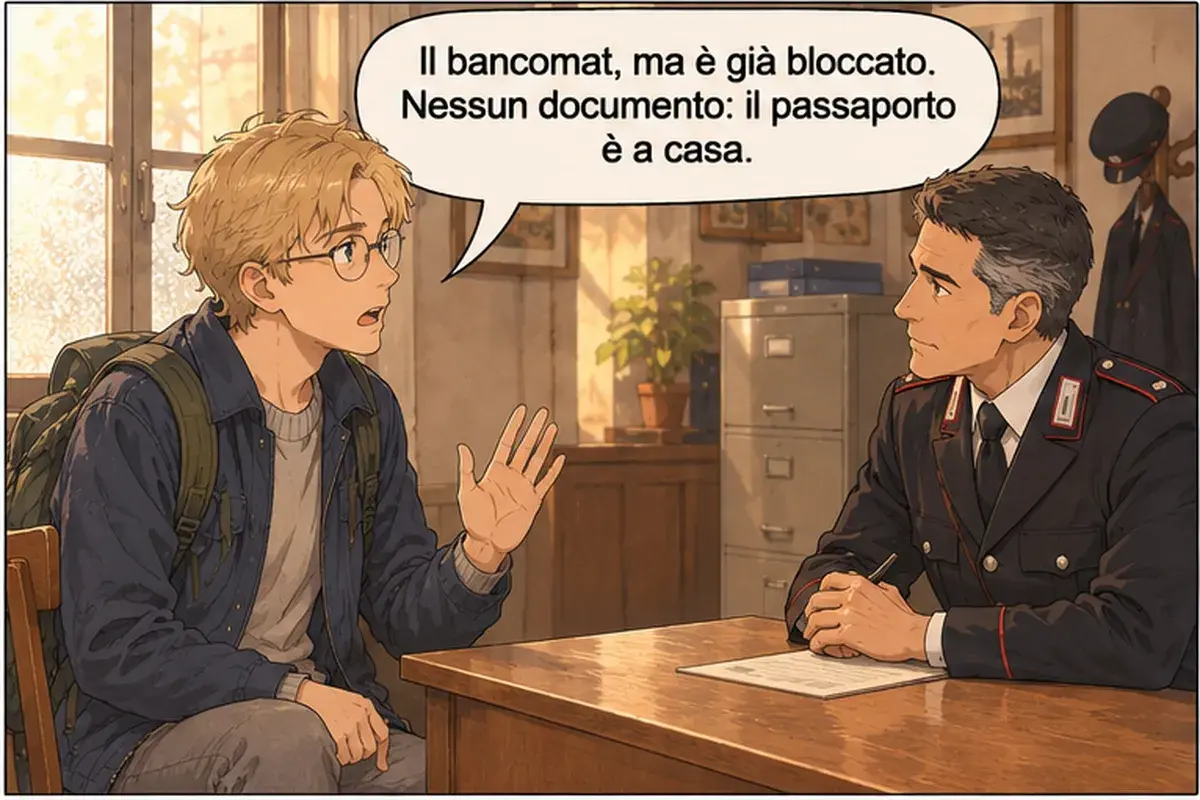
- Misha
Il bancomat, ma è già bloccato. Nessun documento: il passaporto è a casa.
The debit card, but it's already blocked. No documents: my passport is at home.
- Carabiniere
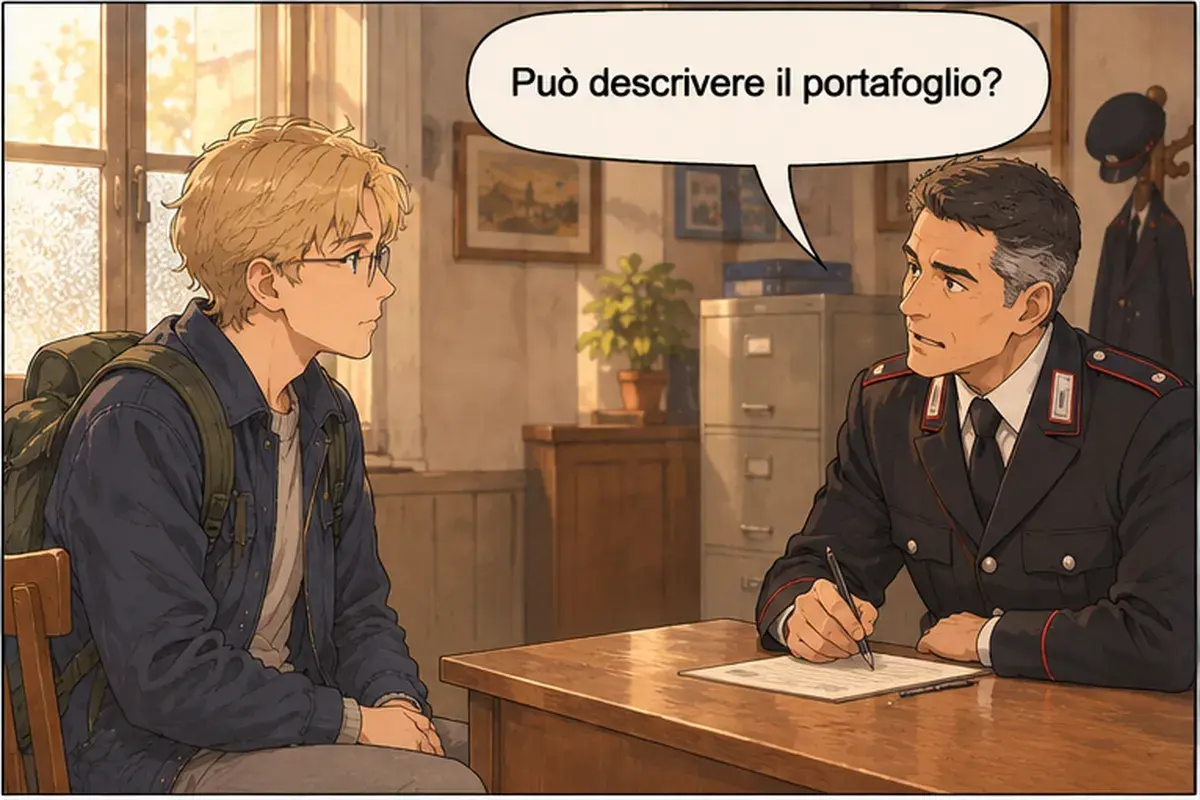
Può descrivere il portafoglio?
Can you describe the wallet? (formal)
- Misha
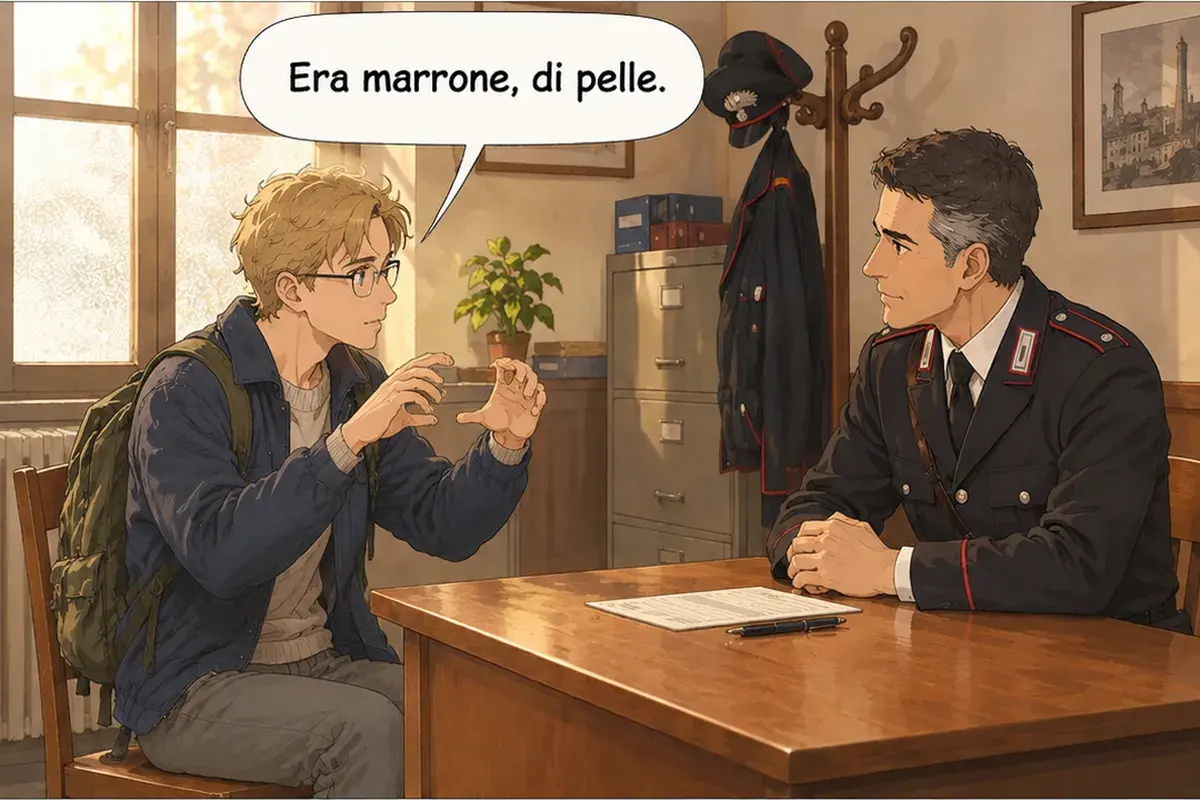
Era marrone, di pelle.
It was brown, made of leather.
- Carabiniere
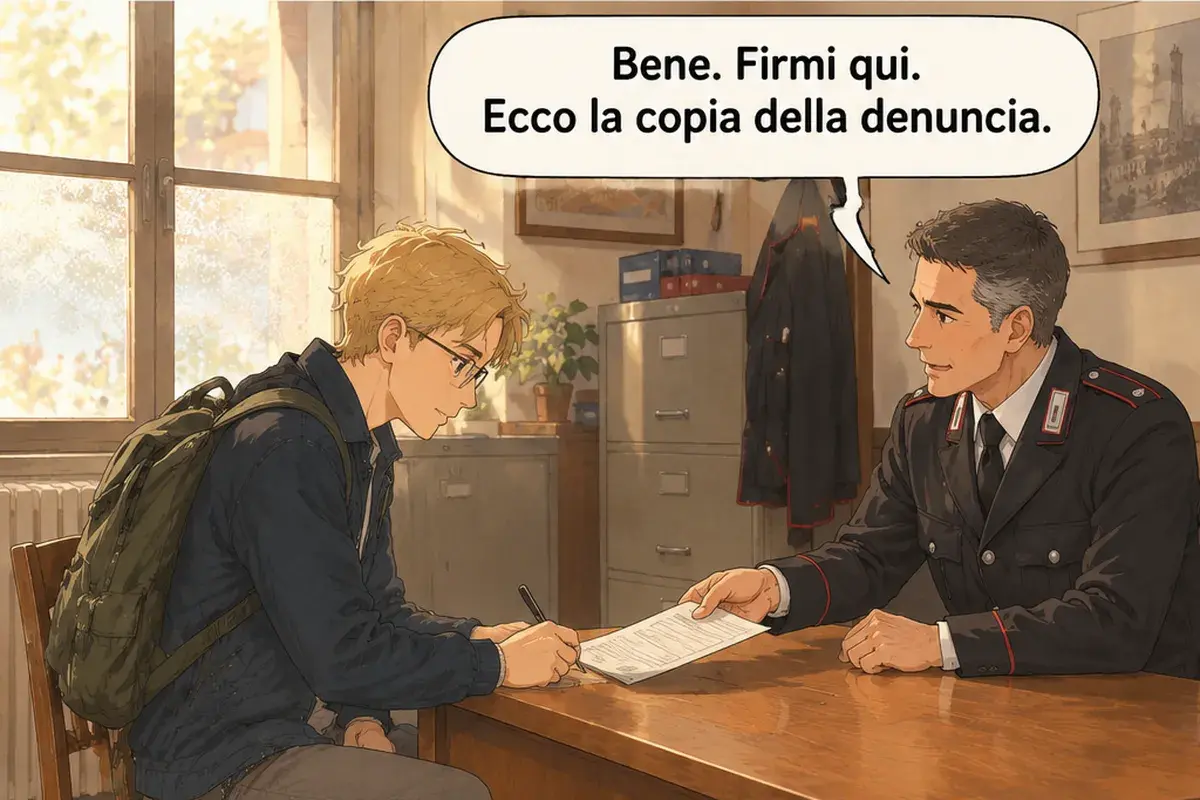
Bene. Firmi qui. Ecco la copia della denuncia.
Good. Sign here. Here's the copy of the report. (formal)
- Misha
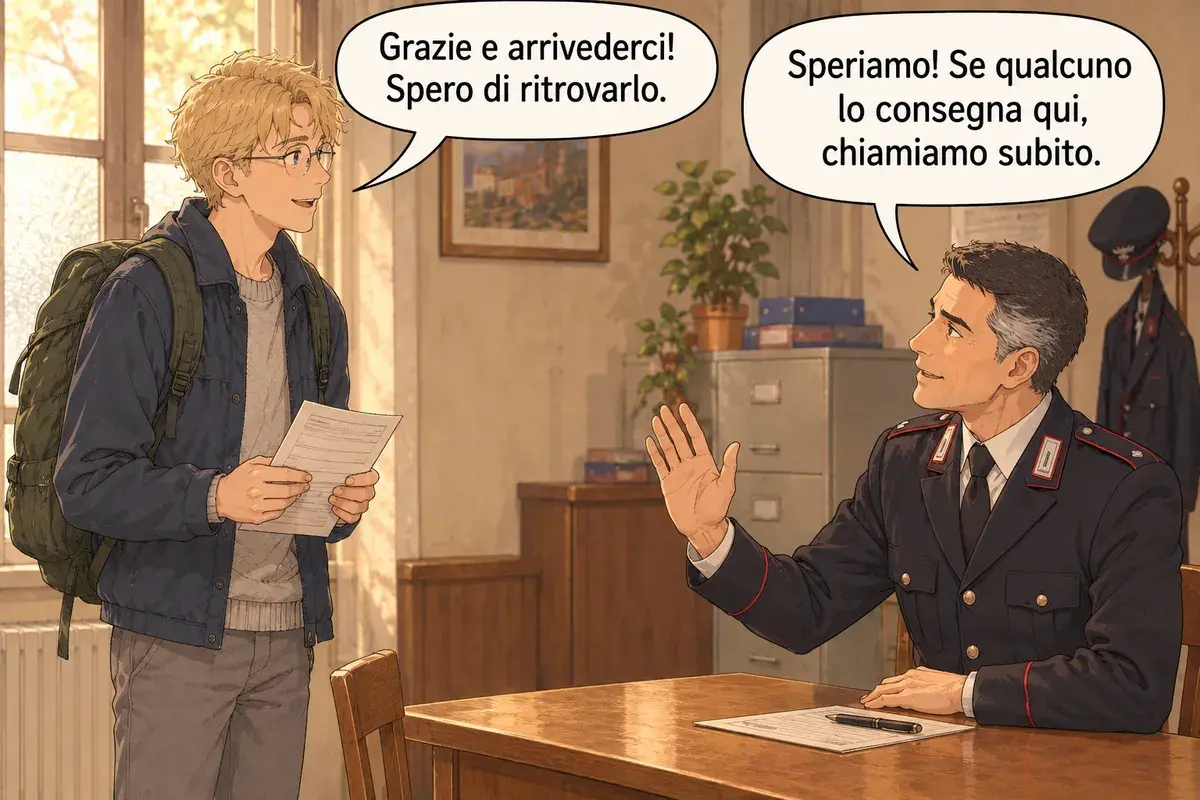
Grazie e arrivederci! Spero di ritrovarlo.
Thank you and goodbye! I hope to find it.
- Carabiniere
Speriamo! Se qualcuno lo consegna qui, chiamiamo subito.
Let's hope so! If someone hands it in here, we'll call right away.
Grammar for this text
- Può descrivere il portafoglio? — the carabiniere uses Lei (formal you) with Misha: the verb takes the he/she form (può, ha visto, firmi), and the word Lei itself isn't needed. descrivere — to describe.
- Prego, si accomodi and Firmi qui — ready-made polite commands: si accomodi comes from accomodarsi (to take a seat), firmi from firmare (to sign). For -are verbs the Lei form ends in -i. More in B1; for now learn them whole.
- molti italiani non la conoscono, l'ho perso, l'ha rubato, lo consegna — la, lo and l' are the pronouns "her / it" and "him / it" (this unit): la replaces la differenza, lo and l' replace il portafoglio.
- Spero di ritrovarlo — ritrovarlo = ritrovare + lo: the infinitive drops its -e, and "it" sticks to the end. Speriamo! — "we hope", that is, "let's hope so".
- Era marrone, di pelle — era is the imperfetto (past of habits and descriptions): what something was like (unit 5). di pelle — "(made) of leather". C'erano — "there were" (the plural of c'era).
- oggetto smarrito — "lost item"; furto — "theft". caserma — the Carabinieri station; the Carabinieri and the polizia are two different police forces.
Words and grammar of the unit: Reporting a lost wallet.
Learn the words from the texts with flashcards
In the app, you can tap any word in a text to see its translation, forms and examples, and new words stick with flashcards. 15 minutes a day.
Start for freeEverything is open for free. No card needed to sign up.