

Italian dialogue with translation · A2 · 15 lines
Piango a ogni matrimonio: è un'abitudine di famiglia. I cry at every wedding: it's a family habit.
Comic · 15 panels
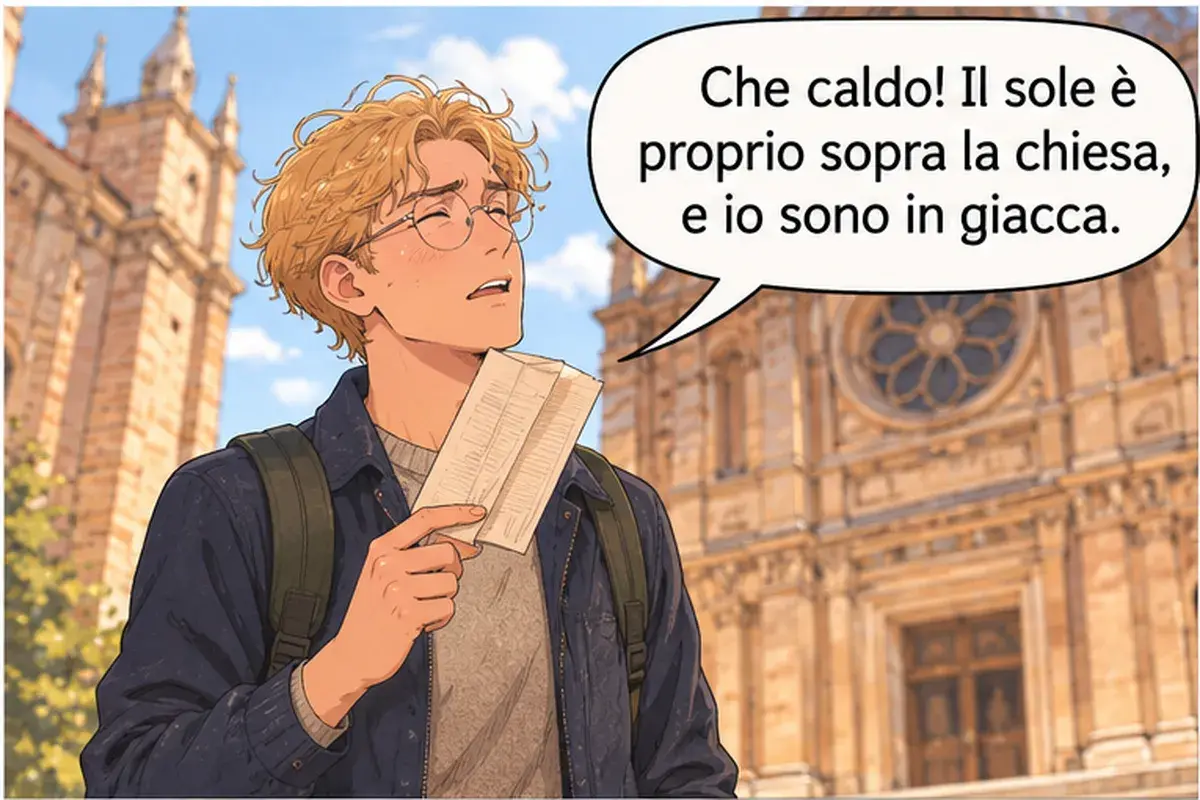
- Misha
Che caldo! Il sole è proprio sopra la chiesa, e io sono in giacca.
It's so hot! The sun is right above the church, and I'm wearing a jacket.
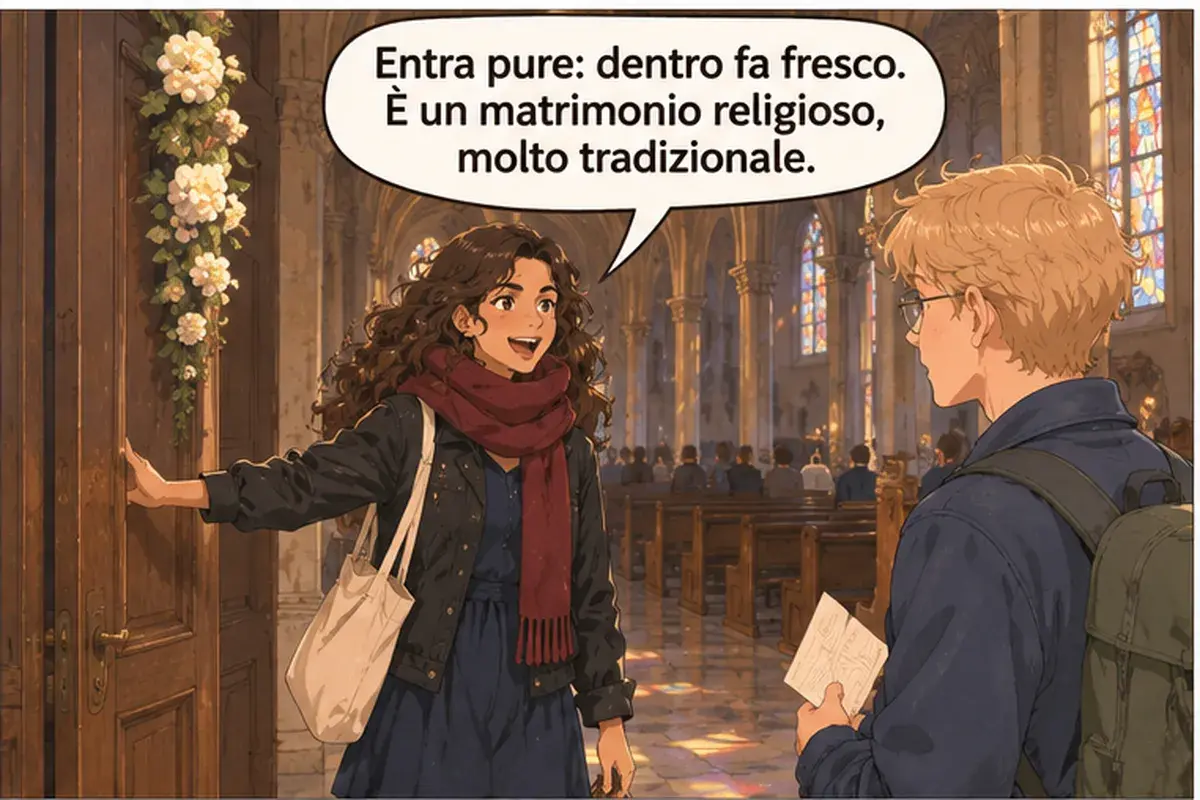
- Giulia
Entra pure: dentro fa fresco. È un matrimonio religioso, molto tradizionale.
Come on in: it's cool inside. It's a religious wedding, very traditional.
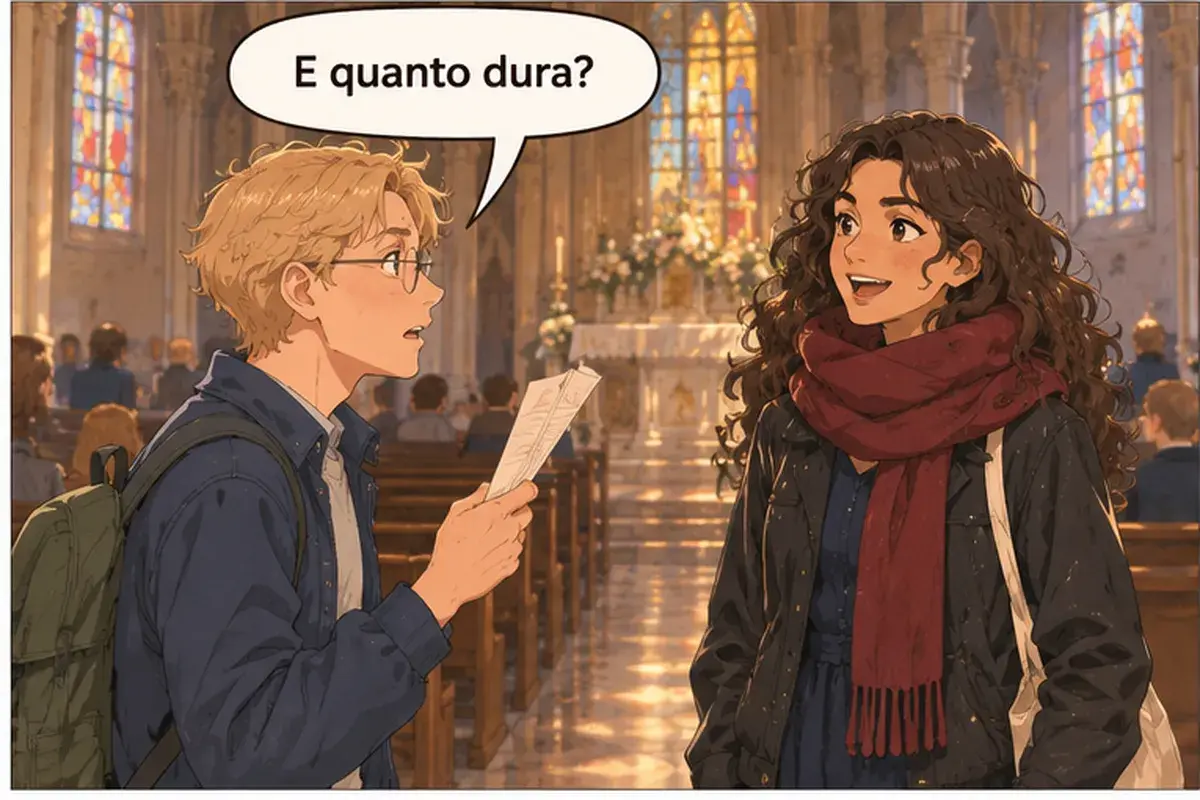
- Misha
E quanto dura?
And how long does it last?
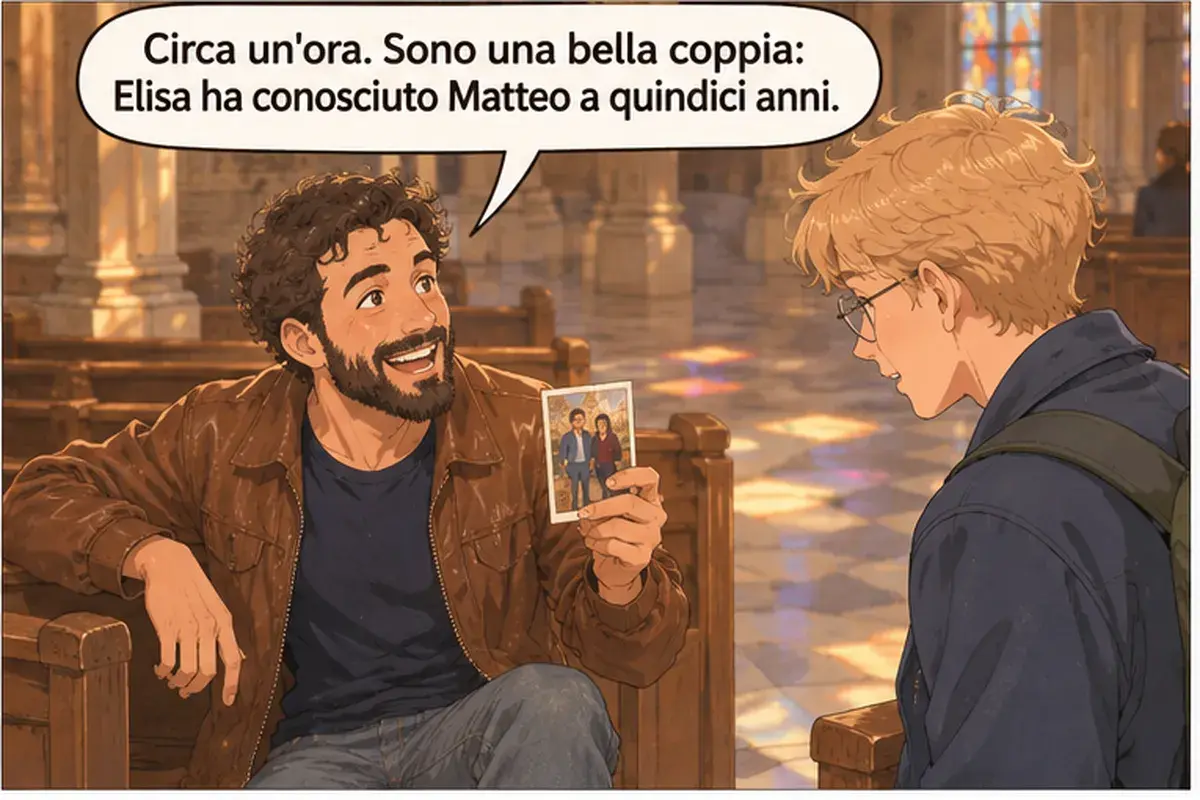
- Luca
Circa un'ora. Sono una bella coppia: Elisa ha conosciuto Matteo a quindici anni.
About an hour. They make a lovely couple: Elisa met Matteo at fifteen.
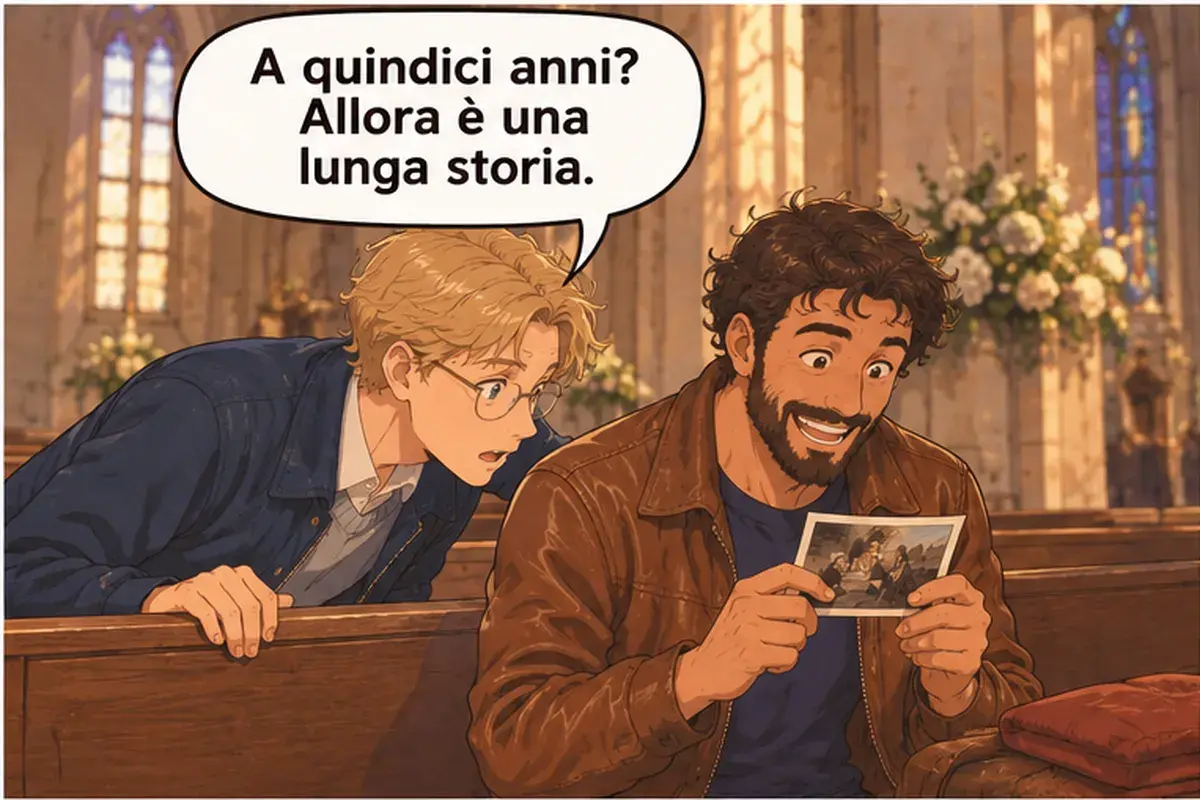
- Misha
A quindici anni? Allora è una lunga storia.
At fifteen? Then it's a long story.
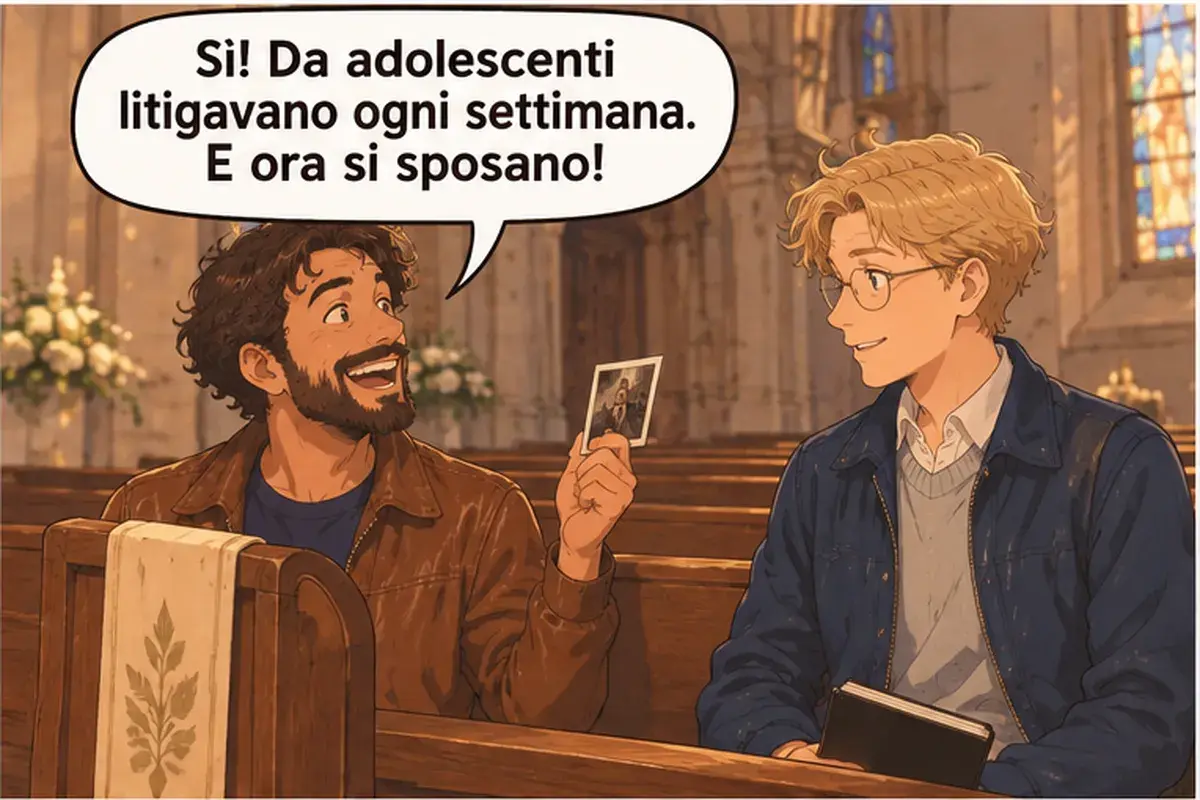
- Luca
Sì! Da adolescenti litigavano ogni settimana. E ora si sposano!
Yes! As teenagers they used to argue every week. And now they're getting married!
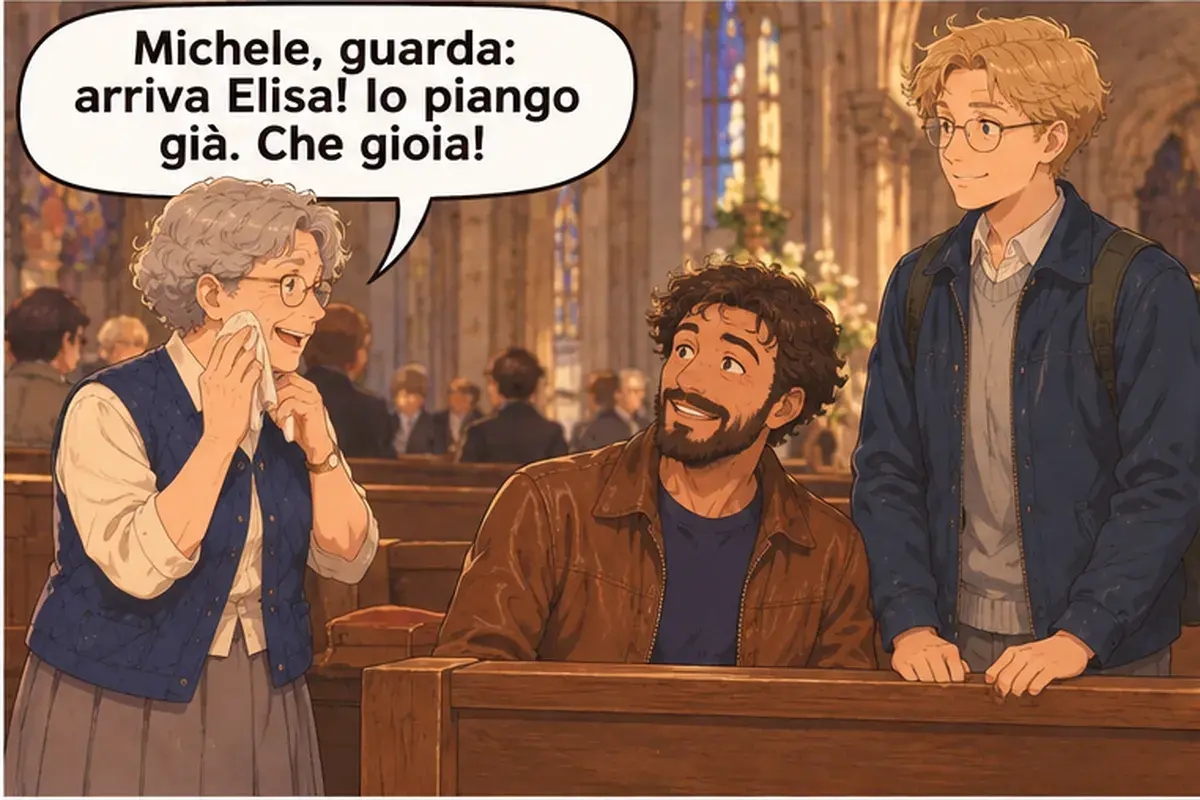
- Signora Paola
Michele, guarda: arriva Elisa! Io piango già. Che gioia!
Michele, look: Elisa's coming! I'm already crying. What joy!
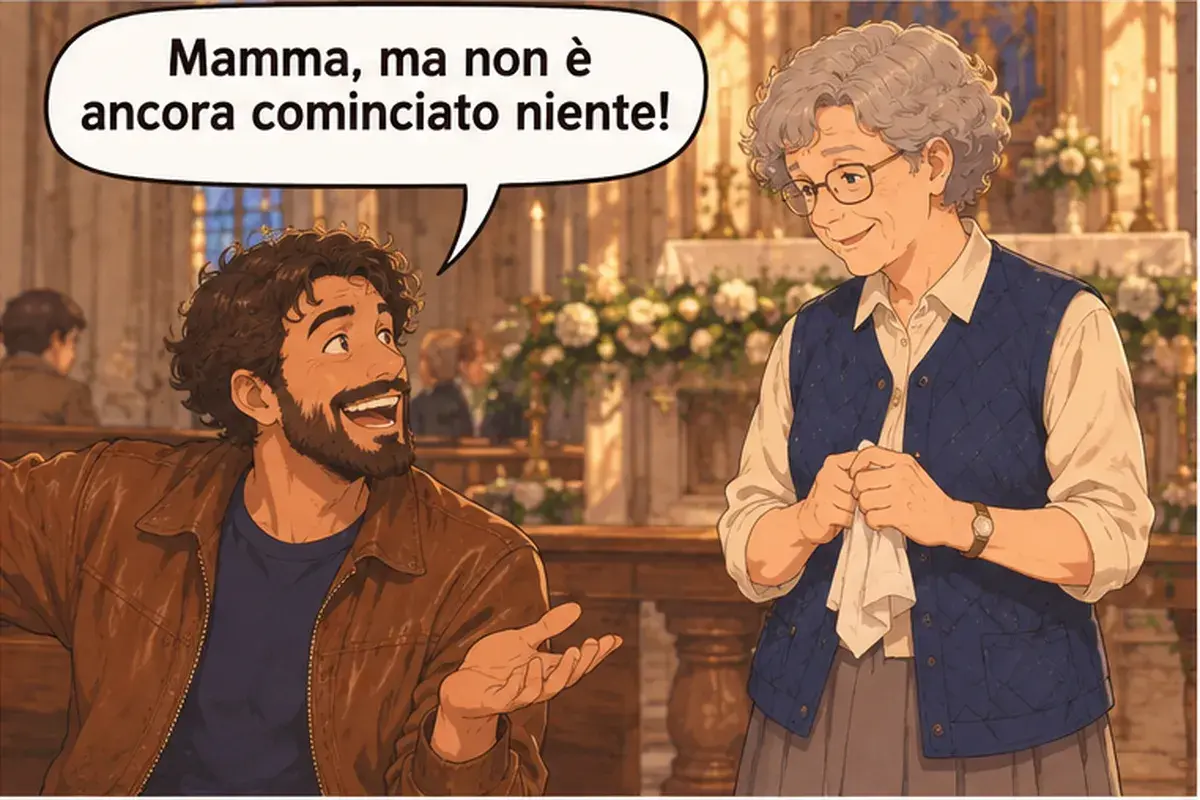
- Luca
Mamma, ma non è ancora cominciato niente!
Mom, but nothing has started yet!
- Signora Paola
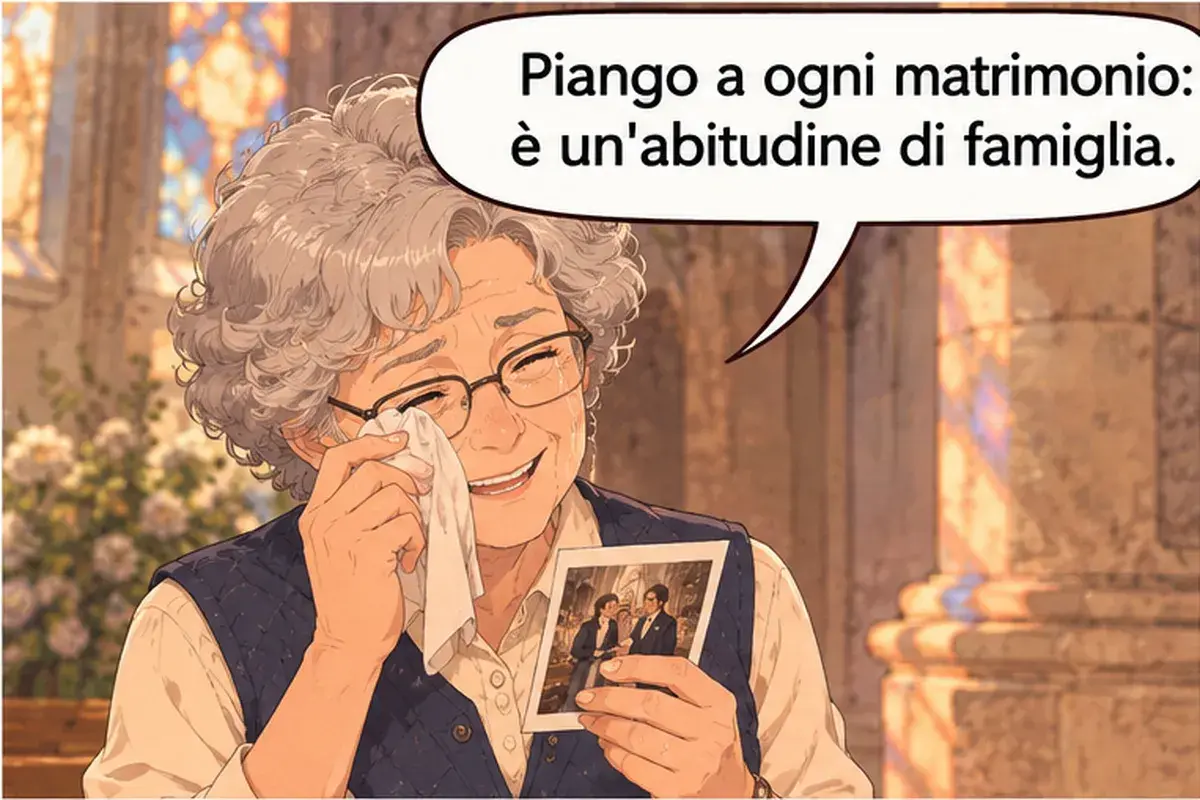
Piango a ogni matrimonio: è un'abitudine di famiglia.
I cry at every wedding: it's a family habit.
- Giulia
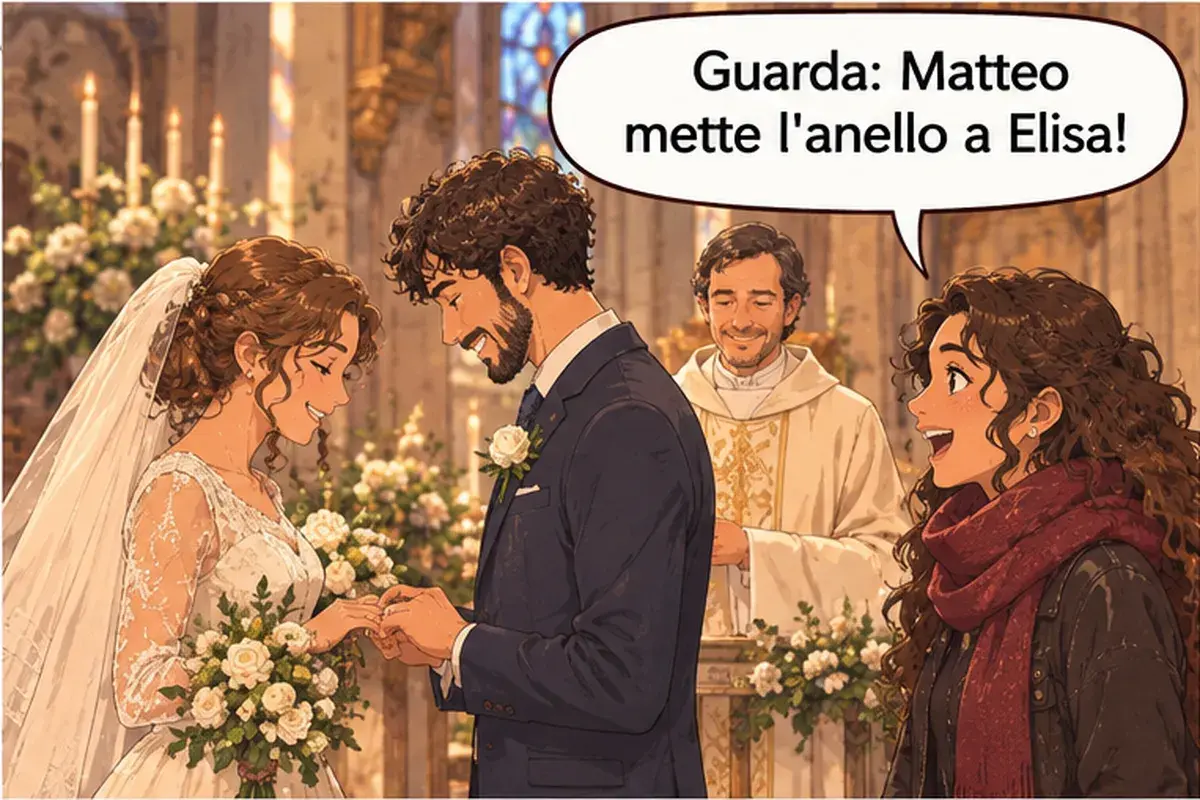
Guarda: Matteo mette l'anello a Elisa!
Look: Matteo is putting the ring on Elisa!
- Misha
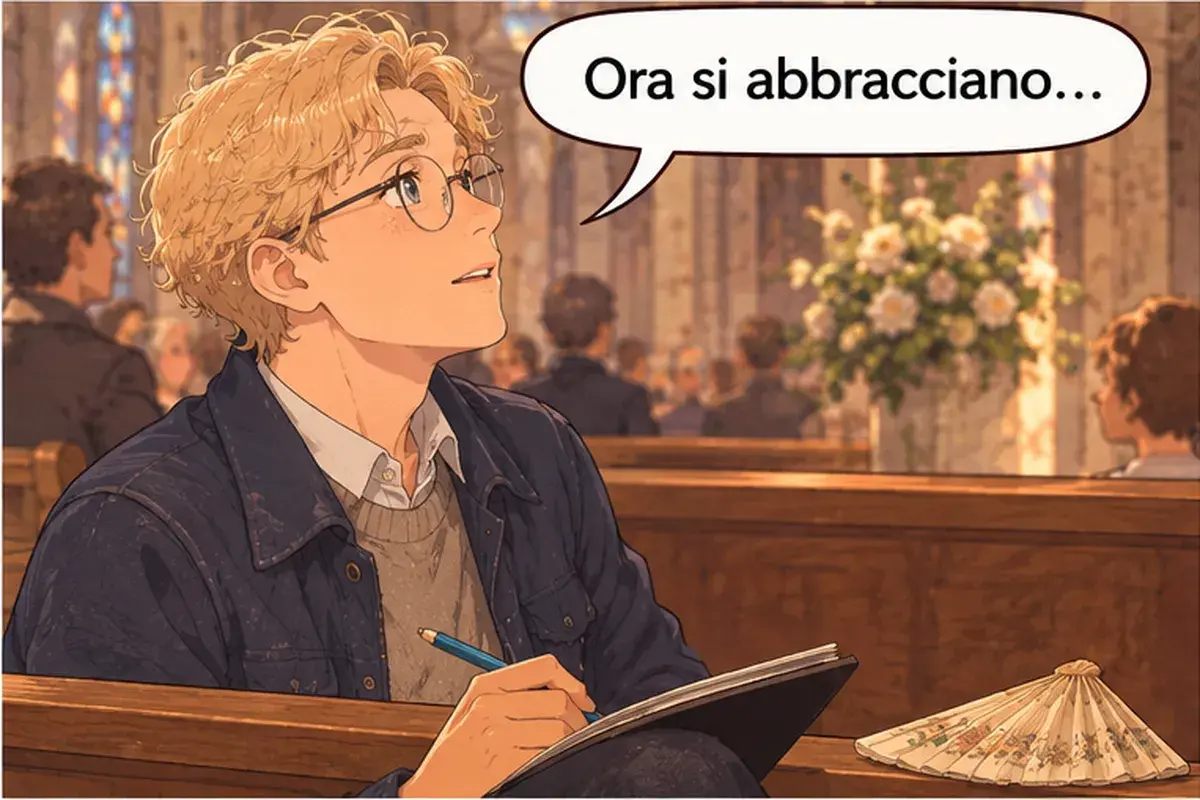
Ora si abbracciano…
Now they're hugging each other…
- Giulia
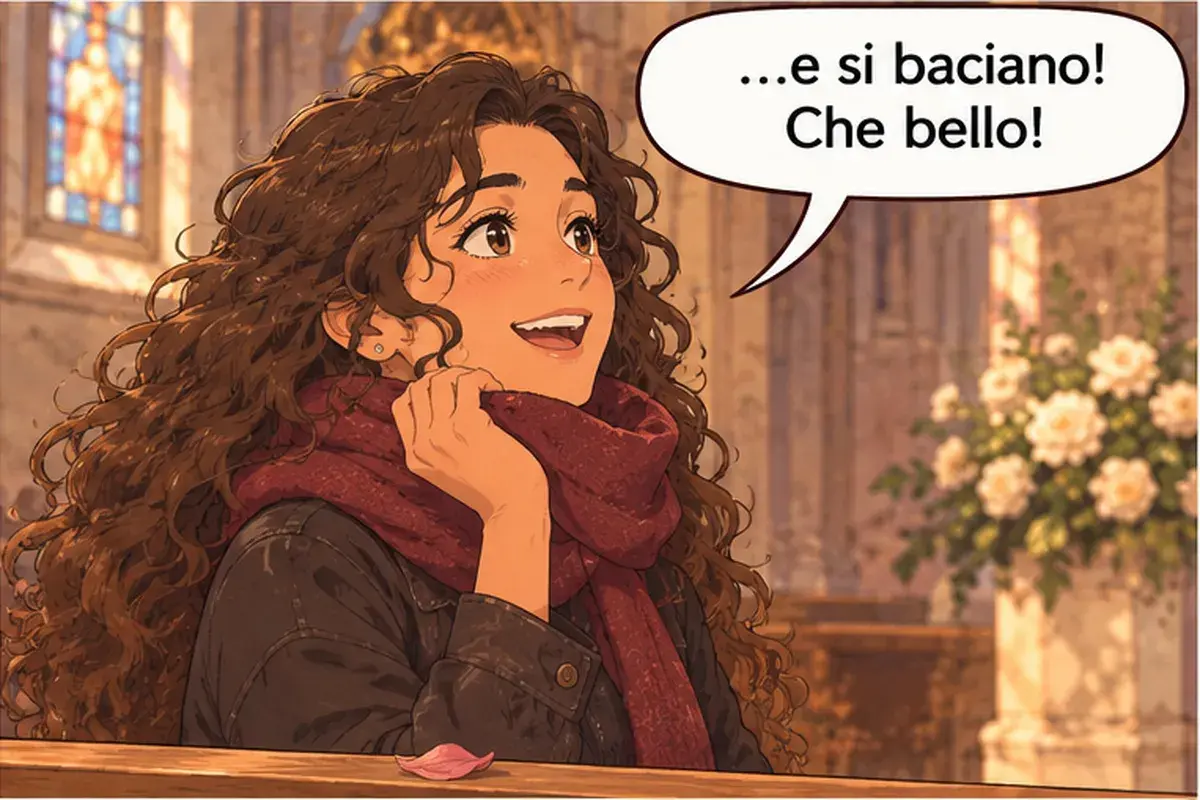
…e si baciano! Che bello!
…and they're kissing! How nice!
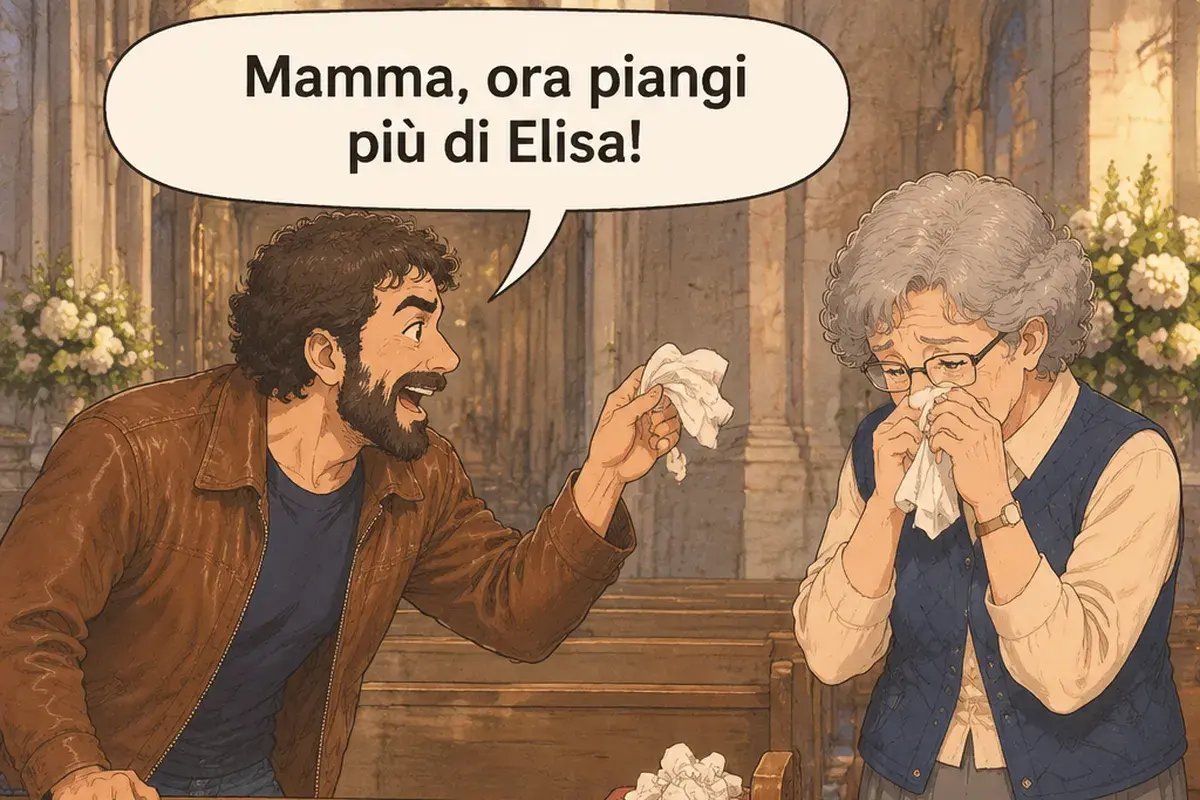
- Luca
Mamma, ora piangi più di Elisa!
Mom, now you're crying more than Elisa!
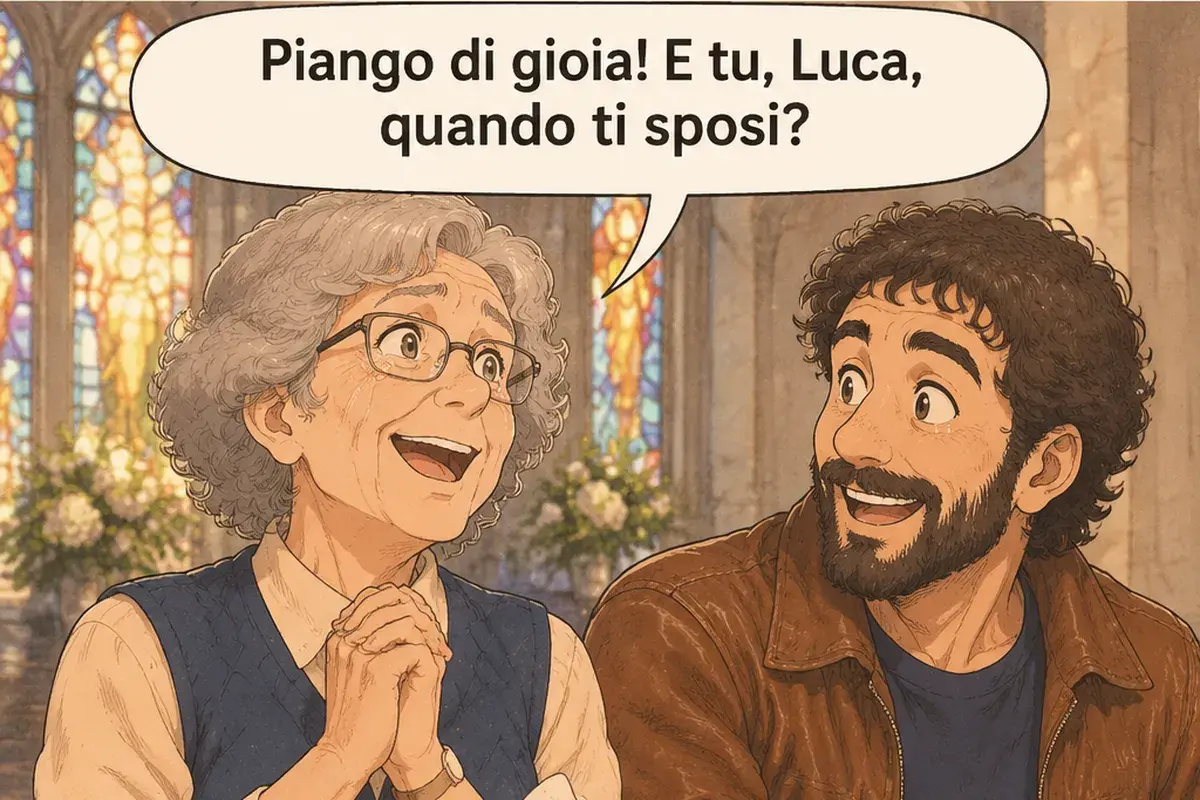
- Signora Paola
Piango di gioia! E tu, Luca, quando ti sposi?
I'm crying with joy! And you, Luca, when are you getting married?
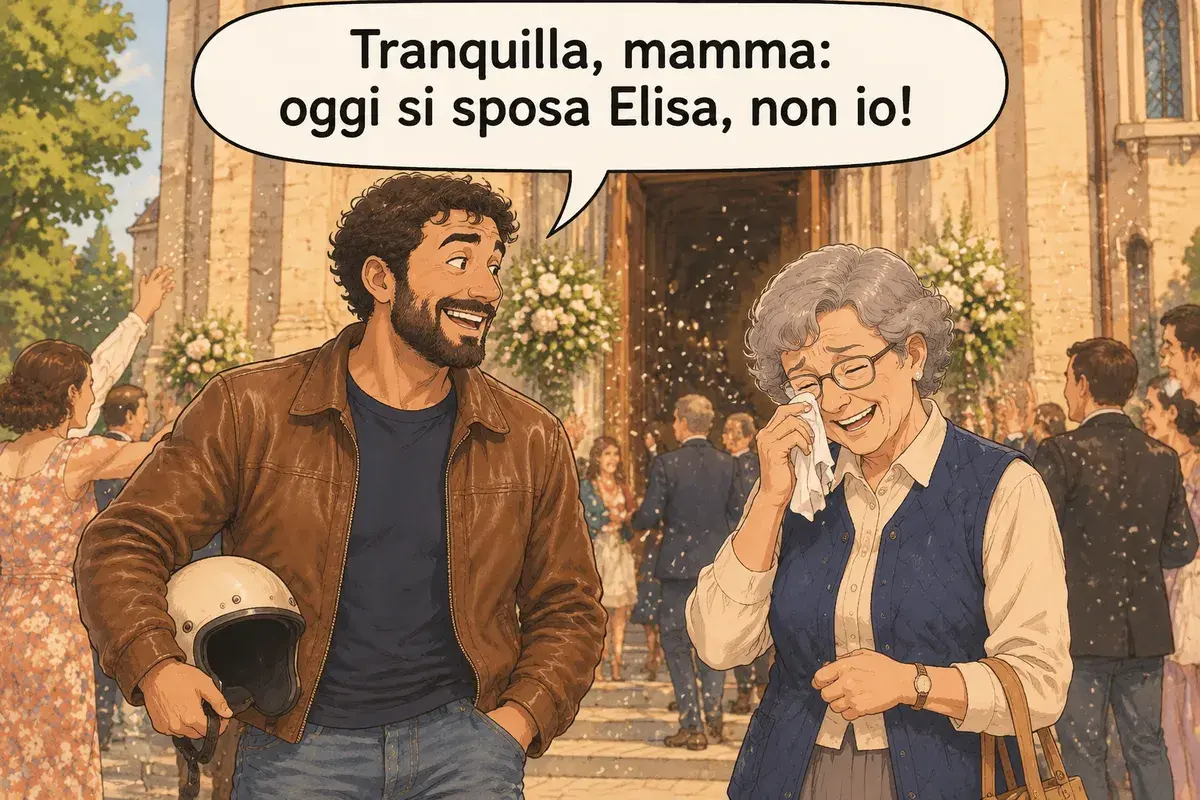
- Luca
Tranquilla, mamma: oggi si sposa Elisa, non io!
Relax, Mom: today it's Elisa getting married, not me!
Grammar for this text
- Entra pure — "Come on in."
entrais the tu imperative ofentrare(rule in unit 13).pureafter an imperative turns an order into an invitation: "go ahead, feel free." - Ora si abbracciano… — a reflexive form in the plural means "each other":
si abbraccianois "they hug each other", and e si baciano is "they kiss each other". Withoutsiit would mean hugging someone else:Matteo abbraccia Elisa. - Da adolescenti litigavano ogni settimana — the imperfetto (past of habits and descriptions) for a habit: it happened again and again (rule in unit 7).
litigaremeans "to argue" and takes nosi.da adolescentimeans "as teenagers". - dentro fa fresco — we talk about weather and temperature with
fare: "it's cool inside", and "it's hot" works the same way. - Matteo mette l'anello a Elisa —
mettereis "to put on" a ring, and the person who gets it comes aftera.l'anelloislobefore a vowel. - quando ti sposi? —
sposarsimeans "to get married" for both a man and a woman (unit 20). For the future in conversation, Italian uses the present tense. In the answer oggi si sposa Elisa the subject comes after the verb: this shows exactly who it is.
Words and grammar of the unit: Go to a wedding.
Learn the words from the texts with flashcards
In the app, you can tap any word in a text to see its translation, forms and examples, and new words stick with flashcards. 15 minutes a day.
Start for freeEverything is open for free. No card needed to sign up.