

Italian dialogue with translation · A2 · 14 lines
Un romanzo non è un test A novel isn't a test
Comic · 14 panels
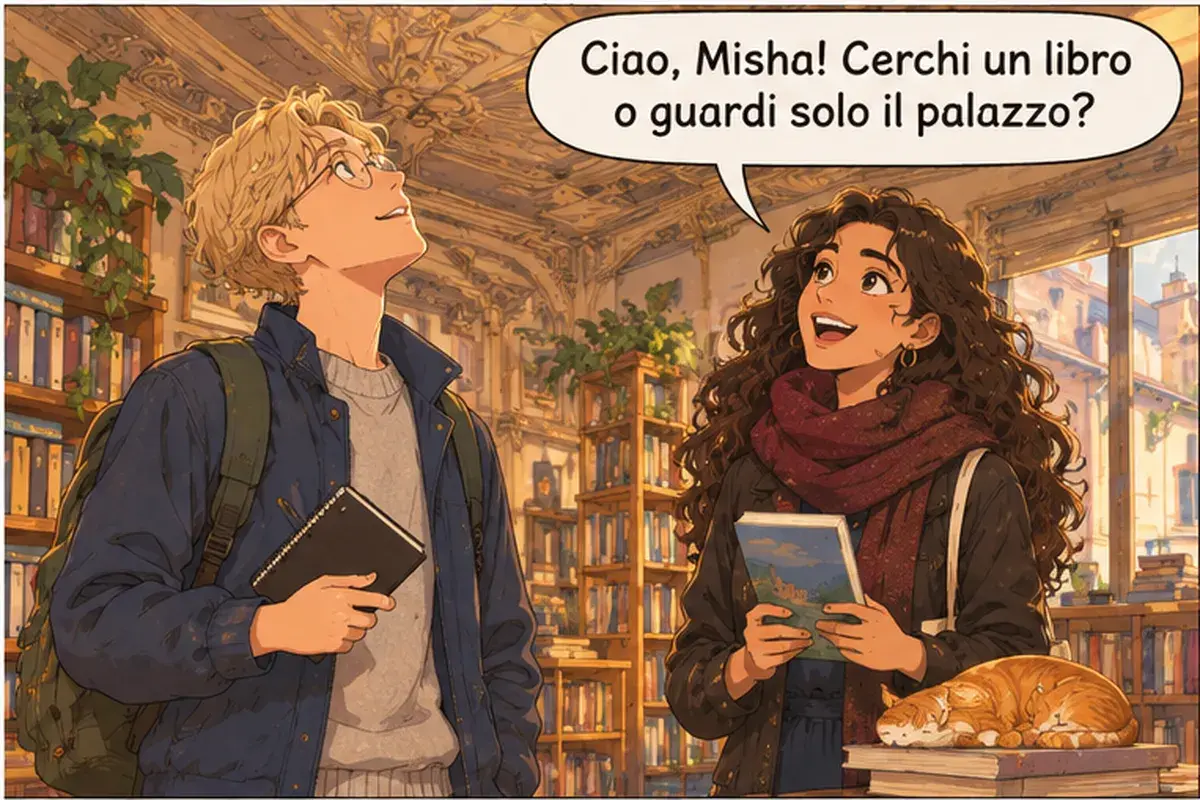
- Giulia
Ciao, Misha! Cerchi un libro o guardi solo il palazzo?
Hi, Misha! Are you looking for a book, or just looking at the building?
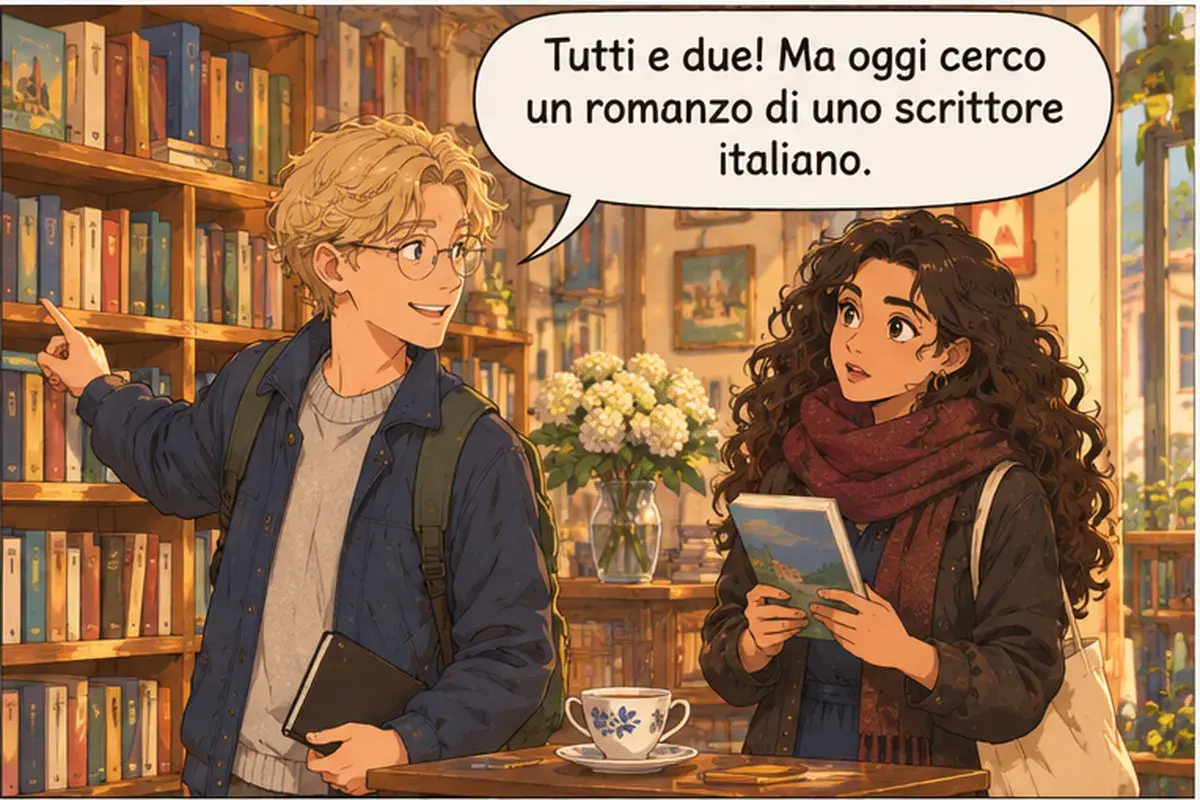
- Misha
Tutti e due! Ma oggi cerco un romanzo di uno scrittore italiano.
Both! But today I'm looking for a novel by an Italian writer.
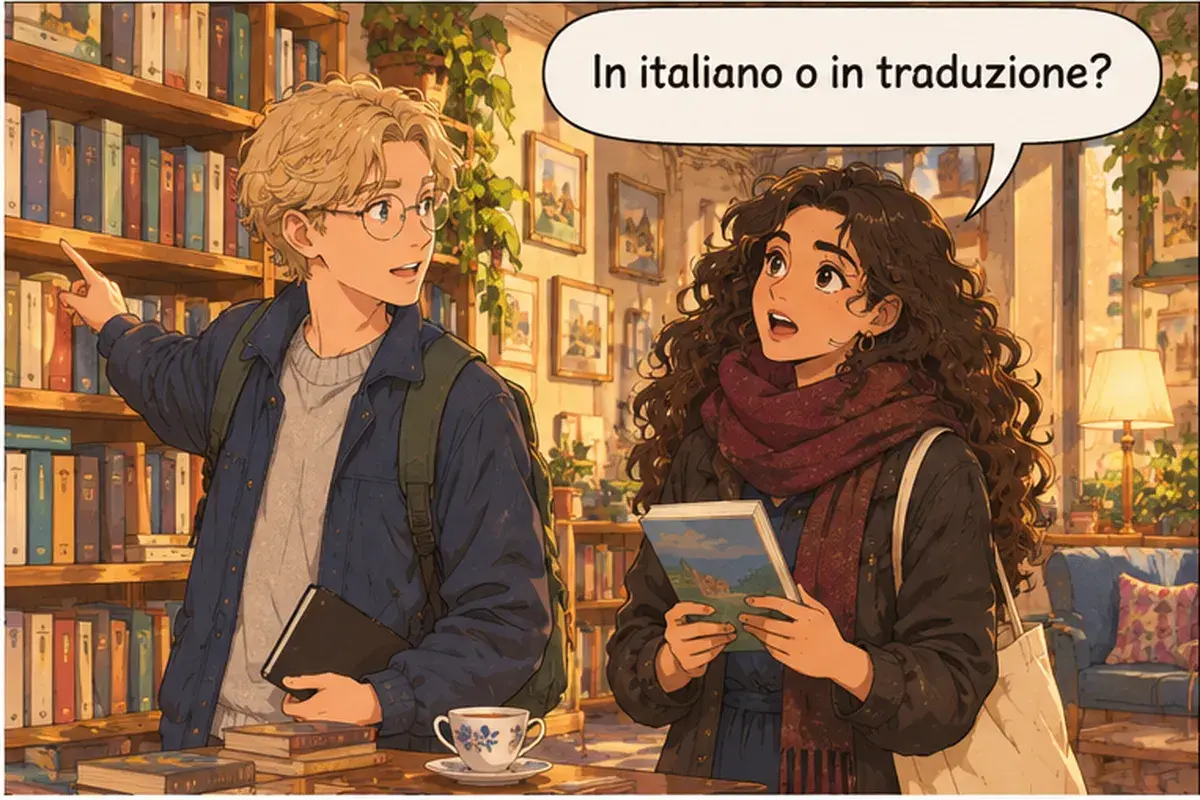
- Giulia
In italiano o in traduzione?
In Italian or in translation?
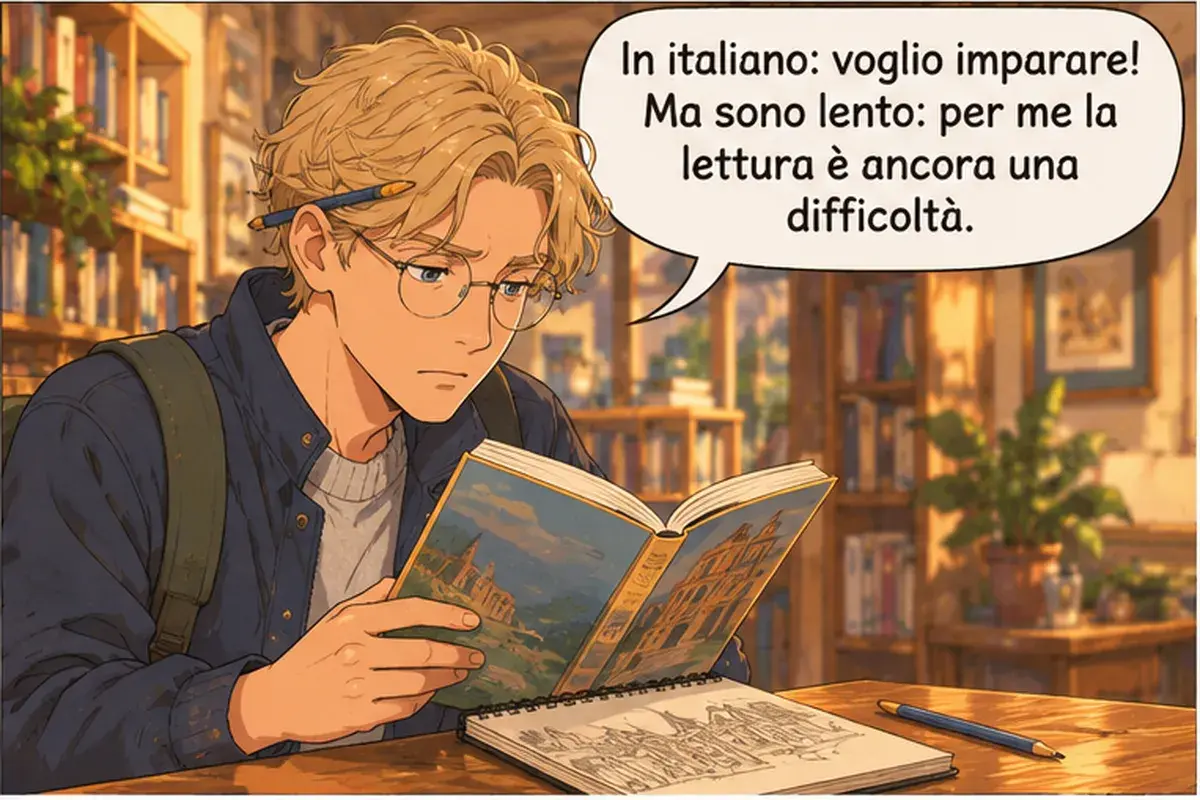
- Misha
In italiano: voglio imparare! Ma sono lento: per me la lettura è ancora una difficoltà.
In Italian: I want to learn! But I'm slow: for me, reading is still a difficulty (man speaking).
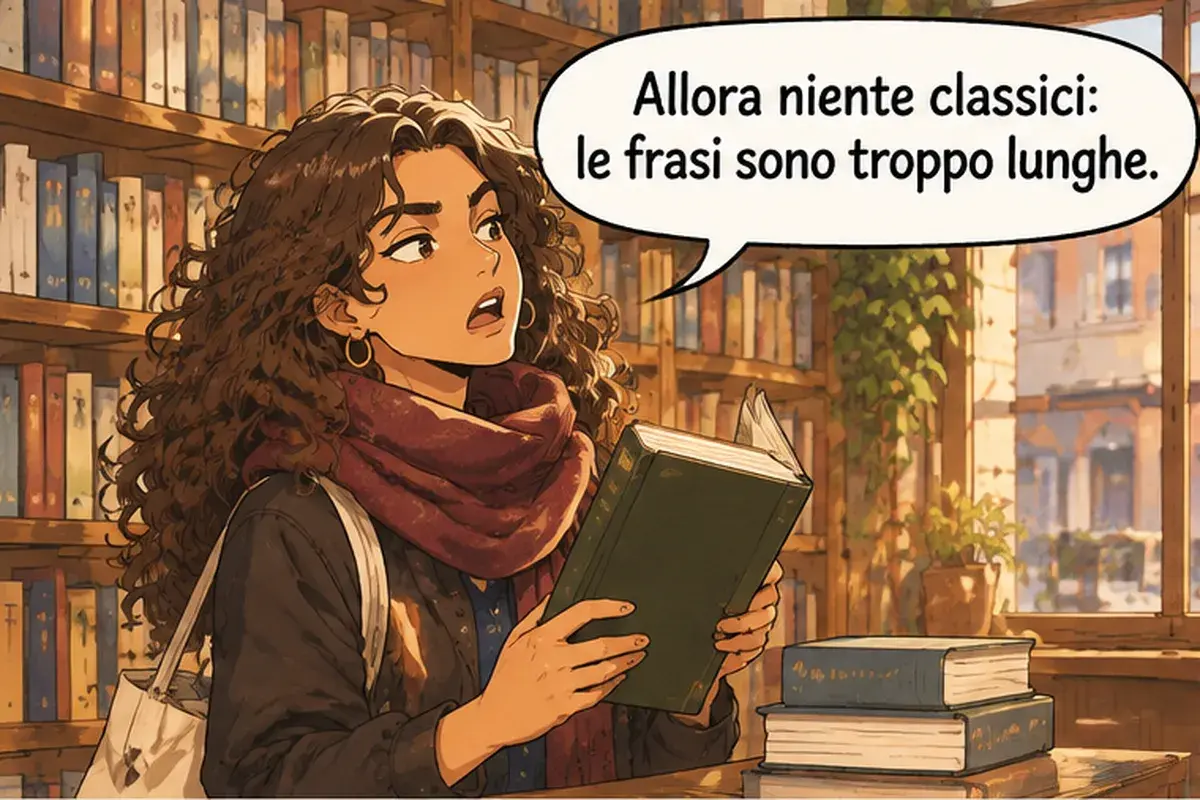
- Giulia
Allora niente classici: le frasi sono troppo lunghe.
Then no classics: the sentences are too long.
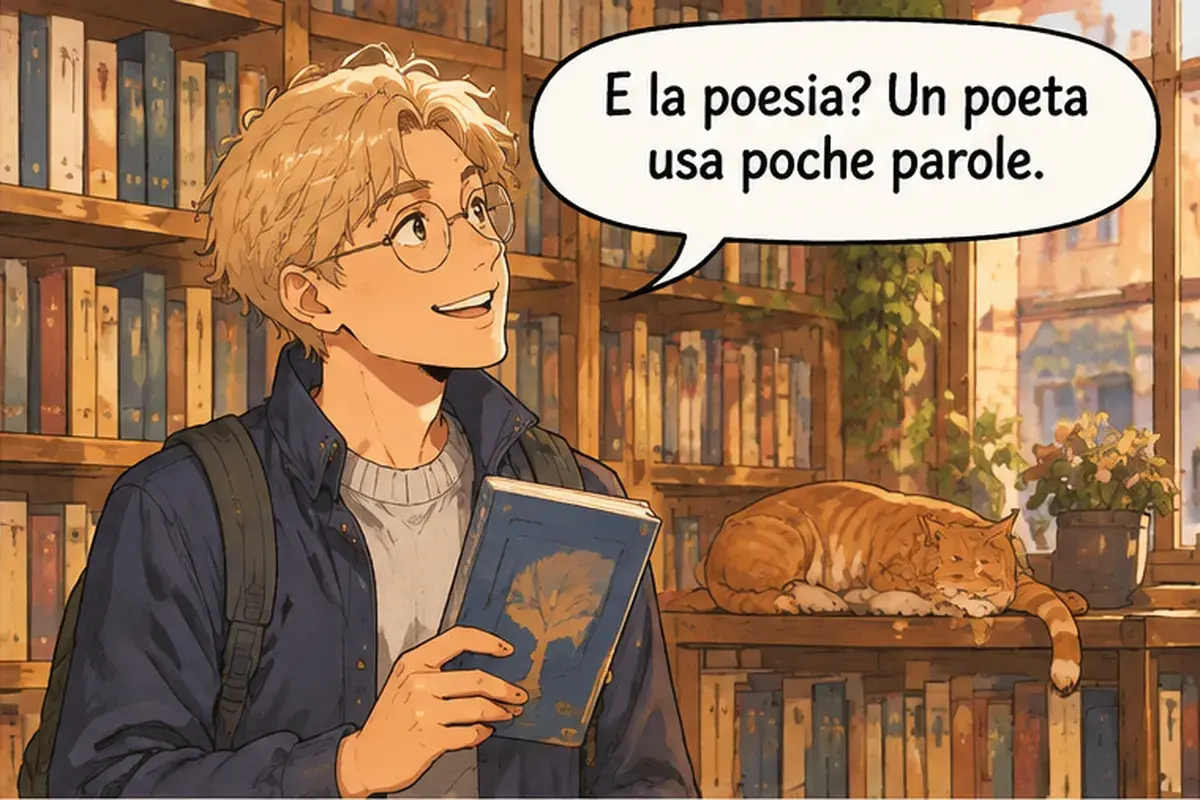
- Misha
E la poesia? Un poeta usa poche parole.
And poetry? A poet uses few words.
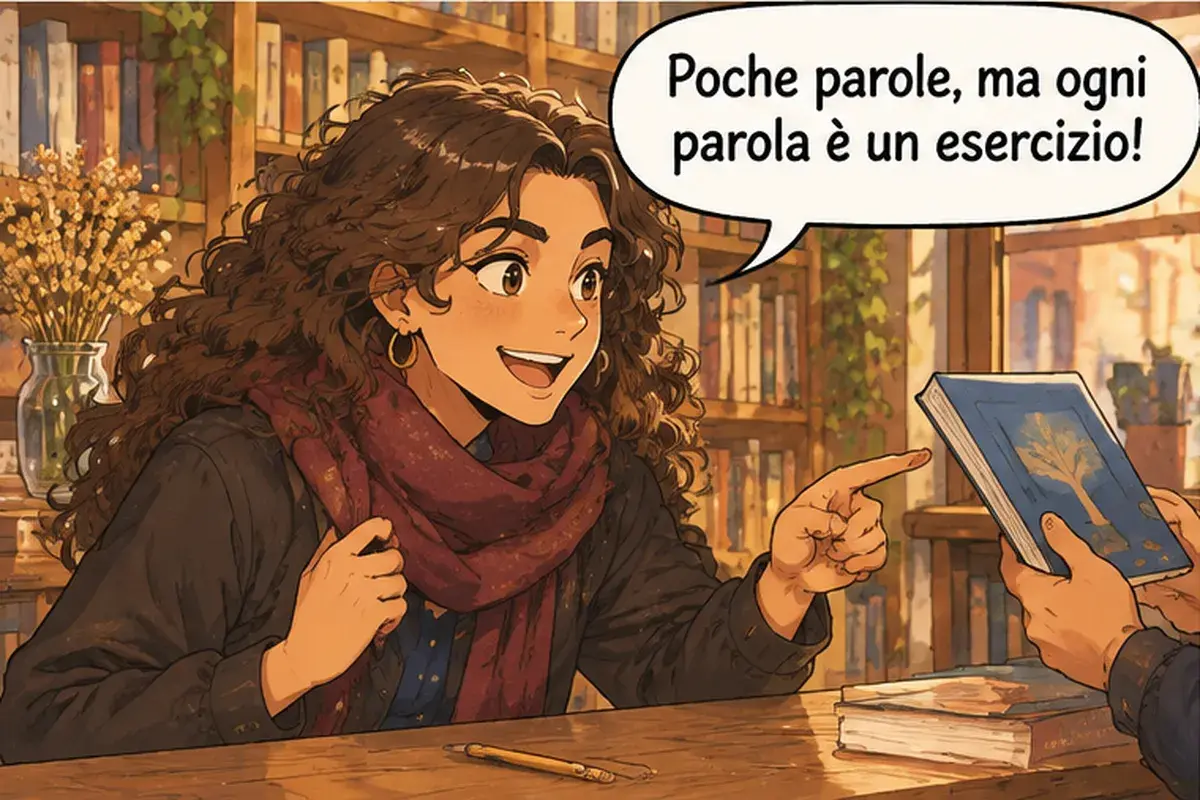
- Giulia
Poche parole, ma ogni parola è un esercizio!
Few words, but every word is an exercise!
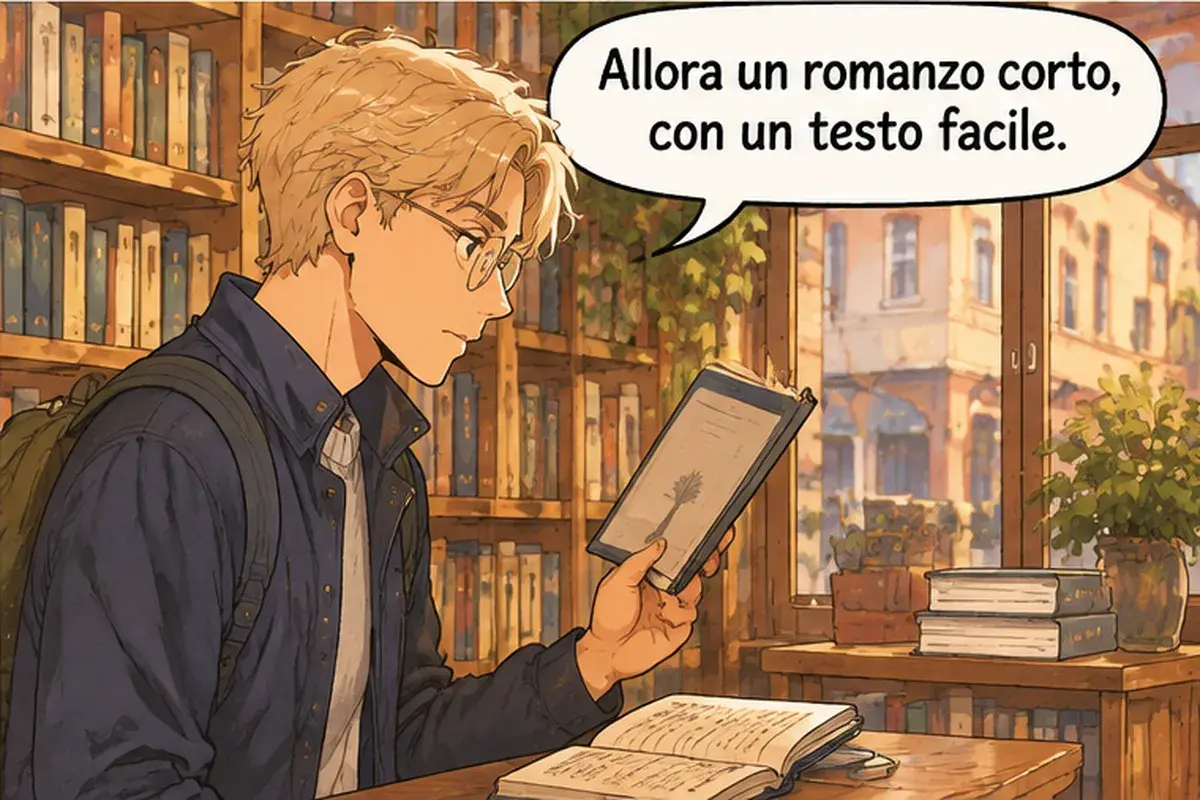
- Misha
Allora un romanzo corto, con un testo facile.
Then a short novel, with an easy text.
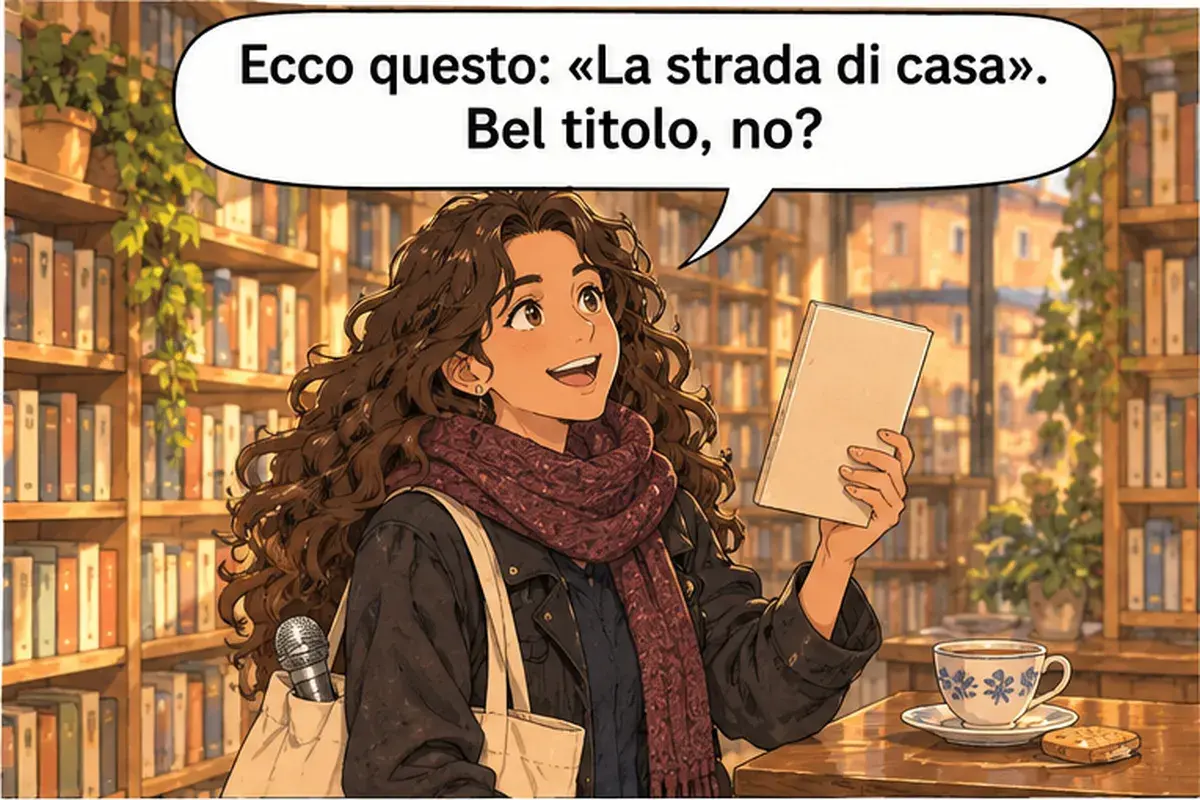
- Giulia
Ecco questo: «La strada di casa». Bel titolo, no?
Here, this one: "La strada di casa." Nice title, right?
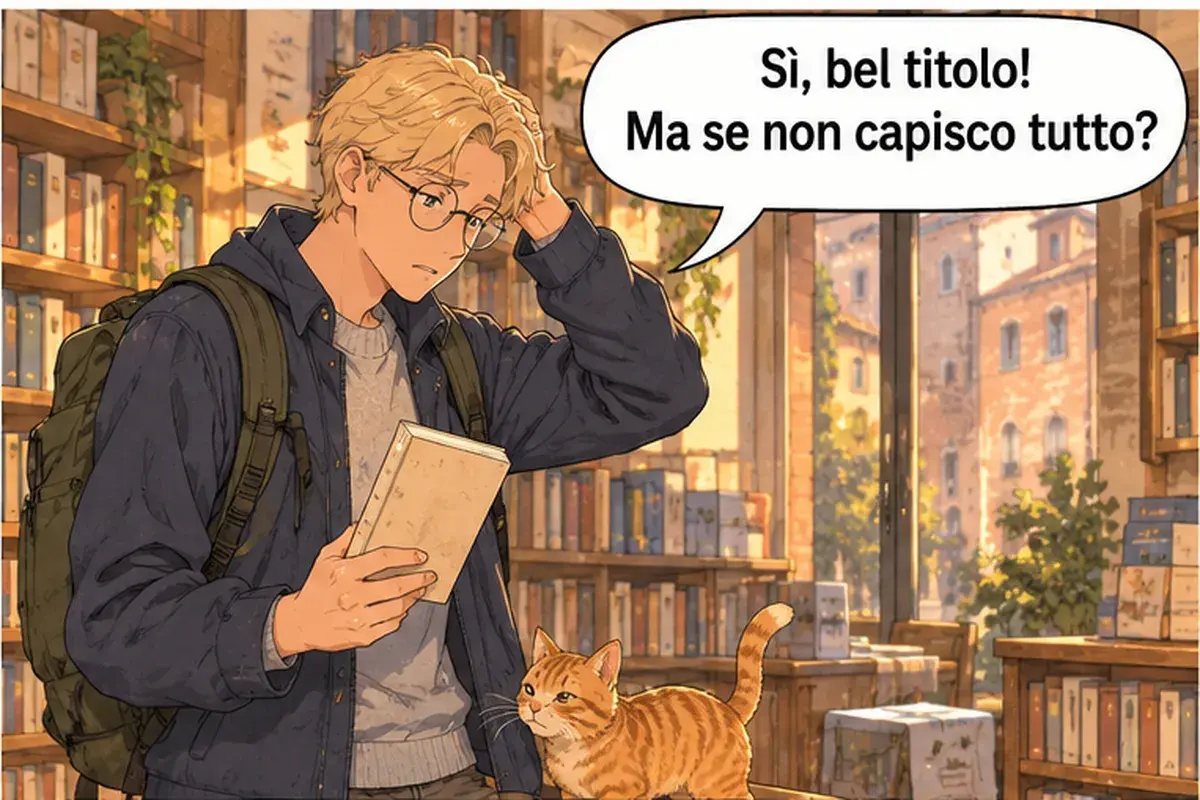
- Misha
Sì, bel titolo! Ma se non capisco tutto?
Yes, nice title! But what if I don't understand everything?
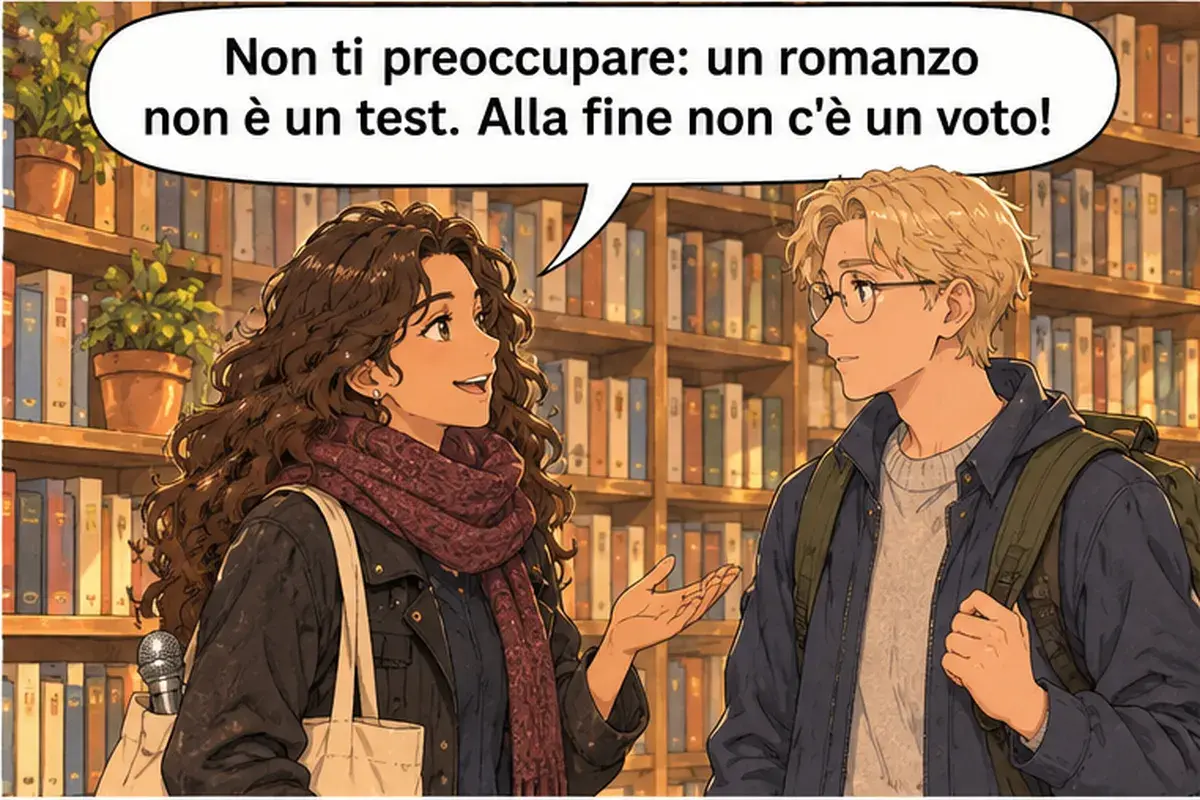
- Giulia
Non ti preoccupare: un romanzo non è un test. Alla fine non c'è un voto!
Don't worry: a novel isn't a test. There's no grade at the end!
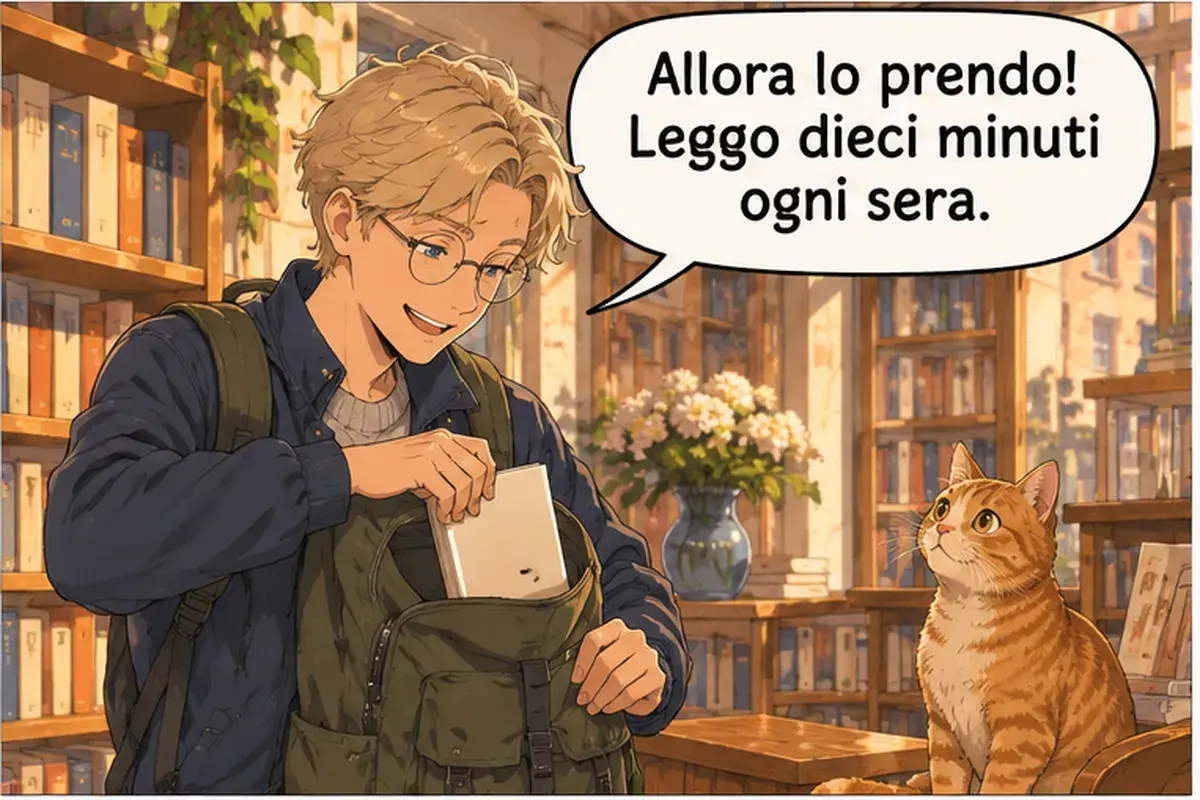
- Misha
Allora lo prendo! Leggo dieci minuti ogni sera.
Then I'll take it! I'll read for ten minutes every evening.
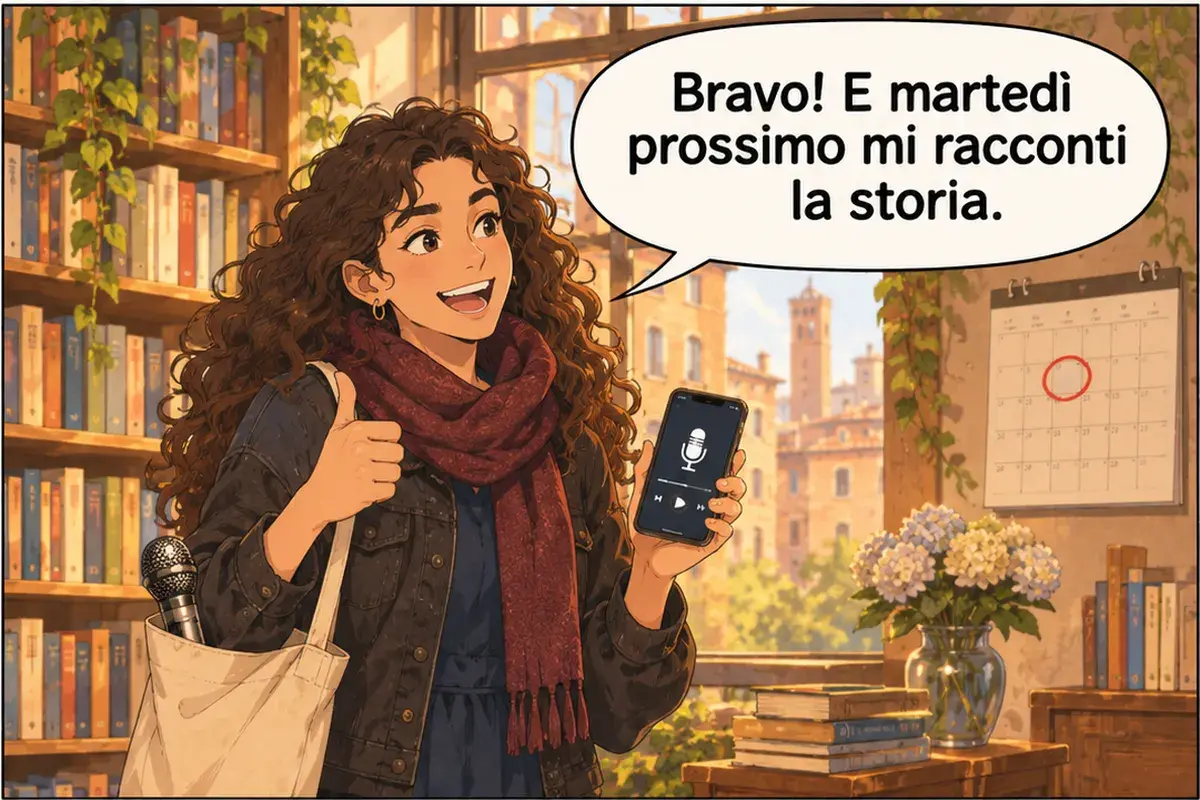
- Giulia
Bravo! E martedì prossimo mi racconti la storia.
Good job (to a man)! And next Tuesday you'll tell me the story.
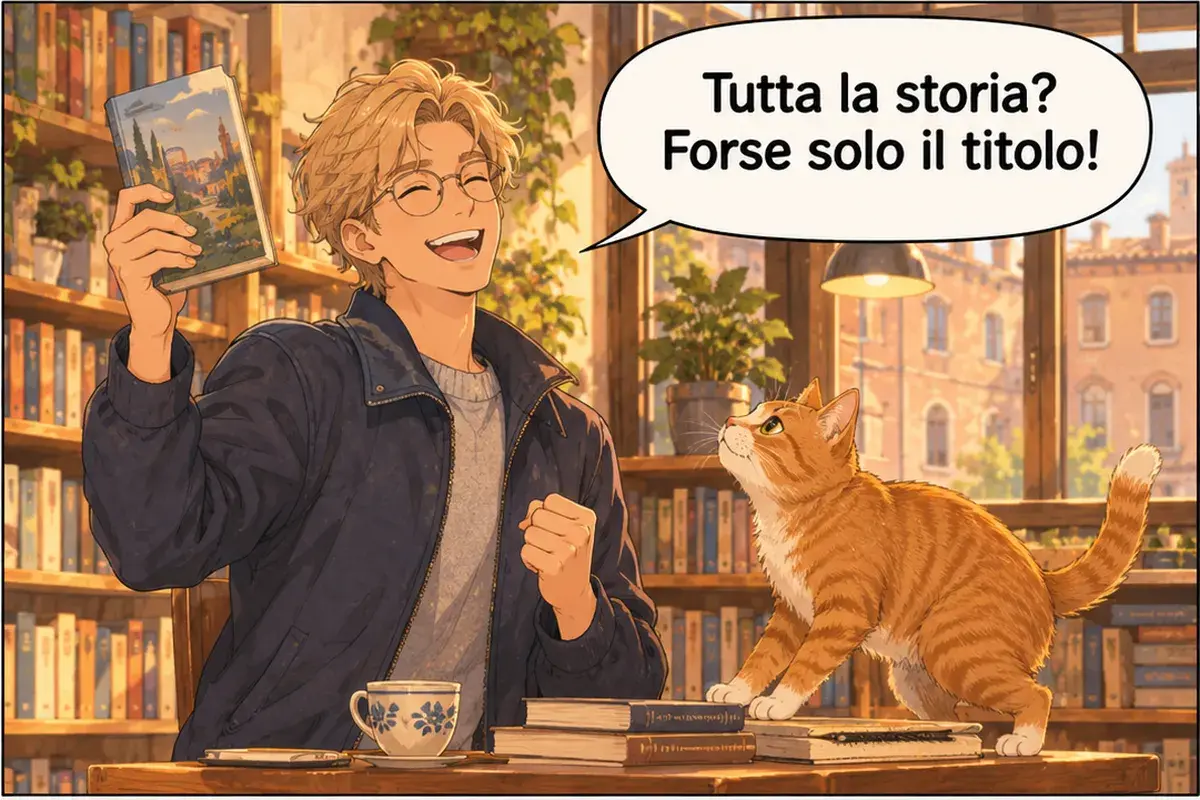
- Misha
Tutta la storia? Forse solo il titolo!
The whole story? Maybe just the title!
Grammar for this text
- guardi solo il palazzo —
solobefore a word means "just". Giulia is teasing: in any store, Misha the architect looks at the building first. - niente classici —
niente+ a noun with no article is casual for "no…".classiciis the plural ofclassico;cbeforeisounds like ch in church. - Poche parole —
pocobefore a noun matches it:paroleis feminine and plural, so it ispoche. - Bel titolo —
belis the short form ofbellobefore a noun that takesil(il titolo). The rule is in unit 3. - Non ti preoccupare — a set phrase from A1: "don't worry." Alla fine — "at the end":
alla=a+la. - Lo prendo — a set phrase from A1: here
lomeans "it" (the novel). When you pick something, this is what you say. The rule forlo,lais in unit 8. - Tutta la storia? —
tuttomatches the noun and comes before the article:storiais feminine, sotutta la.
Words and grammar of the unit: Choose a book and talk about your studies.
Learn the words from the texts with flashcards
In the app, you can tap any word in a text to see its translation, forms and examples, and new words stick with flashcards. 15 minutes a day.
Start for freeEverything is open for free. No card needed to sign up.