
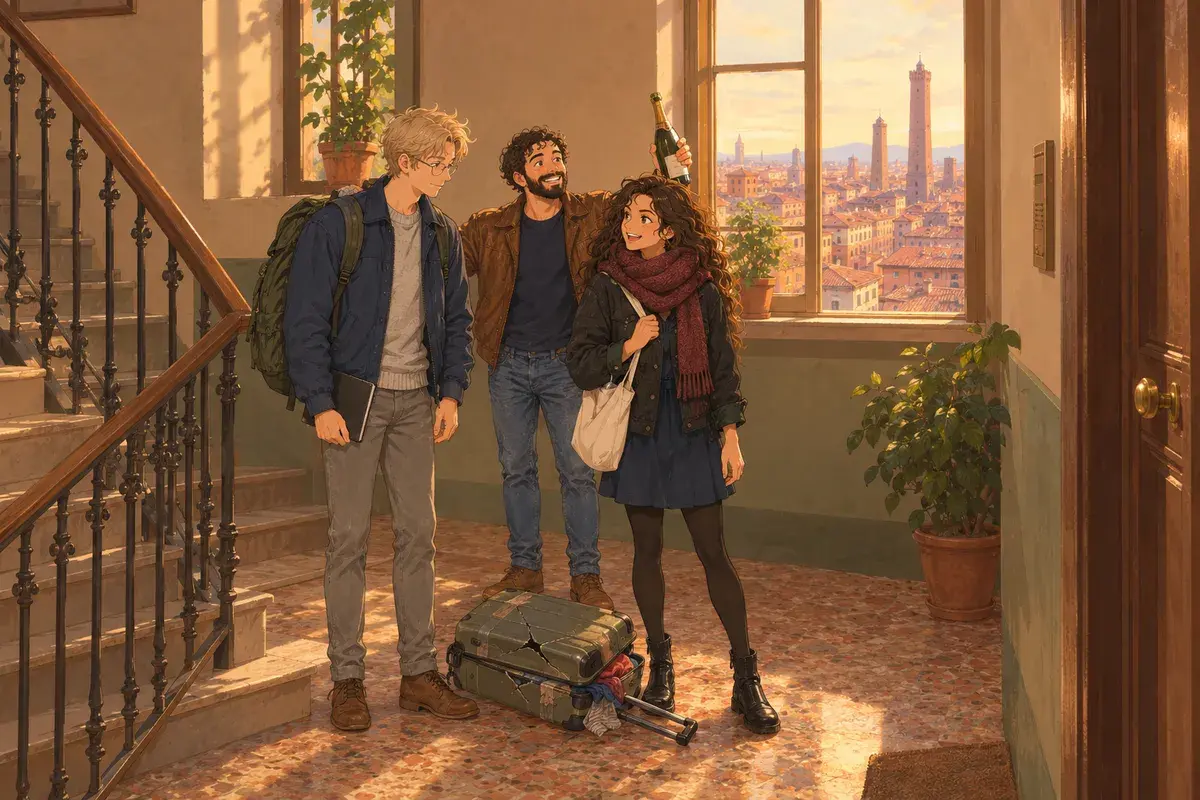
Italian dialogue with translation · A2 · 16 lines
Com'è andata? How did it go?
Comic · 16 panels
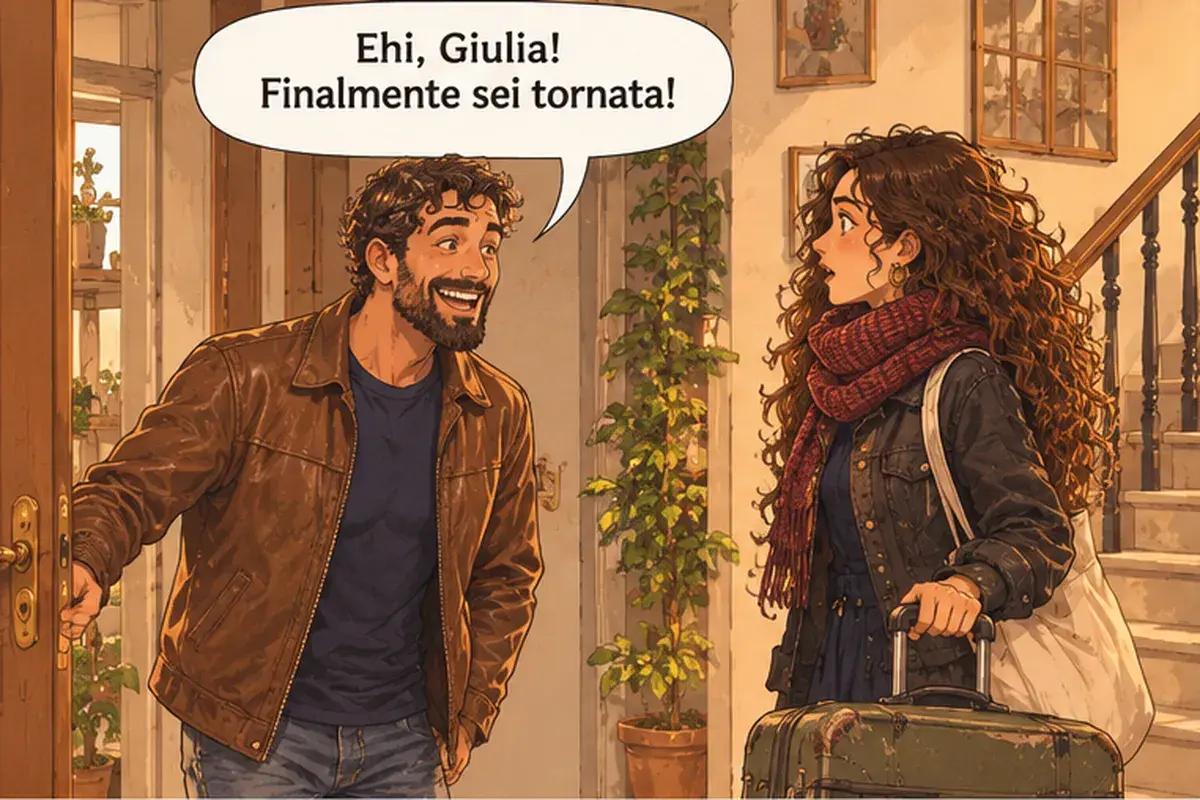
- Luca
Ehi, Giulia! Finalmente sei tornata!
Hey, Giulia! You're finally back!
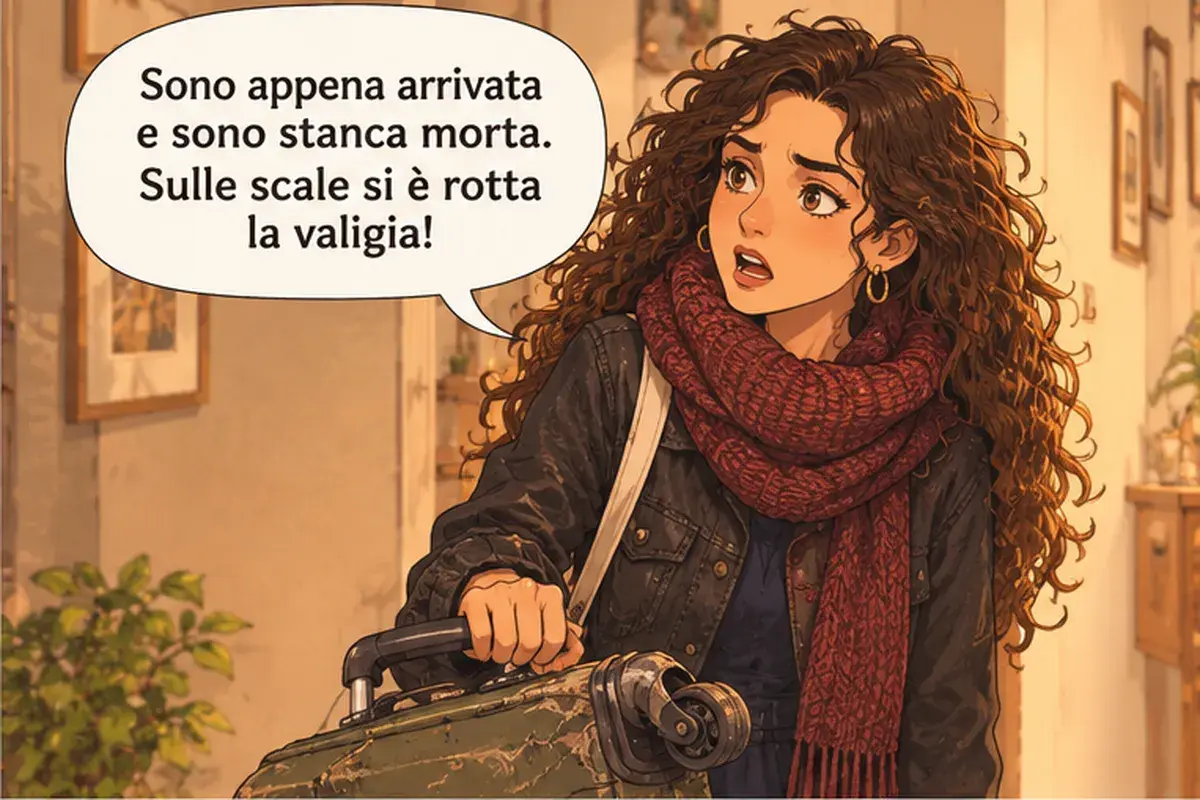
- Giulia
Sono appena arrivata e sono stanca morta. Sulle scale si è rotta la valigia!
I've just arrived and I'm dead tired. The suitcase broke on the stairs! (woman speaking)
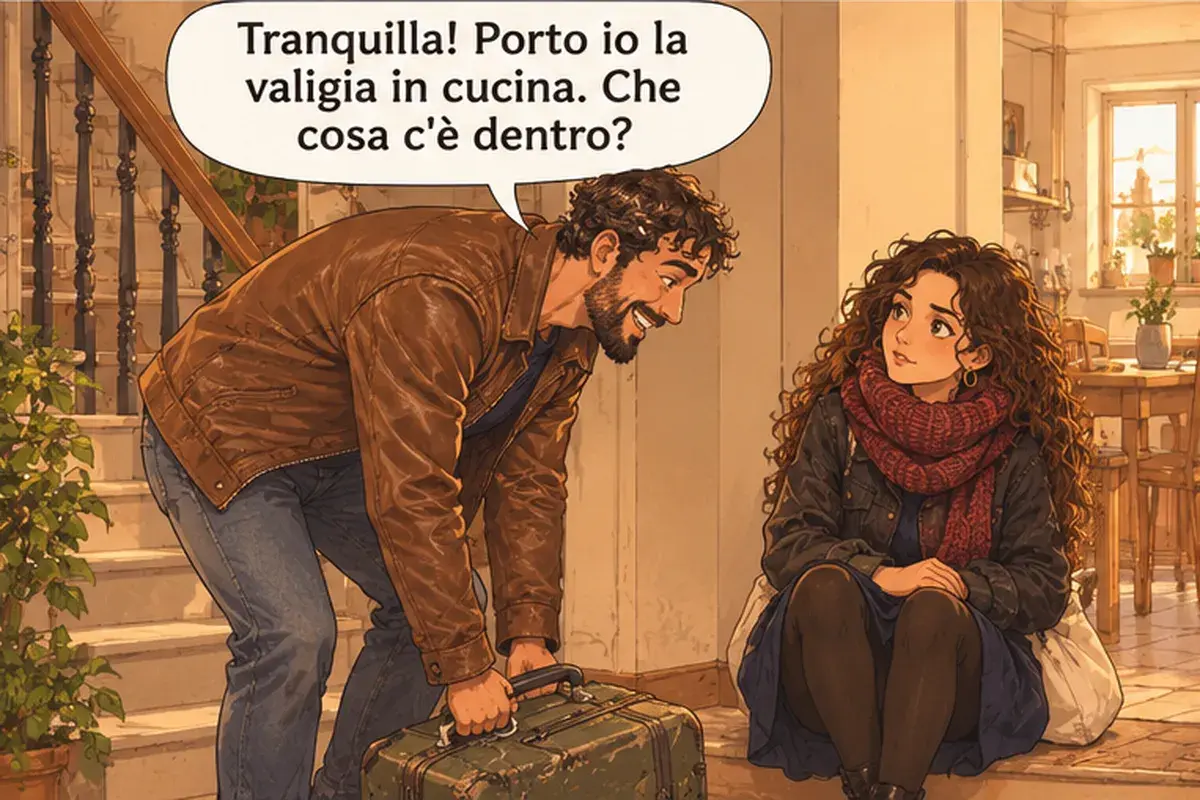
- Luca
Tranquilla! Porto io la valigia in cucina. Che cosa c'è dentro?
Relax! I'll take the suitcase to the kitchen. What's inside? (to a woman)
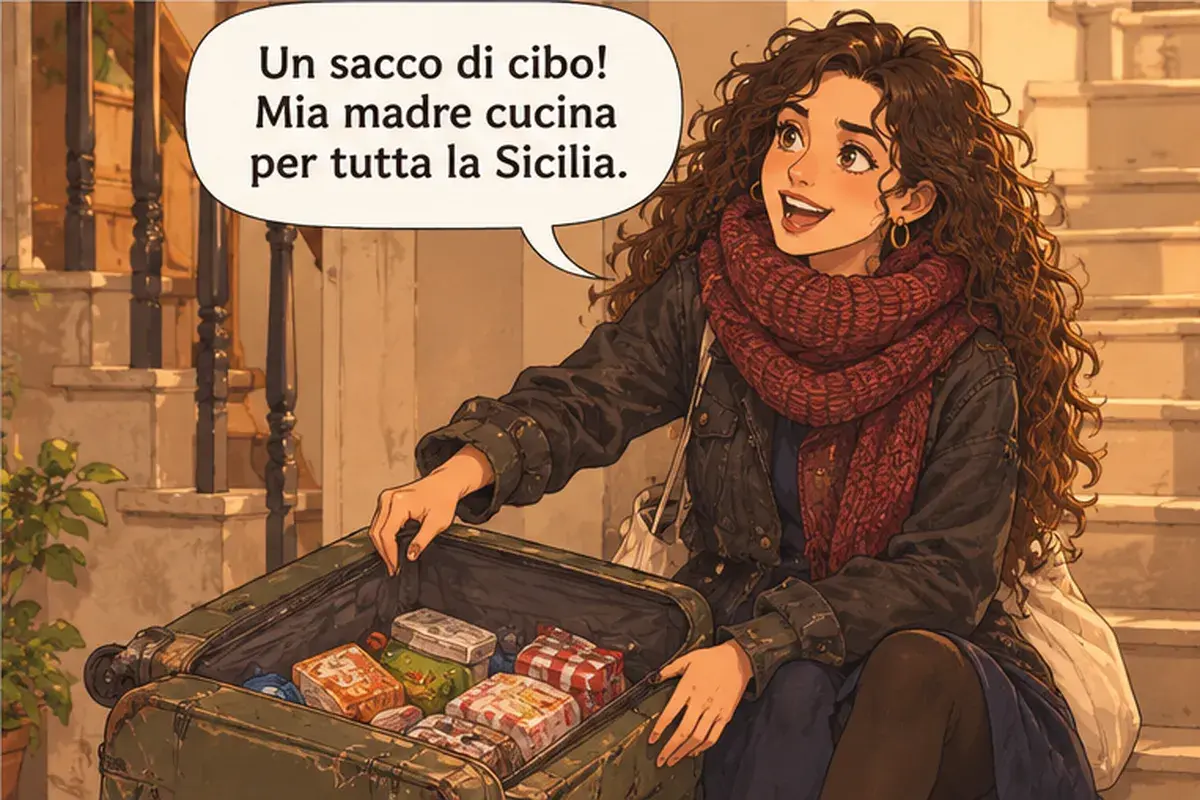
- Giulia
Un sacco di cibo! Mia madre cucina per tutta la Sicilia.
Tons of food! My mother cooks for all of Sicily.
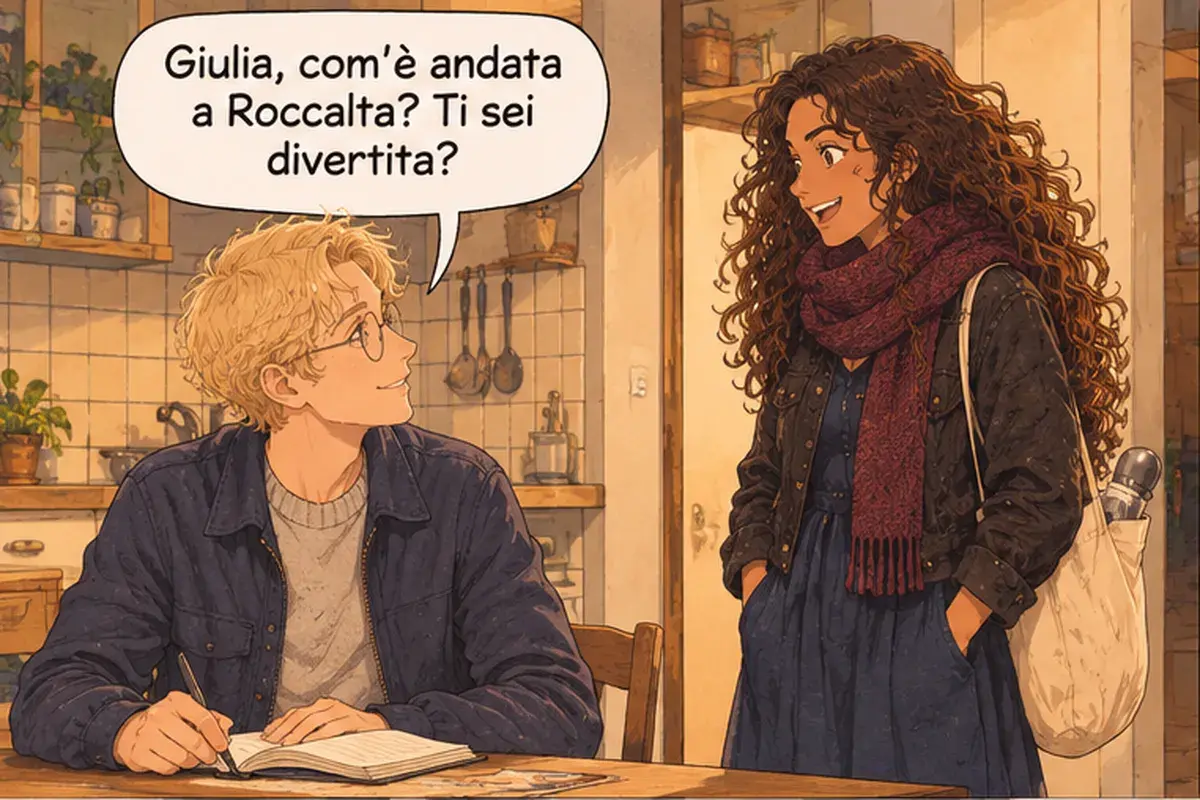
- Misha
Giulia, com'è andata a Roccalta? Ti sei divertita?
Giulia, how did it go in Roccalta? Did you have fun?
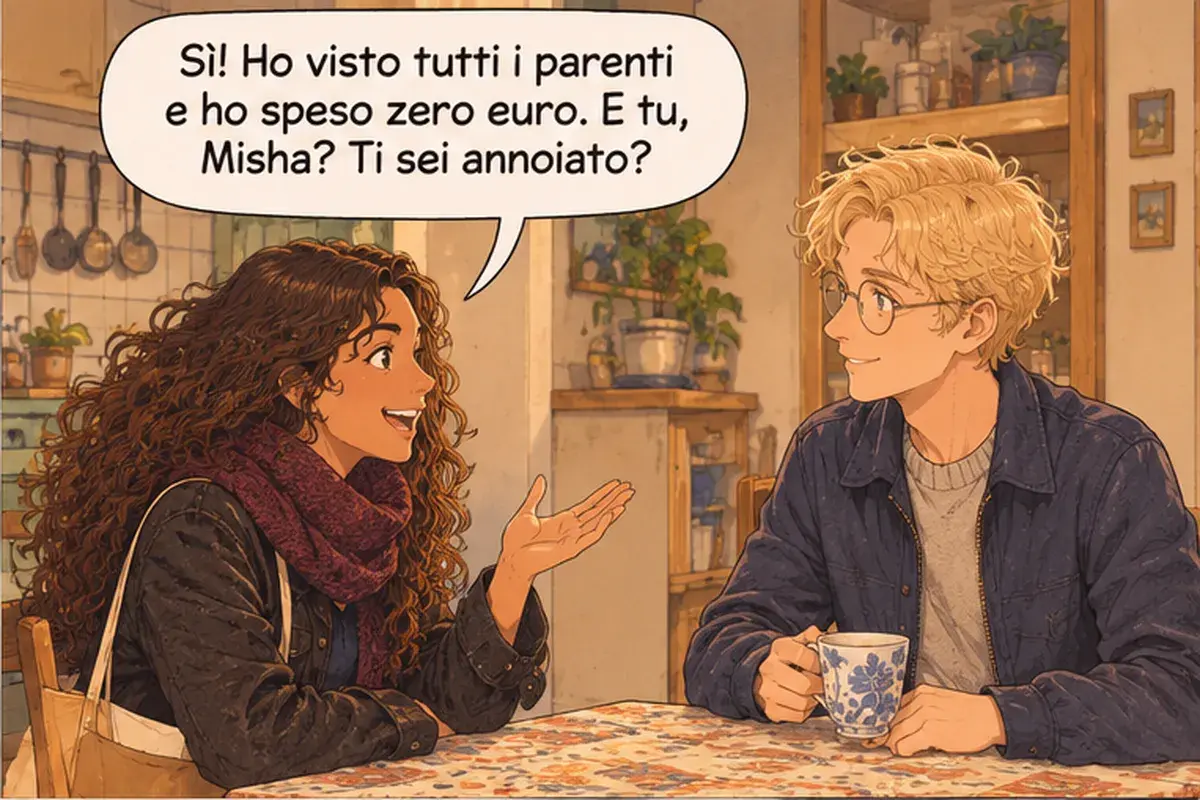
- Giulia
Sì! Ho visto tutti i parenti e ho speso zero euro. E tu, Misha? Ti sei annoiato?
Yes! I saw all my relatives and spent zero euros. What about you, Misha? Did you get bored?
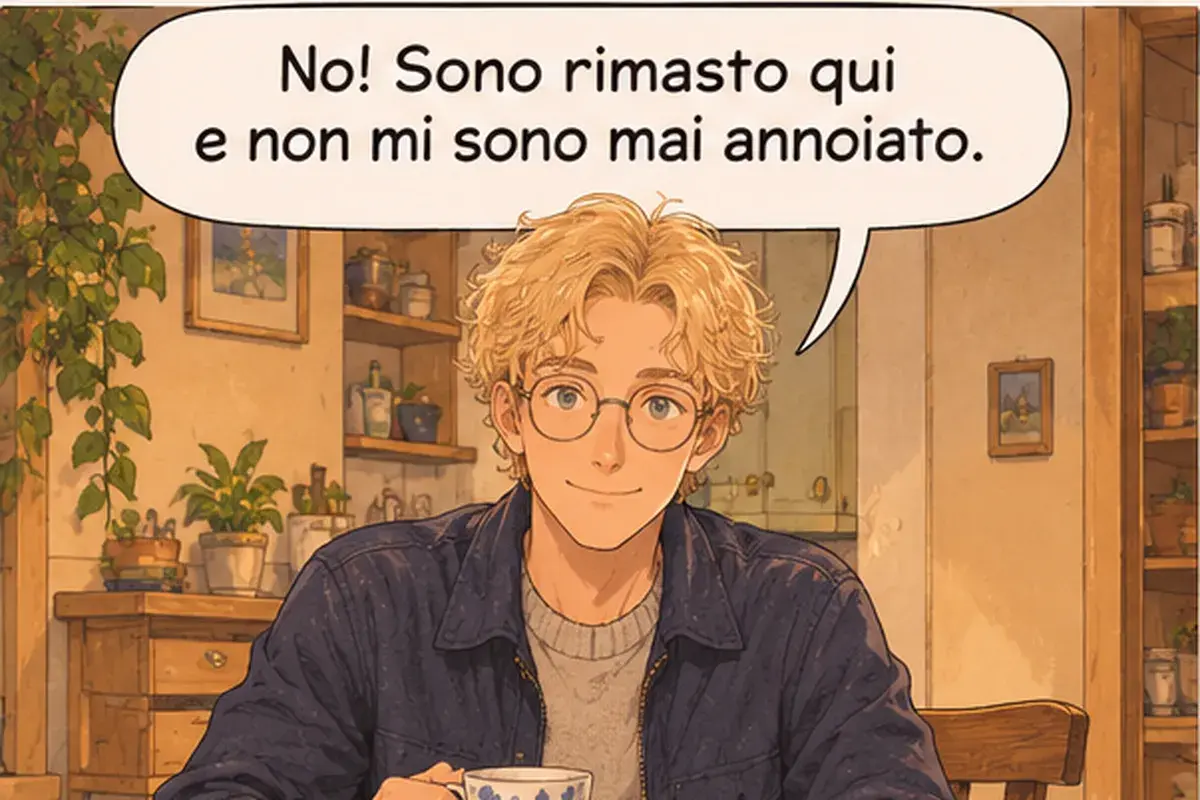
- Misha
No! Sono rimasto qui e non mi sono mai annoiato.
No! I stayed here and I never got bored (man speaking).
- Luca
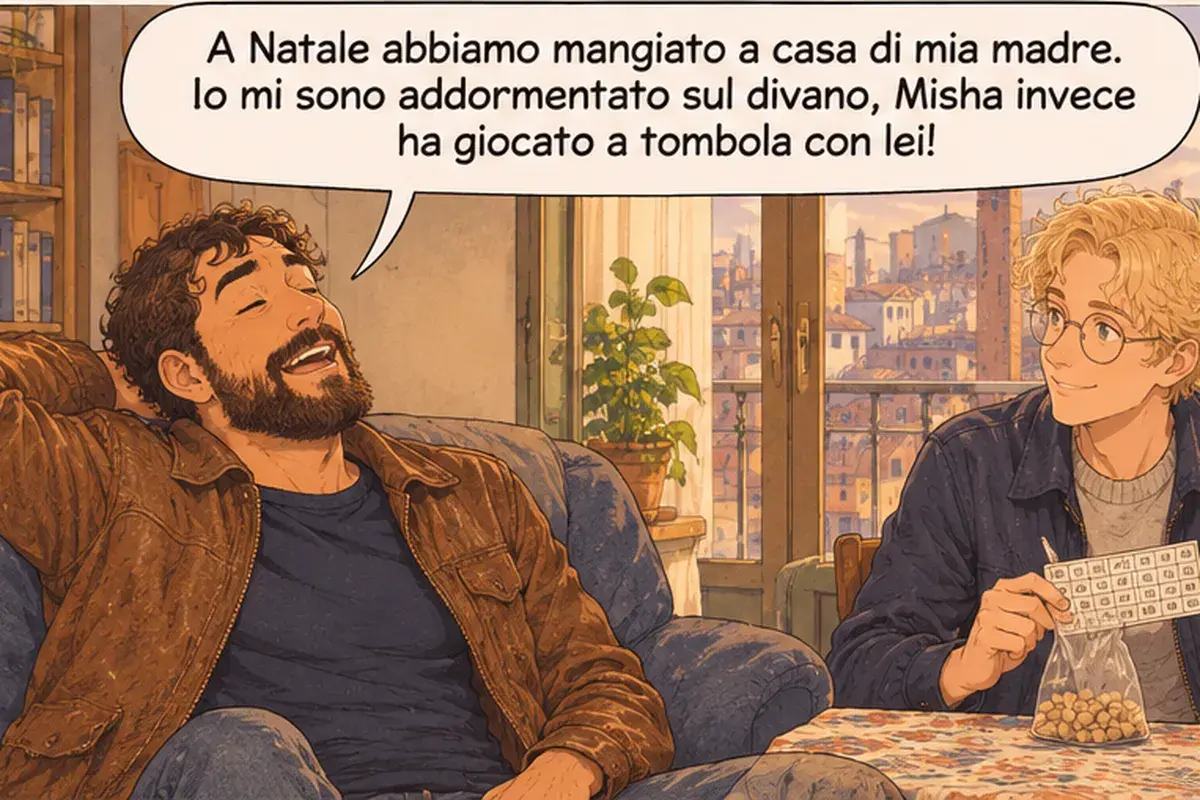
A Natale abbiamo mangiato a casa di mia madre. Io mi sono addormentato sul divano, Misha invece ha giocato a tombola con lei!
At Christmas we ate at my mother's house. I fell asleep on the couch, while Misha played tombola with her! (man speaking)
- Misha
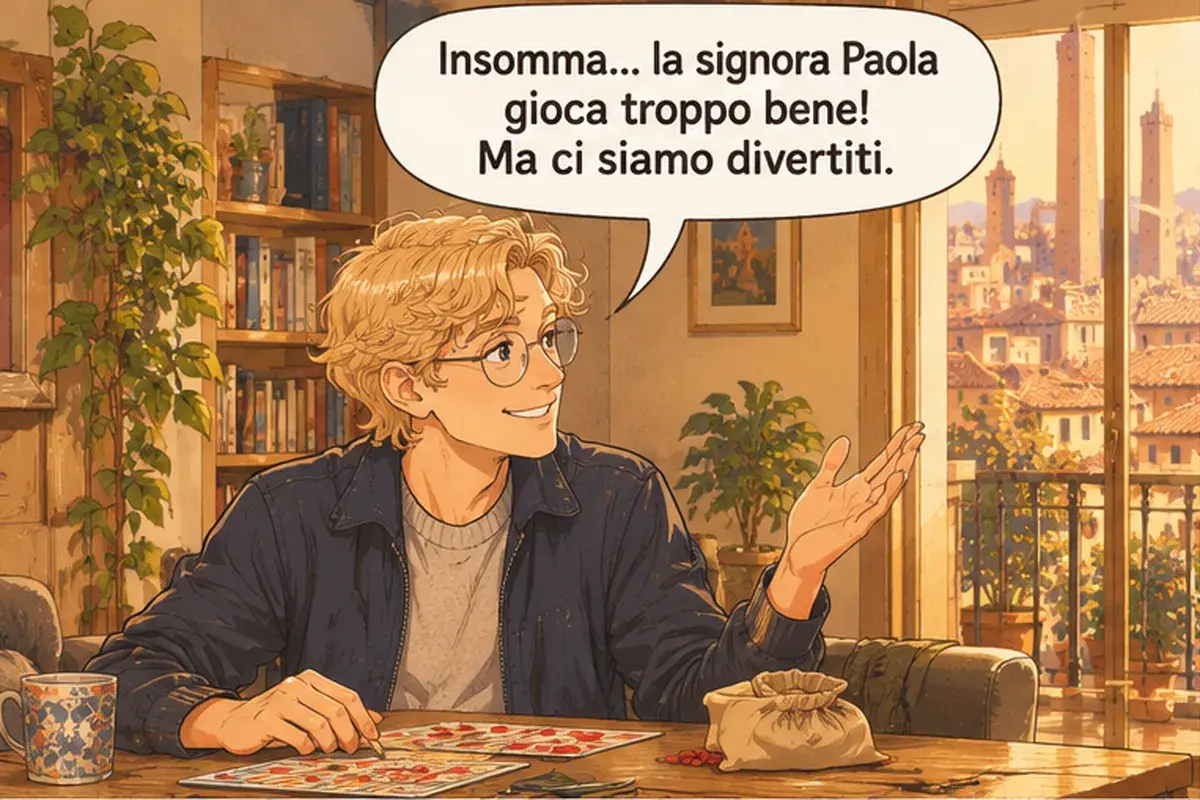
Insomma... la signora Paola gioca troppo bene! Ma ci siamo divertiti.
In short... Signora Paola plays too well! But we had fun.
- Giulia
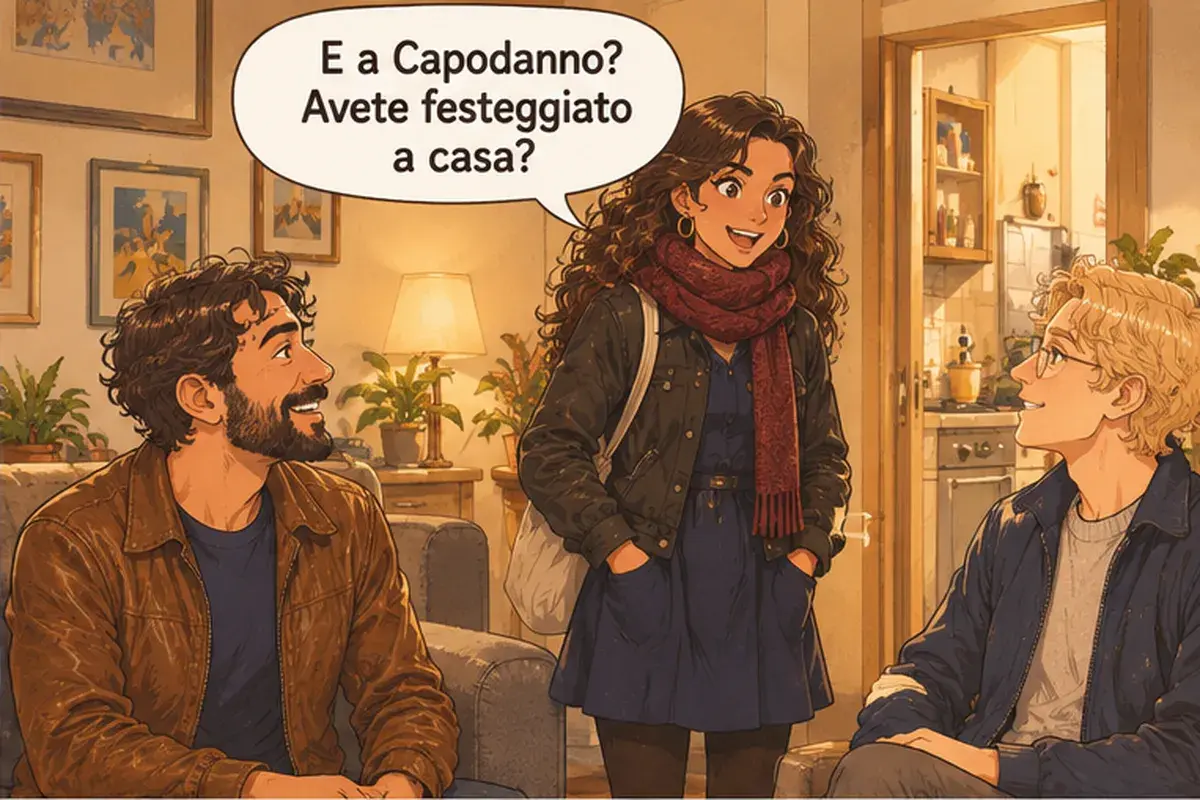
E a Capodanno? Avete festeggiato a casa?
And on New Year's? Did you celebrate at home? (to several people)
- Luca
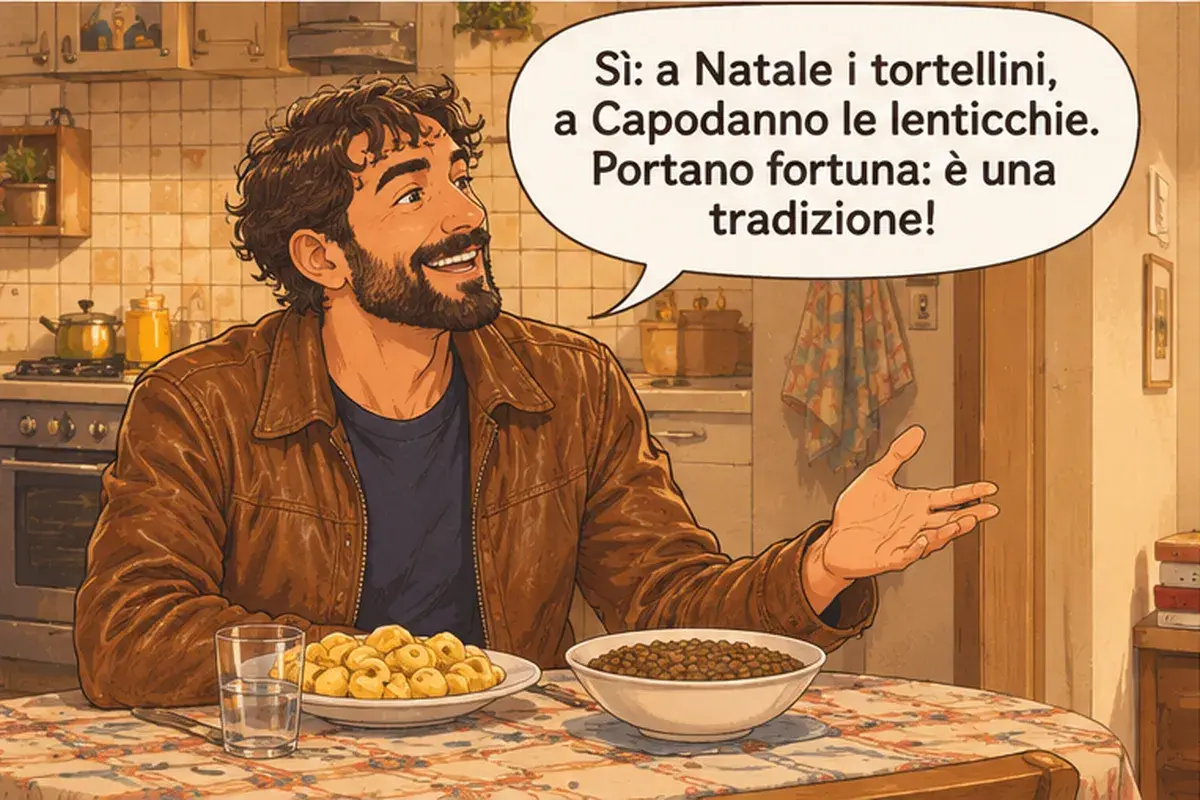
Sì: a Natale i tortellini, a Capodanno le lenticchie. Portano fortuna: è una tradizione!
Yes: tortellini at Christmas, lentils on New Year's. They bring good luck: it's a tradition!
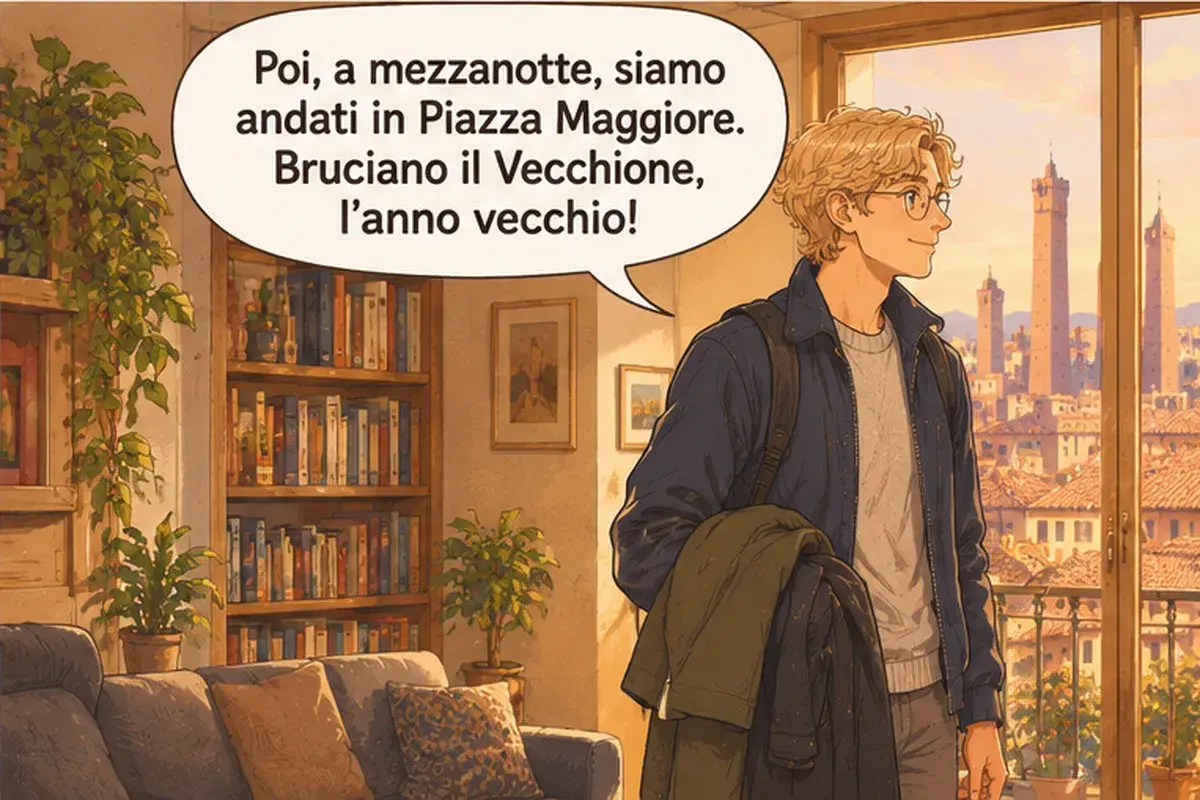
- Misha
Poi, a mezzanotte, siamo andati in Piazza Maggiore. Bruciano il Vecchione, l'anno vecchio!
Then, at midnight, we went to Piazza Maggiore. They burn the Vecchione, the old year!
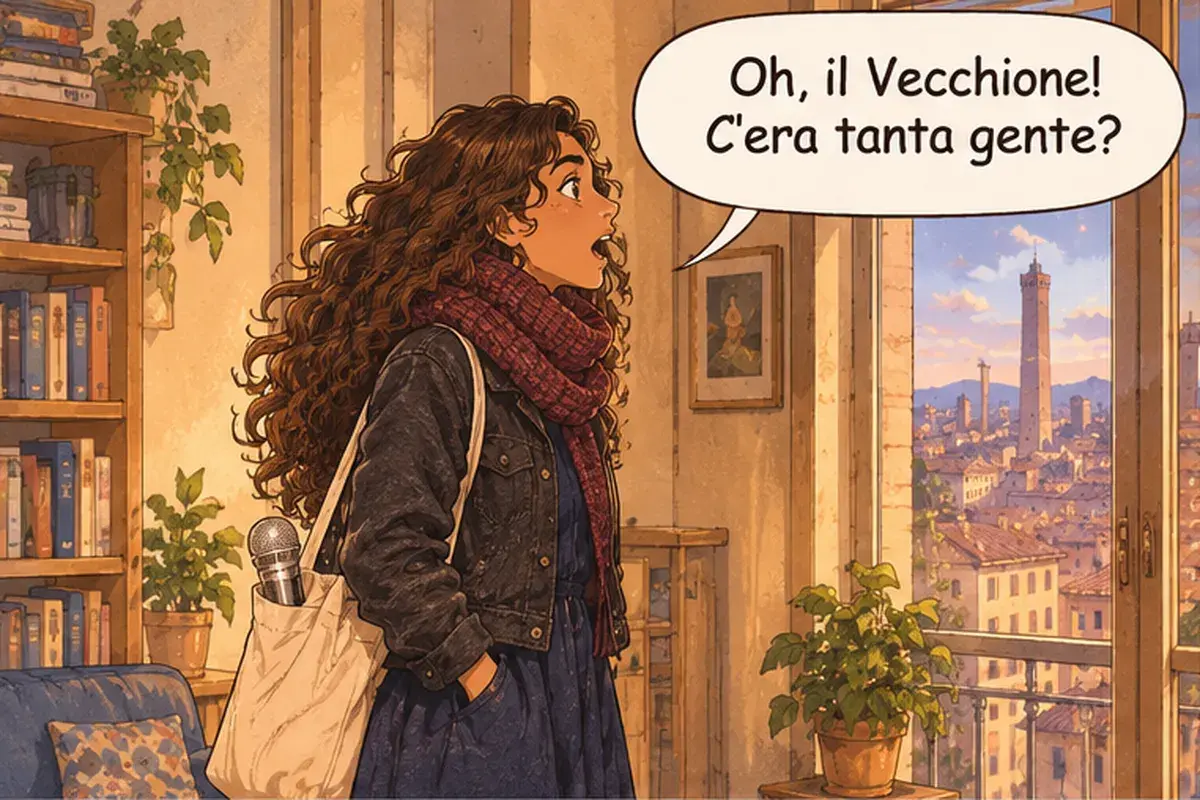
- Giulia
Oh, il Vecchione! C'era tanta gente?
Oh, the Vecchione! Were there a lot of people?
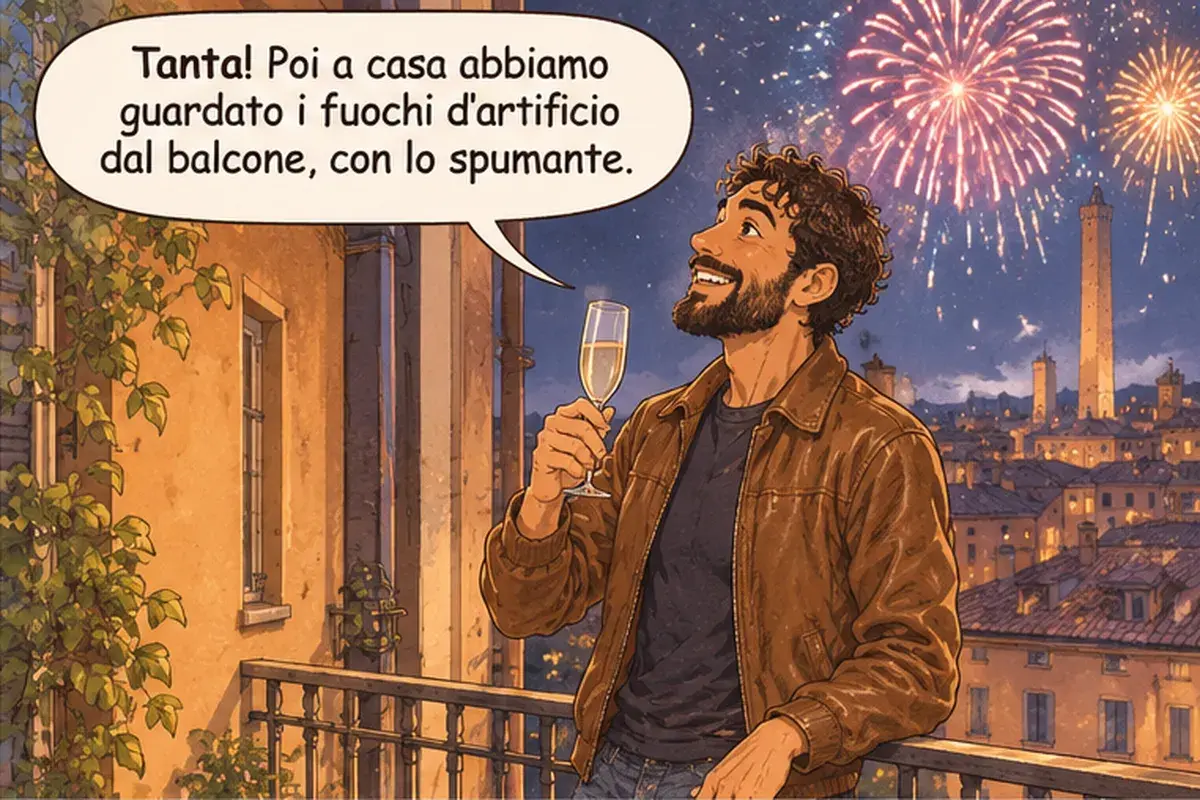
- Luca
Tanta! Poi a casa abbiamo guardato i fuochi d'artificio dal balcone, con lo spumante.
Lots! Then at home we watched the fireworks from the balcony, with spumante.
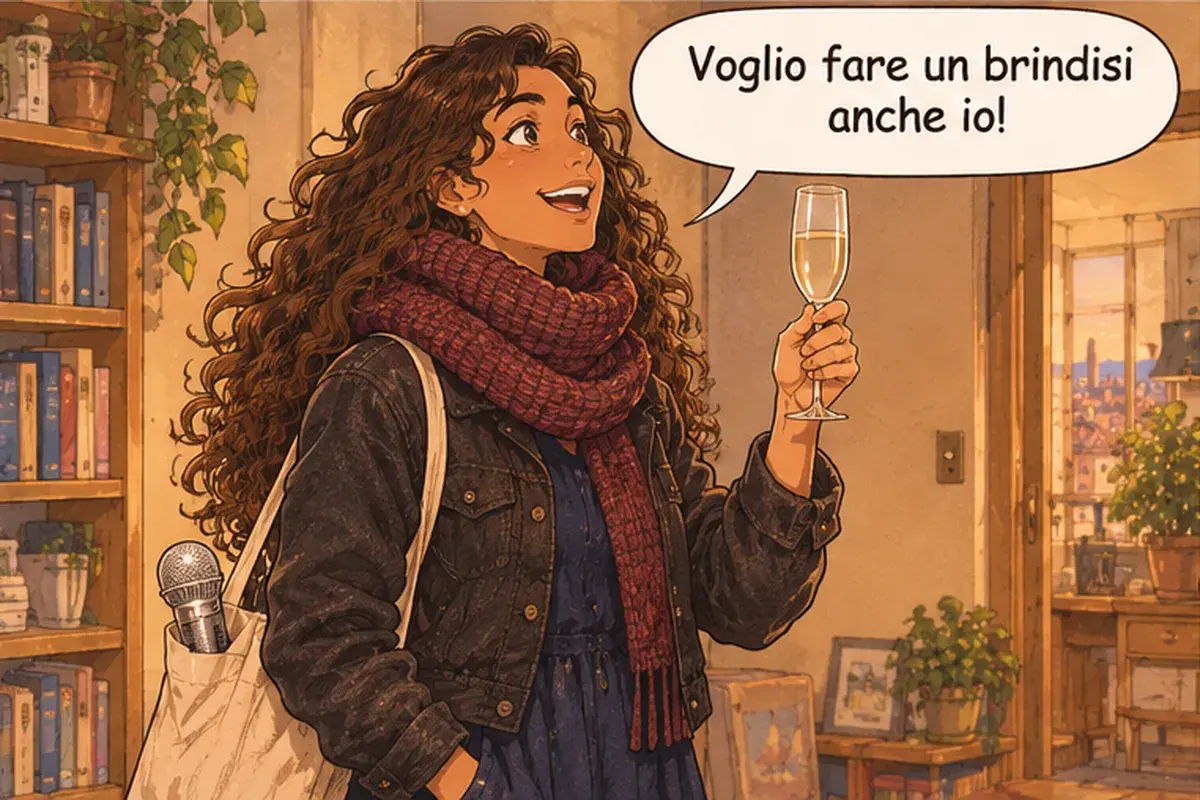
- Giulia
Voglio fare un brindisi anche io!
I want to make a toast too!
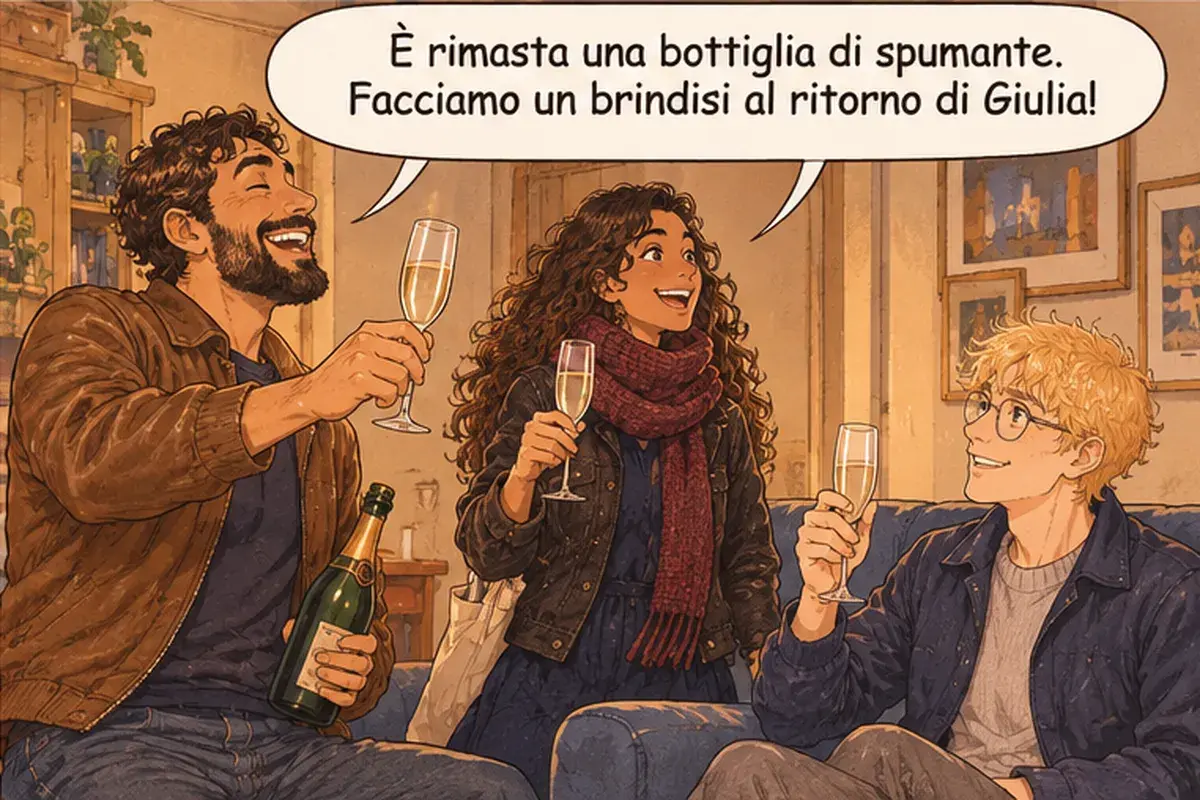
- Luca
È rimasta una bottiglia di spumante. Facciamo un brindisi al ritorno di Giulia!
There's one bottle of spumante left. Let's make a toast to Giulia's return!
Grammar for this text
- Ti sei divertita? — a reflexive verb in the past: ti sei + participle; the helper is always essere. The participle shows gender: about Giulia — divertita, about Luca — mi sono addormentato (-o). mai goes inside: non mi sono mai annoiato.
- Sulle scale si è rotta la valigia! — rotta is the irregular participle of rompere (to break); la valigia is feminine, so it's rotta. si è rotta — "it broke" (by itself). sulle = su + le.
- Sono appena arrivata — appena (just) goes between sono and the participle. ho speso zero euro — speso is the irregular participle of spendere (to spend). Sono rimasto qui — rimasto is the irregular participle of rimanere (to stay); the helper is essere.
- Tranquilla! — "Relax!": Luca is talking to a woman, so it ends in -a (to a man — Tranquillo!).
- C'era tanta gente? — c'era means "there was", the past of c'è. This past tense comes in unit 5; for now, learn it as a set phrase.
- Insomma... — casual "well, anyway"; Ehi, Oh — "hey", "oh!"; un sacco di cibo — "tons of food". Use these only with friends.
- Mia madre cucina — here cucina is a verb ("cooks"), not "kitchen". Bruciano il Vecchione — il Vecchione ("the Old Man") is a giant puppet that Bologna burns in Piazza Maggiore at midnight on New Year's Eve, as the old year.
Words and grammar of the unit: Talk about how your holidays went.
Learn the words from the texts with flashcards
In the app, you can tap any word in a text to see its translation, forms and examples, and new words stick with flashcards. 15 minutes a day.
Start for freeEverything is open for free. No card needed to sign up.