

Italian dialogue with translation · A2 · 16 lines
Non scrivere «Ciao» a un architetto! Don't write "Hi" to an architect!
Comic · 16 panels

- Giulia
Misha, che afa! Oggi c'è il bollino rosso e qui non c'è aria.
Misha, it's so muggy! There's a red heat alert today, and there's no air in here.

- Misha
Sulla scrivania ho solo il ventilatore: l'aria condizionata non c'è. Sudo, e le zanzare hanno scelto me!
I only have the fan on my desk: there's no air conditioning. I'm sweating, and the mosquitoes chose me!

- Giulia
Povero! Per una volta io non ho freddo. Che cosa scrivi di così importante?
Poor you (to a man)! For once I'm not cold. What are you writing that's so important?
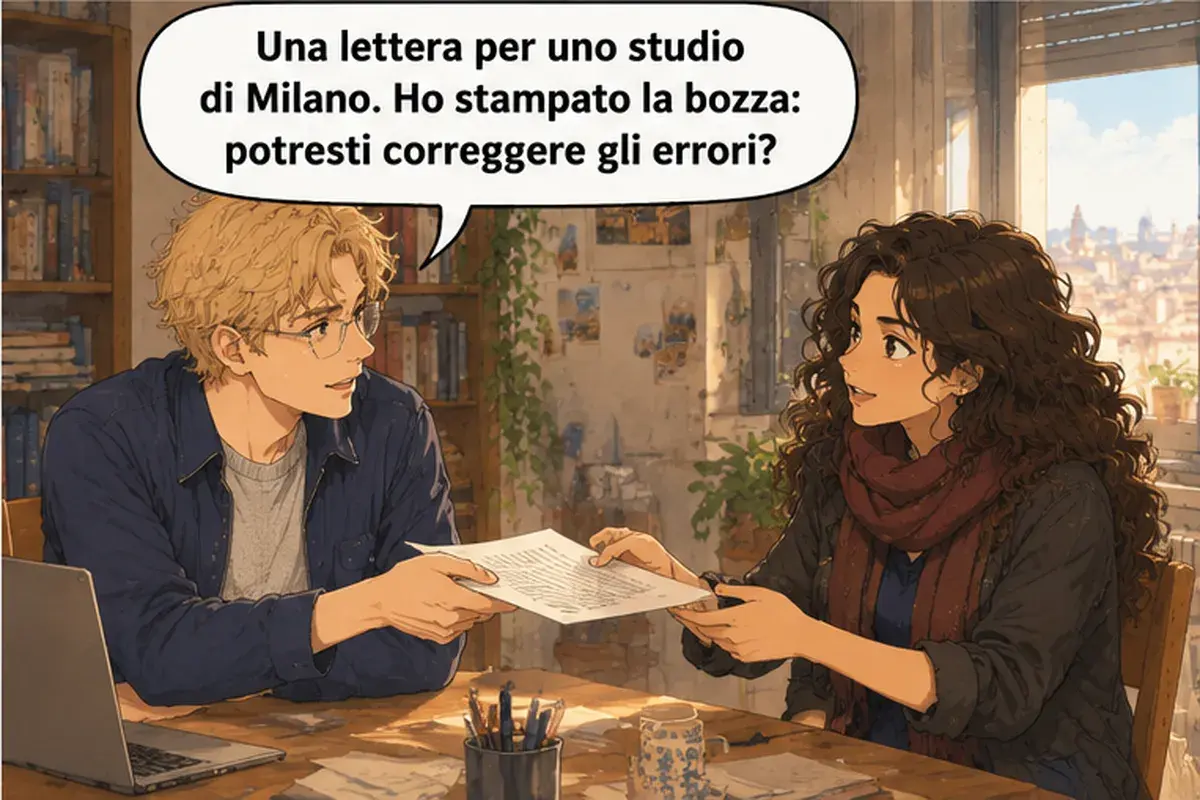
- Misha
Una lettera per uno studio di Milano. Ho stampato la bozza: potresti correggere gli errori?
A letter to a studio in Milan. I printed the draft: could you correct the mistakes?

- Giulia
Vediamo: «Spero di avere la possibilità di collaborare con voi.» Scusa, ma è troppo formale!
Let's see: "I hope to have the possibility of collaborating with you (to several people)." Sorry, but that's too formal!
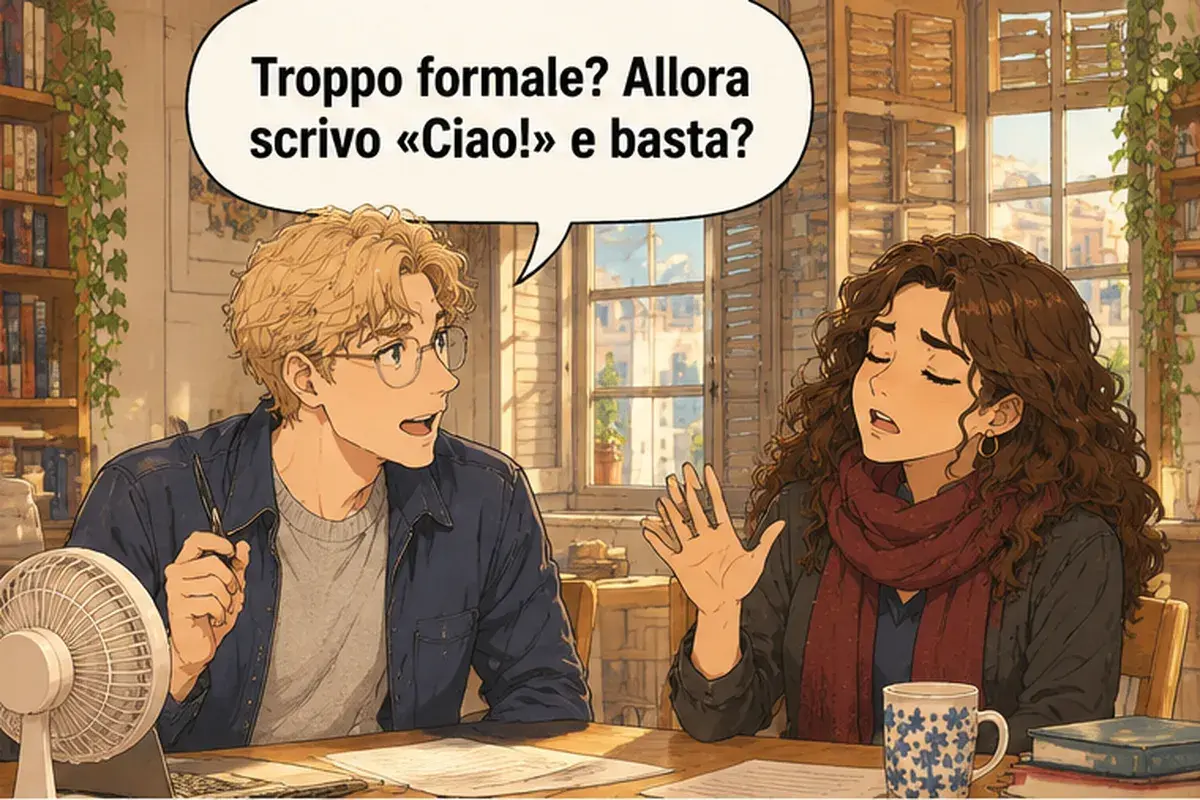
- Misha
Troppo formale? Allora scrivo «Ciao!» e basta?
Too formal? So I write "Hi!" and that's it?
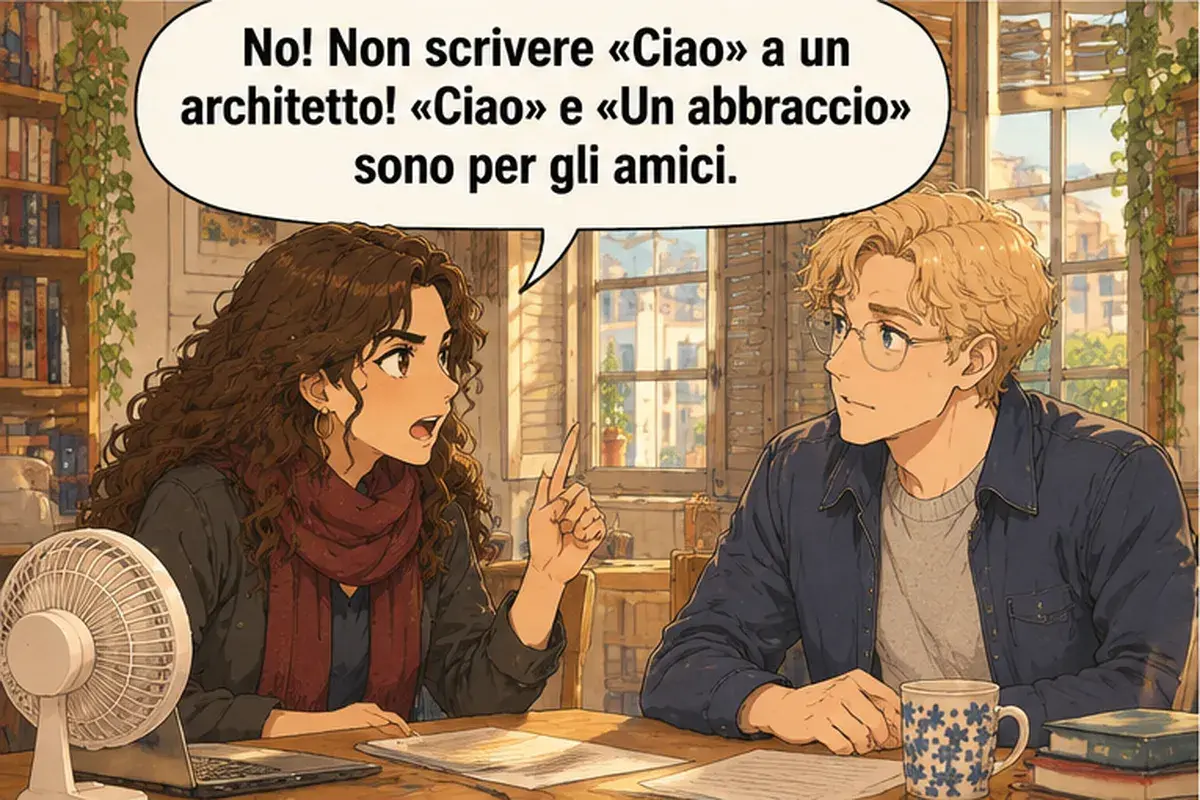
- Giulia
No! Non scrivere «Ciao» a un architetto! «Ciao» e «Un abbraccio» sono per gli amici.
No! Don't write "Hi" to an architect! "Hi" and "Hugs" are for friends.
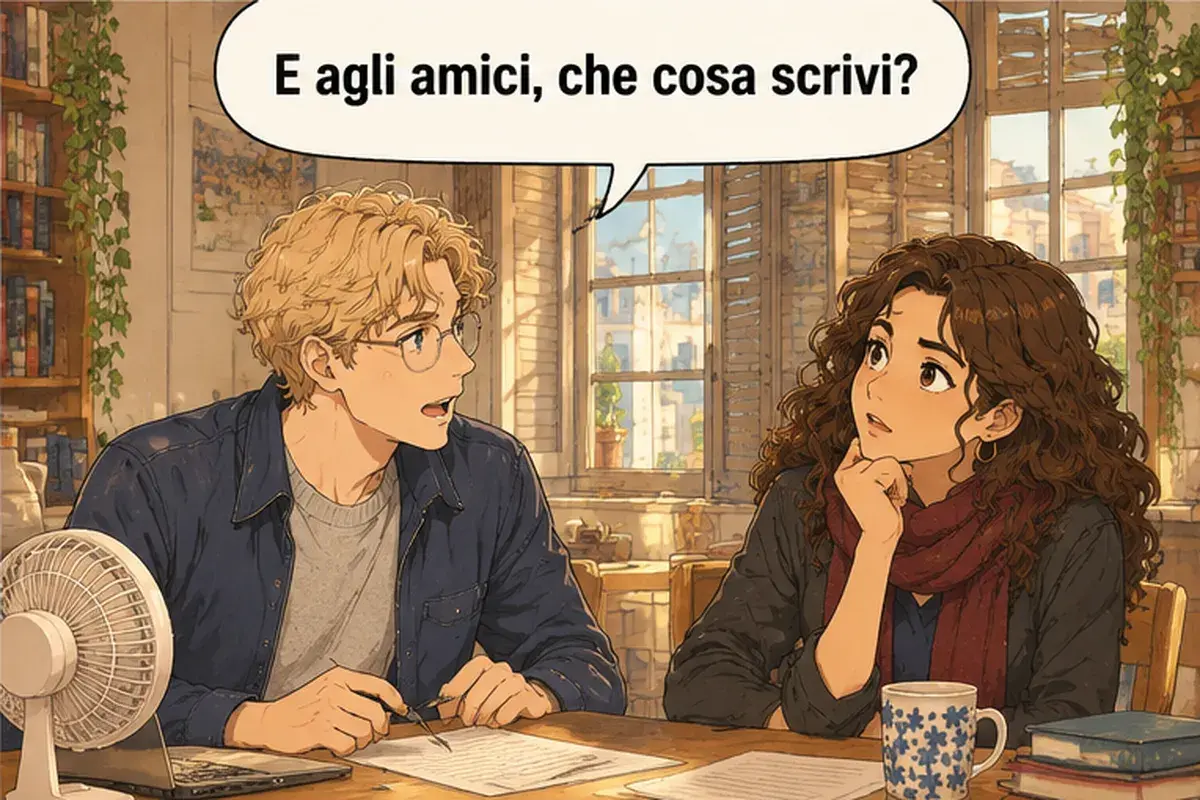
- Misha
E agli amici, che cosa scrivi?
And what do you write to friends?
- Giulia
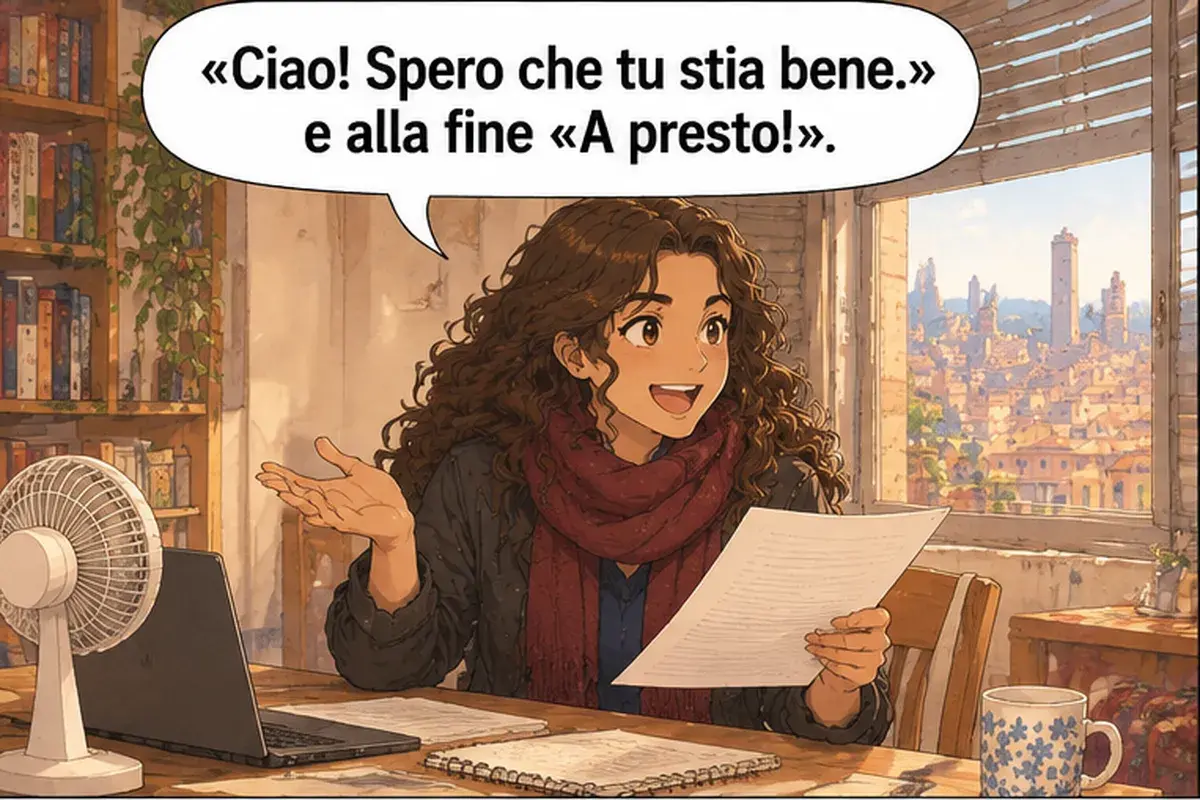
«Ciao! Spero che tu stia bene.» e alla fine «A presto!»
"Hi! I hope you're well." And at the end, "See you soon!"
- Misha
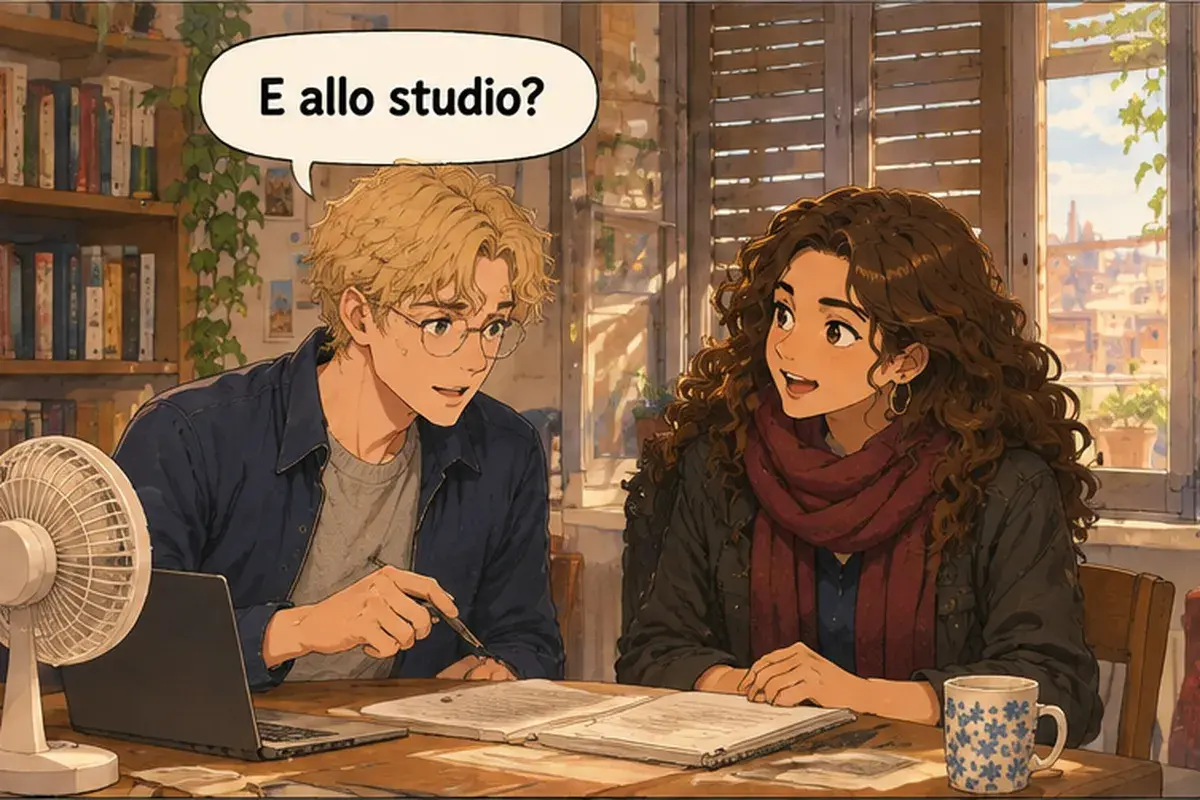
E allo studio?
And to the studio?

- Giulia
«Gentile…» all'inizio e «Cordiali saluti» alla fine. Dovresti scrivere una presentazione breve: un'azienda legge tante candidature.
"Dear…" at the beginning and "Kind regards" at the end. You should write a short introduction: a company reads lots of applications.
- Misha
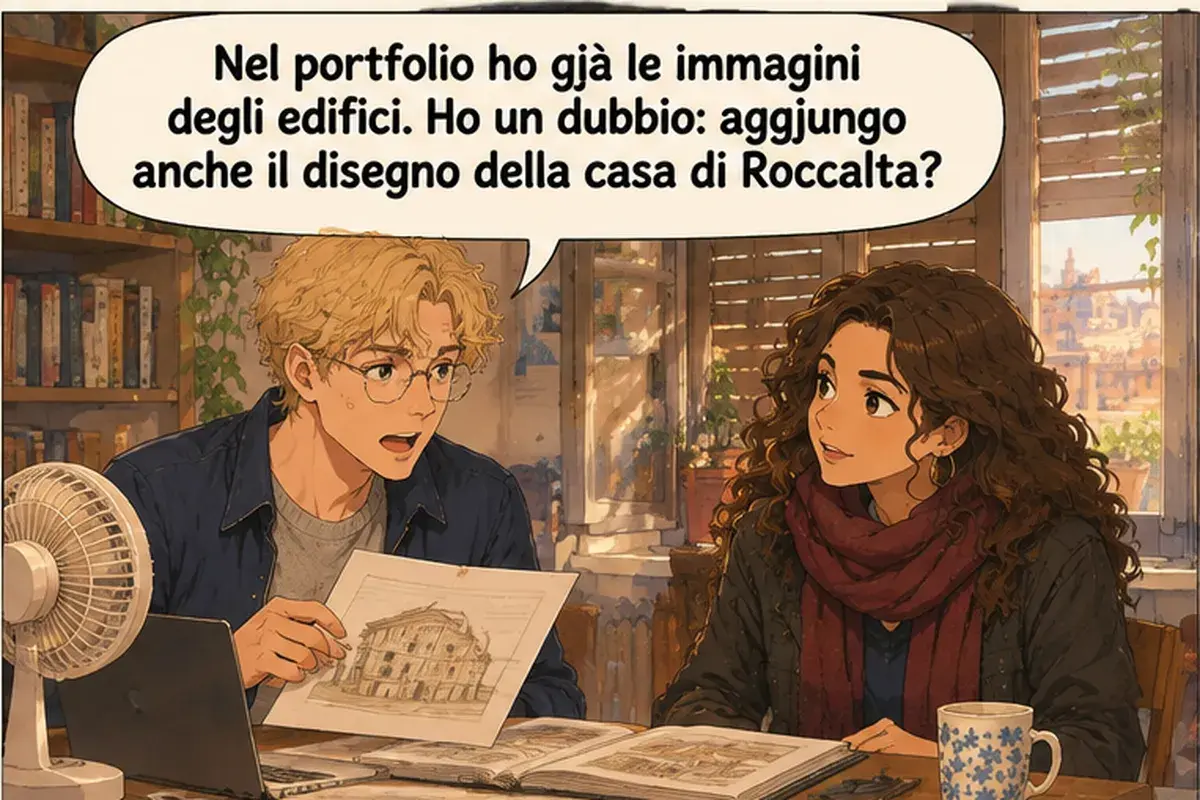
Nel portfolio ho già le immagini degli edifici. Ho un dubbio: aggiungo anche il disegno della casa di Roccalta?
I already have the images of the buildings in the portfolio. I have a doubt: should I also add the drawing of the house in Roccalta?
- Giulia
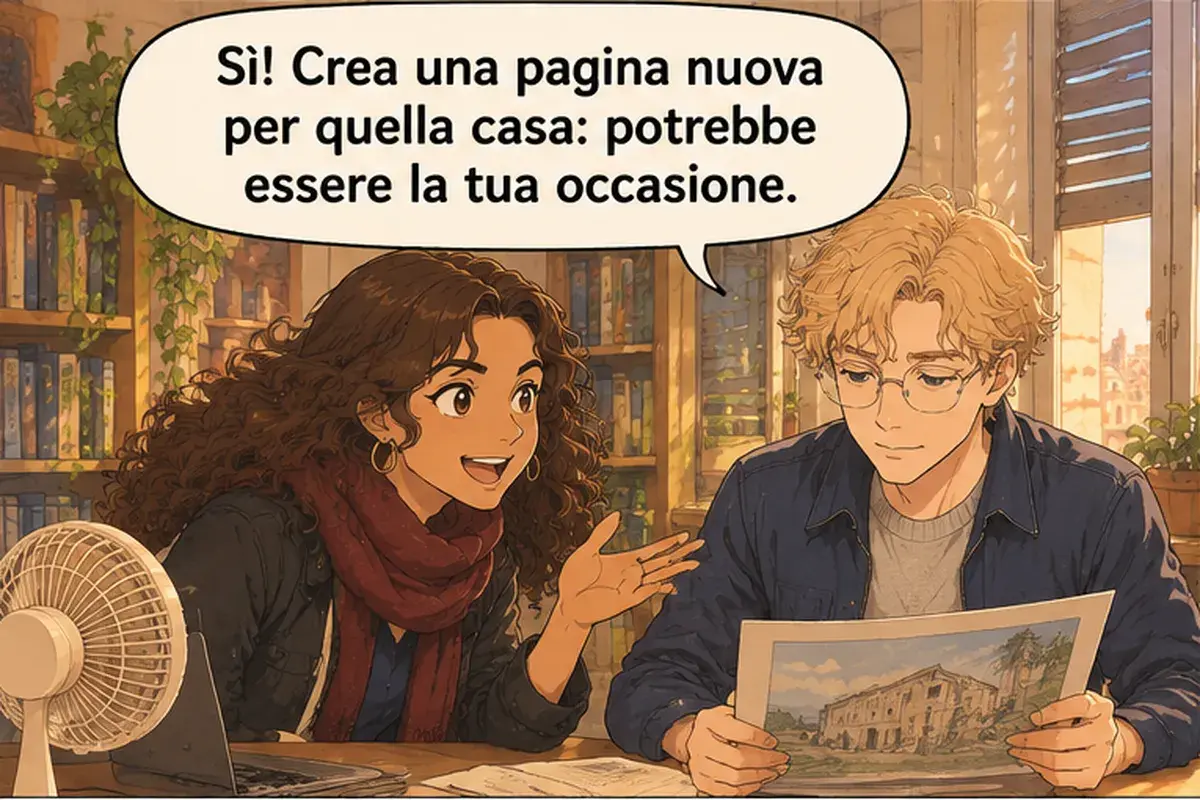
Sì! Crea una pagina nuova per quella casa: potrebbe essere la tua occasione.
Yes! Create a new page for that house: it could be your chance.
- Misha
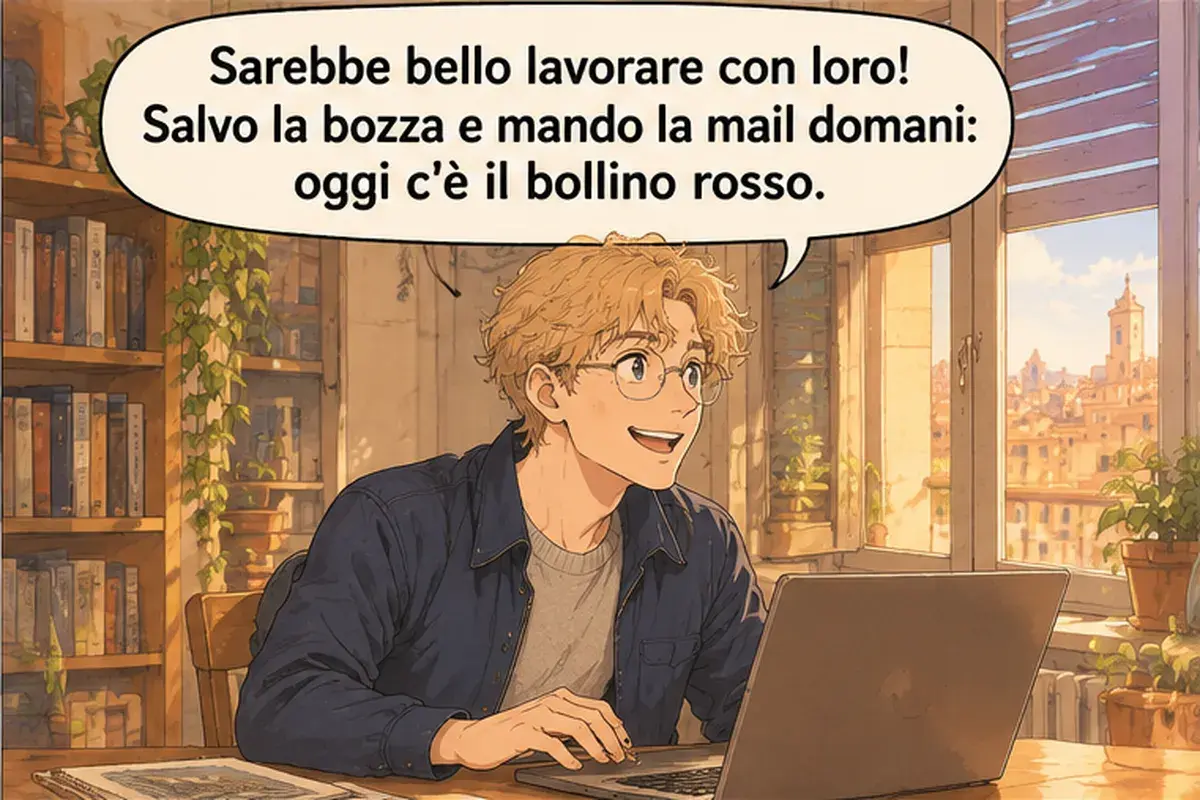
Sarebbe bello lavorare con loro! Salvo la bozza e mando la mail domani: oggi c'è il bollino rosso.
It would be great to work with them! I'll save the draft and send the email tomorrow: today there's a red heat alert.

- Giulia
Il bollino rosso è per il caldo, non per le mail! E nell'oggetto non scrivere «Ciao»!
The red heat alert is for the heat, not for emails! And don't write "Hi" in the subject line!
- Misha
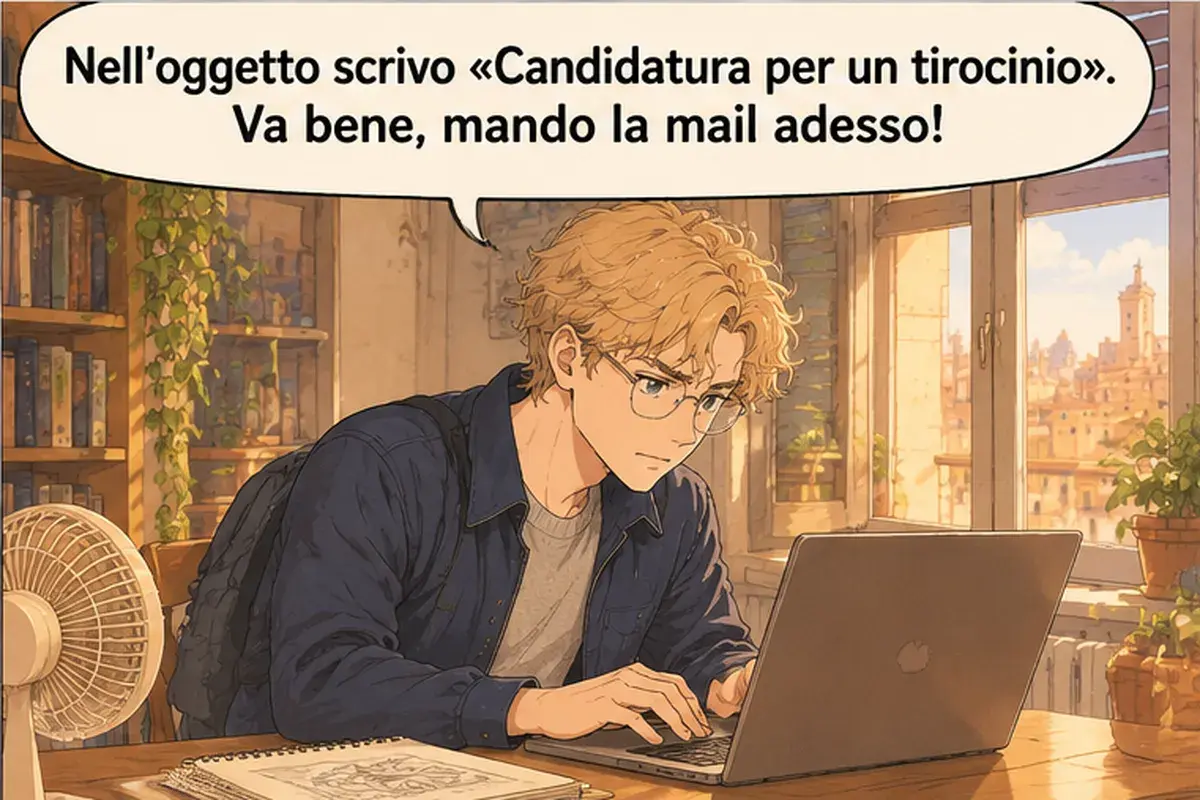
Nell'oggetto scrivo «Candidatura per un tirocinio». Va bene, mando la mail adesso!
In the subject line I'll write "Application for an internship." OK, I'm sending the email now!
Grammar for this text
- Non scrivere «Ciao» a un architetto! — telling a friend (tu) not to do something: non + infinitive (scrivere), not ✗ non scrivi. The rule is in unit 18.
- Potresti correggere gli errori? — "could you correct the mistakes?". Potresti is a ready-made polite form of potere (can) for tu; an infinitive comes next. More in this unit's grammar; the full rule is in B1.
- Dovresti scrivere una presentazione breve. — dovresti means "you should": it's advice, a form of dovere (must, have to) for tu.
- Potrebbe essere la tua occasione. — potrebbe means "it could be": the same form of potere, but for he / she / it.
- Sarebbe bello lavorare con loro! — sarebbe means "it would be", from essere; sarebbe bello + infinitive — "it would be great to…".
- Spero che tu stia bene. — a set phrase: "I hope you're well". Stia is a form of stare in the congiuntivo presente (present subjunctive), which you need after spero che. Learn it whole for now; the rule is in B1.
- Oggi c'è il bollino rosso — bollino rosso ("red sticker") is what Italians call the highest heat alert in summer.
Words and grammar of the unit: Write an internship application letter.
Learn the words from the texts with flashcards
In the app, you can tap any word in a text to see its translation, forms and examples, and new words stick with flashcards. 15 minutes a day.
Start for freeEverything is open for free. No card needed to sign up.