
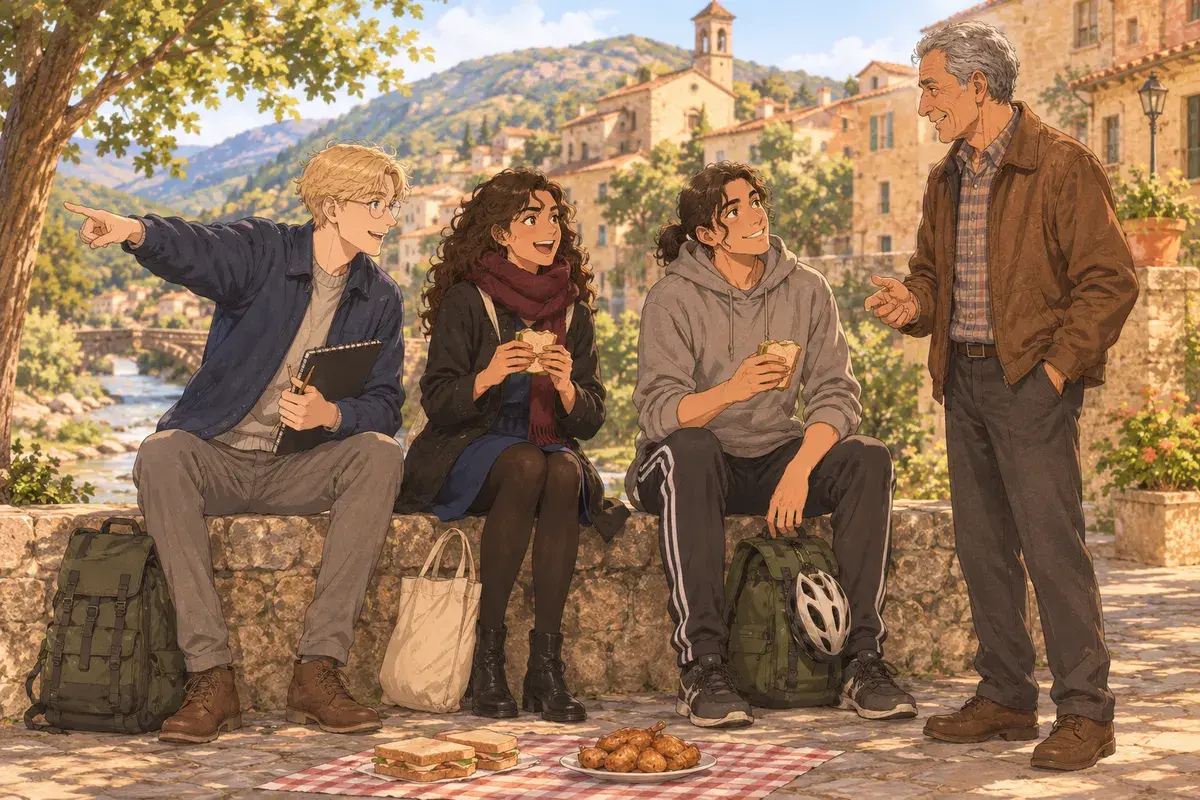
Italian dialogue with translation · A2 · 15 lines
Mi può dare un'indicazione per la stazione? Could you give me directions to the station? (formal)
Comic · 15 panels
- Misha
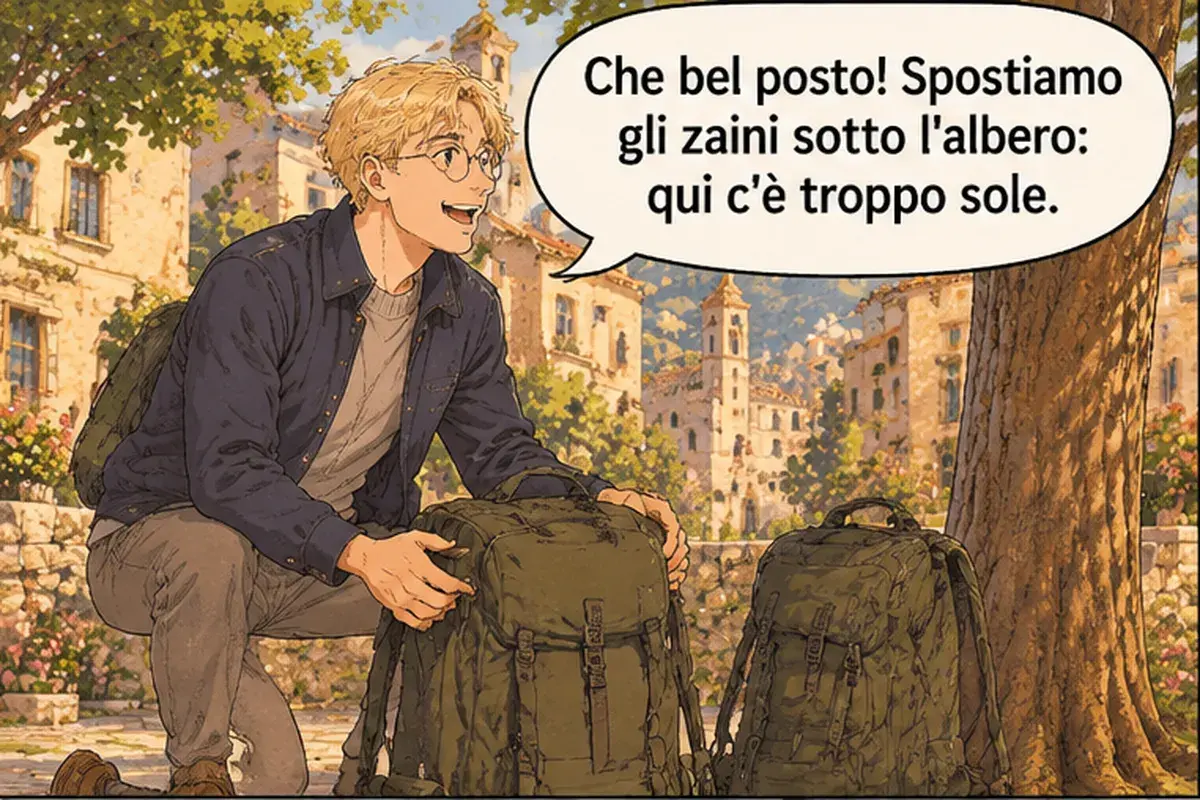
Che bel posto! Spostiamo gli zaini sotto l'albero: qui c'è troppo sole.
What a nice place! Let's move the backpacks under the tree: there's too much sun here.

- Giulia
Ecco i panini e il pollo. Luca oggi guarda la partita in televisione: più pollo per noi!
Here are the sandwiches and the chicken. Luca is watching the game on TV today: more chicken for us!
- Diego
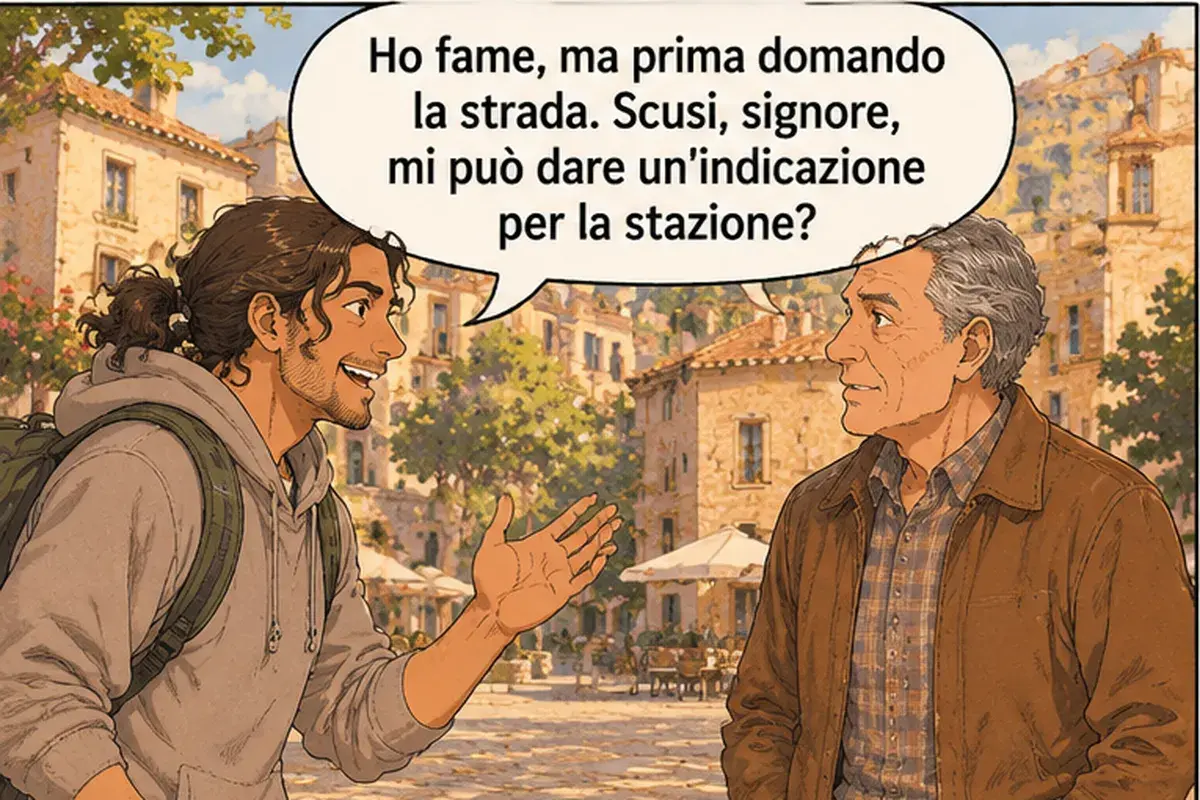
Ho fame, ma prima domando la strada. Scusi, signore, mi può dare un'indicazione per la stazione?
I'm hungry, but first I'll ask the way. Excuse me, sir, could you give me directions to the station? (formal)
- Signore
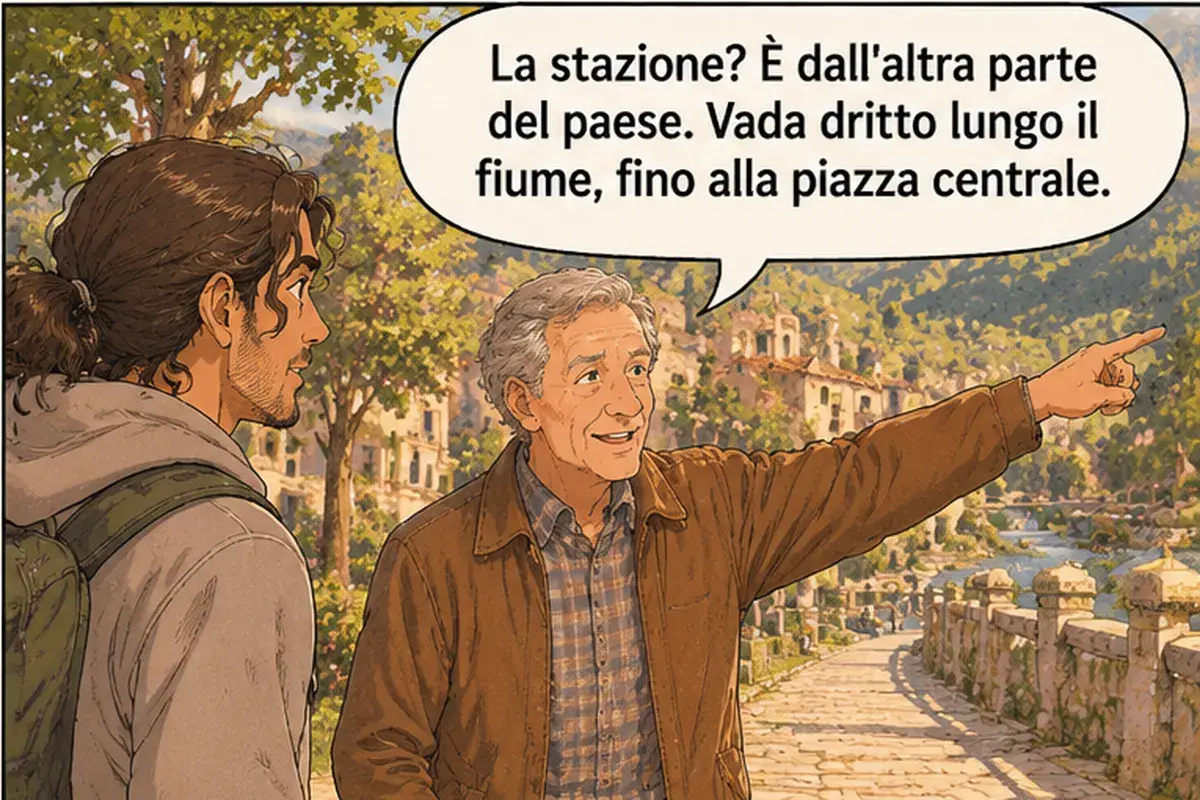
La stazione? È dall'altra parte del paese. Vada dritto lungo il fiume, fino alla piazza centrale.
The station? It's on the other side of town. Go straight along the river, as far as the central square (formal).
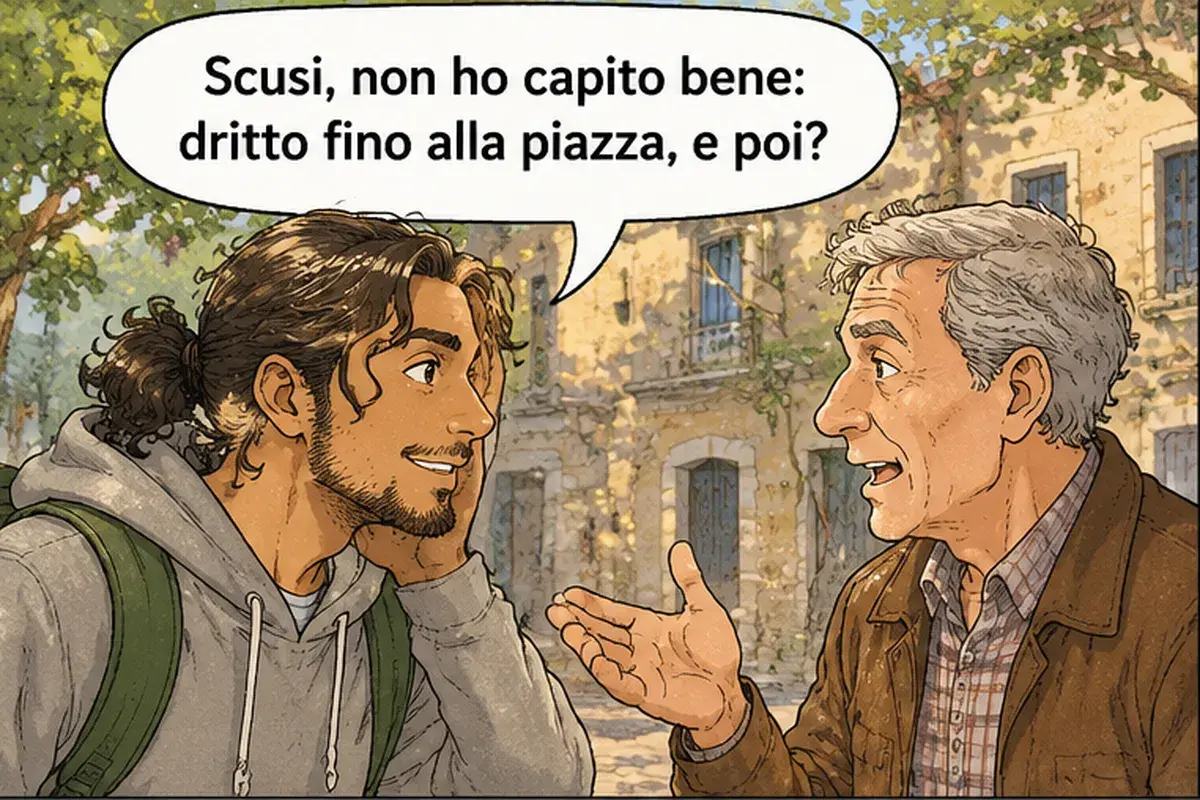
- Diego
Scusi, non ho capito bene: dritto fino alla piazza, e poi?
Excuse me, I didn't quite get that: straight as far as the square, and then? (formal)
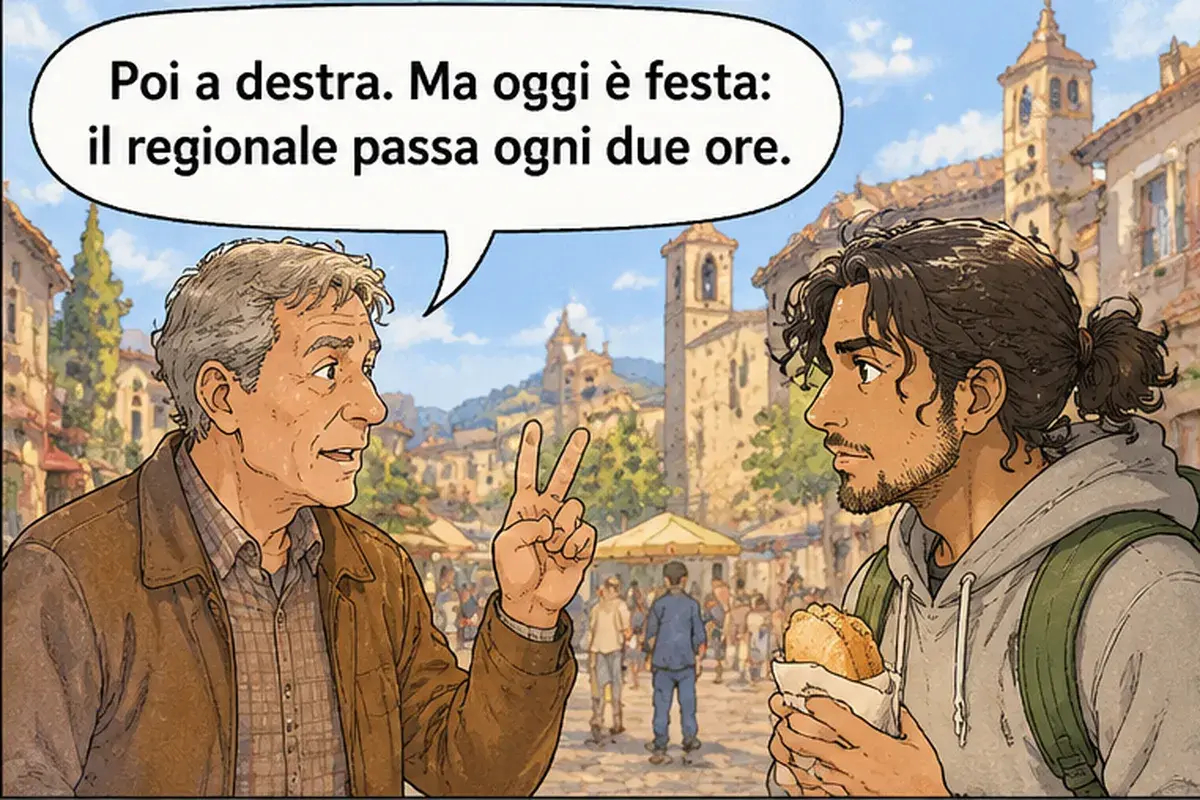
- Signore
Poi a destra. Ma oggi è festa: il regionale passa ogni due ore.
Then right. But today is a holiday: the regional train runs every two hours.

- Diego
Grazie mille! E quel cavallo è maschio o femmina?
Thanks a lot! And is that horse male or female?
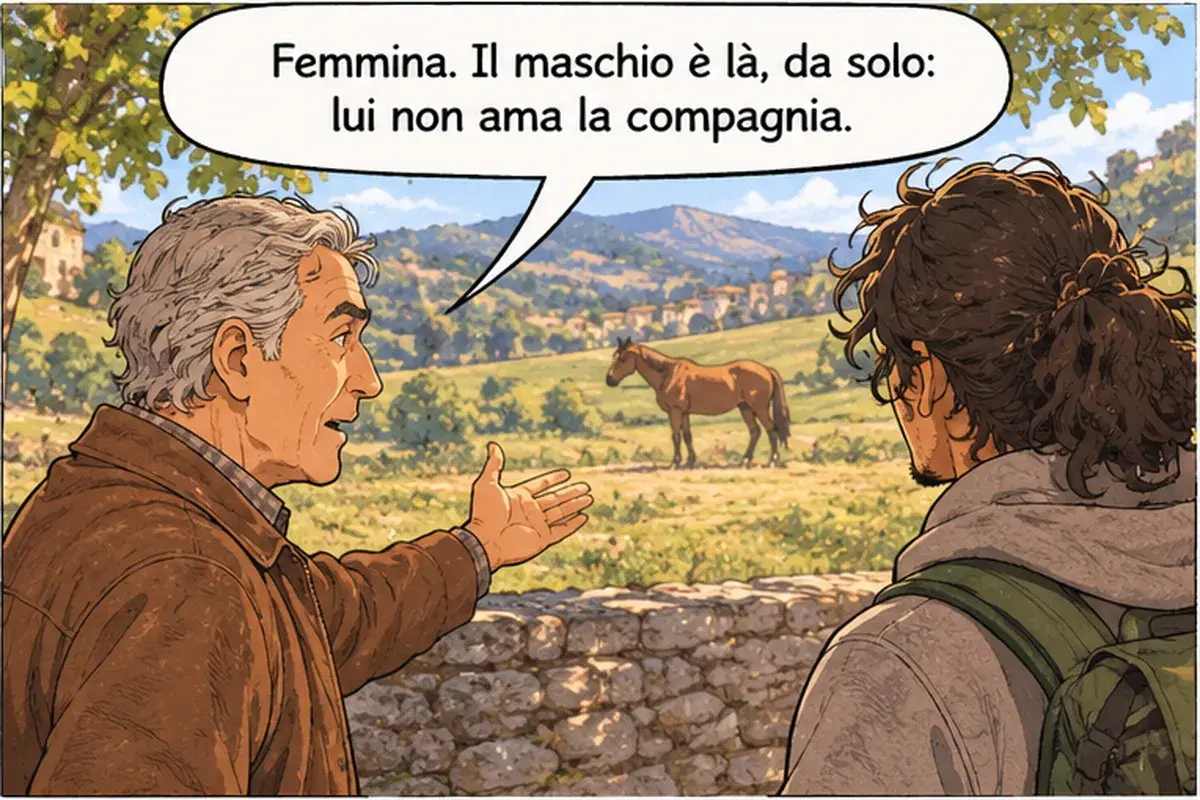
- Signore
Femmina. Il maschio è là, da solo: lui non ama la compagnia.
Female. The male is over there, by himself: he doesn't like company.
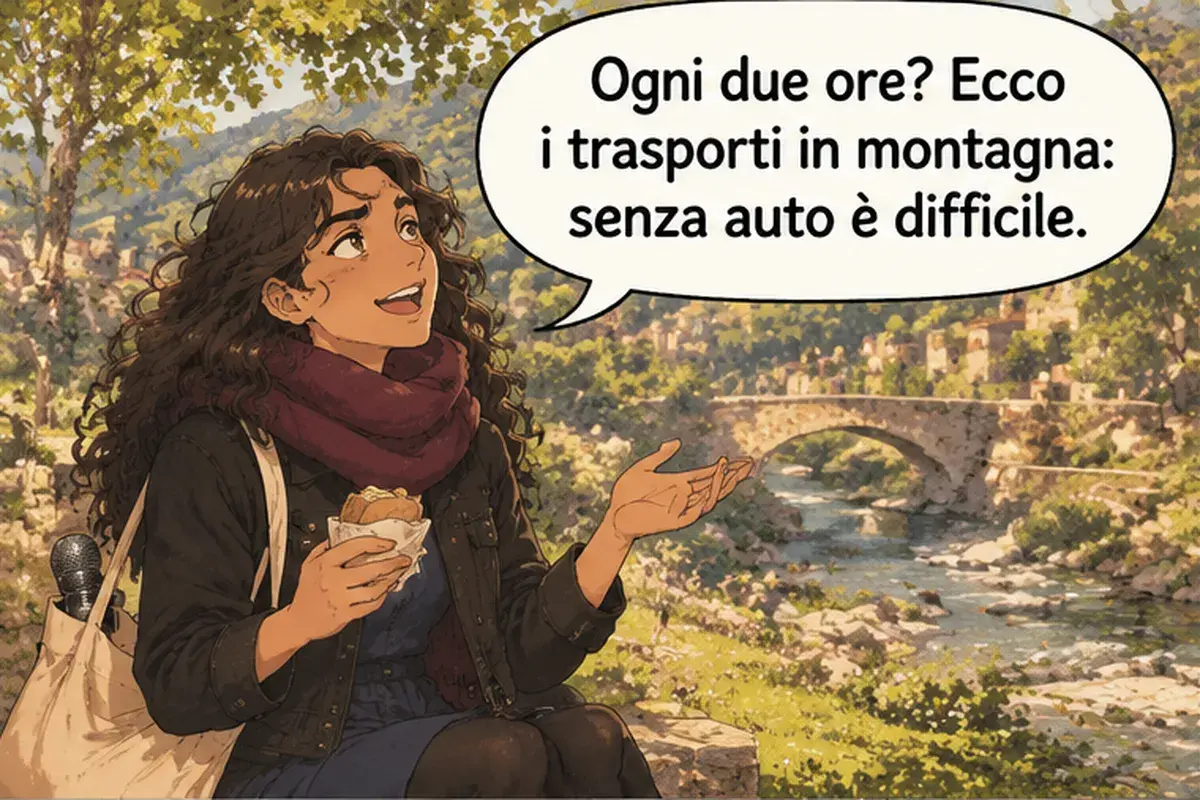
- Giulia
Ogni due ore? Ecco i trasporti in montagna: senza auto è difficile.
Every two hours? That's mountain transportation for you: it's hard without a car.
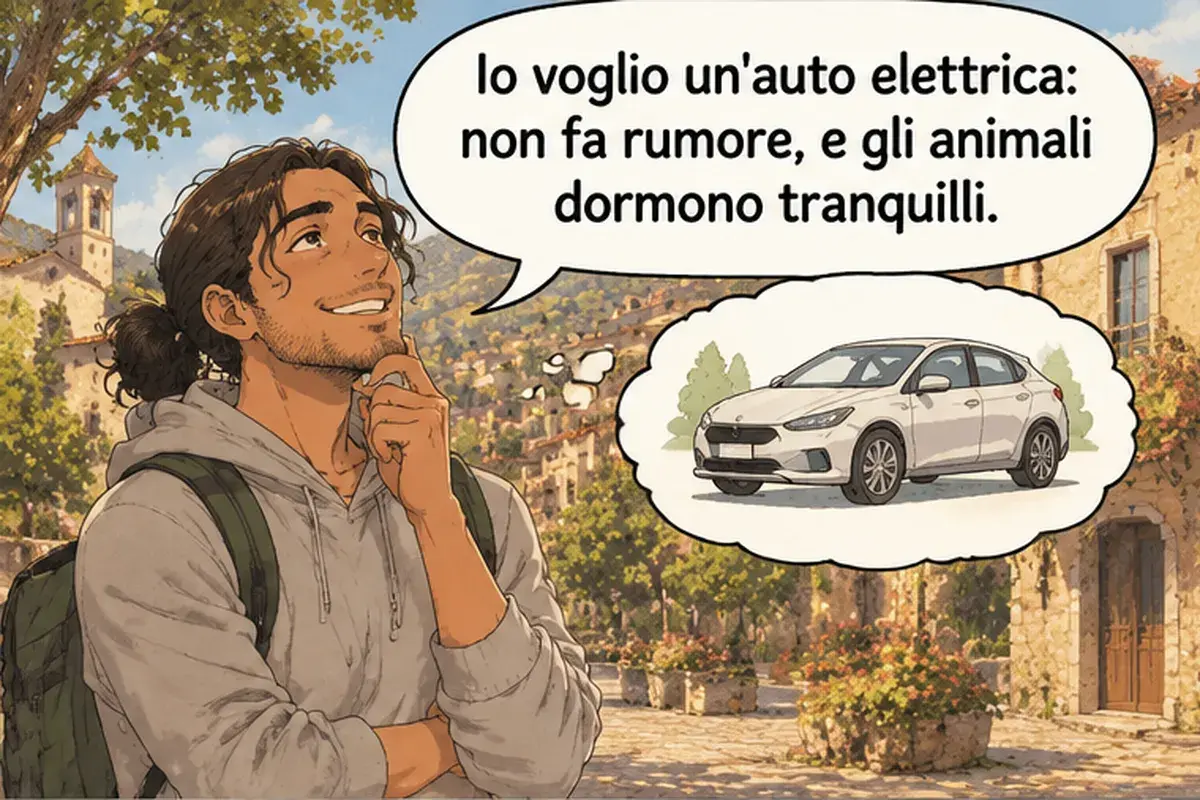
- Diego
Io voglio un'auto elettrica: non fa rumore, e gli animali dormono tranquilli.
I want an electric car: it doesn't make any noise, and the animals sleep peacefully.
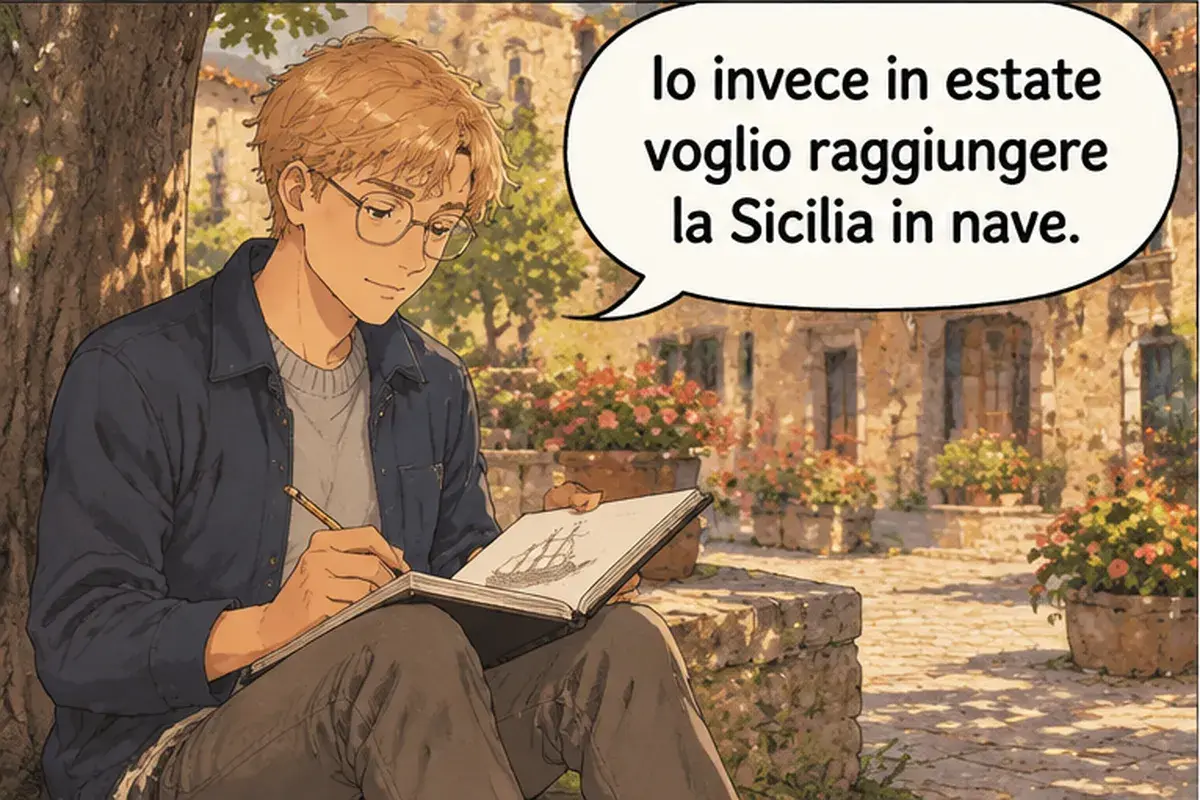
- Misha
Io invece in estate voglio raggiungere la Sicilia in nave.
I, on the other hand, want to reach Sicily by ship in the summer.
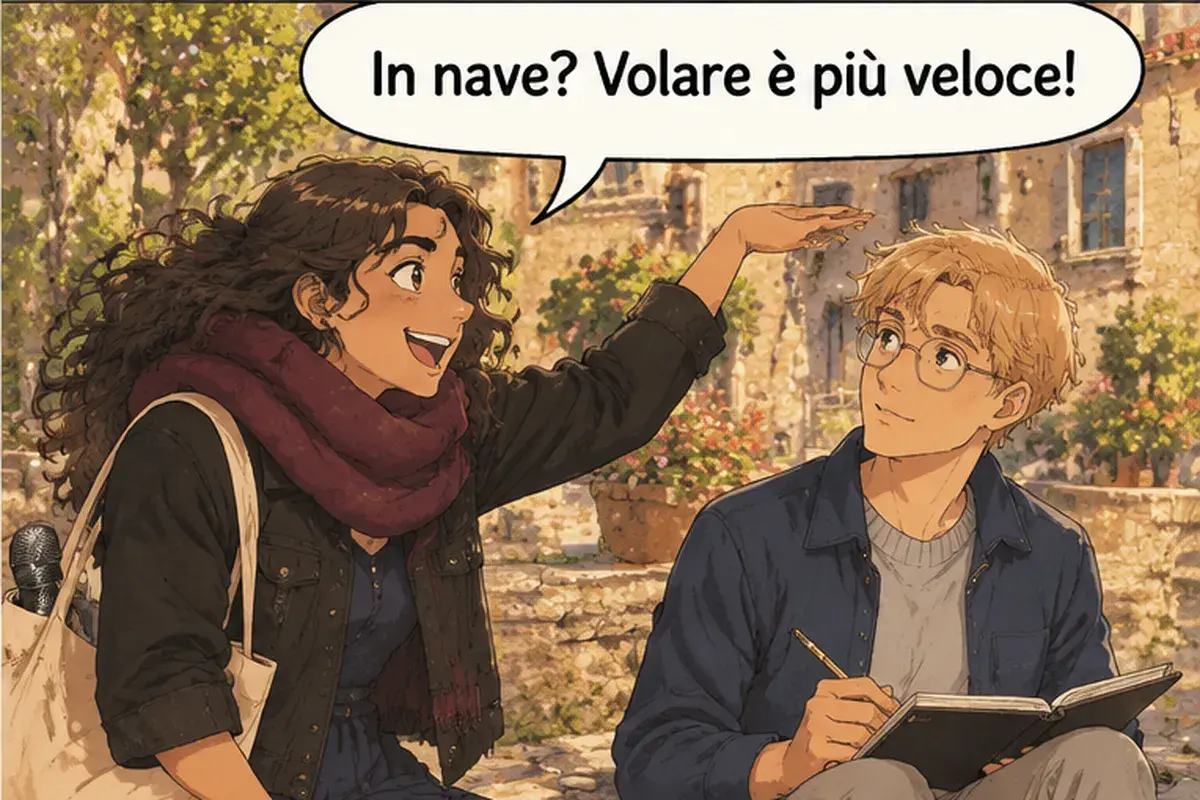
- Giulia
In nave? Volare è più veloce!
By ship? Flying is faster!
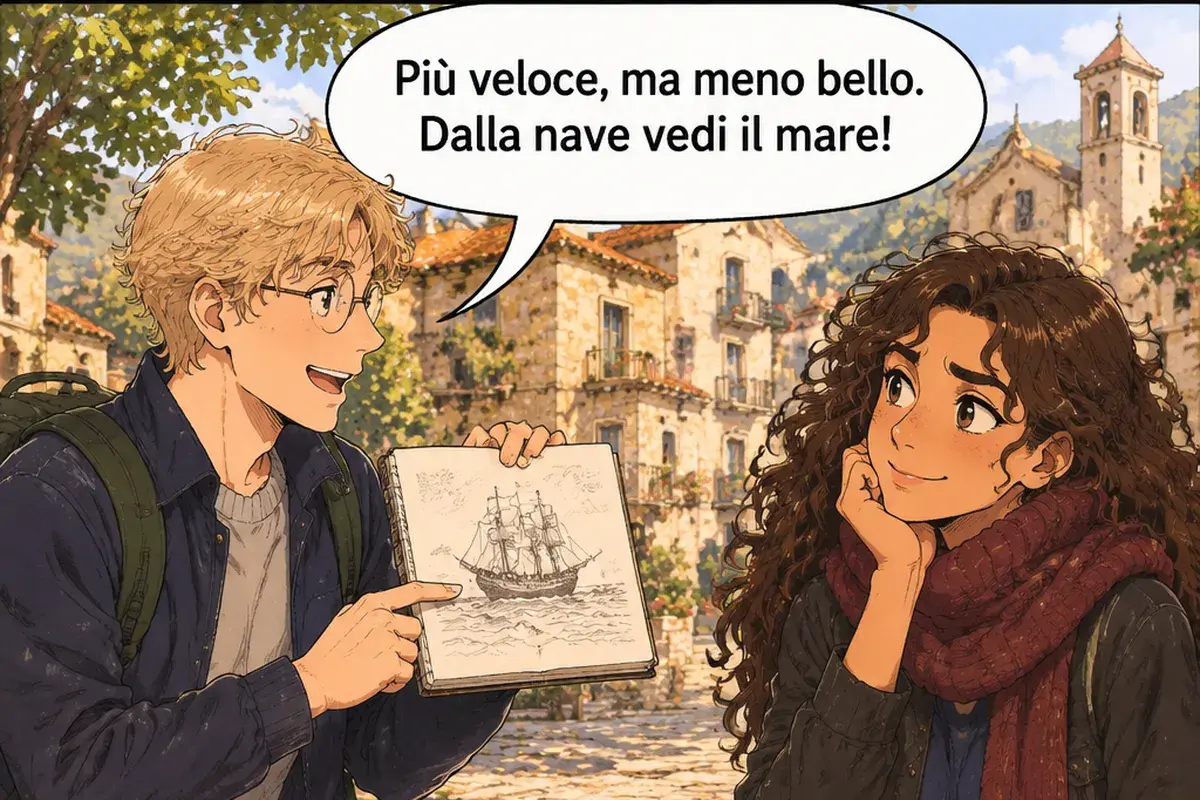
- Misha
Più veloce, ma meno bello. Dalla nave vedi il mare!
Faster, but less beautiful. From the ship you see the sea!
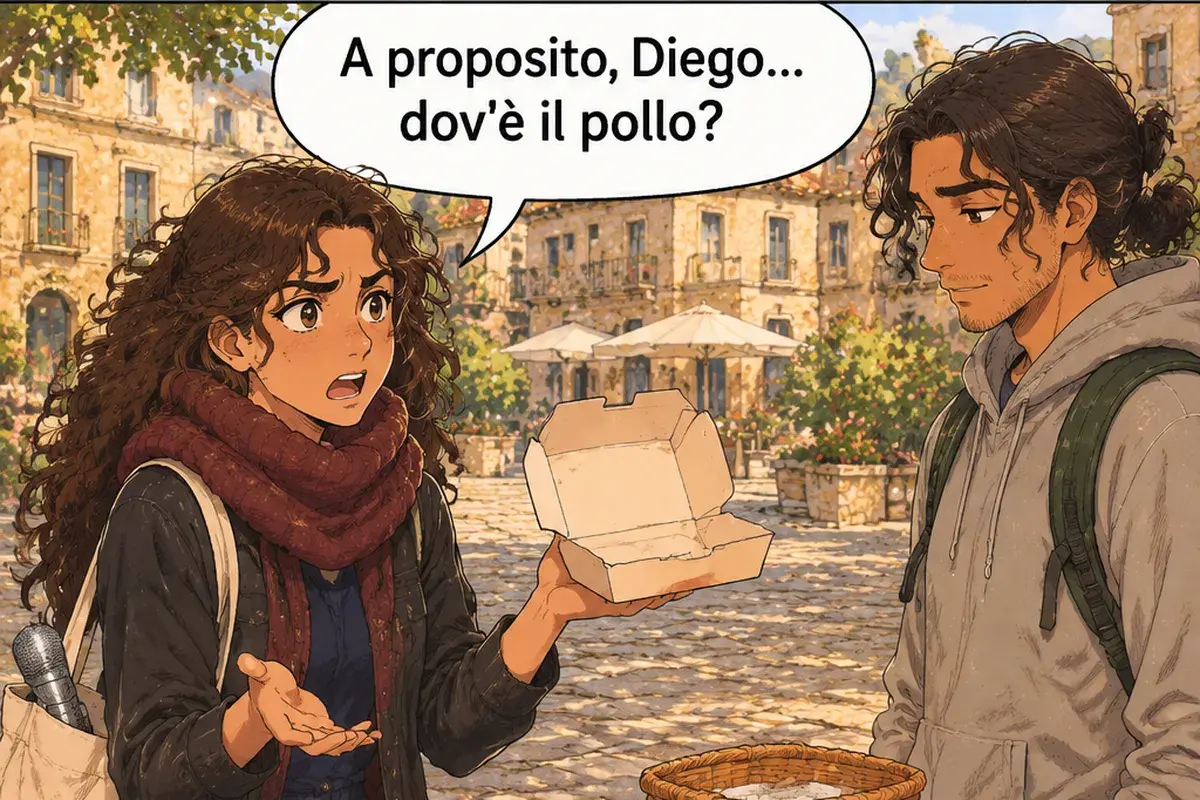
- Giulia
A proposito, Diego… dov'è il pollo?
By the way, Diego… where's the chicken?
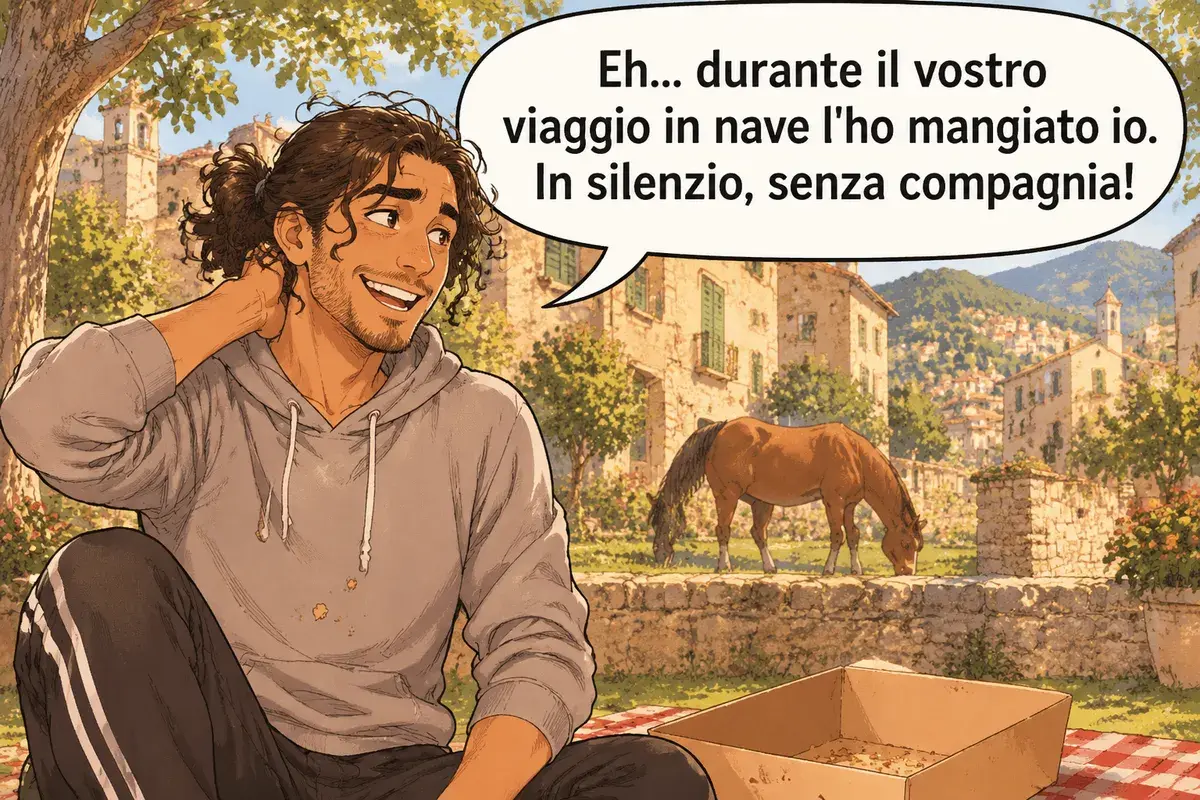
- Diego
Eh… durante il vostro viaggio in nave l'ho mangiato io. In silenzio, senza compagnia!
Uh… during your trip by ship, I was the one who ate it. In silence, without company! (to several people)
Grammar for this text
- mi può dare un'indicazione per la stazione? — a polite request to a stranger on Lei (formal you):
può+ infinitive.un'with an apostrophe goes before a feminine word that starts with a vowel (l'indicazione, feminine). - È dall'altra parte del paese — "on the other side, at the other end": there are two prepositions here.
dall'=da+l', and afterpartecomesdi:del=di+il. - Vada dritto lungo il fiume —
vada drittois a ready-made polite phrase, "go straight ahead" (A1);lungomeans "along" and takes no preposition. - il regionale passa ogni due ore —
il regionaleis a regional train.ogni+ number + plural:ogni due oremeans "every two hours". - Il maschio è là, da solo — for animals Italians say
maschioandfemmina, "male" and "female"; in a short answer no article is needed:Femmina. - un'auto elettrica —
autois feminine, and the plural is the same:auto. The adjective agrees with it:elettrica. - l'ho mangiato io —
l'=lo(il pollo) beforeho; the ending-oof the participle repeats the gender and number oflo(the rule comes at B1).ioat the end means "I'm the one who did it".
Words and grammar of the unit: Asking the way in the countryside.
Learn the words from the texts with flashcards
In the app, you can tap any word in a text to see its translation, forms and examples, and new words stick with flashcards. 15 minutes a day.
Start for freeEverything is open for free. No card needed to sign up.