

Italian dialogue with translation · A1 · 14 lines
Com'è stato il viaggio? How was the trip?
Comic · 14 panels
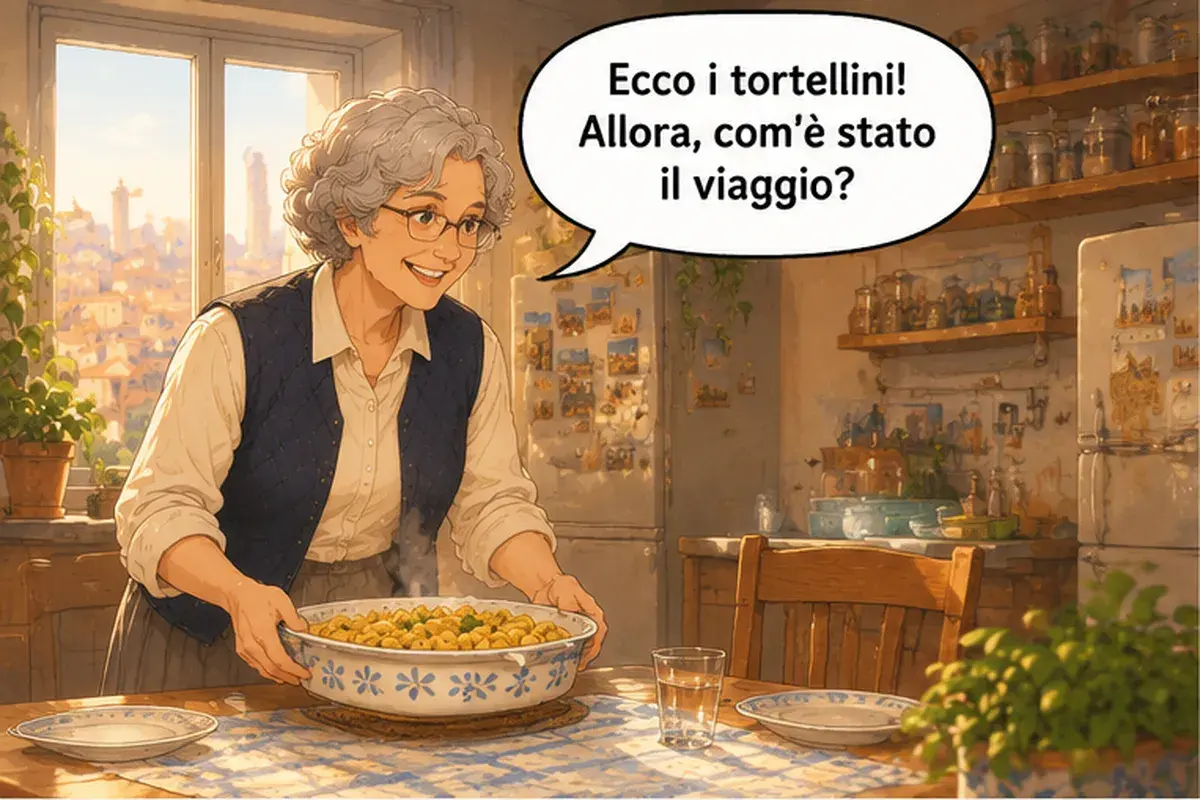
- Signora Paola
Ecco i tortellini! Allora, com'è stato il viaggio?
Here are the tortellini! So, how was the trip?
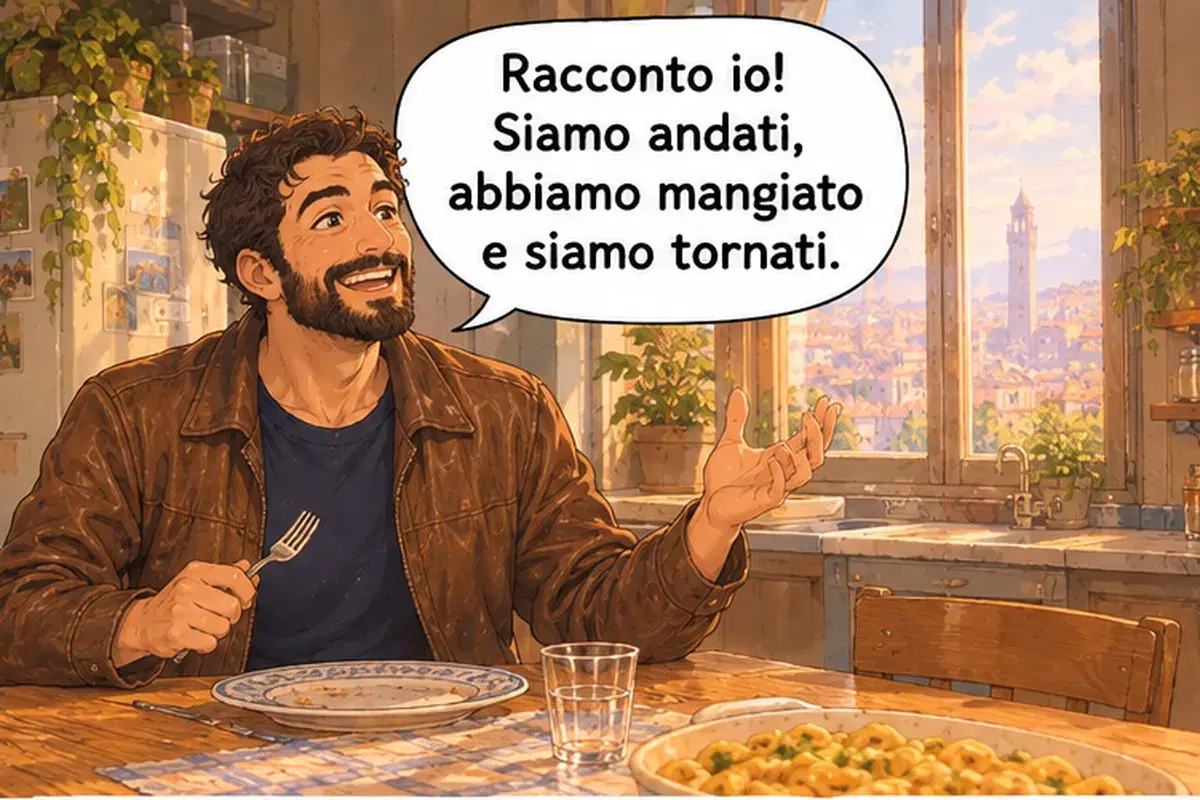
- Luca
Racconto io! Siamo andati, abbiamo mangiato e siamo tornati.
I'll tell it! We went, we ate, and we came back.
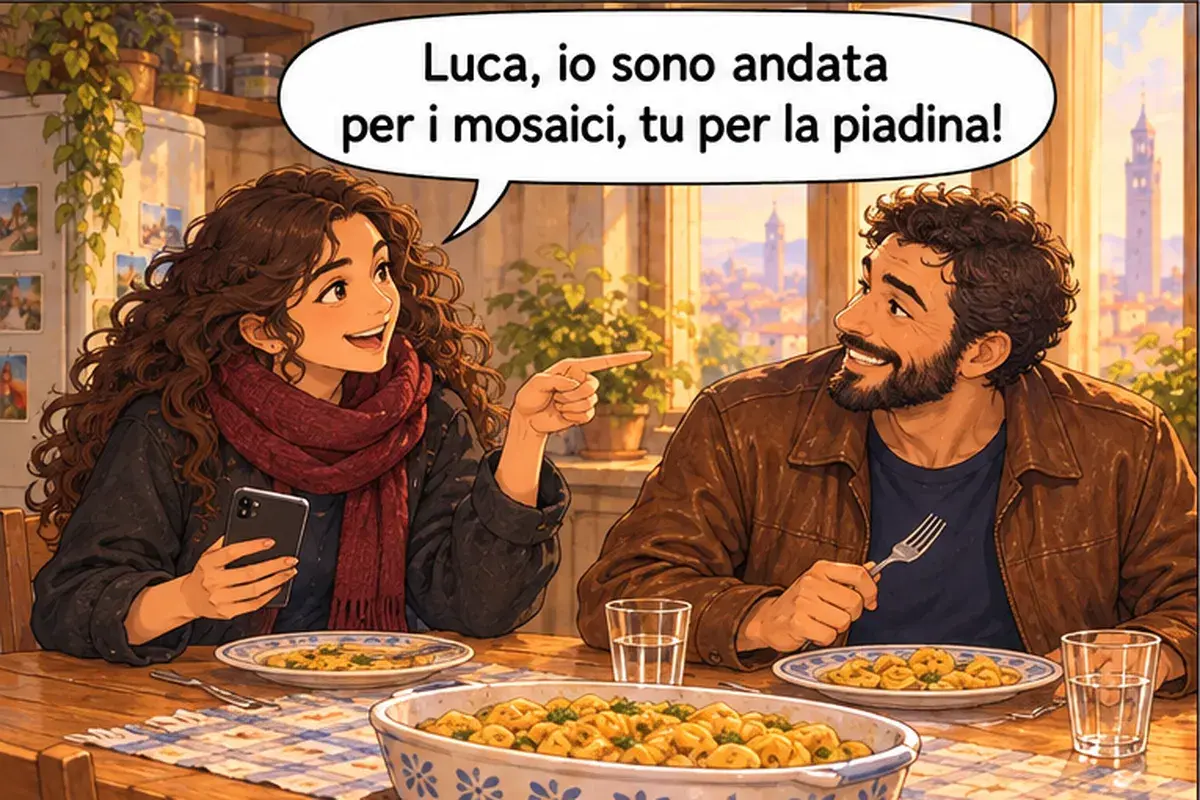
- Giulia
Luca, io sono andata per i mosaici, tu per la piadina!
Luca, I went for the mosaics, you for the piadina! (woman speaking)
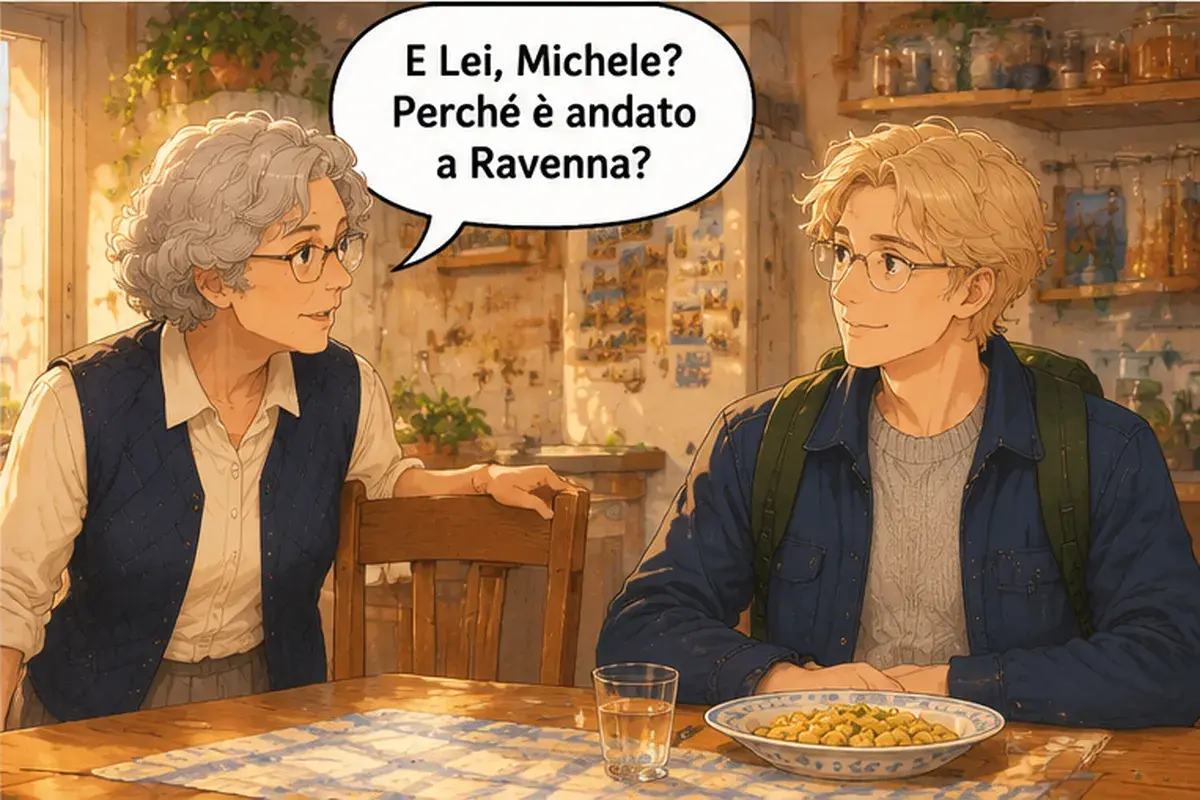
- Signora Paola
E Lei, Michele? Perché è andato a Ravenna?
And you, Michele? Why did you go to Ravenna? (to a man, formal)
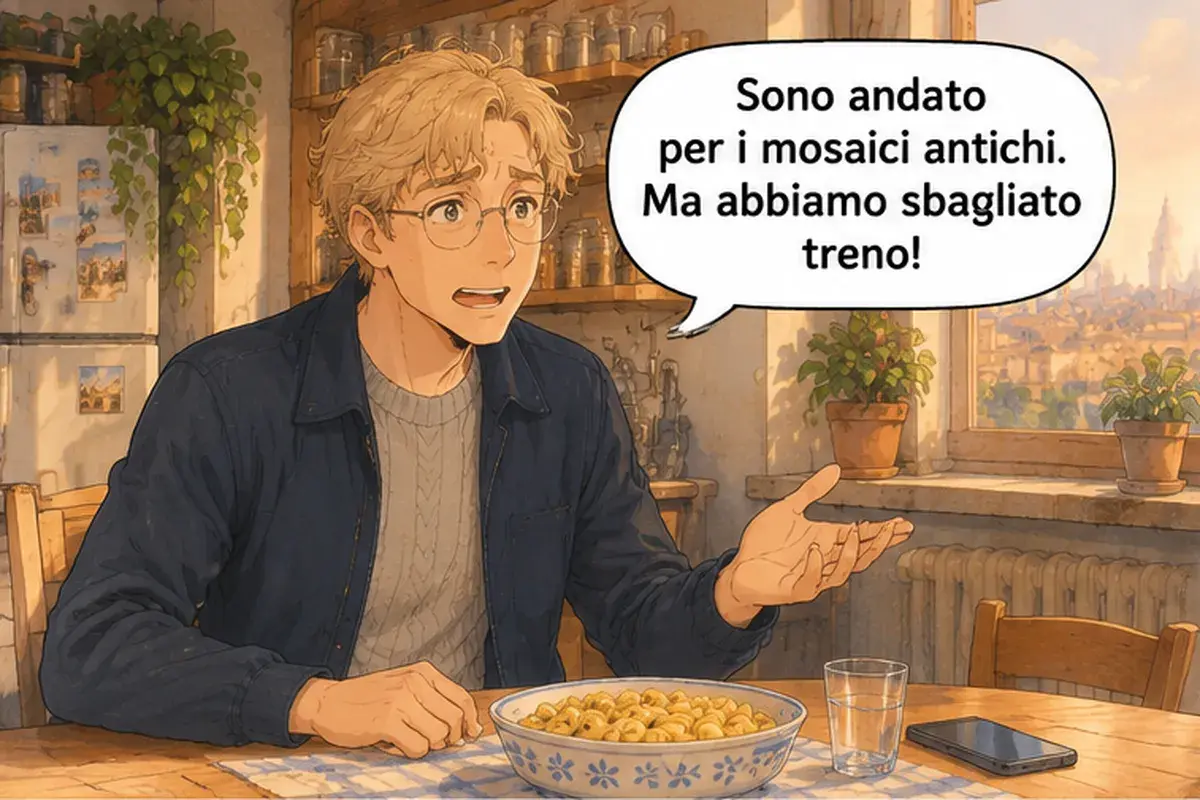
- Misha
Sono andato per i mosaici antichi. Ma abbiamo sbagliato treno!
I went for the ancient mosaics. But we took the wrong train! (man speaking)
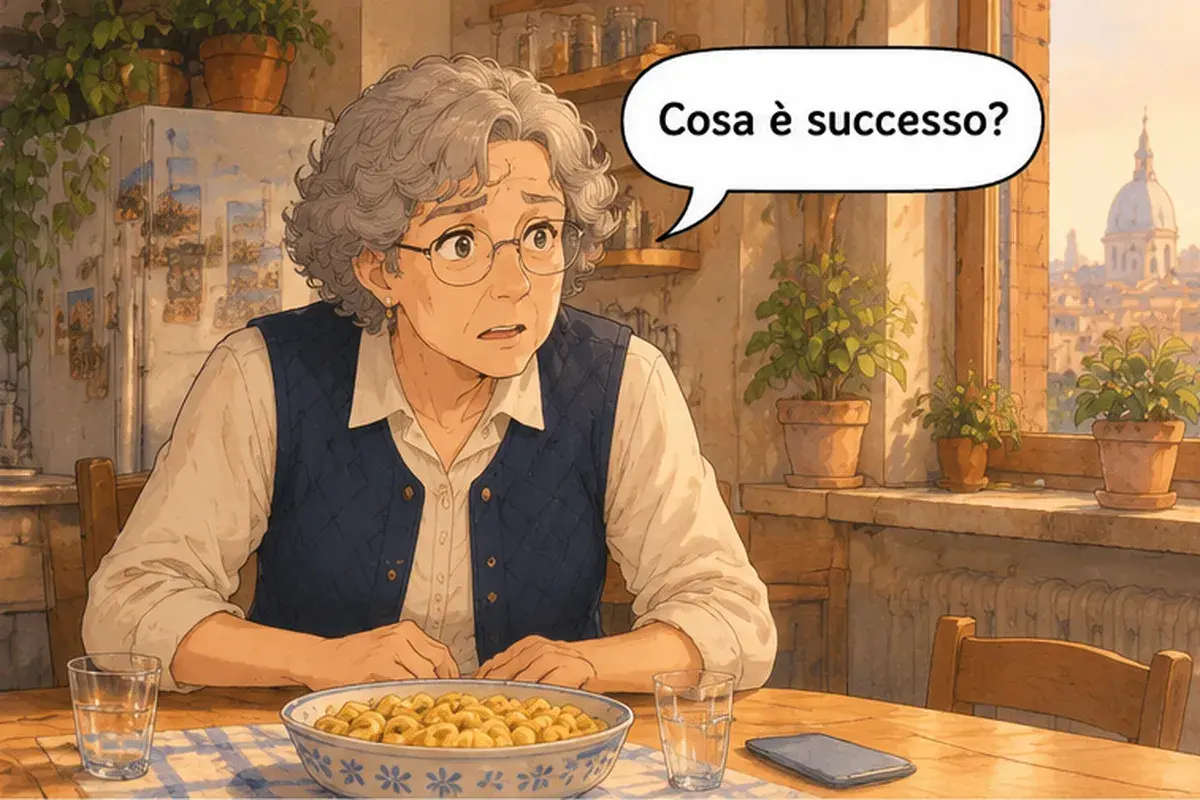
- Signora Paola
Cosa è successo?
What happened?
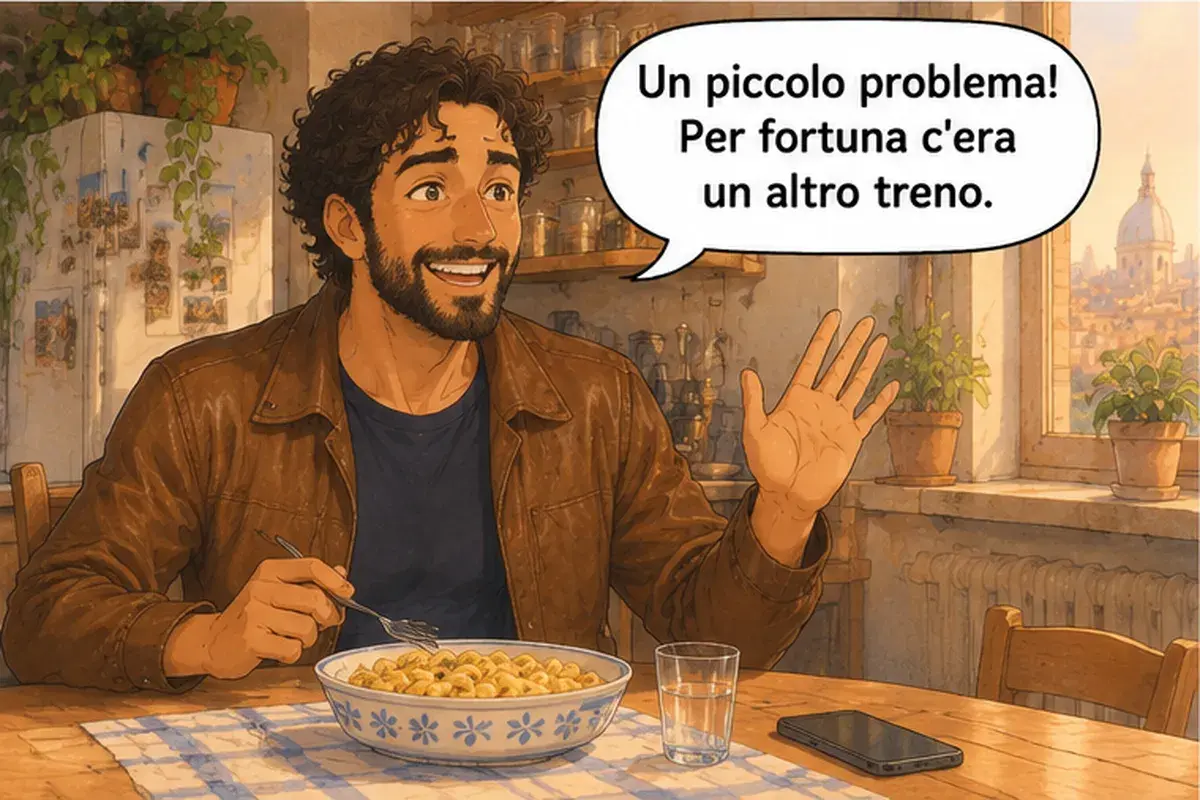
- Luca
Un piccolo problema! Per fortuna c'era un altro treno.
A small problem! Luckily, there was another train.
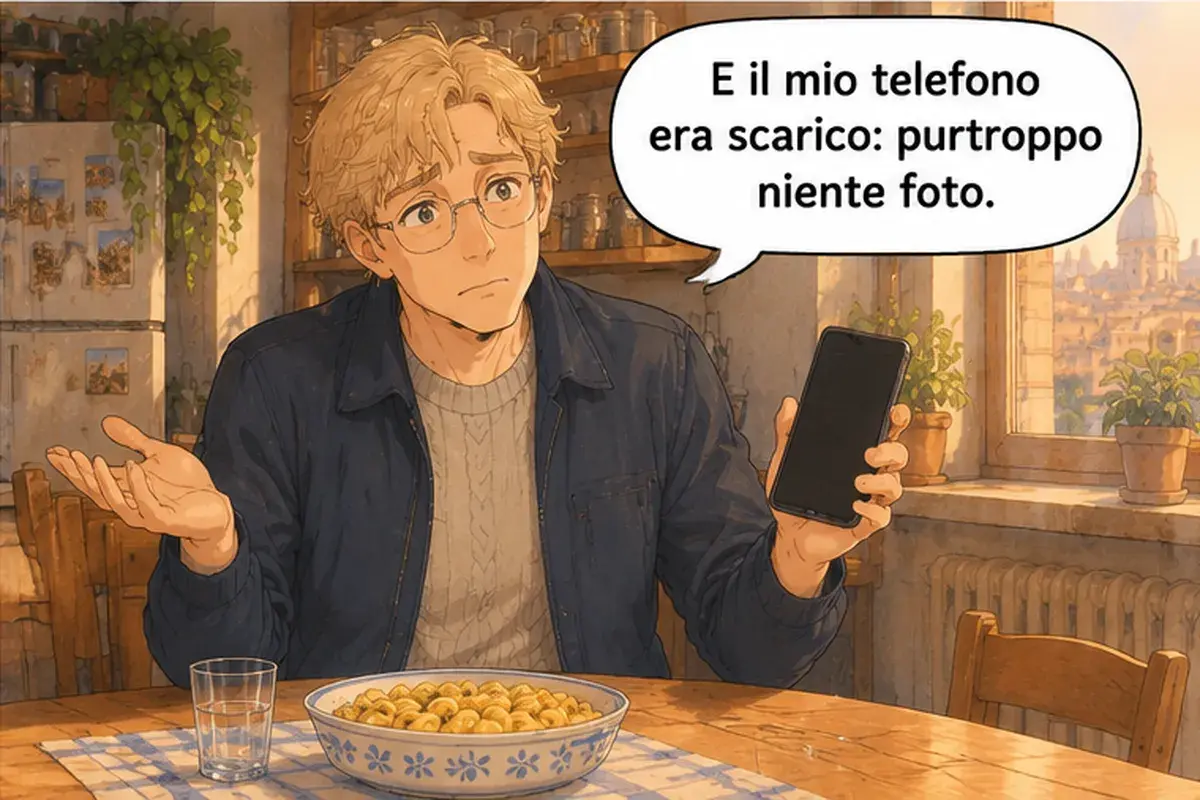
- Misha
E il mio telefono era scarico: purtroppo niente foto.
And my phone was dead: unfortunately, no photos.
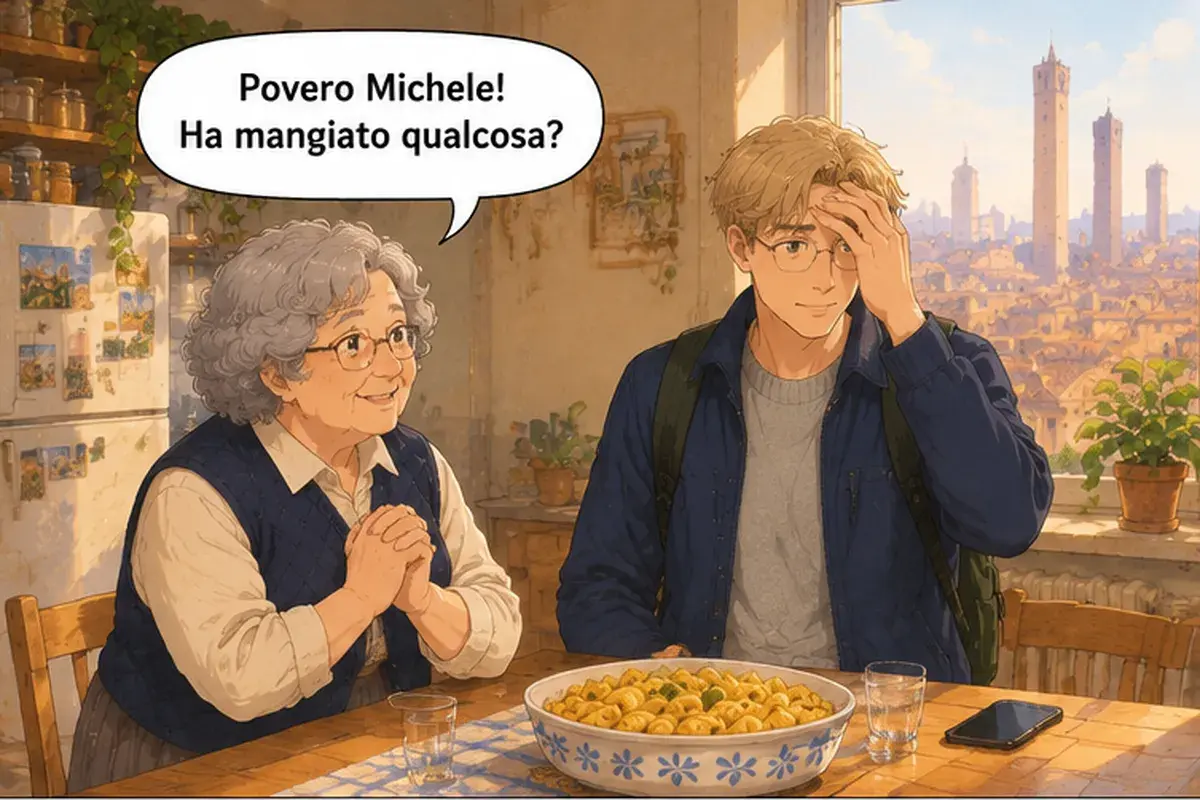
- Signora Paola
Povero Michele! Ha mangiato qualcosa?
Poor Michele! Did you eat anything? (formal)
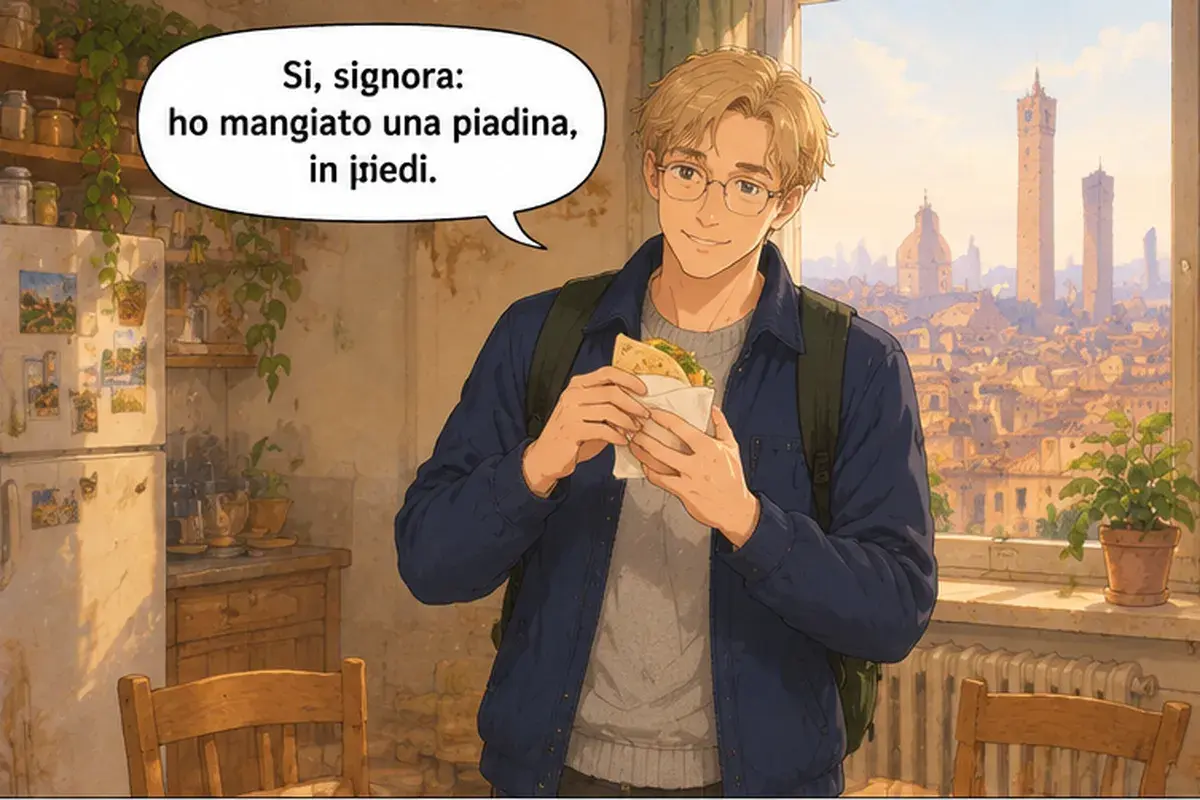
- Misha
Sì, signora: ho mangiato una piadina, in piedi.
Yes, ma'am: I ate a piadina, standing up.
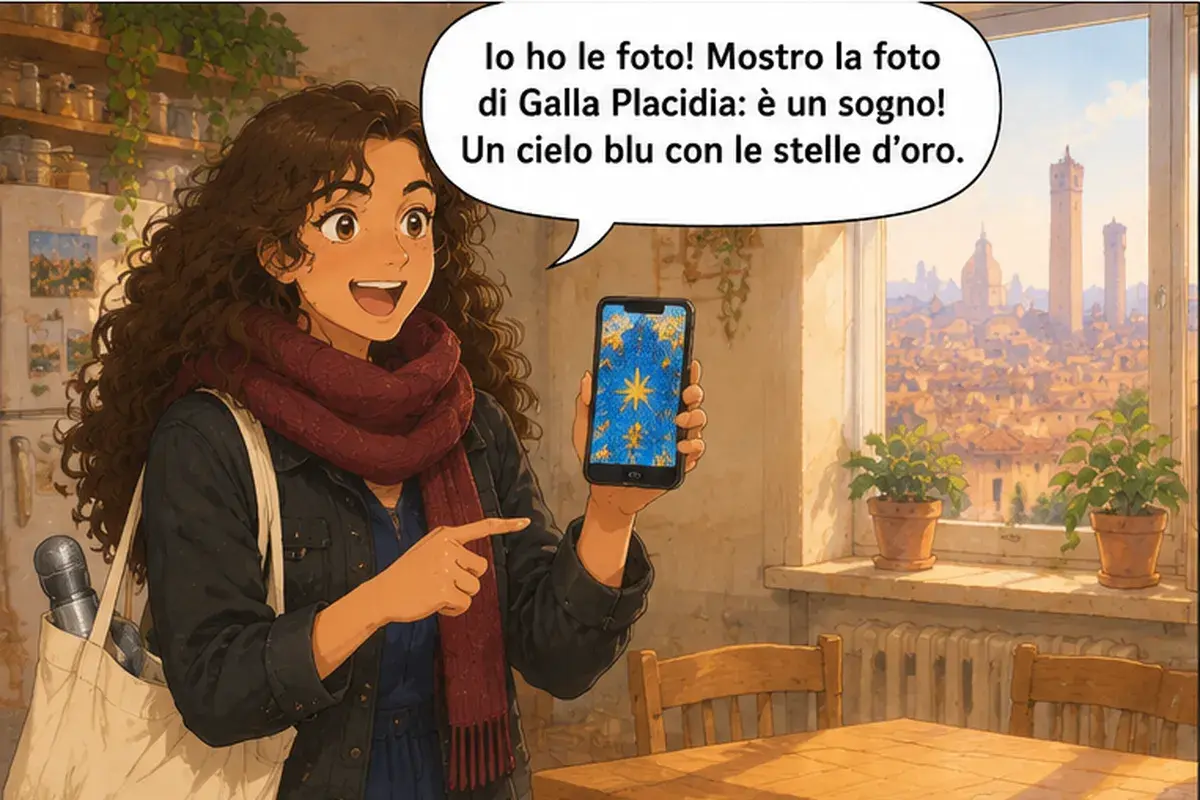
- Giulia
Io ho le foto! Mostro la foto di Galla Placidia: è un sogno! Un cielo blu con le stelle d'oro.
I have the photos! I'll show the photo of Galla Placidia: it's a dream! A blue sky with gold stars.
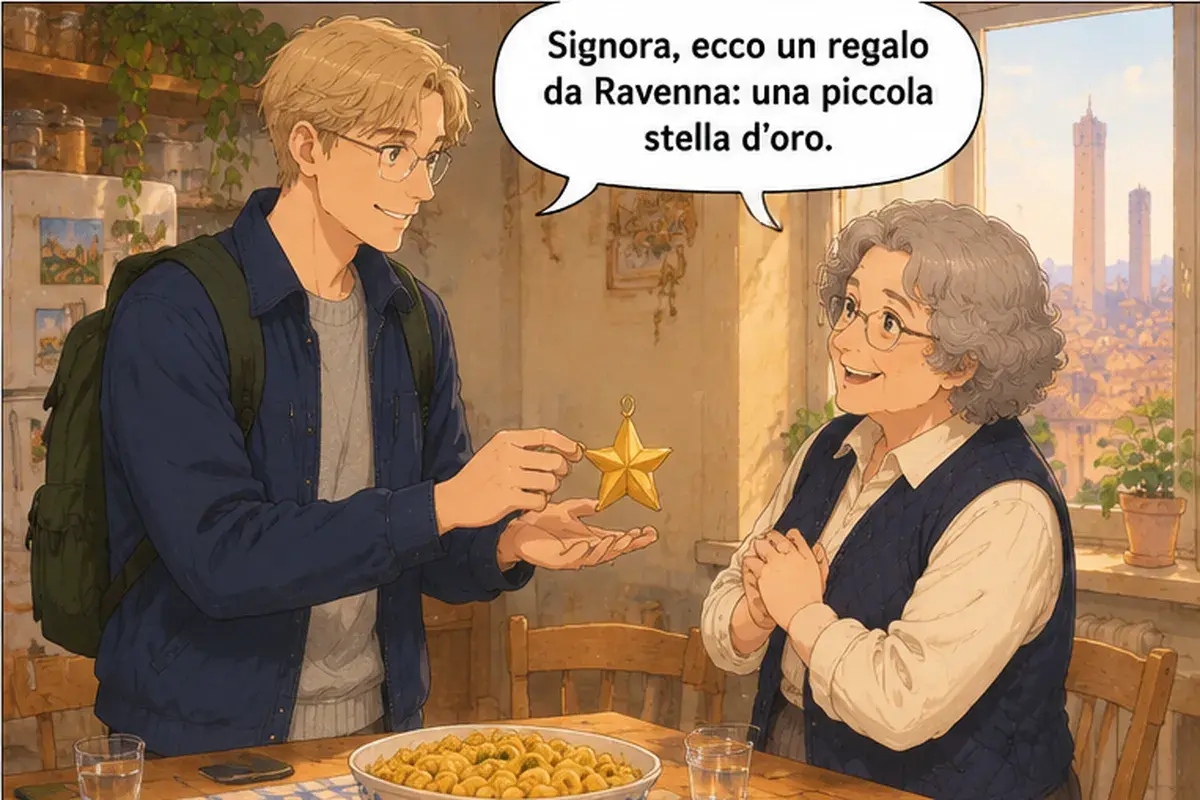
- Misha
Signora, ecco un regalo da Ravenna: una piccola stella d'oro.
Ma'am, here's a present from Ravenna: a little gold star.
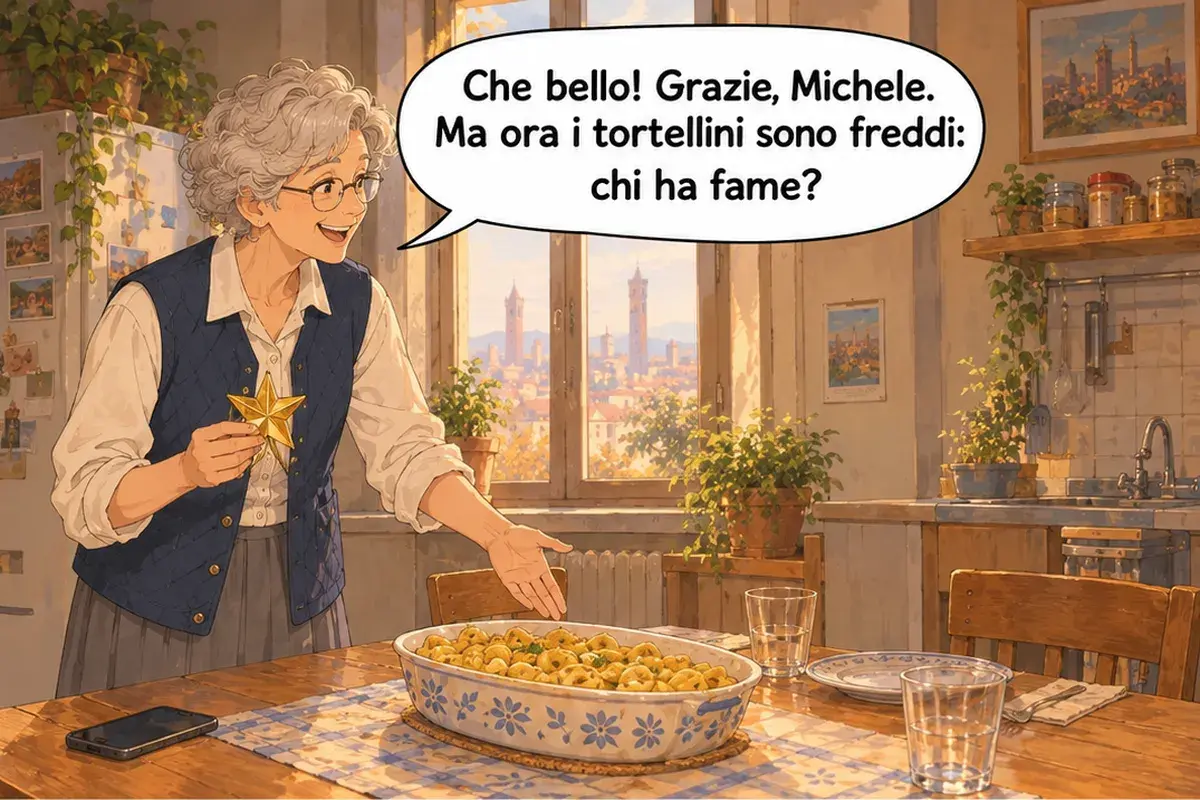
- Signora Paola
Che bello! Grazie, Michele. Ma ora i tortellini sono freddi: chi ha fame?
How lovely! Thank you, Michele. But now the tortellini are cold: who's hungry?
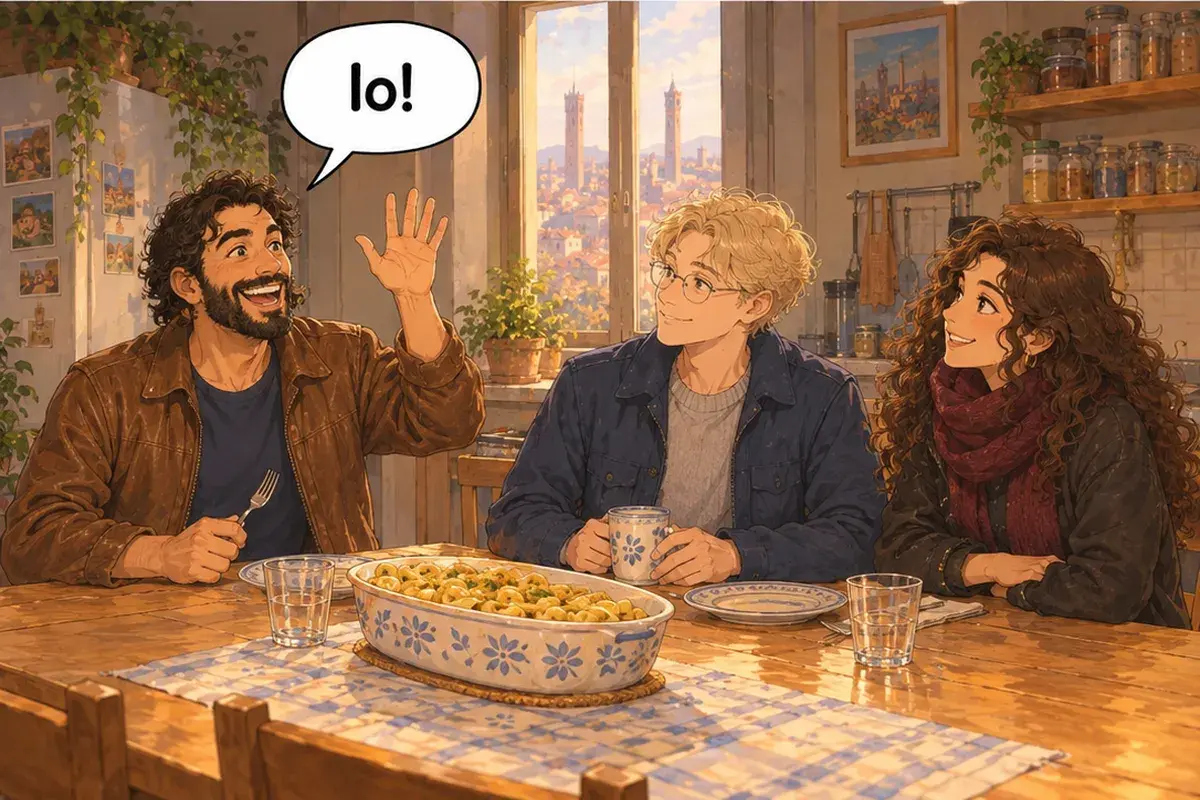
- Luca
Io!
Me!
Grammar for this text
- Siamo andati, abbiamo mangiato e siamo tornati. — three verbs in the passato prossimo (everyday past). andare and tornare (to go, to come back) take essere: siamo andati, siamo tornati. But mangiare takes avere: abbiamo mangiato. Why — see the unit grammar.
- io sono andata per i mosaici, tu per la piadina — Giulia about herself: the ending is -a because she's a woman. Misha about himself would say sono andato. At the end the verb is left out ("you, for the piadina"), just like in English.
- E Lei, Michele? Perché è andato a Ravenna? — Signora Paola uses Lei (formal you) with Misha: the verb is the same as for he / she (è andato), and it ends in -o because Misha is a man. With Luca and Giulia she uses tu.
- Com'è stato il viaggio? — com'è = come + è. stato is the past participle of essere. In English: "How was the trip?"
- Per fortuna c'era un altro treno. — c'era (there was) and era (was: il mio telefono era scarico) are ready-made forms for describing the past. The rule comes at A2; for now, just learn these two forms.
- Cosa è successo? — "What happened?" è successo is a ready-made form of succedere (to happen); learn the whole phrase. How such participles are built comes at A2.
- ho mangiato una piadina, in piedi — in piedi means "standing", not "on foot".
Words and grammar of the unit: Talk about a trip.
Learn the words from the texts with flashcards
In the app, you can tap any word in a text to see its translation, forms and examples, and new words stick with flashcards. 15 minutes a day.
Start for freeEverything is open for free. No card needed to sign up.