
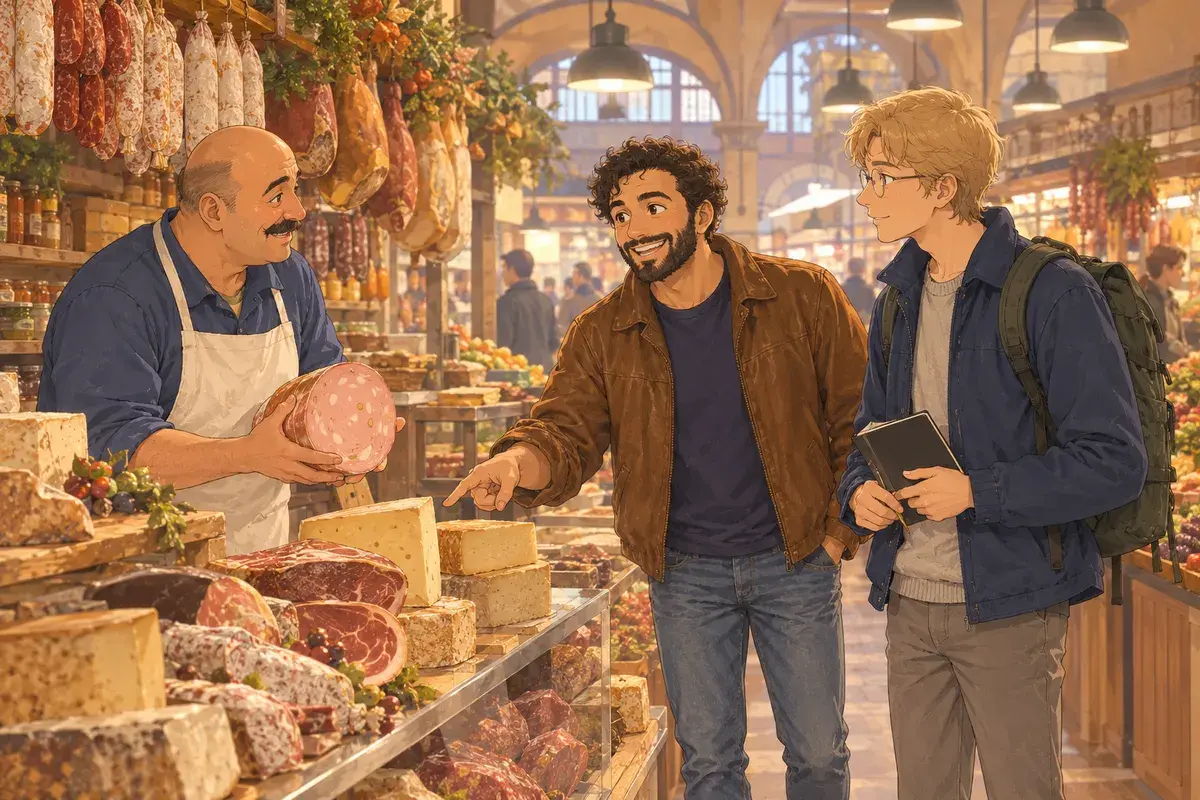
Italian dialogue with translation · A1 · 16 lines
Volevo un etto di mortadella, per favore. I'd like a hundred grams of mortadella, please.
Comic · 16 panels
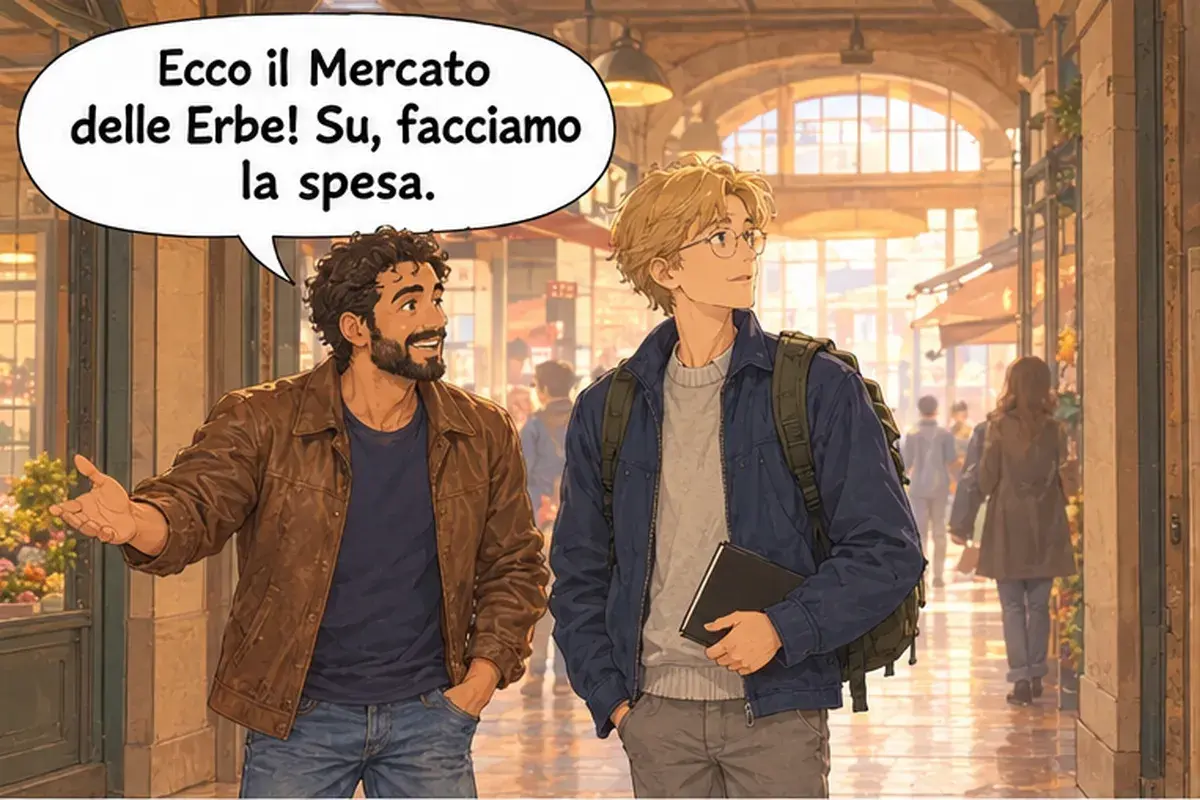
- Luca
Ecco il Mercato delle Erbe! Su, facciamo la spesa.
Here's the Mercato delle Erbe! Come on, let's do the grocery shopping.
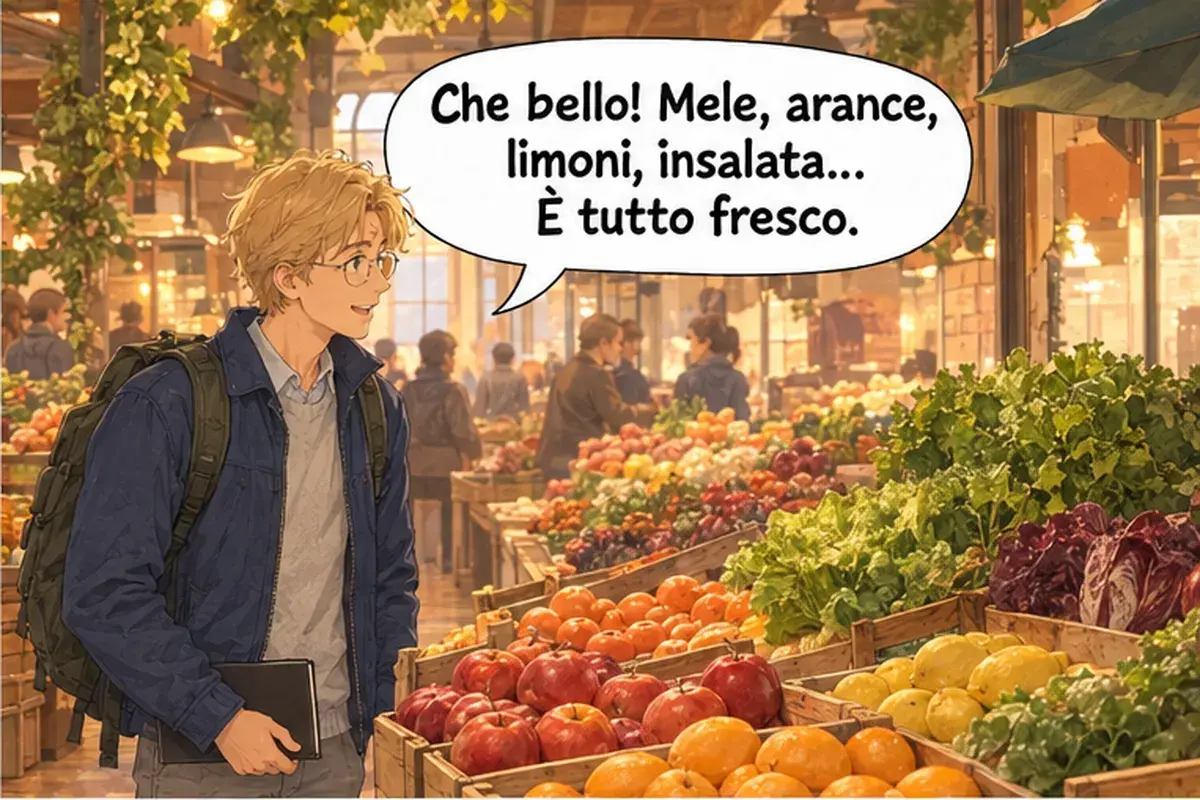
- Misha
Che bello! Mele, arance, limoni, insalata... È tutto fresco.
How nice! Apples, oranges, lemons, lettuce... It's all fresh.
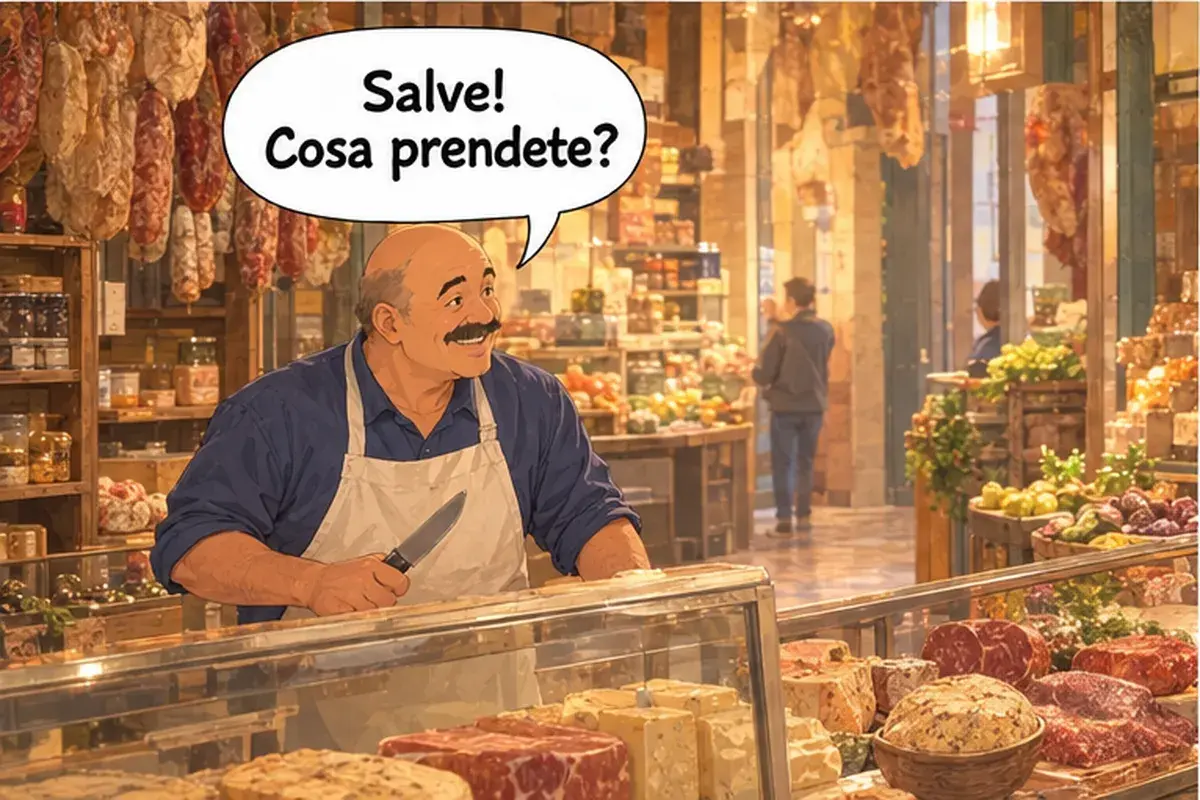
- Salumiere
Salve! Cosa prendete?
Hello! What will you have? (to several people)
- Misha
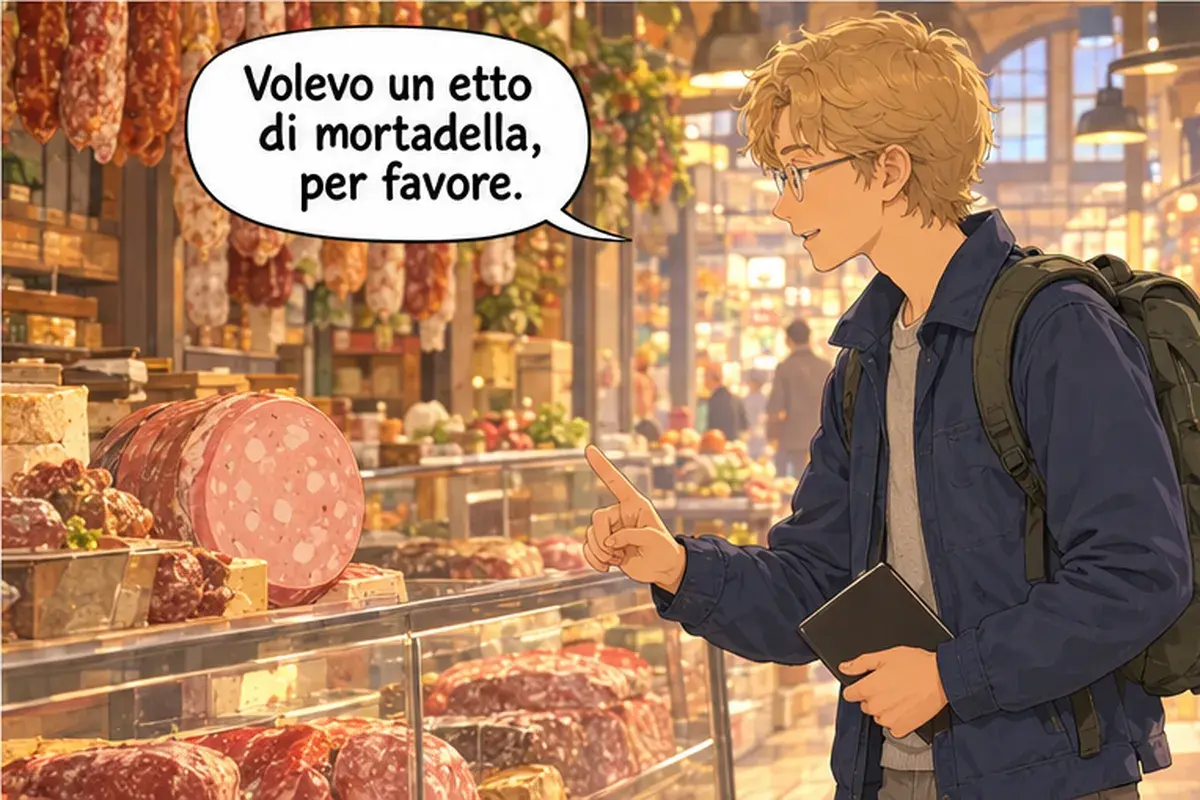
Volevo un etto di mortadella, per favore.
I'd like a hundred grams of mortadella, please.
- Salumiere
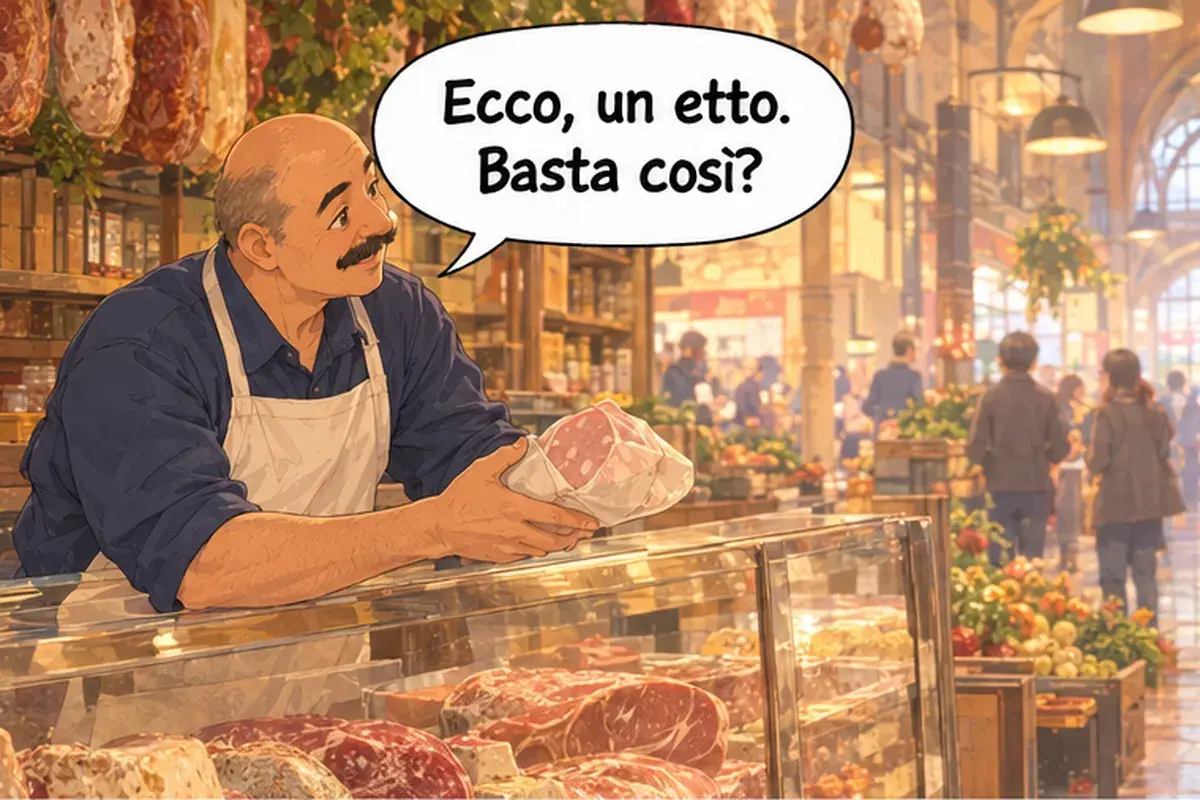
Ecco, un etto. Basta così?
Here you go, a hundred grams. Is that all?
- Misha
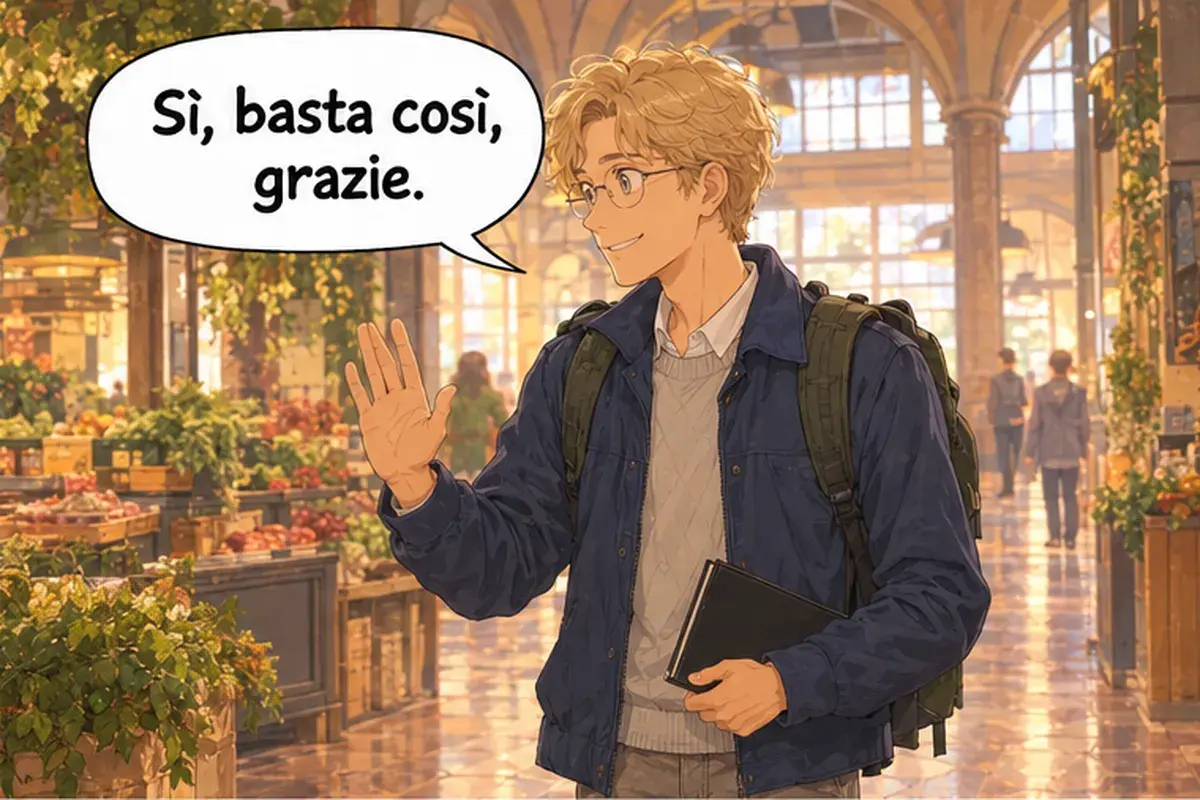
Sì, basta così, grazie.
Yes, that's all, thanks.
- Luca
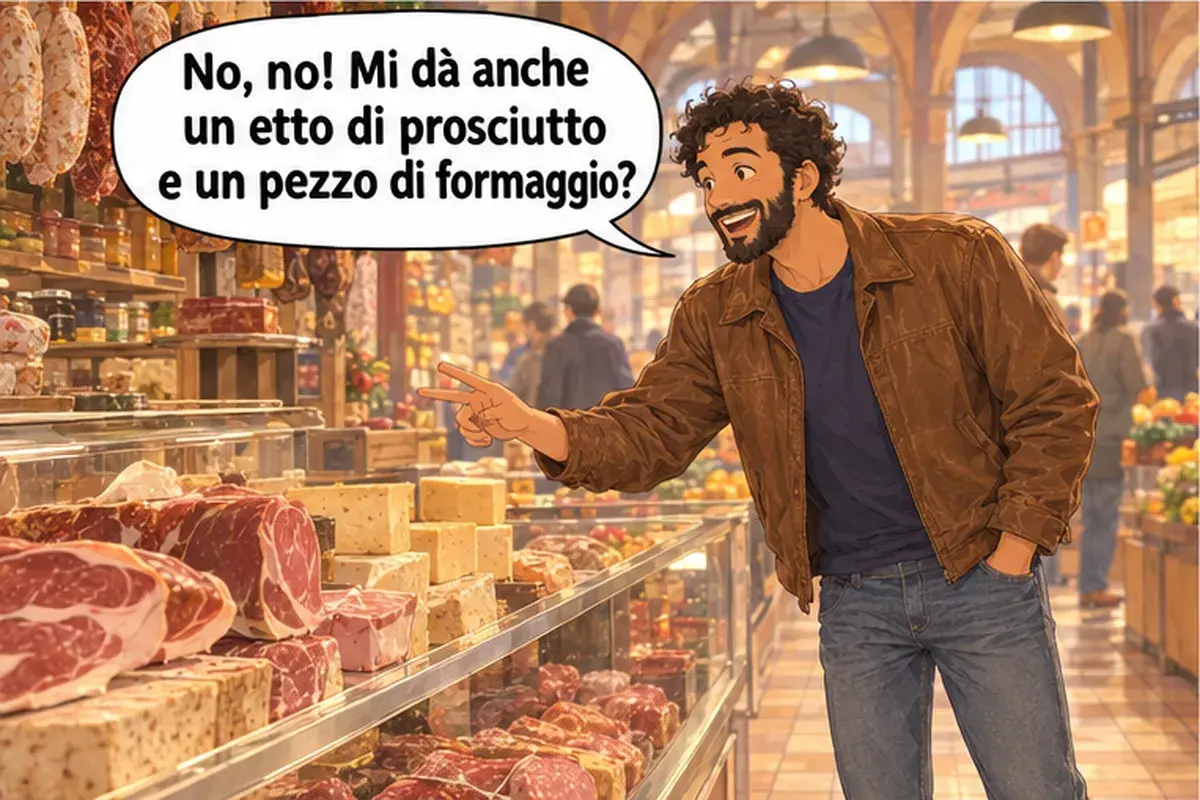
No, no! Mi dà anche un etto di prosciutto e un pezzo di formaggio?
No, no! Can I also have a hundred grams of prosciutto and a piece of cheese? (formal)
- Misha
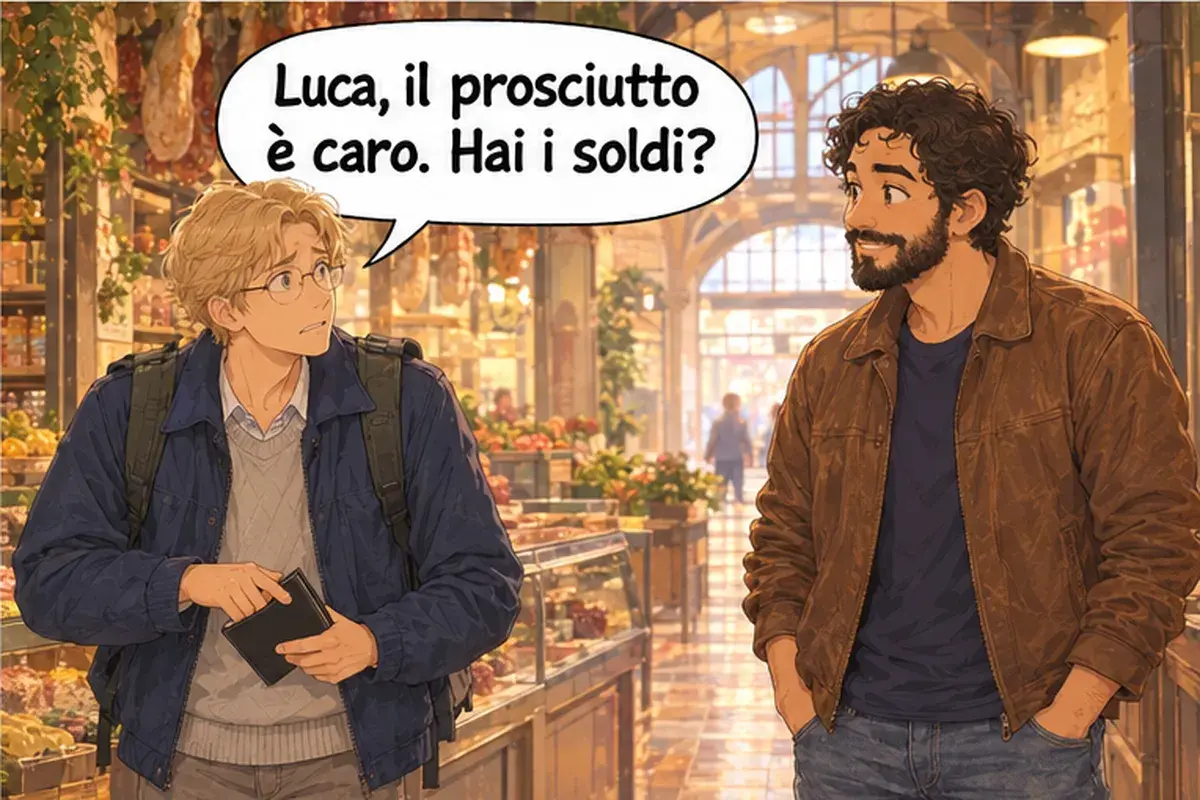
Luca, il prosciutto è caro. Hai i soldi?
Luca, the prosciutto is expensive. Do you have money?
- Luca
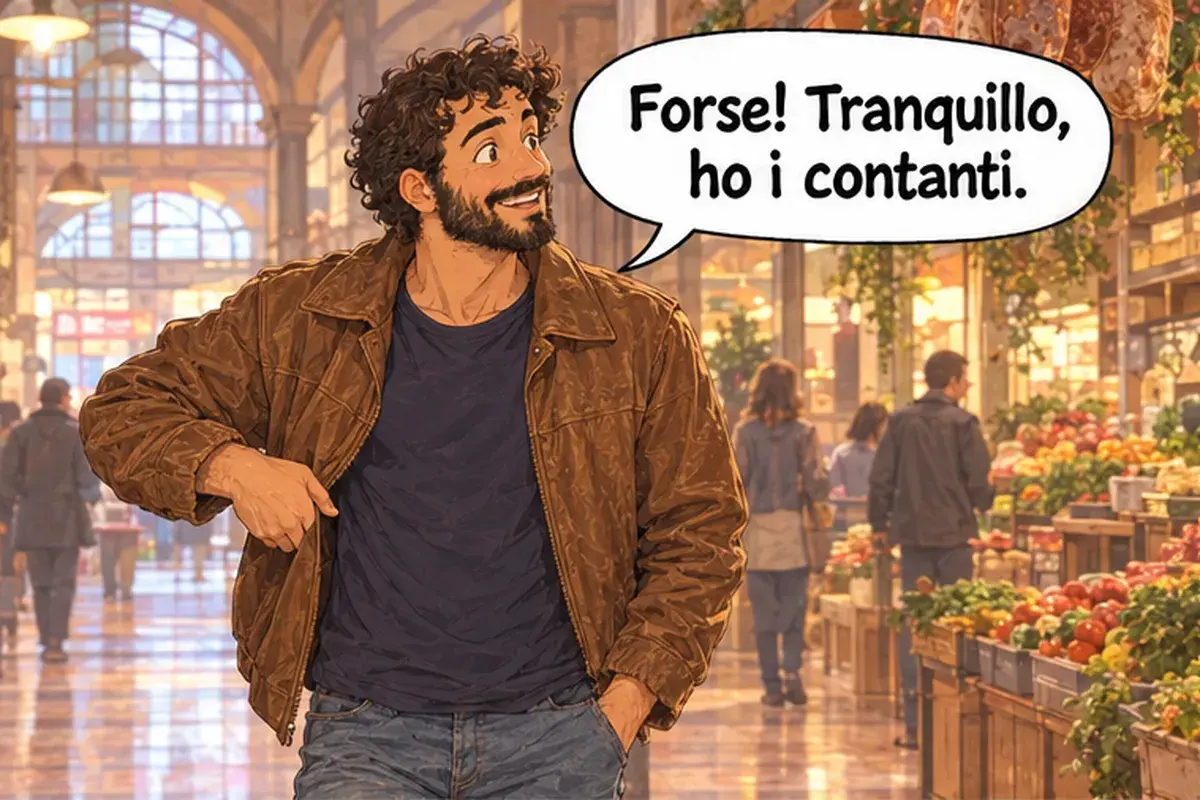
Forse! Tranquillo, ho i contanti.
Maybe! Don't worry, I have cash (to a man).
- Salumiere
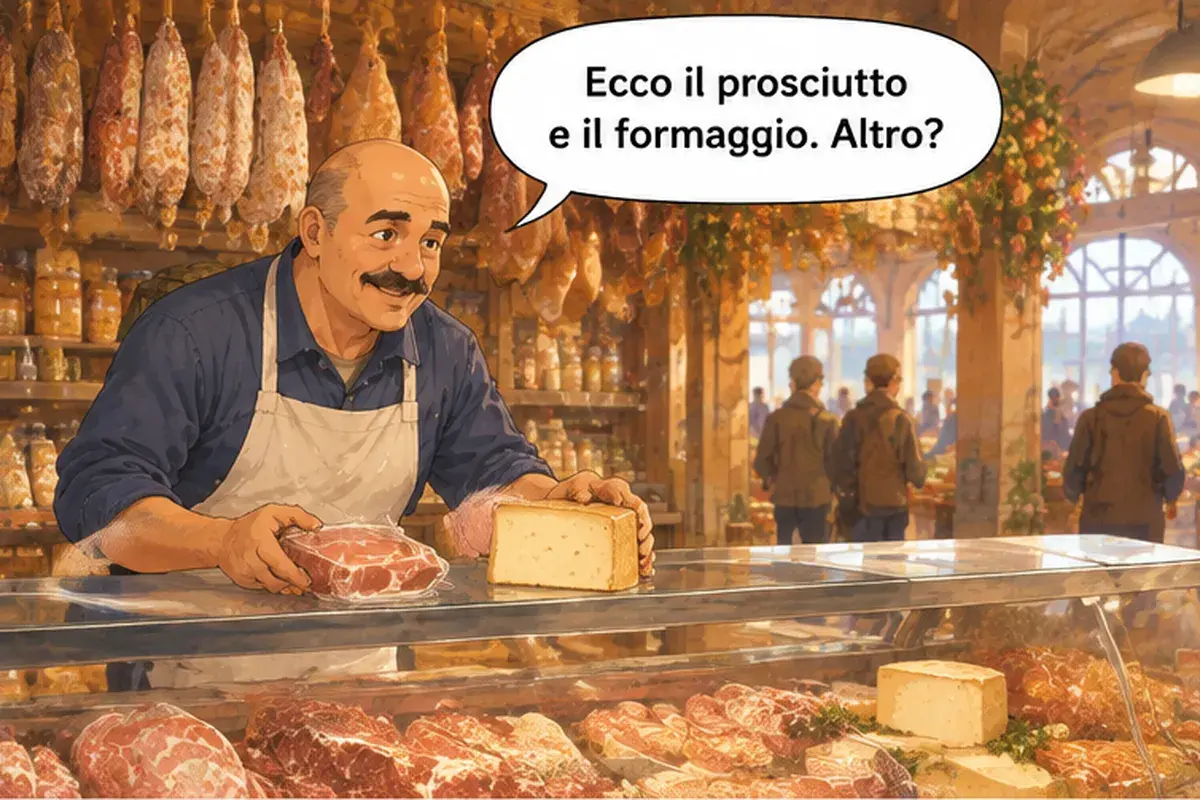
Ecco il prosciutto e il formaggio. Altro?
Here's the prosciutto and the cheese. Anything else?
- Luca
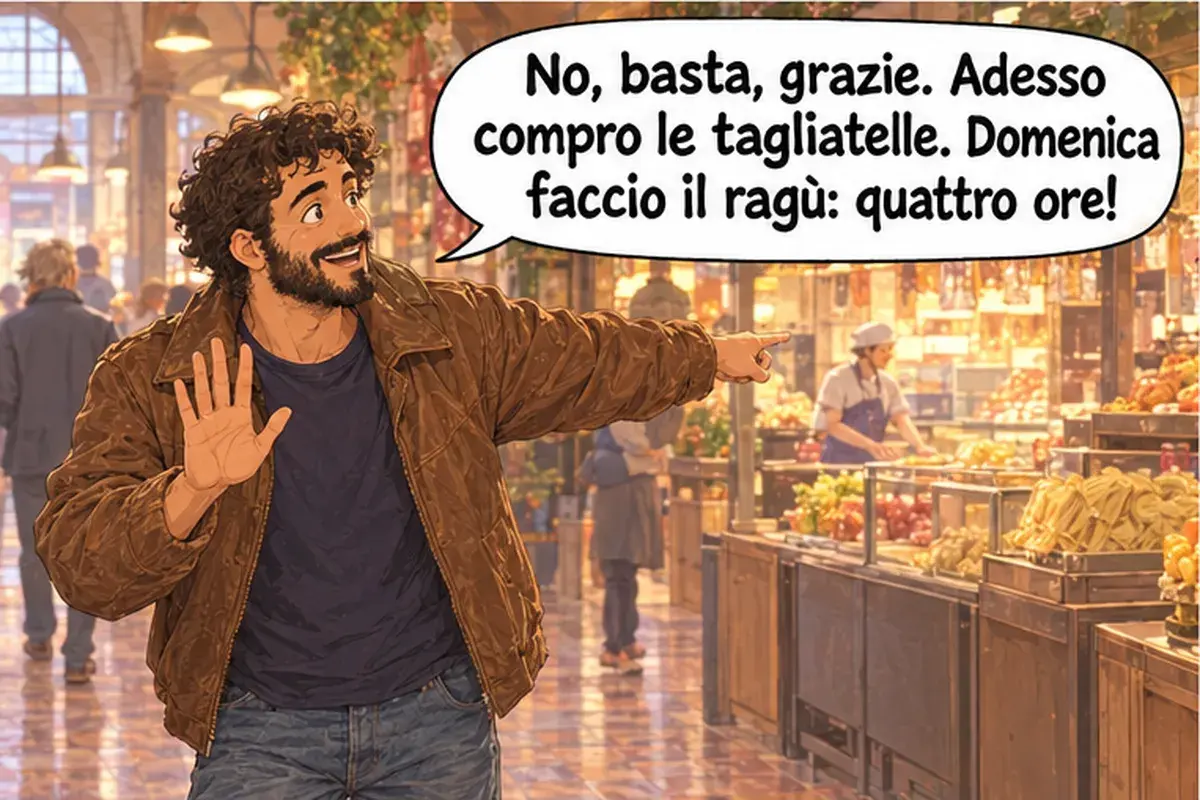
No, basta, grazie. Adesso compro le tagliatelle. Domenica faccio il ragù: quattro ore!
No, that's enough, thanks. Now I'm buying the tagliatelle. On Sunday I'm making ragù: four hours!
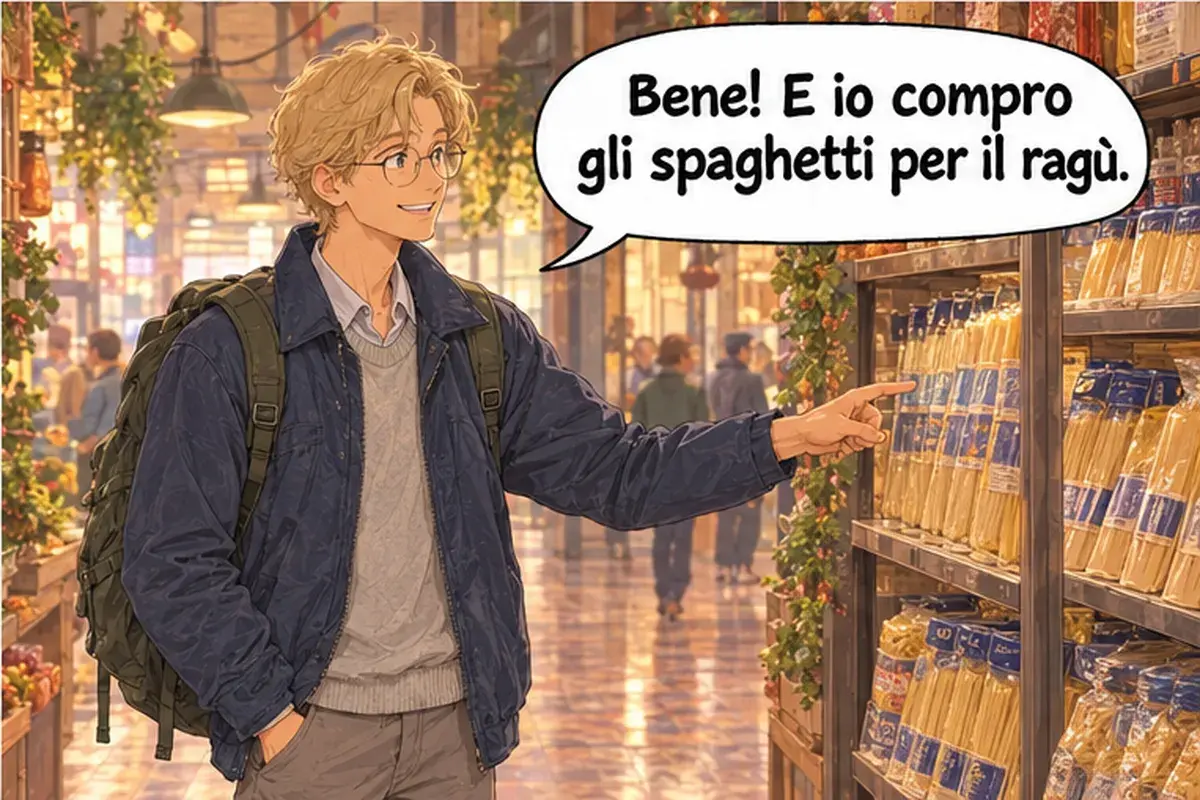
- Misha
Bene! E io compro gli spaghetti per il ragù.
Good! And I'm buying the spaghetti for the ragù.
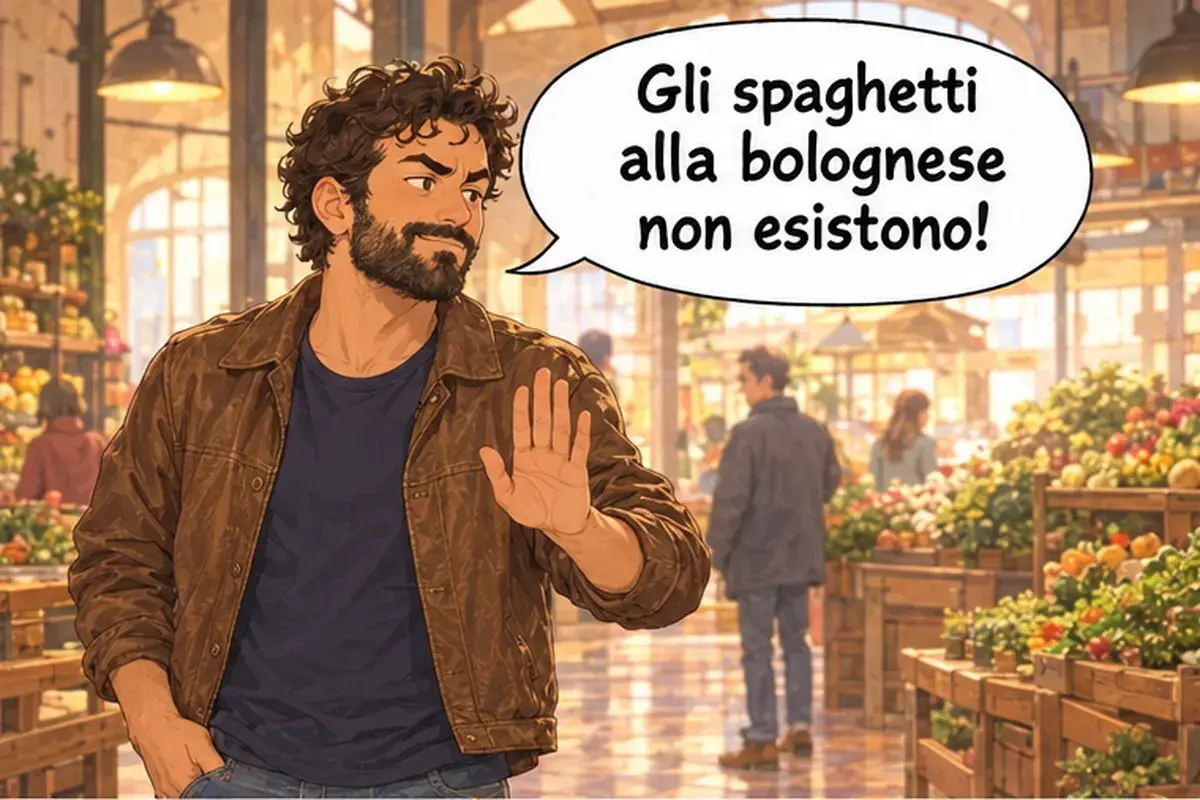
- Luca
Gli spaghetti alla bolognese non esistono!
Bolognese-style spaghetti don't exist!
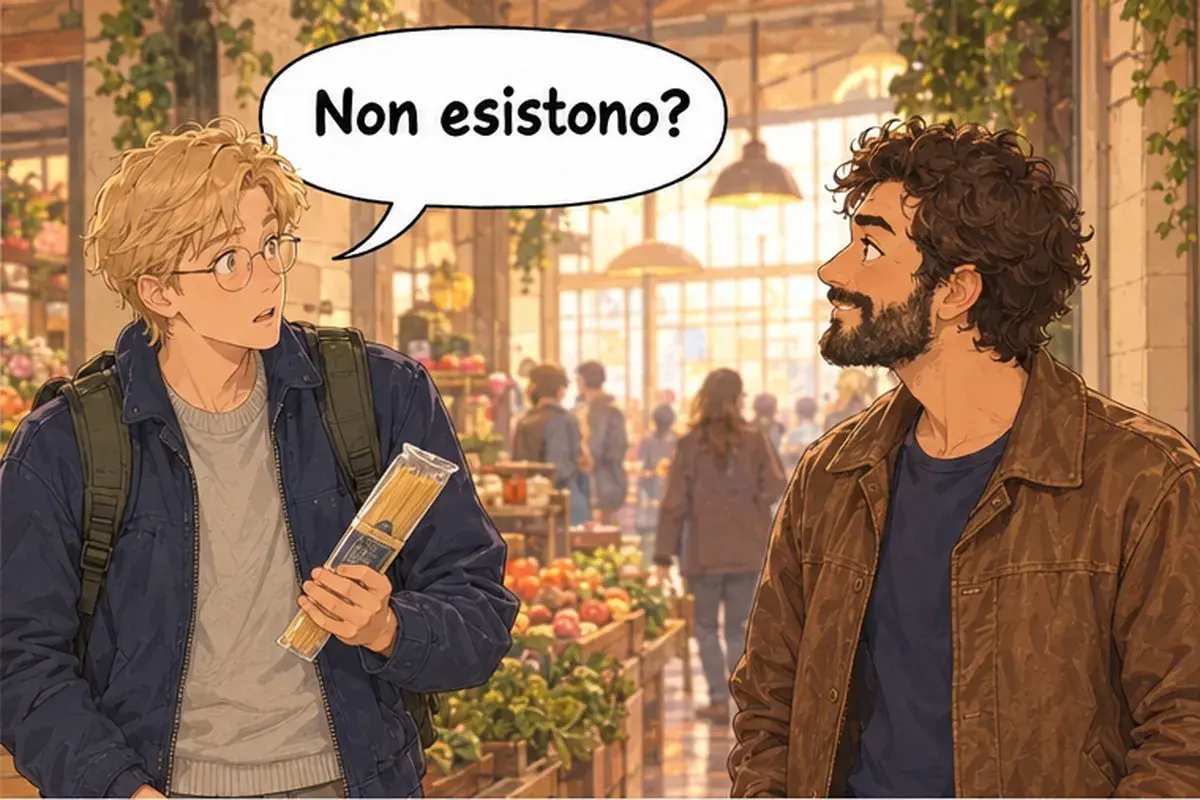
- Misha
Non esistono?
They don't exist?
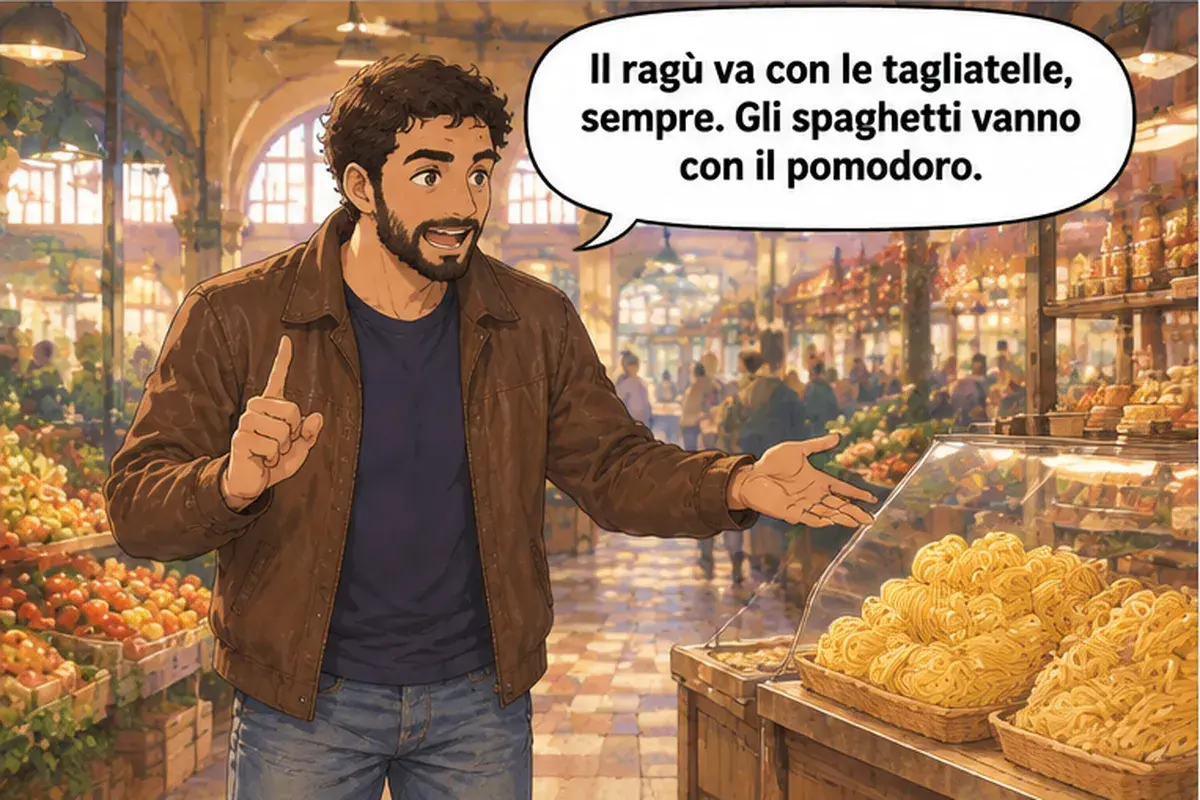
- Luca
Il ragù va con le tagliatelle, sempre. Gli spaghetti vanno con il pomodoro.
Ragù goes with tagliatelle, always. Spaghetti go with tomato.
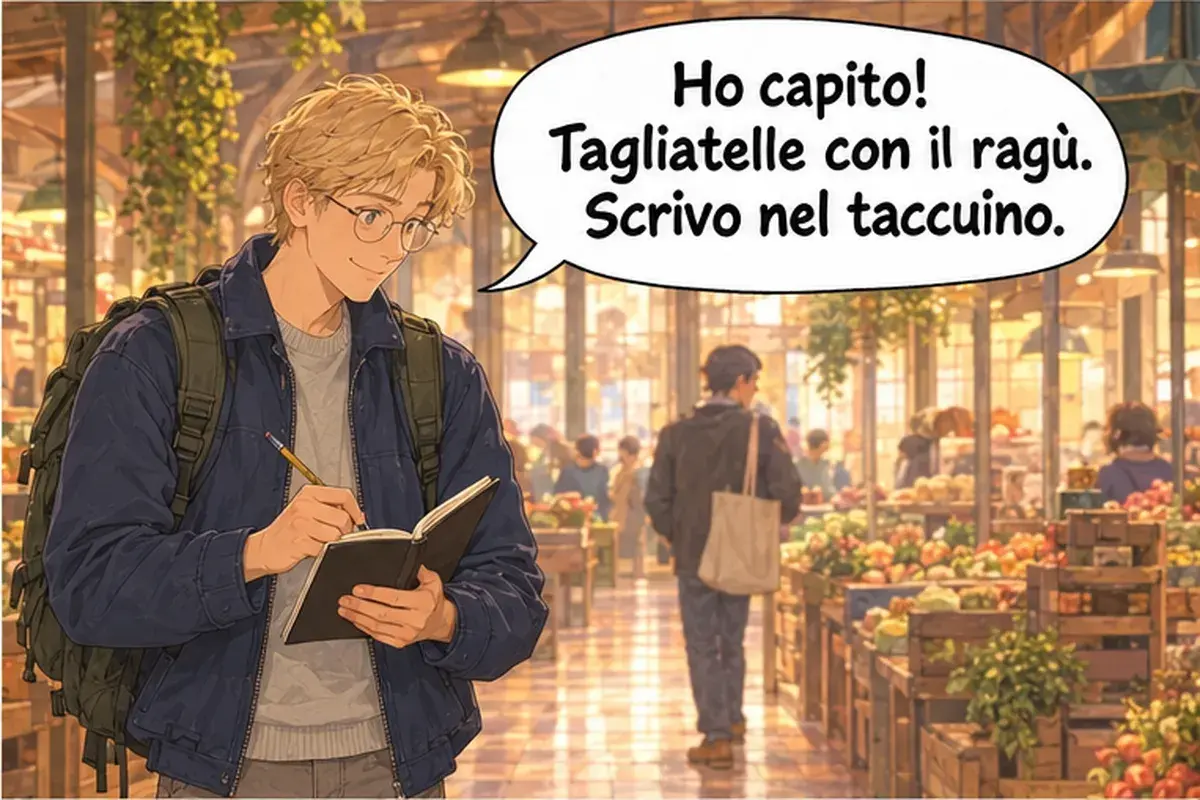
- Misha
Ho capito! Tagliatelle con il ragù. Scrivo nel taccuino.
Got it! Tagliatelle with ragù. I'm writing in my notebook.
Grammar for this text
- Volevo un etto di mortadella, per favore. — volevo means "I'd like" (literally "I wanted"). It's the io form of volere (to want) in the imperfetto (past of habits and descriptions): -ere becomes -evo. You'll learn this tense at A2; for now remember it as a polite request at the counter. un etto di mortadella — a hundred grams of mortadella: after a measure comes di, with no article.
- Mi dà anche un etto di prosciutto e un pezzo di formaggio? — dà (with an accent) is the Lei form (formal you) of dare (to give): you use Lei with a shopkeeper, and the verb takes the he / she form. Without the accent, da is a preposition: from. The dare table is in the third grammar block of this unit.
- Basta così? — basta — it's enough (the verb bastare, he / she form), così — like this: "is that enough?". The answer: Sì, basta così.
- Su, facciamo la spesa. — here su is an exclamation, "come on"; facciamo is the noi form of the irregular verb fare (to do, to make), and faccio in domenica faccio il ragù is the io form (here "I'm making"). The fare table is in unit 11. fare la spesa — to do the grocery shopping.
- Ecco il Mercato delle Erbe! — delle = di + le: "the market of the herbs".
- Gli spaghetti alla bolognese — alla = a + la; alla bolognese — Bolognese-style. English menus say "spaghetti Bolognese", but in Bologna ragù goes with tagliatelle. spaghetti is only plural: gli spaghetti.
Words and grammar of the unit: Shop for food at the market.
Learn the words from the texts with flashcards
In the app, you can tap any word in a text to see its translation, forms and examples, and new words stick with flashcards. 15 minutes a day.
Start for freeEverything is open for free. No card needed to sign up.