

Italian dialogue with translation · A1 · 10 lines
Parlo poco, ma guardo molto I don't talk much, but I watch a lot
Comic · 10 panels
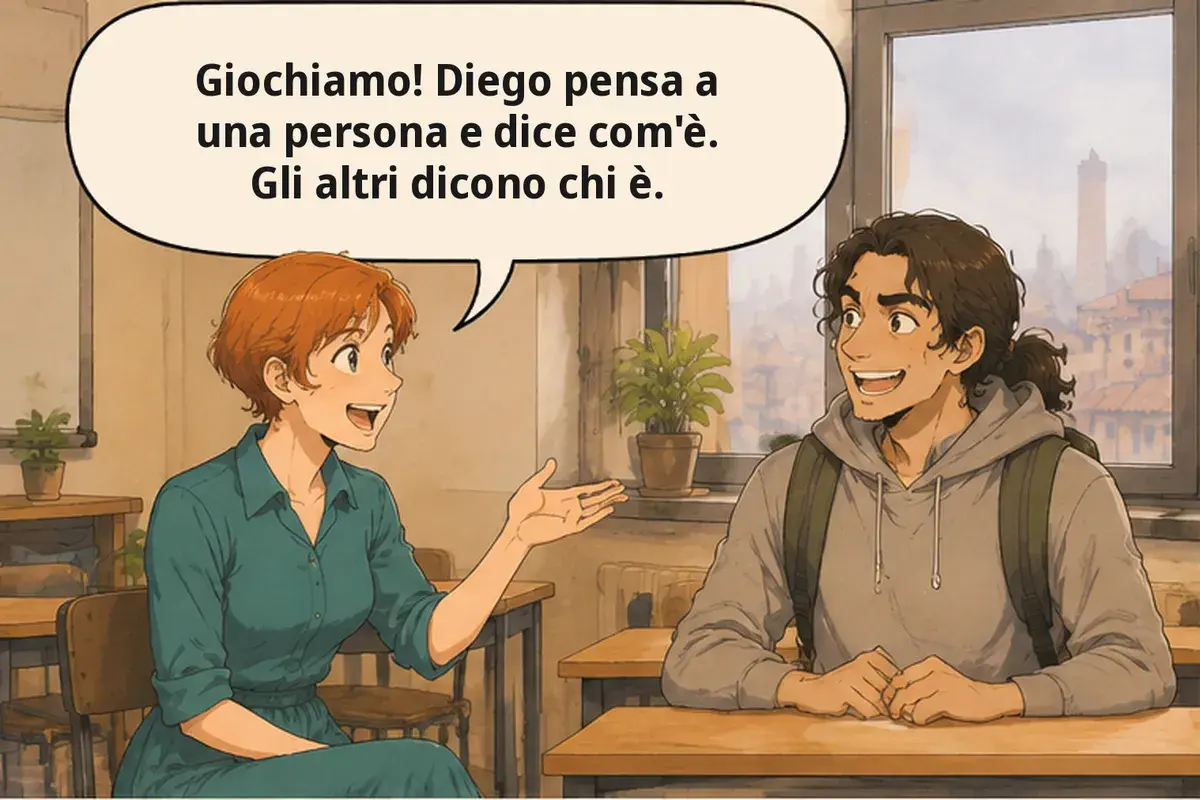
- Chiara
Giochiamo! Diego pensa a una persona e dice com'è. Gli altri dicono chi è.
Let's play! Diego thinks of a person and says what they're like. The others say who it is.
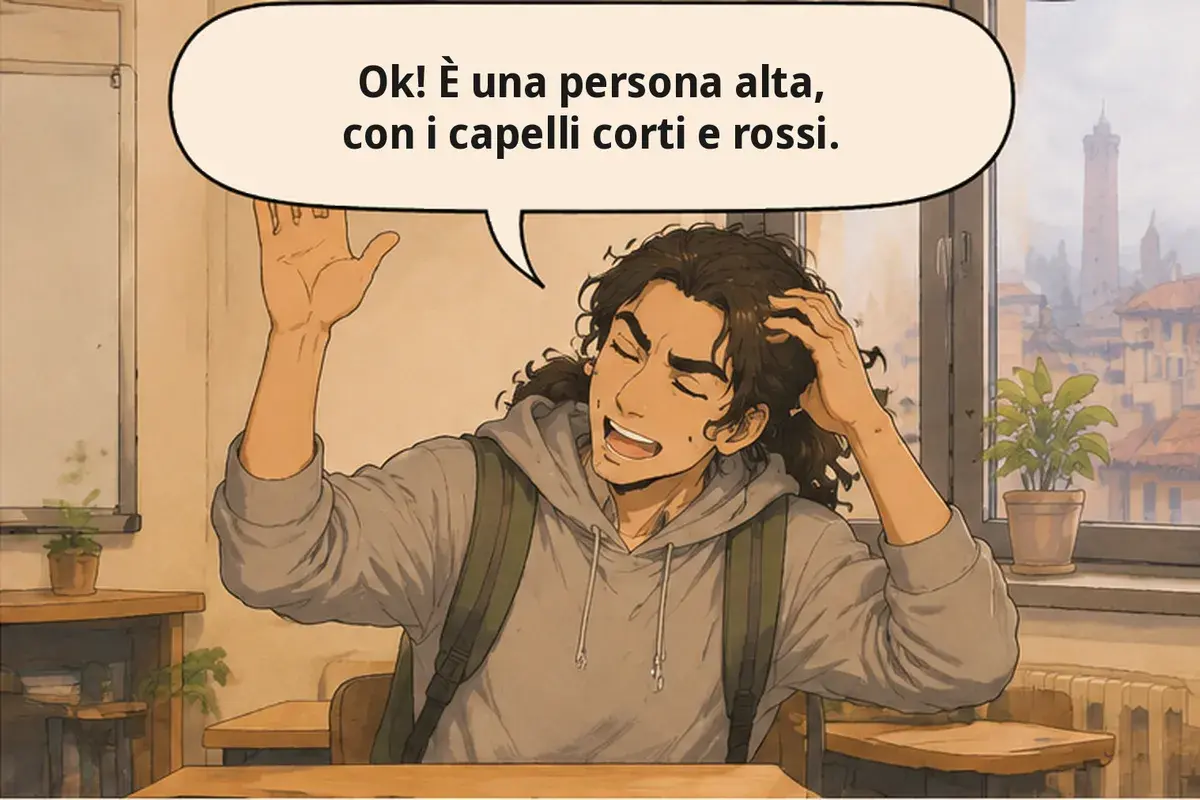
- Diego
Ok! È una persona alta, con i capelli corti e rossi.
OK! It's a tall person with short red hair.
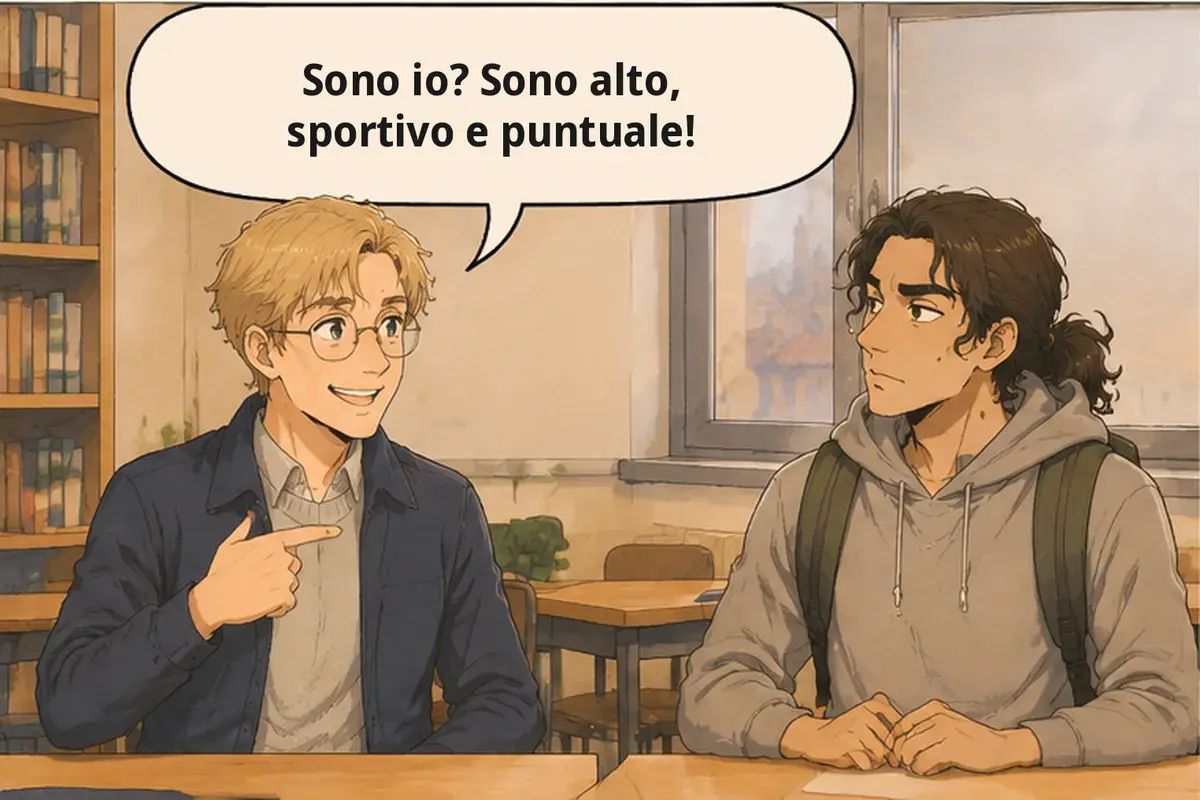
- Misha
Sono io? Sono alto, sportivo e puntuale!
Is it me? I'm tall, sporty and punctual! (man speaking)
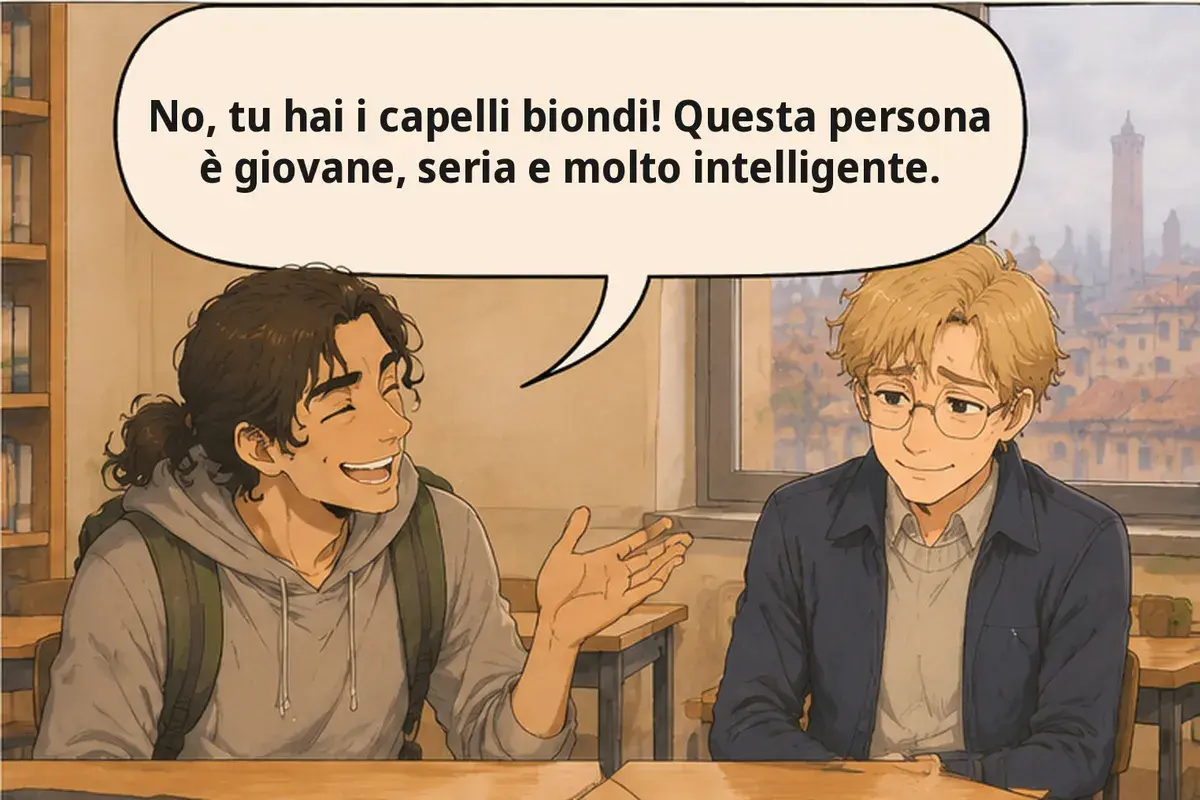
- Diego
No, tu hai i capelli biondi! Questa persona è giovane, seria e molto intelligente.
No, you have blond hair! This person is young, serious and very smart.
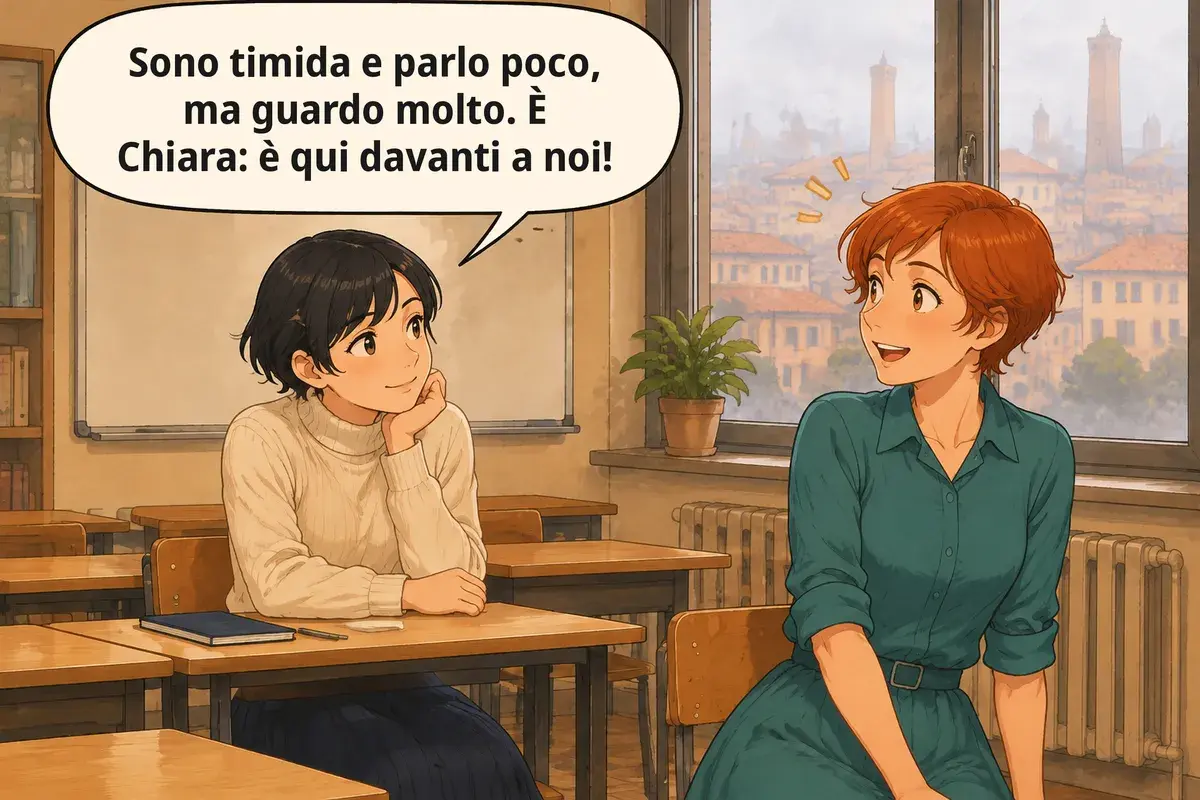
- Mei
Sono timida e parlo poco, ma guardo molto. È Chiara: è qui davanti a noi!
I'm shy and I don't talk much, but I watch a lot. It's Chiara: she's here in front of us! (woman speaking)
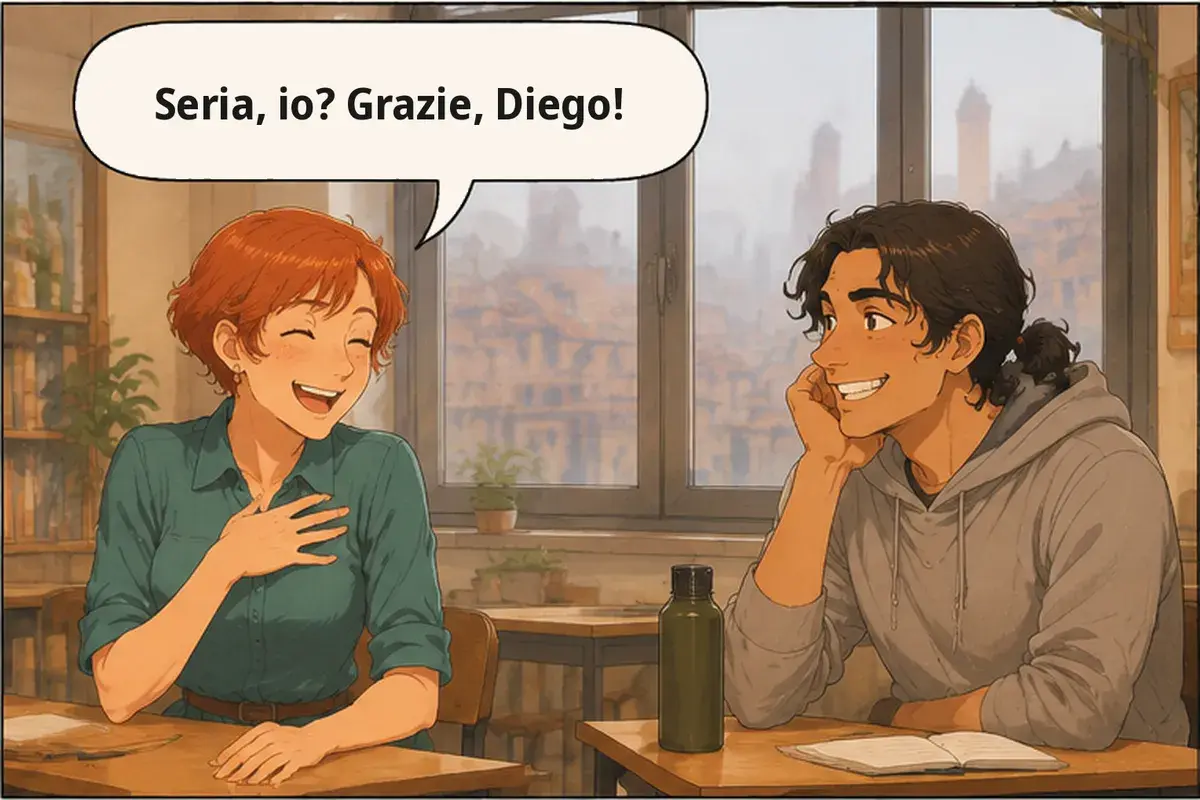
- Chiara
Seria, io? Grazie, Diego!
Serious, me? Thanks, Diego! (woman speaking)
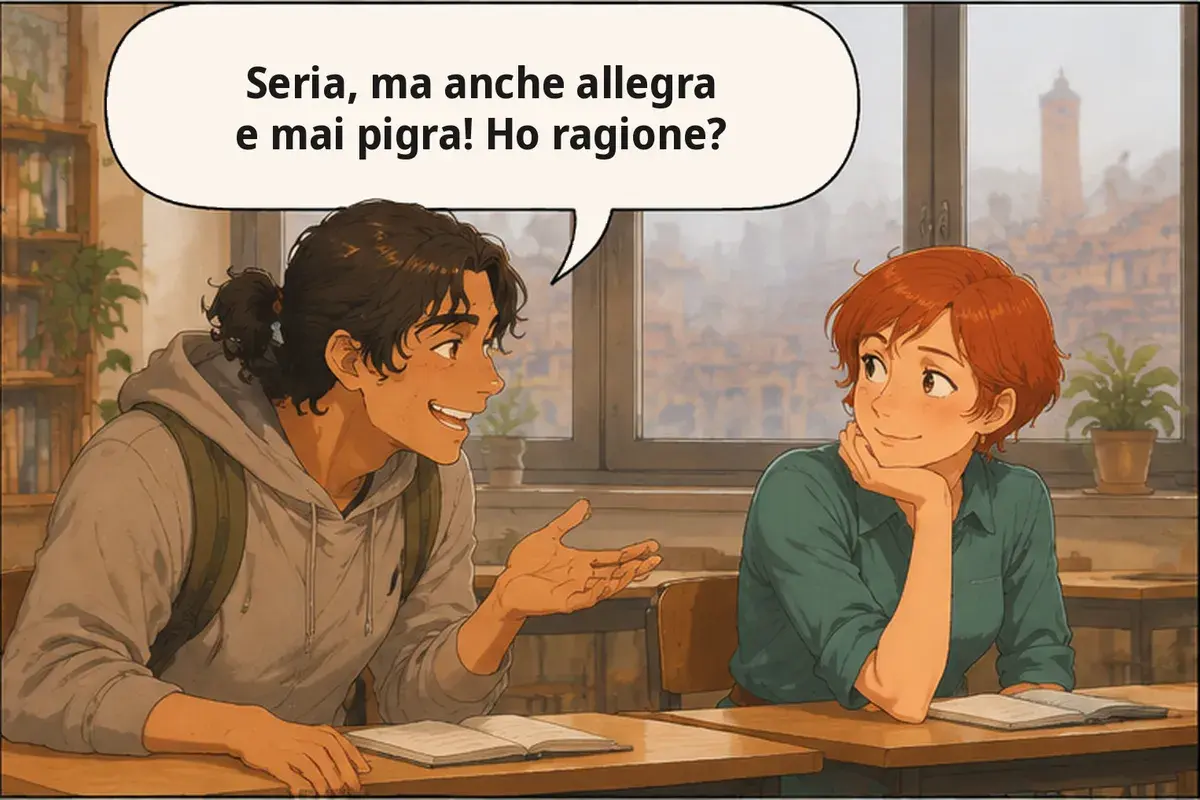
- Diego
Seria, ma anche allegra e mai pigra! Ho ragione?
Serious, but cheerful too, and never lazy! Am I right? (to a woman)
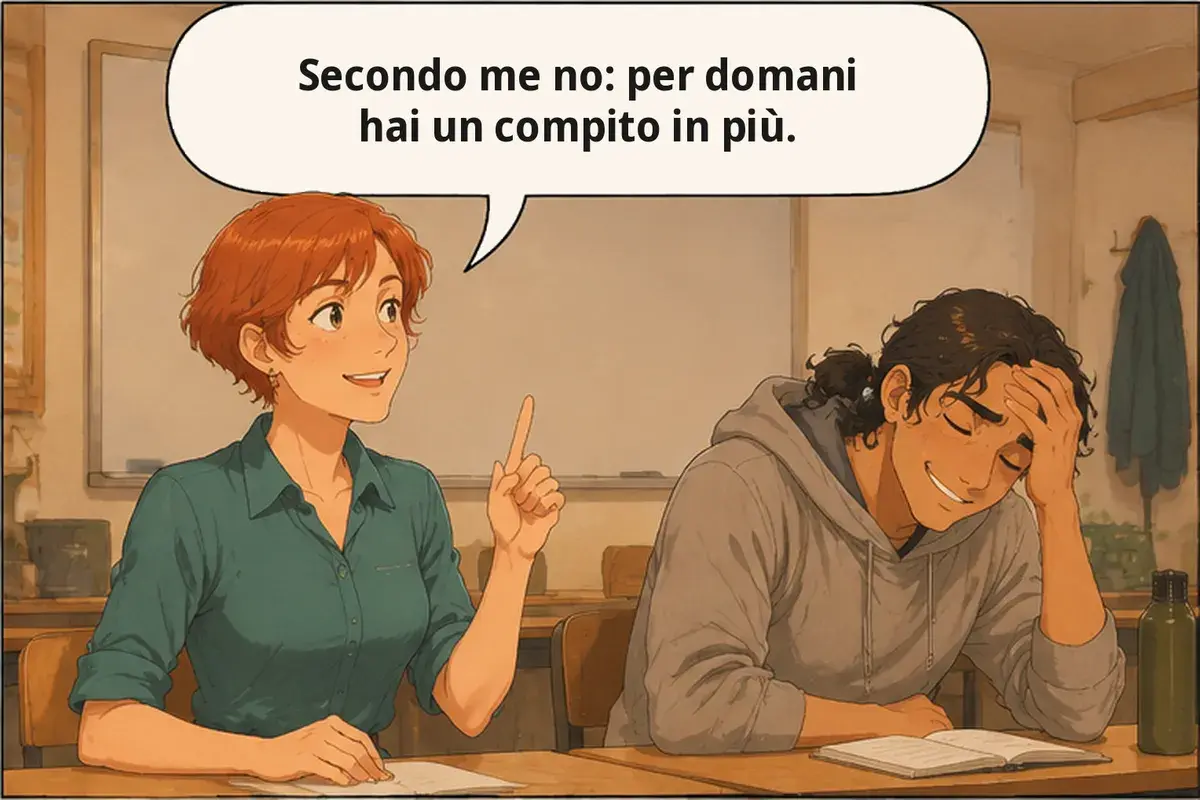
- Chiara
Secondo me no: per domani hai un compito in più.
In my opinion, no: you have an extra assignment for tomorrow.
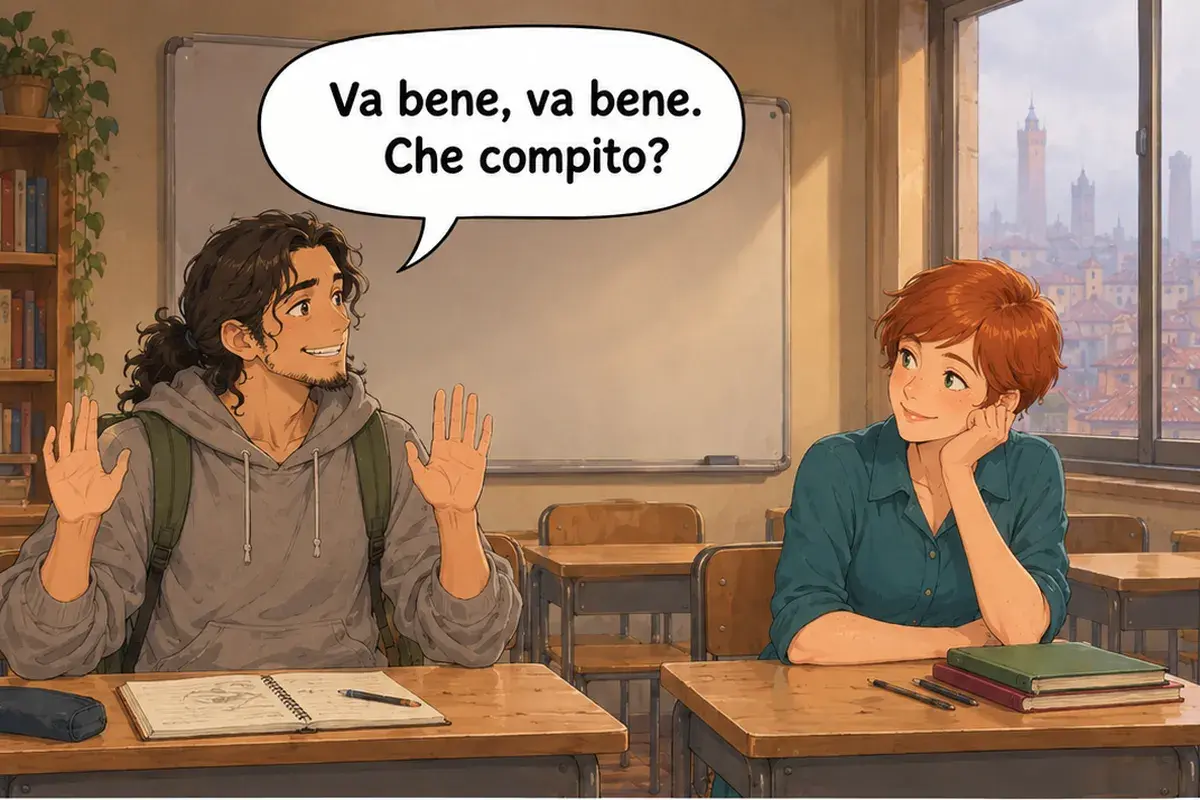
- Diego
Va bene, va bene. Che compito?
OK, OK. What assignment?
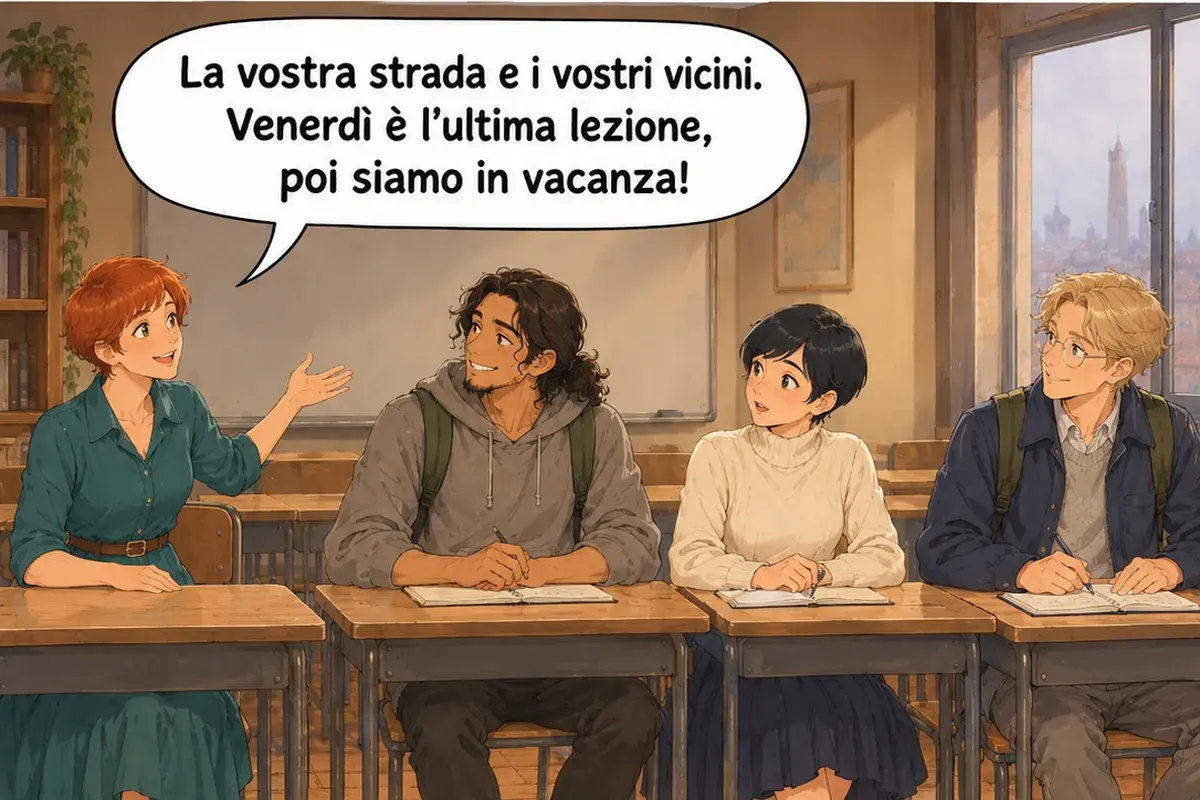
- Chiara
La vostra strada e i vostri vicini. Venerdì è l'ultima lezione, poi siamo in vacanza!
Your street and your neighbors. Friday is the last class, then we're on vacation! (to several people)
Grammar for this text
- dice com'è — com'è = come + è: what the person is like (word for word "how he is"). That's how you ask about looks and personality.
- È una persona alta — persona is always feminine, even about a man: una persona alta, giovane. Hair — capelli corti e rossi: both adjectives are plural.
- parlo poco, ma guardo molto — poco means "not much", while un po' means "a little, but some": parlo un po' di italiano — I speak a little Italian. Next to a verb, molto doesn't change.
- Seria, io? — the word io is usually dropped; here it's needed to show surprise: "Serious, me?"
- Ho ragione? — am I right? It's avere ragione; ho is the io form of avere. Secondo me no — in my opinion, no: after secondo me you can answer with one word.
- per domani hai un compito in più — per domani — for tomorrow, in più — extra. poi siamo in vacanza — in vacanza — on vacation.
- mai pigra — in a short phrase without a verb, mai (never) comes without non: "never lazy". With a verb you need both words, non… mai: non è mai pigra — she's never lazy. English uses just one negative.
Words and grammar of the unit: Describe people and talk about your plans.
Learn the words from the texts with flashcards
In the app, you can tap any word in a text to see its translation, forms and examples, and new words stick with flashcards. 15 minutes a day.
Start for freeEverything is open for free. No card needed to sign up.