

Italian dialogue with translation · A1 · 14 lines
Mi manca la mia famiglia I miss my family
Comic · 14 panels
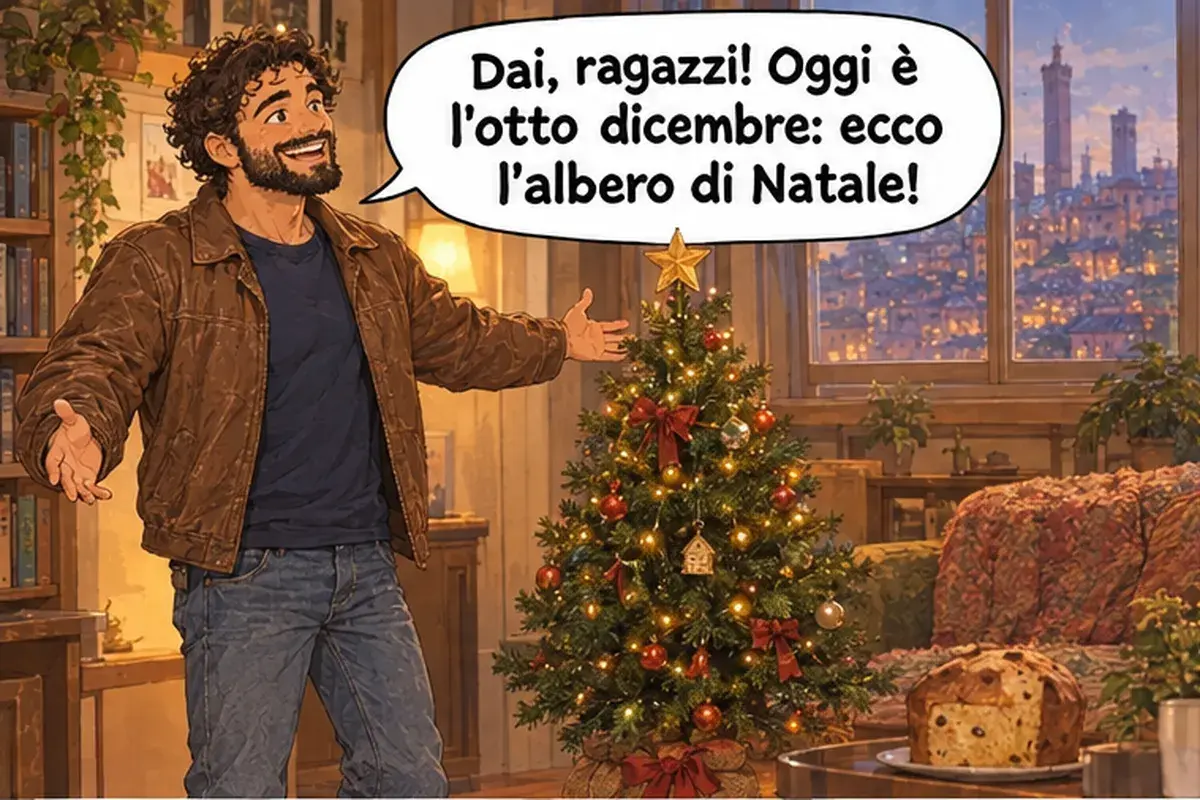
- Luca
Dai, ragazzi! Oggi è l'otto dicembre: ecco l'albero di Natale!
Come on, guys! Today is December eighth: here's the Christmas tree!
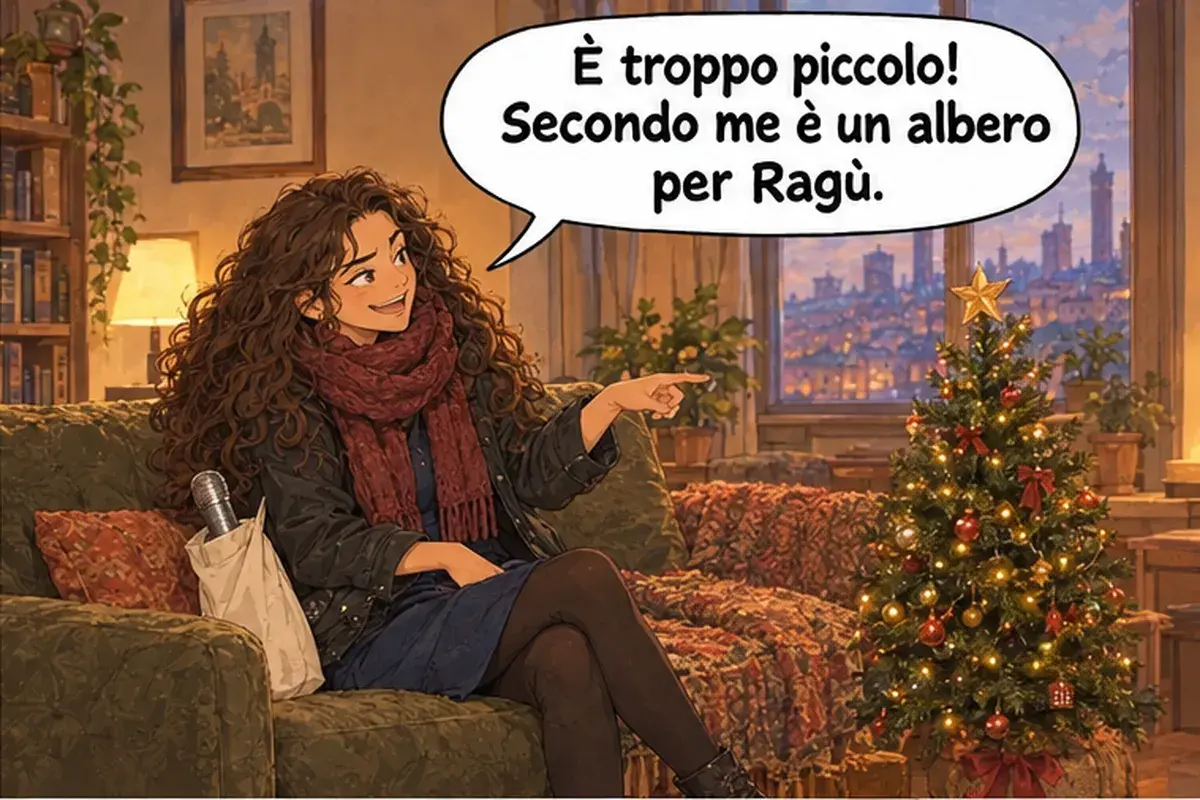
- Giulia
È troppo piccolo! Secondo me è un albero per Ragù.
It's too small! In my opinion, it's a tree for Ragù.
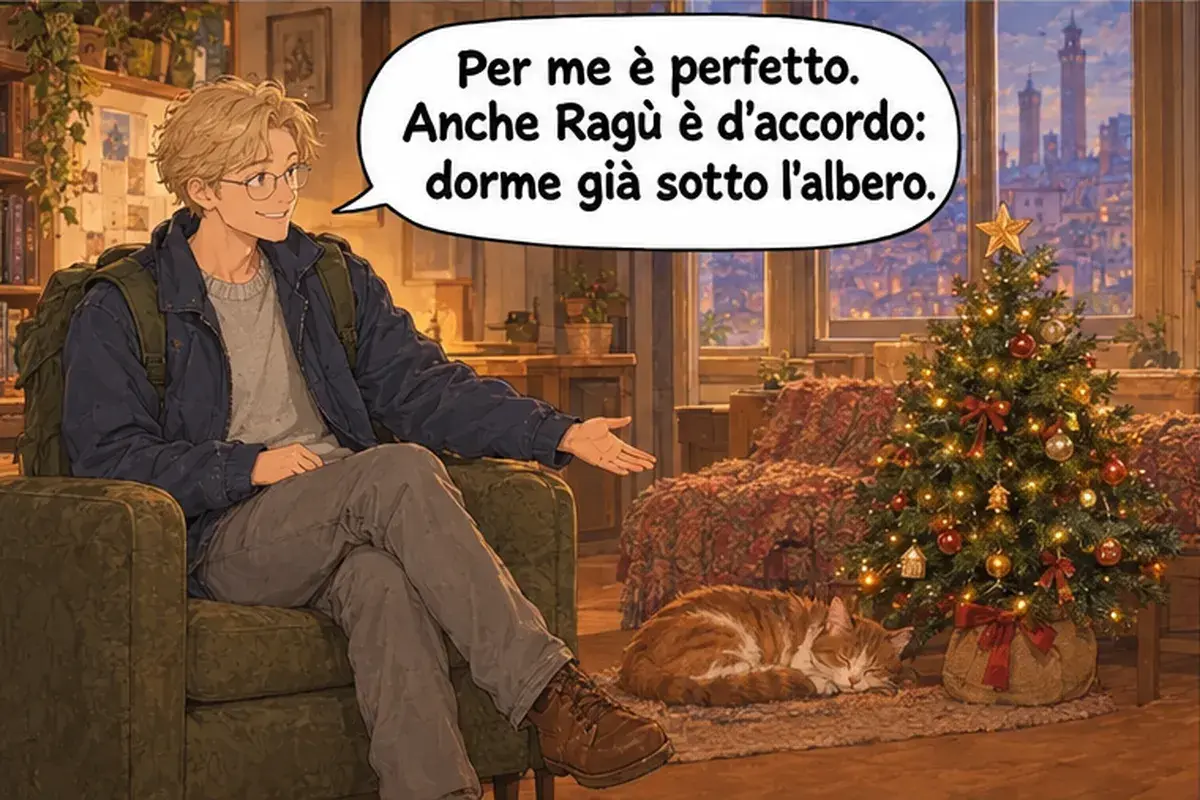
- Misha
Per me è perfetto. Anche Ragù è d'accordo: dorme già sotto l'albero.
For me, it's perfect. Ragù agrees too: he's already sleeping under the tree.
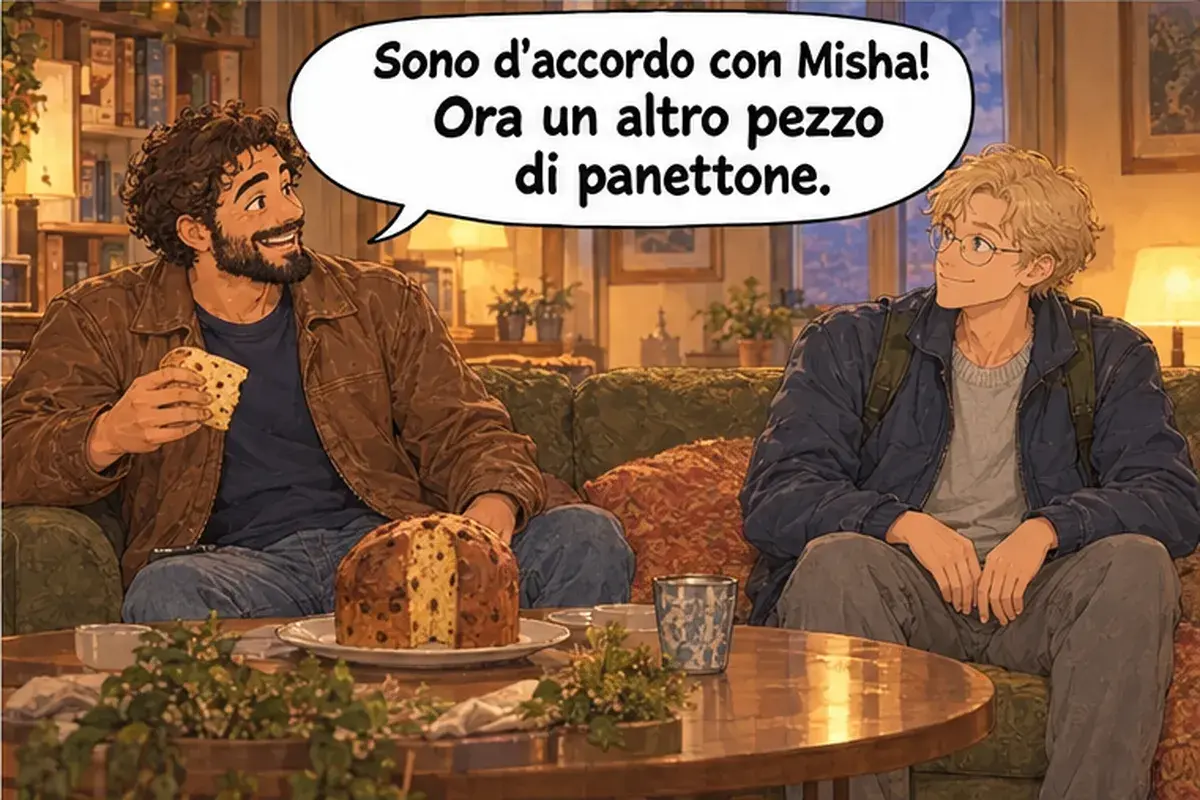
- Luca
Sono d'accordo con Misha! Ora un altro pezzo di panettone.
I agree with Misha! Now another piece of panettone.
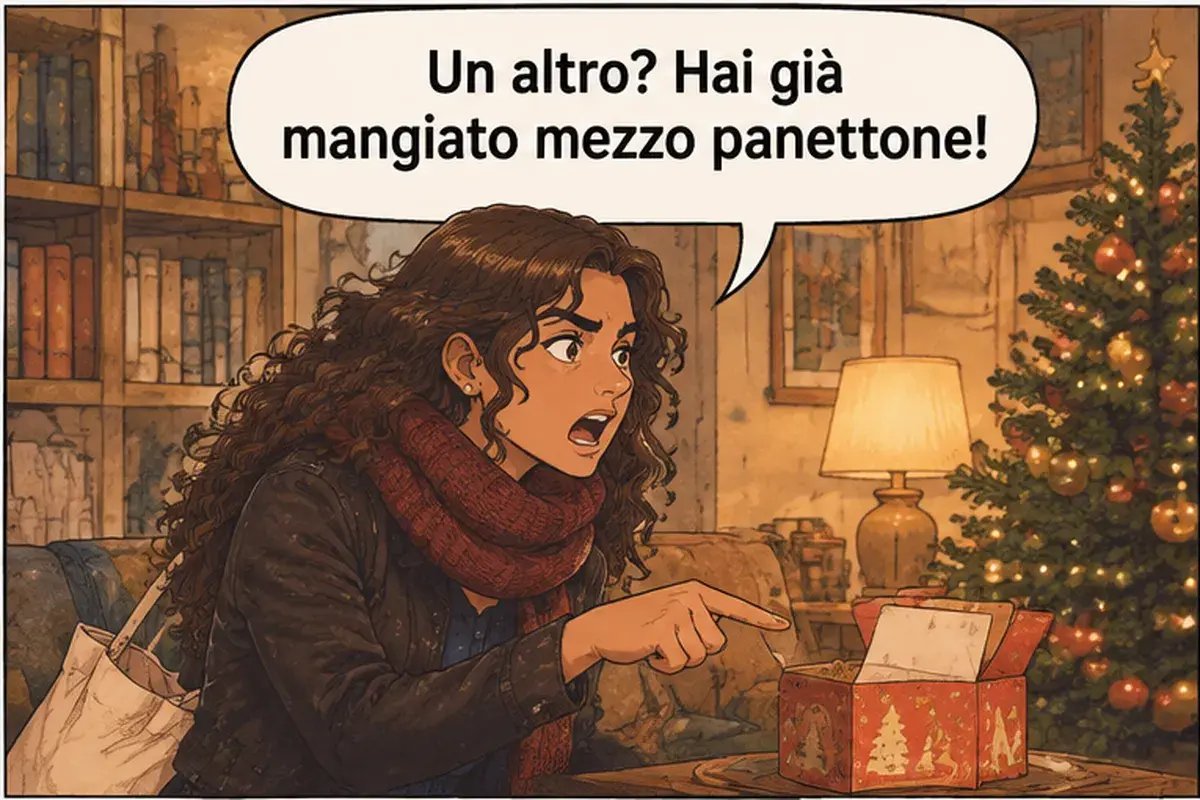
- Giulia
Un altro? Hai già mangiato mezzo panettone!
Another one? You've already eaten half a panettone!
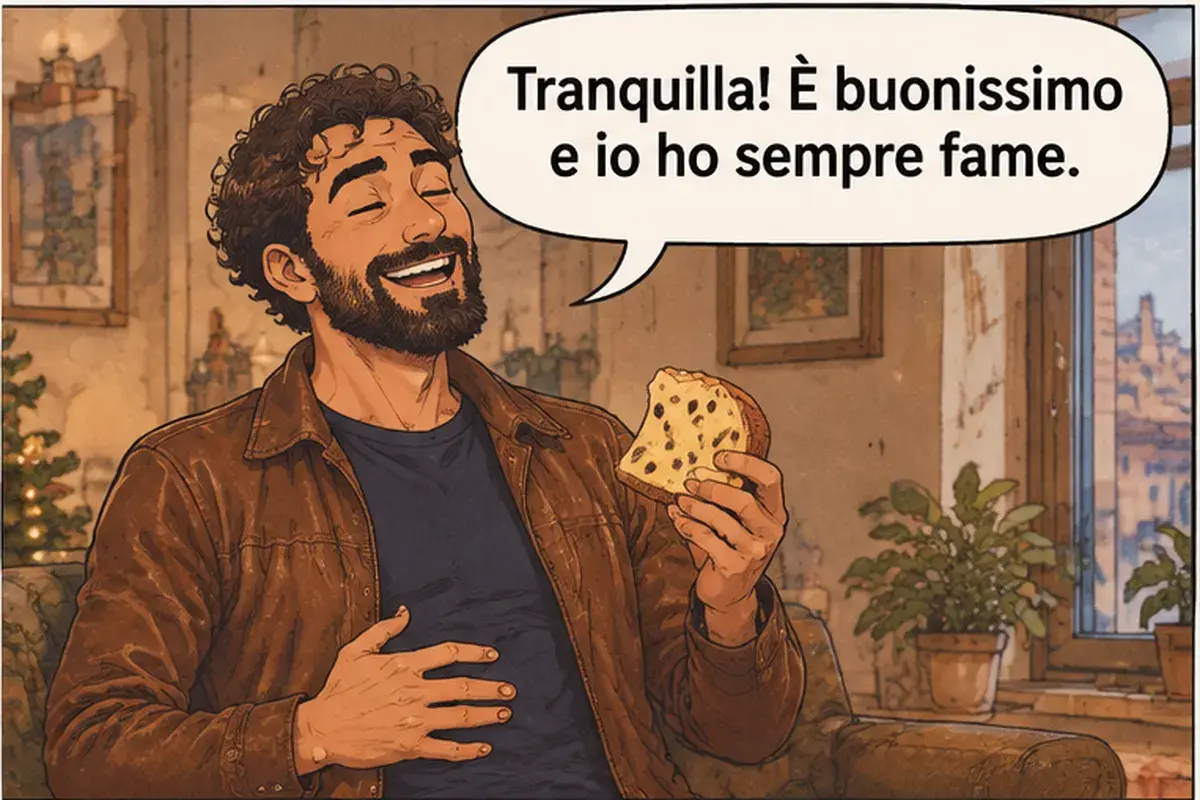
- Luca
Tranquilla! È buonissimo e io ho sempre fame.
Relax! It's really delicious, and I'm always hungry. (to a woman)
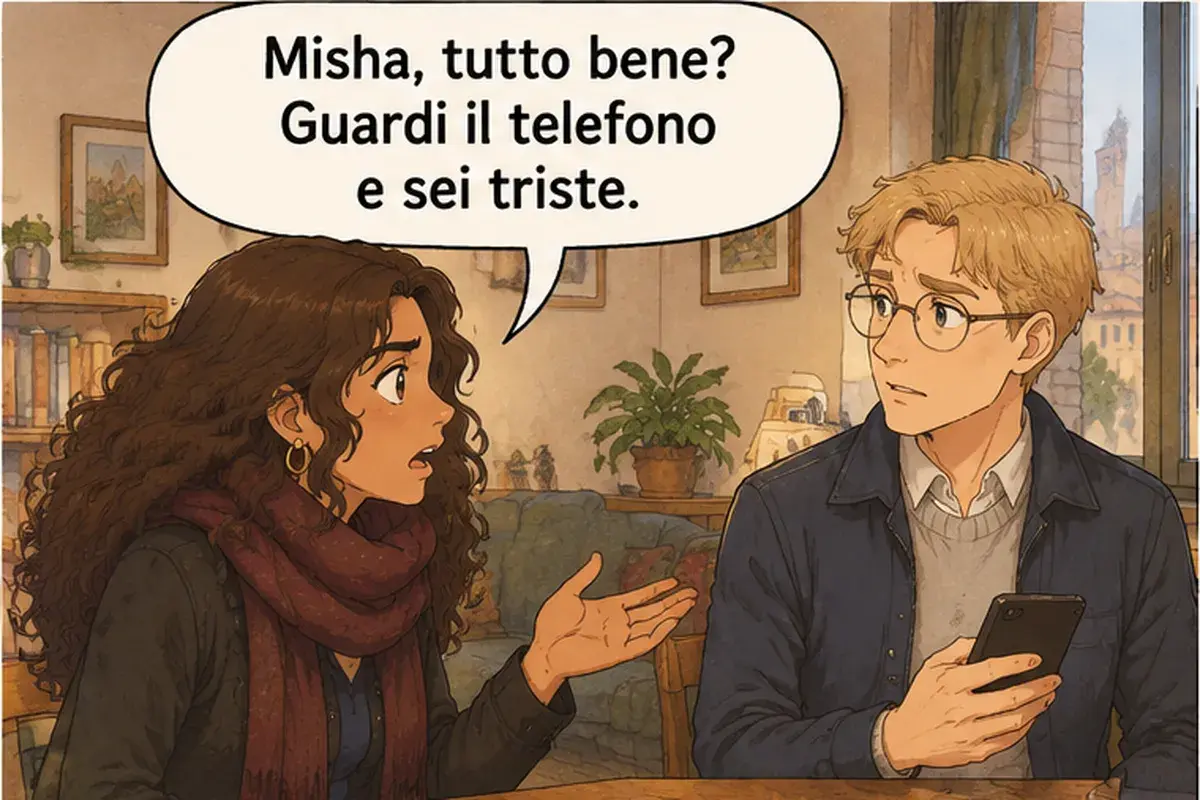
- Giulia
Misha, tutto bene? Guardi il telefono e sei triste.
Misha, is everything OK? You're looking at your phone and you're sad.
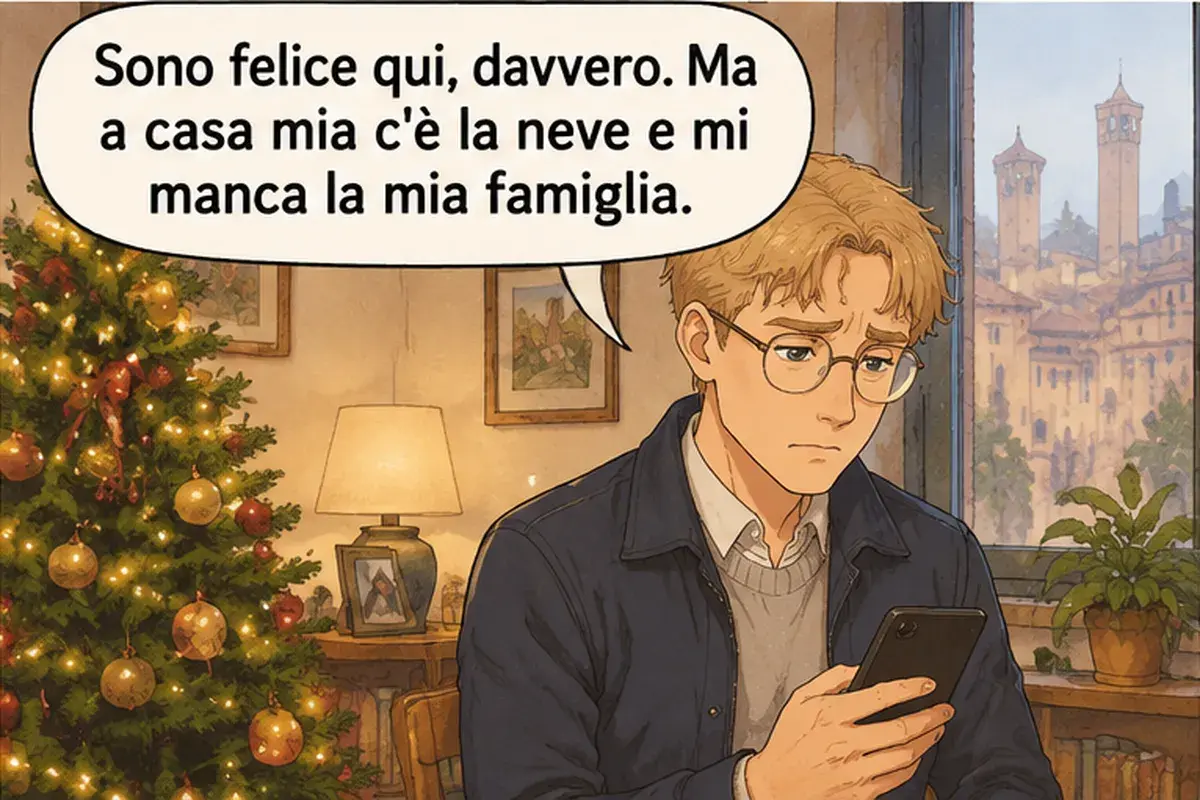
- Misha
Sono felice qui, davvero. Ma a casa mia c'è la neve e mi manca la mia famiglia.
I'm happy here, really. But back home there's snow, and I miss my family.
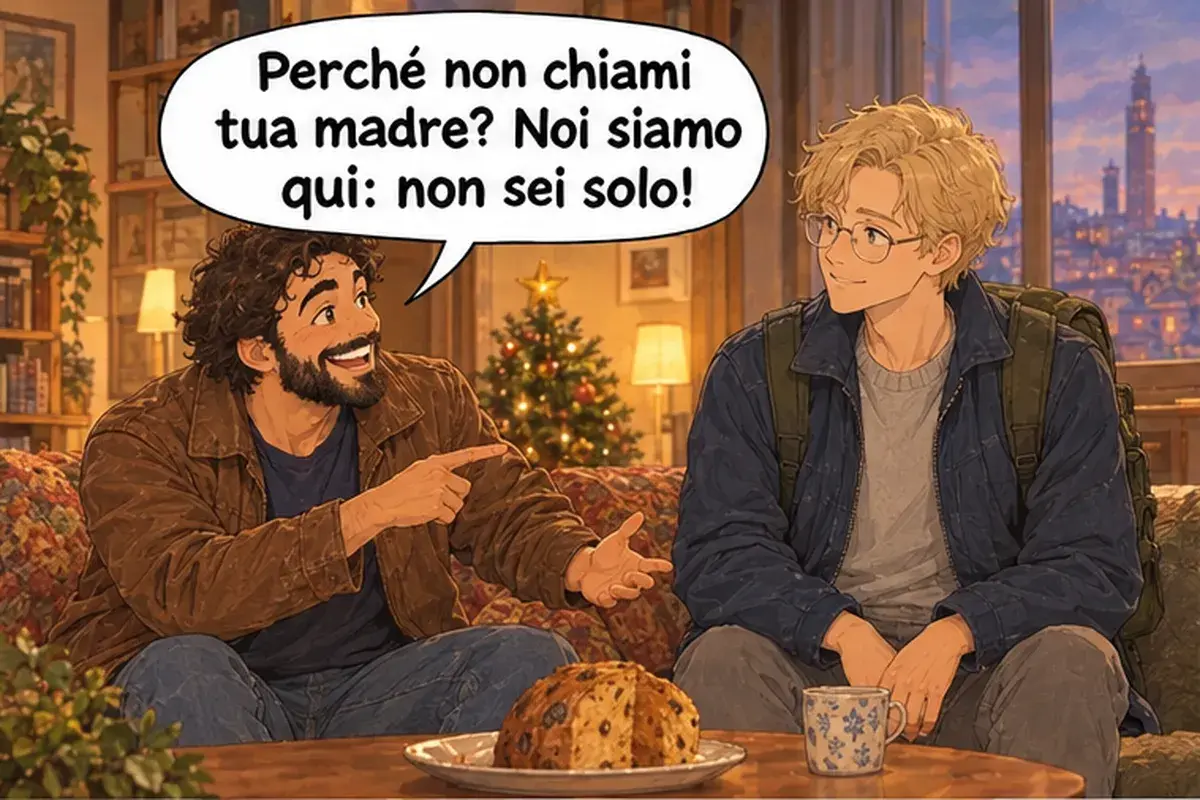
- Luca
Perché non chiami tua madre? Noi siamo qui: non sei solo!
Why don't you call your mother? We're here: you're not alone! (to a man)
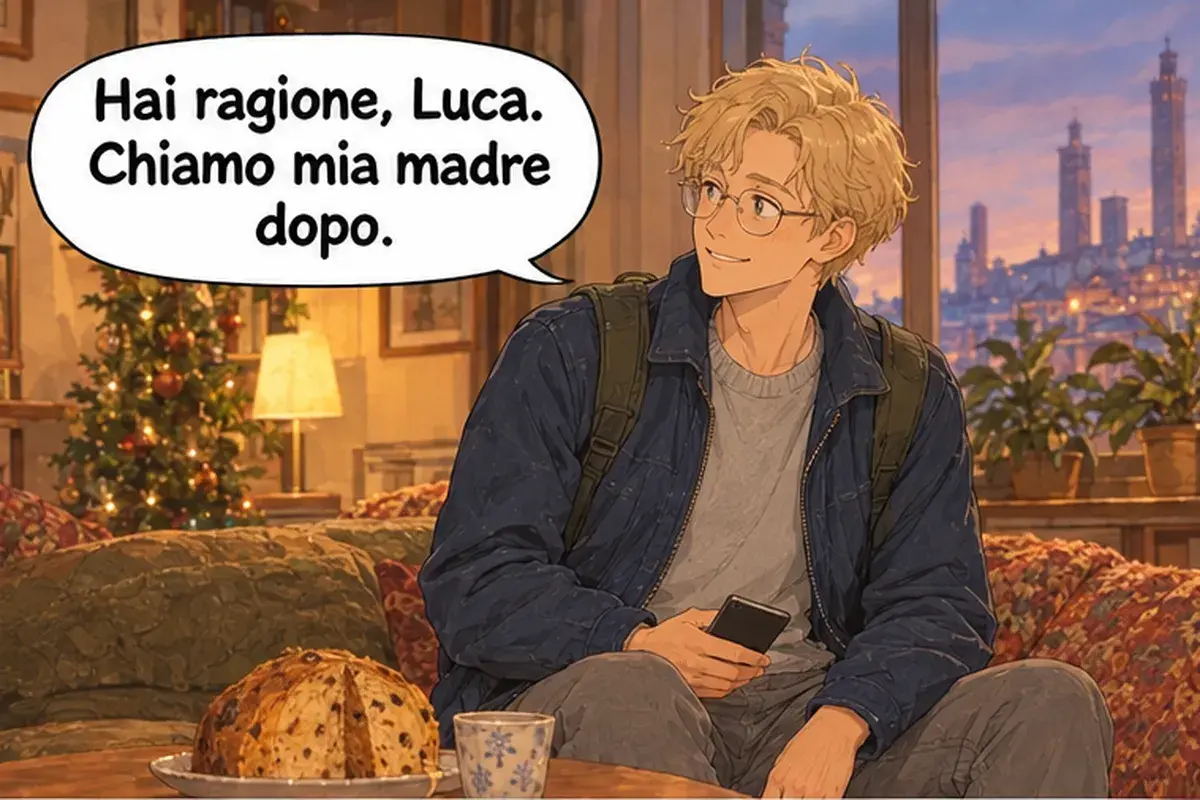
- Misha
Hai ragione, Luca. Chiamo mia madre dopo.
You're right, Luca. I'll call my mother later.
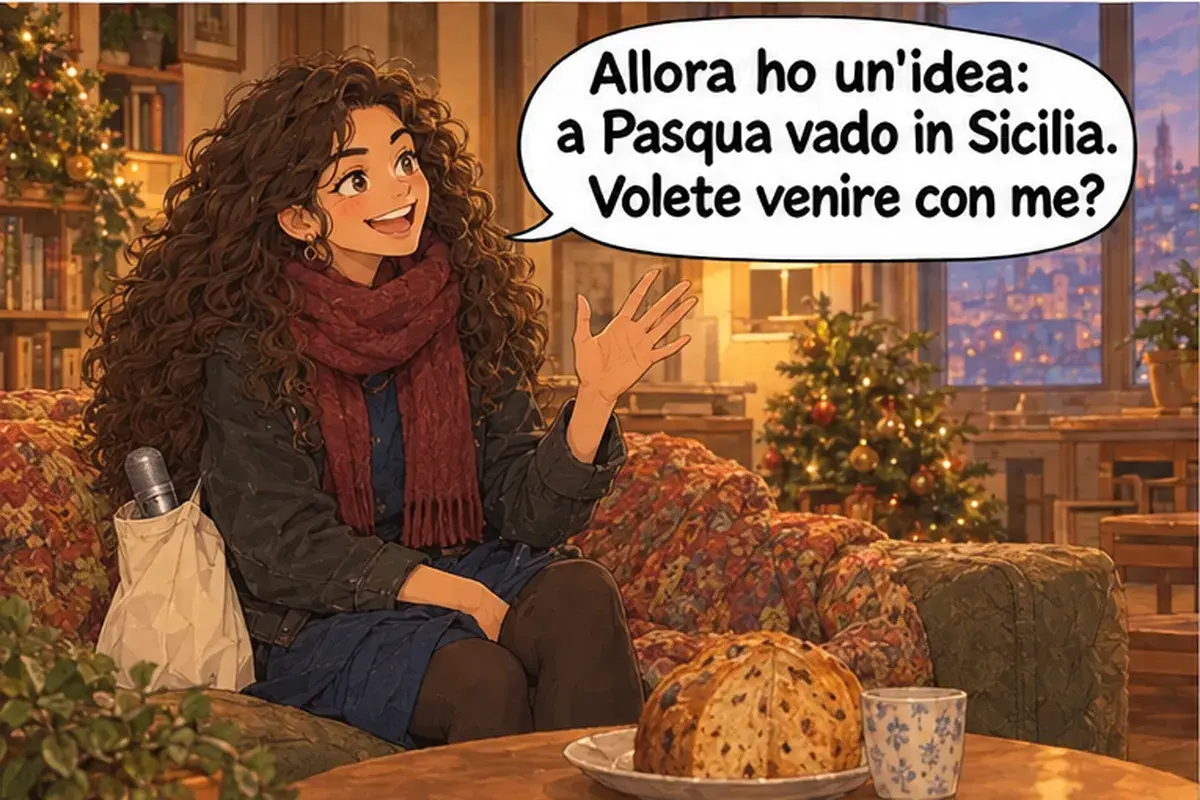
- Giulia
Allora ho un'idea: a Pasqua vado in Sicilia. Volete venire con me?
Well then, I have an idea: at Easter I'm going to Sicily. Do you want to come with me? (to several people)
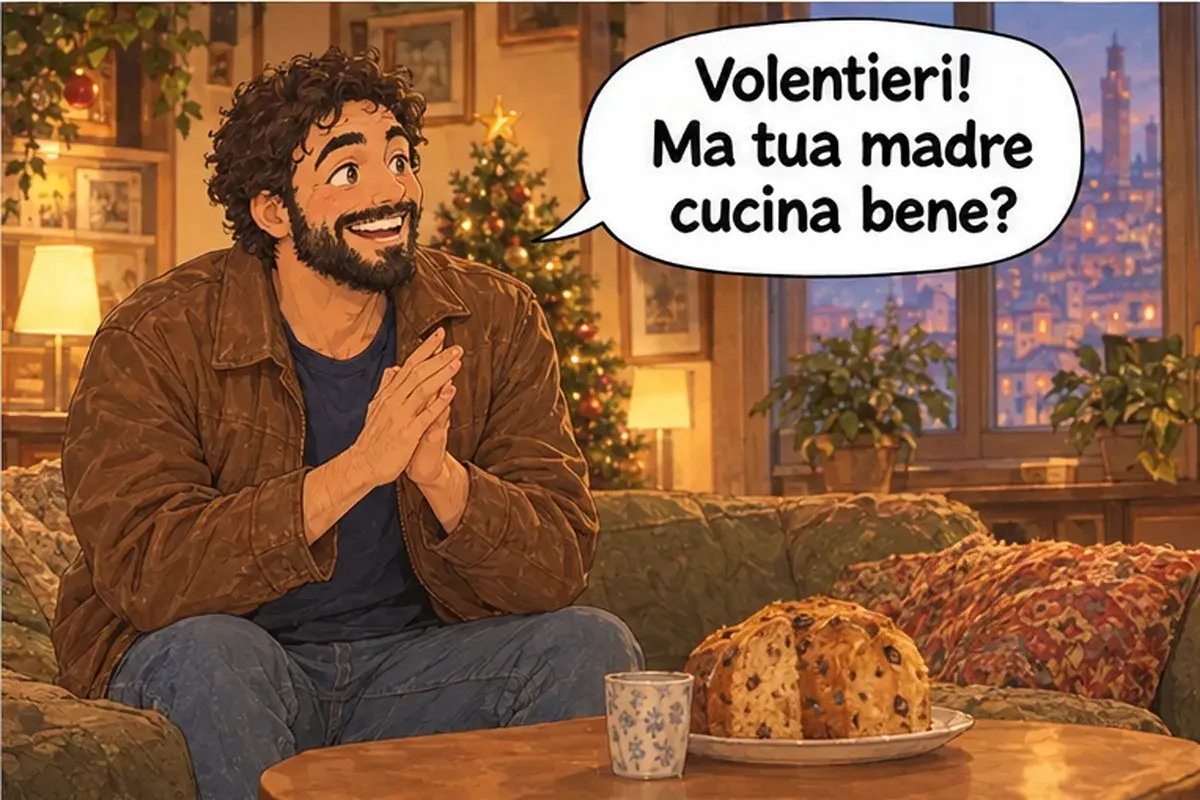
- Luca
Volentieri! Ma tua madre cucina bene?
I'd love to! But does your mother cook well?
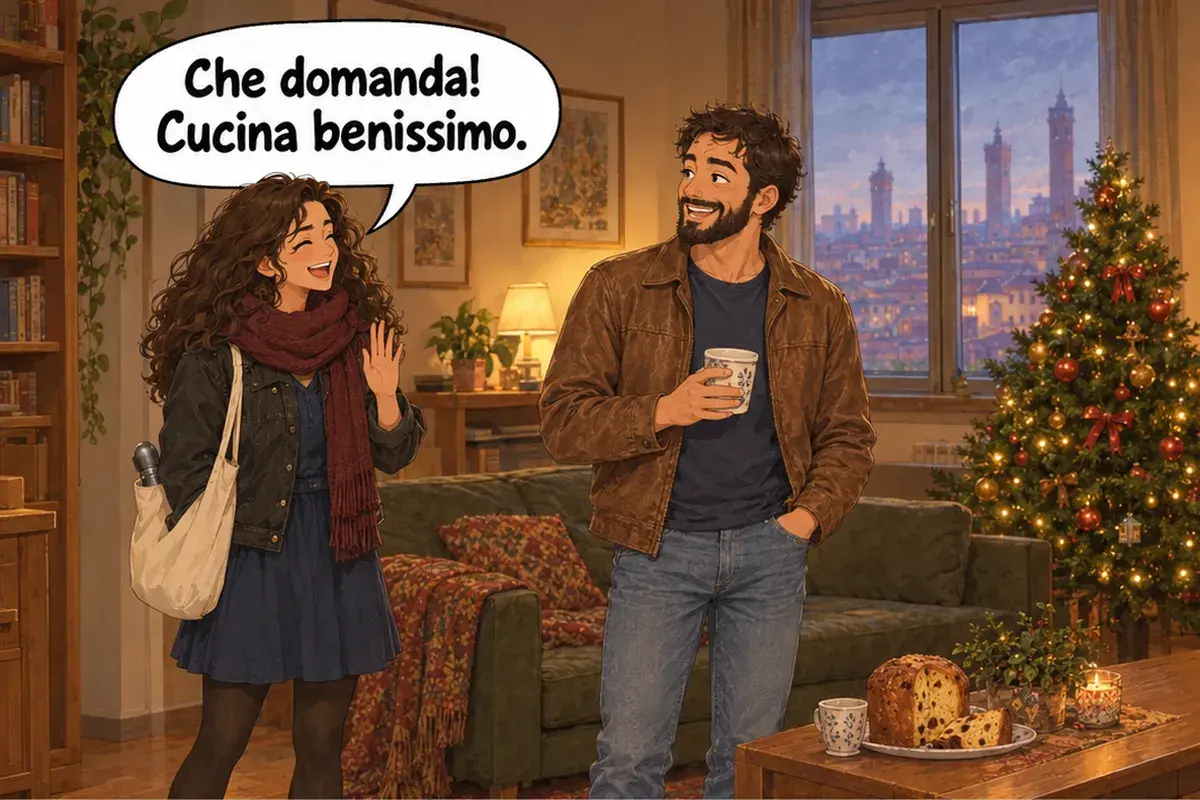
- Giulia
Che domanda! Cucina benissimo.
What a question! She cooks really well.
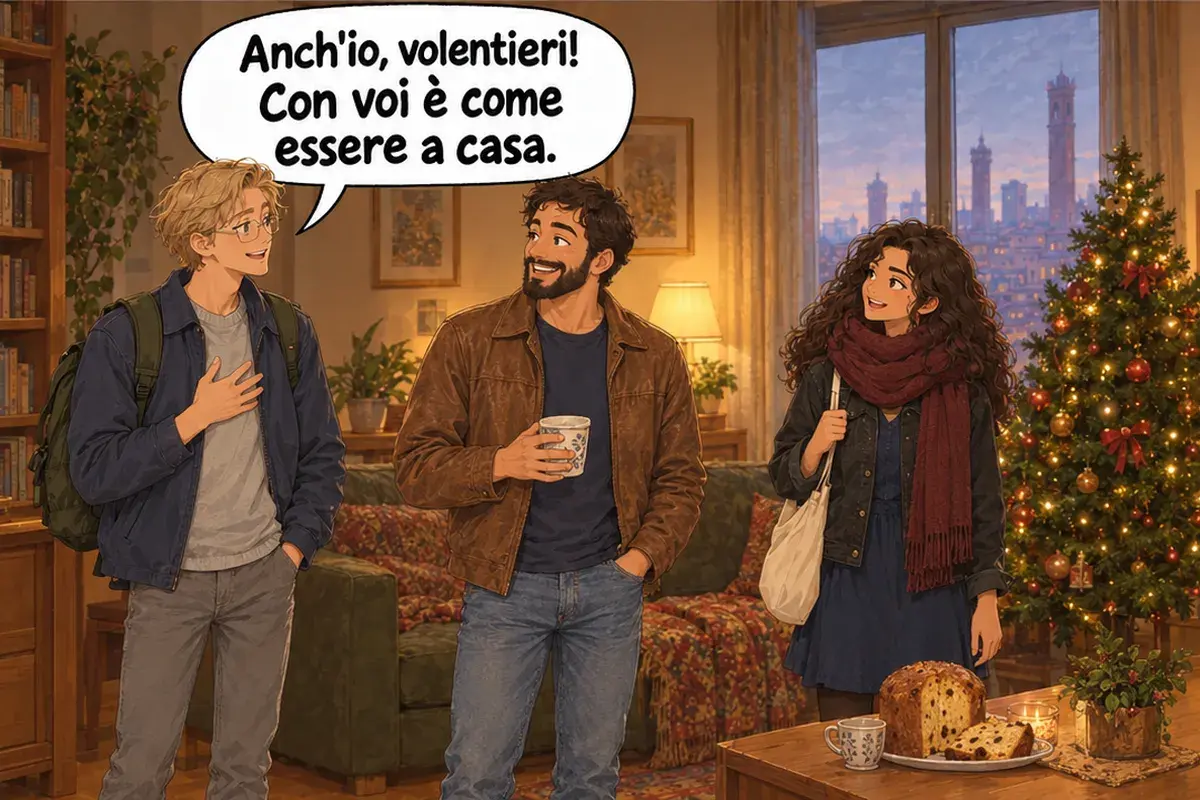
- Misha
Anch'io, volentieri! Con voi è come essere a casa.
Me too, I'd love to! With you guys it's like being at home.
Grammar for this text
- mi manca la mia famiglia — I miss my family; word for word "my family is missing to me". mancare works like mi piace (unit 5): mi means "to me", and the thing you miss is the subject and comes after the verb. One thing — manca, several — mancano: mi mancano gli amici — I miss my friends. More at A2.
- Hai già mangiato mezzo panettone! — you've already eaten half a panettone. hai mangiato is the passato prossimo (everyday past): hai (the tu form of avere) + the past participle mangiato. The rule is in unit 15; già (already) goes between them.
- Secondo me è un albero per Ragù. — secondo me means "in my opinion", and a normal sentence follows. Per me è perfetto — "for me", a bit softer.
- Hai ragione, Luca. — you're right: word for word "you have reason", avere ragione. "I'm right" is ho ragione.
- a Pasqua vado in Sicilia — plans use the present tense, like English "I'm going": vado is the io form of andare (unit 7). a Pasqua — at Easter, like a novembre — in November.
- Cucina benissimo. — here cucina is a verb, "she cooks" (from cucinare), not "kitchen". Anch'io = anche + io: me too. Con voi è come essere a casa — with you guys it's like being at home (word for word "like being at home").
- Tranquilla! — Luca says it to Giulia, so it ends in -a (to Misha he'd say Tranquillo!).
Words and grammar of the unit: Describe people and talk about your plans.
Learn the words from the texts with flashcards
In the app, you can tap any word in a text to see its translation, forms and examples, and new words stick with flashcards. 15 minutes a day.
Start for freeEverything is open for free. No card needed to sign up.