

Italian dialogue with translation · A1 · 16 lines
Che cosa hai fatto ieri? What did you do yesterday?
Comic · 15 panels

- Chiara
Buongiorno a tutti! Oggi è venerdì: che cosa hai fatto ieri, Diego?
Good morning, everyone! Today is Friday: what did you do yesterday, Diego?

- Diego
Ieri ho lavorato tanto. Ho passato tutta la giornata in bici!
Yesterday I worked a lot. I spent the whole day on my bike!
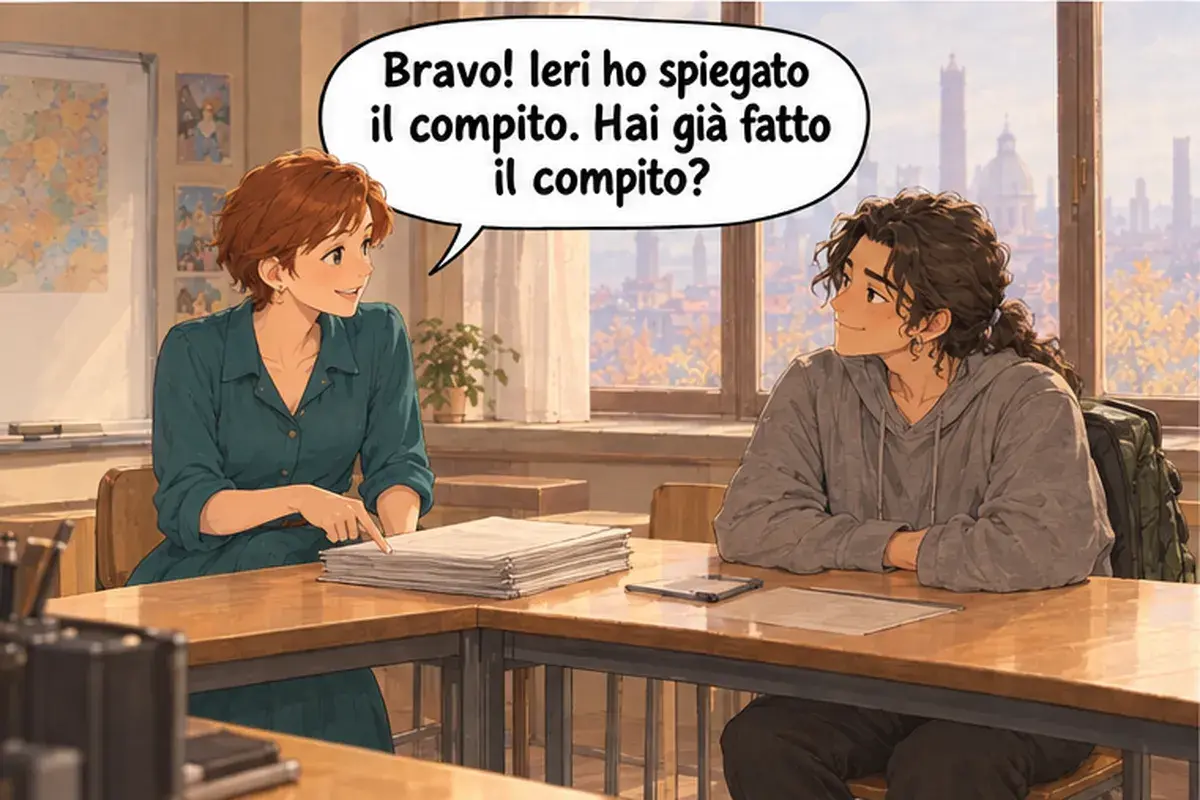
- Chiara
Bravo! Ieri ho spiegato il compito. Hai già fatto il compito?
Good job! (to a man) Yesterday I explained the assignment. Have you already done the assignment?
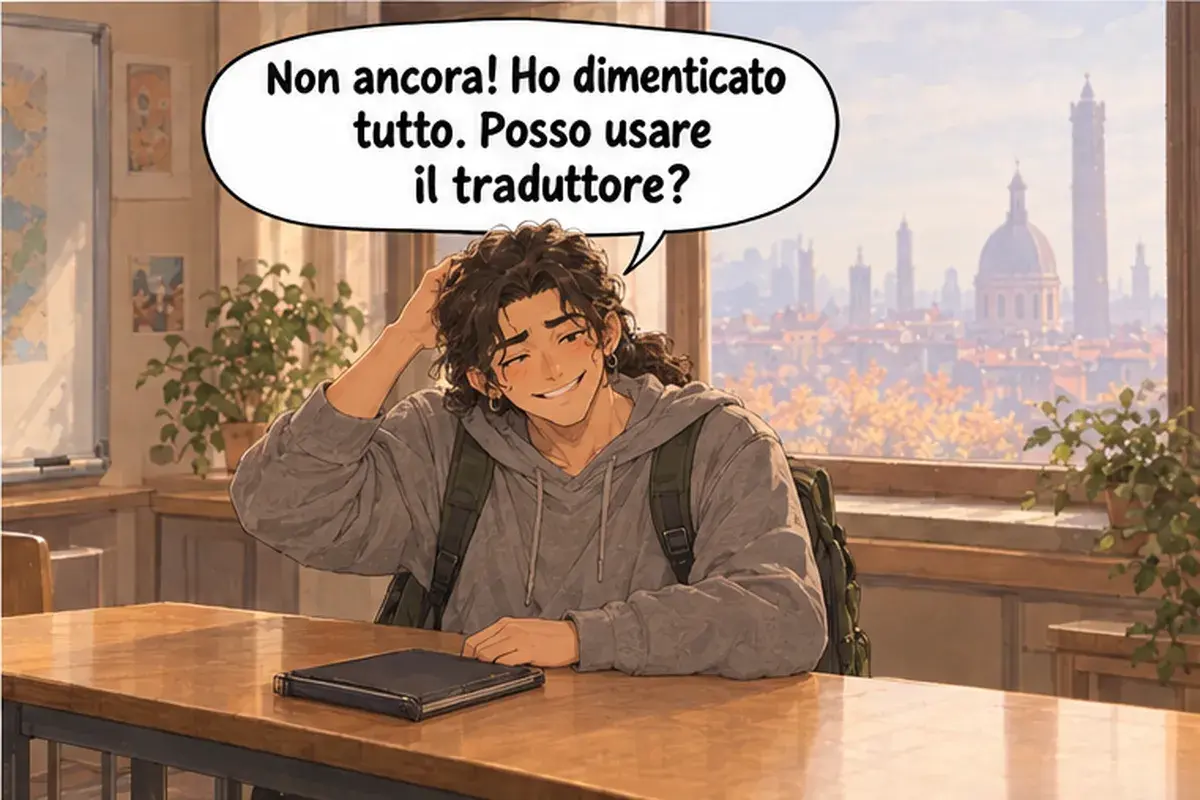
- Diego
Non ancora! Ho dimenticato tutto. Posso usare il traduttore?
Not yet! I forgot everything. Can I use the translator?
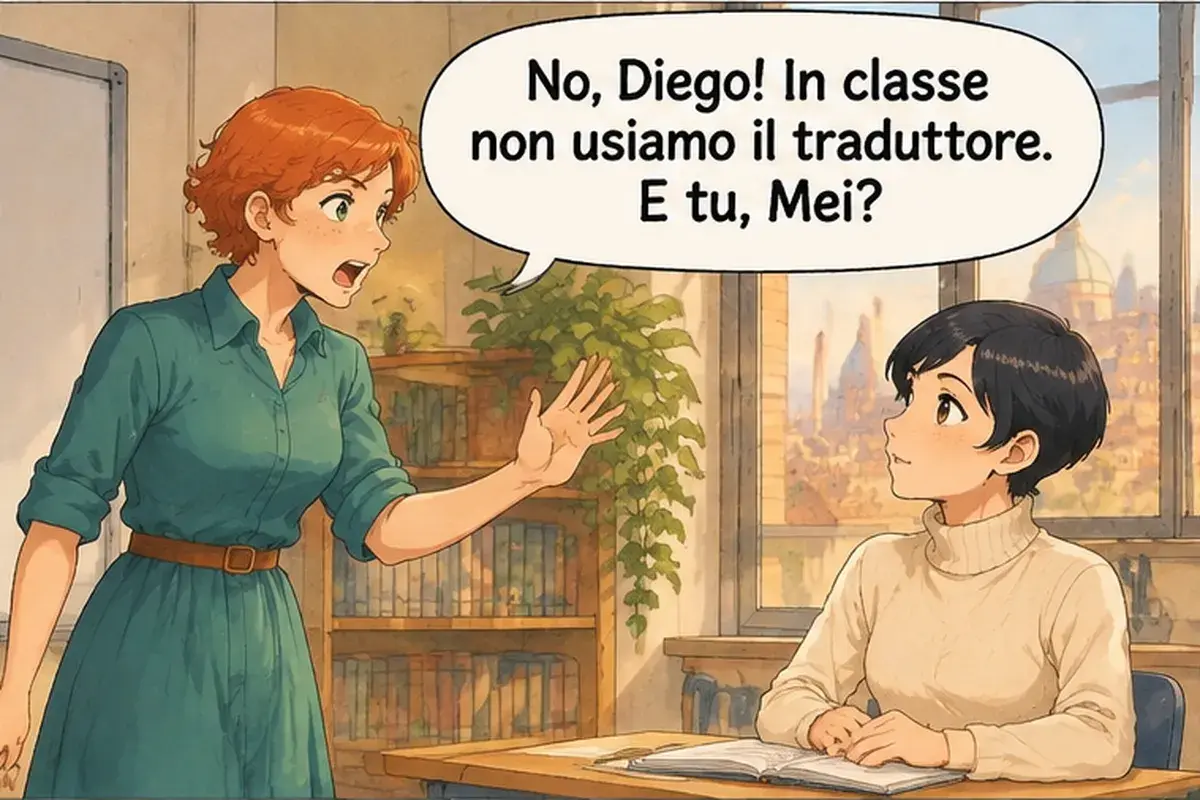
- Chiara
No, Diego! In classe non usiamo il traduttore. E tu, Mei?
No, Diego! We don't use the translator in class. And you, Mei?

- Mei
Io ho già fatto il compito. Ieri sera ho guardato un film in italiano.
I've already done the assignment. Last night I watched a movie in Italian.
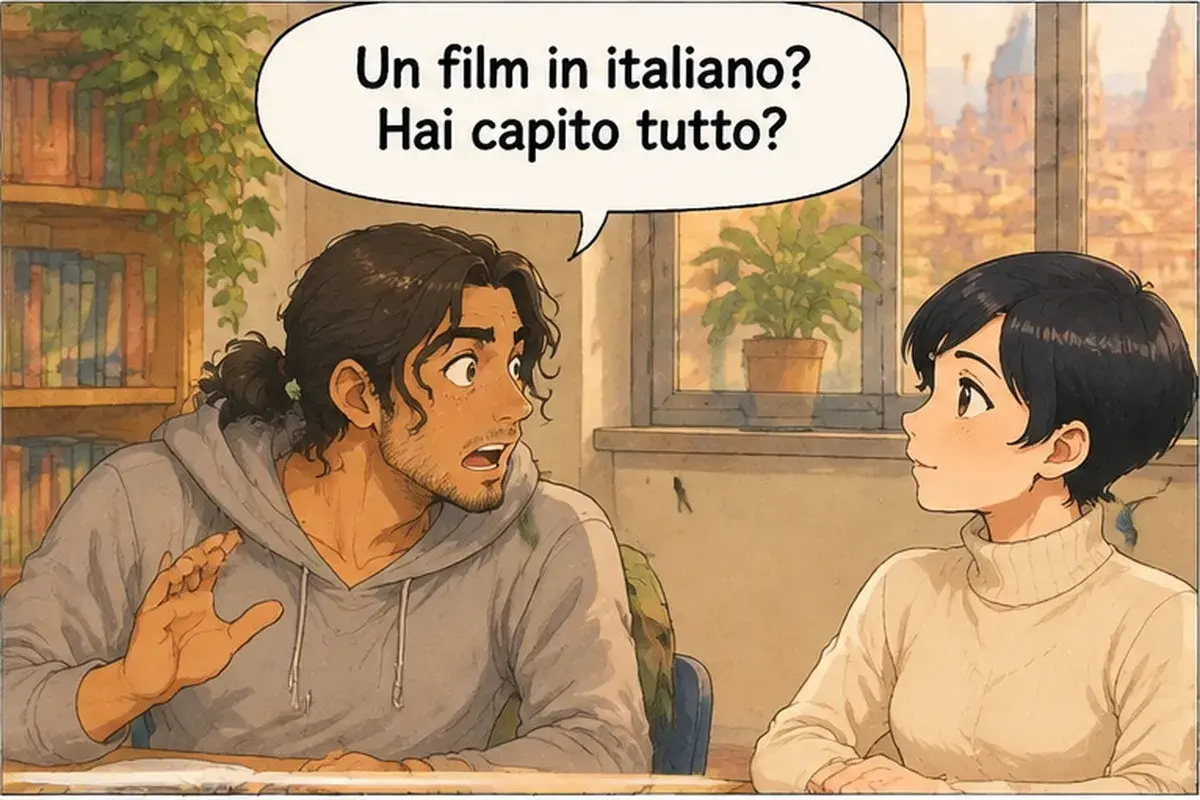
- Diego
Un film in italiano? Hai capito tutto?
A movie in Italian? Did you understand everything?

- Mei
Quasi tutto. Ho ripetuto ogni frase due volte!
Almost everything. I repeated every sentence twice!
- Diego
Complimenti!
Well done!
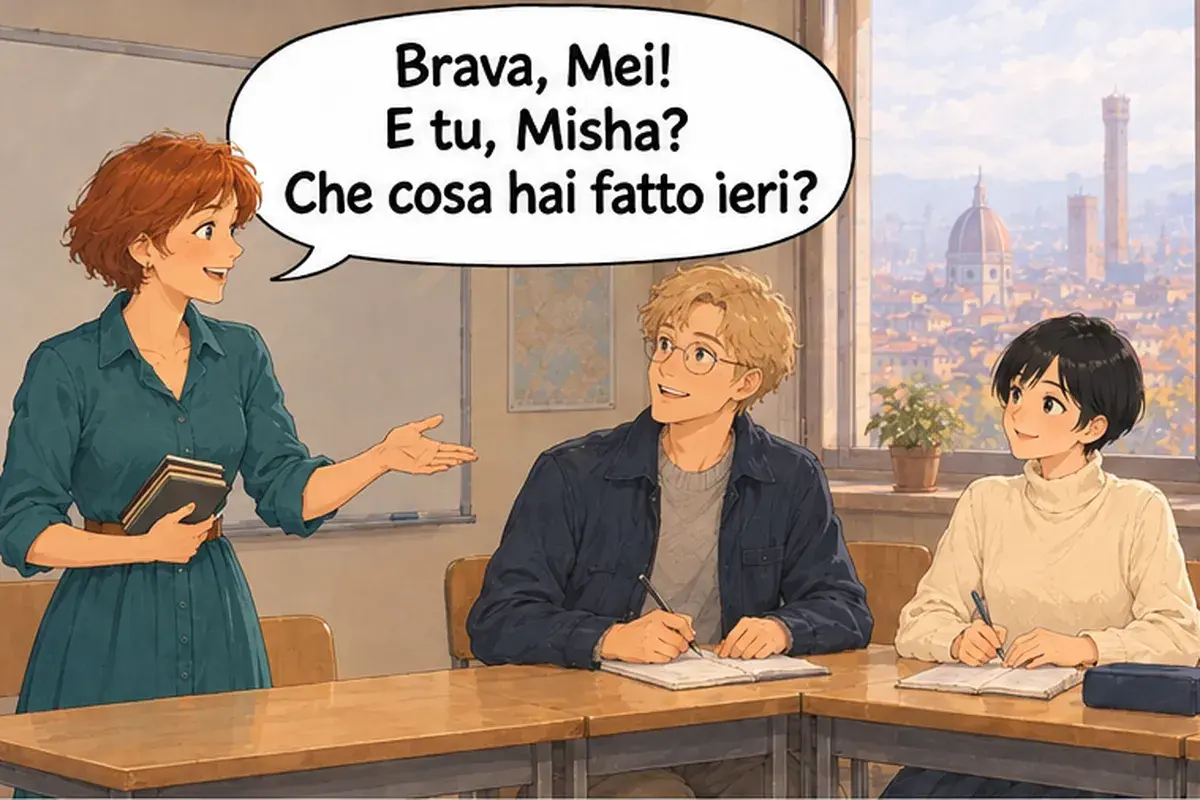
- Chiara
Brava, Mei! E tu, Misha? Che cosa hai fatto ieri?
Good job, Mei! (to a woman) And you, Misha? What did you do yesterday?
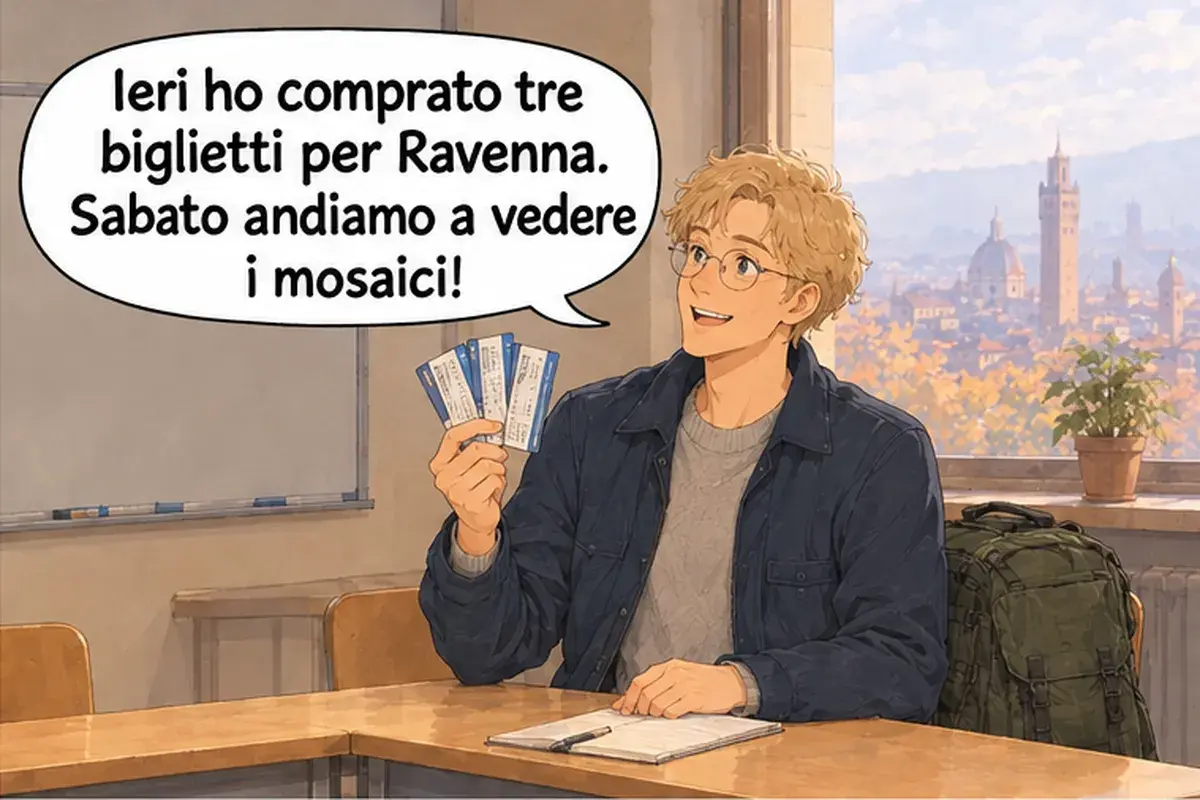
- Misha
Ieri ho comprato tre biglietti per Ravenna. Sabato andiamo a vedere i mosaici!
Yesterday I bought three tickets to Ravenna. On Saturday we're going to see the mosaics!

- Chiara
Che bello! Viaggiate in treno?
How nice! Are you traveling by train? (to several people)
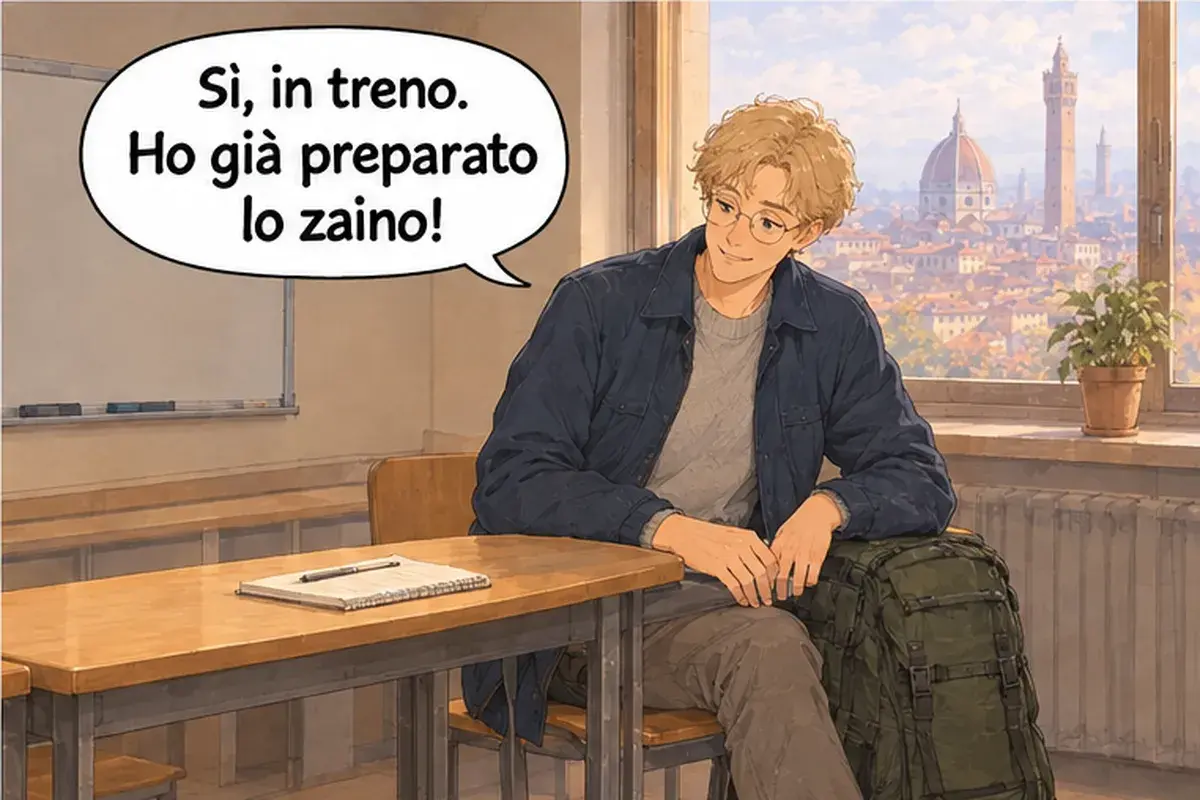
- Misha
Sì, in treno. Ho già preparato lo zaino!
Yes, by train. I've already packed my backpack!
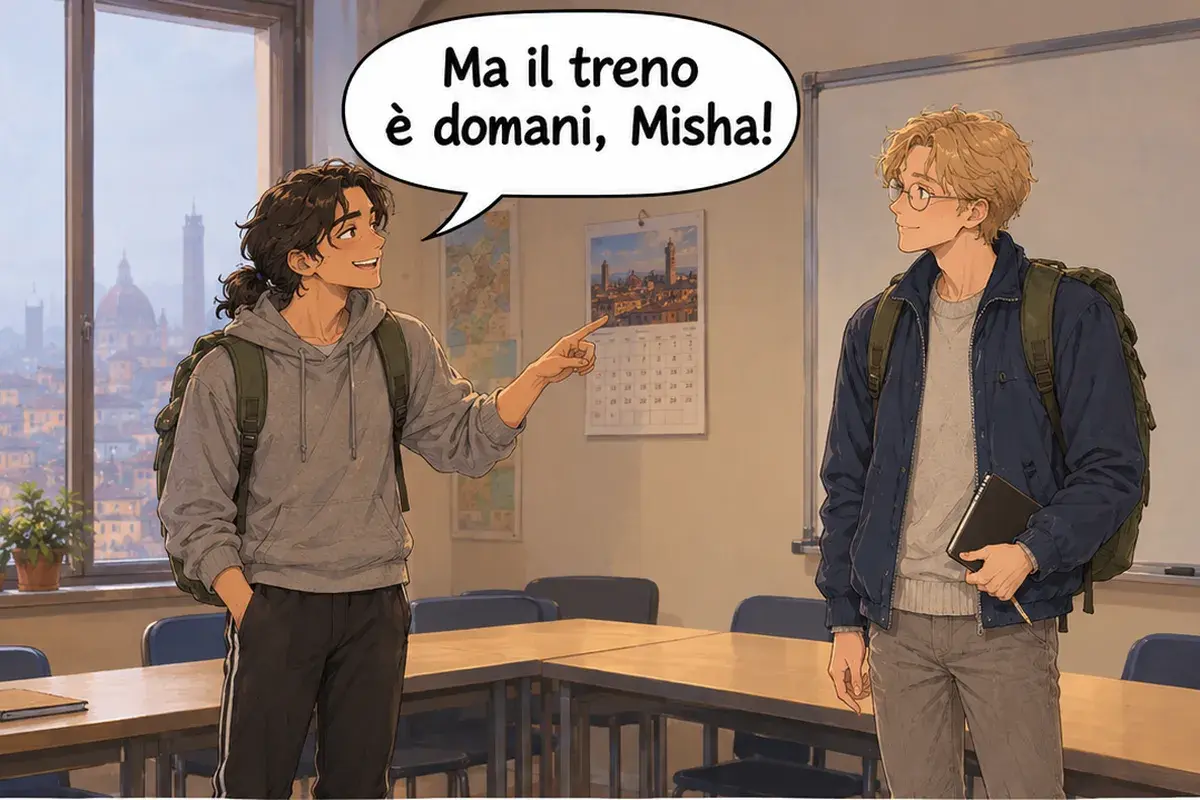
- Diego
Ma il treno è domani, Misha!
But the train is tomorrow, Misha!
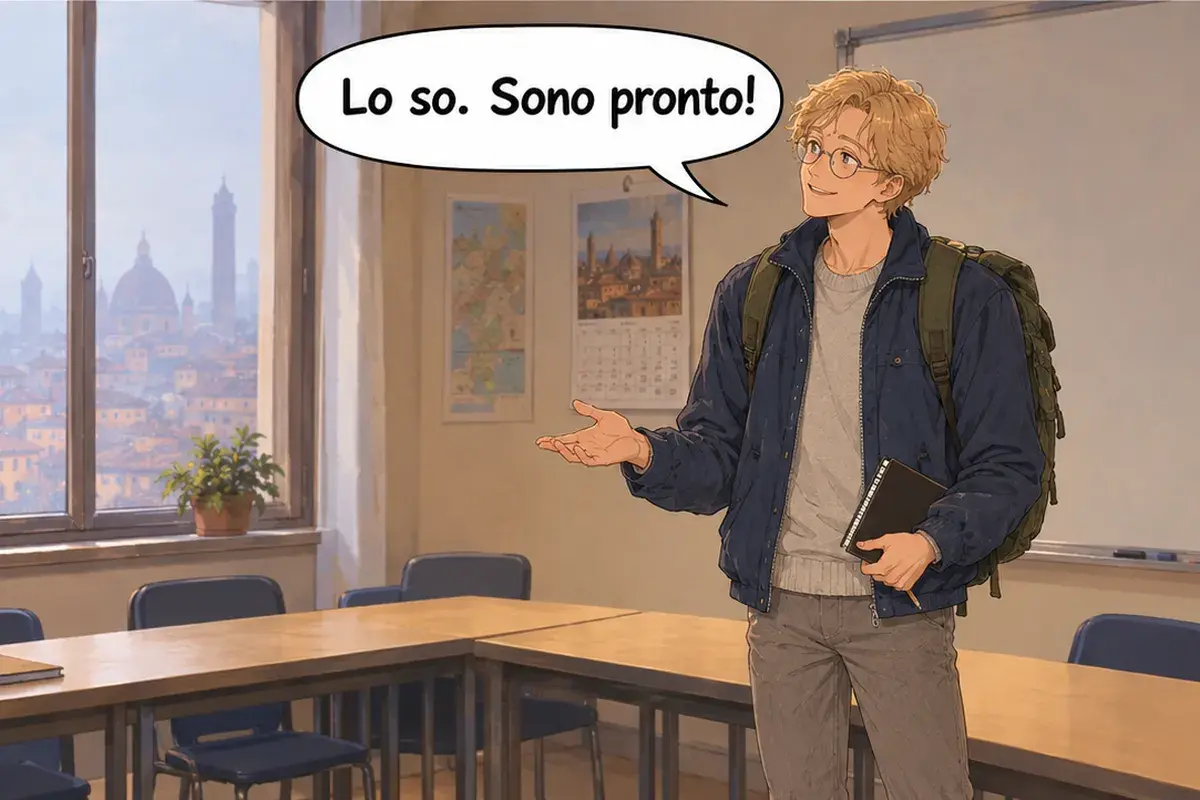
- Misha
Lo so. Sono pronto!
I know. I'm ready! (man speaking)

- Chiara
Vedi, Diego: il tuo compagno di classe ha già fatto tutto!
See, Diego? Your classmate has already done everything!
Grammar for this text
- Ho passato tutta la giornata in bici! — ho passato = ho (the io form of avere) + passato (the past participle of passare): together, "I spent". Every past form in this text works this way (ho lavorato, ho comprato); the rule is in the first grammar block. Here passare means "to spend (time)".
- Hai già fatto il compito? — hai fatto — "you did, have you done": hai is the tu form of avere, fatto is the past participle of fare (to do, to make). It's irregular (not ✗ fato); the other irregular participles come in unit 17. già (already) goes between hai and the participle.
- Non ancora! — "not yet". The full answer would be Non ho ancora fatto il compito: non before ho, ancora right after it.
- In classe non usiamo il traduttore. — in classe has no article: "in class". usiamo is the noi form of usare (to use), -iamo as in parliamo.
- Ho ripetuto ogni frase due volte! — ripetuto comes from ripetere (-ere → -uto). ogni (every) always takes a singular noun: ogni frase — every sentence. due volte — twice.
- Bravo! / Brava, Mei! — "good job": bravo to a man, brava to a woman. Complimenti! — "well done!": praise for someone who did something well. The word is always plural.
- Sabato andiamo a vedere i mosaici! — plans use the present tense, as in unit 14. Viaggiate — the voi form of viaggiare: Chiara asks all three of them. Diego's joke: Misha packed his backpack a day before the trip.
- il tuo compagno di classe — "your classmate" (a woman is compagna).
Words and grammar of the unit: Talk about what you did yesterday.
Learn the words from the texts with flashcards
In the app, you can tap any word in a text to see its translation, forms and examples, and new words stick with flashcards. 15 minutes a day.
Start for freeEverything is open for free. No card needed to sign up.