
Italian dialogue with translation · A1 · 15 lines
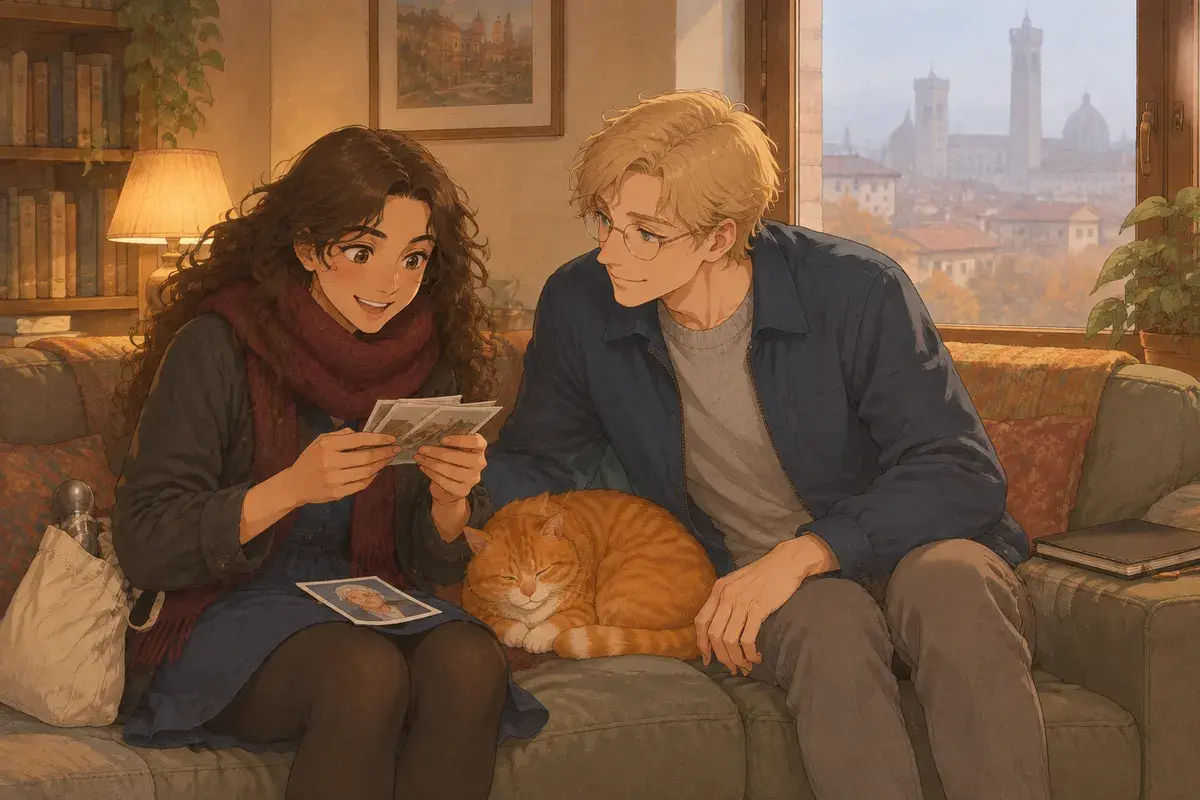
Anche la mia famiglia è lontana My family is far away too
Comic · 15 panels
- Giulia
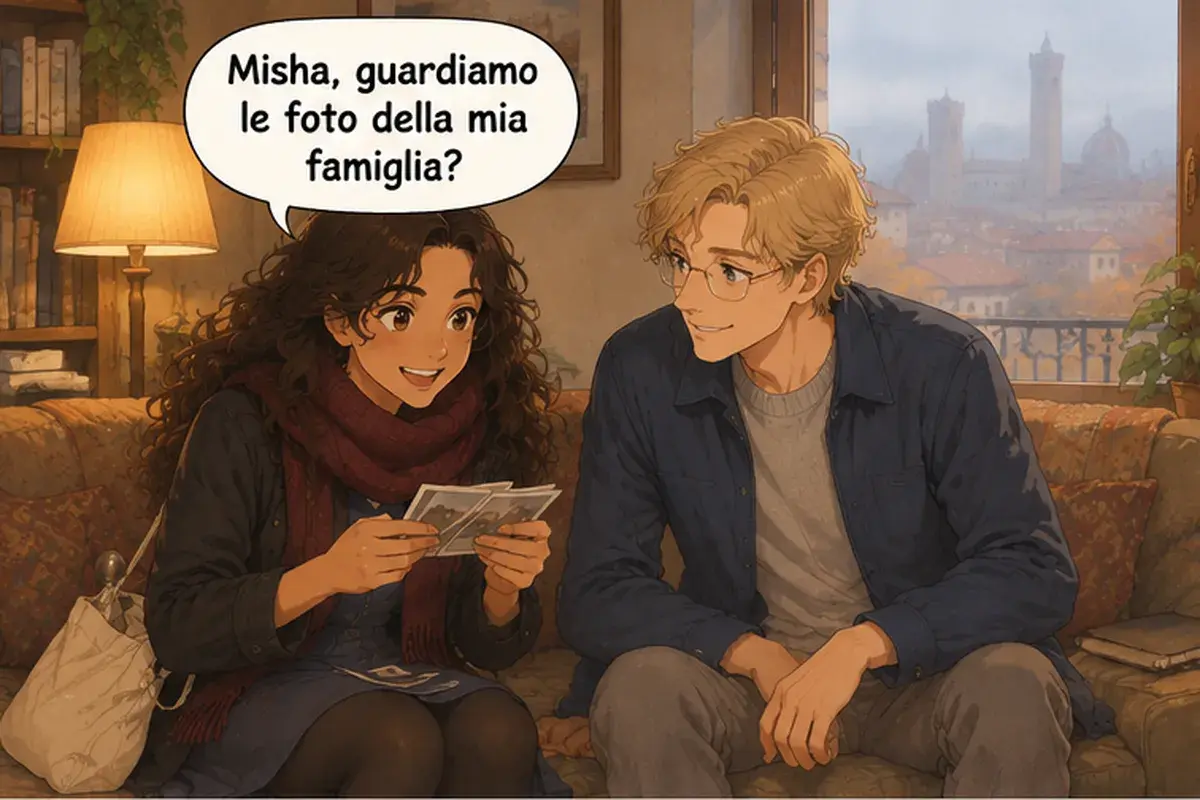
Misha, guardiamo le foto della mia famiglia?
Misha, shall we look at the photos of my family?
- Misha
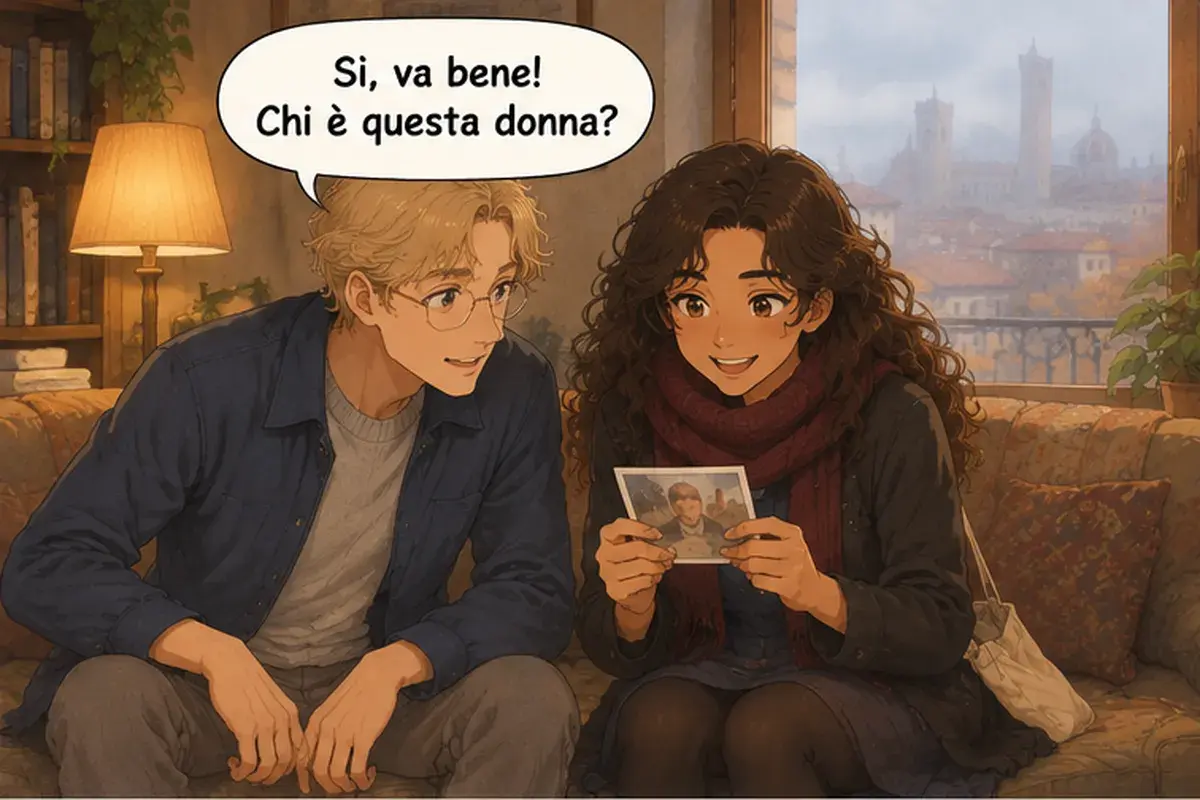
Sì, va bene! Chi è questa donna?
Yes, OK! Who's this woman?
- Giulia
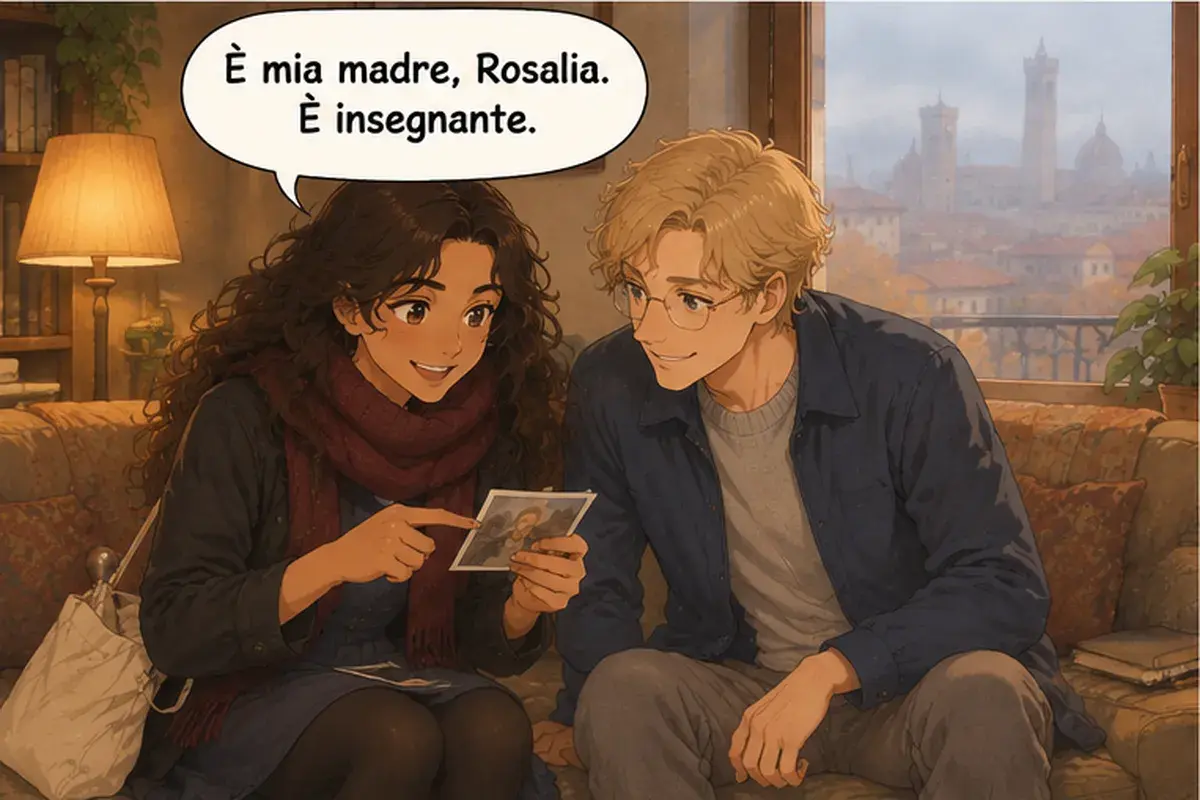
È mia madre, Rosalia. È insegnante.
She's my mother, Rosalia. She's a teacher.
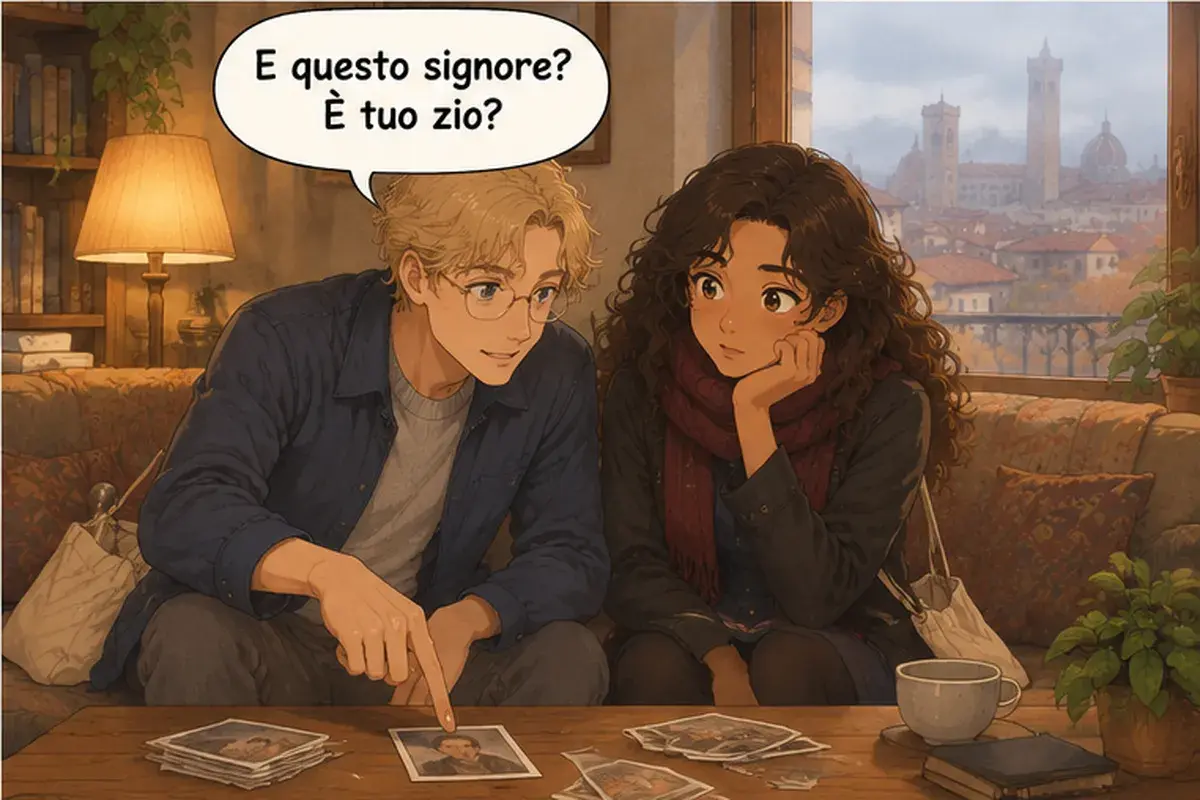
- Misha
E questo signore? È tuo zio?
And this gentleman? Is he your uncle?
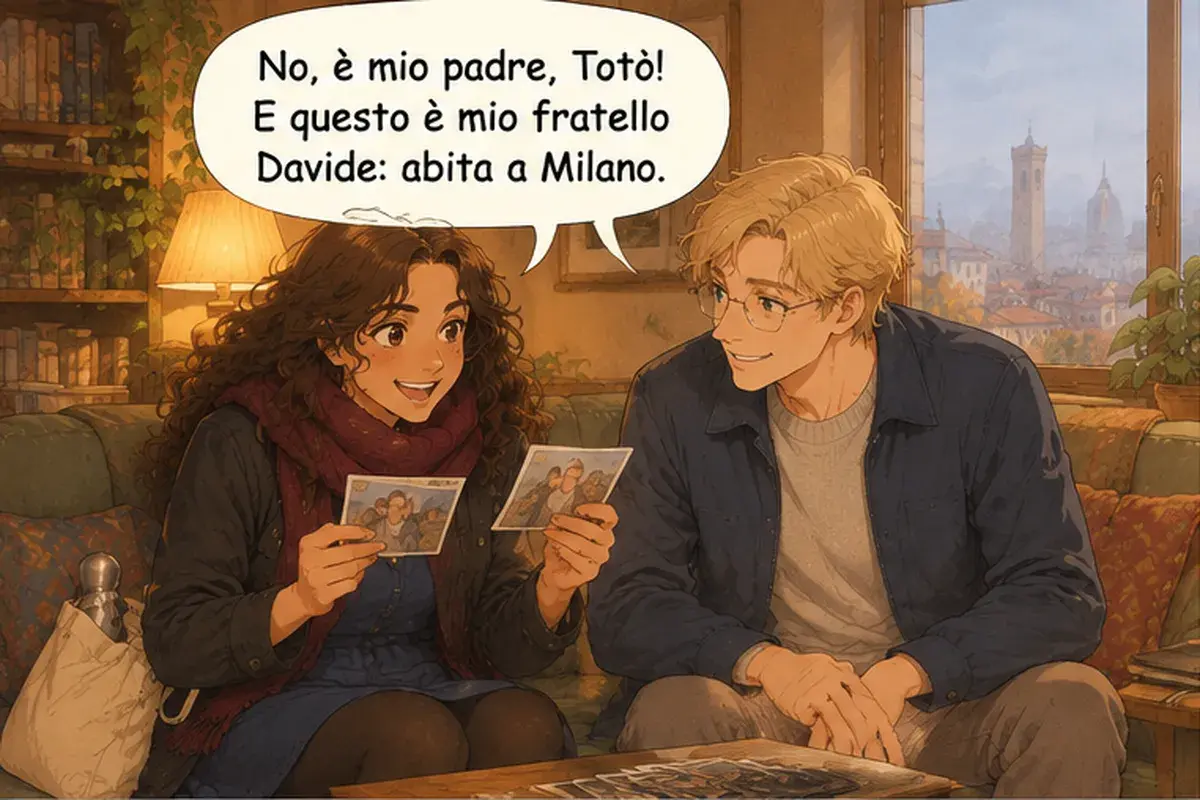
- Giulia
No, è mio padre, Totò! E questo è mio fratello Davide: abita a Milano.
No, he's my father, Totò! And this is my brother Davide: he lives in Milan.
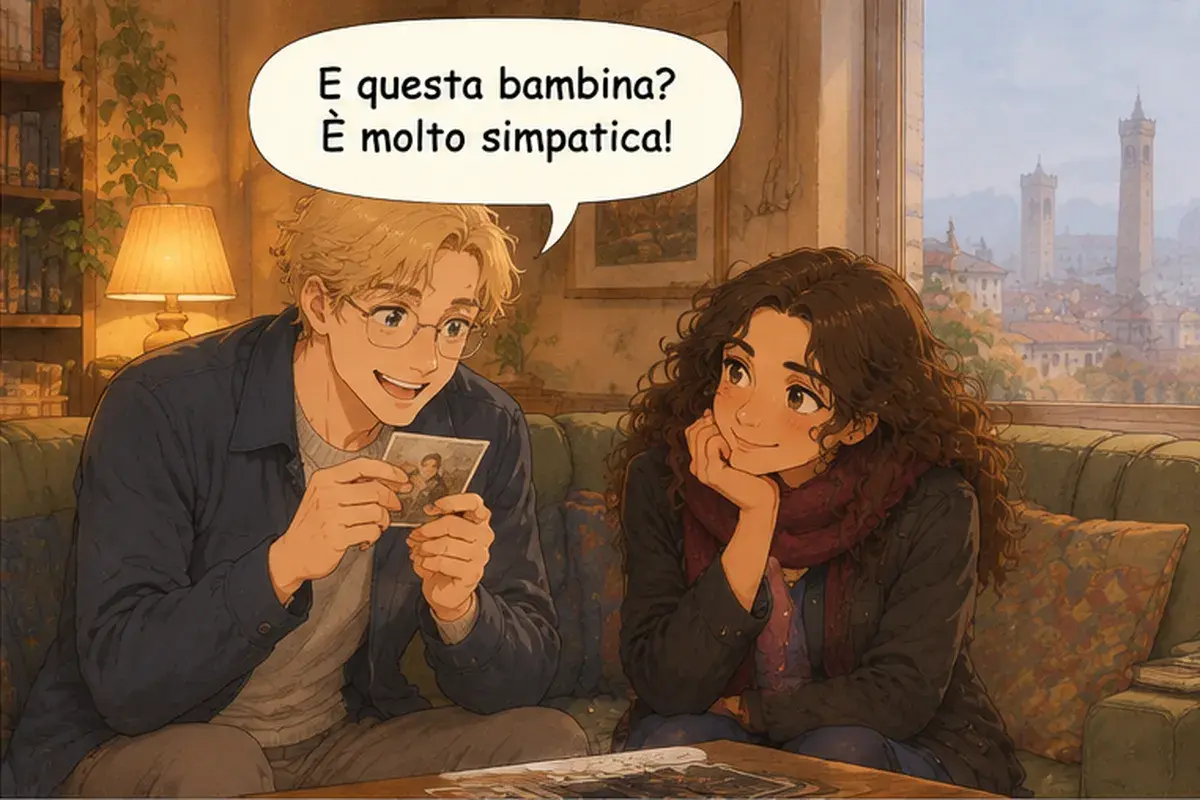
- Misha
E questa bambina? È molto simpatica!
And this little girl? She's very nice!
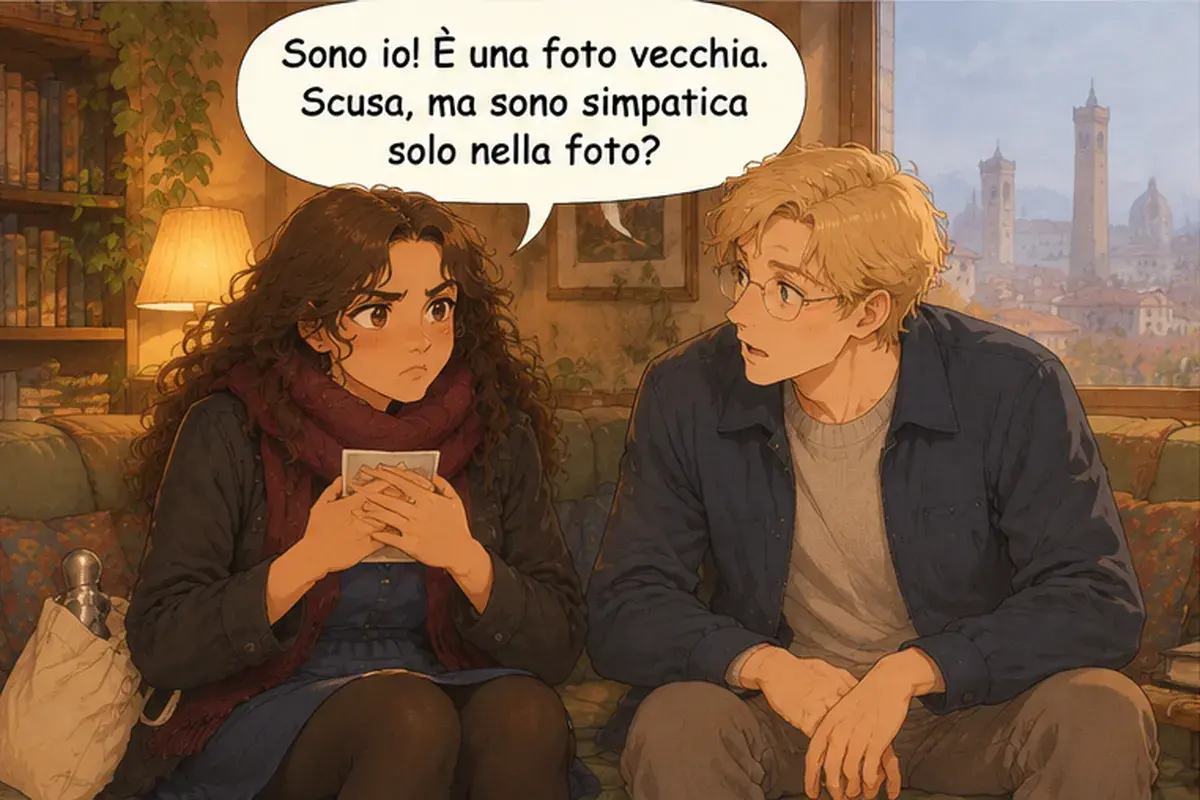
- Giulia
Sono io! È una foto vecchia. Scusa, ma sono simpatica solo nella foto?
That's me! It's an old photo. Sorry, but am I only nice in the photo? (woman speaking)
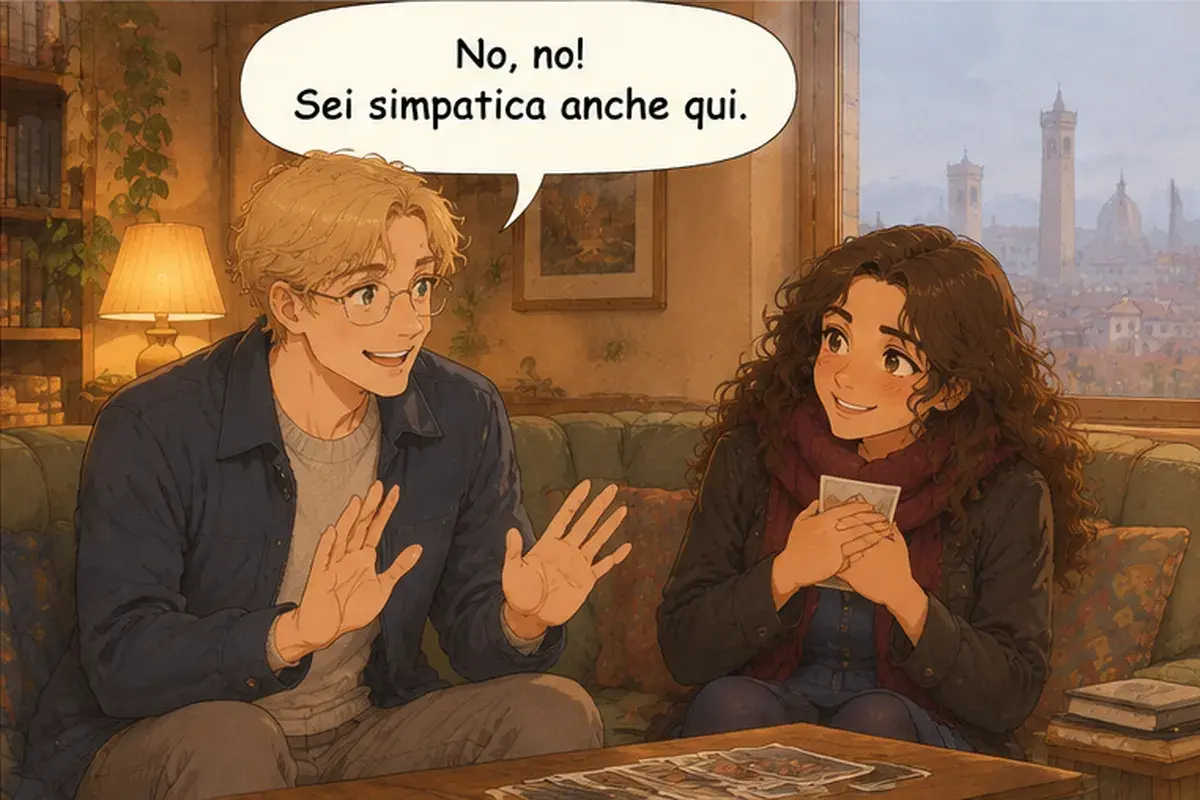
- Misha
No, no! Sei simpatica anche qui.
No, no! You're nice here too (to a woman).
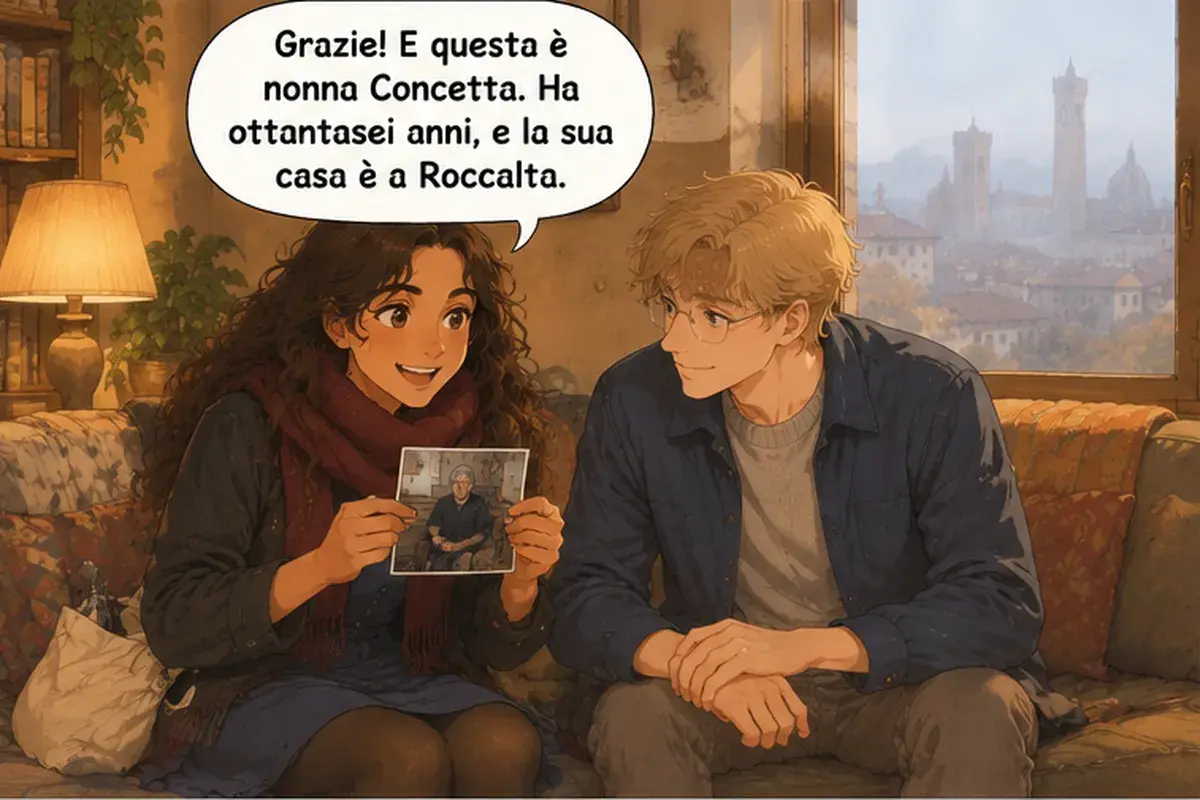
- Giulia
Grazie! E questa è nonna Concetta. Ha ottantasei anni, e la sua casa è a Roccalta.
Thanks! And this is Nonna Concetta. She's eighty-six, and her house is in Roccalta.
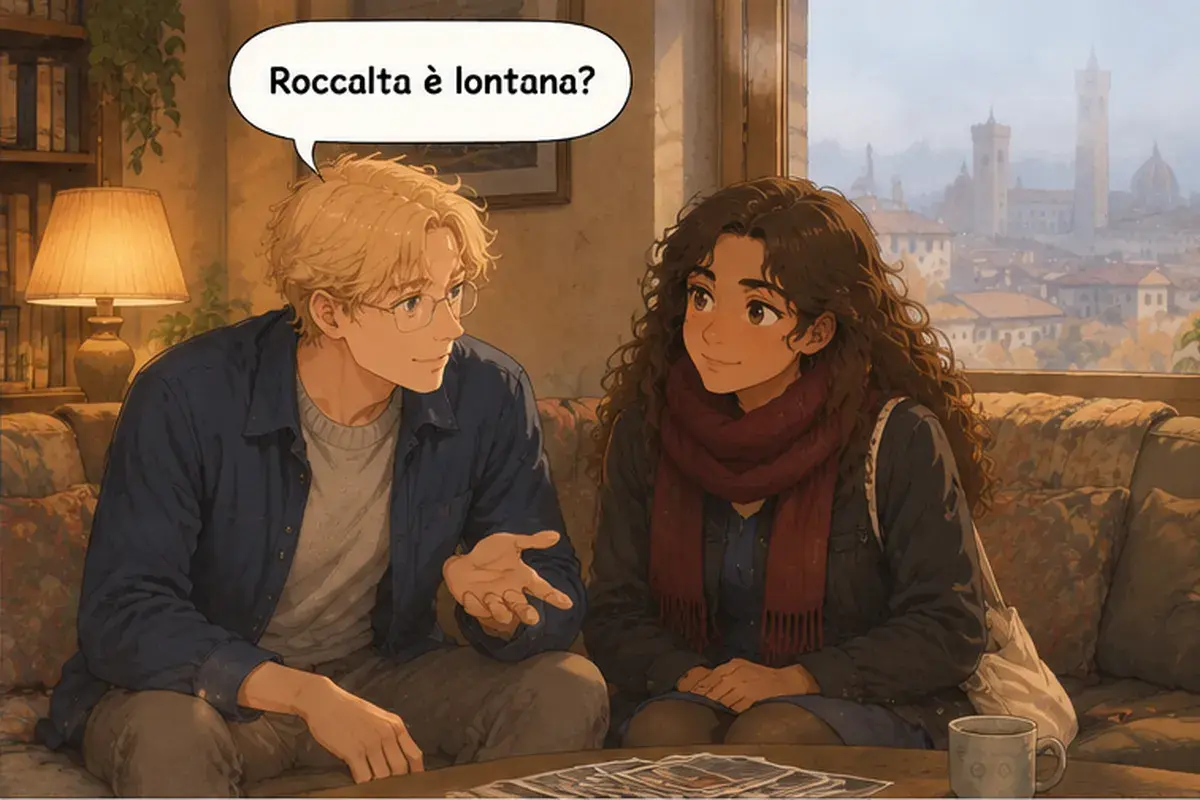
- Misha
Roccalta è lontana?
Is Roccalta far away?
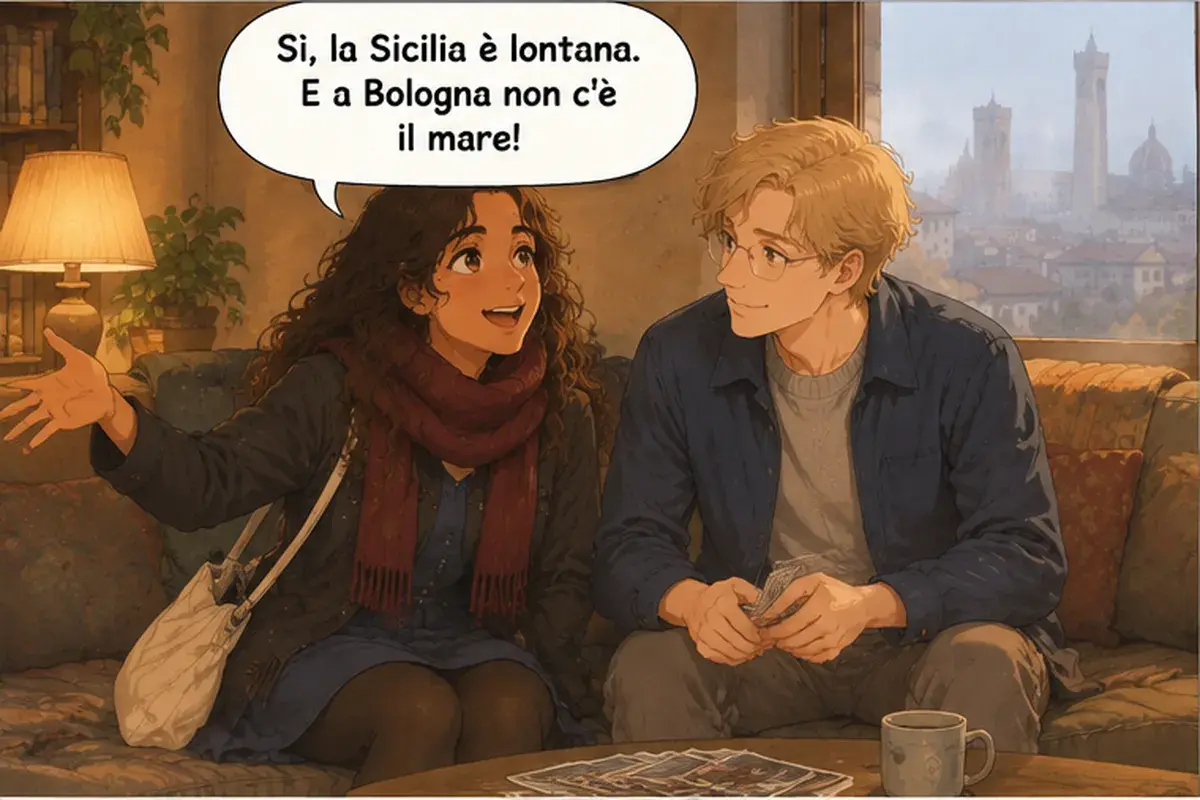
- Giulia
Sì, la Sicilia è lontana. E a Bologna non c'è il mare!
Yes, Sicily is far away. And there's no sea in Bologna!
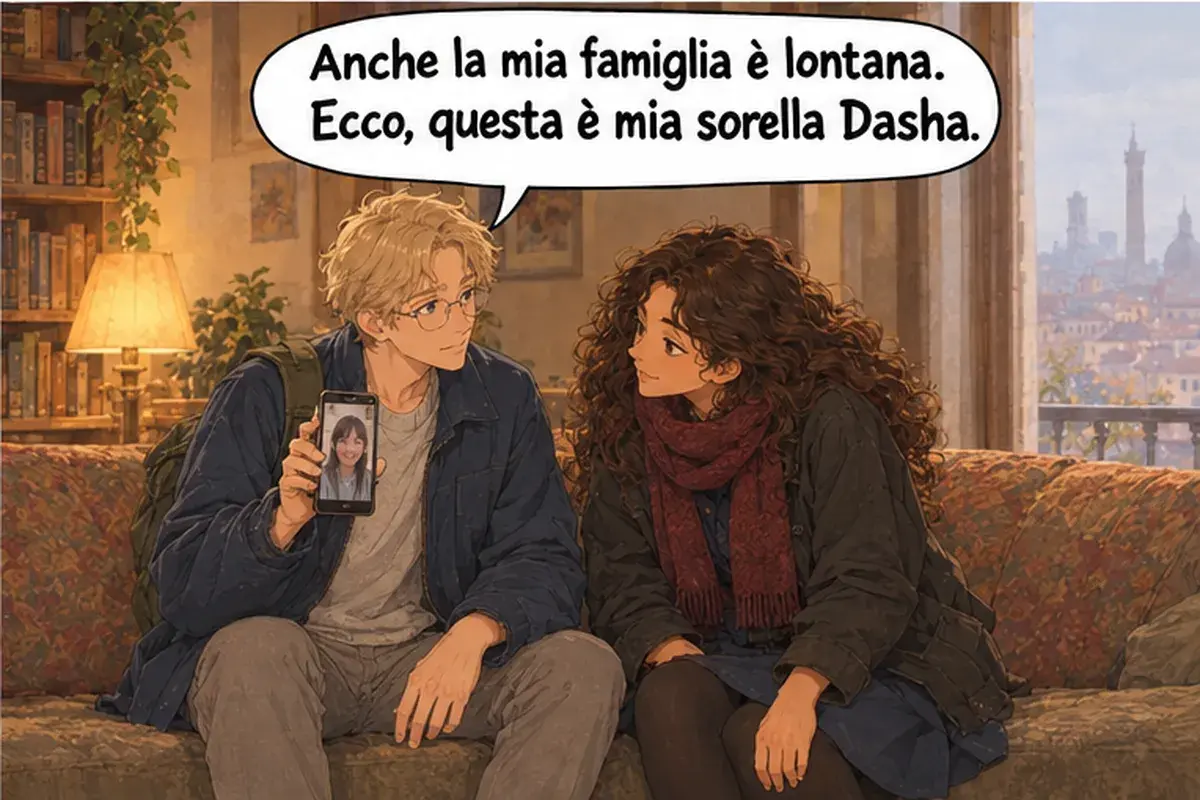
- Misha
Anche la mia famiglia è lontana. Ecco, questa è mia sorella Dasha.
My family is far away too. Here, this is my sister Dasha.
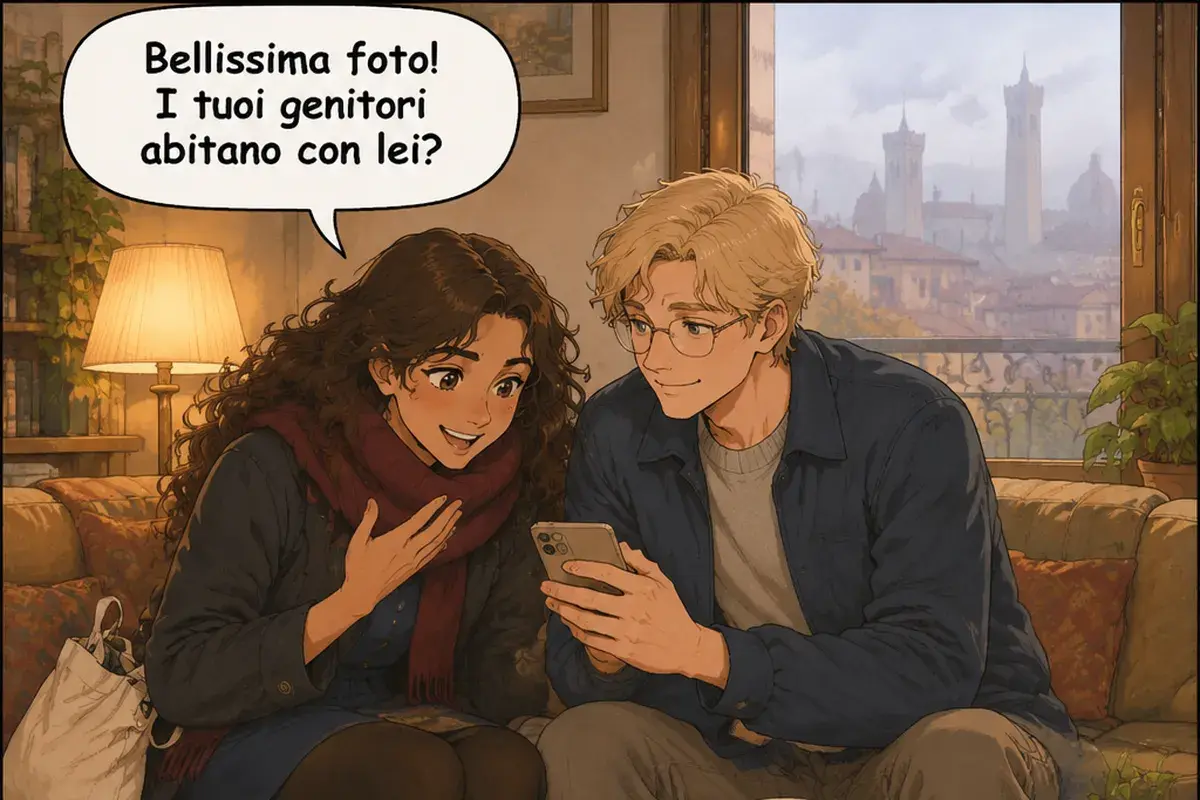
- Giulia
Bellissima foto! I tuoi genitori abitano con lei?
Gorgeous photo! Do your parents live with her?
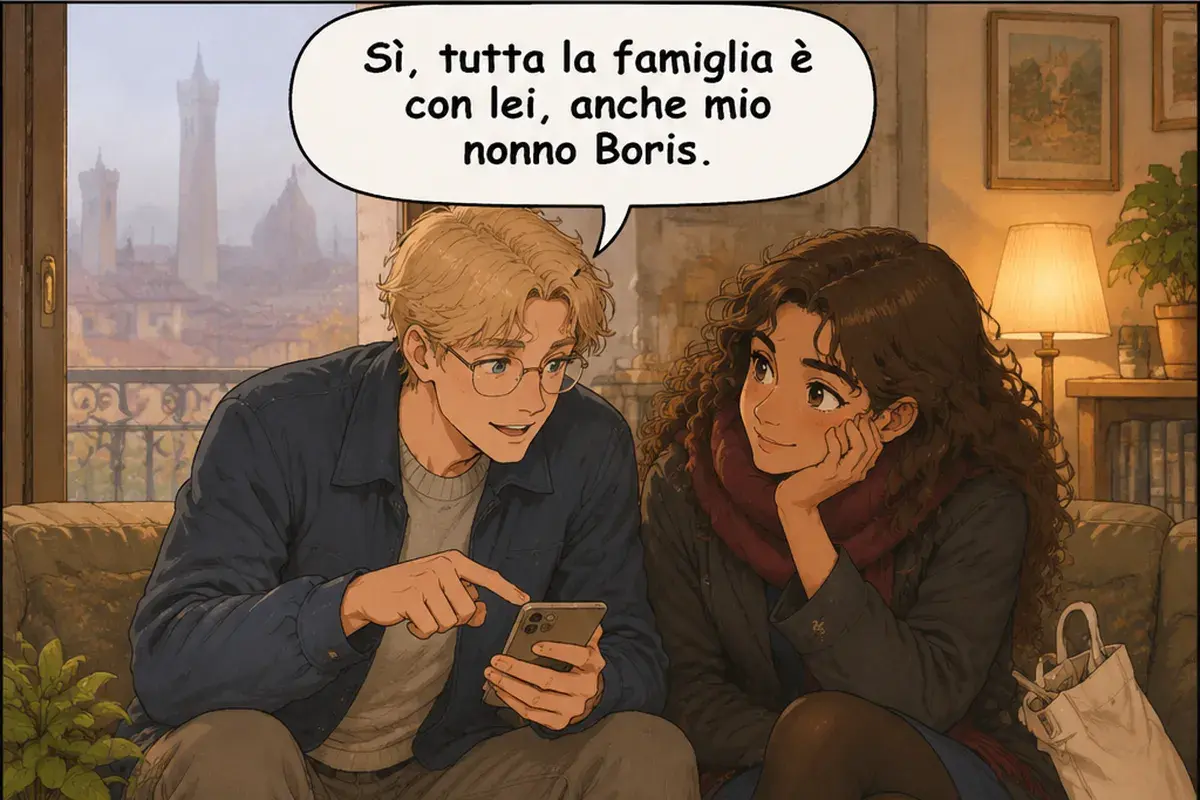
- Misha
Sì, tutta la famiglia è con lei, anche mio nonno Boris.
Yes, the whole family is with her, my grandpa Boris too.
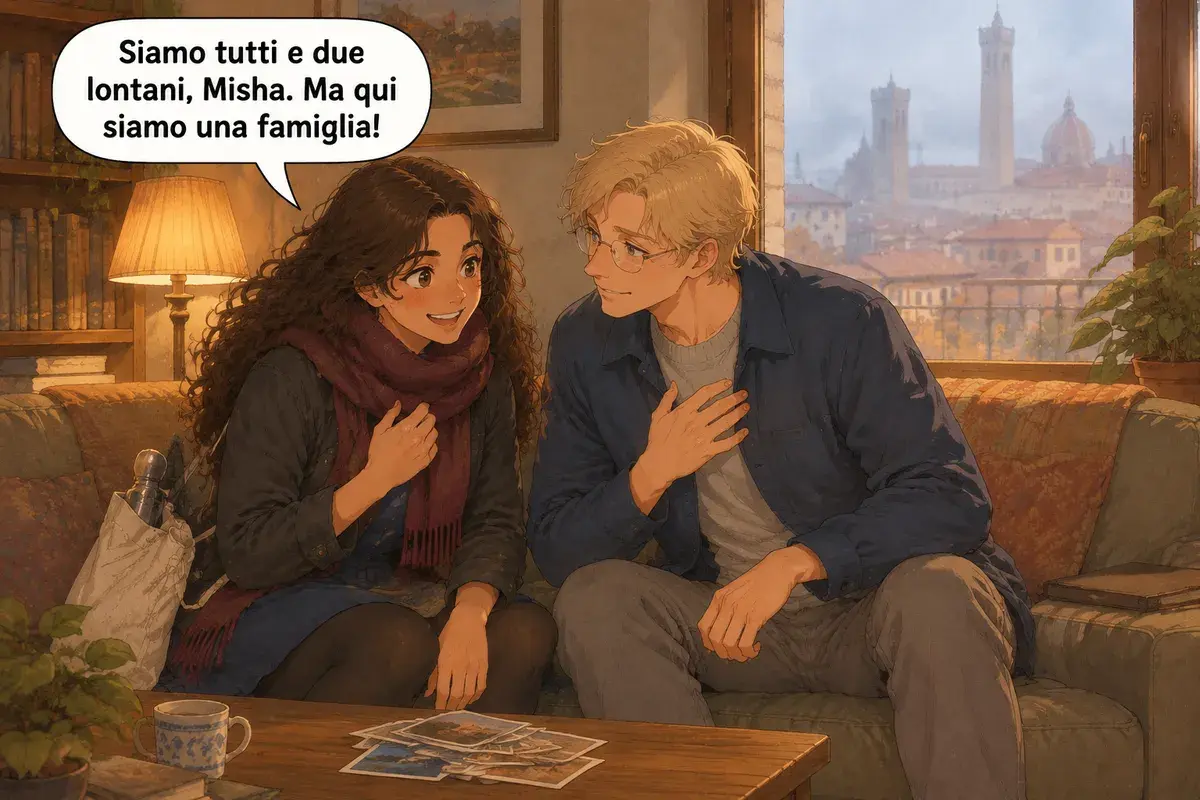
- Giulia
Siamo tutti e due lontani, Misha. Ma qui siamo una famiglia!
We're both far away, Misha. But here we're a family!
Grammar for this text
- La sua casa è a Roccalta. — sua means "her" (the grandmother's). The word agrees with the thing (casa is feminine), not with the owner, so suo / sua can mean both "his" and "her". With a thing you need the article: la sua casa.
- È mia madre, Rosalia. È insegnante. — no article with one relative (mia madre), and no article with a job: è insegnante — "she's a teacher" (English needs "a"). insegnante is the same word for men and women.
- Scusa, ma sono simpatica solo nella foto? — Giulia starts her objection with scusa, ma… (a set phrase from unit 1): that's how you argue with friends. nella = in + la; simpatica is feminine because Giulia is speaking.
- Sei simpatica anche qui. — sei here is "you are" (the verb essere, unit 1), not the number six.
- I tuoi genitori abitano con lei? — relatives in the plural take the article: i tuoi genitori, but tuo padre.
- Siamo tutti e due lontani, Misha. Ma qui siamo una famiglia! — siamo — "we are" (essere);
tutti e due— "both of us"; lontani is plural: two people are talking about themselves. una famiglia — "a family", with the article una.
Words and grammar of the unit: Talk about your family.
Learn the words from the texts with flashcards
In the app, you can tap any word in a text to see its translation, forms and examples, and new words stick with flashcards. 15 minutes a day.
Start for freeEverything is open for free. No card needed to sign up.