

Italian dialogue with translation · A1 · 12 lines
Tu sei Misha, vero? You're Misha, right?
Comic · 9 panels
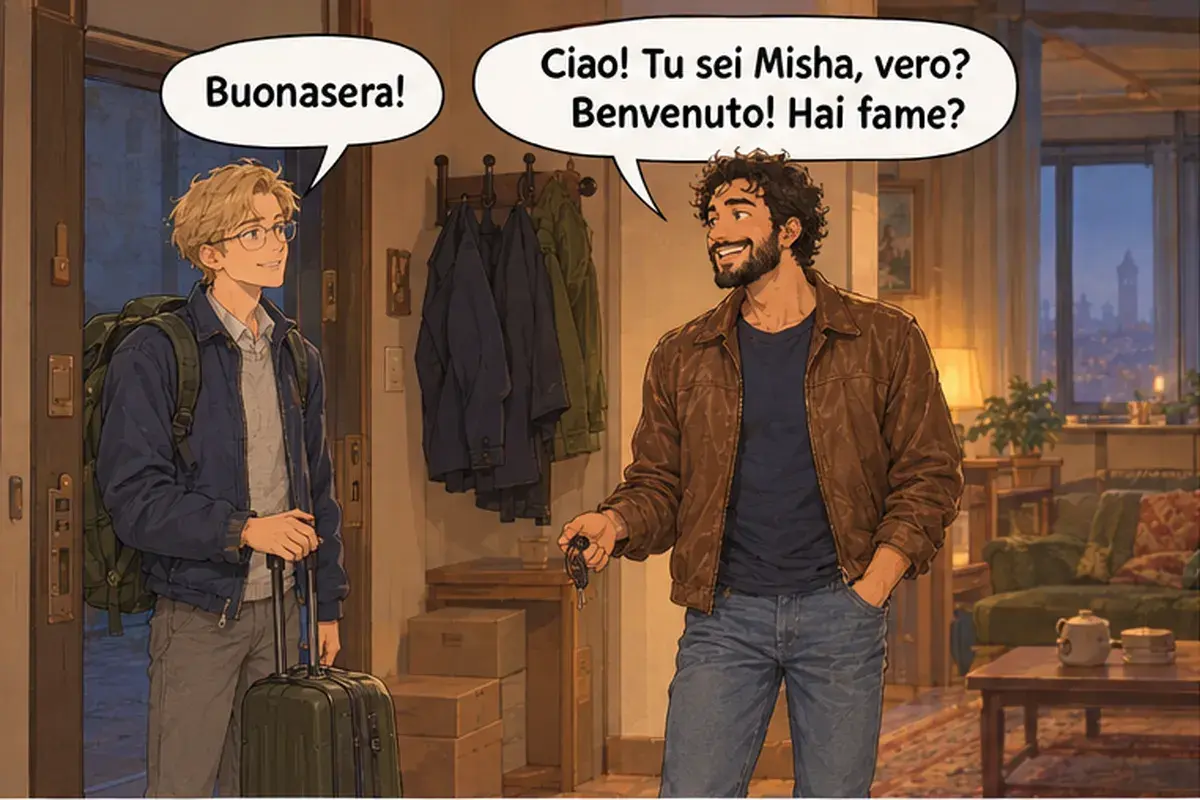
- Misha
Buonasera!
Good evening!
- Luca
Ciao! Tu sei Misha, vero? Benvenuto! Hai fame?
Hi! You're Misha, right? Welcome! Are you hungry?
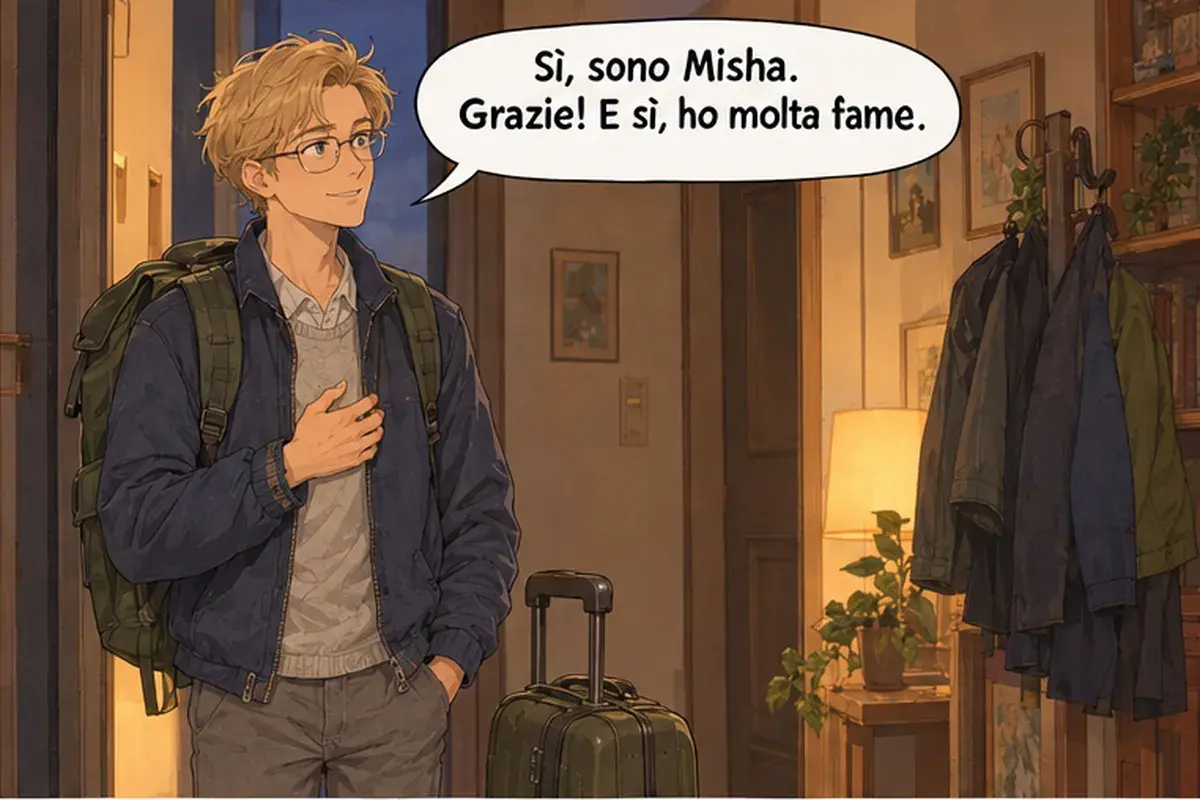
- Misha
Sì, sono Misha. Grazie! E sì, ho molta fame.
Yes, I'm Misha. Thanks! And yes, I'm very hungry.
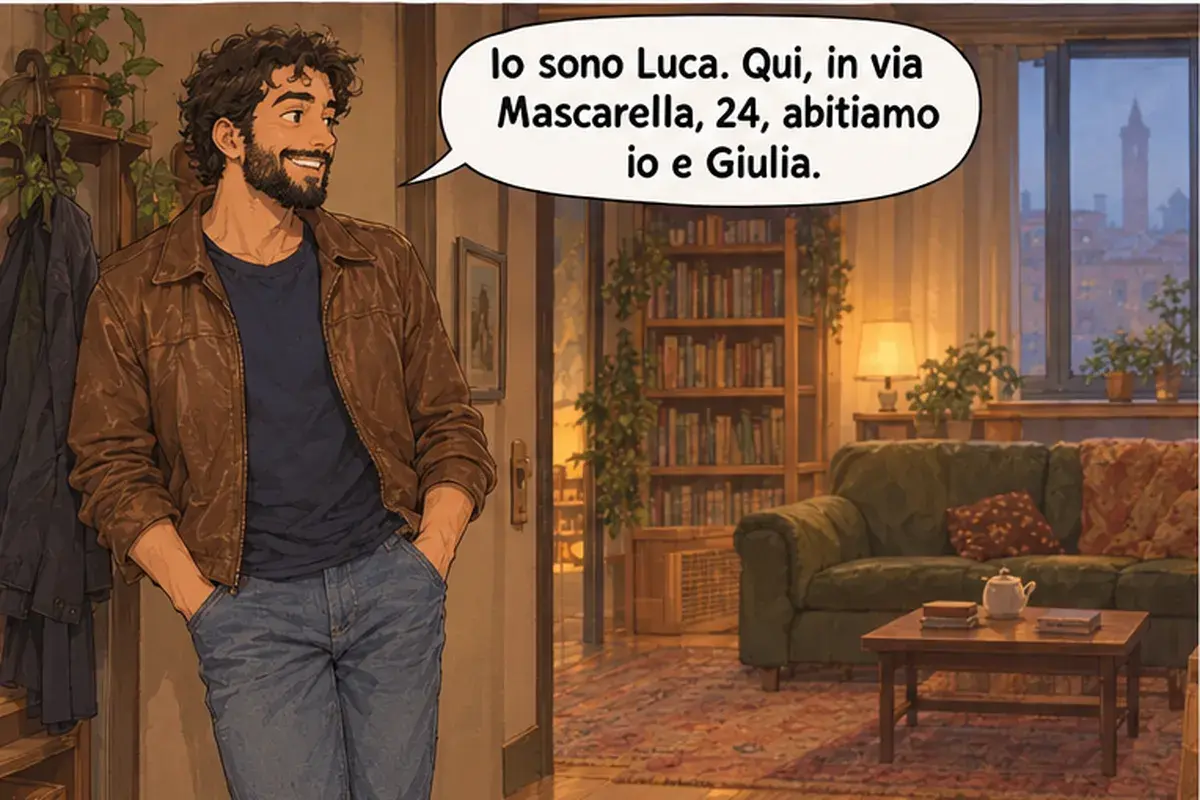
- Luca
Io sono Luca. Qui, in via Mascarella, 24, abitiamo io e Giulia.
I'm Luca. Giulia and I live here, at via Mascarella 24.
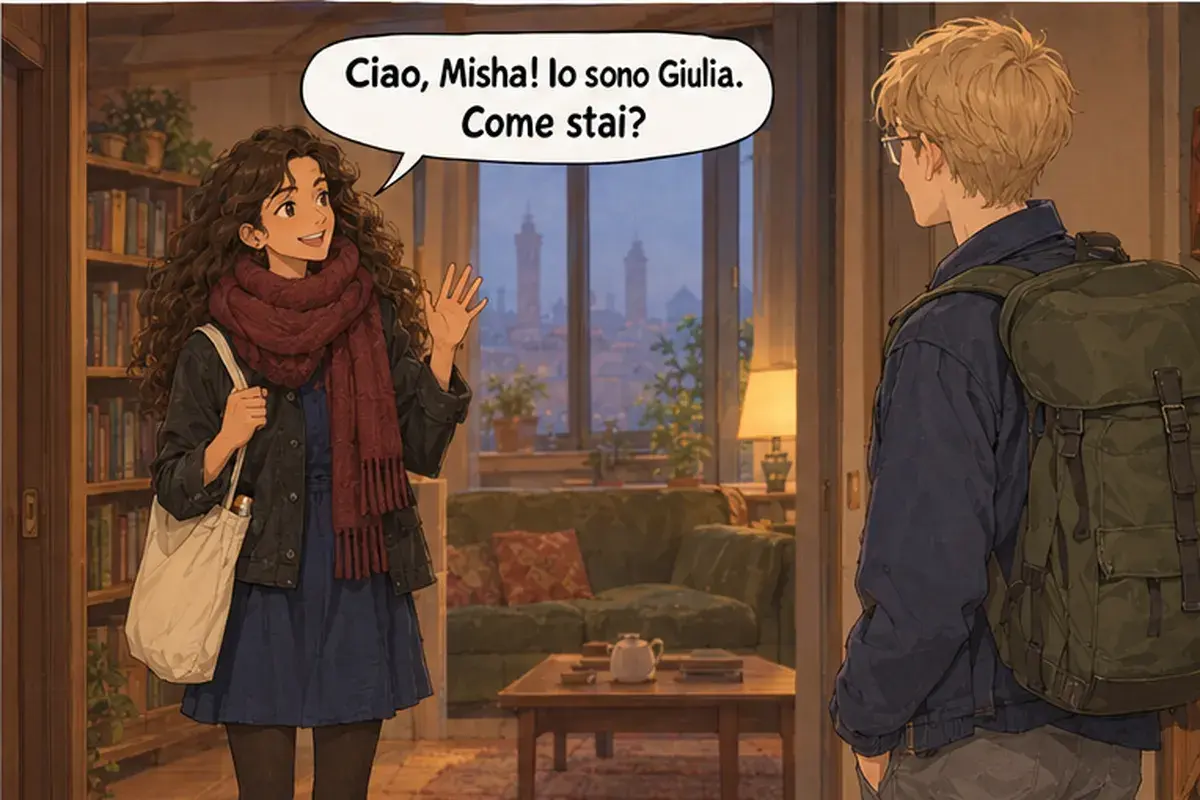
- Giulia
Ciao, Misha! Io sono Giulia. Come stai?
Hi, Misha! I'm Giulia. How are you?
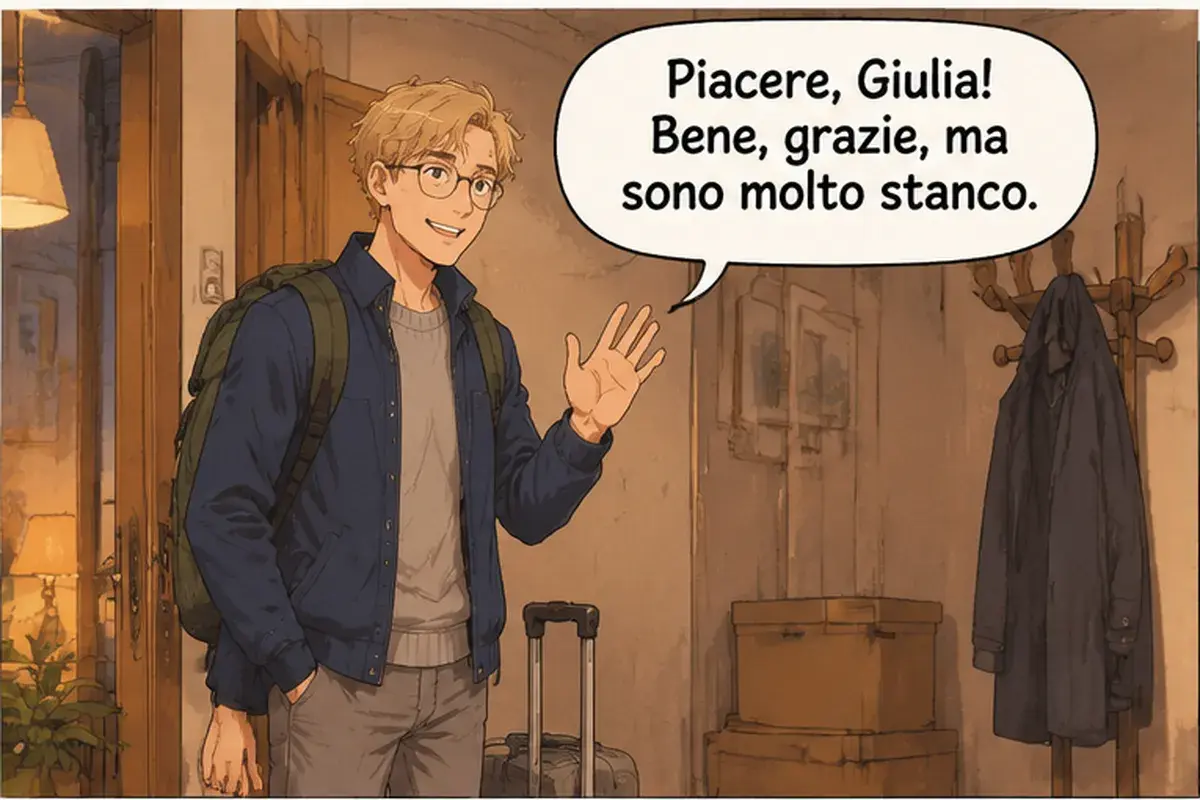
- Misha
Piacere, Giulia! Bene, grazie, ma sono molto stanco.
Nice to meet you, Giulia! Fine, thanks, but I'm very tired (man speaking).
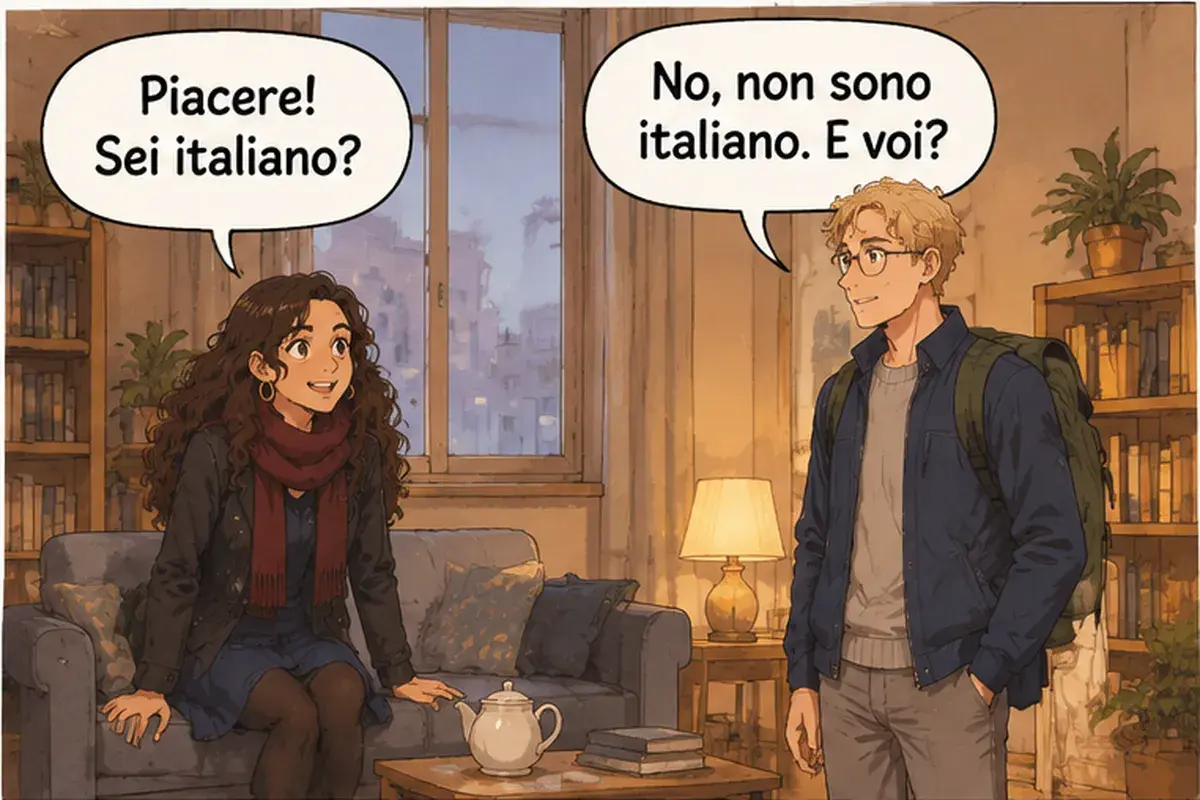
- Giulia
Piacere! Sei italiano?
Nice to meet you! Are you Italian? (to a man)
- Misha
No, non sono italiano. E voi?
No, I'm not Italian. And you? (man speaking, to several people)
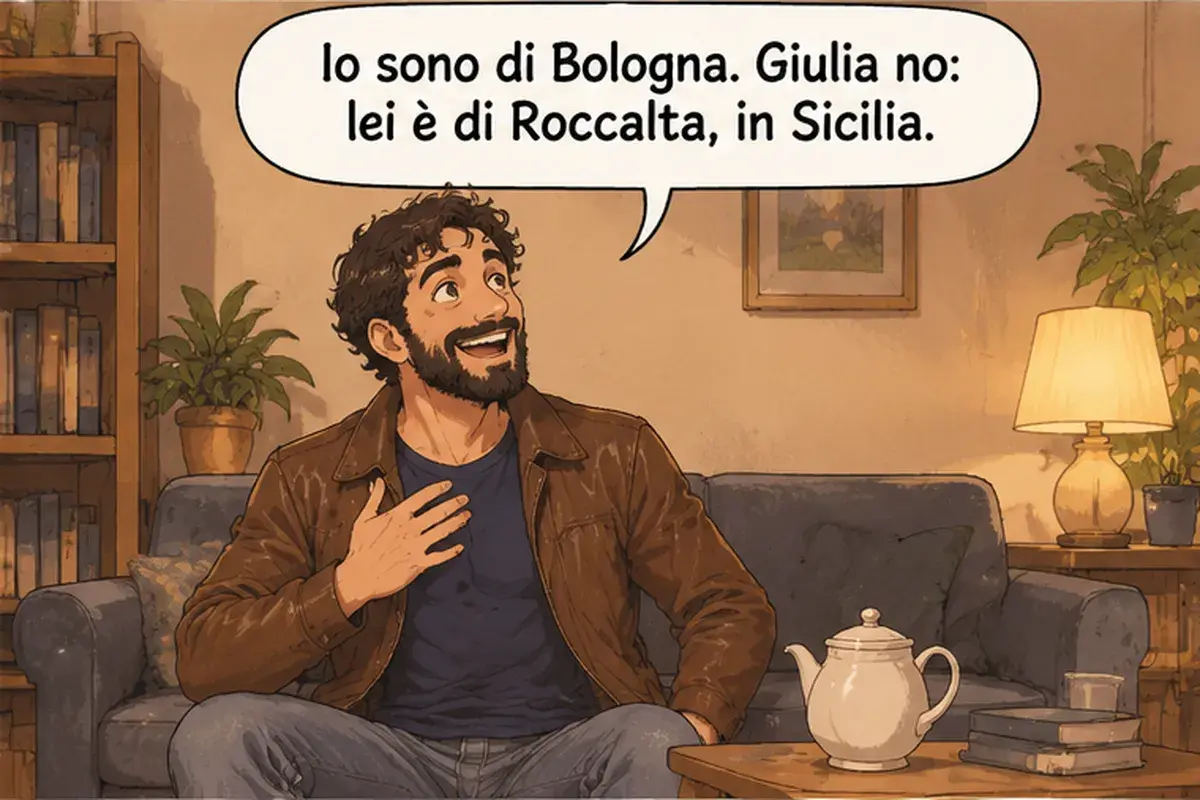
- Luca
Io sono di Bologna. Giulia no: lei è di Roccalta, in Sicilia.
I'm from Bologna. Giulia isn't: she's from Roccalta, in Sicily.
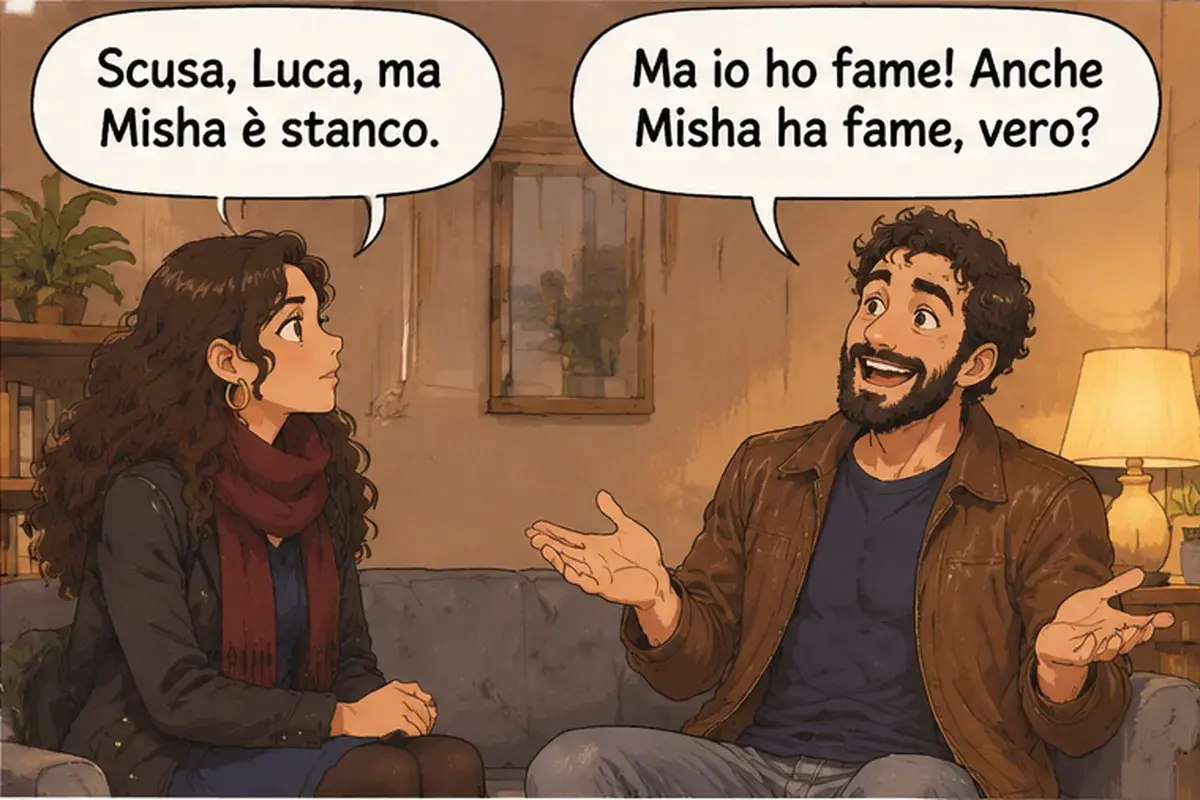
- Giulia
Scusa, Luca, ma Misha è stanco.
Sorry, Luca, but Misha is tired.
- Luca
Ma io ho fame! Anche Misha ha fame, vero?
But I'm hungry! Misha's hungry too, right?
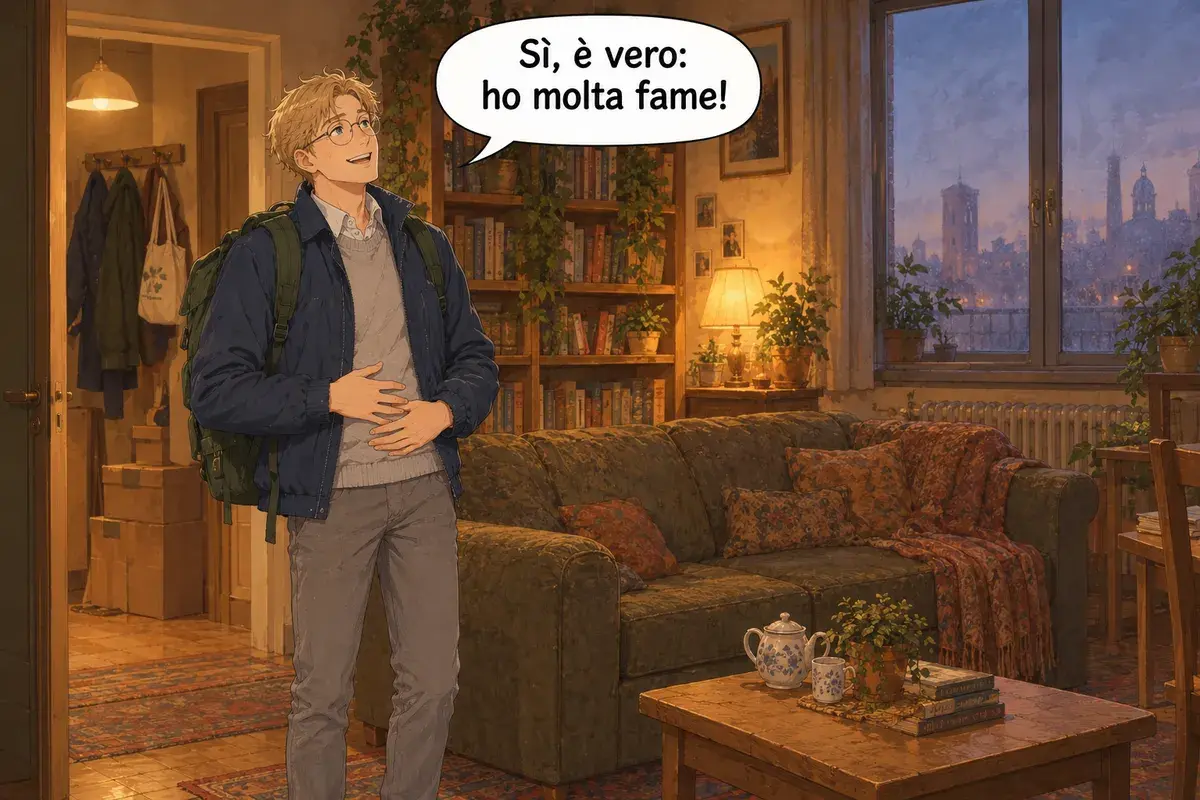
- Misha
Sì, è vero: ho molta fame!
Yes, it's true: I'm very hungry!
Grammar for this text
Hai fame?is literally "Have you hunger?":haiis the tu form ofavere(to have). Where English says you "are hungry", Italian says you "have hunger":ho molta fame(ho— I have),Anche Misha ha fame(ha— he has). The fullaveretable is in unit 2.Tu sei Misha, vero?:seiis the tu form ofessere(to be); its table is in this unit's grammar.vero?(right?) at the end turns a statement into a question, just like "right?" in English: the word order stays the same.Buonasera!: Misha doesn't know who will open the door, so he uses a greeting that works with anyone. Luca answersCiao!and goes straight totu.Qui, in via Mascarella, 24, abitiamo io e Giulia.:abitiamomeans "we live", the noi form ofabitare. The subjectio e Giuliacomes after the verb, which is fine in Italian. A street takesin; the house number comes after a comma.Sei italiano?: there's notu, because the ending ofseialready shows it's "you". In the answerNo, non sono italiano,nomeans "no" andnonmeans "not" before the verb.dishows where someone is from:Io sono di Bologna.Scusa, Luca, ma Misha è stanco.:scusameans "sorry" or "excuse me" to a friend (a form ofscusare; how such forms are built comes at A2, so for now learn the word whole). "Scusa, ma…" is how Giulia starts when she disagrees.Giulia no: lei è di Roccalta, in Sicilia.:di+ a town (di Roccalta), but a region takesin(in Sicilia). Lowercaseleimeans "she". Don't mix upè(is) ande(and): the accent changes the word.
Words and grammar of the unit: Say hello and introduce yourself.
Learn the words from the texts with flashcards
In the app, you can tap any word in a text to see its translation, forms and examples, and new words stick with flashcards. 15 minutes a day.
Start for freeEverything is open for free. No card needed to sign up.