

Italian dialogue with translation · A1 · 10 lines
Ciao? Io non sono Luca! Hi? I'm not Luca!
Comic · 9 panels
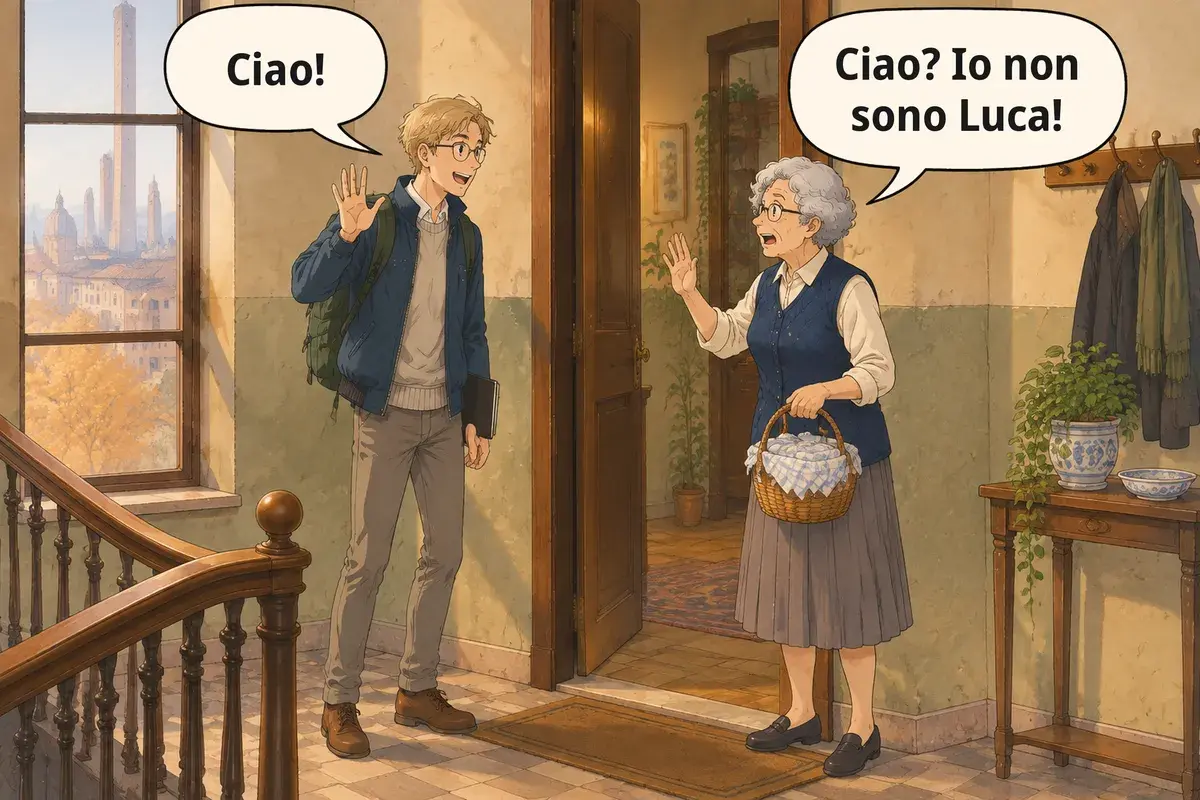
- Misha
Ciao!
Hi!
- Signora
Ciao? Io non sono Luca!
Hi? I'm not Luca!
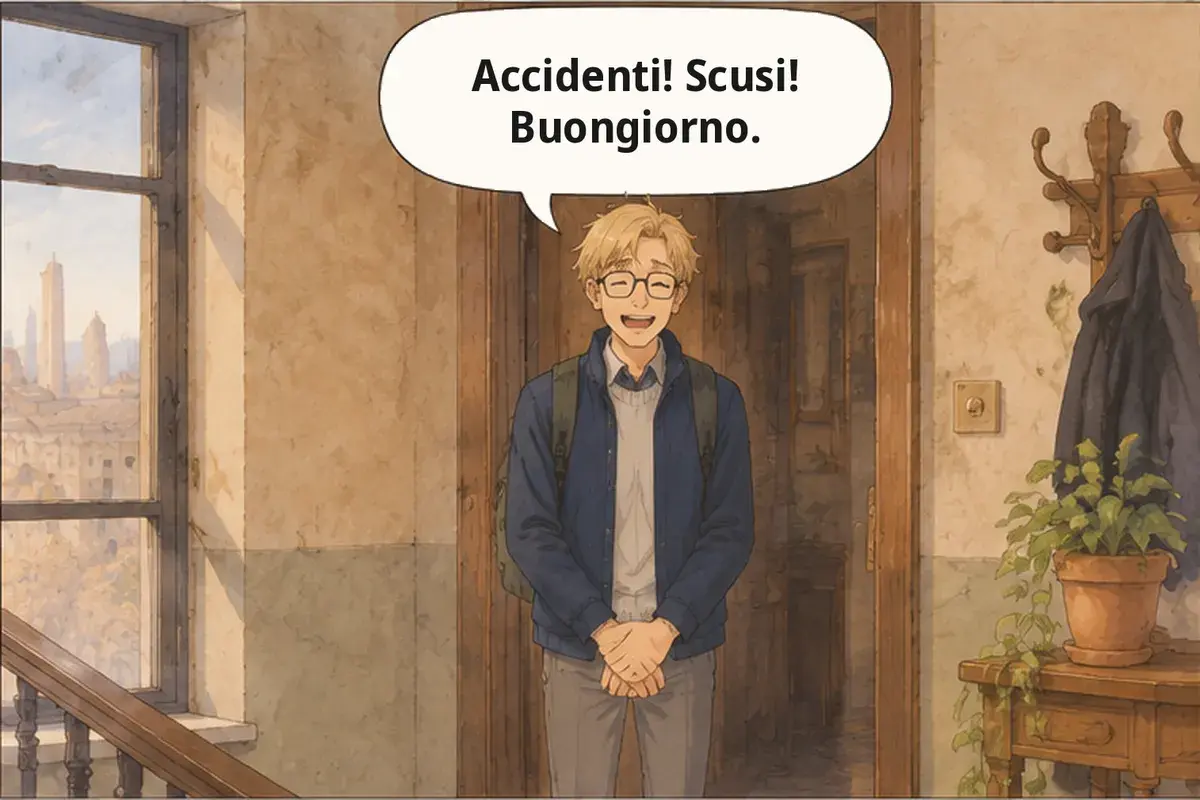
- Misha
Accidenti! Scusi! Buongiorno.
Oops! Sorry! Good morning. (formal)
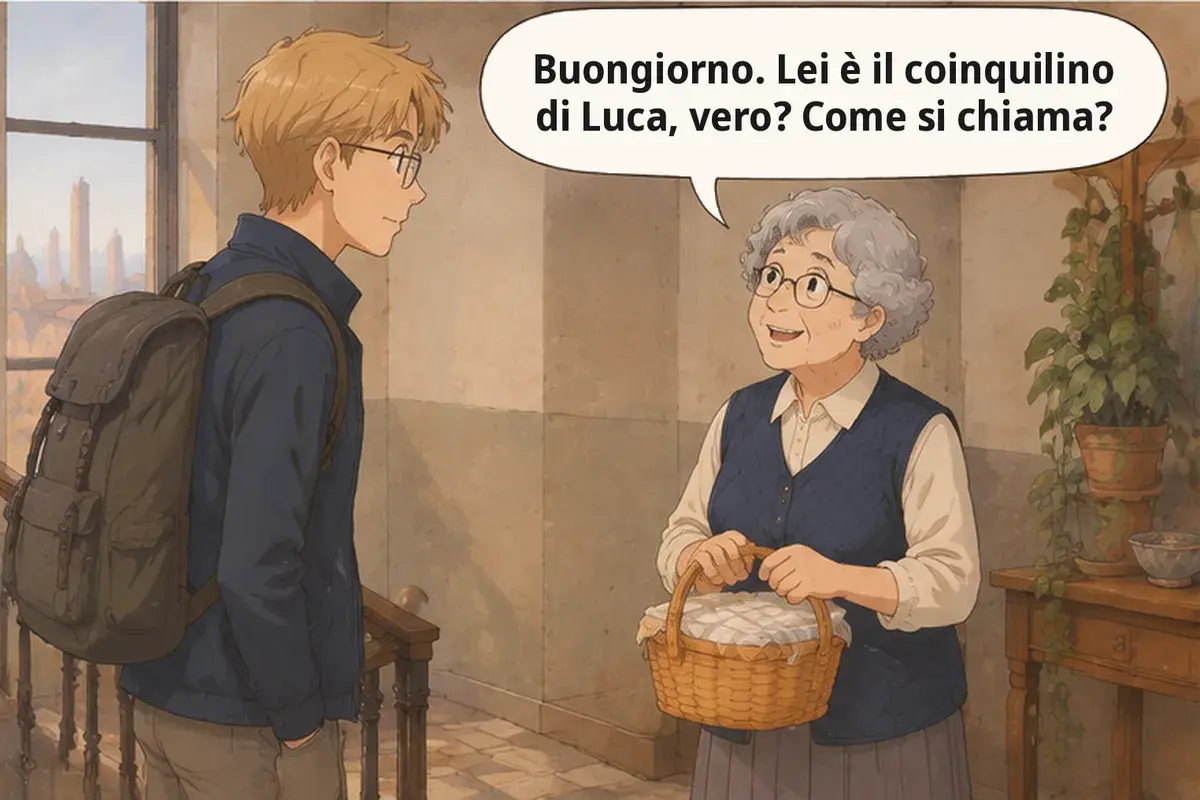
- Signora
Buongiorno. Lei è il coinquilino di Luca, vero? Come si chiama?
Good morning. You're Luca's roommate, right? What's your name? (formal)
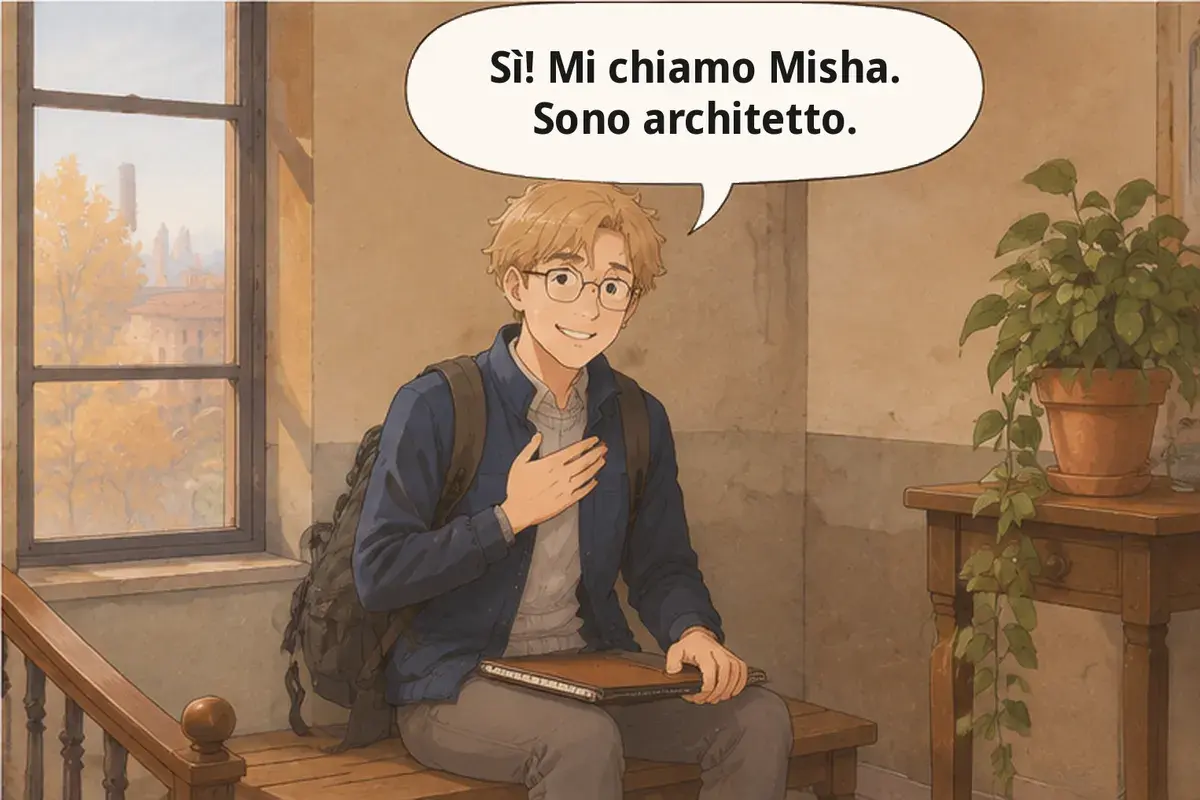
- Misha
Sì! Mi chiamo Misha. Sono architetto.
Yes! My name is Misha. I'm an architect.
- Signora
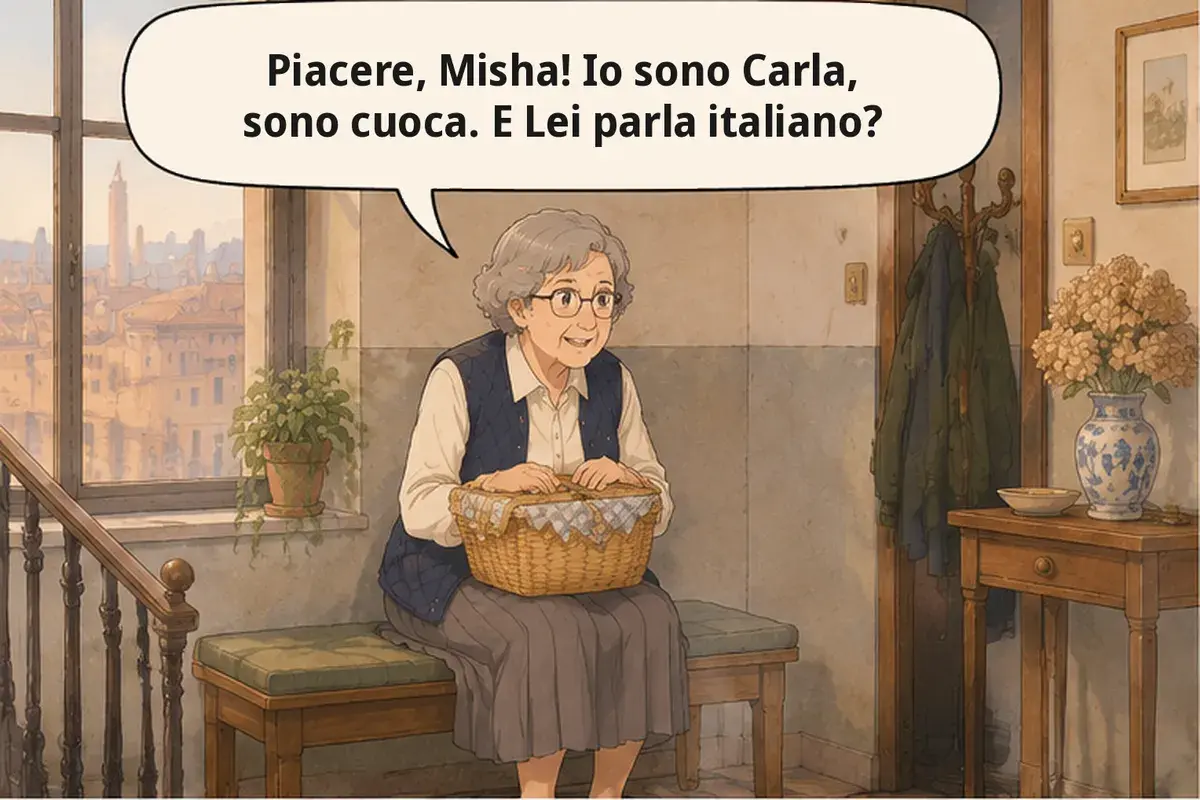
Piacere, Misha! Io sono Carla, sono cuoca. E Lei parla italiano?
Nice to meet you, Misha! I'm Carla, I'm a cook (woman speaking). And do you speak Italian? (formal)
- Misha
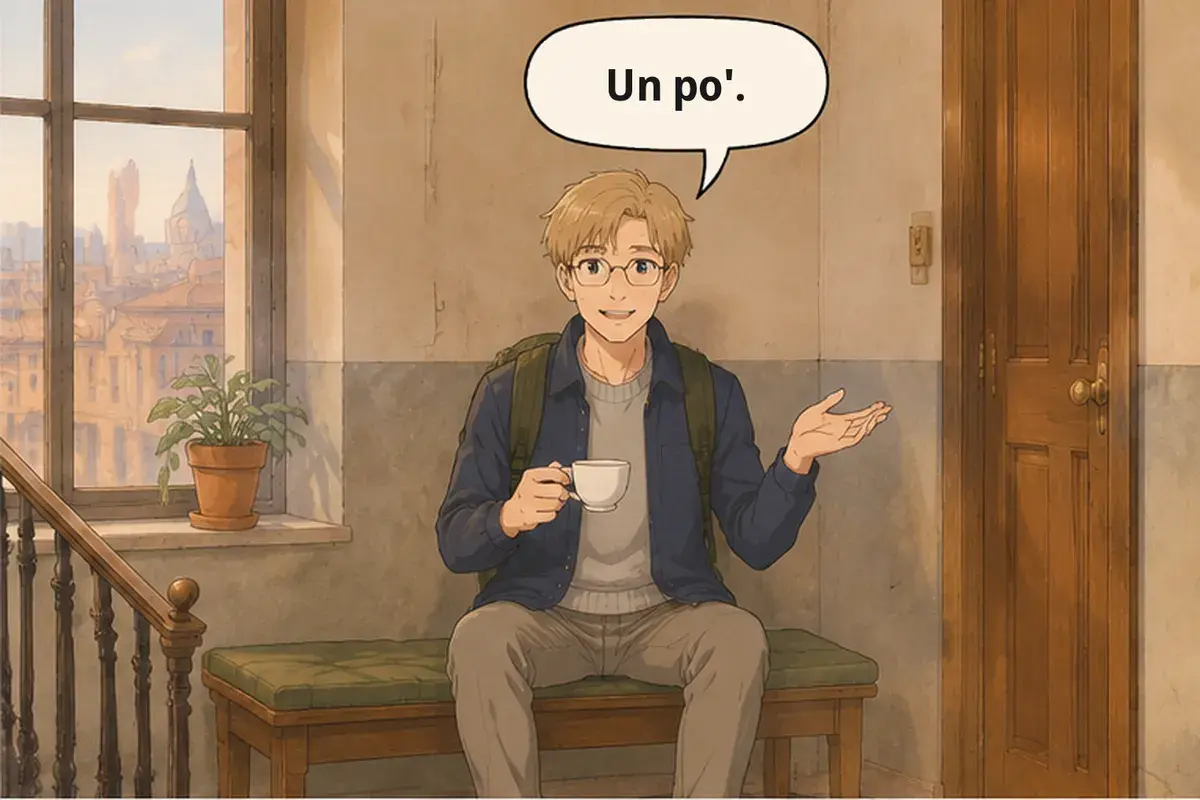
Un po'.
A little.
- Signora
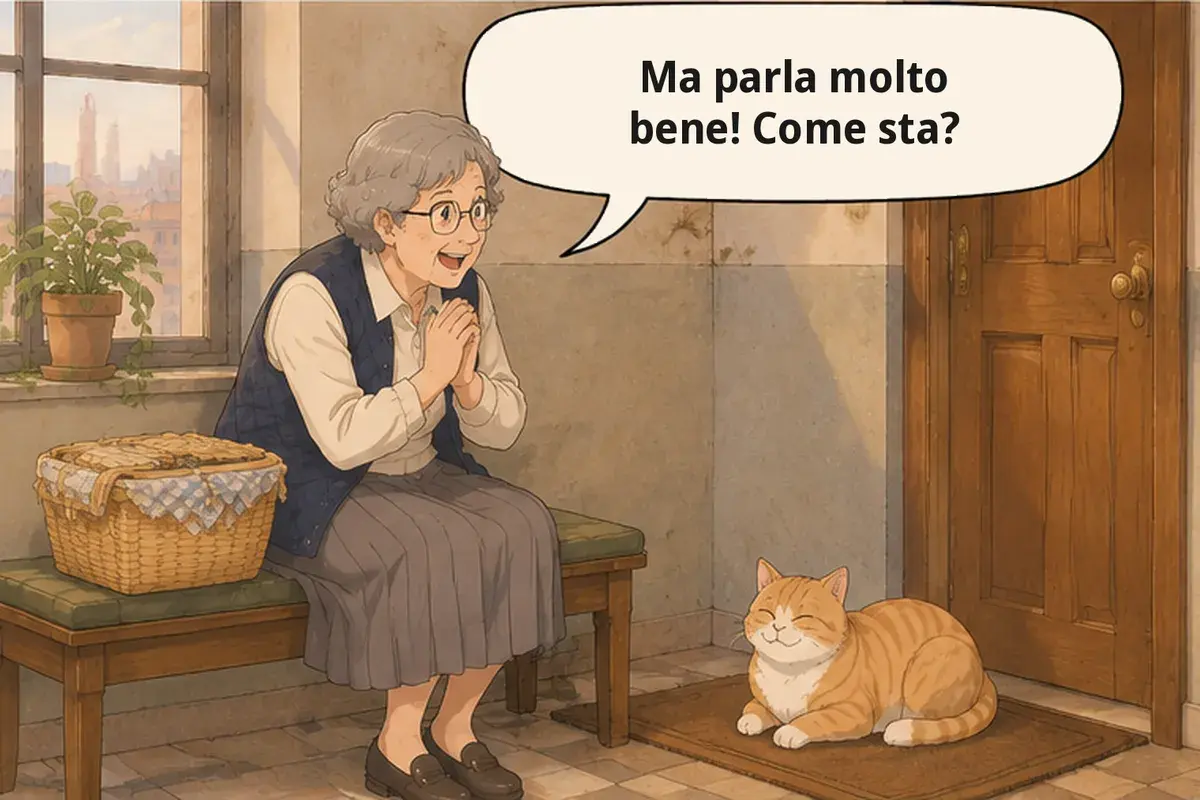
Ma parla molto bene! Come sta?
But you speak very well! How are you? (formal)
- Misha
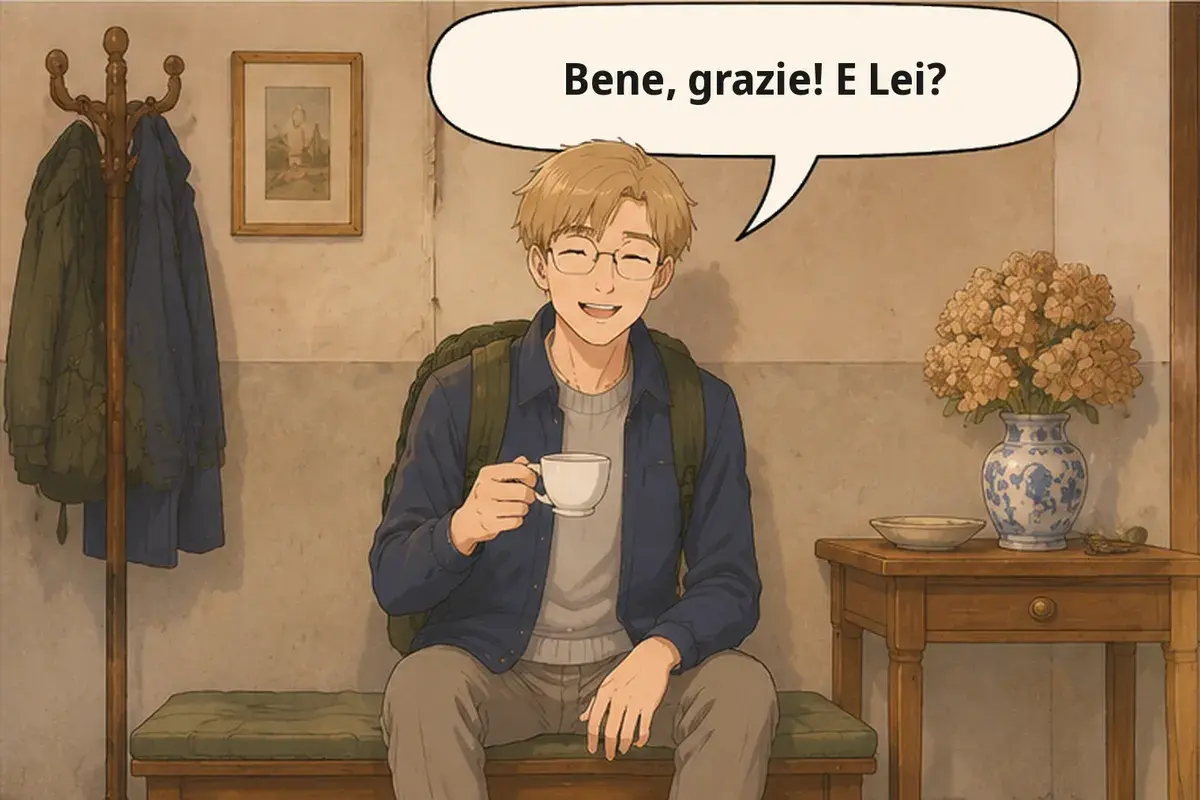
Bene, grazie! E Lei?
Fine, thanks! And you? (formal)
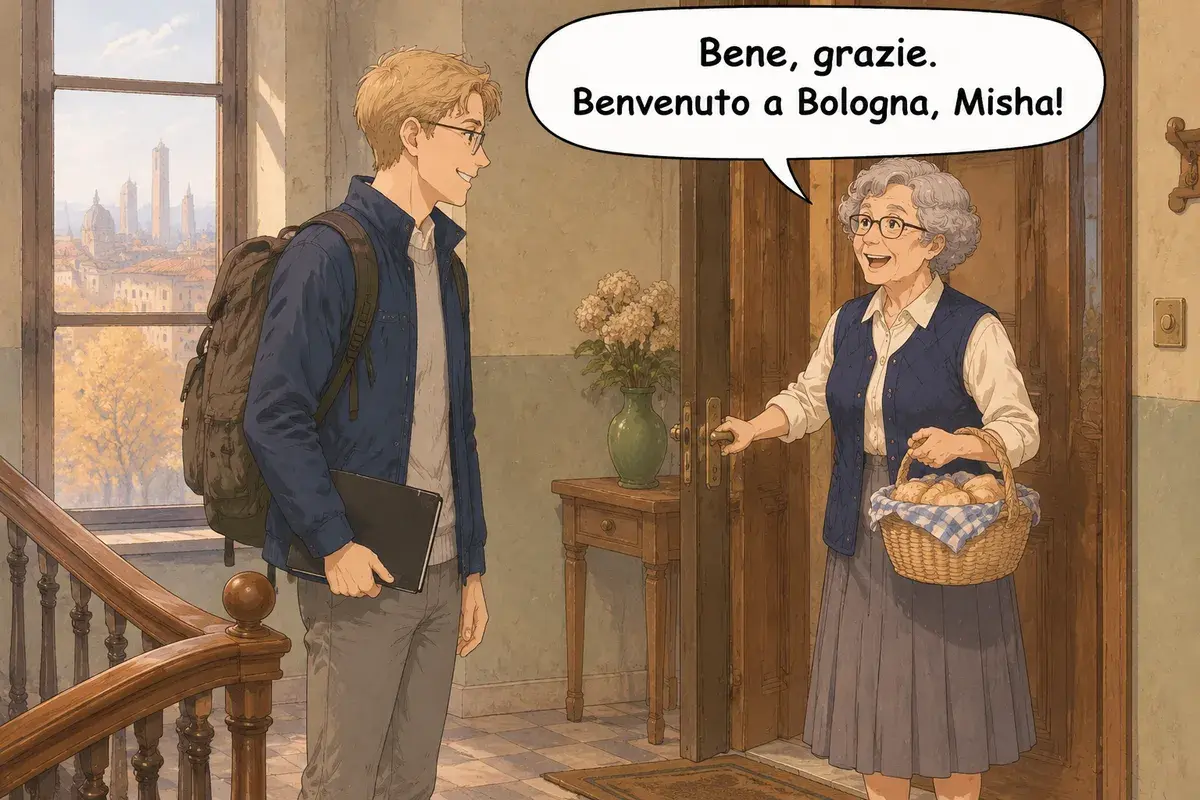
- Signora
Bene, grazie. Benvenuto a Bologna, Misha!
Fine, thanks. Welcome to Bologna, Misha!
Grammar for this text
Scusi!means "sorry" or "excuse me". It's the form forLei: you can't sayscusa(the tu form) to an adult you don't know. Both are request forms of the verbscusare; how they're built comes later (the tu form at A2, the Lei form at B1), so for now learn both words whole.Lei è il coinquilino di Luca, vero?: the formalLei("you", written with a capital L). This is how you talk to an adult you don't know; here Misha and the lady both useLeiwith each other. The verb takes the he / she form:è,parla,sta.Parla molto bene!: there's noLei, but it's still the formal "you": the pronoun is often dropped, and the context makes it clear.Ciao? Io non sono Luca!:ciaois for friends, withtu. To an adult you don't know you saybuongiorno, which is why the lady is surprised.Come si chiama?— "what's your name?" toLei.chiamarsi(to be called) is a reflexive verb.Mi chiamo Misha.— "My name is Misha."mi chiamois literally "I call myself".Come ti chiami?— the same question asked to a friend.Come sta?means "how are you?" (formal).stais the Lei / lui / lei form ofstare; to a friend you'd sayCome stai?. Thestaretable is in units 6 and 13; for now learn the phrase whole. The answer:Bene, grazie! E Lei?
Words and grammar of the unit: Say hello and introduce yourself.
Learn the words from the texts with flashcards
In the app, you can tap any word in a text to see its translation, forms and examples, and new words stick with flashcards. 15 minutes a day.
Start for freeEverything is open for free. No card needed to sign up.