
French dialogue with translation · B2 · 18 lines
Je voudrais déclarer un sinistre I'd like to report an insurance claim
Comic · 18 panels
- Conseiller
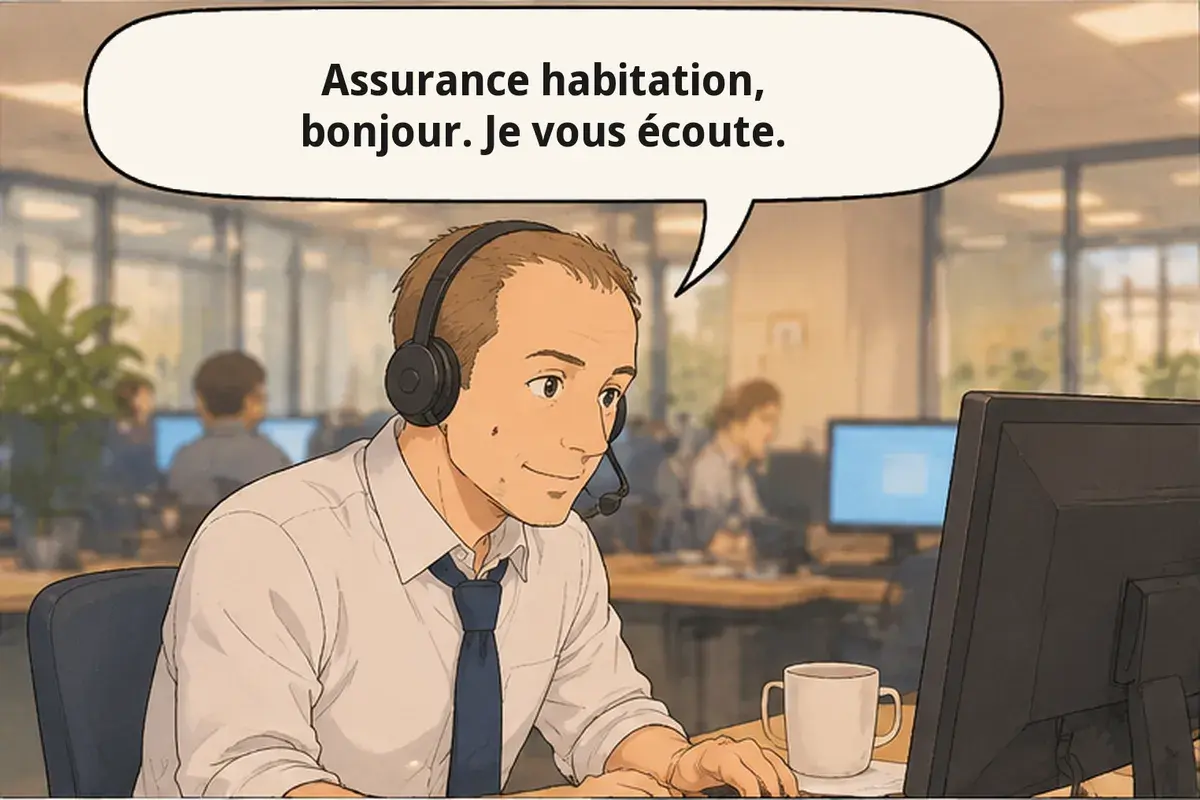
Assurance habitation, bonjour. Je vous écoute.
Home insurance, hello. I'm listening. (formal)
- Pacha
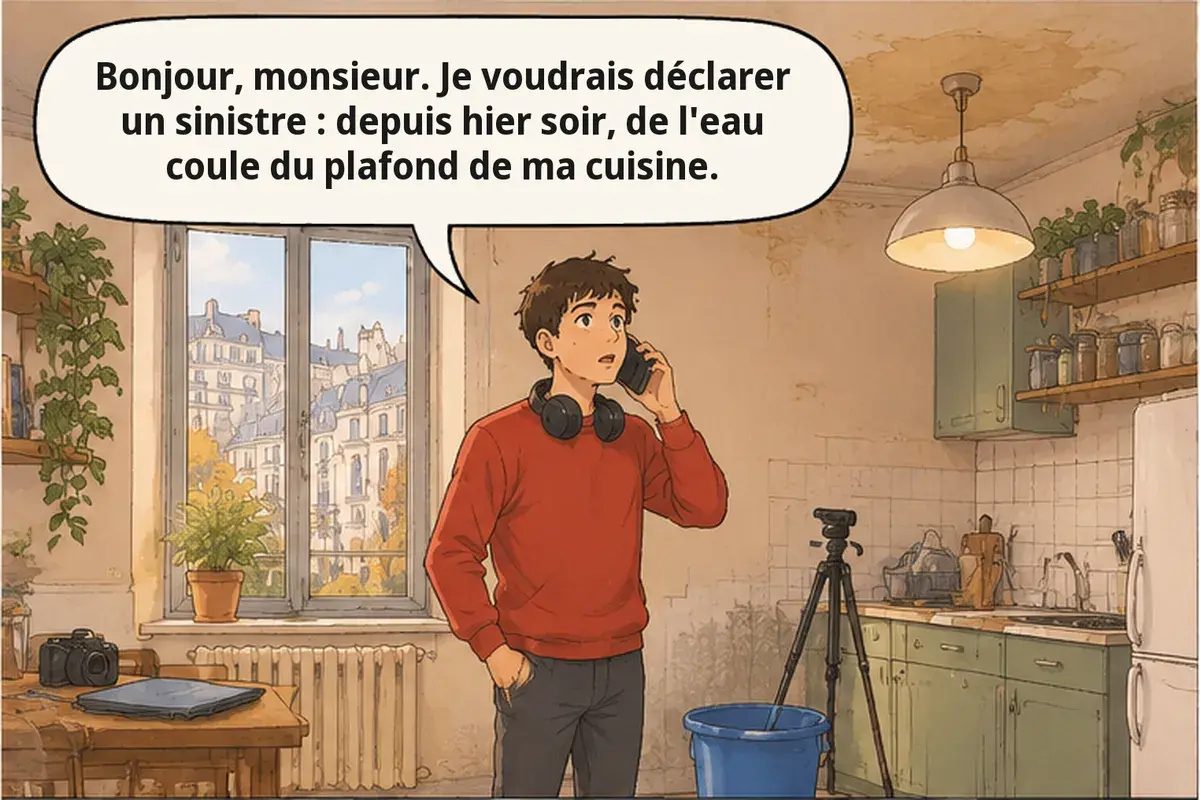
Bonjour, monsieur. Je voudrais déclarer un sinistre : depuis hier soir, de l'eau coule du plafond de ma cuisine.
Hello, sir. I'd like to report a claim: since last night, water has been dripping from the ceiling of my kitchen.
- Conseiller
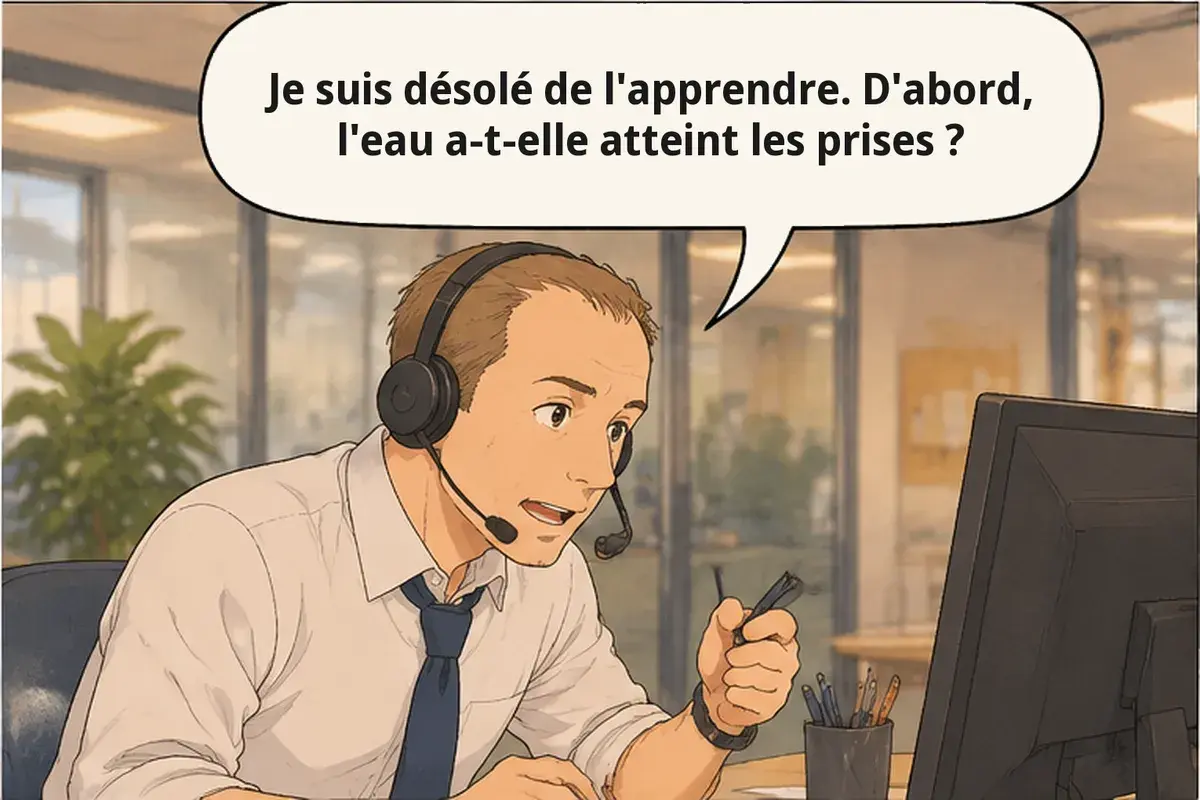
Je suis désolé de l'apprendre. D'abord, l'eau a-t-elle atteint les prises ?
I'm sorry to hear that (man speaking). First, did the water reach the outlets?
- Pacha
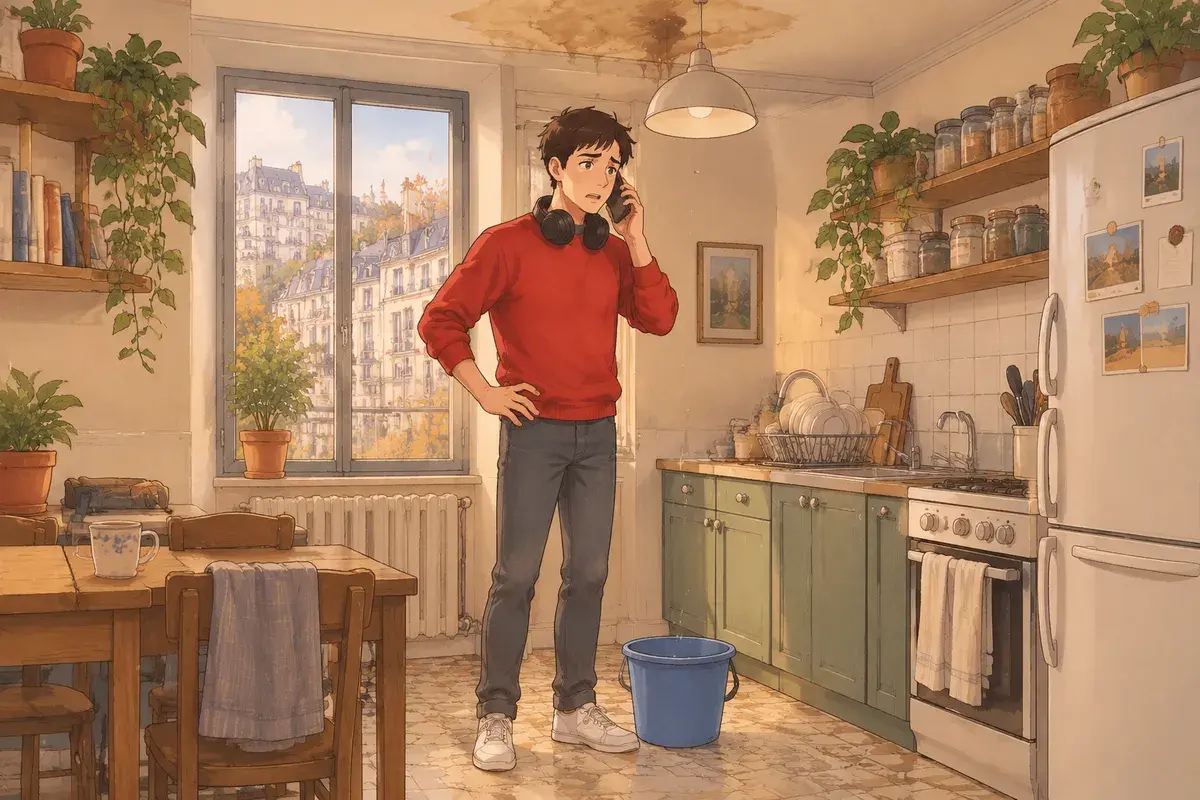
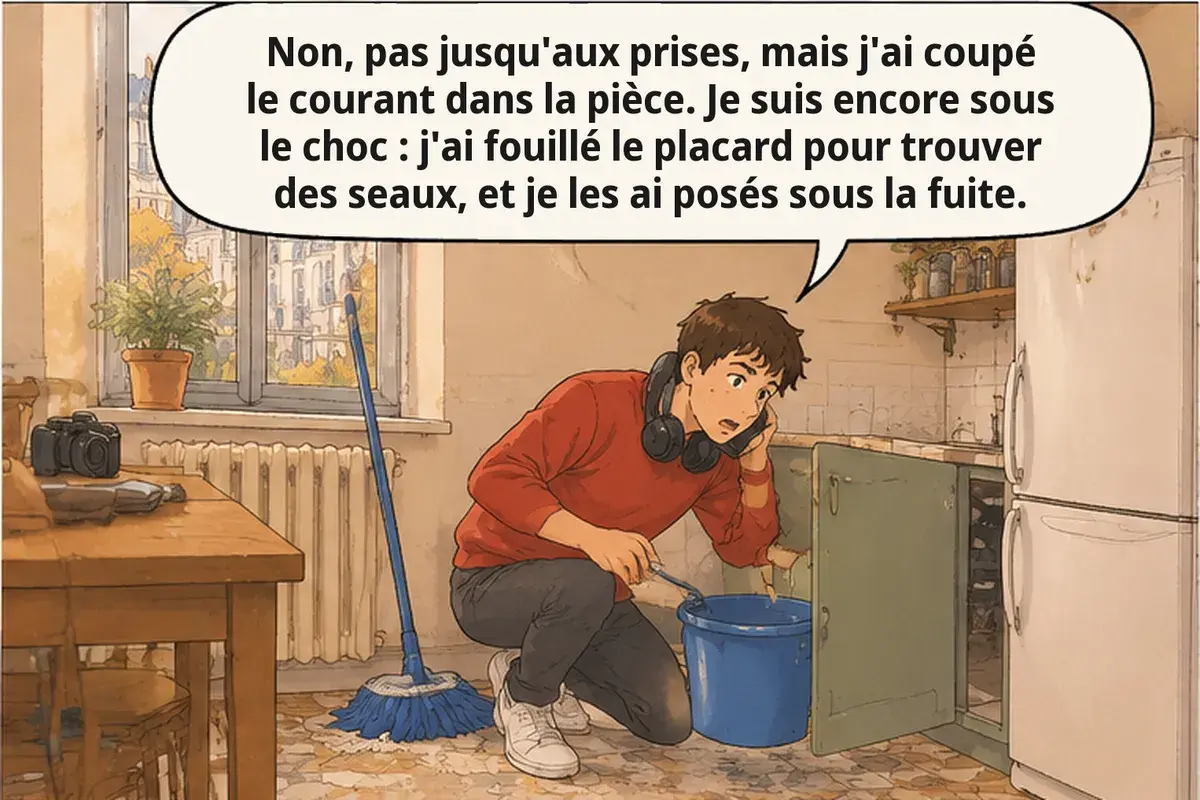
Non, pas jusqu'aux prises, mais j'ai coupé le courant dans la pièce. Je suis encore sous le choc : j'ai fouillé le placard pour trouver des seaux, et je les ai posés sous la fuite.
No, not as far as the outlets, but I turned off the power in the room. I'm still in shock: I dug through the cabinet to find buckets, and I put them under the leak.
- Conseiller
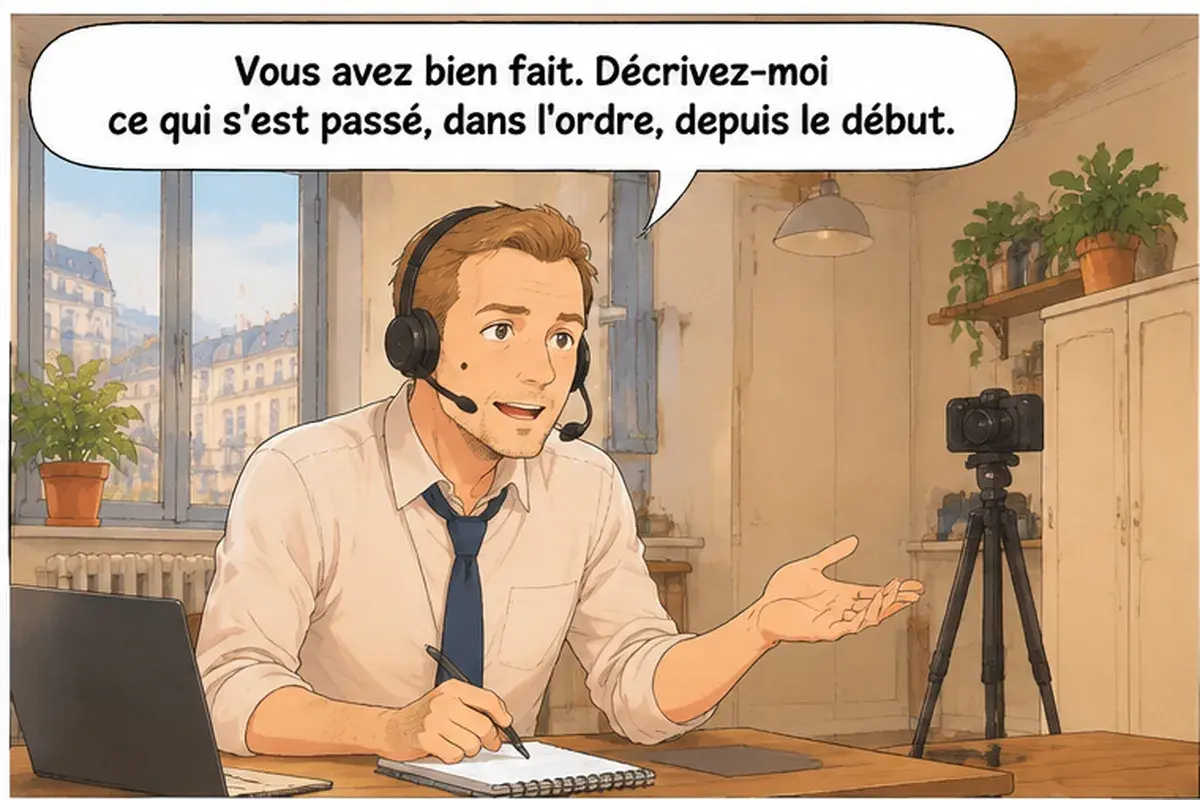
Vous avez bien fait. Décrivez-moi ce qui s'est passé, dans l'ordre, depuis le début.
You did the right thing. Describe to me what happened, in order, from the beginning. (formal)
- Pacha
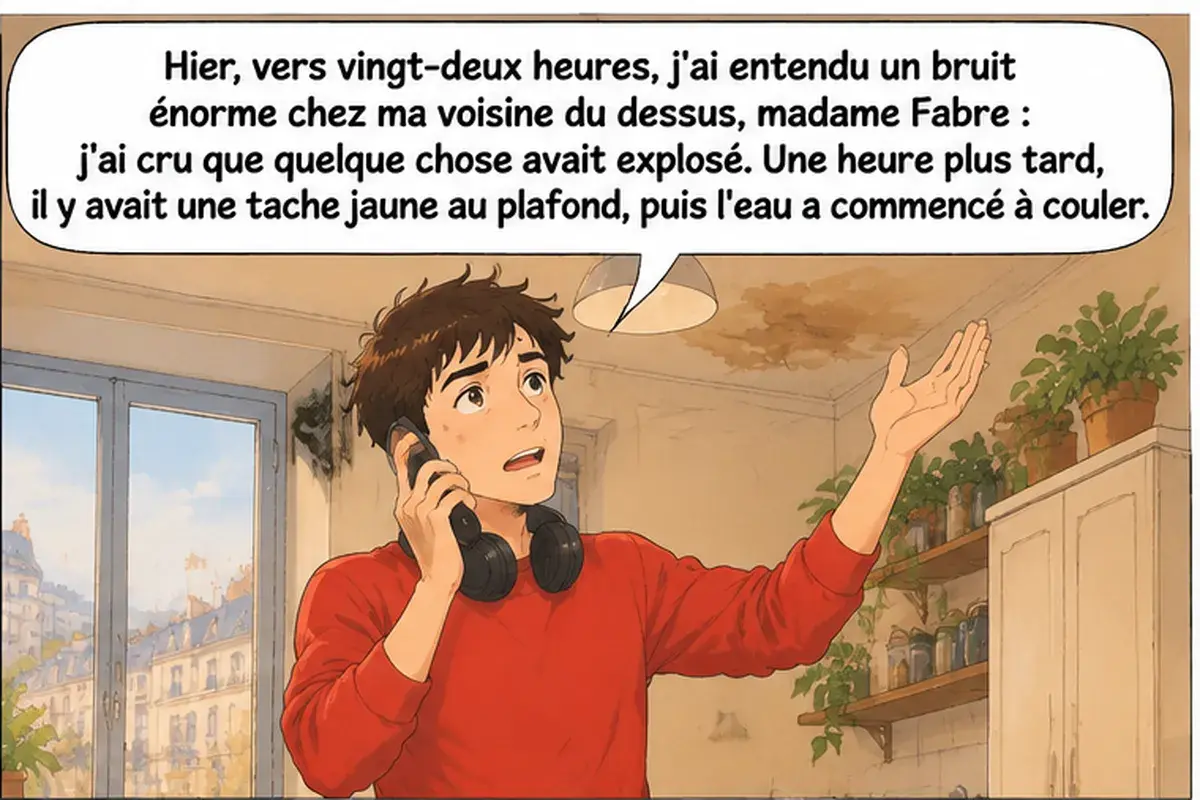
Hier, vers vingt-deux heures, j'ai entendu un bruit énorme chez ma voisine du dessus, madame Fabre : j'ai cru que quelque chose avait explosé. Une heure plus tard, il y avait une tache jaune au plafond, puis l'eau a commencé à couler.
Yesterday, around ten p.m., I heard a huge noise at my upstairs neighbor's, Madame Fabre: I thought something had exploded. An hour later, there was a yellow stain on the ceiling, and then the water started to drip.
- Conseiller
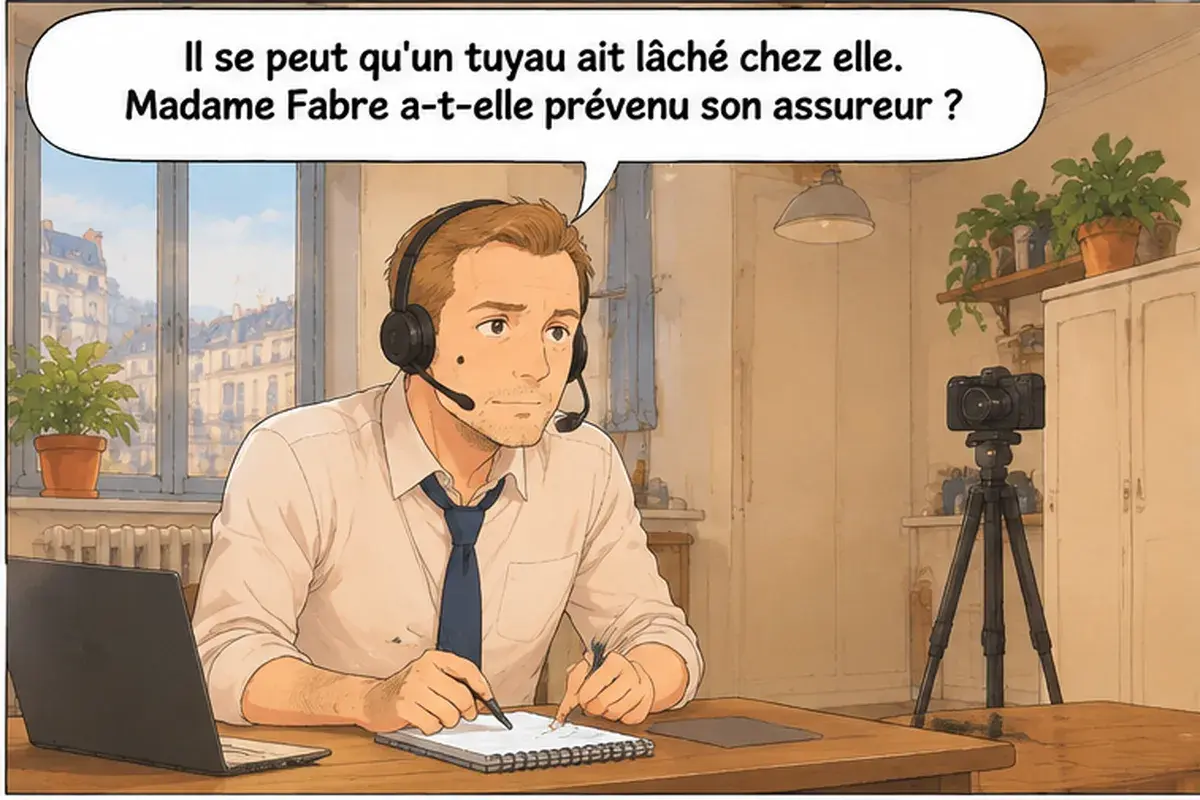
Il se peut qu'un tuyau ait lâché chez elle. Madame Fabre a-t-elle prévenu son assureur ?
A pipe may have burst at her place. Did Madame Fabre notify her insurer?
- Pacha
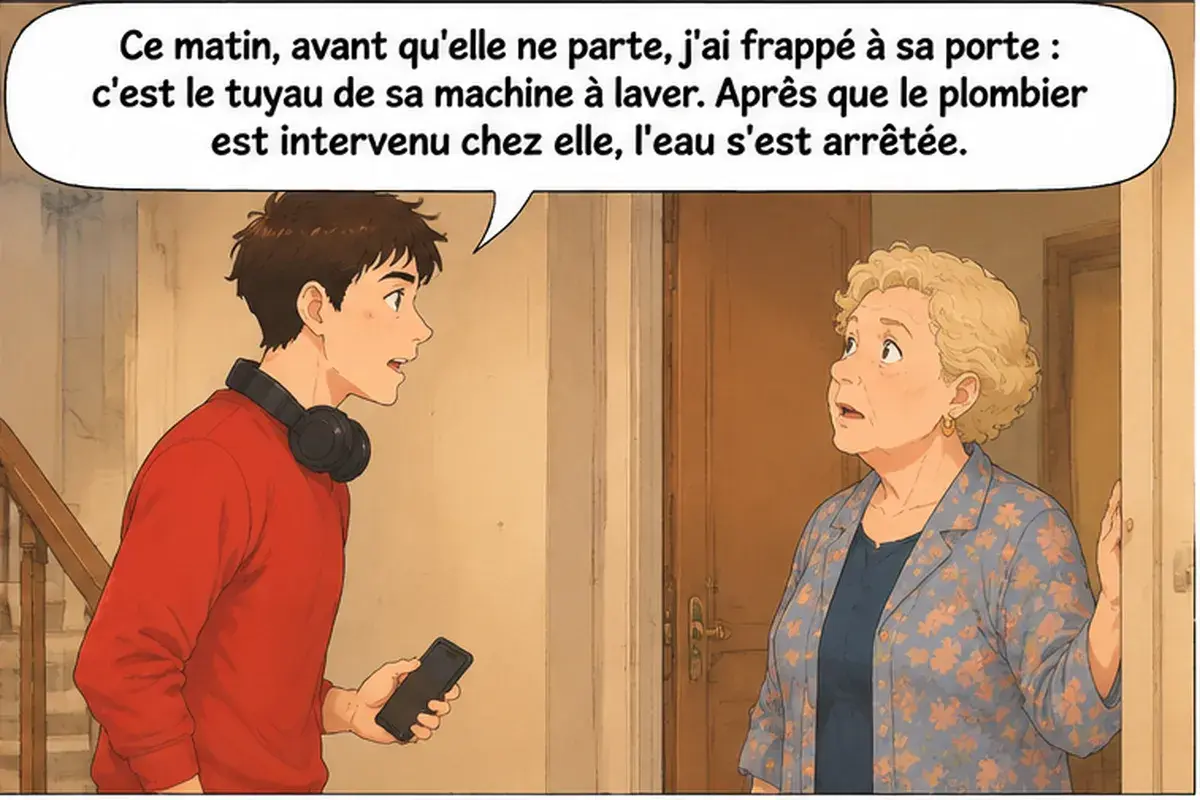
Ce matin, avant qu'elle ne parte, j'ai frappé à sa porte : c'est le tuyau de sa machine à laver. Après que le plombier est intervenu chez elle, l'eau s'est arrêtée.
This morning, before she left, I knocked on her door: it's the hose of her washing machine. After the plumber came to her place, the water stopped.
- Conseiller
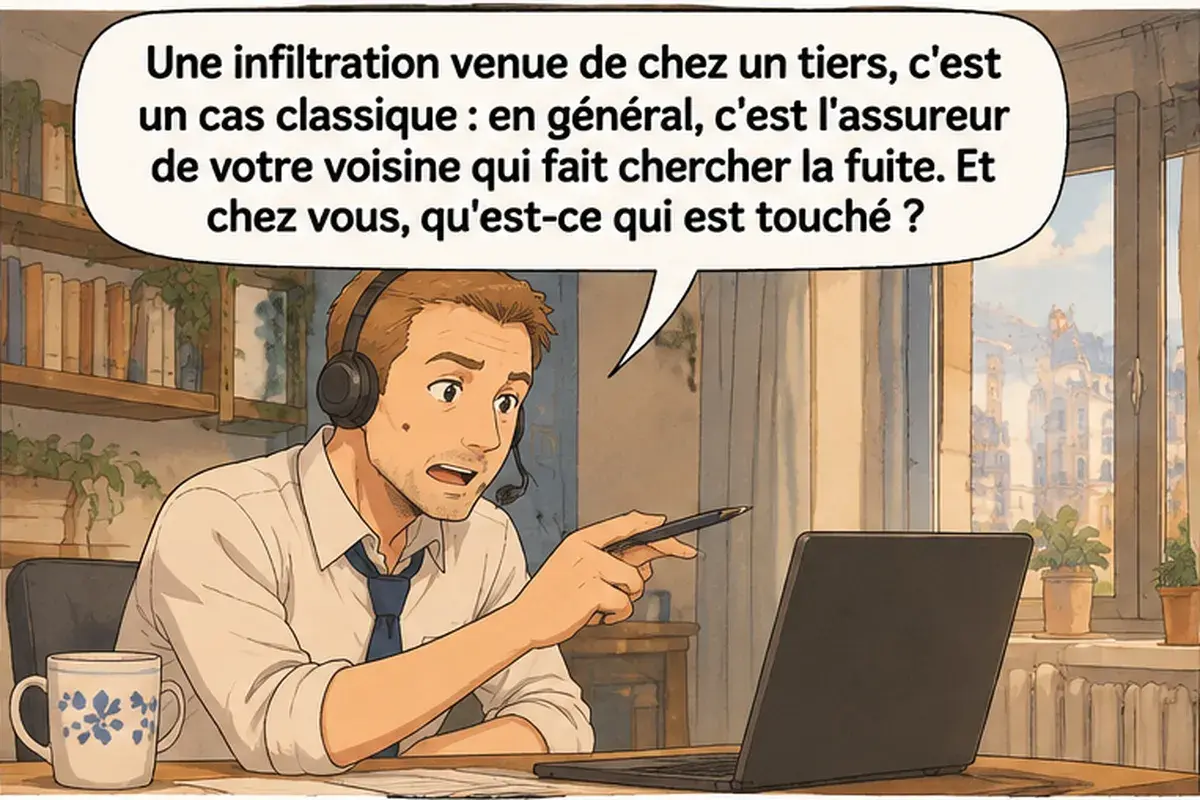
Une infiltration venue de chez un tiers, c'est un cas classique : en général, c'est l'assureur de votre voisine qui fait chercher la fuite. Et chez vous, qu'est-ce qui est touché ?
Water seepage coming from a third party's place is a classic case: usually, your neighbor's insurer is the one who has the leak looked for. And at your place, what's been damaged? (formal)
- Pacha
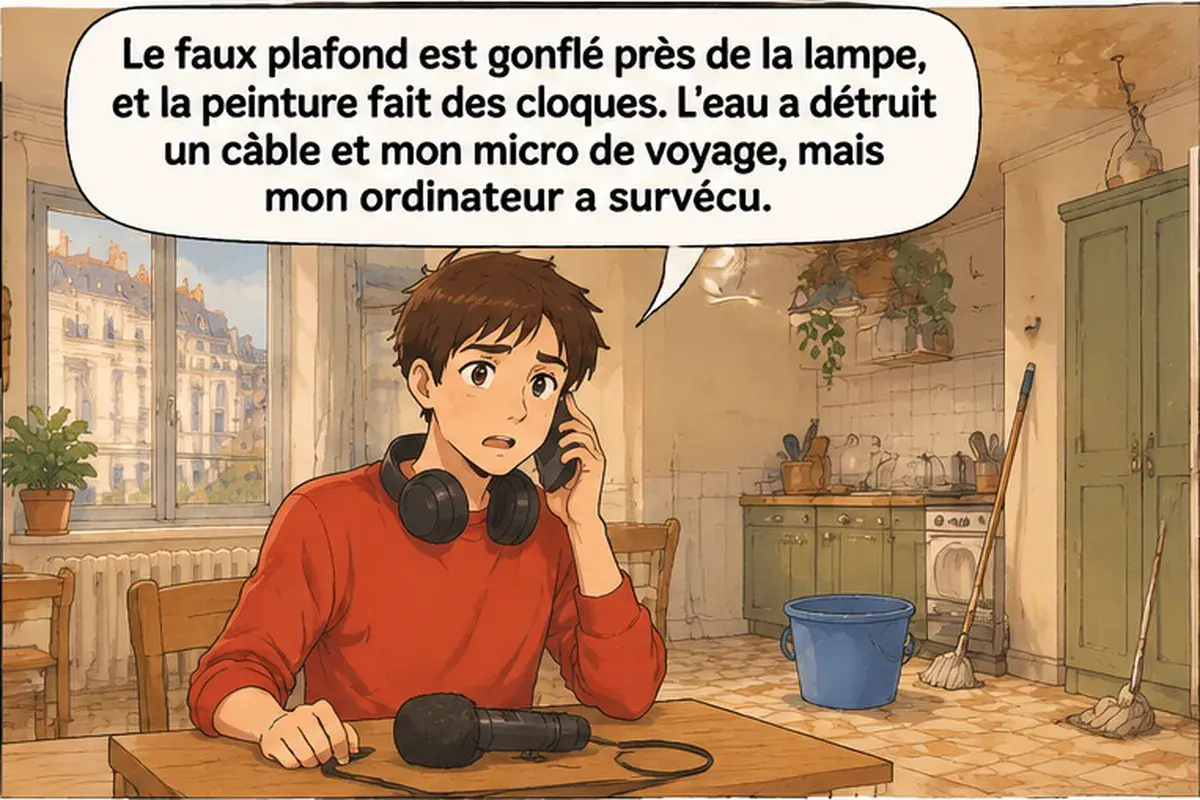
Le faux plafond est gonflé près de la lampe, et la peinture fait des cloques. L'eau a détruit un câble et mon micro de voyage, mais mon ordinateur a survécu.
The drop ceiling is swollen near the lamp, and the paint is blistering. The water destroyed a cable and my travel microphone, but my computer survived.
- Conseiller
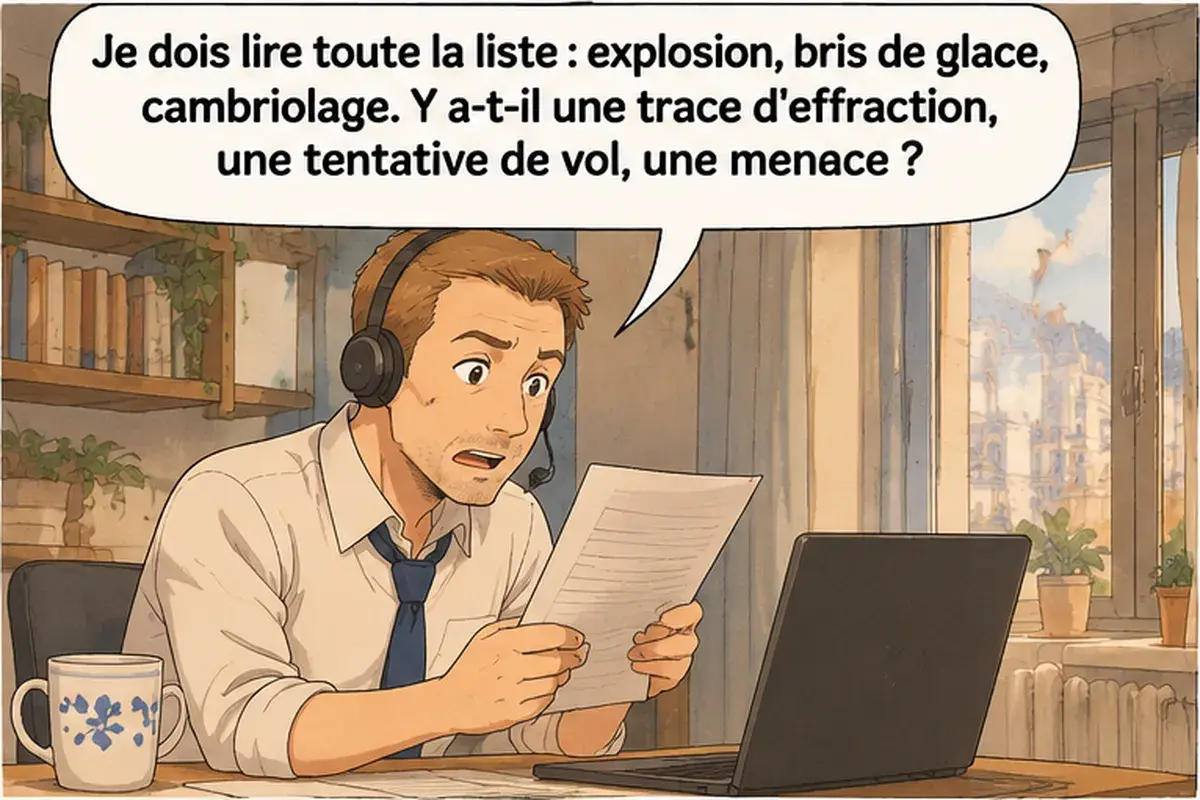
Je dois lire toute la liste : explosion, bris de glace, cambriolage. Y a-t-il une trace d'effraction, une tentative de vol, une menace ?
I have to read the whole list: explosion, glass breakage, burglary. Is there a trace of forced entry, an attempted theft, a threat?
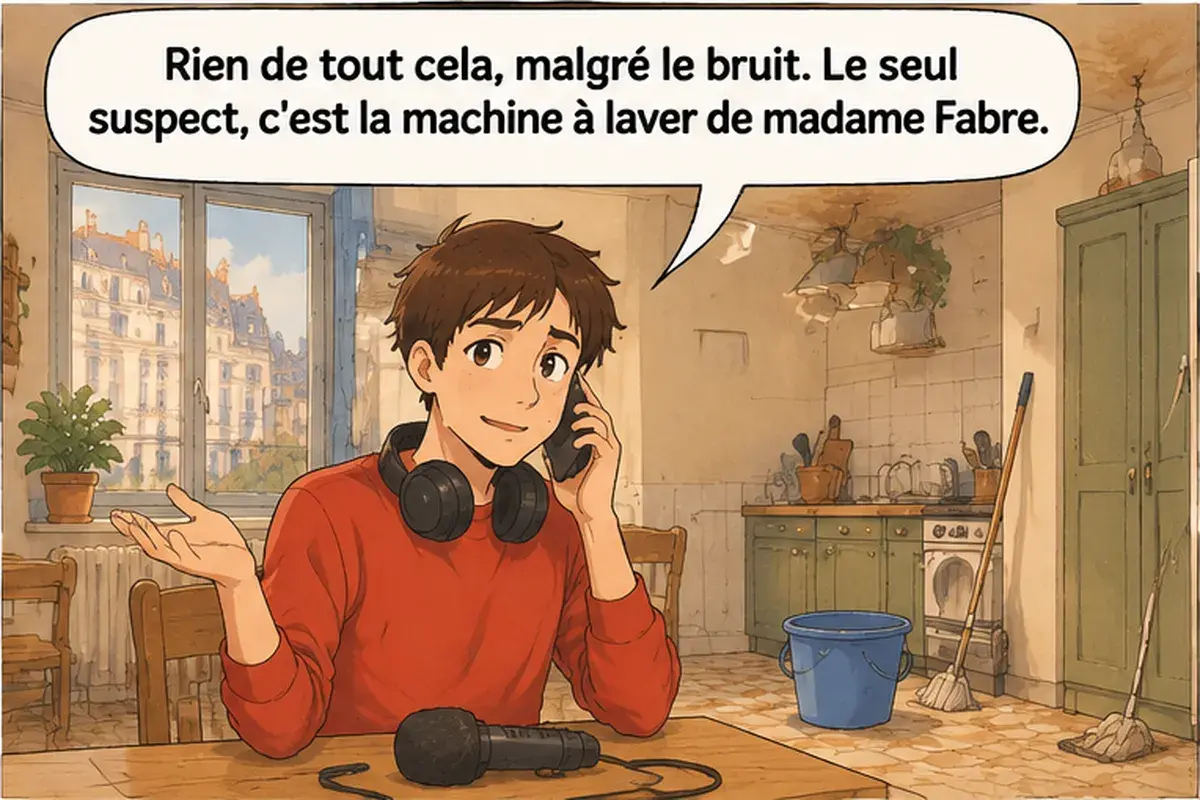
- Pacha
Rien de tout cela, malgré le bruit. Le seul suspect, c'est la machine à laver de madame Fabre.
None of that, despite the noise. The only suspect is Madame Fabre's washing machine.
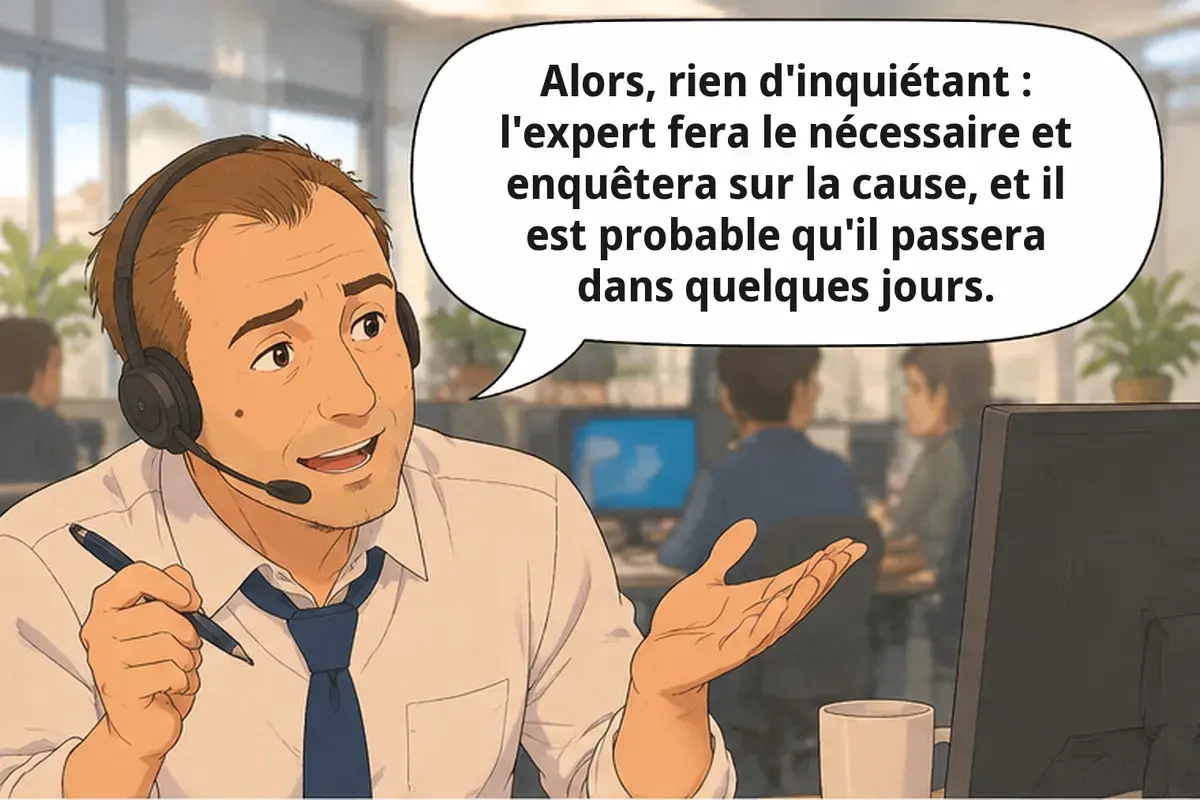
- Conseiller
Alors, rien d'inquiétant : l'expert fera le nécessaire et enquêtera sur la cause, et il est probable qu'il passera dans quelques jours.
Then there's nothing to worry about: the expert will do what's needed and investigate the cause, and he'll probably come in a few days.
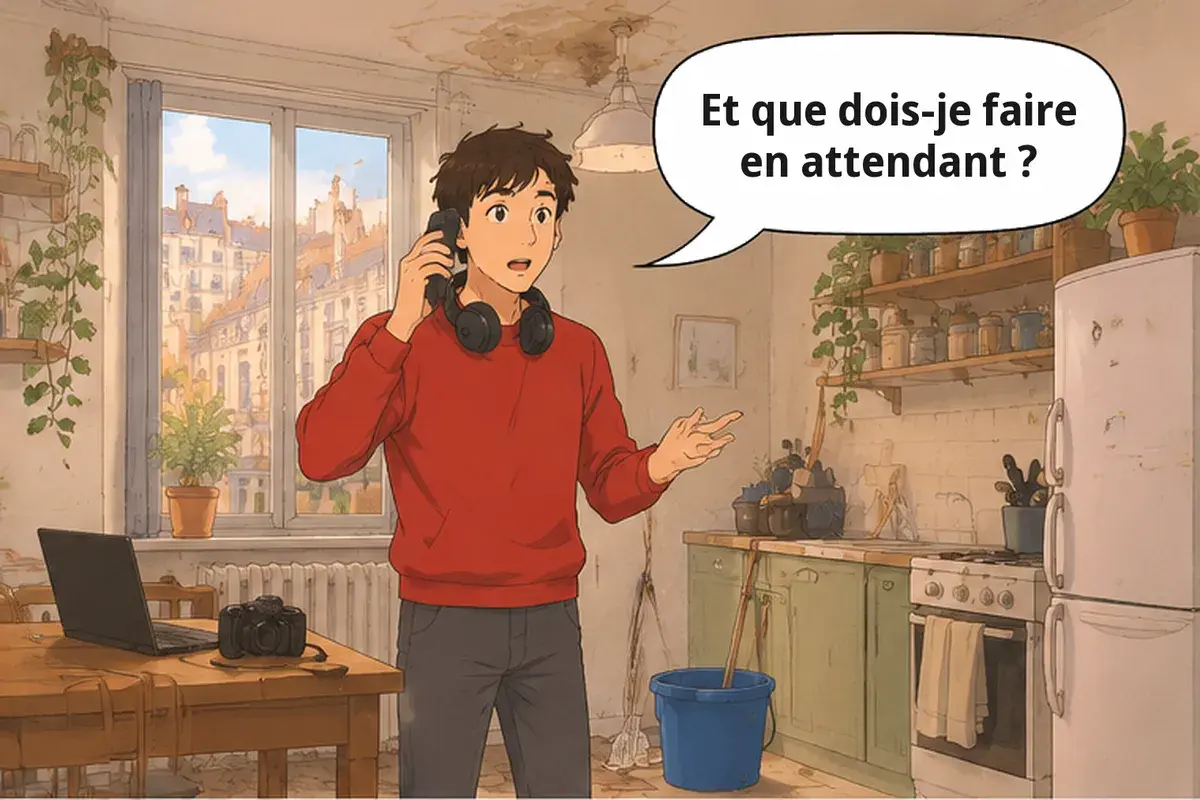
- Pacha
Et que dois-je faire en attendant ?
And what should I do in the meantime?
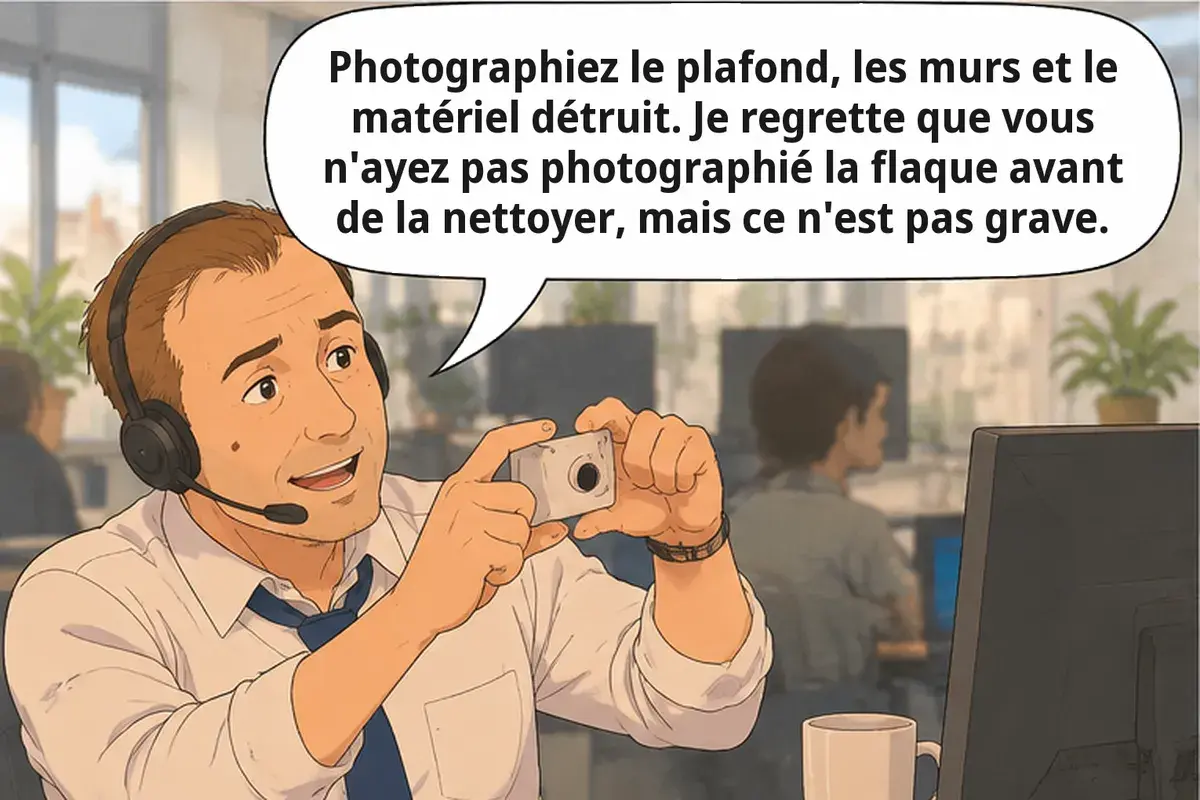
- Conseiller
Photographiez le plafond, les murs et le matériel détruit. Je regrette que vous n'ayez pas photographié la flaque avant de la nettoyer, mais ce n'est pas grave.
Take pictures of the ceiling, the walls and the destroyed equipment. I'm sorry you didn't take a picture of the puddle before cleaning it up, but it's not a big deal. (formal)
- Pacha
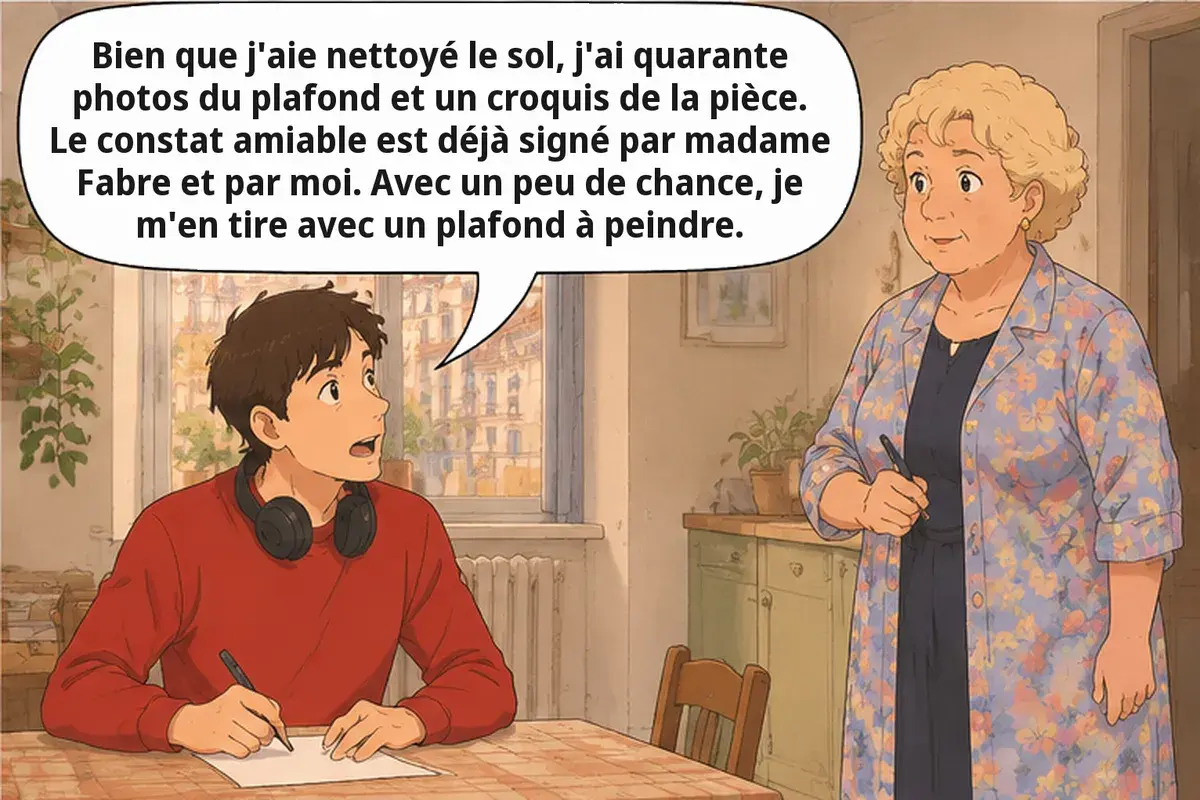
Bien que j'aie nettoyé le sol, j'ai quarante photos du plafond et un croquis de la pièce. Le constat amiable est déjà signé par madame Fabre et par moi. Avec un peu de chance, je m'en tire avec un plafond à peindre.
Although I cleaned the floor, I have forty photos of the ceiling and a sketch of the room. The joint report is already signed by Madame Fabre and me. With a little luck, I'll get off with a ceiling to repaint.
- Conseiller
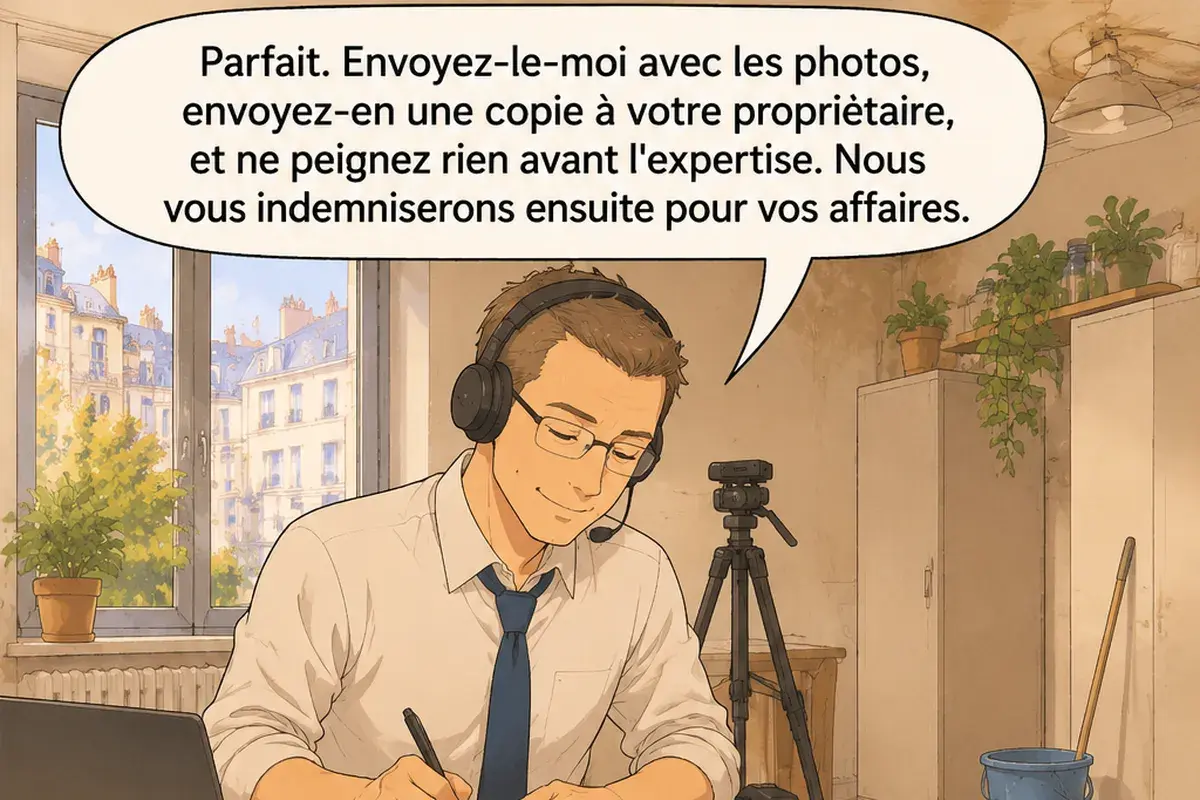
Parfait. Envoyez-le-moi avec les photos, envoyez-en une copie à votre propriétaire, et ne peignez rien avant l'expertise. Nous vous indemniserons ensuite pour vos affaires.
Perfect. Send it to me with the photos, send a copy to your landlady, and don't paint anything before the expert assessment. We'll then compensate you for your belongings. (formal)
- Pacha
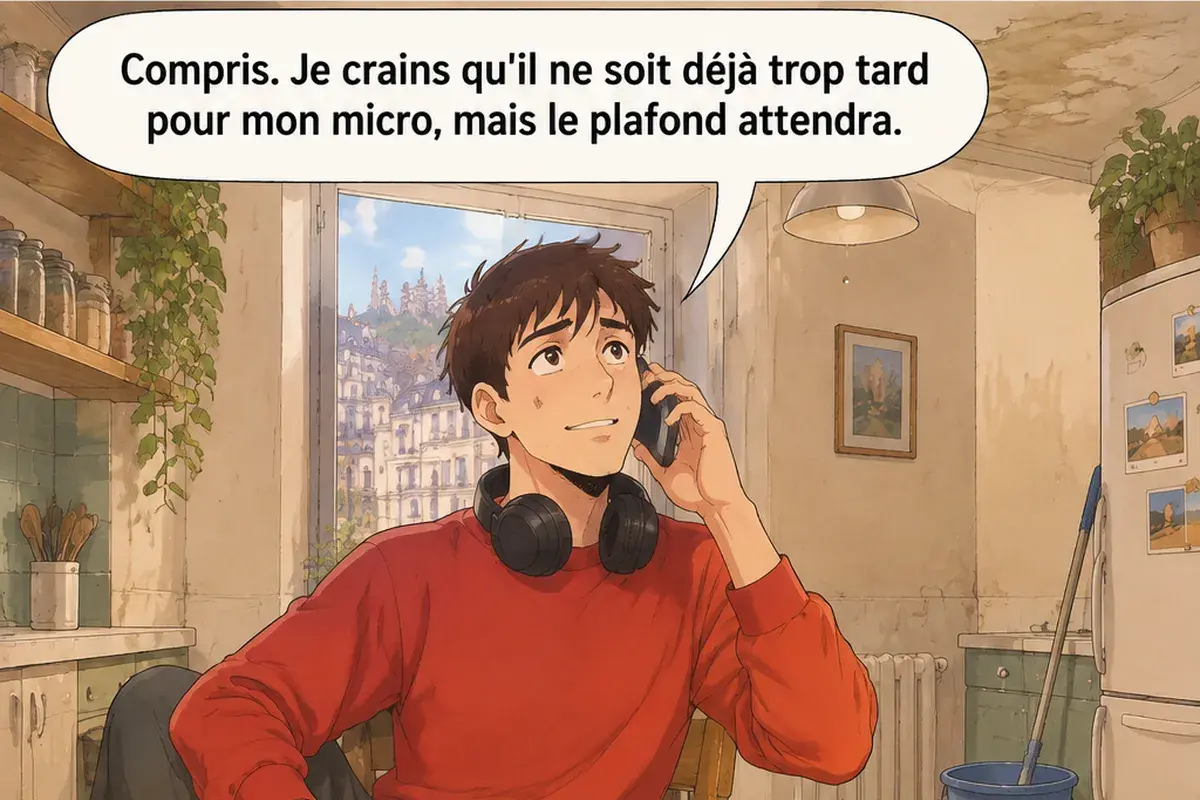
Compris. Je crains qu'il ne soit déjà trop tard pour mon micro, mais le plafond attendra.
Understood. I'm afraid it's already too late for my microphone, but the ceiling can wait.
Grammar for this text
- l'eau a-t-elle atteint les prises ? — Did the water reach the outlets? This is a question with the verb first:
elle abecomesa-t-elle(the-t-makes it easier to say).Une priseis an electrical outlet. Je suis encore sous le choc means "I'm still in shock";fouiller le placardmeans "to dig through the cabinet". - Il se peut qu'un tuyau ait lâché chez elle —
il se peut quemeans "it may be that" and is followed by the subjunctive.ait lâchéis the past subjunctive:ait(qu'il ait, avoir in the subjunctive) + the past participlelâchéfromlâcher("to give out, to burst"). It's the past because the pipe has already burst. - avant qu'elle ne parte and Après que le plombier est intervenu —
avant quetakes the subjunctive (parteis the elle form ofpartir), and theneis empty: it doesn't make anything negative.après quetakes a normal tense:est intervenuis the passé composé ofintervenir("to come out for a repair") withêtre, likevenir. - Y a-t-il une trace d'effraction, une tentative de vol, une menace ? — Is there a trace of forced entry, an attempted theft, a threat? Again the verb comes first:
il y abecomesy a-t-il(the-t-is for easier pronunciation).Une effractionis a break-in;une trace d'effractionis a trace of forced entry. - l'expert fera le nécessaire et enquêtera sur la cause — the expert will do what's needed and investigate the cause.
faire le nécessairemeans "to do whatever is needed" without going into detail;enquêter surmeans "to investigate": the expert looks for the cause of the leak, and no police are involved. - Je regrette que vous n'ayez pas photographié la flaque — I'm sorry you didn't take a picture of the puddle.
regretter que+ subjunctive. Inn'ayez pas photographié,ayezis the vous form of avoir in the subjunctive, andne … pasgoes around the helping verb. - Bien que j'aie nettoyé le sol — Although I cleaned the floor.
j'aieis the je form of avoir in the subjunctive; it sounds the same asj'ai.bien quemeans "although". - je m'en tire avec un plafond à peindre — I'm getting off with a ceiling to repaint.
s'en tirermeans "to get off, to come out of it":je m'en tire,elle s'en est tirée;avecsays what you got off with. - Envoyez-le-moi, envoyez-en une copie — These are commands:
le(the report) +moi;enmeans "of it": "send a copy (of it)". In de la nettoyer,lameans "it" (the puddle), not the article "the". - Je crains qu'il ne soit déjà trop tard — I'm afraid it's already too late. This is a set phrase:
craindre que+ subjunctive, and theneis empty.
Words and grammar of the unit: Report an insurance claim.
Learn the words from the texts with flashcards
In the app, you can tap any word in a text to see its translation, forms and examples, and new words stick with flashcards. 15 minutes a day.
Start for freeEverything is open for free. No card needed to sign up.