

French dialogue with translation · B2 · 18 lines
Quel est votre principal défaut ? What is your biggest weakness? (formal)
Comic · 18 panels
- Pacha
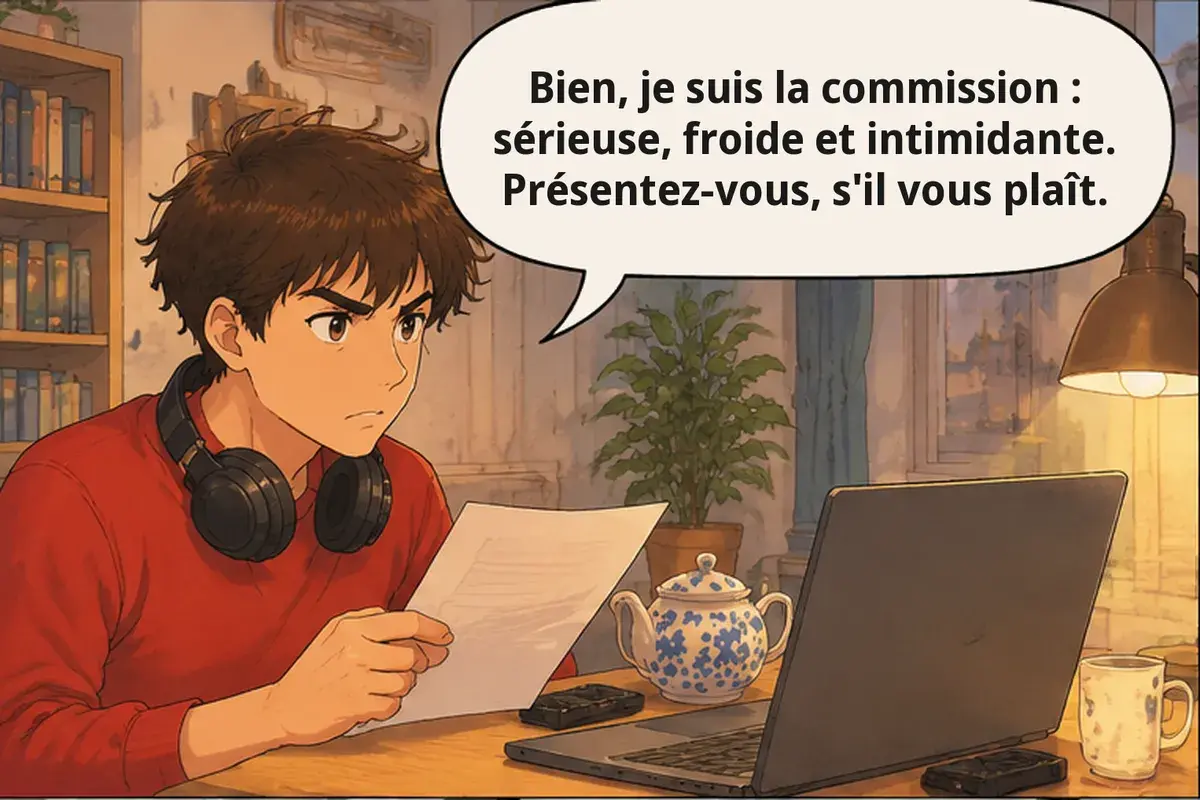
Bien, je suis la commission : sérieuse, froide et intimidante. Présentez-vous, s'il vous plaît.
Okay, I'm the panel: serious, cold, and intimidating. Introduce yourself, please. (formal)

- Dacha
Bonjour, madame, monsieur. Je m'appelle Dacha et j'ai l'honneur de me présenter devant vous aujourd'hui.
Hello, ma'am, sir. My name is Dacha and I have the honor of introducing myself to you today. (to several people)

- Pacha
Pourquoi avez-vous choisi ce master de langues ?
Why did you choose this language master's program? (formal)

- Dacha
Étant donné que mon frère m'envoie des enregistrements depuis deux ans, j'ai déjà une bonne oreille.
Given that my brother has been sending me recordings for two years, I already have a good ear.

- Pacha
Intéressant. Quel est votre principal défaut ?
Interesting. What is your biggest weakness? (formal)
- Dacha
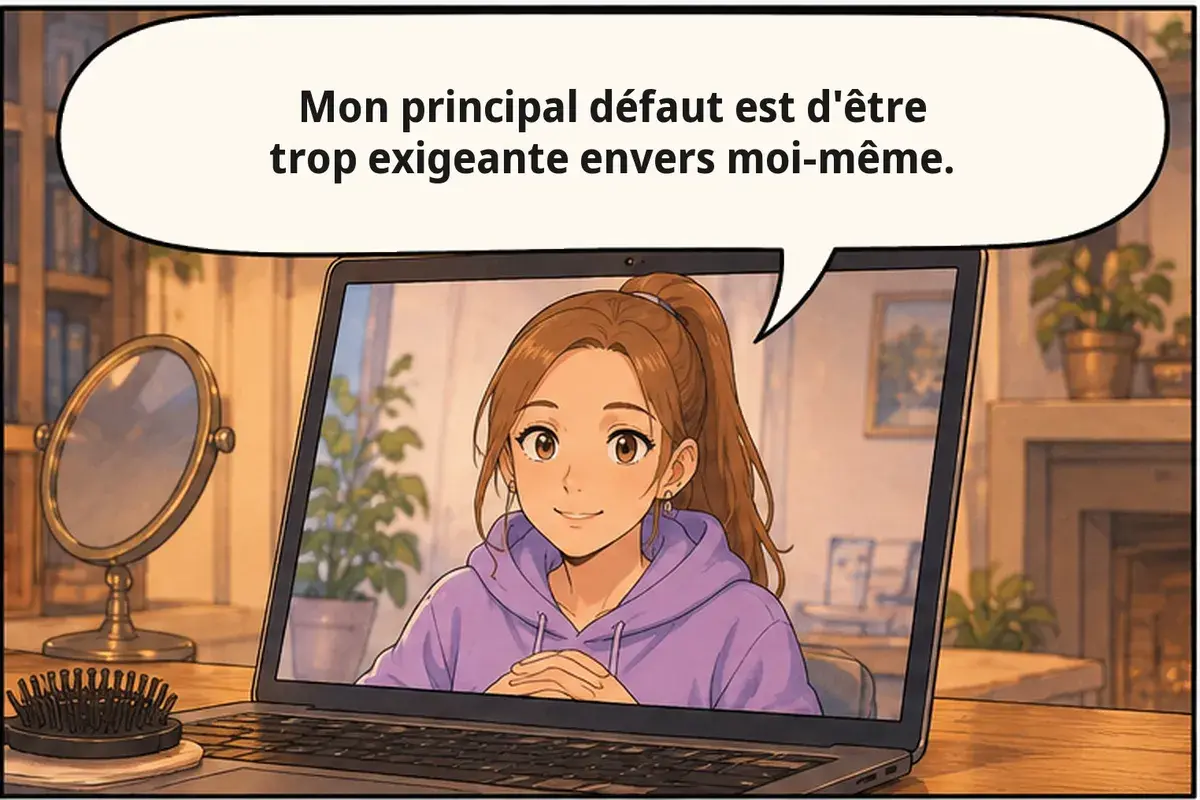
Mon principal défaut est d'être trop exigeante envers moi-même.
My biggest weakness is being too demanding of myself. (woman speaking)
- Pacha
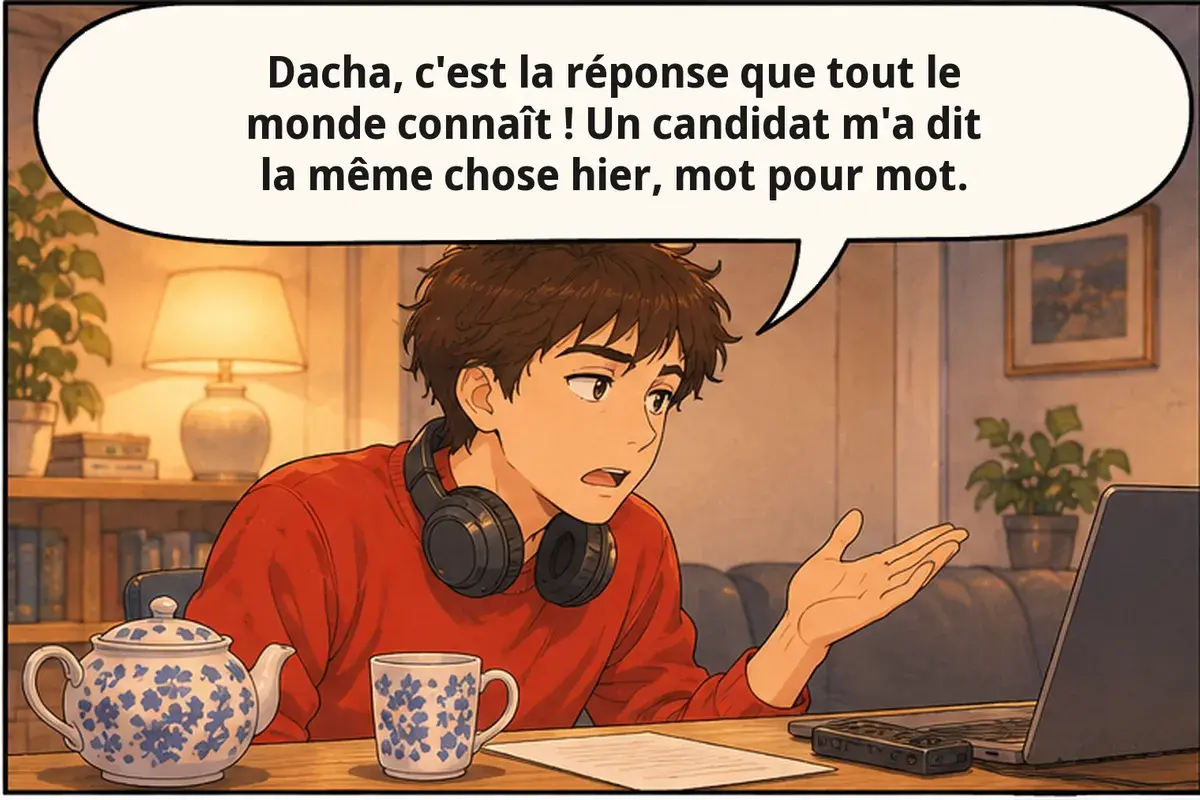
Dacha, c'est la réponse que tout le monde connaît ! Un candidat m'a dit la même chose hier, mot pour mot.
Dacha, that's the answer everyone knows! A candidate told me the very same thing yesterday, word for word.

- Dacha
Alors la vérité : je suis maladroite, et j'ai tendance à m'excuser avant même de parler.
Then the truth: I'm clumsy, and I tend to apologize before I even speak. (woman speaking)
- Pacha
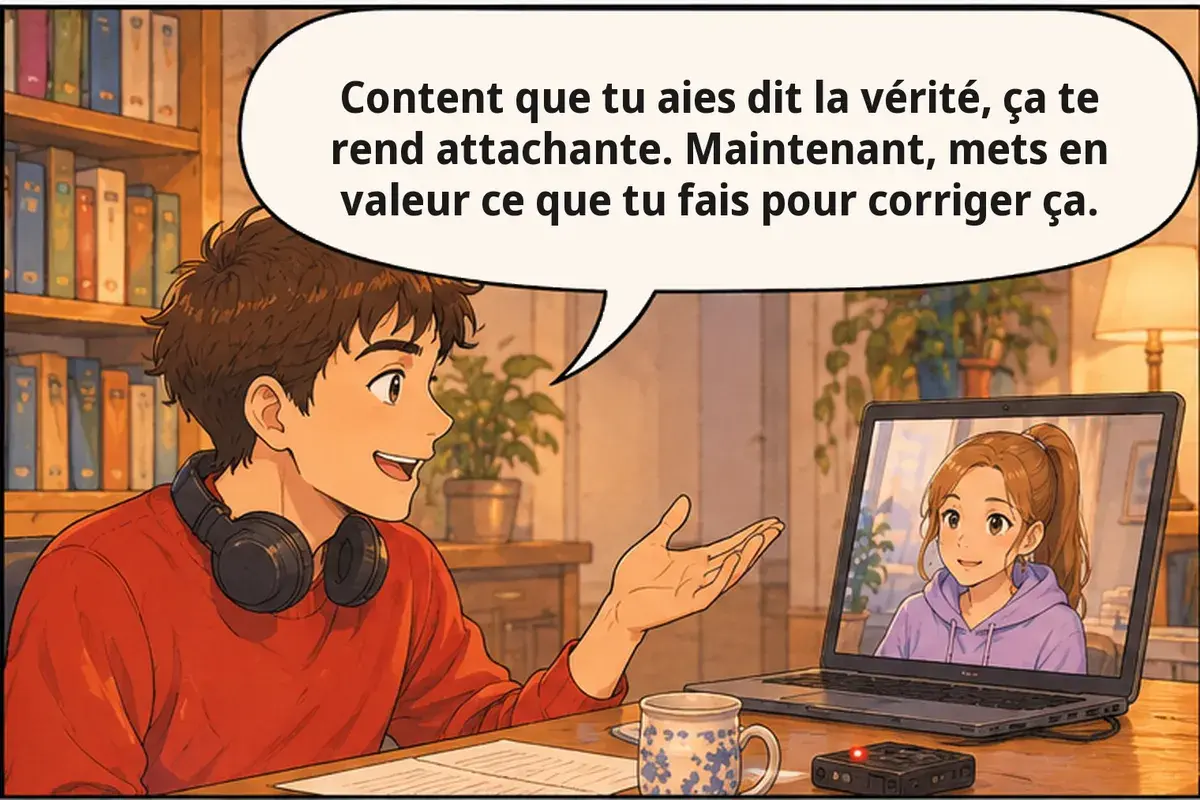
Content que tu aies dit la vérité, ça te rend attachante. Maintenant, mets en valeur ce que tu fais pour corriger ça.
I'm glad you told the truth, it makes you endearing. Now, highlight what you're doing to fix that. (man speaking, to a woman)

- Dacha
Quand je sens que je vais m'excuser, je prends du recul : je respire et je commence par l'essentiel.
When I feel I'm about to apologize, I step back: I take a breath and start with the essentials.
- Pacha
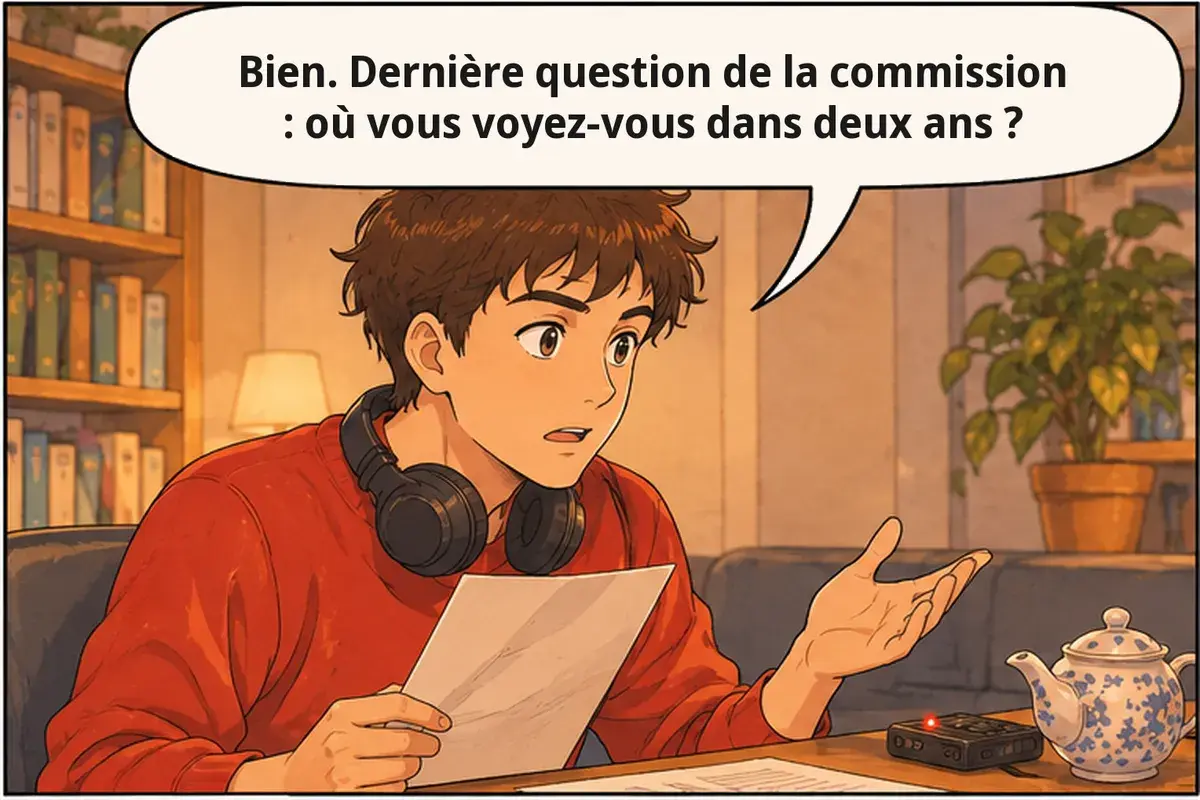
Bien. Dernière question de la commission : où vous voyez-vous dans deux ans ?
Good. The panel's last question: where do you see yourself in two years? (formal)

- Dacha
J'aurais souhaité pouvoir vous dire que j'ai tout prévu, mais je veux d'abord apprendre et écouter.
I wish I could tell you that I've planned everything, but first I want to learn and listen. (formal)
- Pacha
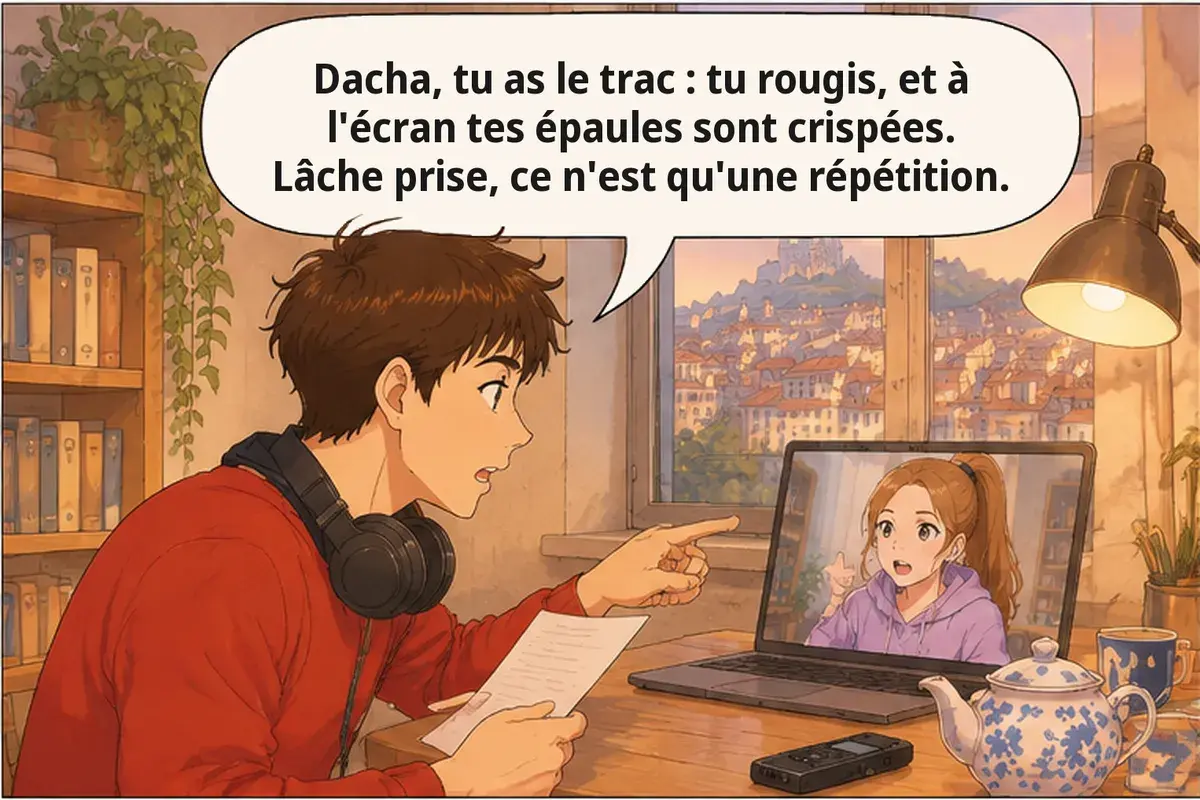
Dacha, tu as le trac : tu rougis, et à l'écran tes épaules sont crispées. Lâche prise, ce n'est qu'une répétition.
Dacha, you're nervous: you're blushing, and on the screen your shoulders are tense. Let go, it's just a rehearsal.
- Dacha
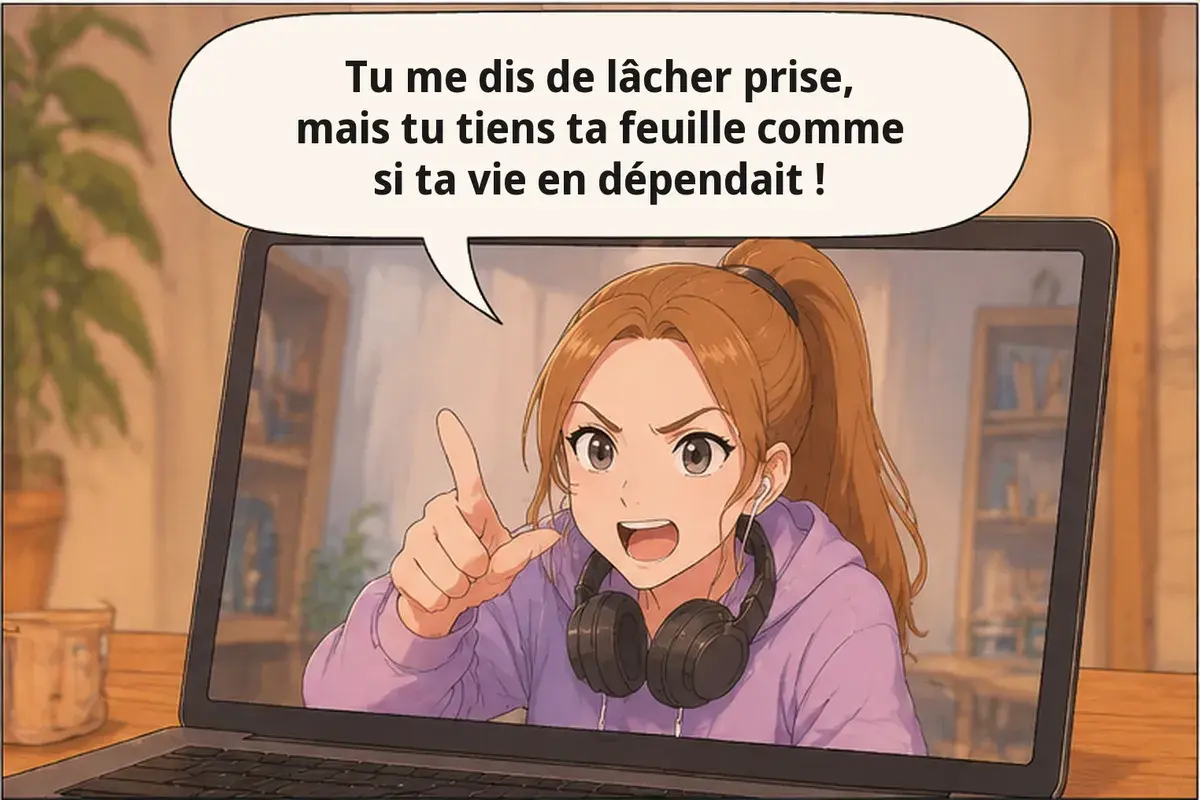
Tu me dis de lâcher prise, mais tu tiens ta feuille comme si ta vie en dépendait !
You tell me to let go, but you're holding your paper as if your life depended on it!

- Pacha
Touché, première gaffe de la commission. Je pose ma feuille et je redeviens ton frère.
Touché, the panel's first blunder. I'm putting down my paper and going back to being your brother.

- Dacha
Alors dis-moi franchement : si la commission me parle de mes lacunes, je réponds quoi ?
Then tell me honestly: if the panel asks me about my gaps, what do I say?

- Pacha
Nomme-les sans t'excuser, et ajoute que la liste est courte. Tu es à la hauteur, Dacha, je te le jure.
Name them without apologizing, and add that the list is short. You're up to it, Dacha, I swear.

- Dacha
Merci, grand frère. Comme commission, tu es nul ; comme frère, tu es le meilleur.
Thanks, big brother. As a panel, you're terrible; as a brother, you're the best.
Grammar for this text
- je suis la commission — I'm the panel: in the game Pacha says vous (Présentez-vous), and outside the role he says tu (tu rougis, et à l'écran tes épaules sont crispées).
- j'ai l'honneur de me présenter — I have the honor of introducing myself:
avoir l'honneur deis "to have the honor of", a very formal phrase; Dacha is practicing the formal style on purpose. - Étant donné que mon frère m'envoie des enregistrements — Given that my brother sends me recordings:
étant donné queis "since, given that"; after it comes the normal form of the verb (indicative):envoie. - un candidat m'a dit la même chose hier, mot pour mot — a candidate told me the same thing yesterday, word for word:
mot pour motis "word for word";la même choseis "the same thing". - j'ai tendance à m'excuser — I tend to apologize:
avoir tendance à+ infinitive is "to tend to"; it's a soft way to talk about a weakness. - mettre en valeur — to present in a good light: mets en valeur ce que tu fais — show in a good light what you do;
metsis the tu command ofmettre; it is "to present in a good light". - je prends du recul — I step back:
prendre du reculis "to step back and look at things calmly". - Content que tu aies dit la vérité — I'm glad you told the truth:
content que+ the subjunctive;aies ditis the past subjunctive ofdire. - J'aurais souhaité pouvoir vous dire que… — I wish I could tell you that…: the past conditional, a polite "I would have liked to" (unit 21).
- Lâche prise — Let go:
lâcher priseis "to let go";lâcheis the tu command. - comme si ta vie en dépendait — as if your life depended on it: after
comme sicomes the imperfect (unit 23).
Words and grammar of the unit: Get through a job interview.
Learn the words from the texts with flashcards
In the app, you can tap any word in a text to see its translation, forms and examples, and new words stick with flashcards. 15 minutes a day.
Start for freeEverything is open for free. No card needed to sign up.