

French dialogue with translation · B2 · 18 lines
Lu, relu, et je reste sceptique Read, reread, and I'm still skeptical
Comic · 18 panels
- Pacha
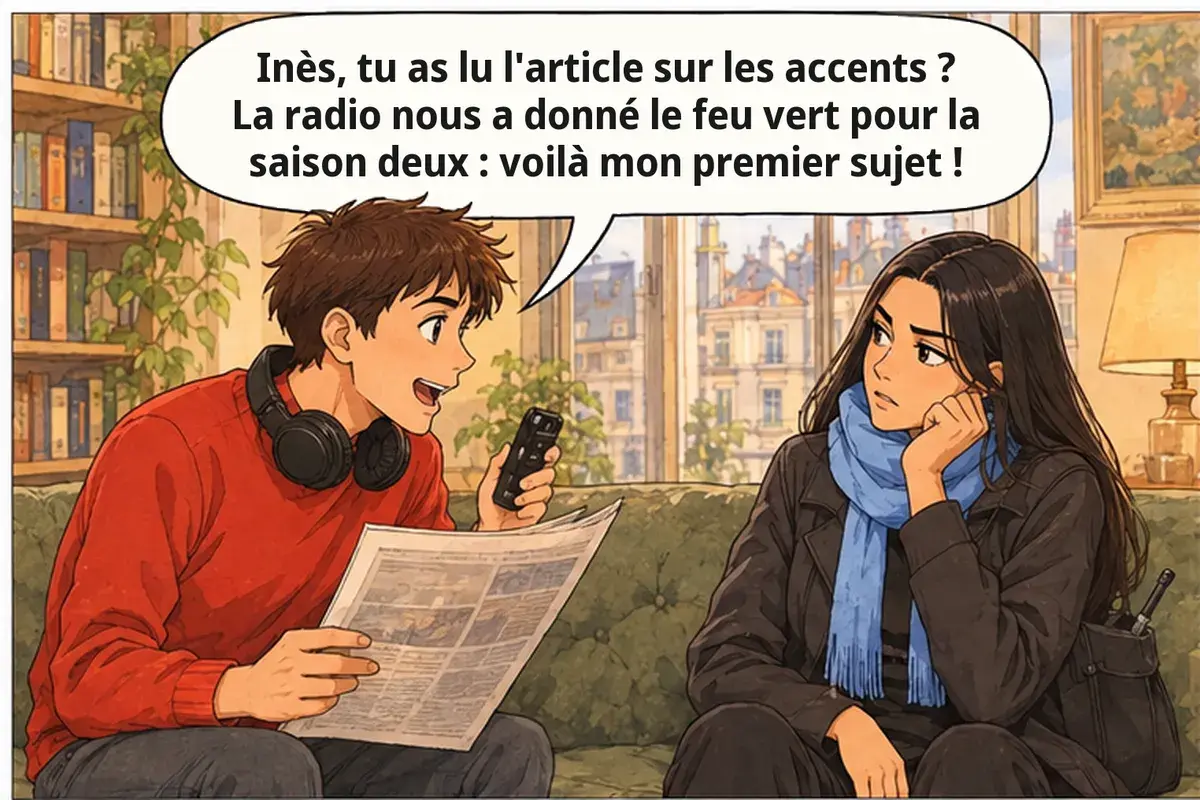
Inès, tu as lu l'article sur les accents ? La radio nous a donné le feu vert pour la saison deux : voilà mon premier sujet !
Inès, have you read the article about accents? The radio station gave us the green light for season two: here's my first topic!
- Inès
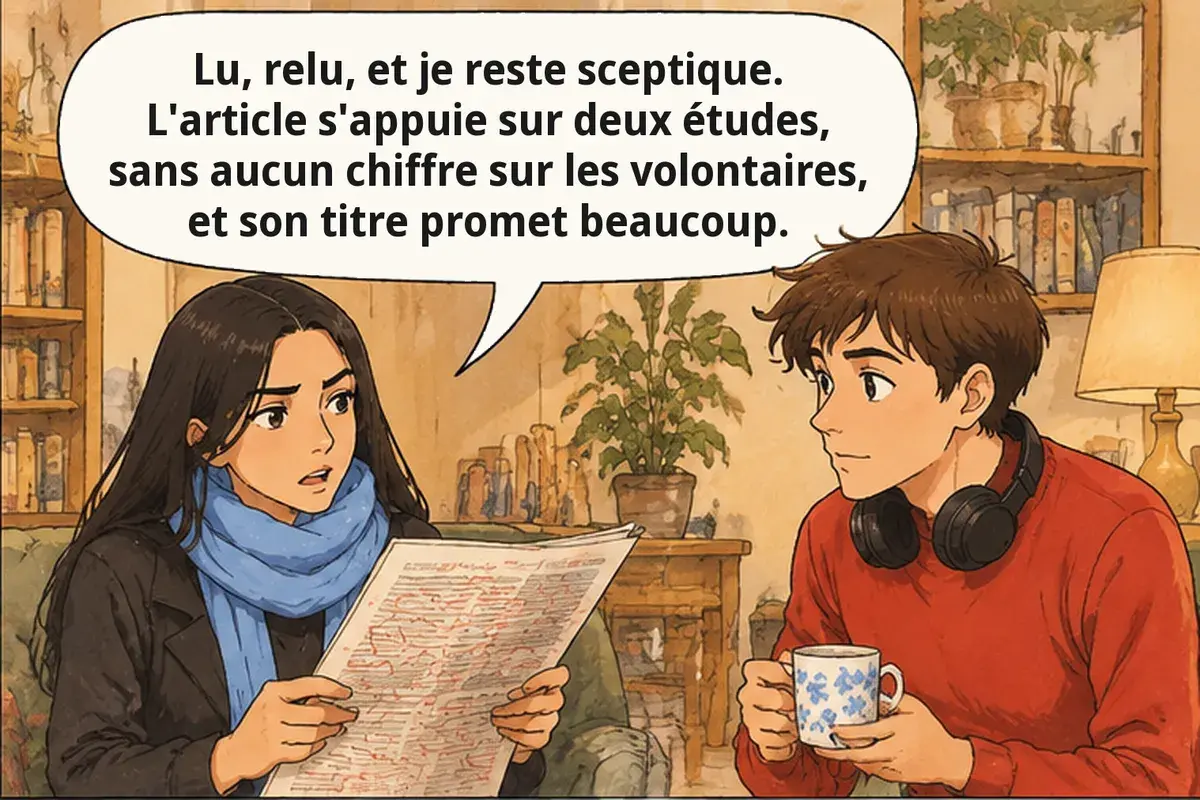
Lu, relu, et je reste sceptique. L'article s'appuie sur deux études, sans aucun chiffre sur les volontaires, et son titre promet beaucoup.
Read it, reread it, and I'm still skeptical. The article relies on two studies, with no numbers at all about the volunteers, and its title promises a lot.
- Pacha
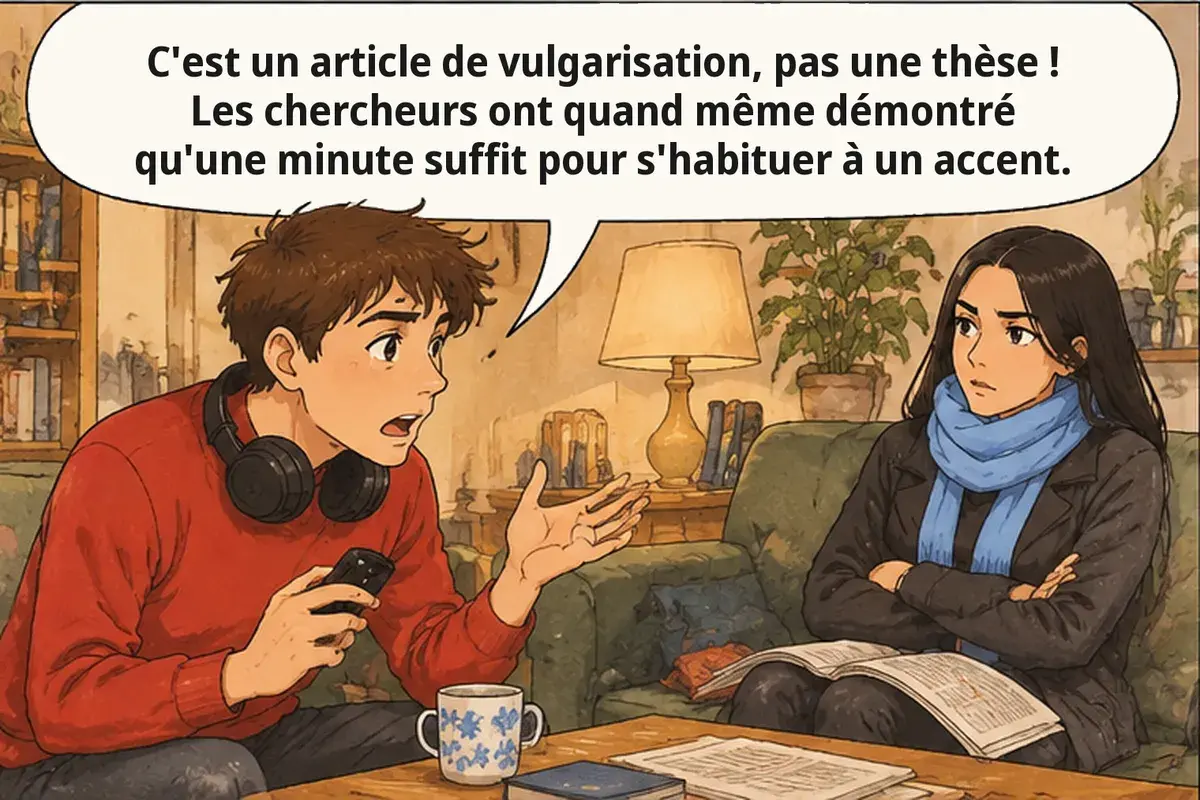
C'est un article de vulgarisation, pas une thèse ! Les chercheurs ont quand même démontré qu'une minute suffit pour s'habituer à un accent.
It's a popular science article, not a thesis! The researchers still proved that one minute is enough to get used to an accent.

- Inès
Démontré, c'est un grand mot. Combien de personnes dans l'échantillon, et quelle marge d'erreur ?
"Proven" is a big word. How many people are in the sample, and what's the margin of error?
- Pacha
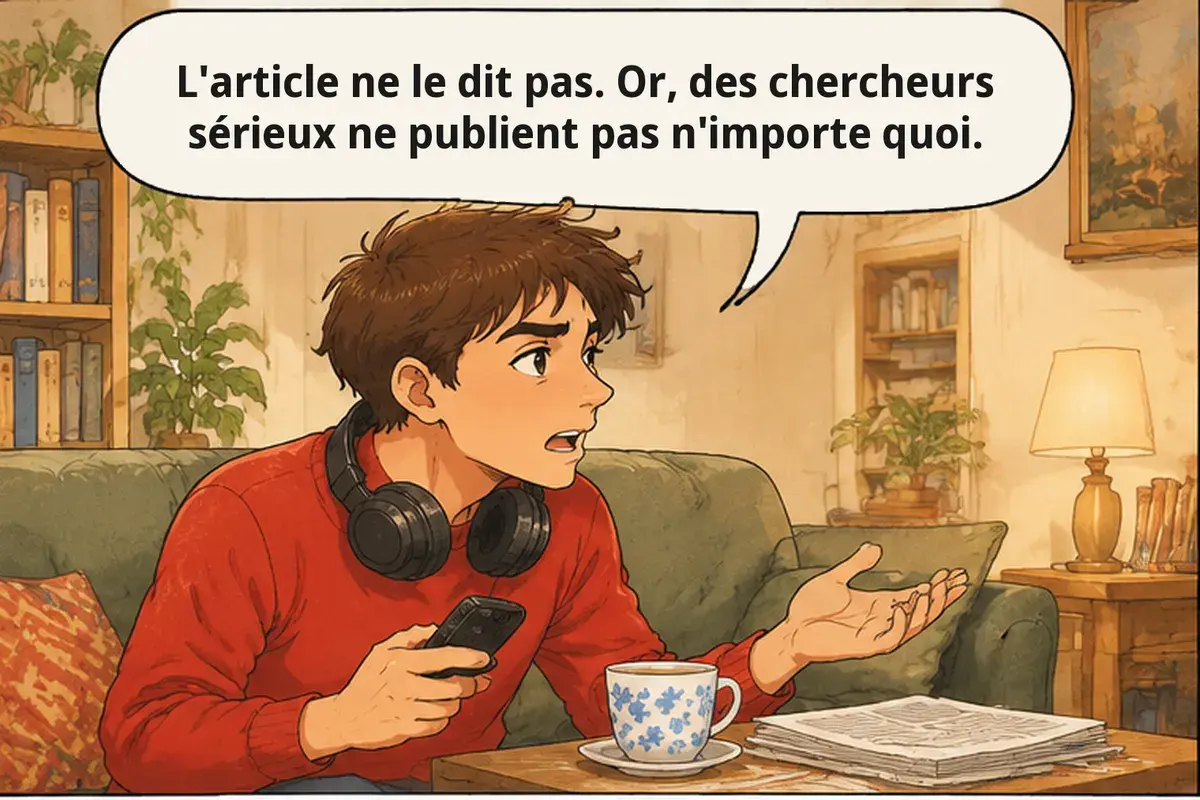
L'article ne le dit pas. Or, des chercheurs sérieux ne publient pas n'importe quoi.
The article doesn't say. And yet serious researchers don't publish just anything.

- Inès
Certes. Mais je doute qu'ils aient testé assez de monde, et un résultat n'est un fait qu'une fois reproduit.
Sure. But I doubt they tested enough people, and a result is only a fact once it's been reproduced.
- Pacha
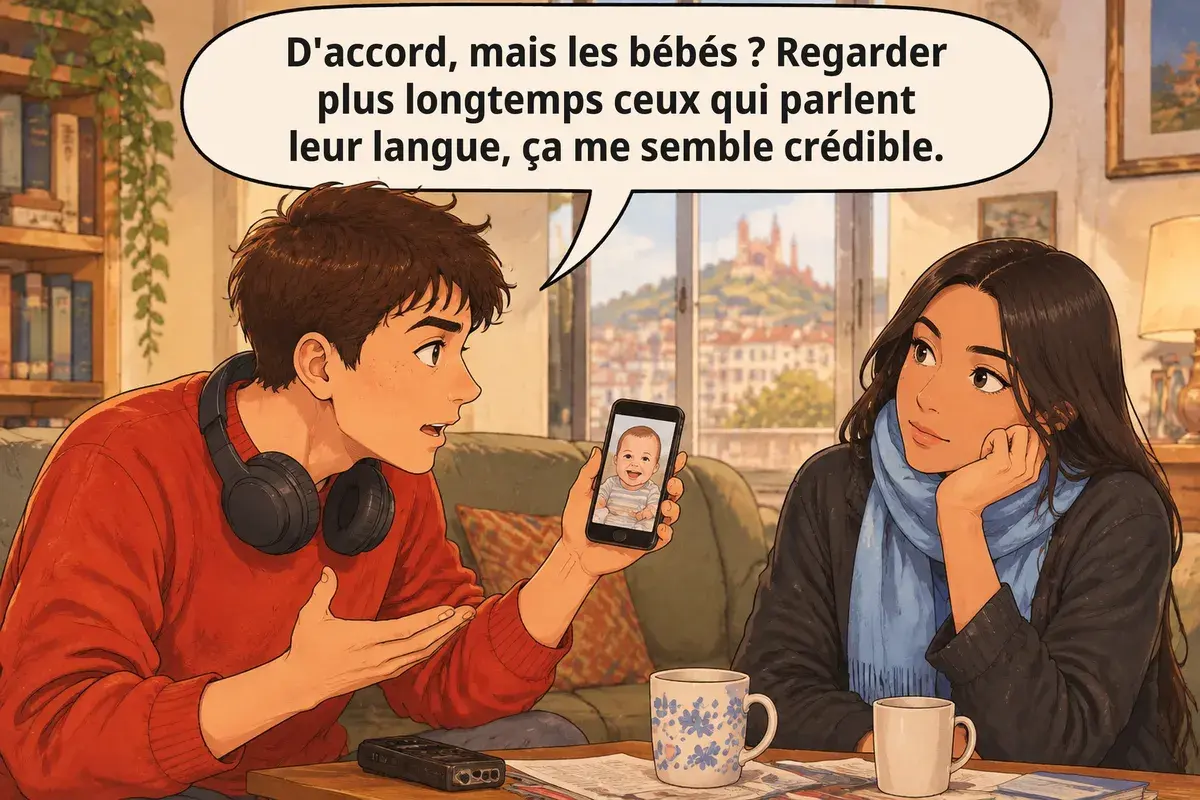
D'accord, mais les bébés ? Regarder plus longtemps ceux qui parlent leur langue, ça me semble crédible.
OK, but what about the babies? Looking longer at those who speak their language seems credible to me.

- Inès
Crédible, oui. Mais je doute qu'on puisse généraliser : un bébé de cinq mois n'est pas un adulte qui recrute ses collègues.
Credible, yes. But I doubt we can generalize: a five-month-old baby isn't an adult hiring colleagues.
- Pacha
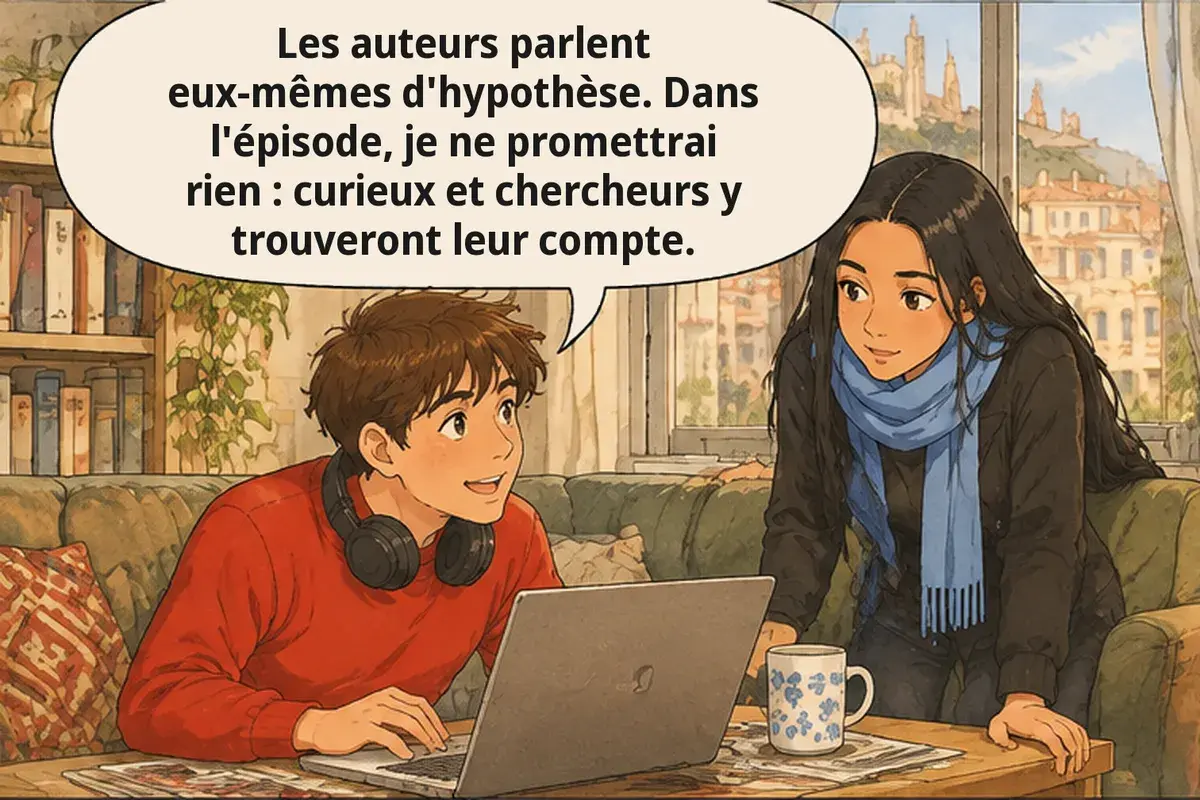
Les auteurs parlent eux-mêmes d'hypothèse. Dans l'épisode, je ne promettrai rien : curieux et chercheurs y trouveront leur compte.
The authors themselves talk about a hypothesis. In the episode, I won't promise anything: curious people and researchers alike will come out ahead.
- Inès
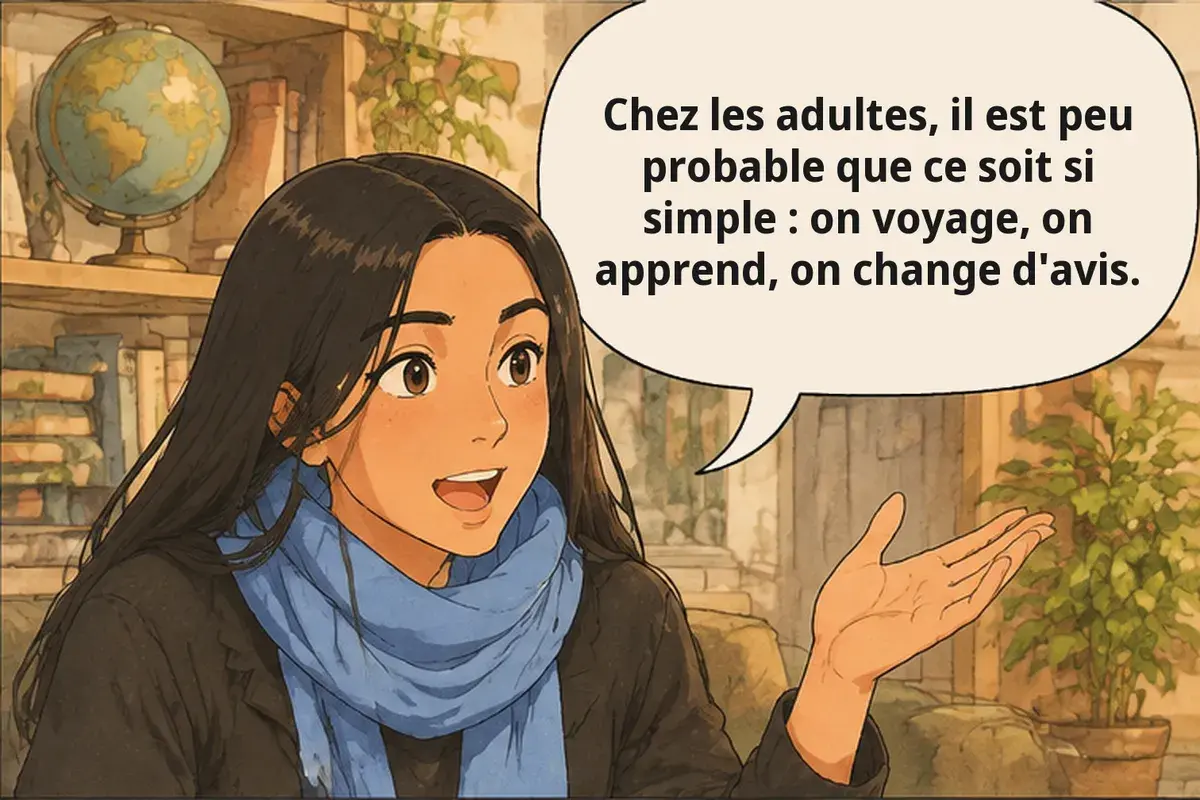
Chez les adultes, il est peu probable que ce soit si simple : on voyage, on apprend, on change d'avis.
With adults, it's unlikely to be that simple: we travel, we learn, we change our minds.
- Pacha
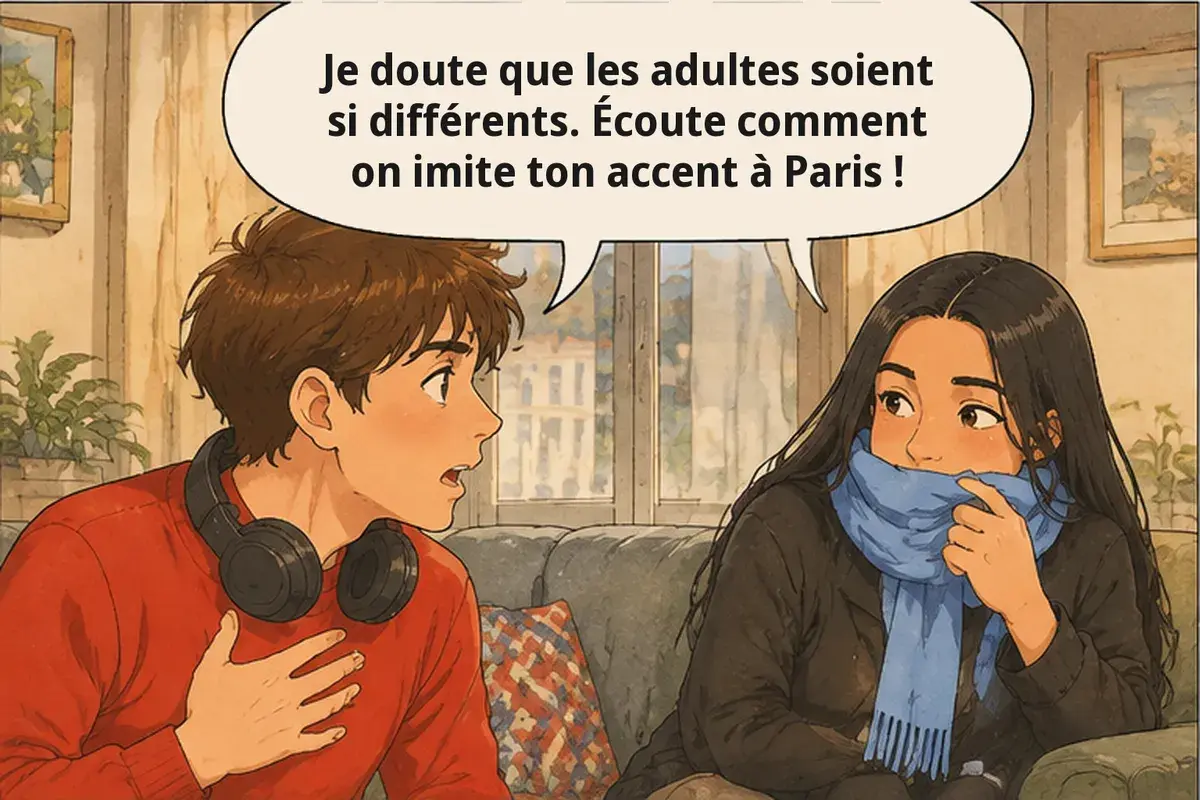
Je doute que les adultes soient si différents. Écoute comment on imite ton accent à Paris !
I doubt adults are that different. Listen to how people imitate your accent in Paris!

- Inès
Mon accent est un phénomène, pas une hypothèse ! Et personne ne l'imite aussi bien que moi.
My accent is a phenomenon, not a hypothesis! And nobody imitates it as well as I do.
- Pacha
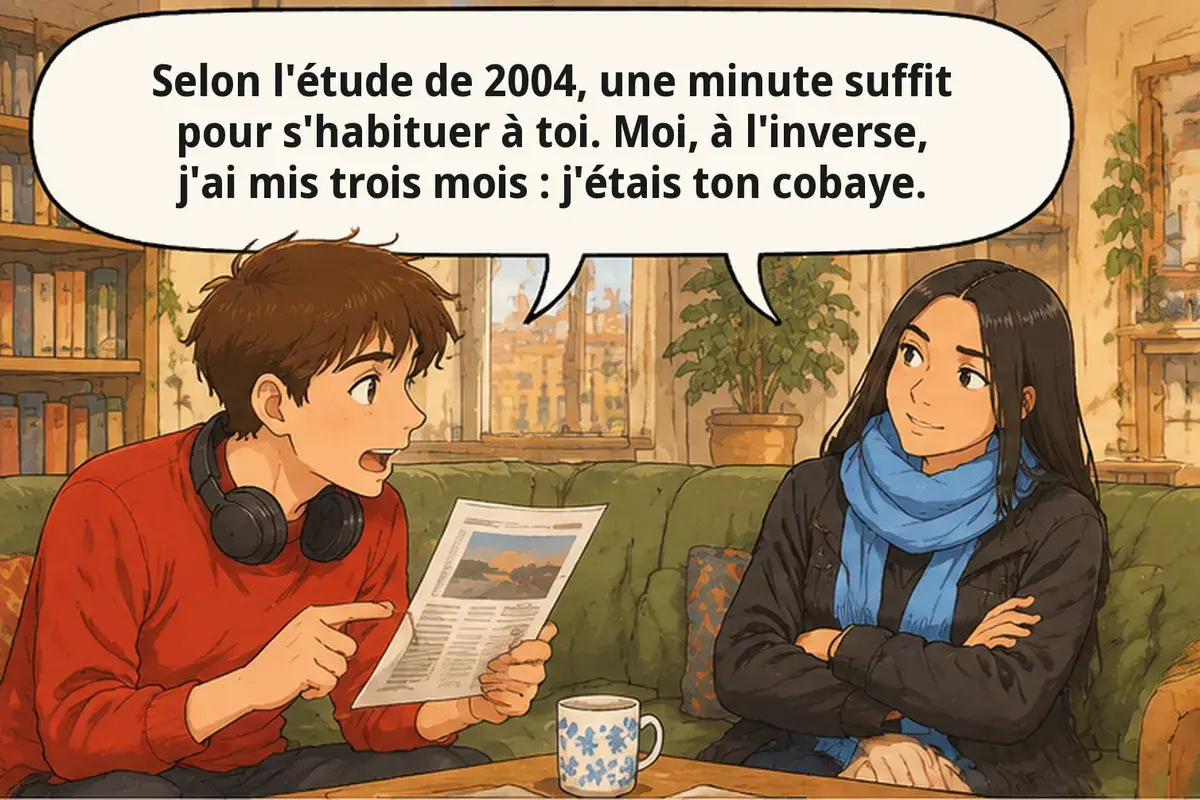
Selon l'étude de 2004, une minute suffit pour s'habituer à toi. Moi, à l'inverse, j'ai mis trois mois : j'étais ton cobaye.
According to the 2004 study, one minute is enough to get used to you. For me, conversely, it took three months: I was your guinea pig.
- Inès
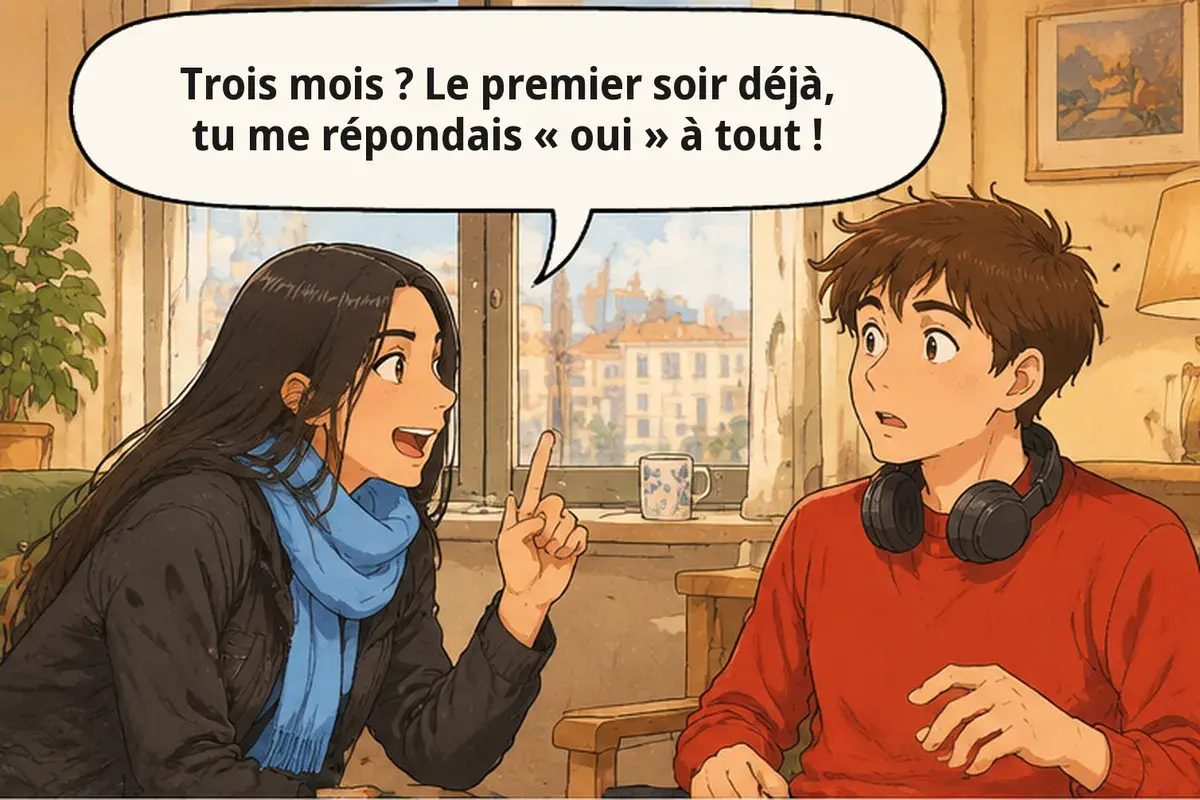
Trois mois ? Le premier soir déjà, tu me répondais « oui » à tout !
Three months? The very first evening, you were already answering “yes” to everything!
- Pacha
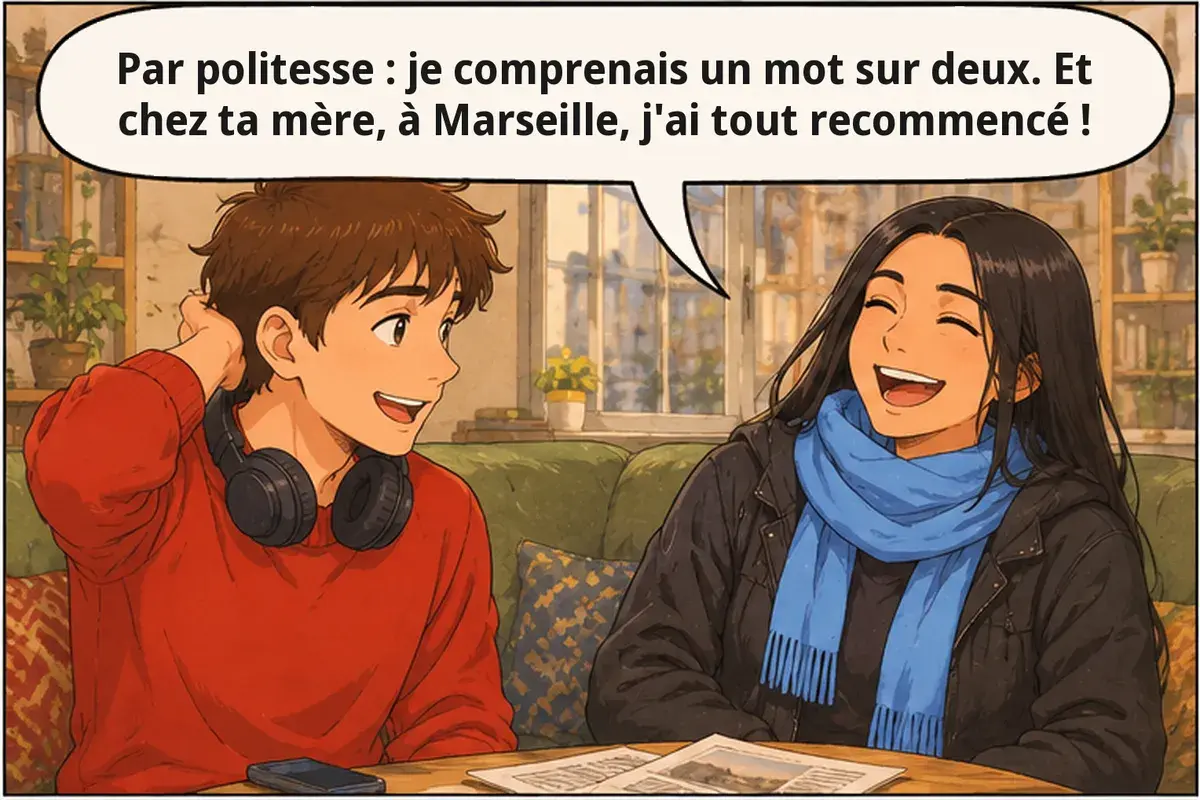
Par politesse : je comprenais un mot sur deux. Et chez ta mère, à Marseille, j'ai tout recommencé !
Out of politeness: I understood one word out of two. And at your mother's, in Marseille, I started all over again!
- Inès
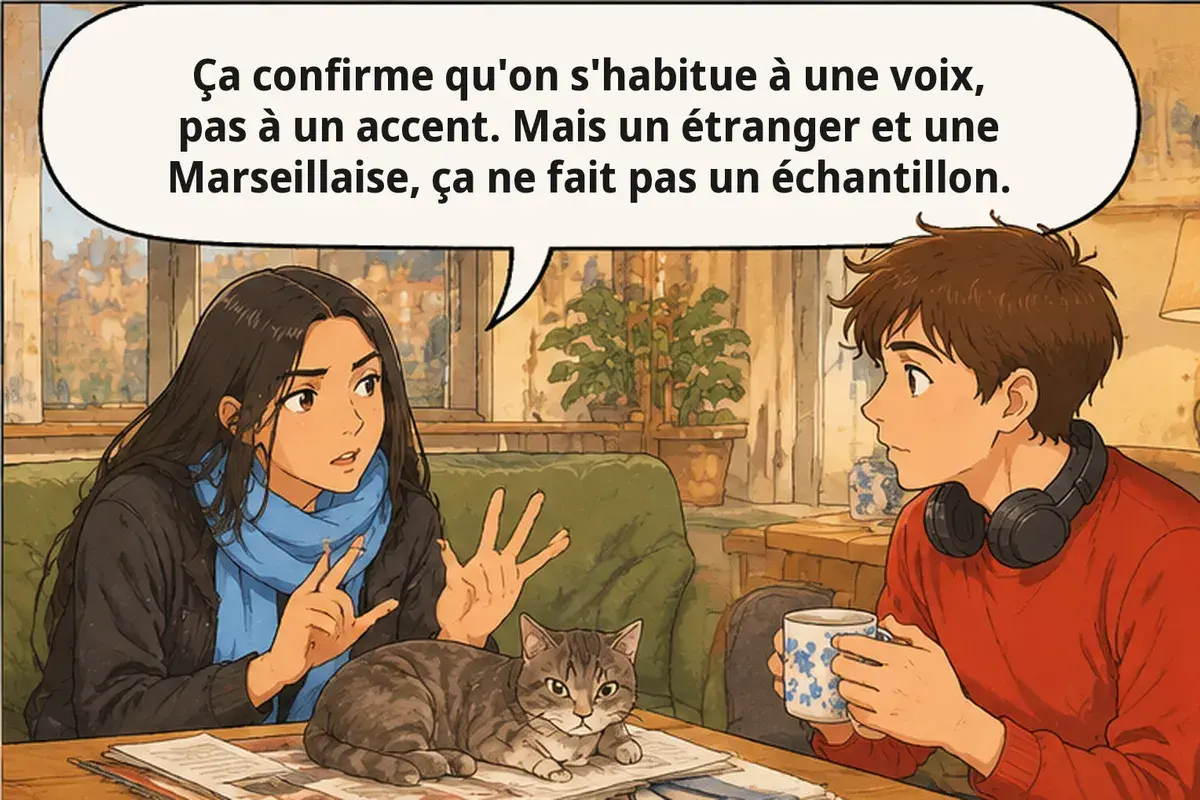
Ça confirme qu'on s'habitue à une voix, pas à un accent. Mais un étranger et une Marseillaise, ça ne fait pas un échantillon.
That confirms that you get used to a voice, not to an accent. But a foreigner and a woman from Marseille don't make a sample.
- Pacha
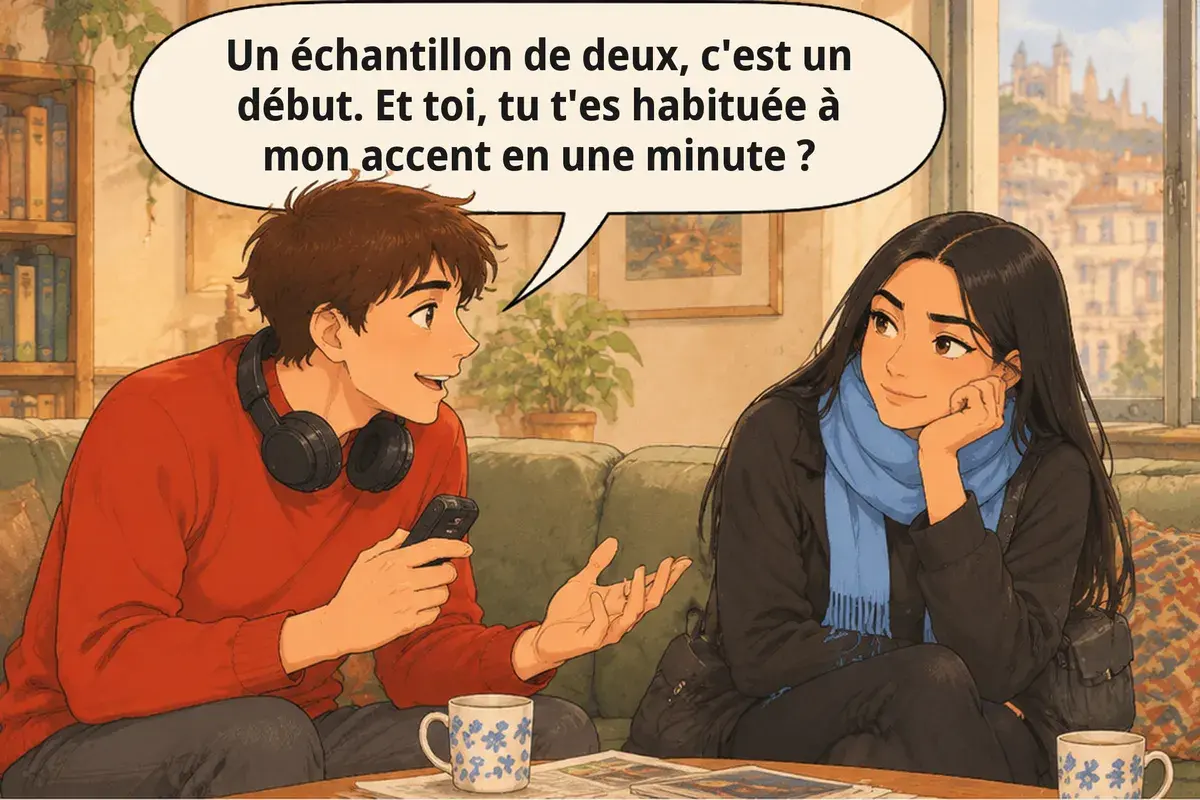
Un échantillon de deux, c'est un début. Et toi, tu t'es habituée à mon accent en une minute ?
A sample of two is a start. And you, did you get used to my accent in one minute? (to a woman)
- Inès
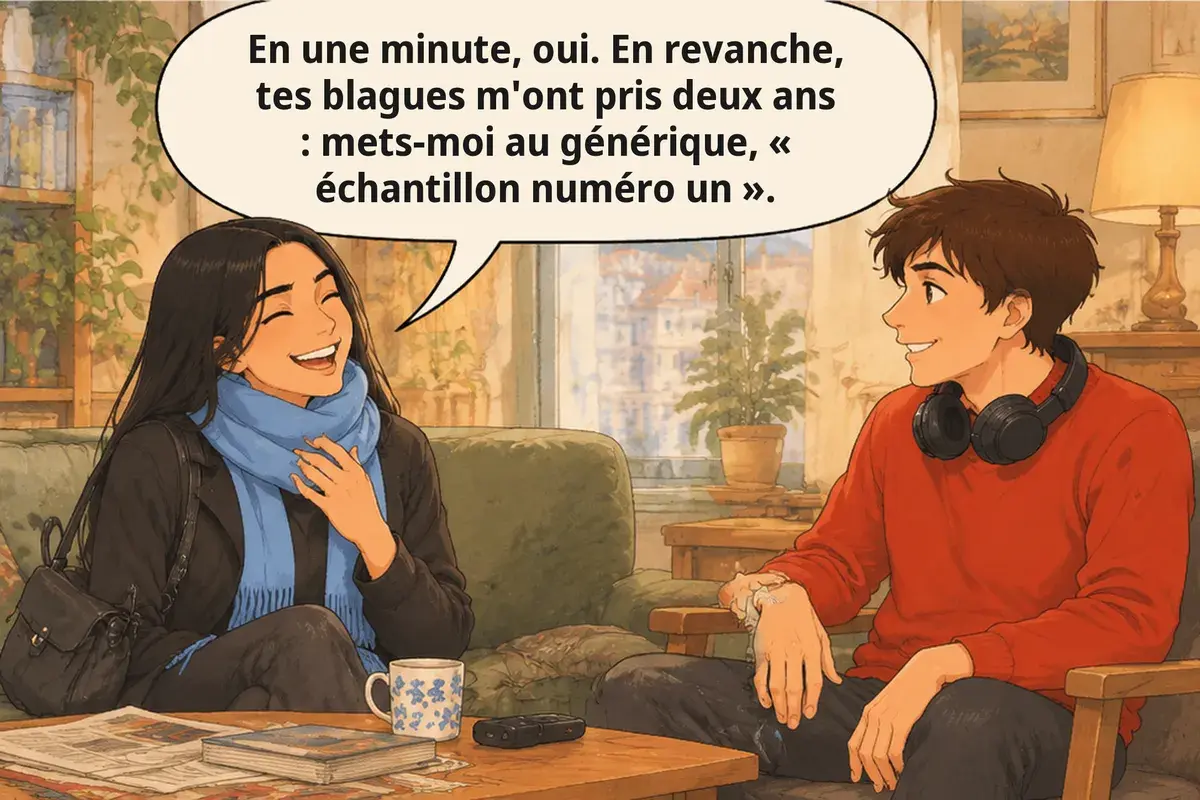
En une minute, oui. En revanche, tes blagues m'ont pris deux ans : mets-moi au générique, « échantillon numéro un ».
In one minute, yes. On the other hand, your jokes took me two years: put me in the credits, “sample number one.”
Grammar for this text
- La radio nous a donné le feu vert —
donner le feu vertmeans "to give the green light," like a green traffic light. - Lu, relu, et je reste sceptique —
luandreluare past participles: they refer to the article (l'article, masculine), so there is no-e. Insceptique, thescbeforeesounds like s, and thepis pronounced. - C'est un article de vulgarisation, pas une thèse ! —
vulgarisationis "popularizing science," andthèseis "thesis." - quelle marge d'erreur ? —
marge d'erreuris "margin of error";échantillonis "sample." - je doute qu'ils aient testé assez de monde — past subjunctive (unit 18):
aient(fromavoir) + the participletesté. It's done, but the speaker doubts it. - un résultat n'est un fait qu'une fois reproduit —
ne… qu'une foismeans "only when";reproduitis "reproduced." - il est peu probable que ce soit si simple —
peu probableis "unlikely"; after it, and afterje doute que, comes the subjunctive:soit,soient(fromêtre). - Moi, à l'inverse, j'ai mis trois mois —
à l'inversemeans "on the contrary": your own case against what was just said. - j'étais ton cobaye —
cobayeis "guinea pig"; un phénomène is "a phenomenon, an oddity" (a joke). - curieux et chercheurs y trouveront leur compte —
y trouver son comptemeans "to come out ahead";sonchanges with the person:leur,mon,notre.
Words and grammar of the unit: Read a popular science article.
Learn the words from the texts with flashcards
In the app, you can tap any word in a text to see its translation, forms and examples, and new words stick with flashcards. 15 minutes a day.
Start for freeEverything is open for free. No card needed to sign up.