

French dialogue with translation · B2 · 18 lines
Alors pourquoi faire une déclaration ? So why file a return?
Comic · 18 panels
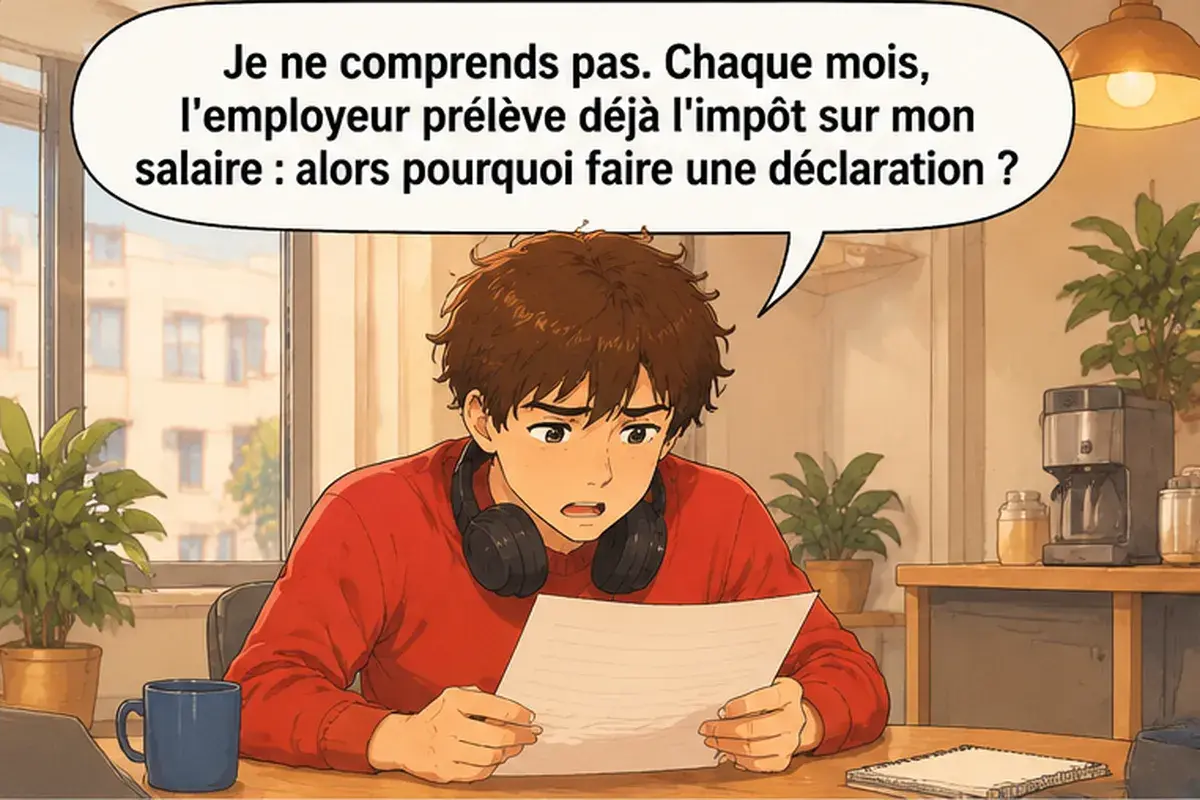
- Pacha
Je ne comprends pas. Chaque mois, l'employeur prélève déjà l'impôt sur mon salaire : alors pourquoi faire une déclaration ?
I don't understand. Every month my employer already withholds the tax from my salary, so why file a return?
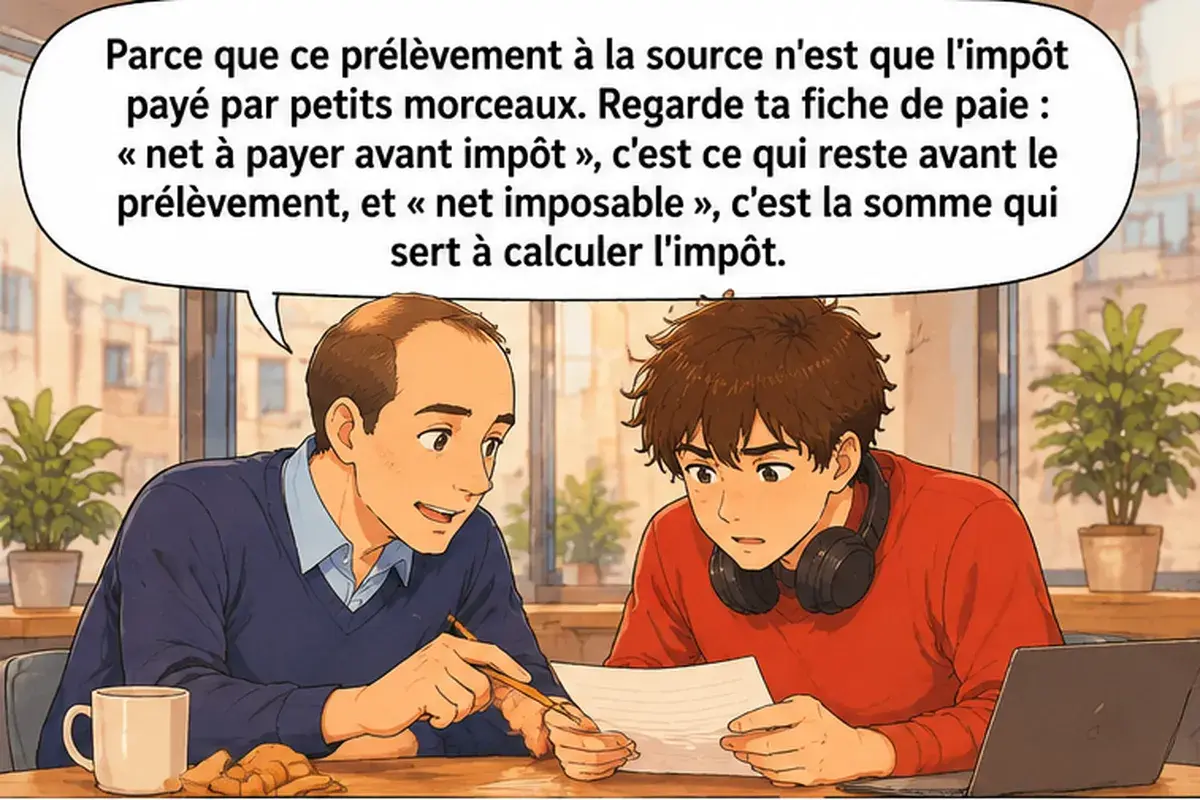
- Baptiste
Parce que ce prélèvement à la source n'est que l'impôt payé par petits morceaux. Regarde ta fiche de paie : « net à payer avant impôt », c'est ce qui reste avant le prélèvement, et « net imposable », c'est la somme qui sert à calculer l'impôt.
Because this tax withholding is just the tax paid in small pieces. Look at your pay stub: "net pay before tax" is what's left before the withholding, and "net taxable" is the amount used to calculate the tax.
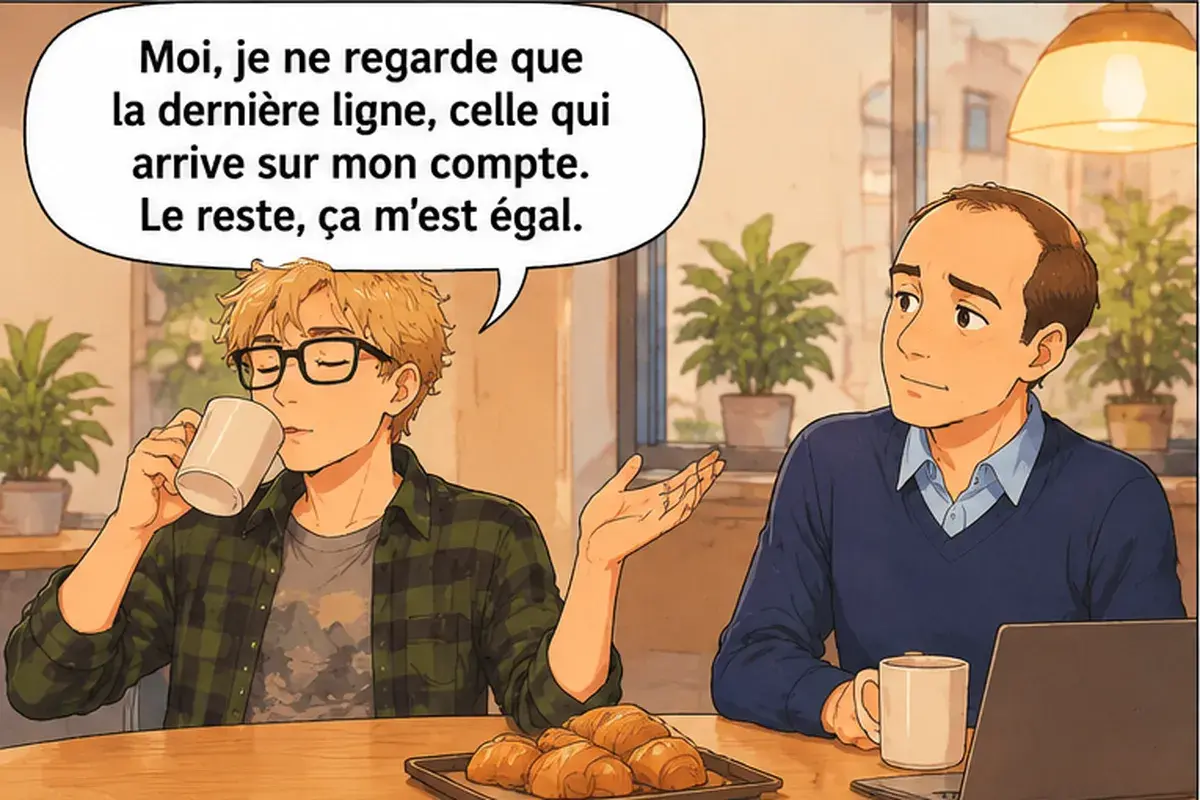
- Thomas
Moi, je ne regarde que la dernière ligne, celle qui arrive sur mon compte. Le reste, ça m'est égal.
Me, I only look at the last line, the one that arrives in my account. The rest, I don't care.
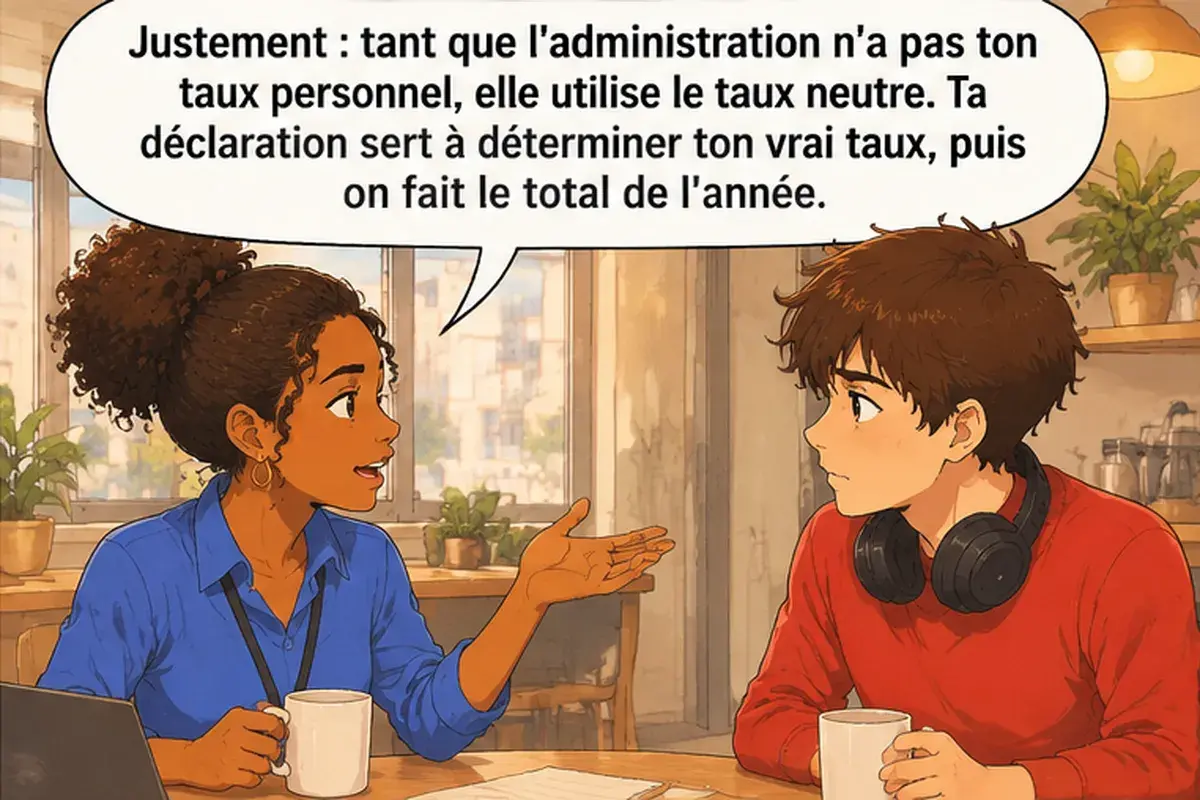
- Aïcha
Justement : tant que l'administration n'a pas ton taux personnel, elle utilise le taux neutre. Ta déclaration sert à déterminer ton vrai taux, puis on fait le total de l'année.
Exactly: as long as the tax office doesn't have your personal rate, it uses the neutral rate. Your return is used to determine your real rate, and then they work out the total for the year.
- Baptiste
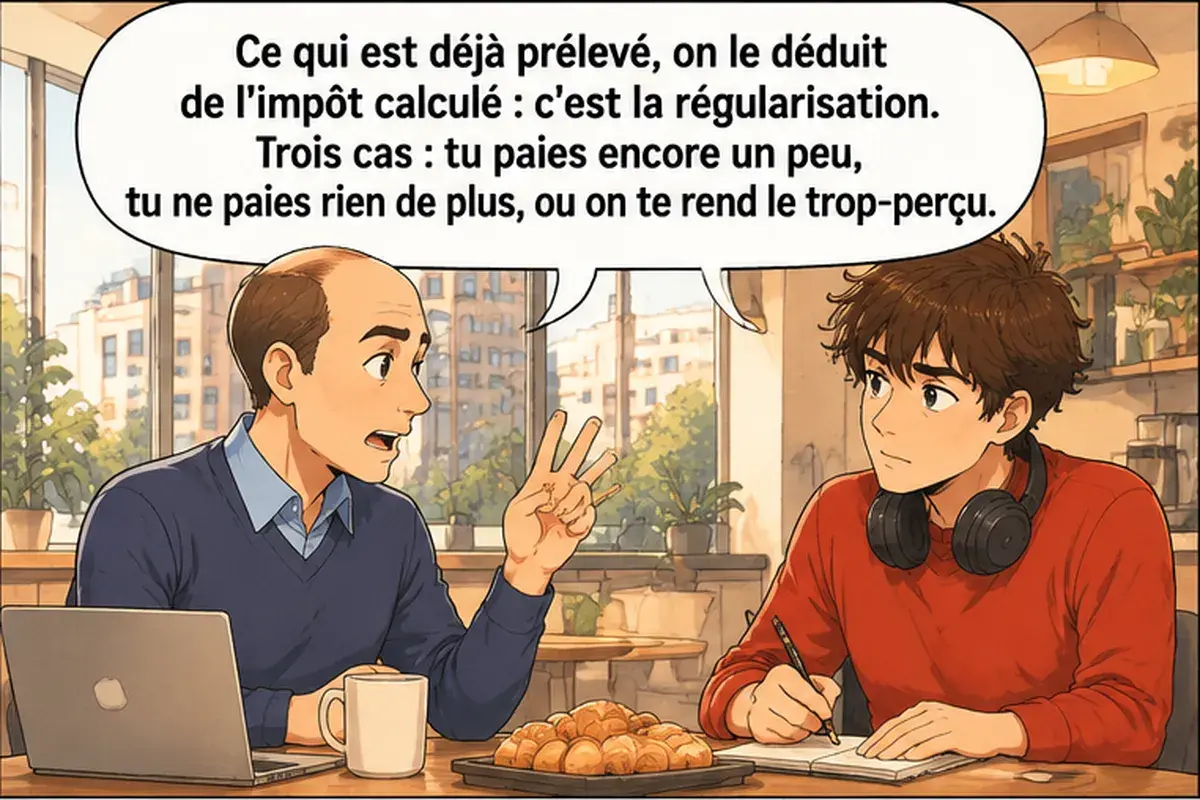
Ce qui est déjà prélevé, on le déduit de l'impôt calculé : c'est la régularisation. Trois cas : tu paies encore un peu, tu ne paies rien de plus, ou on te rend le trop-perçu.
What's already been withheld is deducted from the calculated tax: that's the adjustment. Three cases: you pay a little more, you pay nothing more, or you get the overpayment back.
- Thomas
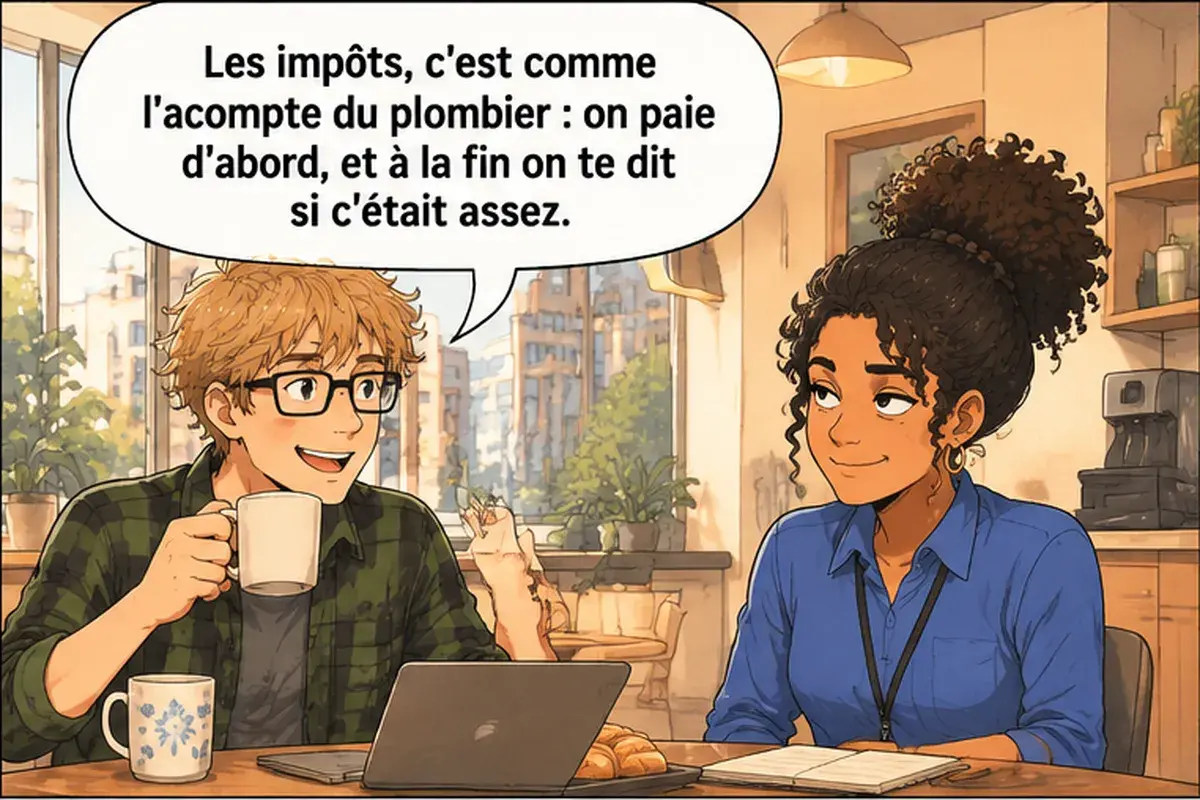
Les impôts, c'est comme l'acompte du plombier : on paie d'abord, et à la fin on te dit si c'était assez.
Taxes are like the plumber's deposit: you pay first, and in the end they tell you whether it was enough.
- Pacha
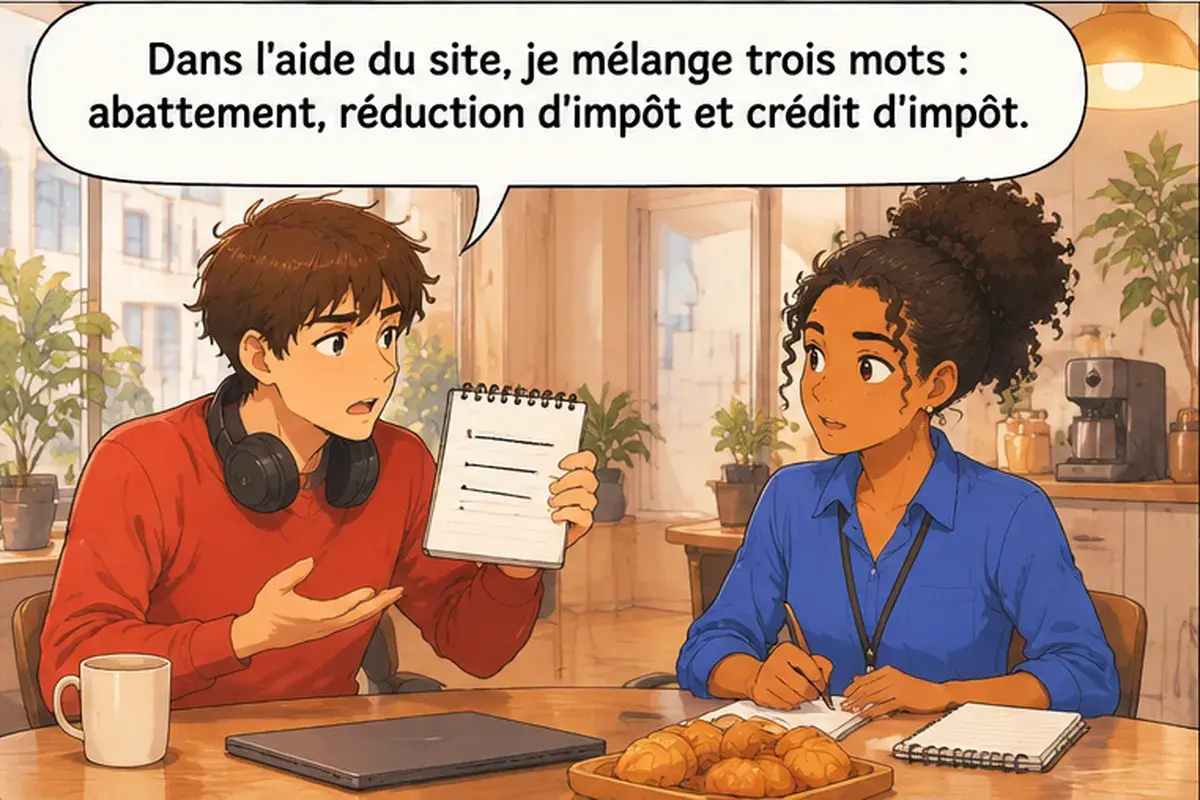
Dans l'aide du site, je mélange trois mots : abattement, réduction d'impôt et crédit d'impôt.
In the site's help section, I mix up three words: tax allowance, tax reduction and tax credit.
- Aïcha
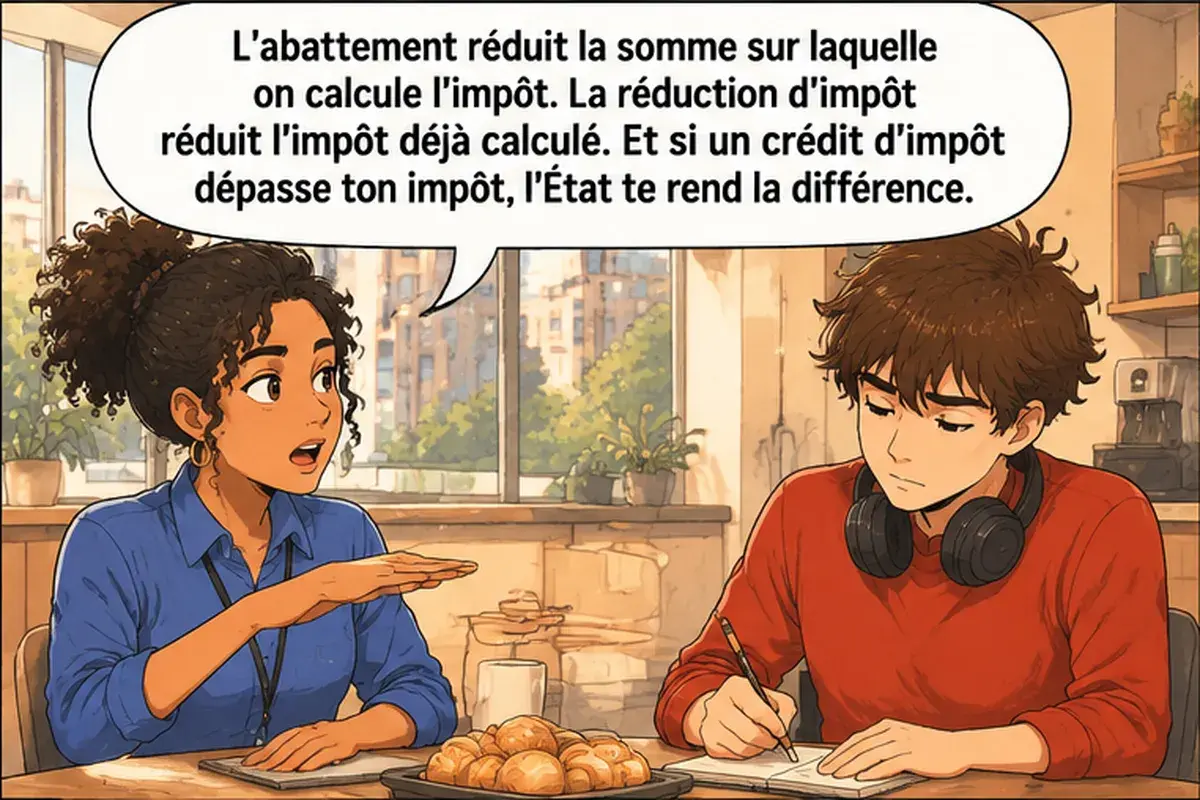
L'abattement réduit la somme sur laquelle on calcule l'impôt. La réduction d'impôt réduit l'impôt déjà calculé. Et si un crédit d'impôt dépasse ton impôt, l'État te rend la différence.
The allowance reduces the amount the tax is calculated on. The tax reduction reduces the tax that's already been calculated. And if a tax credit is bigger than your tax, the state gives you back the difference.
- Pacha
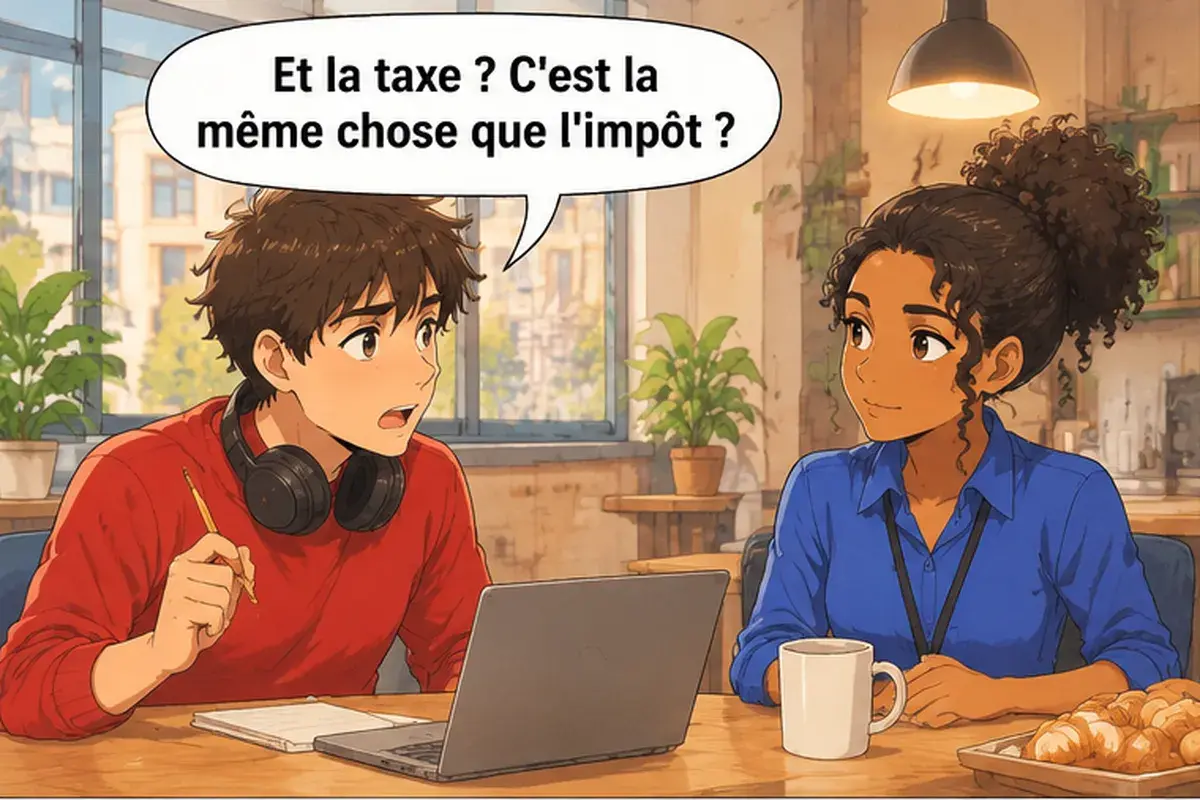
Et la taxe ? C'est la même chose que l'impôt ?
And the sales tax? Is that the same thing as income tax?
- Aïcha
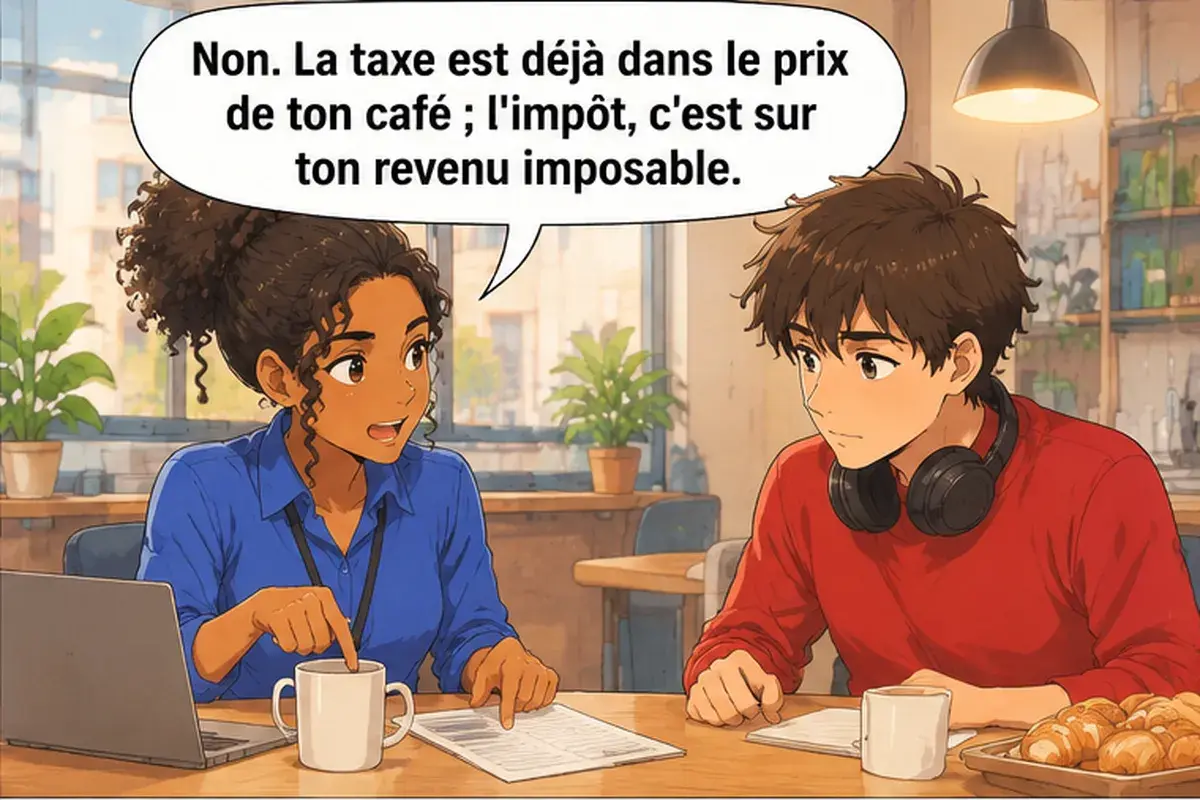
Non. La taxe est déjà dans le prix de ton café ; l'impôt, c'est sur ton revenu imposable.
No. The sales tax is already in the price of your coffee; income tax is on your taxable income.
- Thomas
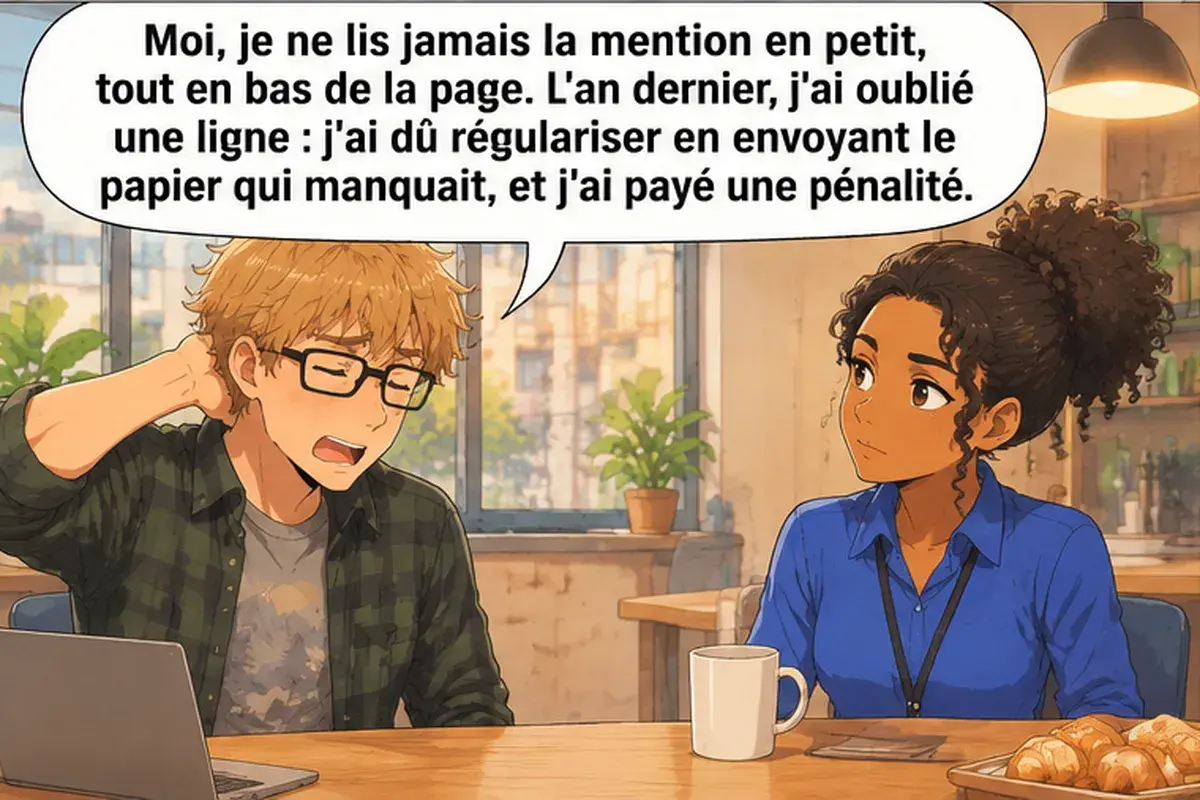
Moi, je ne lis jamais la mention en petit, tout en bas de la page. L'an dernier, j'ai oublié une ligne : j'ai dû régulariser en envoyant le papier qui manquait, et j'ai payé une pénalité.
Me, I never read the note in small print at the very bottom of the page. Last year I missed a line: I had to put things in order by sending the missing paper, and I paid a penalty.
- Aïcha
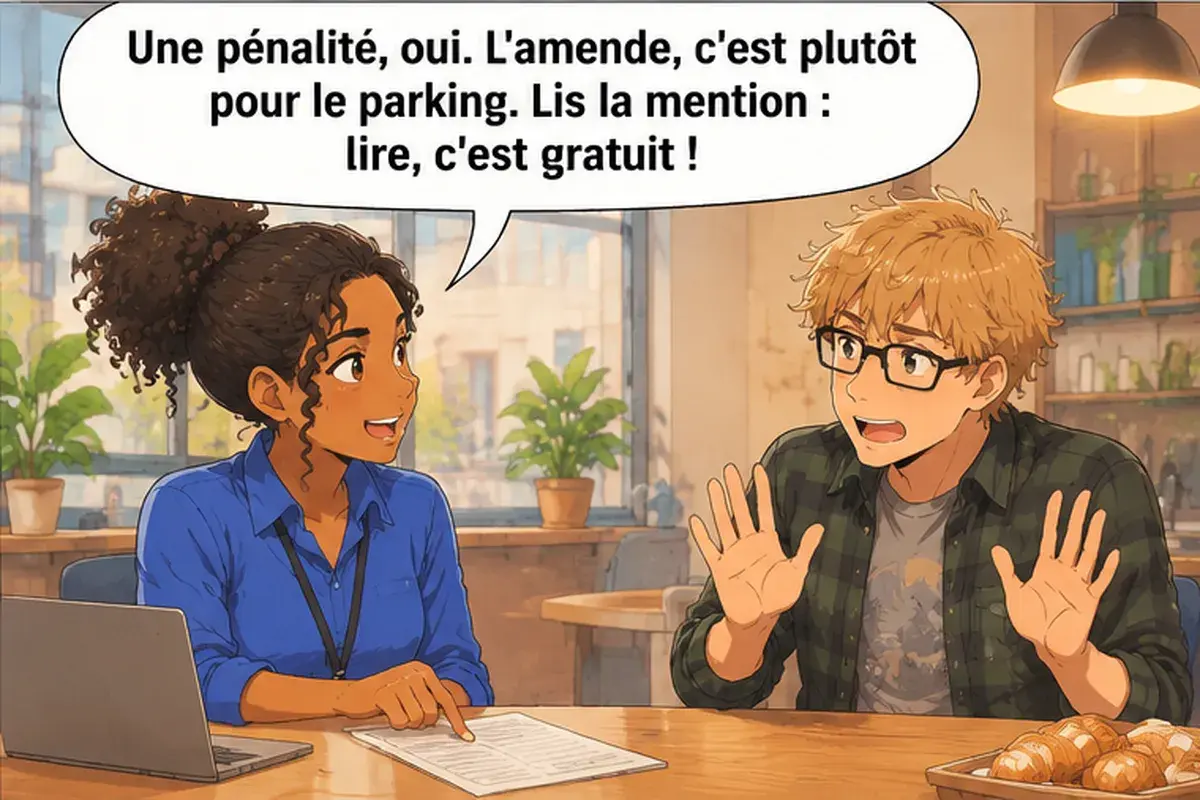
Une pénalité, oui. L'amende, c'est plutôt pour le parking. Lis la mention : lire, c'est gratuit !
A penalty, yes. A fine is more for parking. Read the note: reading is free!
- Pacha
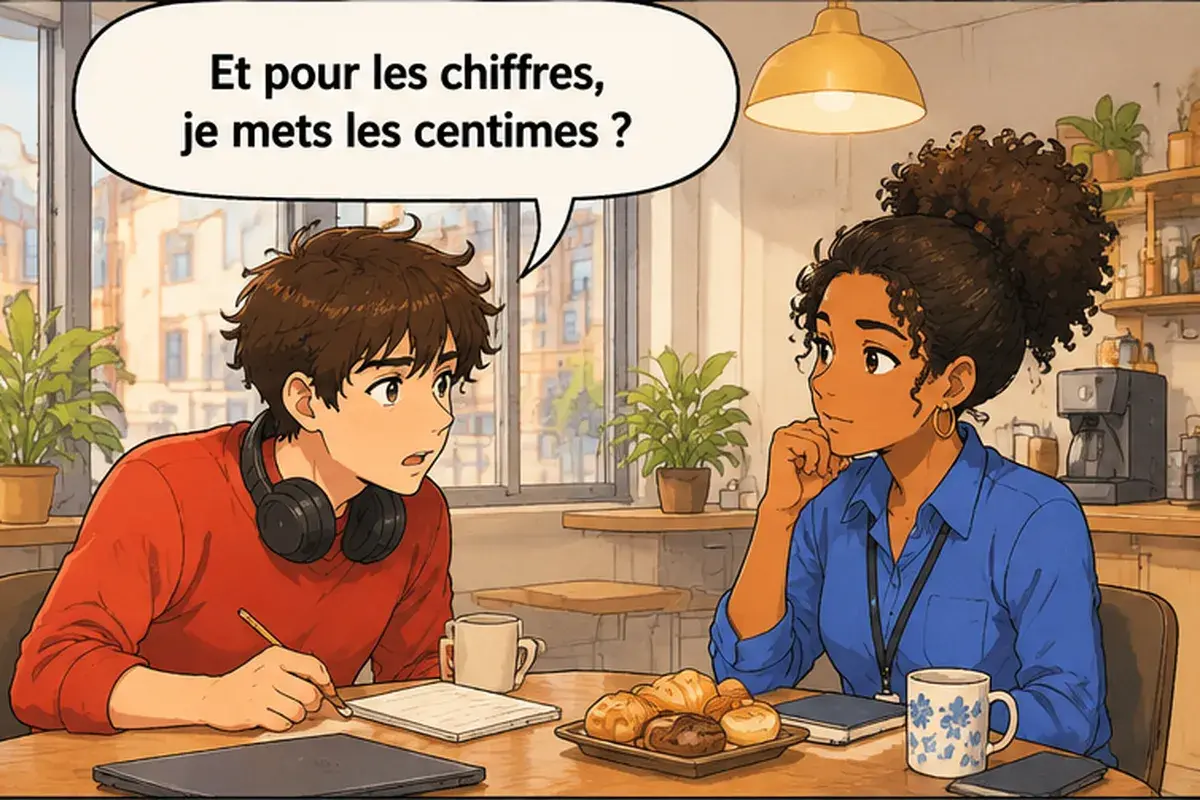
Et pour les chiffres, je mets les centimes ?
And for the numbers, do I put the cents?
- Aïcha
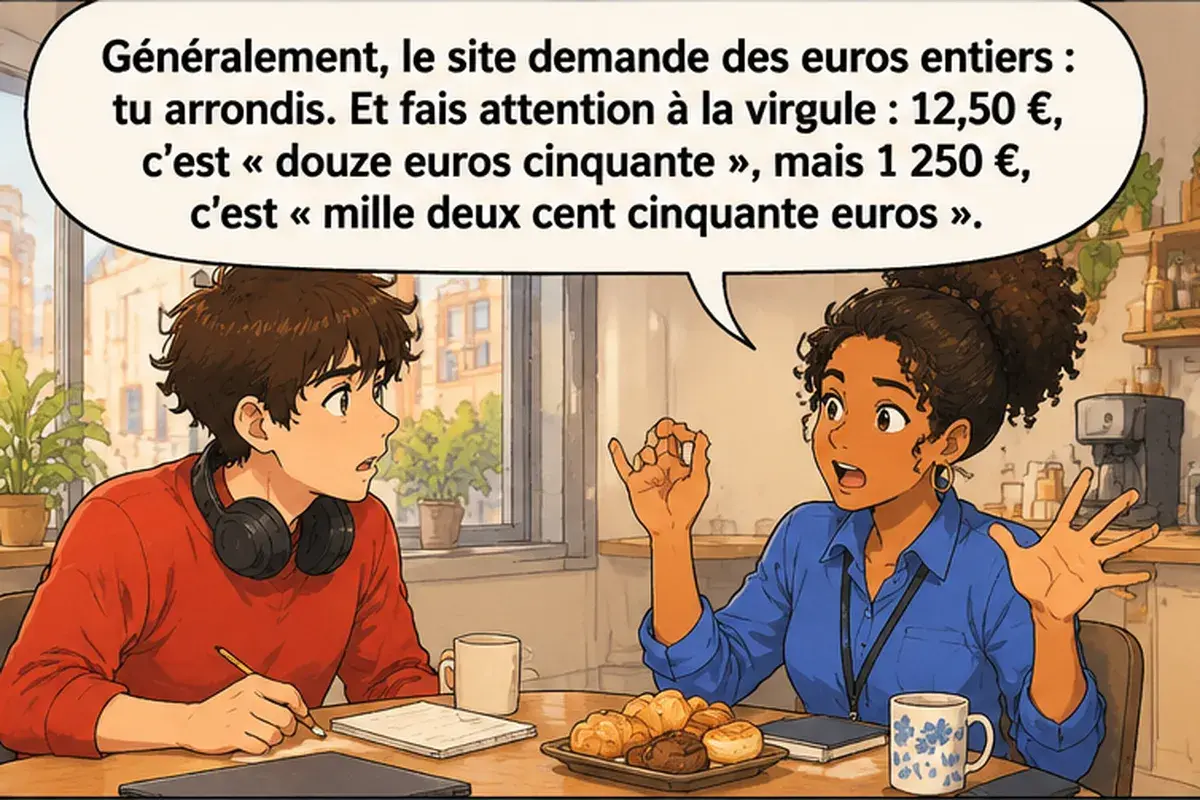
Généralement, le site demande des euros entiers : tu arrondis. Et fais attention à la virgule : 12,50 €, c'est « douze euros cinquante », mais 1 250 €, c'est « mille deux cent cinquante euros ».
Usually the site asks for whole euros: you round. And watch the comma: 12,50 € is "twelve euros fifty", but 1 250 € is "one thousand two hundred fifty euros".
- Thomas
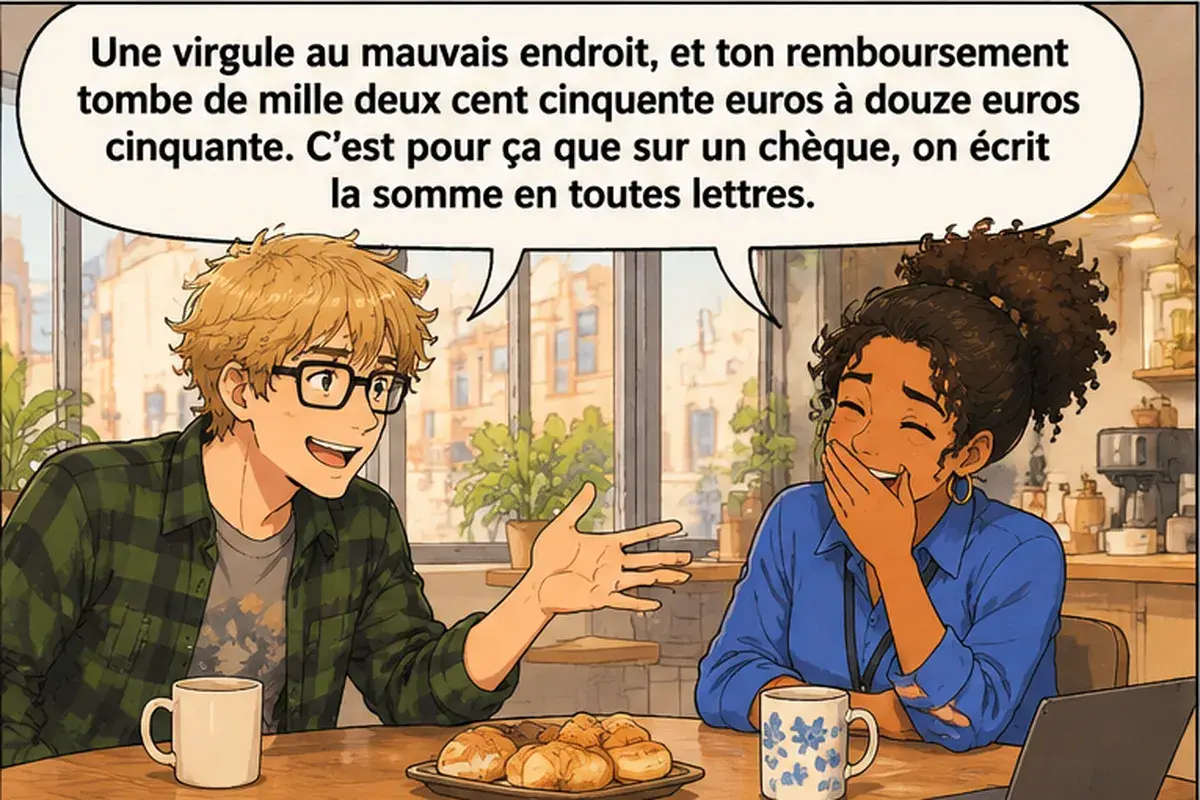
Une virgule au mauvais endroit, et ton remboursement tombe de mille deux cent cinquante euros à douze euros cinquante. C'est pour ça que sur un chèque, on écrit la somme en toutes lettres.
One comma in the wrong place, and your refund drops from one thousand two hundred fifty euros to twelve euros fifty. That's why on a check you write the amount in words.
- Baptiste
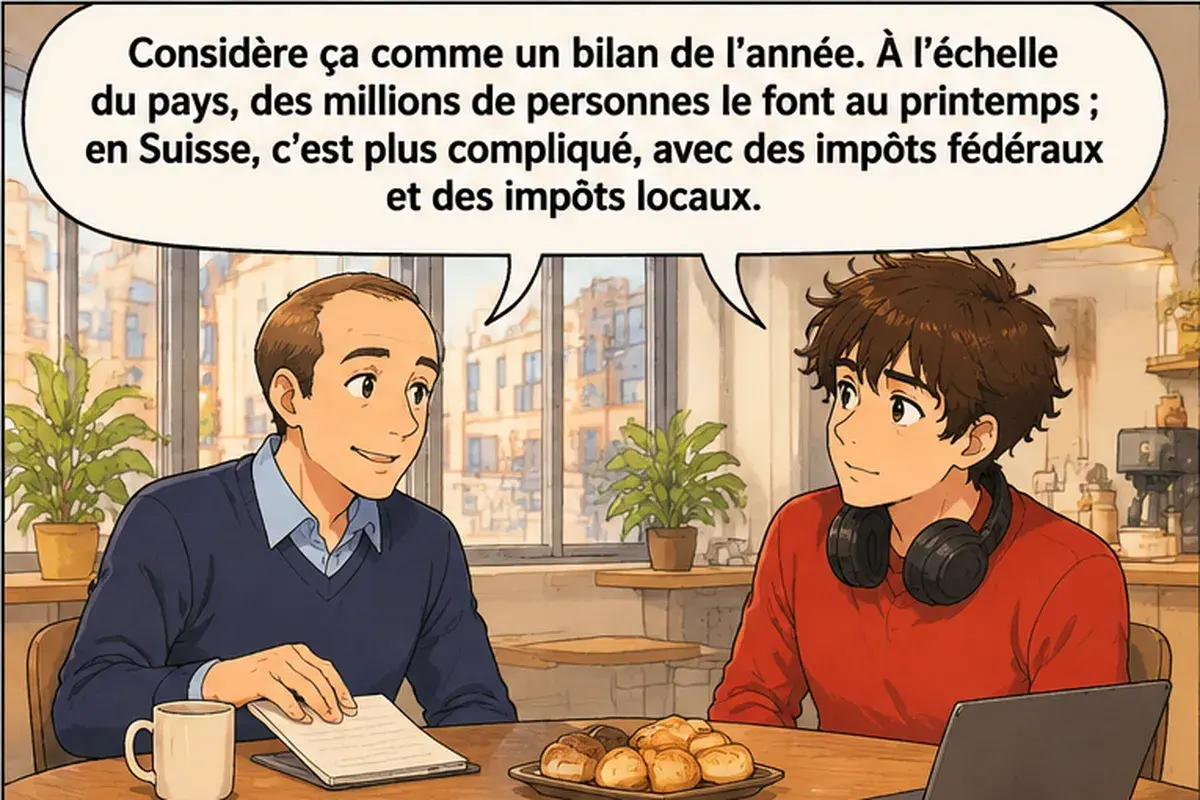
Considère ça comme un bilan de l'année. À l'échelle du pays, des millions de personnes le font au printemps ; en Suisse, c'est plus compliqué, avec des impôts fédéraux et des impôts locaux.
Consider it a review of the year. On the scale of the whole country, millions of people do it in the spring; in Switzerland it's more complicated, with federal taxes and local taxes.

- Pacha
Merci, tous les trois. Je vous suis redevable !
Thanks, all three of you. I'm indebted to you! (to several people)

- Thomas
Redevable ? Alors tu paies le café.
Indebted? Then you're buying the coffee.
Grammar for this text
- l'employeur prélève déjà l'impôt —
prélèveis the il form ofprélever: "to withhold". Theein the stem becomesè.Prélèvement à la sourceis tax withholding: the tax is taken from your pay before you get it. - net à payer avant impôt — a line on the pay stub: the amount after contributions but before tax.
Net imposableis the amount the tax is calculated on; that's not what reaches your account. - tant que l'administration n'a pas ton taux personnel —
tant quemeans "as long as".Le taux neutreis the temporary rate used until you have a personal one. - on le déduit de l'impôt calculé —
déduitis the il / on form ofdéduire: "to deduct".lehere means "it" (what has already been withheld). - l'acompte du plombier —
acompteis a deposit paid in advance. Thomas's joke: you pay tax in advance too, and the final total is worked out at the end. - la somme sur laquelle on calcule l'impôt —
sur laquellemeans "on which" (unit 2,lequelafter a preposition). - Je vous suis redevable ! — a bookish phrase:
être redevablemeans "to be indebted". Thomas answers like a regular person: "Then you're buying the coffee."
Words and grammar of the unit: Fill out a tax return.
Learn the words from the texts with flashcards
In the app, you can tap any word in a text to see its translation, forms and examples, and new words stick with flashcards. 15 minutes a day.
Start for freeEverything is open for free. No card needed to sign up.