

French dialogue with translation · B2 · 18 lines
Ce que je souhaite, c'est… What I'd like is…
Comic · 18 panels
- Pacha
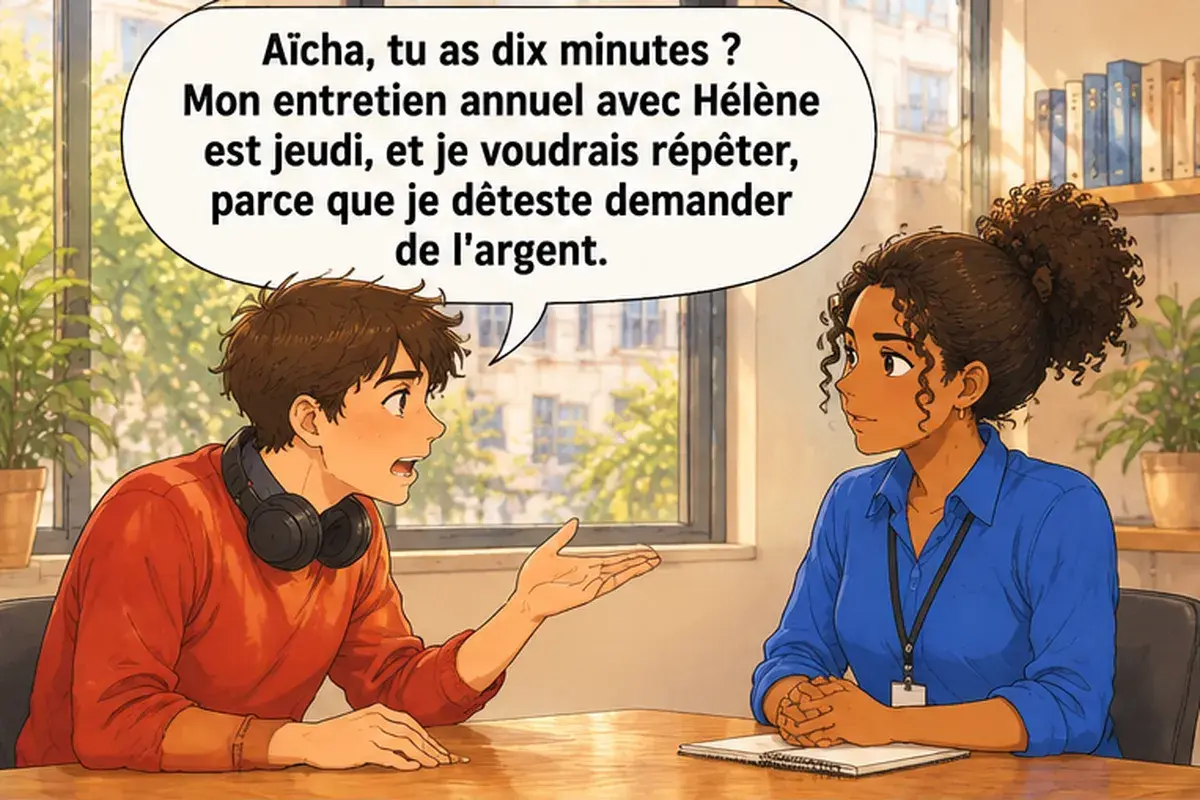
Aïcha, tu as dix minutes ? Mon entretien annuel avec Hélène est jeudi, et je voudrais répéter, parce que je déteste demander de l'argent.
Aïcha, do you have ten minutes? My annual review with Hélène is Thursday, and I'd like to rehearse, because I hate asking for money.
- Aïcha
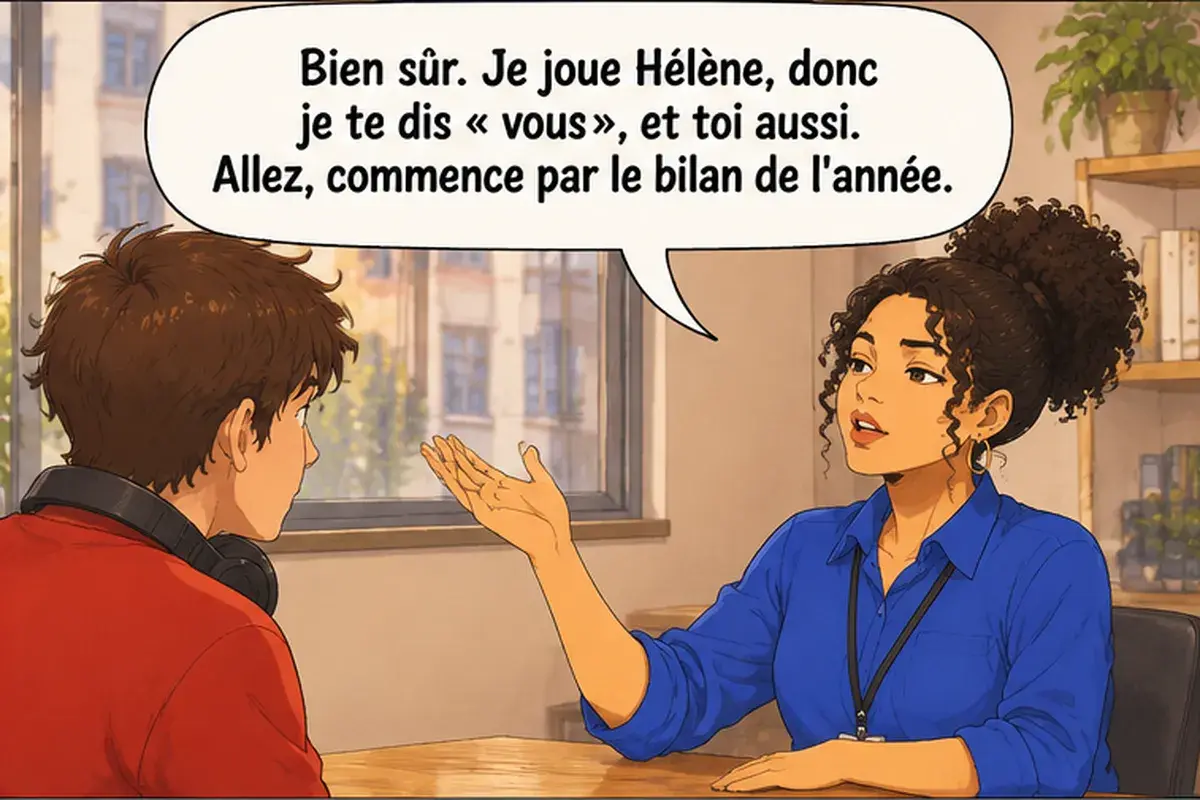
Bien sûr. Je joue Hélène, donc je te dis « vous », et toi aussi. Allez, commence par le bilan de l'année.
Sure. I'll play Hélène, so I'll say "vous" to you, and you do the same. Come on, start with the review of your year.
- Pacha
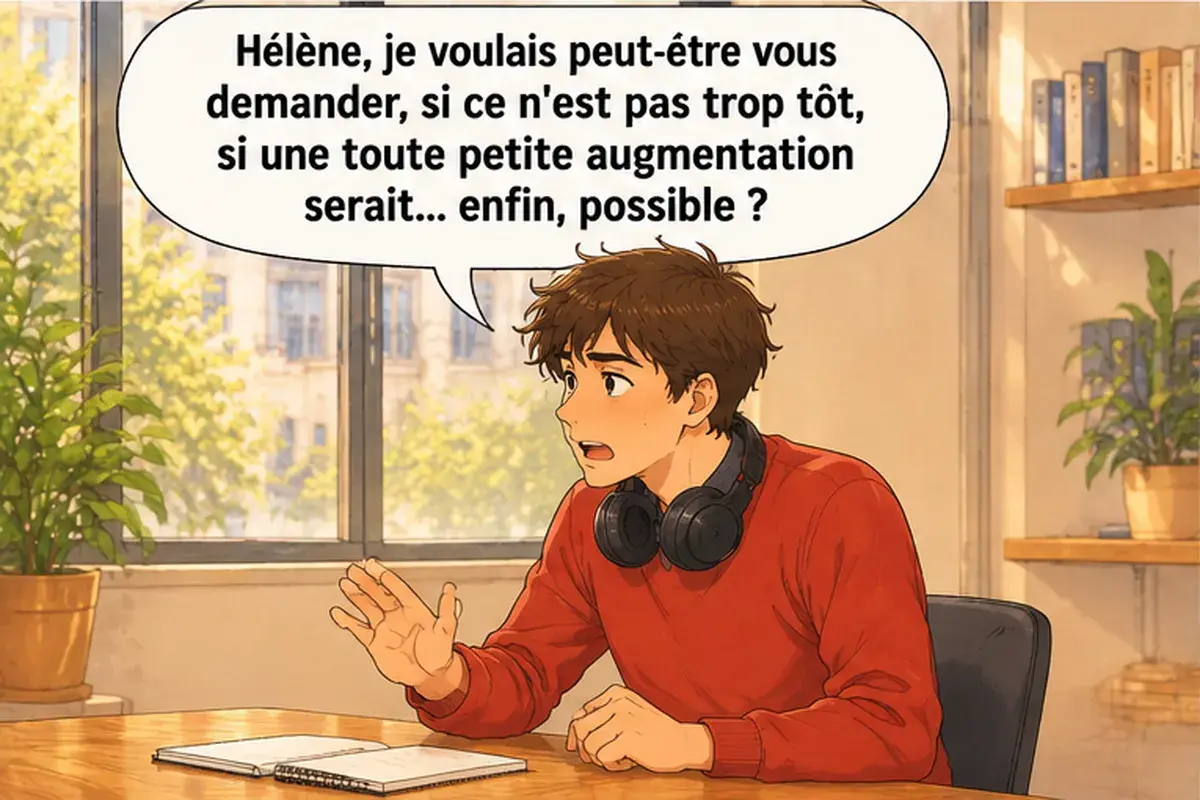
Hélène, je voulais peut-être vous demander, si ce n'est pas trop tôt, si une toute petite augmentation serait… enfin, possible ?
Hélène, I wanted to ask you, maybe, if it's not too early, whether a very small raise would be… well, possible? (formal)
- Aïcha
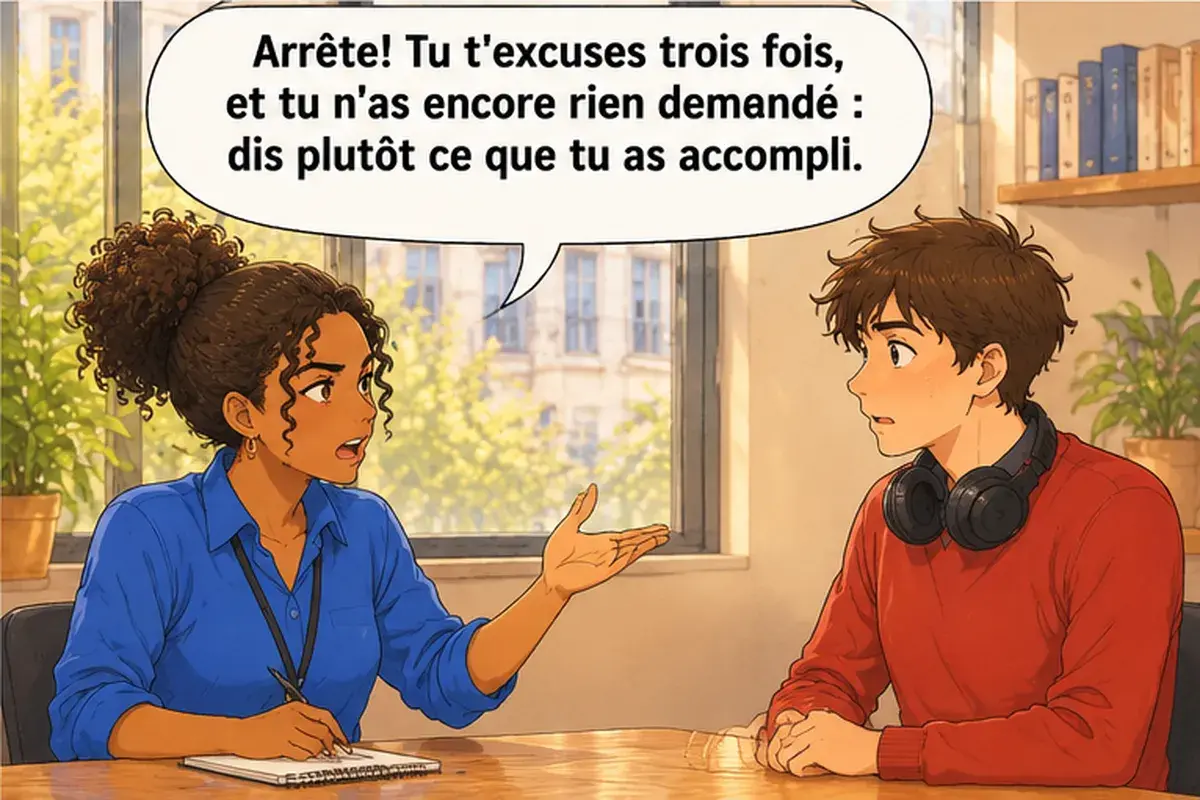
Arrête ! Tu t'excuses trois fois, et tu n'as encore rien demandé : dis plutôt ce que tu as accompli.
Stop! You've apologized three times and you haven't asked for anything yet: say what you've accomplished instead.
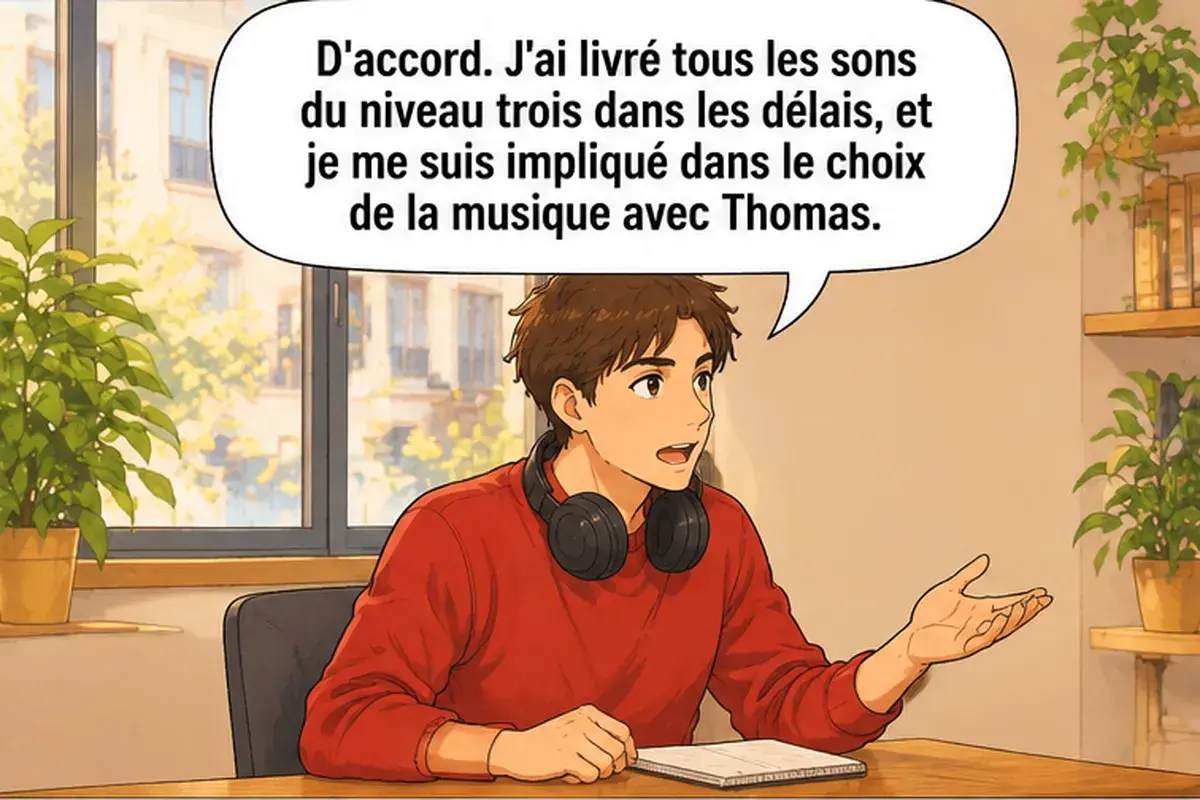
- Pacha
D'accord. J'ai livré tous les sons du niveau trois dans les délais, et je me suis impliqué dans le choix de la musique avec Thomas.
OK. I delivered all the level three sounds on time, and I got involved in choosing the music with Thomas (man speaking).
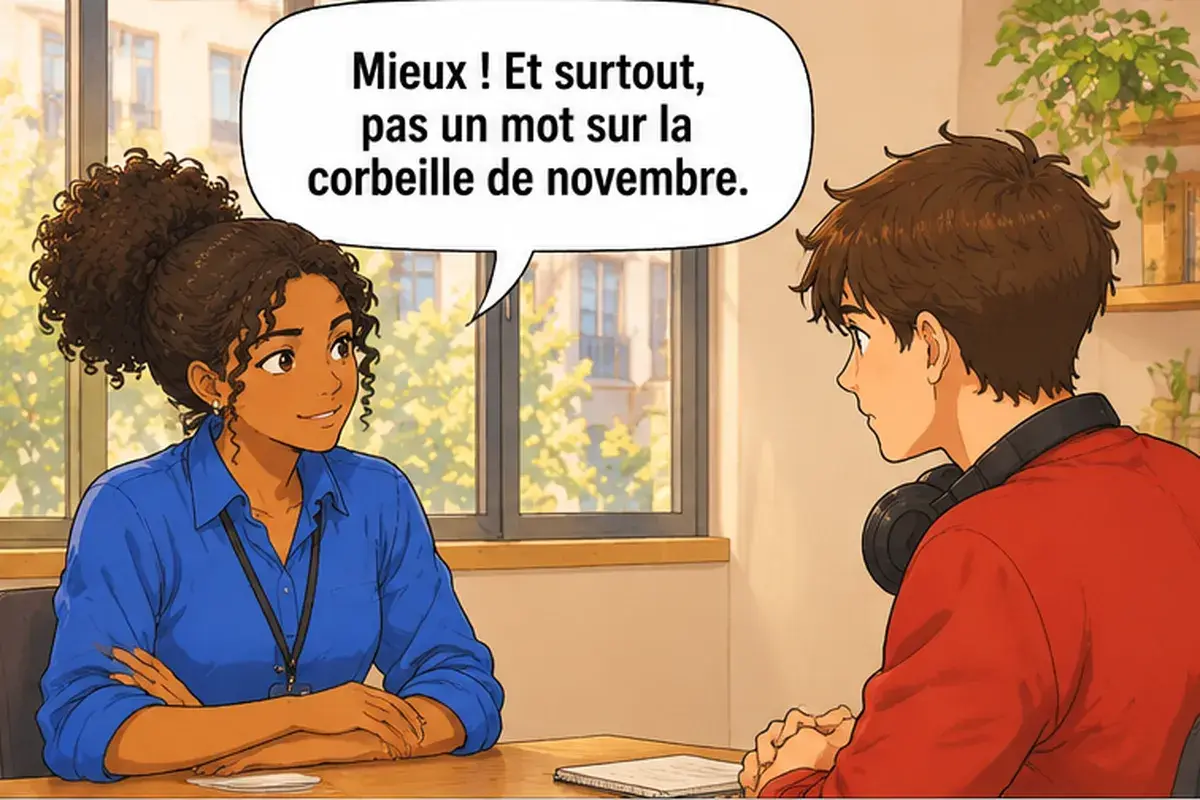
- Aïcha
Mieux ! Et surtout, pas un mot sur la corbeille de novembre.
Better! And above all, not a word about the November trash folder.
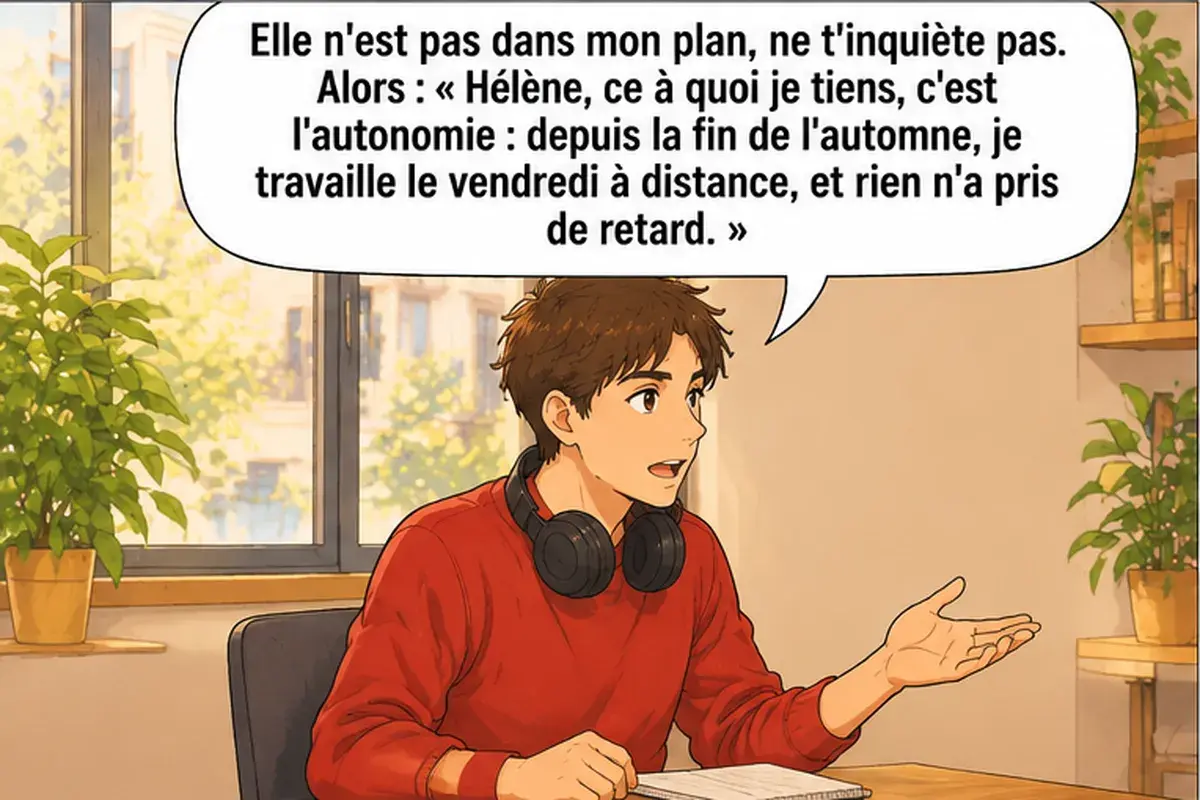
- Pacha
Elle n'est pas dans mon plan, ne t'inquiète pas. Alors : « Hélène, ce à quoi je tiens, c'est l'autonomie : depuis la fin de l'automne, je travaille le vendredi à distance, et rien n'a pris de retard. »
It's not in my plan, don't worry. So: "Hélène, what I really care about is independence: since the end of fall, I've worked remotely on Fridays, and nothing has fallen behind."
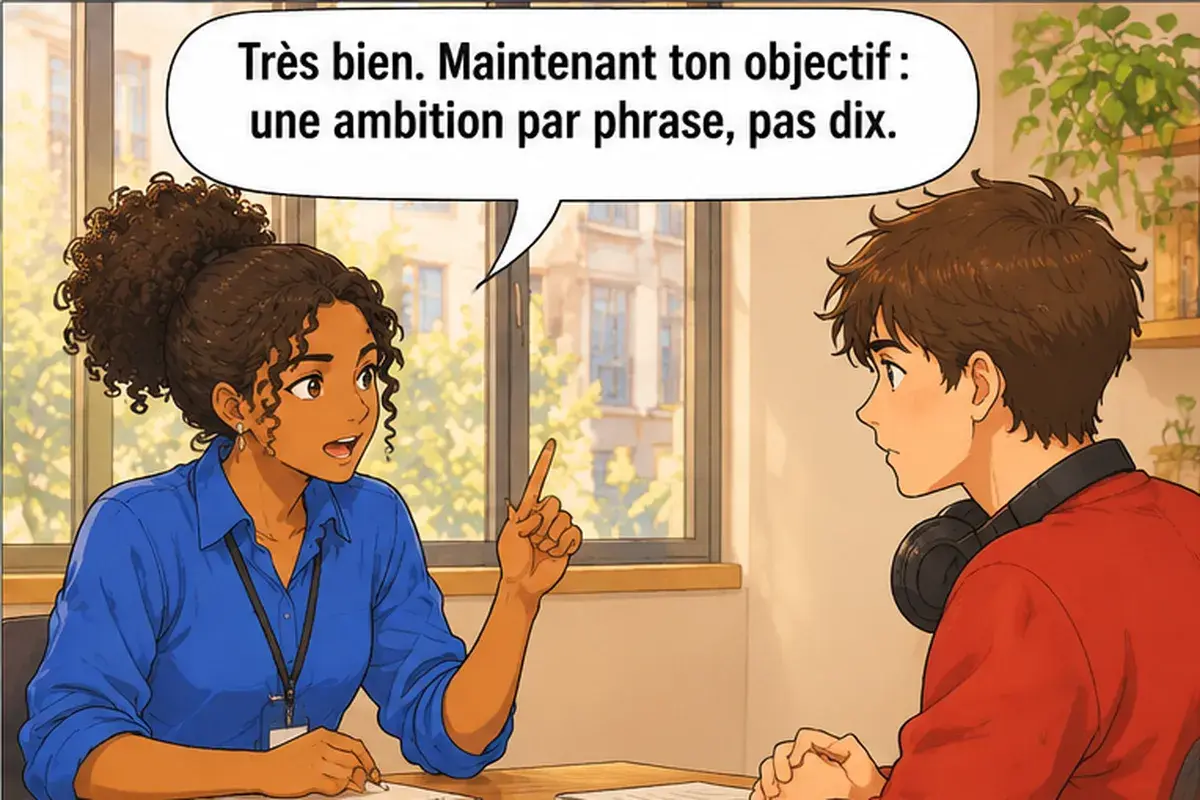
- Aïcha
Très bien. Maintenant ton objectif : une ambition par phrase, pas dix.
Very good. Now your goal: one ambition per sentence, not ten.
- Pacha
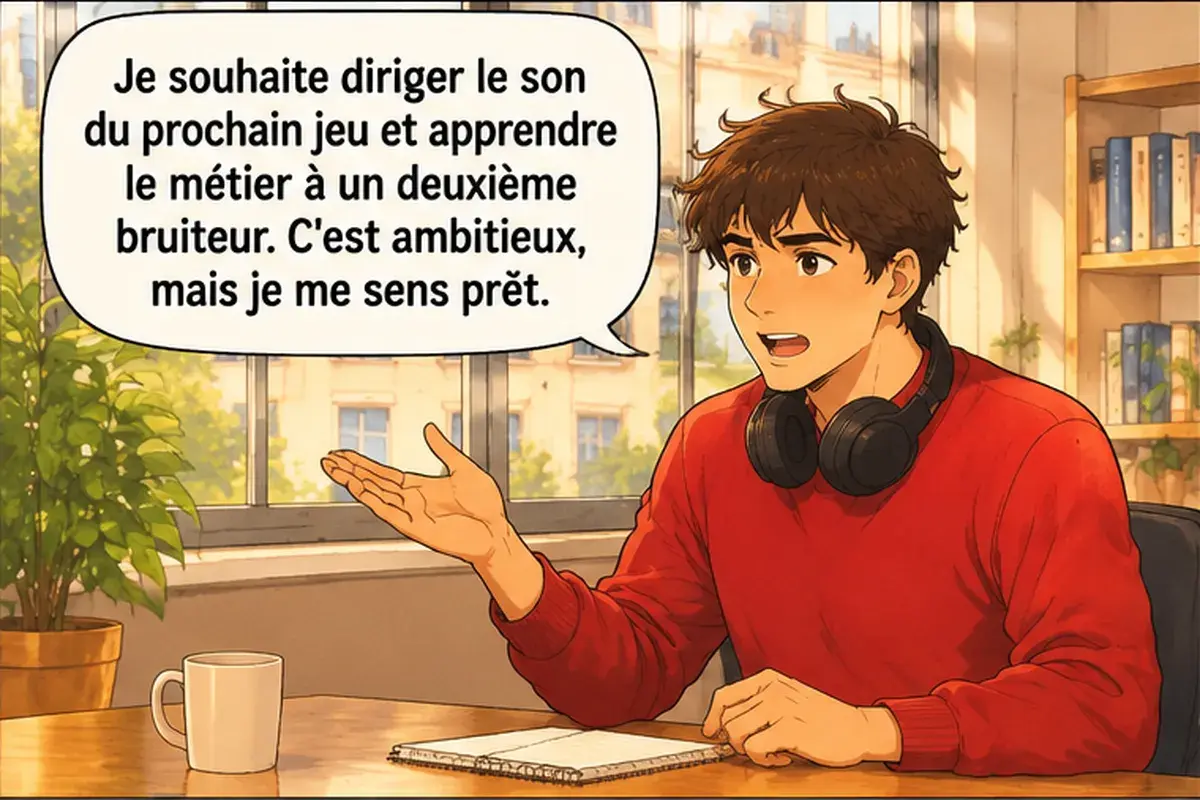
Je souhaite diriger le son du prochain jeu et apprendre le métier à un deuxième bruiteur. C'est ambitieux, mais je me sens prêt.
I'd like to lead the sound for the next game and teach the trade to a second sound effects artist. It's ambitious, but I feel ready (man speaking).
- Aïcha
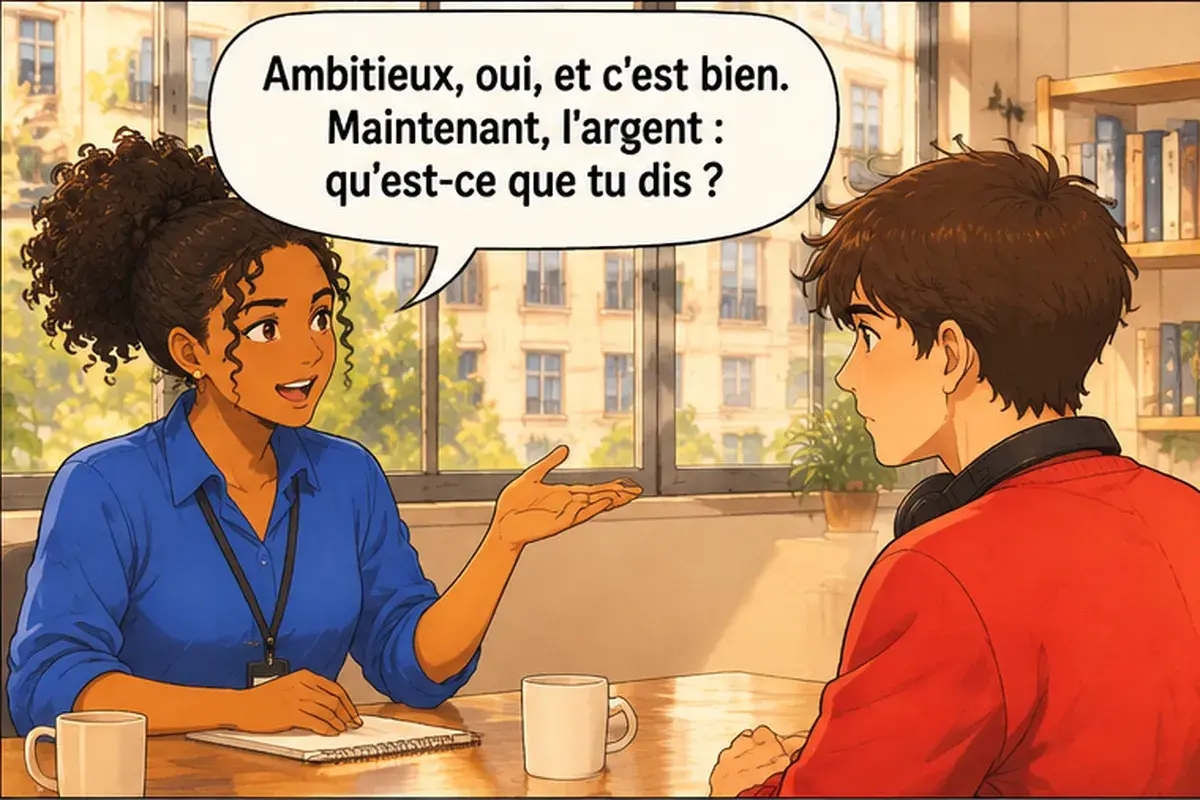
Ambitieux, oui, et c'est bien. Maintenant, l'argent : qu'est-ce que tu dis ?
Ambitious, yes, and that's good. Now, the money: what do you say?

- Pacha
Euh… « J'aurais voulu savoir si, par hasard… » Non, attends.
Um… "I would have liked to know if, by chance…" No, wait.
- Aïcha
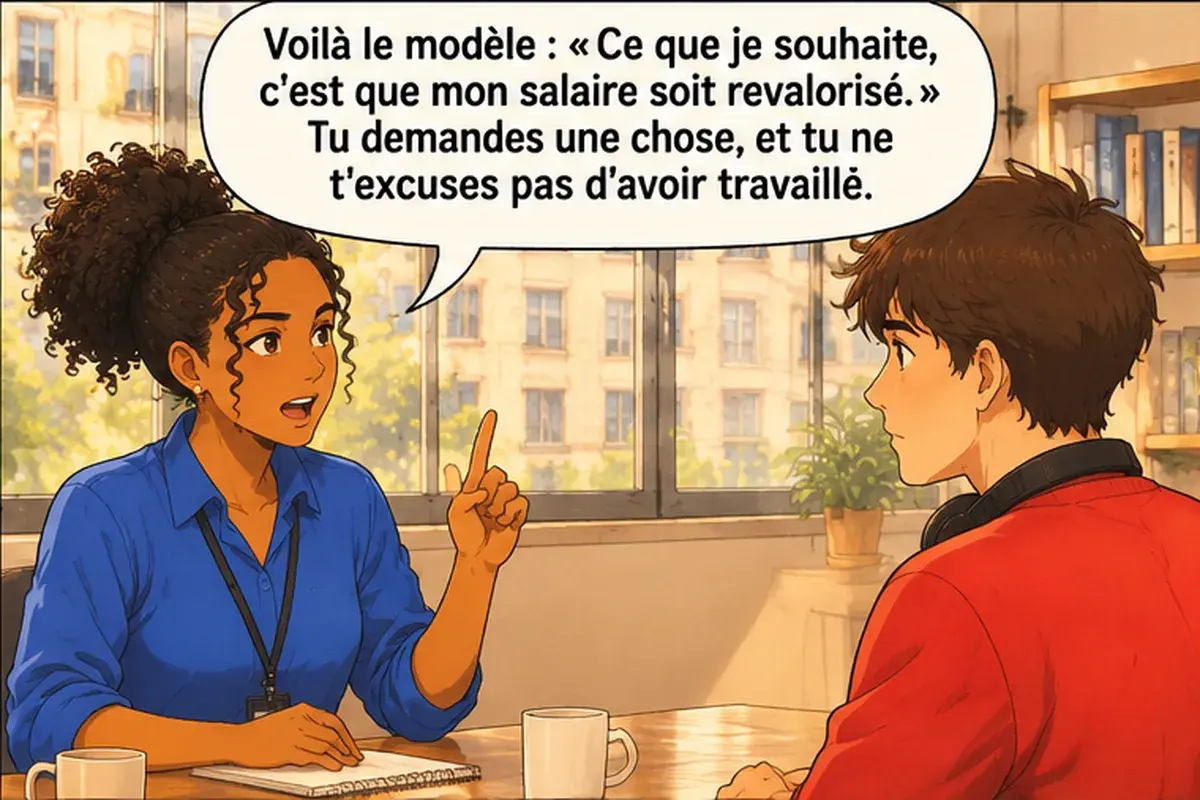
Voilà le modèle : « Ce que je souhaite, c'est que mon salaire soit revalorisé. » Tu demandes une chose, et tu ne t'excuses pas d'avoir travaillé.
Here's the model: "What I'd like is for my salary to be raised." You ask for one thing, and you don't apologize for having worked.
- Pacha
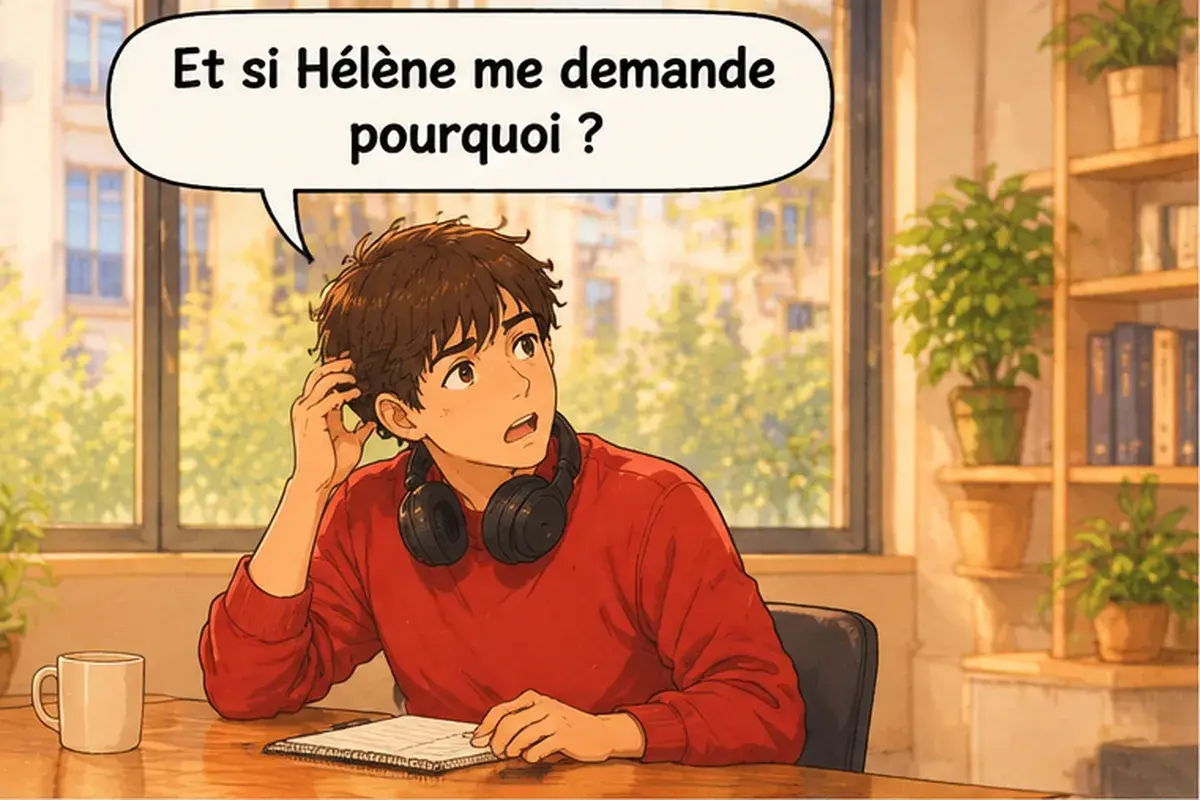
Et si Hélène me demande pourquoi ?
And if Hélène asks me why?
- Aïcha
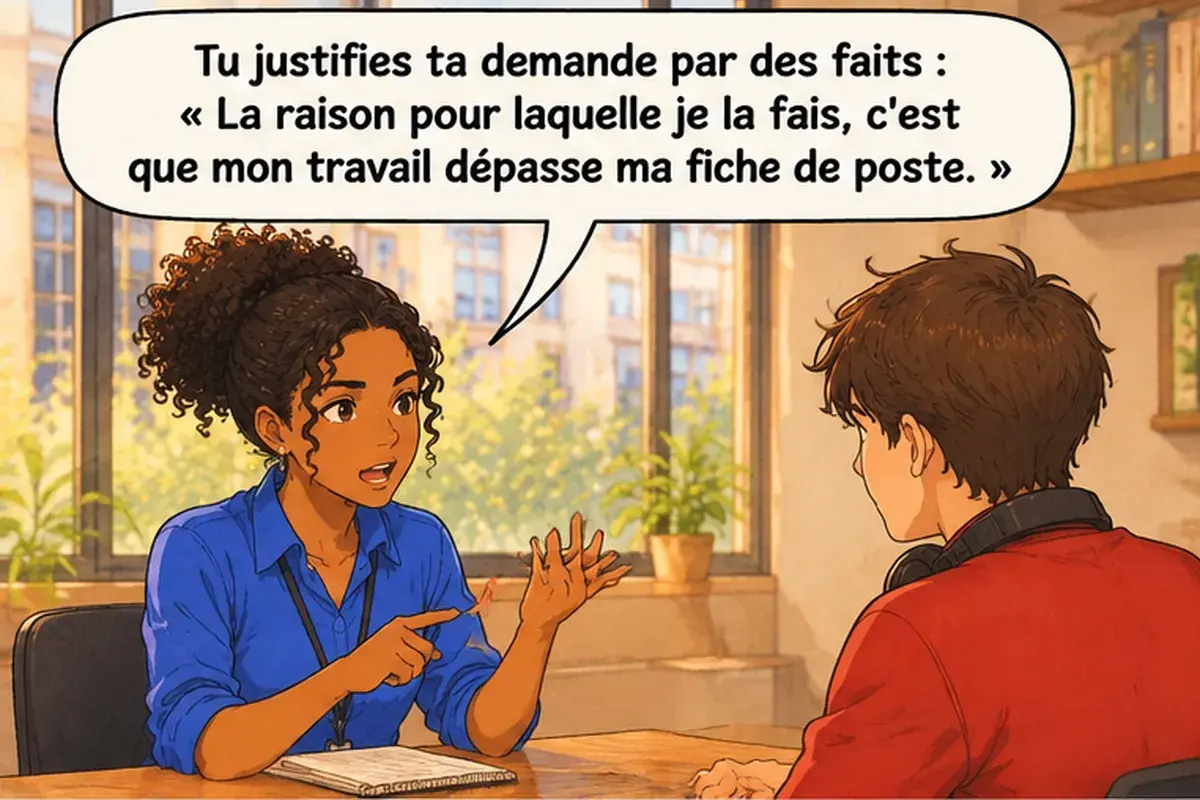
Tu justifies ta demande par des faits : « La raison pour laquelle je la fais, c'est que mon travail dépasse ma fiche de poste. »
You justify your request with facts: "The reason I'm making it is that my work goes beyond my job description."
- Pacha
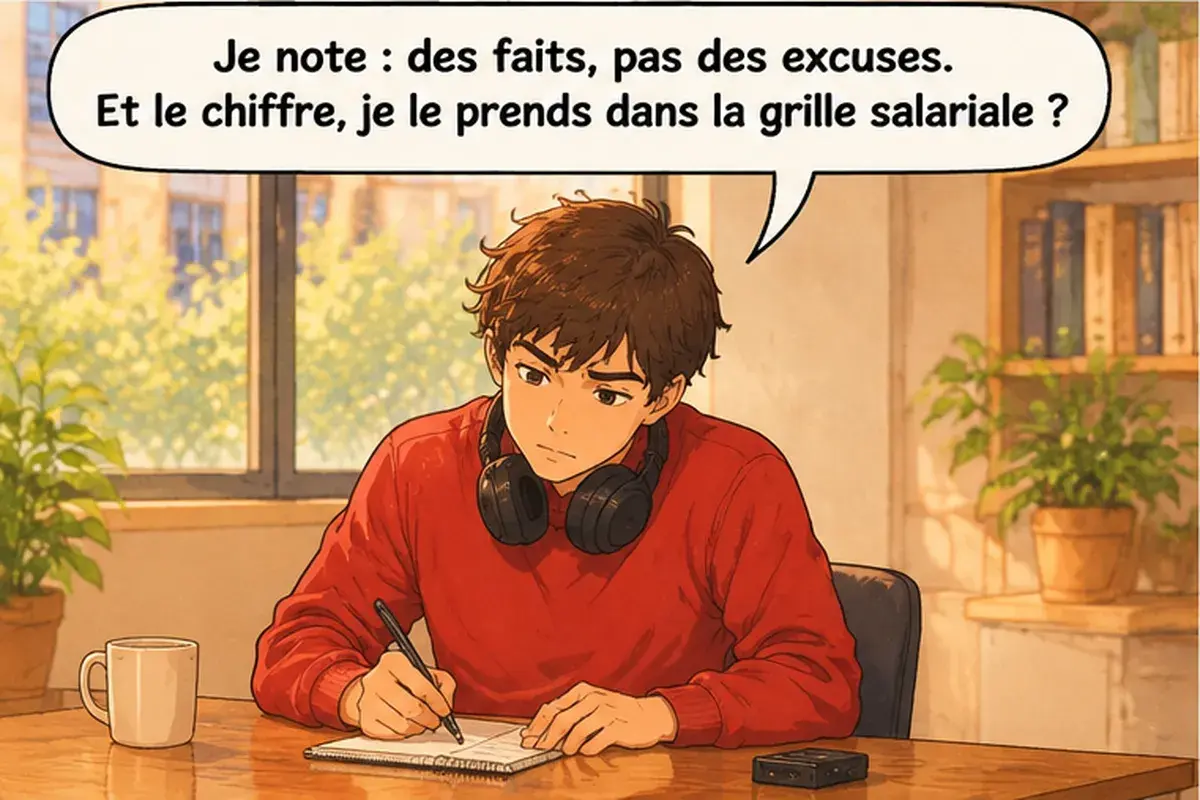
Je note : des faits, pas des excuses. Et le chiffre, je le prends dans la grille salariale ?
Noted: facts, not excuses. And the number, do I take it from the salary grid?
- Aïcha
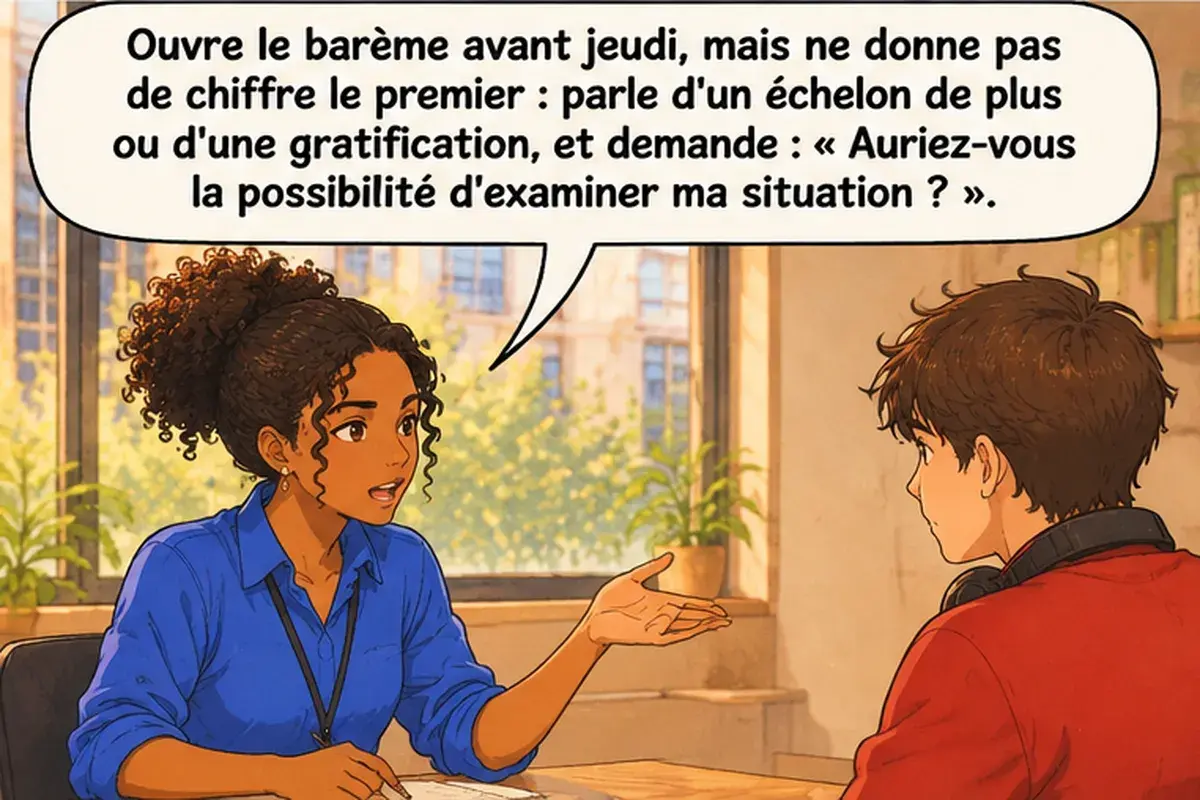
Ouvre le barème avant jeudi, mais ne donne pas de chiffre le premier : parle d'un échelon de plus ou d'une gratification, et demande : « Auriez-vous la possibilité d'examiner ma situation ? »
Open the pay scale before Thursday, but don't give a number first: talk about a step up or a bonus, and ask: "Would you be able to review my situation? (formal)"
- Pacha
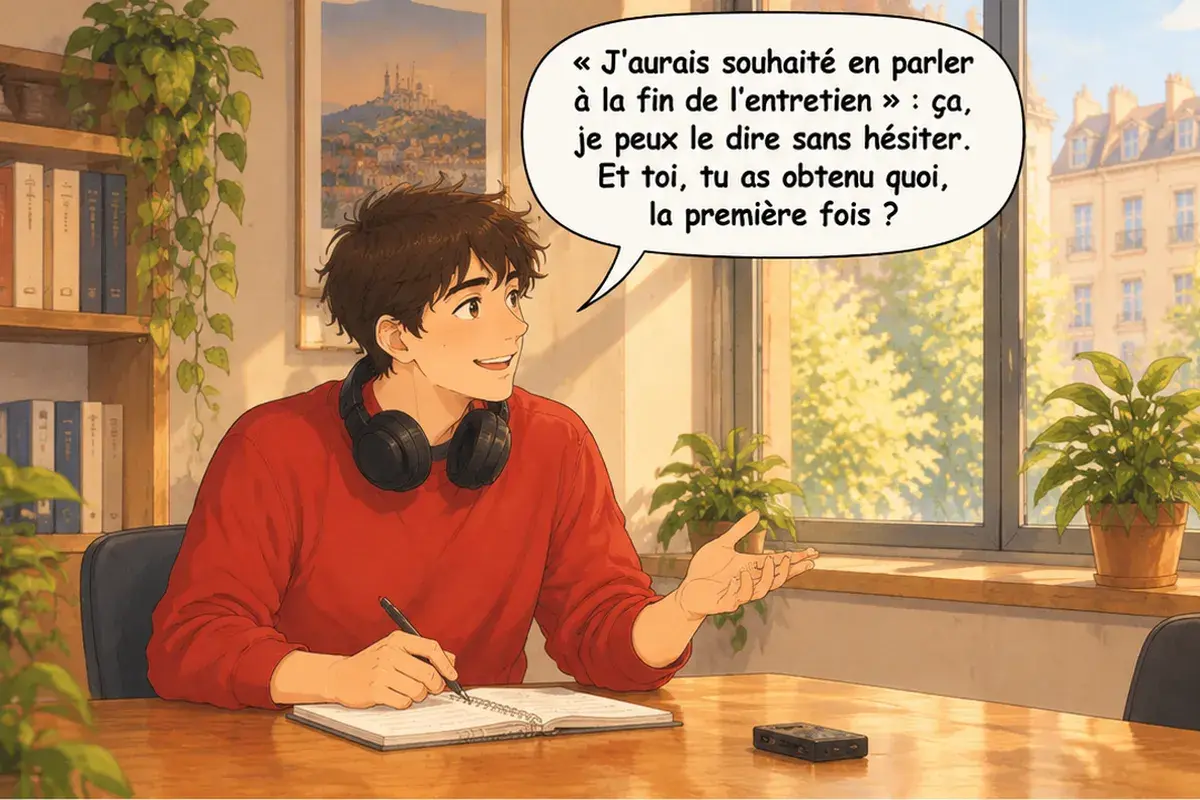
« J'aurais souhaité en parler à la fin de l'entretien » : ça, je peux le dire sans hésiter. Et toi, tu as obtenu quoi, la première fois ?
"I would have liked to talk about it at the end of the review": that, I can say without hesitating. And you, what did you get the first time?
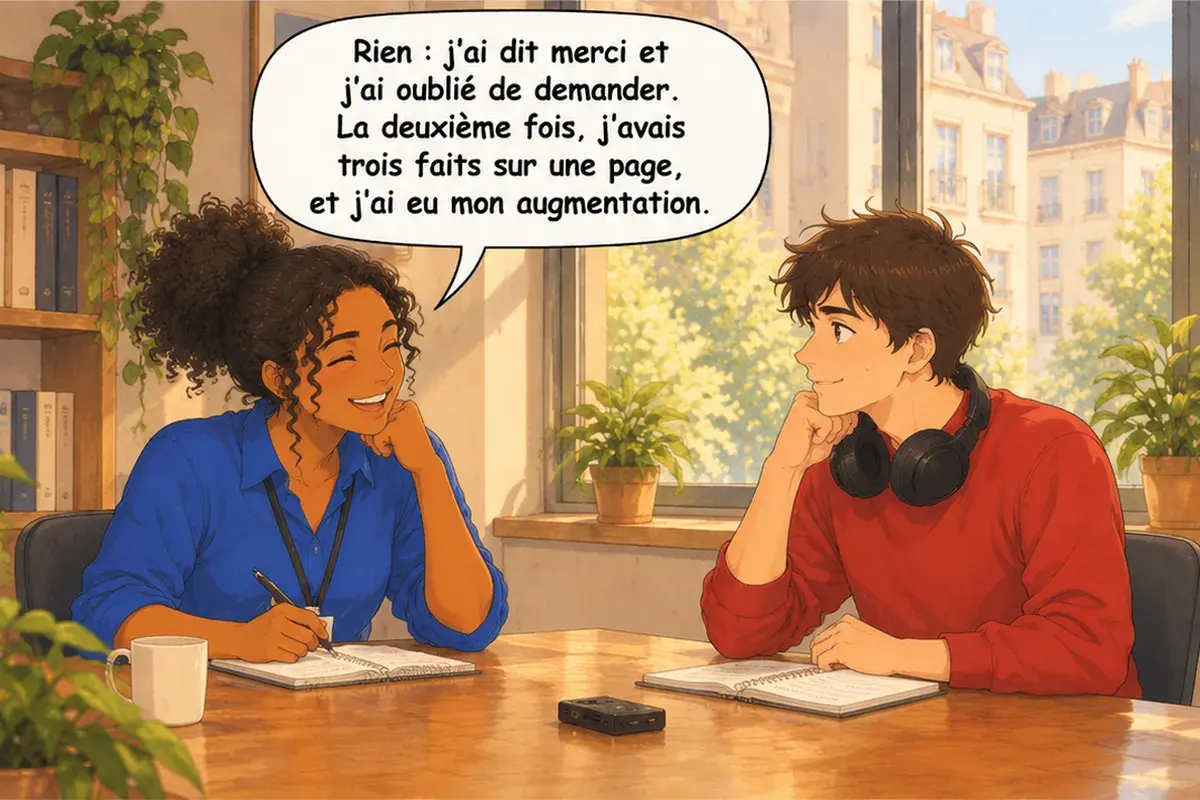
- Aïcha
Rien : j'ai dit merci et j'ai oublié de demander. La deuxième fois, j'avais trois faits sur une page, et j'ai eu mon augmentation.
Nothing: I said thank you and forgot to ask. The second time, I had three facts on one page, and I got my raise.
Grammar for this text
- pas un mot sur la corbeille de novembre — not a word about the November trash folder.
la corbeilleis the "trash" on a computer. Aïcha is hinting at the November mix-up with the folder: you don't start with your mistakes. - ce à quoi je tiens, c'est l'autonomie — what I really care about is independence.
tenir à("to care about, to see as important") givesce à quoi je tiens; the main point comes after the comma. - Ce que je souhaite, c'est que mon salaire soit revalorisé — What I'd like is for my salary to be raised. After
c'est quecomes the subjunctive:soithere is a form ofêtre, not thesoit… soit("either… or") of the same spelling.revalorisémeans "raised, adjusted upward" (fromrevaloriser). - La raison pour laquelle je la fais, c'est que mon travail dépasse ma fiche de poste — The reason I'm making it is that my work goes beyond my job description.
pour laquelle=pour+laquelle(feminine, likeraison);lais the pronoun "it" (the request).dépassemeans "goes beyond";une fiche de posteis a job description. - Et le chiffre, je le prends dans la grille salariale — And the number, I take it from the salary grid.
leis the pronoun "it" (the number).la grille salarialeis the table of salaries,le barèmeis the pay scale,un échelonis a step;une gratificationis a one-time bonus. - Auriez-vous la possibilité d'examiner ma situation ? — Would you be able to review my situation?
auriezis the conditional ofavoir, turned into a question by inversion: a very polite request. J'aurais souhaité en parler means "I would have liked to talk about it": the form looks past, but the meaning is a polite present.
Words and grammar of the unit: Ask for a raise.
Learn the words from the texts with flashcards
In the app, you can tap any word in a text to see its translation, forms and examples, and new words stick with flashcards. 15 minutes a day.
Start for freeEverything is open for free. No card needed to sign up.