

French dialogue with translation · B1 · 17 lines
J'ai fait une gaffe à la fin I made a blunder at the end
Comic · 17 panels

- Inès
Alors, raconte ! Hugo n'a pas respiré pendant vingt minutes.
So, tell us! Hugo didn't breathe for twenty minutes.

- Hugo
J'avais peur pour toi. Alors, comment c'était ?
I was scared for you. So, how was it?
- Pacha
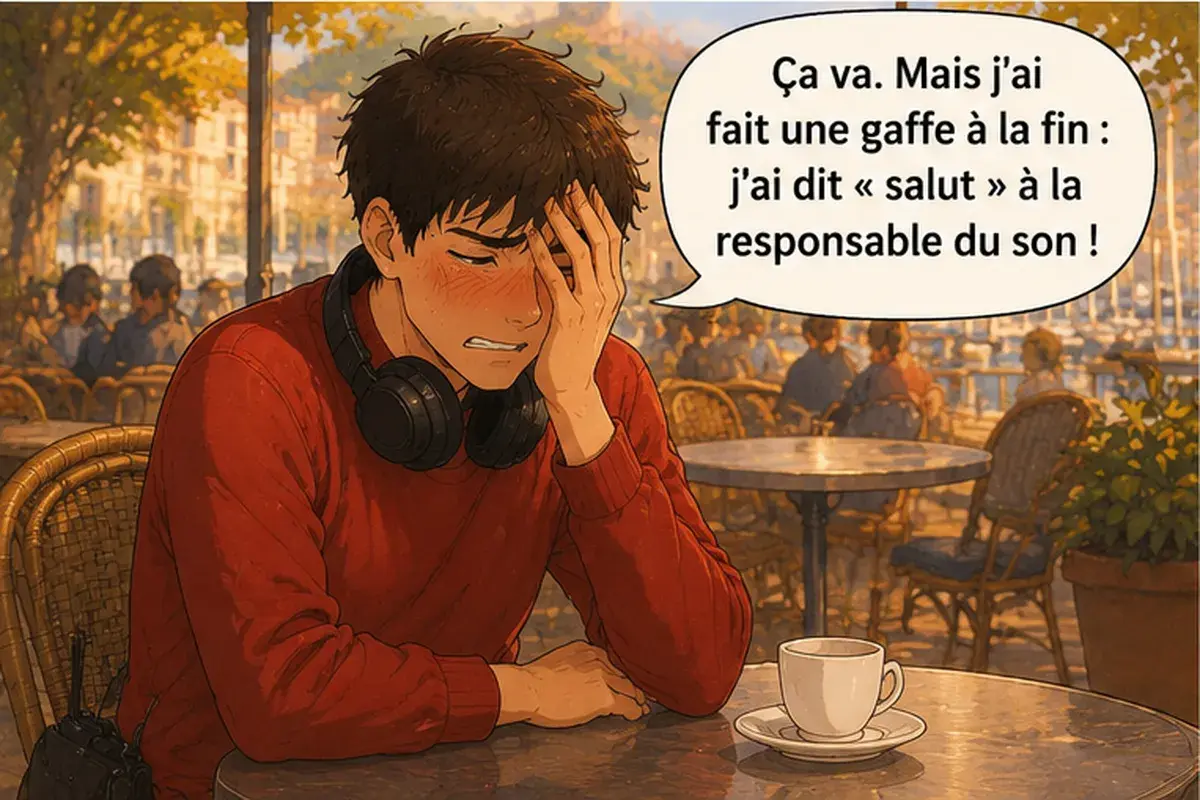
Ça va. Mais j'ai fait une gaffe à la fin : j'ai dit « salut » à la responsable du son !
It's okay. But I made a blunder at the end: I said "bye" to the head of sound!

- Inès
Salut ? Mais c'est ouf ! Et elle a dit quoi ?
Bye? That's insane! And what did she say?
- Pacha
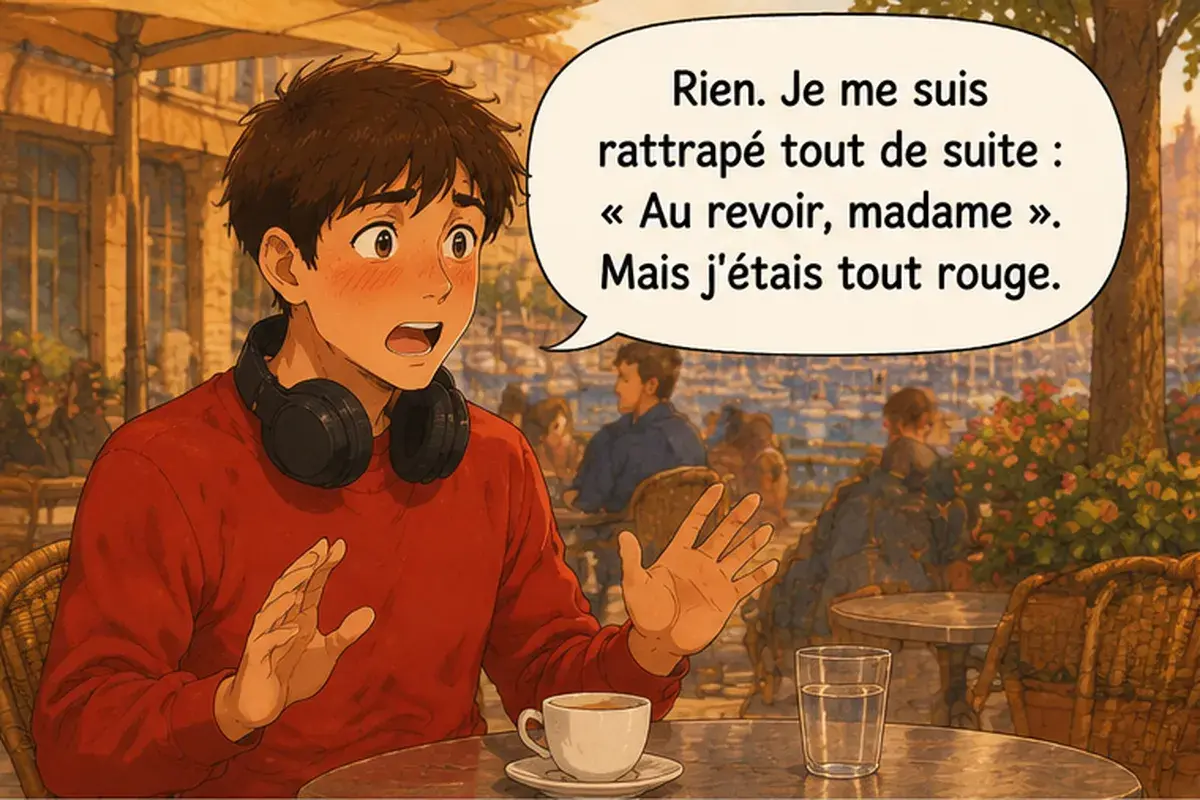
Rien. Je me suis rattrapé tout de suite : « Au revoir, madame ». Mais j'étais tout rouge.
Nothing. I recovered right away: "Goodbye, ma'am." But I was bright red (man speaking).
- Hugo
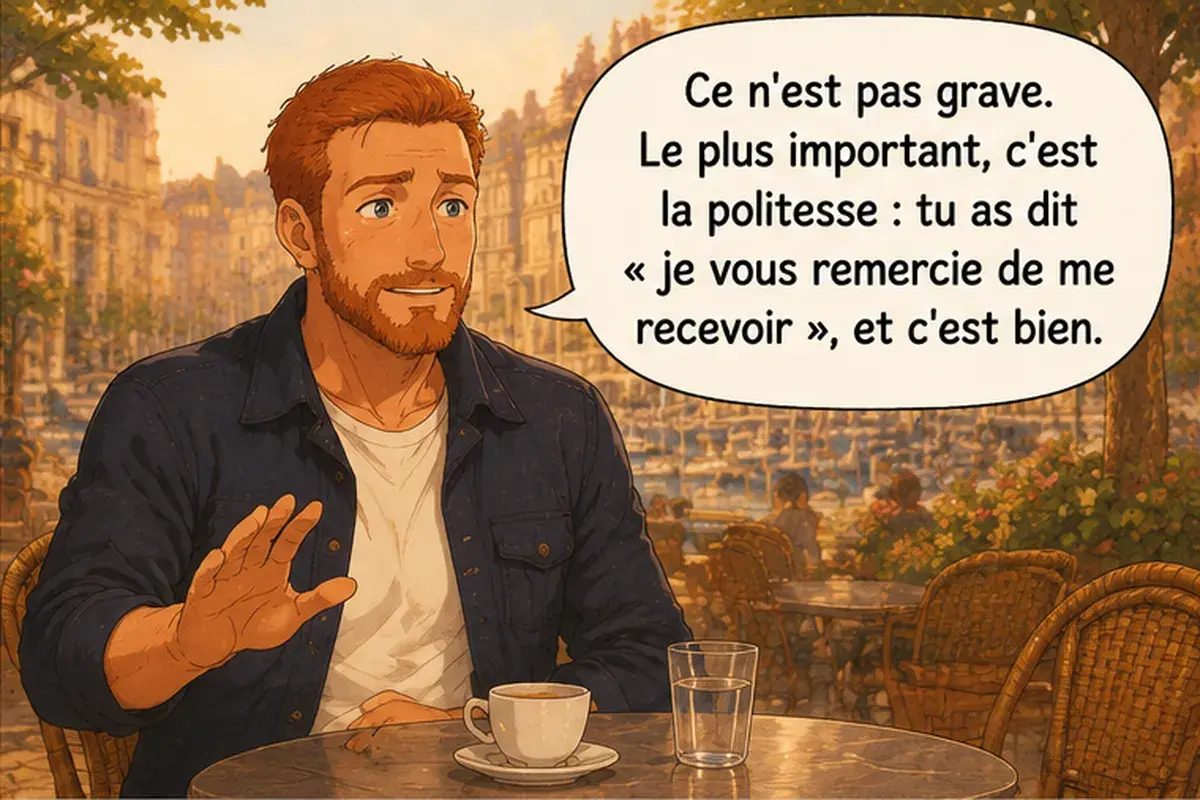
Ce n'est pas grave. Le plus important, c'est la politesse : tu as dit « je vous remercie de me recevoir », et c'est bien.
It's no big deal. The most important thing is politeness: you said "thank you for seeing me (formal)," and that's good.

- Pacha
J'ai été plus maladroit avec son micro : je lui ai dit qu'il faisait du bruit. J'aurais dû me taire.
I was clumsier with her mic: I told her it was making noise. I should have kept quiet (man speaking).

- Inès
Moi, je trouve ça génial ! Un ingénieur du son qui entend tout, c'est exactement ce qu'ils cherchent.
Personally, I think that's awesome! A sound engineer who hears everything is exactly what they're looking for.

- Hugo
Peut-être, mais c'est risqué. J'ai vu beaucoup d'entretiens dans mon ancien bureau : le talent ne fait pas tout, il faut aussi savoir se vendre.
Maybe, but it's risky. I saw a lot of interviews in my old office: talent isn't everything, you also have to know how to sell yourself.
- Pacha
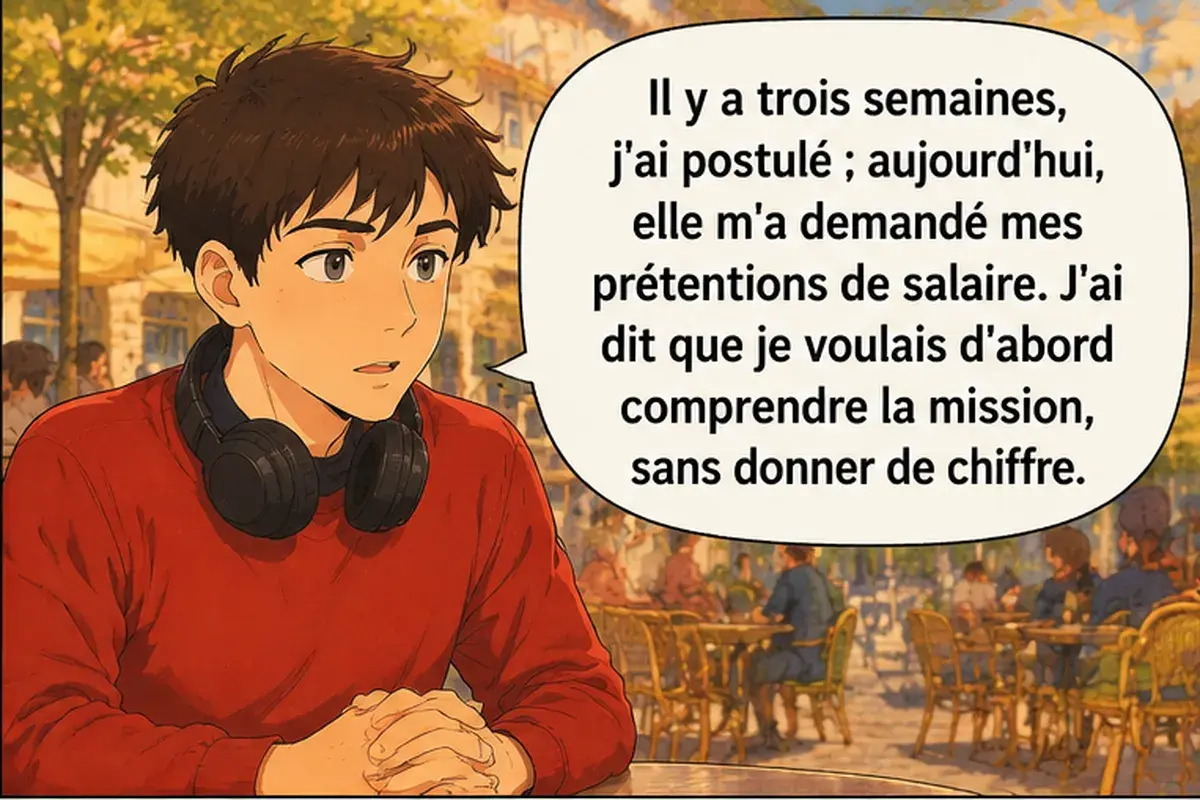
Il y a trois semaines, j'ai postulé ; aujourd'hui, elle m'a demandé mes prétentions de salaire. J'ai dit que je voulais d'abord comprendre la mission, sans donner de chiffre.
I applied three weeks ago; today, she asked me about my salary expectations. I said I wanted to understand the assignment first, without giving a number.
- Hugo
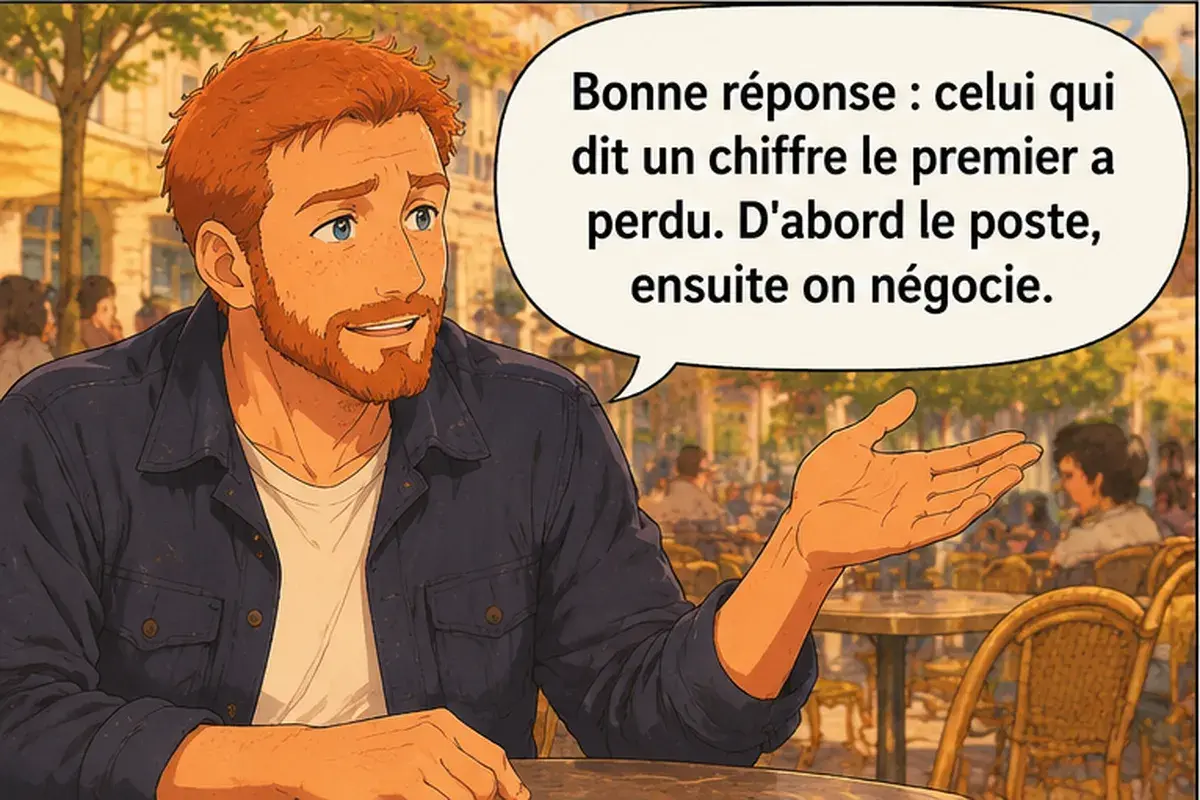
Bonne réponse : celui qui dit un chiffre le premier a perdu. D'abord le poste, ensuite on négocie.
Good answer: whoever says a number first has lost. First the job, then you negotiate.

- Inès
Moi, je négocie tout, même le prix des tomates au marché ! Et il faut que tu apprennes à te vendre, Pacha : tu parles de tes compétences comme si tu avais honte.
Me, I negotiate everything, even the price of tomatoes at the market! And you need to learn to sell yourself, Pacha: you talk about your skills as if you were ashamed.
- Pacha
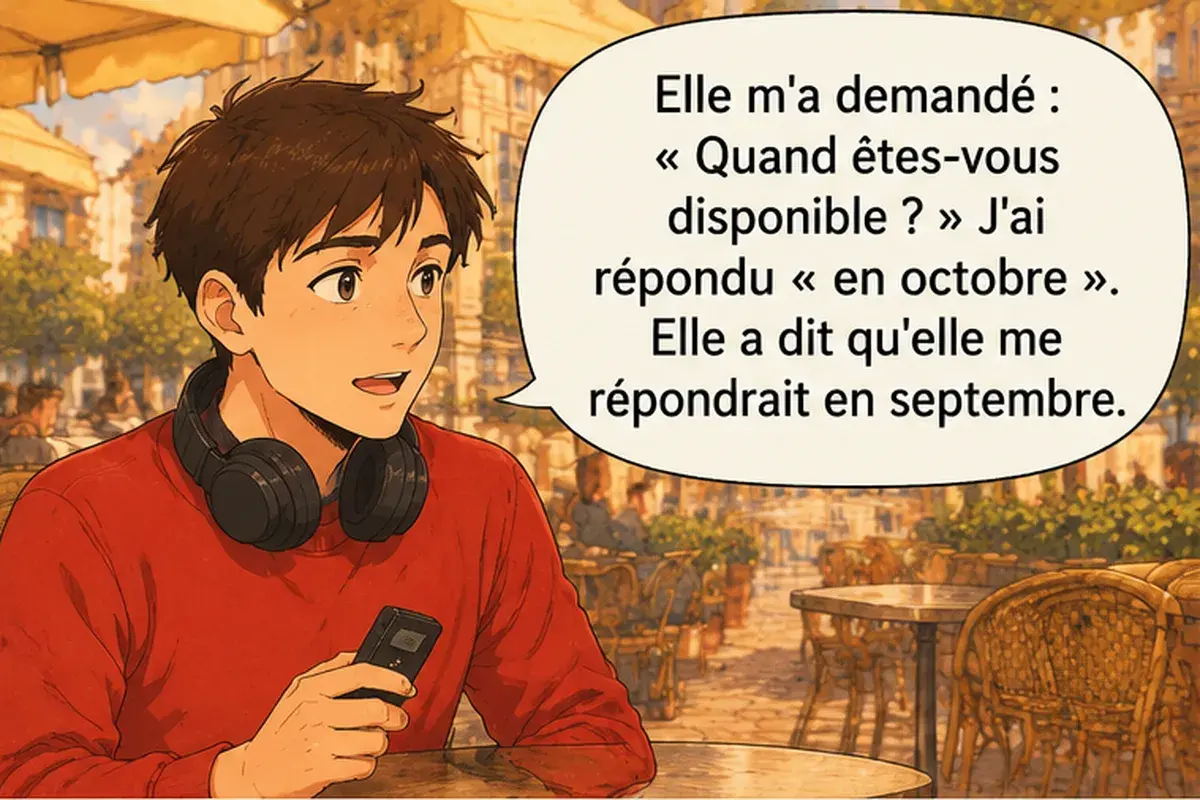
Elle m'a demandé : « Quand êtes-vous disponible ? » J'ai répondu « en octobre ». Elle a dit qu'elle me répondrait en septembre.
She asked me: "When are you available? (formal)" I answered "in October." She said she would answer me in September.
- Hugo
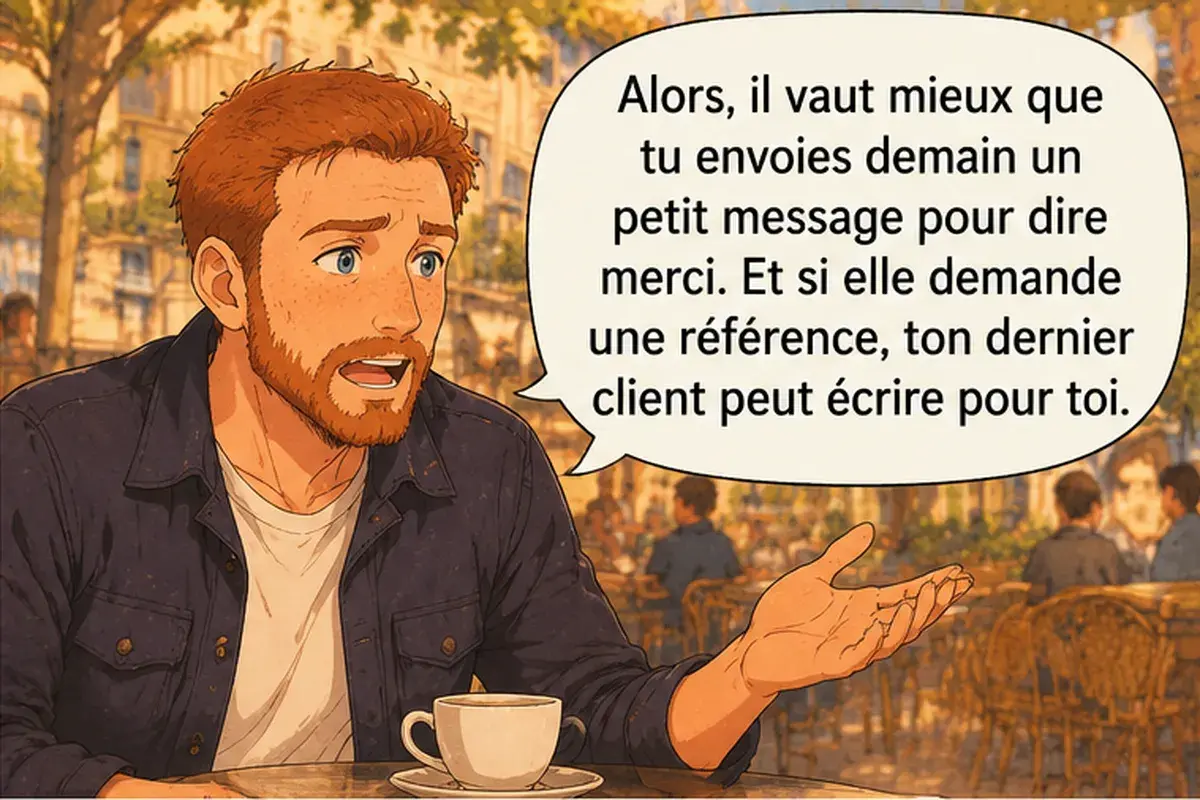
Alors, il vaut mieux que tu envoies demain un petit message pour dire merci. Et si elle demande une référence, ton dernier client peut écrire pour toi.
Then it's better if you send a short thank-you message tomorrow. And if she asks for a reference, your last client can write for you.

- Inès
Et si tu étais pris ? Tu partirais à Lyon ? Un taf là-bas, c'est super, mais c'est loin de nous.
And what if you got hired? (to a man) Would you move to Lyon? A job there is great, but it's far from us.

- Pacha
Je ne sais pas. Attendons septembre. Comme dit madame Lefèvre : quoi qu'il en soit, j'ai passé mon premier entretien en français !
I don't know. Let's wait for September. As Madame Lefèvre says: be that as it may, I got through my first interview in French!
- Hugo
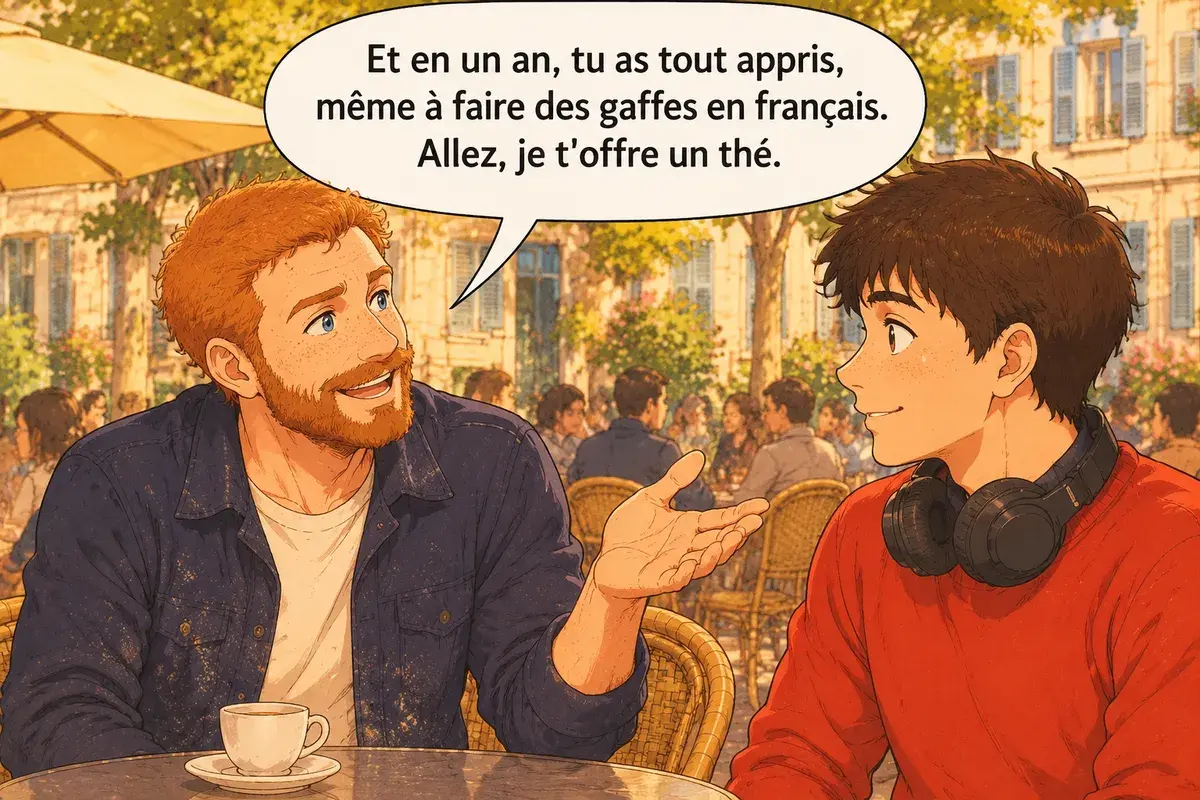
Et en un an, tu as tout appris, même à faire des gaffes en français. Allez, je t'offre un thé.
And in a year, you've learned everything, even how to make blunders in French. Come on, I'll get you a tea.
Grammar for this text
- Je me suis rattrapé tout de suite —
se rattrapermeans "to recover" (to fix a mistake). The past tense of a reflexive verb isje me suis+ past participle (A2, unit 12). - J'aurais dû me taire — "I should have kept quiet": a ready-made form,
j'aurais dû(B1, unit 12). You'll learn how it is built at B2.se tairemeans "to be quiet". - Elle a dit qu'elle me répondrait en septembre — reported speech. She said "je vous répondrai" (future), and when you report it in the past, the future becomes the conditional:
répondrait. English does the same: "she said she would answer." This is one ready-made sentence; you'll learn how tenses match up in general at B2. - il faut que tu apprennes and il vaut mieux que tu envoies — after
il faut queandil vaut mieux queyou use the subjunctive (units 10 and 21). Inapprendrea secondnappears in the stem:que tu apprennes;envoieslooks like the present tense. - Et si tu étais pris ? Tu partirais à Lyon ? —
si+ imperfect → conditional (unit 12): "What if you got hired? Would you move?"prismeans "taken", fromprendre. - celui qui dit un chiffre le premier —
celui quimeans "the one who" (unit 5). Herele chiffreis a number in money. - ouf, taf — casual words that friends use:
oufmeans "crazy, insane" (it's the wordfoubackwards), andtafmeans "job". You don't say these at an interview.
Words and grammar of the unit: Get through a simple job interview.
Learn the words from the texts with flashcards
In the app, you can tap any word in a text to see its translation, forms and examples, and new words stick with flashcards. 15 minutes a day.
Start for freeEverything is open for free. No card needed to sign up.