

French dialogue with translation · B1 · 18 lines
Ce n'est pas ce que dit l'annonce That's not what the listing says
Comic · 18 panels
- Hugo
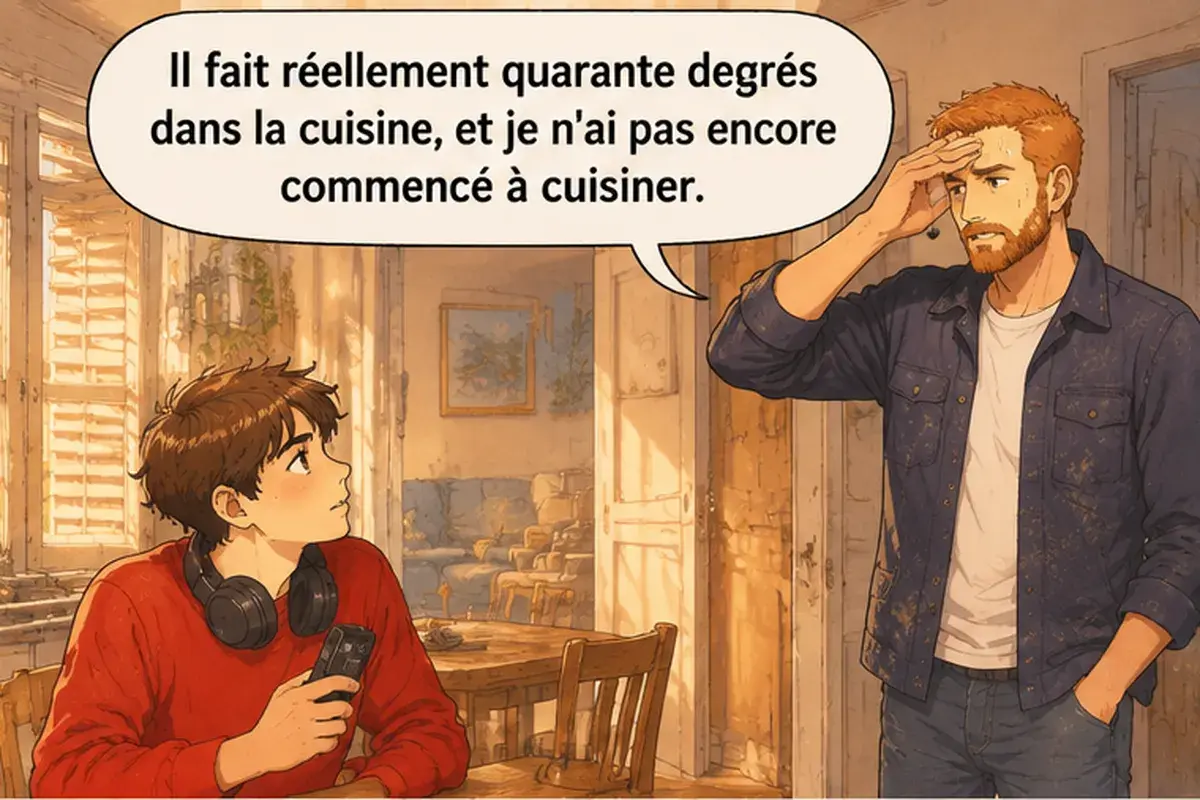
Il fait réellement quarante degrés dans la cuisine, et je n'ai pas encore commencé à cuisiner.
It's really forty degrees in the kitchen, and I haven't started cooking yet.

- Inès
C'est la canicule, mais ce qui m'énerve, c'est l'annonce : « appartement climatisé ».
It's the heat wave, but what annoys me is the listing: "air-conditioned apartment."

- Pacha
Voilà la climatisation de l'annonce : un ventilateur vétuste.
Here's the air conditioning from the listing: a worn-out fan.

- Hugo
Il fait un bruit d'avion. Moi qui voyage sans avion, j'en ai un dans ma chambre !
It makes a noise like a plane. I travel without planes, and I've got one in my room!
- Inès
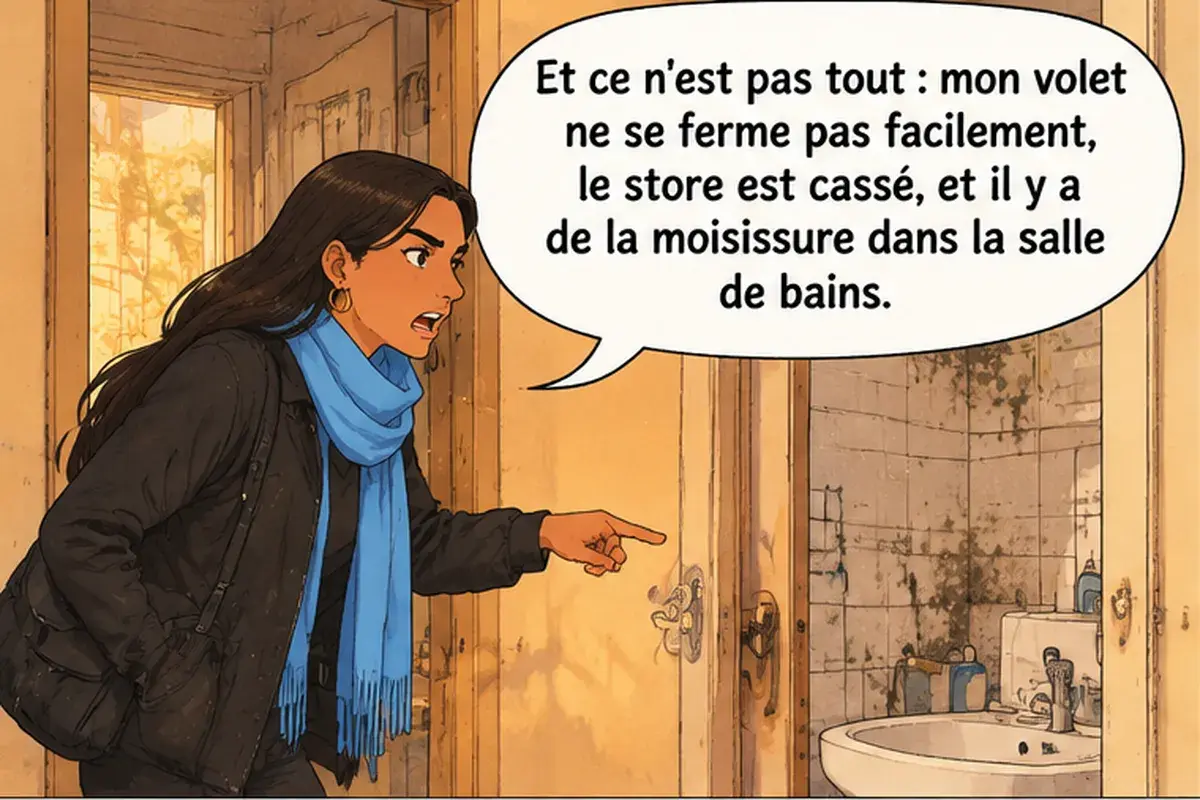
Et ce n'est pas tout : mon volet ne se ferme pas facilement, le store est cassé, et il y a de la moisissure dans la salle de bains.
And that's not all: my shutter doesn't close easily, the blind is broken, and there's mold in the bathroom.

- Pacha
Sur les photos, tout est propre et clair. Dans la réalité, tout est humide.
In the photos, everything is clean and bright. In reality, everything is damp.

- Inès
C'est toi qui as réservé, donc c'est toi qui appelles madame Roux. Et tu restes ferme, mais poli.
You're the one who booked, so you're the one calling Madame Roux. And you stay firm but polite (to a man).
- Pacha
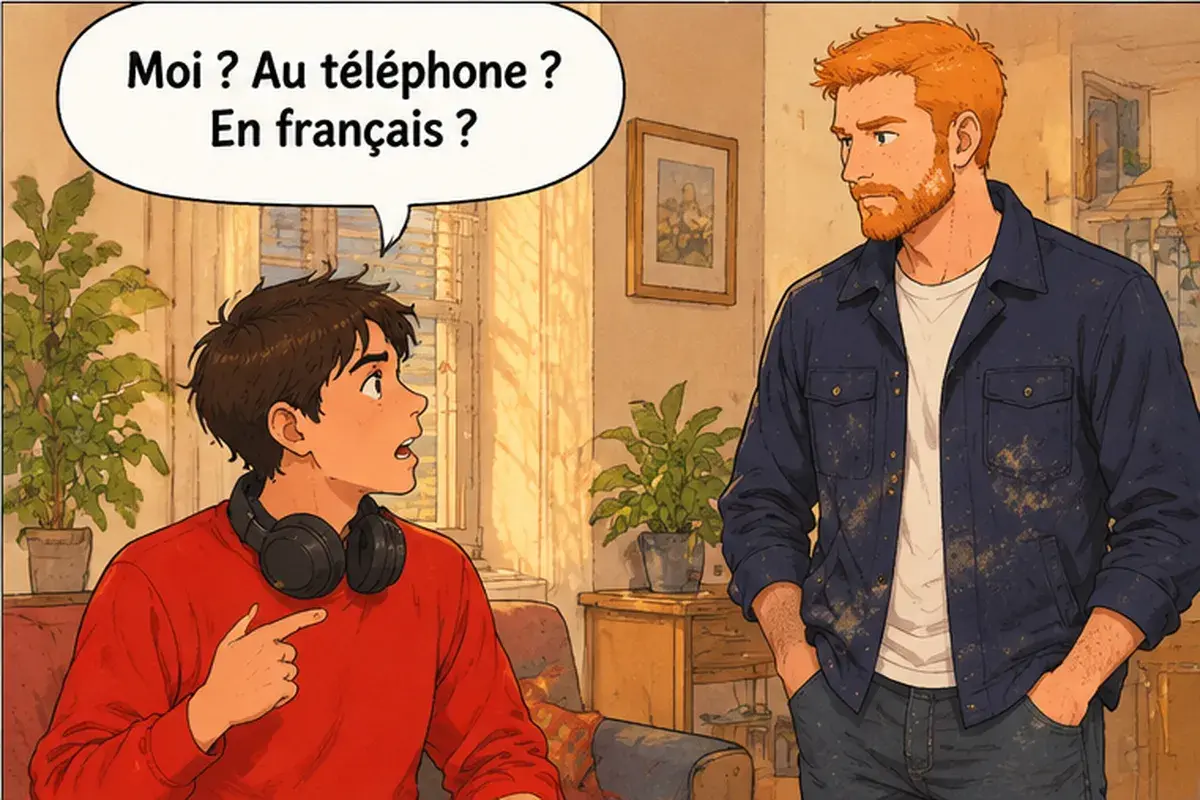
Moi ? Au téléphone ? En français ?
Me? On the phone? In French?

- Hugo
Au Nouvel An, tu as promis de parler au téléphone en français. C'est le moment.
At New Year's, you promised to talk on the phone in French. Now's the time.
- Pacha
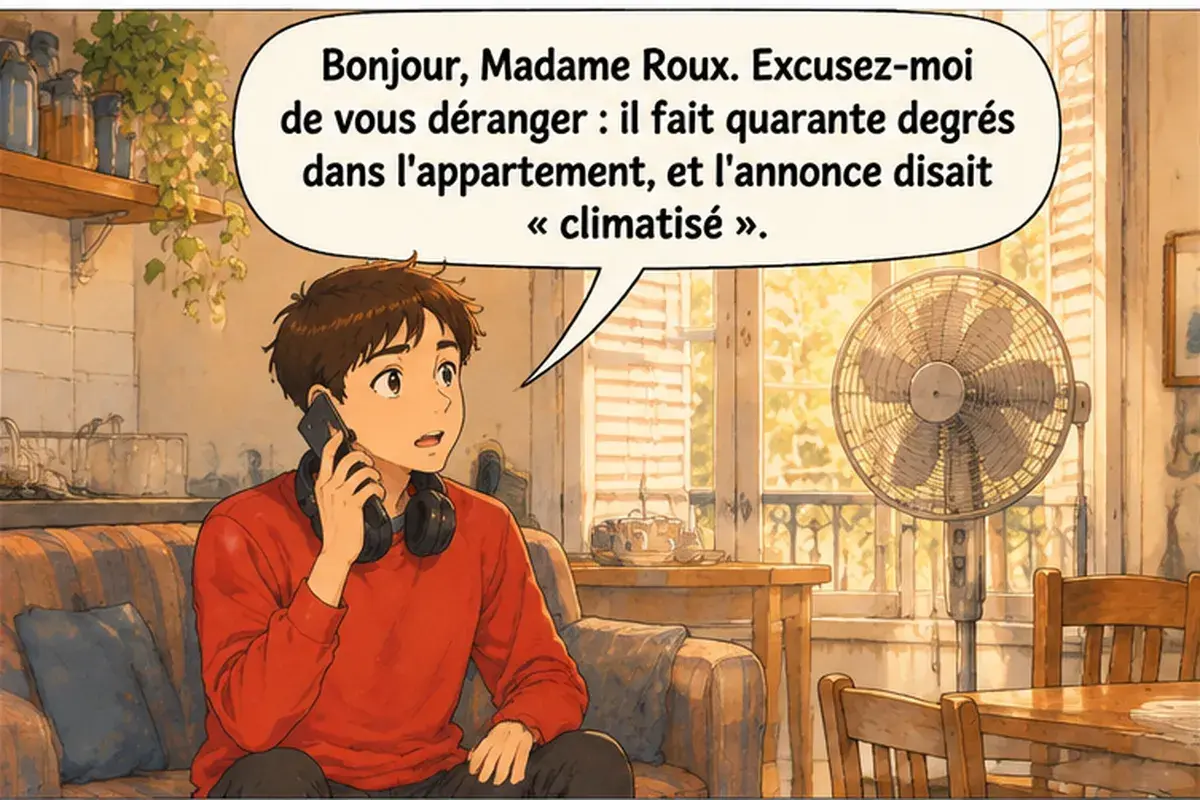
Bonjour, Madame Roux. Excusez-moi de vous déranger : il fait quarante degrés dans l'appartement, et l'annonce disait « climatisé ».
Hello, Madame Roux. Sorry to bother you: it's forty degrees in the apartment, and the listing said "air-conditioned" (formal).
- Madame Roux
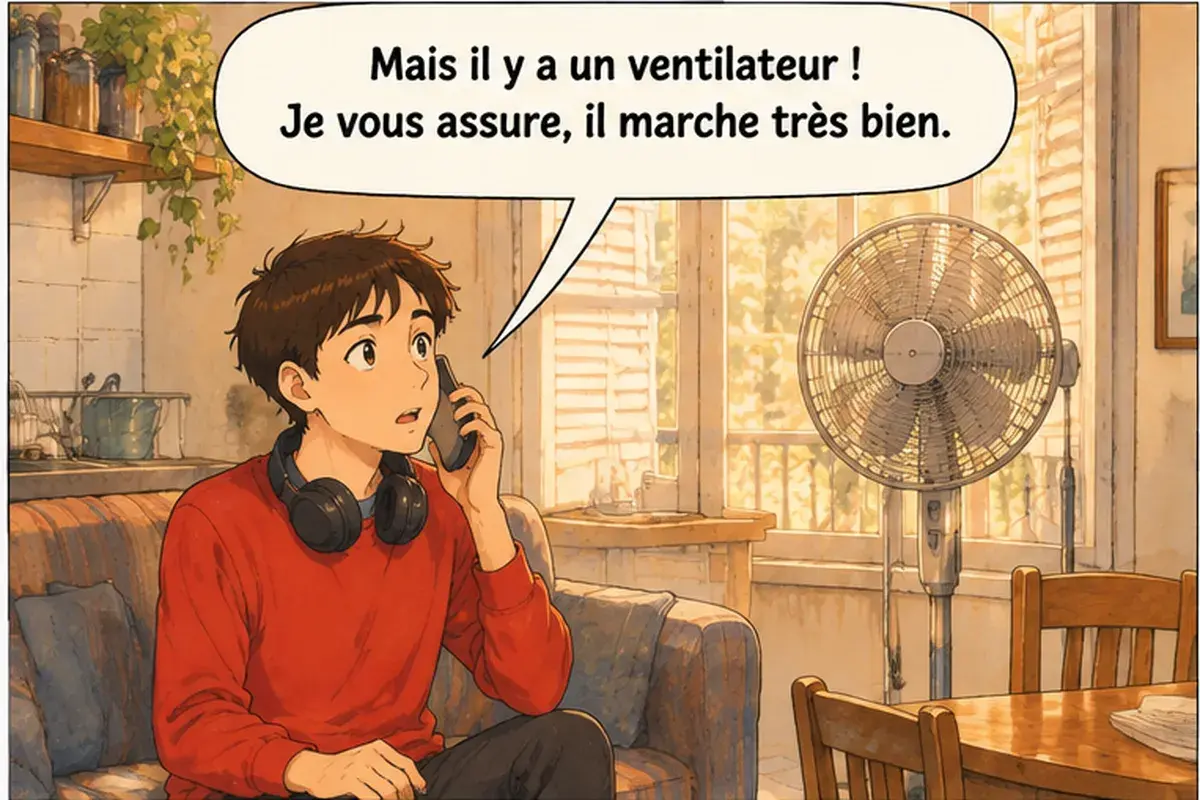
Mais il y a un ventilateur ! Je vous assure, il marche très bien.
But there's a fan! I assure you, it works very well (formal).

- Pacha
Madame, quand je l'allume, ça coupe l'électricité. Ce n'est pas une critique : je parle de l'annonce.
Ma'am, when I turn it on, it cuts the electricity. It's not a criticism: I'm talking about the listing.

- Madame Roux
Avec la canicule, tout le monde a chaud, monsieur ! Je peux vous apporter un deuxième ventilateur, avec un petit supplément.
With the heat wave, everyone's hot, sir! I can bring you a second fan for a small extra charge (formal).
- Pacha
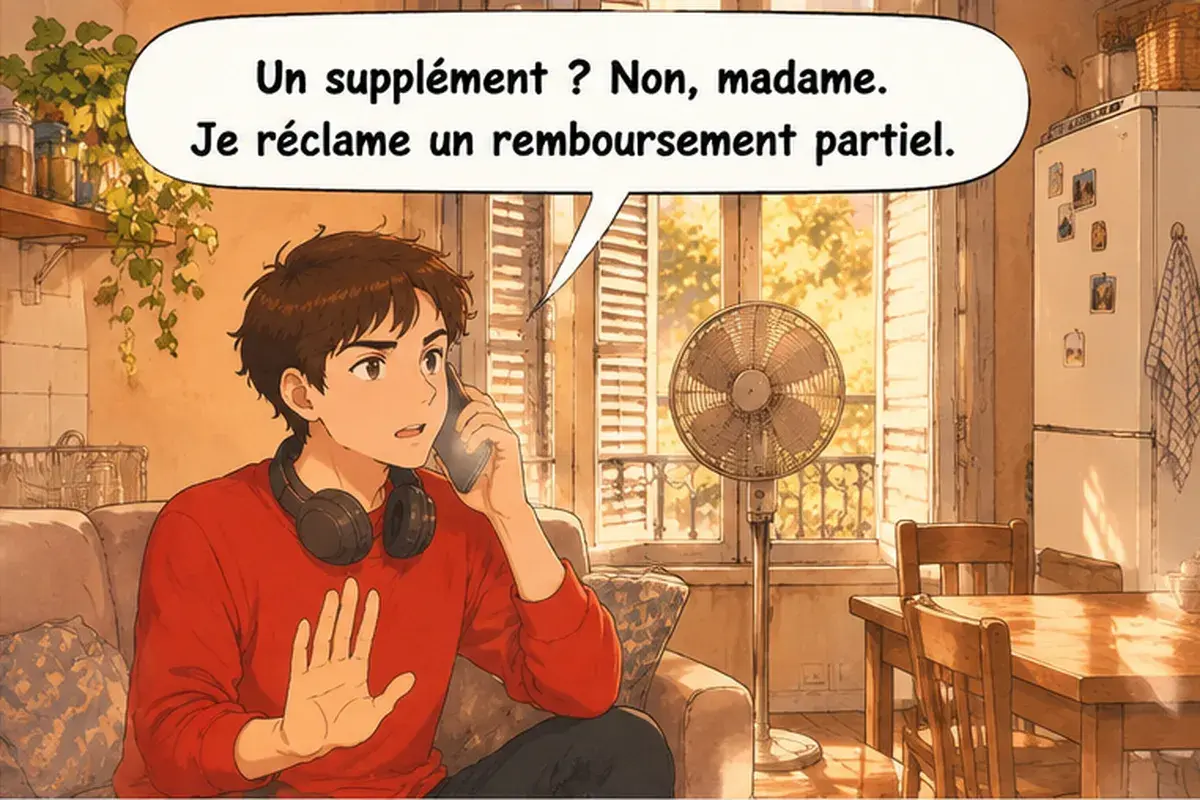
Un supplément ? Non, madame. Je réclame un remboursement partiel.
An extra charge? No, ma'am. I'm claiming a partial refund.

- Madame Roux
Je vais voir ce que je peux faire. Je vous rappelle.
I'll see what I can do. I'll call you back (formal).
- Pacha
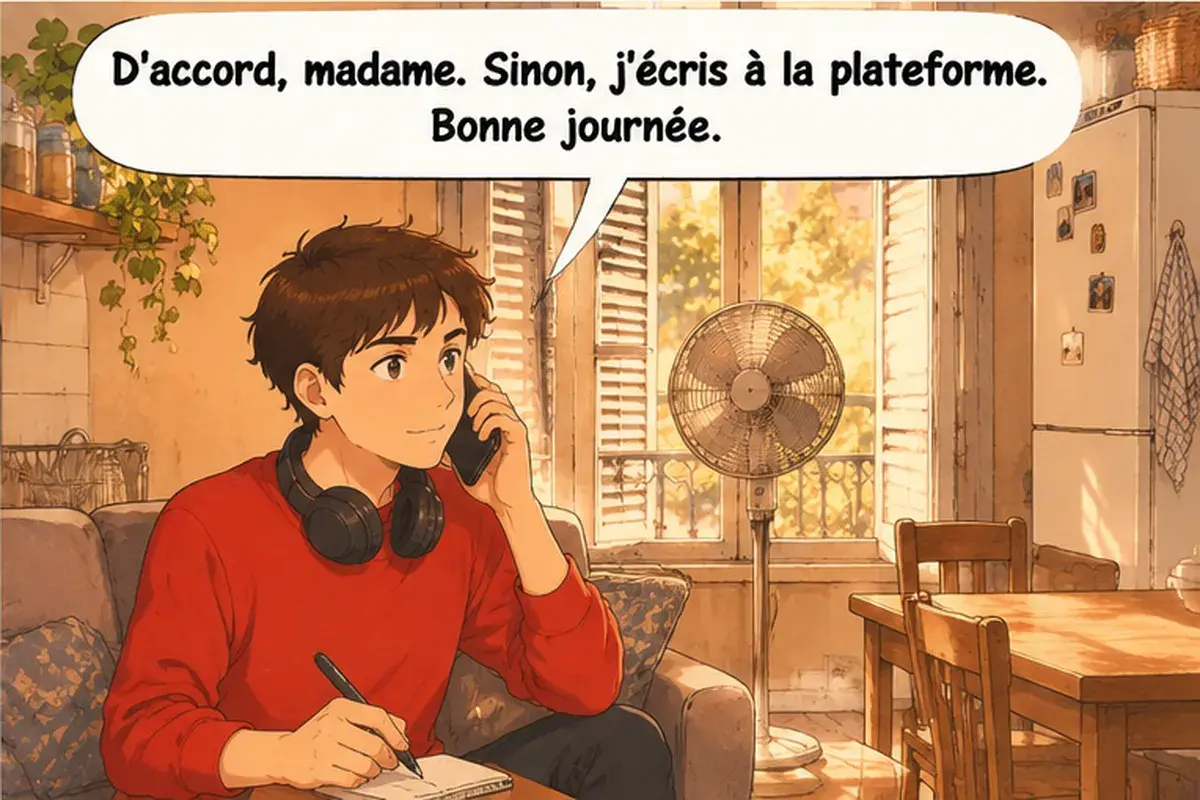
D'accord, madame. Sinon, j'écris à la plateforme. Bonne journée.
All right, ma'am. Otherwise, I'll write to the platform. Have a nice day.

- Inès
Tu as été ferme et poli. Bravo, Pacha !
You were firm and polite (to a man). Well done, Pacha!

- Pacha
Je n'ai jamais parlé aussi longtemps au téléphone en français. Et j'ai encore plus chaud qu'avant !
I've never talked on the phone in French for so long. And I'm even hotter than before!
Grammar for this text
- ce qui m'énerve, c'est l'annonce — ce qui means "what" (it does the action itself: it "annoys me"). A complaint is built like this: first "what exactly", then c'est and the problem itself. See the unit grammar.
- C'est toi qui as réservé, donc c'est toi qui appelles madame Roux — c'est toi qui means "you're the one who". The verb after qui takes the form of the stressed word: toi → as, appelles.
- Moi qui voyage sans avion, j'en ai un dans ma chambre — moi qui voyage means "I, who travel": the verb is in the je form. en replaces un avion, and un stays: "I have one in my room."
- Au Nouvel An, tu as promis de parler au téléphone en français — promettre de + verb: "to promise to do something". That's the promise Pacha made at New Year's.
- Excusez-moi de vous déranger — a polite way to start a call: excusez-moi is "excuse me" (the vous command), déranger is "to bother".
- Je vous assure — "I assure you": here assurer means "to assure".
- Ce n'est pas une critique : je parle de l'annonce — firm, but not an attack: Pacha talks about facts, not about the person.
- Je vais voir ce que je peux faire — ce que + je peux: "what I can do". It's a polite way of promising nothing.
Words and grammar of the unit: Complain firmly but politely.
Learn the words from the texts with flashcards
In the app, you can tap any word in a text to see its translation, forms and examples, and new words stick with flashcards. 15 minutes a day.
Start for freeEverything is open for free. No card needed to sign up.