
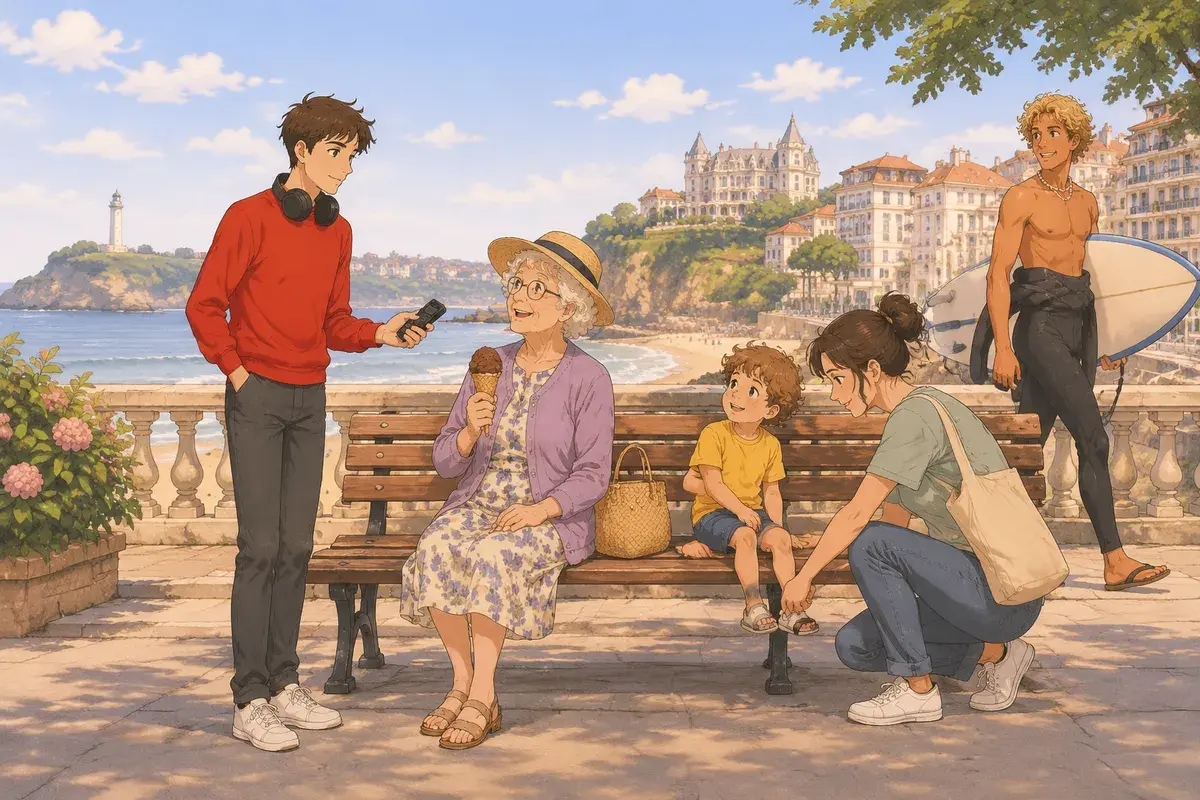
French dialogue with translation · B1 · 18 lines
Pour vous, c'est quoi, le bonheur ? What is happiness to you? (formal)
Comic · 18 panels
- Pacha
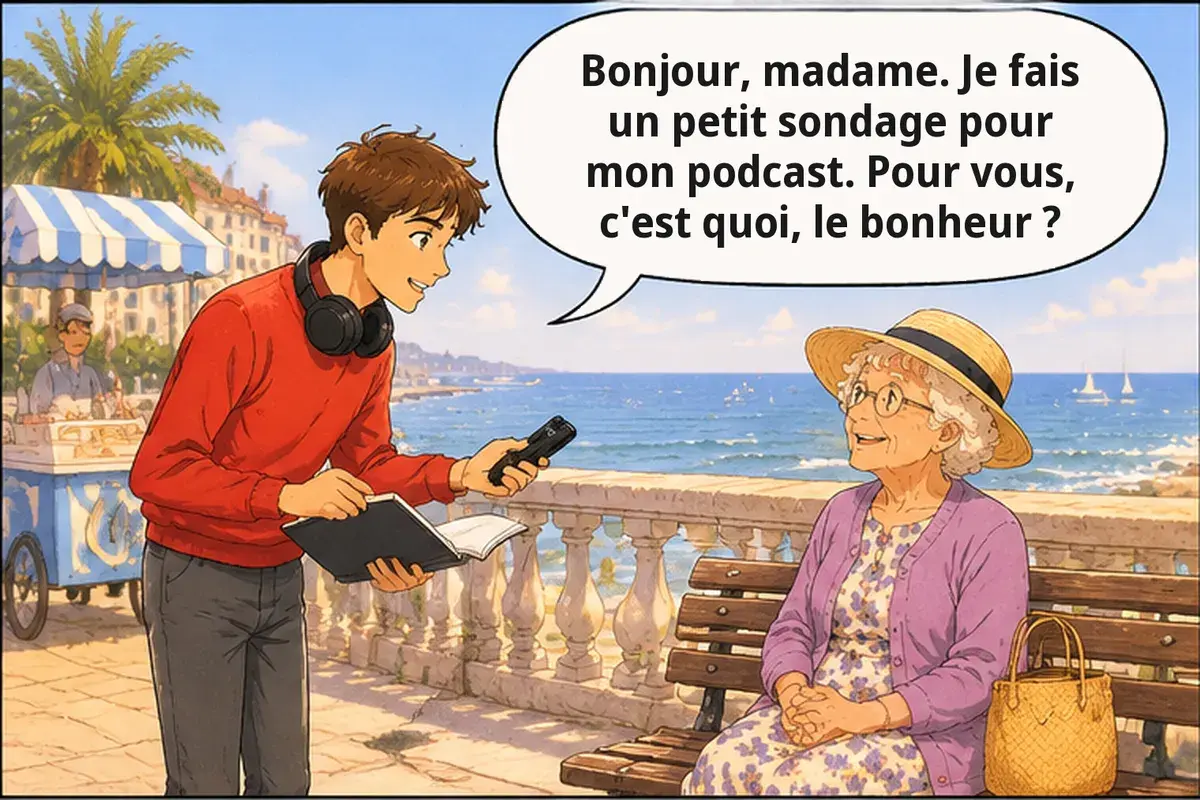
Bonjour, madame. Je fais un petit sondage pour mon podcast. Pour vous, c'est quoi, le bonheur ?
Hello, ma'am. I'm doing a little poll for my podcast. What is happiness to you? (formal)
- Passante
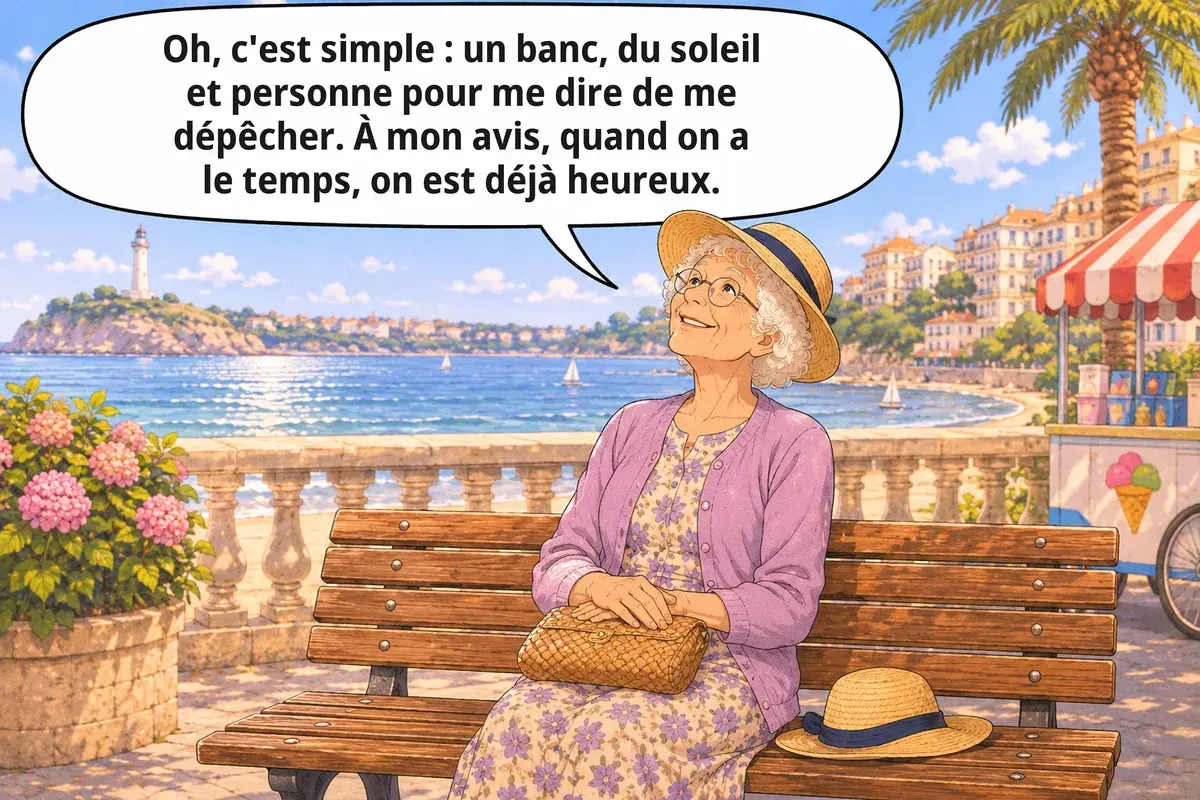
Oh, c'est simple : un banc, du soleil et personne pour me dire de me dépêcher. À mon avis, quand on a le temps, on est déjà heureux.
Oh, it's simple: a bench, some sun, and nobody telling me to hurry up. In my opinion, when you have time, you're already happy.
- Pacha
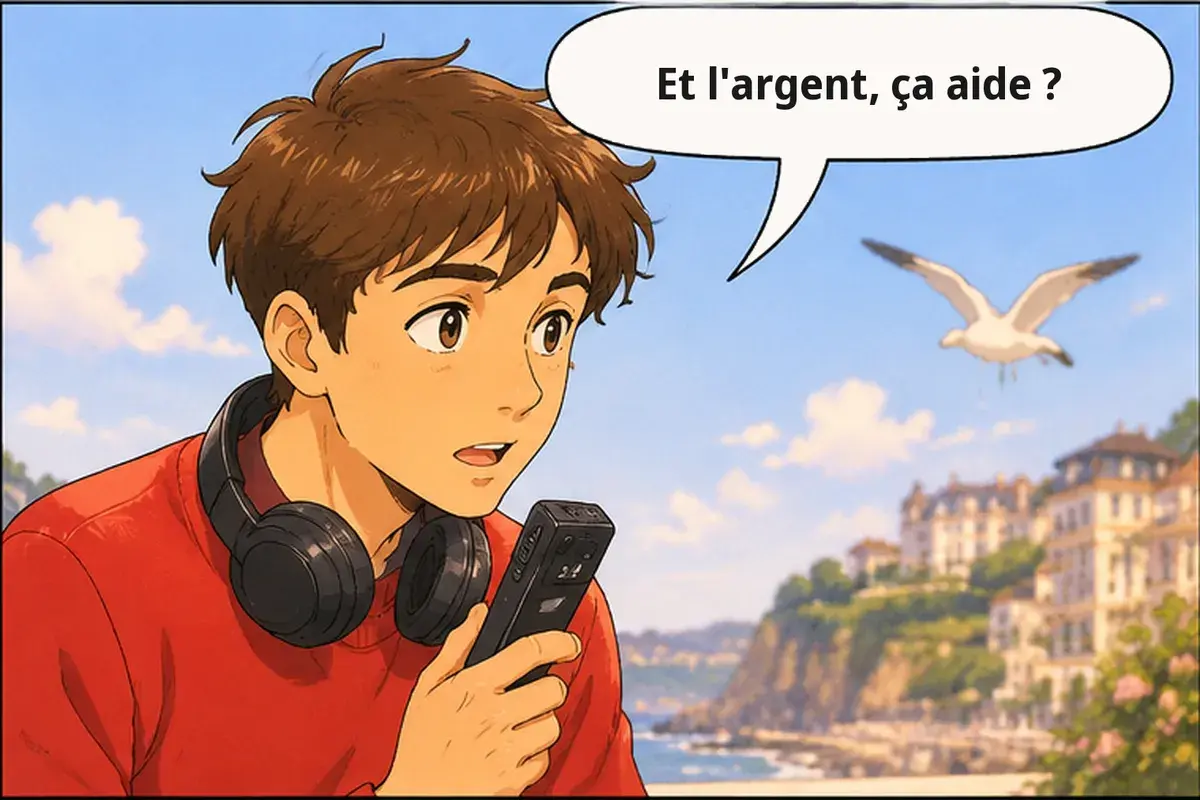
Et l'argent, ça aide ?
And does money help?
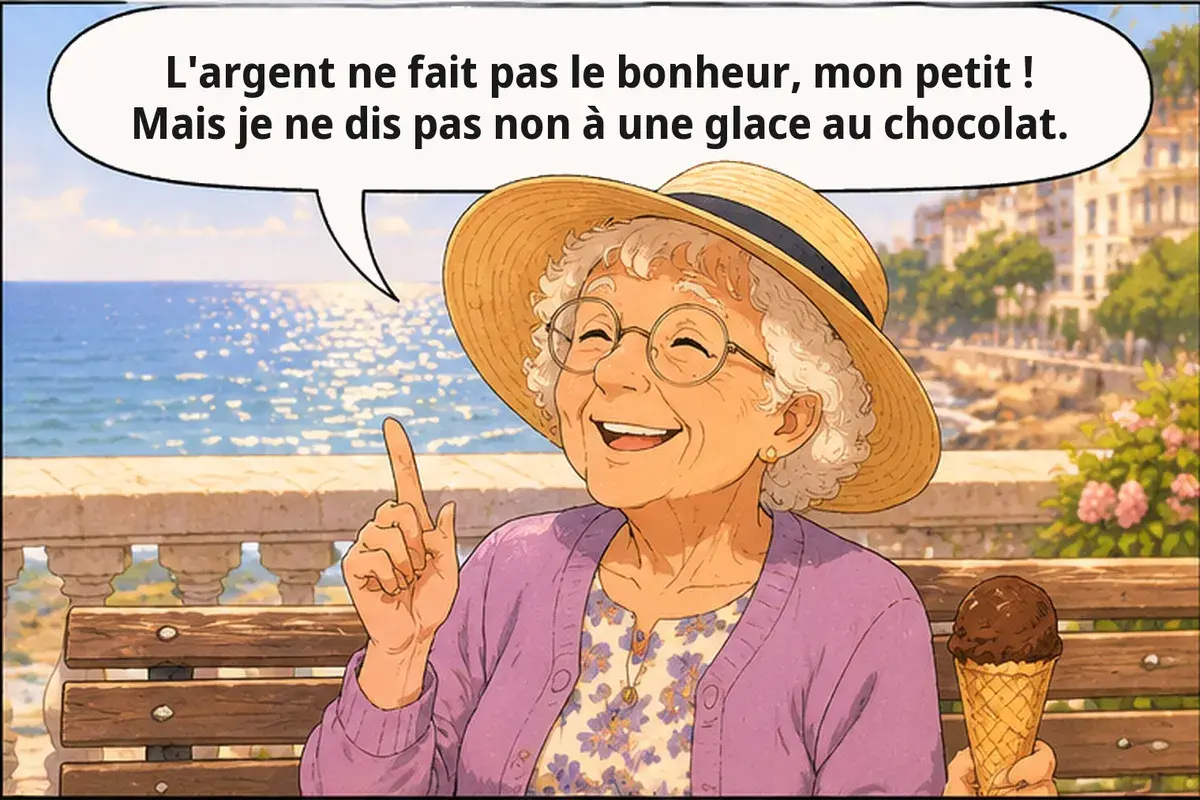
- Passante
L'argent ne fait pas le bonheur, mon petit ! Mais je ne dis pas non à une glace au chocolat.
Money doesn't buy happiness, my boy! But I won't say no to a chocolate ice cream.
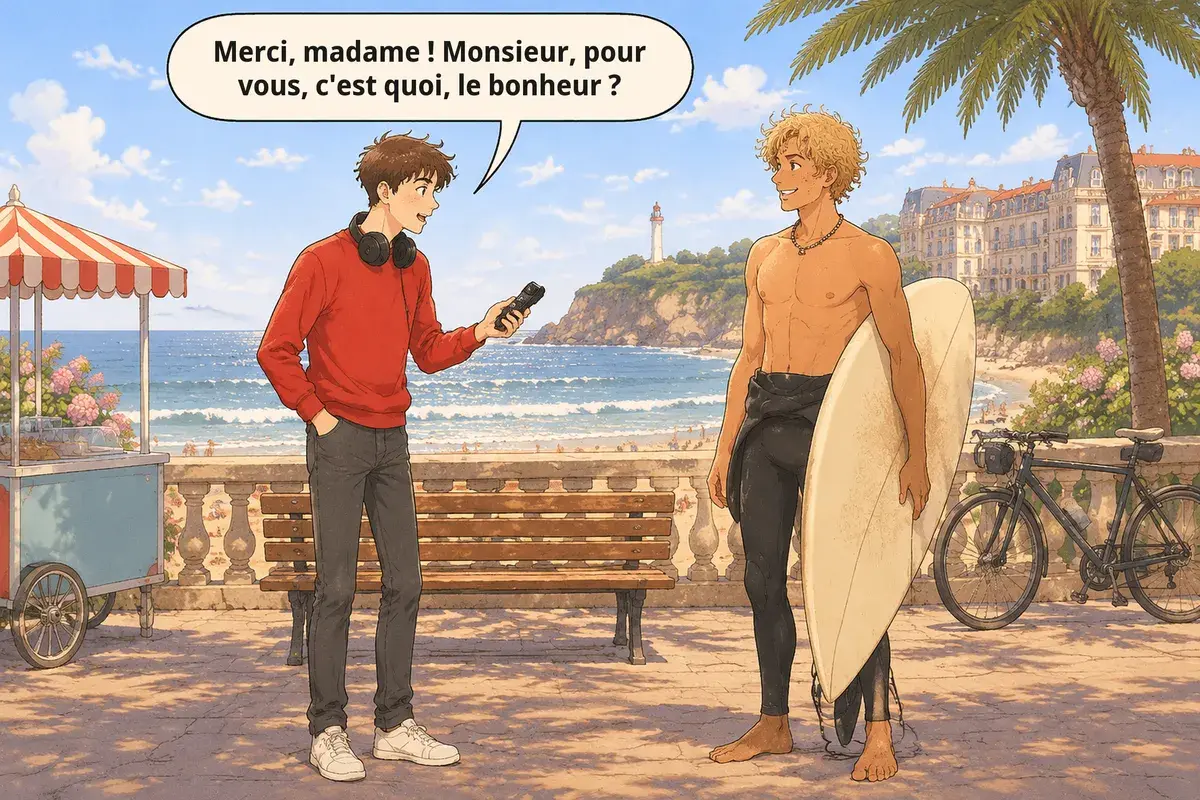
- Pacha
Merci, madame ! Monsieur, pour vous, c'est quoi, le bonheur ?
Thank you, ma'am! Sir, what is happiness to you? (formal)
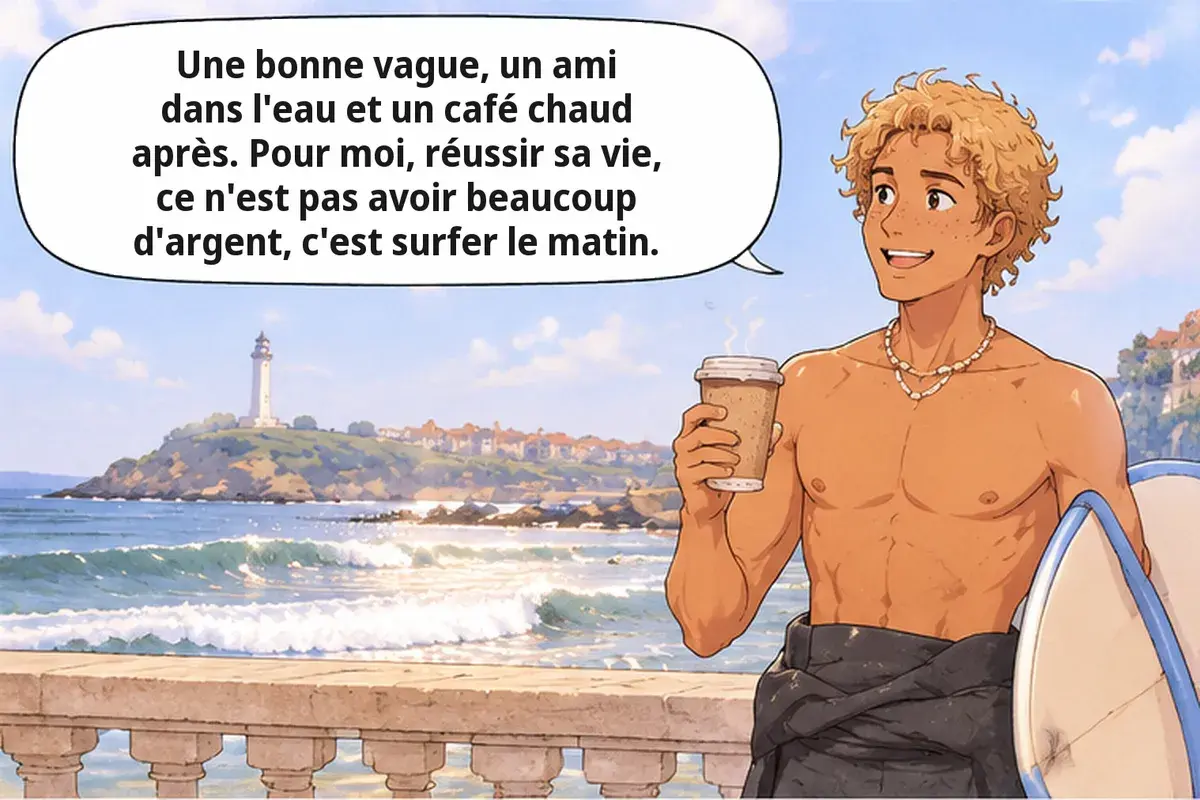
- Surfeur
Une bonne vague, un ami dans l'eau et un café chaud après. Pour moi, réussir sa vie, ce n'est pas avoir beaucoup d'argent, c'est surfer le matin.
A good wave, a friend in the water, and a hot coffee afterward. For me, succeeding in life isn't having a lot of money, it's surfing in the morning.
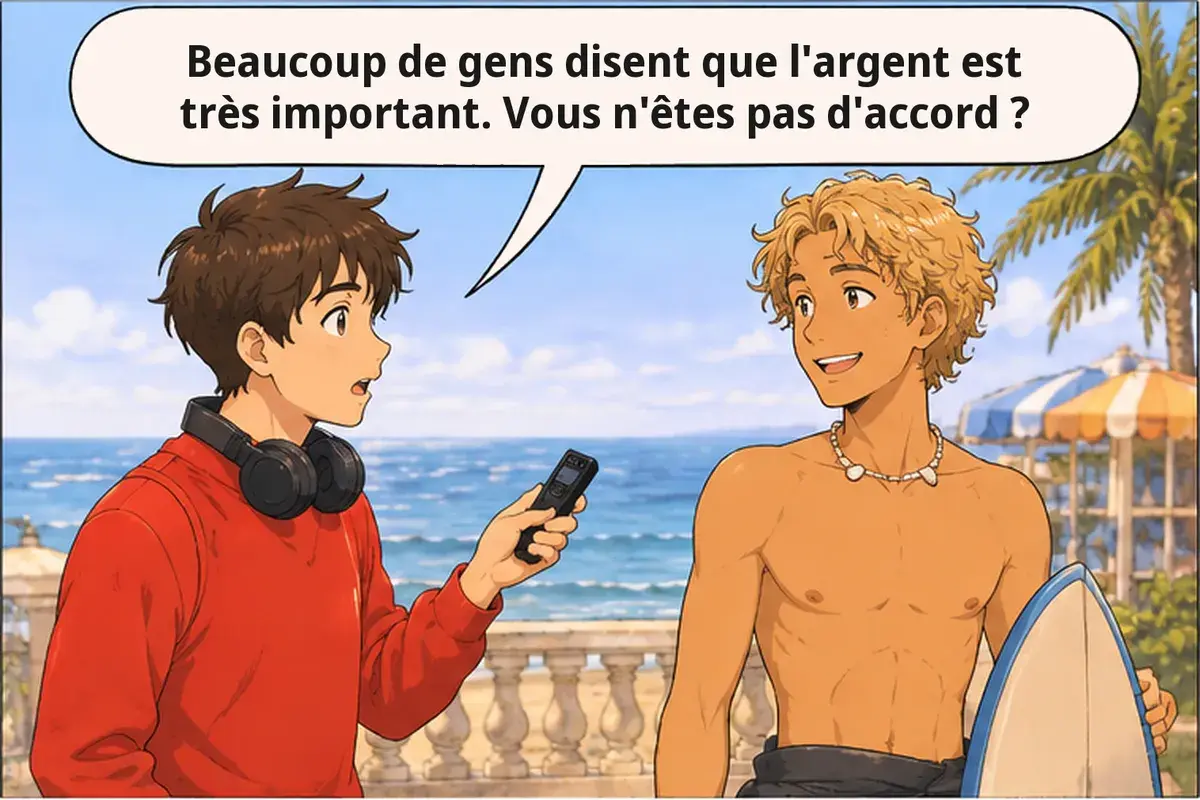
- Pacha
Beaucoup de gens disent que l'argent est très important. Vous n'êtes pas d'accord ?
A lot of people say that money is very important. Don't you agree? (formal)
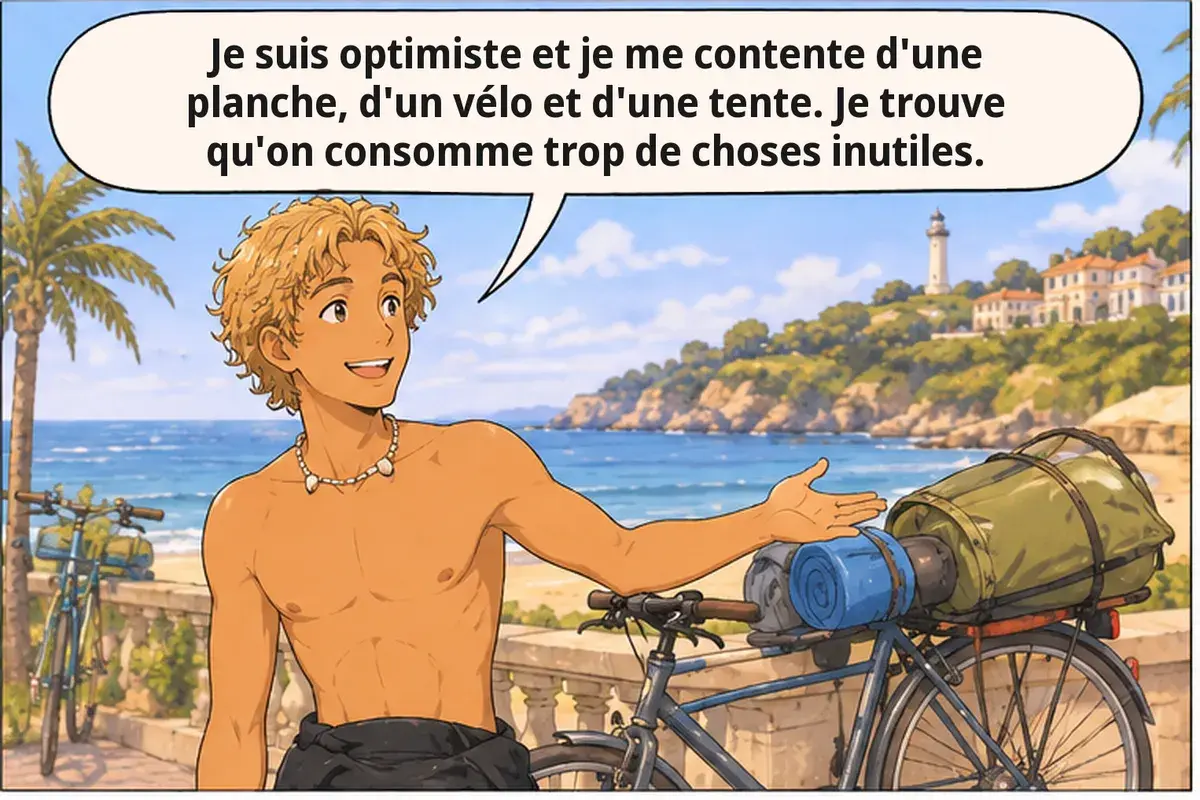
- Surfeur
Je suis optimiste et je me contente d'une planche, d'un vélo et d'une tente. Je trouve qu'on consomme trop de choses inutiles.
I'm optimistic and I make do with a board, a bike, and a tent. I think we consume too many useless things.
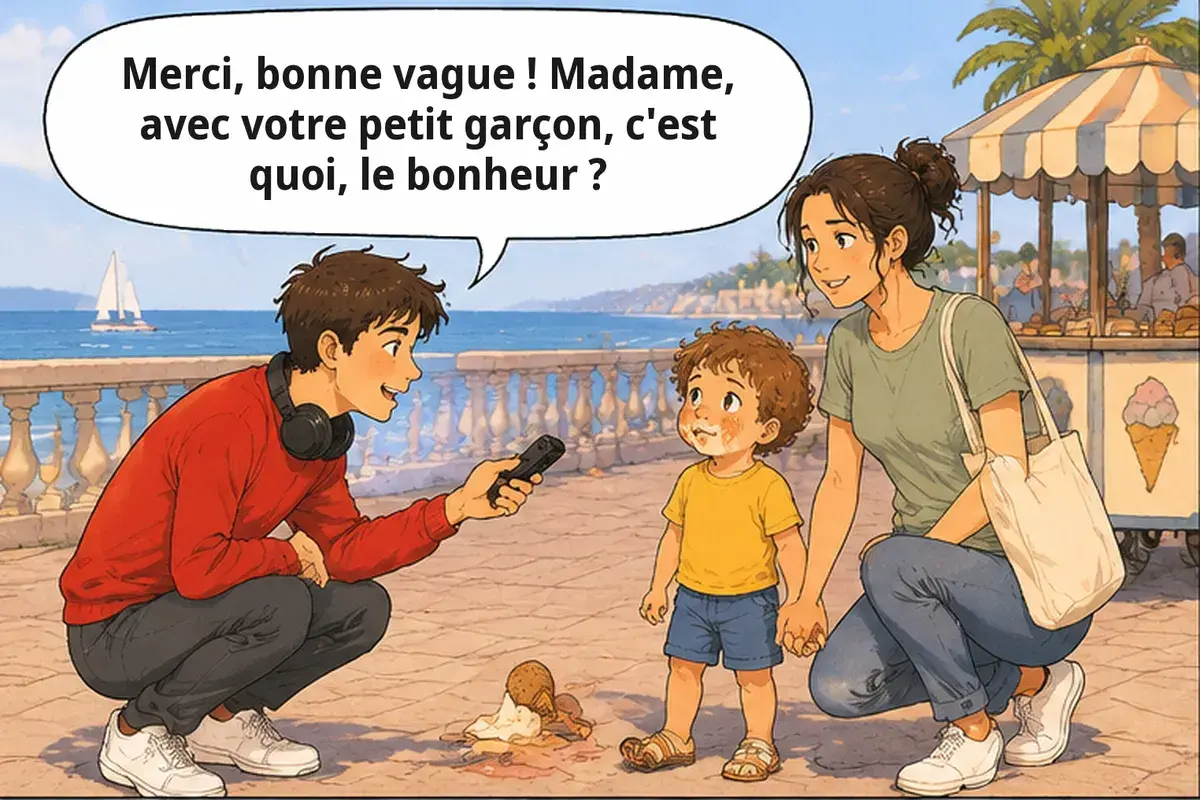
- Pacha
Merci, bonne vague ! Madame, avec votre petit garçon, c'est quoi, le bonheur ?
Thanks, and good waves! Ma'am, with your little boy, what is happiness? (formal)
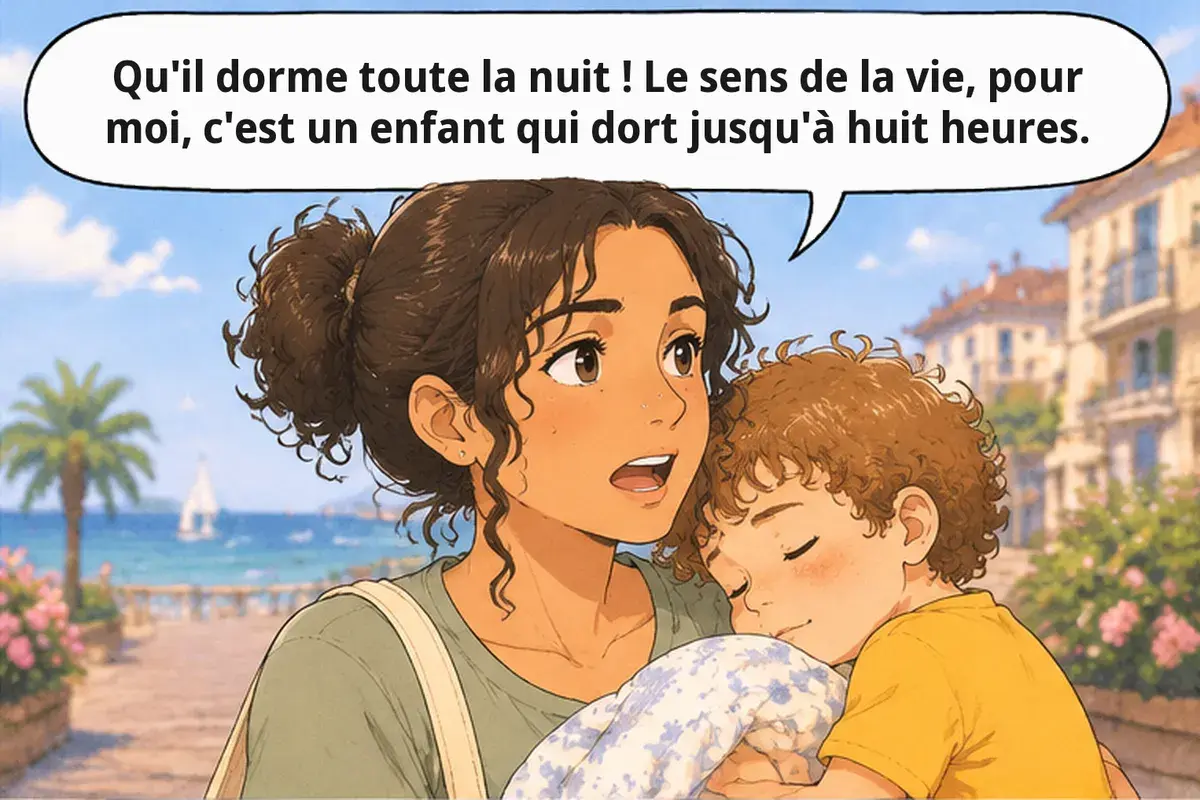
- Mère
Qu'il dorme toute la nuit ! Le sens de la vie, pour moi, c'est un enfant qui dort jusqu'à huit heures.
I just wish he'd sleep all night! The meaning of life, for me, is a child who sleeps until eight.
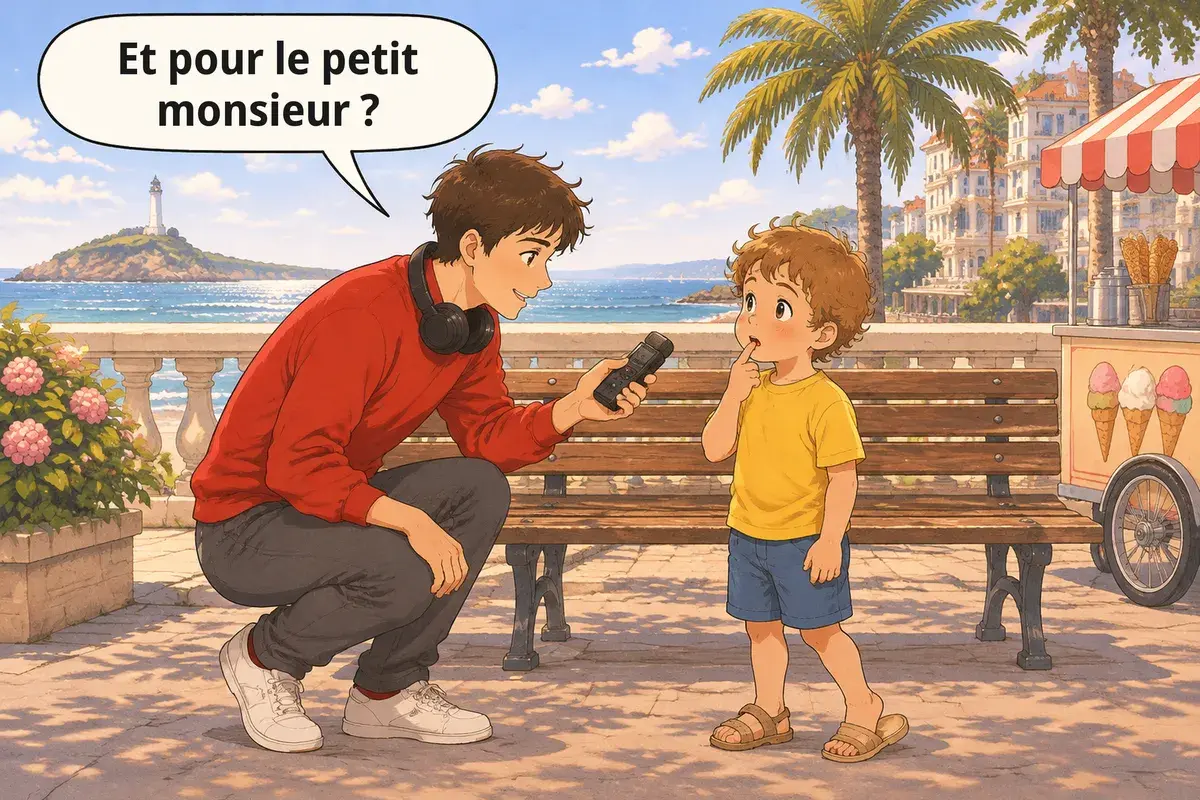
- Pacha
Et pour le petit monsieur ?
And for the little gentleman?
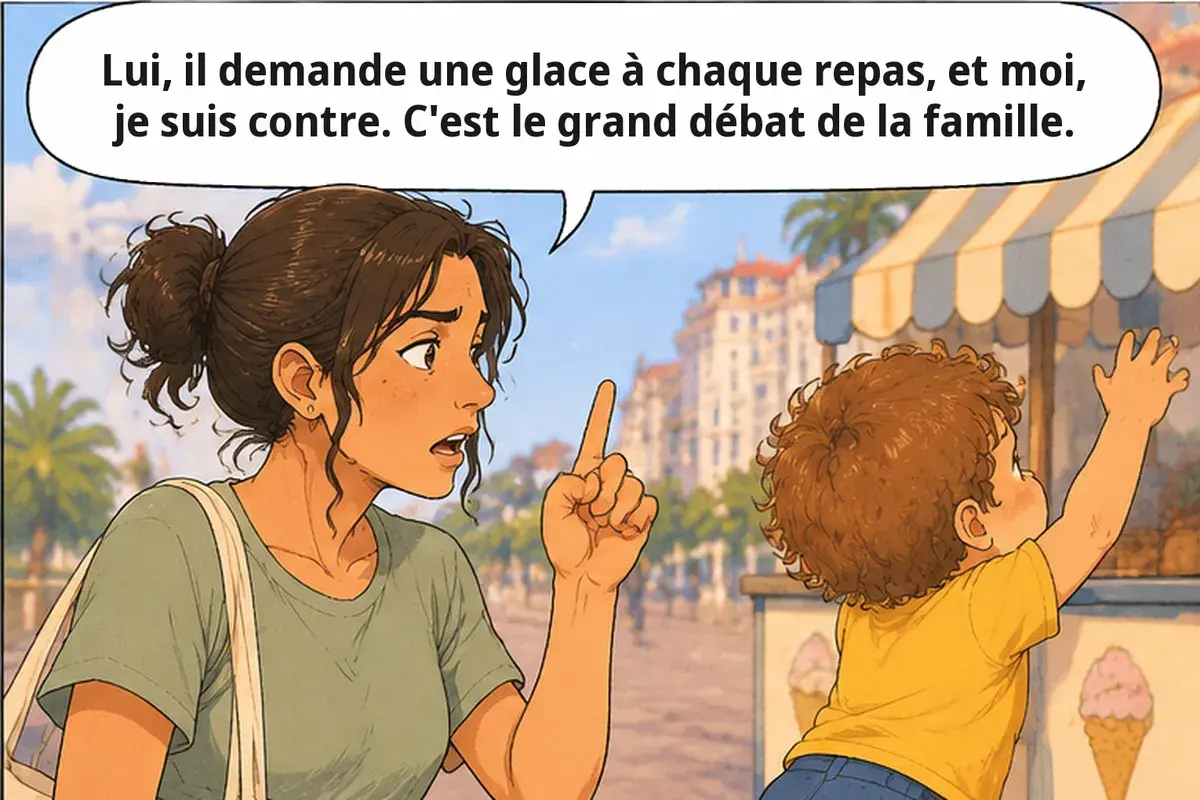
- Mère
Lui, il demande une glace à chaque repas, et moi, je suis contre. C'est le grand débat de la famille.
He asks for ice cream at every meal, and I'm against it. It's the big family debate.
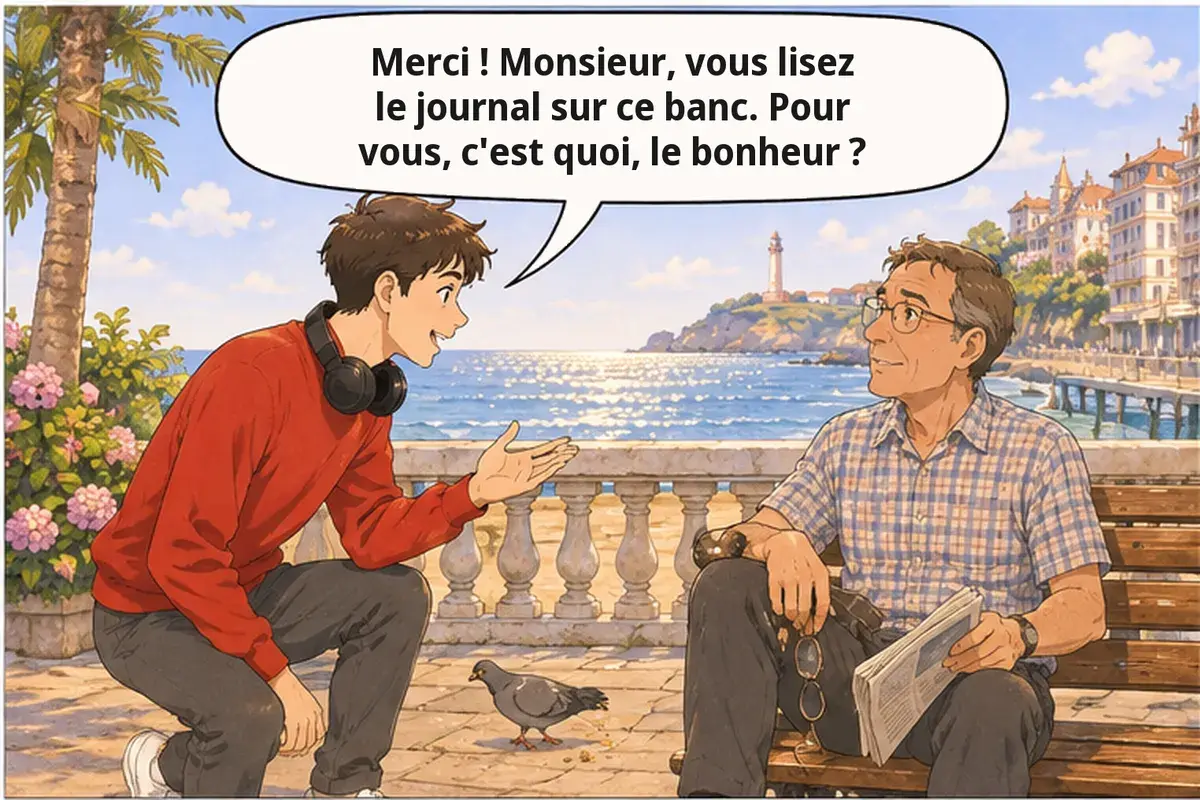
- Pacha
Merci ! Monsieur, vous lisez le journal sur ce banc. Pour vous, c'est quoi, le bonheur ?
Thank you! Sir, you're reading the newspaper on this bench. What is happiness to you? (formal)
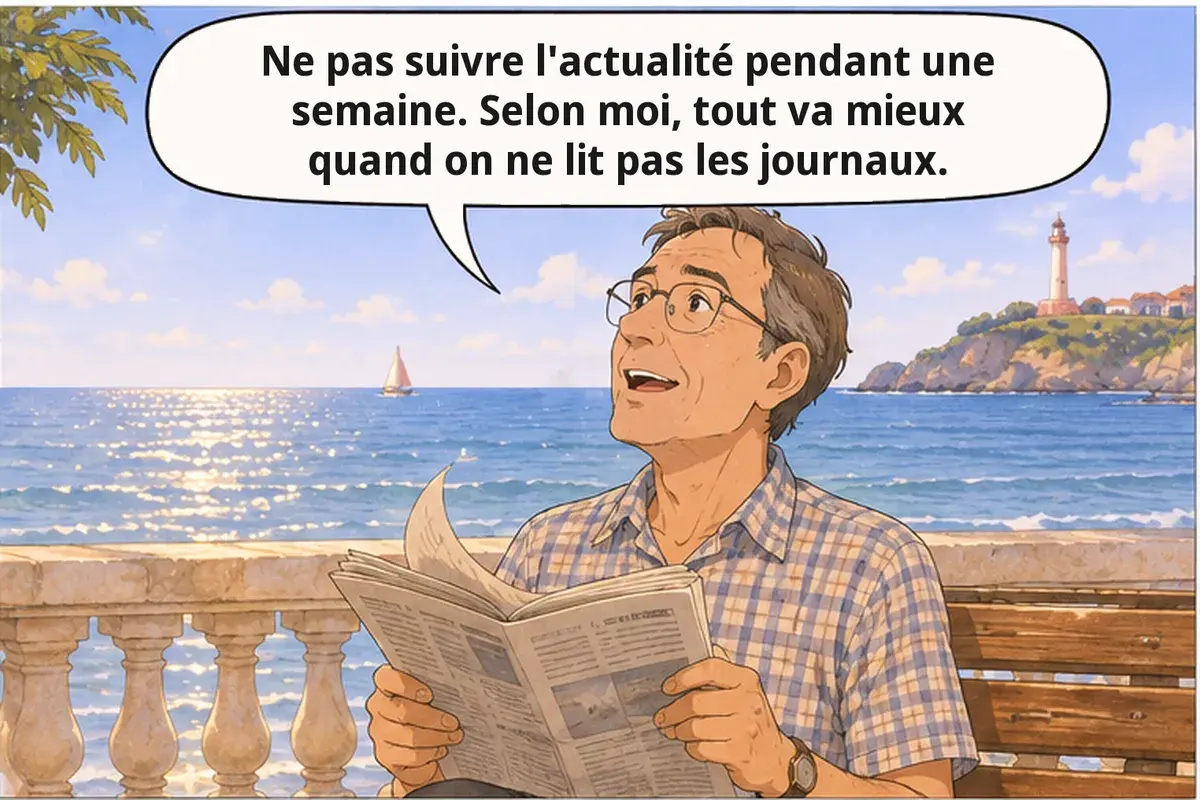
- Passant
Ne pas suivre l'actualité pendant une semaine. Selon moi, tout va mieux quand on ne lit pas les journaux.
Not following the news for a week. In my view, everything goes better when you don't read the papers.
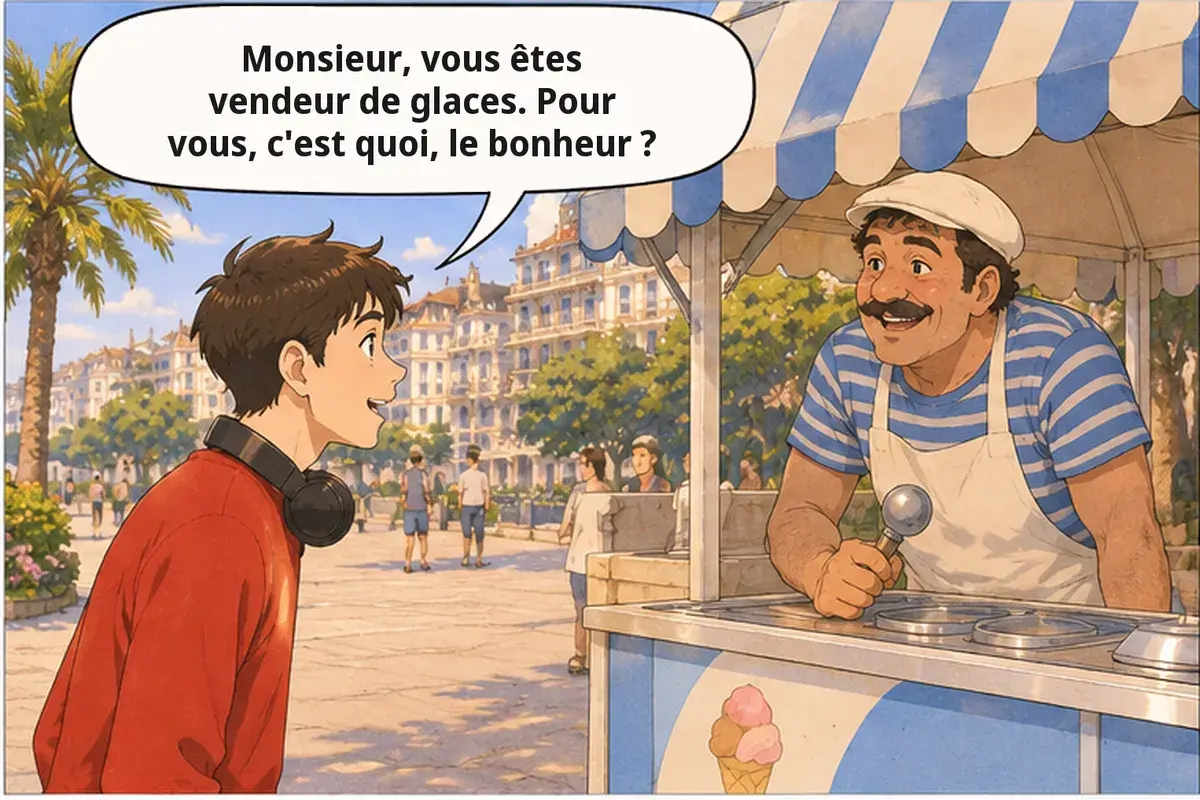
- Pacha
Monsieur, vous êtes vendeur de glaces. Pour vous, c'est quoi, le bonheur ?
Sir, you're an ice cream seller. What is happiness to you? (formal)
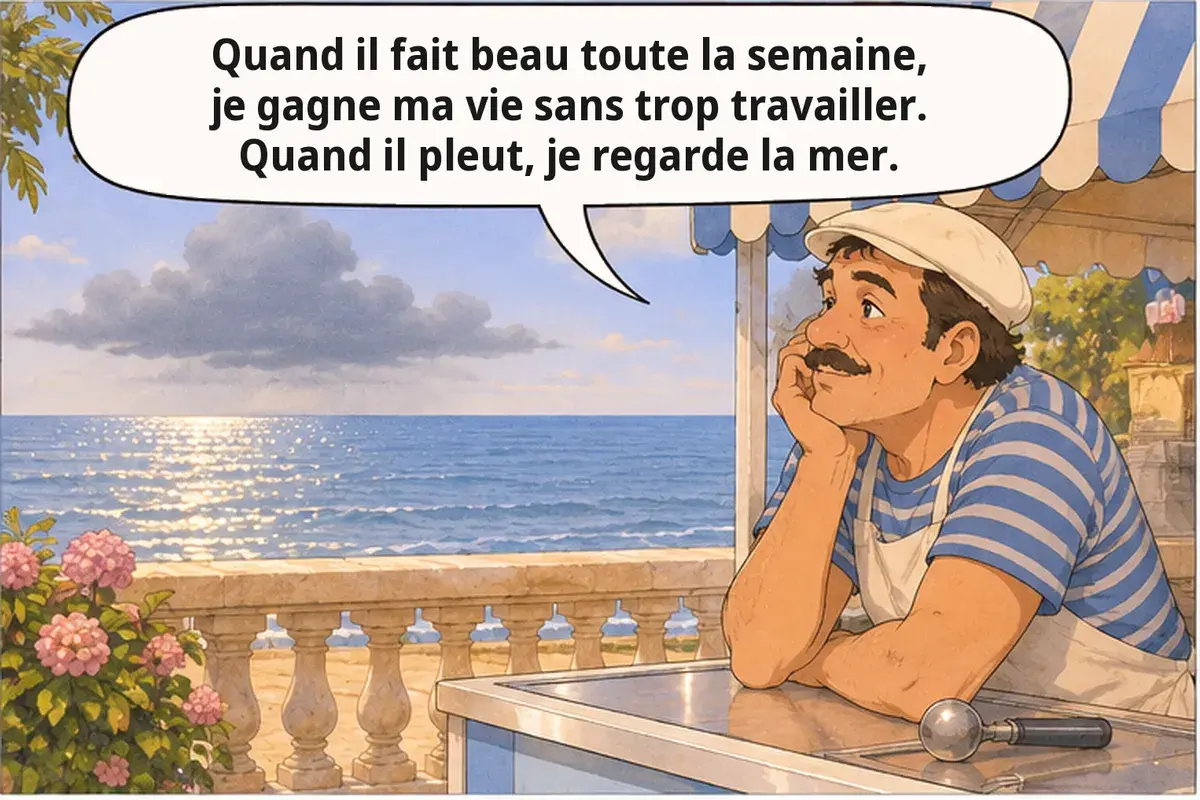
- Vendeur
Quand il fait beau toute la semaine, je gagne ma vie sans trop travailler. Quand il pleut, je regarde la mer.
When the weather's nice all week, I earn a living without working too hard. When it rains, I watch the sea.
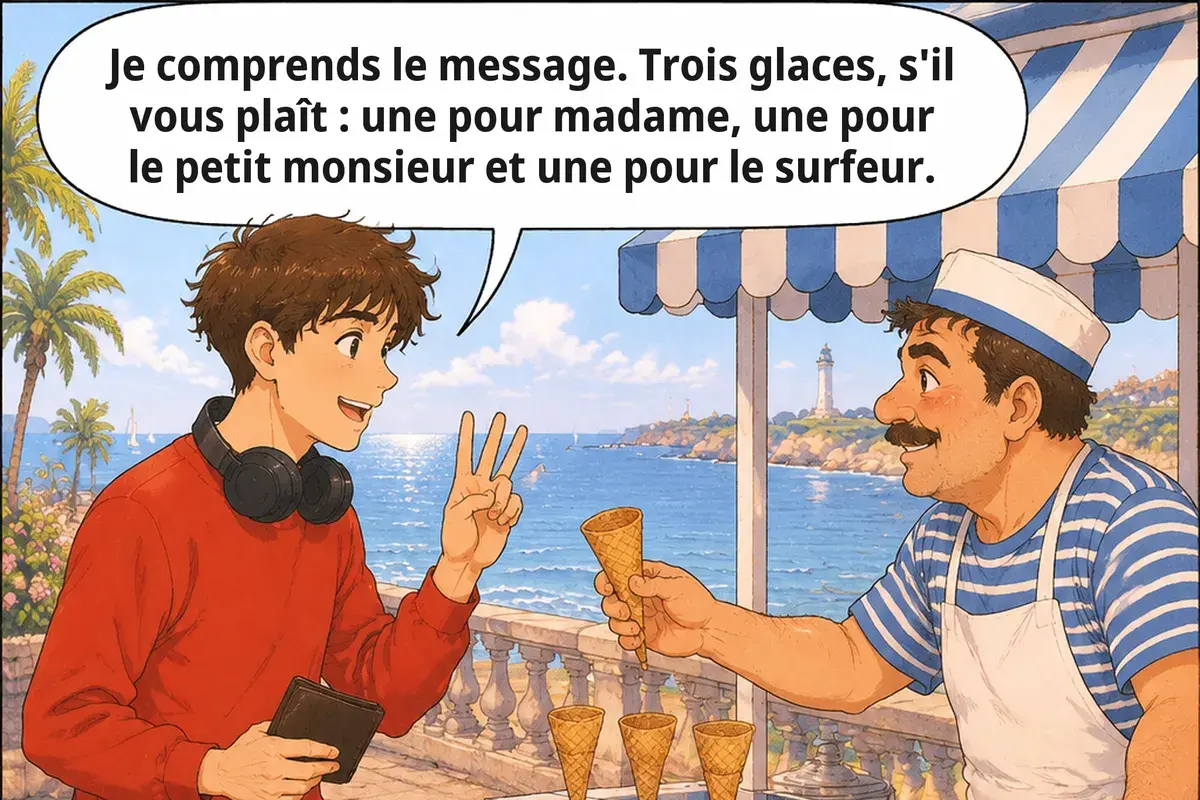
- Pacha
Je comprends le message. Trois glaces, s'il vous plaît : une pour madame, une pour le petit monsieur et une pour le surfeur.
I get the hint. Three ice creams, please: one for the lady, one for the little gentleman, and one for the surfer. (formal)
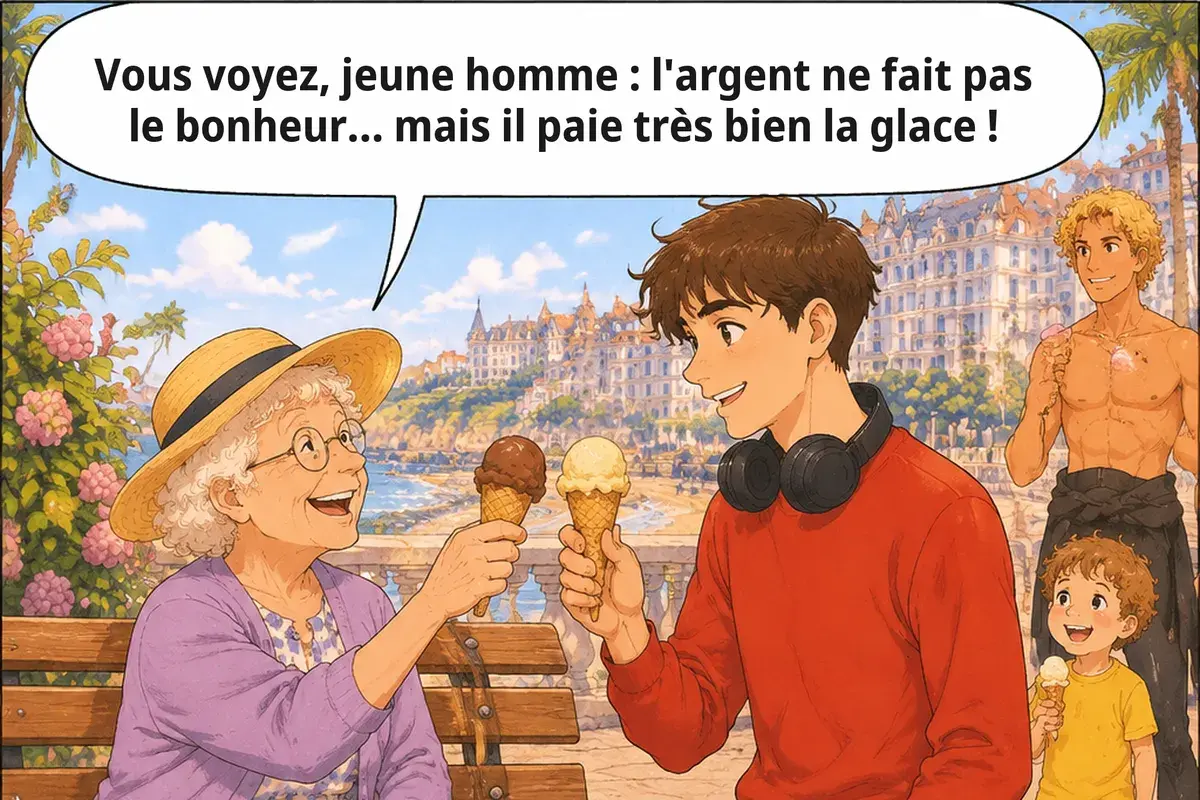
- Passante
Vous voyez, jeune homme : l'argent ne fait pas le bonheur... mais il paie très bien la glace !
You see, young man: money doesn't buy happiness... but it sure pays for ice cream! (formal)
Grammar for this text
- Pour vous, c'est quoi, le bonheur ? — What is happiness to you? (formal) It's a casual way to ask: first "to you," then the question itself. A stricter, more formal version starts with
qu'est-ce que. - c'est simple : un banc, du soleil et personne pour me dire de me dépêcher — it's simple: a bench, some sun, and nobody telling me to hurry up.
personne pour+ an infinitive means "nobody who would tell me";dire demeans "to tell (someone) to" (unit 9);se dépêchermeans "to hurry." - L'argent ne fait pas le bonheur — Money doesn't buy happiness. It's a saying. The word
bonheurmeans "happiness" (A2). - réussir sa vie — to succeed in life. The possessive changes with the person:
ma vie,ta vie,sa vie. - je me contente d'une planche — I make do with a board.
se contenter demeans "to be content with";d'replacesdebefore a vowel. - Qu'il dorme toute la nuit ! — I just wish he'd sleep all night! It's a wish in the subjunctive:
que+dorme. It's like a request to fate. - je suis contre — I'm against it. In the text:
Lui, il demande une glace à chaque repas, et moi, je suis contre, he asks for an ice cream at every meal.luiputs the stress on the child;je suis contremeans "I'm against." - je gagne ma vie sans trop travailler — I earn a living without working too hard.
gagner sa viemeans "to earn a living"; it's about money, not about winning. - je ne dis pas non à une glace — I won't say no to ice cream. It's a joking way to say "I wouldn't turn it down."
Words and grammar of the unit: Give your opinion and argue your point.
Learn the words from the texts with flashcards
In the app, you can tap any word in a text to see its translation, forms and examples, and new words stick with flashcards. 15 minutes a day.
Start for freeEverything is open for free. No card needed to sign up.