

French dialogue with translation · B1 · 18 lines
Faisons le bilan de l'année Let's take stock of the year
Comic · 18 panels

- Madame Morel
Entrez, Pacha, la tisane est prête. Aujourd'hui, faisons le bilan de l'année.
Come in, Pacha, the herbal tea is ready. Today, let's take stock of the year. (formal)

- Pacha
Déjà un an ! Il y a un an, je suis arrivé avec une valise et cent mots. Aujourd'hui, j'ai la même valise, mais mille mots de plus.
Already a year! A year ago, I arrived with one suitcase and a hundred words (man speaking). Today, I have the same suitcase, but a thousand more words.

- Madame Morel
Et moi, j'ai tenu un cahier. Première erreur : « mon famille ».
And I kept a notebook. First mistake: "mon famille."

- Pacha
Aïe. Aujourd'hui, je dis correctement « ma famille ».
Ouch. Today, I say "ma famille" correctly.

- Madame Morel
C'est une véritable réussite. Au début, vous trébuchiez sur chaque liaison, et maintenant vous trébuchez rarement.
That's a real success. At first, you stumbled over every liaison, and now you rarely stumble. (formal)
- Pacha
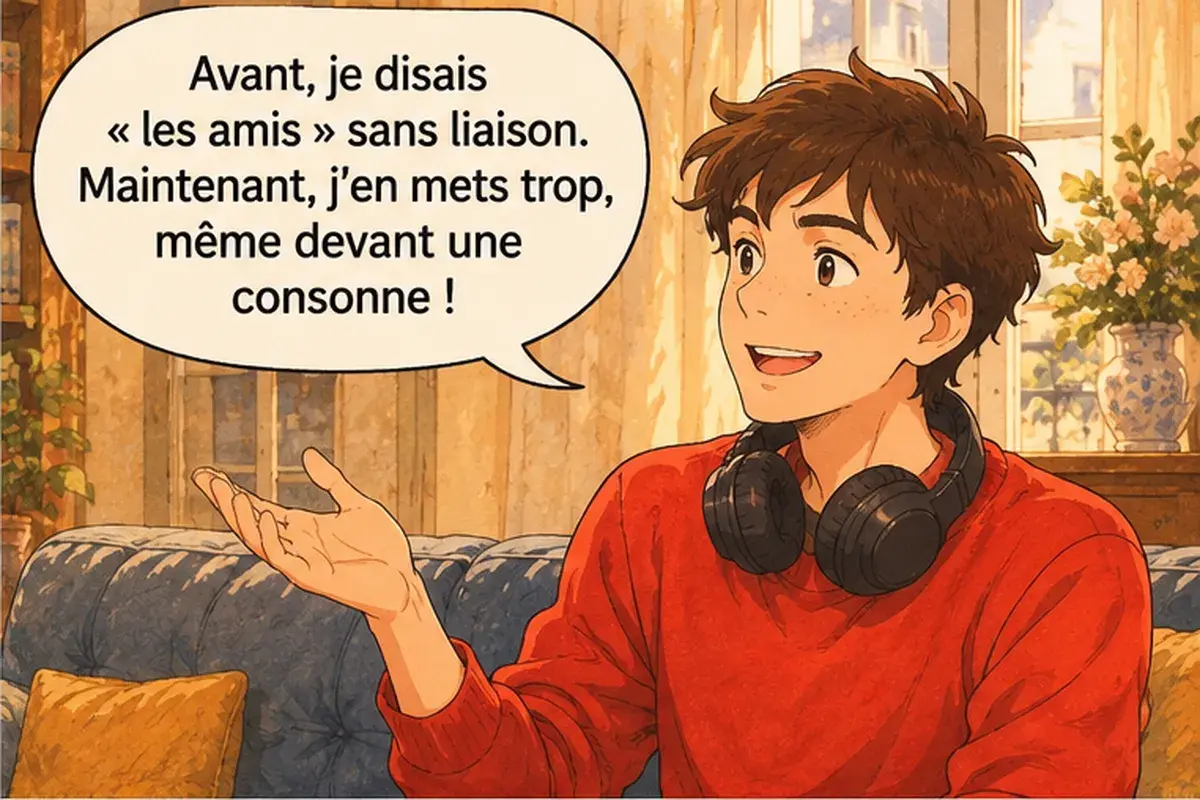
Avant, je disais « les amis » sans liaison. Maintenant, j'en mets trop, même devant une consonne !
Before, I used to say "les amis" without the liaison. Now I put it in too much, even before a consonant!

- Madame Morel
On fait la liaison devant une voyelle, pas devant une consonne. Mais c'est la tendance des bons étudiants : ils en font toujours trop.
You make the liaison before a vowel, not before a consonant. But it's the tendency of good students: they always overdo it.
- Pacha
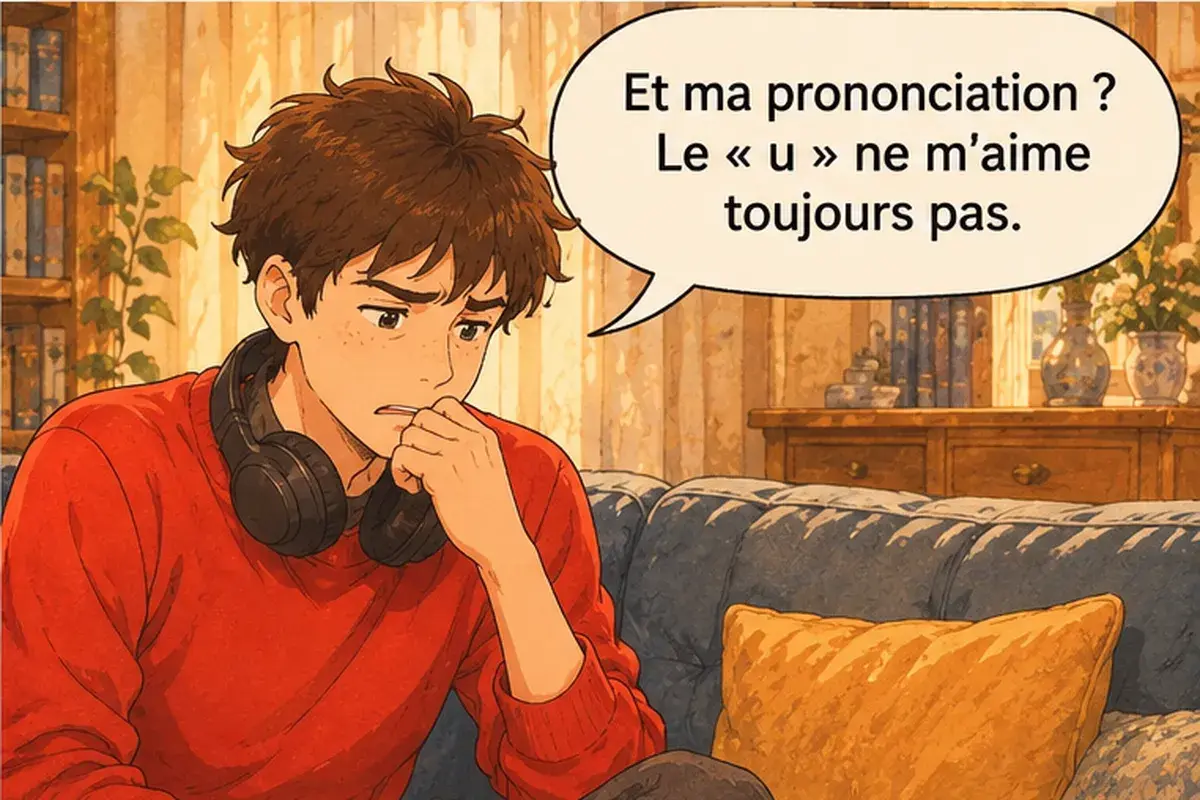
Et ma prononciation ? Le « u » ne m'aime toujours pas.
And my pronunciation? The "u" still doesn't like me.
- Madame Morel
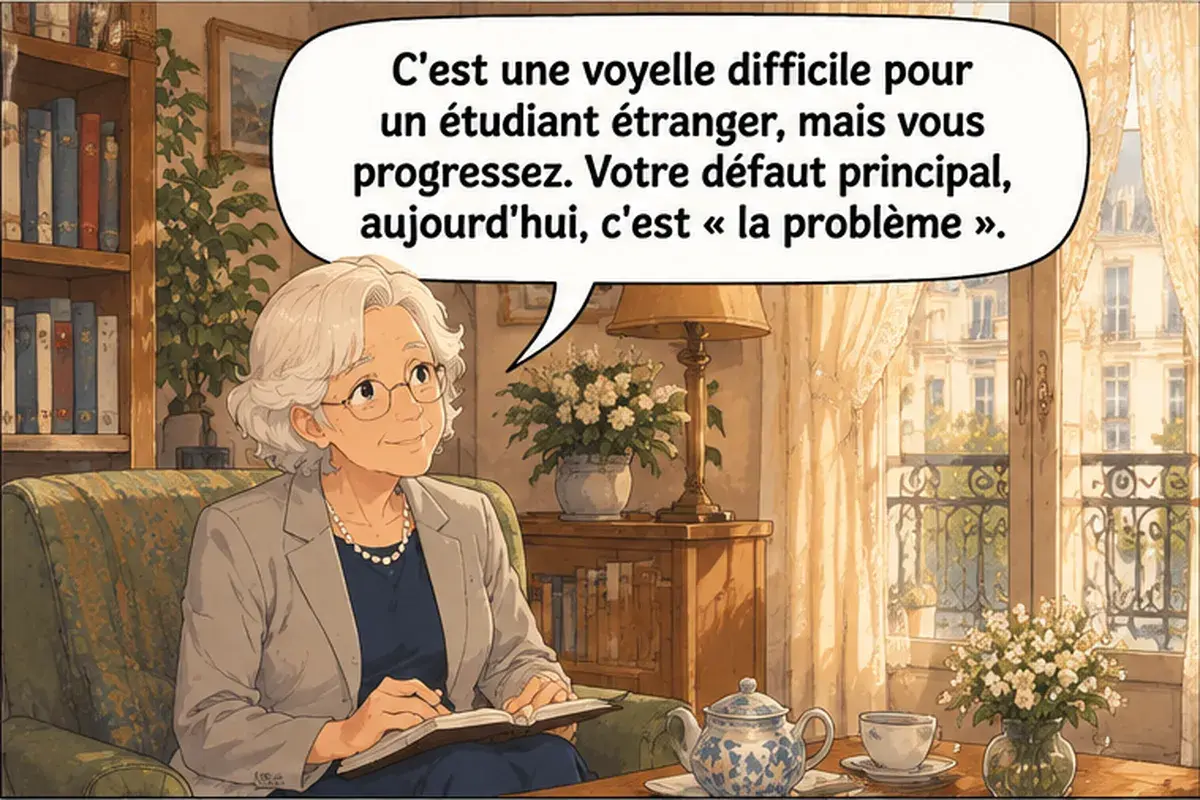
C'est une voyelle difficile pour un étudiant étranger, mais vous progressez. Votre défaut principal, aujourd'hui, c'est « la problème ».
It's a hard vowel for a foreign student, but you're making progress. Your main flaw today is "la problème." (formal)
- Pacha
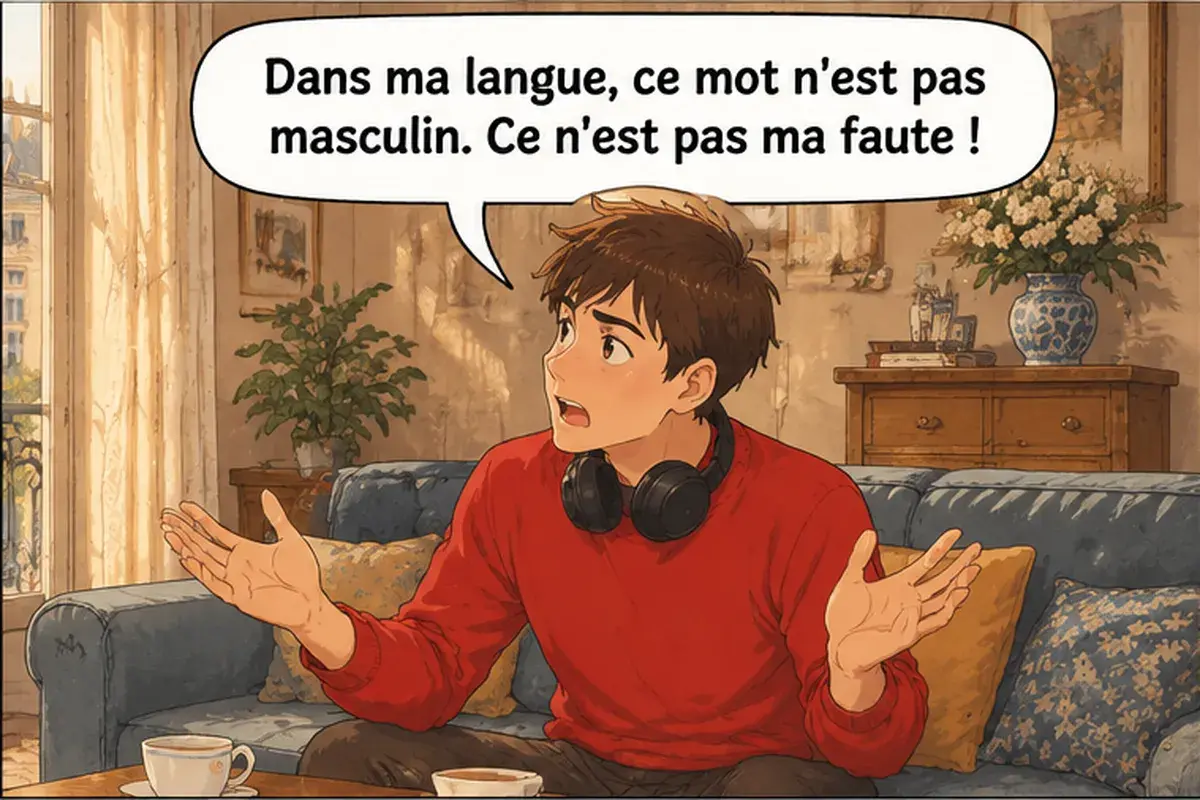
Dans ma langue, ce mot n'est pas masculin. Ce n'est pas ma faute !
In my language, that word isn't masculine. It's not my fault!
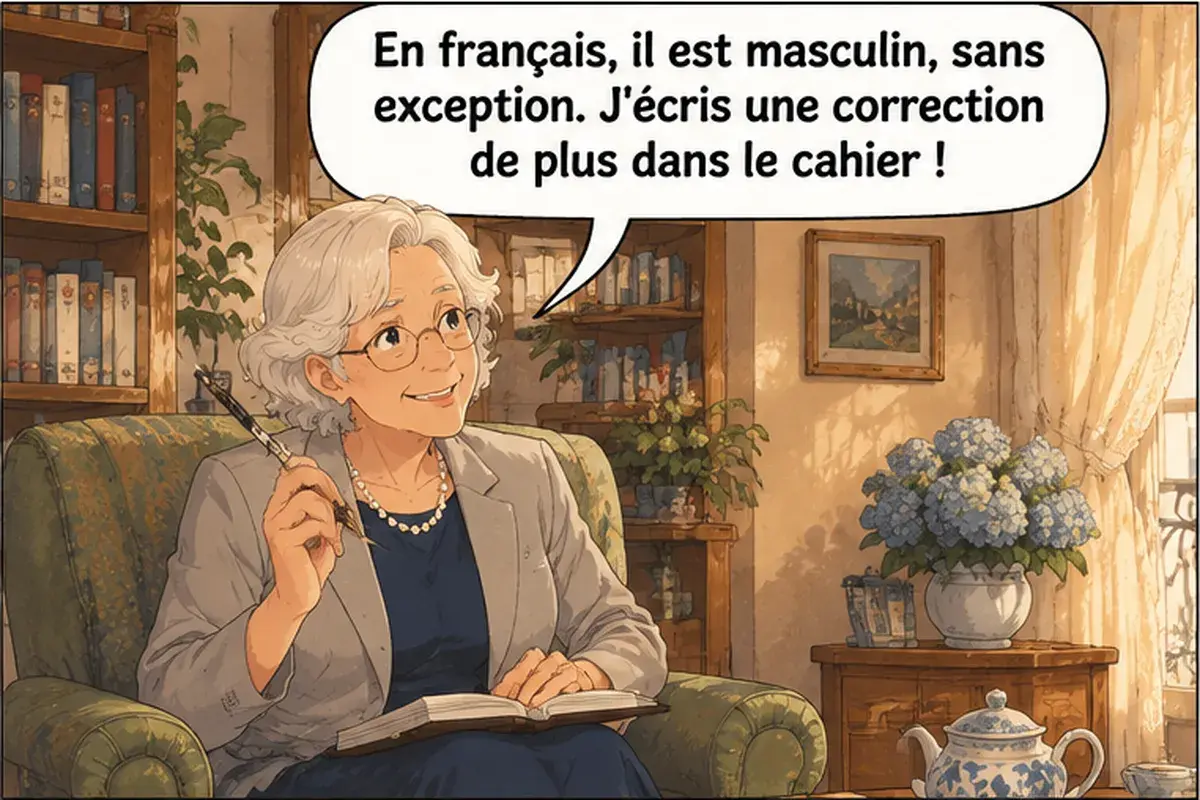
- Madame Morel
En français, il est masculin, sans exception. J'écris une correction de plus dans le cahier !
In French, it's masculine, without exception. I'm writing one more correction in the notebook!

- Pacha
L'an dernier, mon objectif, c'était le téléphone. J'ai échoué plusieurs fois, mais j'ai fini par réussir.
Last year, my goal was the phone. I failed several times, but I ended up succeeding.
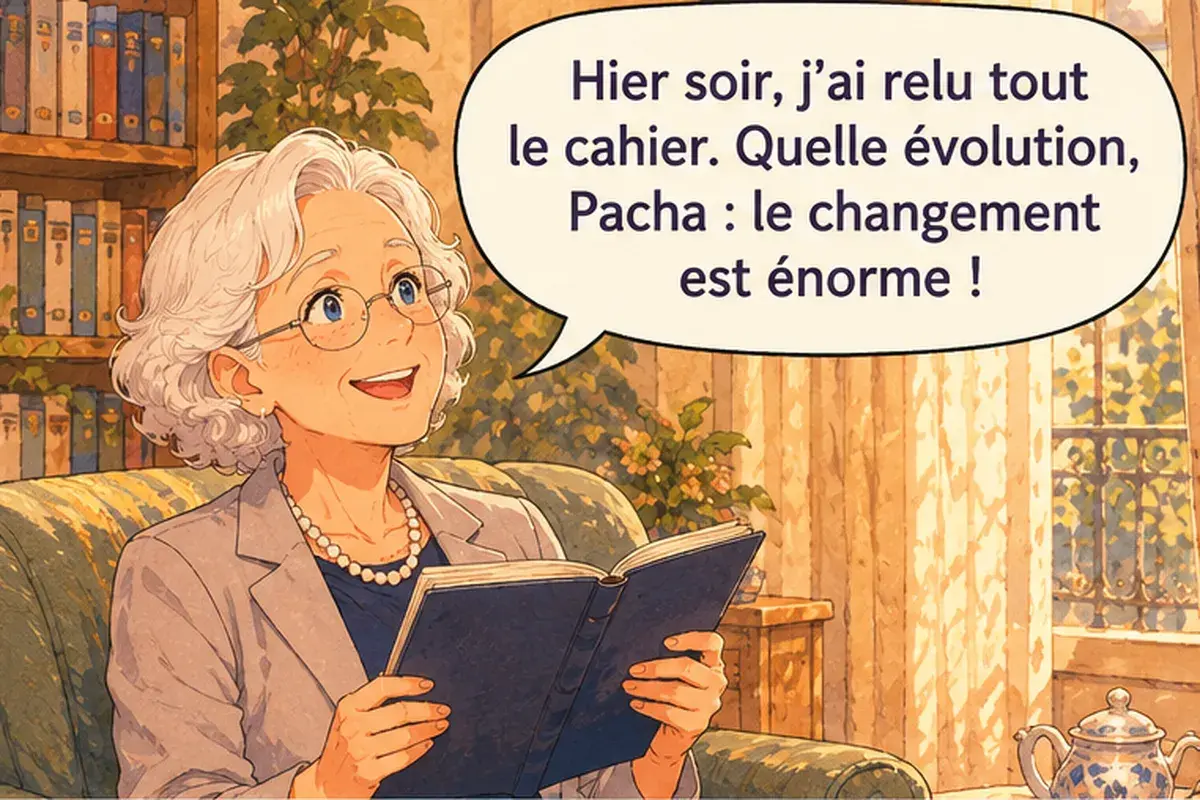
- Madame Morel
Hier soir, j'ai relu tout le cahier. Quelle évolution, Pacha : le changement est énorme !
Last night, I reread the whole notebook. What an evolution, Pacha: the change is huge!

- Pacha
Alors, je suis un bon étudiant ?
So, am I a good student? (man speaking)

- Madame Morel
Vous êtes mon meilleur étudiant. Je le dis avec fierté.
You're my best student. I say it with pride. (to a man, formal)

- Pacha
Madame Morel, je suis votre seul étudiant.
Madame Morel, I'm your only student. (man speaking, formal)
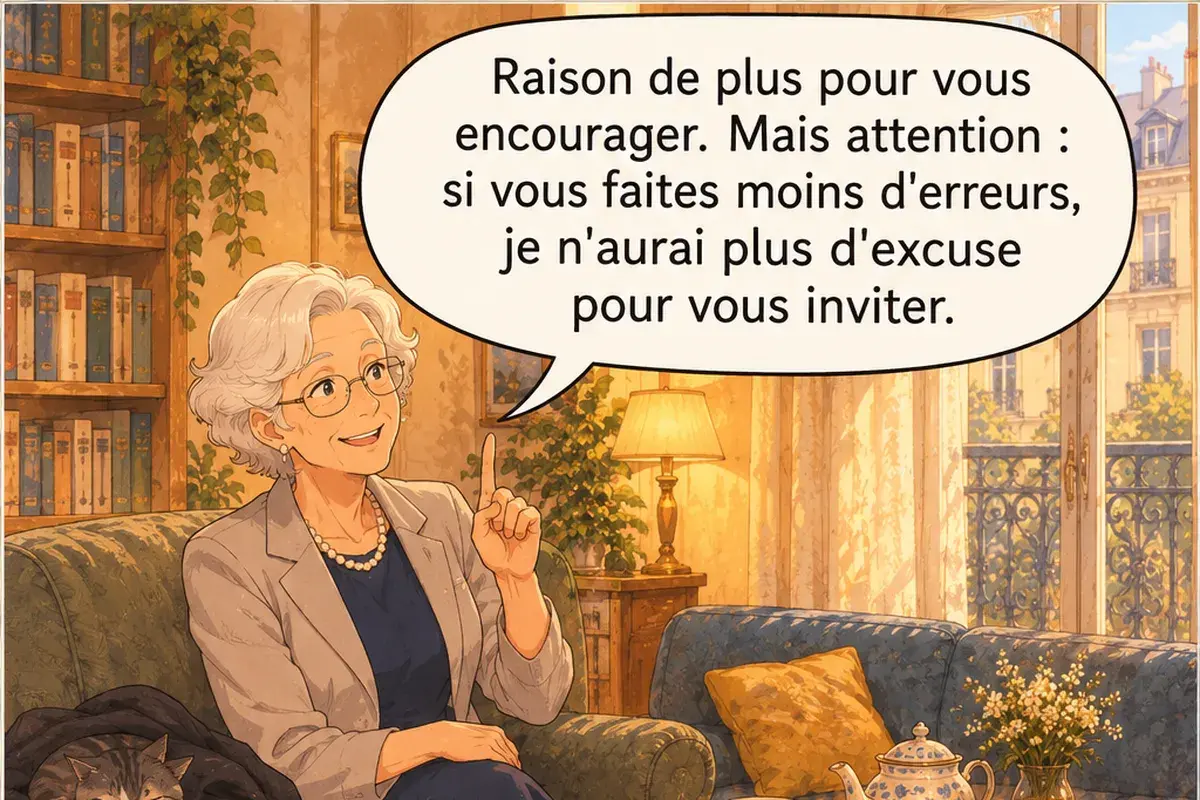
- Madame Morel
Raison de plus pour vous encourager. Mais attention : si vous faites moins d'erreurs, je n'aurai plus d'excuse pour vous inviter.
All the more reason to encourage you. But careful: if you make fewer mistakes, I won't have any excuse to invite you anymore. (formal)

- Pacha
Alors je ferai une erreur par jour, exprès. Pour la tradition !
Then I'll make one mistake a day, on purpose. For tradition!
Grammar for this text
- faisons le bilan de l'année — "let's take stock of the year": the nous command.
faisonscomes fromfaire, andbilanmeans "balance, overall result", sofaire le bilanmeans "to take stock". - Il y a un an, je suis arrivé avec une valise et cent mots —
il y a un anmeans "a year ago" (A2, unit 2). la même valise —la mêmemeans "the same": see block 3 of the grammar. - vous trébuchiez sur chaque liaison —
trébuchiezis the vous form of the imperfect oftrébucher("to stumble"), so "you used to stumble". The liaison is when a silent final consonant is pronounced before a vowel:les amissounds like "lay-zah-mee". - j'en mets trop and ils en font toujours trop —
enhere means "of it" (the liaison).metsis a form ofmettre("to put"). As in A2, unit 5,enreplaces something already mentioned. - J'ai échoué plusieurs fois, mais j'ai fini par réussir —
échouermeans "to fail", andfinir par+ infinitive means "to end up doing" (unit 13). - je n'aurai plus d'excuse pour vous inviter —
n'aurai plusmeans "won't have any more": the future tense ofavoirwithne… plus. Before it comessi vous faites…: "if" + present tense (unit 24).
Words and grammar of the unit: Look back on the year.
Learn the words from the texts with flashcards
In the app, you can tap any word in a text to see its translation, forms and examples, and new words stick with flashcards. 15 minutes a day.
Start for freeEverything is open for free. No card needed to sign up.