

French dialogue with translation · A2 · 16 lines
Je suis venu pour m'excuser I came to apologize
Comic · 16 panels
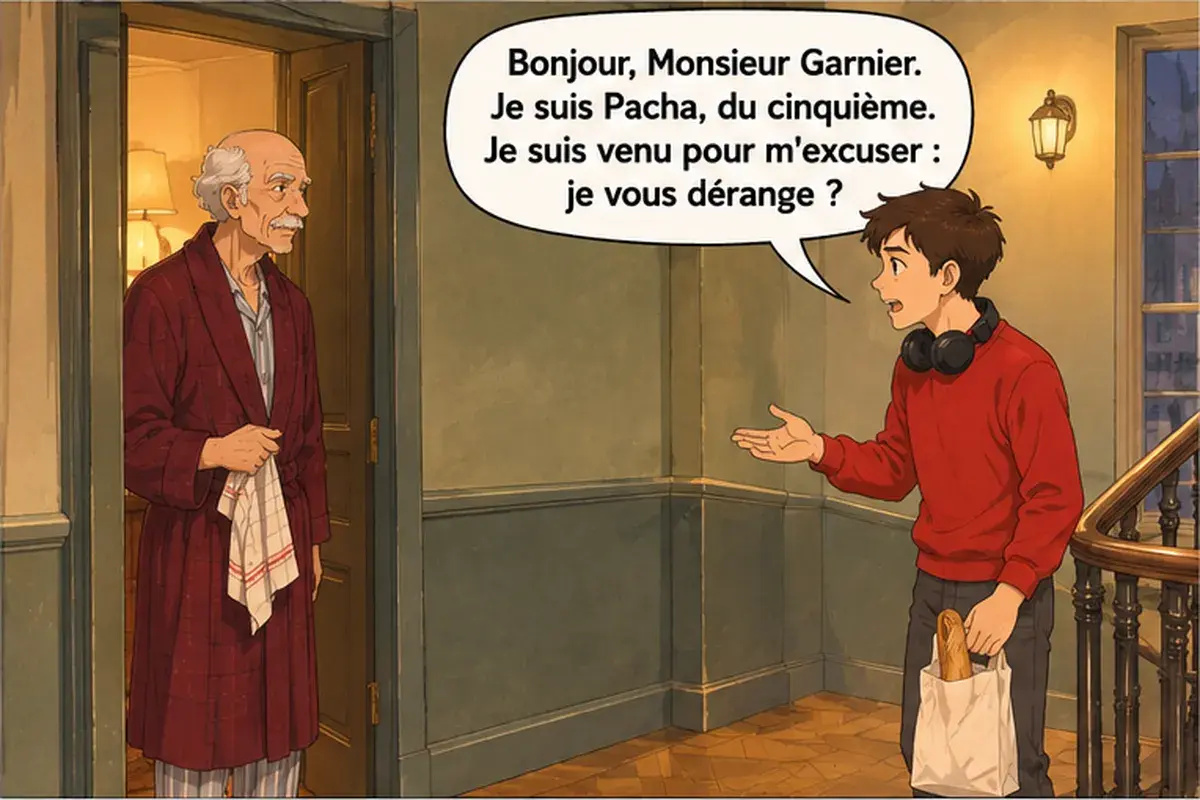
- Pacha
Bonjour, Monsieur Garnier. Je suis Pacha, du cinquième. Je suis venu pour m'excuser : je vous dérange ?
Hello, Monsieur Garnier. I'm Pacha, from the fifth floor. I came to apologize: am I disturbing you? (man speaking, formal)
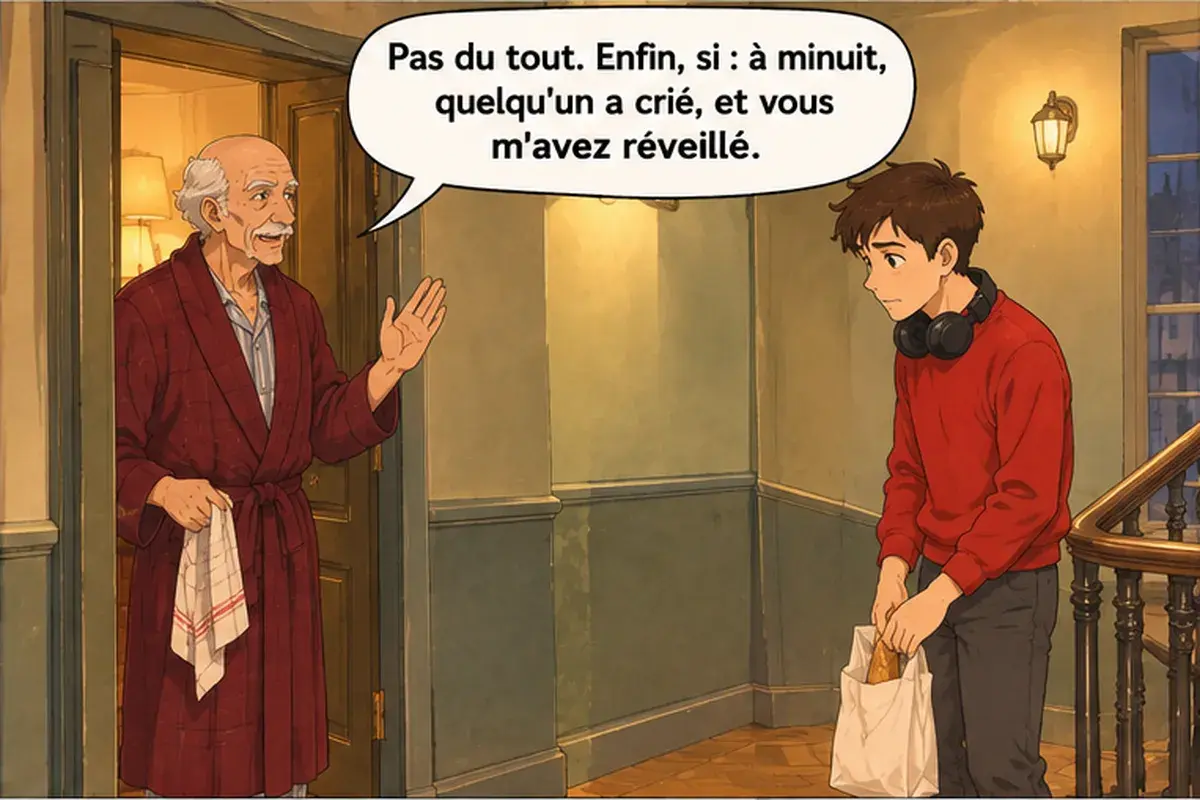
- Monsieur Garnier
Pas du tout. Enfin, si : à minuit, quelqu'un a crié, et vous m'avez réveillé.
Not at all. Well, actually, yes: at midnight, someone shouted, and you woke me up (man speaking, formal).
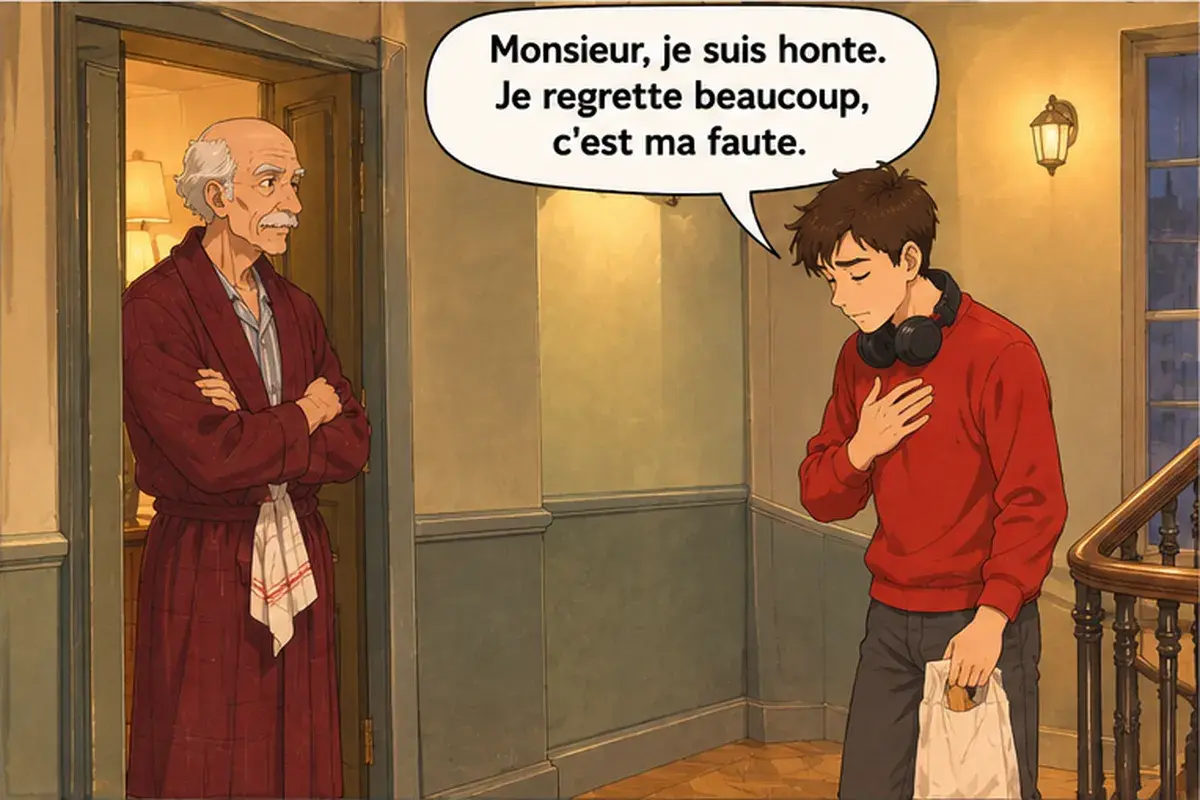
- Pacha
Monsieur, je suis honte. Je regrette beaucoup, c'est ma faute.
Sir, I am shame. I really regret it, it's my fault.
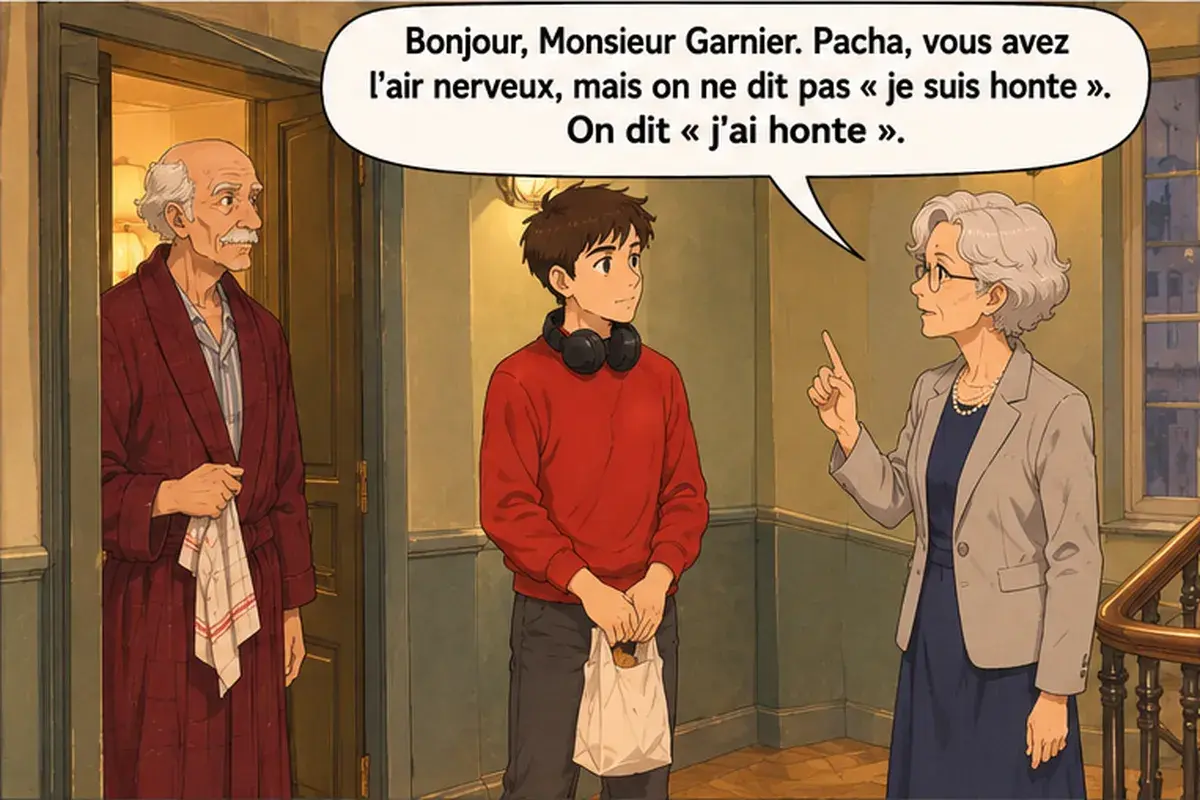
- Madame Morel
Bonjour, Monsieur Garnier. Pacha, vous avez l'air nerveux, mais on ne dit pas « je suis honte ». On dit « j'ai honte ».
Hello, Monsieur Garnier. Pacha, you look nervous (to a man, formal), but you don't say "I am shame." You say "I have shame."
- Pacha
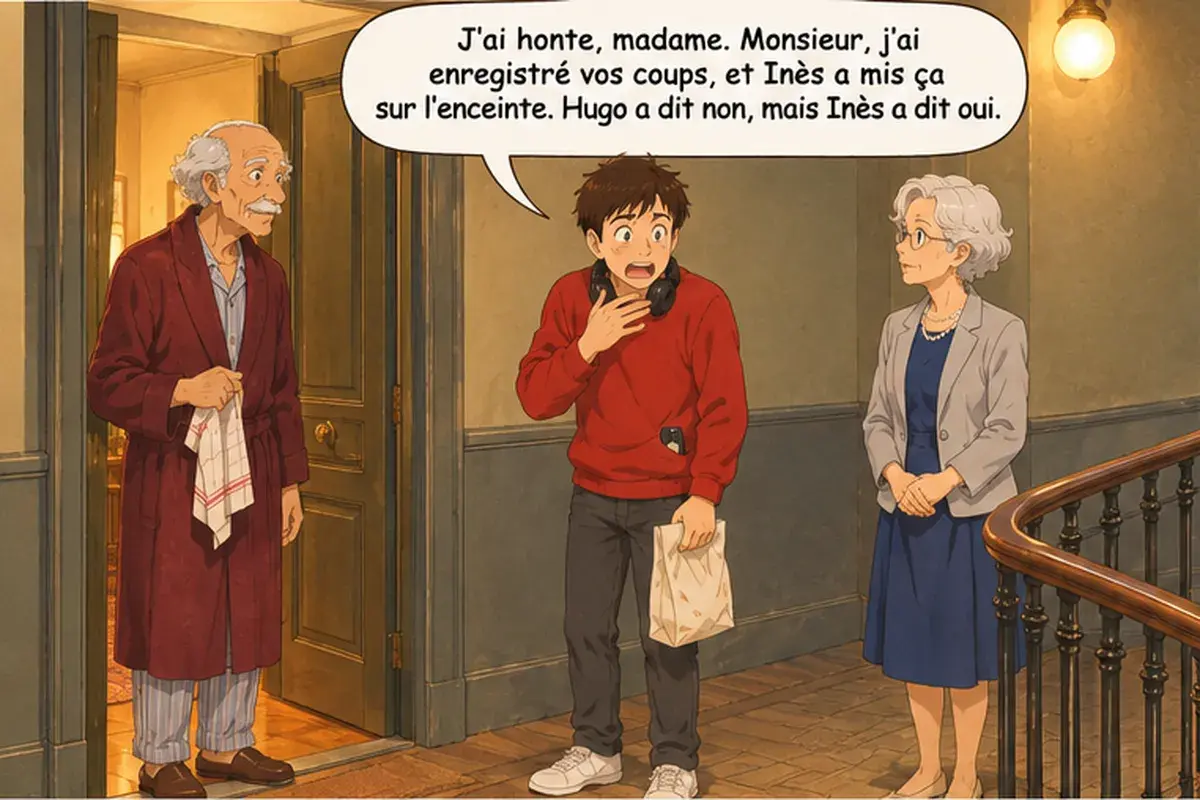
J'ai honte, madame. Monsieur, j'ai enregistré vos coups, et Inès a mis ça sur l'enceinte. Hugo a dit non, mais Inès a dit oui.
I'm ashamed, ma'am. Sir, I recorded your knocks (formal), and Inès put it on the speaker. Hugo said no, but Inès said yes.
- Monsieur Garnier
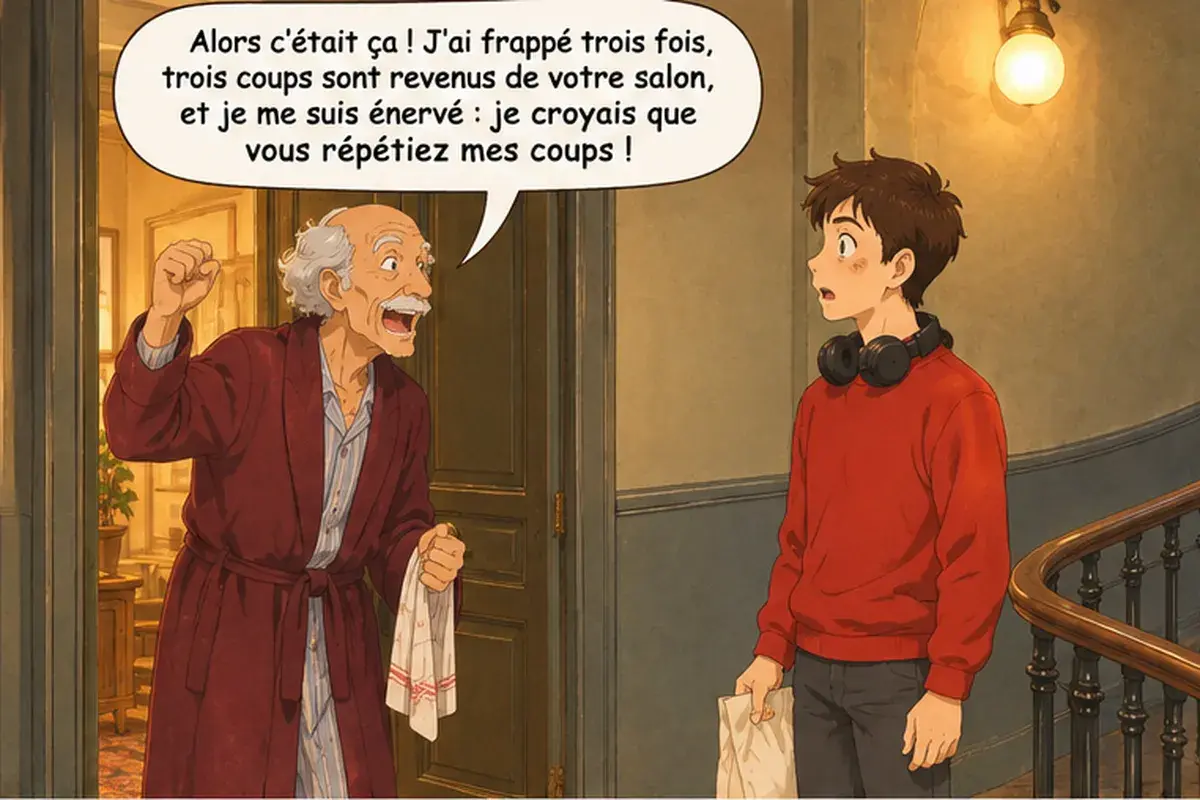
Alors c'était ça ! J'ai frappé trois fois, trois coups sont revenus de votre salon, et je me suis énervé : je croyais que vous répétiez mes coups !
So that's what it was! I knocked three times, three knocks came back from your living room, and I got angry: I thought you were repeating my knocks! (man speaking, formal)
- Pacha
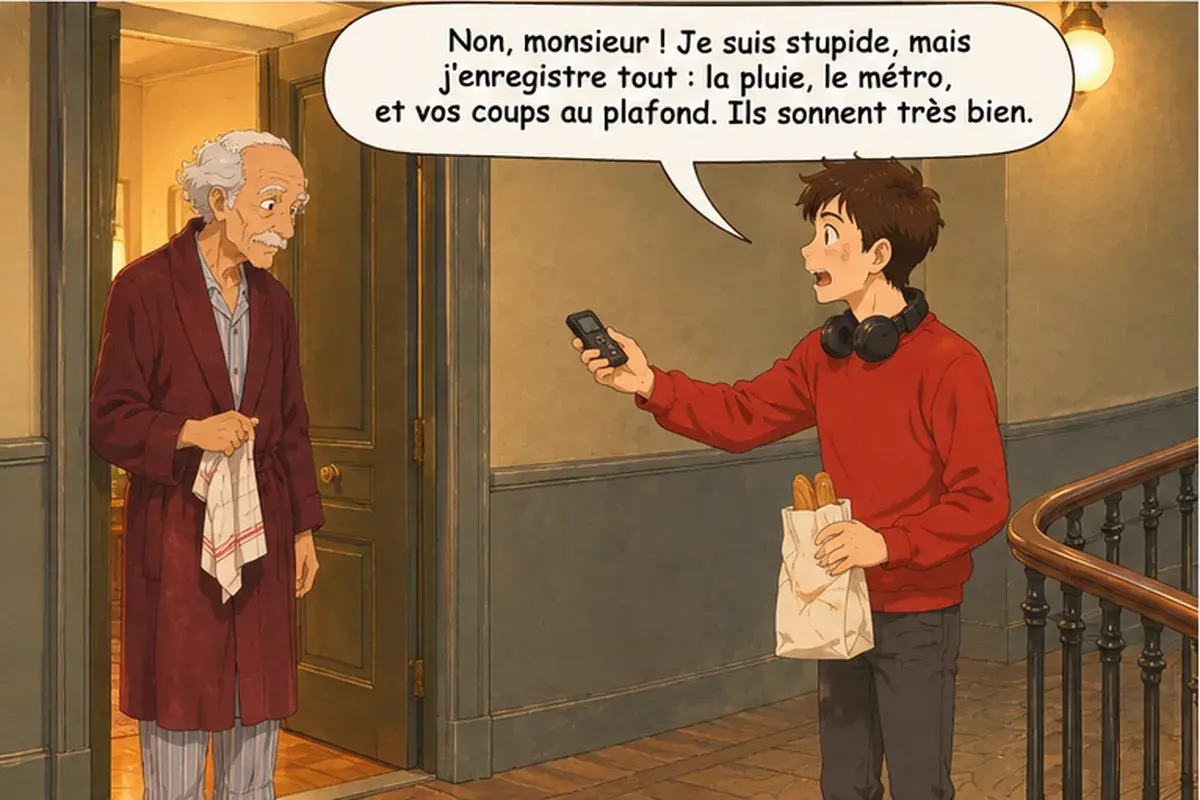
Non, monsieur ! Je suis stupide, mais j'enregistre tout : la pluie, le métro, et vos coups au plafond. Ils sonnent très bien.
No, sir! I'm stupid, but I record everything: the rain, the metro and your knocks on the ceiling (formal). They sound very good.
- Monsieur Garnier
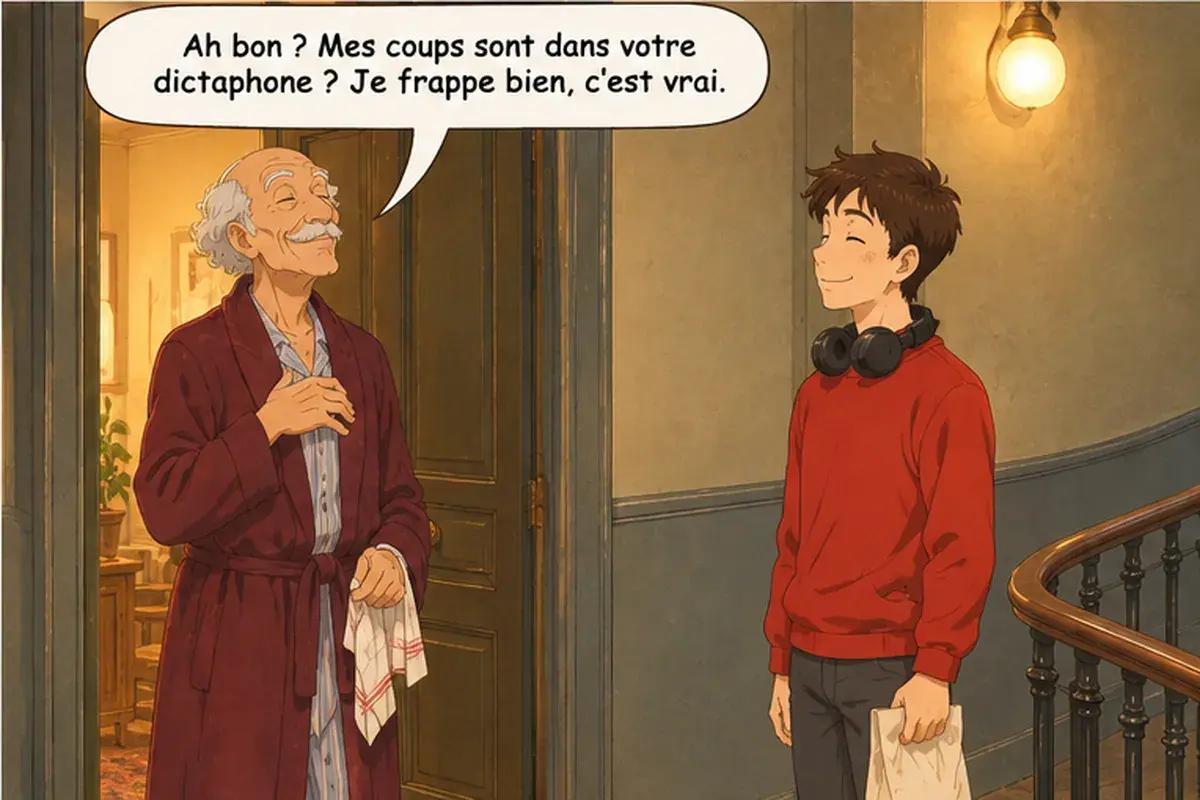
Ah bon ? Mes coups sont dans votre dictaphone ? Je frappe bien, c'est vrai.
Really? My knocks are on your voice recorder? (formal) I do knock well, it's true.
- Pacha
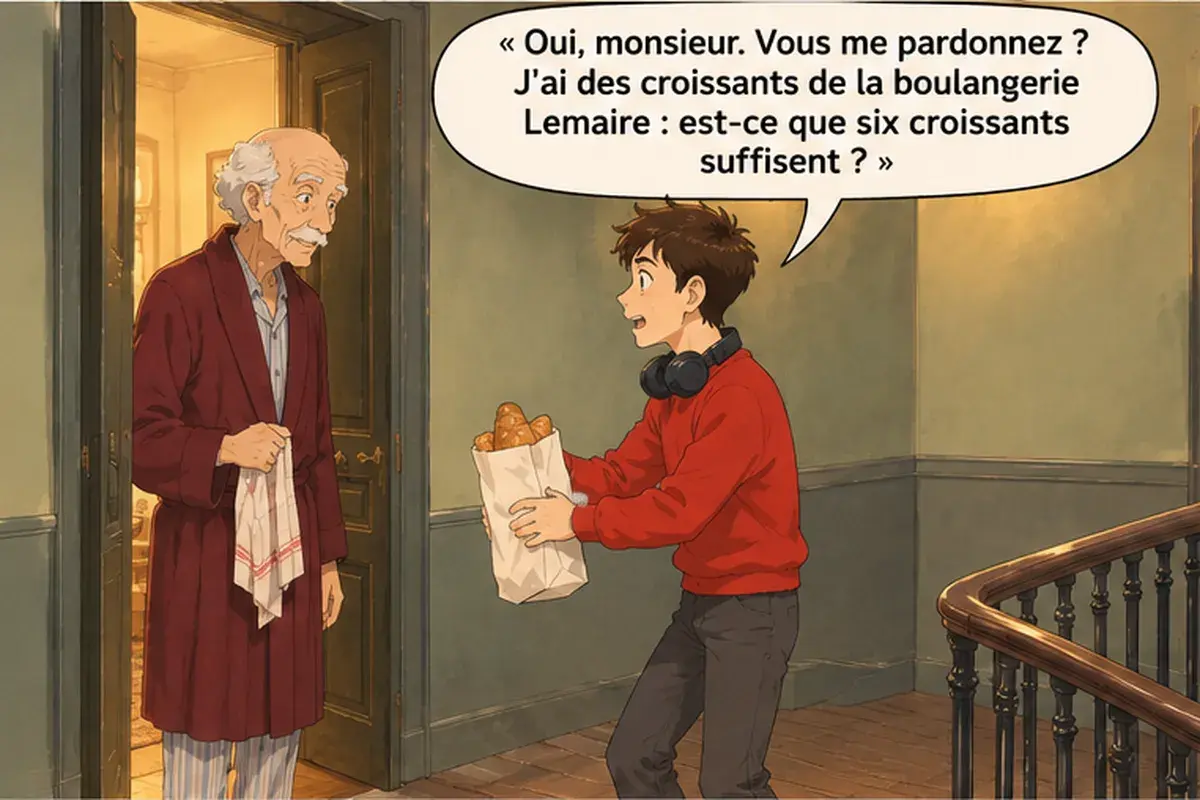
Oui, monsieur. Vous me pardonnez ? J'ai des croissants de la boulangerie Lemaire : est-ce que six croissants suffisent ?
Yes, sir. Do you forgive me? (formal) I have croissants from the Lemaire bakery: are six croissants enough?
- Monsieur Garnier
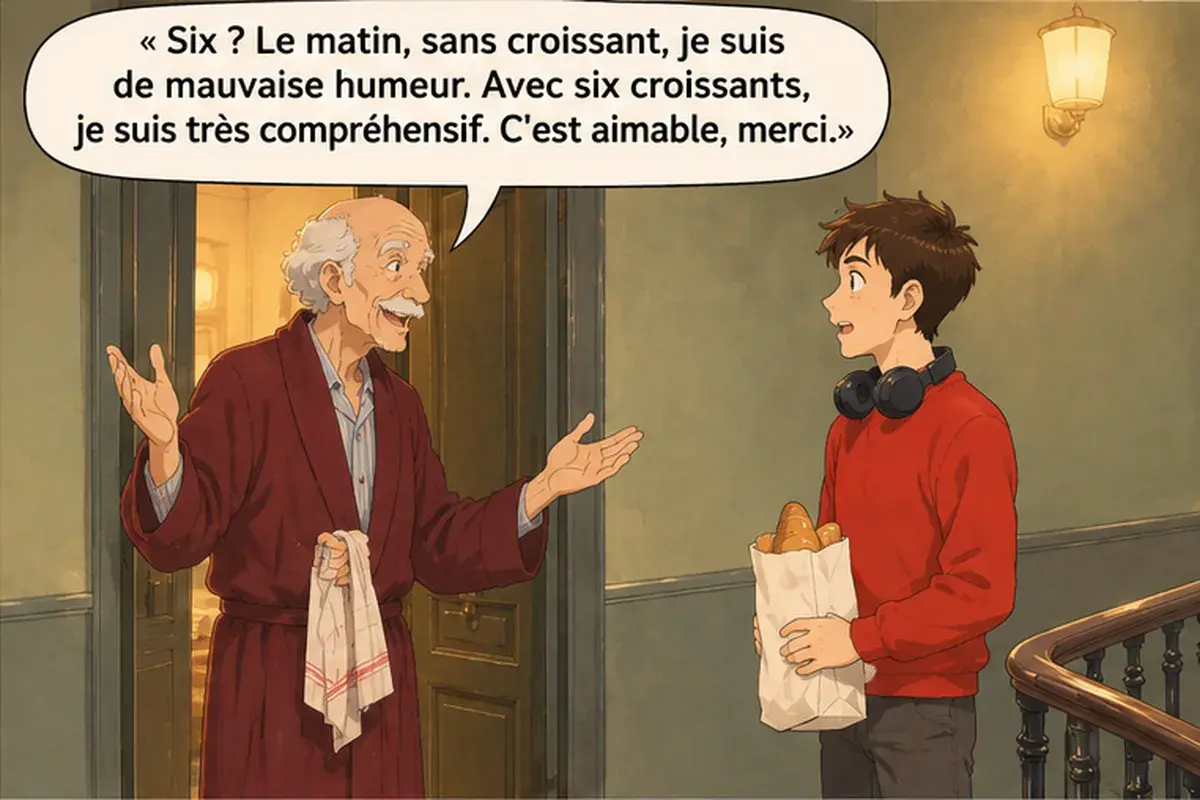
Six ? Le matin, sans croissant, je suis de mauvaise humeur. Avec six croissants, je suis très compréhensif. C'est aimable, merci.
Six? In the morning, without a croissant, I'm in a bad mood. With six croissants, I'm very understanding (man speaking). That's kind, thank you.
- Madame Morel
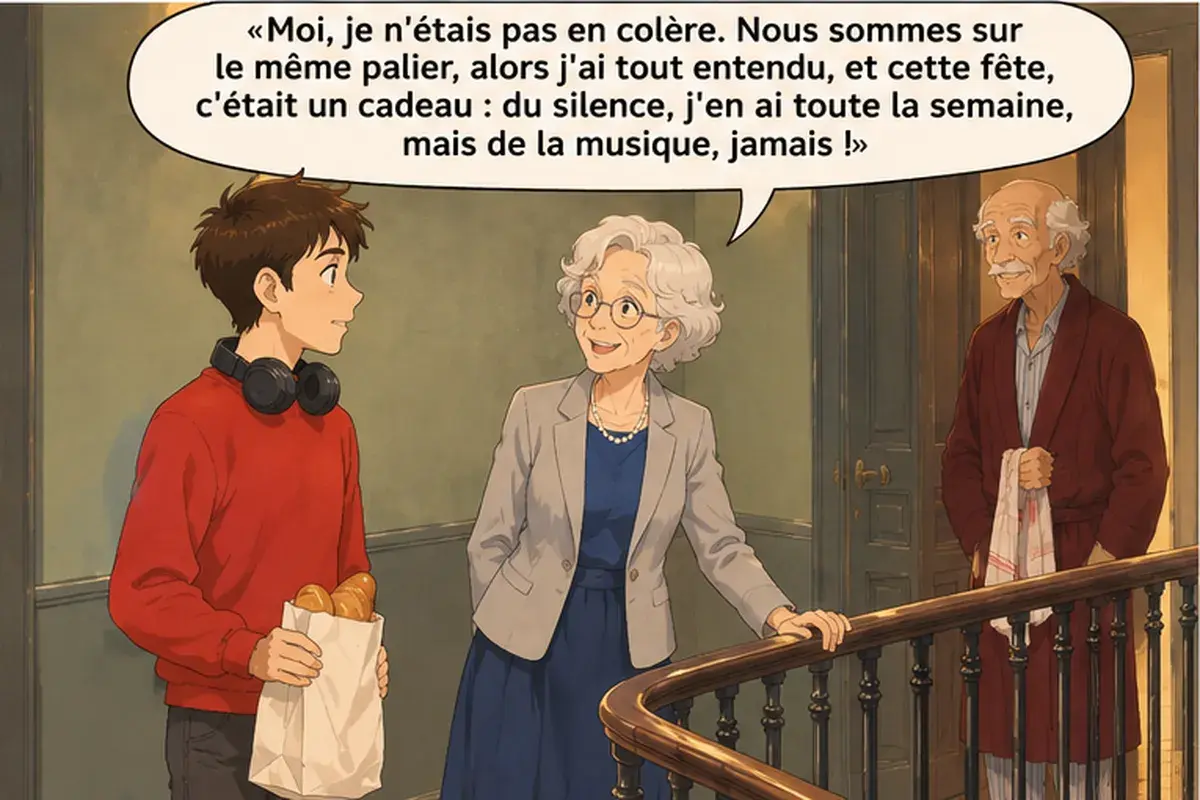
Moi, je n'étais pas en colère. Nous sommes sur le même palier, alors j'ai tout entendu, et cette fête, c'était un cadeau : du silence, j'en ai toute la semaine, mais de la musique, jamais !
As for me, I wasn't angry. We're on the same landing, so I heard everything, and that party was a gift: silence, I have it all week, but music — never!
- Monsieur Garnier
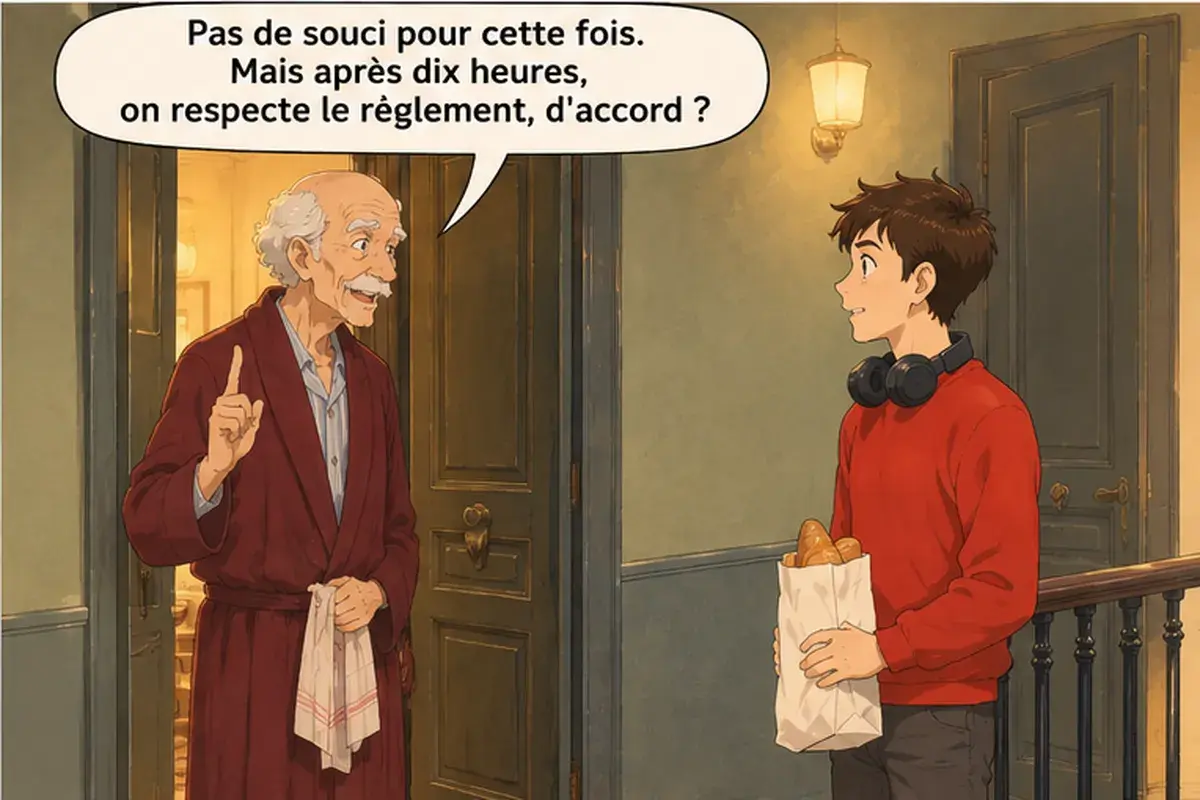
Pas de souci pour cette fois. Mais après dix heures, on respecte le règlement, d'accord ?
No worries this time. But after ten, we follow the rules, OK?
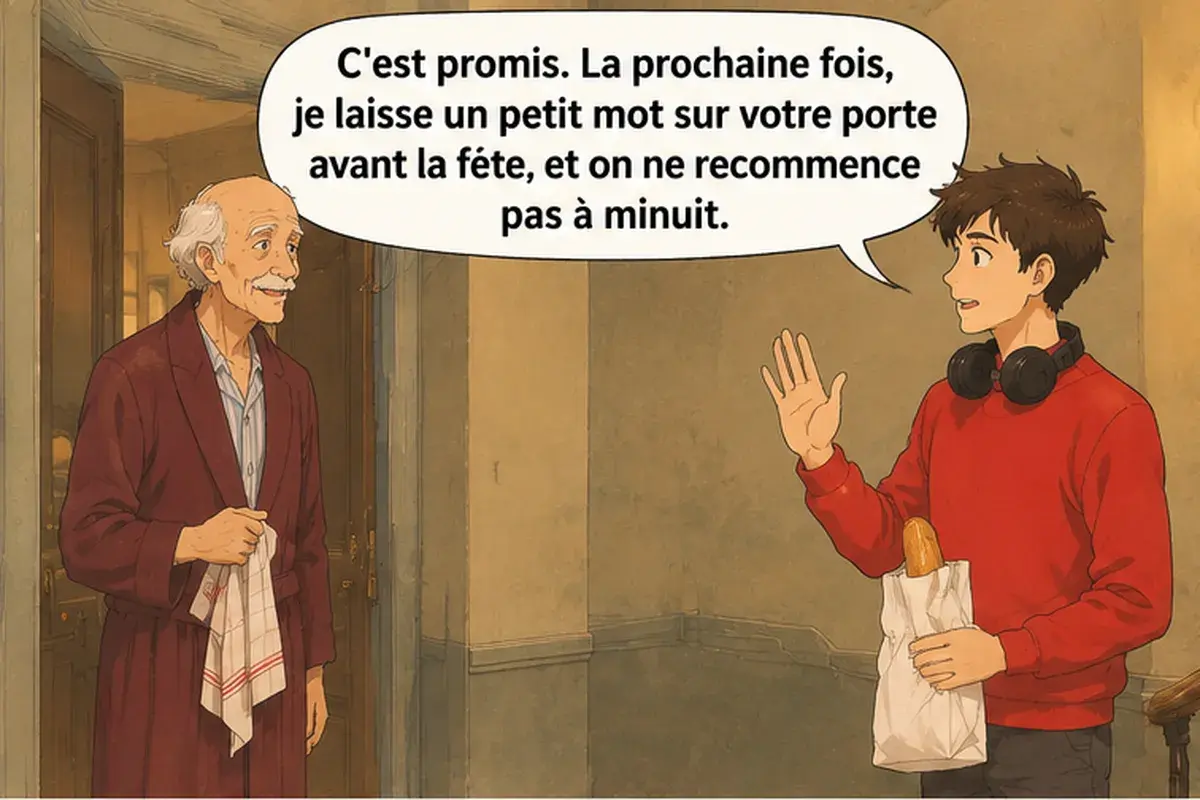
- Pacha
C'est promis. La prochaine fois, je laisse un petit mot sur votre porte avant la fête, et on ne recommence pas à minuit.
I promise. Next time, I'll leave a note on your door (formal) before the party, and we won't start again at midnight.
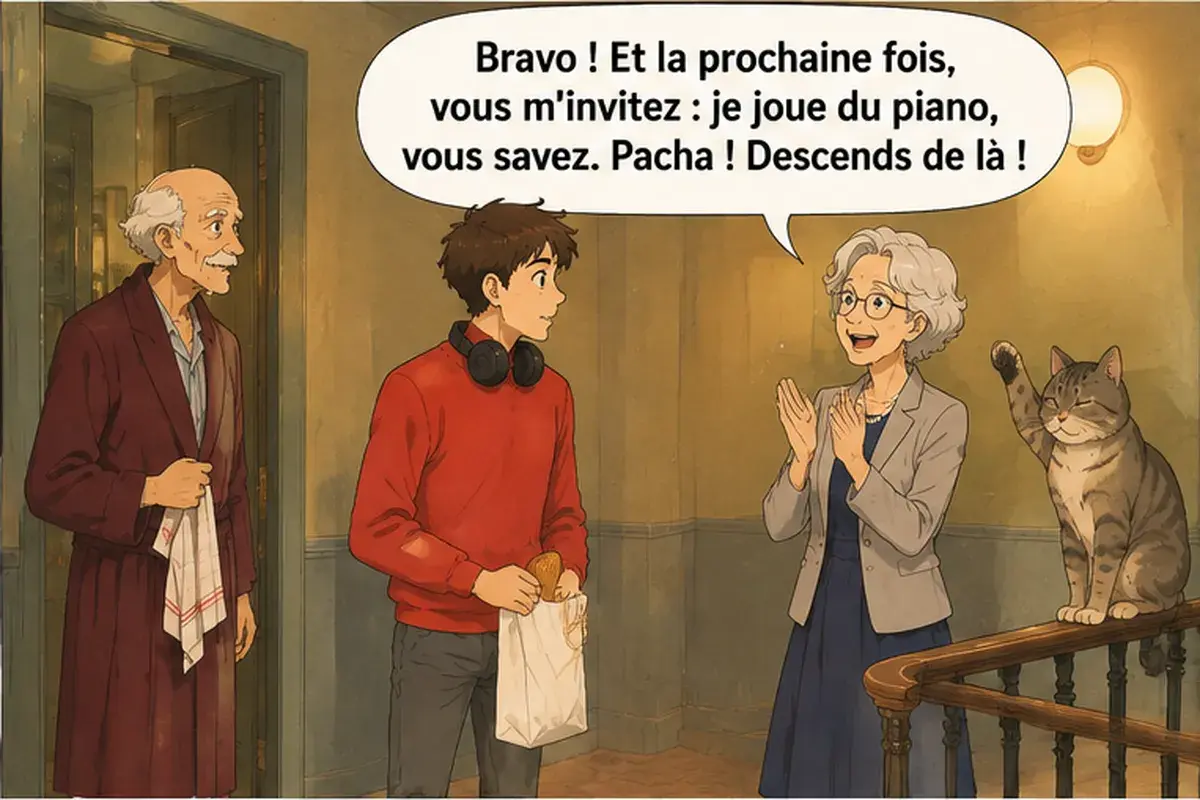
- Madame Morel
Bravo ! Et la prochaine fois, vous m'invitez : je joue du piano, vous savez. Pacha ! Descends de là !
Bravo! And next time, you'll invite me (formal): I play the piano, you know. Pacha! Get down from there!
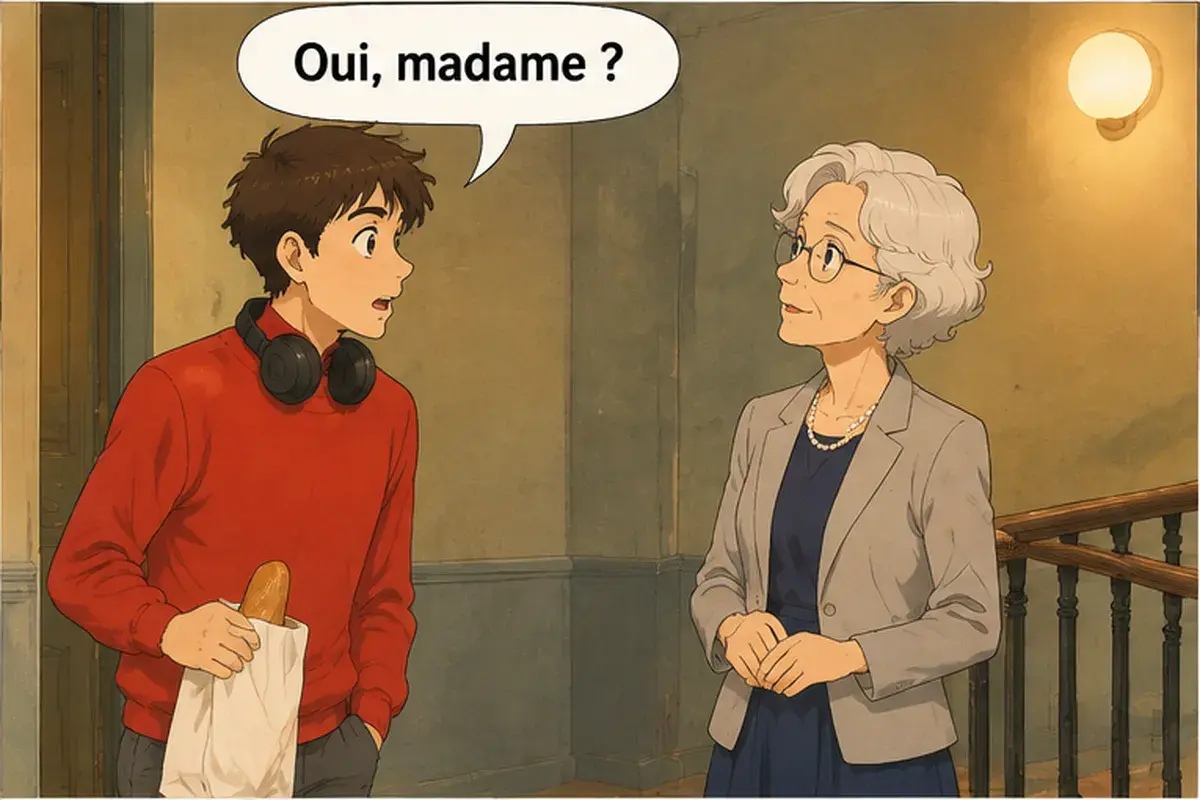
- Pacha
Oui, madame ?
Yes, ma'am?
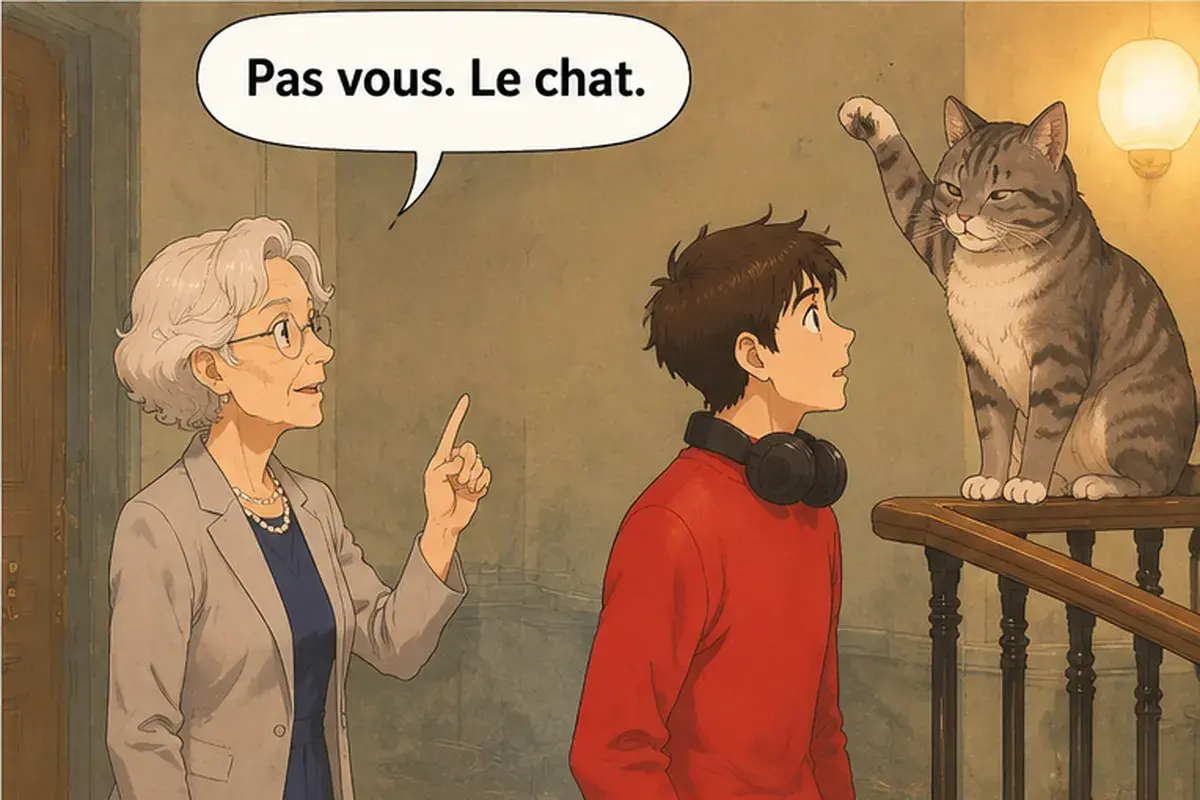
- Madame Morel
Pas vous. Le chat.
Not you (formal). The cat.
Grammar for this text
- Je suis venu pour m'excuser —
venirtakesêtrein the past:je suis venu.pour+ verb — "(in order) to".s'excuser— "to apologize", literally "to excuse oneself". - Pas du tout — the standard answer to je vous dérange ?: "not at all". Monsieur Garnier corrects himself right away:
Enfin, si— "well, actually, yes". - on ne dit pas « je suis honte » — French says "I have shame":
avoir honte, likeavoir faimoravoir peur. English uses "be" here: "I'm ashamed", "I'm hungry", "I'm scared". Madame Morel corrects him, as always. The phrasevous avez l'air nerveuxmeans "you look nervous". - vous m'avez réveillé —
megoes beforeavoir(unit 7):m'avez réveillé.réveiller— to wake someone up;se réveiller— to wake up yourself. je me suis énervé — reflexive verbs takeêtrein the past (unit 12). je croyais que vous répétiez mes coups —croyaisandrépétiezare in the imperfect (imparfait): it tells what he was thinking at that moment and what was going on in the background — "I thought you were repeating my knocks". - est-ce que six croissants suffisent ? —
suffiremeans "to be enough":il suffit,ils suffisent. The angry neighbor softens over croissants. - j'en ai toute la semaine —
enstands for "silence" (unit 5): "I have it all week";toute la semaine— "all week" (unit 13). - Descends de là ! — a command from
descendre("to get down"): tu descends → descends. Pas vous. Le chat. — Madame Morel's cat is also called Pacha, so Pacha jumps every time.
Words and grammar of the unit: Apologize to your neighbors for the noise.
Learn the words from the texts with flashcards
In the app, you can tap any word in a text to see its translation, forms and examples, and new words stick with flashcards. 15 minutes a day.
Start for freeEverything is open for free. No card needed to sign up.