
French story with translation · A2 · 16 lines
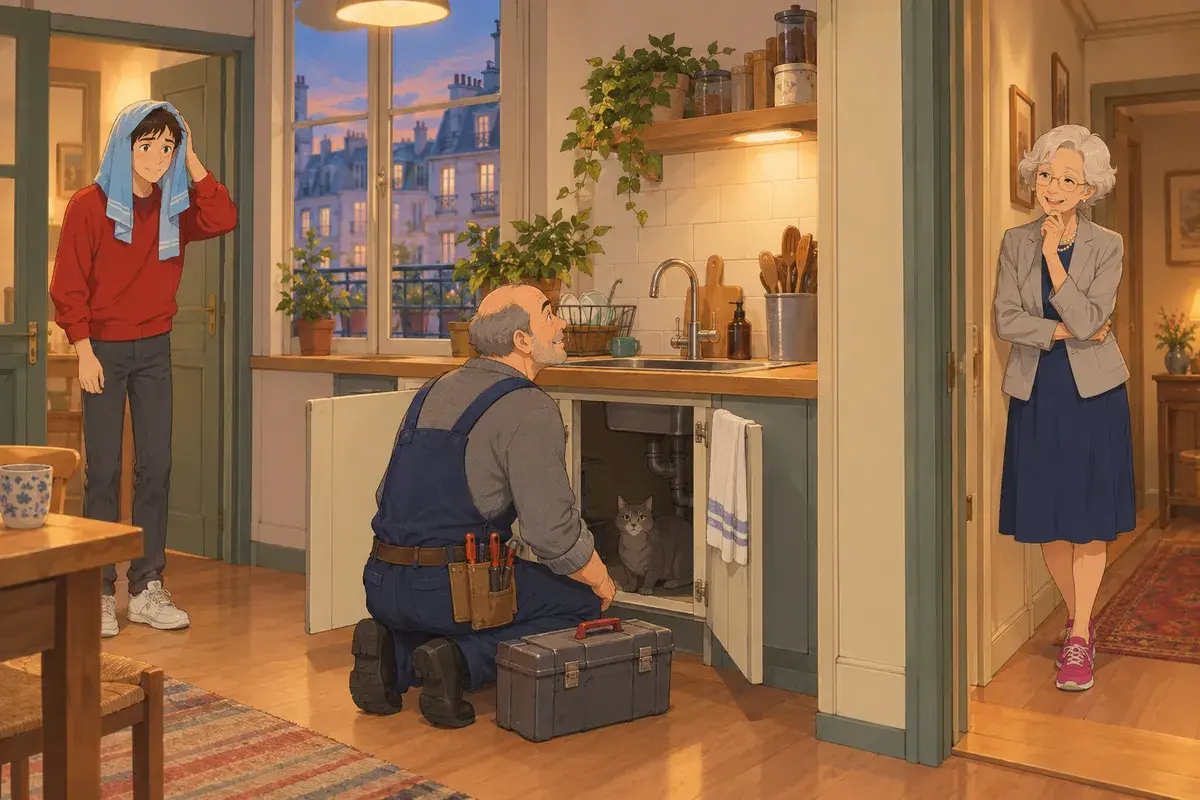
Le plombier était déjà là ! The plumber was already there!
Comic · 16 panels
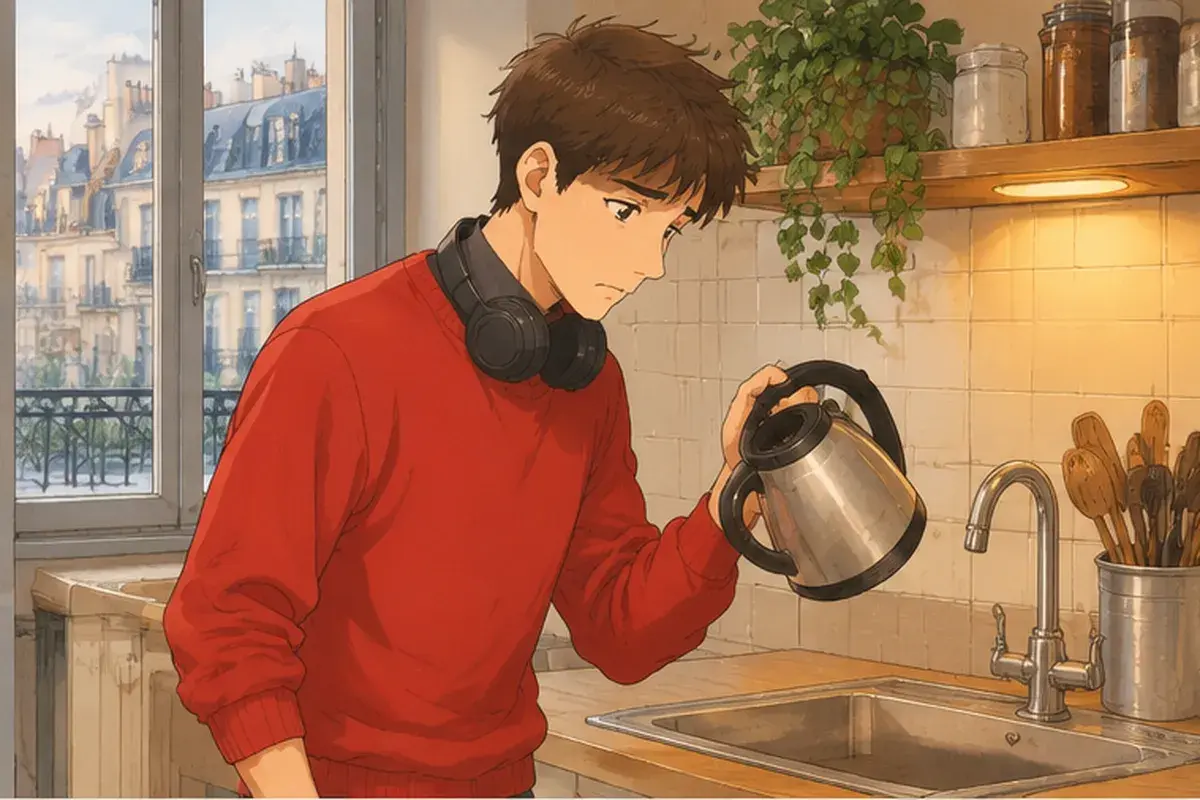
Après mon appel, j'ai dû attendre sans eau. Je n'ai pas pu prendre ma douche, et je n'ai pas pu faire mon thé !
After my call, I had to wait without water. I couldn't take my shower, and I couldn't make my tea!
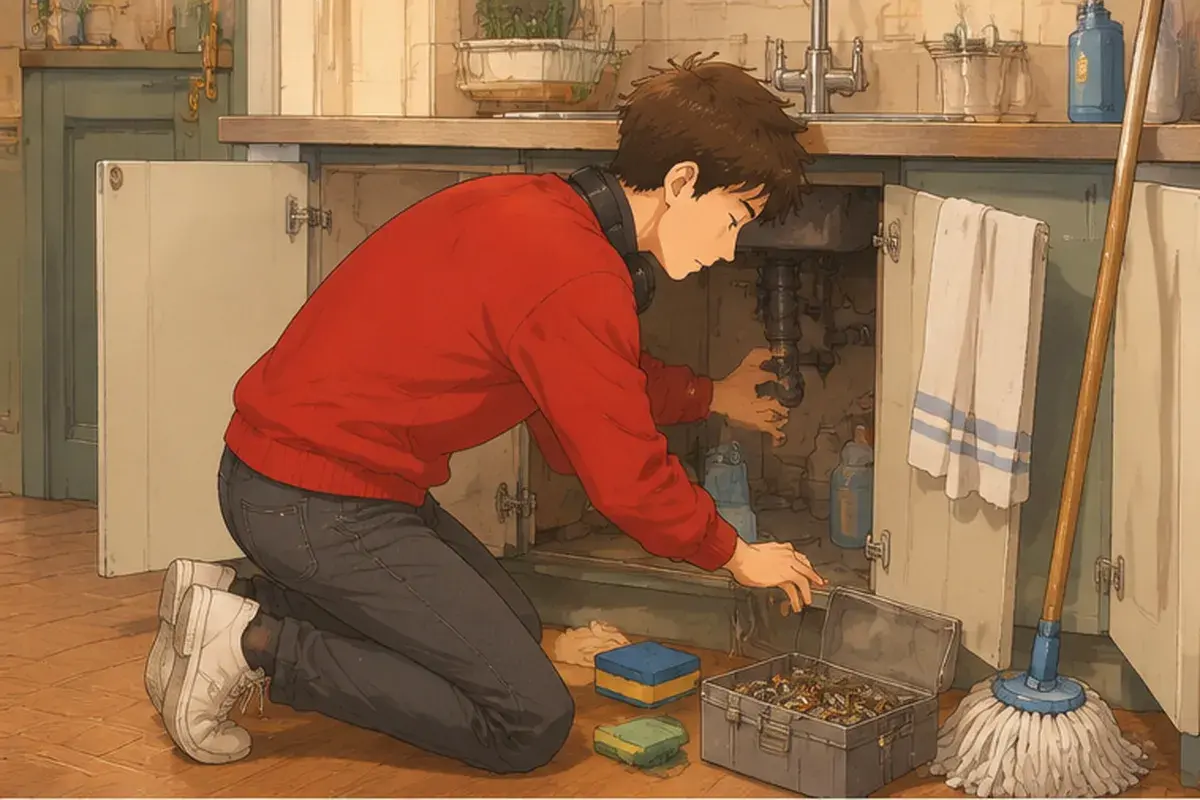
J'ai vidé le placard sous l'évier pour faire de la place : il y avait des éponges, du savon, la serpillière et une vieille boîte pleine de clés.
I cleared out the cabinet under the sink to make room: there were sponges, soap, the mop and an old box full of keys.
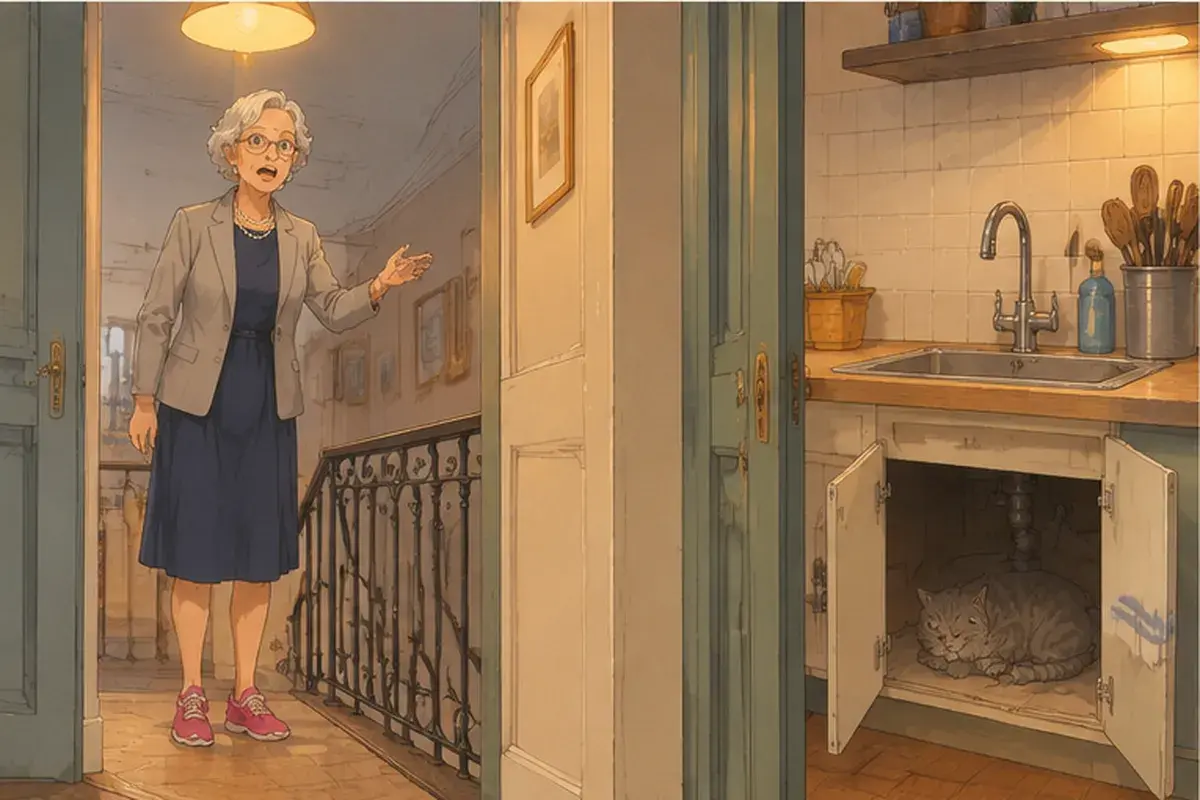
Le chat Pacha s'est installé dans le placard vide. Madame Morel a crié depuis le palier : « Pacha ! Sors de là ! »
Pacha the cat settled into the empty cabinet. Madame Morel shouted from the landing: "Pacha! Get out of there!"
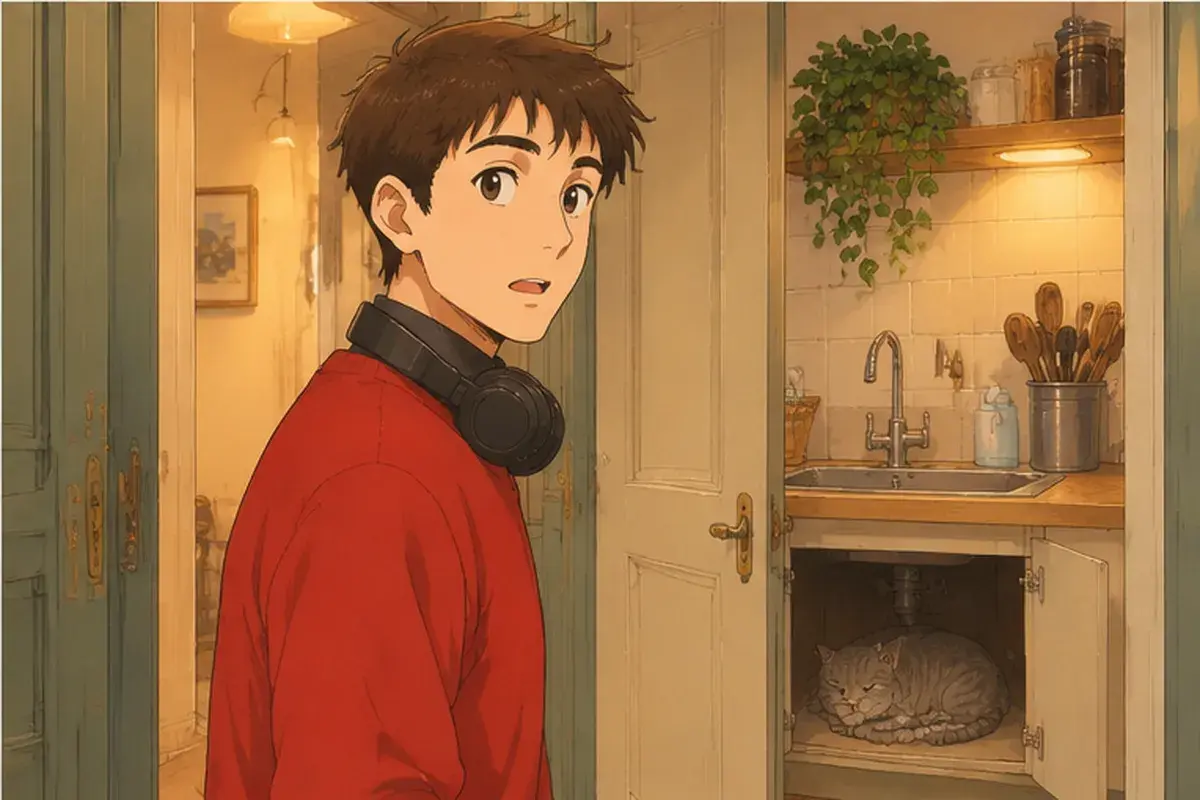
Comme toujours, c'est moi qui ai répondu : « Oui ? » Le chat, lui, n'a pas bougé.
As always, I was the one who answered: "Yes?" As for the cat, he didn't move.
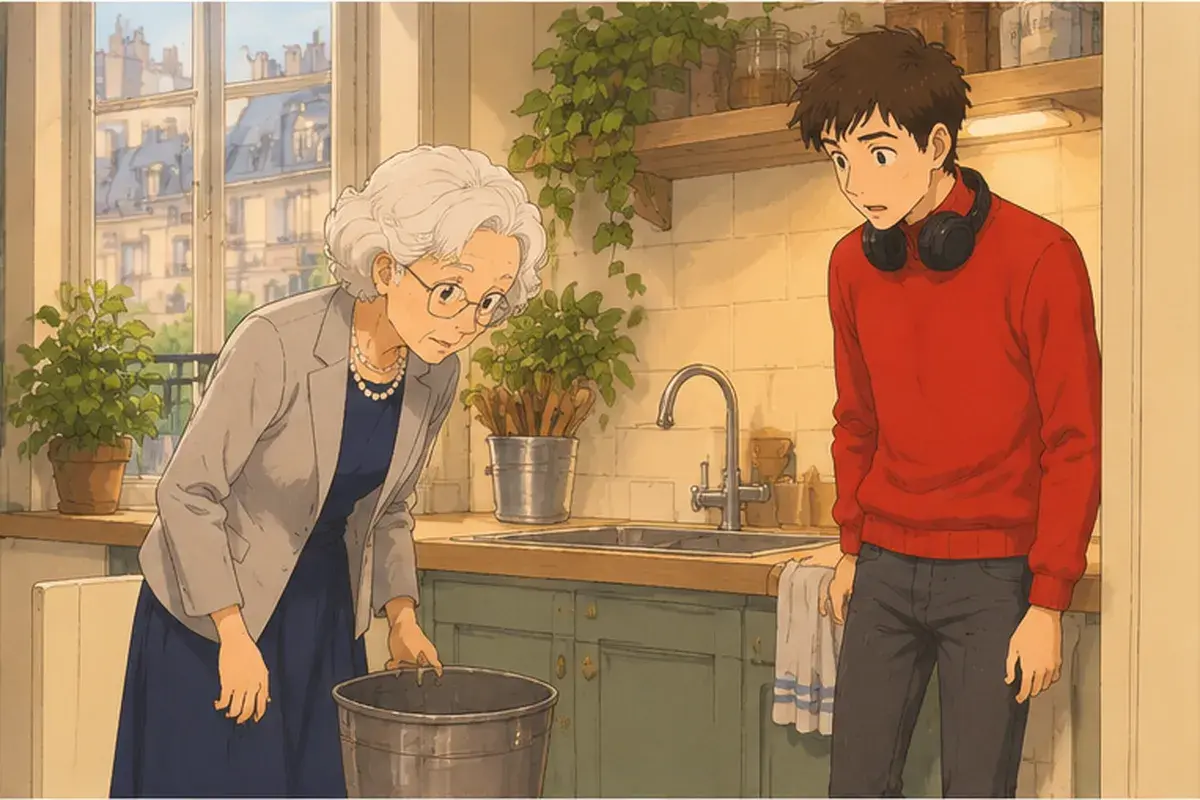
Elle a vu le seau, puis elle a compris : « Vous n'avez pas d'eau ? Venez prendre votre douche chez moi. »
She saw the bucket, then she understood: "You don't have any water? Come take your shower at my place." (formal)
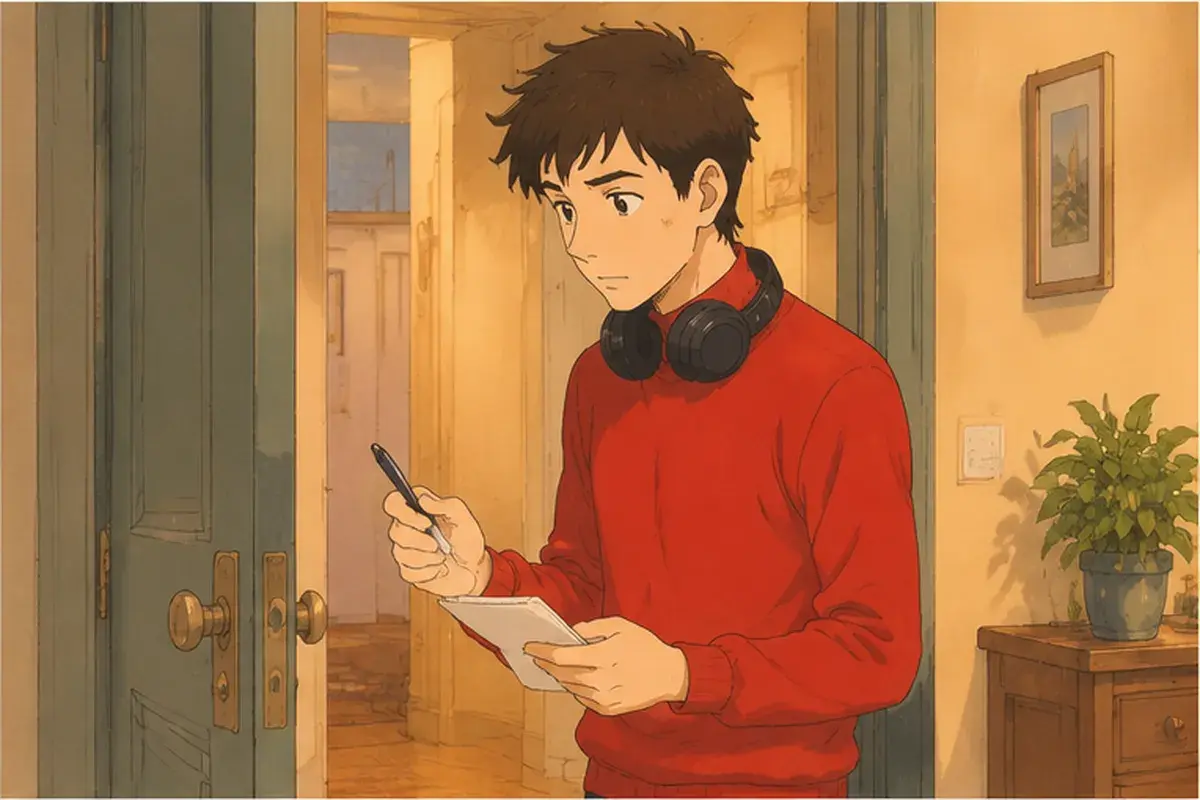
Je pensais : un plombier arrive toujours à la fin du créneau. Alors, avant d'aller chez elle, j'ai écrit un petit mot sur ma porte : « Entrez, je suis chez madame Morel. »
I was thinking: a plumber always comes at the end of the time slot. So before going to her place, I wrote a little note on my door: "Come in, I'm at Madame Morel's." (formal)

À huit heures vingt, j'étais sous la douche de madame Morel, avec du savon sur la tête.
At eight twenty, I was in Madame Morel's shower, with soap on my head.

Et là, j'ai entendu ma sonnette : le plombier était déjà là, en avance !
And just then, I heard my doorbell: the plumber was already there, early!
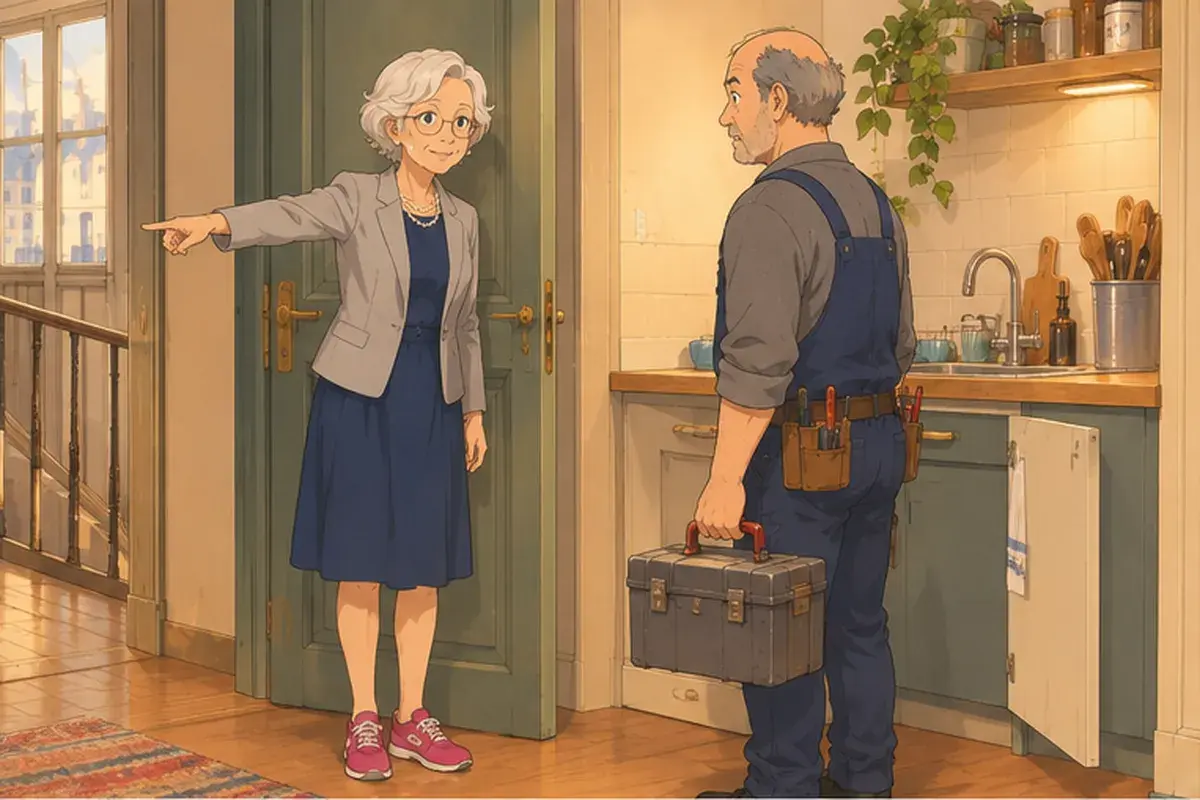
Madame Morel m'a raconté la suite. Elle a ouvert sa porte : « Vous cherchez Pacha ? Poussez la porte à droite : le chat est dans le placard, et l'autre est sous ma douche. »
Madame Morel told me the rest. She opened her door: "Are you looking for Pacha? Push the door on the right: the cat is in the cabinet, and the other one is in my shower." (formal)
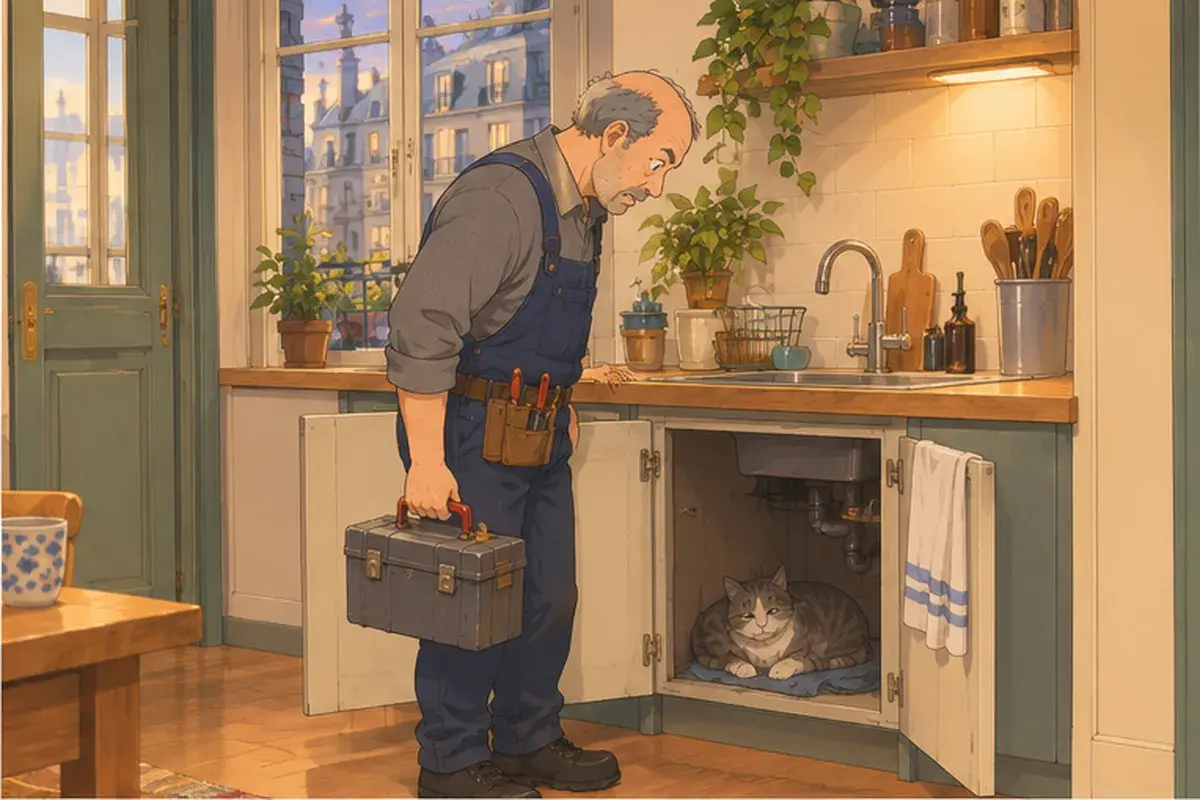
Le plombier a regardé le chat, puis la porte, puis le chat. Il est entré sans poser de question.
The plumber looked at the cat, then at the door, then at the cat. He went in without asking any questions.
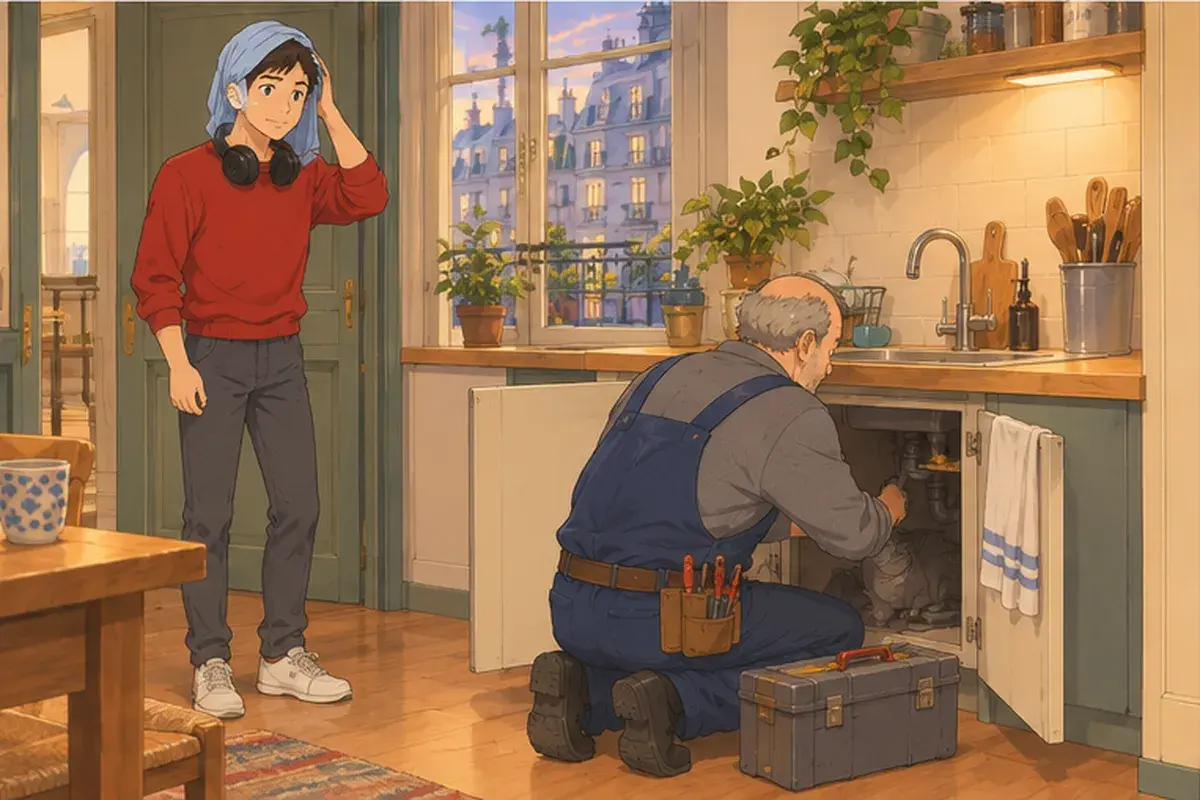
Quand je suis arrivé, avec une serviette sur la tête et du savon dans l'oreille, il était déjà sous mon évier, avec sa boîte à outils.
When I got there, with a towel on my head and soap in my ear, he was already under my sink, with his toolbox.
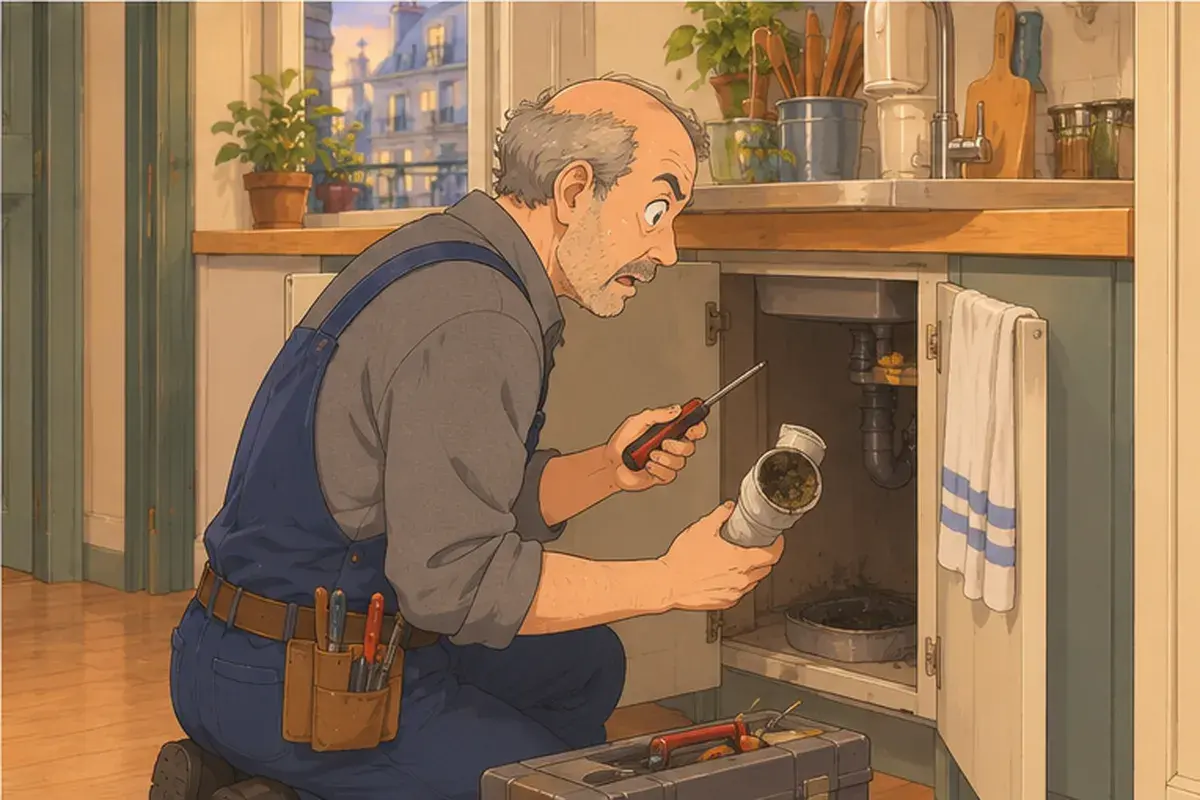
Il a pris un tournevis, il a regardé le tuyau, puis il a vidé le siphon : dedans, il y avait un énorme bouchon de thé !
He took a screwdriver, looked at the pipe, then emptied the trap: inside, there was a huge clog of tea!
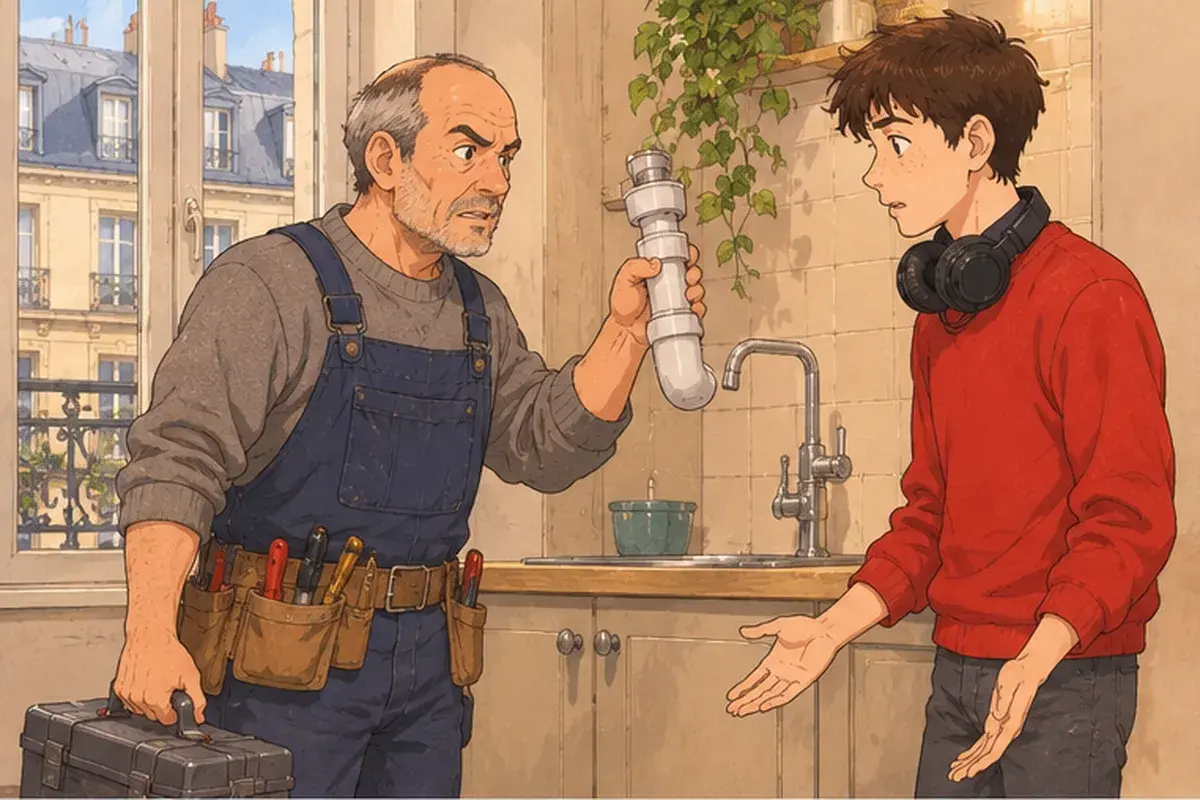
Il a dit : « Ce n'est pas la canalisation de l'immeuble, monsieur. On jette le thé à la poubelle ! » J'ai répondu : « C'est ma faute. Depuis septembre, je jette mon thé dans l'évier. »
He said: "It's not the building's plumbing, sir. People throw tea in the trash!" I answered: "It's my fault. Since September, I've been throwing my tea down the sink."
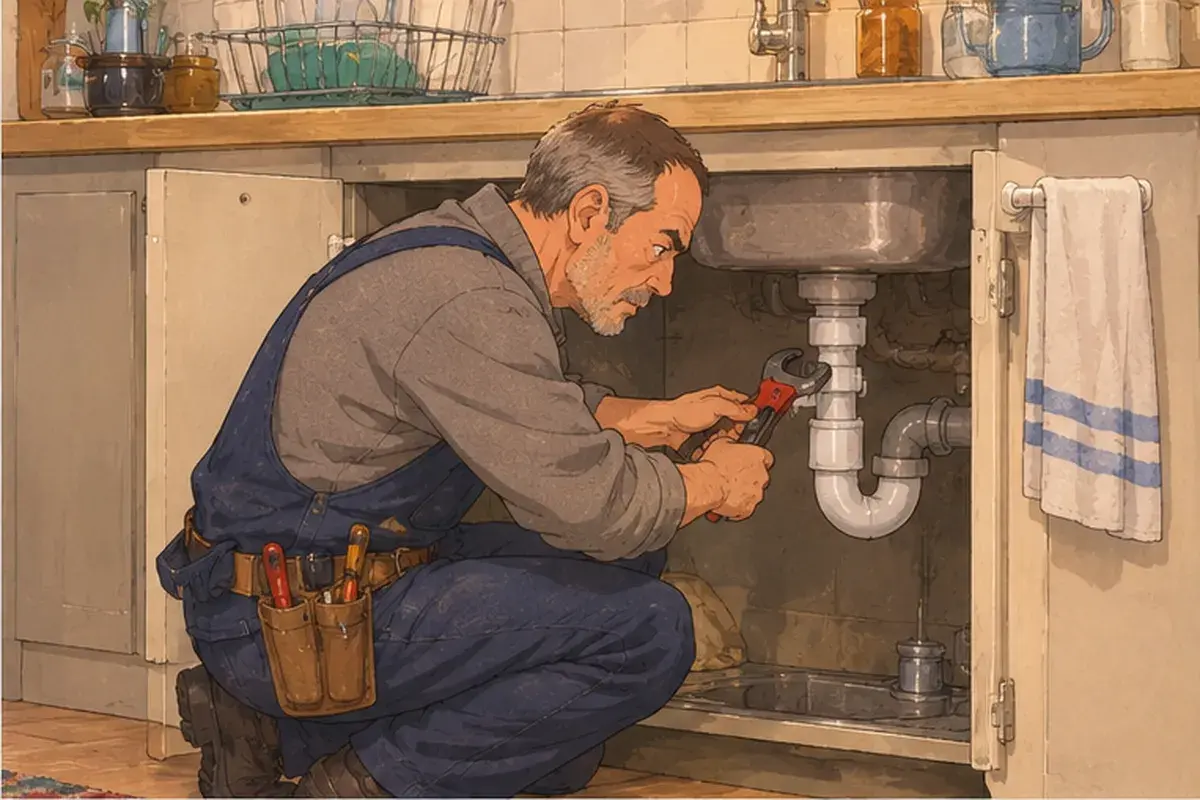
Il a débouché l'évier, il a vissé le siphon et il a travaillé sans faire de devis : pour un siphon, c'est inutile. Avec le déplacement, ça a fait cent euros.
He unclogged the sink, screwed the trap on and worked without writing up a quote: for a trap, it's unnecessary. With the trip charge, it came to a hundred euros.
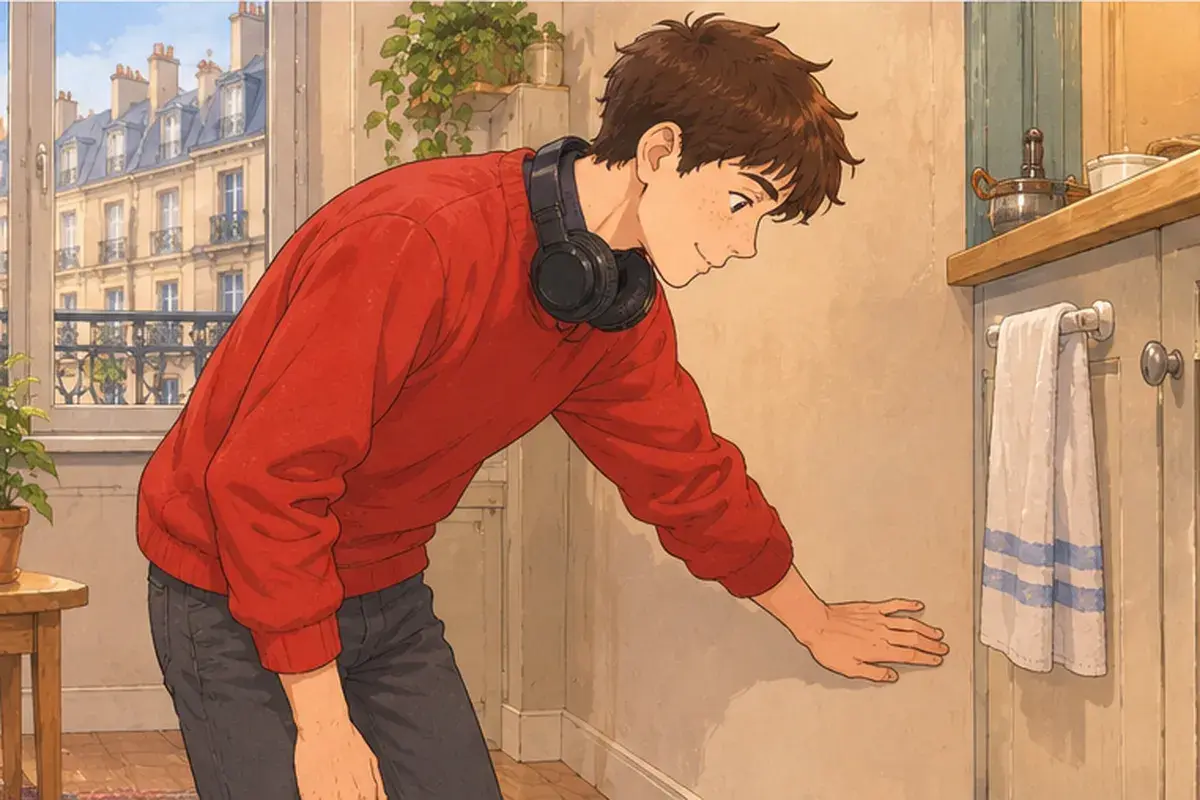
Heureusement, il n'y avait pas de tache d'humidité sur le mur, et pas de dégât des eaux chez le voisin du dessous.
Luckily, there was no damp stain on the wall, and no water damage at the downstairs neighbor's.

Le soir, Hugo a écrit un petit mot : « Le thé va à la poubelle. » Depuis, je ne jette plus de thé dans l'évier, pas même une goutte.
In the evening, Hugo wrote a little note: "Tea goes in the trash." Since then, I don't throw tea down the sink anymore, not even a drop.
Grammar for this text
- j'ai dû attendre sans eau — "I had to wait without water". dû is the past participle of devoir. In the same way, je n'ai pas pu prendre ma douche: pu is the past participle of pouvoir, "I couldn't". More in the unit grammar.
- Sors de là ! — the tu command of sortir (to get out): Madame Morel is giving the cat an order. The cat has the same name as Pacha, so c'est moi qui ai répondu — "I was the one who answered". After moi qui, the verb stays in the je form: ai.
- s'est installé dans le placard vide — the reflexive verb s'installer (to settle in) makes the passé composé with être: il s'est installé (unit 12).
- Poussez la porte à droite — the vous command of pousser. On doors, Poussez means push and Tirez means pull.
- Il est entré sans poser de question — after sans, the verb is in the infinitive, and instead of une question you say de question. The same goes for sans faire de devis. And in avant d'aller chez elle, avant de becomes avant d' before a vowel.
- un énorme bouchon de thé — here bouchon is a clog made of tea leaves. énorme goes before the noun.
- ça a fait cent euros — ça fait (that comes to) in the past: "it came to a hundred euros".
Words and grammar of the unit: Call a plumber.
Learn the words from the texts with flashcards
In the app, you can tap any word in a text to see its translation, forms and examples, and new words stick with flashcards. 15 minutes a day.
Start for freeEverything is open for free. No card needed to sign up.