
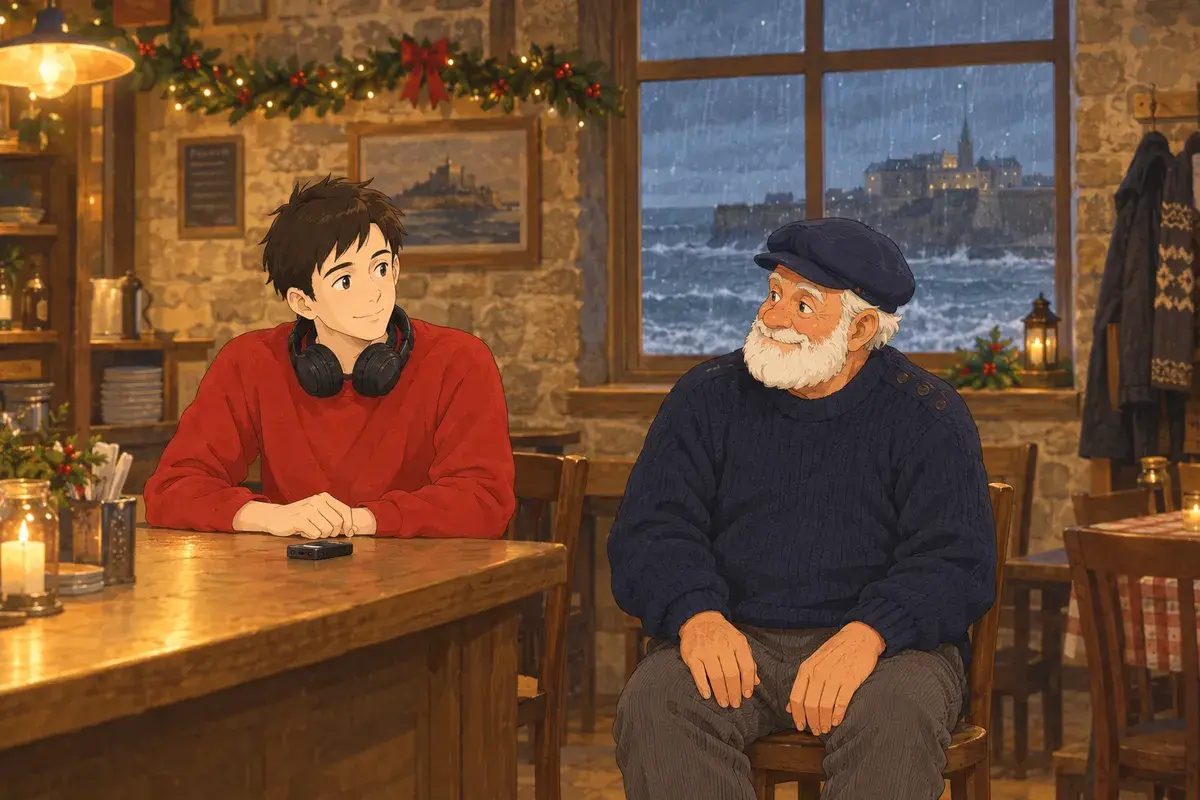
French dialogue with translation · A2 · 16 lines
Autrefois, il n'y avait pas de touristes In the old days, there were no tourists
Comic · 16 panels
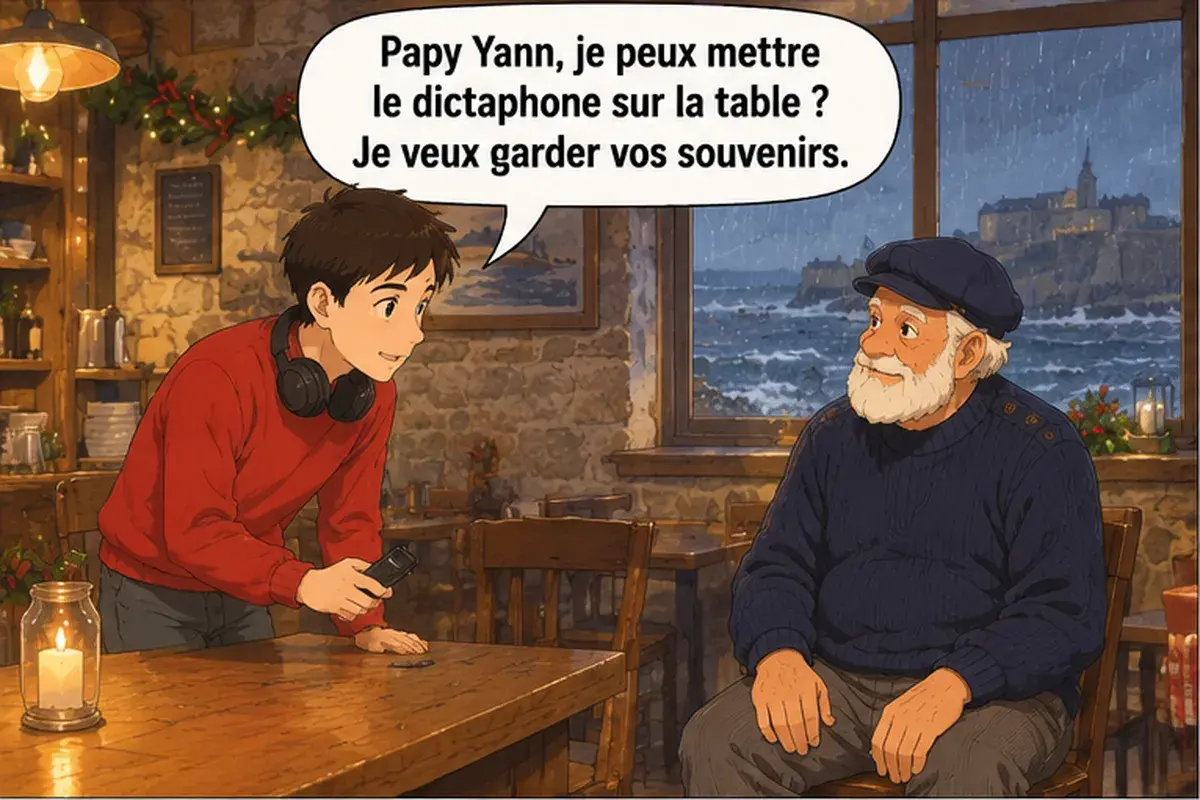
- Pacha
Papy Yann, je peux mettre le dictaphone sur la table ? Je veux garder vos souvenirs.
Papy Yann, can I put the voice recorder on the table? I want to keep your memories (formal).
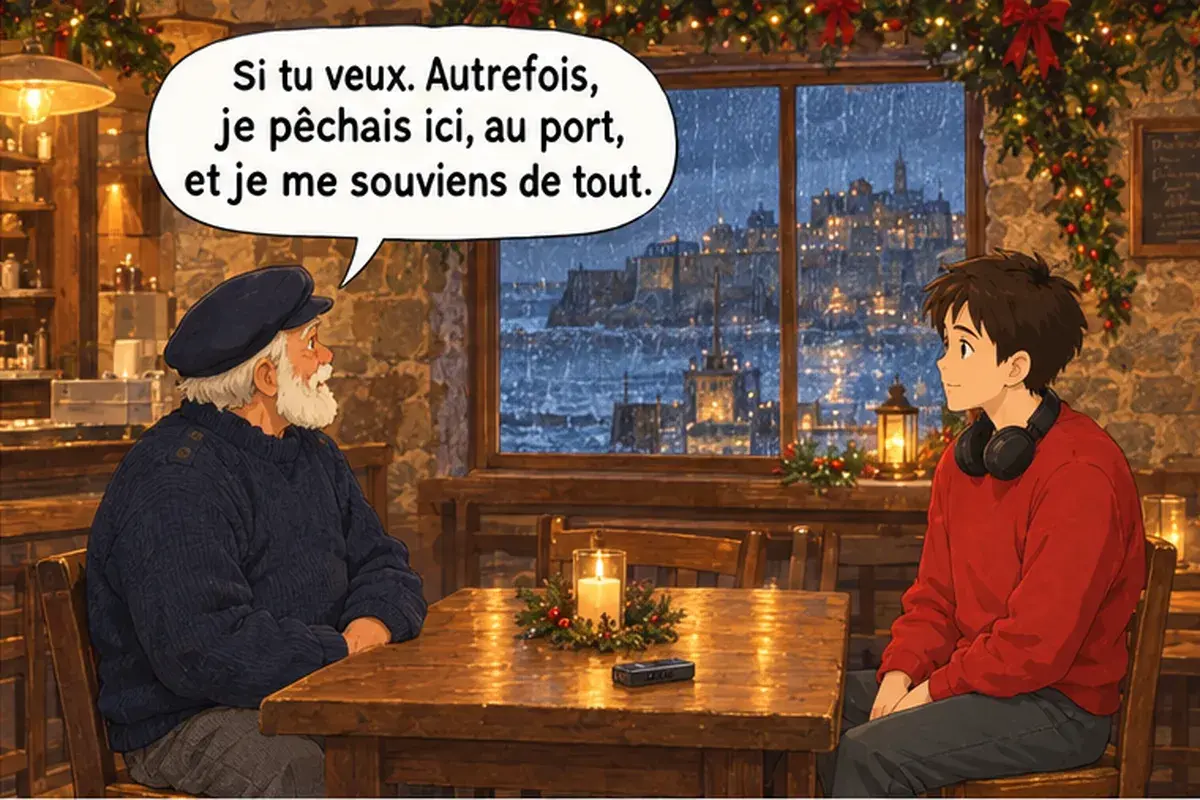
- Papy Yann
Si tu veux. Autrefois, je pêchais ici, au port, et je me souviens de tout.
If you want. In the old days, I used to fish here, at the port, and I remember everything.
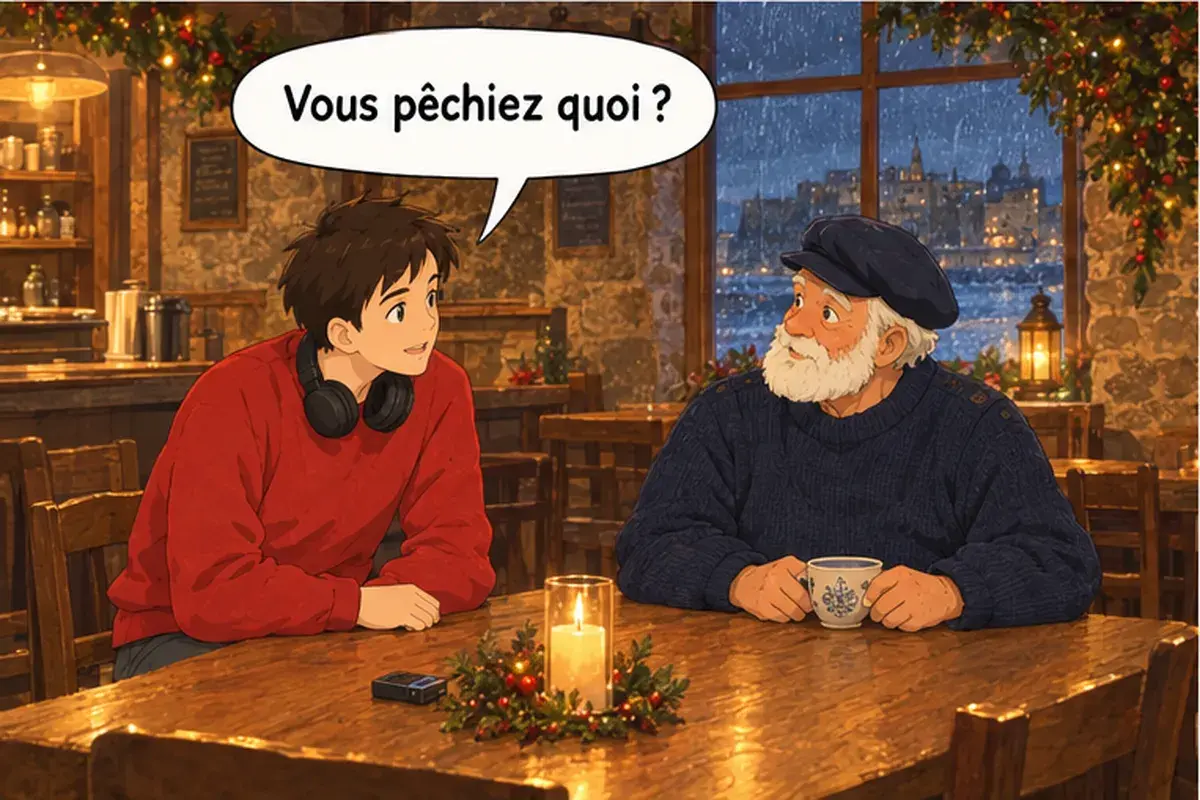
- Pacha
Vous pêchiez quoi ?
What did you use to fish for? (formal)
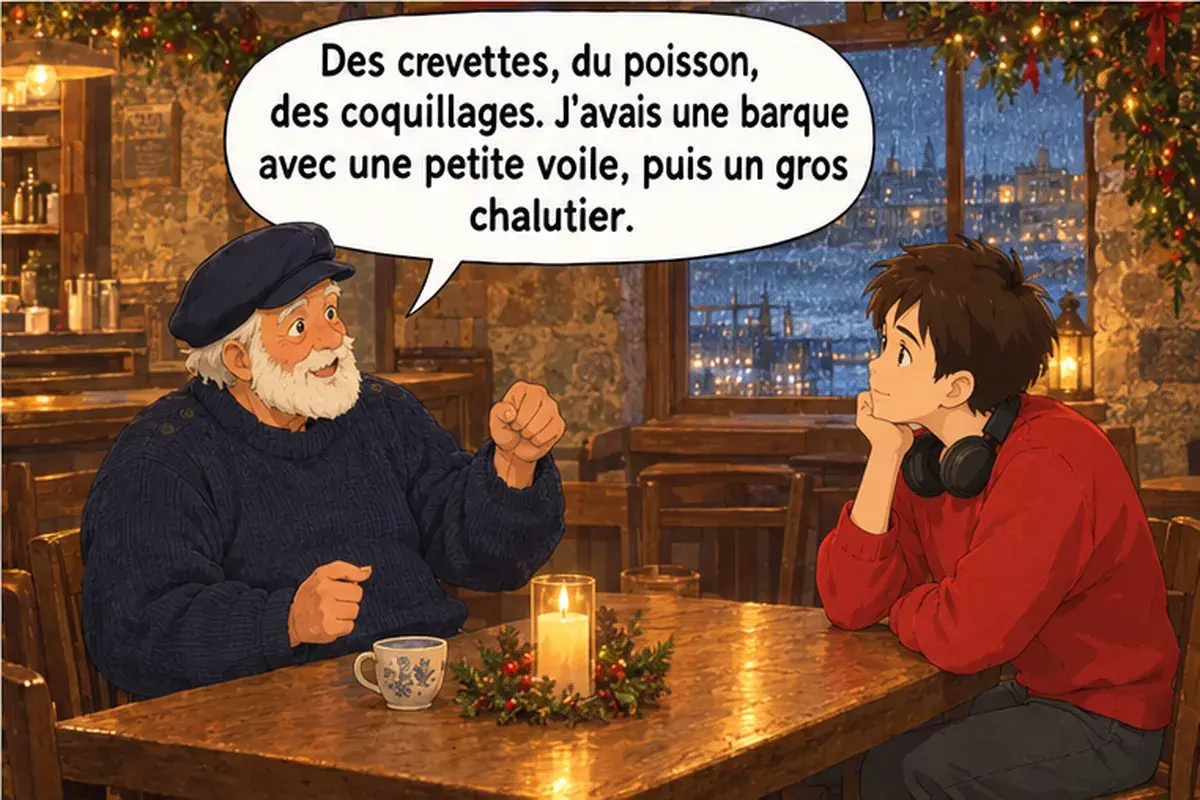
- Papy Yann
Des crevettes, du poisson, des coquillages. J'avais une barque avec une petite voile, puis un gros chalutier.
Shrimp, fish, shellfish. I had a small boat with a little sail, then a big trawler.
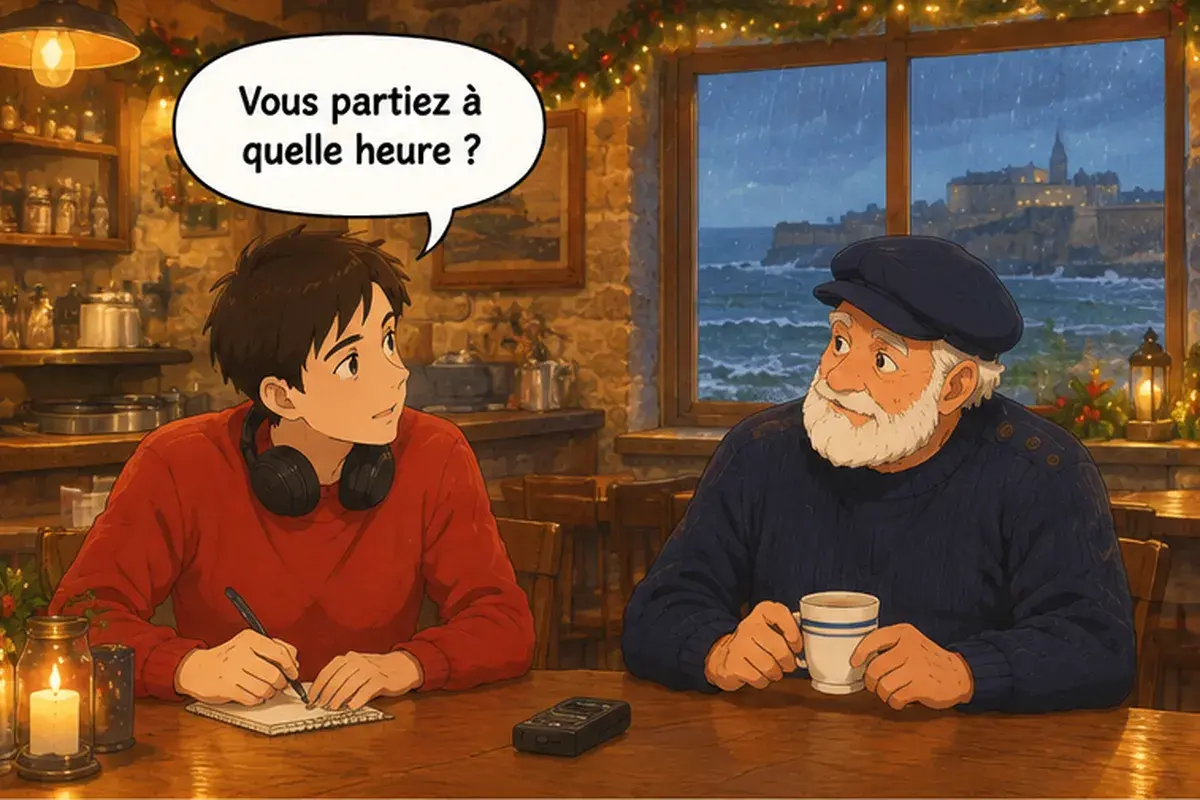
- Pacha
Vous partiez à quelle heure ?
What time did you use to leave? (formal)
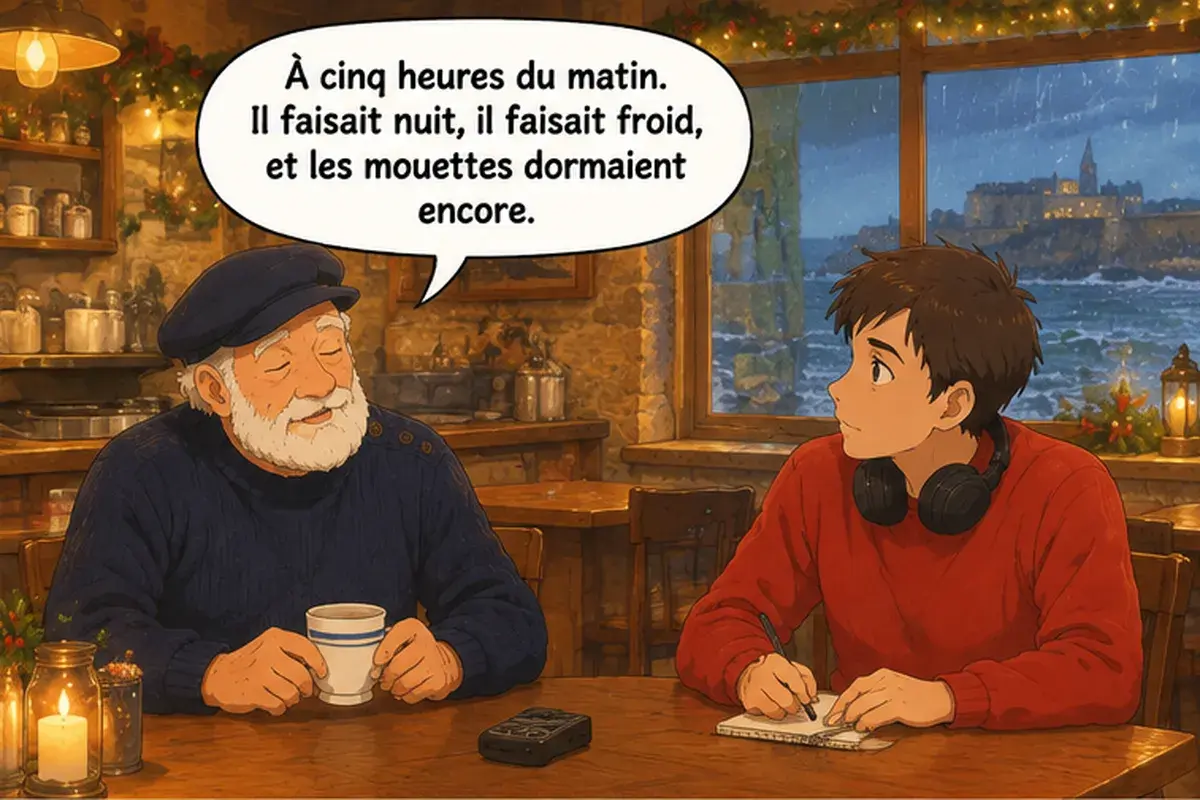
- Papy Yann
À cinq heures du matin. Il faisait nuit, il faisait froid, et les mouettes dormaient encore.
At five in the morning. It was dark, it was cold, and the seagulls were still sleeping.
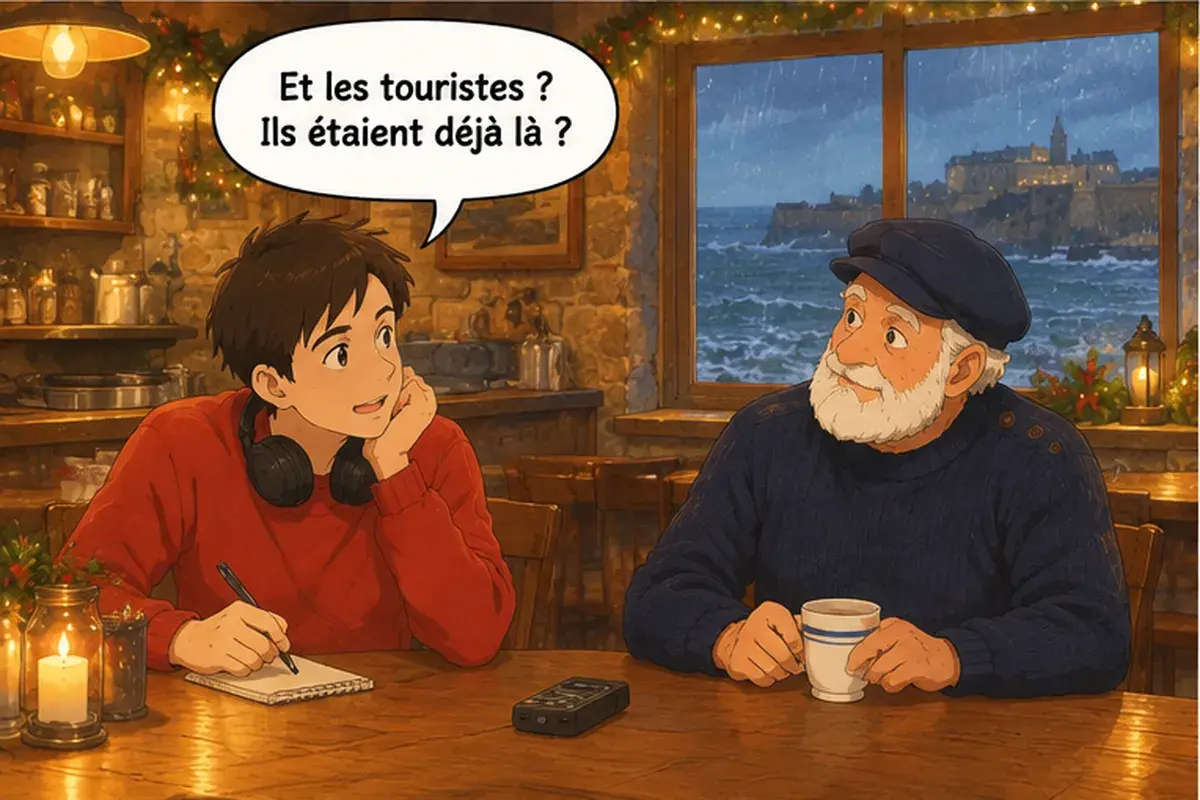
- Pacha
Et les touristes ? Ils étaient déjà là ?
And the tourists? Were they already here?
- Papy Yann
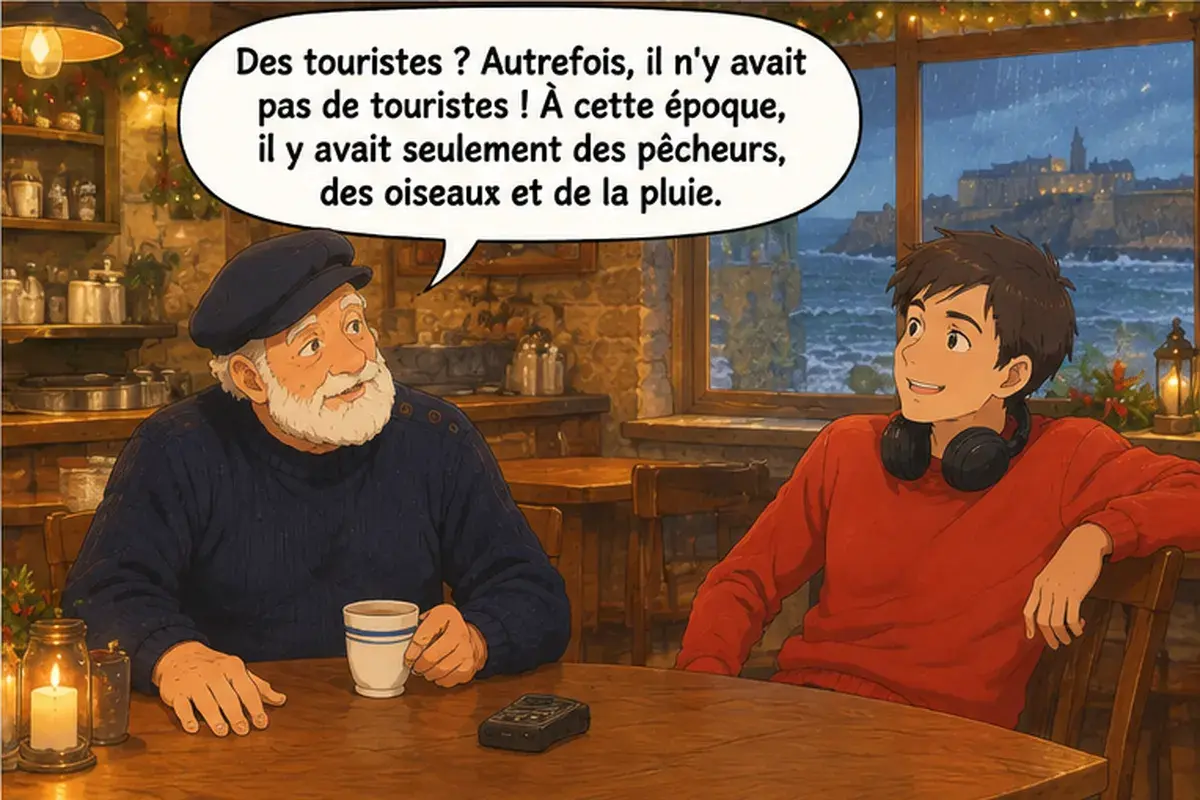
Des touristes ? Autrefois, il n'y avait pas de touristes ! À cette époque, il y avait seulement des pêcheurs, des oiseaux et de la pluie.
Tourists? In the old days, there were no tourists! At that time, there were only fishermen, birds and rain.
- Pacha
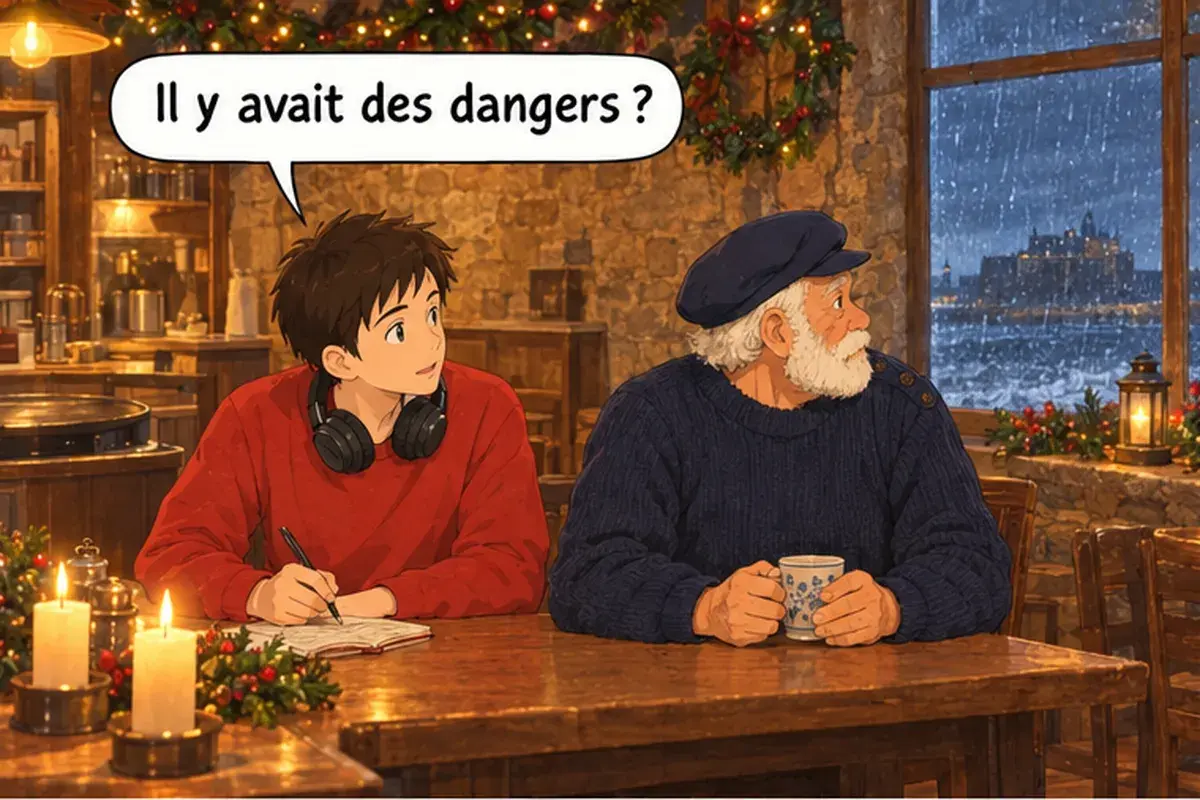
Il y avait des dangers ?
Were there any dangers?
- Papy Yann
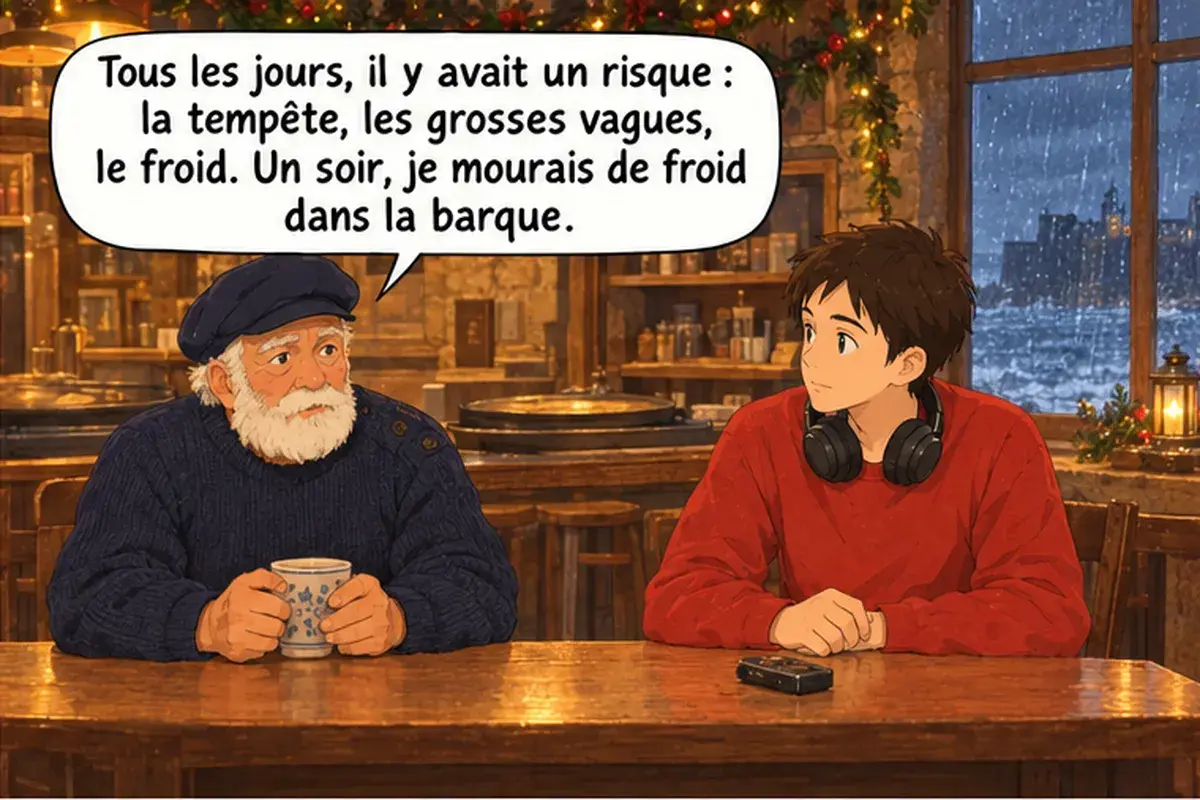
Tous les jours, il y avait un risque : la tempête, les grosses vagues, le froid. Un soir, je mourais de froid dans la barque.
Every day there was a risk: the storm, the big waves, the cold. One evening, I was dying of cold in the boat.
- Pacha
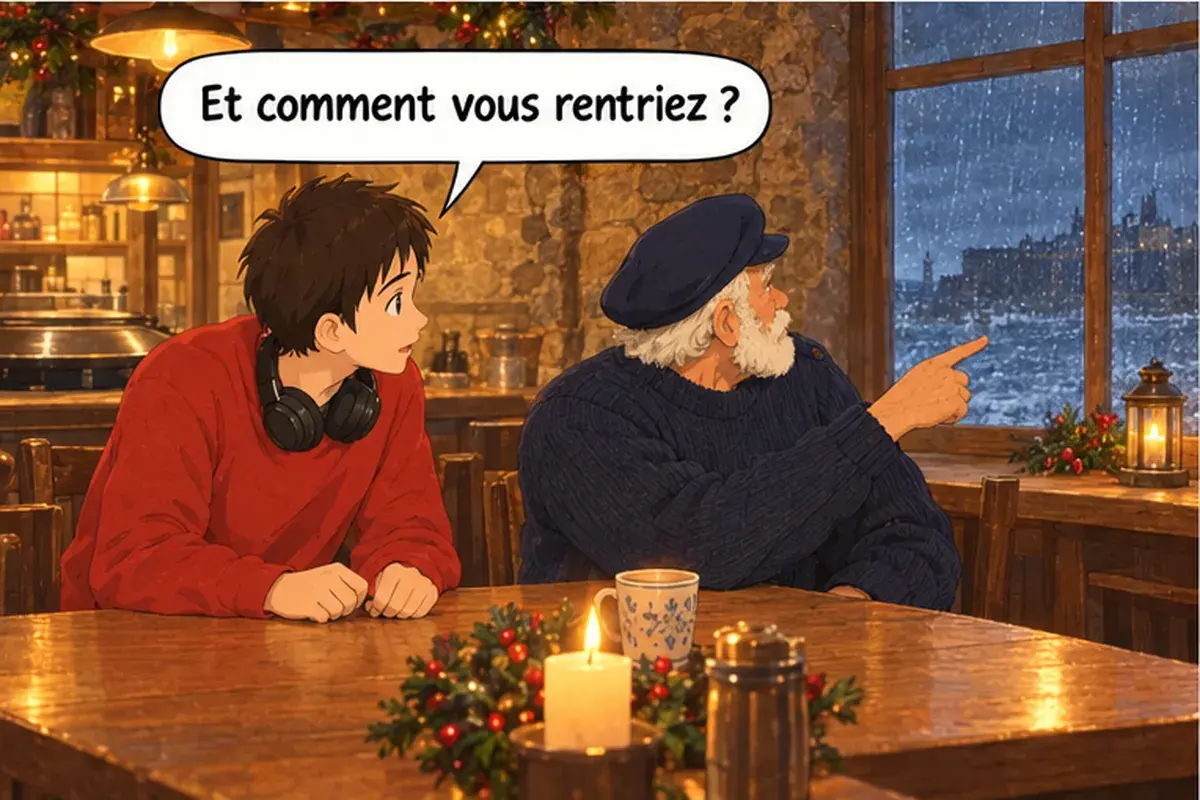
Et comment vous rentriez ?
And how did you get back? (formal)
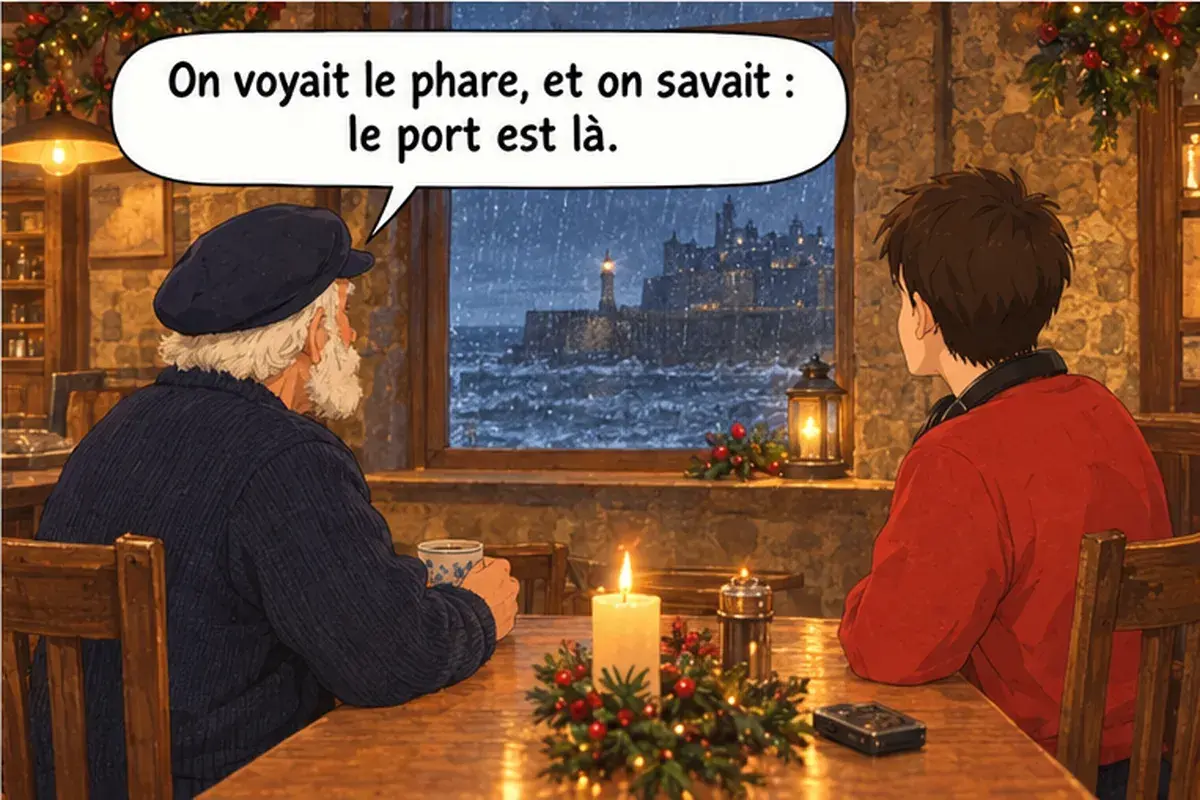
- Papy Yann
On voyait le phare, et on savait : le port est là.
We could see the lighthouse, and we knew: the port is there.
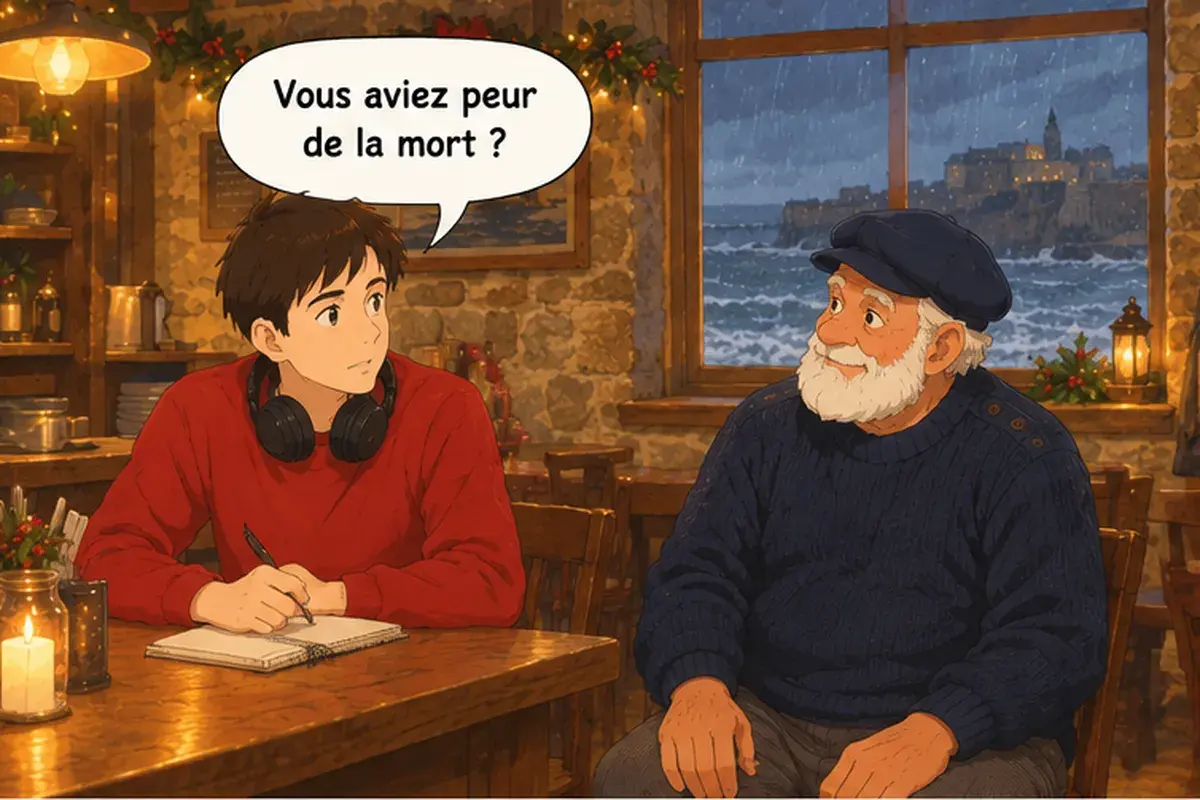
- Pacha
Vous aviez peur de la mort ?
Were you afraid of death? (formal)
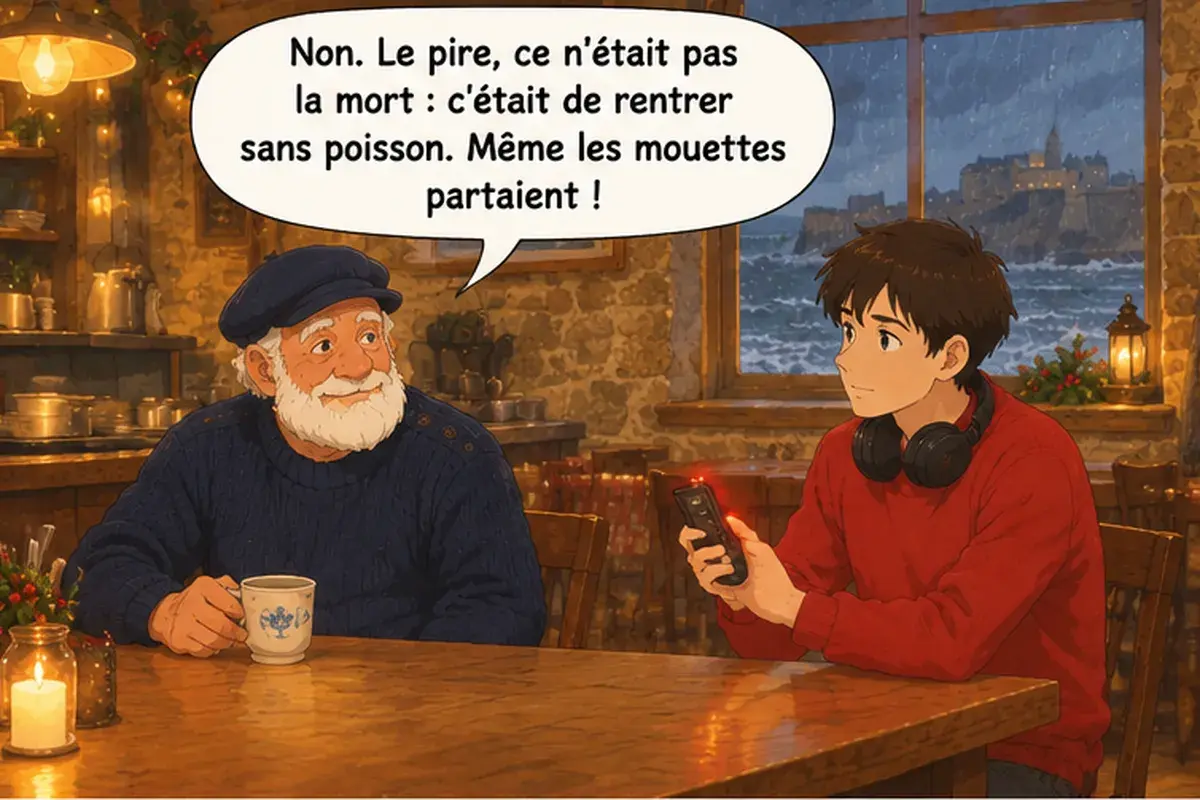
- Papy Yann
Non. Le pire, ce n'était pas la mort : c'était de rentrer sans poisson. Même les mouettes partaient !
No. The worst thing wasn't death: it was coming back without any fish. Even the seagulls would leave!
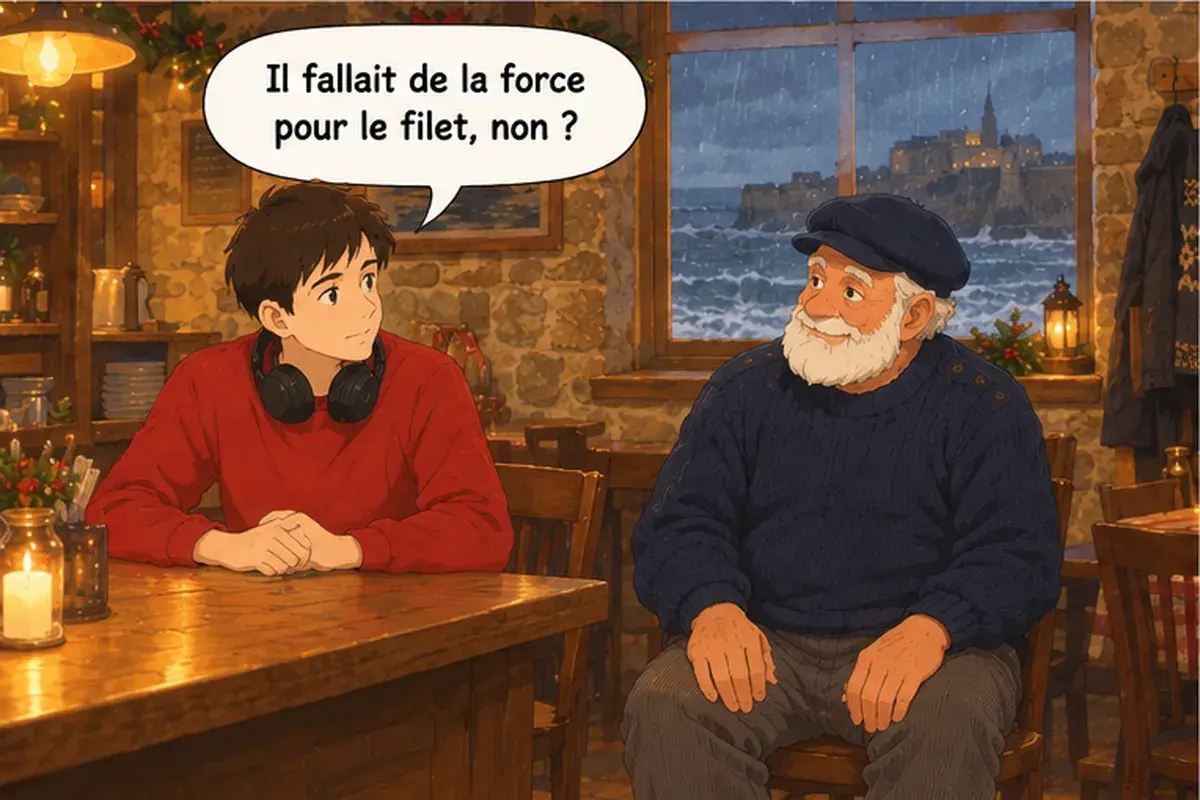
- Pacha
Il fallait de la force pour le filet, non ?
You needed strength for the net, right?
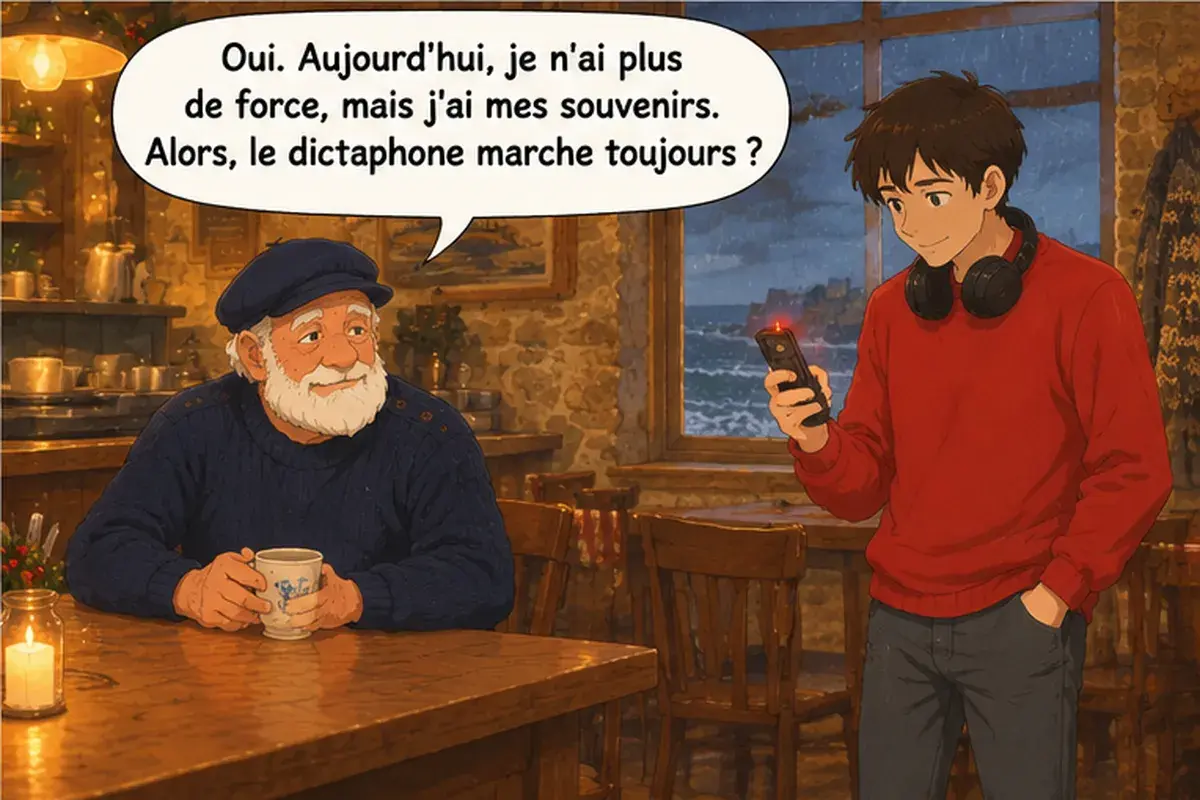
- Papy Yann
Oui. Aujourd'hui, je n'ai plus de force, mais j'ai mes souvenirs. Alors, le dictaphone marche toujours ?
Yes. Today I don't have any strength left, but I have my memories. So, is the voice recorder still working?
Grammar for this text
- Autrefois, je pêchais ici — pêchais is the imperfect (imparfait) of pêcher, the je form: "I used to fish". It's for things that happened many times. You learn this form in this unit.
- Vous pêchiez quoi ? — the same form for vous: pêchiez. Also vous partiez, vous rentriez, vous aviez. The ils form has a different ending: les mouettes dormaient, les mouettes partaient, ils étaient (the -aient is silent). The question is asked with the voice only, and quoi (what) goes at the end.
- Il faisait nuit, il faisait froid — faisait is il fait in the past, from faire. Literally "it made night"; in English, "it was dark". This is how you describe the background.
- Autrefois, il n'y avait pas de touristes —
il y avaitis il y a in the past: there was, there were. After pas it's de, not des. - Je mourais de froid — mourais: "I was dying", from mourir. mourir de froid — literally "to die of cold", that is, to be freezing; it's an exaggeration, like English "I'm freezing to death".
- Le pire, ce n'était pas la mort — c'était is c'est in the past; le pire — the worst; la mort — death.
- Il fallait de la force, On voyait le phare — fallait is il faut in the past, from falloir: "you needed, it took". voyait is on voit in the past, from voir, and on here means "we".
Words and grammar of the unit: Talk about how things used to be.
Learn the words from the texts with flashcards
In the app, you can tap any word in a text to see its translation, forms and examples, and new words stick with flashcards. 15 minutes a day.
Start for freeEverything is open for free. No card needed to sign up.