

French dialogue with translation · A2 · 15 lines
J'ai un ennui avec ma carte I have a problem with my card
Comic · 15 panels

- Inès
Alors, Pacha ? Toujours pas de carte ? Tu appelles la banque quand ?
So, Pacha? Still no card? When are you calling the bank?

- Pacha
Demain. J'ai peur de ce coup de fil.
Tomorrow. I'm afraid of this phone call.

- Inès
C'est quoi, le problème ? Tu peux aller à l'agence.
What's the problem? You can go to the branch.
- Pacha
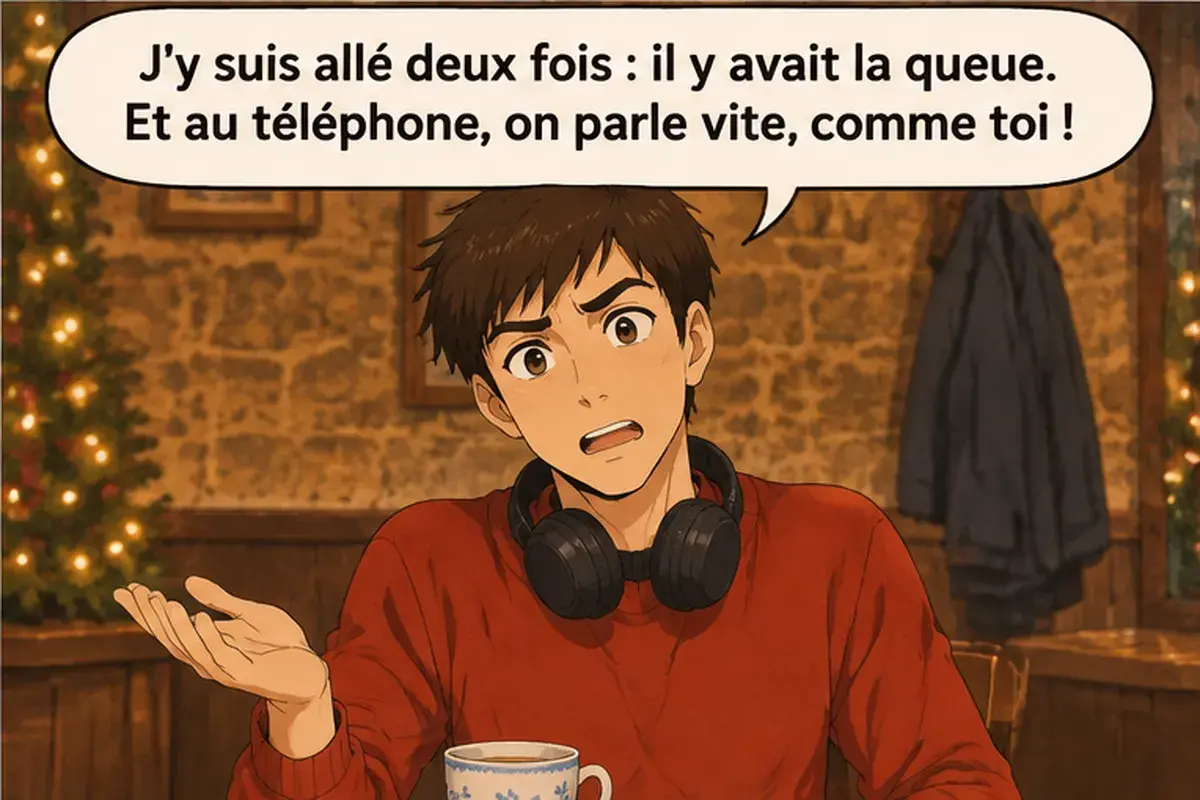
J'y suis allé deux fois : il y avait la queue. Et au téléphone, on parle vite, comme toi !
I went there twice: there was a line. And on the phone, people talk fast, like you!
- Inès
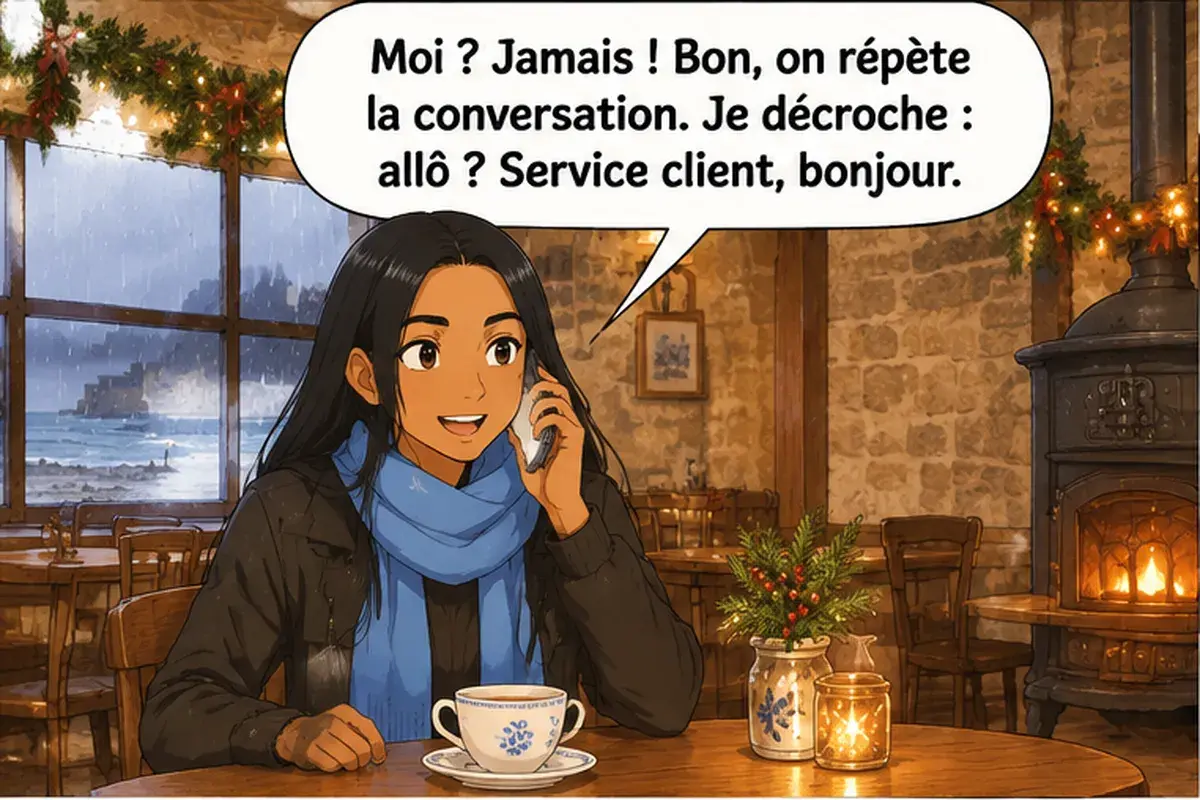
Moi ? Jamais ! Bon, on répète la conversation. Je décroche : allô ? Service client, bonjour.
Me? Never! OK, let's rehearse the conversation. I pick up: hello? Customer service, hello.
- Pacha
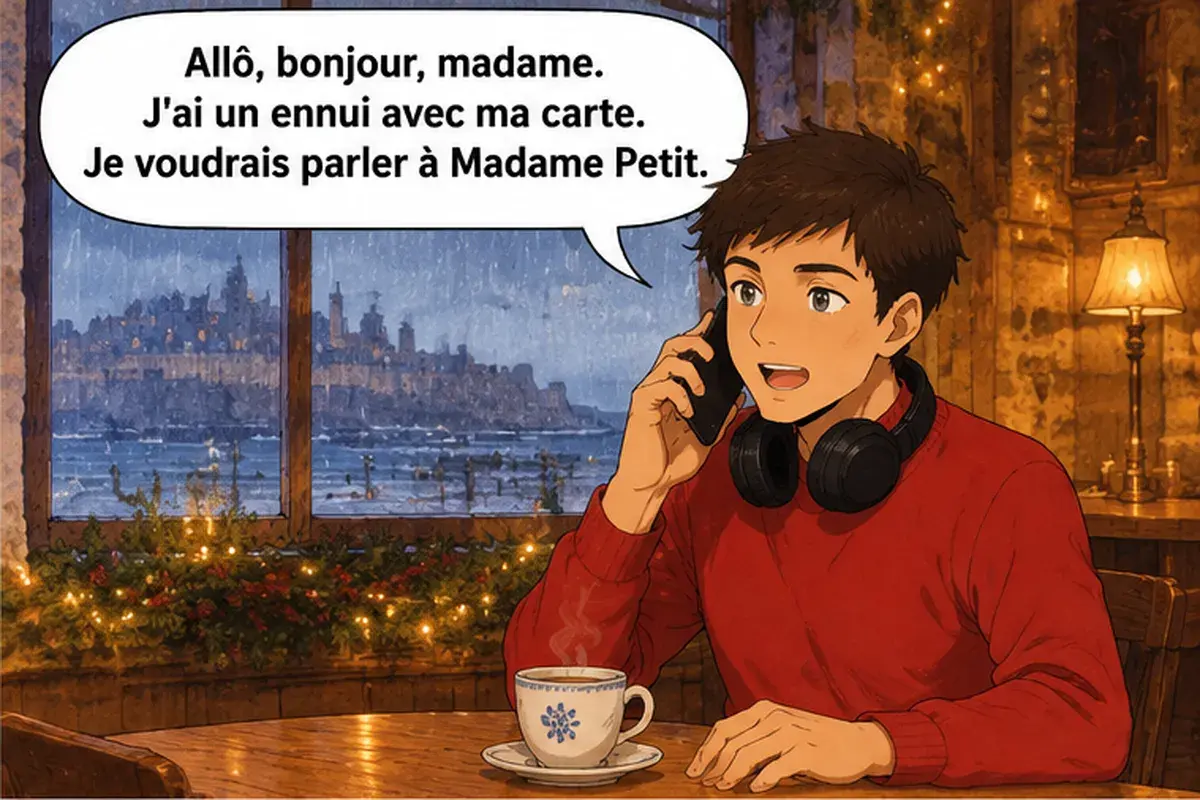
Allô, bonjour, madame. J'ai un ennui avec ma carte. Je voudrais parler à Madame Petit.
Hello. Hello, ma'am. I have a problem with my card. I'd like to speak to Madame Petit.
- Inès
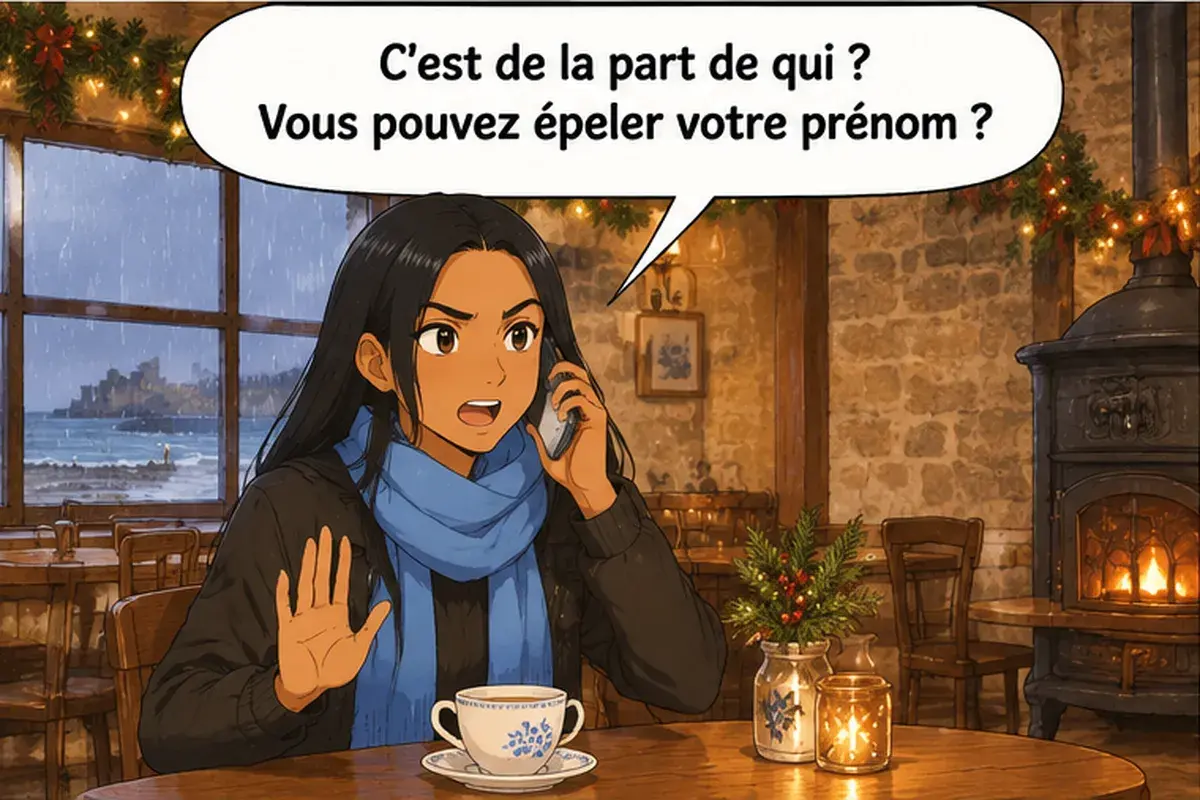
C'est de la part de qui ? Vous pouvez épeler votre prénom ?
Who's calling? Can you spell your first name? (formal)

- Pacha
Pacha. P comme Paris, A comme Anne, C comme Claire, H comme Hugo, A comme Anne.
Pacha. P as in Paris, A as in Anne, C as in Claire, H as in Hugo, A as in Anne.
- Inès
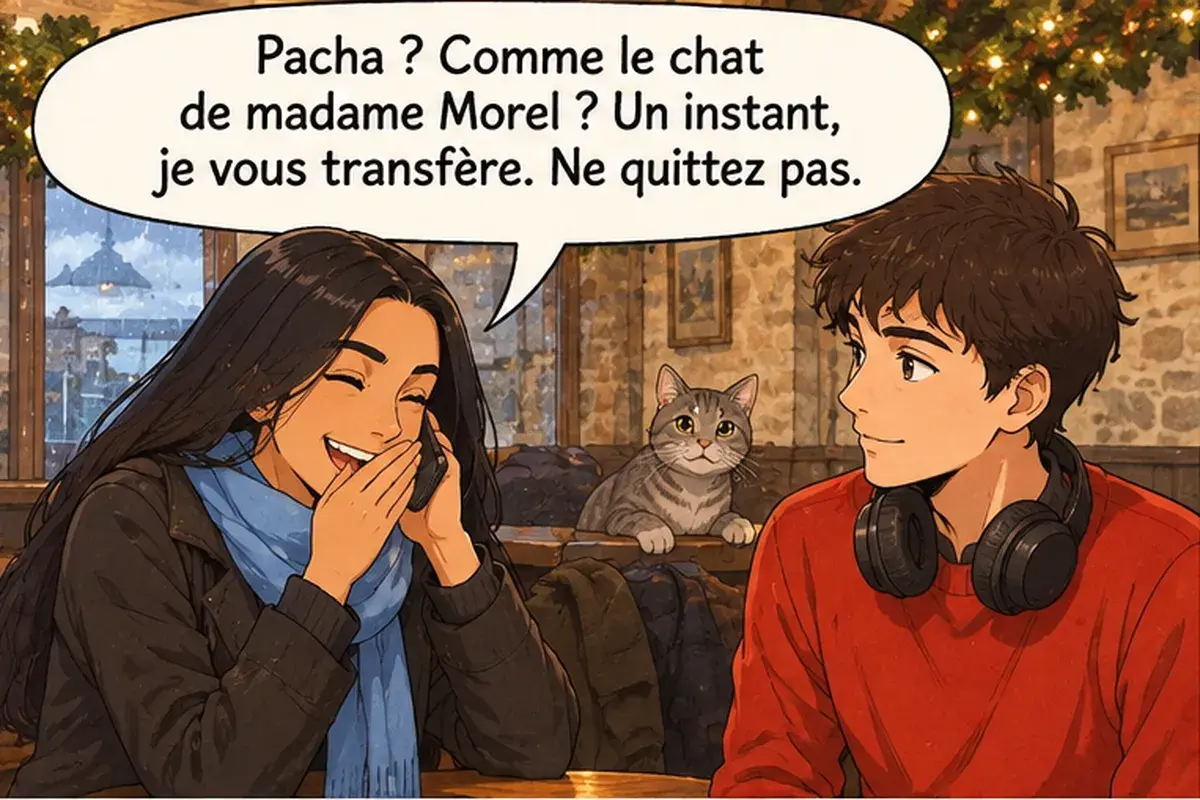
Pacha ? Comme le chat de madame Morel ? Un instant, je vous transfère. Ne quittez pas.
Pacha? Like Madame Morel's cat? One moment, I'm transferring you. Please hold. (formal)

- Pacha
Merci, madame. Je patiente.
Thank you, ma'am. I'll hold.
- Inès
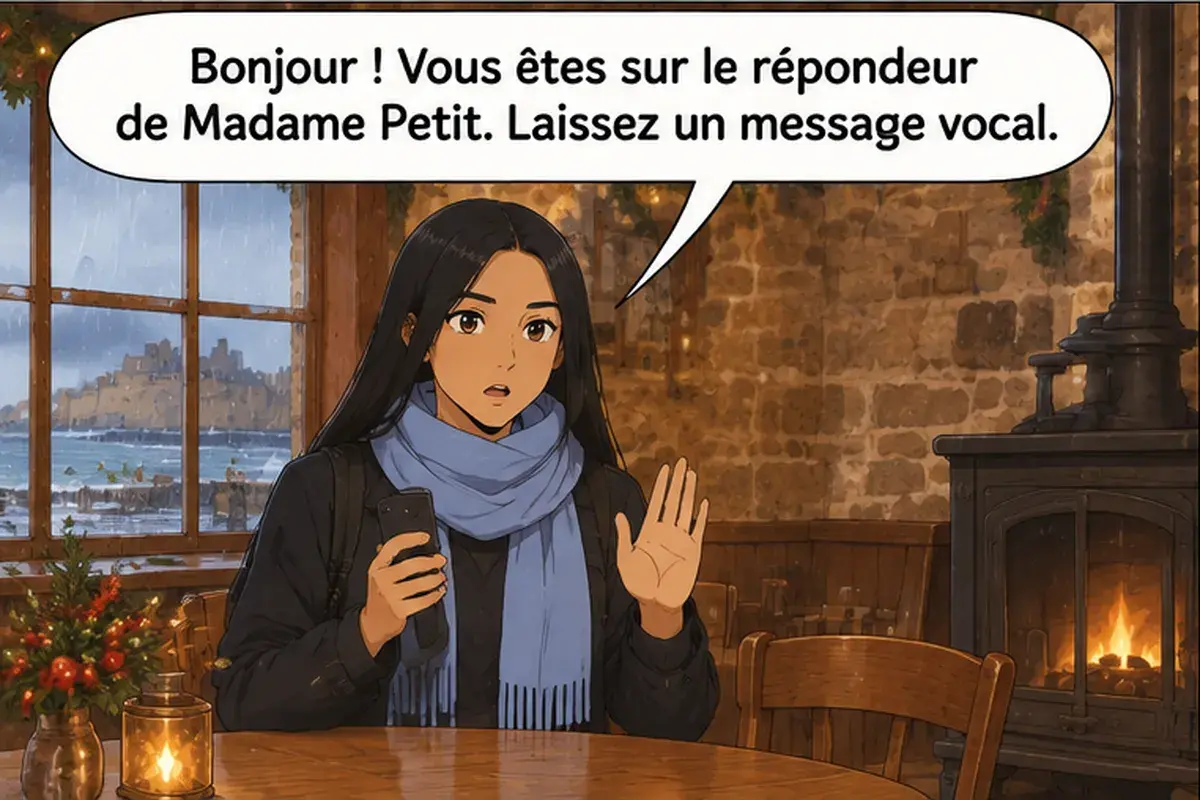
Bonjour ! Vous êtes sur le répondeur de Madame Petit. Laissez un message vocal.
Hello! You've reached Madame Petit's answering machine. Leave a voice message. (formal)

- Pacha
Bonjour, madame. C'est Pacha. Je rappelle demain. Merci, bonne journée !
Hello, ma'am. It's Pacha. I'll call back tomorrow. Thank you, have a nice day!
- Inès
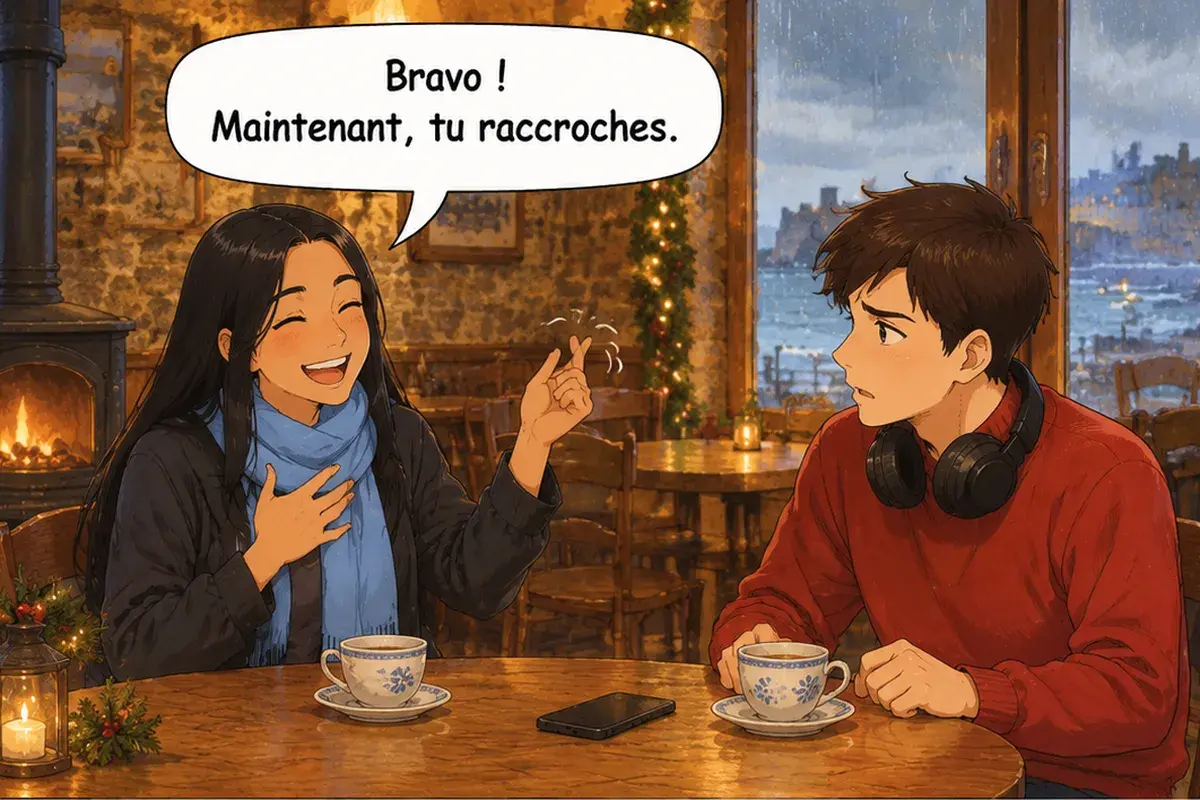
Bravo ! Maintenant, tu raccroches.
Bravo! Now you hang up.
- Pacha
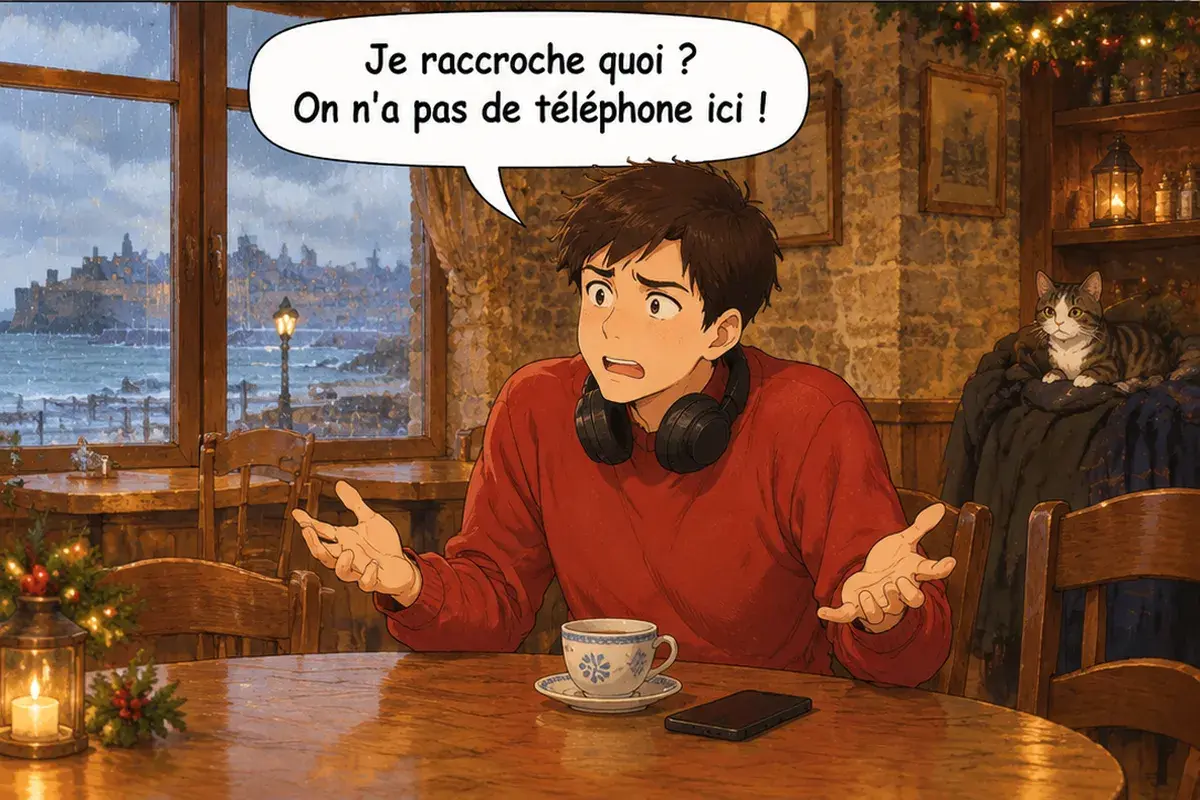
Je raccroche quoi ? On n'a pas de téléphone ici !
Hang up what? We don't have a phone here!
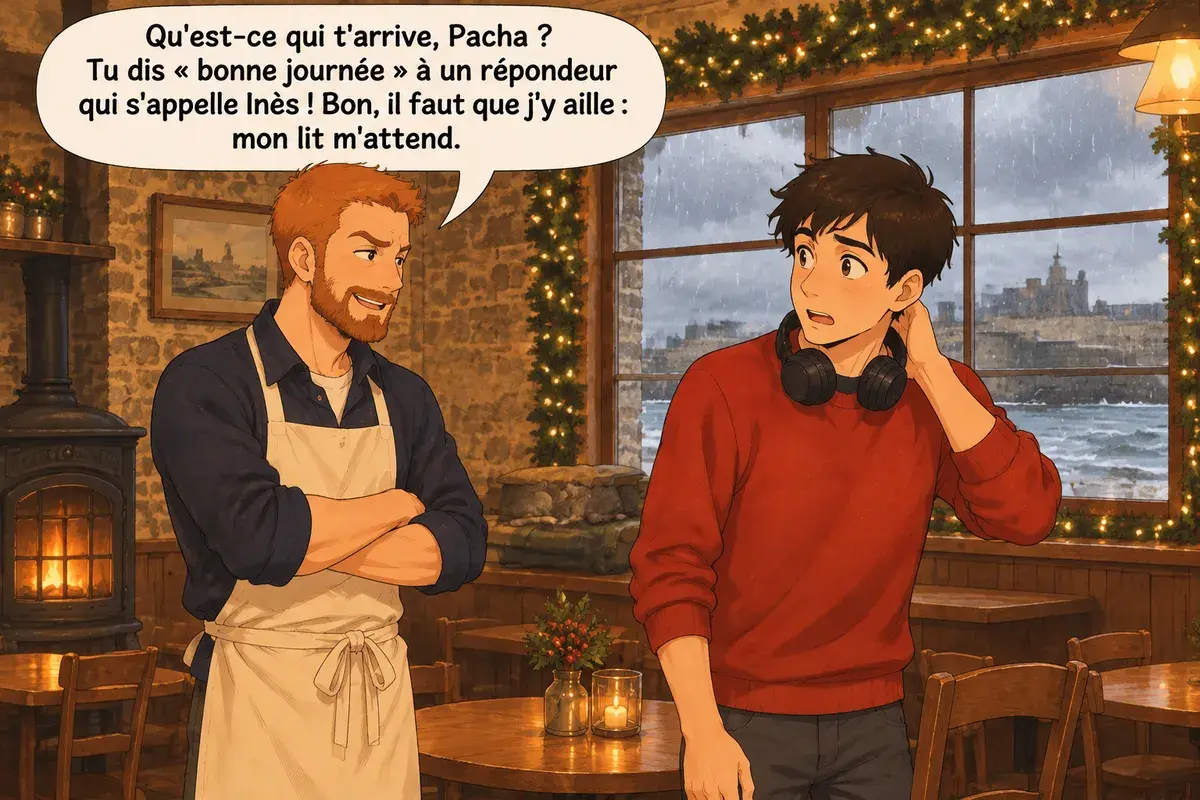
- Hugo
Qu'est-ce qui t'arrive, Pacha ? Tu dis « bonne journée » à un répondeur qui s'appelle Inès ! Bon, il faut que j'y aille : mon lit m'attend.
What's going on with you, Pacha? You're saying "have a nice day" to an answering machine called Inès! OK, I have to go: my bed is waiting for me.
Grammar for this text
- J'ai peur de ce coup de fil —
avoir peur de+ noun: to be afraid of something. Un coup de fil is a casual word for a phone call, used with friends; at the bank, people say appel. - J'y suis allé deux fois — y here means "there" (to the branch); it goes before suis. Suis allé — "went", the passé composé with être (unit 2).
- C'est de la part de qui ? — "Who's calling?" Literally "on whose behalf is it?" The answer: De la part de Pacha.
- P comme Paris, A comme Anne — this is how people spell on the phone: "P as in Paris". Any word works, but a well-known one is best.
- Ne quittez pas — "please hold", literally "don't leave". Je vous transfère — "I'm transferring you": vous before the verb means "you" here (the person being transferred).
- Qu'est-ce qui t'arrive ? — "What's going on with you?" (literally "what is happening to you?"). It's qui, not que: the "what" itself does the action. T' is te, "to you", and it goes before the verb arrive. See the unit grammar.
- Il faut que j'y aille — a ready-made phrase: "I have to go". Il faut que — "it's necessary that"; aille is a special form of aller (to go), the subjunctive, which you'll learn at B1. Not vais but aille: il faut que requires it. J'y aille = je + y ("there") + aille. Learn the phrase as a whole.
Words and grammar of the unit: Call the bank and ask them to repeat.
Learn the words from the texts with flashcards
In the app, you can tap any word in a text to see its translation, forms and examples, and new words stick with flashcards. 15 minutes a day.
Start for freeEverything is open for free. No card needed to sign up.