

French dialogue with translation · A1 · 14 lines
Ça veut dire quoi ? What does that mean?
Comic · 11 panels
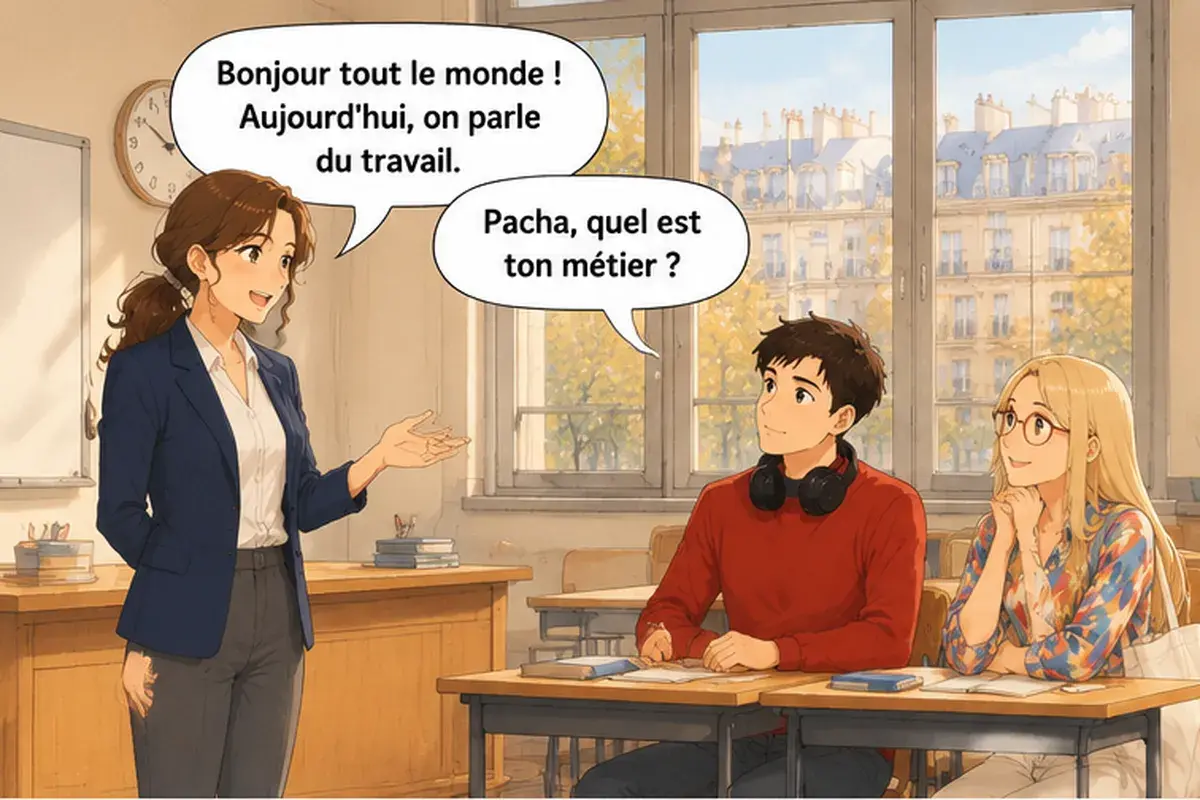
- Claire
Bonjour tout le monde ! Aujourd'hui, on parle du travail.
Hello, everyone! Today we're talking about work.
- Claire
Pacha, quel est ton métier ?
Pacha, what's your job?

- Pacha
Je suis ingénieur du son. Je travaille sur un jeu vidéo.
I'm a sound engineer. I'm working on a video game.

- Giulia
Super ! Mais « le son », ça veut dire quoi ?
Great! But what does "le son" mean?

- Pacha
Le son, c'est le bruit. Dans le jeu, il y a une porte, un chat… J'enregistre les bruits.
Sound is noise. In the game there's a door, a cat… I record the noises.

- Giulia
Un chat ? Alors ton collègue, c'est un chat !
A cat? So your coworker is a cat!

- Pacha
Mon collègue, c'est le micro. Mais le chat de Madame Morel dort sur mon casque.
My coworker is the mic. But Madame Morel's cat sleeps on my headphones.
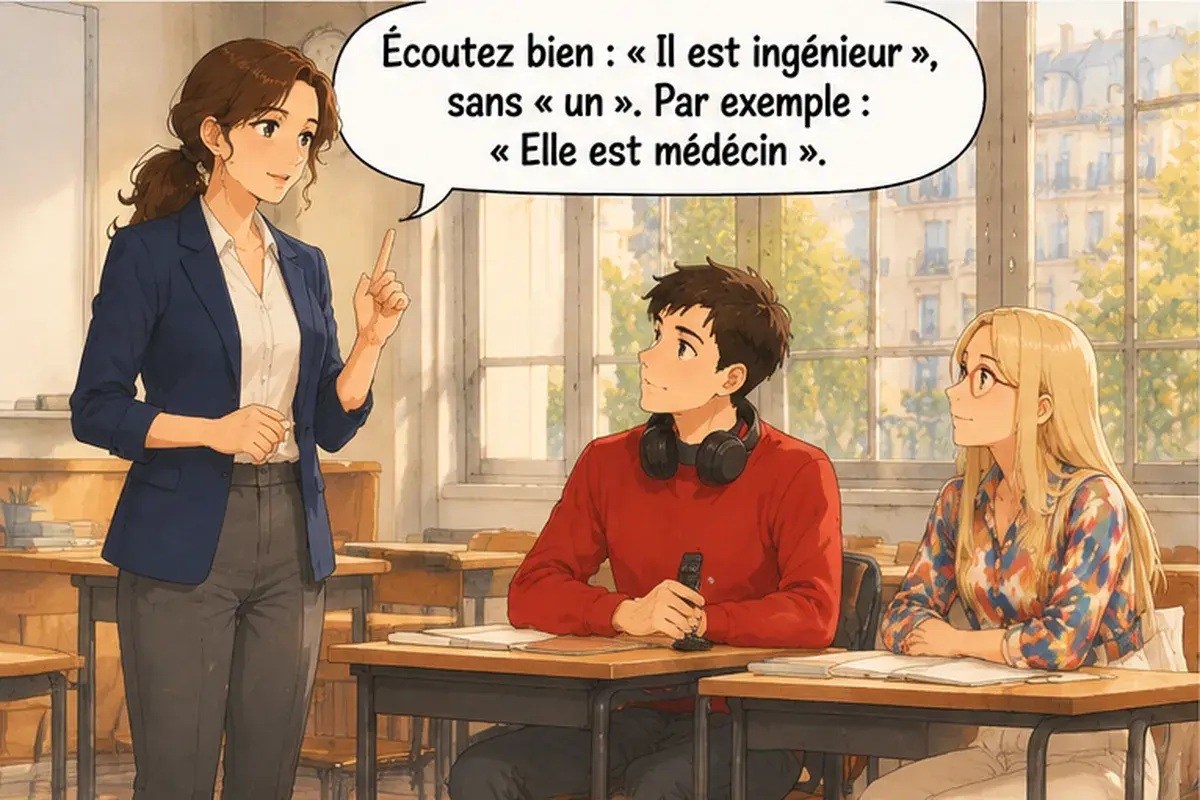
- Claire
Écoutez bien : « Il est ingénieur », sans « un ». Par exemple : « Elle est médecin ».
Listen carefully: "Il est ingénieur," without "un." For example: "Elle est médecin." (to several people)
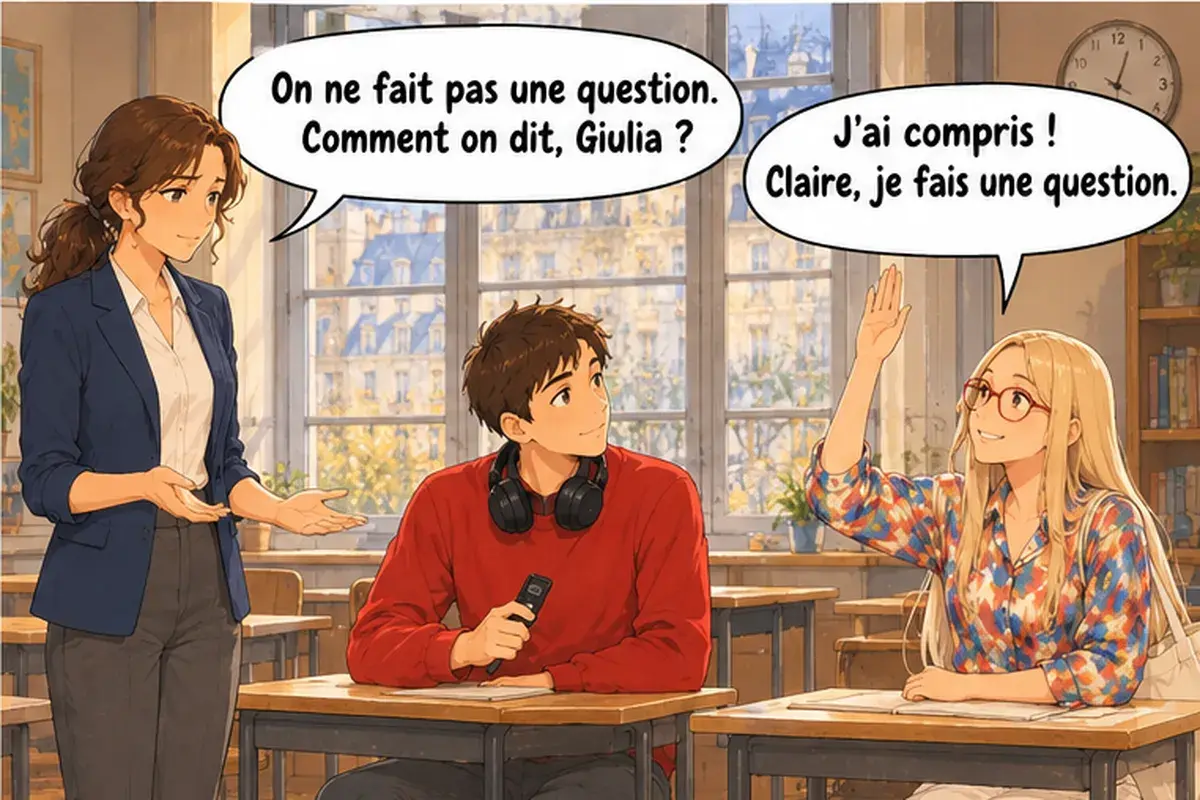
- Giulia
J'ai compris ! Claire, je fais une question.
I've got it! Claire, I "make" a question.
- Claire
On ne fait pas une question. Comment on dit, Giulia ?
We don't "make" a question. How do we say it, Giulia?
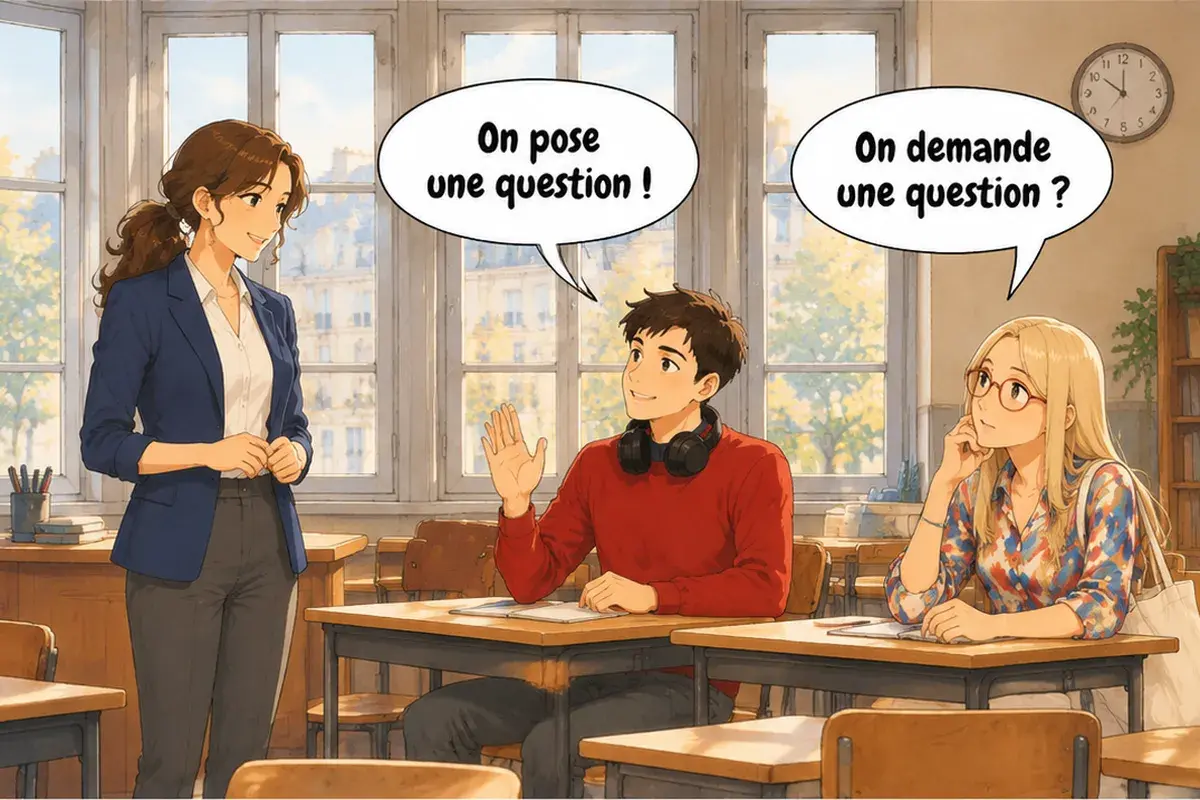
- Giulia
On demande une question ?
We "ask" a question?
- Pacha
On pose une question !
We "put" a question!

- Giulia
Ah bon ? Chez moi, on fait une question !
Really? Back home, we "make" a question!

- Claire
Pour demain, vous lisez un livre et vous écrivez dix questions. Bon courage !
For tomorrow, you read a book and you write ten questions. Good luck! (to several people)
Grammar for this text
- Je suis ingénieur du son: after être a job takes no article (not ✗ un ingénieur). du = de + le: "engineer of the sound", that is, a sound engineer. Here son means "sound", not "his".
- ça veut dire quoi: "what does that mean?". veut is the il / ça form of vouloir (to want): literally "that wants to say what?". In speech quoi often goes at the end of the question.
- J'ai compris: "I've got it, I understood". This is the passé composé (the main past tense) of comprendre: j'ai (je + ai, from avoir) + compris. You'll see how it works in unit 15; for now learn it as a whole. The negative is je n'ai pas compris.
- Écoutez bien: "listen carefully", the vous form of écouter without the word vous. It's a command; learn it as a set phrase for now (more at A2).
- On ne fait pas une question: fait is the on form of faire. In French you don't "make" a question, you "put" it: poser une question (poser literally means "to put, to set down"). Giulia translated word for word from Italian, so she made a mistake. Comment on dit: "how do we say it?"; dit is from dire.
- Chez moi, on fait une question: chez moi here means "back home, in my country"; on means people in general.
- Pour demain: "for tomorrow". Bon courage ! — "Good luck! Hang in there!"
Words and grammar of the unit: Talk about work and studies.
Learn the words from the texts with flashcards
In the app, you can tap any word in a text to see its translation, forms and examples, and new words stick with flashcards. 15 minutes a day.
Start for freeEverything is open for free. No card needed to sign up.