

French dialogue with translation · A1 · 14 lines
Qu'est-ce qu'on mange ce soir ? What are we eating tonight?
Comic · 14 panels
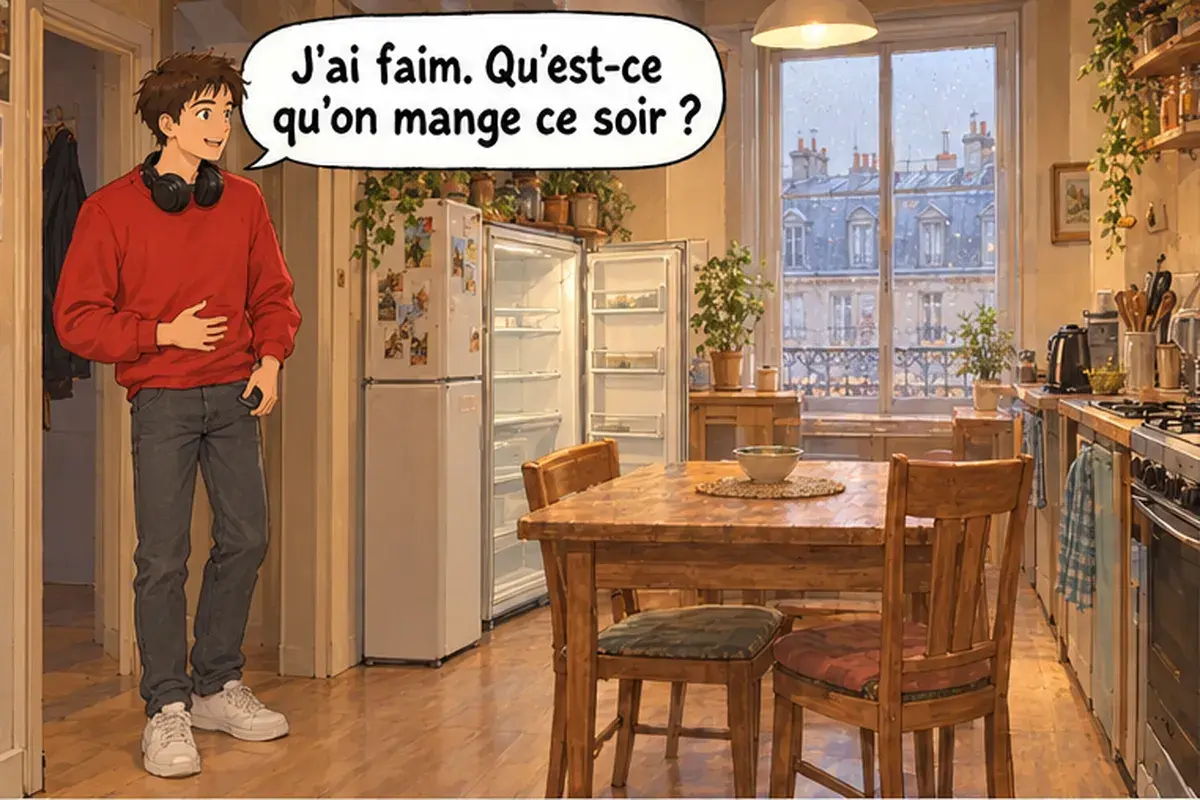
- Pacha
J'ai faim. Qu'est-ce qu'on mange ce soir ?
I'm hungry. What are we eating tonight?
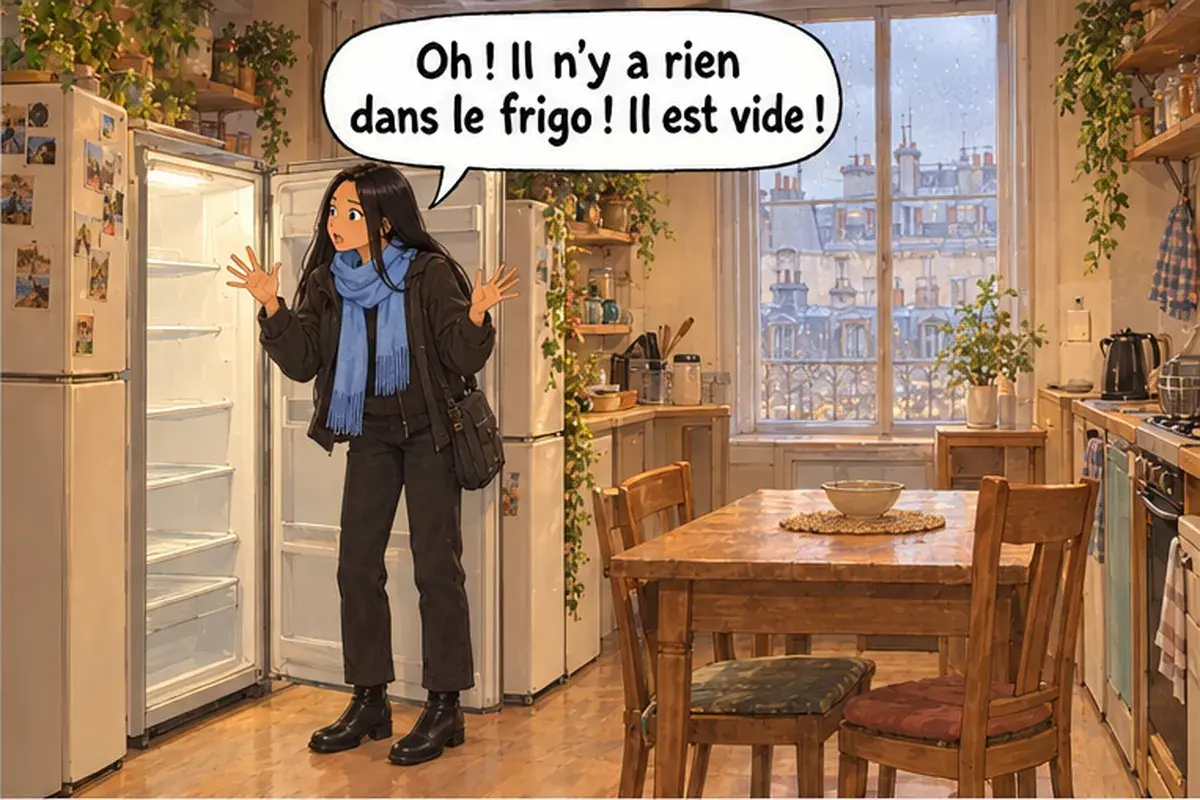
- Inès
Oh ! Il n'y a rien dans le frigo ! Il est vide !
Oh! There's nothing in the fridge! It's empty!
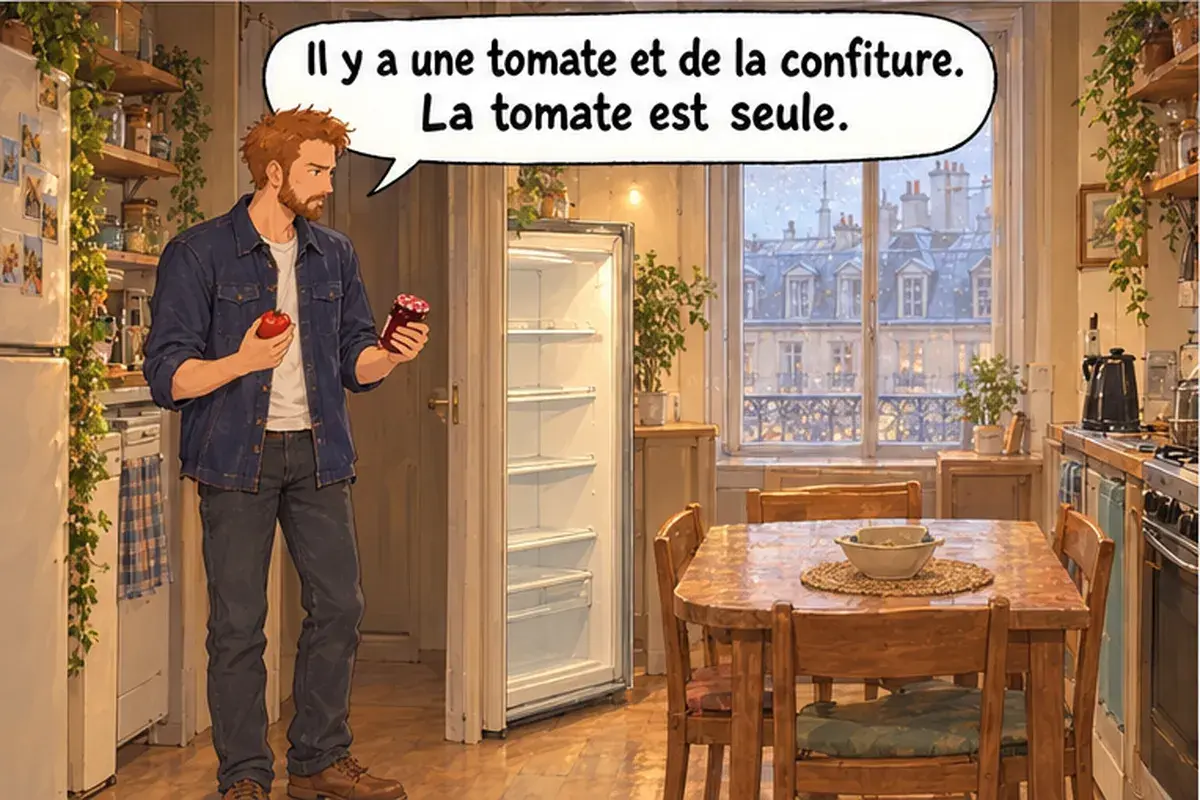
- Hugo
Il y a une tomate et de la confiture. La tomate est seule.
There's a tomato and some jam. The tomato is all alone.
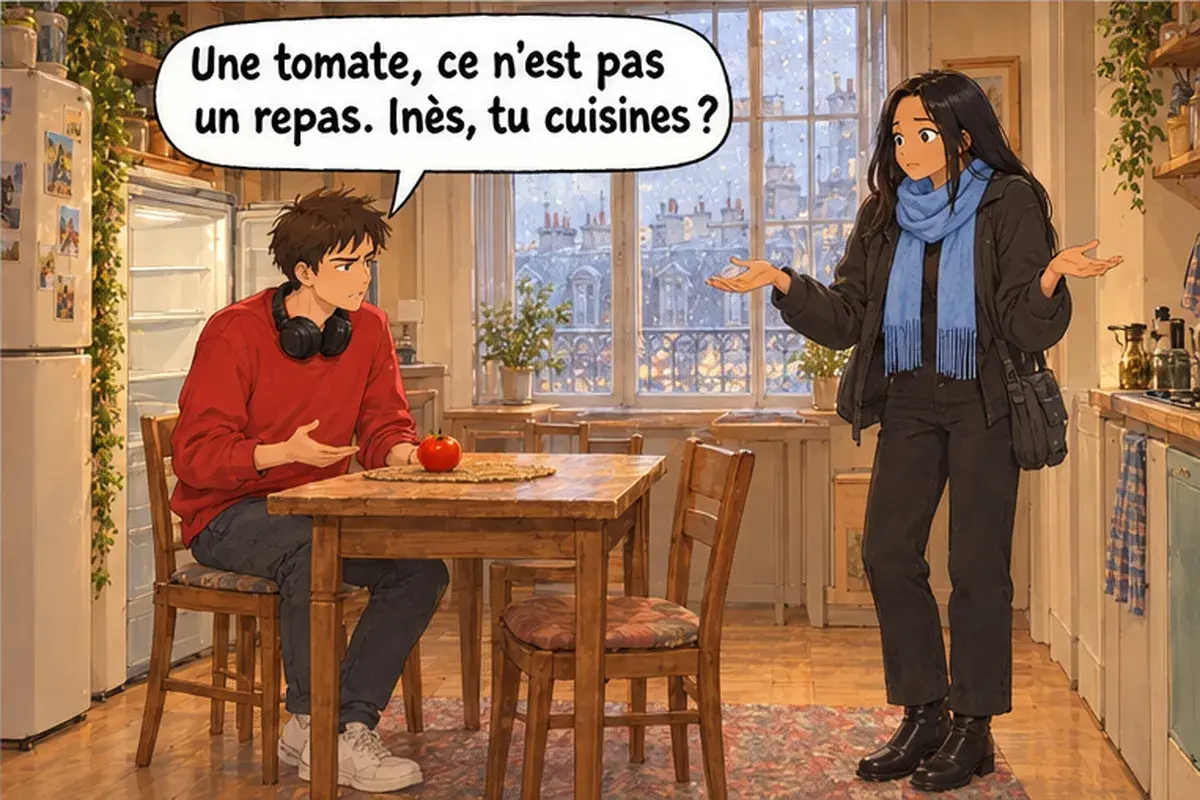
- Pacha
Une tomate, ce n'est pas un repas. Inès, tu cuisines ?
A tomato isn't a meal. Inès, are you cooking?
- Inès
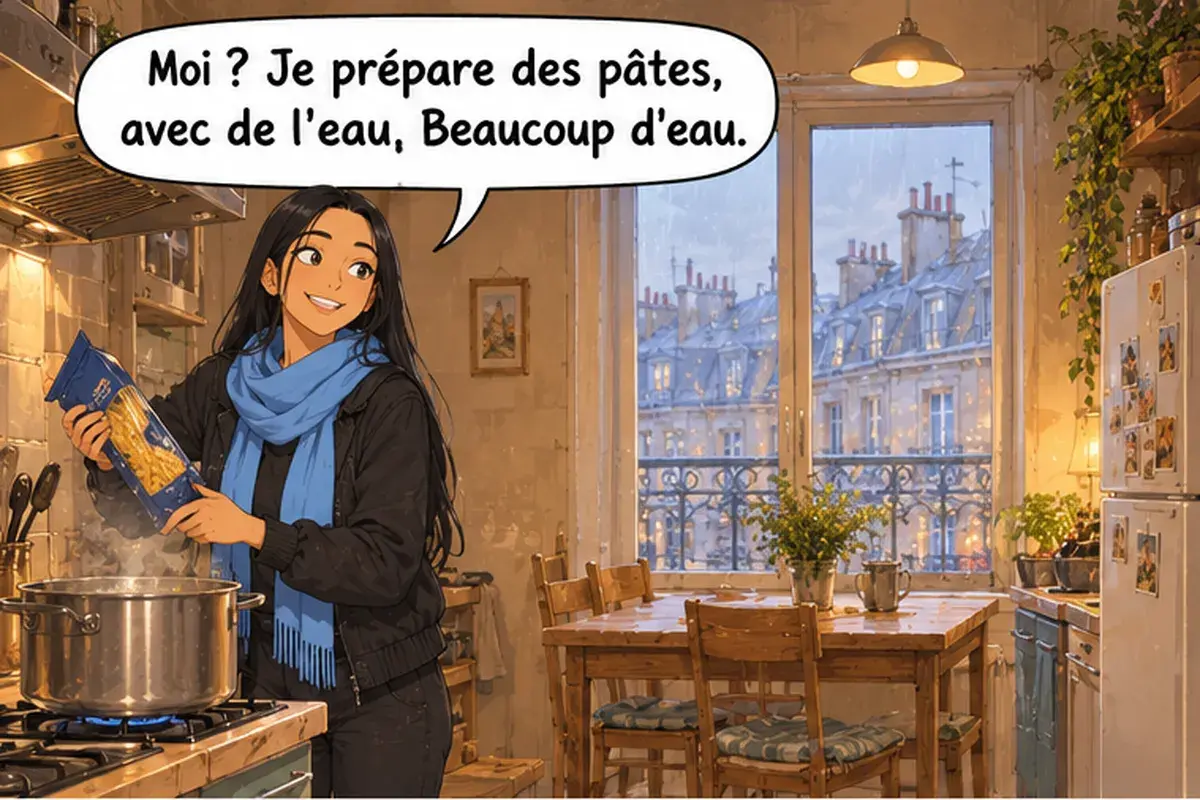
Moi ? Je prépare des pâtes, avec de l'eau. Beaucoup d'eau.
Me? I'm making pasta, with water. Lots of water.
- Hugo
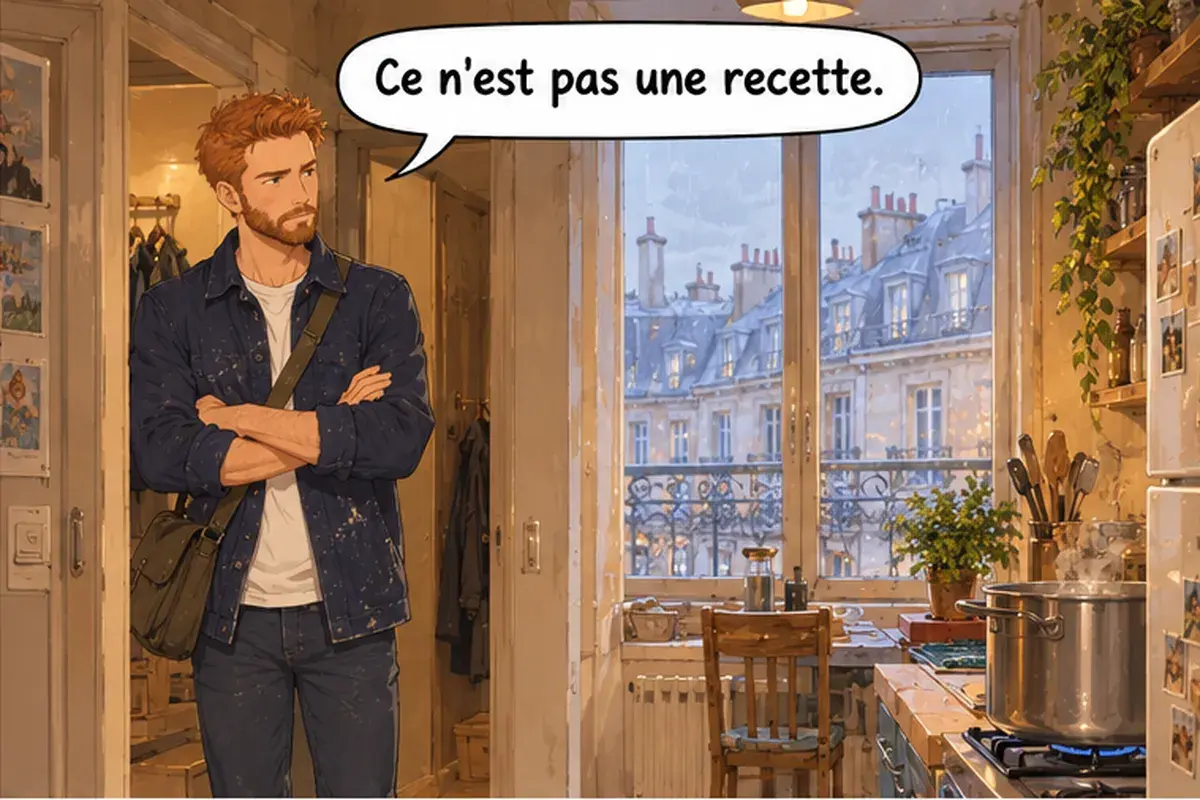
Ce n'est pas une recette.
That's not a recipe.

- Inès
Alors, du poulet ? Du poisson ? À Marseille, j'adore le poisson !
So, chicken? Fish? In Marseille, I love fish!
- Hugo
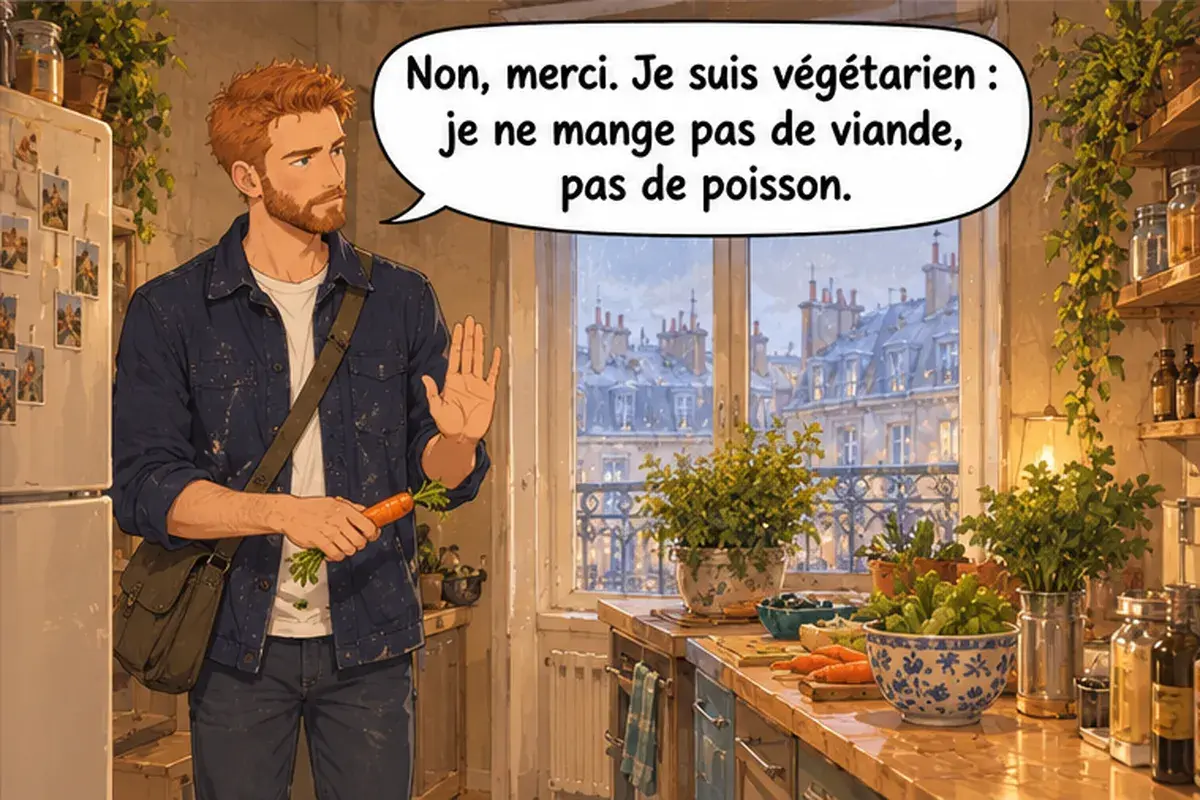
Non, merci. Je suis végétarien : je ne mange pas de viande, pas de poisson.
No, thanks. I'm a vegetarian: I don't eat meat or fish (man speaking).

- Inès
Mais tu manges du fromage !
But you eat cheese!
- Hugo
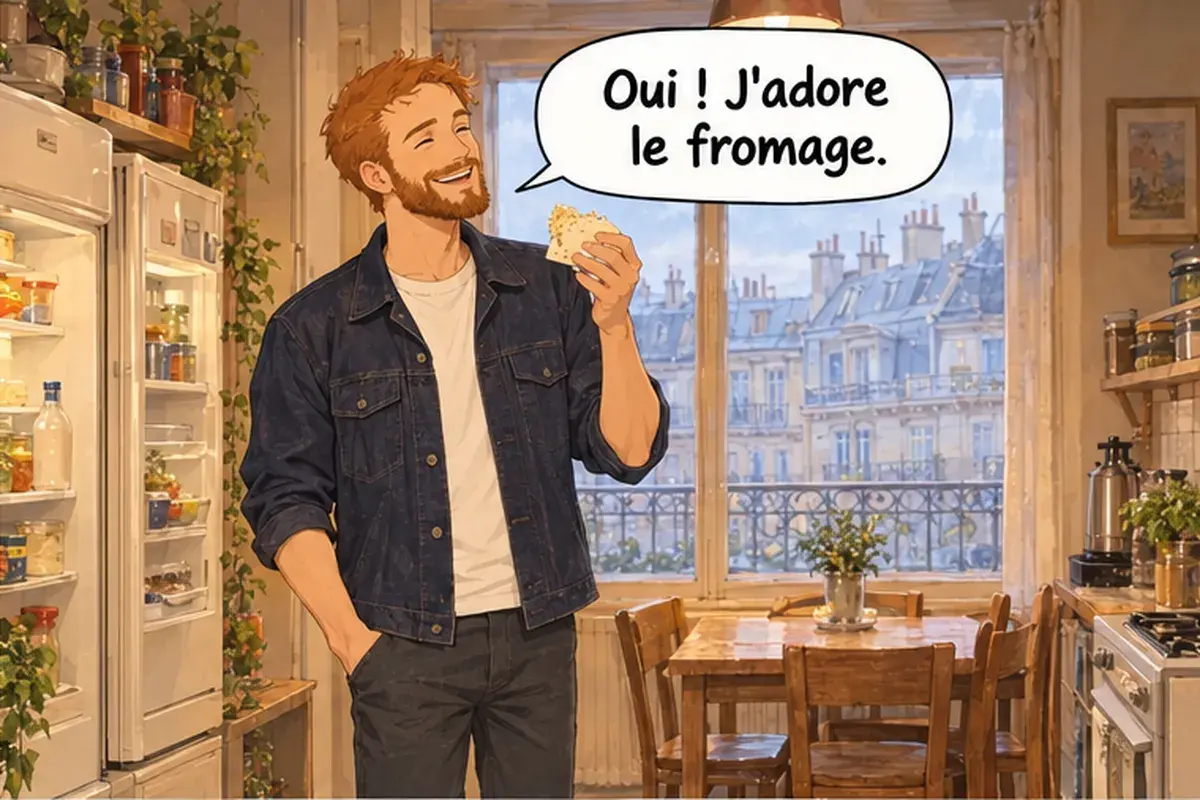
Oui ! J'adore le fromage.
Yes! I love cheese.
- Pacha
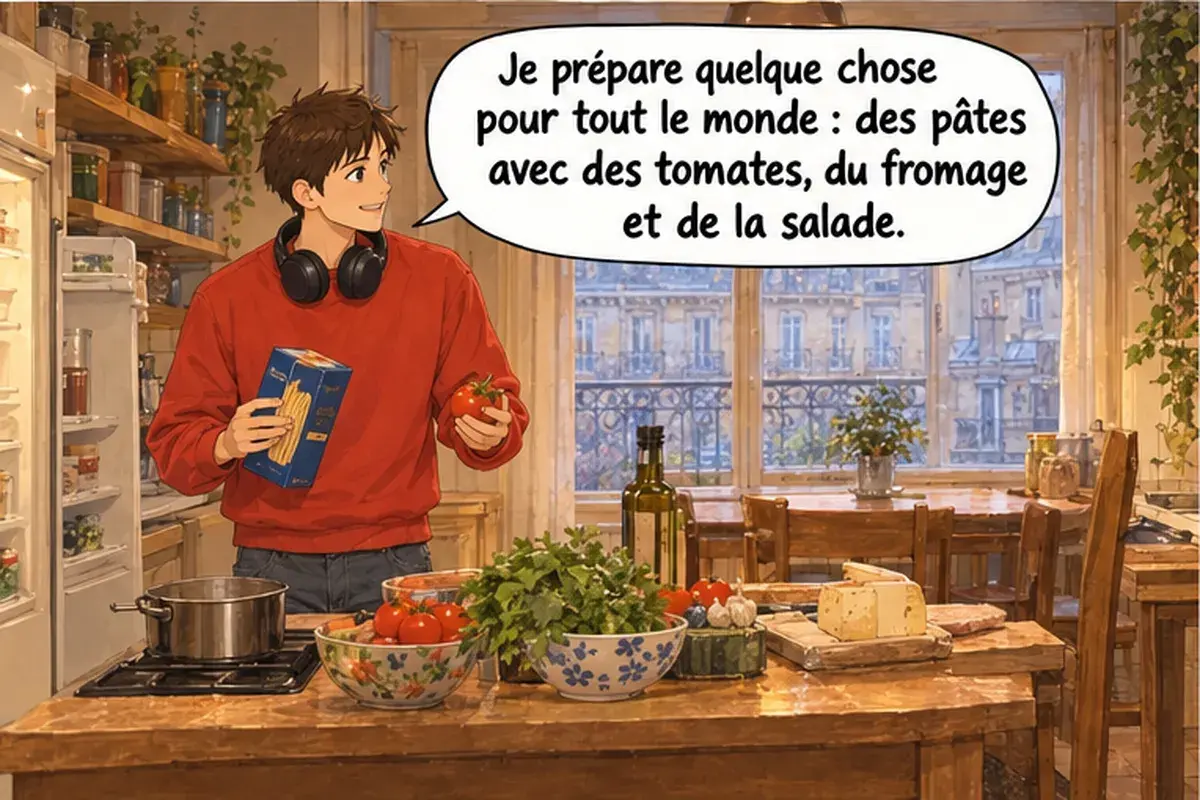
Je prépare quelque chose pour tout le monde : des pâtes avec des tomates, du fromage et de la salade.
I'm making something for everyone: pasta with tomatoes, cheese and salad.
- Inès
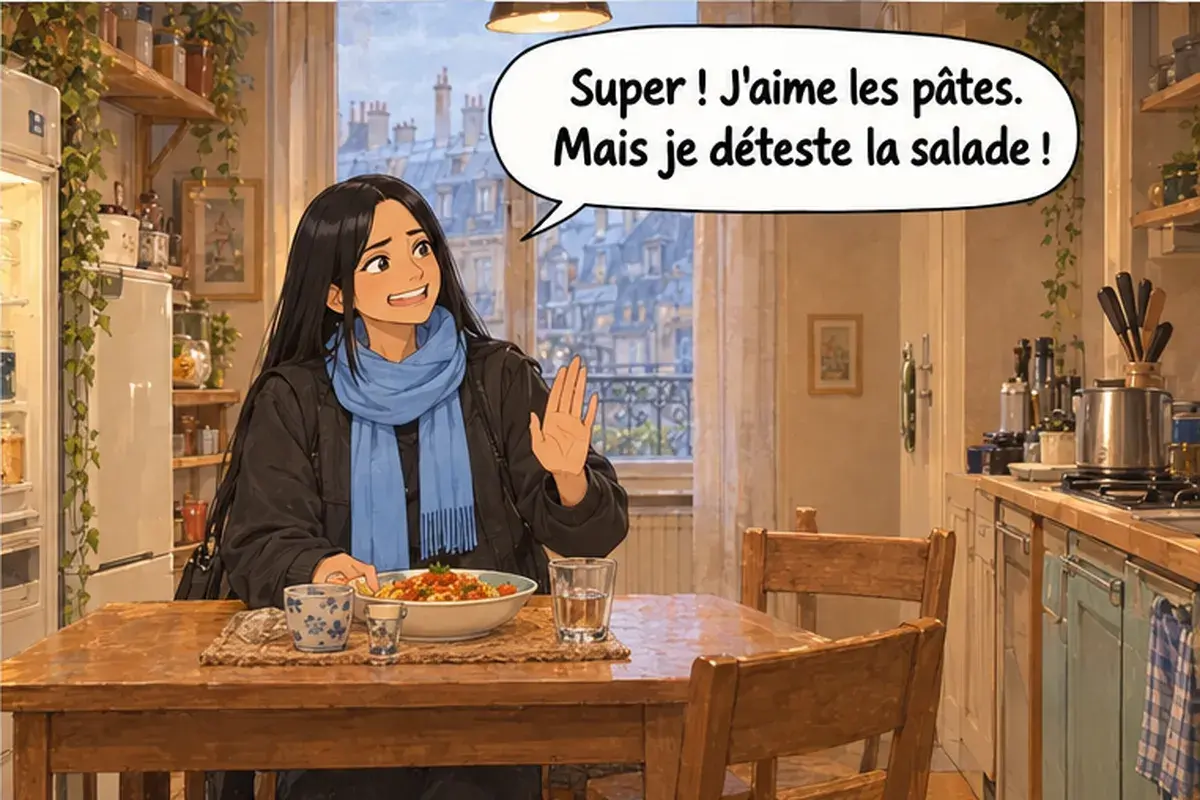
Super ! J'aime les pâtes. Mais je déteste la salade !
Great! I like pasta. But I hate salad!
- Pacha
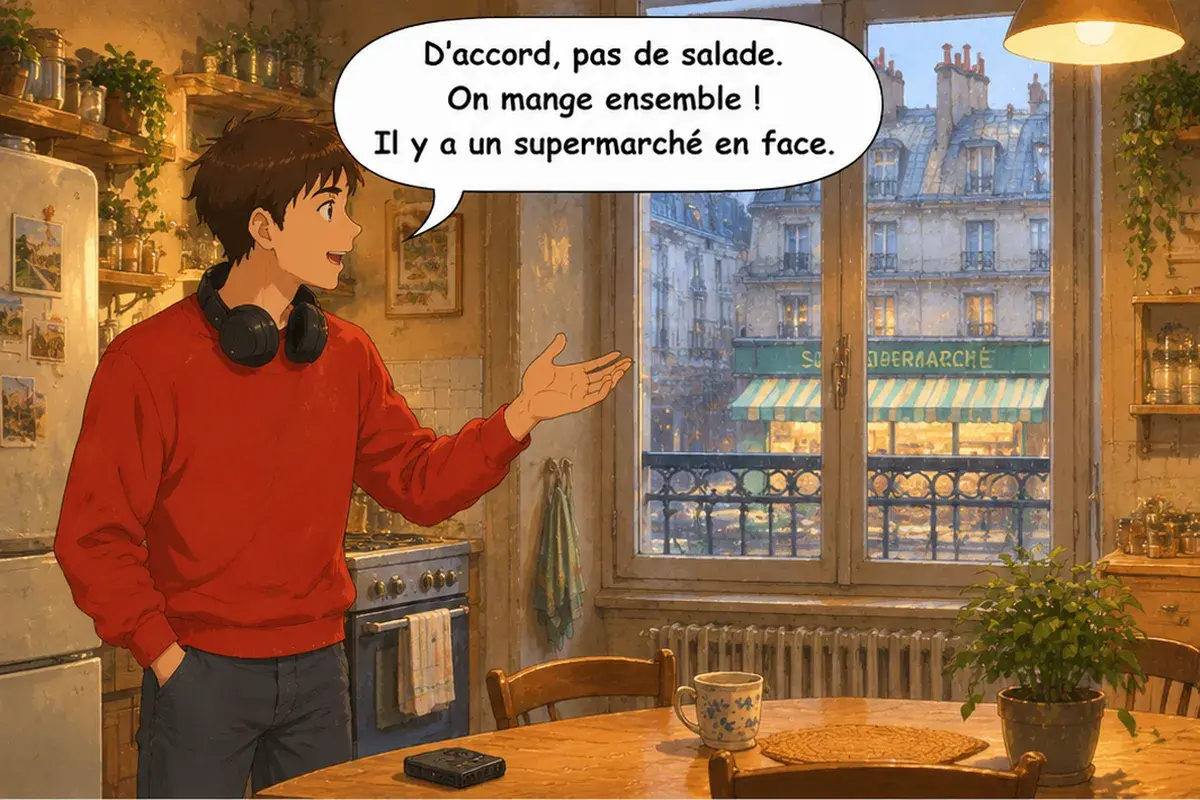
D'accord, pas de salade. On mange ensemble ! Il y a un supermarché en face.
OK, no salad. Let's eat together! There's a supermarket across the street.
- Hugo
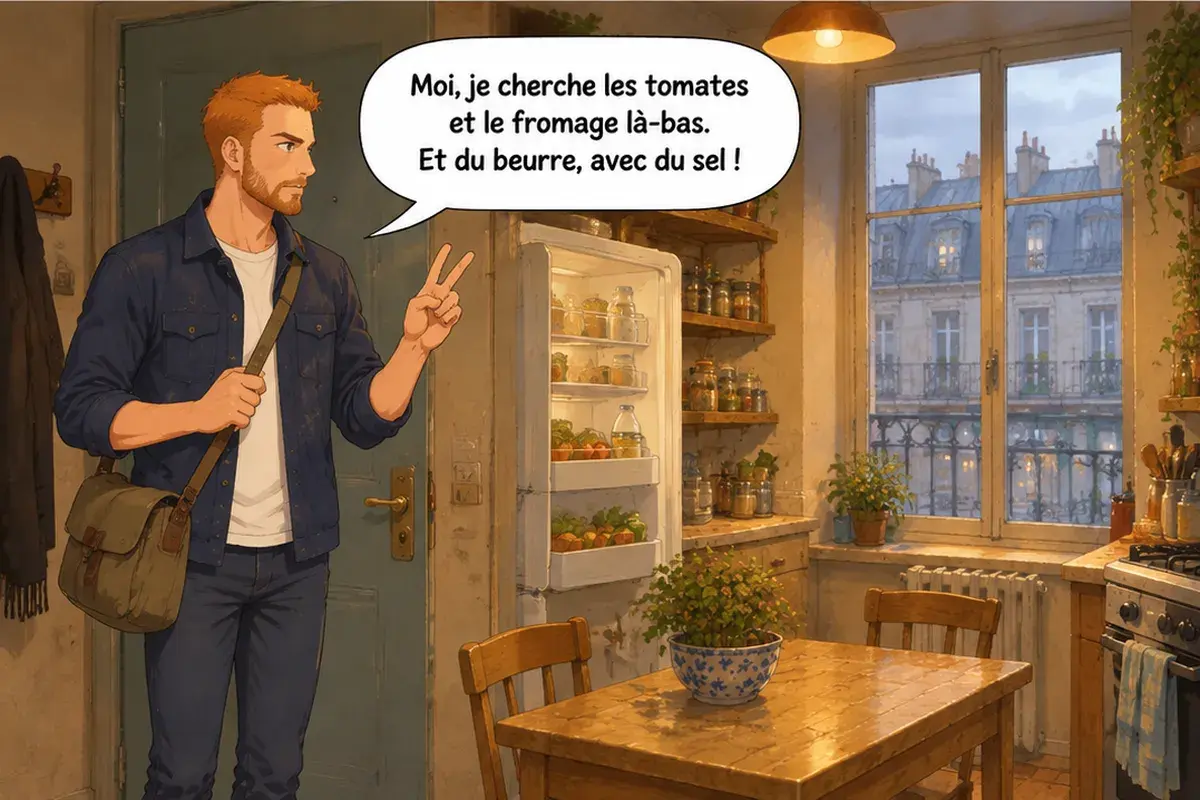
Moi, je cherche les tomates et le fromage là-bas. Et du beurre, avec du sel !
Me, I'll look for the tomatoes and the cheese over there. And butter, with salt!
Grammar for this text
- Qu'est-ce qu'on mange ce soir ? — what are we eating tonight? qu'est-ce que means "what" in a question, and que + on join into qu'on (the e drops). In everyday speech on means "we" and takes the same verb form as il: on mange.
- J'ai faim — I'm hungry, literally "I have hunger": French says avoir faim, not être. ✗ je suis faim.
- Il n'y a rien dans le frigo — there's nothing in the fridge. il n'y a is the negative of il y a, and rien means "nothing": ne and rien go around the verb, in place of ne... pas.
- Je ne mange pas de viande, pas de poisson — after a negative, de la viande becomes de viande. More in the unit grammar, "pas de".
- Mais tu manges du fromage ! and J'adore le fromage — the main contrast of the unit: with manger it's some amount (du fromage), with adorer it's cheese in general (le fromage).
- avec de l'eau. Beaucoup d'eau. — eau starts with a vowel, so de l'eau. After beaucoup there's no article, just de, and before a vowel d'eau.
- Ce n'est pas une recette — after c'est the article doesn't change in the negative: pas une recette, not pas de recette.
Words and grammar of the unit: Decide what to make for dinner.
Learn the words from the texts with flashcards
In the app, you can tap any word in a text to see its translation, forms and examples, and new words stick with flashcards. 15 minutes a day.
Start for freeEverything is open for free. No card needed to sign up.