

French dialogue with translation · A1 · 14 lines
Regarde, c'est mon frère ! Look, this is my brother!
Comic · 14 panels
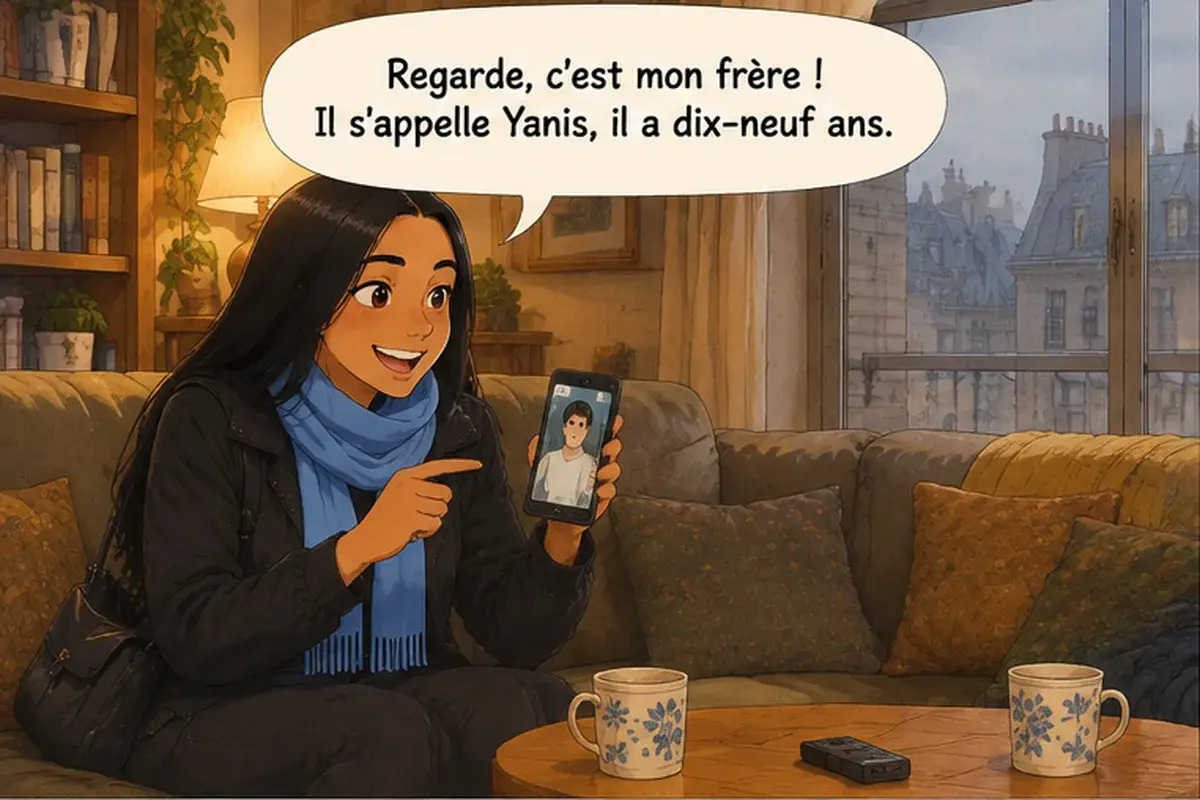
- Inès
Regarde, c'est mon frère ! Il s'appelle Yanis, il a dix-neuf ans.
Look, this is my brother! His name is Yanis, he's nineteen.
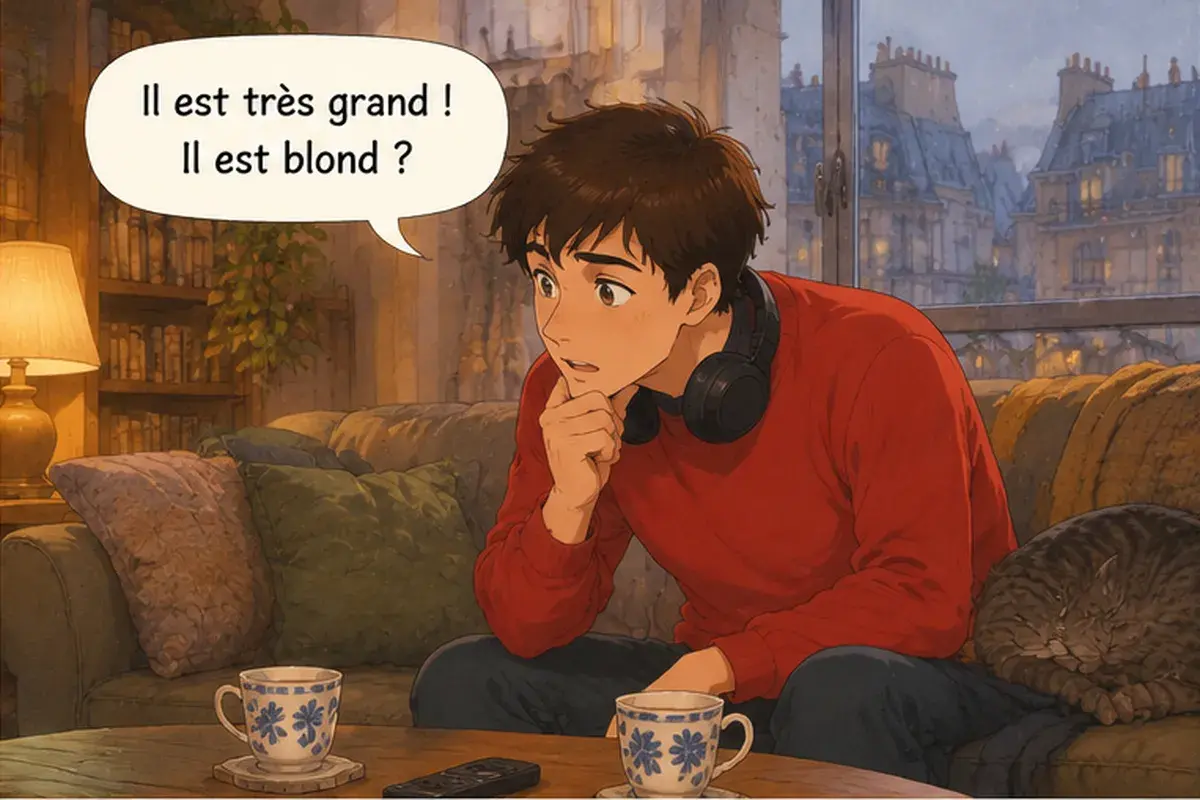
- Pacha
Il est très grand ! Il est blond ?
He's very tall! Is he blond?
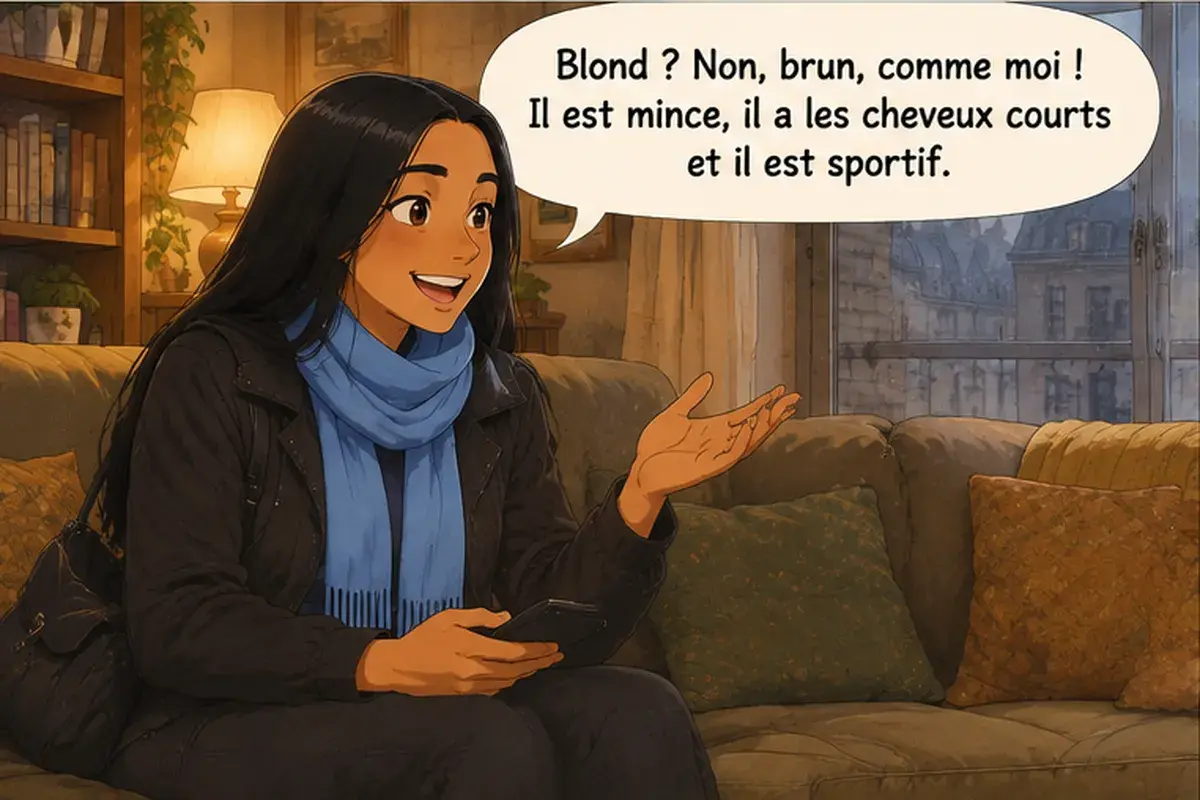
- Inès
Blond ? Non, brun, comme moi ! Il est mince, il a les cheveux courts et il est sportif.
Blond? No, dark-haired, like me! He's slim, he has short hair and he's sporty.
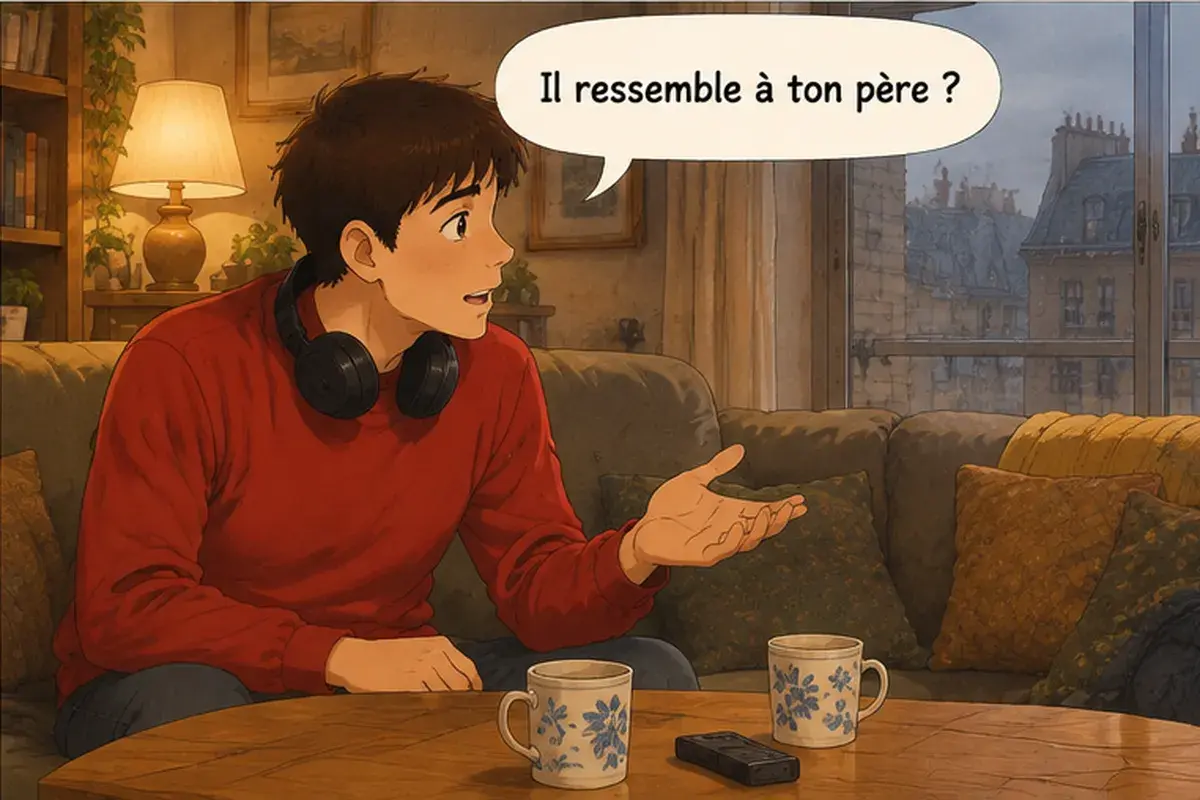
- Pacha
Il ressemble à ton père ?
Does he look like your father?
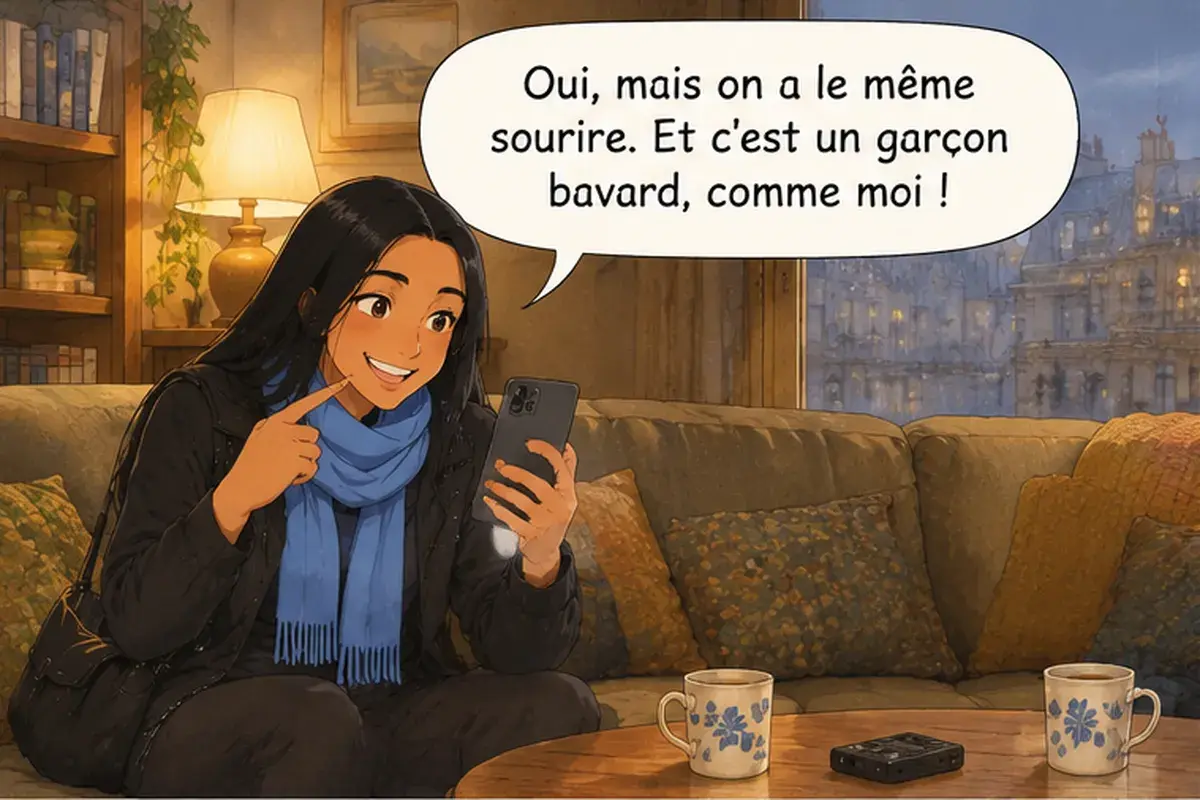
- Inès
Oui, mais on a le même sourire. Et c'est un garçon bavard, comme moi !
Yes, but we have the same smile. And he's a chatty guy, like me!
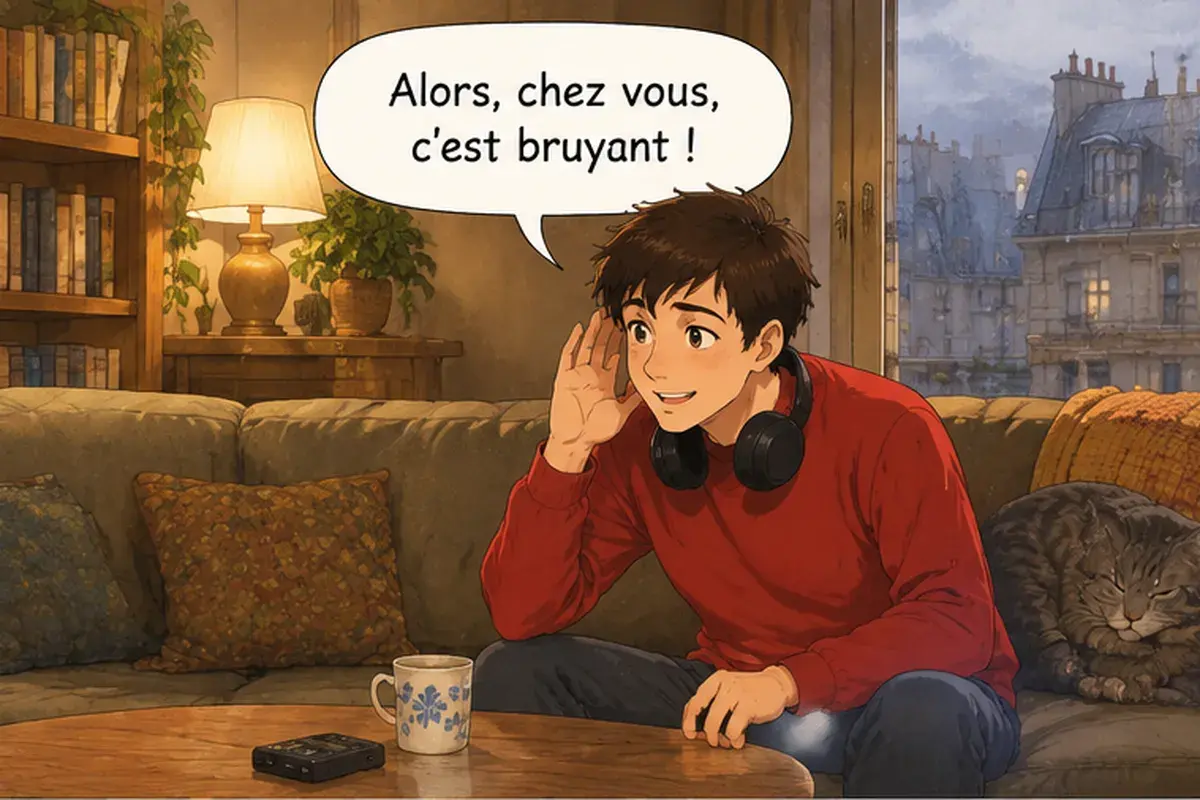
- Pacha
Alors, chez vous, c'est bruyant !
So it's noisy at your family's place!
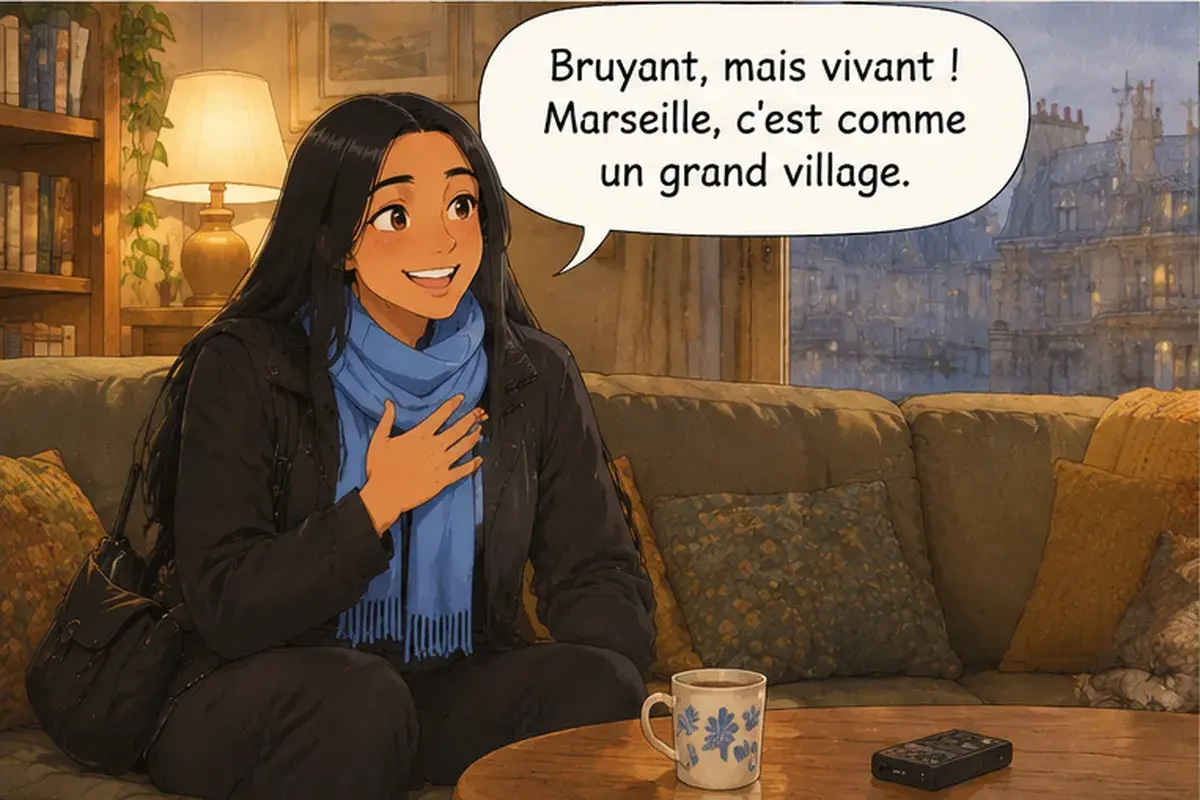
- Inès
Bruyant, mais vivant ! Marseille, c'est comme un grand village.
Noisy, but lively! Marseille is like a big village.
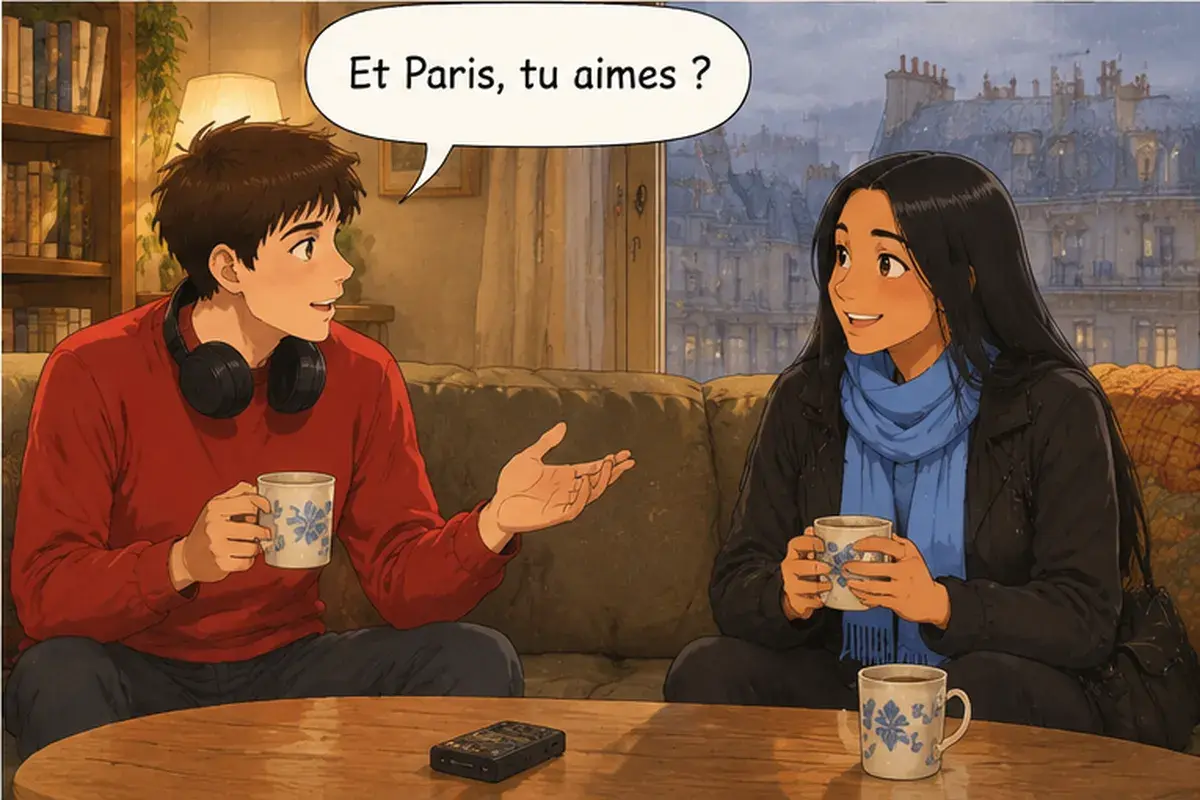
- Pacha
Et Paris, tu aimes ?
And Paris, do you like it?
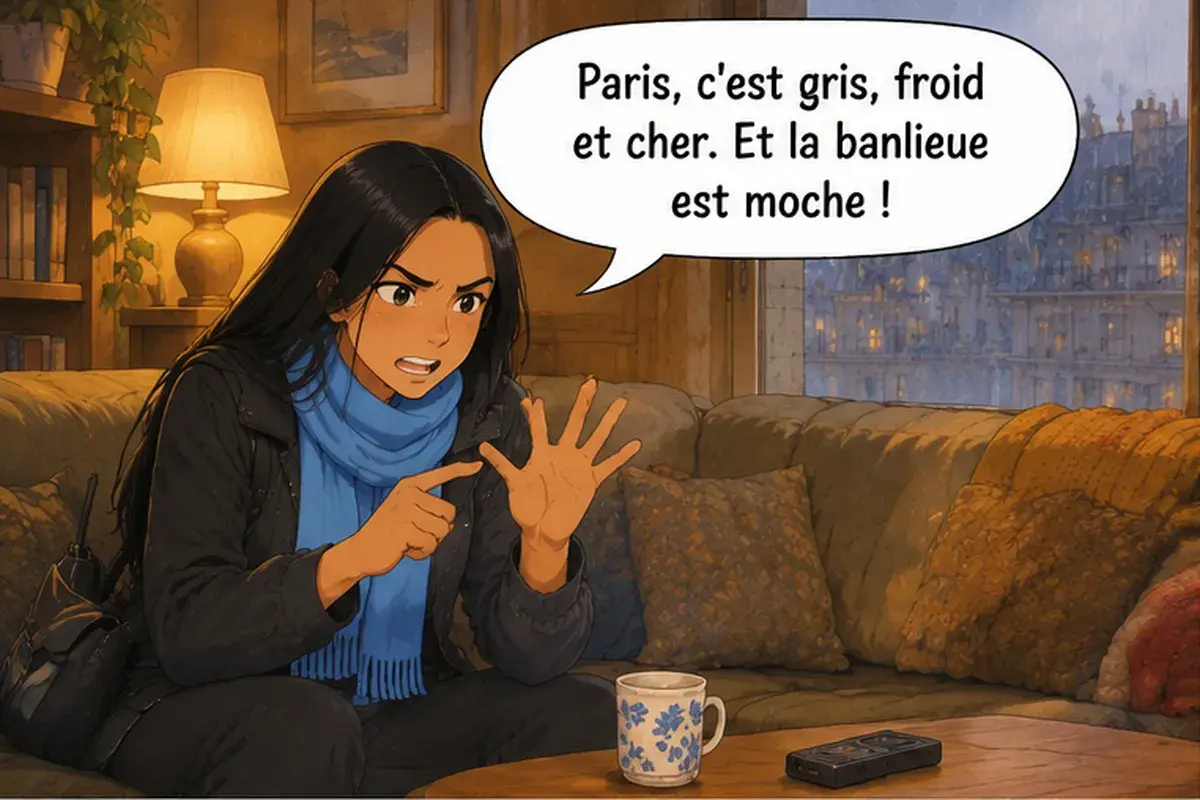
- Inès
Paris, c'est gris, froid et cher. Et la banlieue est moche !
Paris is gray, cold and expensive. And the suburbs are ugly!
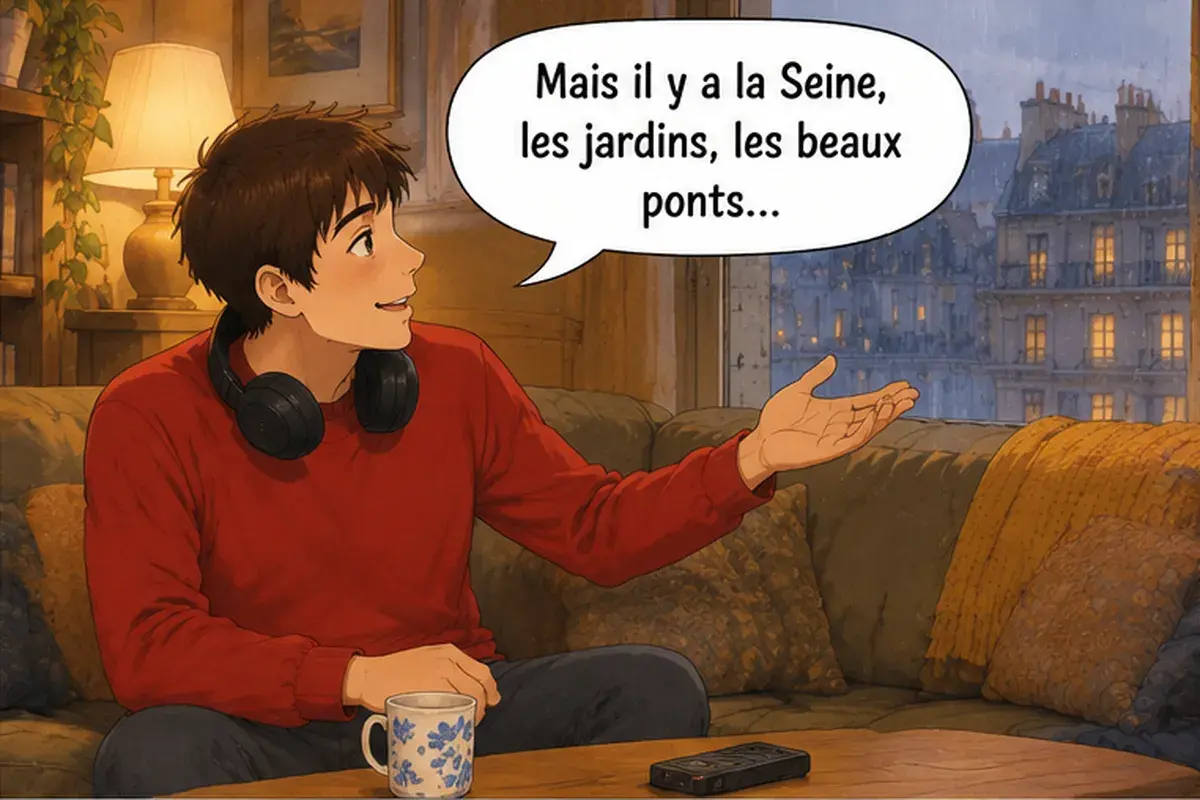
- Pacha
Mais il y a la Seine, les jardins, les beaux ponts…
But there's the Seine, the parks, the beautiful bridges…
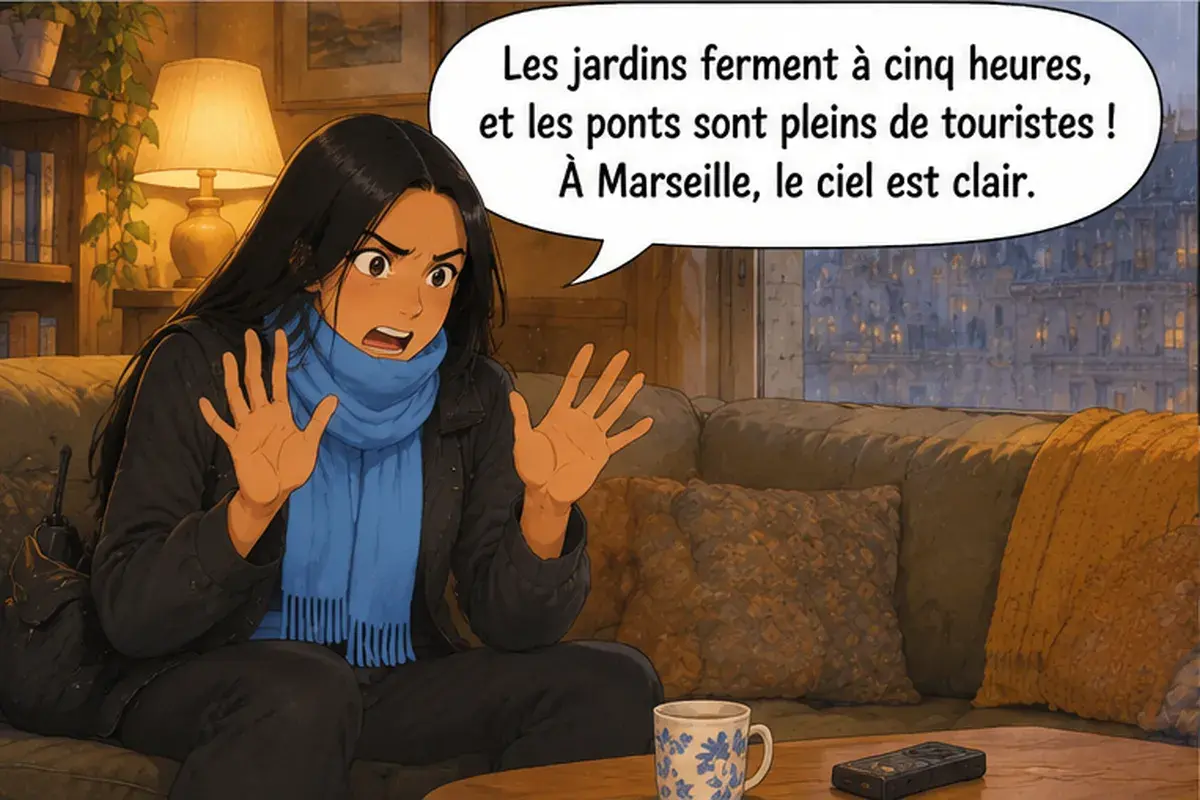
- Inès
Les jardins ferment à cinq heures, et les ponts sont pleins de touristes ! À Marseille, le ciel est clair.
The parks close at five, and the bridges are full of tourists! In Marseille, the sky is clear.
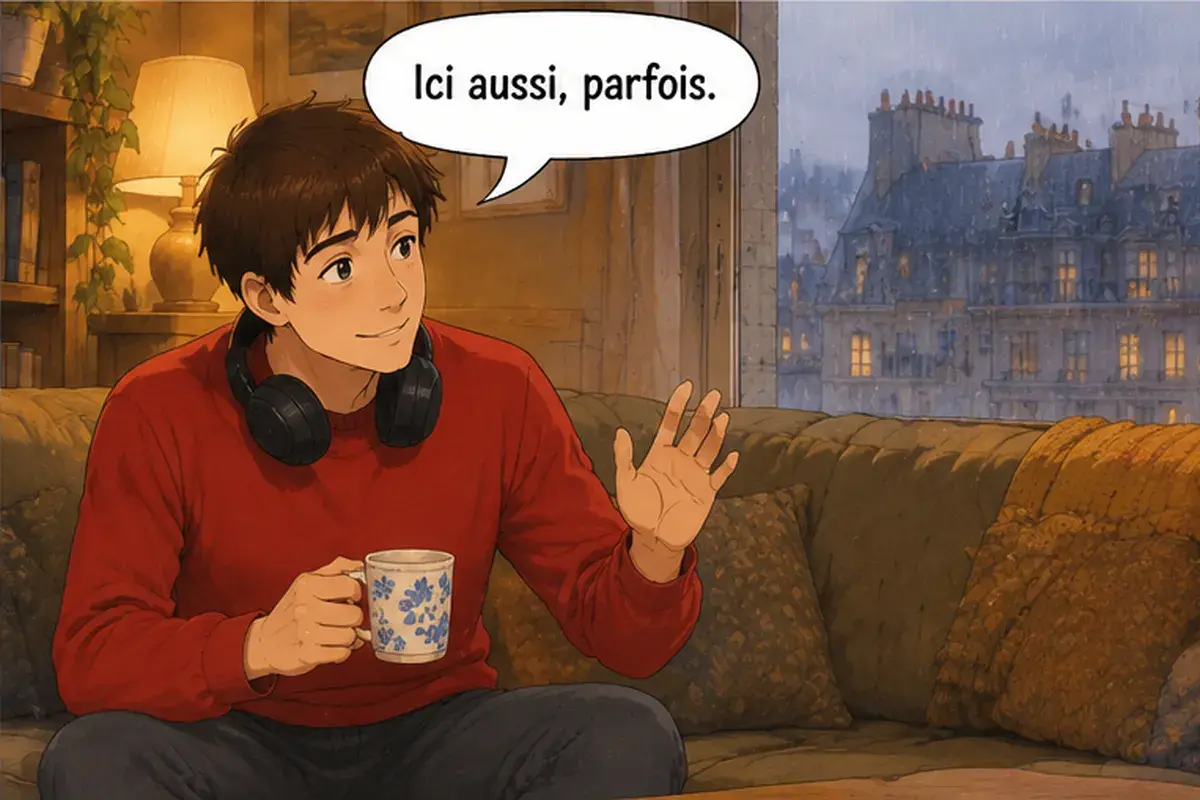
- Pacha
Ici aussi, parfois.
Here too, sometimes.
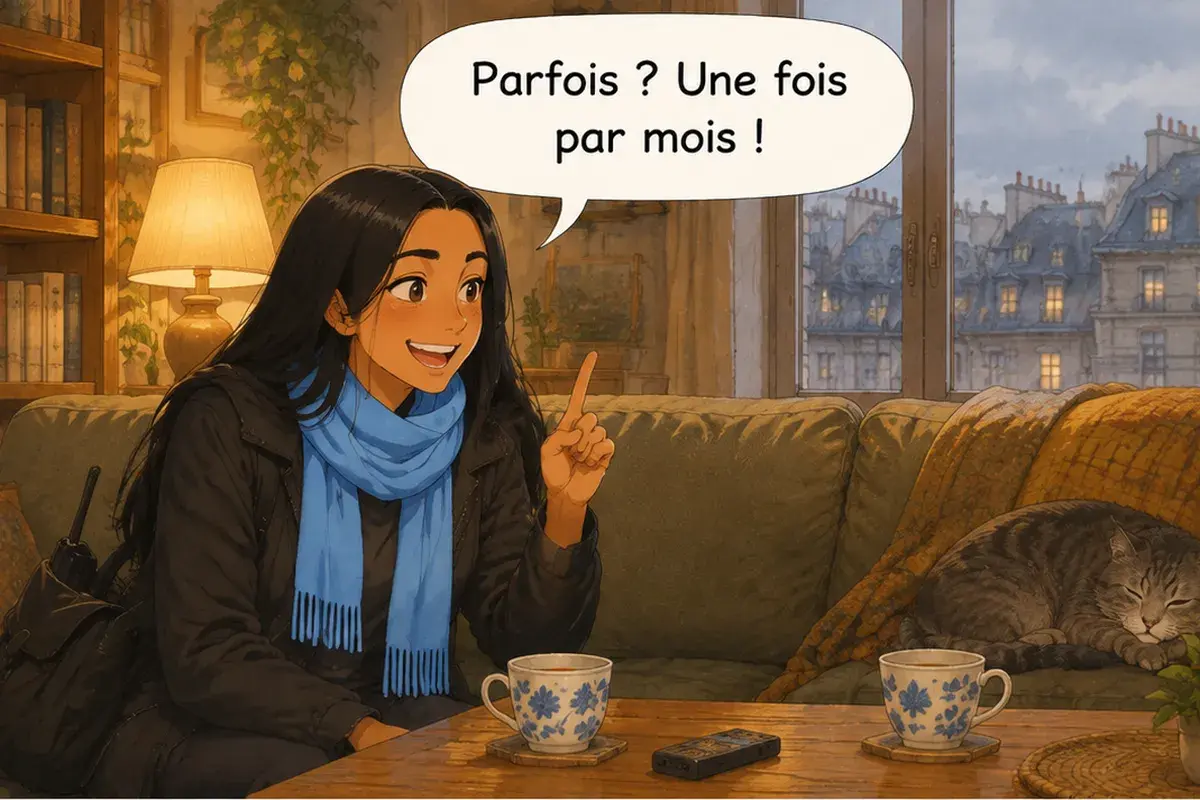
- Inès
Parfois ? Une fois par mois !
Sometimes? Once a month!
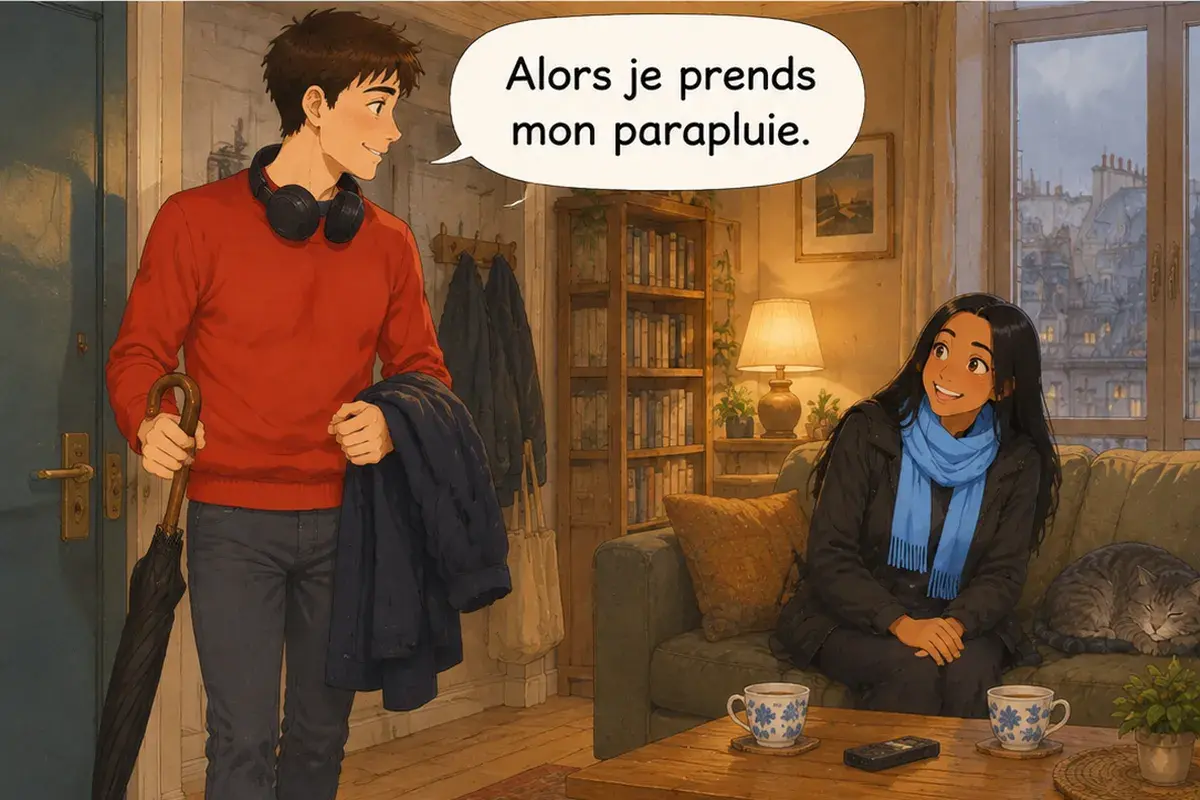
- Pacha
Alors je prends mon parapluie.
Then I'm taking my umbrella.
Grammar for this text
- Il est très grand ! Il est blond ? — after il est comes an adjective with no article: grand, blond. The question is asked with the voice alone; the word order doesn't change. About a girl it would be elle est blonde.
- Il a les cheveux courts — "he has short hair". Hair is described with avoir (to have): a is the il form. cheveux is always plural, with les in front, and the description comes after it.
- Il ressemble à ton père ? — ressemble is the il form of ressembler (to look like). To look like someone: à + the person: ressembler à ton père.
- on a le même sourire — in conversation on means "we", and the verb takes the il form: a. même goes before the noun: le même sourire — the same smile.
- Et c'est un garçon bavard, comme moi ! — c'est + un + noun names a person, and the description comes after. English says "he's a chatty guy", but with an article French needs c'est, not il est.
- Alors, chez vous, c'est bruyant ! — for a situation in general, French says c'est + adjective; the adjective doesn't change. chez vous — at your place; here vous is Inès and her family.
- les beaux ponts — beau is short, so it goes before the noun; in the plural it's beaux, with a silent x.
Words and grammar of the unit: Describe people and places.
Learn the words from the texts with flashcards
In the app, you can tap any word in a text to see its translation, forms and examples, and new words stick with flashcards. 15 minutes a day.
Start for freeEverything is open for free. No card needed to sign up.