
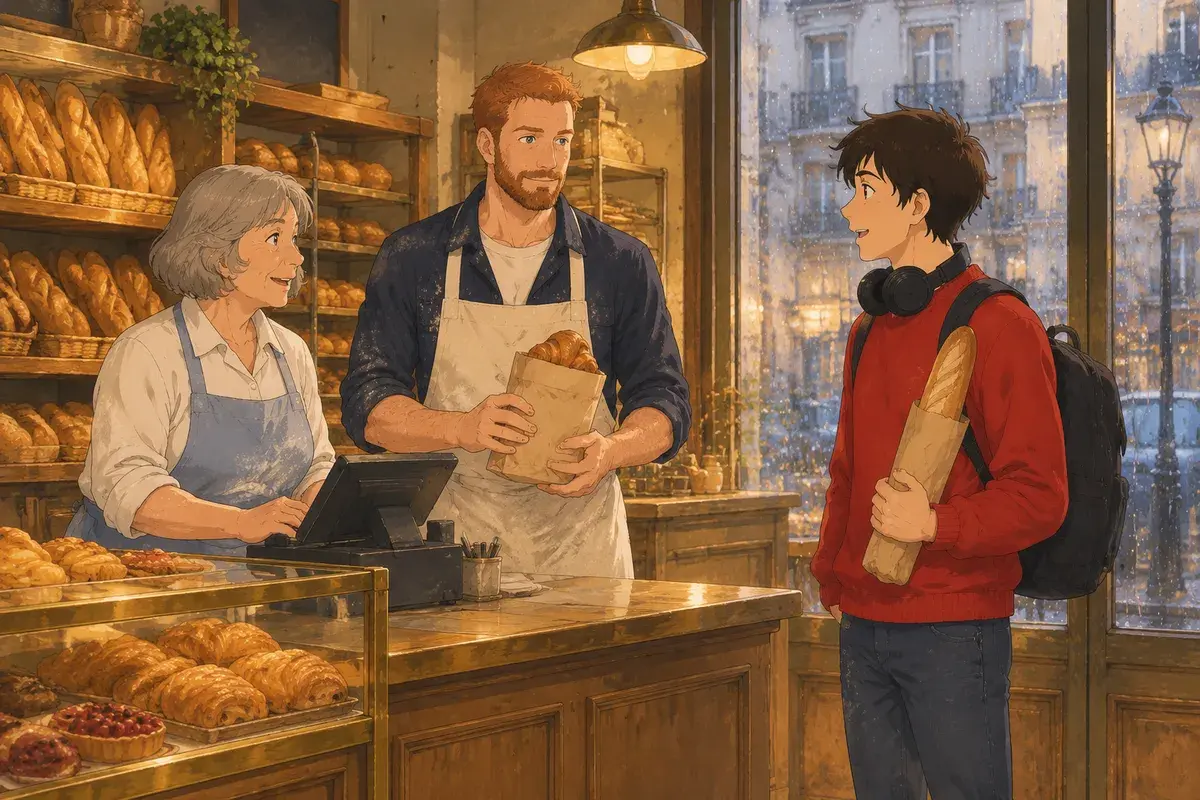
French dialogue with translation · A1 · 14 lines
Je voudrais une baguette, s'il vous plaît I'd like a baguette, please
Comic · 14 panels
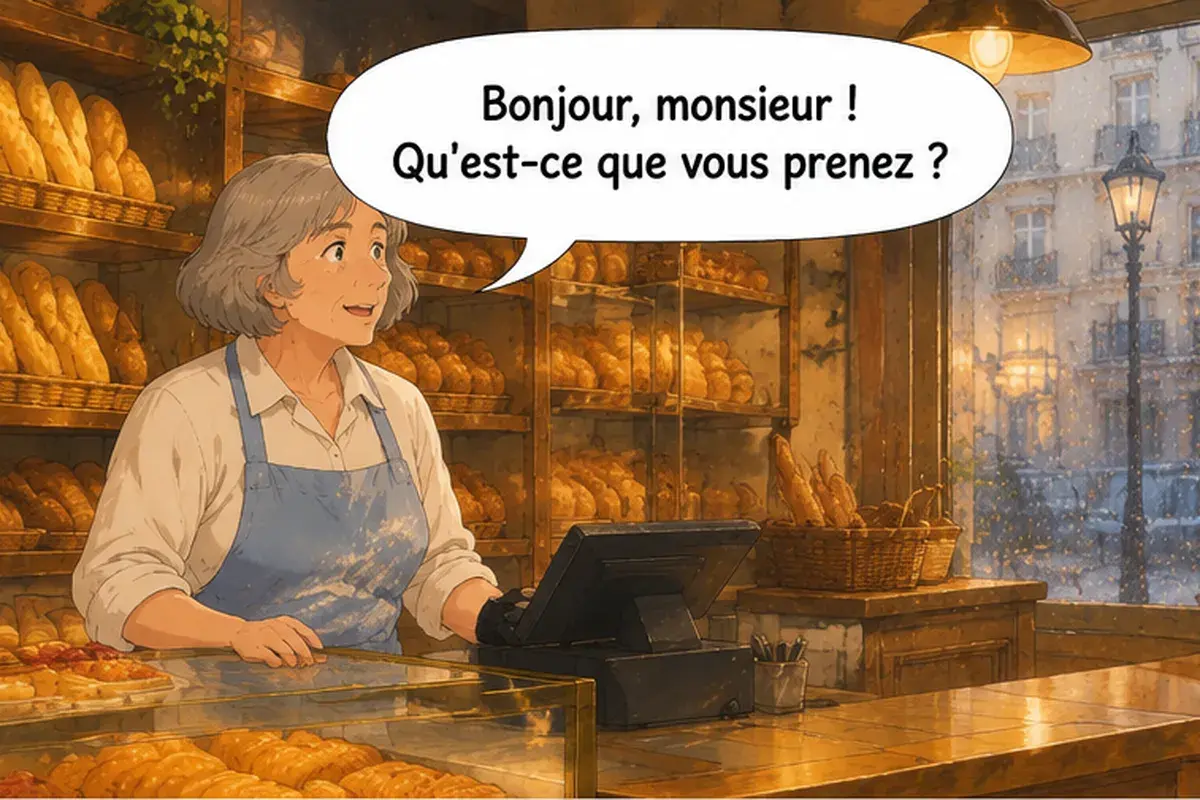
- Madame Lemaire
Bonjour, monsieur ! Qu'est-ce que vous prenez ?
Hello, sir! What will you have? (formal)
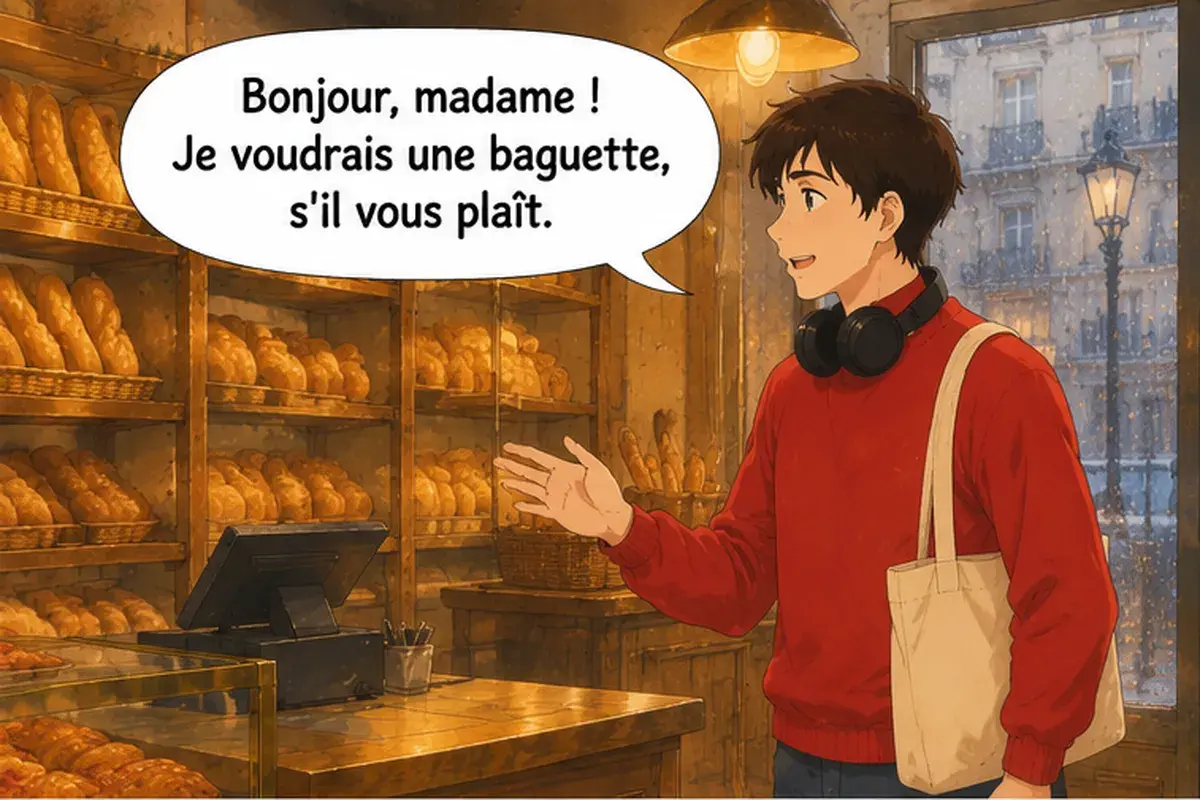
- Pacha
Bonjour, madame ! Je voudrais une baguette, s'il vous plaît.
Hello, ma'am! I'd like a baguette, please (formal).
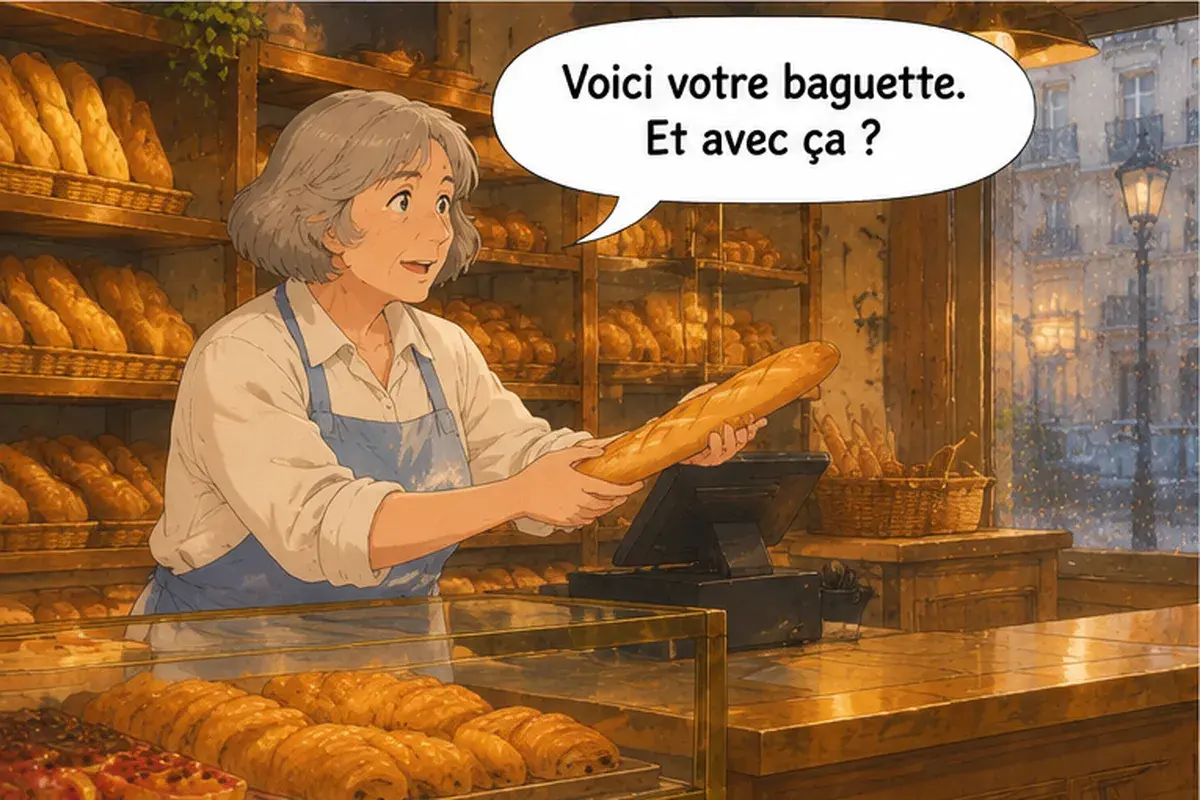
- Madame Lemaire
Voici votre baguette. Et avec ça ?
Here's your baguette. Anything else? (formal)
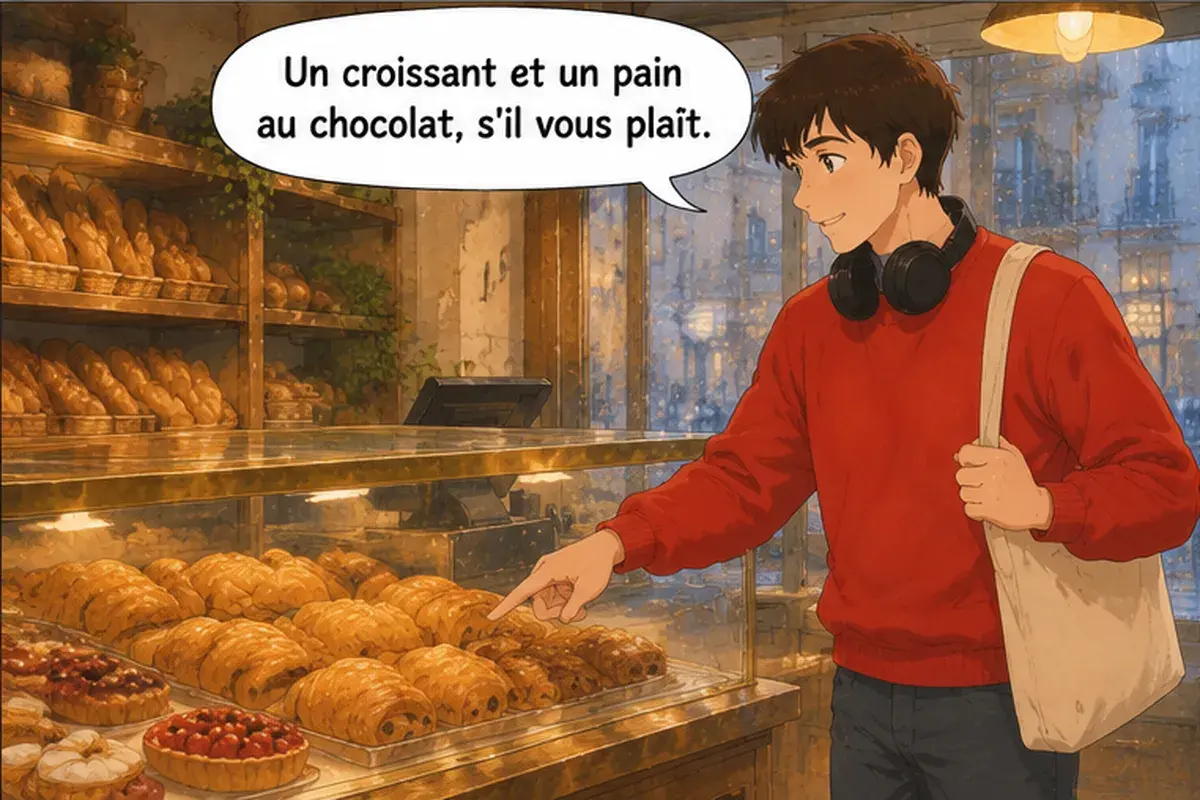
- Pacha
Un croissant et un pain au chocolat, s'il vous plaît.
A croissant and a pain au chocolat, please (formal).
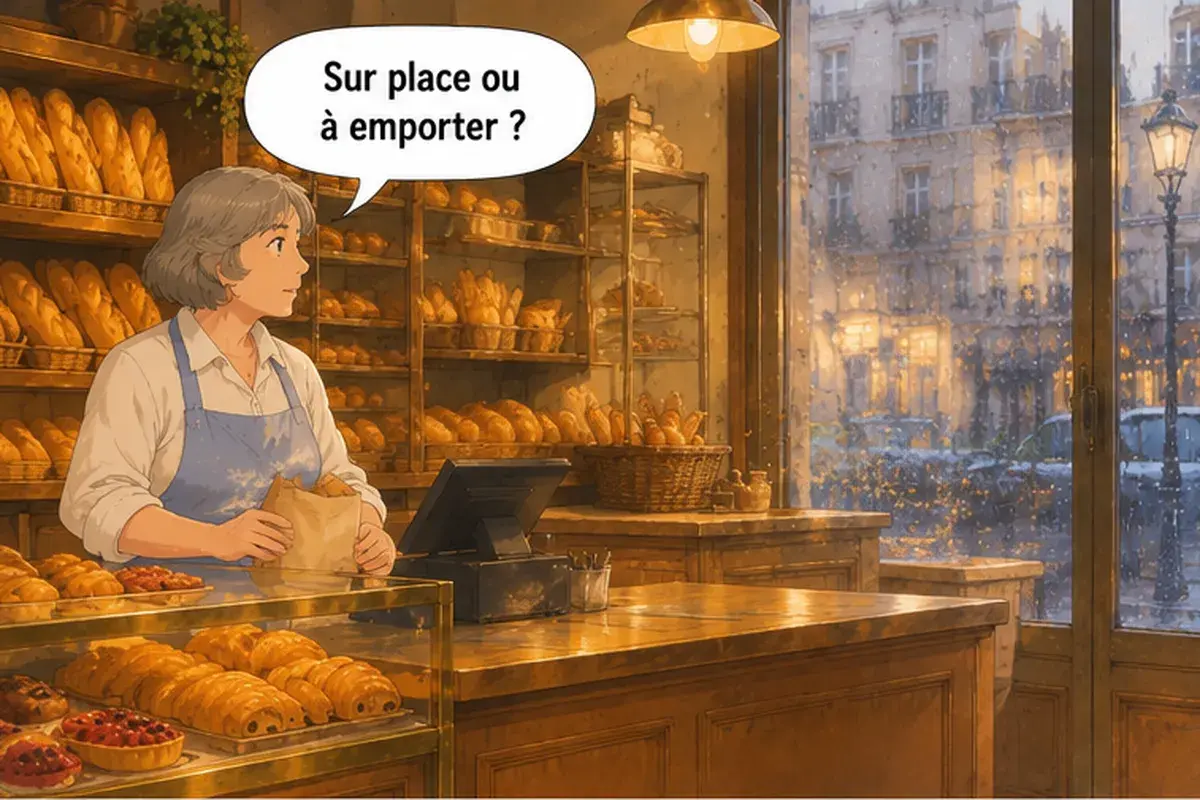
- Madame Lemaire
Sur place ou à emporter ?
For here or to go?
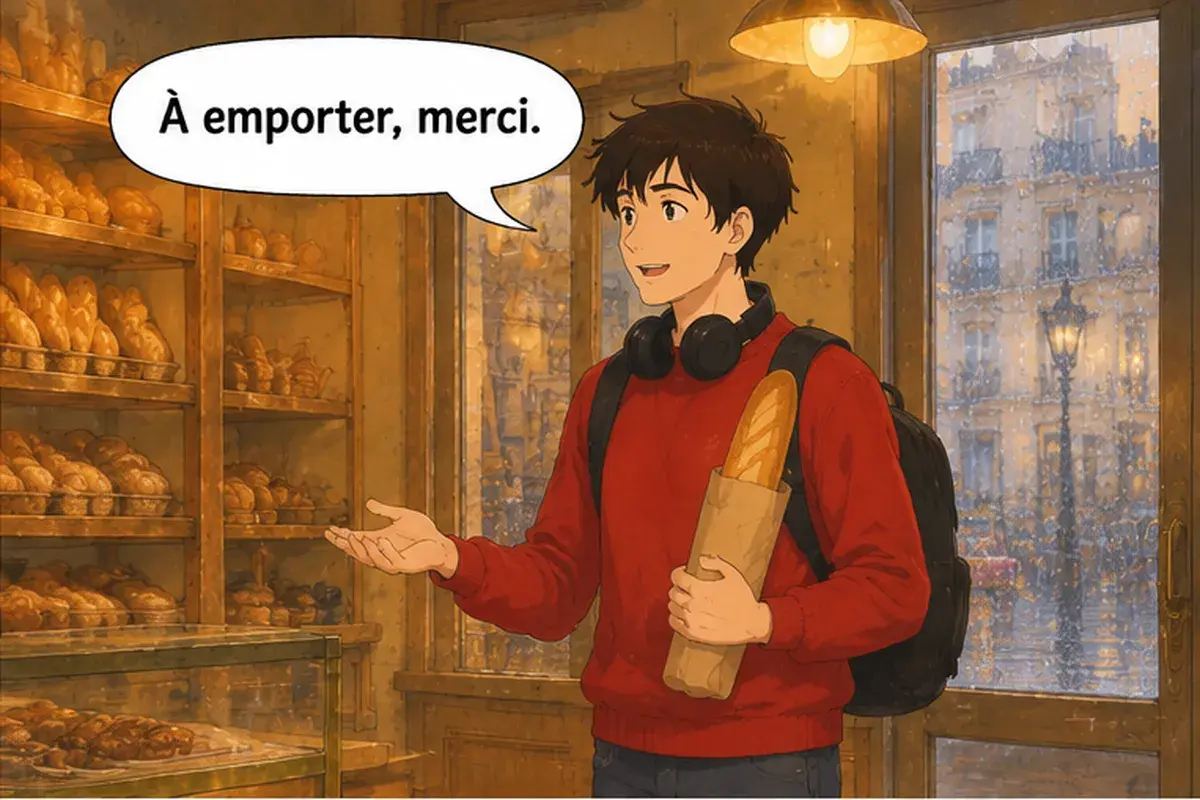
- Pacha
À emporter, merci.
To go, thanks.
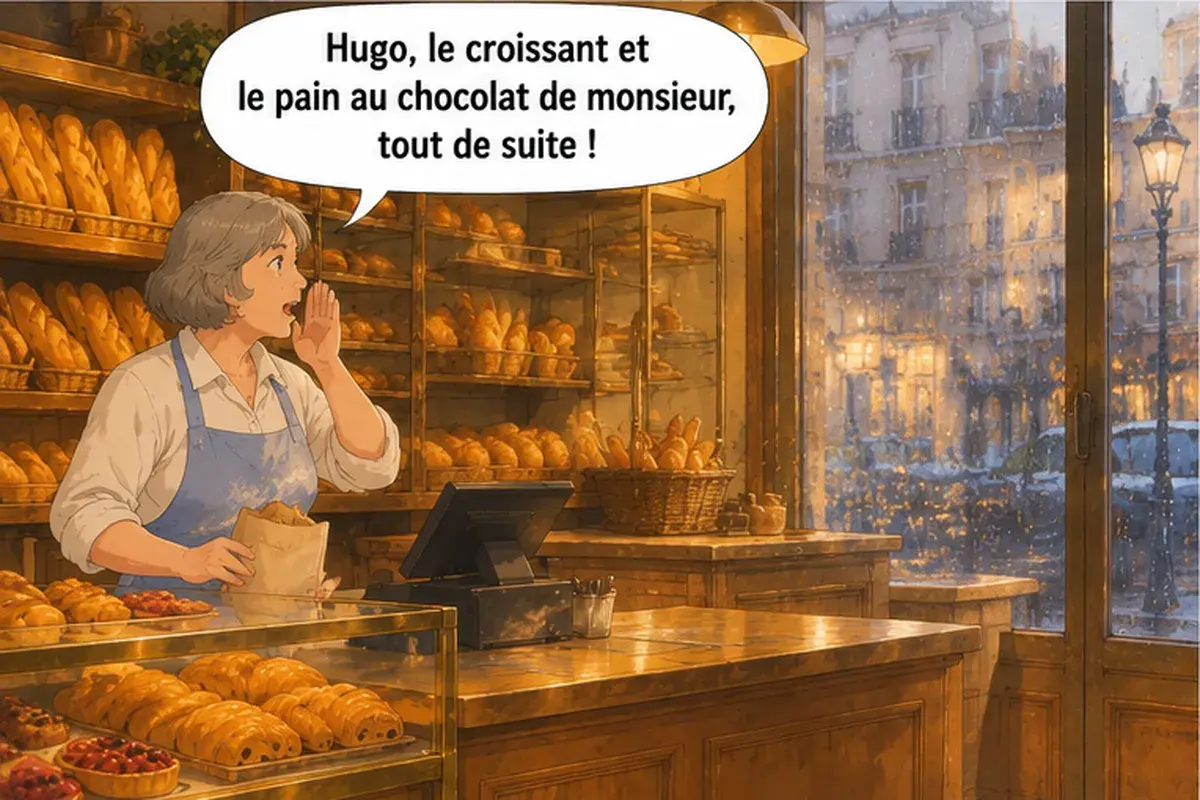
- Madame Lemaire
Hugo, le croissant et le pain au chocolat de monsieur, tout de suite !
Hugo, the gentleman's croissant and pain au chocolat, right away!
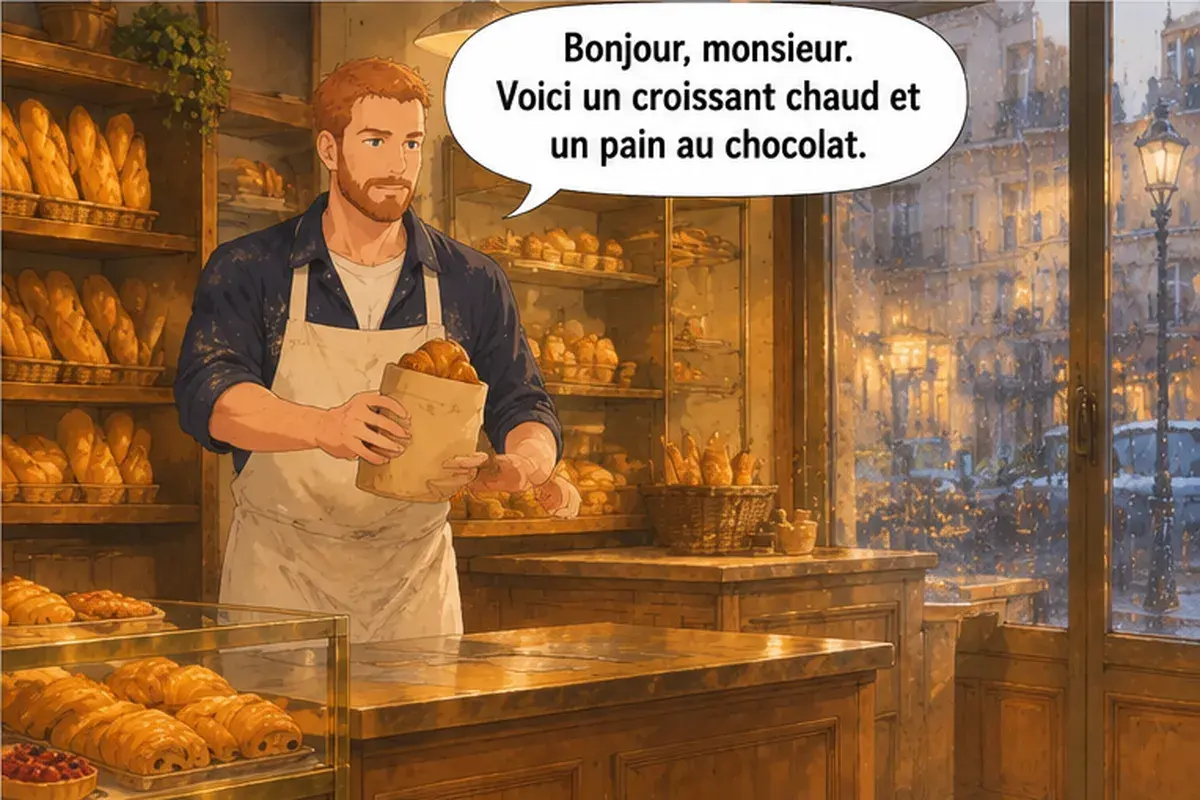
- Hugo
Bonjour, monsieur. Voici un croissant chaud et un pain au chocolat.
Hello, sir. Here's a warm croissant and a pain au chocolat.
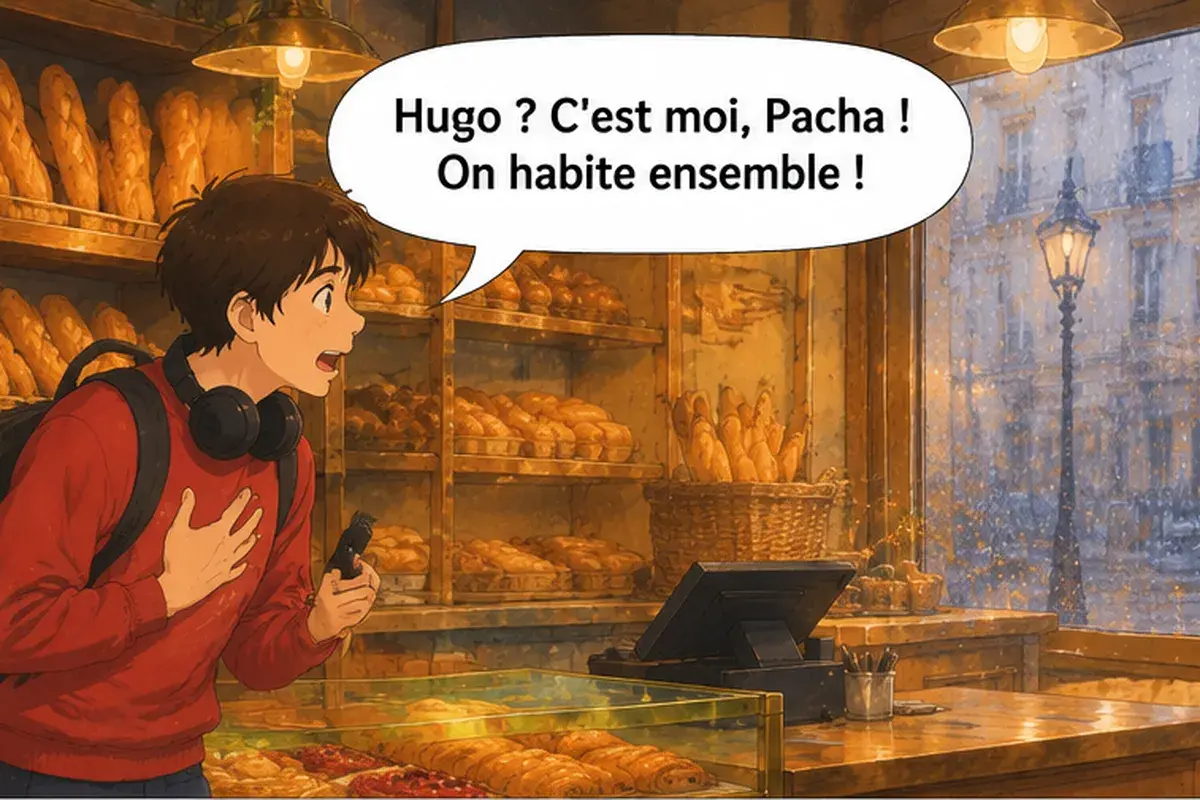
- Pacha
Hugo ? C'est moi, Pacha ! On habite ensemble !
Hugo? It's me, Pacha! We live together!
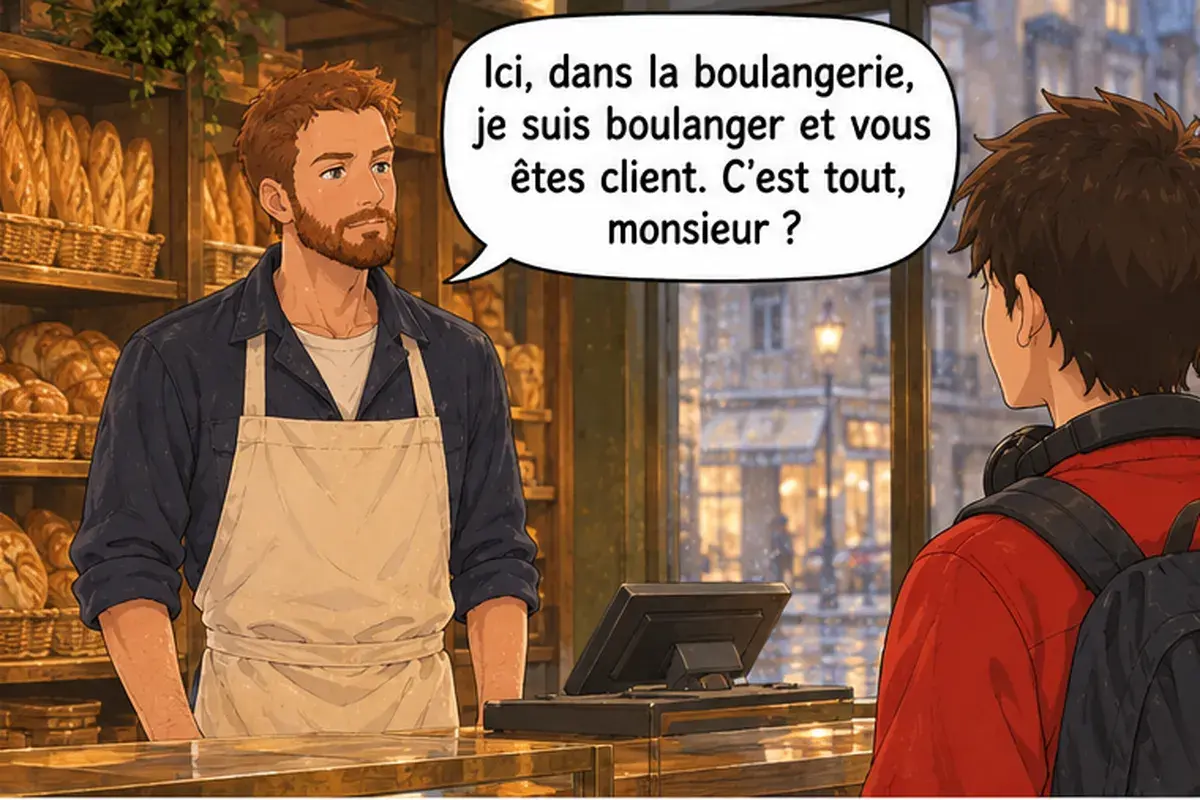
- Hugo
Ici, dans la boulangerie, je suis boulanger et vous êtes client. C'est tout, monsieur ?
Here, in the bakery, I'm a baker and you're a customer. Is that all, sir? (formal)
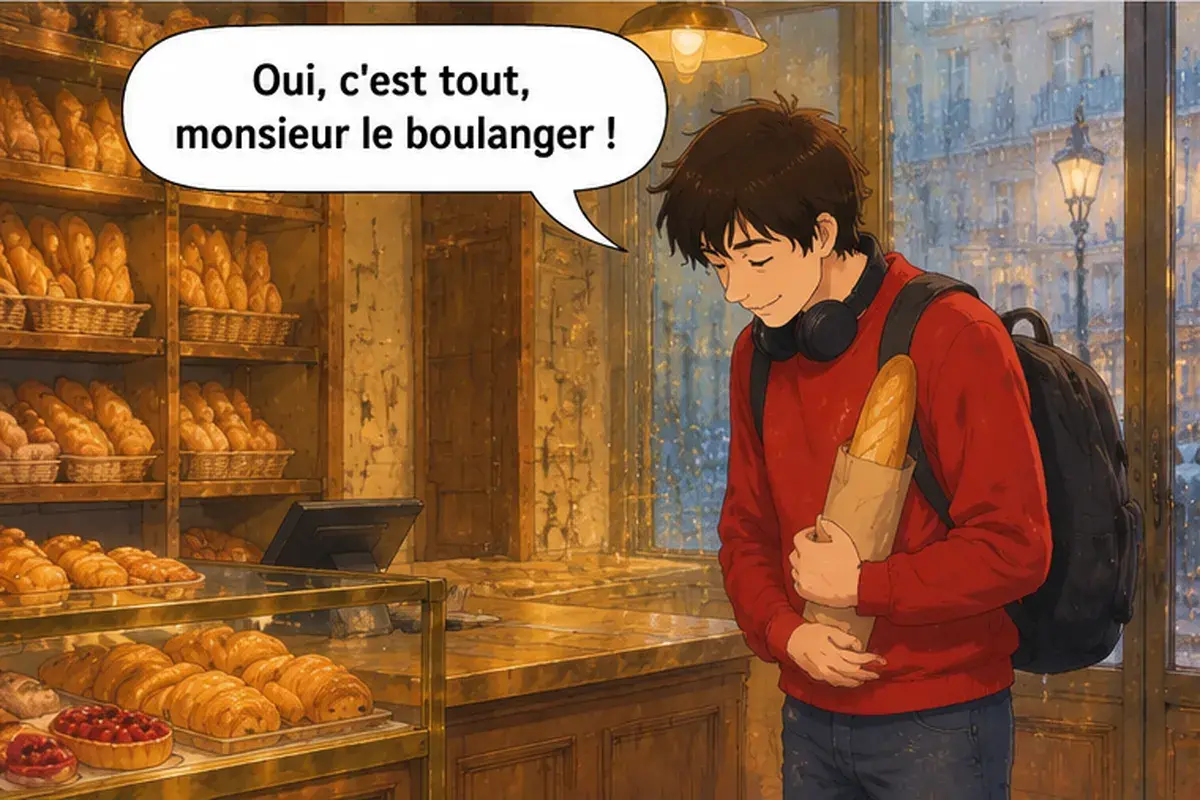
- Pacha
Oui, c'est tout, monsieur le boulanger !
Yes, that's all, Mister Baker!
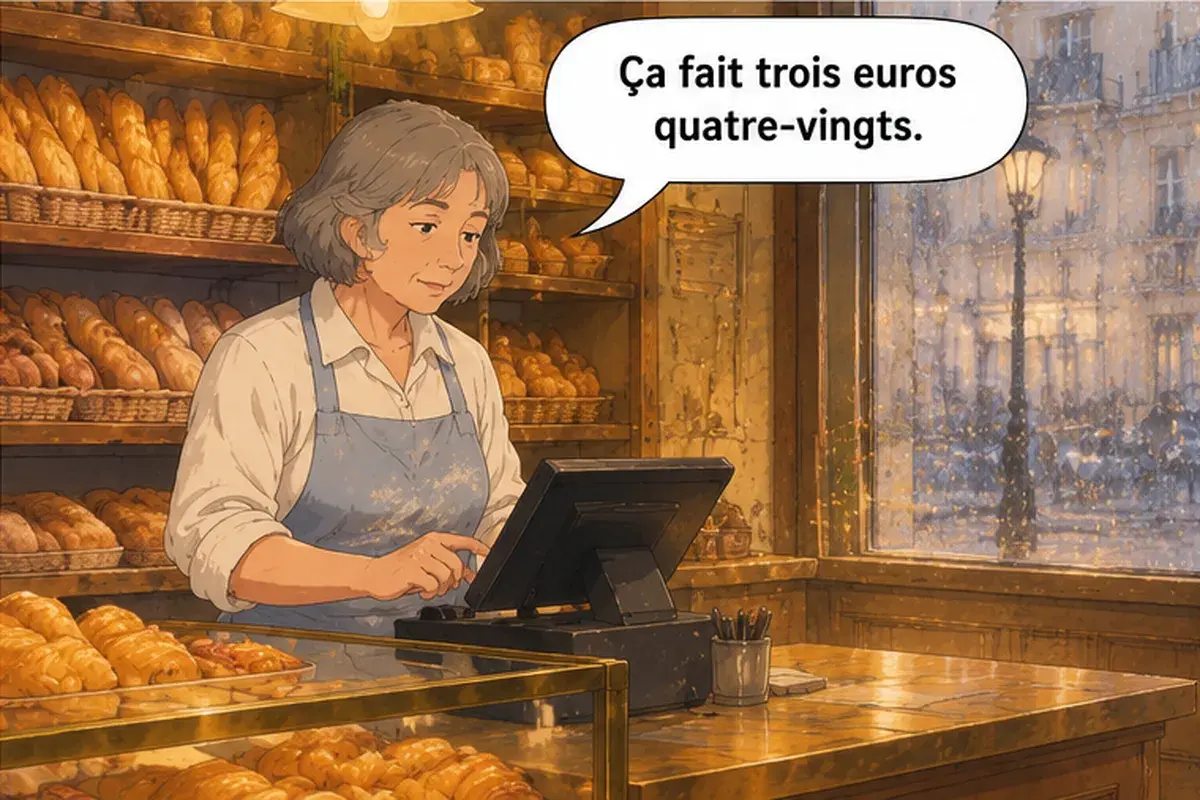
- Madame Lemaire
Ça fait trois euros quatre-vingts.
That'll be three euros eighty.
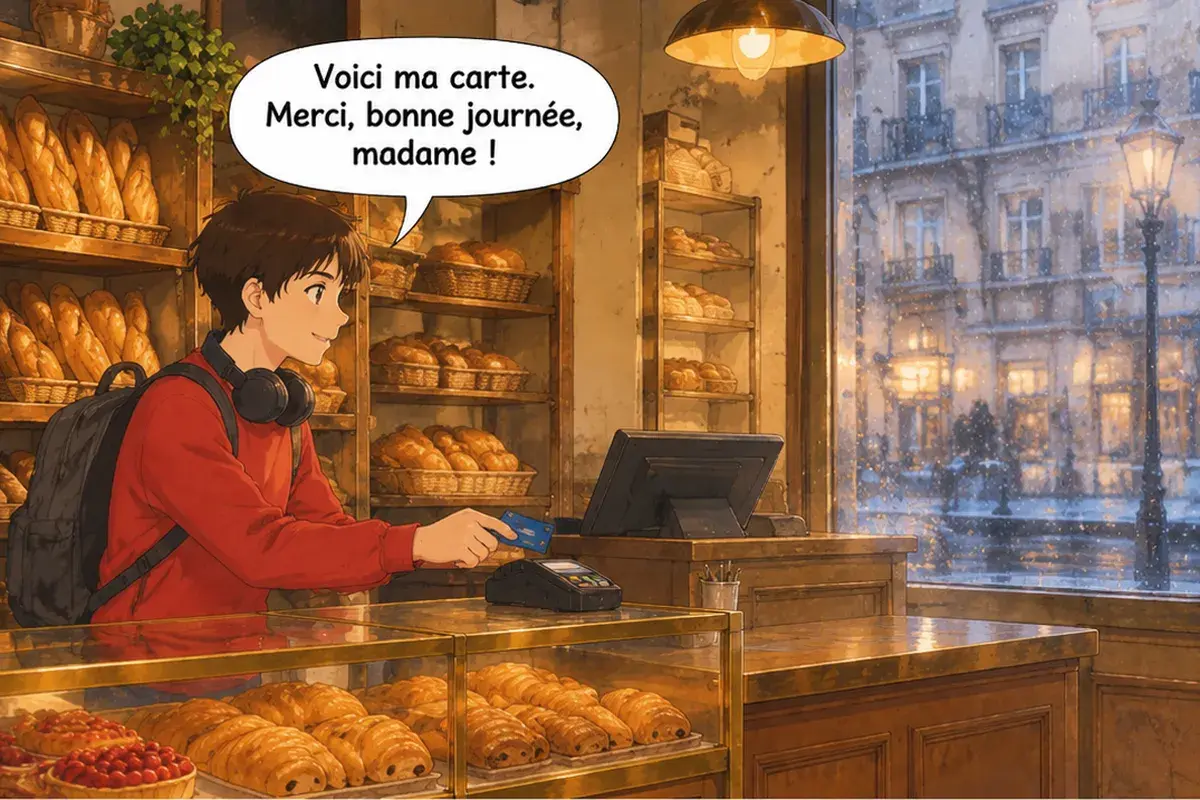
- Pacha
Voici ma carte. Merci, bonne journée, madame !
Here's my card. Thank you, have a nice day, ma'am!
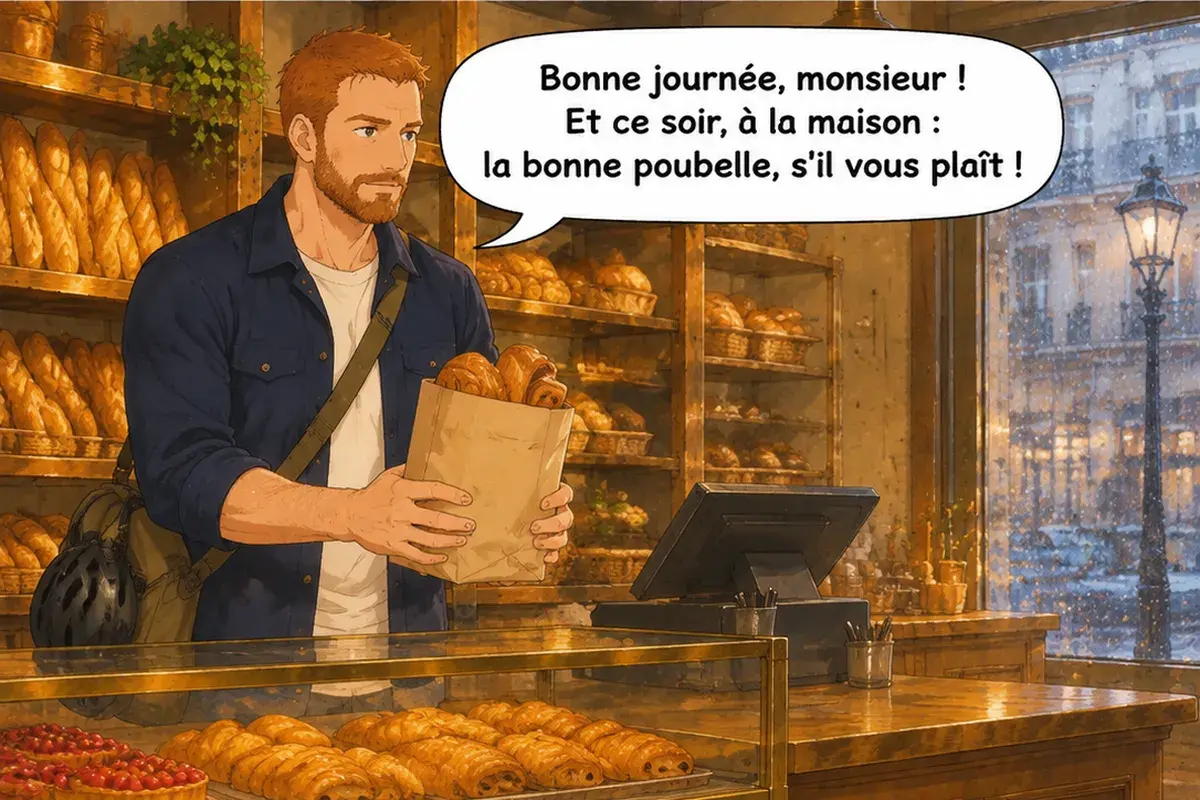
- Hugo
Bonne journée, monsieur ! Et ce soir, à la maison : la bonne poubelle, s'il vous plaît !
Have a nice day, sir! And tonight, at home: the right trash can, please! (formal)
Grammar for this text
- Je voudrais une baguette: voudrais means "would like". It's the polite form of vouloir (to want). Asking with je veux (I want) sounds blunt, like "give me!". Just learn this form as a whole; you'll see how it's built at level B1.
- Qu'est-ce que vous prenez ? means "What will you have?". Qu'est-ce que is "what" in a question, and prenez is the vous form of prendre (to take). At a bakery or a café, prendre means "to take, to order".
- Sur place ou à emporter ? — "For here or to go?". À emporter literally means "to carry away".
- le pain au chocolat de monsieur: the seller politely talks about the customer in the third person, "the gentleman's pain au chocolat". Au = à + le: pain au chocolat is "bread with chocolate".
- Ça fait trois euros quatre-vingts means "that'll be three euros eighty". Fait is a form of faire (to do, to make), but here it's a set phrase. Quatre-vingts is 80 (see the grammar block on numbers 70–100). The word centimes is usually left out of prices.
- bonne journée means "have a nice day": people say it when they leave a shop or a café, all day until the evening (in the evening it's bonne soirée).
- Et ce soir, à la maison : la bonne poubelle, s'il vous plaît ! is a callback to unit 4: with a straight face, Hugo "politely asks" for what he keeps saying at home. Bonne is the feminine form of bon because poubelle (trash can) is feminine: "the right trash can". À la maison means "at home".
Words and grammar of the unit: Order breakfast and ask for the check.
Learn the words from the texts with flashcards
In the app, you can tap any word in a text to see its translation, forms and examples, and new words stick with flashcards. 15 minutes a day.
Start for freeEverything is open for free. No card needed to sign up.