
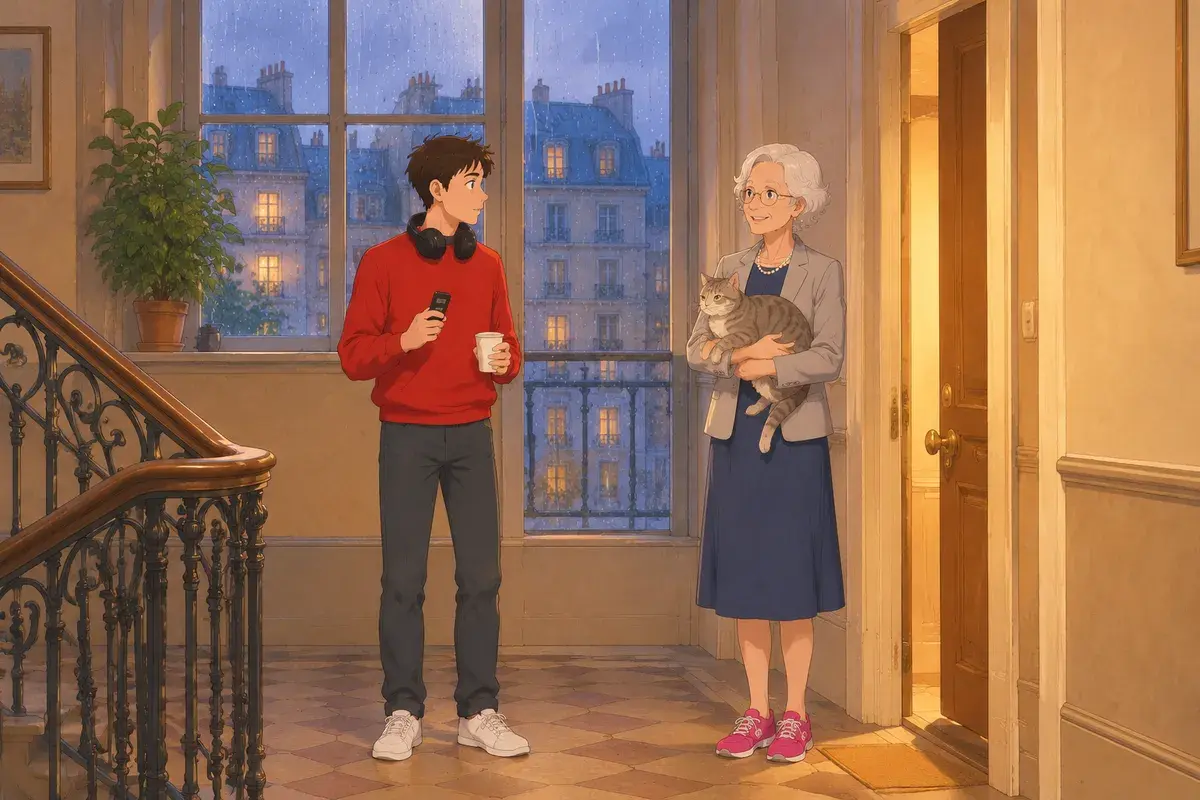
French dialogue with translation · A1 · 12 lines
Vous êtes le nouveau voisin ? Are you the new neighbor?
Comic · 11 panels
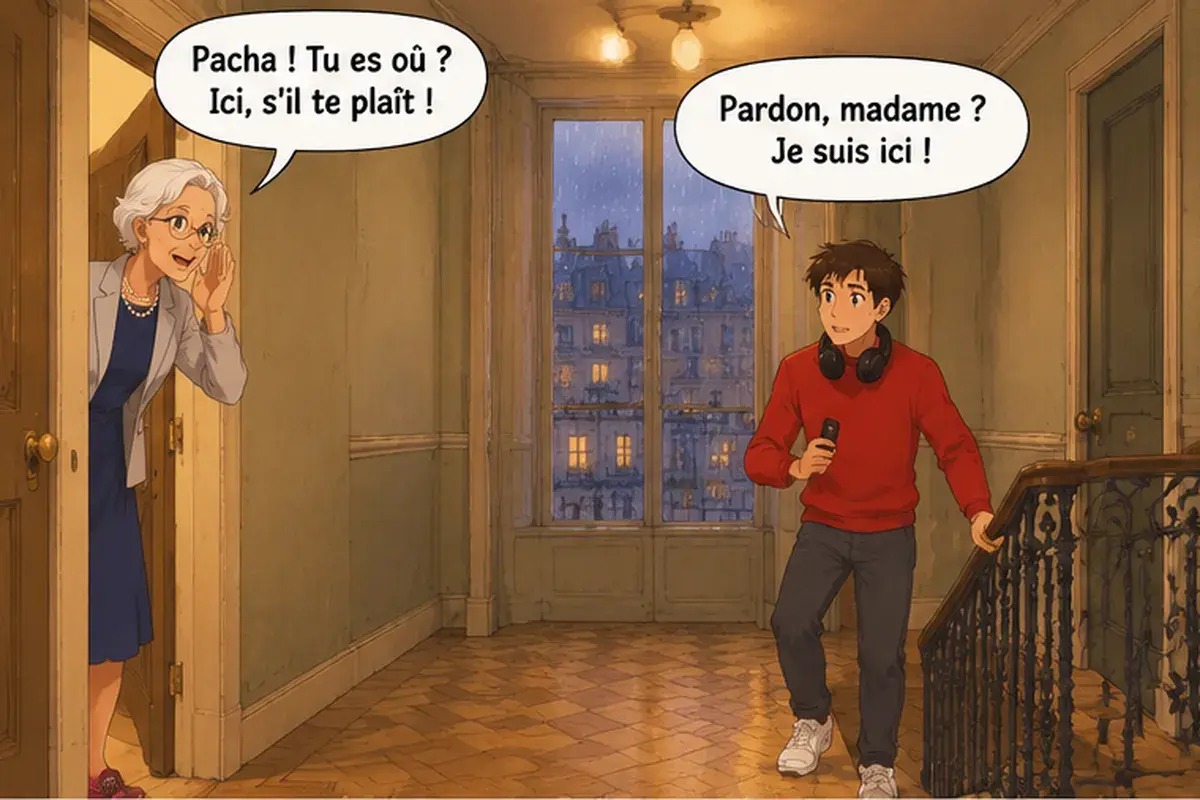
- Madame Morel
Pacha ! Tu es où ? Ici, s'il te plaît !
Pacha! Where are you? Come here, please!
- Pacha
Pardon, madame ? Je suis ici !
Excuse me, ma'am? I'm here!
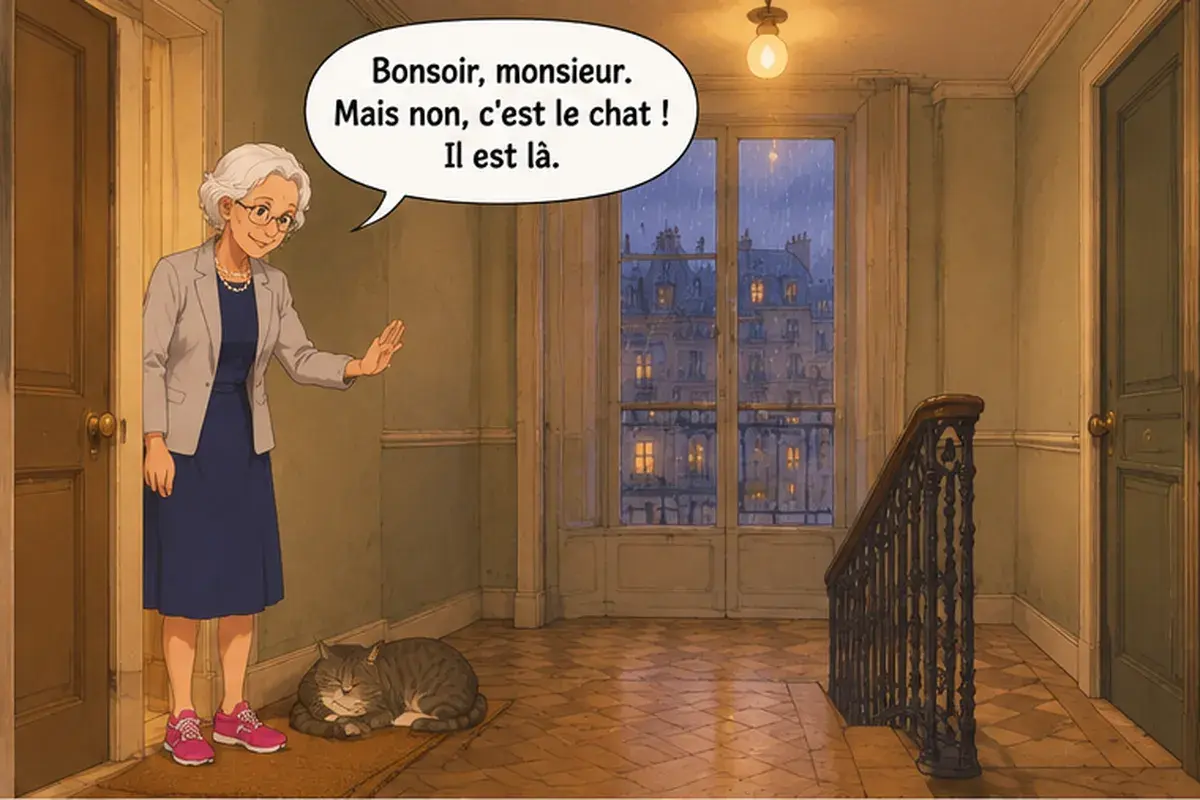
- Madame Morel
Bonsoir, monsieur. Mais non, c'est le chat ! Il est là.
Good evening, sir. No, no, it's the cat! He's there.
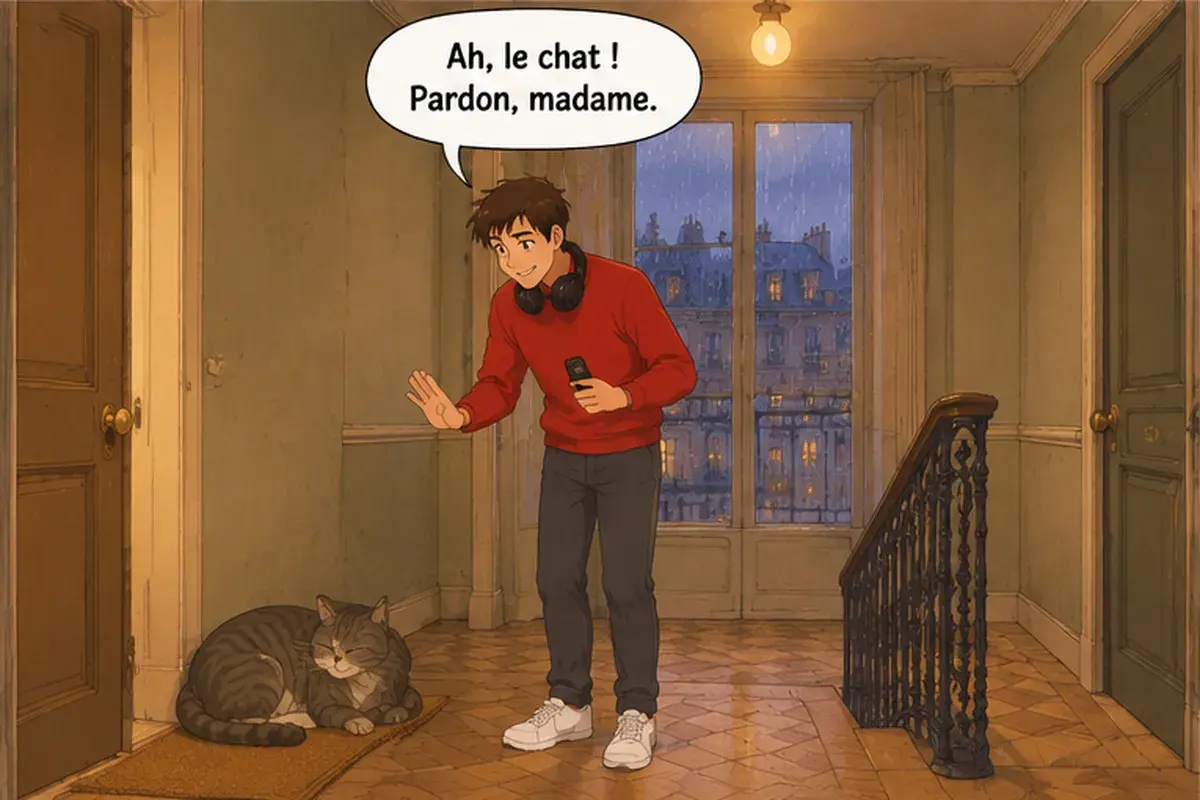
- Pacha
Ah, le chat ! Pardon, madame.
Ah, the cat! Sorry, ma'am.
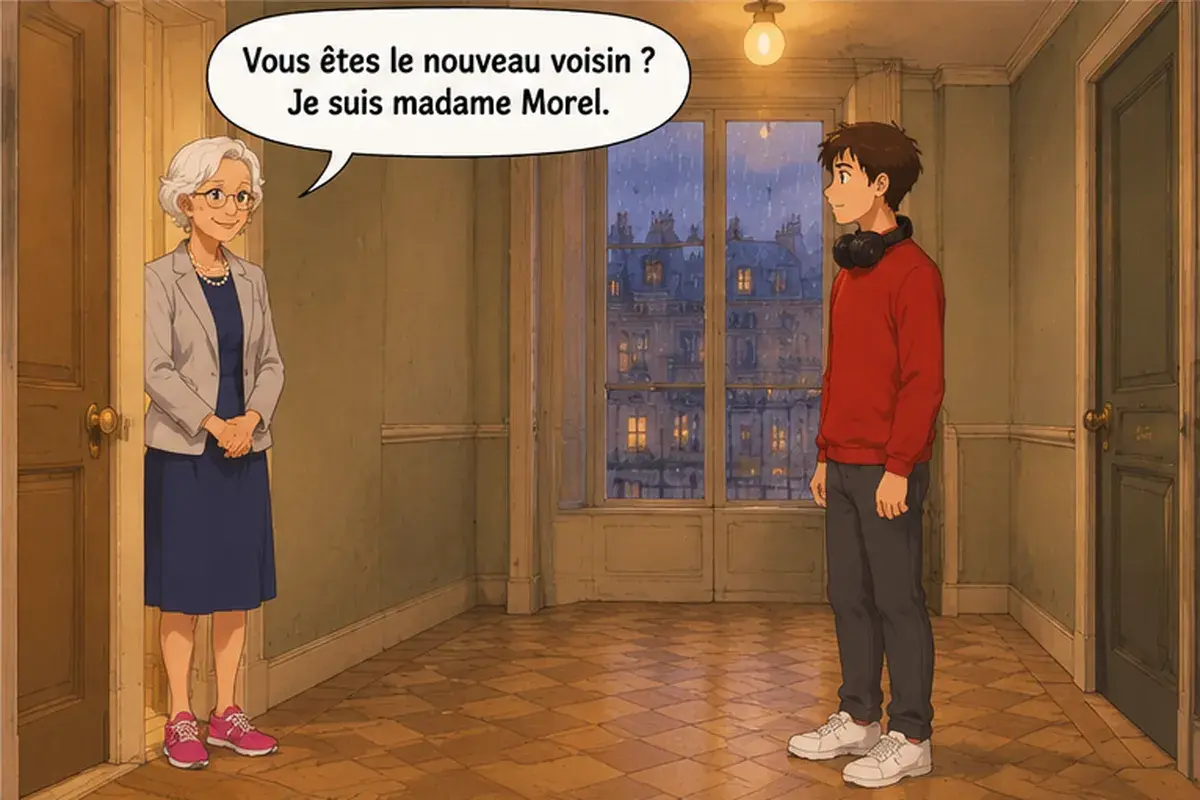
- Madame Morel
Vous êtes le nouveau voisin ? Je suis madame Morel.
Are you the new neighbor? I'm Madame Morel. (to a man, formal)
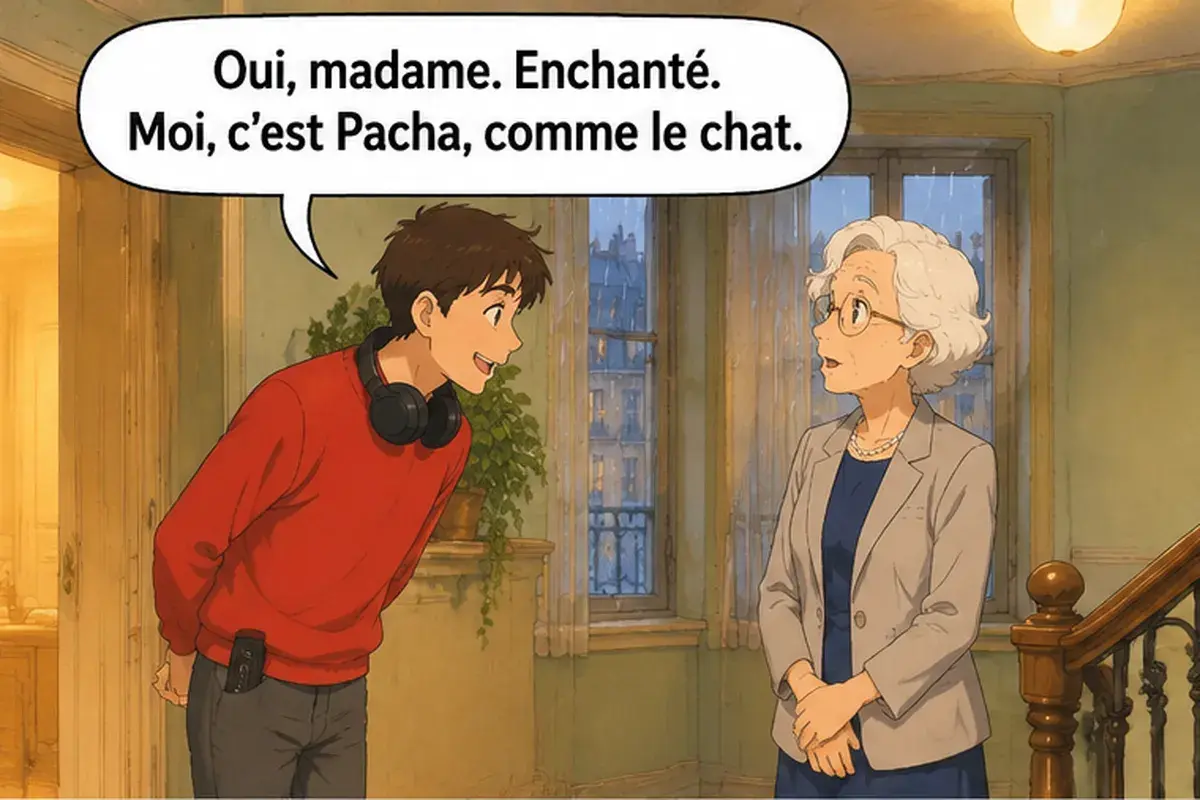
- Pacha
Oui, madame. Enchanté. Moi, c'est Pacha, comme le chat.
Yes, ma'am. Nice to meet you. I'm Pacha, like the cat. (man speaking)
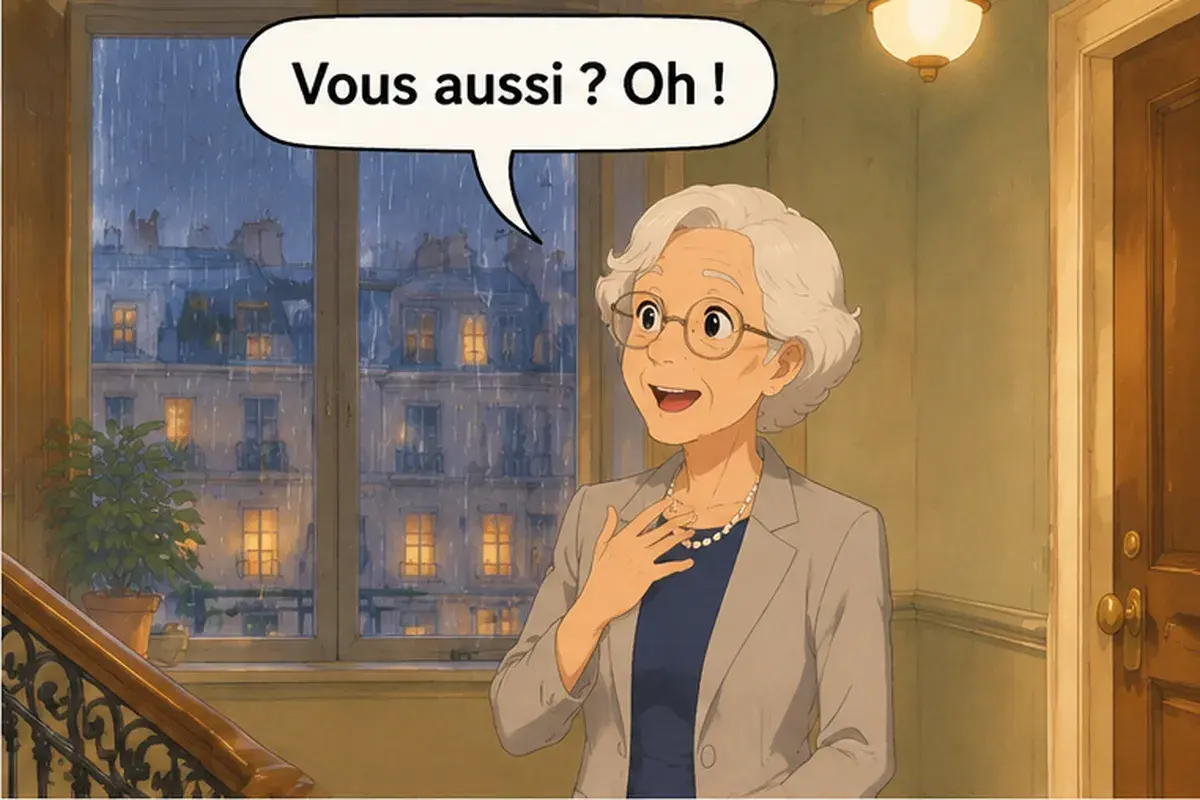
- Madame Morel
Vous aussi ? Oh !
You too? Oh! (formal)
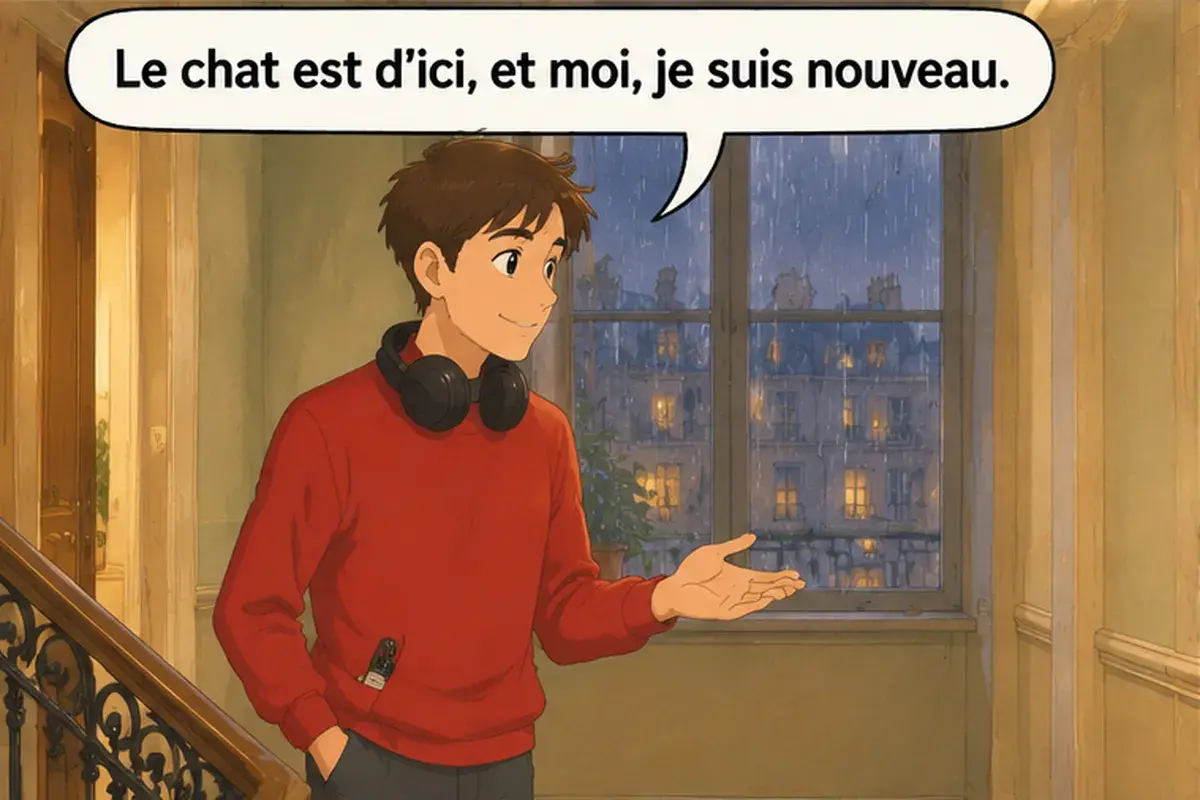
- Pacha
Le chat est d'ici, et moi, je suis nouveau.
The cat is from here, and I'm new (man speaking).
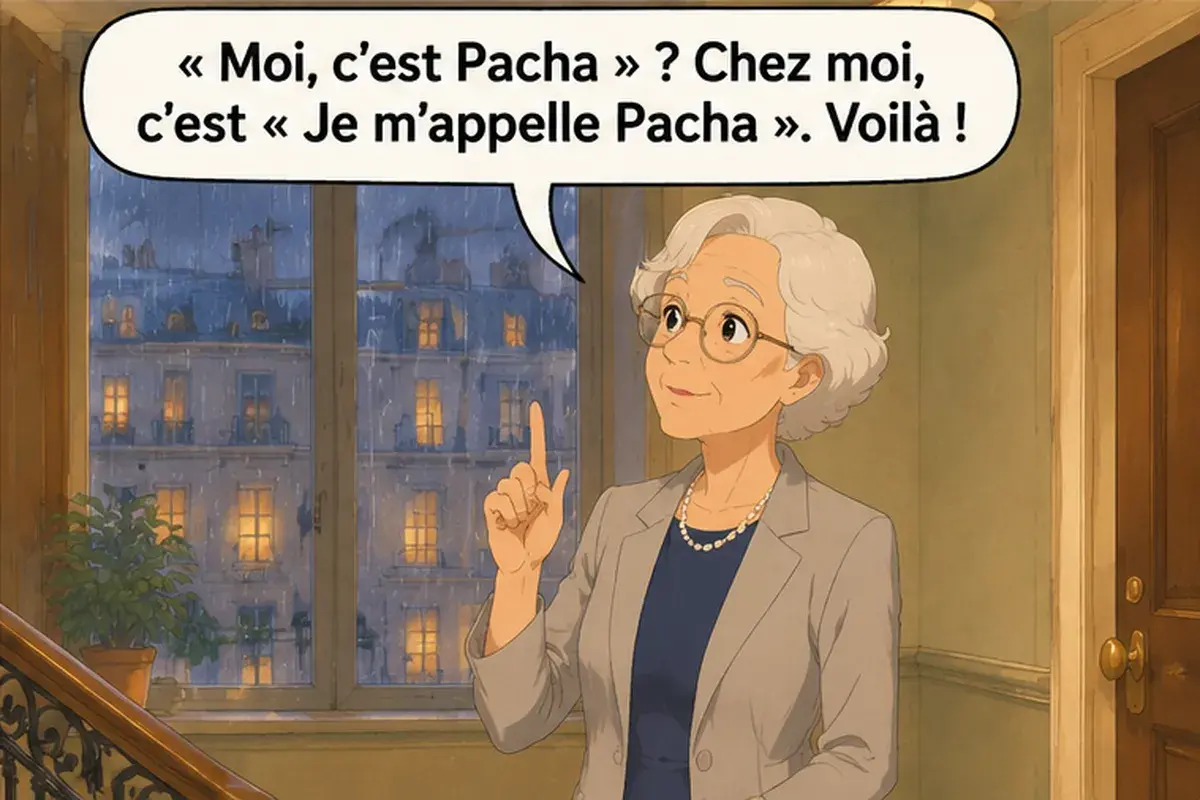
- Madame Morel
« Moi, c'est Pacha » ? Chez moi, c'est « Je m'appelle Pacha ». Voilà !
"I'm Pacha"? At my place, it's "My name is Pacha." There you go!
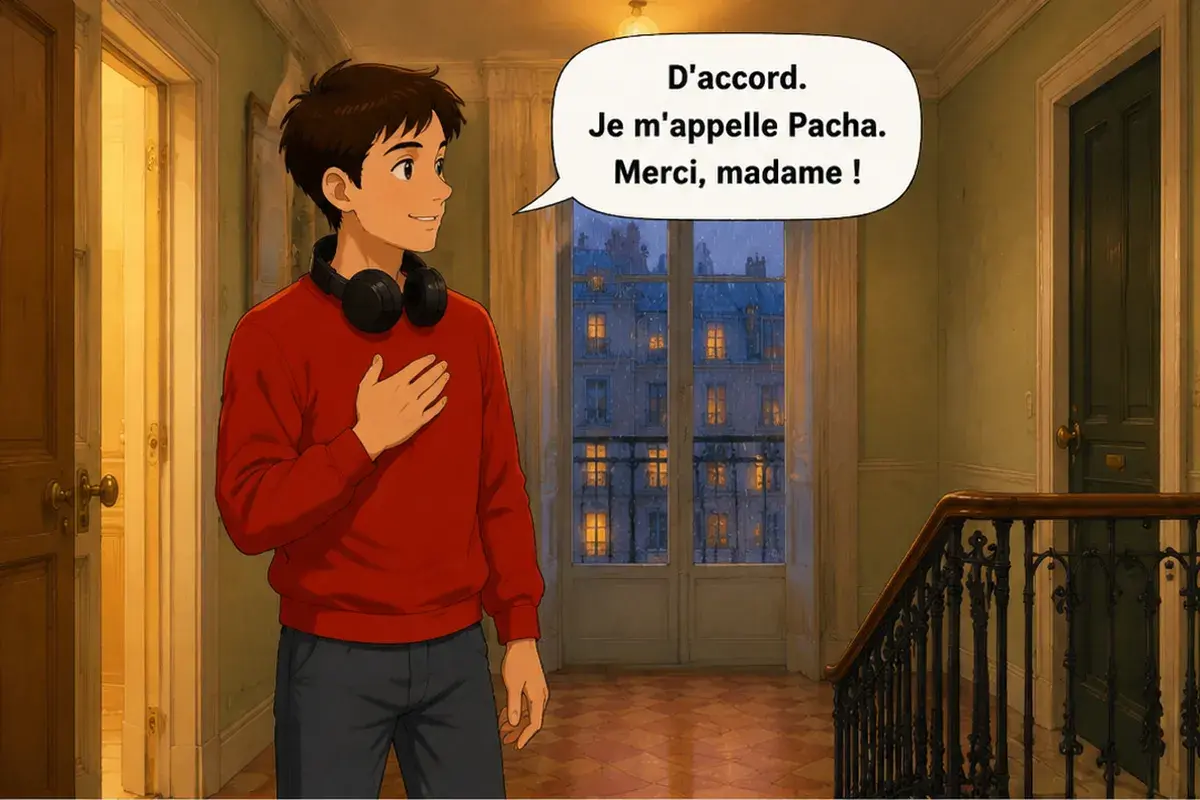
- Pacha
D'accord. Je m'appelle Pacha. Merci, madame !
OK. My name is Pacha. Thank you, ma'am!
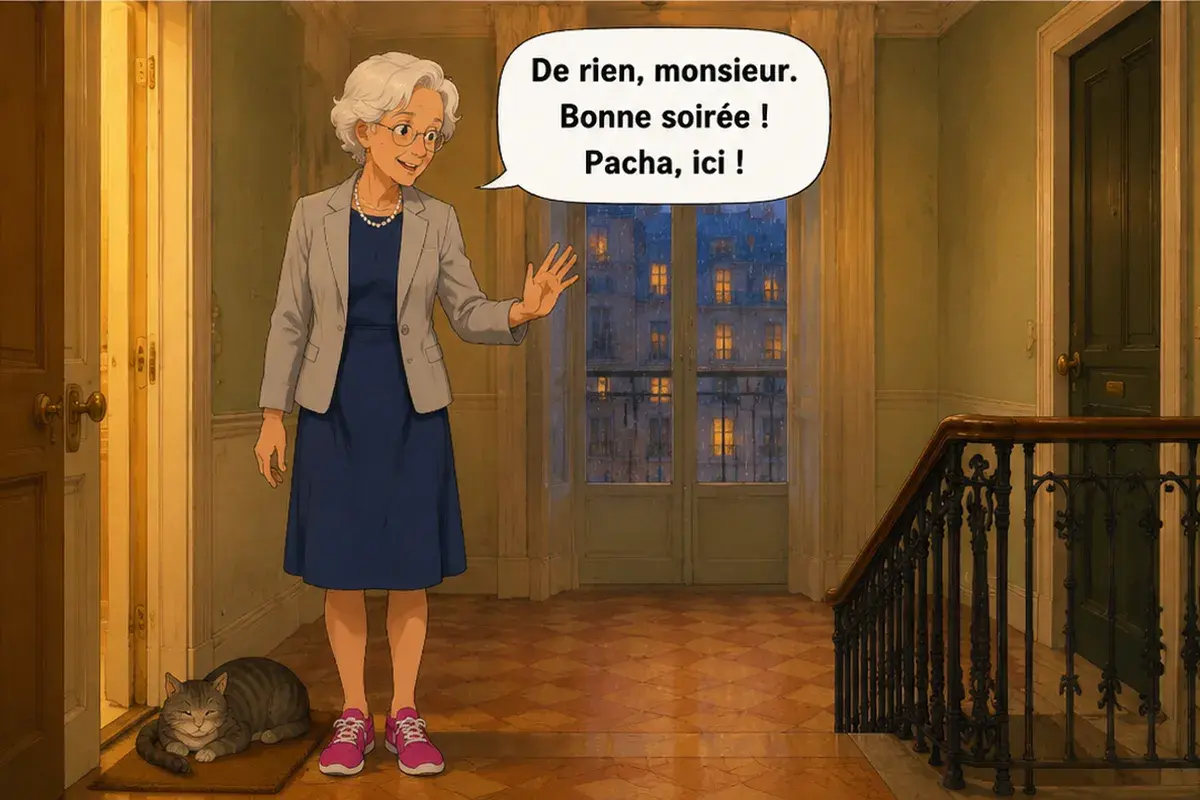
- Madame Morel
De rien, monsieur. Bonne soirée ! Pacha, ici !
You're welcome, sir. Have a nice evening! Pacha, come here!
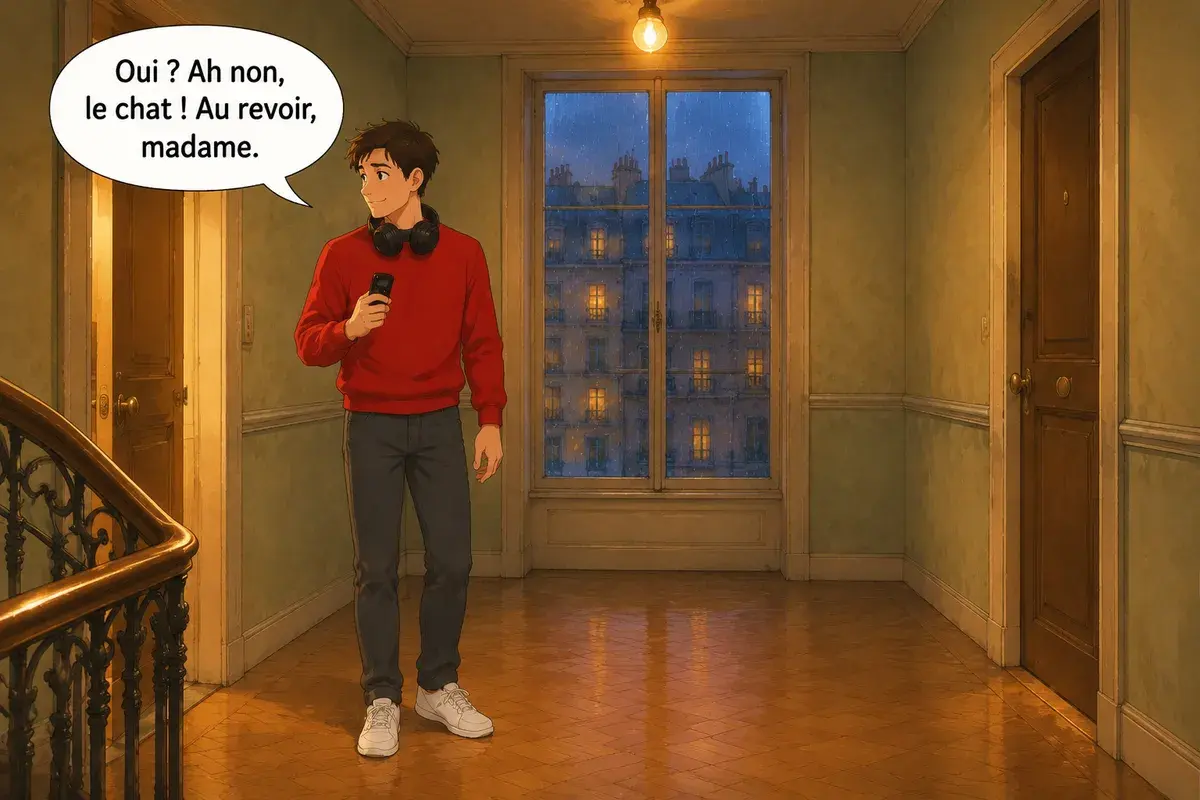
- Pacha
Oui ? Ah non, le chat ! Au revoir, madame.
Yes? Oh no, the cat! Goodbye, ma'am.
Grammar for this text
Tu es où ?: Madame Morel says tu to the cat: people say tu to animals and children. The question is asked with your voice, and où (where) comes at the end. es is the tu form of être (to be).Vous êtes le nouveau voisin ?: vous is the right choice with an adult you don't know. êtes is the vous form of être; you hear a z sound in vous‿êtes. The question is just a rising voice; the words stay in place.Mais non, c'est le chat !: mais non — no, no; of course not. c'est — it's (ce + est).Moi, c'est PachaandChez moi, c'est « Je m'appelle Pacha »: Pacha picked up moi, c'est… from Hugo: that's how friends introduce themselves. With an older neighbor it's too casual: she expects je m'appelle. Chez moi — at my place. It's the same idea as Hugo's: at his place it's tu, at hers it's vous.Enchanté: nice to meet you. A man says enchanté, a woman enchantée; they sound the same.Le chat est d'ici, et moi, je suis nouveau: est is the il form of être, suis the je form. d'ici — from here: de + ici; before a vowel, de becomes d'.De rien, monsieur. Bonne soirée !andAu revoir: de rien — you're welcome, the answer to merci (word for word "of nothing"). Bonne soirée — have a nice evening. Au revoir — goodbye; au = à + le. InPacha, ici !she calls the cat again, and Pacha the man answers.
Words and grammar of the unit: Say hello and introduce yourself.
Learn the words from the texts with flashcards
In the app, you can tap any word in a text to see its translation, forms and examples, and new words stick with flashcards. 15 minutes a day.
Start for freeEverything is open for free. No card needed to sign up.