

French dialogue with translation · A1 · 12 lines
Moi, c'est Hugo I'm Hugo
Comic · 10 panels
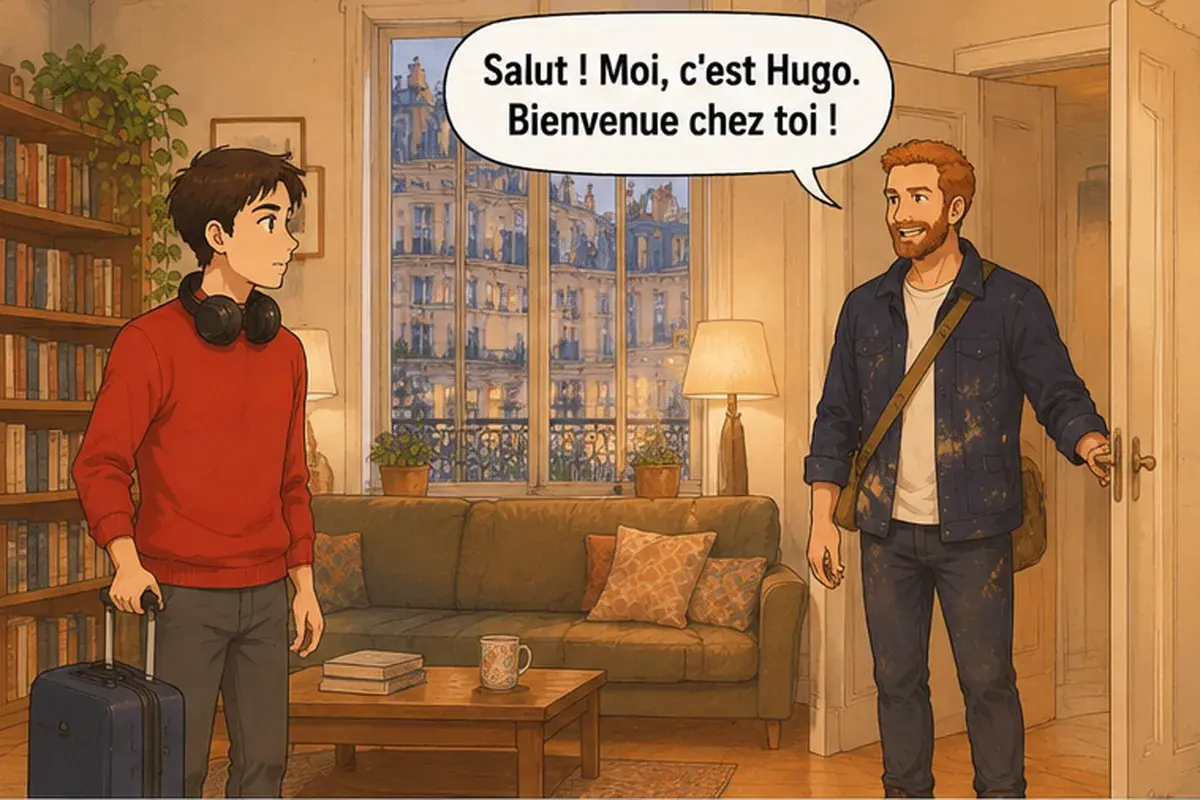
- Hugo
Salut ! Moi, c'est Hugo. Bienvenue chez toi !
Hi! I'm Hugo. Welcome home!
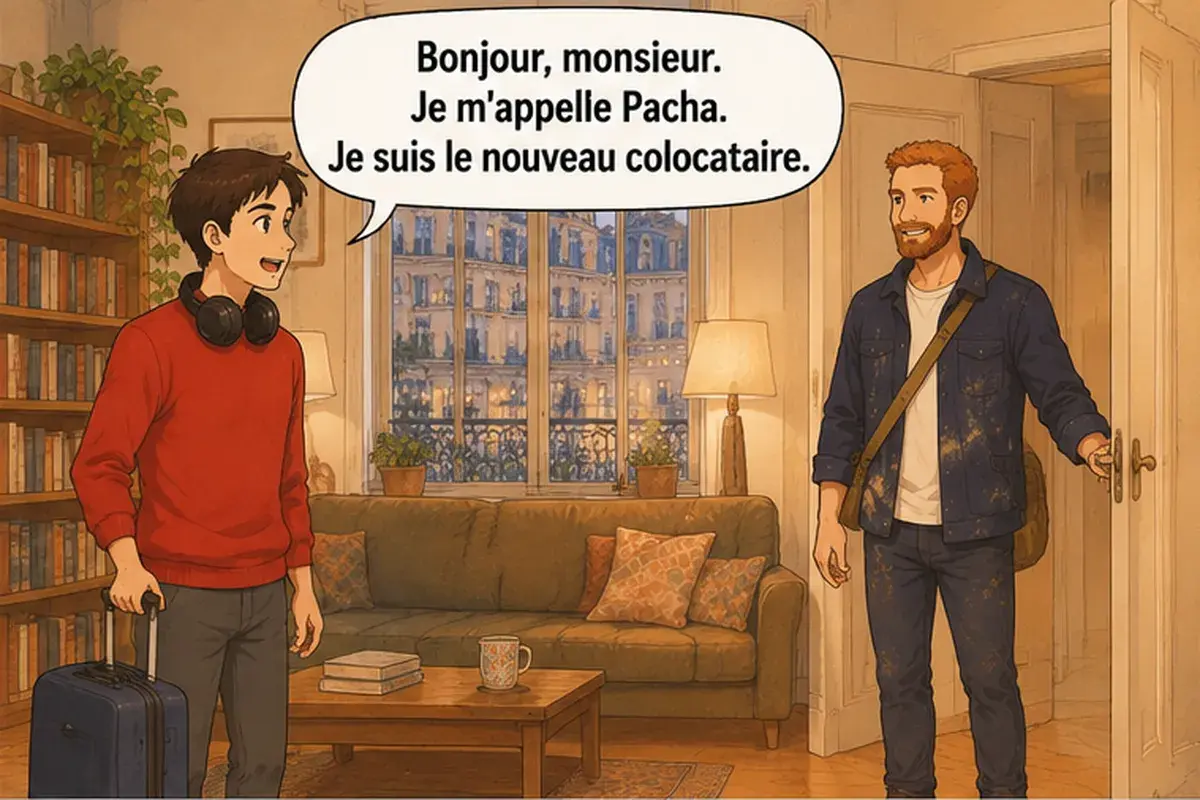
- Pacha
Bonjour, monsieur. Je m'appelle Pacha. Je suis le nouveau colocataire.
Hello, sir. My name is Pacha. I'm the new roommate (man speaking).
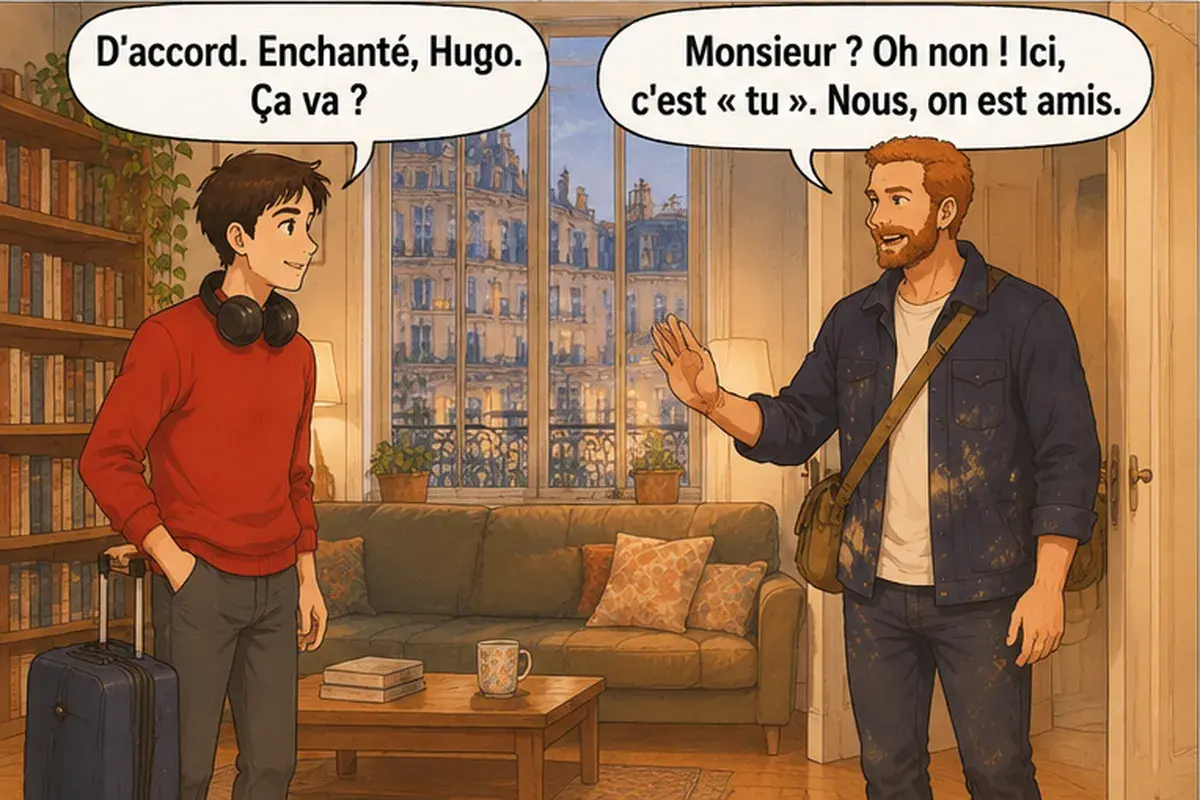
- Hugo
Monsieur ? Oh non ! Ici, c'est « tu ». Nous, on est amis.
Sir? Oh no! Here, it's "tu". We're friends.
- Pacha
D'accord. Enchanté, Hugo. Ça va ?
OK. Nice to meet you, Hugo. How are you? (man speaking)
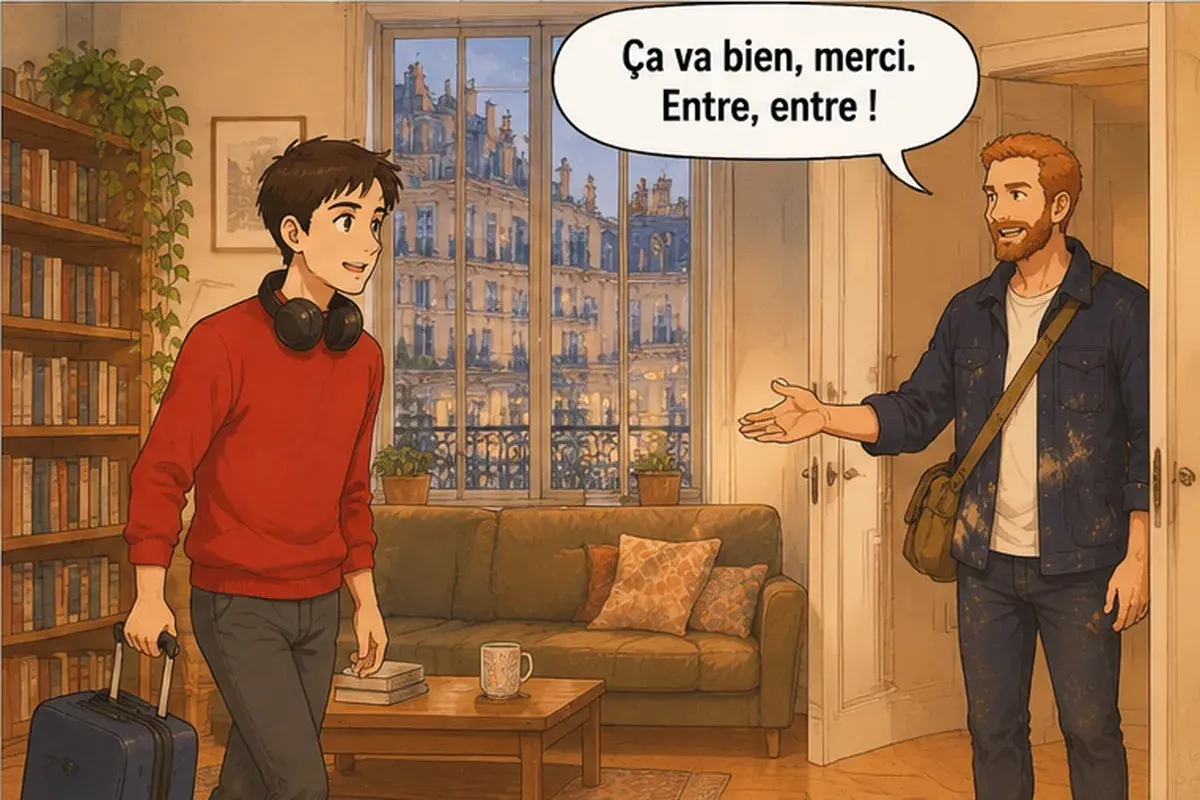
- Hugo
Ça va bien, merci. Entre, entre !
I'm fine, thanks. Come in, come in!
- Inès
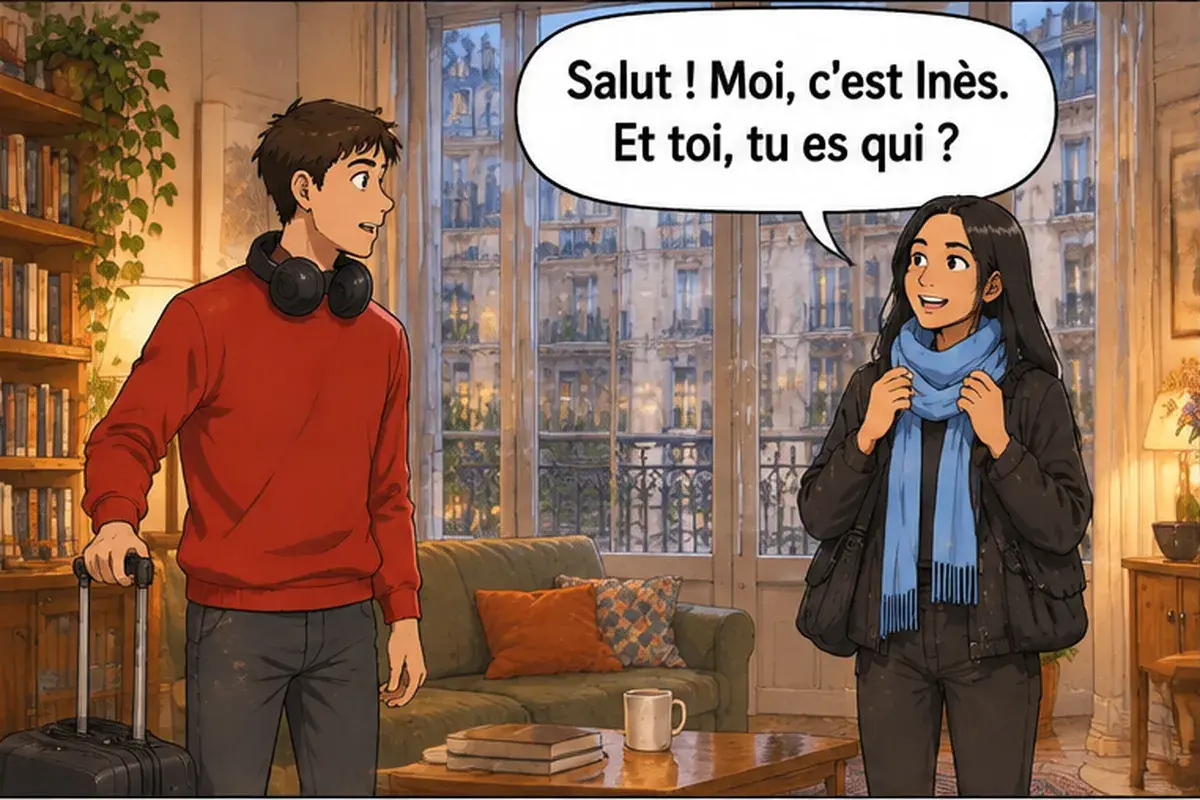
Salut ! Moi, c'est Inès. Et toi, tu es qui ?
Hi! I'm Inès. And you, who are you?
- Pacha
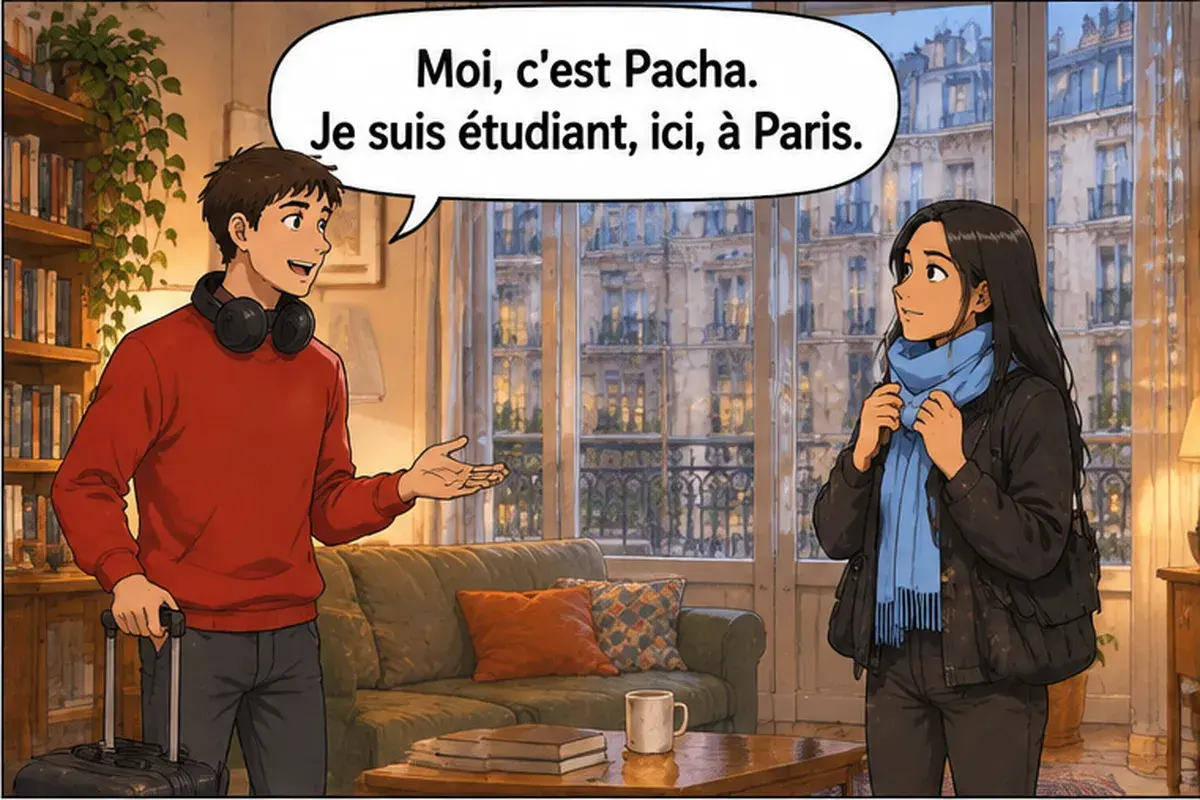
Moi, c'est Pacha. Je suis étudiant, ici, à Paris.
I'm Pacha. I'm a student, here in Paris (man speaking).
- Inès
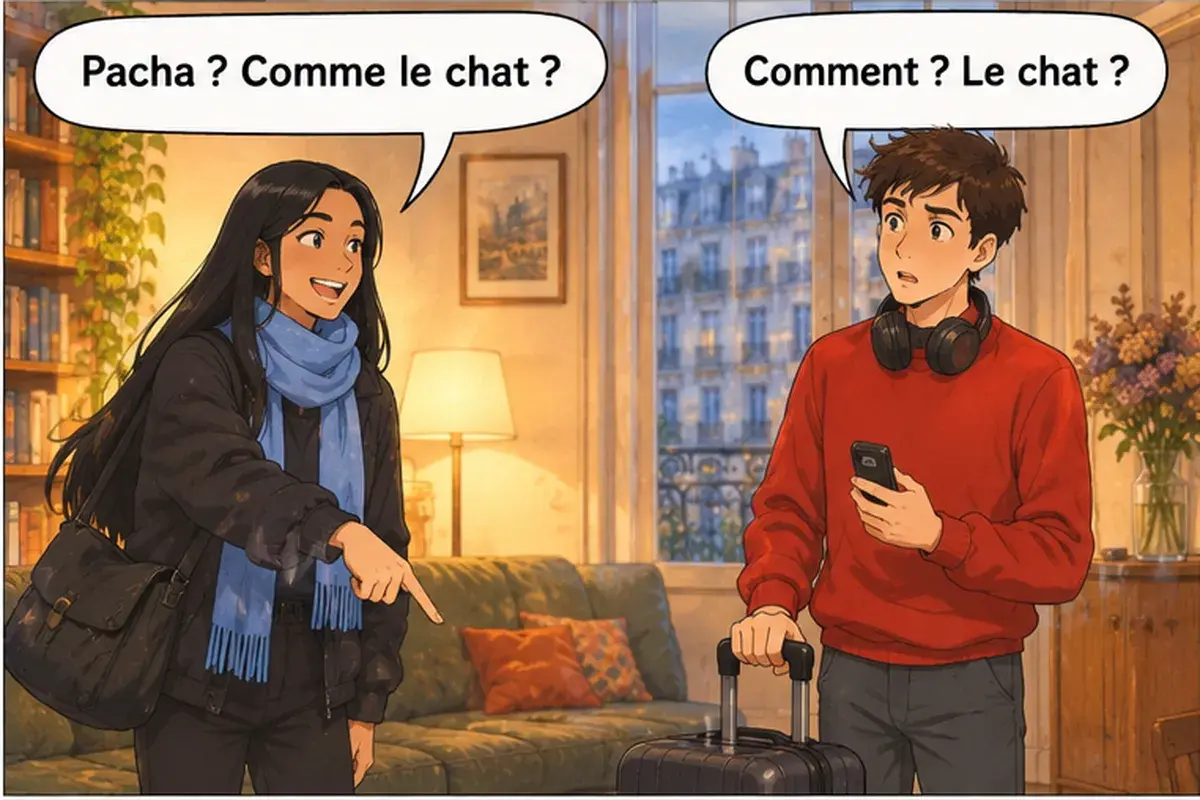
Pacha ? Comme le chat ?
Pacha? Like the cat?
- Pacha
Comment ? Le chat ?
What? The cat?
- Hugo
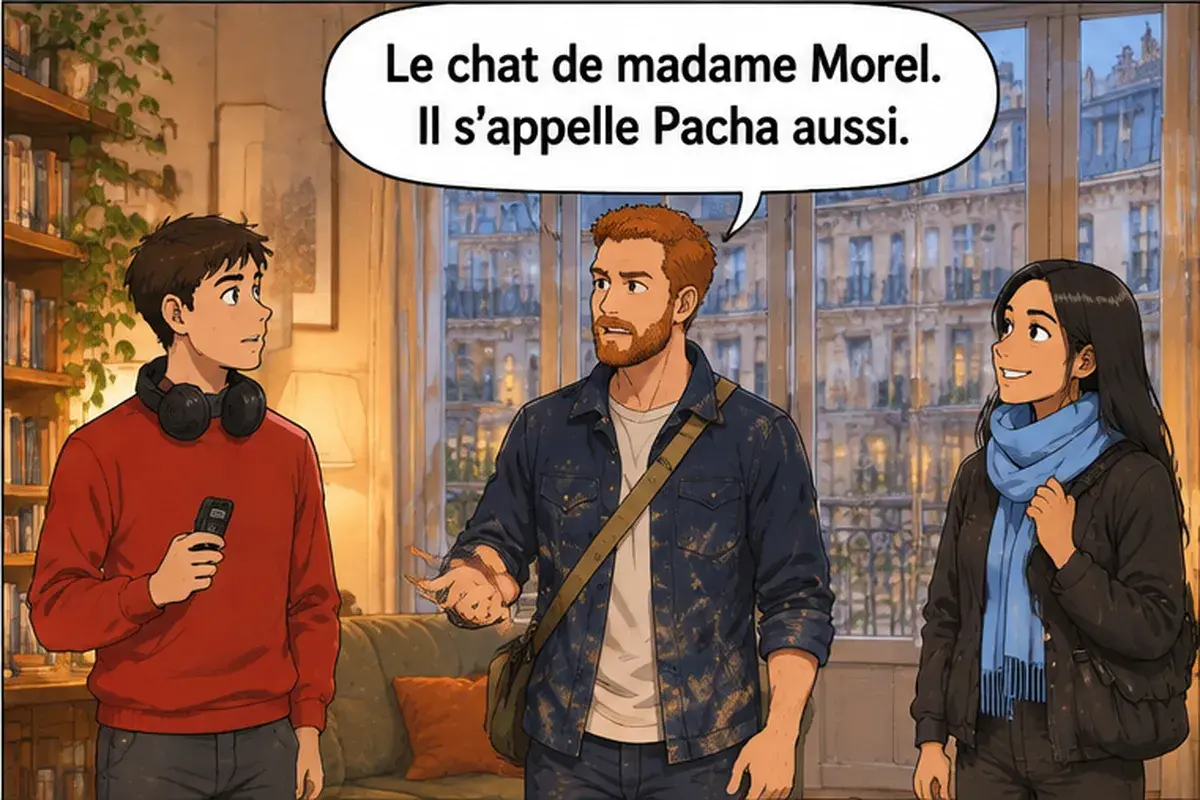
Le chat de madame Morel. Il s'appelle Pacha aussi.
Madame Morel's cat. His name is Pacha too.

- Pacha
Ah ! Super : le chat s'appelle Pacha. Moi aussi !
Ah! Great: the cat's name is Pacha. Me too!
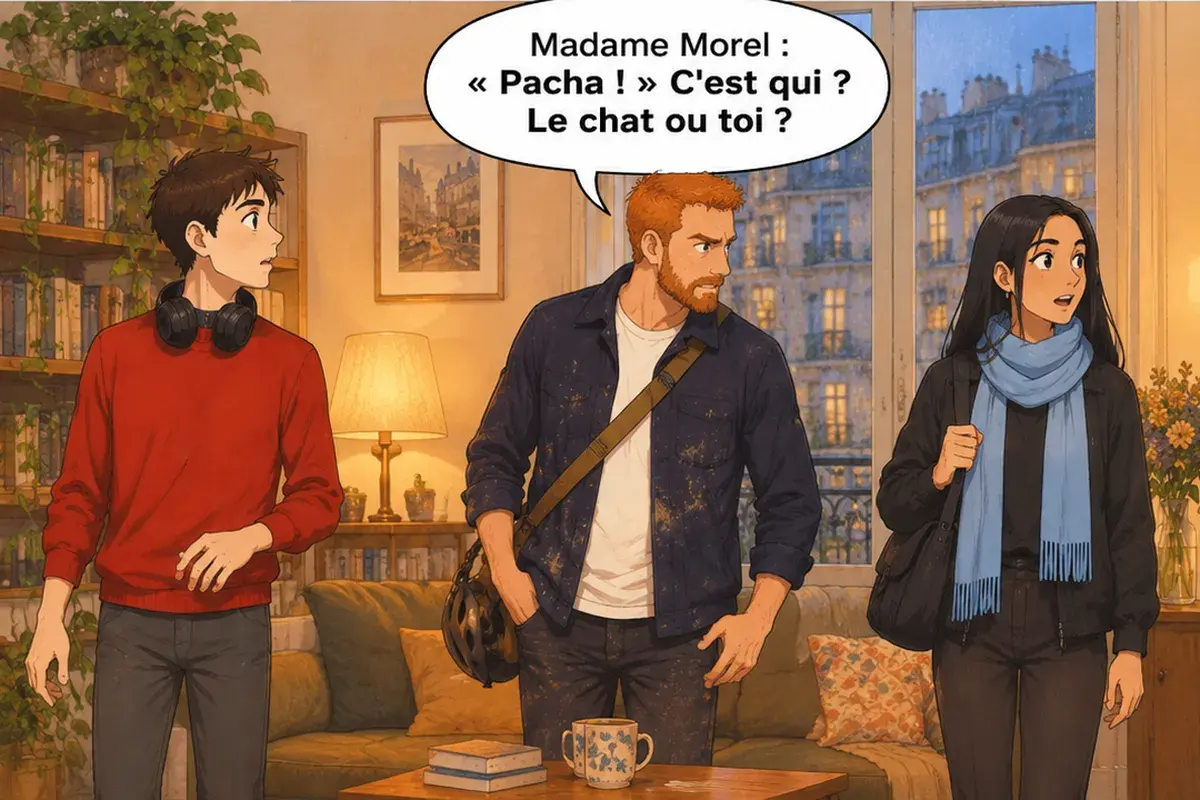
- Hugo
Madame Morel : « Pacha ! » C'est qui ? Le chat ou toi ?
Madame Morel: "Pacha!" Who is it? The cat or you?
Grammar for this text
Moi, c'est Hugo: a casual way to introduce yourself. moi is the stressed form of "I / me", and c'est = ce + est (it is). Word for word: "Me, it's Hugo."Bienvenue chez toi: welcome home. chez means "at someone's place": chez toi — at your place; chez + a name — at Hugo's. toi is the stressed form of tu.Entre, entre !: come in! It's a form of entrer (to come in), a command to a friend you call tu; with vous it's entrez. Saying it twice sounds warm. Commands come at A2; for now, learn it as a set phrase.Je suis étudiant, ici, à Paris: suis is the je form of être (to be). à means "in" before the name of a city.Pacha ? Comme le chat ?andC'est qui ? Le chat ou toi ?: both questions are asked just with your voice, and the words stay in place. comme — like, qui — who, ou — or (it sounds the same as où, where, but is spelled differently). Madame Morel calls her cat "Pacha!", and more than one Pacha may answer: a joke about sharing a name.Il s'appelle Pacha aussi: his name is Pacha too. s'appelle is the il form of s'appeler; s' is se before a vowel.Ici, c'est « tu »: Hugo explains that friends say tu to each other. Pacha said monsieur because he was nervous: it's how you politely address a man you don't know, like "sir".
Words and grammar of the unit: Say hello and introduce yourself.
Learn the words from the texts with flashcards
In the app, you can tap any word in a text to see its translation, forms and examples, and new words stick with flashcards. 15 minutes a day.
Start for freeEverything is open for free. No card needed to sign up.