
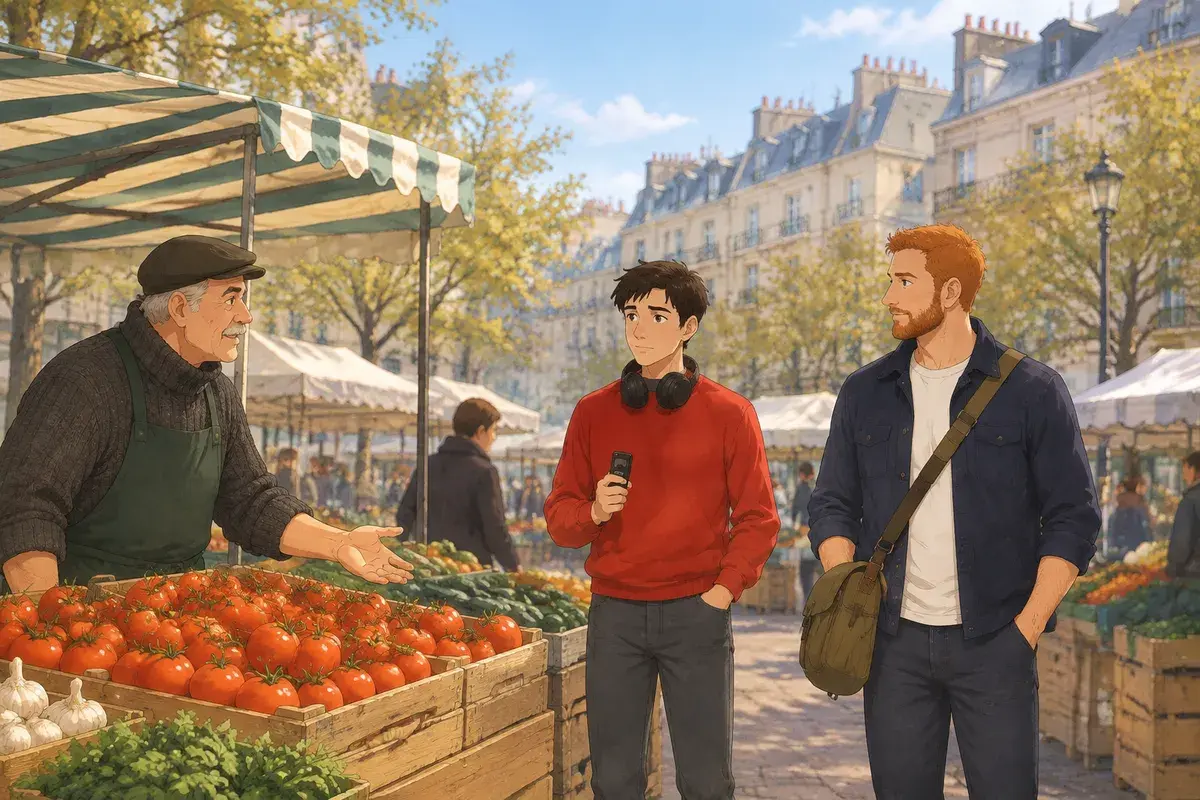
French dialogue with translation · A1 · 14 lines
Je voudrais un kilo de tomates I'd like a kilo of tomatoes
Comic · 14 panels
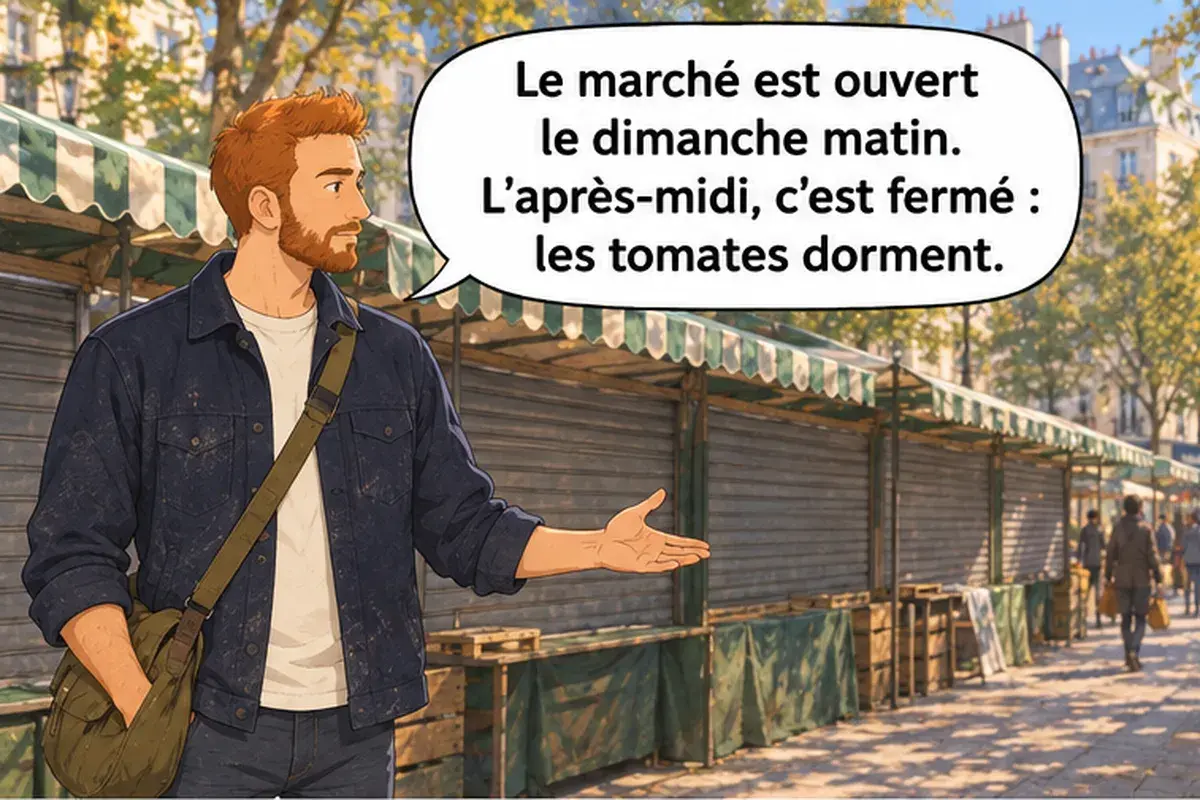
- Hugo
Le marché est ouvert le dimanche matin. L'après-midi, c'est fermé : les tomates dorment.
The market is open on Sunday mornings. In the afternoon it's closed: the tomatoes are sleeping.

- Pacha
Pourquoi le marché ? Le supermarché est plus près.
Why the market? The supermarket is closer.
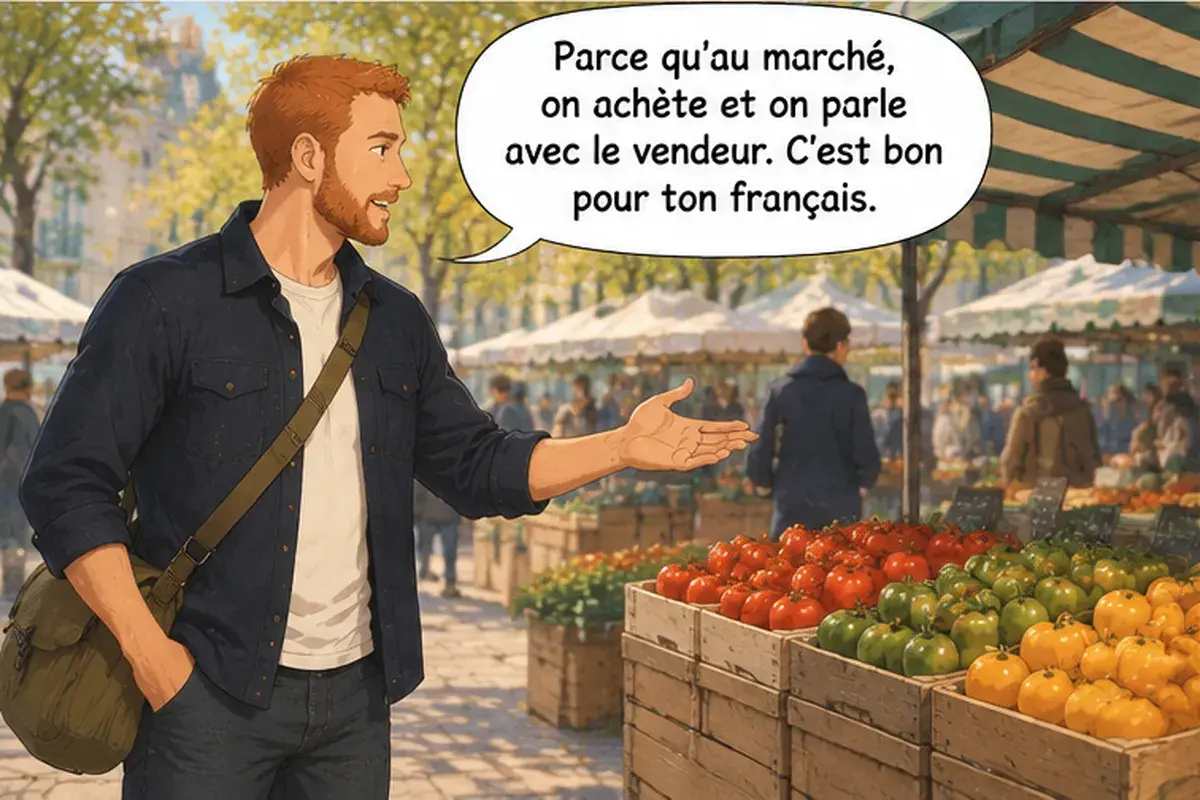
- Hugo
Parce qu'au marché, on achète et on parle avec le vendeur. C'est bon pour ton français.
Because at the market, we buy and we talk with the vendor. It's good for your French.
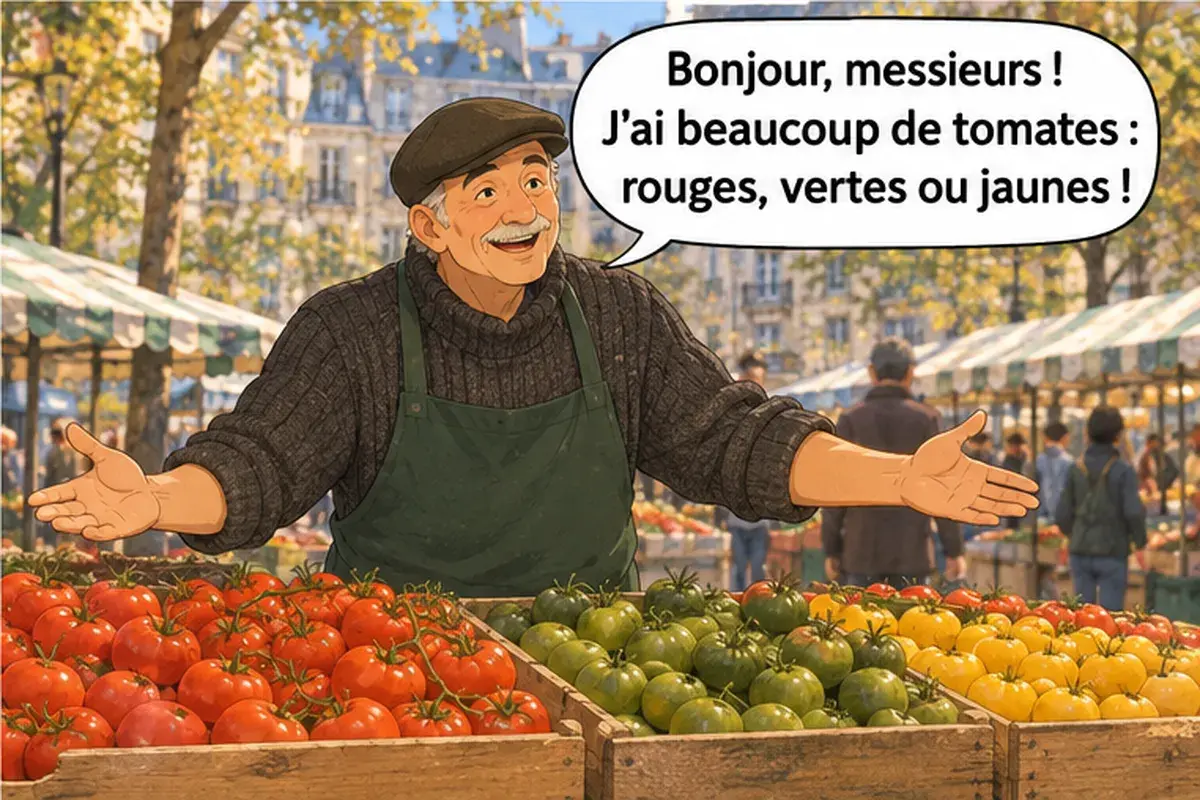
- Vendeur
Bonjour, messieurs ! J'ai beaucoup de tomates : rouges, vertes ou jaunes !
Hello, gentlemen! I have a lot of tomatoes: red, green or yellow!
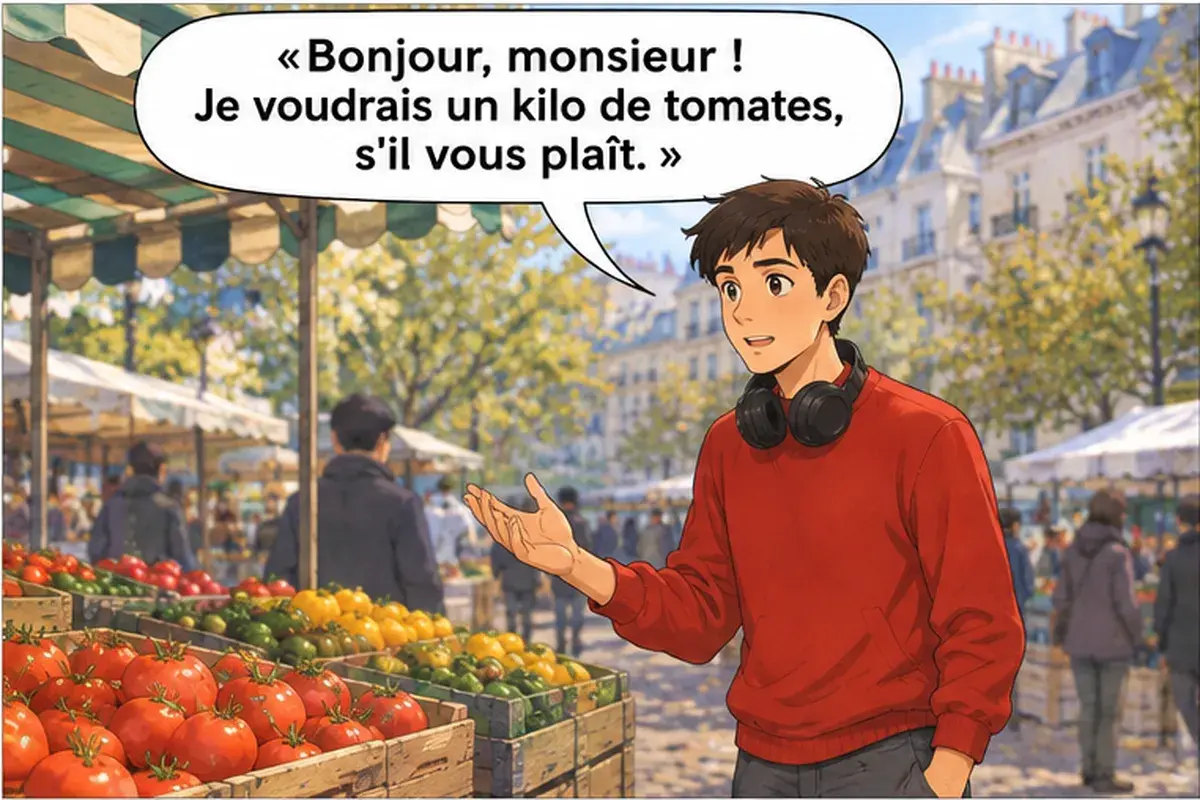
- Pacha
Bonjour, monsieur ! Je voudrais un kilo de tomates, s'il vous plaît.
Hello, sir! I'd like a kilo of tomatoes, please (formal).
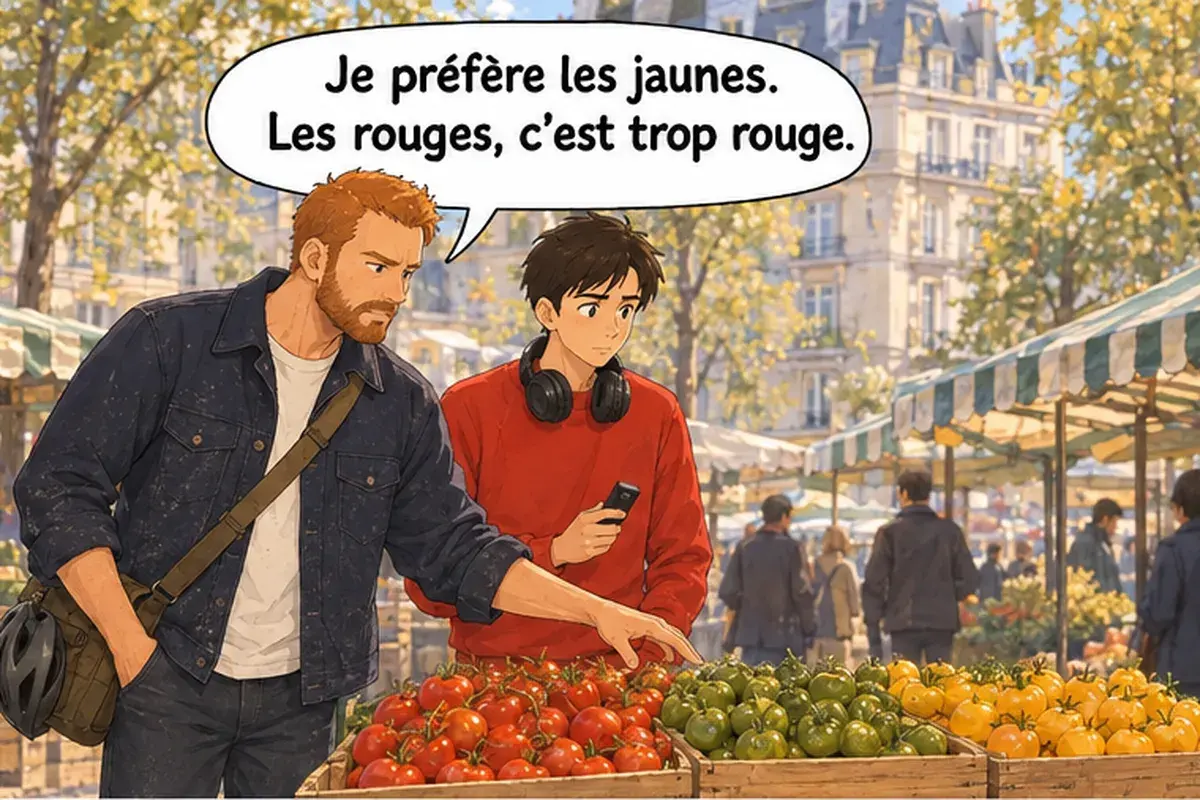
- Hugo
Je préfère les jaunes. Les rouges, c'est trop rouge.
I prefer the yellow ones. The red ones are too red.
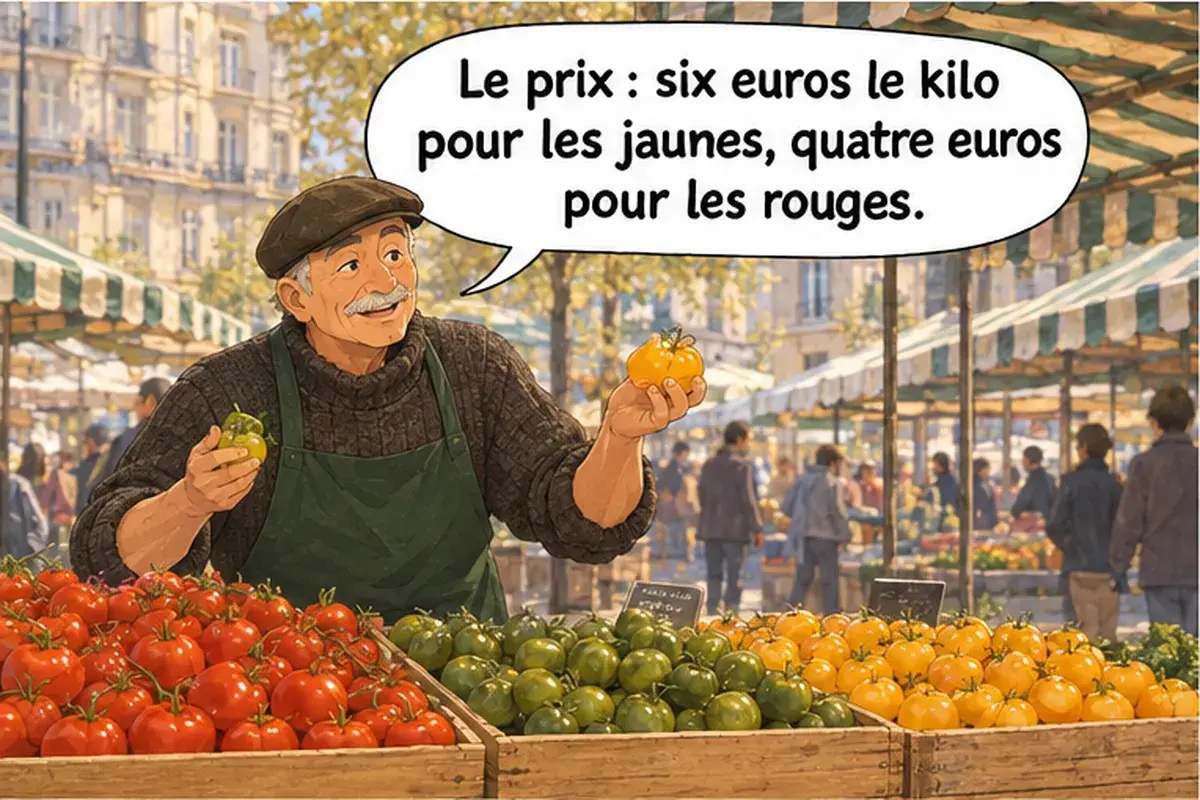
- Vendeur
Le prix : six euros le kilo pour les jaunes, quatre euros pour les rouges.
The price: six euros a kilo for the yellow ones, four euros for the red ones.
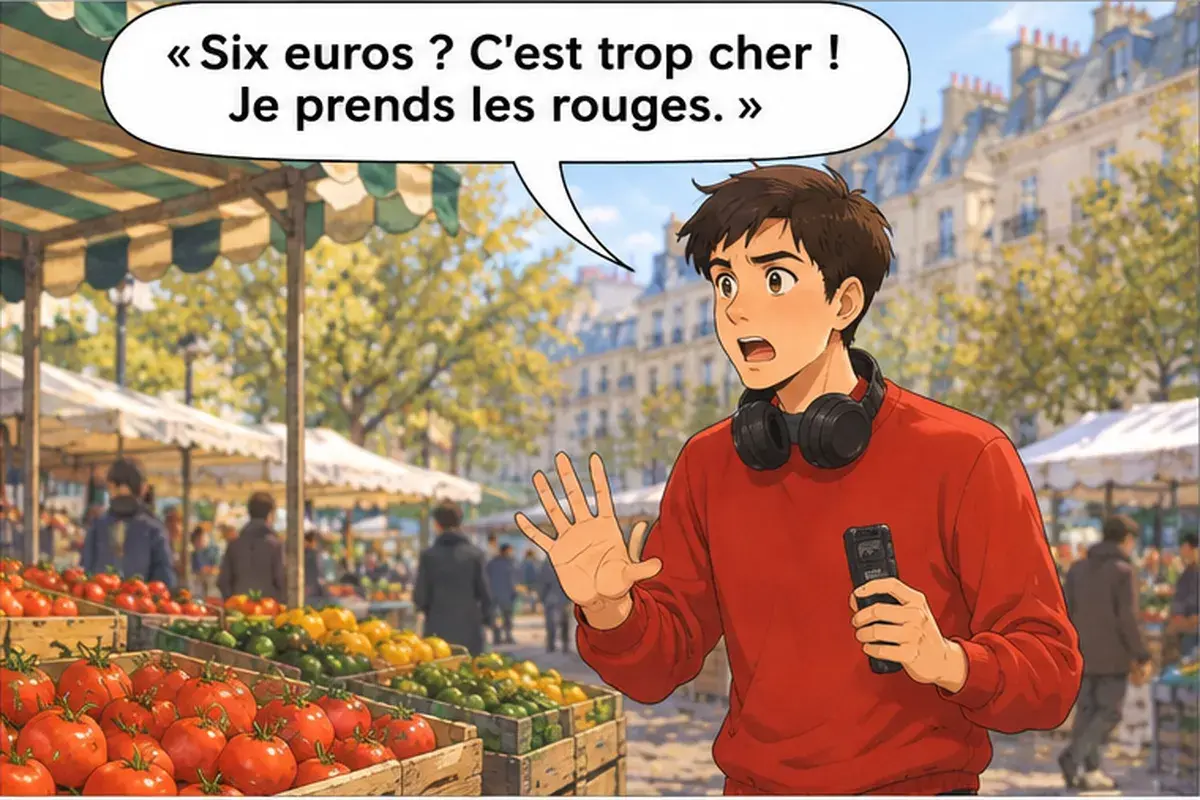
- Pacha
Six euros ? C'est trop cher ! Je prends les rouges.
Six euros? That's too expensive! I'll take the red ones.
- Vendeur
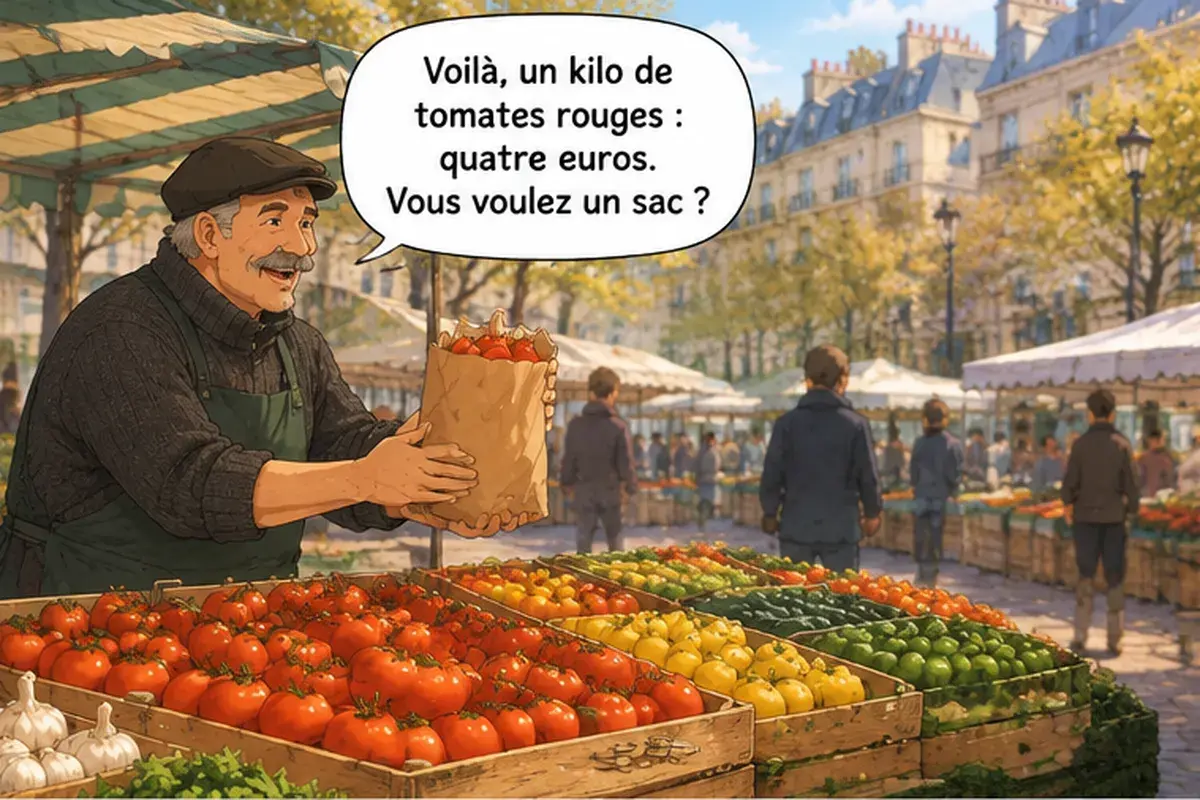
Voilà, un kilo de tomates rouges : quatre euros. Vous voulez un sac ?
Here you go, a kilo of red tomatoes: four euros. Do you want a bag? (formal)
- Hugo
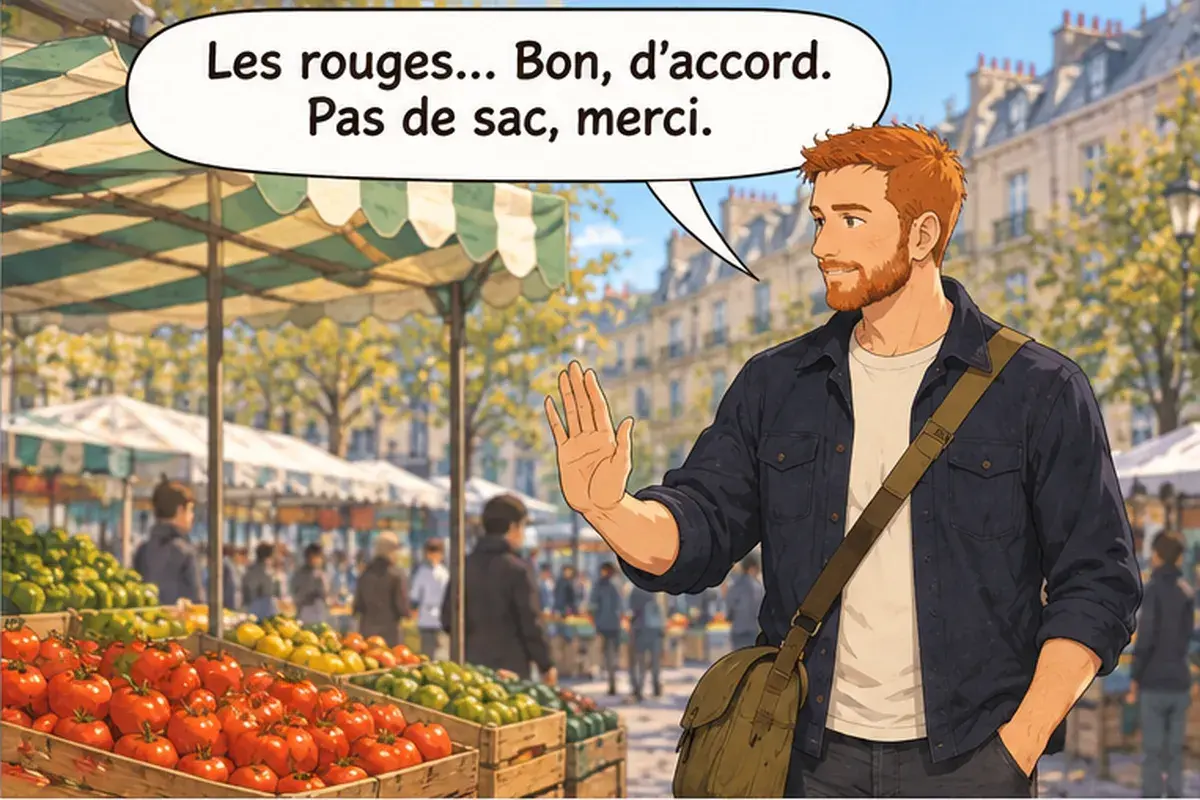
Les rouges... Bon, d'accord. Pas de sac, merci.
The red ones... Well, OK. No bag, thanks.

- Pacha
Voilà quatre euros. Merci, monsieur, bonne journée !
Here's four euros. Thank you, sir, have a nice day!
- Vendeur
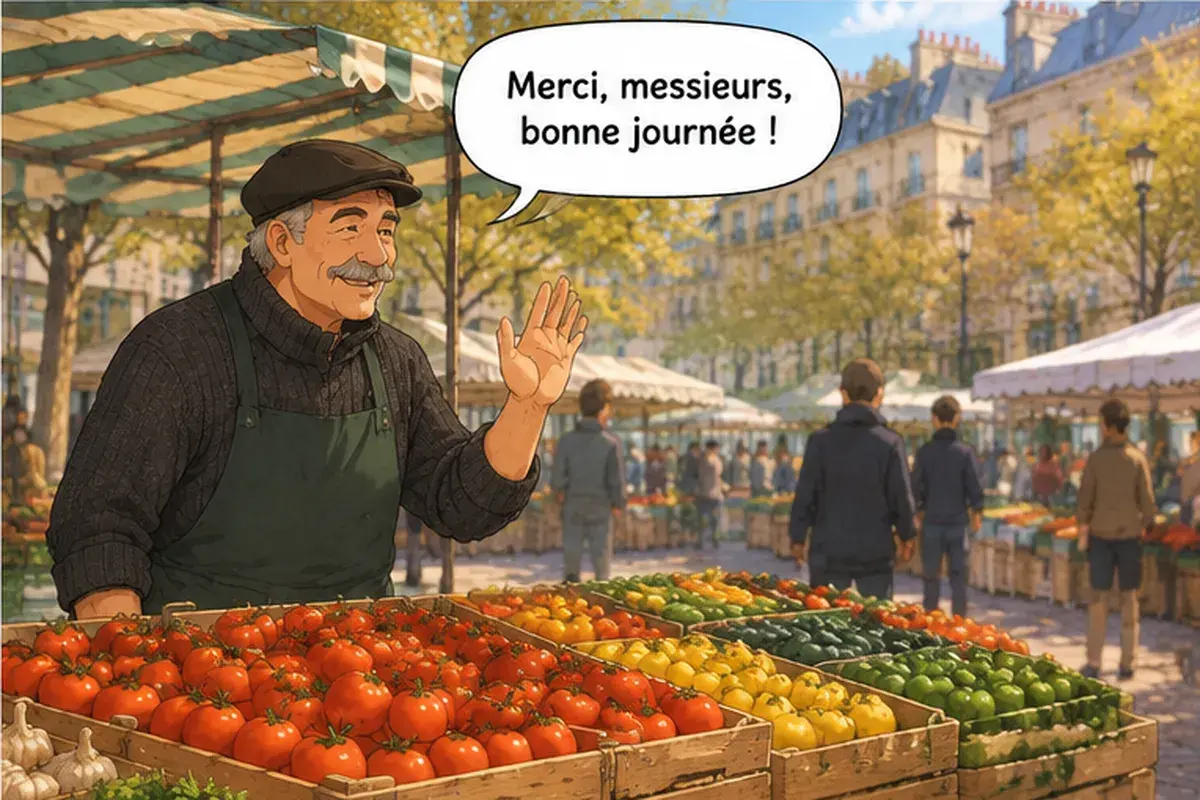
Merci, messieurs, bonne journée !
Thank you, gentlemen, have a nice day!
- Pacha
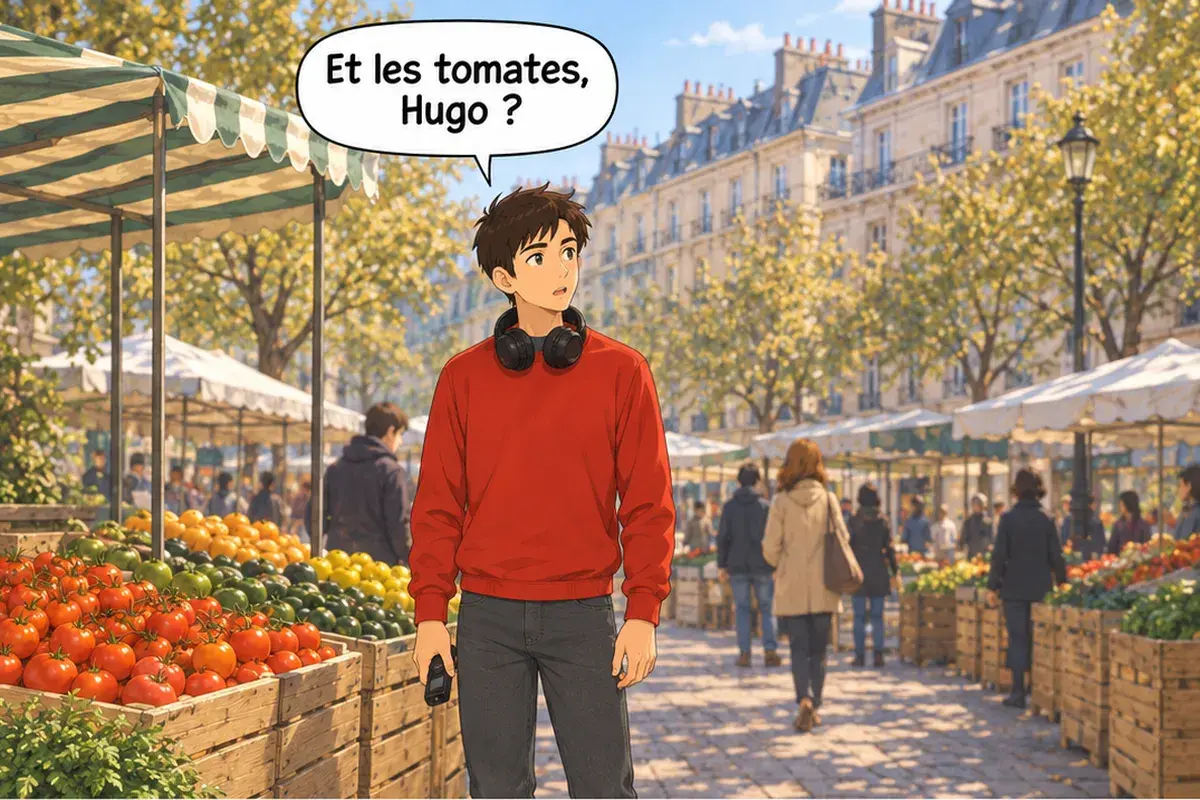
Et les tomates, Hugo ?
And the tomatoes, Hugo?

- Hugo
Dans ton pull. Non, dans mon sac. Je suis gentil.
In your sweater. No, in my bag. I'm nice.
Grammar for this text
- Je voudrais un kilo de tomates — voudrais means "I'd like", the polite form of vouloir (to want). Asking with "I want" sounds a bit blunt. You'll see how this form is built at B1. After un kilo comes de without an article.
- J'ai beaucoup de tomates — j'ai = je + ai; ai is the je form of avoir (to have). beaucoup de — also without an article.
- Je préfère les jaunes. — préfère is from préférer (to prefer): before a silent ending the second é becomes è (je préfère). les jaunes — the yellow ones: the word tomates isn't repeated and the color works as a noun. English adds "ones"; French doesn't.
- Les rouges, c'est trop rouge. — Hugo's deadpan joke: "the red ones are too red". After c'est the adjective is singular, like c'est itself.
- six euros le kilo — le kilo means "a kilo": where English says "a" or "per", French uses the article le. Price tags say it the same way: quatre euros le kilo.
- on achète et on parle — on means "we" in everyday speech. achète is from acheter: e becomes è before a silent ending.
- Pas de sac, merci. — "No bag, thanks": there's no verb, just pas de + a noun without an article. sac here is a shopping bag; in Hugo's last line it's his own bag.
Words and grammar of the unit: Buy clothes and ask about sizes.
Learn the words from the texts with flashcards
In the app, you can tap any word in a text to see its translation, forms and examples, and new words stick with flashcards. 15 minutes a day.
Start for freeEverything is open for free. No card needed to sign up.