

Spanish dialogue with translation · B2 · 18 lines
Mi primera declaración My first tax return
Comic · 18 panels

- Funcionario
Buenos días. Siéntese, por favor. Usted dirá.
Good morning. Please have a seat. How can I help you? (formal)

- Ana
Buenos días. Vengo a hacer mi primera declaración de la renta: hasta ahora me decían que no estaba obligada a presentarla.
Good morning. I'm here to do my first tax return: until now, people told me I wasn't required to file one (woman speaking).
- Funcionario
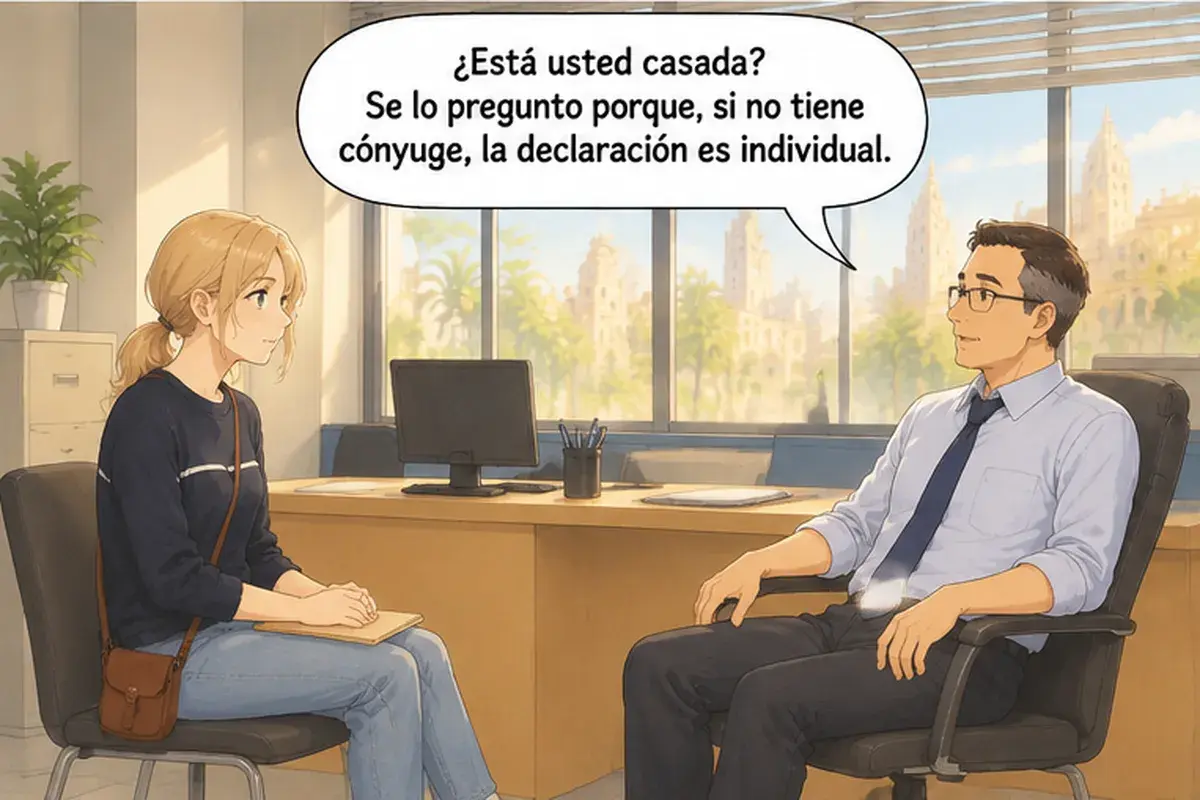
¿Está usted casada? Se lo pregunto porque, si no tiene cónyuge, la declaración es individual.
Are you married? I'm asking because if you don't have a spouse, the tax return is individual. (to a woman, formal)

- Ana
Soltera. El lunes, en una ventanilla, me dijeron que trajera todas mis nóminas, y al día siguiente, en otra, me aseguraron que no haría falta ningún papel.
Single. On Monday, at one window, they told me to bring all my pay slips, and the next day, at another one, they assured me I wouldn't need any documents at all (woman speaking).

- Funcionario
La segunda tenía razón. Aquí ya tengo sus datos fiscales: lo que ganó el año pasado y las retenciones de su empresa.
The second one was right. I already have your tax information here: what you earned last year and your company's withholdings. (formal)

- Ana
¿Las retenciones? Perdone, es que algunas palabras todavía me suenan a chino.
The withholdings? Sorry, it's just that some words are still all Greek to me. (formal)
- Funcionario
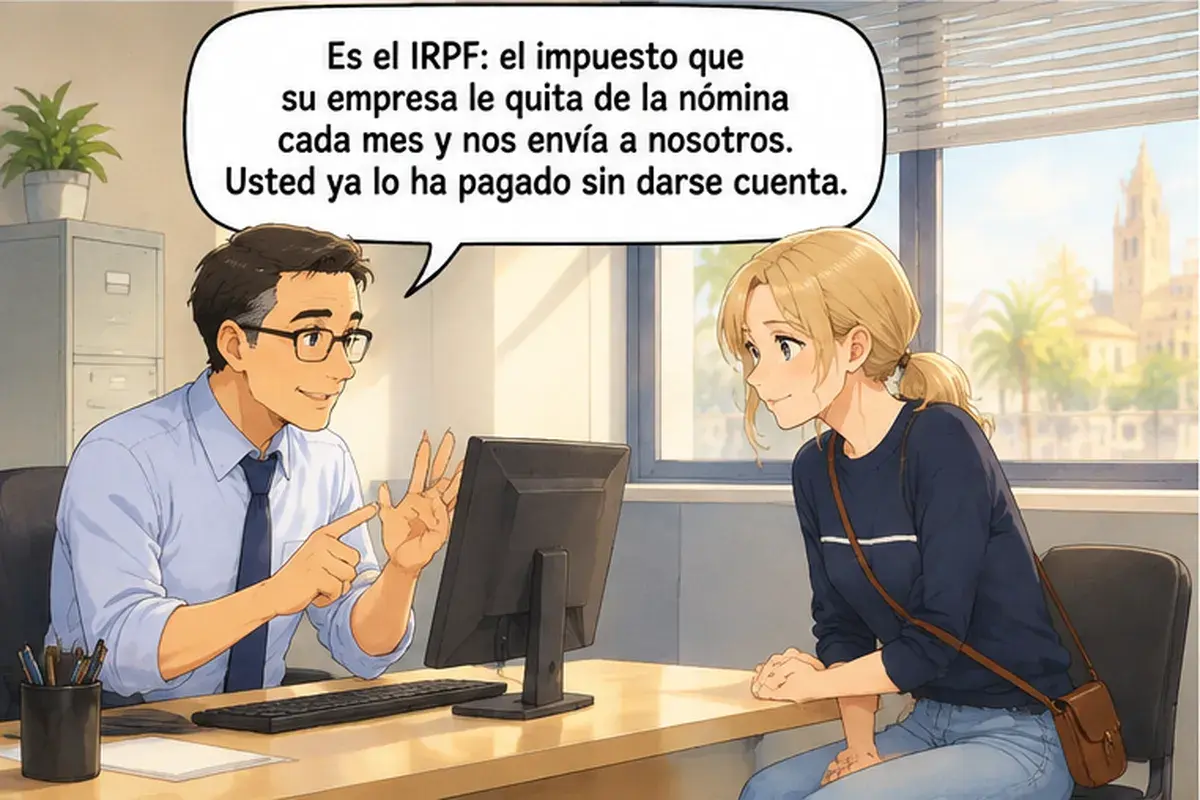
Es el IRPF: el impuesto que su empresa le quita de la nómina cada mes y nos envía a nosotros. Usted ya lo ha pagado sin darse cuenta.
It's the IRPF, the income tax that your company takes out of your paycheck every month and sends to us. You've already paid it without realizing. (formal)
- Ana
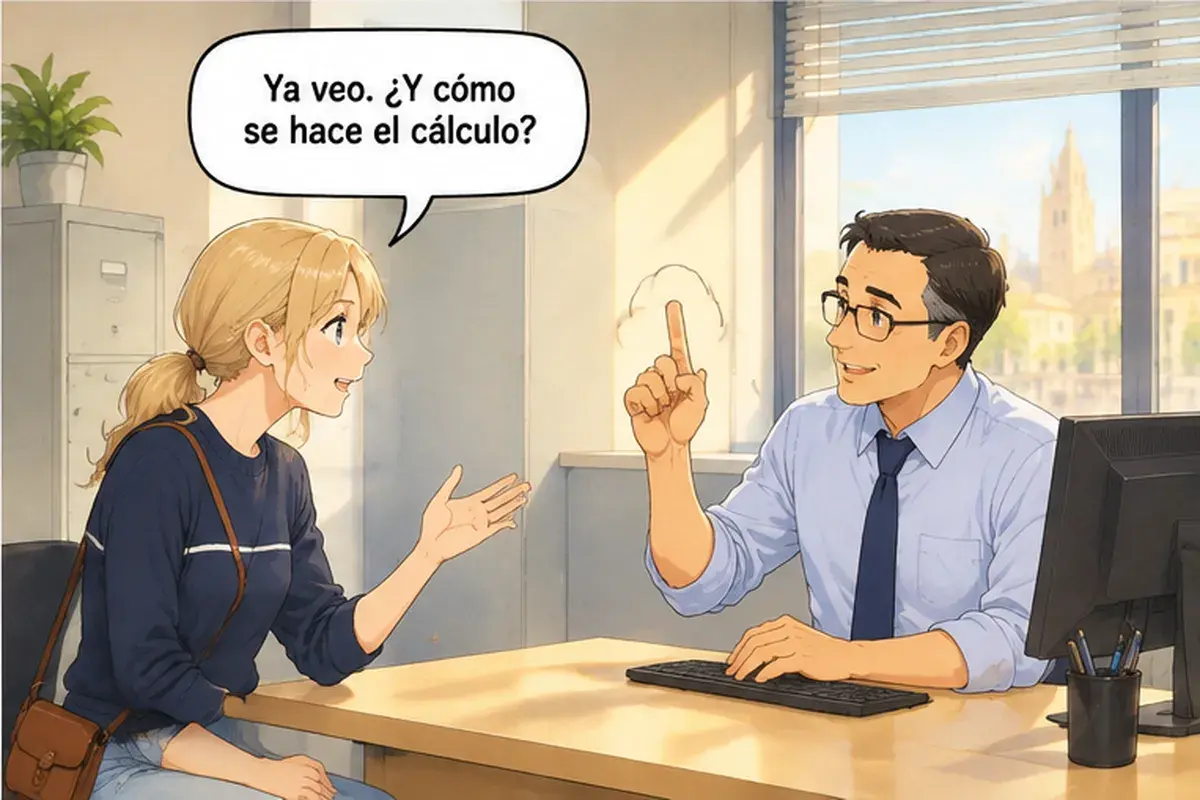
Ya veo. ¿Y cómo se hace el cálculo?
I see. And how is the calculation done?
- Funcionario
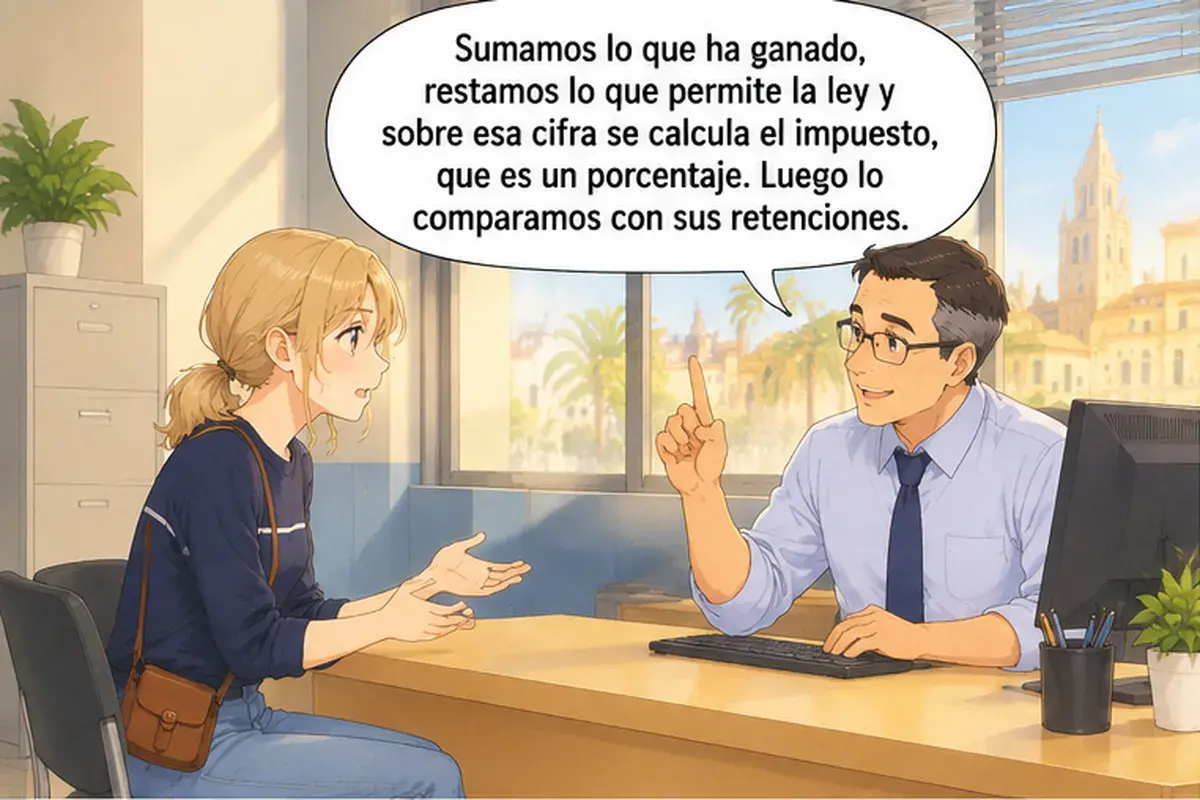
Sumamos lo que ha ganado, restamos lo que permite la ley y sobre esa cifra se calcula el impuesto, que es un porcentaje. Luego lo comparamos con sus retenciones.
We add up what you've earned, subtract what the law allows, and the tax is calculated on that figure; it's a percentage. Then we compare it with your withholdings. (formal)
- Ana
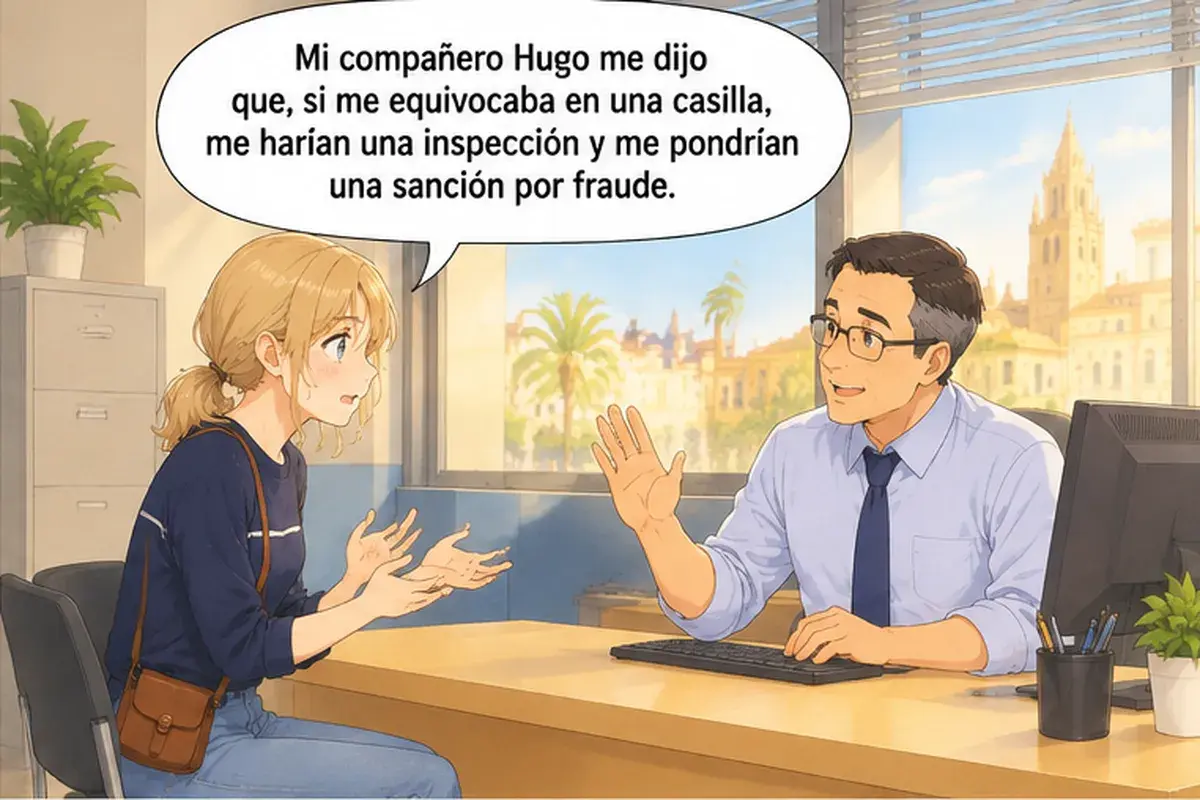
Mi compañero Hugo me dijo que, si me equivocaba en una casilla, me harían una inspección y me pondrían una sanción por fraude.
My coworker Hugo told me that if I made a mistake in a box, they would audit me and fine me for fraud.
- Funcionario
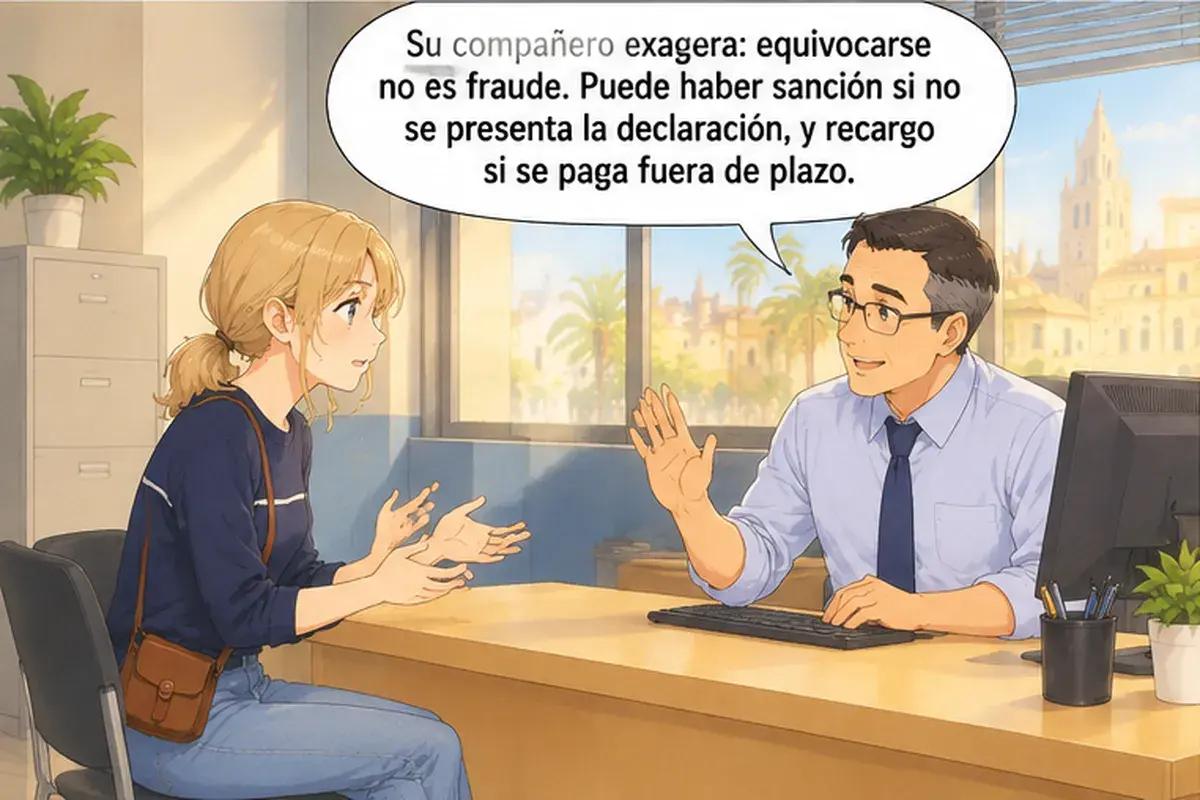
Su compañero exagera: equivocarse no es fraude. Puede haber sanción si no se presenta la declaración, y recargo si se paga fuera de plazo.
Your coworker is exaggerating: making a mistake isn't fraud. There can be a penalty if the tax return isn't filed, and a surcharge if you pay after the deadline. (formal)
- Ana
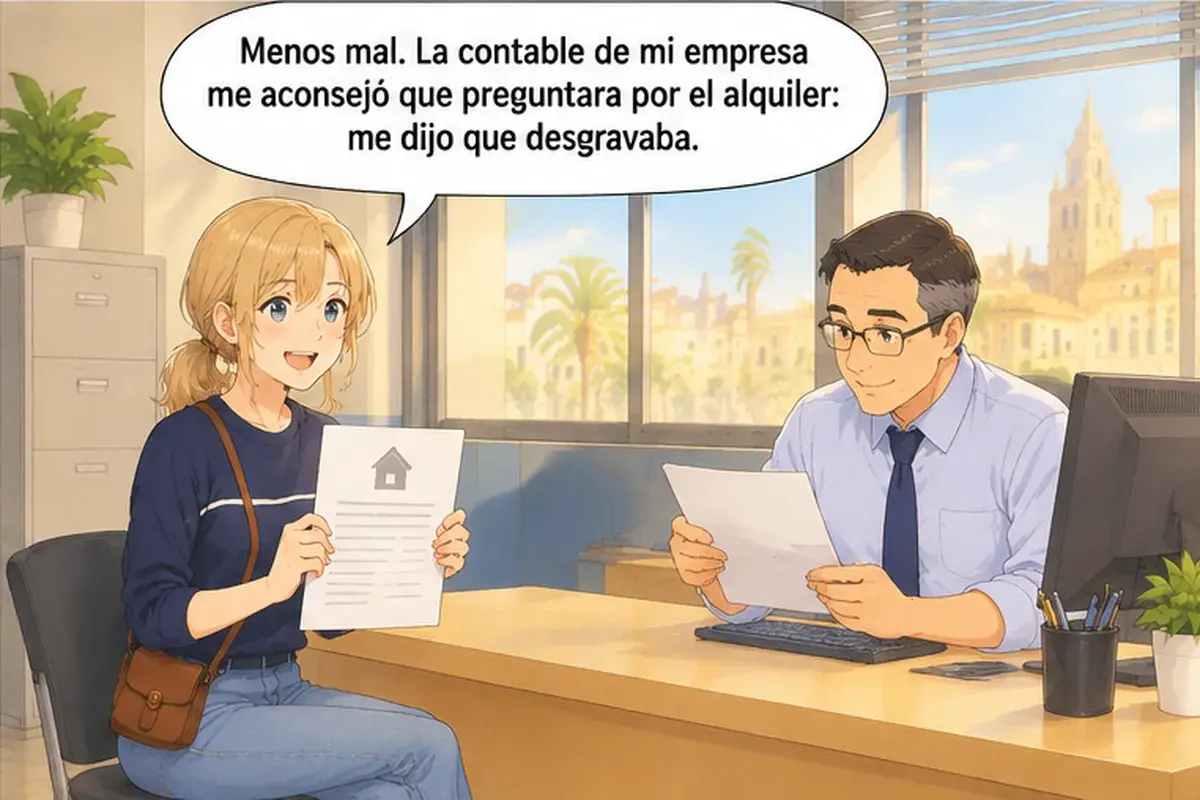
Menos mal. La contable de mi empresa me aconsejó que preguntara por el alquiler: me dijo que desgravaba.
Thank goodness. My company's accountant advised me to ask about the rent: she told me it was tax-deductible.
- Funcionario
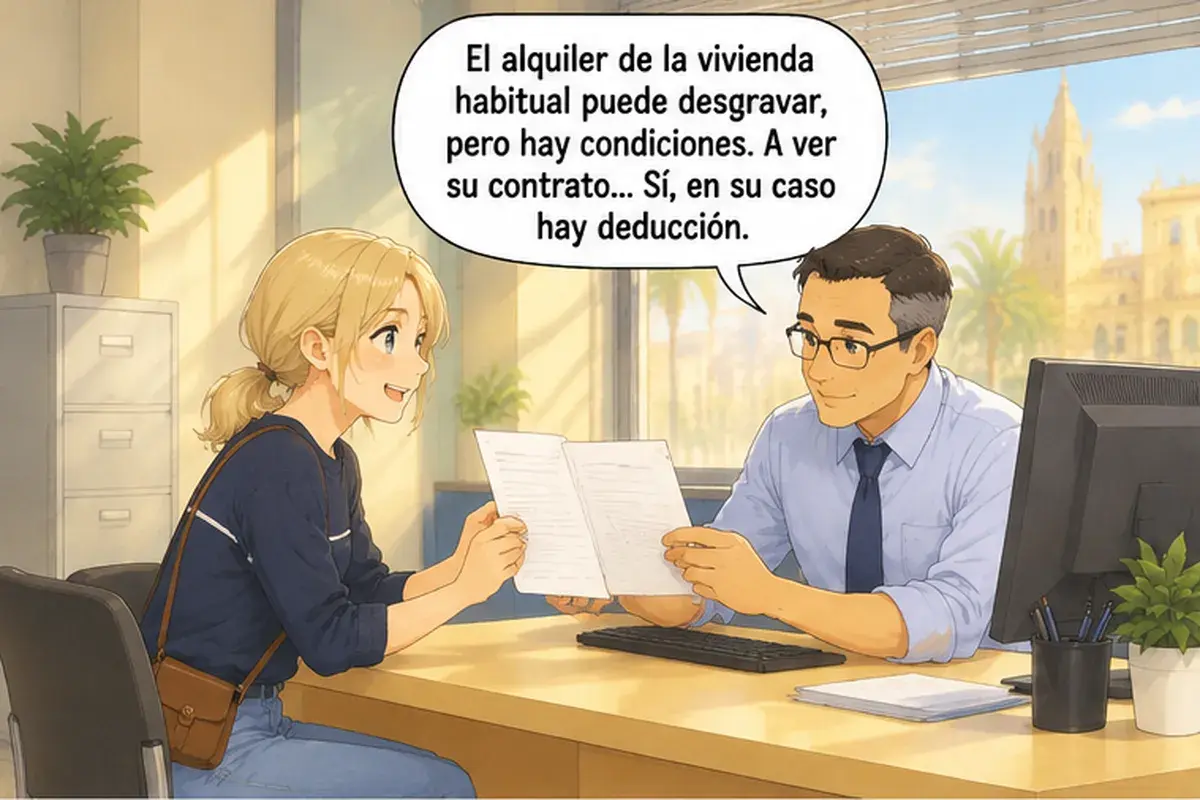
El alquiler de la vivienda habitual puede desgravar, pero hay condiciones. A ver su contrato… Sí, en su caso hay deducción.
Rent on your main home can be tax-deductible, but there are conditions. Let's see your lease... Yes, in your case there's a deduction. (formal)

- Ana
¡Qué alegría! Y aparte del sueldo no he tenido otras ganancias, se lo digo por si acaso.
That's wonderful! And apart from my salary, I haven't had any other earnings; I'm telling you just in case. (formal)

- Funcionario
Entonces ya está. Le sale a devolver: Hacienda le devuelve doscientos doce euros con cuarenta céntimos.
Then that's it. You're getting a refund: the tax office is paying you back two hundred twelve euros and forty cents. (formal)

- Ana
¿A devolver? Yo creía que tendría que pagar… No me cuadra: ¿seguro que la cifra está bien?
A refund? I thought I would have to pay... It doesn't add up: are you sure the figure is right?
- Funcionario
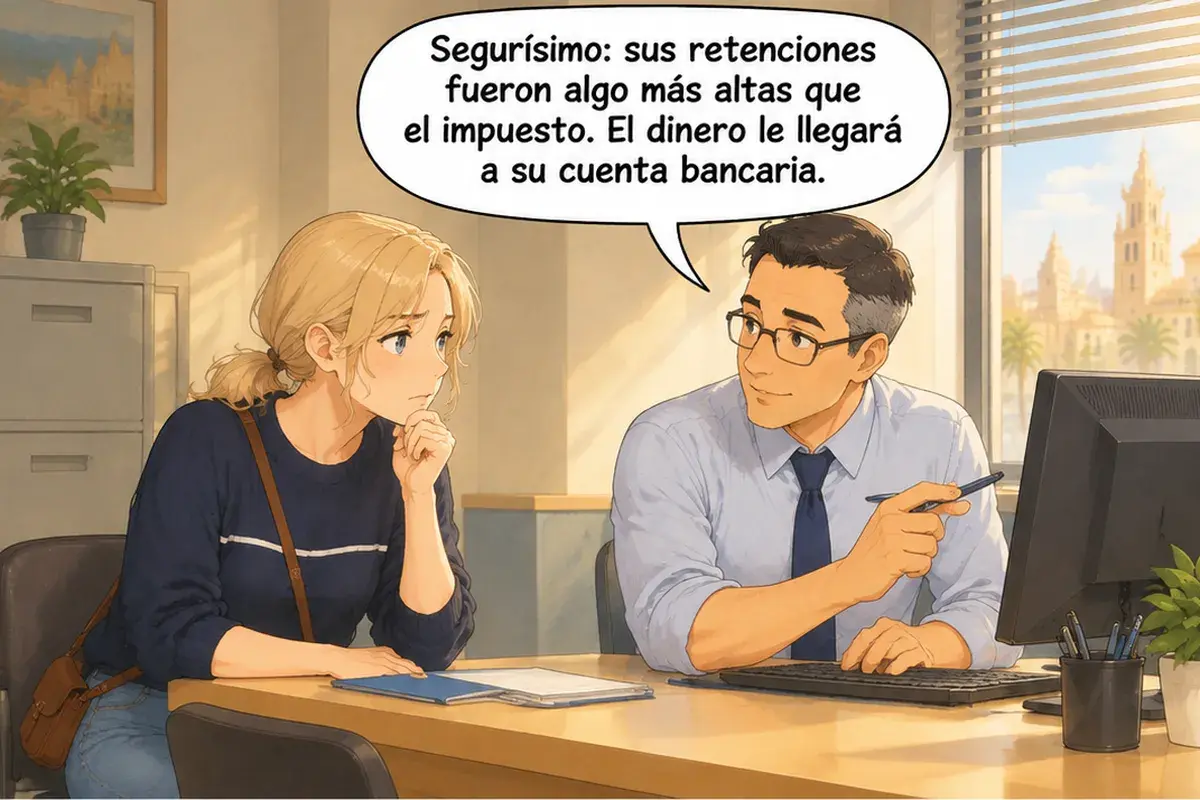
Segurísimo: sus retenciones fueron algo más altas que el impuesto. El dinero le llegará a su cuenta bancaria.
Absolutely sure: your withholdings were a little higher than the tax. The money will arrive in your bank account. (formal)

- Ana
Pues muchas gracias. ¡Nunca pensé que saldría contenta de Hacienda!
Well, thank you very much. I never thought I'd walk out of the tax office happy! (woman speaking)
Grammar for this text
Ana tells the clerk what people told her before, and each time she picks the form by its meaning:
- they informed her → the normal past: me decían que no estaba obligada, me dijo que desgravaba;
- they told her to do something or advised her → imperfect subjunctive: me dijeron que trajera, me aconsejó que preguntara;
- they promised or predicted something → conditional: me aseguraron que no haría falta, creía que tendría que pagar, nunca pensé que saldría contenta.
Si me equivocaba…, me harían una inspección isn't an unreal "if": it's Hugo's words "si te equivocas, te harán…" retold. The present became equivocaba, and the future became harían. English does the same: "if you make a mistake, they'll audit you" becomes "he said if I made a mistake, they would audit me".
Le sale a devolver is how people talk about the result of a tax return: you're getting a refund. The opposite is le sale a pagar: you owe money.
Usted dirá is a polite "How can I help you?". Fuera de plazo means "after the deadline": here fuera means "outside", it isn't a verb form.
Words and grammar of the unit: Retell a conversation at the tax office.
Learn the words from the texts with flashcards
In the app, you can tap any word in a text to see its translation, forms and examples, and new words stick with flashcards. 15 minutes a day.
Start for freeEverything is open for free. No card needed to sign up.