

Spanish dialogue with translation · B2 · 14 lines
¿A pagar o a devolver? Do you owe or get a refund?
Comic · 14 panels
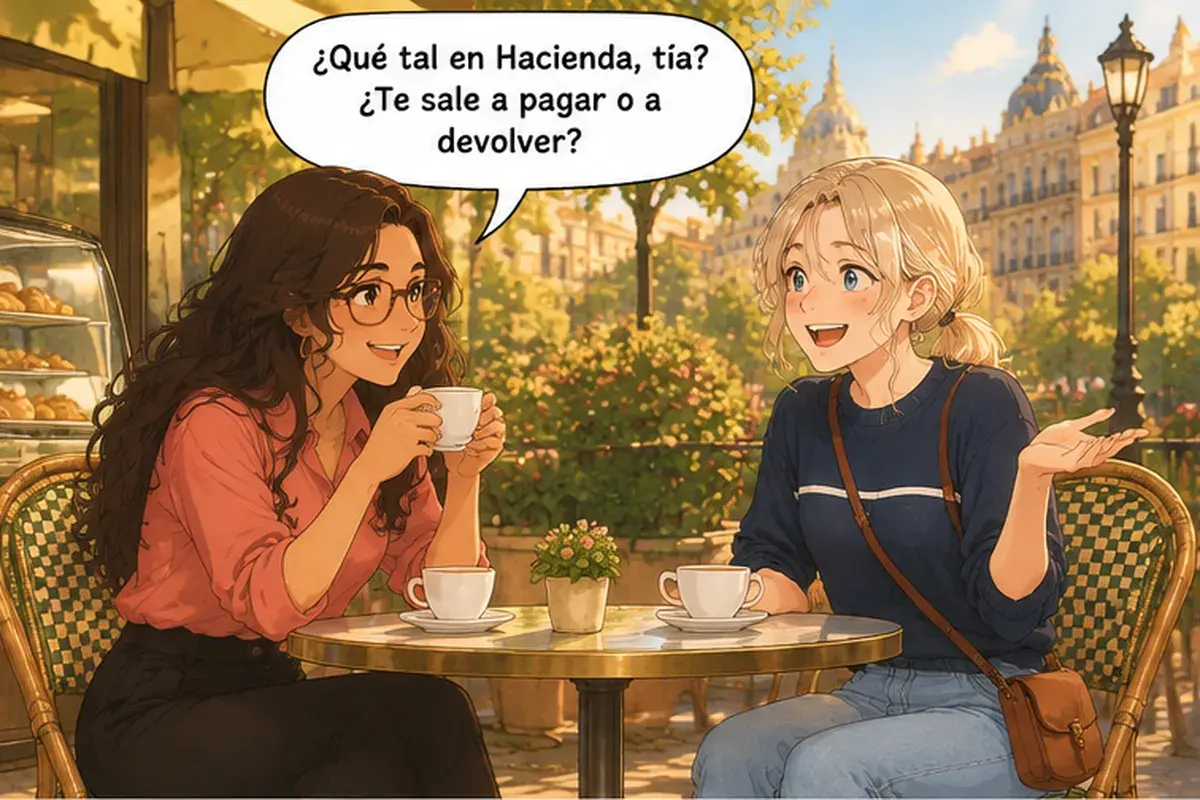
- Lucía
¿Qué tal en Hacienda, tía? ¿Te sale a pagar o a devolver?
How did it go at the tax office, girl? Do you owe money or are you getting a refund?

- Ana
¡A devolver! Doscientos doce euros con cuarenta céntimos. Estoy flipando.
A refund! Two hundred twelve euros and forty cents. I'm totally blown away.

- Lucía
¡Qué fuerte! Pues a mí en la gestoría me dijeron que este año me saldría a pagar.
No way! Well, at the paperwork agency they told me that this year I would owe money.
- Ana
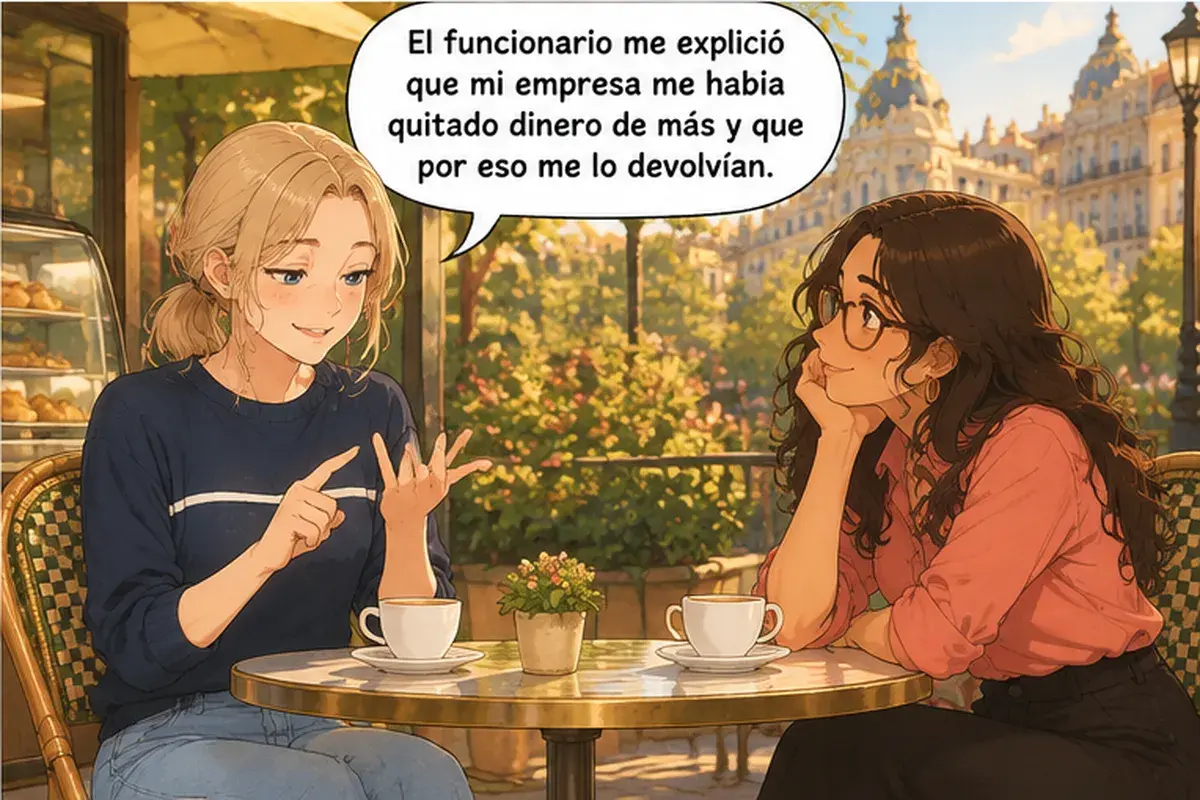
El funcionario me explicó que mi empresa me había quitado dinero de más y que por eso me lo devolvían.
The clerk explained to me that my company had taken too much money from me and that's why they were giving it back to me.
- Lucía
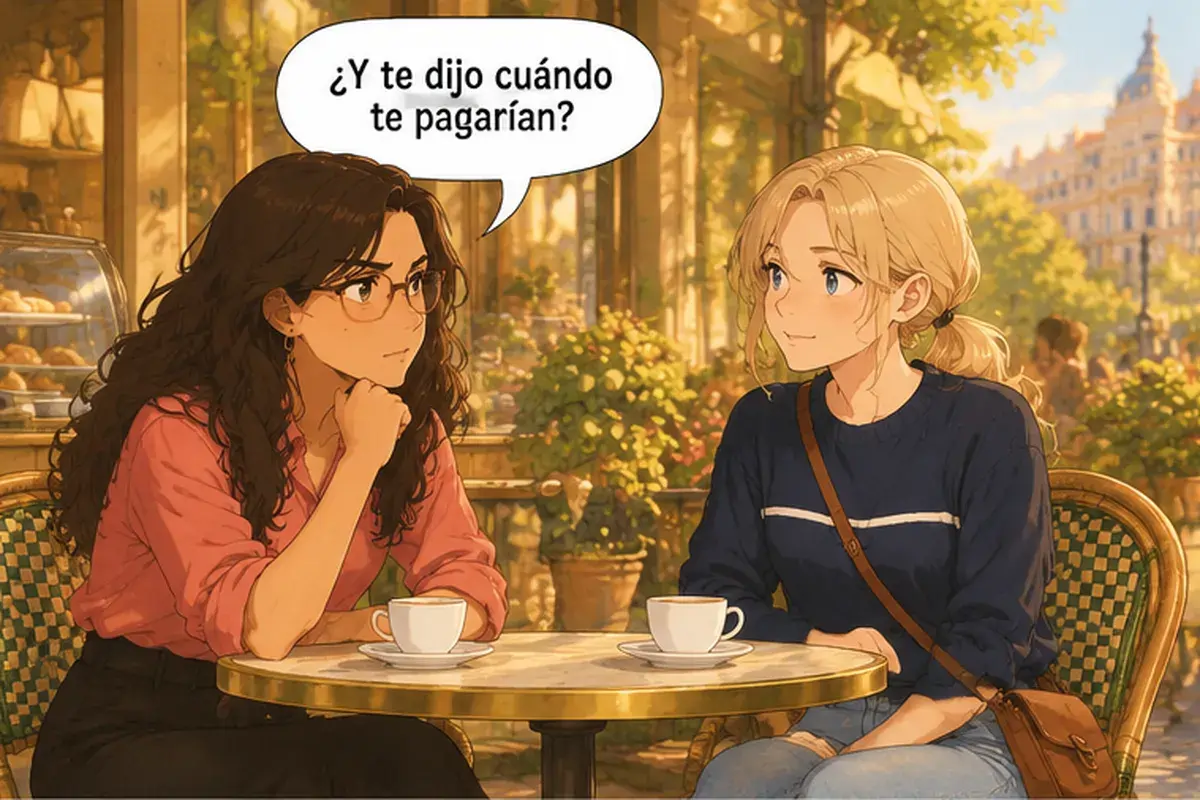
¿Y te dijo cuándo te pagarían?
And did he tell you when they would pay you?
- Ana
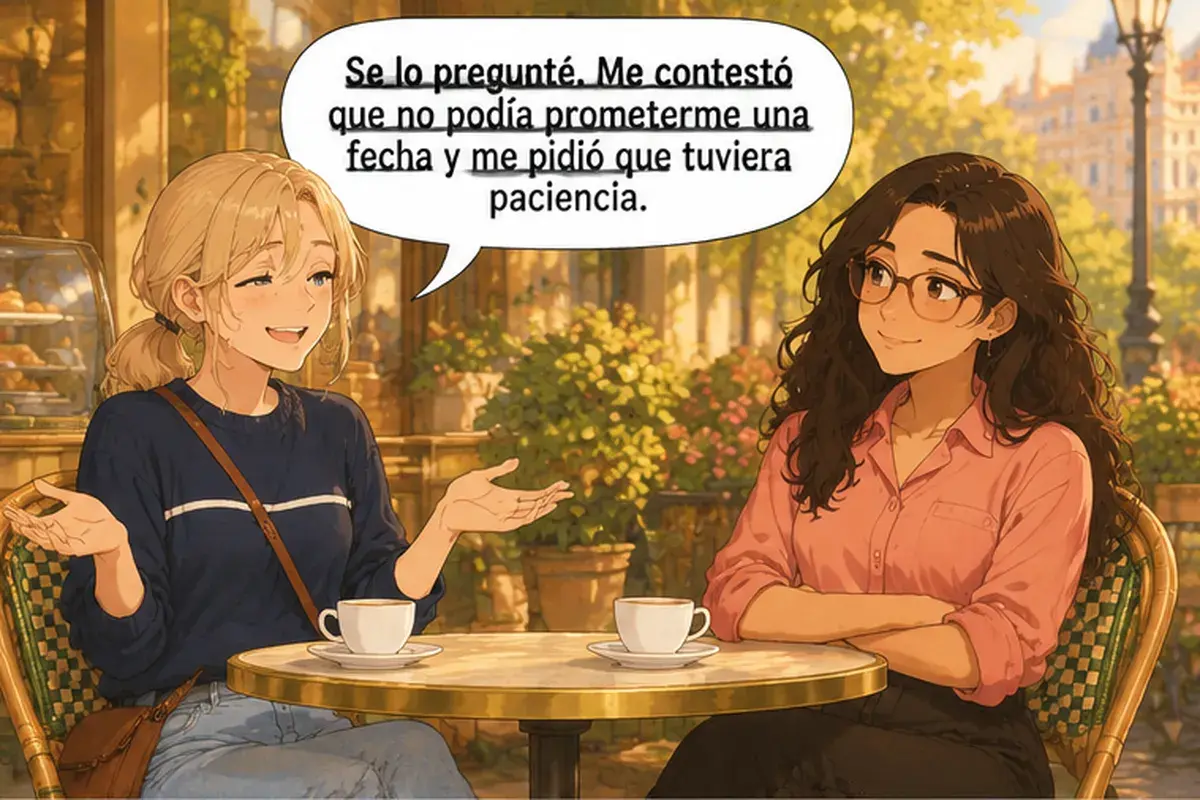
Se lo pregunté. Me contestó que no podía prometerme una fecha y me pidió que tuviera paciencia.
I asked him. He answered that he couldn't promise me a date and asked me to be patient.
- Lucía
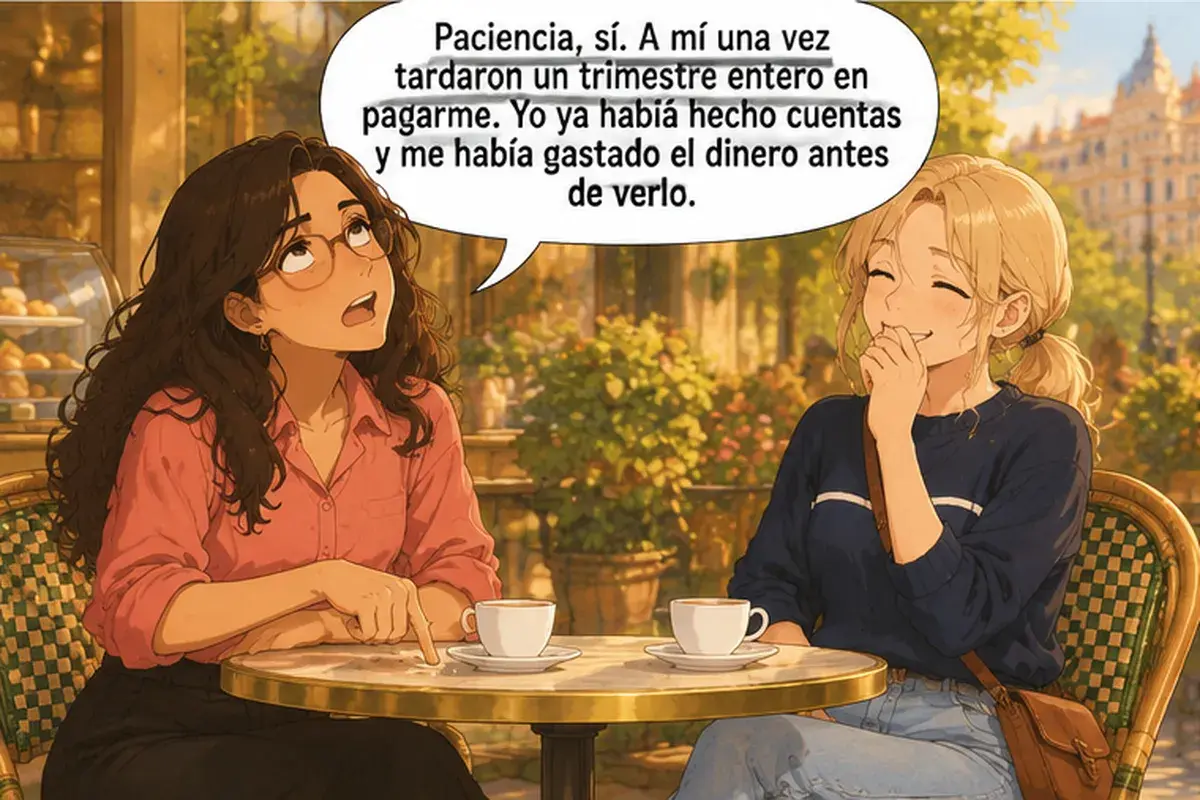
Paciencia, sí. A mí una vez tardaron un trimestre entero en pagarme. Yo ya había hecho cuentas y me había gastado el dinero antes de verlo.
Patience, yeah. Once it took them a whole quarter to pay me. I had already done the math and spent the money before I even saw it.

- Ana
Yo también he hecho cuentas, no creas. Si divido doscientos doce entre doce meses, salen menos de dieciocho euros al mes.
I've done the math too, you know. If I divide two hundred twelve by twelve months, it comes to less than eighteen euros a month.

- Lucía
No lo dividas, tía: ¡multiplícalo! En cinco años son más de mil euros.
Don't divide it, girl: multiply it! In five years that's more than a thousand euros.

- Ana
Tú sí que sabes animar. Venga, con ese dinero te invito a cenar.
You really know how to cheer someone up. OK then, I'll take you out to dinner with that money.
- Lucía
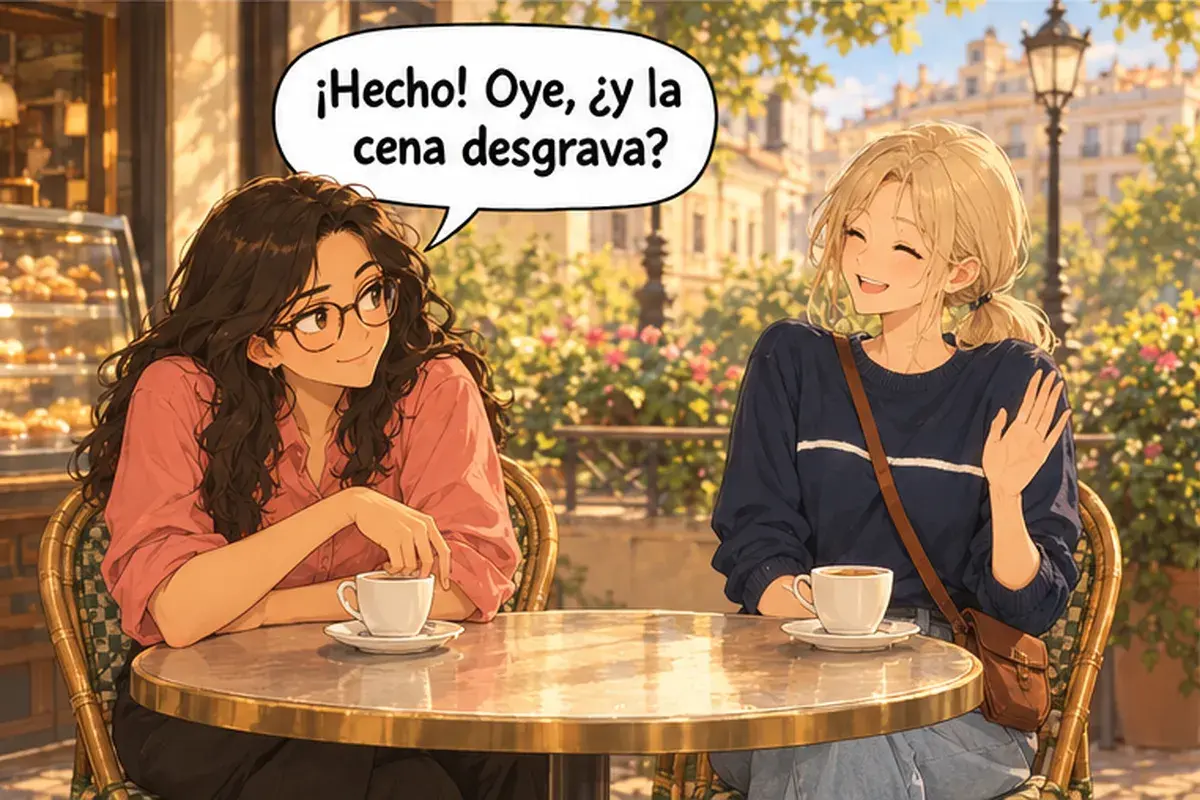
¡Hecho! Oye, ¿y la cena desgrava?
Deal! Hey, is the dinner tax-deductible?
- Ana
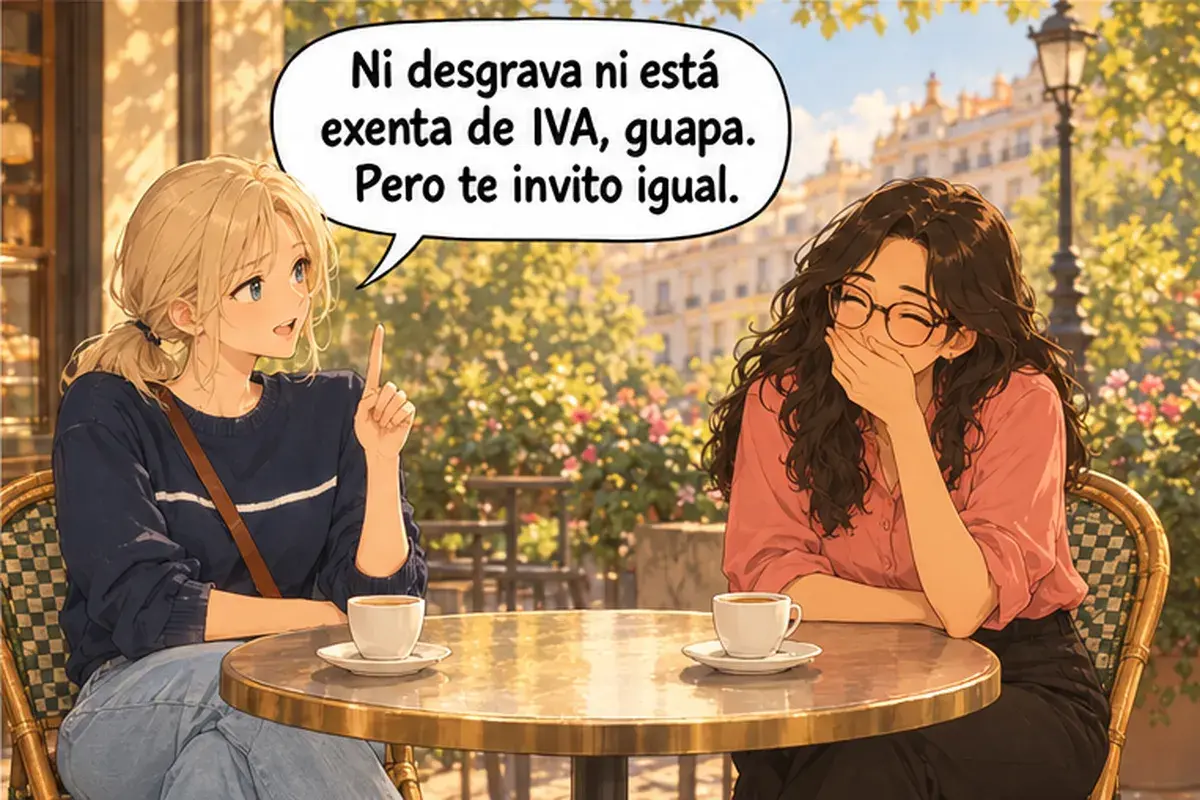
Ni desgrava ni está exenta de IVA, guapa. Pero te invito igual.
It's not tax-deductible and it's not exempt from VAT, sweetie. But I'm treating you anyway.
- Lucía
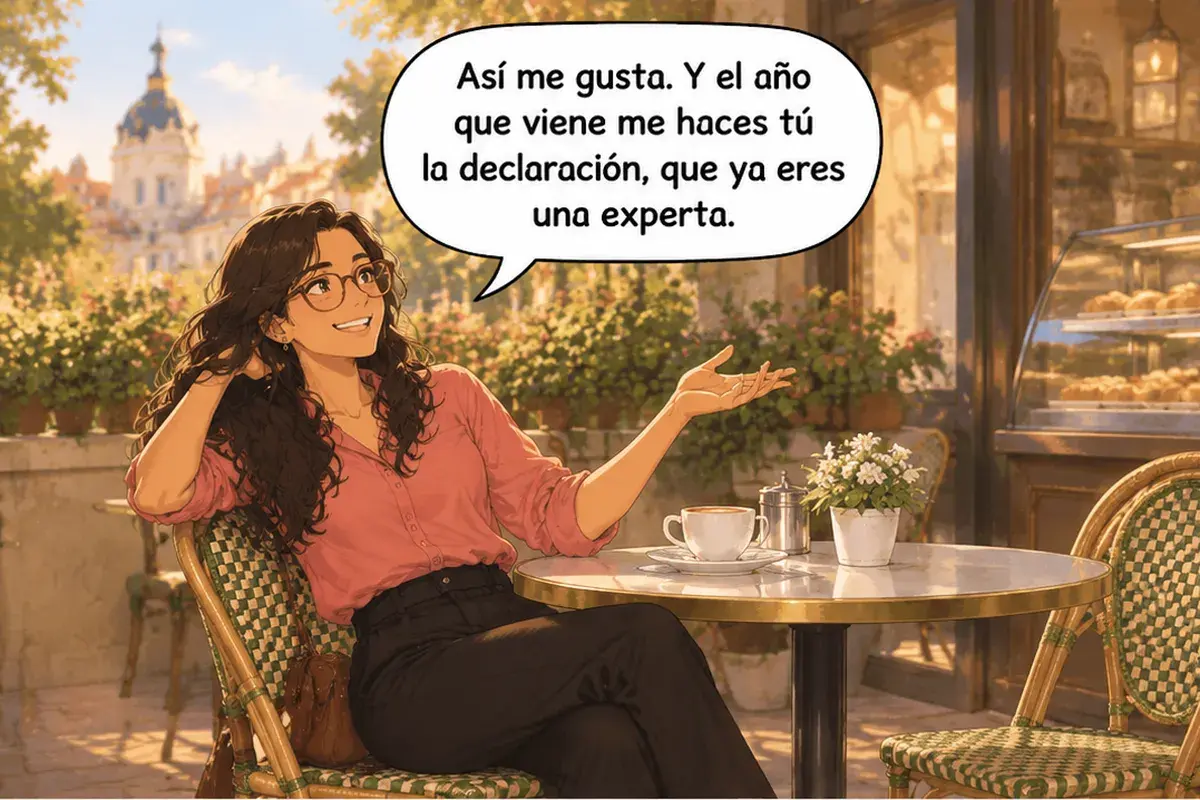
Así me gusta. Y el año que viene me haces tú la declaración, que ya eres una experta.
That's what I like to hear. And next year you're doing my tax return, since you're an expert now (to a woman).
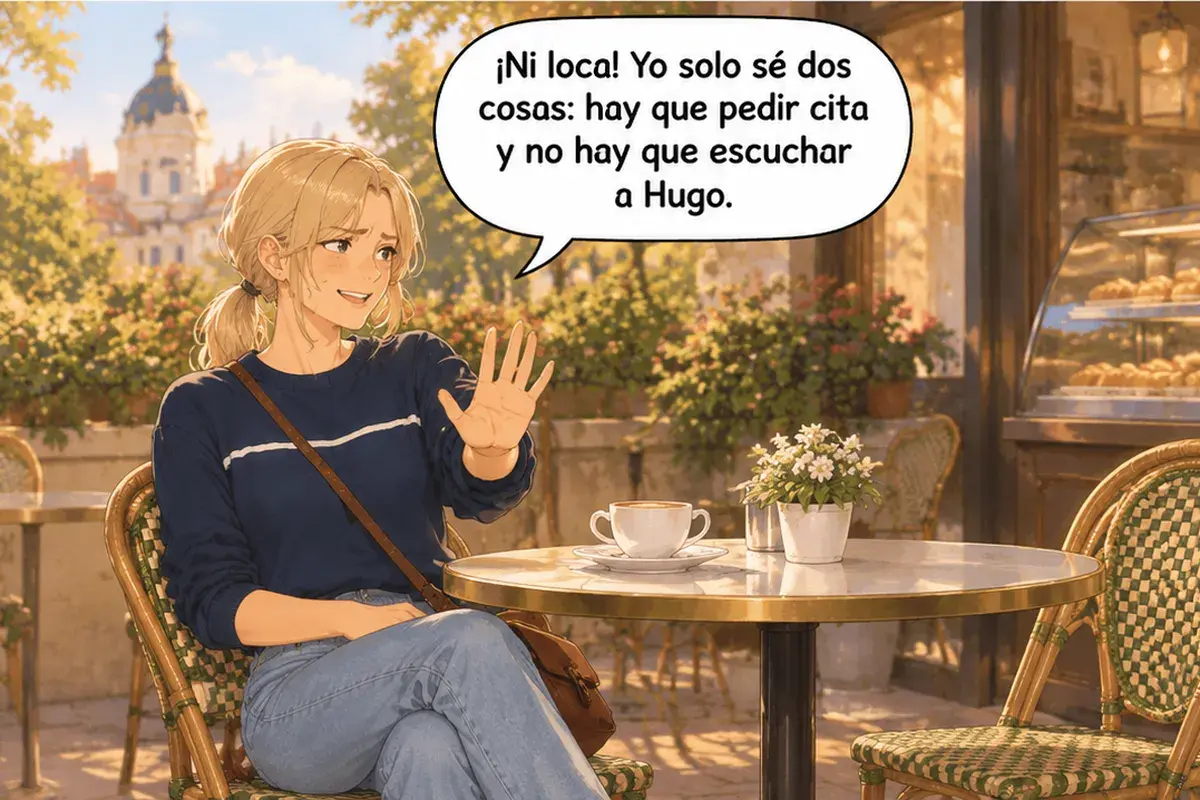
- Ana
¡Ni loca! Yo solo sé dos cosas: hay que pedir cita y no hay que escuchar a Hugo.
No way! I only know two things: you have to make an appointment, and you shouldn't listen to Hugo (woman speaking).
Grammar for this text
The friends talk in a short, lively way, but retelling works just like in official speech:
- me dijeron que este año me saldría a pagar — a prediction about the future → conditional;
- me explicó que mi empresa me había quitado dinero de más — something that had already happened → había + past participle (past perfect);
- me pidió que tuviera paciencia — a request → imperfect subjunctive;
- ¿te dijo cuándo te pagarían? — a question about the future: question word + conditional.
Doing math in Spanish. To divide by a number, say dividir entre: doscientos doce entre doce. To multiply by a number, say multiplicar por. Hacer cuentas means working out your money, not doing school math problems.
De más means "too much, more than needed". No creas means "believe me", "you know". ¡Hecho! means "Deal!". ¡Ni loca! means "No way!" (a man says ¡ni loco!).
Words and grammar of the unit: Retell a conversation at the tax office.
Learn the words from the texts with flashcards
In the app, you can tap any word in a text to see its translation, forms and examples, and new words stick with flashcards. 15 minutes a day.
Start for freeEverything is open for free. No card needed to sign up.