

Spanish dialogue with translation · B2 · 16 lines
Mi memoria me trata con demasiado cariño My memory treats me too kindly
Comic · 16 panels
- Ana
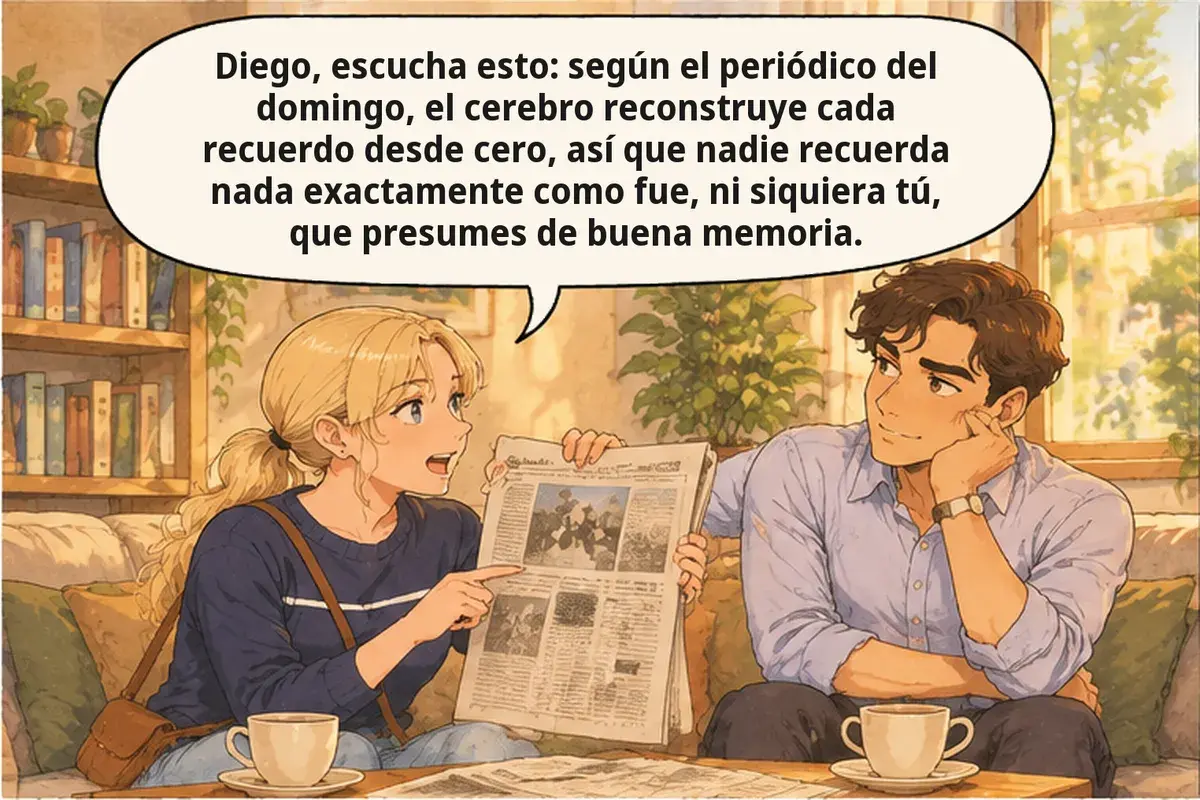
Diego, escucha esto: según el periódico del domingo, el cerebro reconstruye cada recuerdo desde cero, así que nadie recuerda nada exactamente como fue, ni siquiera tú, que presumes de buena memoria.
Diego, listen to this: according to Sunday's paper, the brain reconstructs each memory from scratch, so no one remembers anything exactly the way it was, not even you, who brag about having a good memory.
- Diego
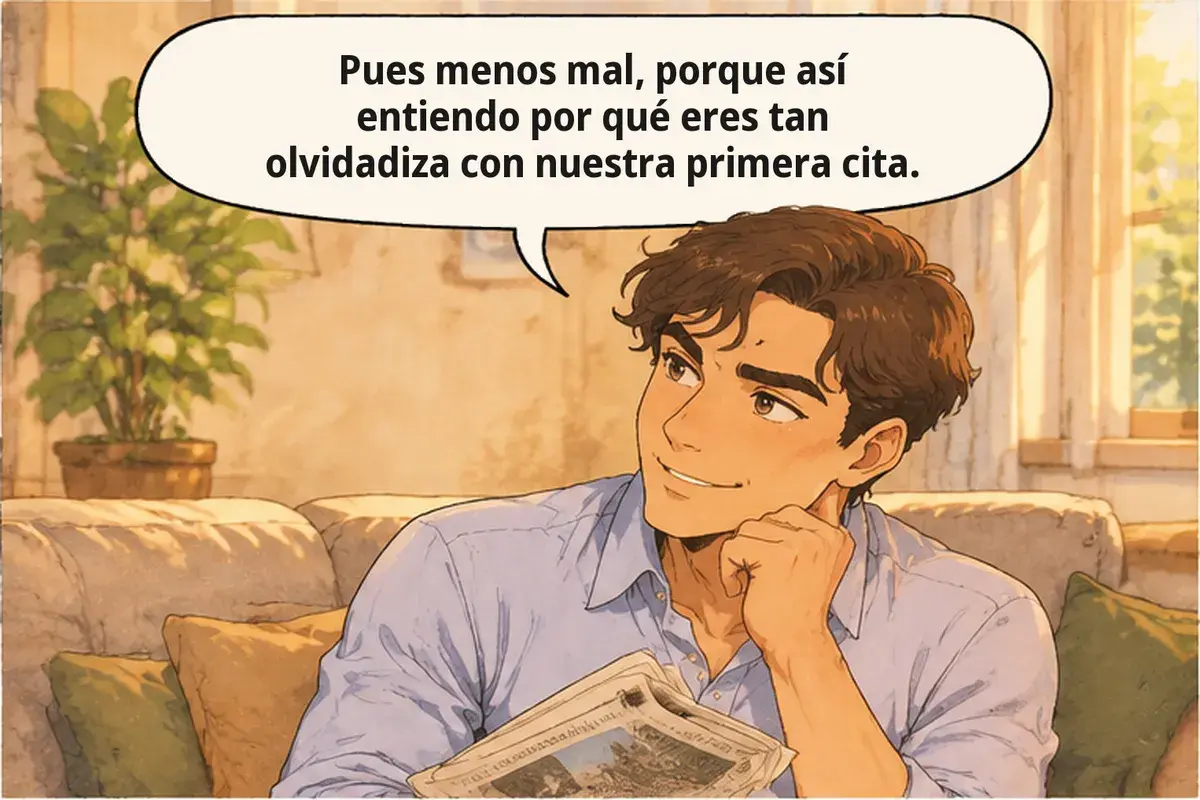
Pues menos mal, porque así entiendo por qué eres tan olvidadiza con nuestra primera cita.
Well, thank goodness, because now I understand why you're so forgetful about our first date (to a woman).
- Ana
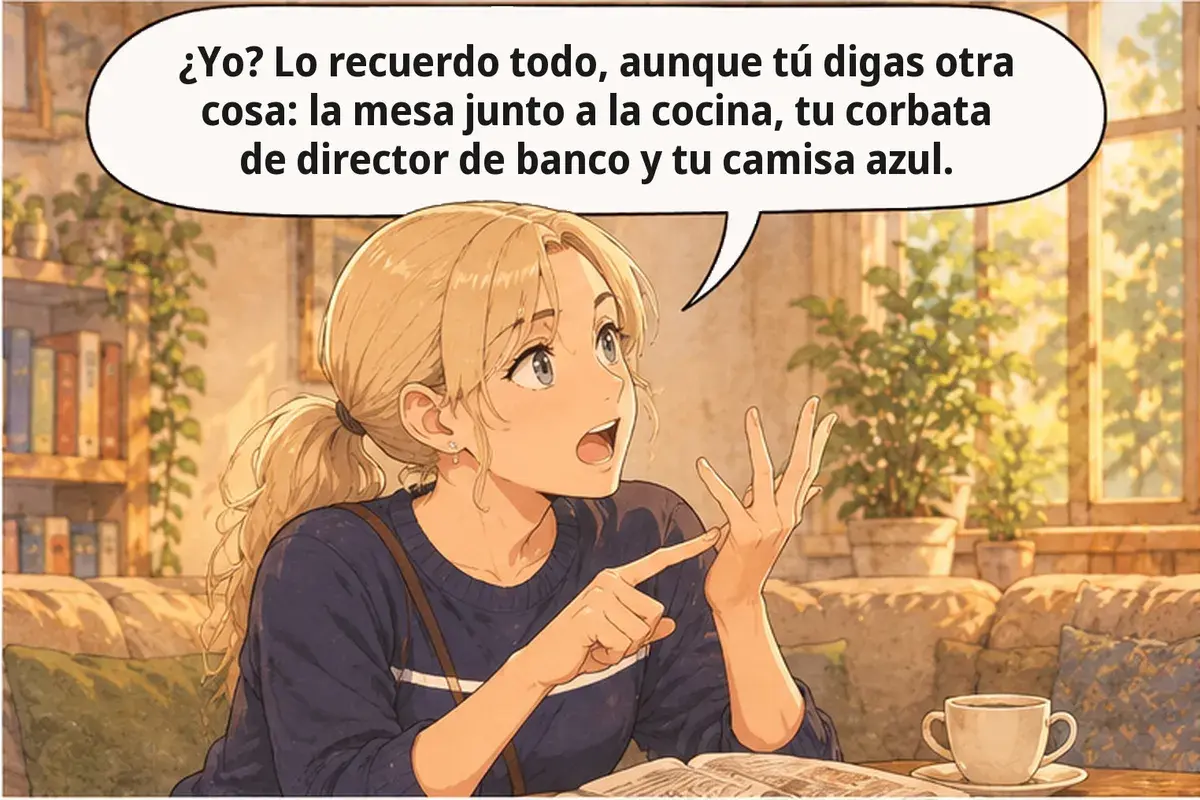
¿Yo? Lo recuerdo todo, aunque tú digas otra cosa: la mesa junto a la cocina, tu corbata de director de banco y tu camisa azul.
Me? I remember everything, even if you say otherwise: the table by the kitchen, your bank manager tie and your blue shirt.
- Diego
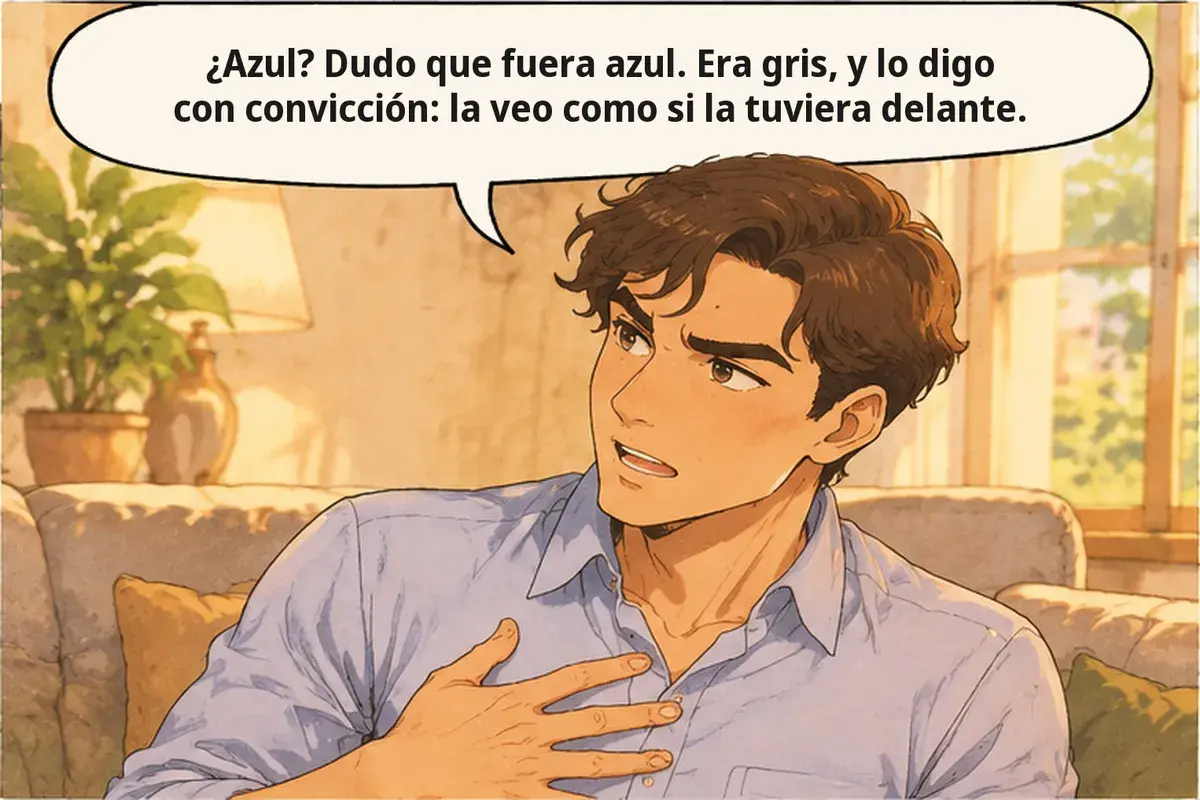
¿Azul? Dudo que fuera azul. Era gris, y lo digo con convicción: la veo como si la tuviera delante.
Blue? I doubt it was blue. It was gray, and I say it with conviction: I can see it as if it were right in front of me.
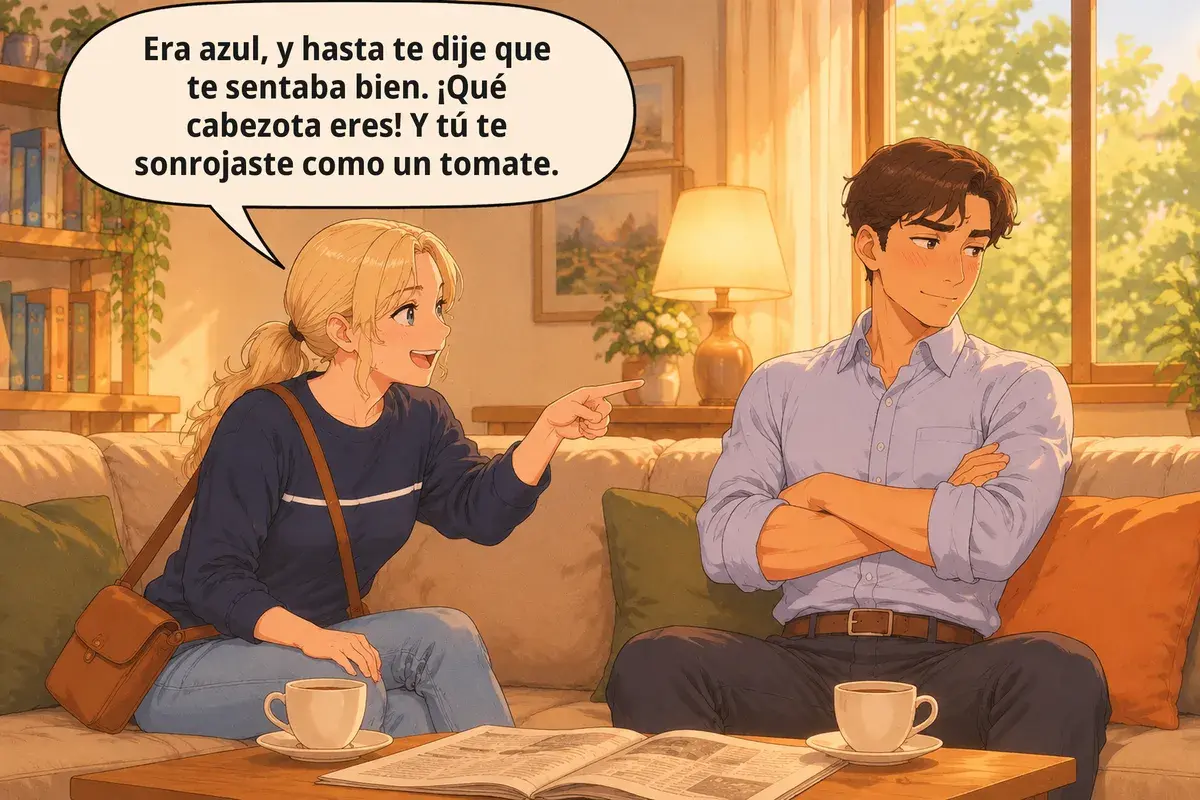
- Ana
Era azul, y hasta te dije que te sentaba bien. ¡Qué cabezota eres! Y tú te sonrojaste como un tomate.
It was blue, and I even told you it looked good on you. You're so stubborn! And you turned as red as a tomato.
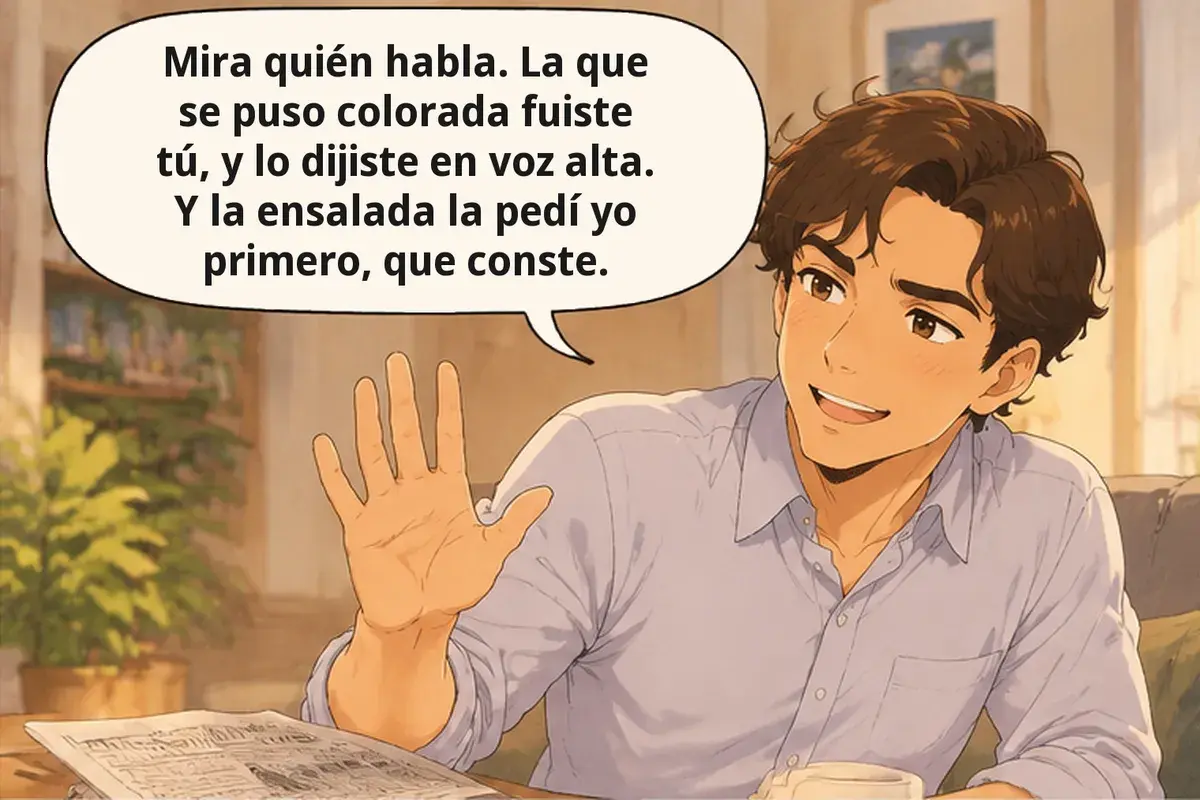
- Diego
Mira quién habla. La que se puso colorada fuiste tú, y lo dijiste en voz alta. Y la ensalada la pedí yo primero, que conste.
Look who's talking. The one who turned red was you, and you said it out loud. And I ordered the salad first, just so you know (to a woman).
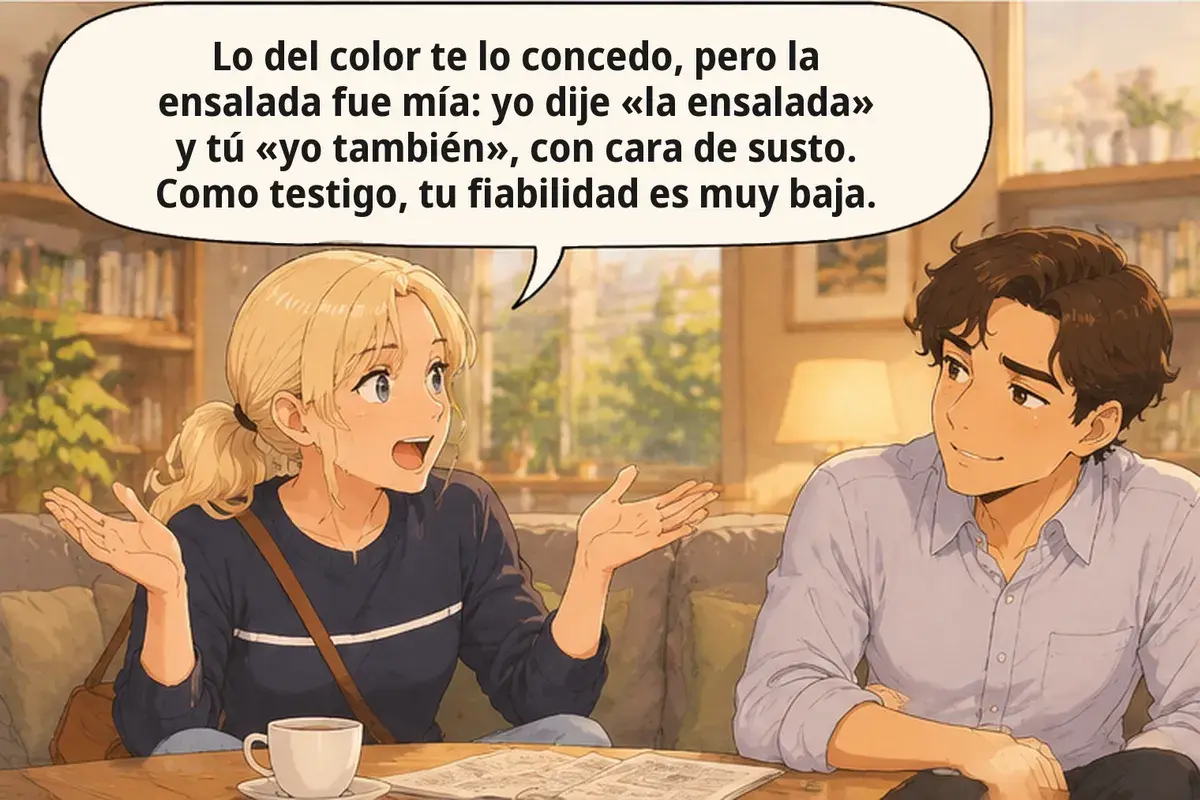
- Ana
Lo del color te lo concedo, pero la ensalada fue mía: yo dije «la ensalada» y tú «yo también», con cara de susto. Como testigo, tu fiabilidad es muy baja.
I'll grant you the thing about the color, but the salad was mine: I said "the salad" and you said "me too," looking scared. As a witness, your reliability is very low.
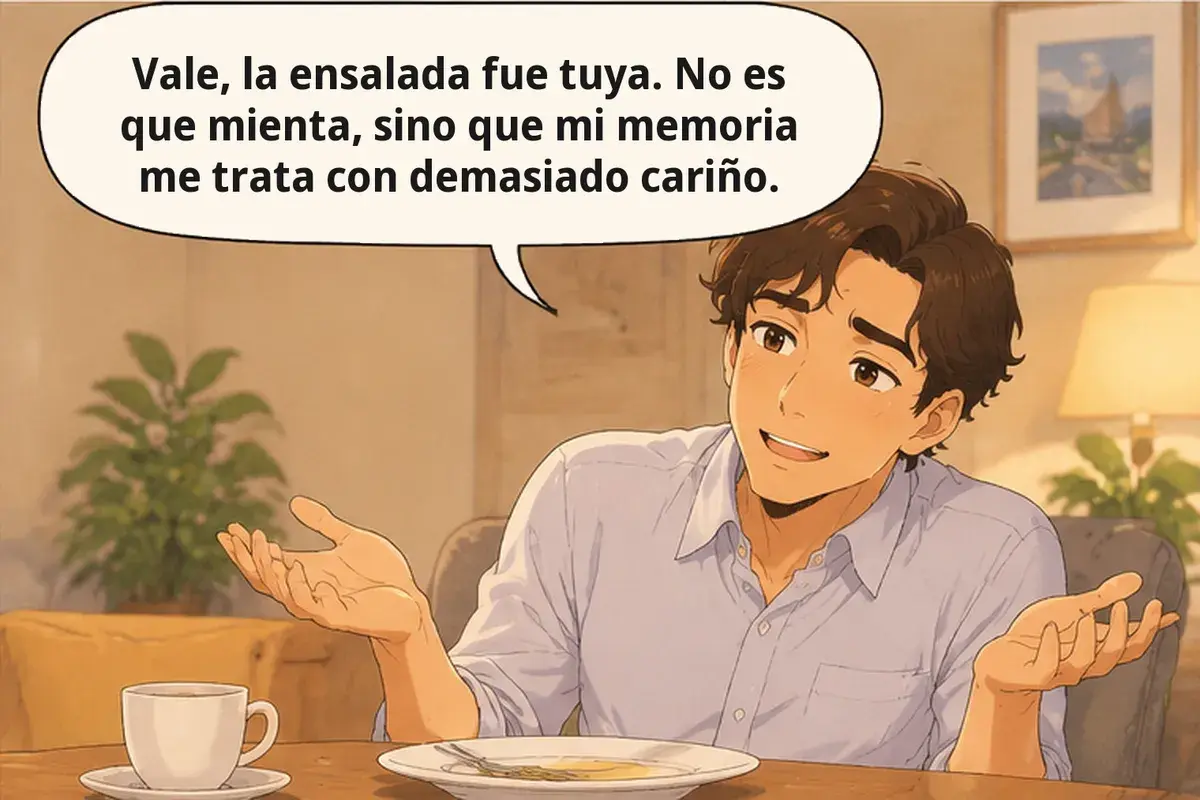
- Diego
Vale, la ensalada fue tuya. No es que mienta, sino que mi memoria me trata con demasiado cariño.
OK, the salad was yours. It's not that I'm lying; it's that my memory treats me too kindly.
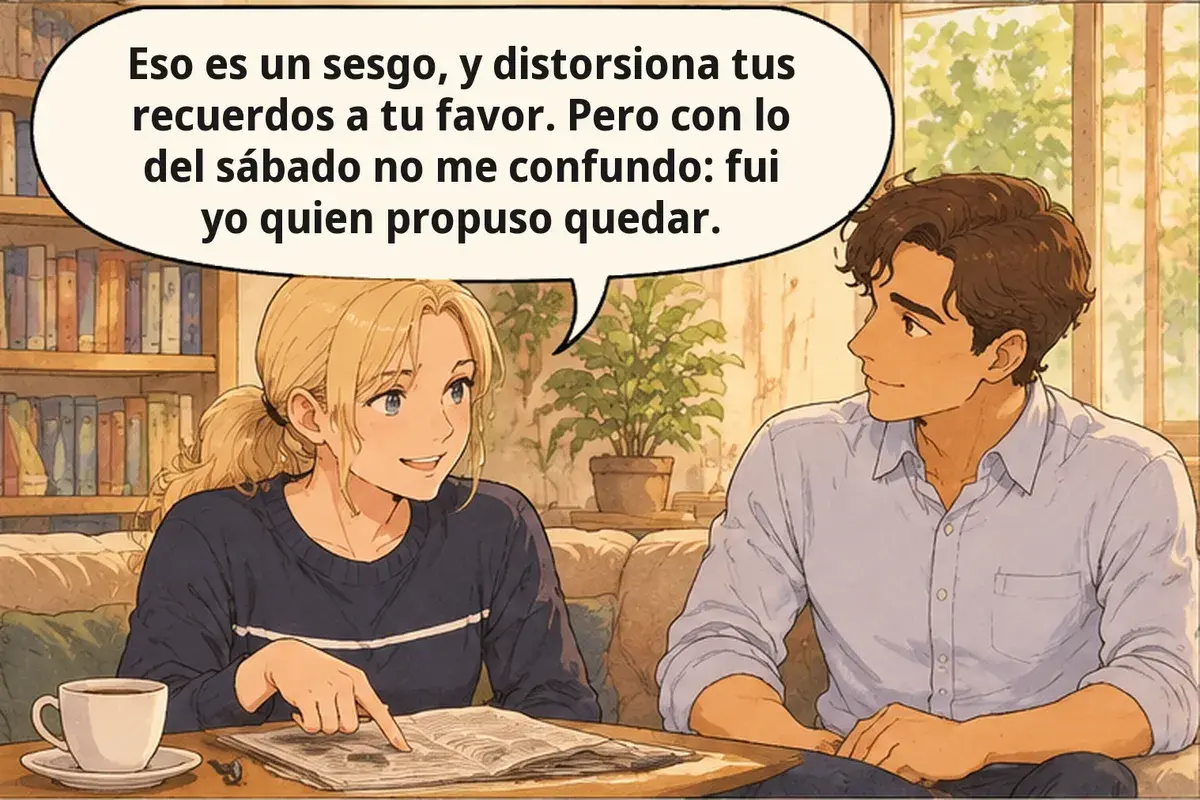
- Ana
Eso es un sesgo, y distorsiona tus recuerdos a tu favor. Pero con lo del sábado no me confundo: fui yo quien propuso quedar.
That's a bias, and it distorts your memories in your favor. But I'm not mixed up about Saturday: I was the one who suggested meeting up.
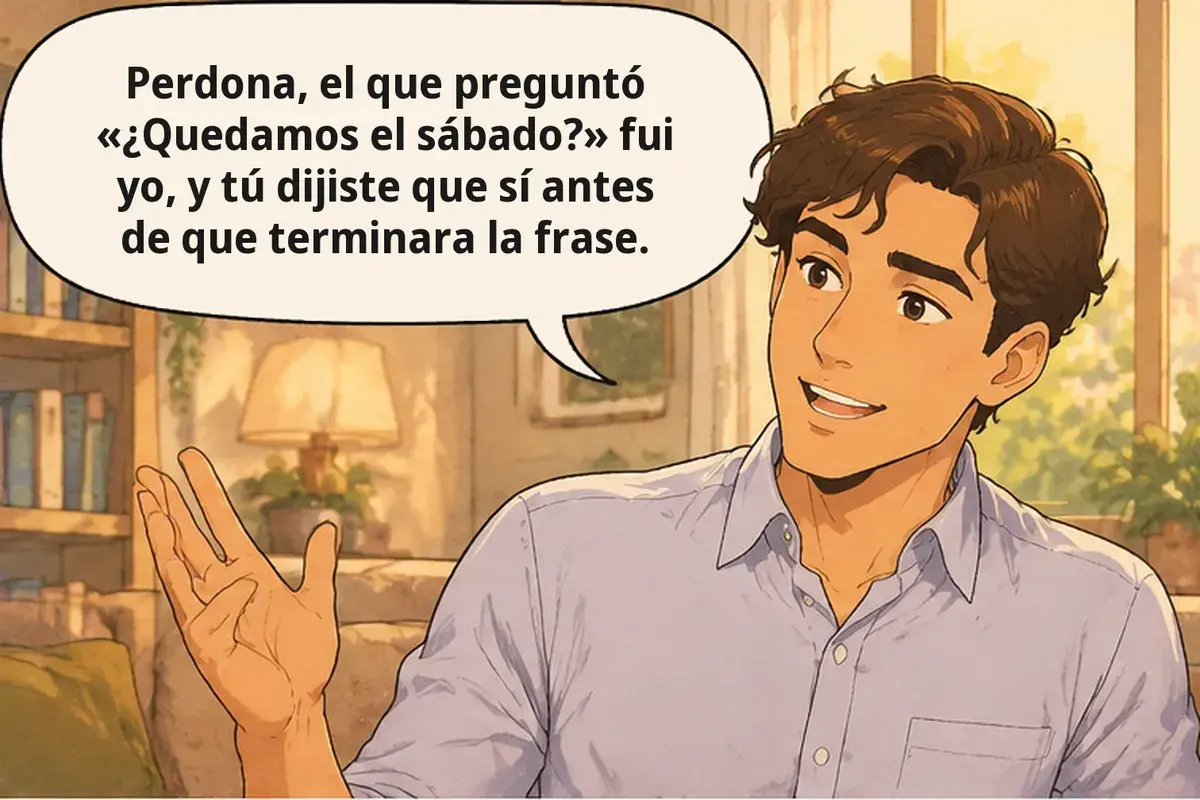
- Diego
Perdona, el que preguntó «¿Quedamos el sábado?» fui yo, y tú dijiste que sí antes de que terminara la frase.
Excuse me, the one who asked "Should we meet up on Saturday?" was me, and you said yes before I finished the sentence (man speaking).
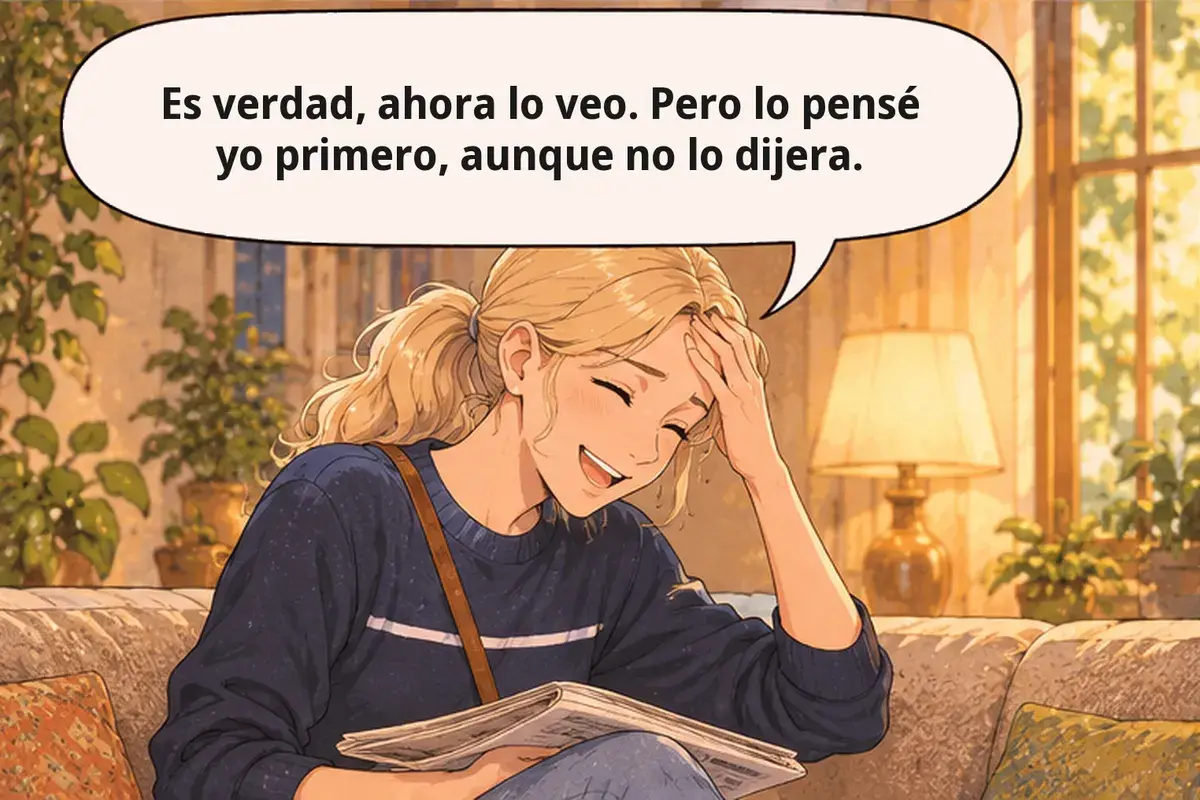
- Ana
Es verdad, ahora lo veo. Pero lo pensé yo primero, aunque no lo dijera.
That's true, I see it now. But I thought of it first, even though I didn't say it.
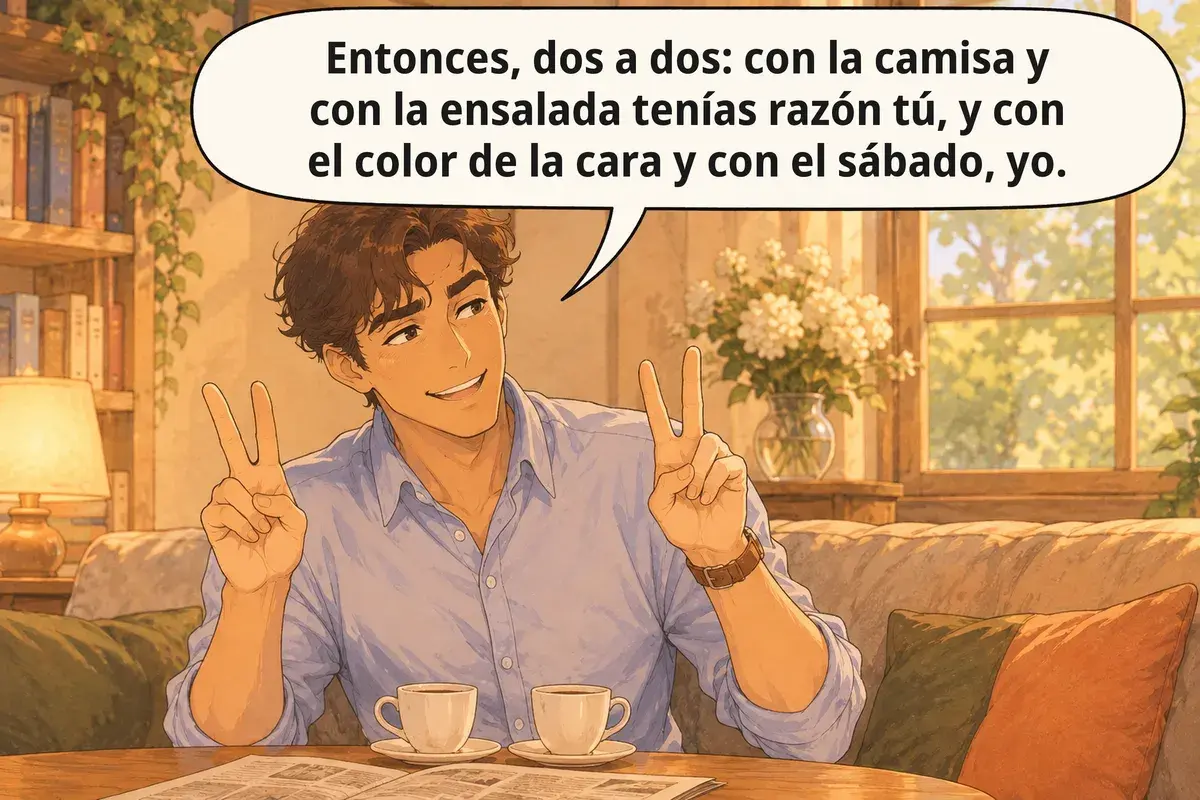
- Diego
Entonces, dos a dos: con la camisa y con la ensalada tenías razón tú, y con el color de la cara y con el sábado, yo.
So it's two to two: you were right about the shirt and the salad, and I was right about the color of your face and Saturday.
- Ana
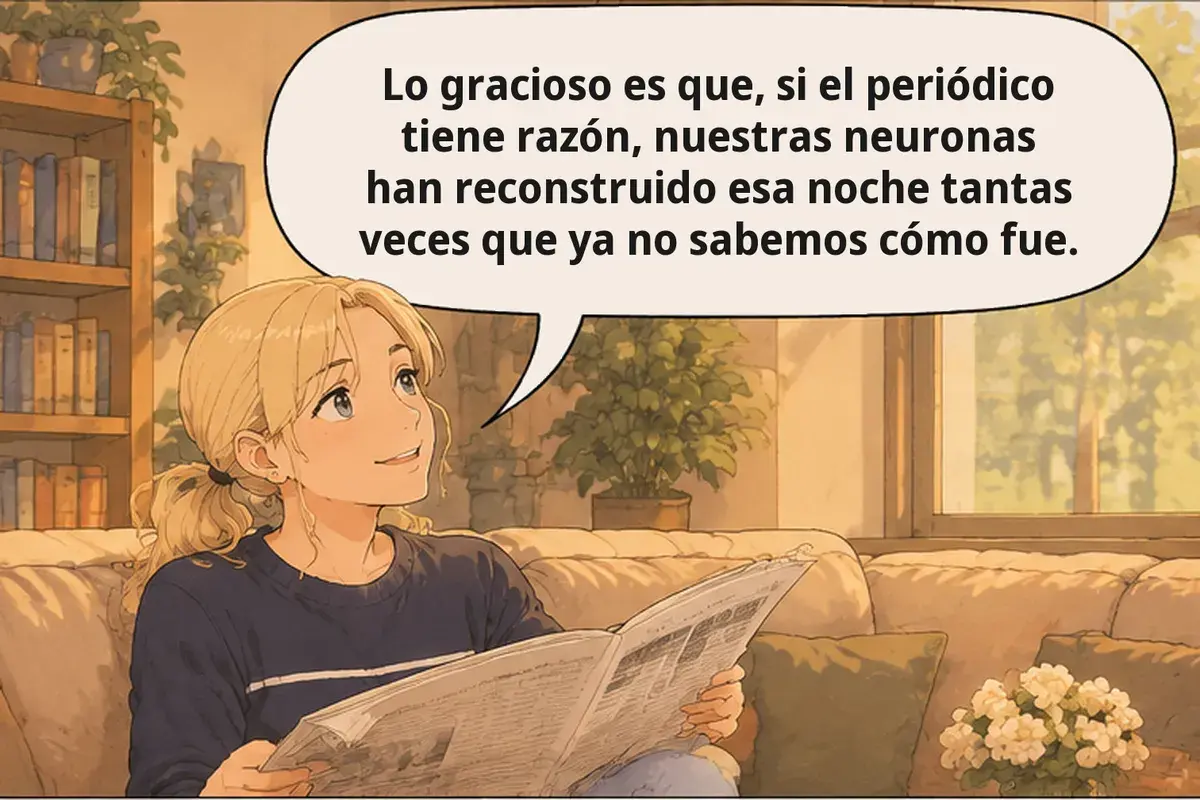
Lo gracioso es que, si el periódico tiene razón, nuestras neuronas han reconstruido esa noche tantas veces que ya no sabemos cómo fue.
The funny thing is that if the paper is right, our neurons have reconstructed that night so many times that we don't know how it went anymore.
- Diego
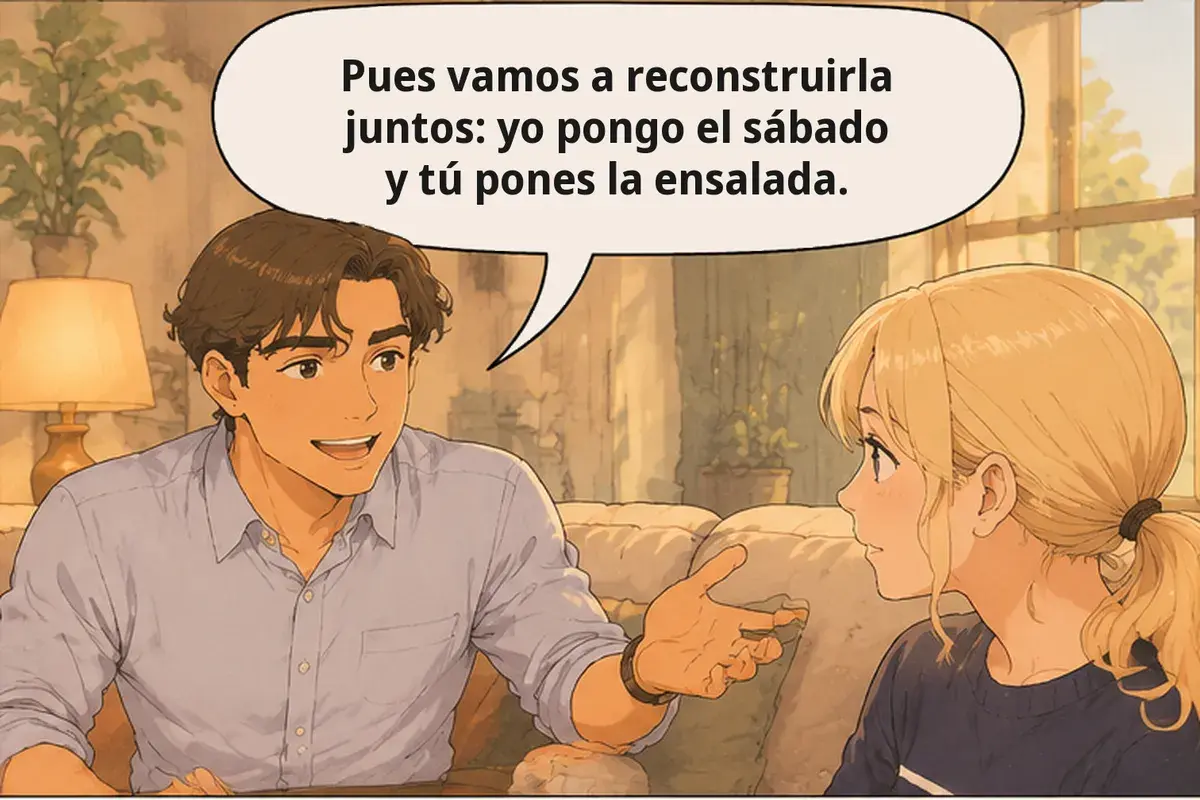
Pues vamos a reconstruirla juntos: yo pongo el sábado y tú pones la ensalada.
Then let's reconstruct it together: I'll bring Saturday, and you bring the salad.
- Ana
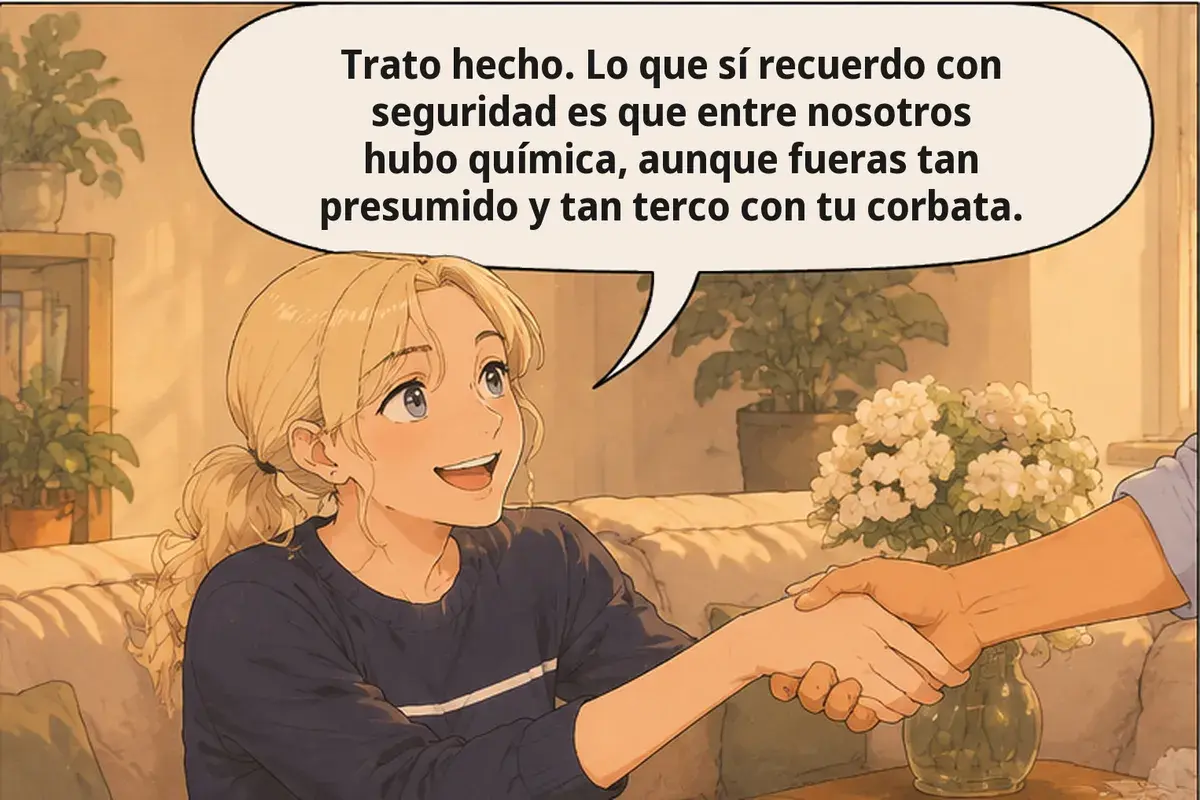
Trato hecho. Lo que sí recuerdo con seguridad es que entre nosotros hubo química, aunque fueras tan presumido y tan terco con tu corbata.
Deal. What I do remember for sure is that there was chemistry between us, even if you were so full of yourself and so stubborn with your tie (to a man).
- Diego
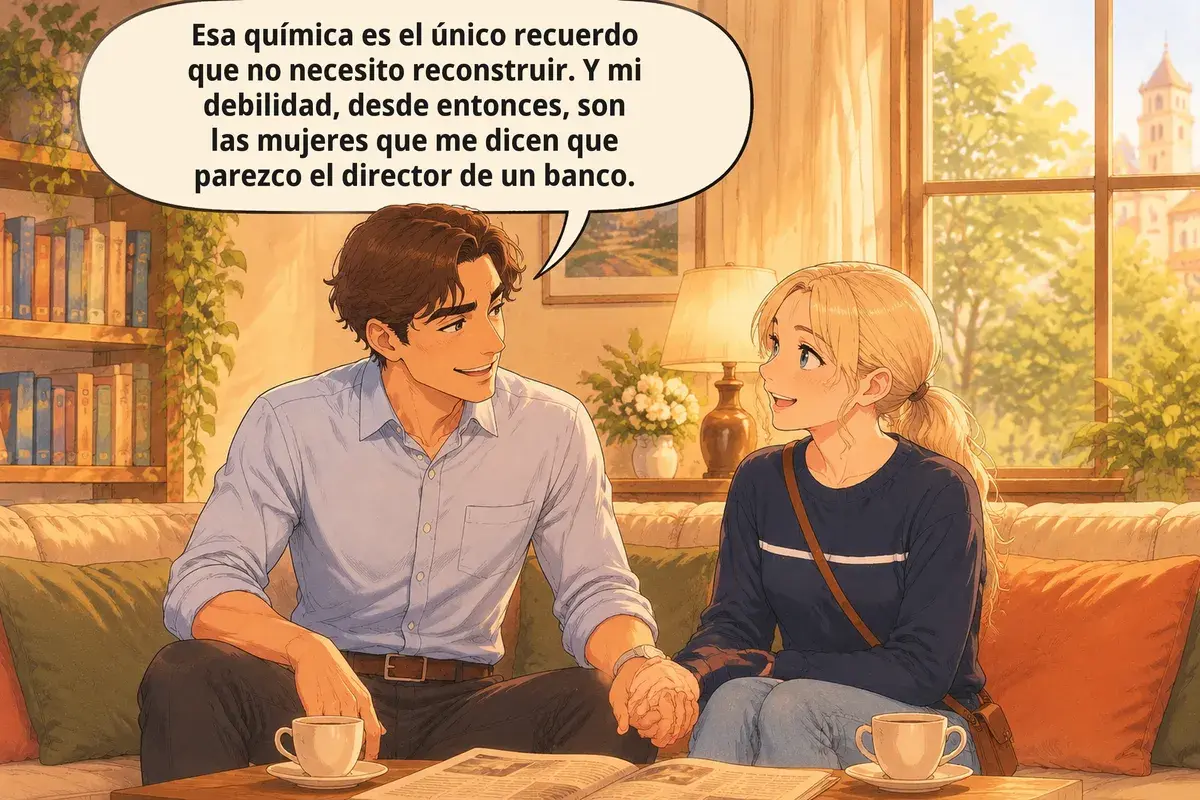
Esa química es el único recuerdo que no necesito reconstruir. Y mi debilidad, desde entonces, son las mujeres que me dicen que parezco el director de un banco.
That chemistry is the only memory I don't need to reconstruct. And since then, my weakness has been women who tell me I look like a bank manager.
Grammar for this text
Disagreeing in an argument (more in the unit's grammar).
- Mira quién habla — "look who's talking": you say this to someone who blames you for something they do themselves. que conste — "just so you know," "for the record." Lo del color te lo concedo — conceder: "I'll grant you," "I admit."
- aunque tú digas otra cosa — aunque + subjunctive: "even if you say otherwise." Dudo que fuera azul — when you doubt something in the past, the verb takes the -ra form: fuera. como si la tuviera delante — como si + the -ra form: "as if it were right in front of me." The same goes for antes de que terminara la frase and aunque no lo dijera ("even though I didn't say it out loud").
- No es que mienta, sino que mi memoria me trata con demasiado cariño — no es que + subjunctive (mienta), then sino que + normal form: "it's not that…, it's that…." si el periódico tiene razón — a regular si + present: a condition Ana thinks is possible.
- Pues vamos a reconstruirla juntos — in reconstruirla, la ("it," the night) is attached to the infinitive. dos a dos — the score "two to two." aunque fueras tan presumido y tan terco con tu corbata — aunque with the -ra form again: "even if you were so full of yourself and so stubborn with your tie"; presumido is someone who likes to show off, terco means stubborn.
Words and grammar of the unit: Argue about memory and beliefs.
Learn the words from the texts with flashcards
In the app, you can tap any word in a text to see its translation, forms and examples, and new words stick with flashcards. 15 minutes a day.
Start for freeEverything is open for free. No card needed to sign up.