

Spanish dialogue with translation · B2 · 14 lines
Háblame normal Talk to Me Normally
Comic · 14 panels
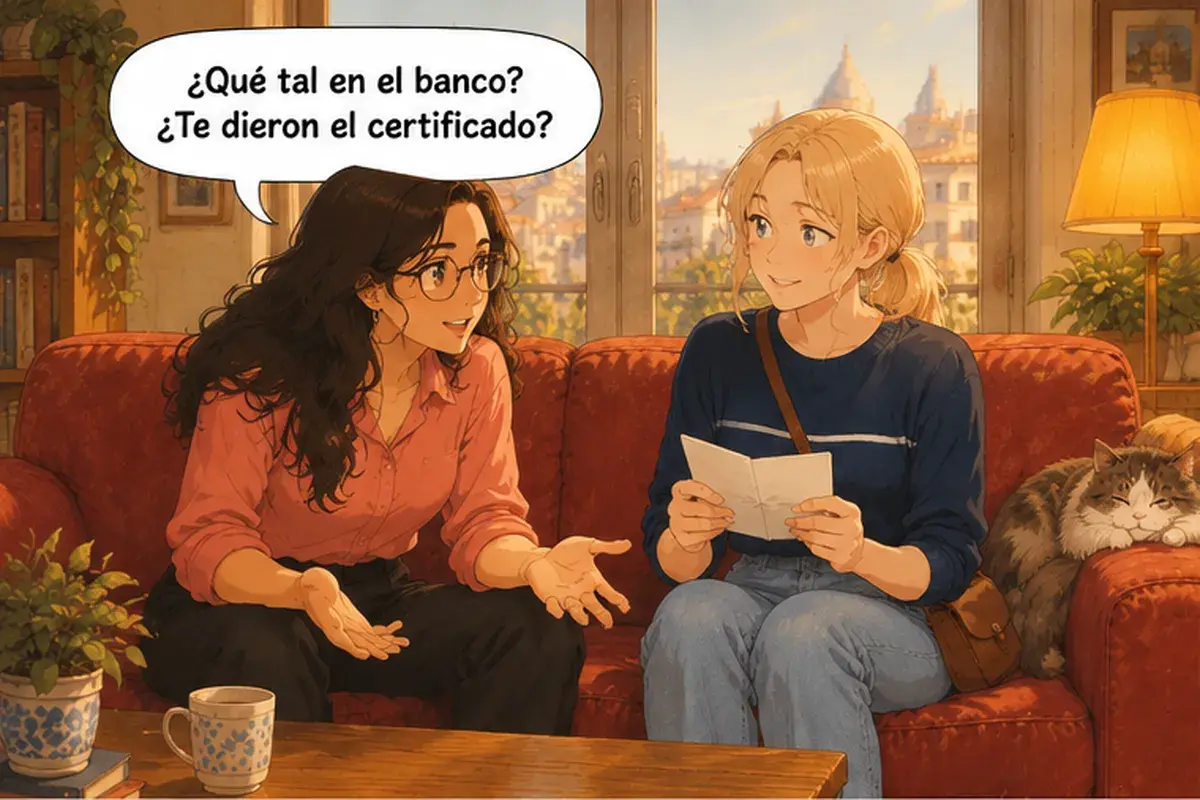
- Lucía
¿Qué tal en el banco? ¿Te dieron el certificado?
How did it go at the bank? Did they give you the certificate?
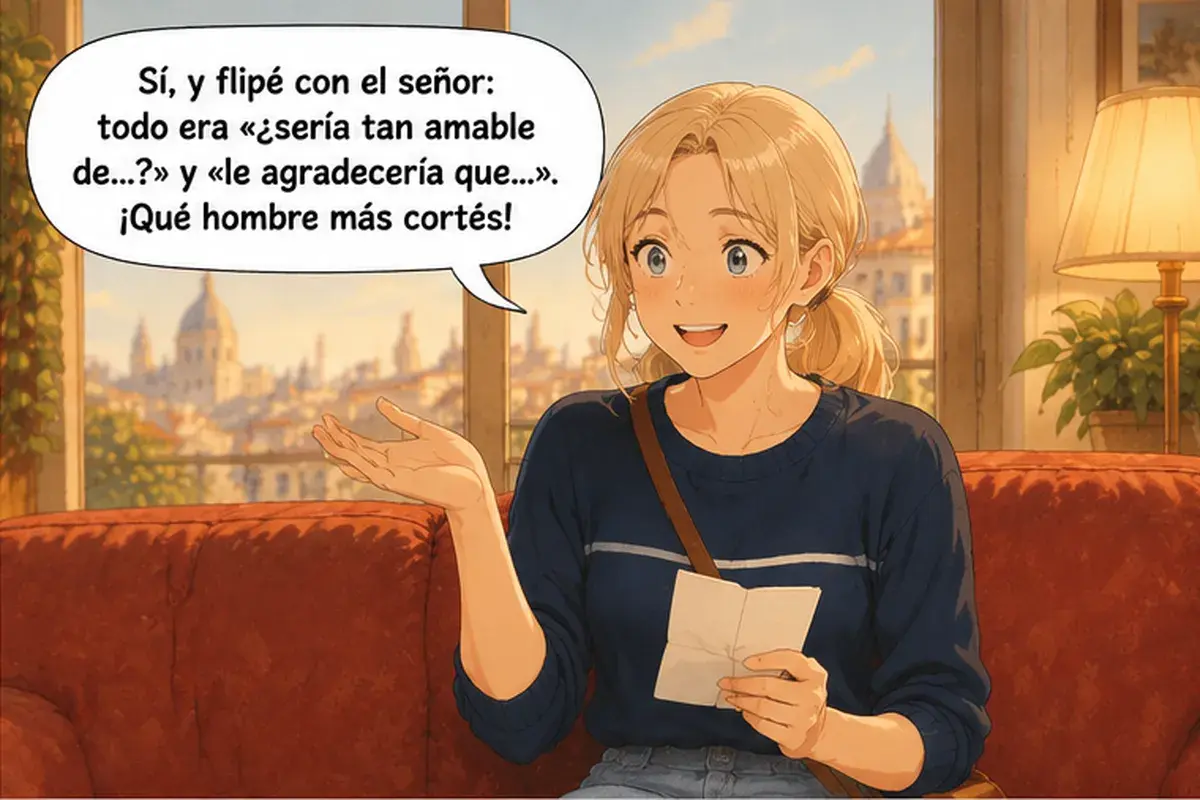
- Ana
Sí, y flipé con el señor: todo era «¿sería tan amable de…?» y «le agradecería que…». ¡Qué hombre más cortés!
Yes, and I was blown away by the guy: it was all "would you be so kind as to…?" and "I'd be grateful if…". What a courteous man!
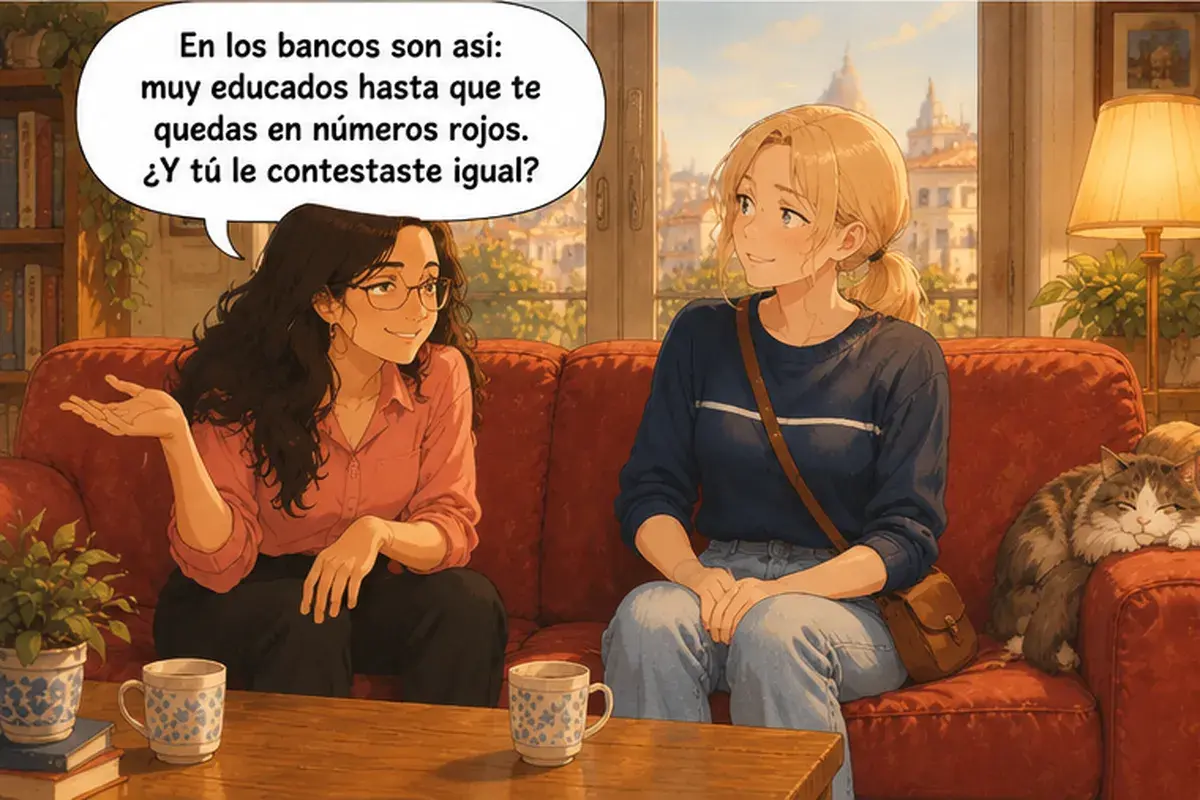
- Lucía
En los bancos son así: muy educados hasta que te quedas en números rojos. ¿Y tú le contestaste igual?
That's how they are at banks: very polite until you end up in the red. And did you answer him the same way?
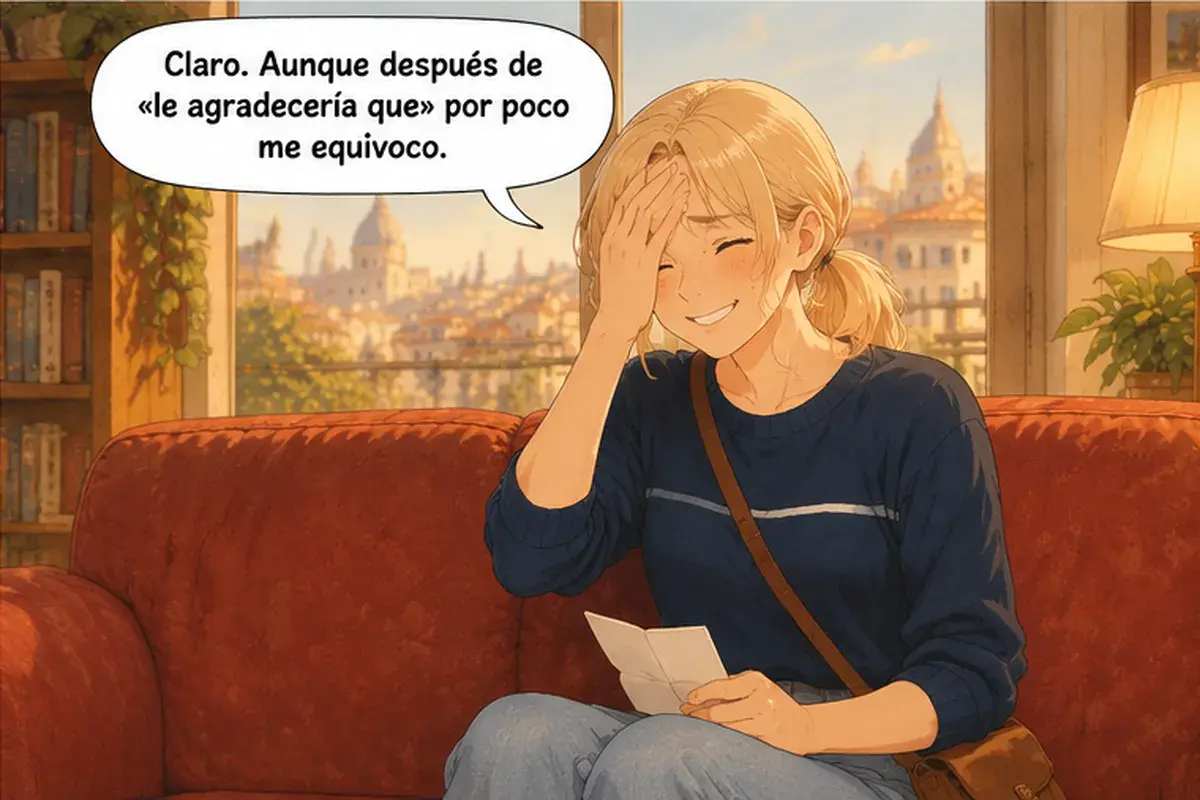
- Ana
Claro. Aunque después de «le agradecería que» por poco me equivoco.
Of course. Although after "le agradecería que" I nearly made a mistake.
- Lucía
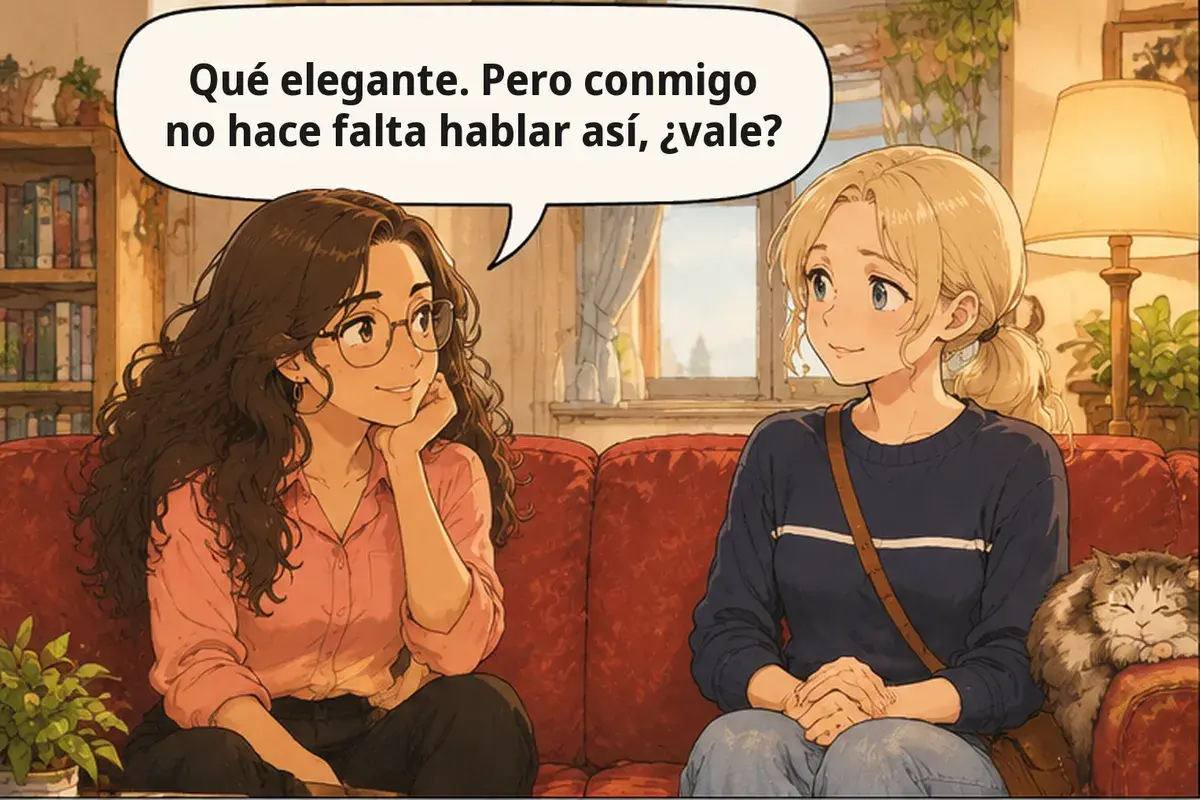
Qué elegante. Pero conmigo no hace falta hablar así, ¿vale?
How elegant. But you don't need to talk like that with me, OK?
- Ana
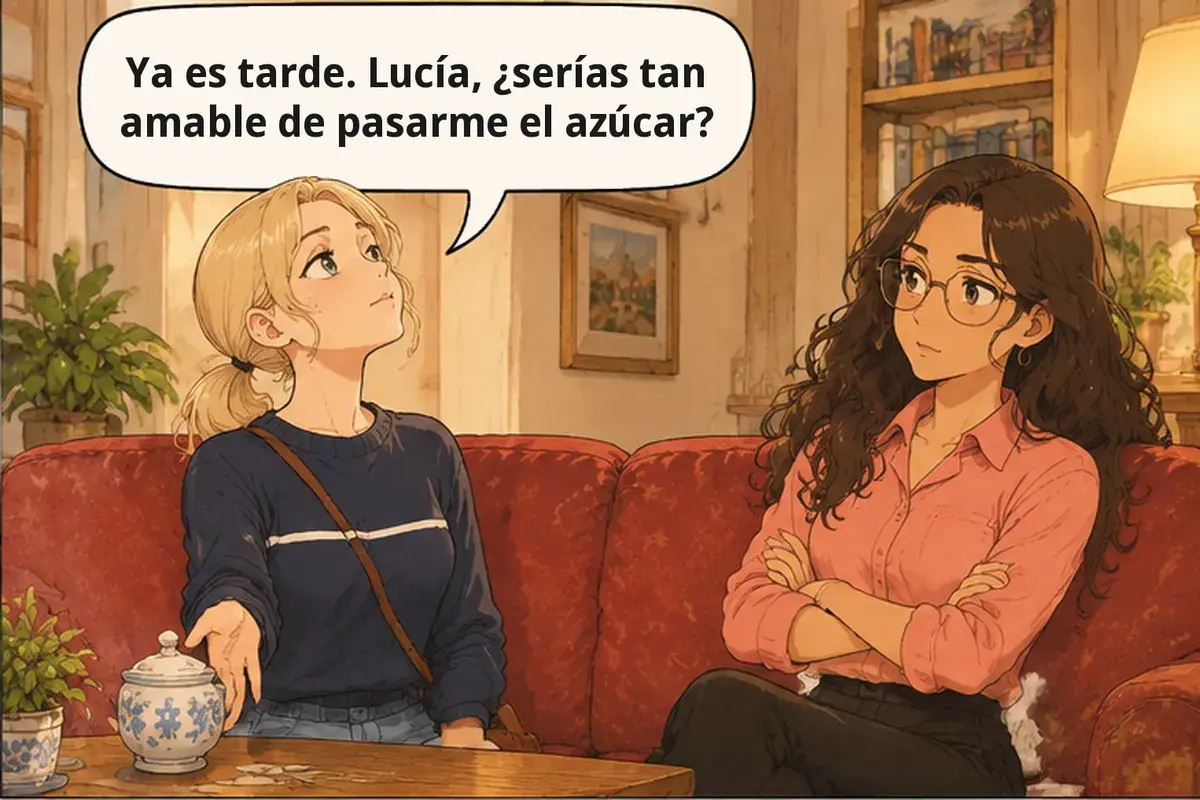
Ya es tarde. Lucía, ¿serías tan amable de pasarme el azúcar?
Too late. Lucía, would you be so kind as to pass me the sugar?
- Lucía
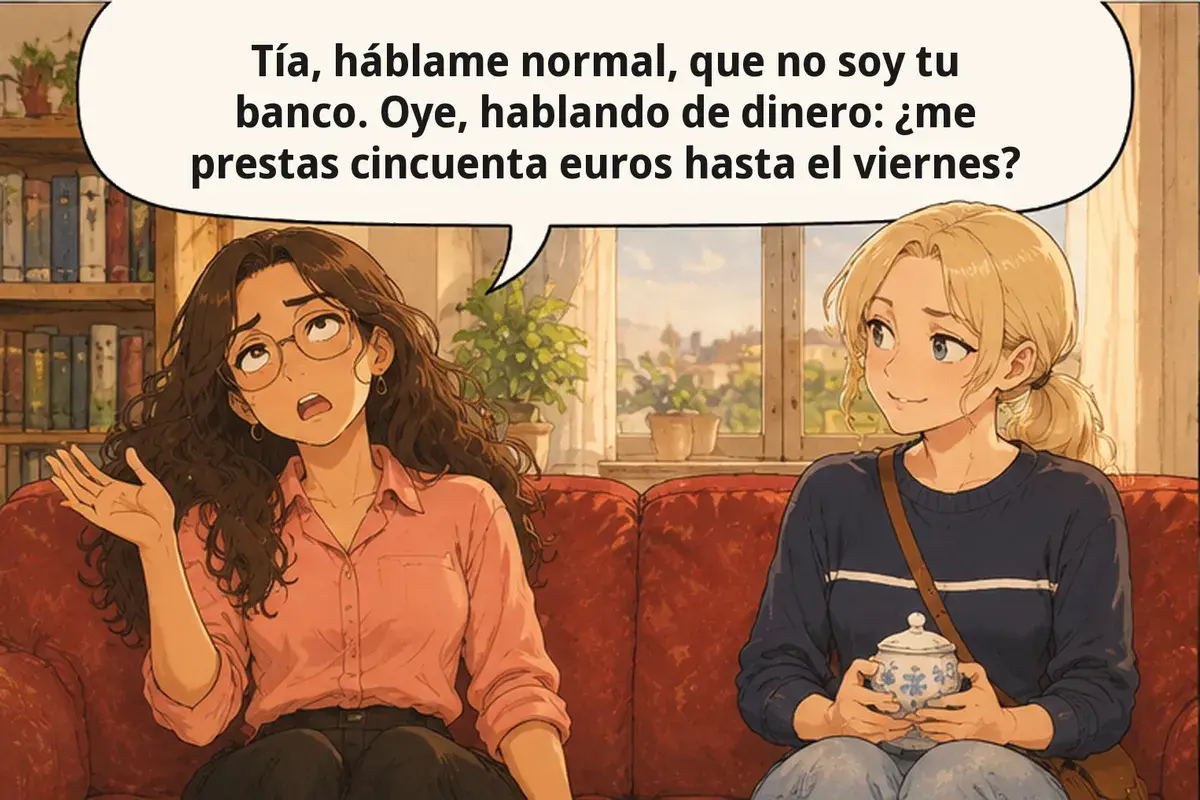
Tía, háblame normal, que no soy tu banco. Oye, hablando de dinero: ¿me prestas cincuenta euros hasta el viernes?
Dude, talk to me normally, I'm not your bank. Hey, speaking of money: will you lend me fifty euros until Friday?
- Ana
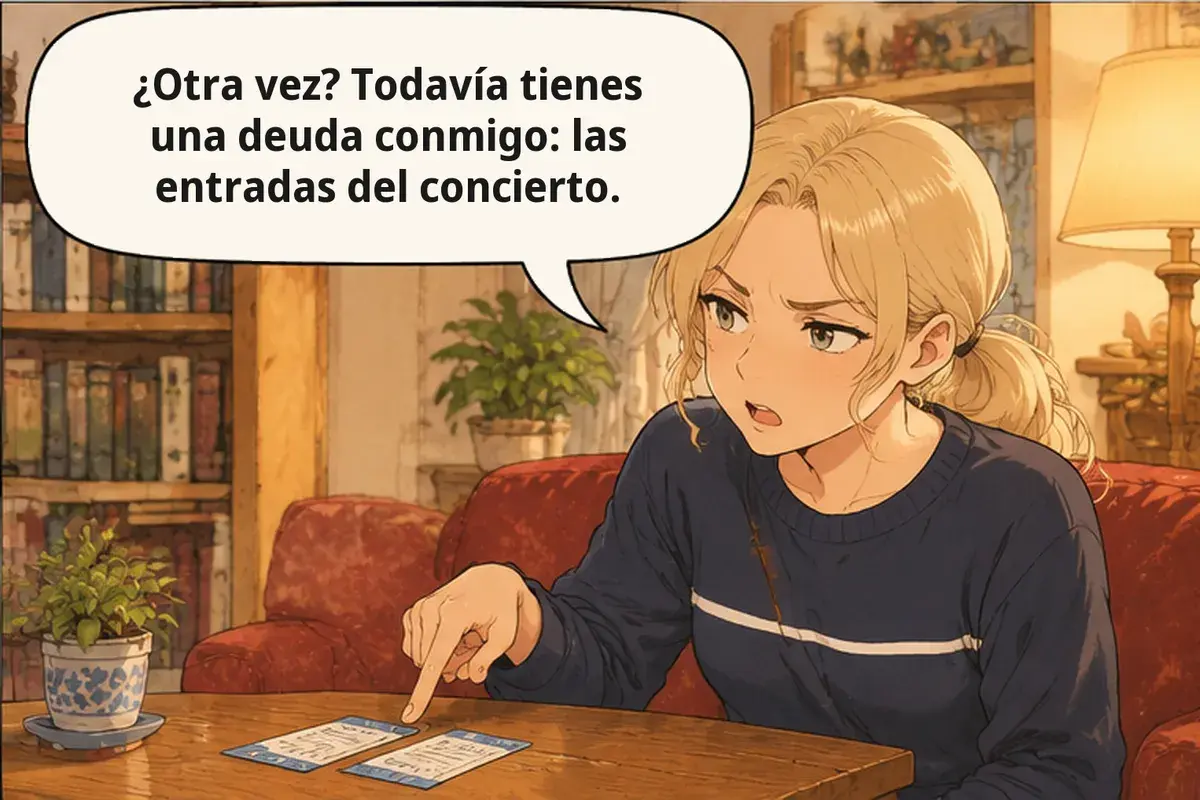
¿Otra vez? Todavía tienes una deuda conmigo: las entradas del concierto.
Again? You still have a debt to me: the concert tickets.
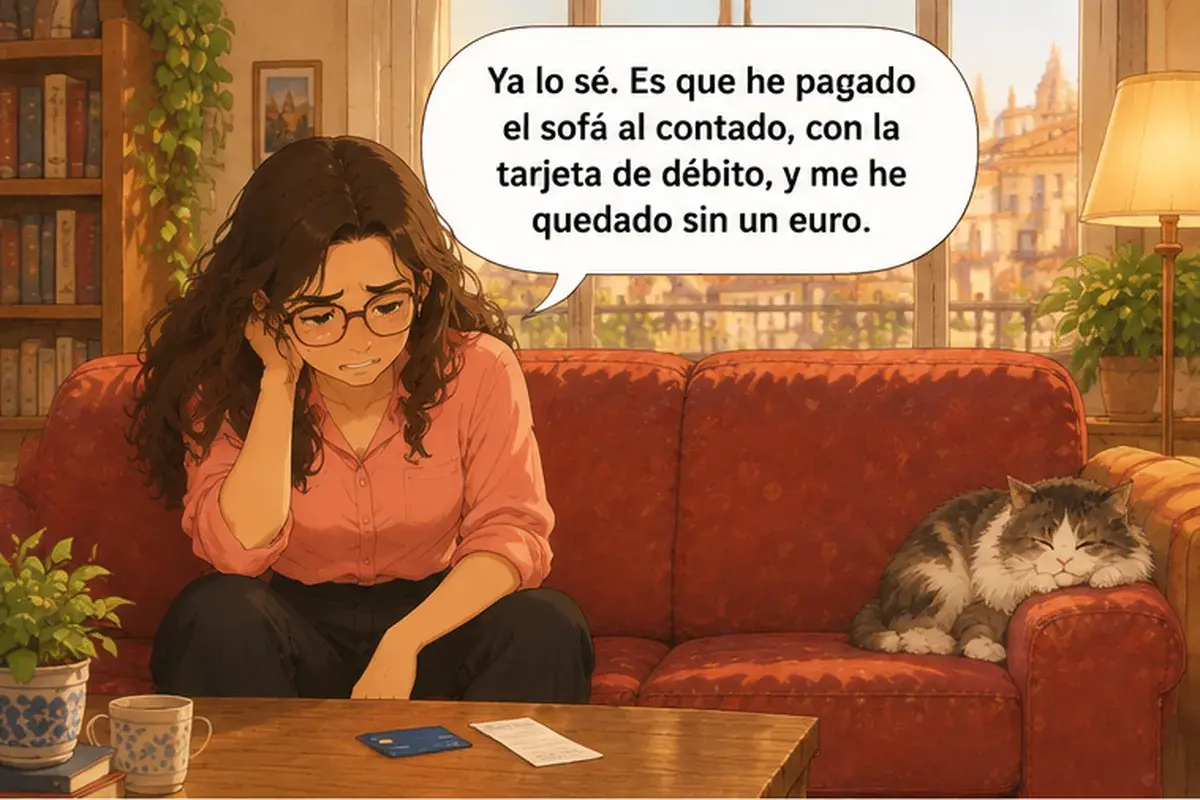
- Lucía
Ya lo sé. Es que he pagado el sofá al contado, con la tarjeta de débito, y me he quedado sin un euro.
I know. It's just that I paid for the sofa in full, with my debit card, and I don't have a single euro left.
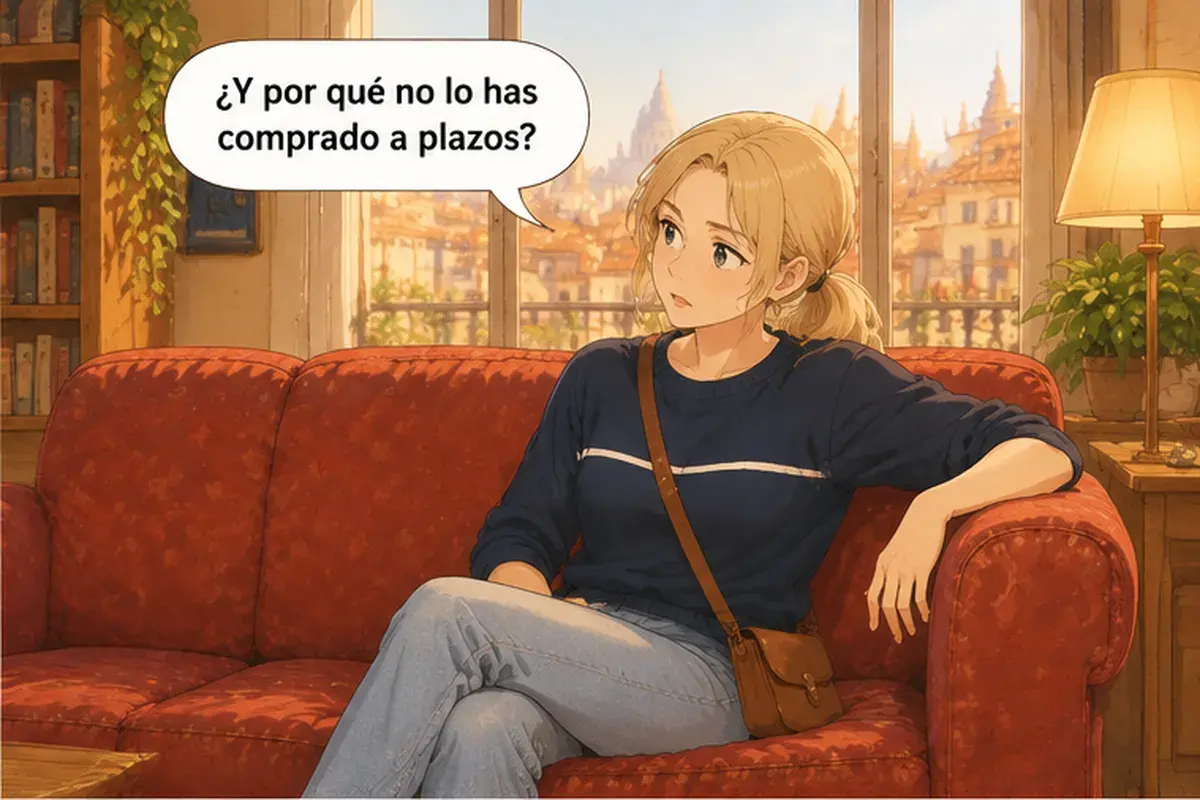
- Ana
¿Y por qué no lo has comprado a plazos?
And why didn't you buy it in installments?
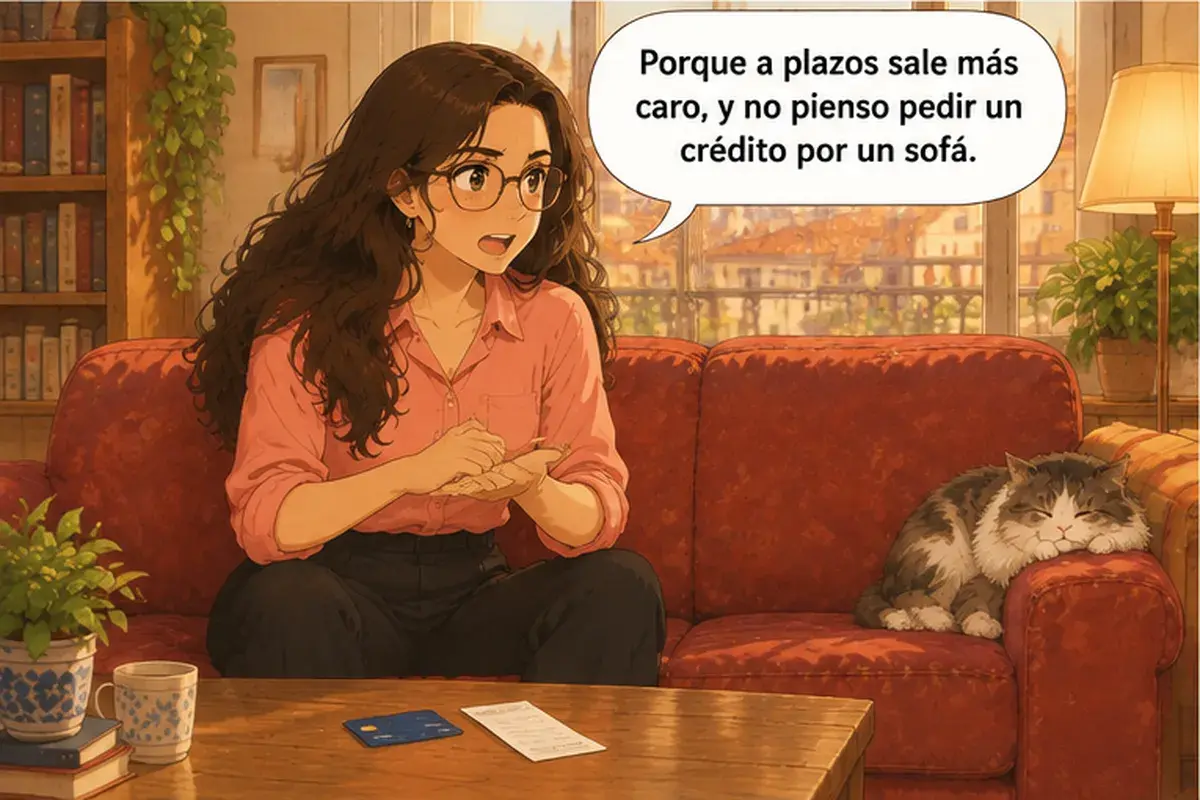
- Lucía
Porque a plazos sale más caro, y no pienso pedir un crédito por un sofá.
Because it costs more in installments, and I have no intention of taking out a loan for a sofa.
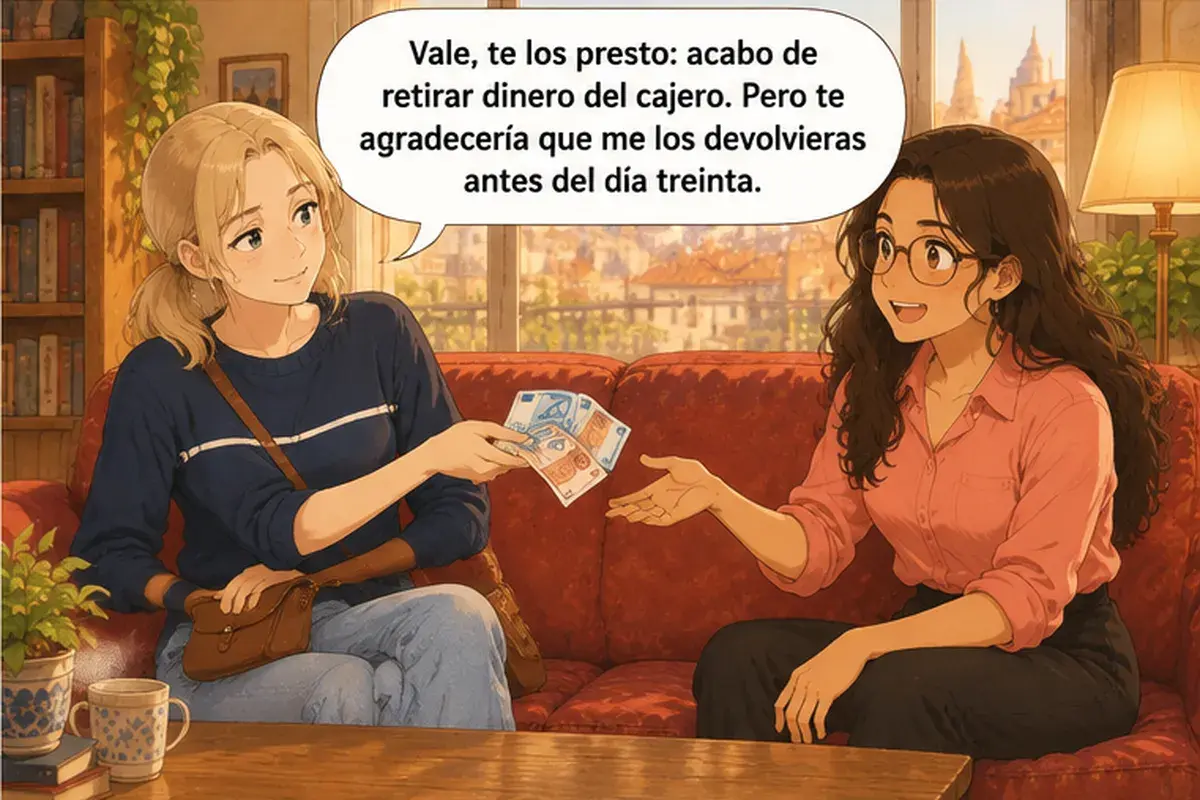
- Ana
Vale, te los presto: acabo de retirar dinero del cajero. Pero te agradecería que me los devolvieras antes del día treinta.
OK, I'll lend it to you: I just took money out of the ATM. But I'd be grateful if you paid me back before the thirtieth.
- Lucía
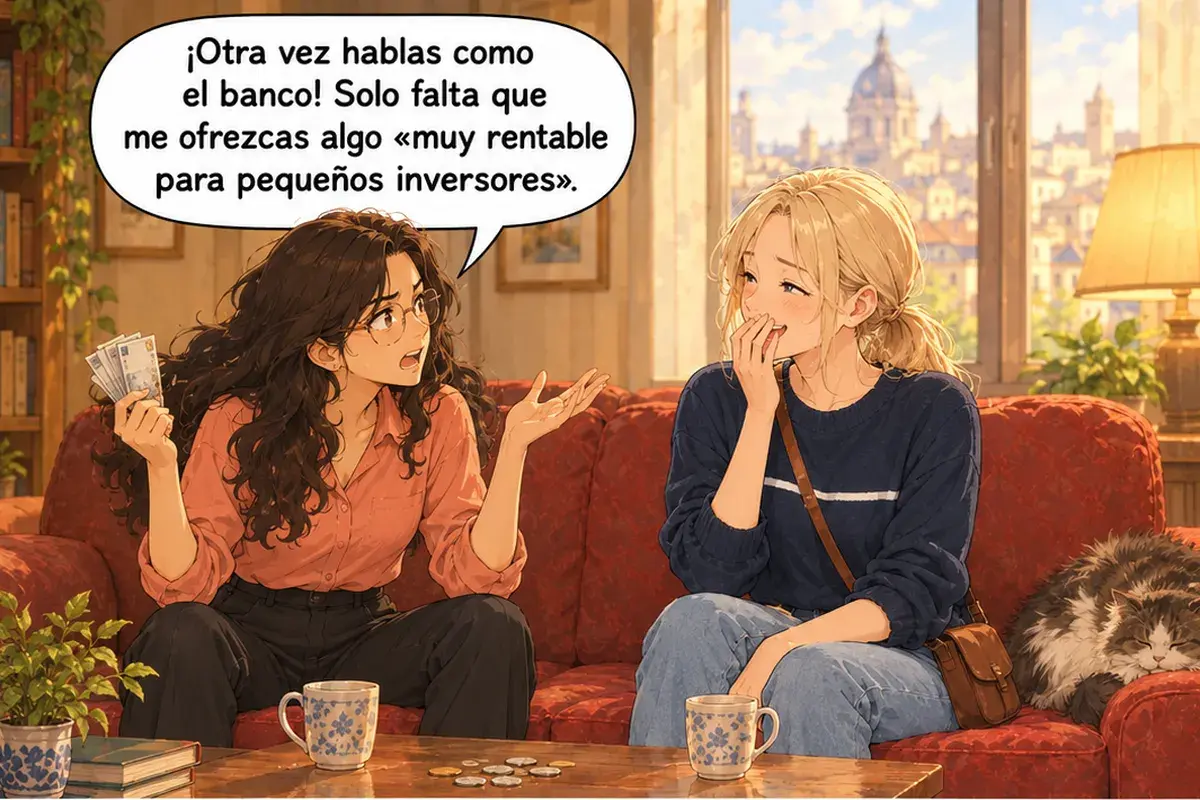
¡Otra vez hablas como el banco! Solo falta que me ofrezcas algo «muy rentable para pequeños inversores».
You're talking like the bank again! All that's missing is for you to offer me something "very profitable for small investors."
- Ana
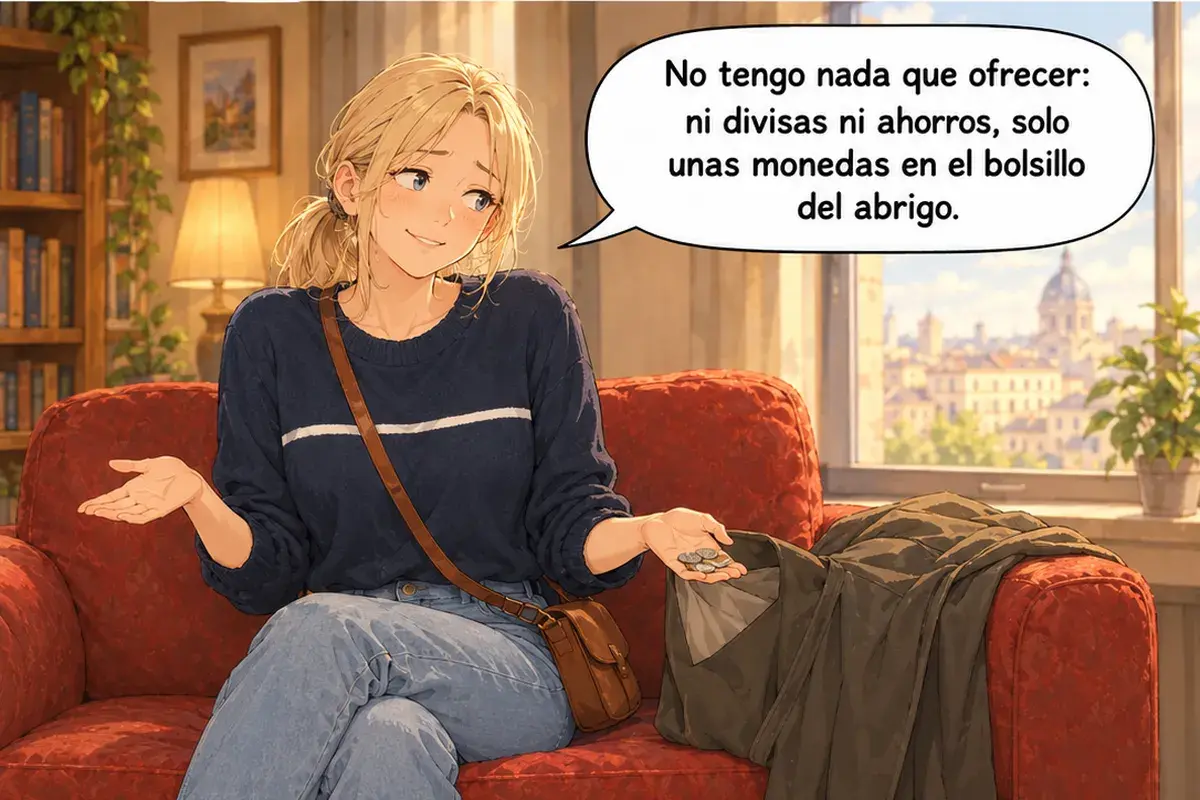
No tengo nada que ofrecer: ni divisas ni ahorros, solo unas monedas en el bolsillo del abrigo.
I don't have anything to offer: no foreign currency, no savings, just a few coins in my coat pocket.
Grammar for this text
The same politeness, with a friend. ¿Serías tan amable de pasarme el azúcar?, te agradecería que me los devolvieras: the same formulas, just with tú. Between friends they sound like a joke, so Lucía immediately asks Ana to "talk normally". The friendly way to say it is ¿me pasas el azúcar?
The form after agradecería que is the imperfect subjunctive: devolvieras, enviara, esperara.
Hasta que te quedas en números rojos: here hasta que is followed by the normal form, because it isn't about the future but about what always happens.
Solo falta que me ofrezcas… ("all that's missing is for you to offer me…") is a set phrase, with the subjunctive after que.
Money. Al contado is the whole amount at once, a plazos is in installments. Tarjeta de débito is a debit card: the money leaves your account right away. Por poco me equivoco means "I nearly made a mistake" (unit 1).
Words and grammar of the unit: Write a polite letter to the bank.
Learn the words from the texts with flashcards
In the app, you can tap any word in a text to see its translation, forms and examples, and new words stick with flashcards. 15 minutes a day.
Start for freeEverything is open for free. No card needed to sign up.