

Spanish dialogue with translation · B2 · 17 lines
¿Qué nos dejan hacer y qué no? What do they let us do, and what don't they?
Comic · 17 panels
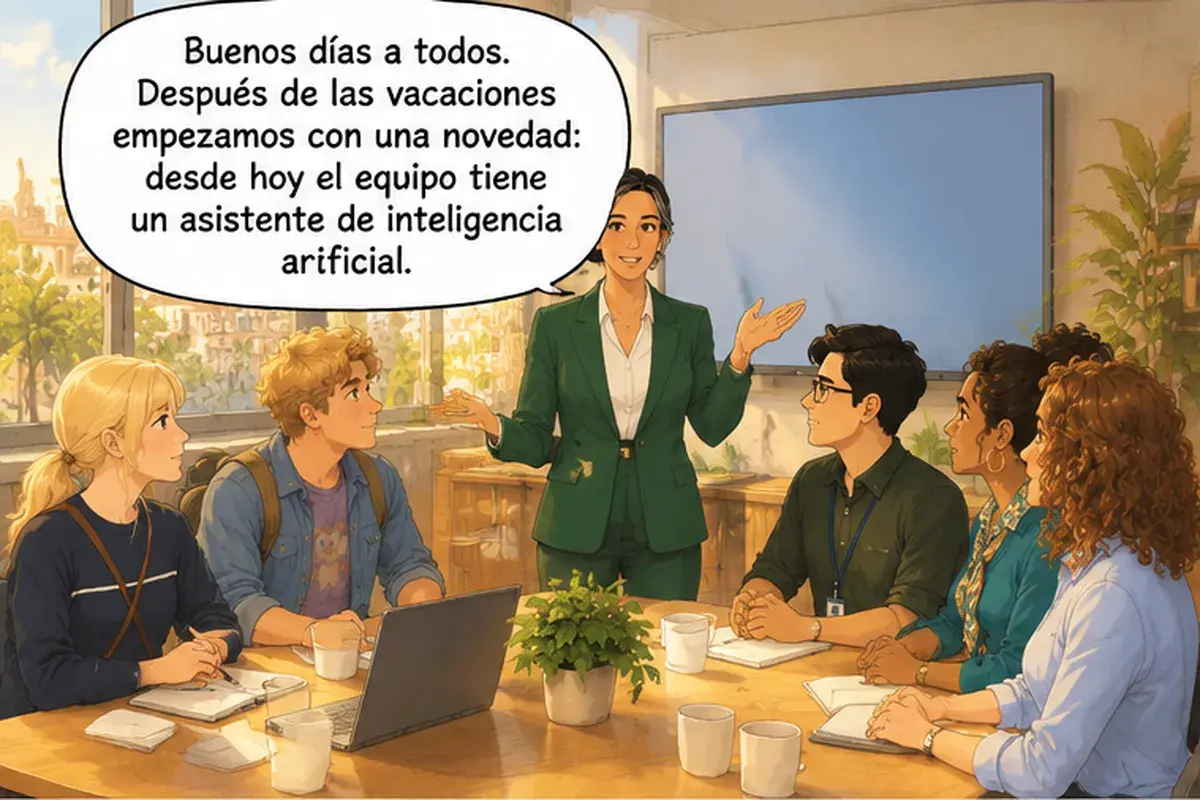
- Nuria
Buenos días a todos. Después de las vacaciones empezamos con una novedad: desde hoy el equipo tiene un asistente de inteligencia artificial.
Good morning, everyone. After the vacation we're starting with something new: as of today, the team has an artificial intelligence assistant.
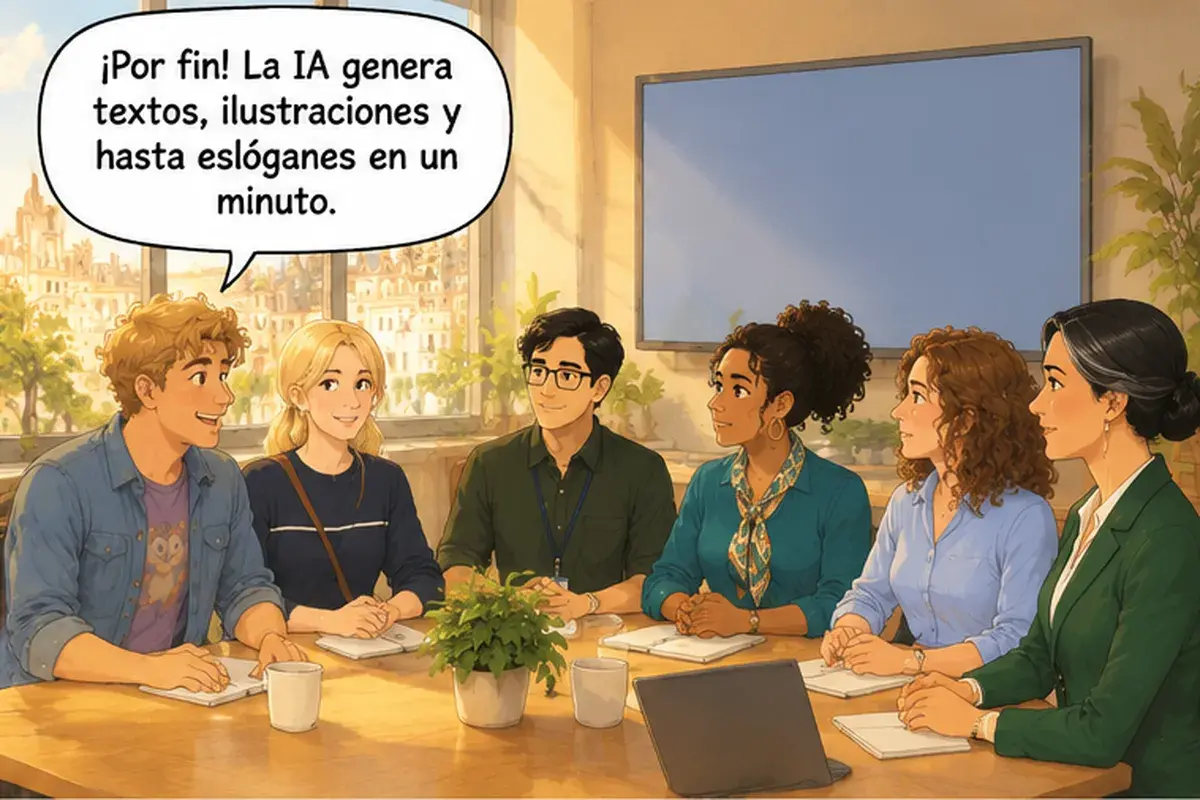
- Hugo
¡Por fin! La IA genera textos, ilustraciones y hasta eslóganes en un minuto.
Finally! AI generates texts, illustrations and even slogans in a minute.
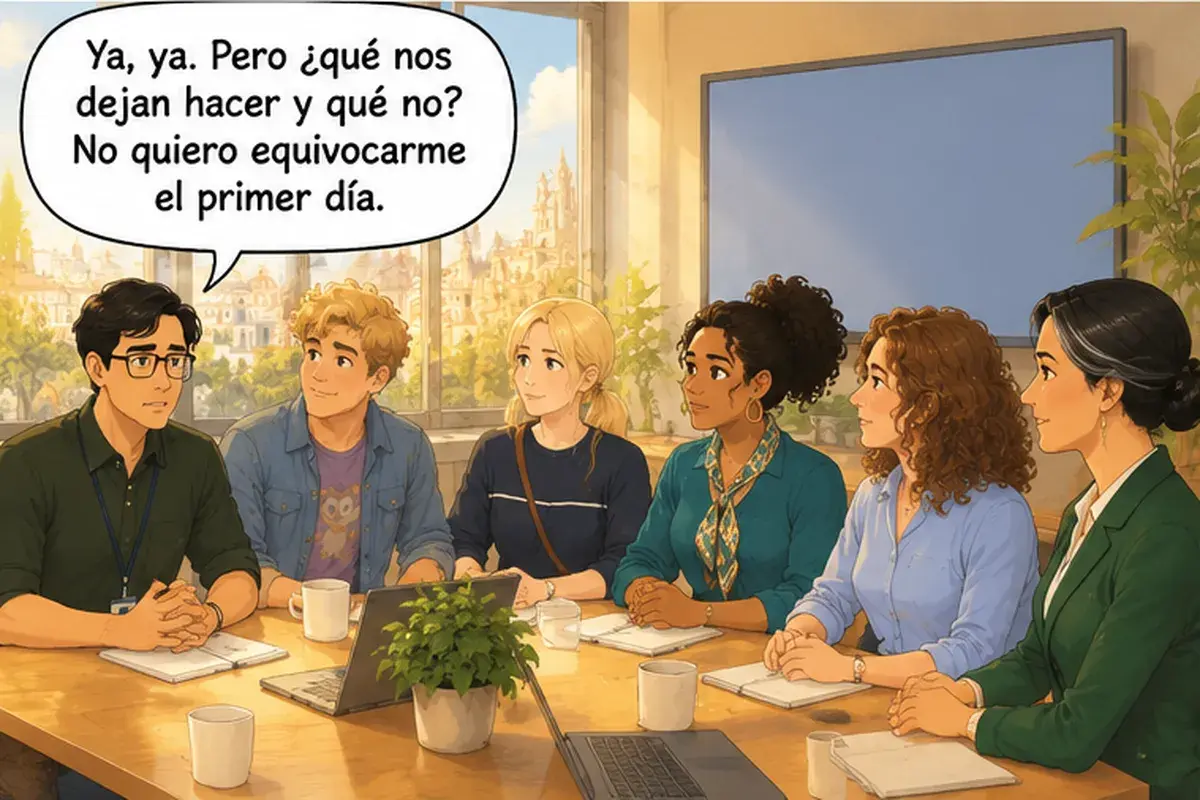
- Óscar
Ya, ya. Pero ¿qué nos dejan hacer y qué no? No quiero equivocarme el primer día.
Yeah, yeah. But what do they let us do, and what don't they? I don't want to make a mistake on the first day.
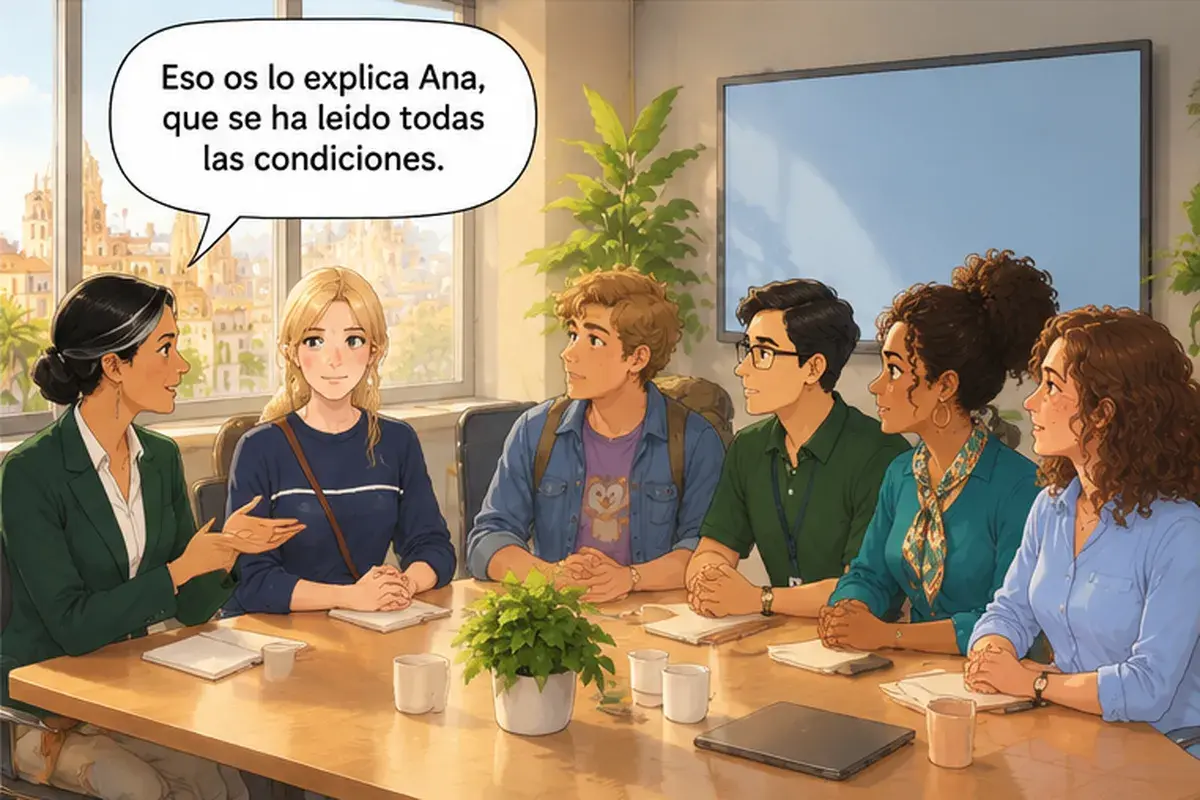
- Nuria
Eso os lo explica Ana, que se ha leído todas las condiciones.
Ana, who's read all the terms, will explain that to you (to several people).
- Ana
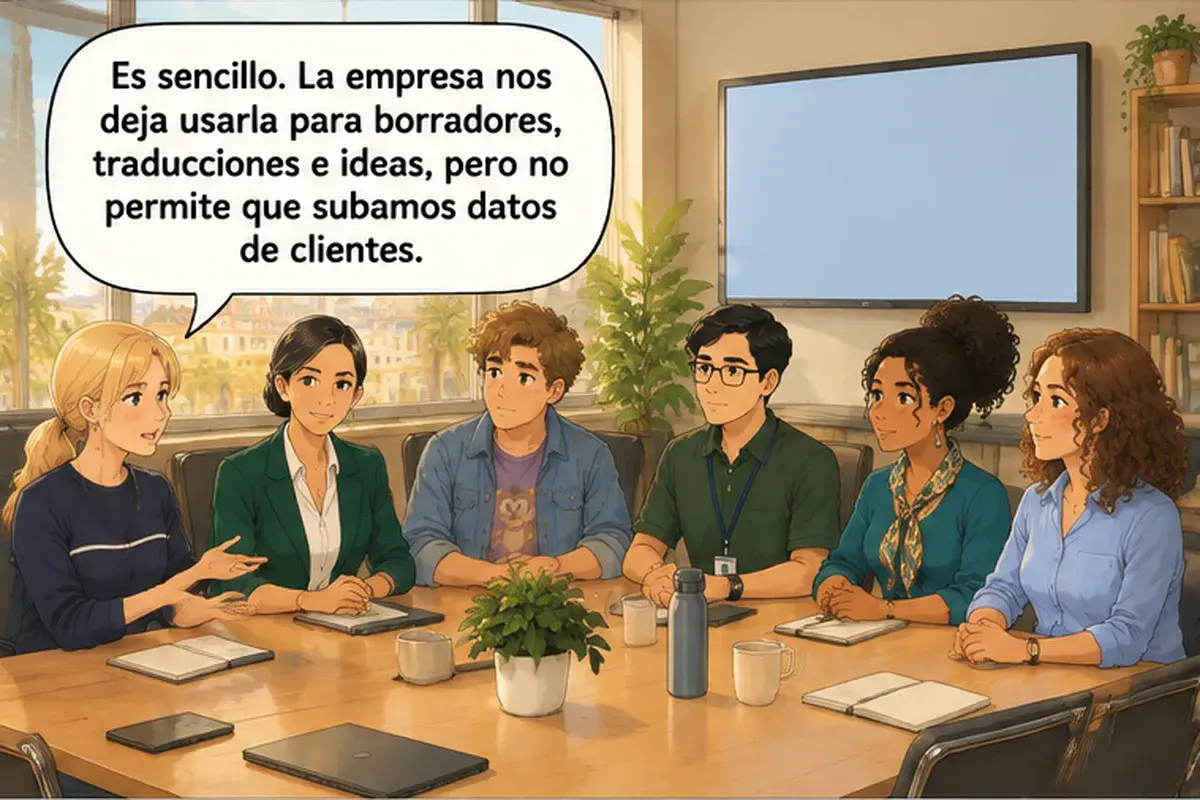
Es sencillo. La empresa nos deja usarla para borradores, traducciones e ideas, pero no permite que subamos datos de clientes.
It's simple. The company lets us use it for drafts, translations and ideas, but it doesn't allow us to upload client data.

- Óscar
¿Ni siquiera el nombre del cliente? Así es difícil trabajar.
Not even the client's name? It's hard to work like that.
- Ana
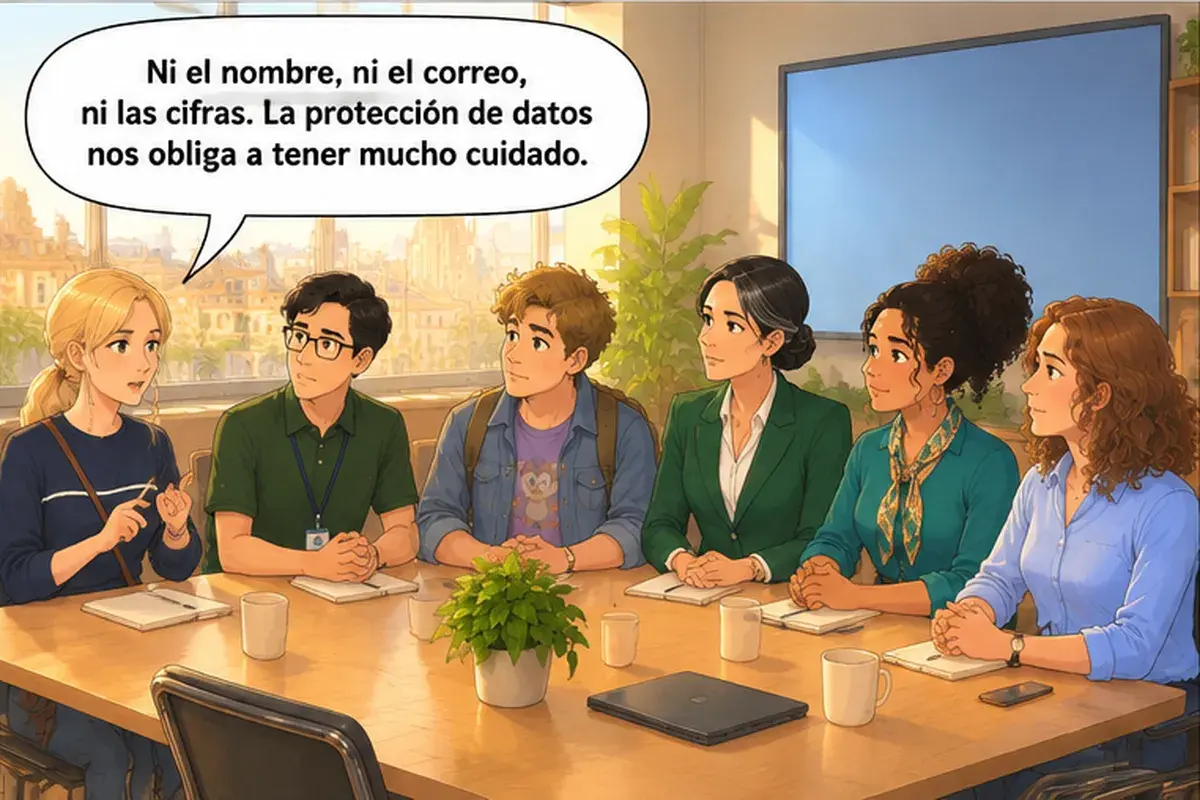
Ni el nombre, ni el correo, ni las cifras. La protección de datos nos obliga a tener mucho cuidado.
Not the name, not the email, not the figures. Data protection requires us to be very careful.
- Hugo
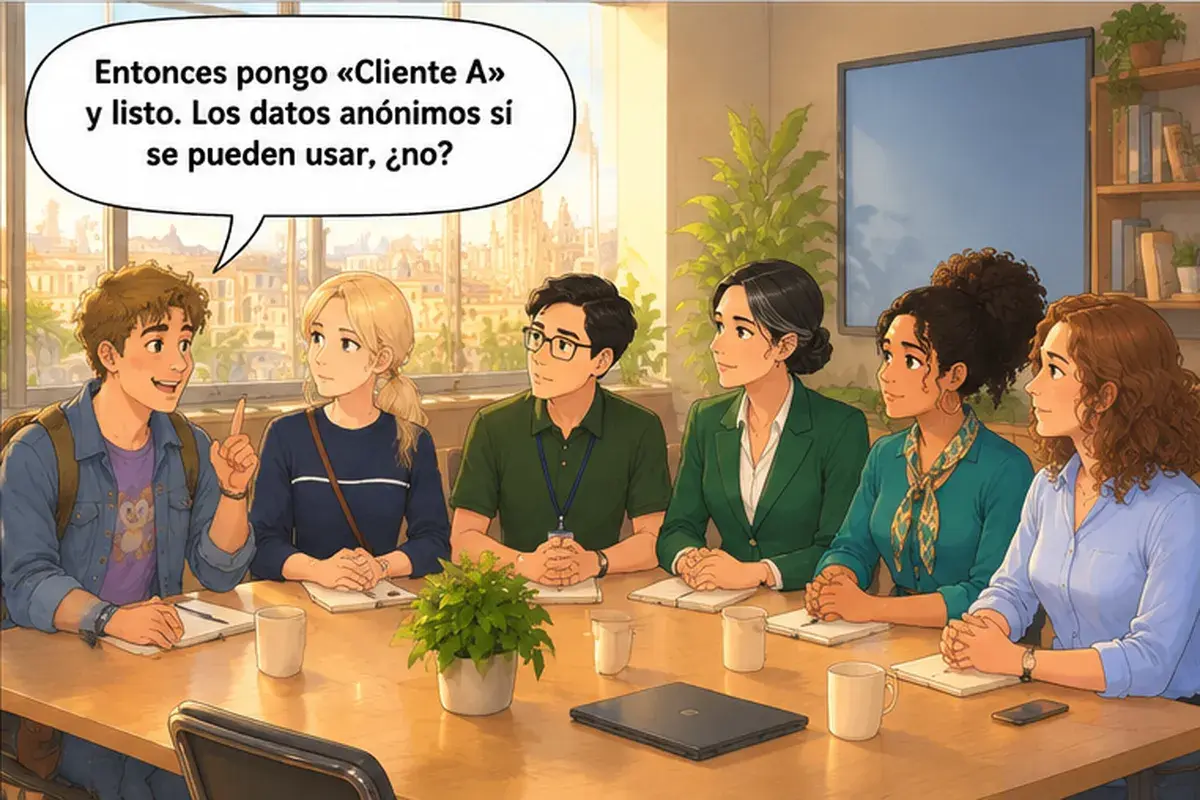
Entonces pongo «Cliente A» y listo. Los datos anónimos sí se pueden usar, ¿no?
Then I'll put "Client A" and that's it. Anonymous data can be used, right?
- Ana
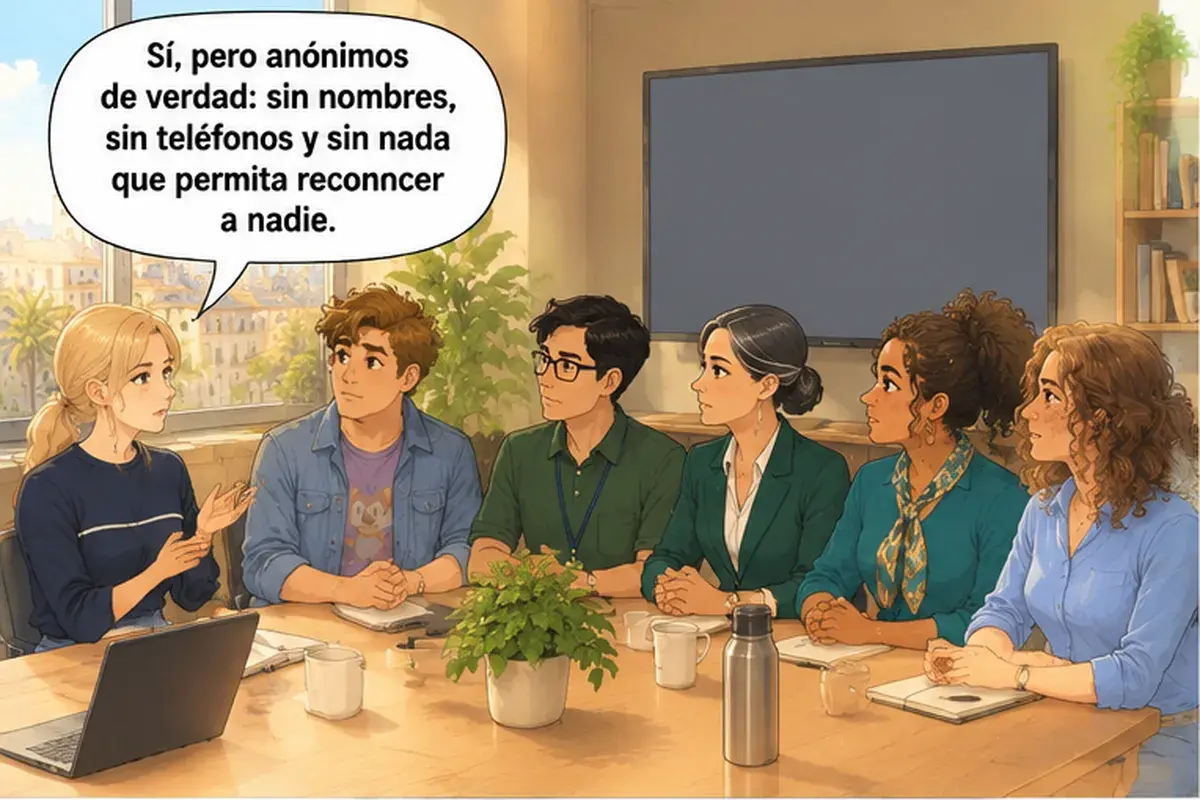
Sí, pero anónimos de verdad: sin nombres, sin teléfonos y sin nada que permita reconocer a nadie.
Yes, but truly anonymous: no names, no phone numbers and nothing that could identify anyone.
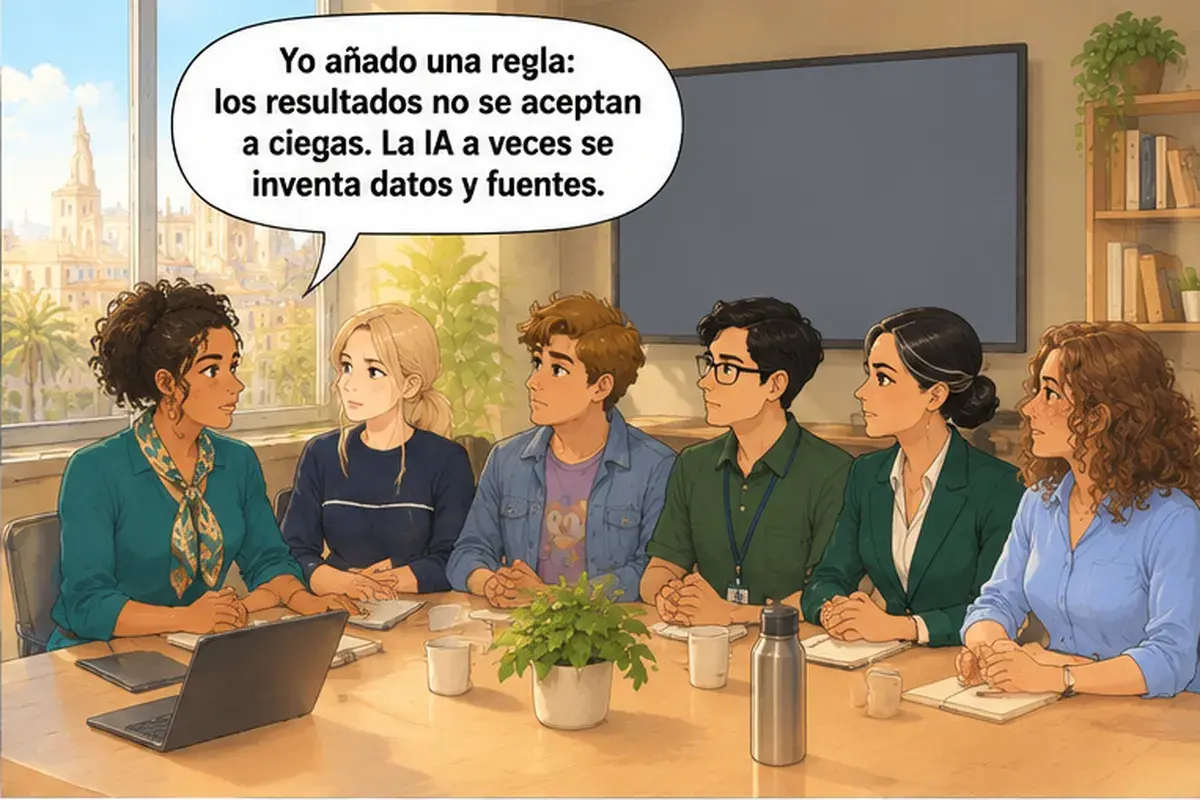
- Sonia
Yo añado una regla: los resultados no se aceptan a ciegas. La IA a veces se inventa datos y fuentes.
I'll add one rule: results aren't accepted blindly. AI sometimes makes up data and sources.
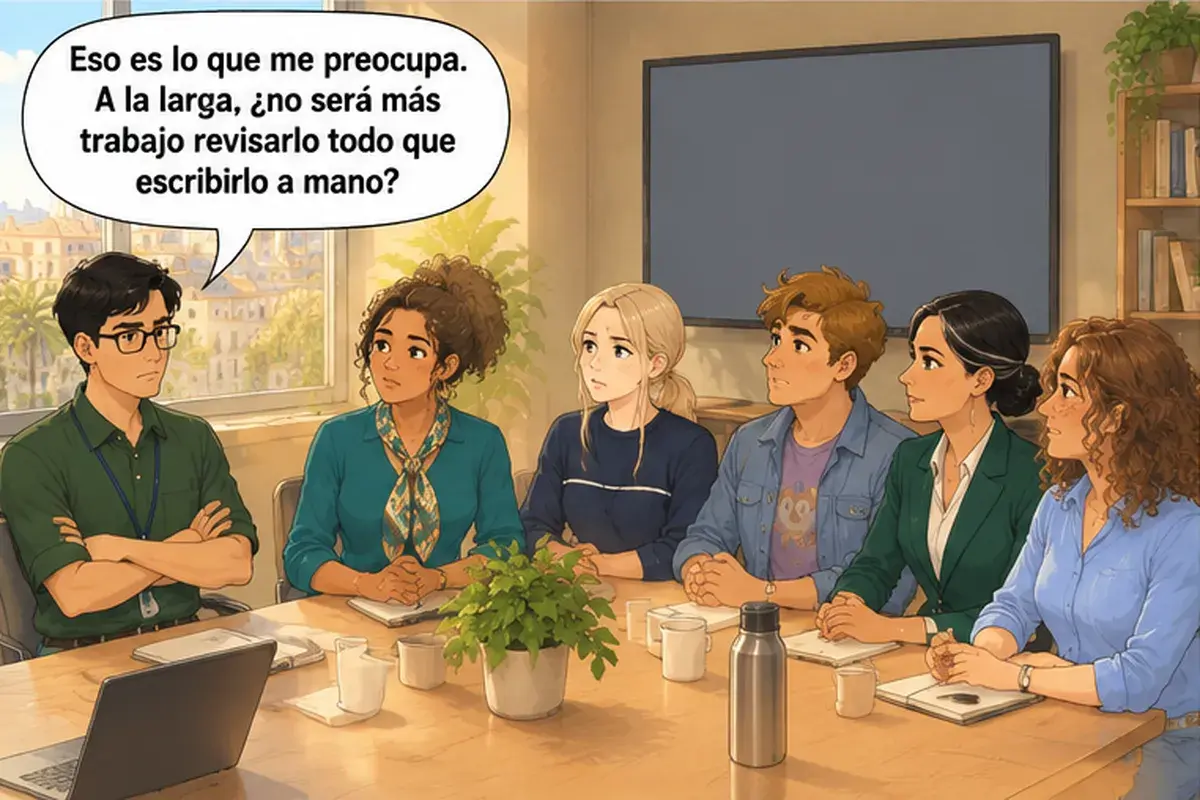
- Óscar
Eso es lo que me preocupa. A la larga, ¿no será más trabajo revisarlo todo que escribirlo a mano?
That's what worries me. In the long run, won't it be more work to check everything than to write it by hand?
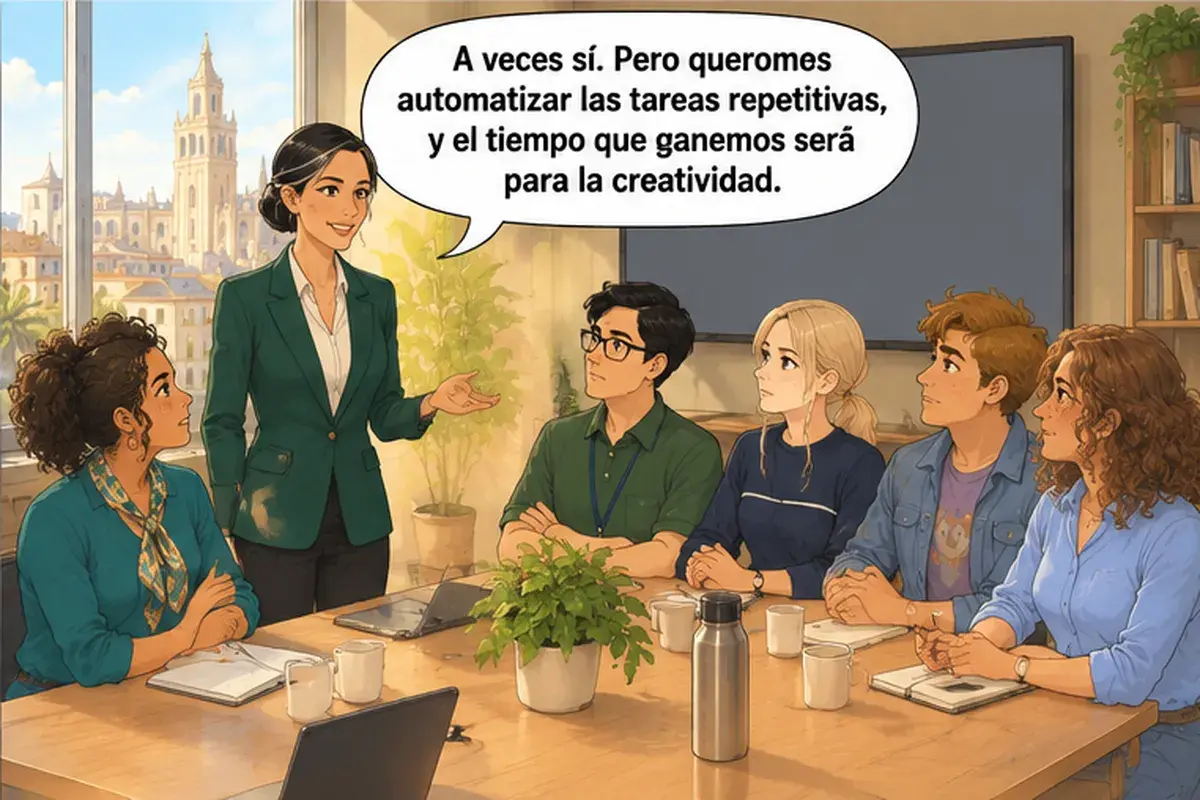
- Nuria
A veces sí. Pero queremos automatizar las tareas repetitivas, y el tiempo que ganemos será para la creatividad.
Sometimes, yes. But we want to automate the repetitive tasks, and the time we save will go to creativity.
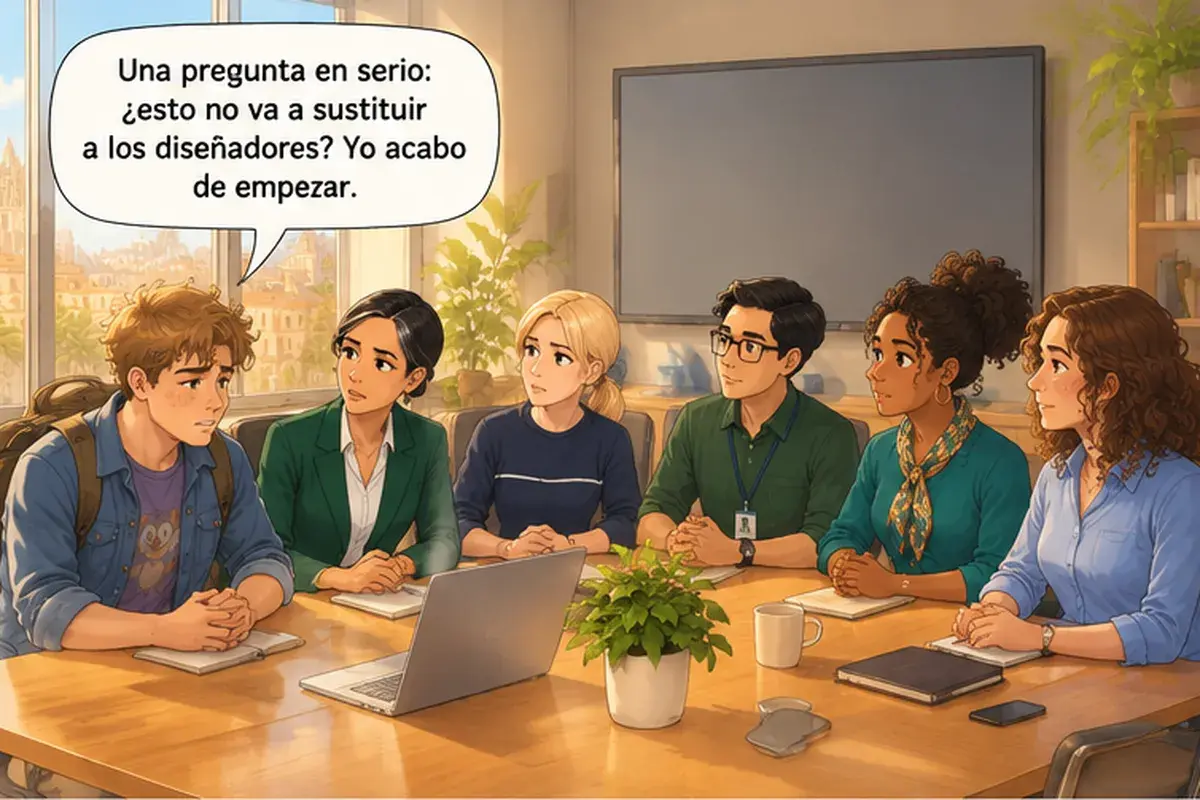
- Hugo
Una pregunta en serio: ¿esto no va a sustituir a los diseñadores? Yo acabo de empezar.
A serious question: isn't this going to replace the designers? I've just started.
- Nuria
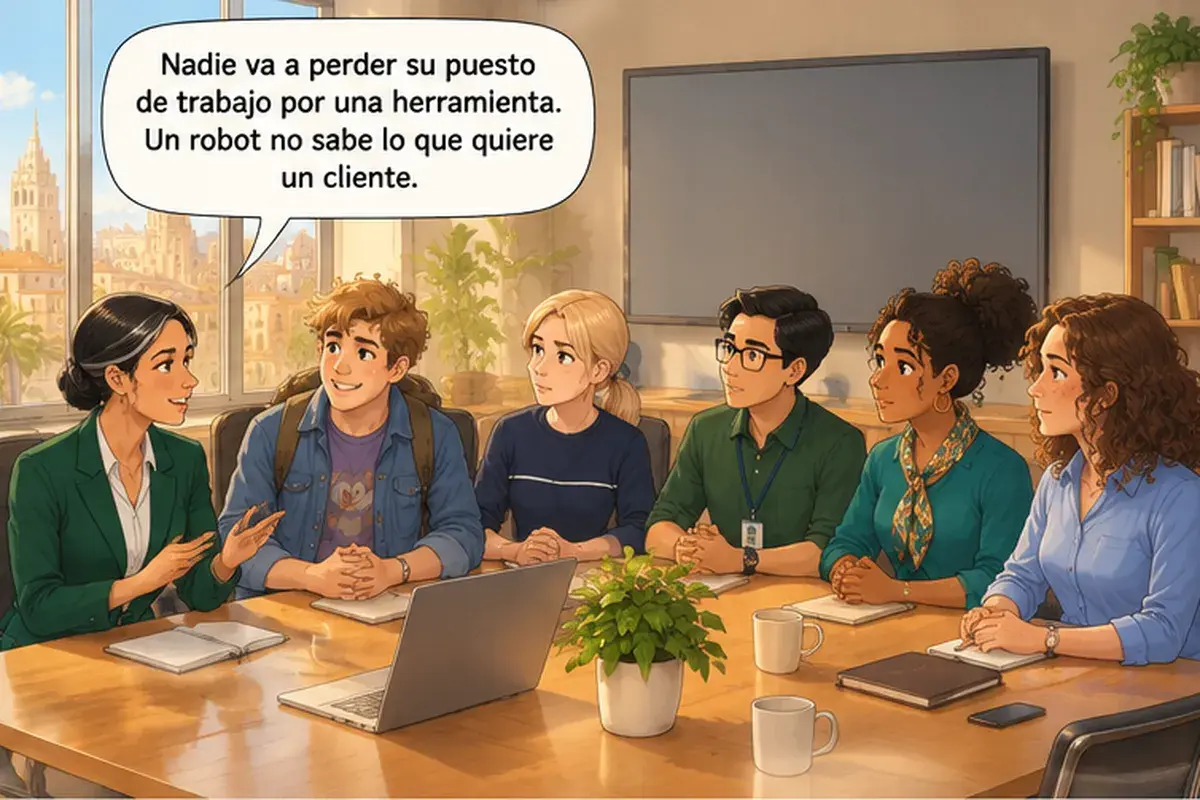
Nadie va a perder su puesto de trabajo por una herramienta. Un robot no sabe lo que quiere un cliente.
Nobody's going to lose their job because of a tool. A robot doesn't know what a client wants.
- Ana
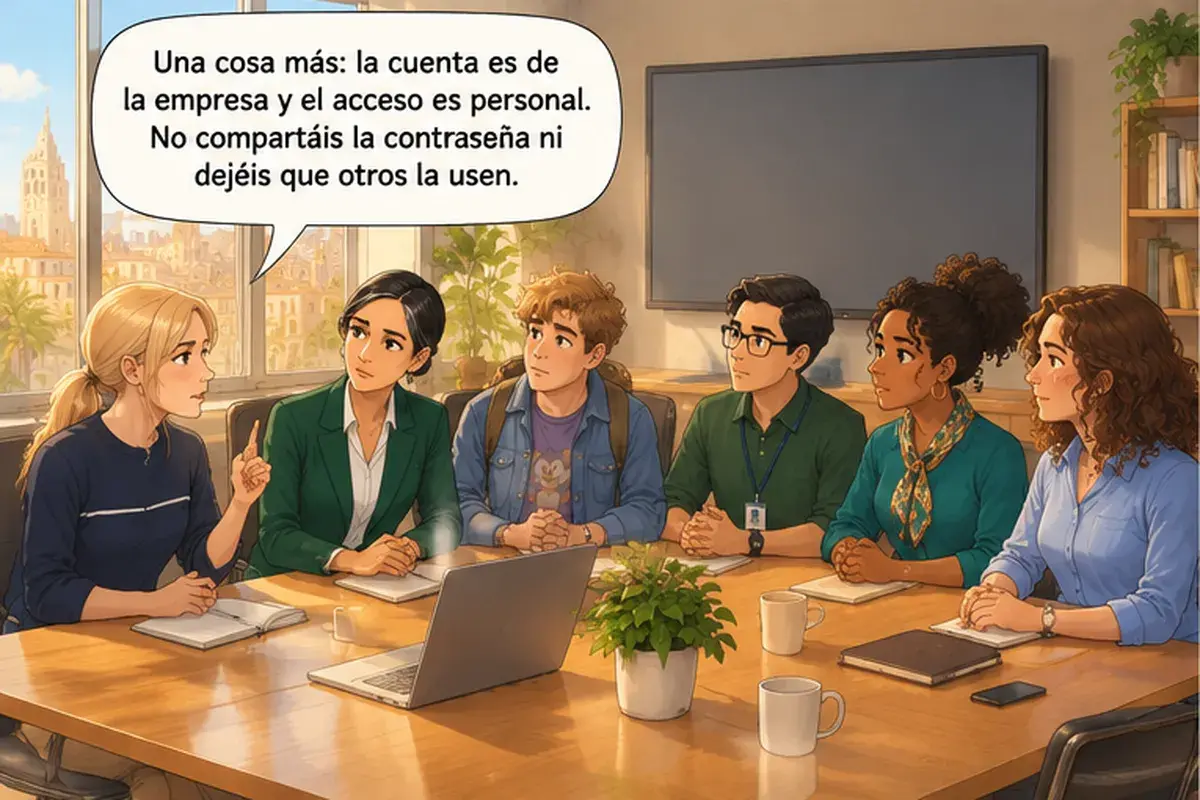
Una cosa más: la cuenta es de la empresa y el acceso es personal. No compartáis la contraseña ni dejéis que otros la usen.
One more thing: the account belongs to the company, and access is personal. Don't share the password or let others use it (to several people).
- Sonia
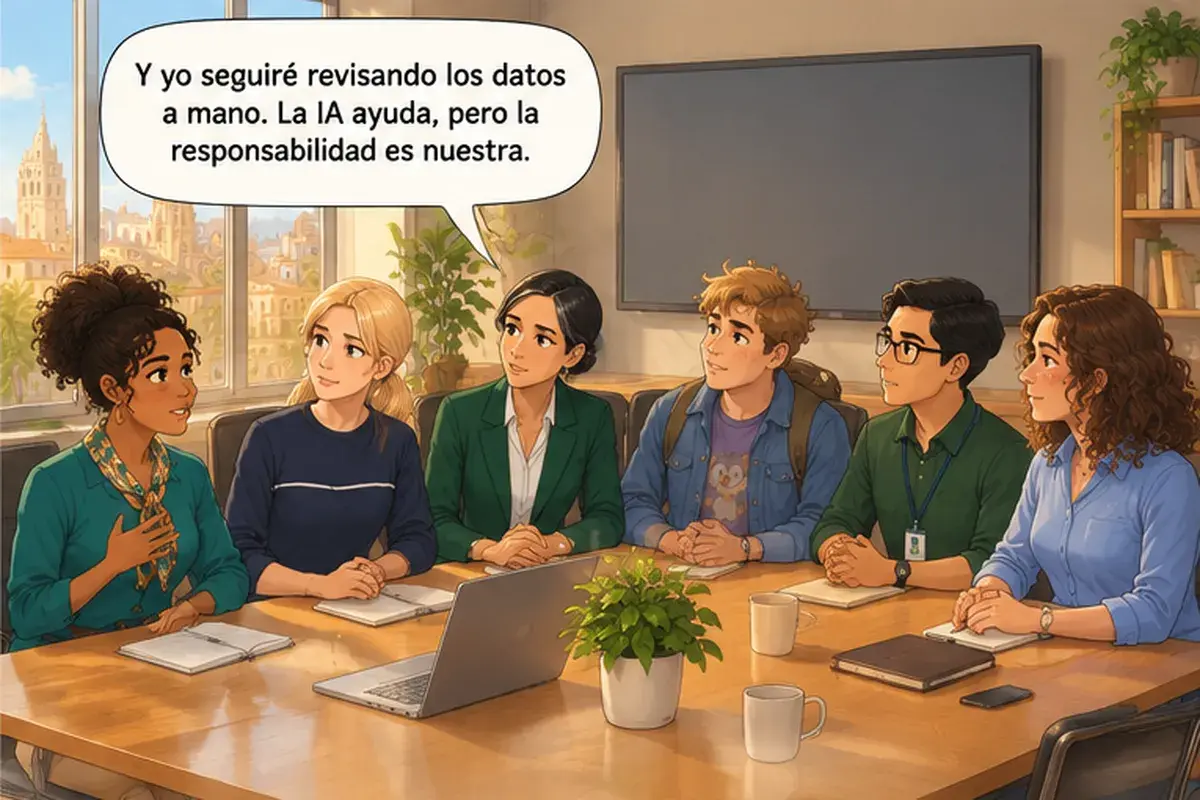
Y yo seguiré revisando los datos a mano. La IA ayuda, pero la responsabilidad es nuestra.
And I'll keep checking the data by hand. AI helps, but the responsibility is ours.
- Nuria
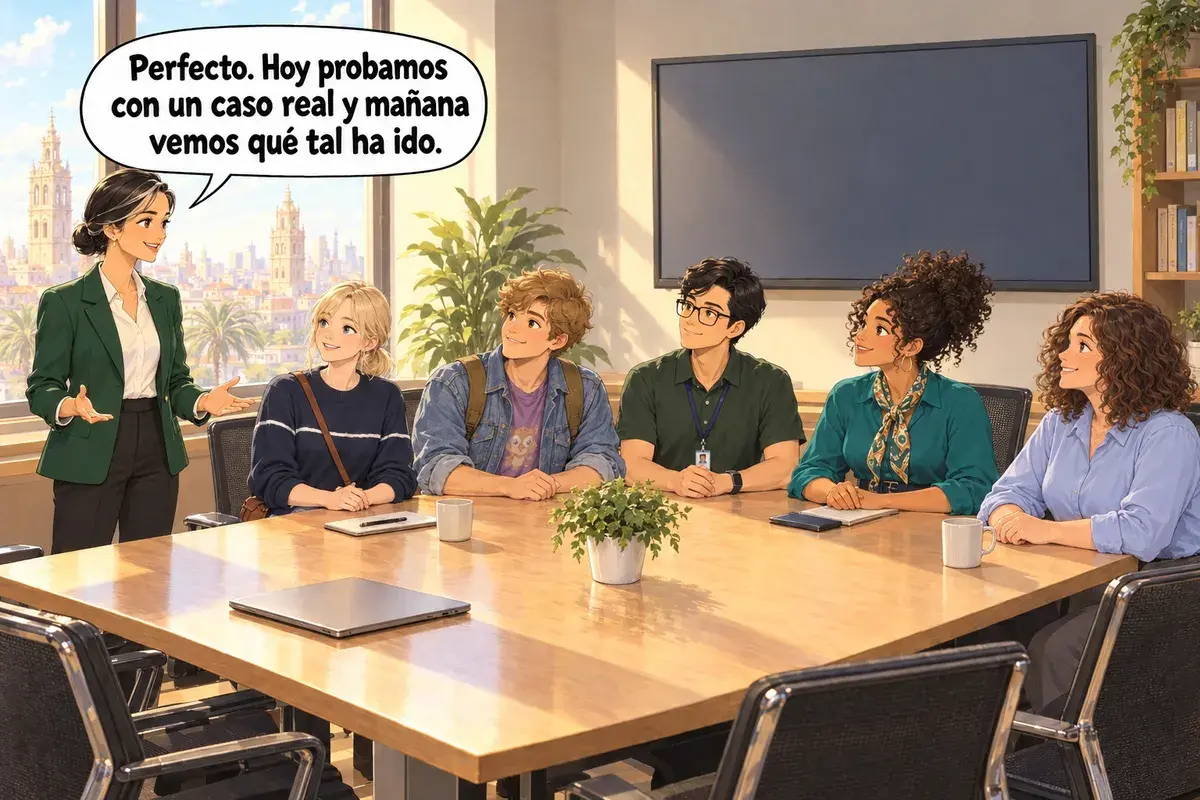
Perfecto. Hoy probamos con un caso real y mañana vemos qué tal ha ido.
Perfect. Today we'll try it on a real case, and tomorrow we'll see how it went.
Grammar for this text
Allowing, forbidding and making (more in the unit's grammar).
- ¿qué nos dejan hacer…?, nos deja usarla — dejar + person + infinitive: "what do they let us do", "lets us use it". The la in usarla is la IA; it's attached to the infinitive.
- no permite que subamos — the same idea with que: after permitir que the verb is in the subjunctive (subamos, not subimos). It's used when it matters who exactly does the action.
- nos obliga a tener — obligar always takes a before the infinitive: "requires us to be", "makes us".
- ni dejéis que otros la usen — a negative command to several people (vosotros: no compartáis… ni dejéis…) plus dejar que + subjunctive: "and don't let others use it".
- nada que permita reconocer — "nothing that could identify": no such thing exists yet, so the subjunctive (unit 3).
Set phrases: a ciegas — blindly, without checking; a mano — by hand; a la larga — in the long run. ¿No será más trabajo…? — the future tense as a doubt ("won't it end up being more work…?", unit 2). Eso os lo explica Ana — "Ana will explain that to you": two pronouns in a row, os (to you) before lo (that).
Words and grammar of the unit: Work with AI by the rules.
Learn the words from the texts with flashcards
In the app, you can tap any word in a text to see its translation, forms and examples, and new words stick with flashcards. 15 minutes a day.
Start for freeEverything is open for free. No card needed to sign up.