

Spanish dialogue with translation · B1 · 17 lines
Llamo por tercera vez I'm calling for the third time
Comic · 17 panels
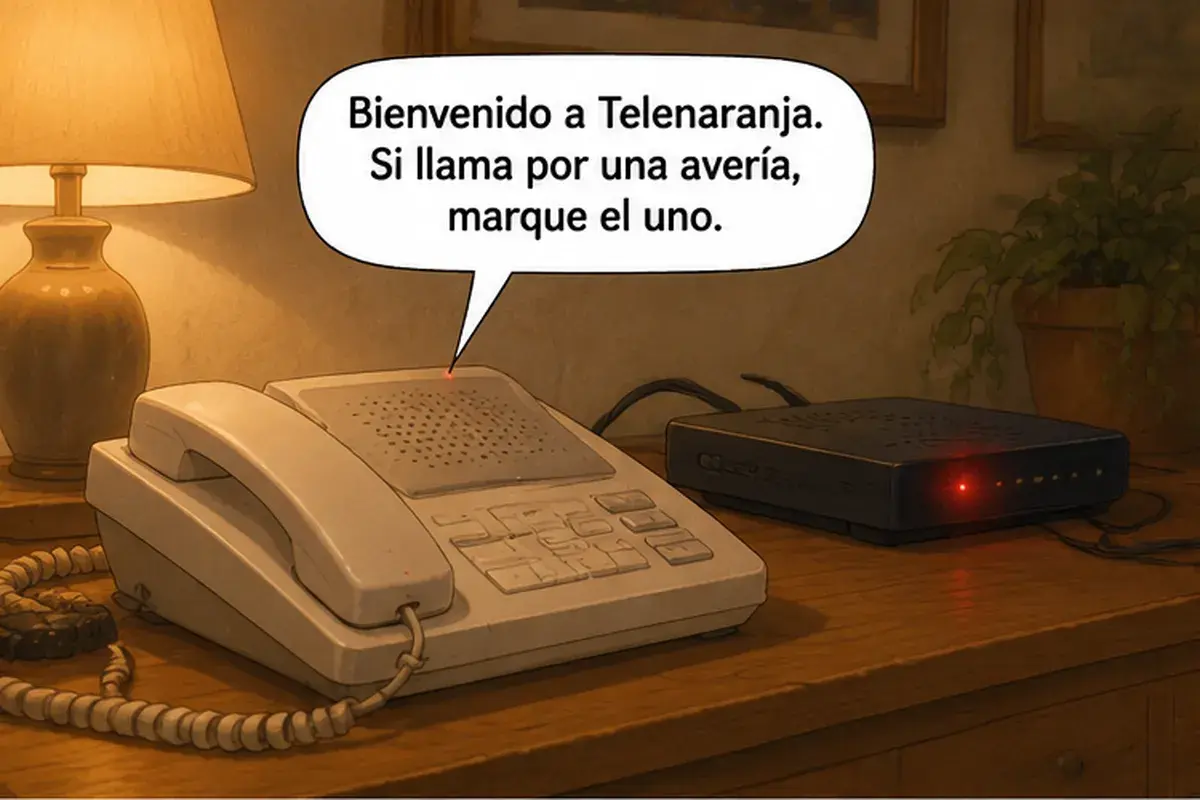
- Contestador
Bienvenido a Telenaranja. Si llama por una avería, marque el uno.
Welcome to Telenaranja. If you're calling about a breakdown, dial one (formal).
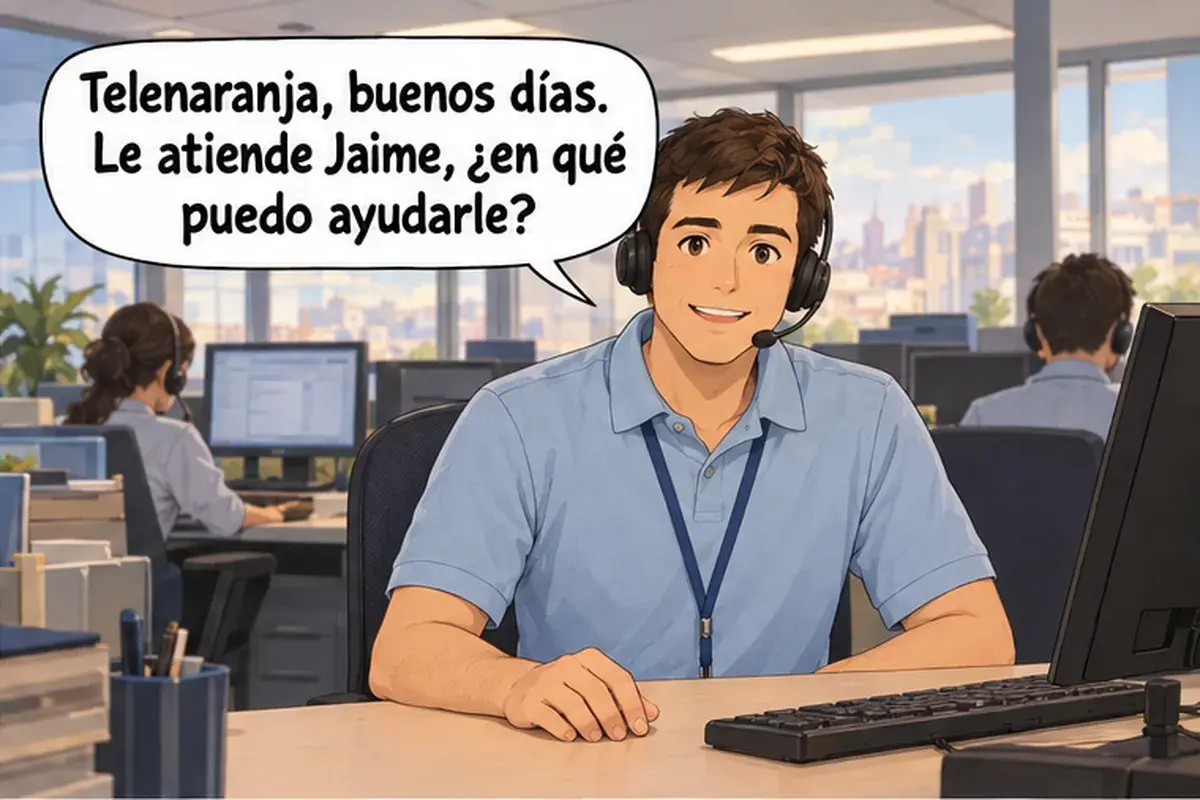
- Agente
Telenaranja, buenos días. Le atiende Jaime, ¿en qué puedo ayudarle?
Telenaranja, good morning. You're speaking with Jaime. How can I help you? (formal)
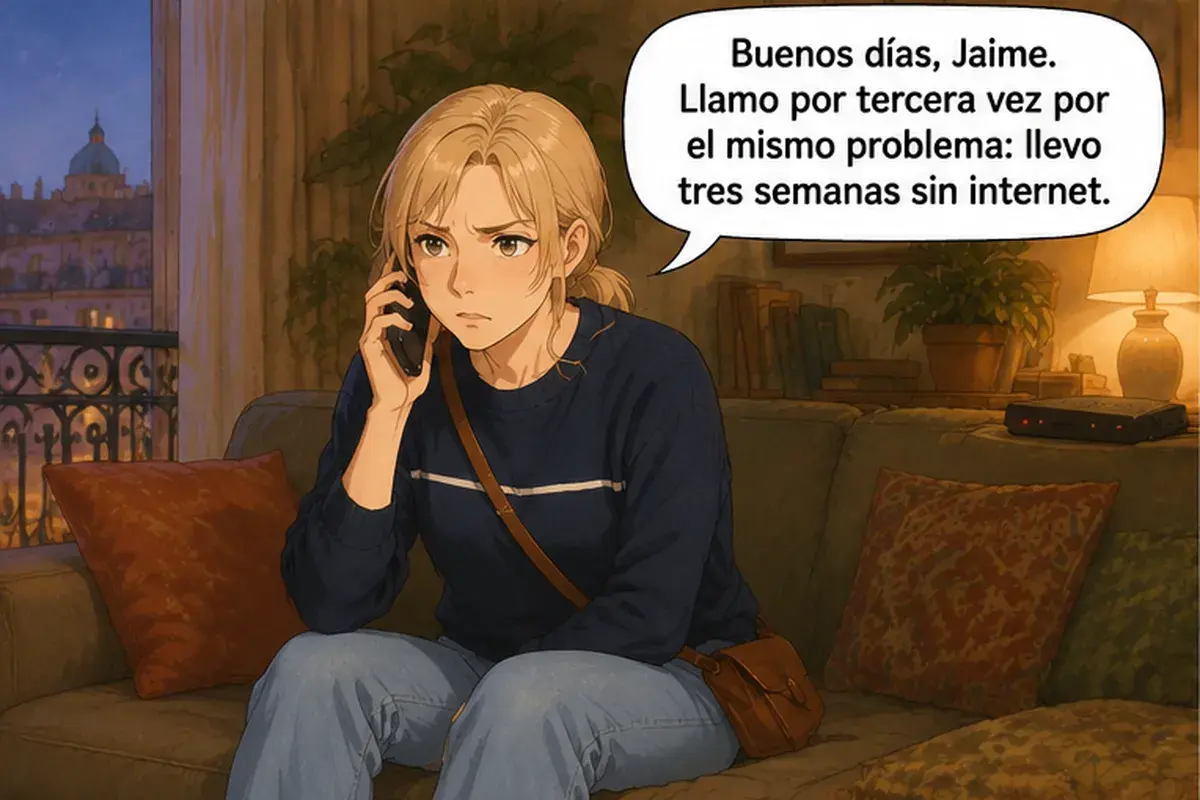
- Ana
Buenos días, Jaime. Llamo por tercera vez por el mismo problema: llevo tres semanas sin internet.
Good morning, Jaime. I'm calling for the third time about the same problem: I've been without internet for three weeks.
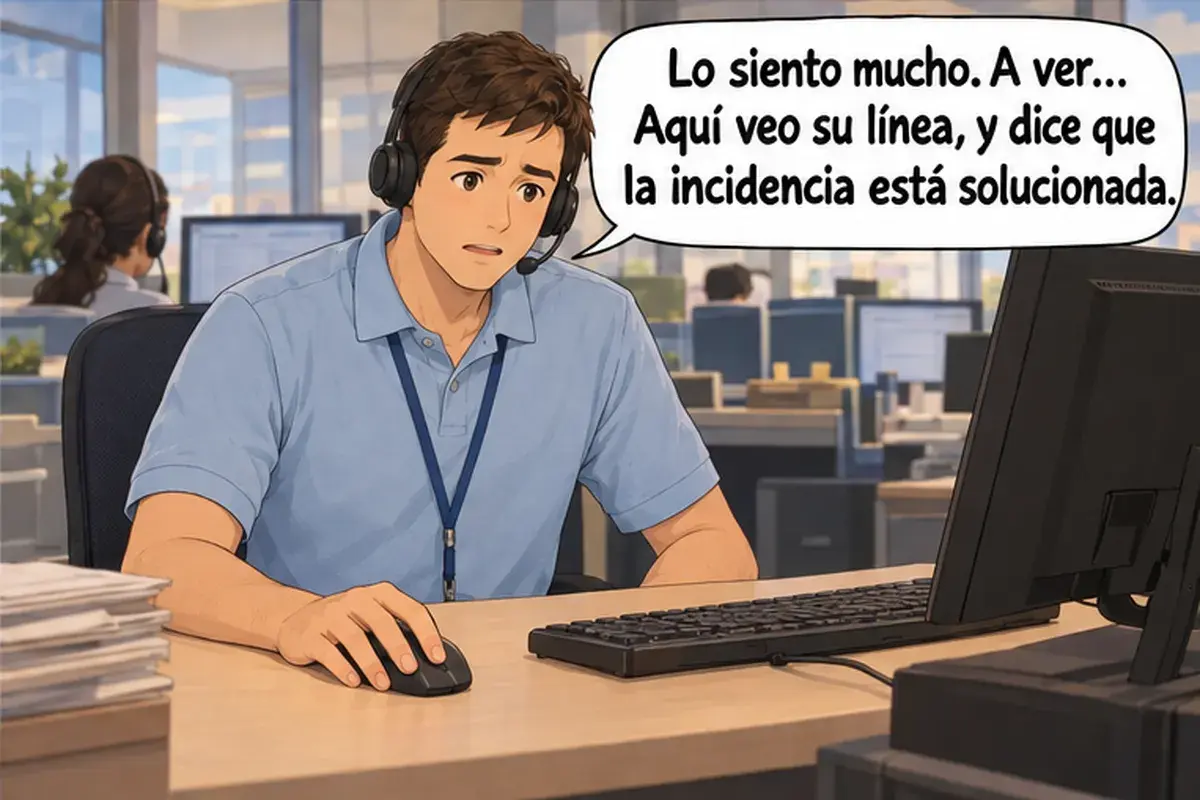
- Agente
Lo siento mucho. A ver… Aquí veo su línea, y dice que la incidencia está solucionada.
I'm very sorry. Let's see... I can see your line here, and it says the issue has been solved (formal).
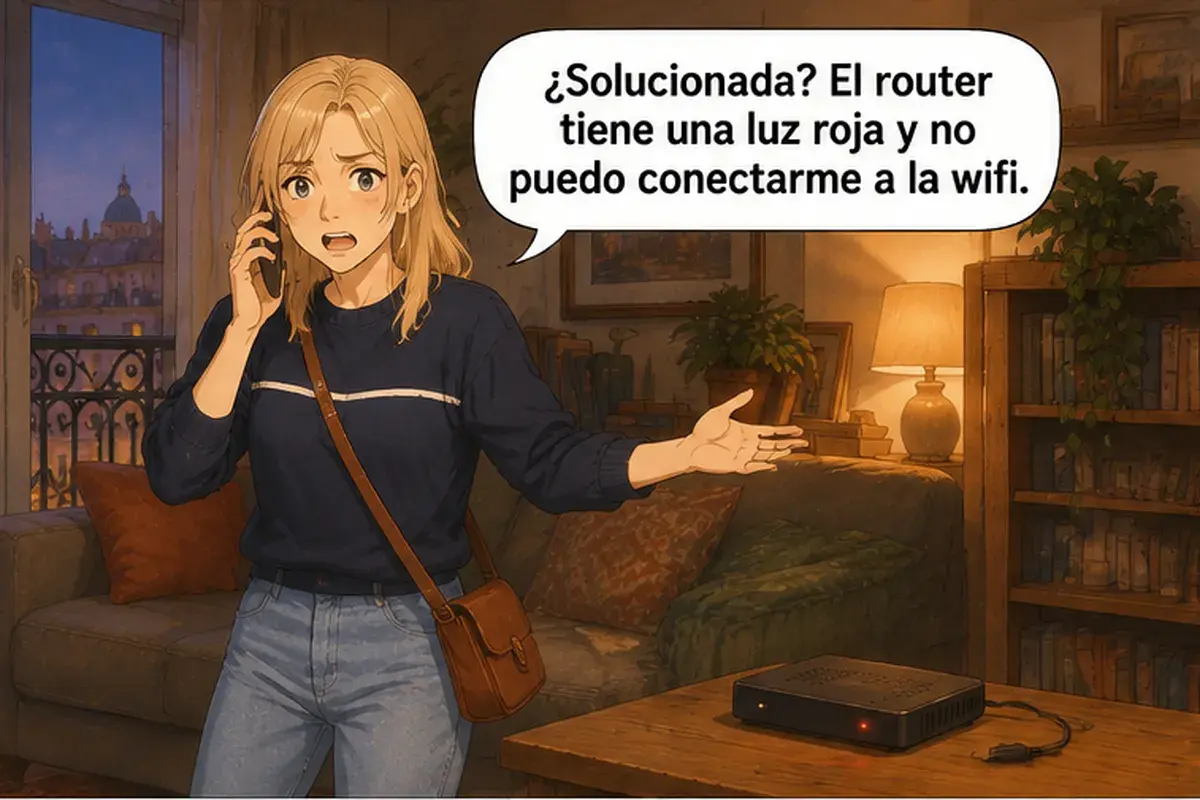
- Ana
¿Solucionada? El router tiene una luz roja y no puedo conectarme a la wifi.
Solved? The router has a red light, and I can't connect to the Wi-Fi.
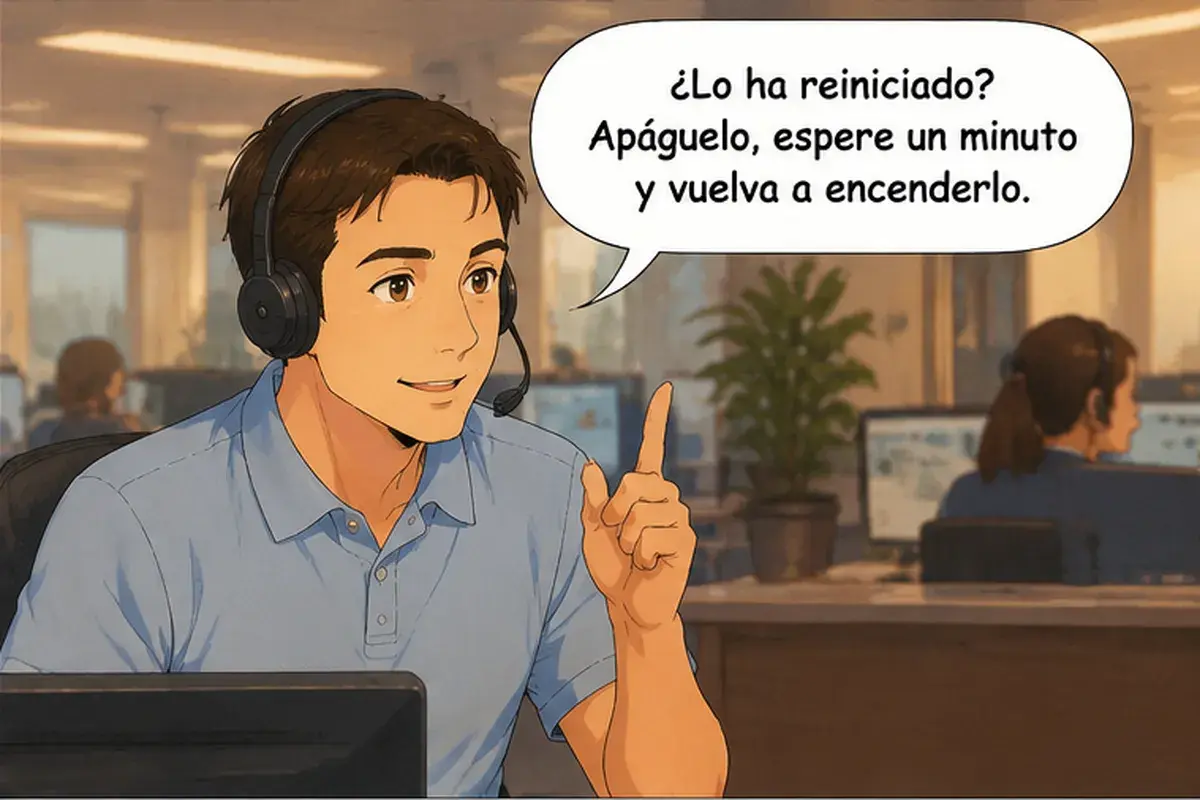
- Agente
¿Lo ha reiniciado? Apáguelo, espere un minuto y vuelva a encenderlo.
Have you restarted it? Turn it off, wait a minute and turn it back on (formal).
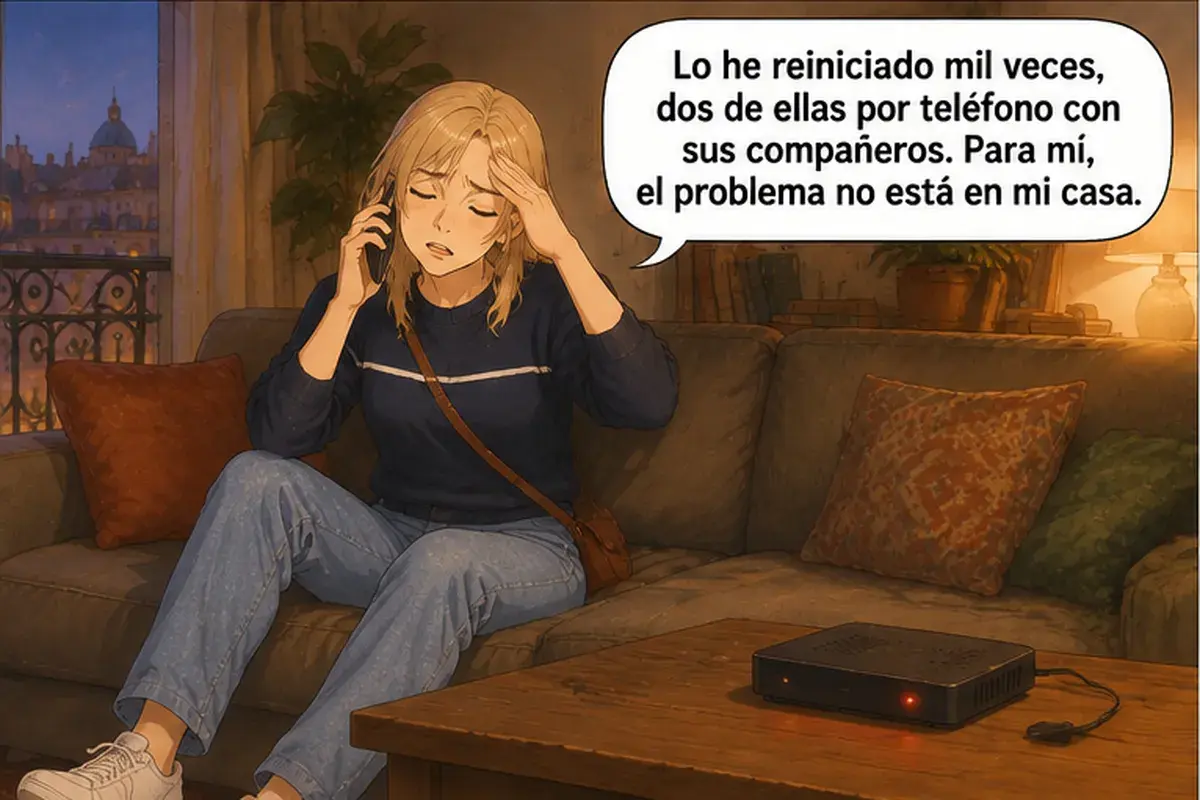
- Ana
Lo he reiniciado mil veces, dos de ellas por teléfono con sus compañeros. Para mí, el problema no está en mi casa.
I've restarted it a thousand times, twice on the phone with your colleagues. In my opinion, the problem isn't in my home (formal).
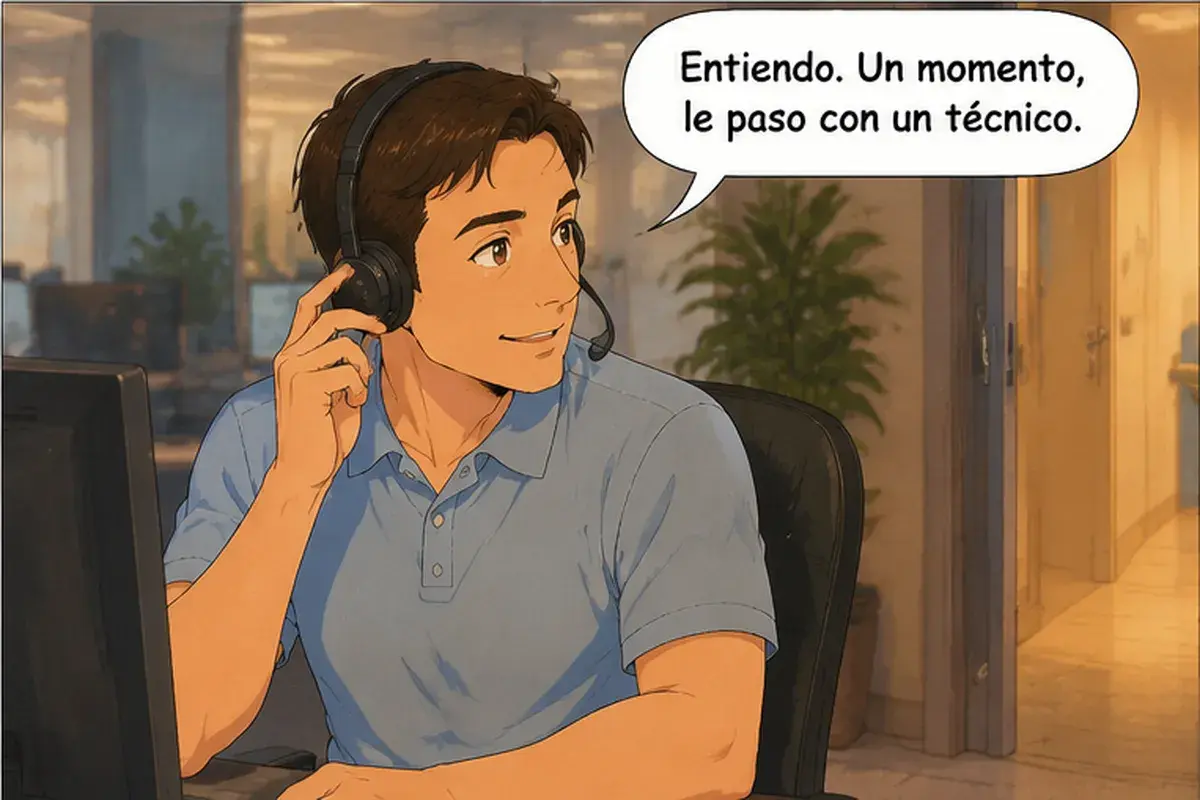
- Agente
Entiendo. Un momento, le paso con un técnico.
I understand. One moment, I'll put you through to a technician (formal).
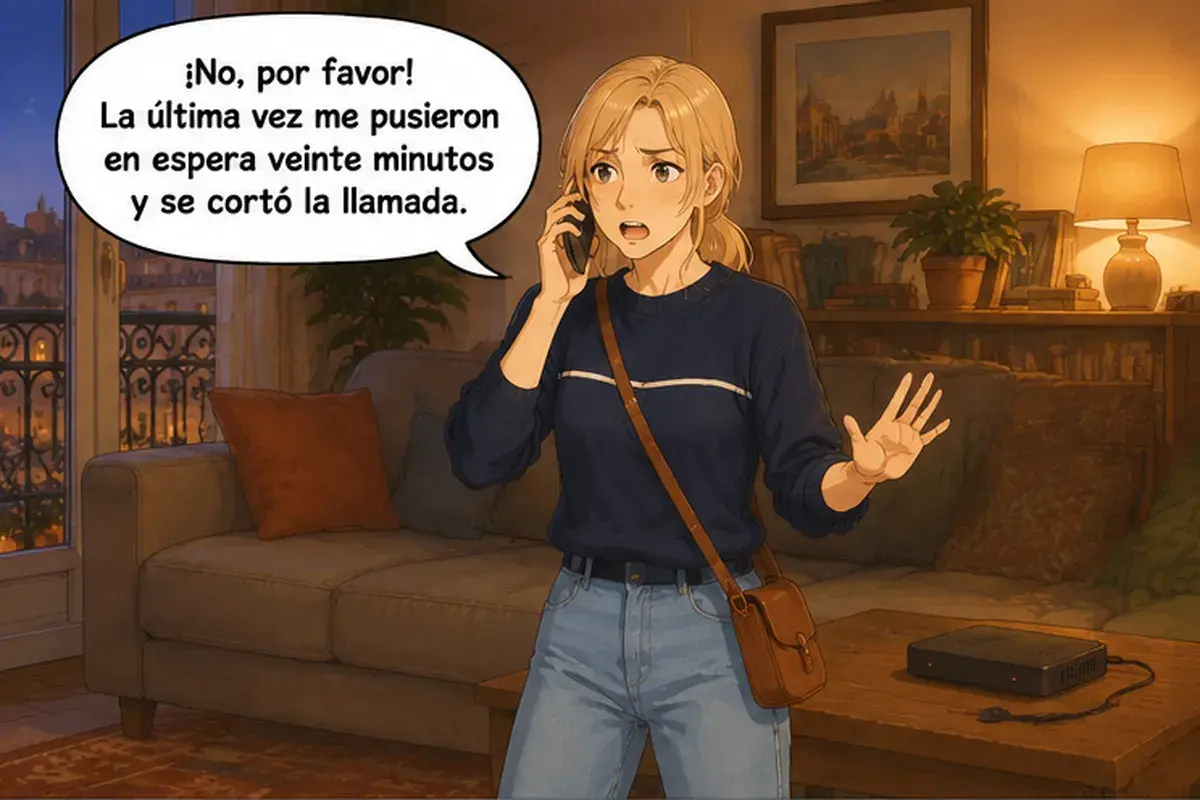
- Ana
¡No, por favor! La última vez me pusieron en espera veinte minutos y se cortó la llamada.
No, please! Last time they put me on hold for twenty minutes, and the call got cut off.
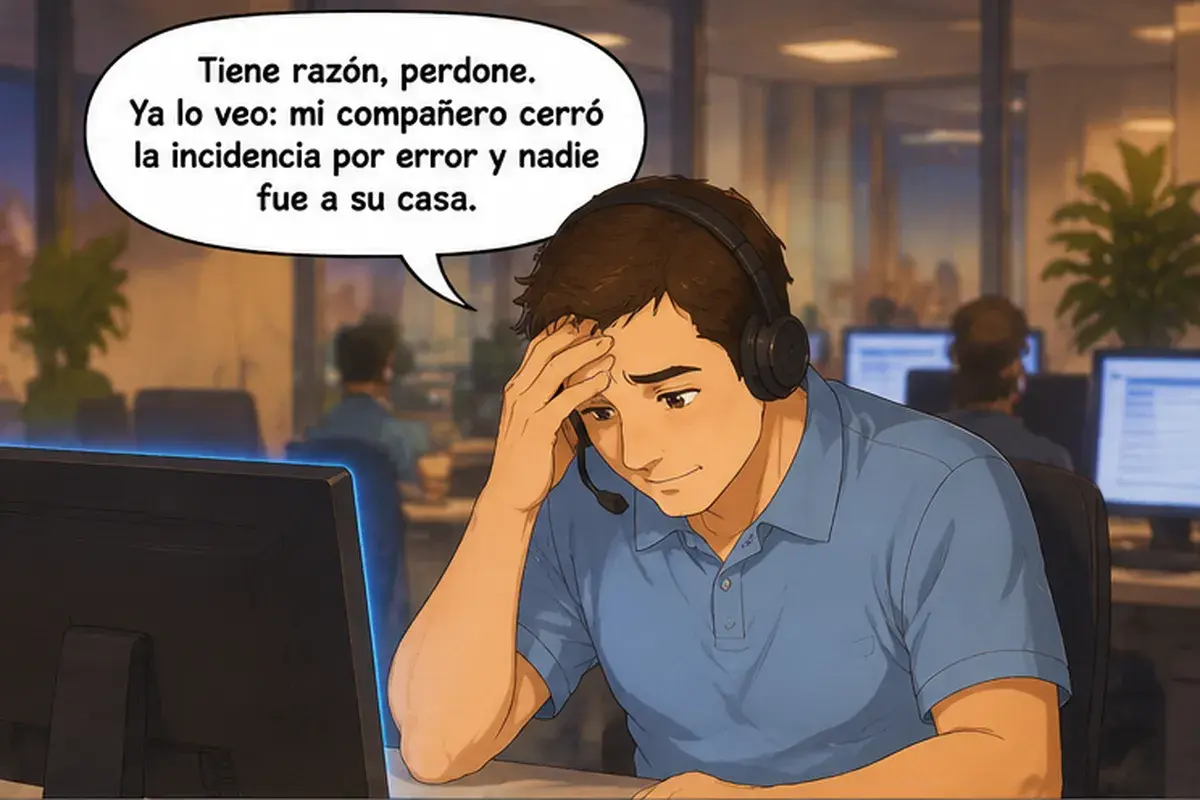
- Agente
Tiene razón, perdone. Ya lo veo: mi compañero cerró la incidencia por error y nadie fue a su casa.
You're right, I'm sorry. Now I see it: my colleague closed the ticket by mistake, and nobody went to your home (formal).
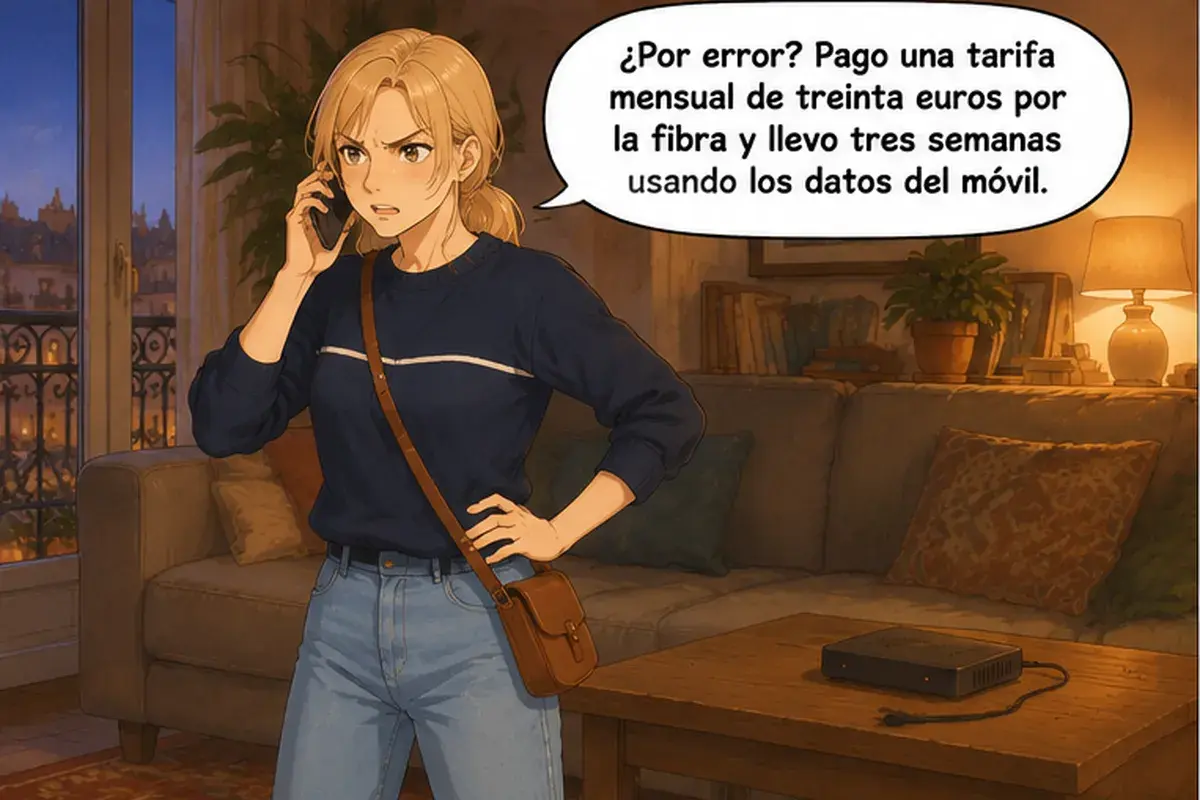
- Ana
¿Por error? Pago una tarifa mensual de treinta euros por la fibra y llevo tres semanas usando los datos del móvil.
By mistake? I pay a monthly rate of thirty euros for fiber, and I've been using my phone's data for three weeks.
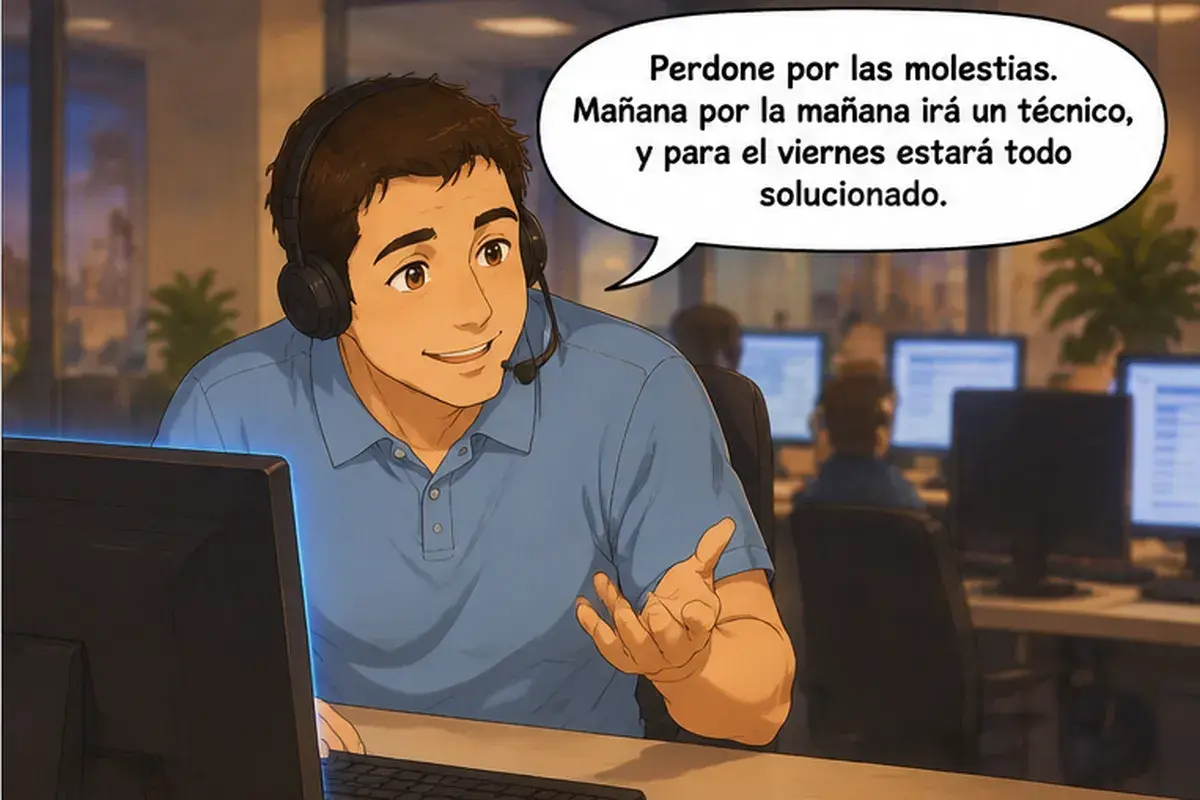
- Agente
Perdone por las molestias. Mañana por la mañana irá un técnico, y para el viernes estará todo solucionado.
Sorry for the trouble. A technician will come tomorrow morning, and everything will be fixed by Friday (formal).

- Ana
Eso espero. Además, quiero una compensación por estas tres semanas, y la quiero por escrito.
I hope so. Also, I want compensation for these three weeks, and I want it in writing.
- Agente
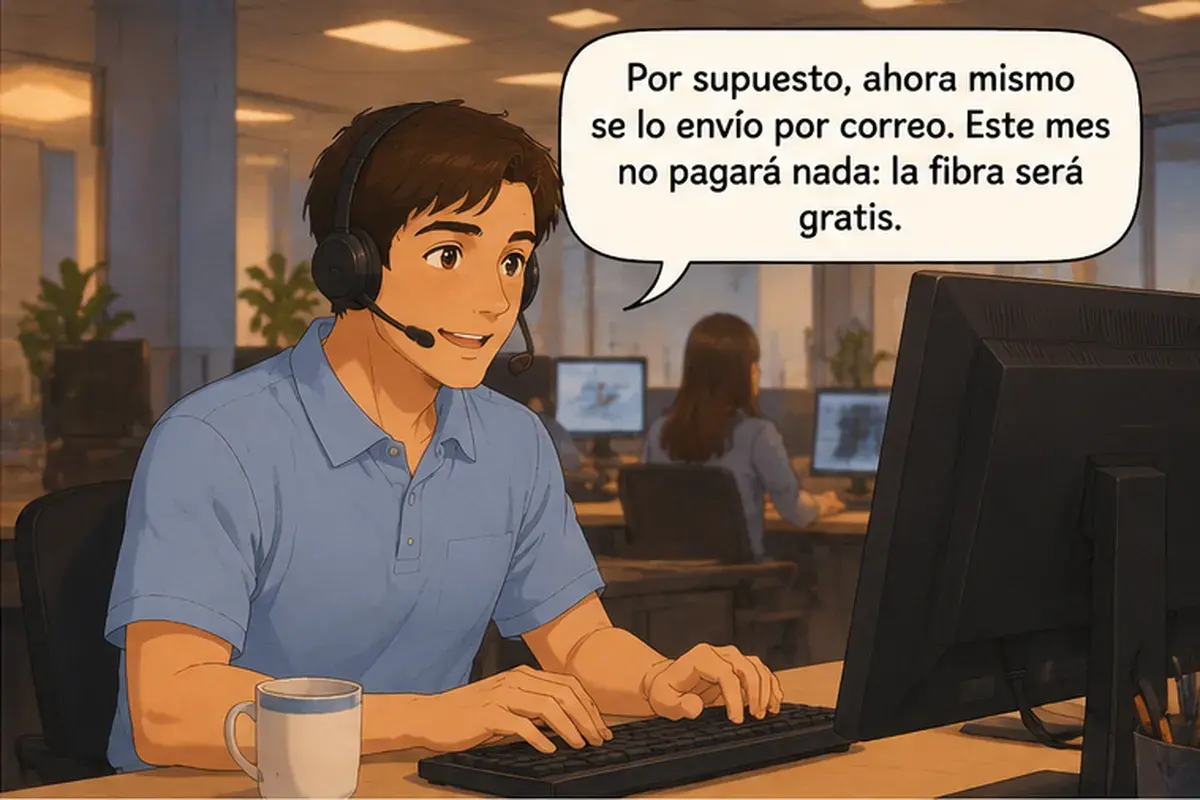
Por supuesto, ahora mismo se lo envío por correo. Este mes no pagará nada: la fibra será gratis.
Of course, I'll send it to you by email right now. You won't pay anything this month: the fiber will be free (formal).
- Ana
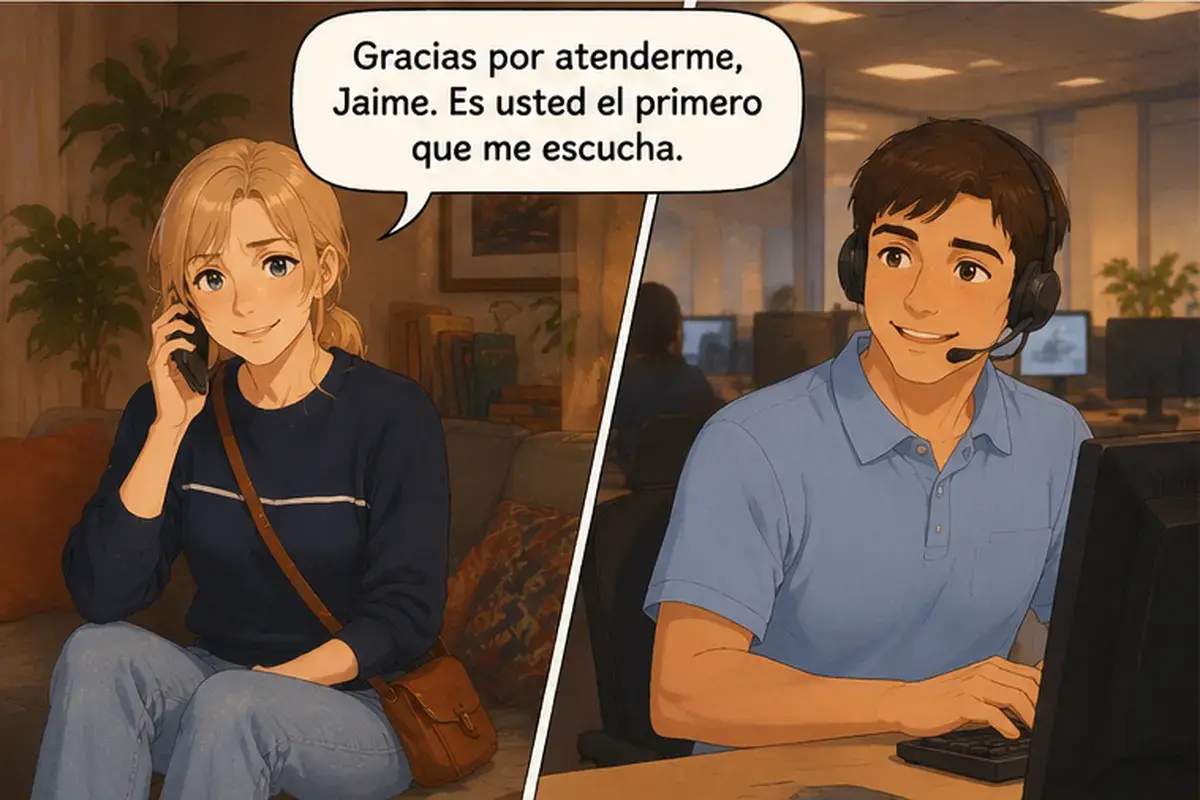
Gracias por atenderme, Jaime. Es usted el primero que me escucha.
Thank you for helping me, Jaime. You're the first one who listens to me (formal).
- Agente
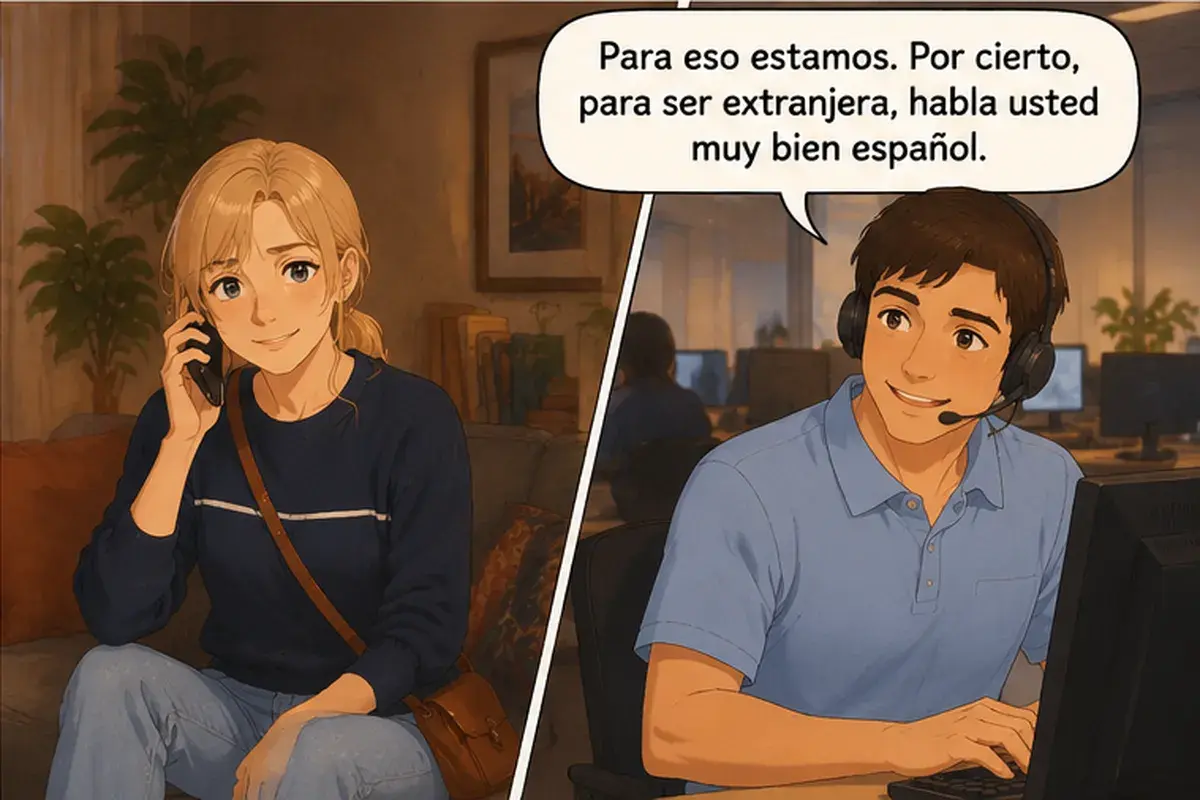
Para eso estamos. Por cierto, para ser extranjera, habla usted muy bien español.
That's what we're here for. By the way, for a foreigner, you speak Spanish very well (to a woman, formal).

- Ana
Gracias. He hablado mucho por teléfono estas tres semanas.
Thank you. I've talked on the phone a lot these three weeks.
Grammar for this text
This text brings together the new uses of por and para.
- Means: por teléfono, por correo, por escrito — by phone, by mail (here: by email), in writing. Por tercera vez — for the third time.
- In exchange for: pago… por la fibra, una compensación por estas tres semanas, gracias por atenderme, perdone por las molestias.
- Cause: llama por una avería, por error — because of a breakdown, by mistake.
- Deadline: para el viernes — by Friday. Opinion: para mí — in my opinion. "Considering": para ser extranjera — for a foreigner.
Phone phrases: le atiende Jaime — "you're speaking with Jaime", le paso con… — "I'll put you through to...", me pusieron en espera — "they put me on hold".
Apáguelo is a polite usted command with the pronoun attached at the end (unit 12). Se lo envío — "I'll send it to you": le before lo becomes se (unit 10). Para eso estamos — "that's what we're here for".
Words and grammar of the unit: Get help from tech support.
Learn the words from the texts with flashcards
In the app, you can tap any word in a text to see its translation, forms and examples, and new words stick with flashcards. 15 minutes a day.
Start for freeEverything is open for free. No card needed to sign up.