

Spanish dialogue with translation · B1 · 18 lines
Se trabaja para vivir, no se vive para trabajar You work to live, you don't live to work
Comic · 18 panels
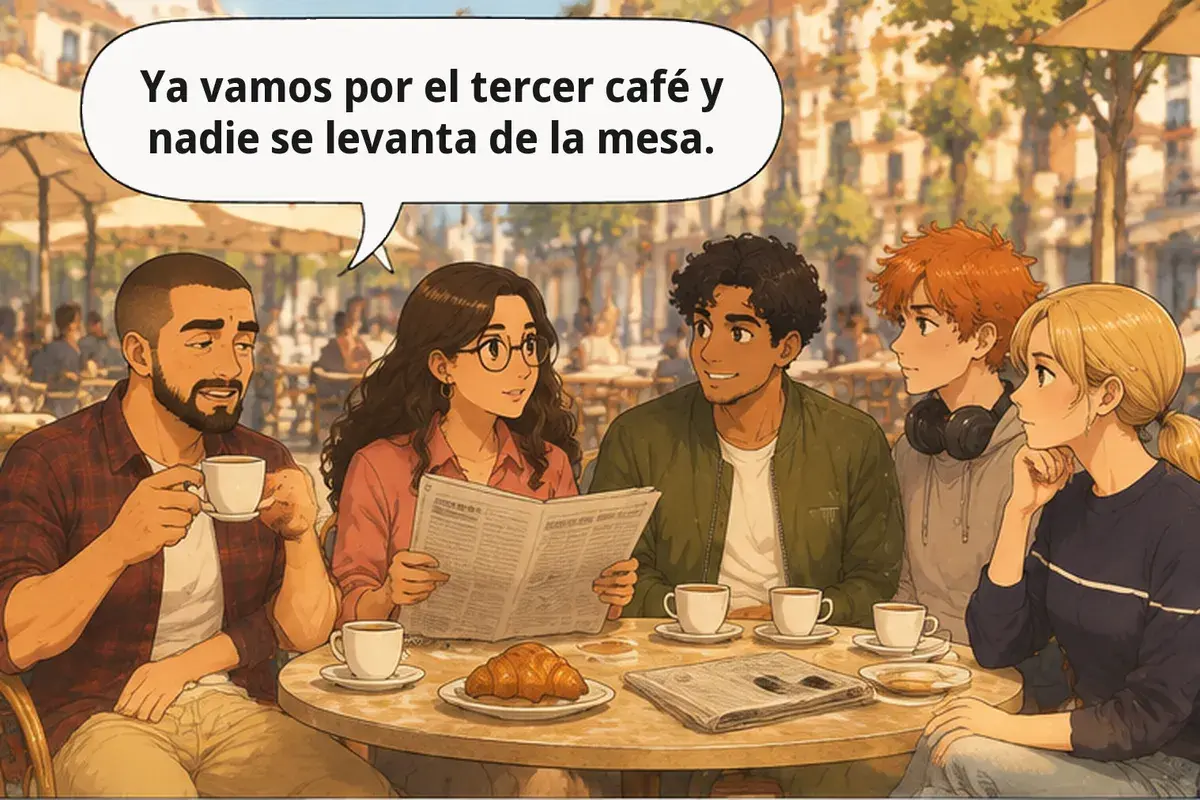
- Sergio
Ya vamos por el tercer café y nadie se levanta de la mesa.
We're already on our third coffee and nobody's getting up from the table.
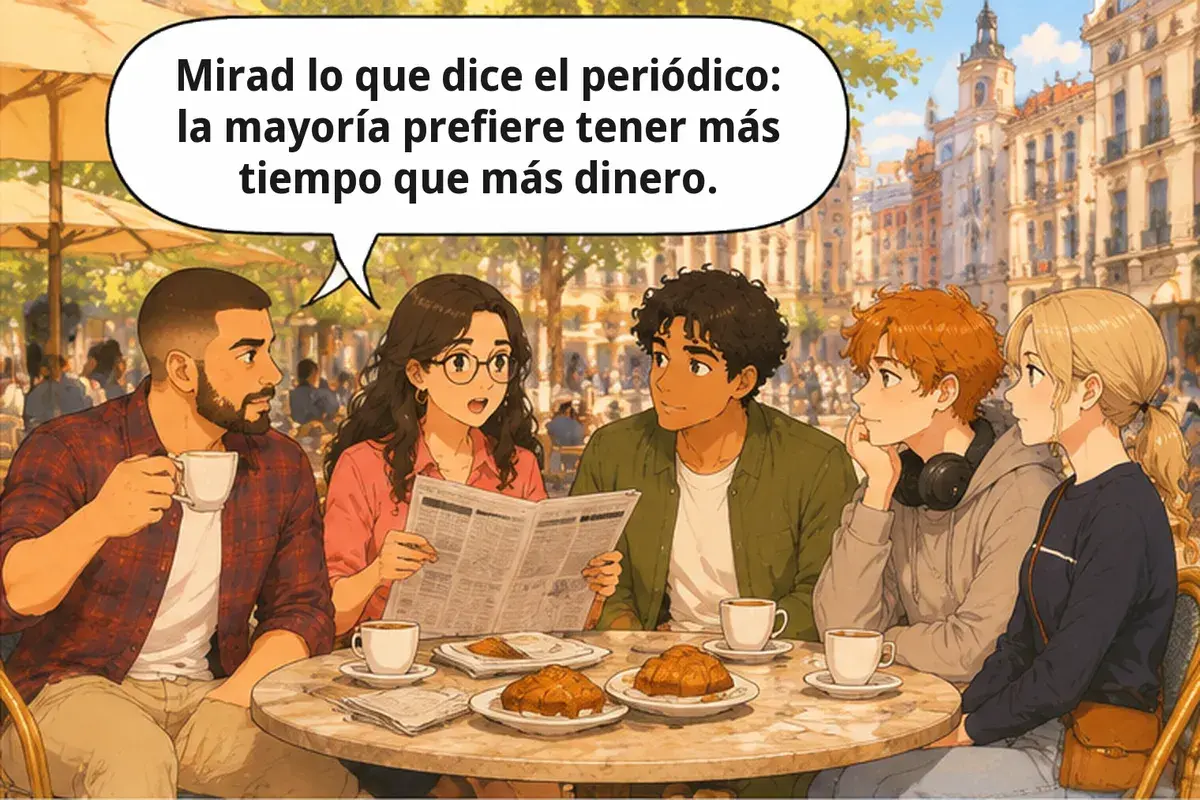
- Lucía
Mirad lo que dice el periódico: la mayoría prefiere tener más tiempo que más dinero.
Look at what the newspaper says: most people prefer to have more time rather than more money (to several people).
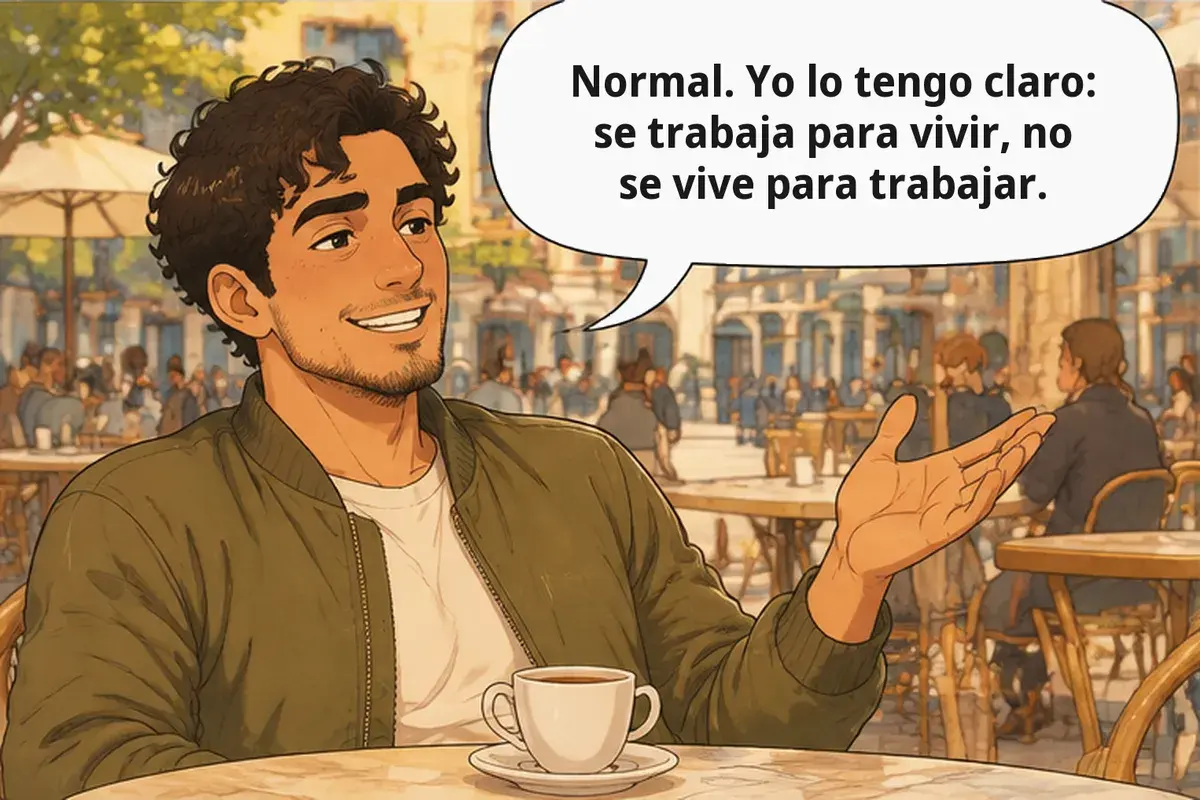
- Pablo
Normal. Yo lo tengo claro: se trabaja para vivir, no se vive para trabajar.
Of course. I'm sure about it: you work to live, you don't live to work.
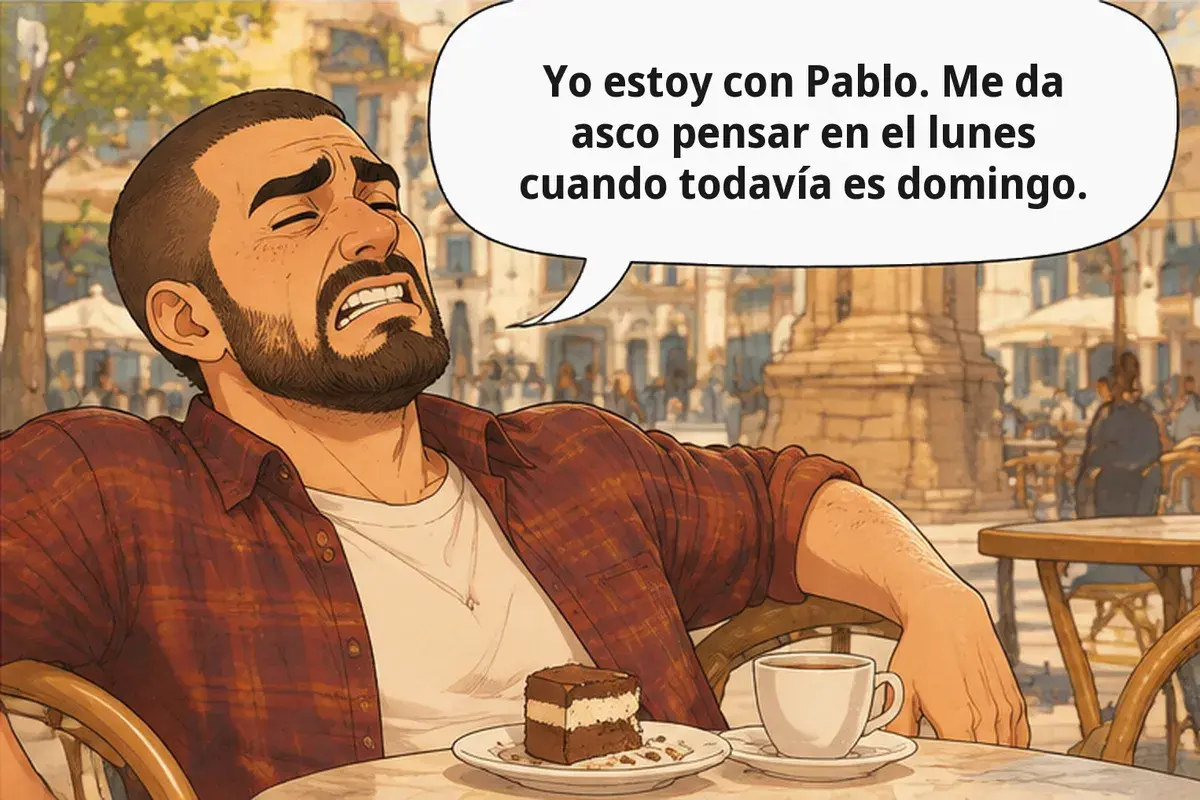
- Sergio
Yo estoy con Pablo. Me da asco pensar en el lunes cuando todavía es domingo.
I'm with Pablo. Thinking about Monday when it's still Sunday makes me sick.
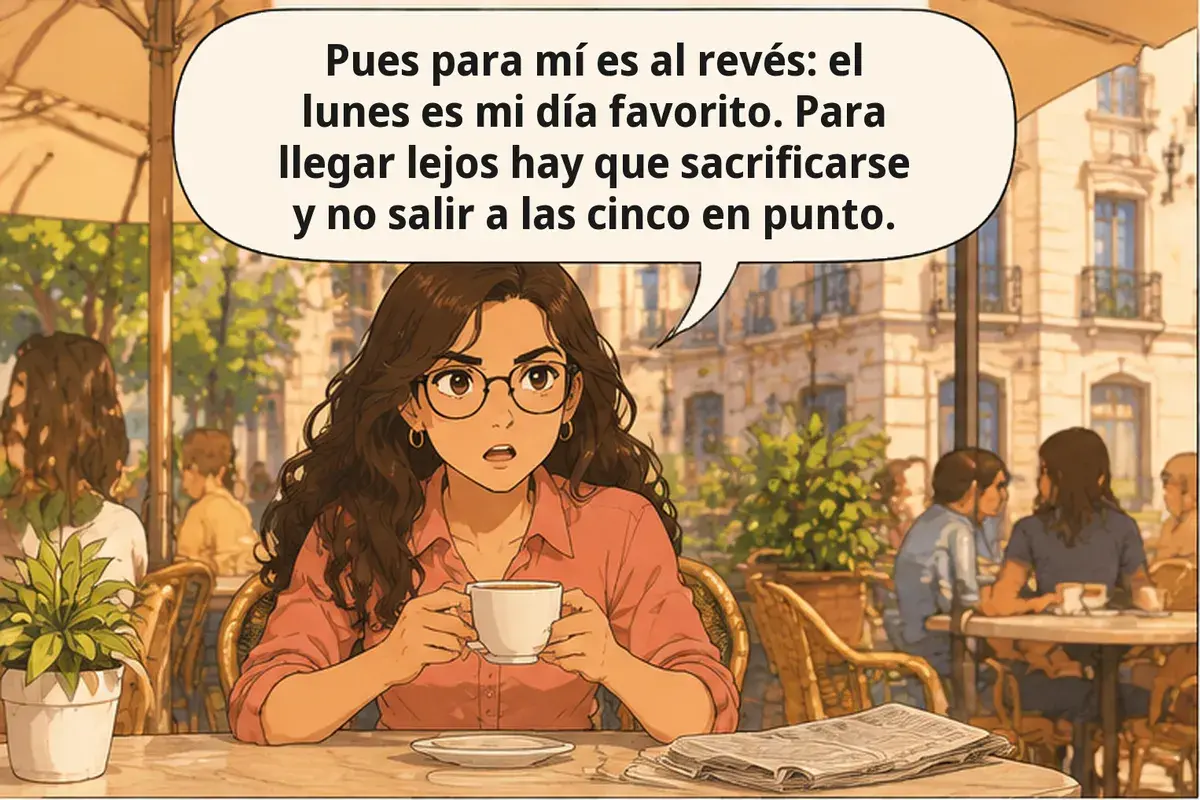
- Lucía
Pues para mí es al revés: el lunes es mi día favorito. Para llegar lejos hay que sacrificarse y no salir a las cinco en punto.
Well, for me it's the other way around: Monday is my favorite day. To go far, you have to make sacrifices and not leave at five o'clock sharp.
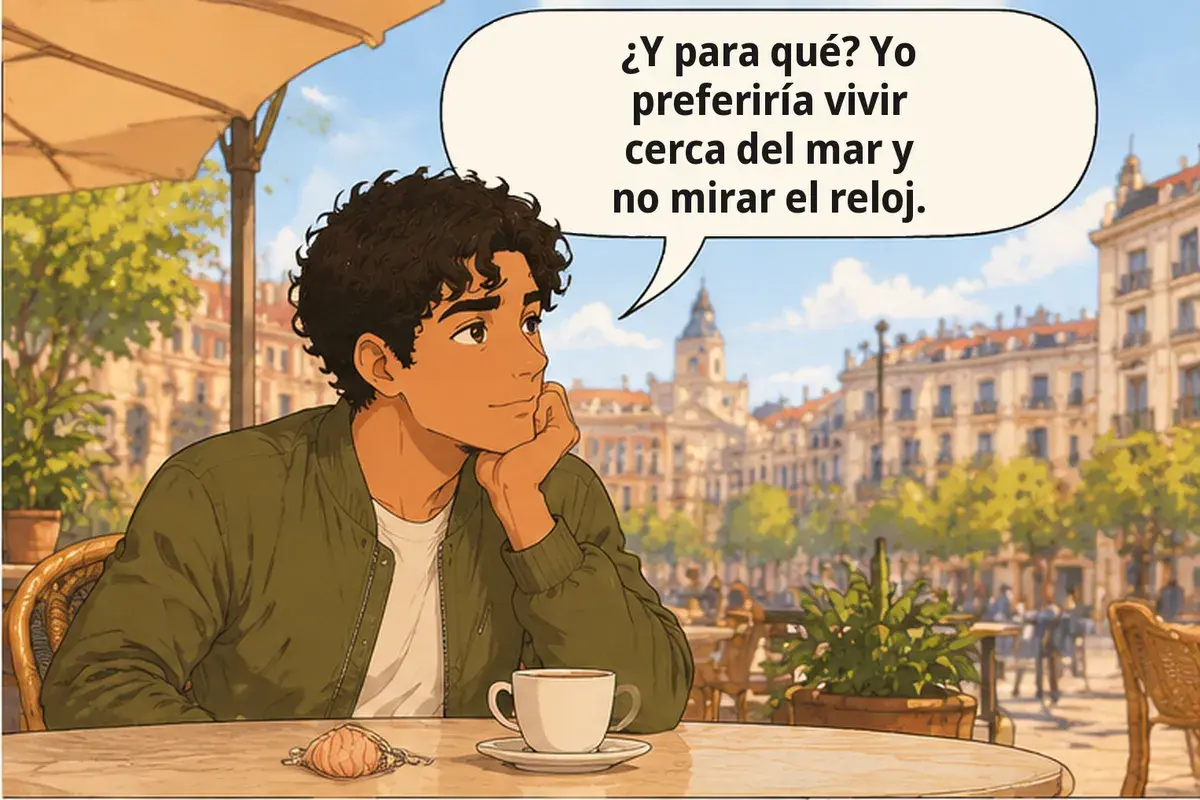
- Pablo
¿Y para qué? Yo preferiría vivir cerca del mar y no mirar el reloj.
And what for? I'd prefer to live near the sea and not look at the clock.
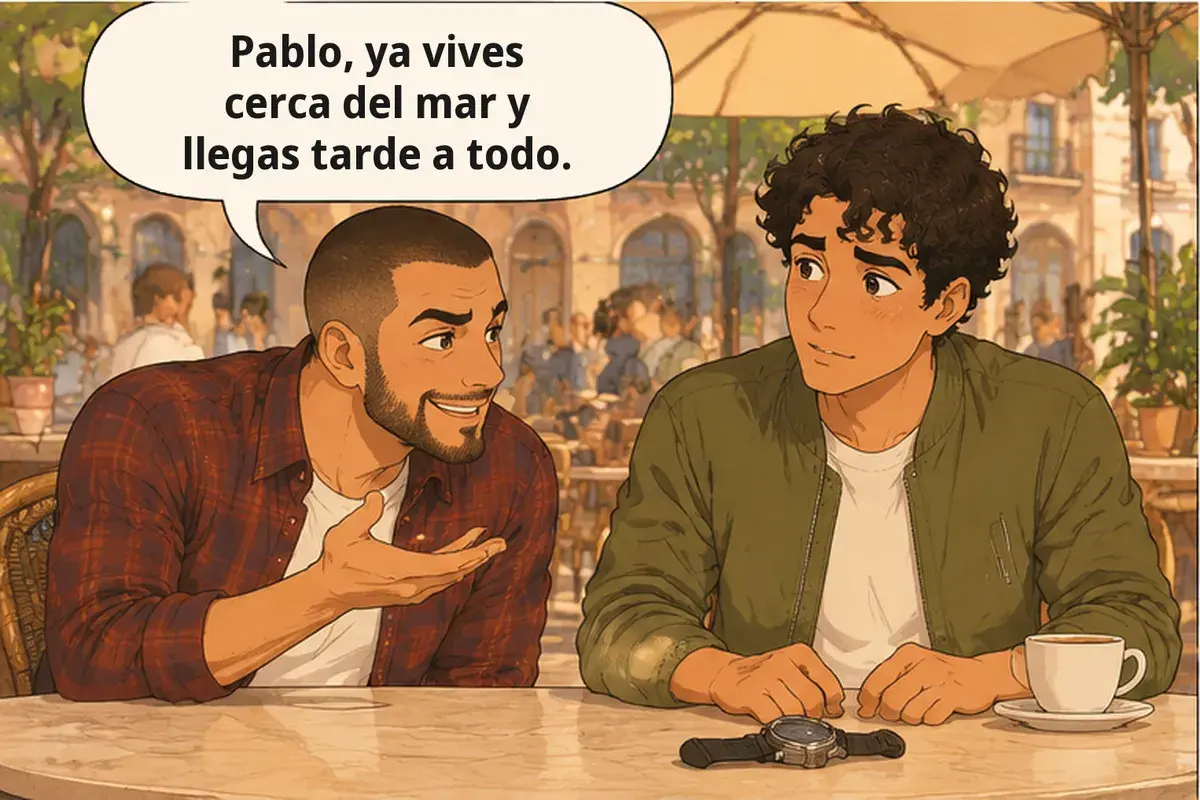
- Sergio
Pablo, ya vives cerca del mar y llegas tarde a todo.
Pablo, you already live near the sea, and you're late for everything.
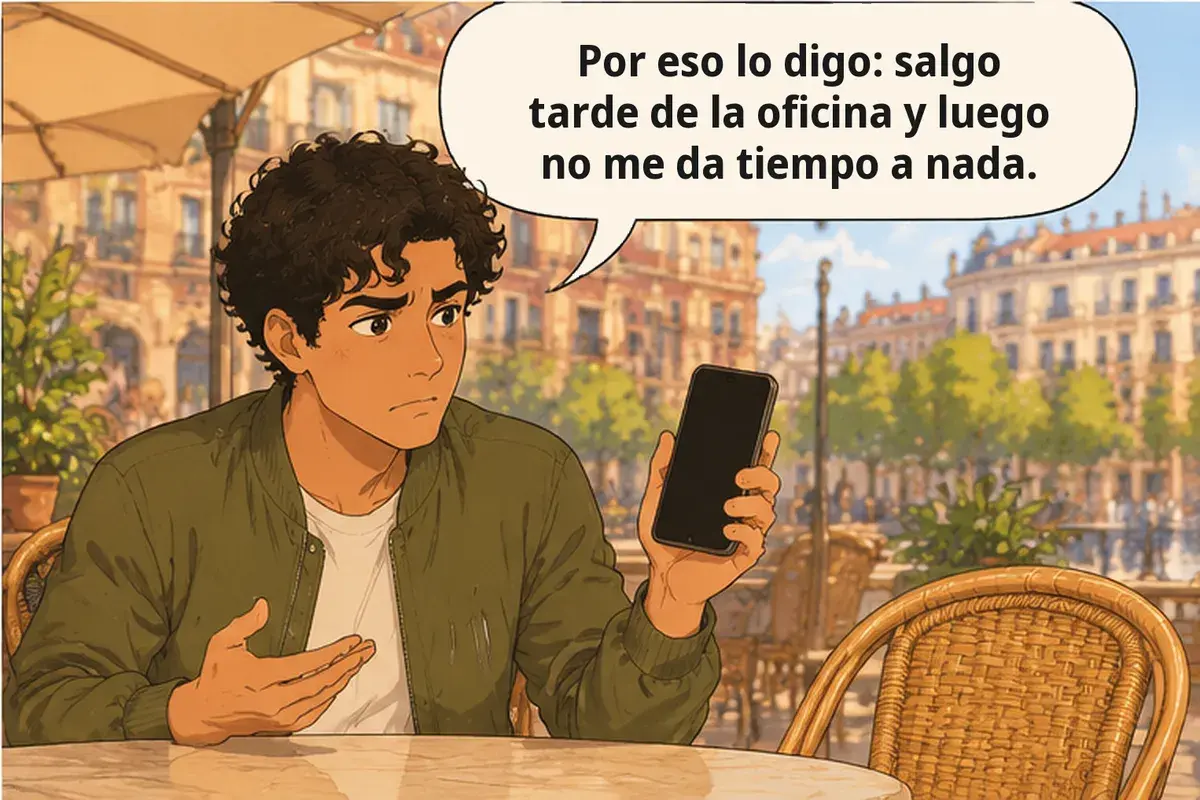
- Pablo
Por eso lo digo: salgo tarde de la oficina y luego no me da tiempo a nada.
That's why I'm saying it: I leave the office late, and then I don't have time for anything.
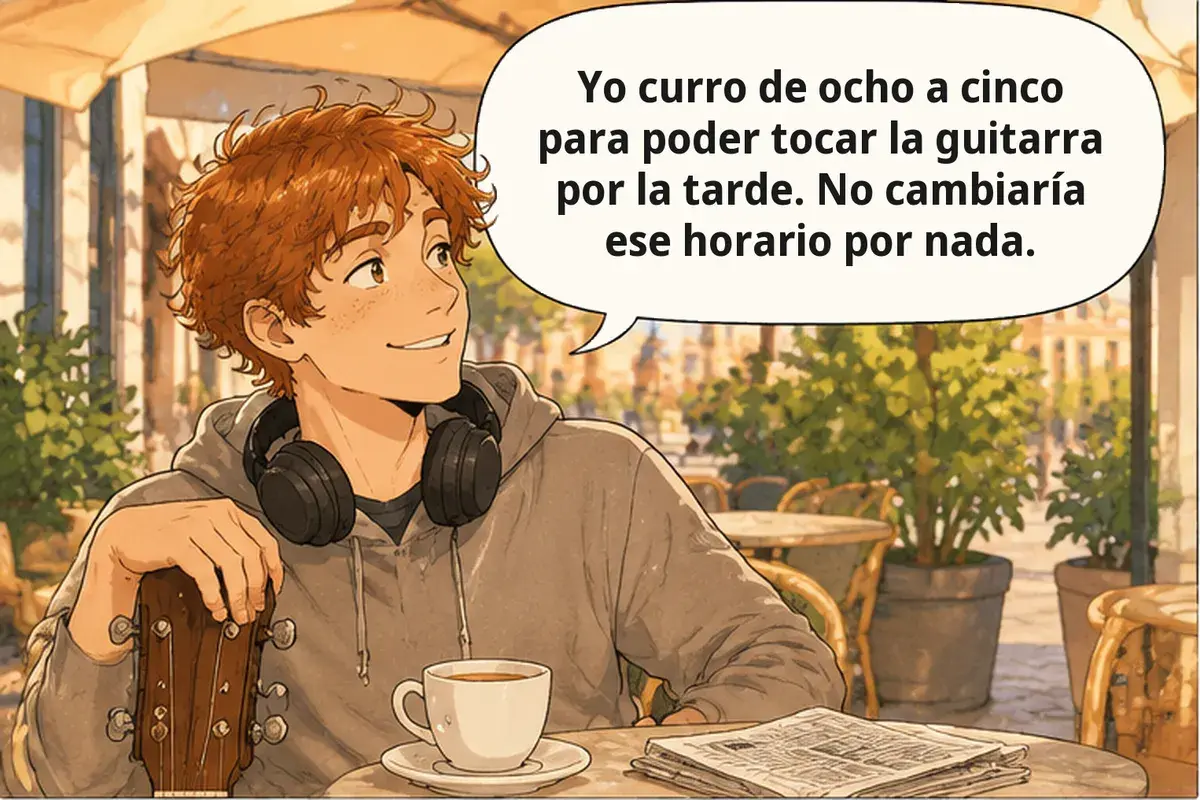
- Dani
Yo curro de ocho a cinco para poder tocar la guitarra por la tarde. No cambiaría ese horario por nada.
I work from eight to five so I can play the guitar in the afternoon. I wouldn't change that schedule for anything.
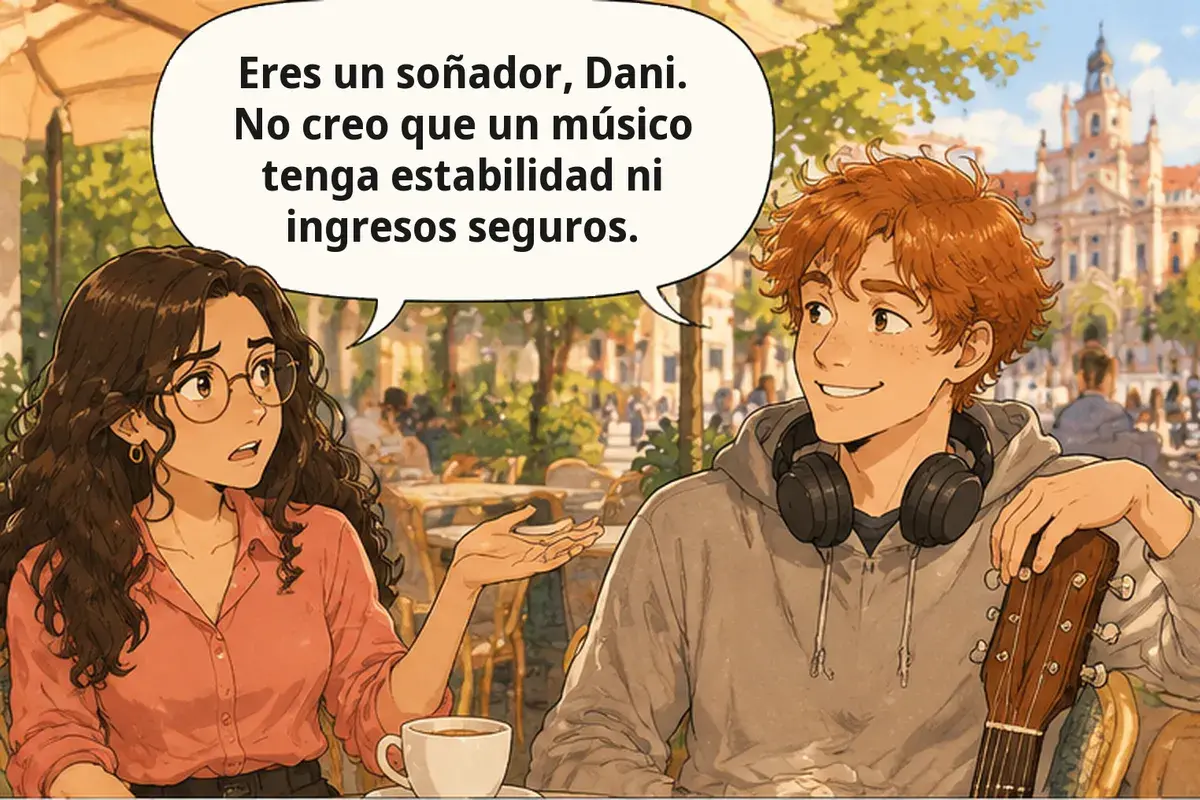
- Lucía
Eres un soñador, Dani. No creo que un músico tenga estabilidad ni ingresos seguros.
You're a dreamer, Dani. I don't think a musician has stability or a steady income (to a man).

- Dani
De hecho, el mes pasado cobré cuarenta euros por tocar en un bar. Entre los cuatro, pero me sentí rico.
In fact, last month I got paid forty euros for playing at a bar. Split four ways, but I felt rich (man speaking).

- Sergio
Mi primo está en paro: tiene todo el tiempo del mundo y ni cuarenta euros.
My cousin is unemployed: he has all the time in the world and not even forty euros.
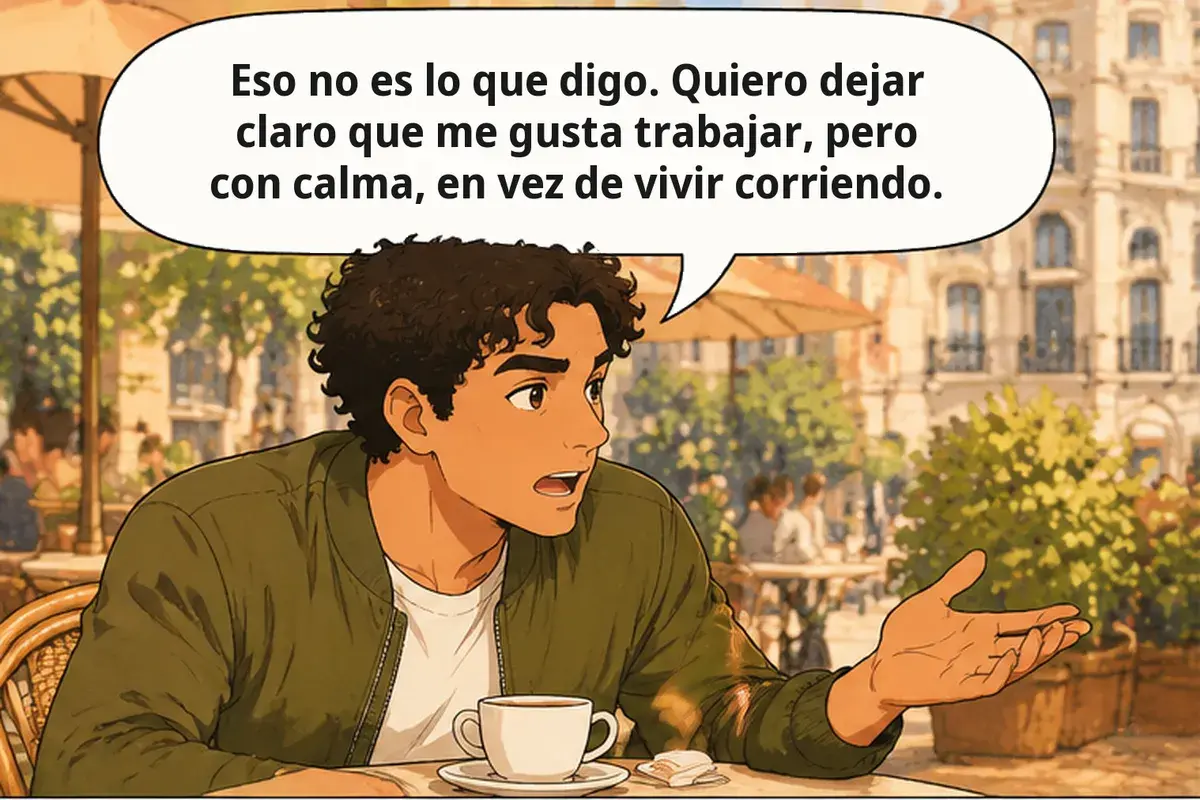
- Pablo
Eso no es lo que digo. Quiero dejar claro que me gusta trabajar, pero con calma, en vez de vivir corriendo.
That's not what I'm saying. I want to make it clear that I like working, but calmly, instead of living in a rush.
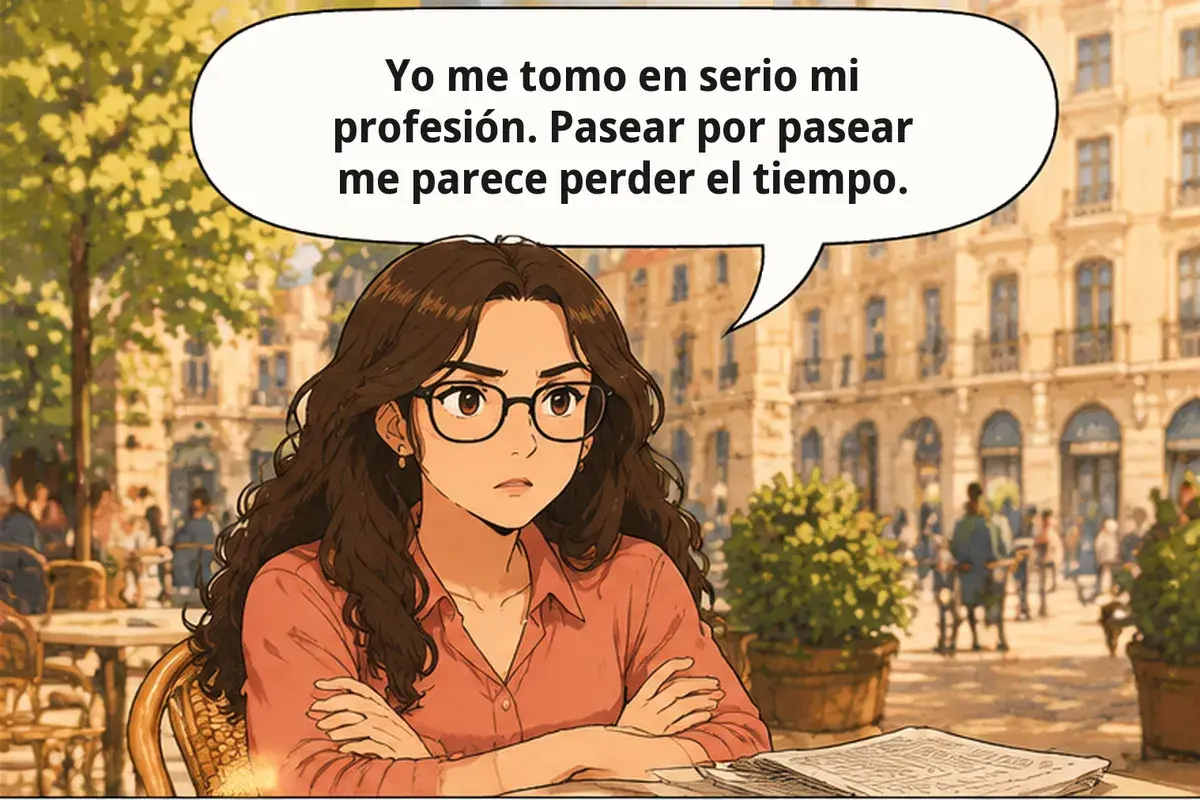
- Lucía
Yo me tomo en serio mi profesión. Pasear por pasear me parece perder el tiempo.
I take my profession seriously. Walking just for the sake of walking seems like a waste of time to me.
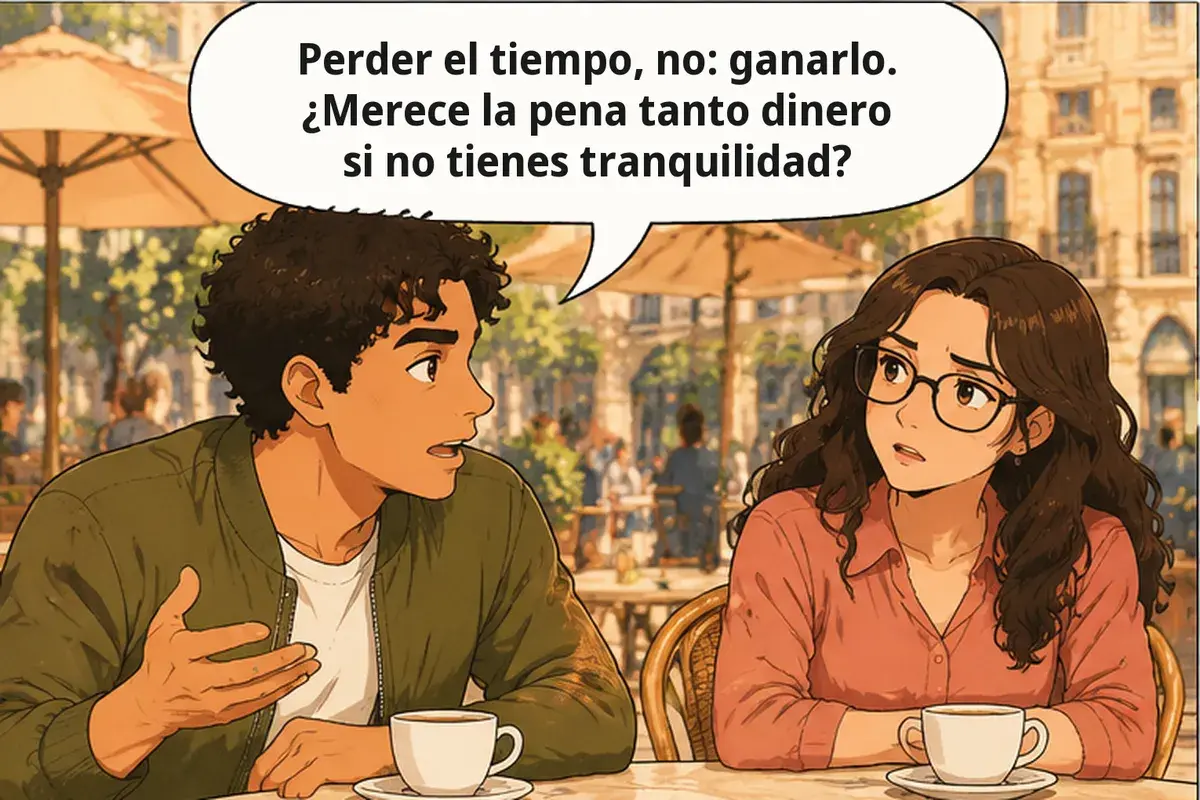
- Pablo
Perder el tiempo, no: ganarlo. ¿Merece la pena tanto dinero si no tienes tranquilidad?
Not wasting time: gaining it. Is so much money worth it if you don't have peace of mind?
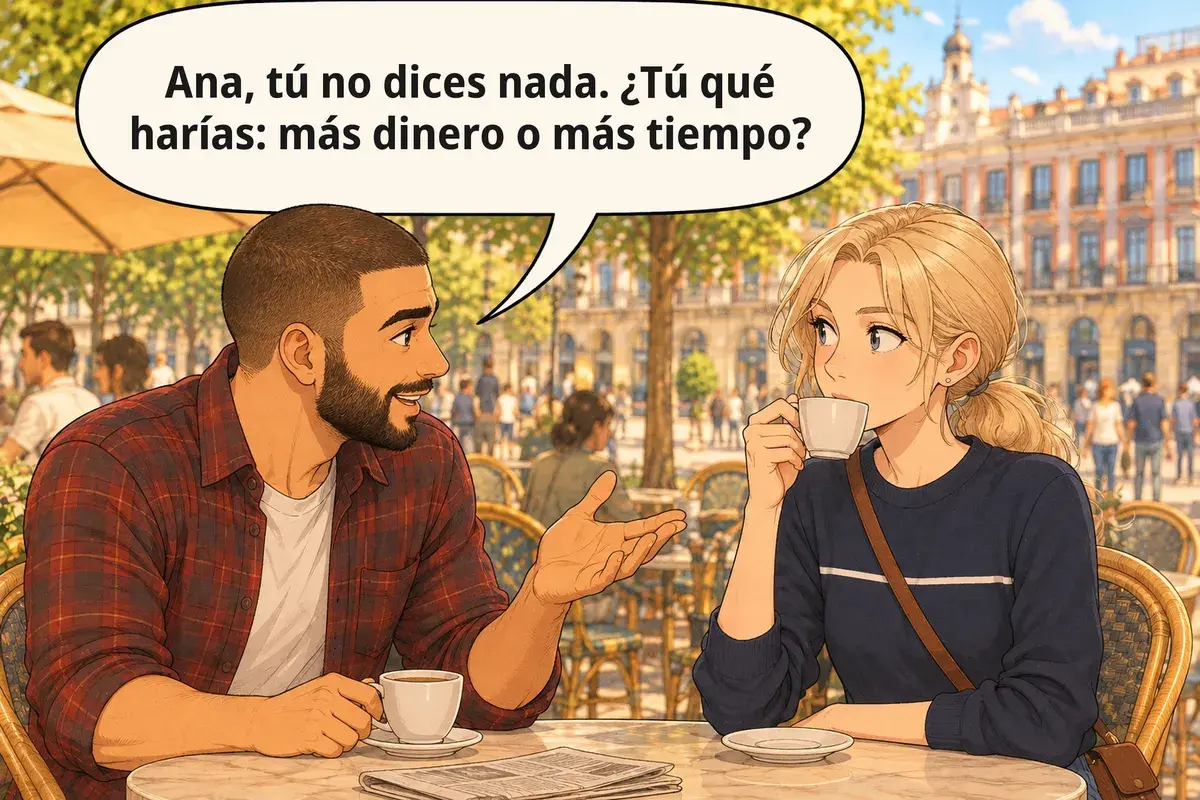
- Sergio
Ana, tú no dices nada. ¿Tú qué harías: más dinero o más tiempo?
Ana, you're not saying anything. What would you do: more money or more time?
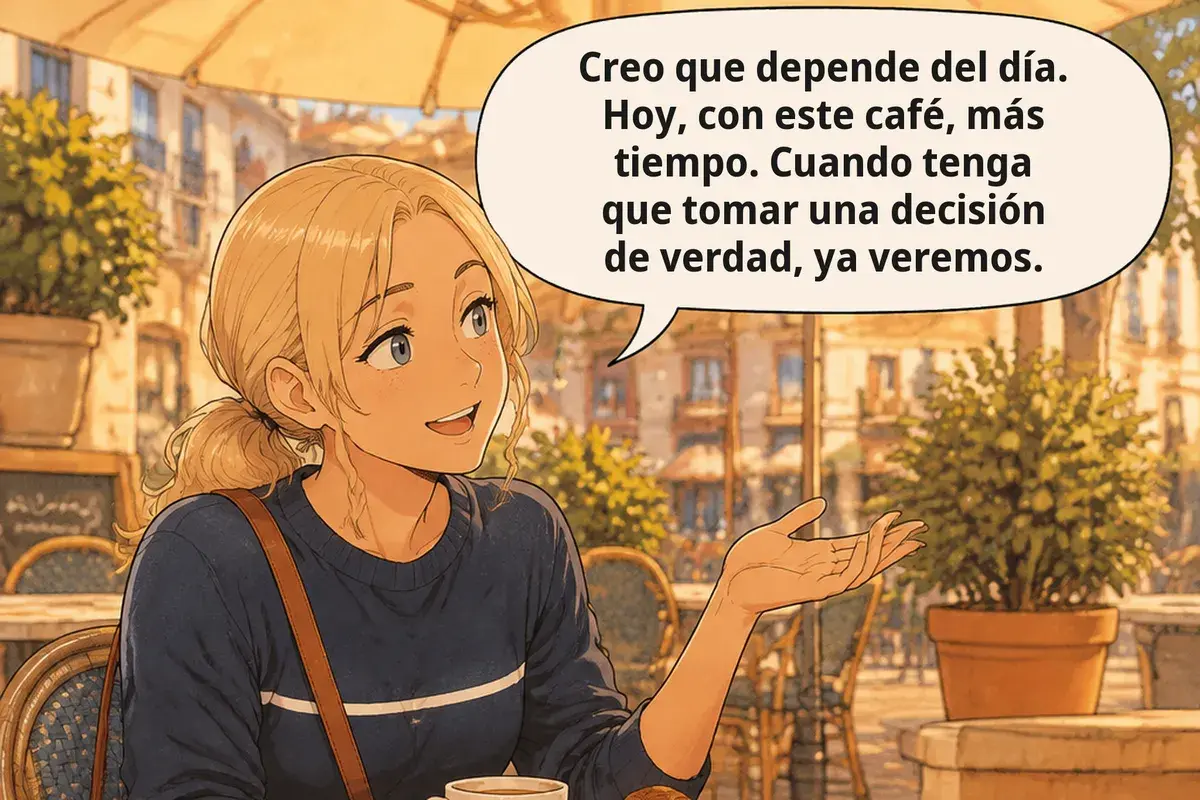
- Ana
Creo que depende del día. Hoy, con este café, más tiempo. Cuando tenga que tomar una decisión de verdad, ya veremos.
I think it depends on the day. Today, with this coffee, more time. When I have to make a real decision, we'll see.
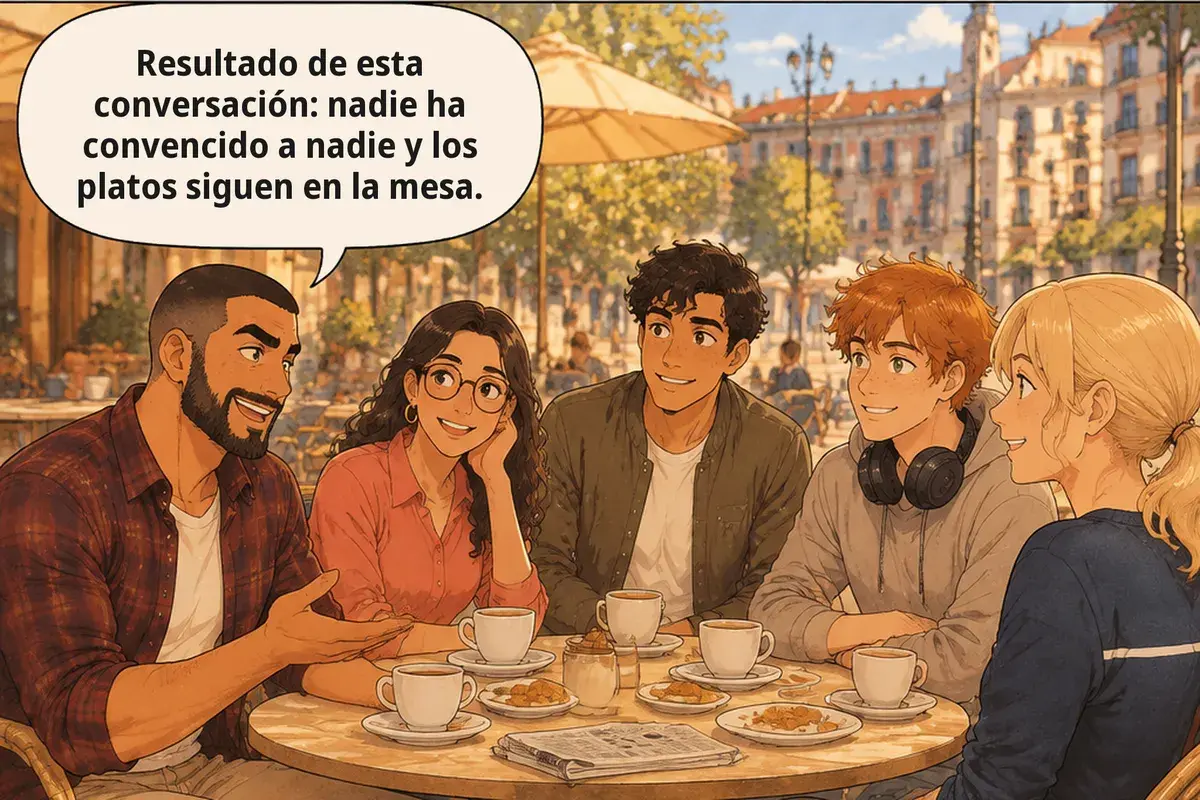
- Sergio
Resultado de esta conversación: nadie ha convencido a nadie y los platos siguen en la mesa.
The result of this conversation: nobody has convinced anybody, and the dishes are still on the table.
Grammar for this text
No creo que un músico tenga… and Creo que depende… After no creo que the verb is in the subjunctive: tenga is the él form of tener (unit 24). After creo que it's the normal form: depende. "I don't think that" shows doubt; "I think that" shows you're sure.
Cuando tenga que tomar una decisión de verdad — cuando about the future takes the subjunctive (unit 20): "when I have to". Ana isn't promising anything: ya veremos — "we'll see".
¿Tú qué harías…?, Yo preferiría, No cambiaría — the conditional, "I would" (unit 4): harías from hacer, preferiría from preferir, cambiaría from cambiar. The question is asked directly, without "if".
Me da asco pensar en el lunes — it works like gustar: the person who is disgusted is me, and the thing that disgusts is the subject. It's a strong, informal phrase.
Pues para mí es al revés — "well, for me it's the other way around". Quiero dejar claro que me gusta trabajar — "I want to make it clear that…". Me tomo en serio mi profesión — "I take my profession seriously". No me da tiempo a nada — "I don't have time for anything".
Mirad — a command to several friends (vosotros): for mirar, the final -r changes to -d. Curro — informal "I work", from currar (unit 23).
Words and grammar of the unit: Debate your views at the table.
Learn the words from the texts with flashcards
In the app, you can tap any word in a text to see its translation, forms and examples, and new words stick with flashcards. 15 minutes a day.
Start for freeEverything is open for free. No card needed to sign up.