

Spanish dialogue with translation · B1 · 18 lines
No me lo cambian They won't exchange it for me
Comic · 18 panels
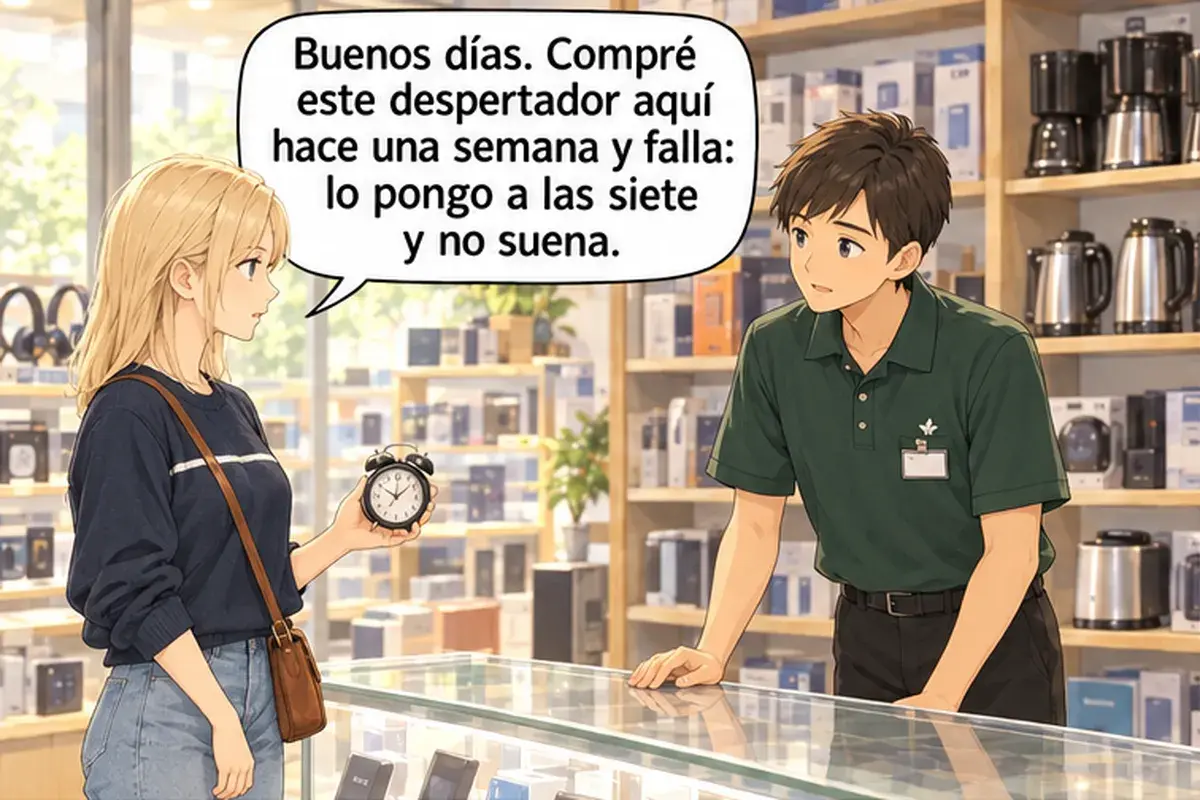
- Ana
Buenos días. Compré este despertador aquí hace una semana y falla: lo pongo a las siete y no suena.
Good morning. I bought this alarm clock here a week ago, and it doesn't work right: I set it for seven and it doesn't ring.
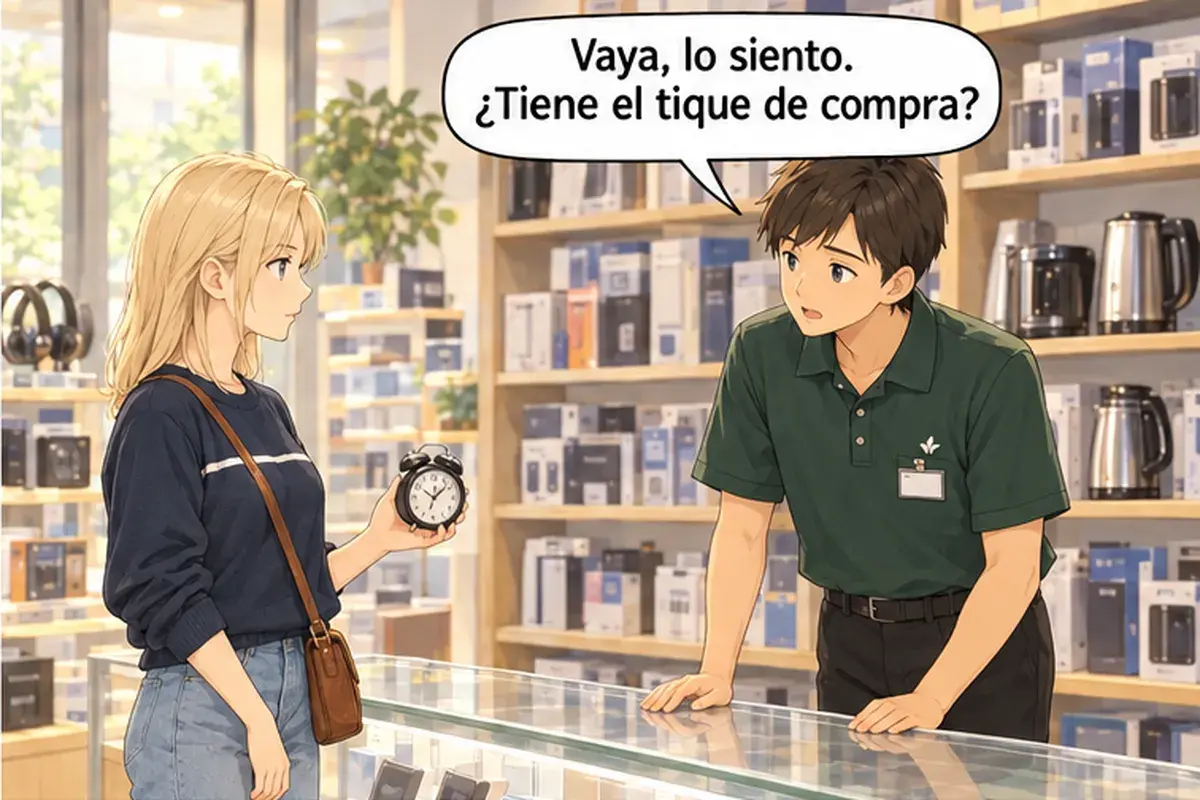
- Dependiente
Vaya, lo siento. ¿Tiene el tique de compra?
Oh, I'm sorry. Do you have the receipt? (formal)
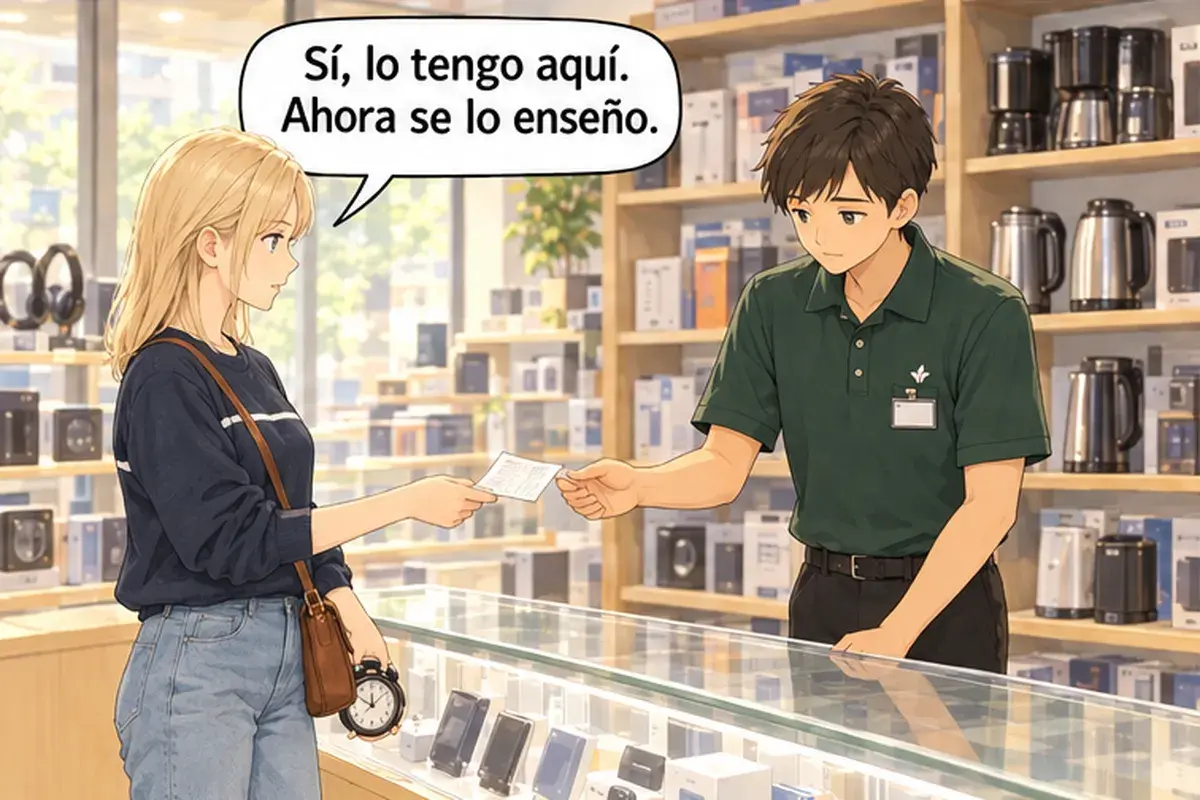
- Ana
Sí, lo tengo aquí. Ahora se lo enseño.
Yes, I have it here. I'll show it to you now (formal).
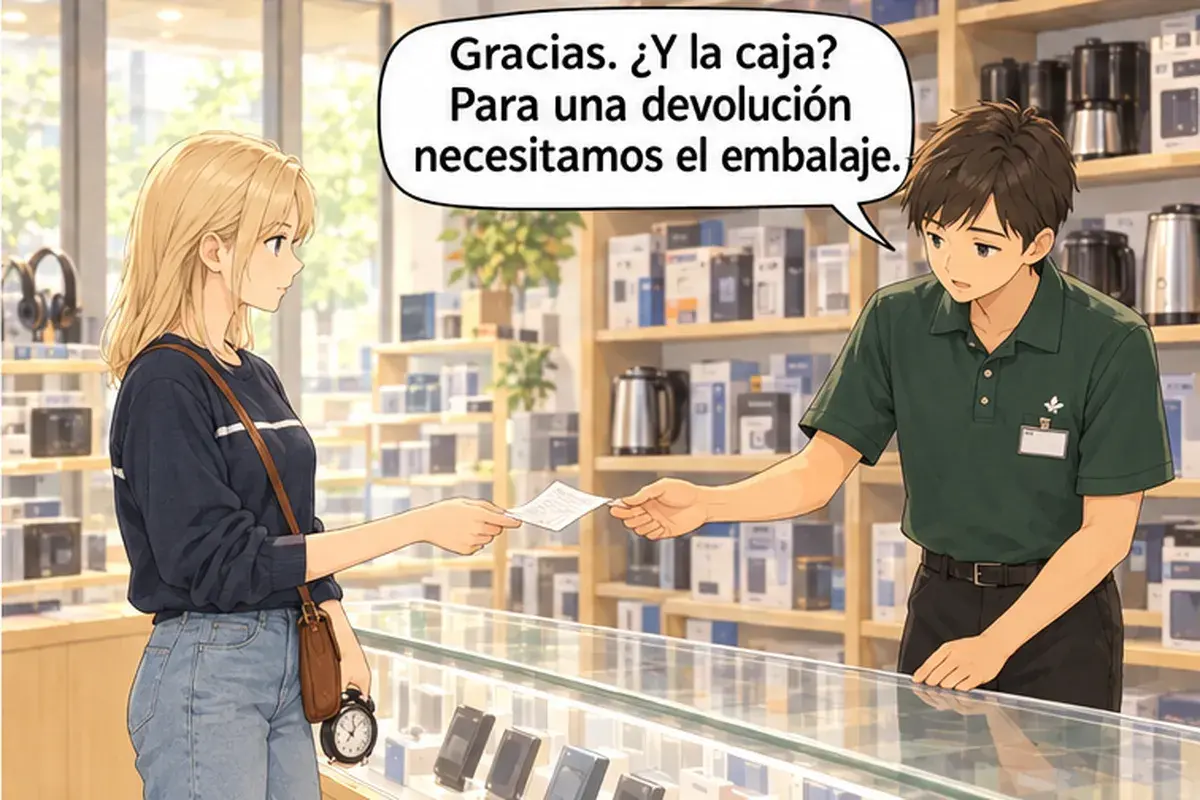
- Dependiente
Gracias. ¿Y la caja? Para una devolución necesitamos el embalaje.
Thank you. And the box? For a return, we need the packaging.
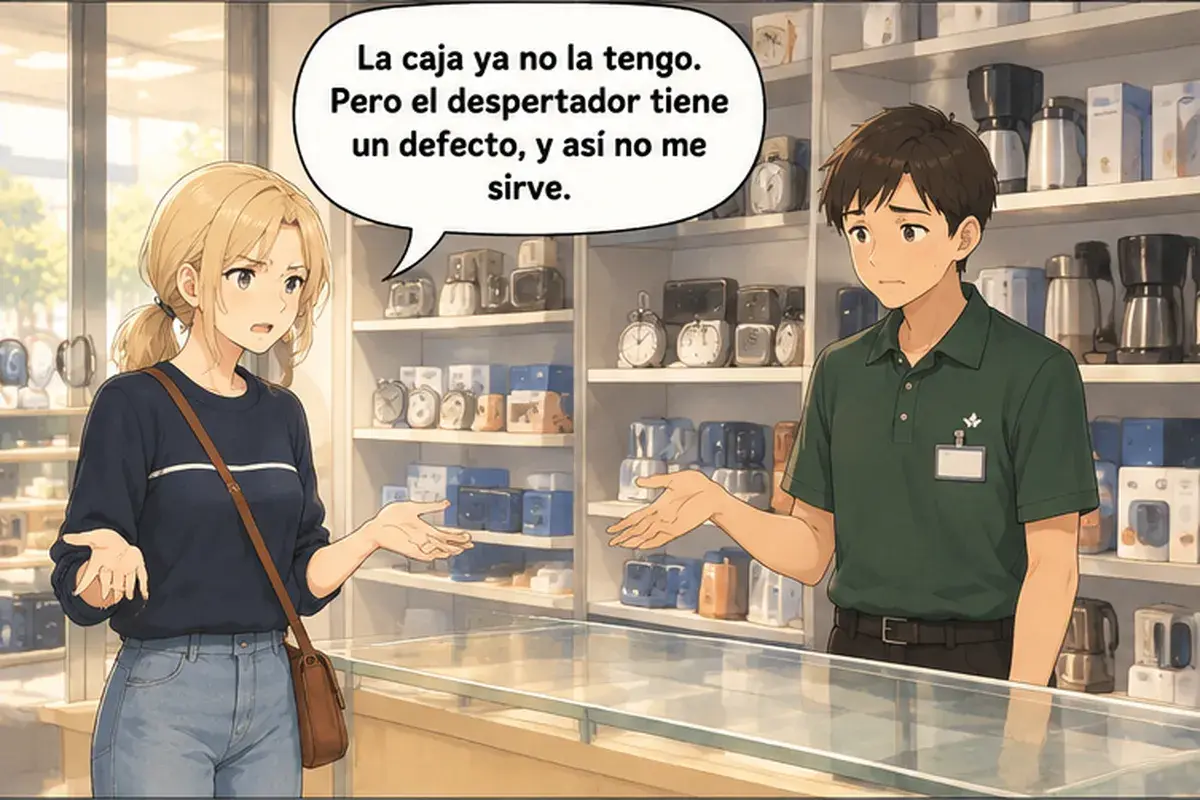
- Ana
La caja ya no la tengo. Pero el despertador tiene un defecto, y así no me sirve.
I don't have the box anymore. But the alarm clock has a defect, and it's no use to me like this.
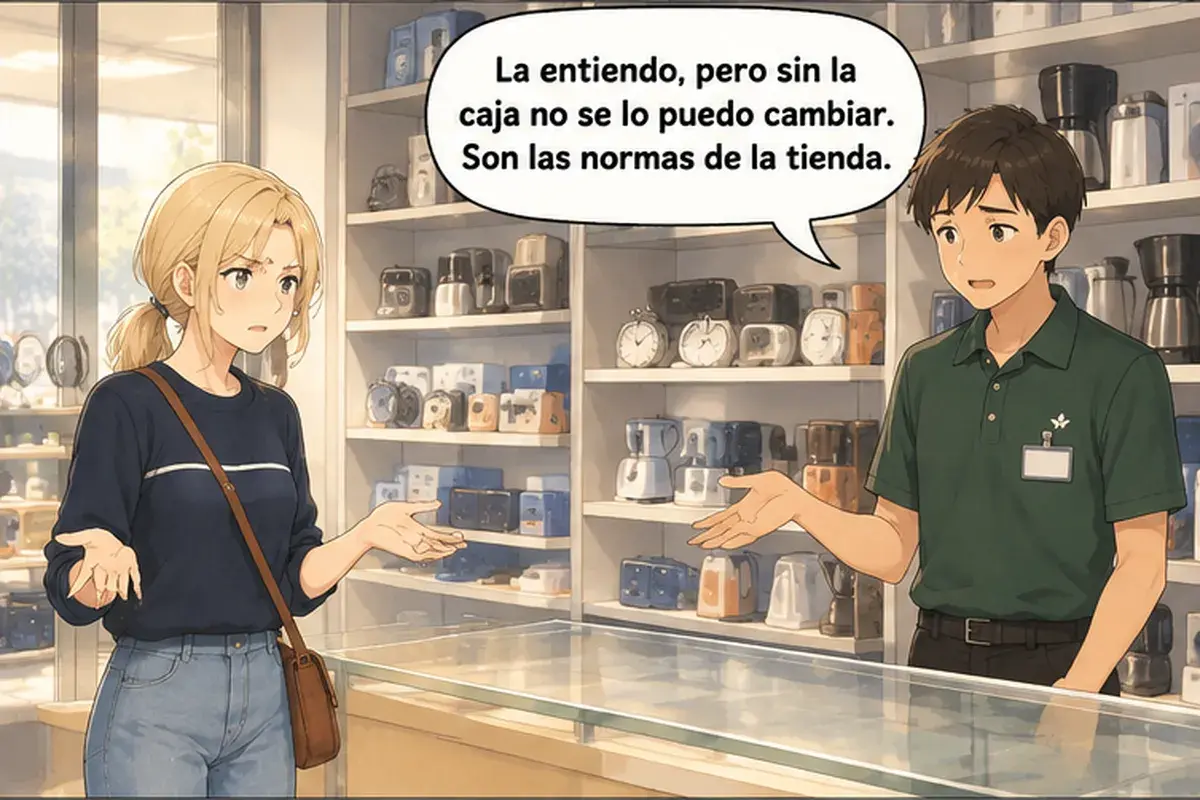
- Dependiente
La entiendo, pero sin la caja no se lo puedo cambiar. Son las normas de la tienda.
I understand you, but I can't exchange it for you without the box. Those are the store's rules (to a woman, formal).
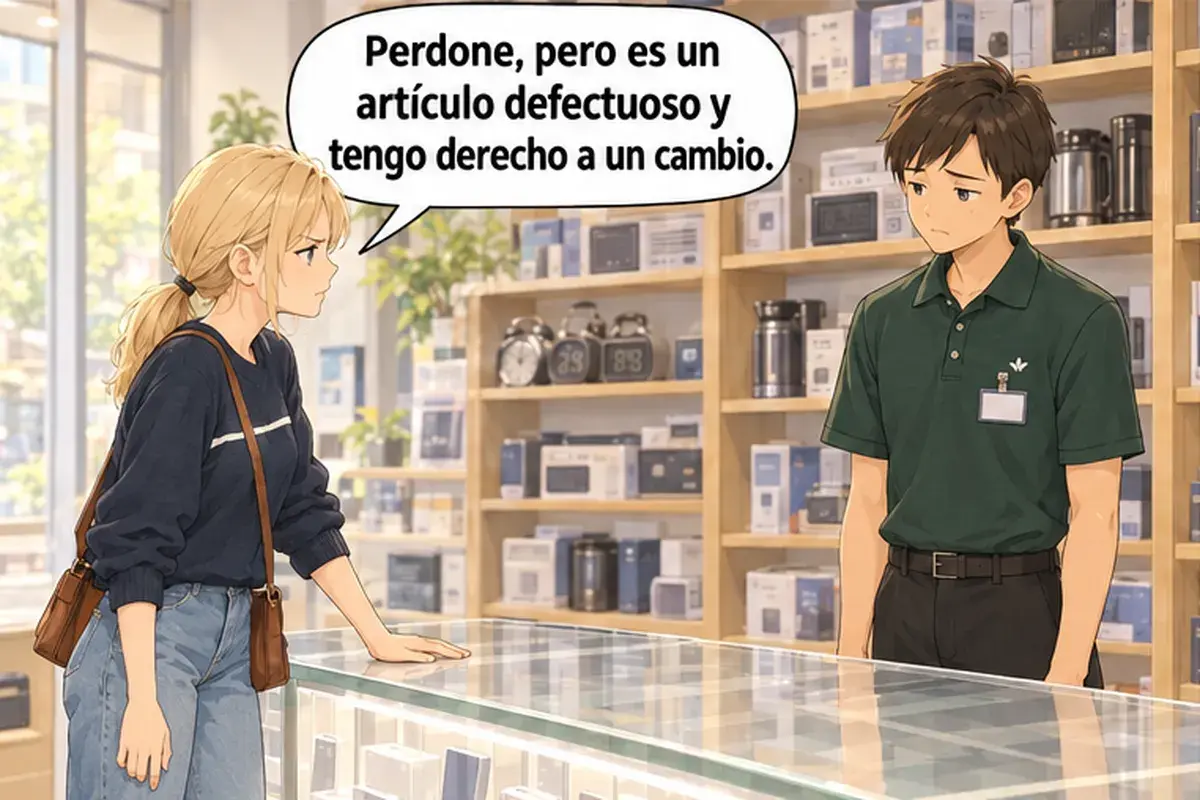
- Ana
Perdone, pero es un artículo defectuoso y tengo derecho a un cambio.
Excuse me, but it's a defective item, and I have the right to an exchange (formal).
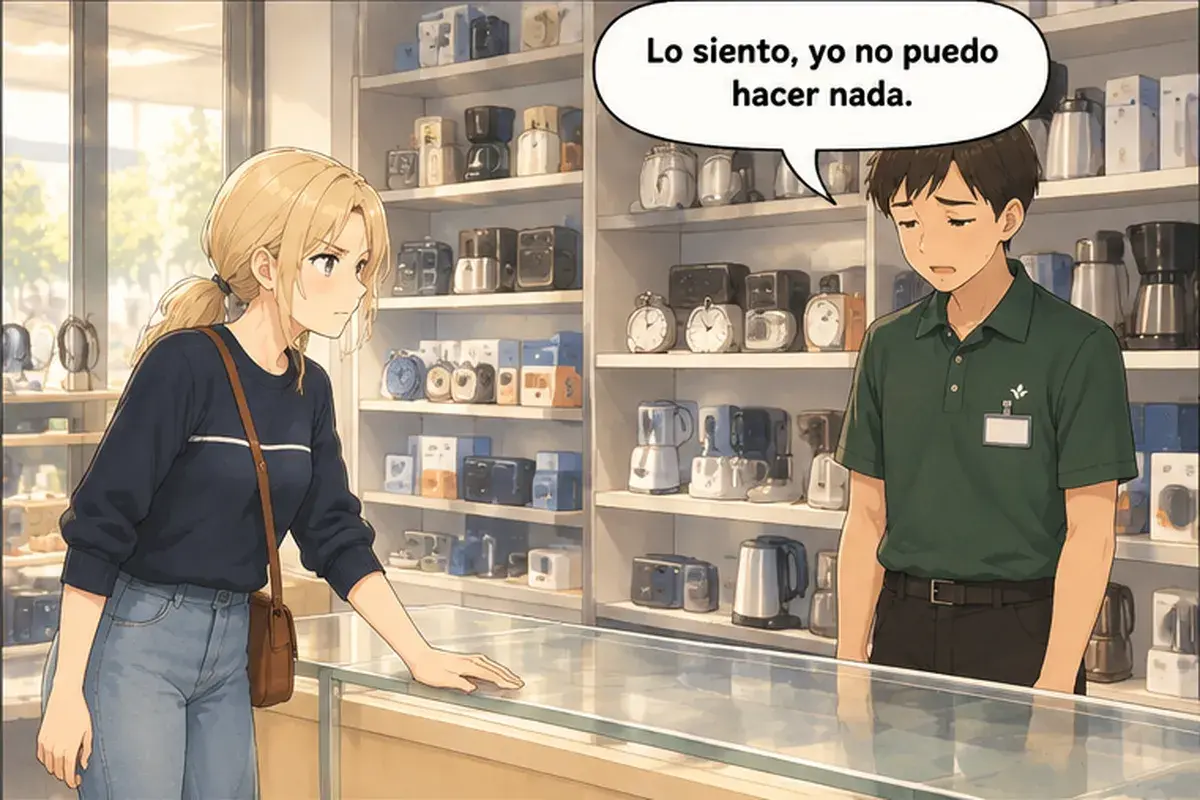
- Dependiente
Lo siento, yo no puedo hacer nada.
I'm sorry, there's nothing I can do.
- Ana
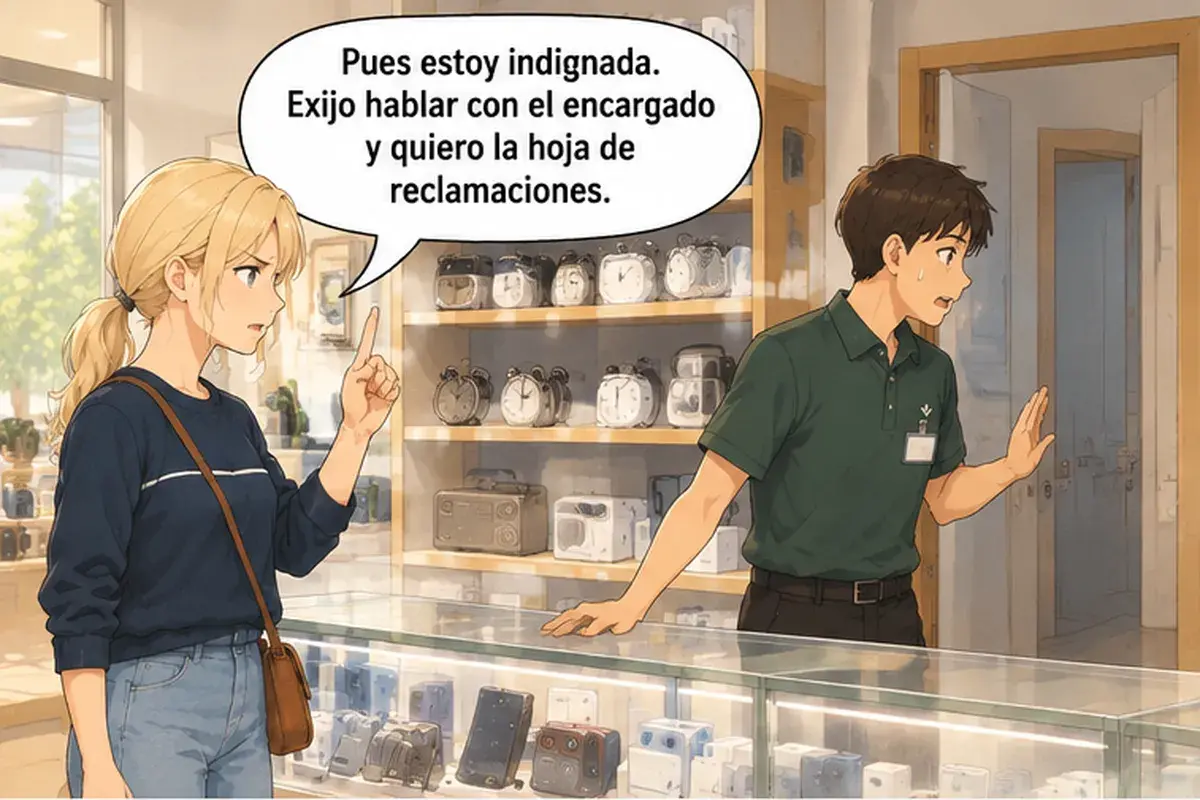
Pues estoy indignada. Exijo hablar con el encargado y quiero la hoja de reclamaciones.
Well, I'm outraged. I demand to speak to the manager, and I want the complaint form (woman speaking).
- Dependiente
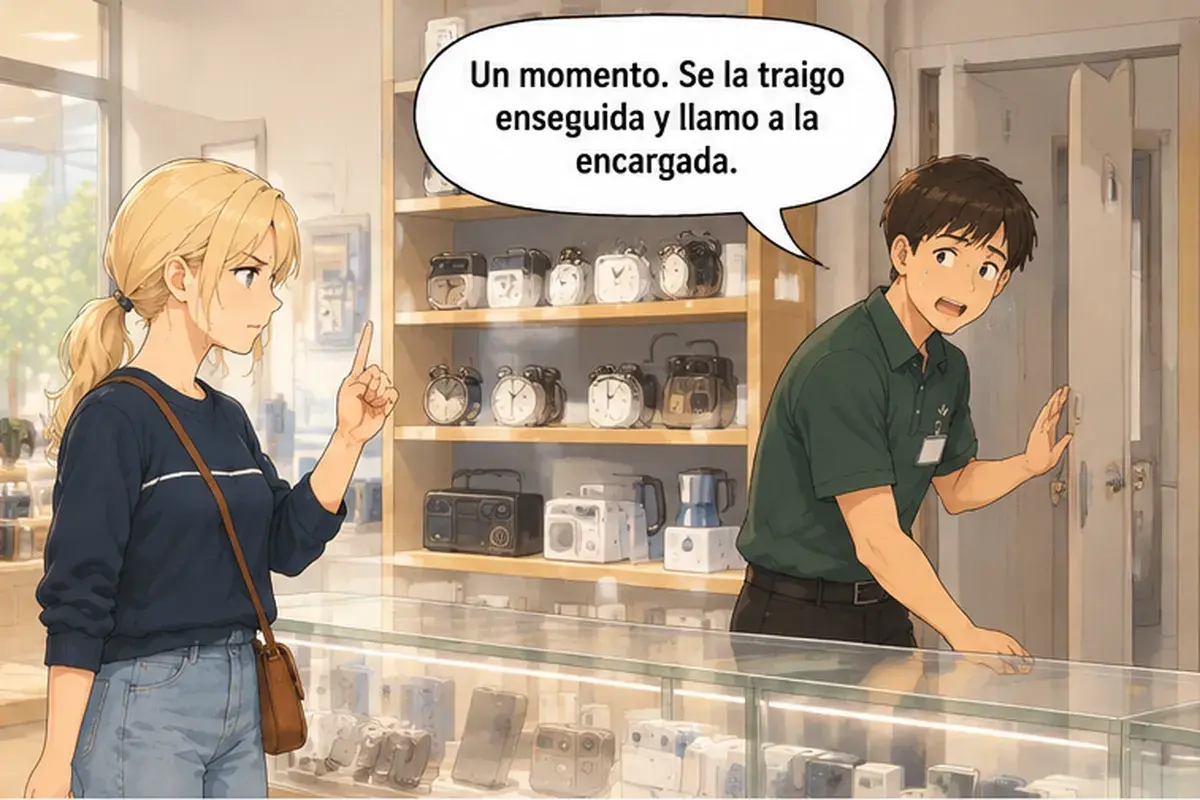
Un momento. Se la traigo enseguida y llamo a la encargada.
One moment. I'll bring it to you right away and call the manager (formal).
- Encargada
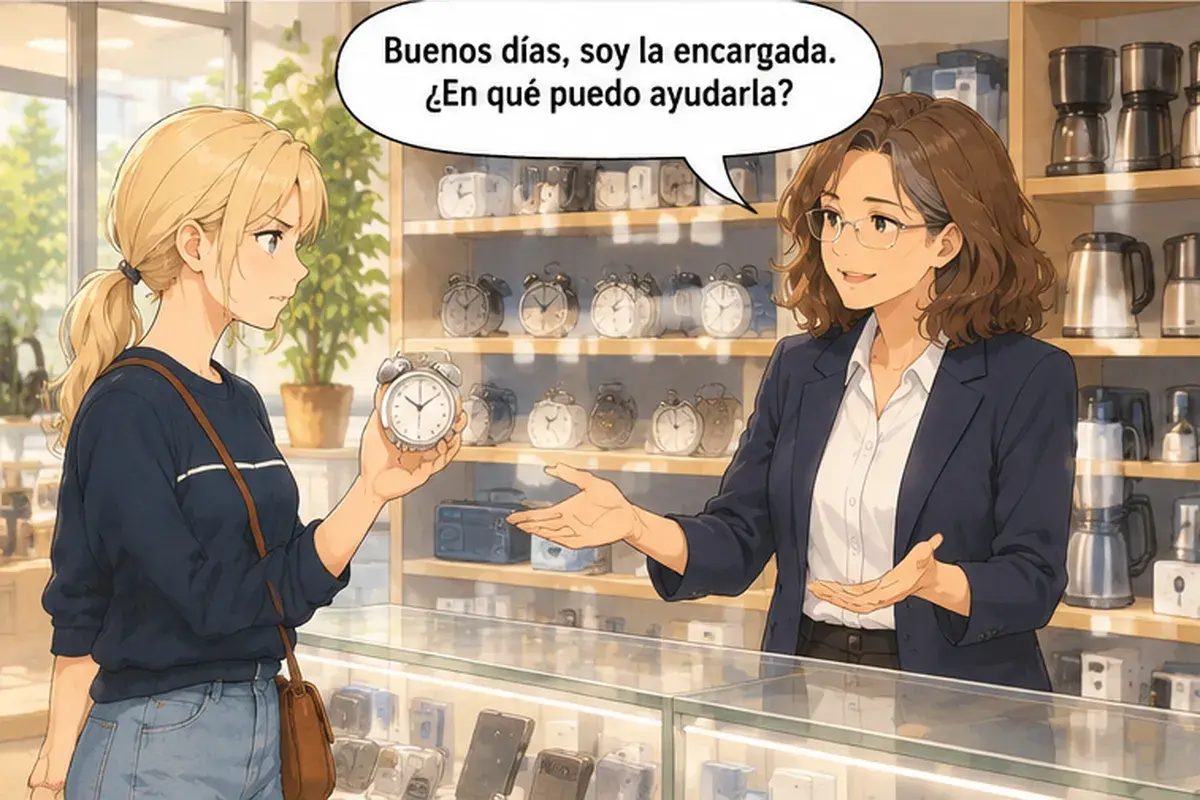
Buenos días, soy la encargada. ¿En qué puedo ayudarla?
Good morning, I'm the manager. How can I help you? (woman speaking, to a woman, formal)
- Ana
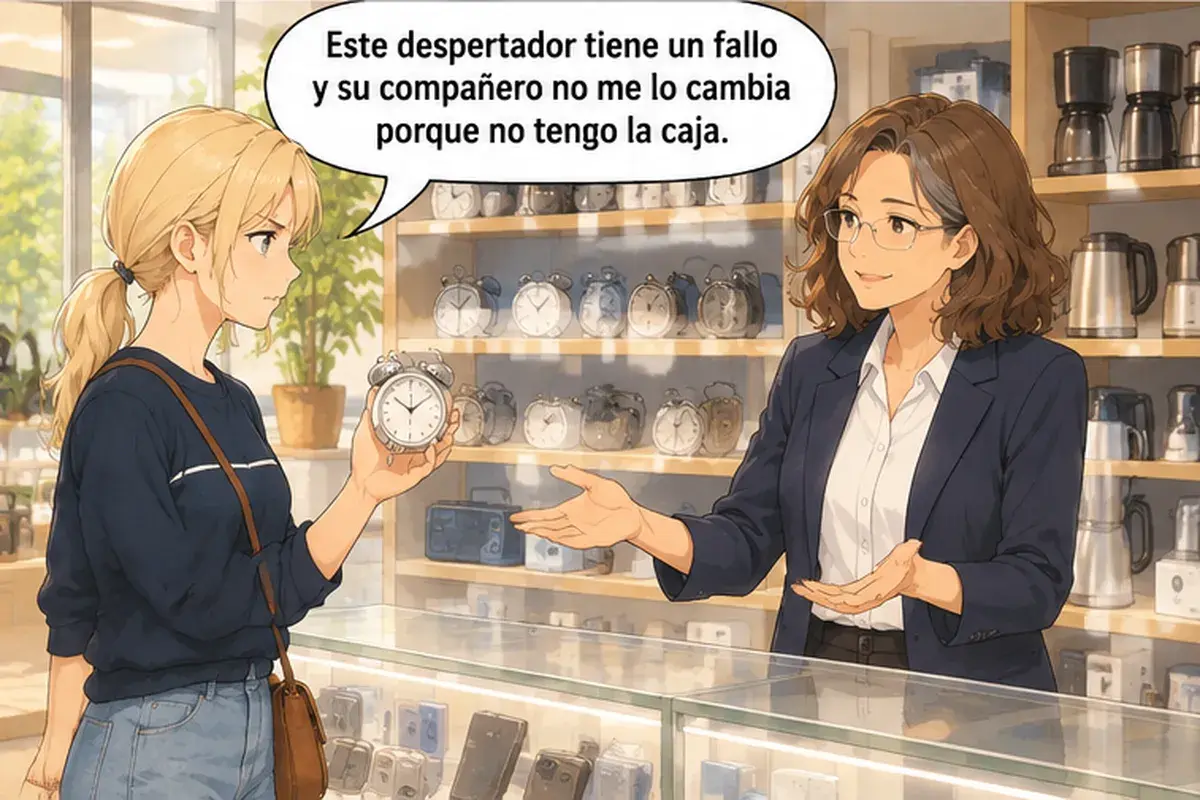
Este despertador tiene un fallo y su compañero no me lo cambia porque no tengo la caja.
This alarm clock has a fault, and your coworker won't exchange it for me because I don't have the box (formal).
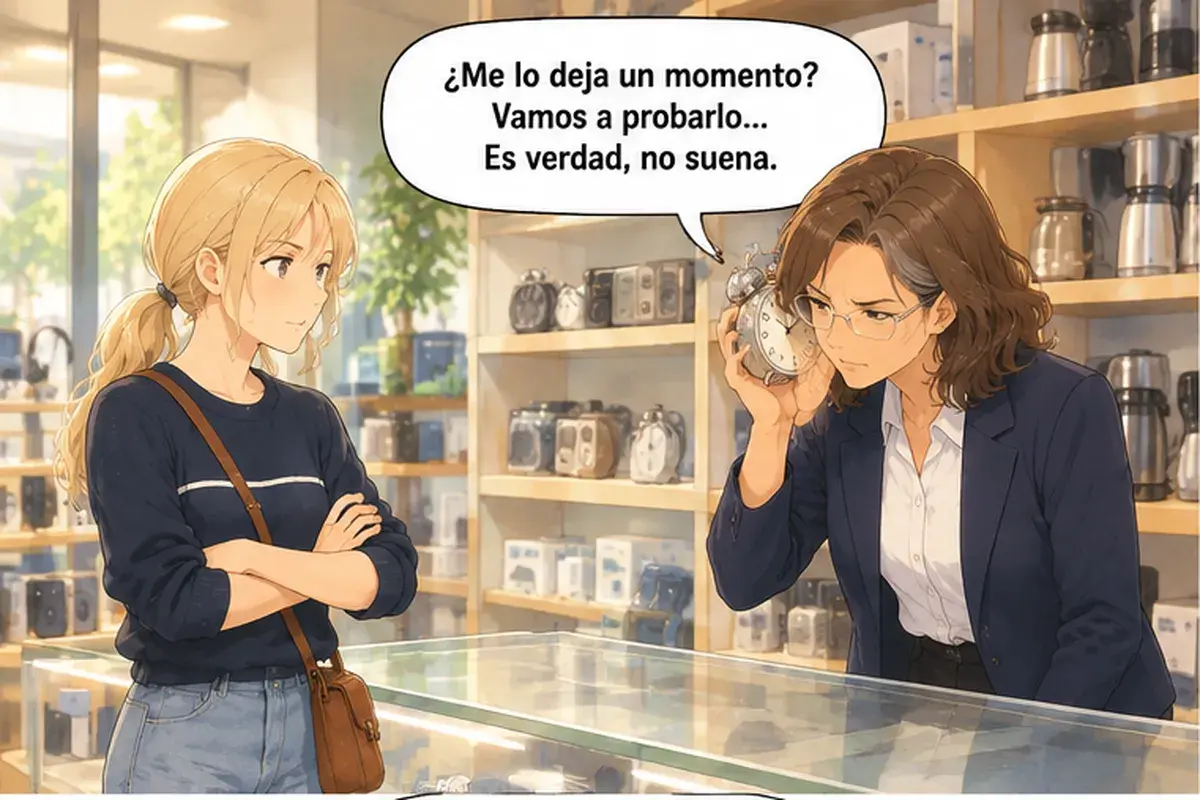
- Encargada
¿Me lo deja un momento? Vamos a probarlo… Es verdad, no suena.
Could you let me have it for a moment? Let's test it… It's true, it doesn't ring. (formal)
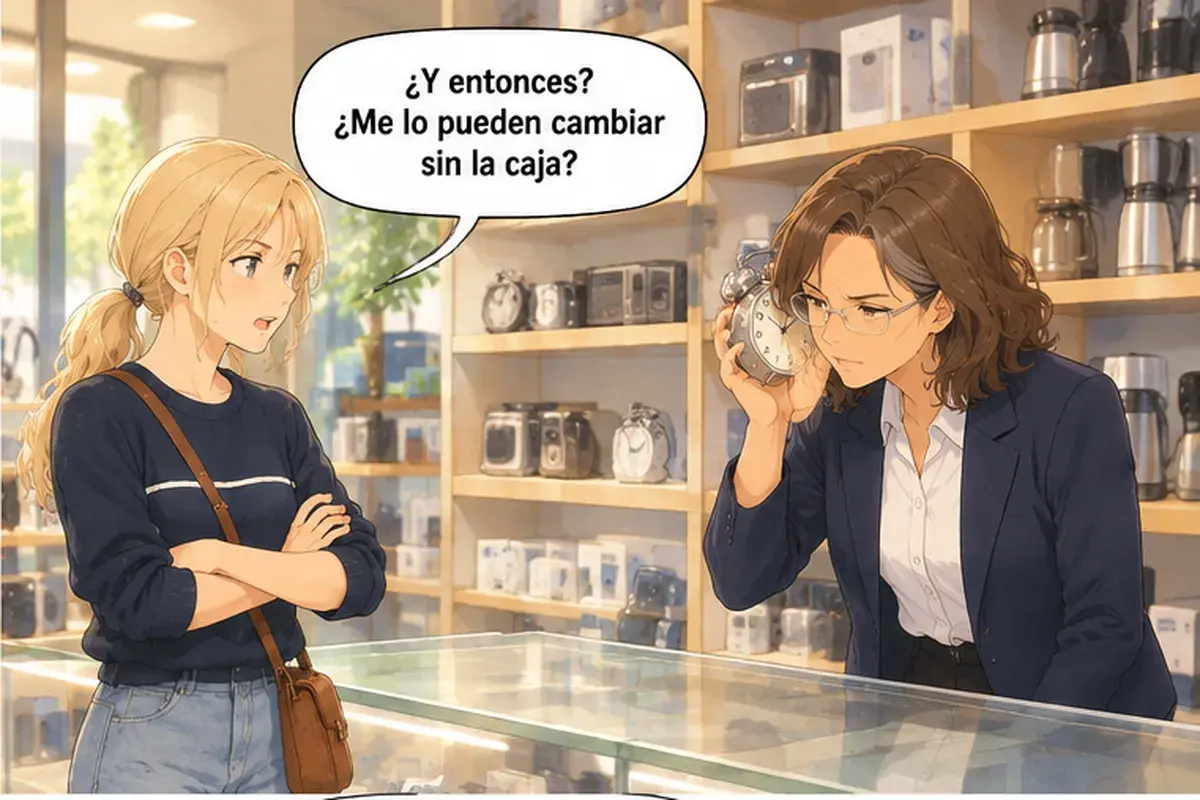
- Ana
¿Y entonces? ¿Me lo pueden cambiar sin la caja?
So what now? Can you exchange it for me without the box? (to several people, formal)
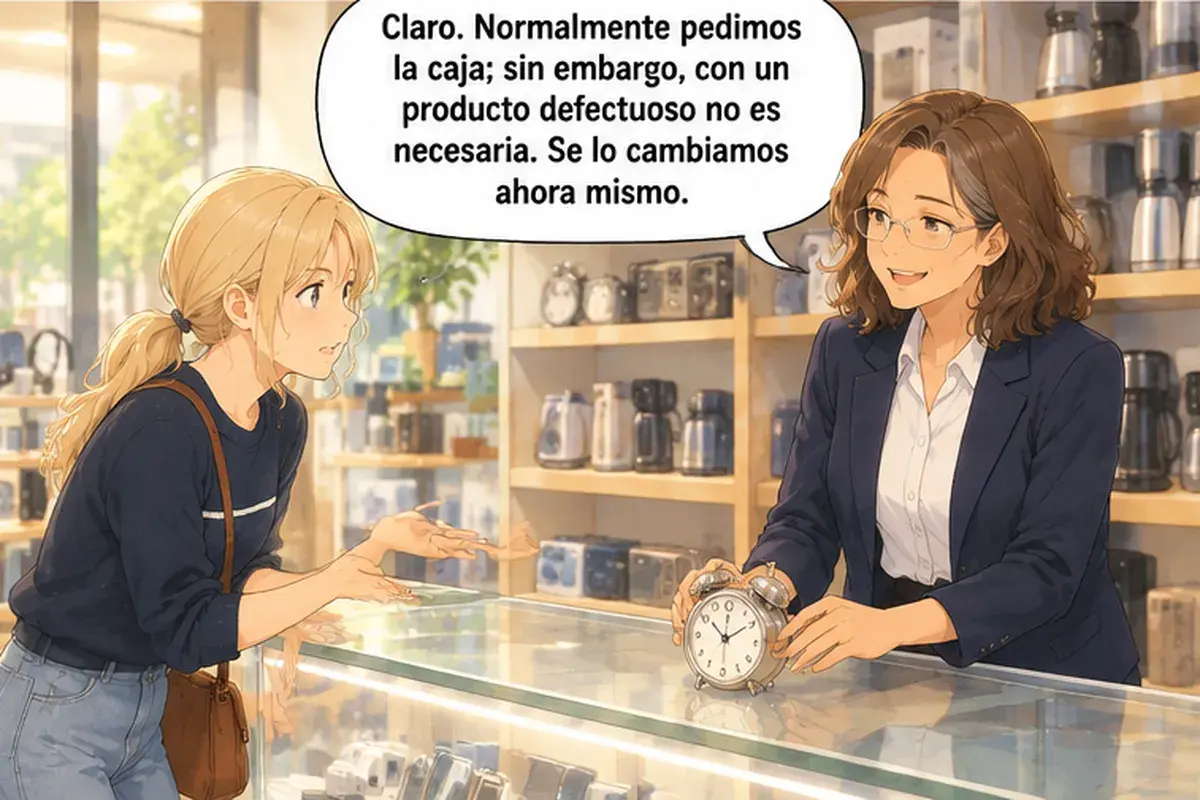
- Encargada
Claro. Normalmente pedimos la caja; sin embargo, con un producto defectuoso no es necesaria. Se lo cambiamos ahora mismo.
Of course. We normally ask for the box; however, with a defective product it isn't necessary. We'll exchange it for you right now (formal).
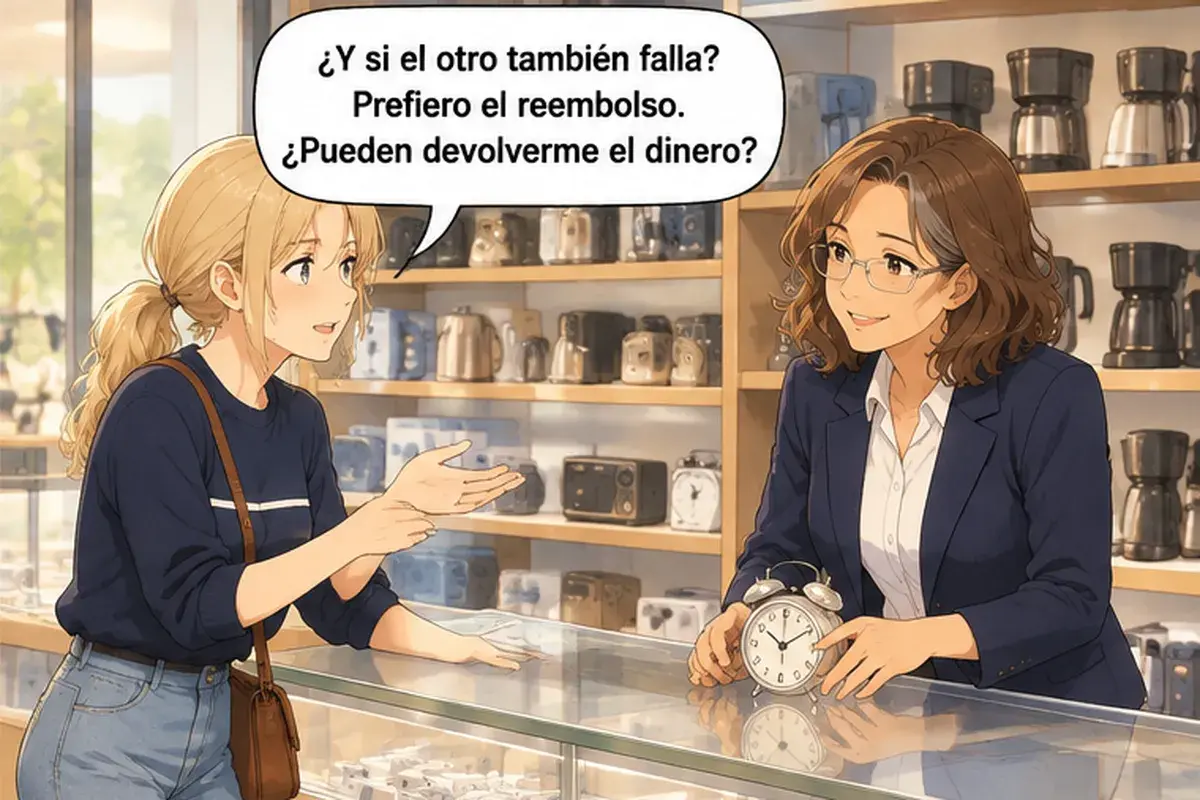
- Ana
¿Y si el otro también falla? Prefiero el reembolso. ¿Pueden devolverme el dinero?
And what if the other one doesn't work right either? I'd prefer a refund. Can you give me my money back? (to several people, formal)
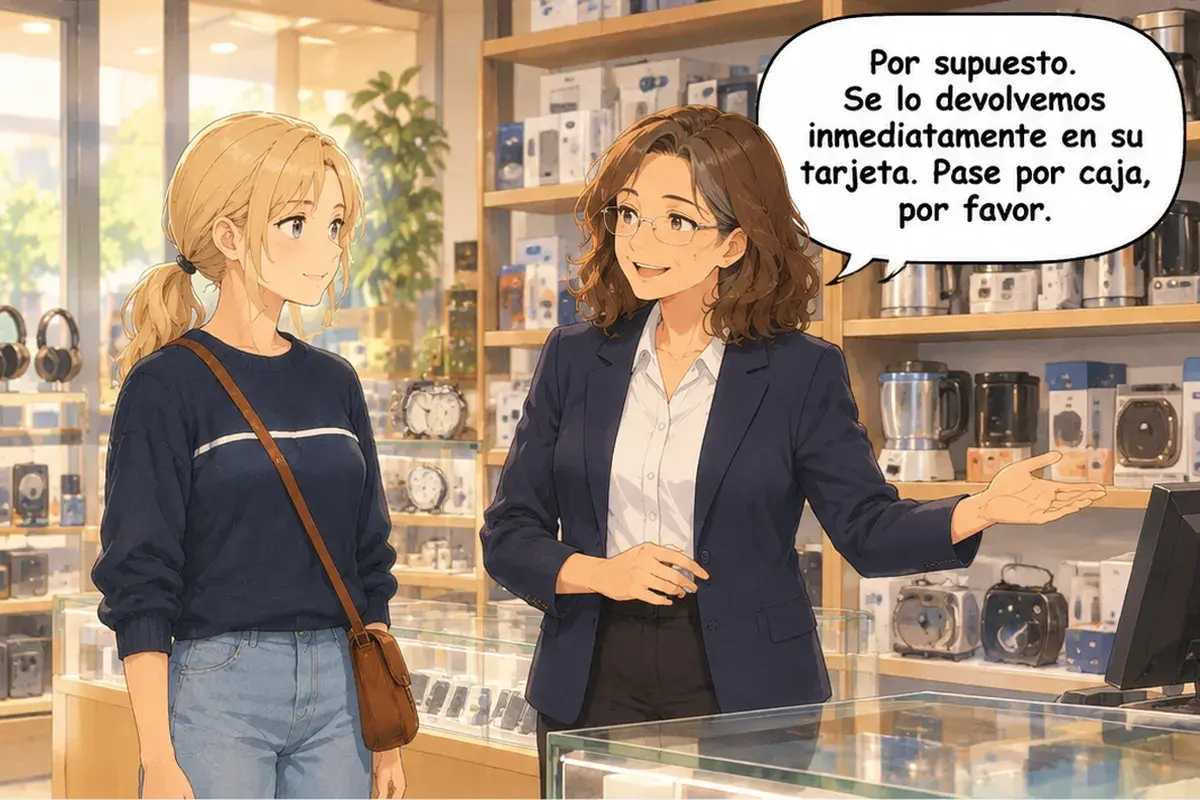
- Encargada
Por supuesto. Se lo devolvemos inmediatamente en su tarjeta. Pase por caja, por favor.
Of course. We'll return it to your card immediately. Please go to the checkout (formal).
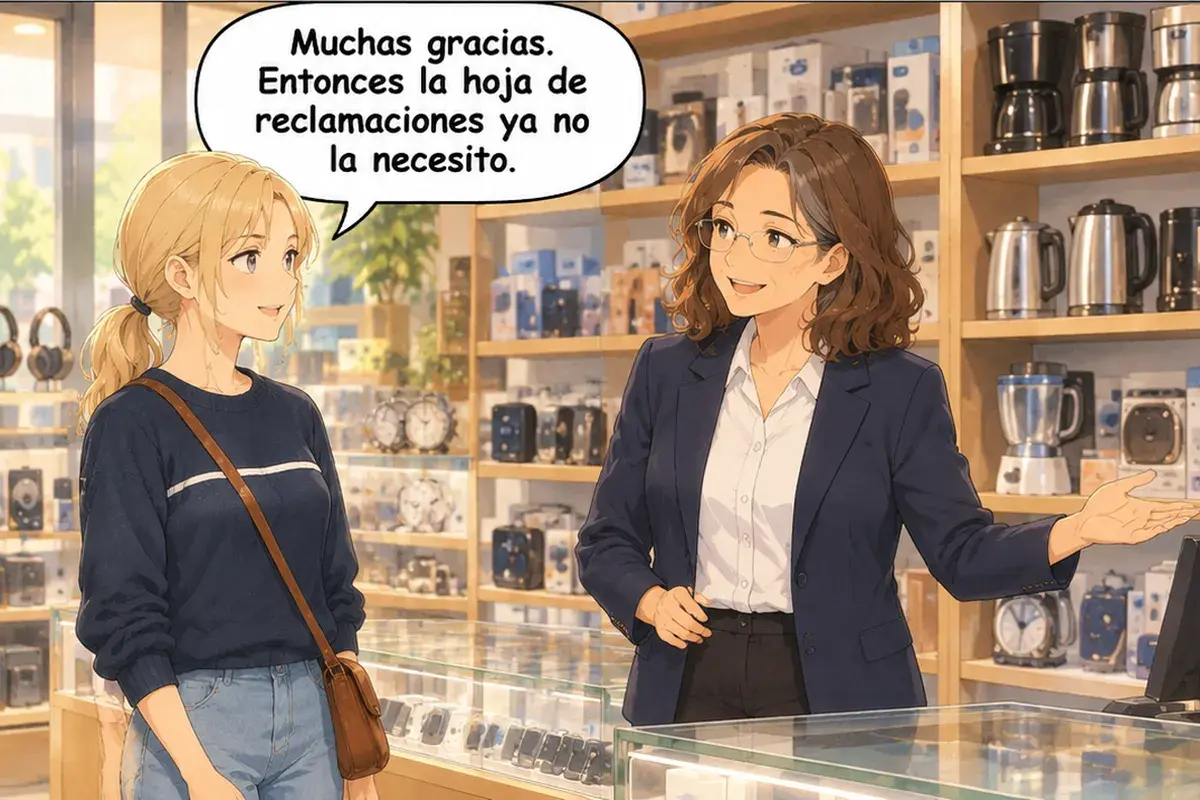
- Ana
Muchas gracias. Entonces la hoja de reclamaciones ya no la necesito.
Thank you very much. Then I don't need the complaint form anymore.
Grammar for this text
Se lo, se la. The clerk talks to Ana with usted, so "to you" is le, and next to lo and la it turns into se: no se lo puedo cambiar (I can't exchange it for you; lo = el despertador), se la traigo (I'll bring it to you; la = la hoja), se lo devolvemos (we'll give it back to you; lo = el dinero, which is singular in Spanish).
Me lo. About yourself it's me: su compañero no me lo cambia (Ana), ¿me lo deja un momento? (the manager).
La caja ya no la tengo. When the thing comes first in the sentence, Spanish repeats it with a pronoun: word for word, "the box, I don't have it anymore".
La entiendo (I understand you): here la is the formal "you" for a woman.
Hoja de reclamaciones — the official complaint form. In Spain every store must give you one if you ask; often just asking for it is enough to solve the problem.
Caja here means both "box" and "checkout": pase por caja (please go to the checkout).
Exijo (I demand) comes from exigir. The g in exigir sounds like a throaty h, like the ch in Scottish loch; to keep the same sound before the ending -o, it's spelled j: exigir → exijo.
Words and grammar of the unit: Return a purchase and make a complaint.
Learn the words from the texts with flashcards
In the app, you can tap any word in a text to see its translation, forms and examples, and new words stick with flashcards. 15 minutes a day.
Start for freeEverything is open for free. No card needed to sign up.