

Spanish dialogue with translation · B1 · 18 lines
¿Y si llueve? What if it rains?
Comic · 18 panels
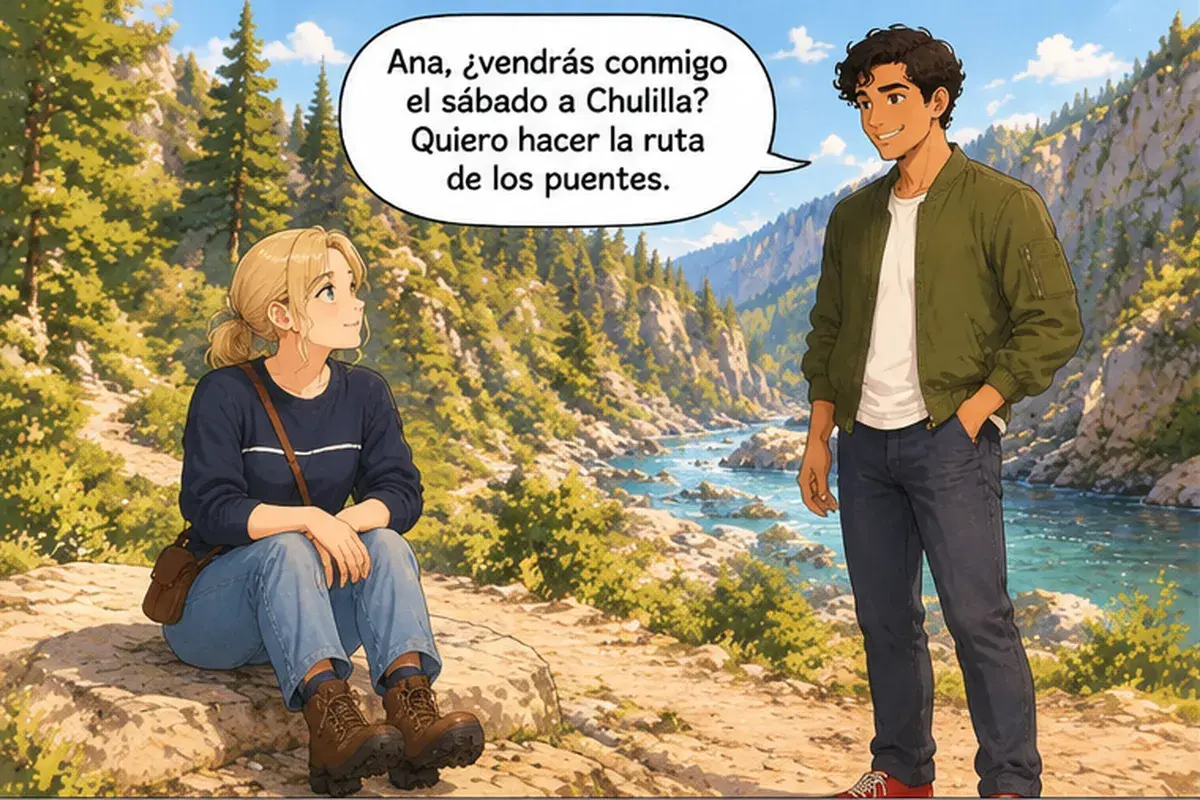
- Pablo
Ana, ¿vendrás conmigo el sábado a Chulilla? Quiero hacer la ruta de los puentes.
Ana, will you come with me to Chulilla on Saturday? I want to do the bridges trail.
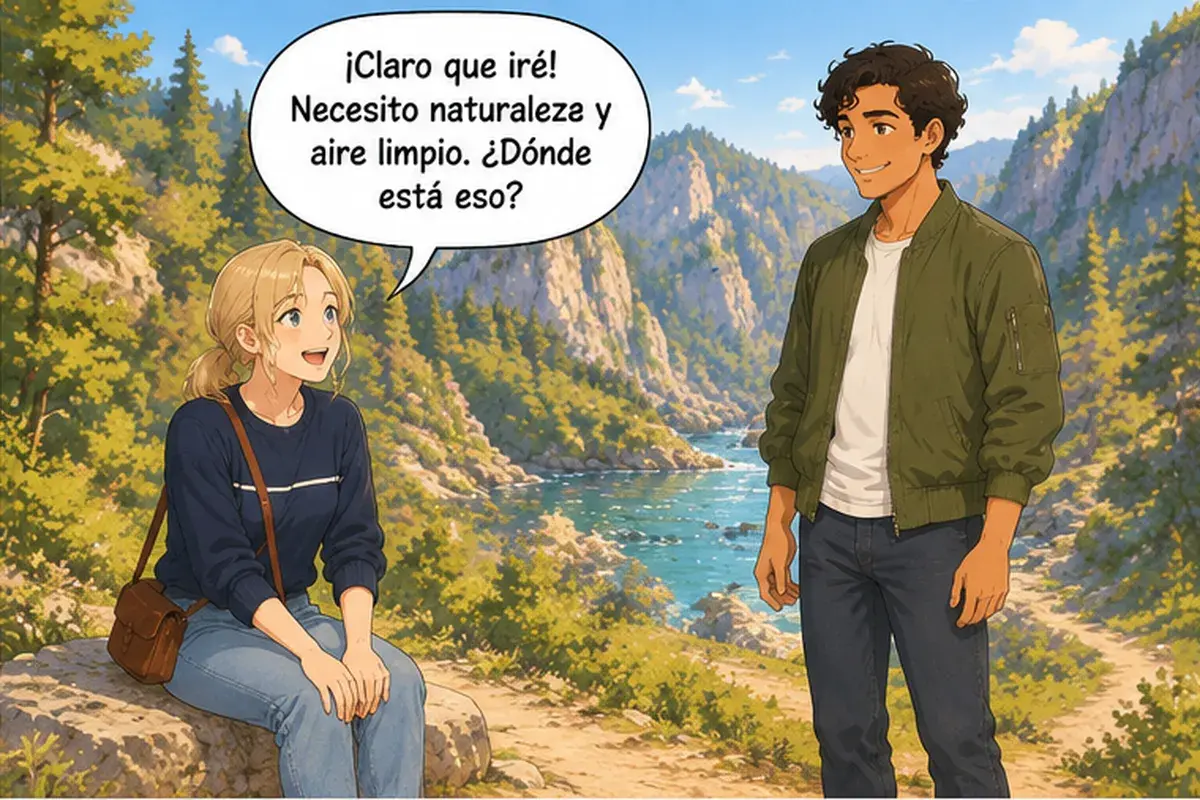
- Ana
¡Claro que iré! Necesito naturaleza y aire limpio. ¿Dónde está eso?
Of course I'll go! I need nature and clean air. Where is that?
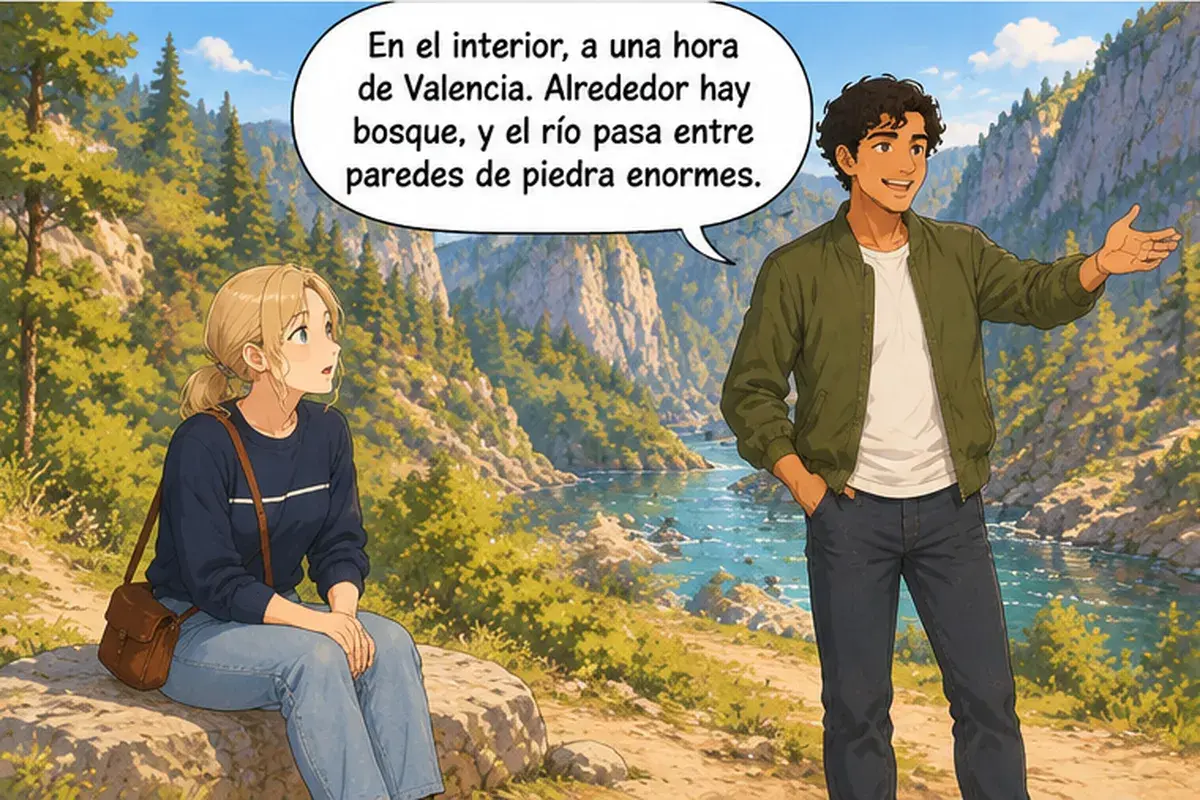
- Pablo
En el interior, a una hora de Valencia. Alrededor hay bosque, y el río pasa entre paredes de piedra enormes.
Inland, an hour from Valencia. There's forest all around, and the river runs between huge stone walls.
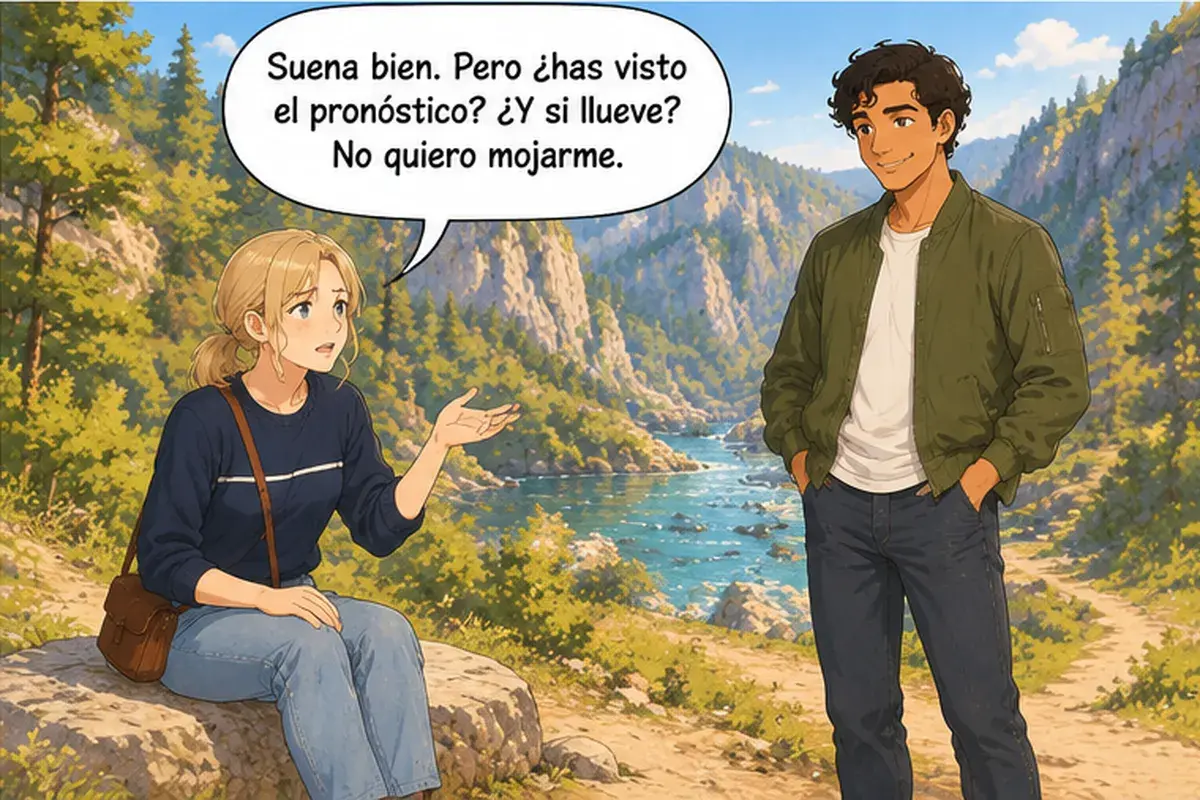
- Ana
Suena bien. Pero ¿has visto el pronóstico? ¿Y si llueve? No quiero mojarme.
Sounds good. But have you seen the forecast? What if it rains? I don't want to get wet.
- Pablo
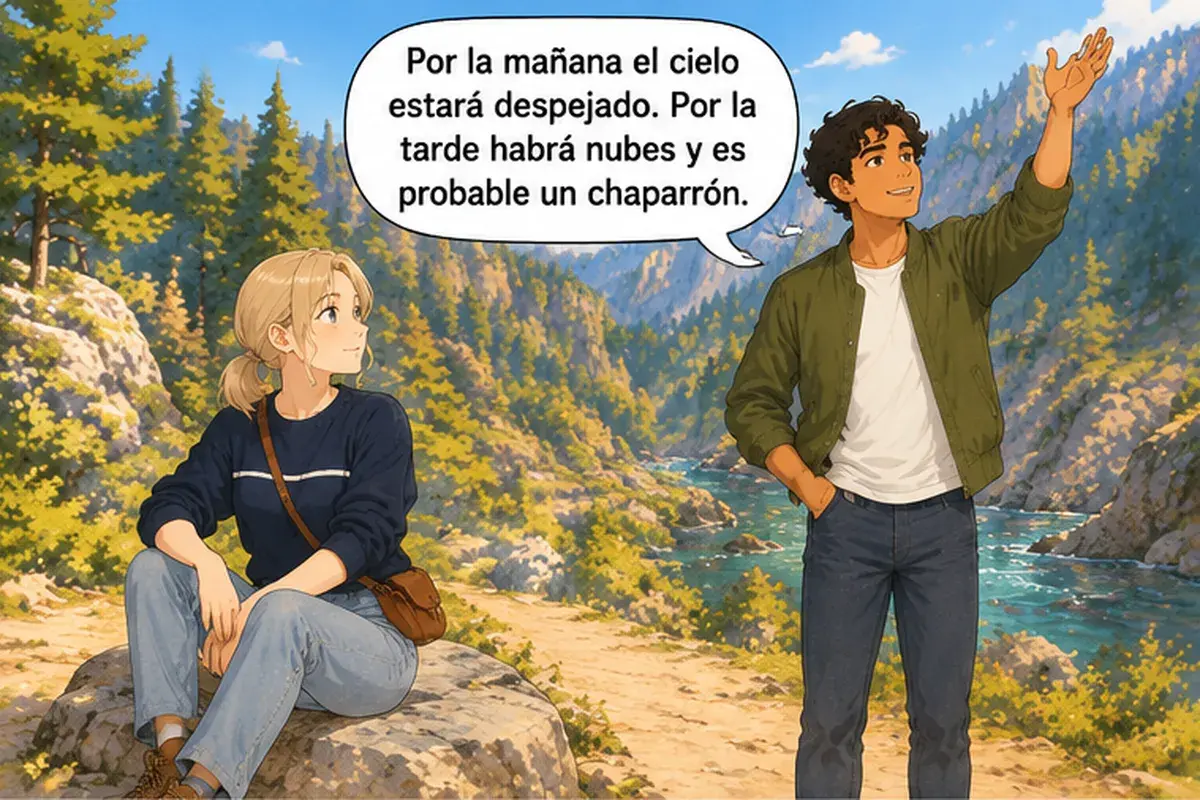
Por la mañana el cielo estará despejado. Por la tarde habrá nubes y es probable un chaparrón.
In the morning the sky will be clear. In the afternoon there will be clouds, and a downpour is likely.
- Ana
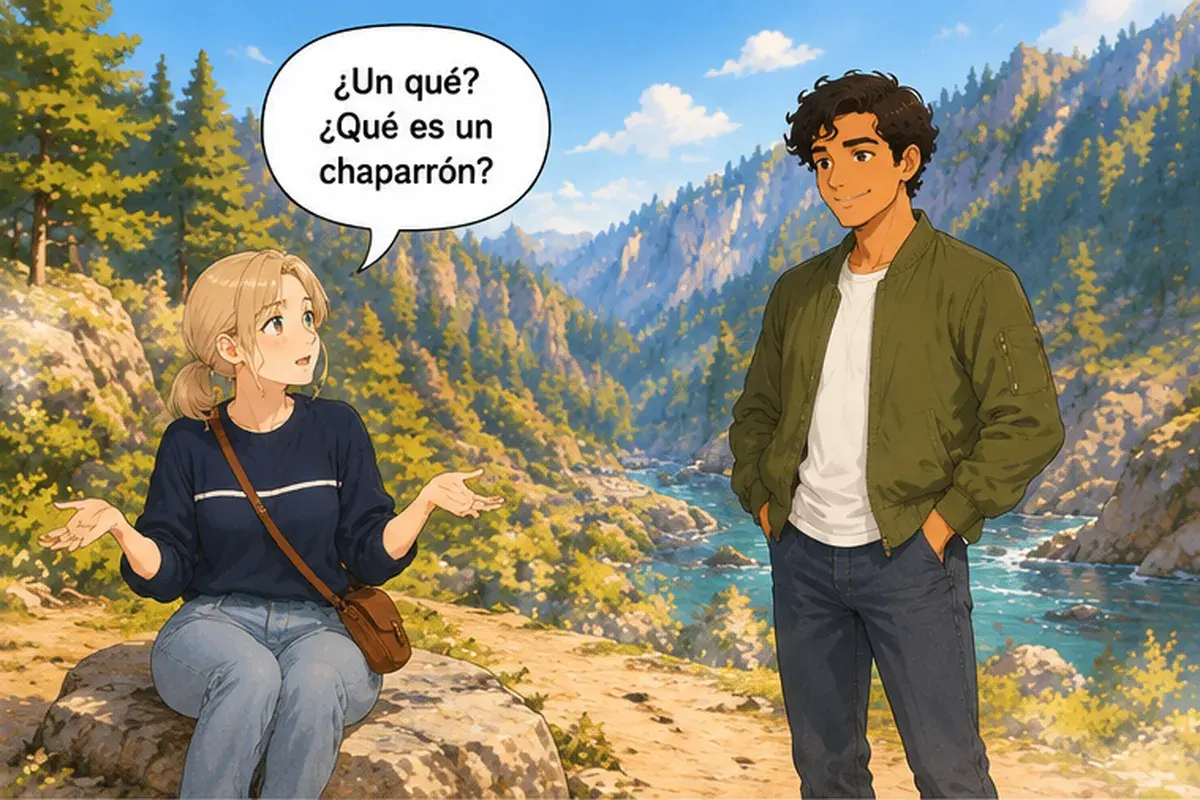
¿Un qué? ¿Qué es un chaparrón?
A what? What's a "chaparrón"?
- Pablo
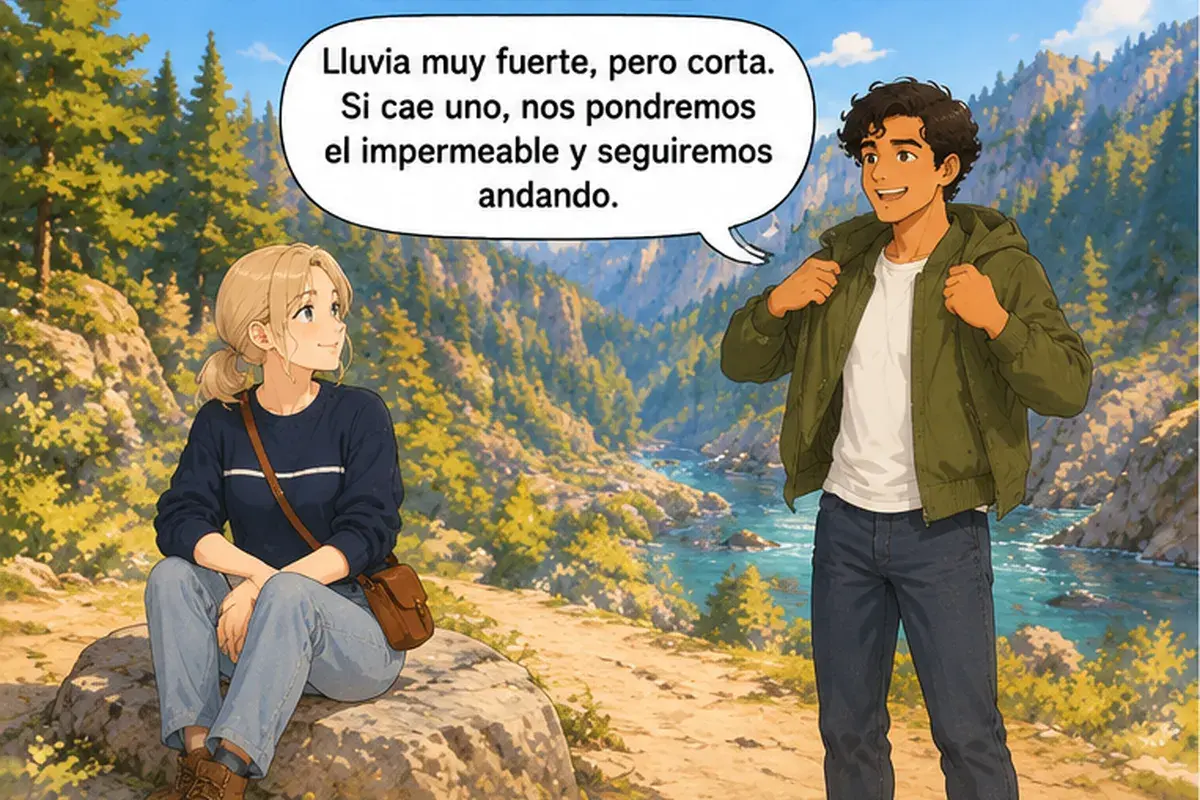
Lluvia muy fuerte, pero corta. Si cae uno, nos pondremos el impermeable y seguiremos andando.
Very heavy rain, but short. If one comes, we'll put on our raincoats and keep walking.
- Ana
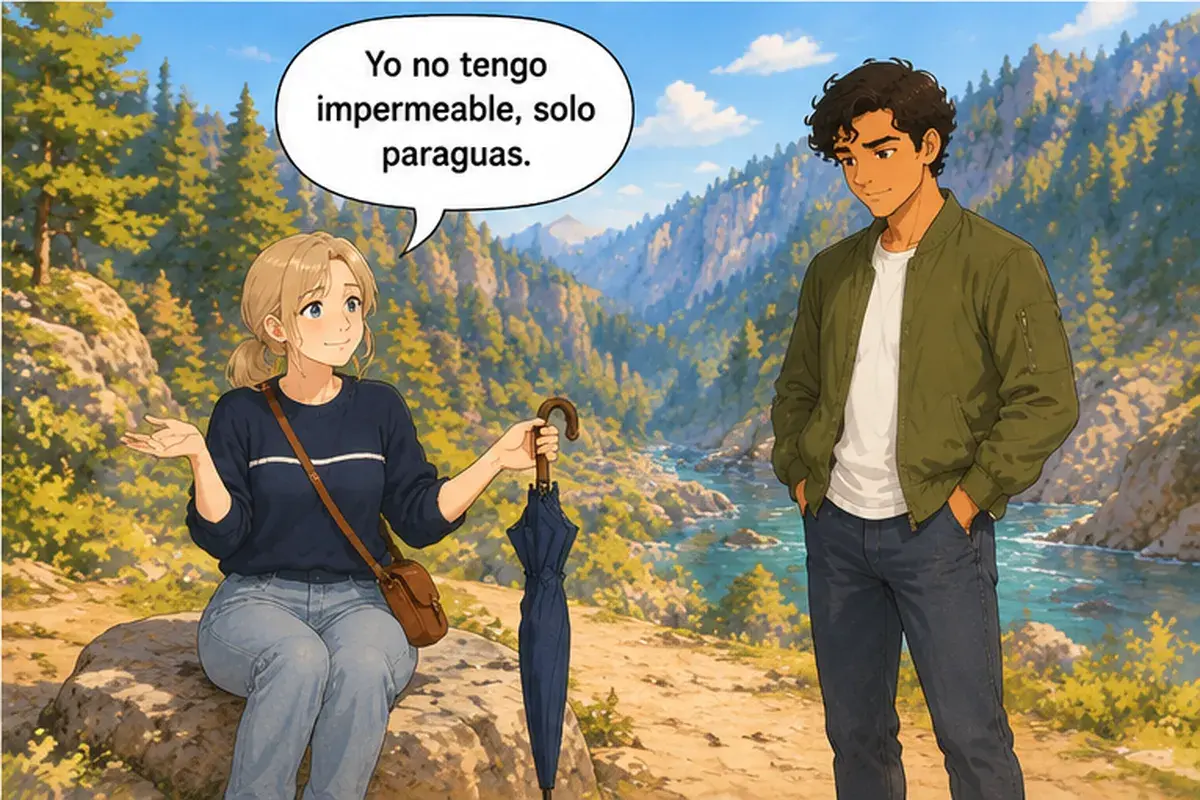
Yo no tengo impermeable, solo paraguas.
I don't have a raincoat, just an umbrella.
- Pablo
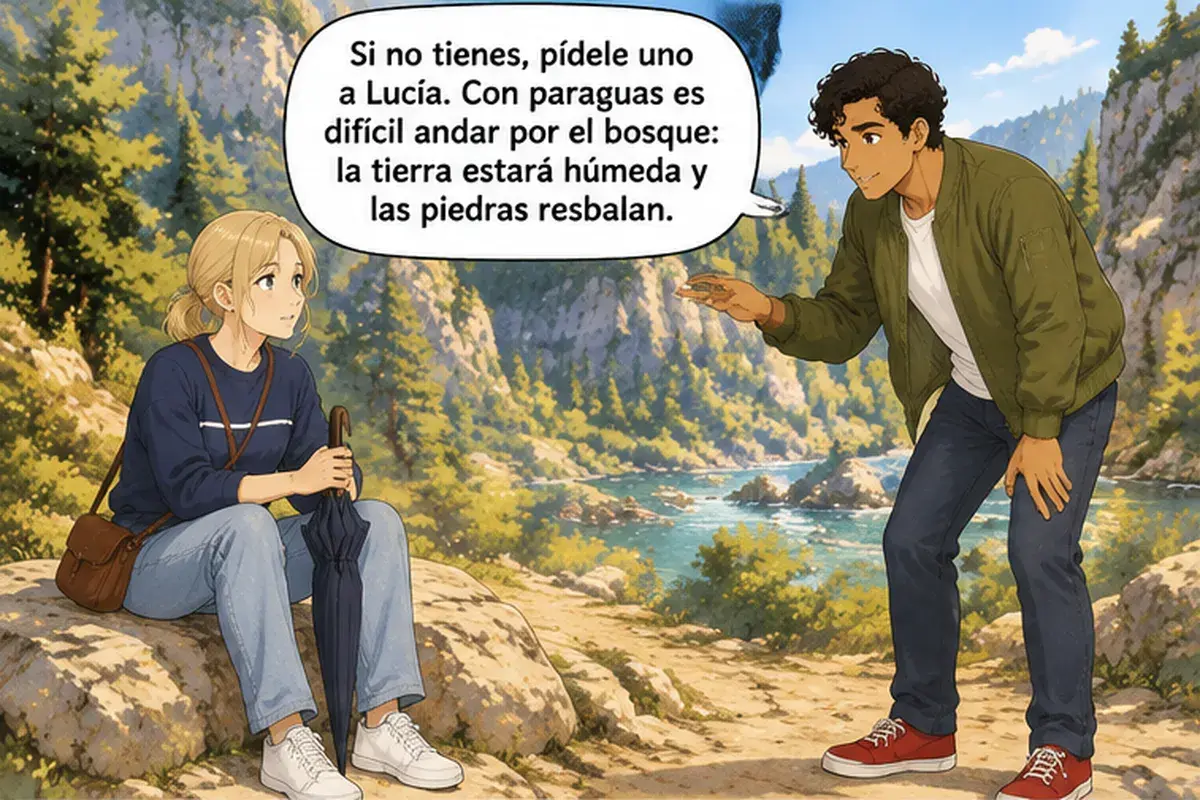
Si no tienes, pídele uno a Lucía. Con paraguas es difícil andar por el bosque: la tierra estará húmeda y las piedras resbalan.
If you don't have one, ask Lucía for one. It's hard to walk in the forest with an umbrella: the ground will be damp and the rocks are slippery.
- Ana
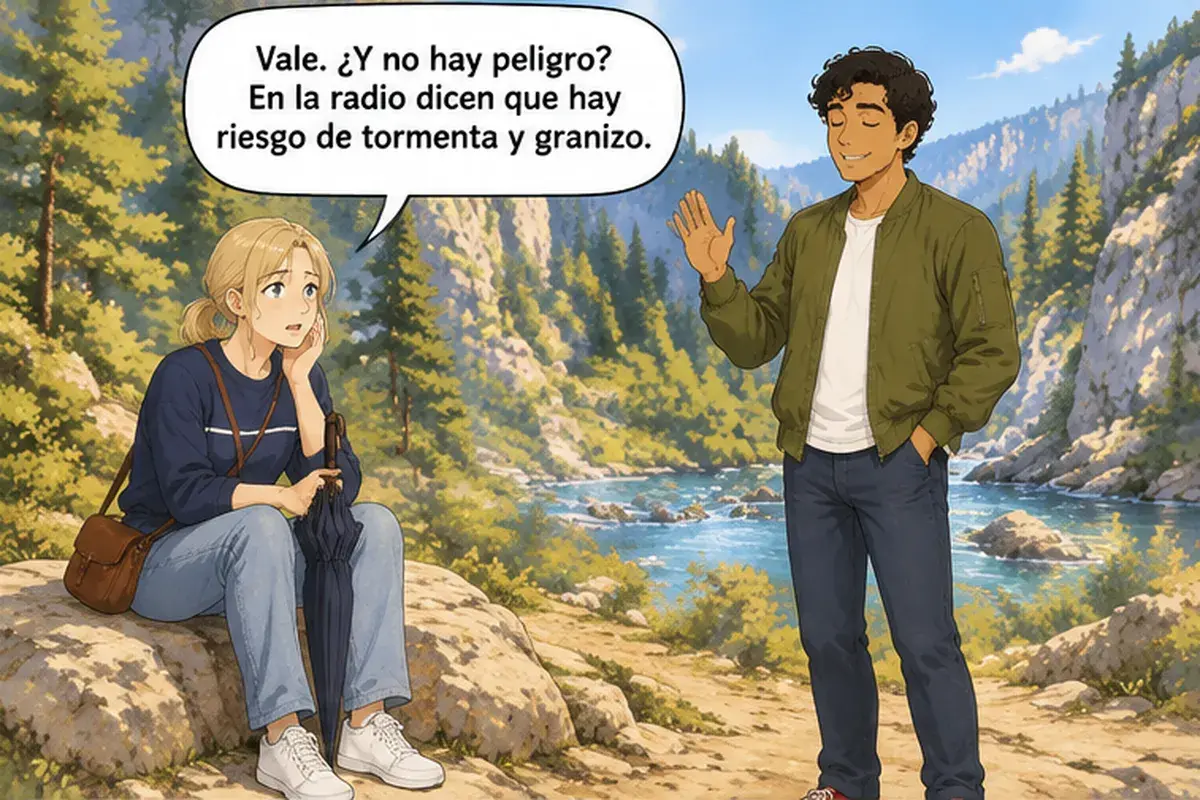
Vale. ¿Y no hay peligro? En la radio dicen que hay riesgo de tormenta y granizo.
OK. And isn't there any danger? On the radio they say there's a risk of storms and hail.
- Pablo
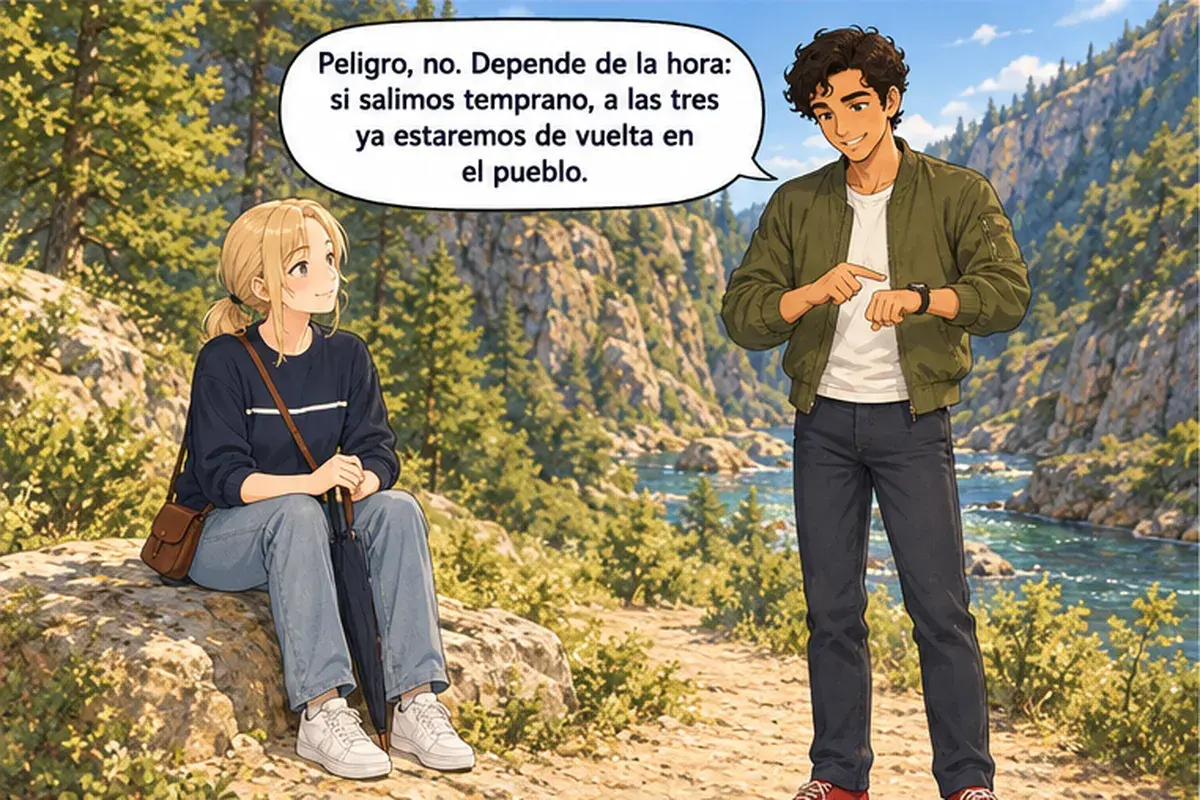
Peligro, no. Depende de la hora: si salimos temprano, a las tres ya estaremos de vuelta en el pueblo.
Danger? No. It depends on the time: if we leave early, we'll already be back in the village by three.
- Ana
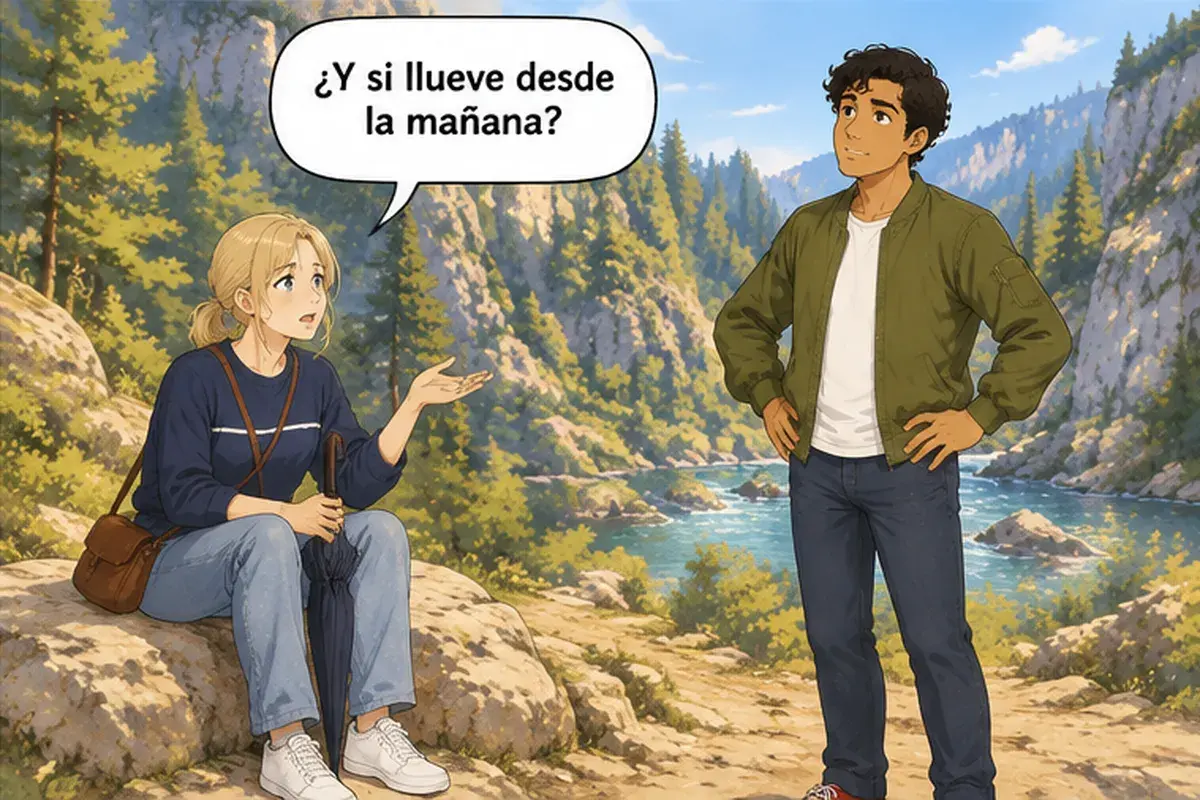
¿Y si llueve desde la mañana?
And what if it rains starting in the morning?
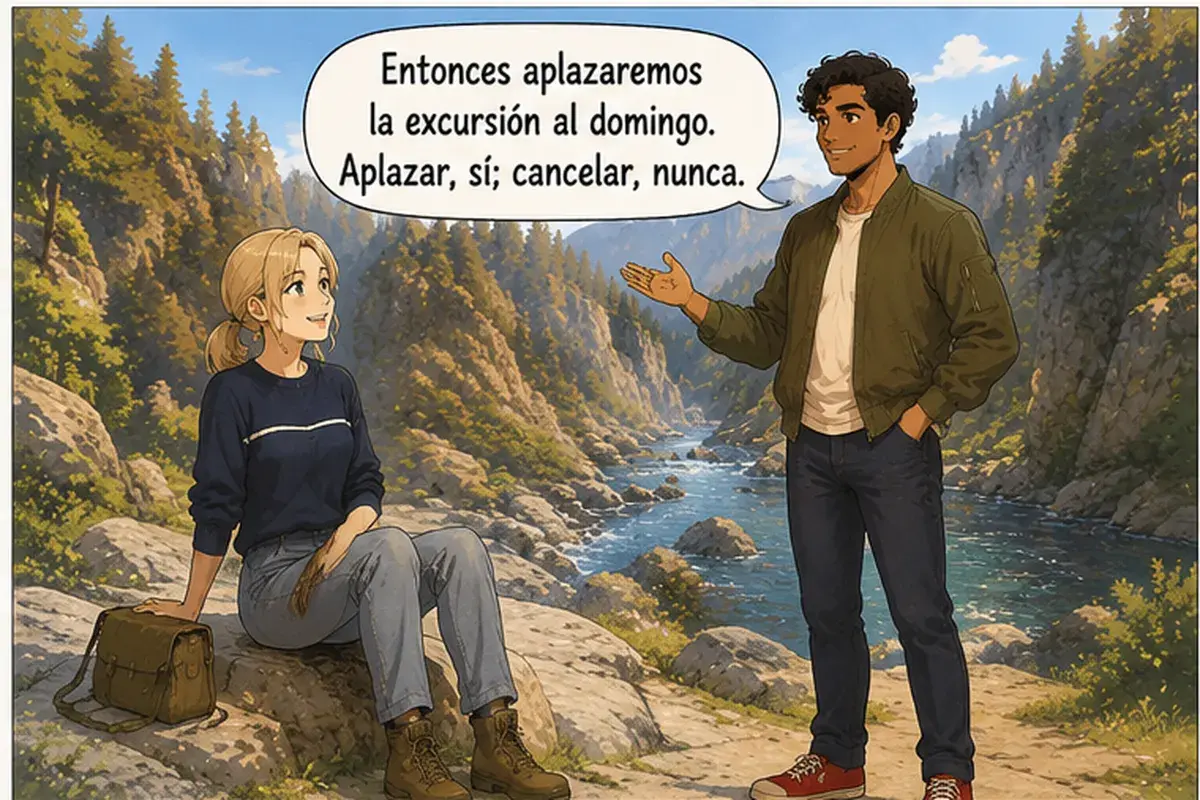
- Pablo
Entonces aplazaremos la excursión al domingo. Aplazar, sí; cancelar, nunca.
Then we'll postpone the hike to Sunday. Postpone, yes; cancel, never.
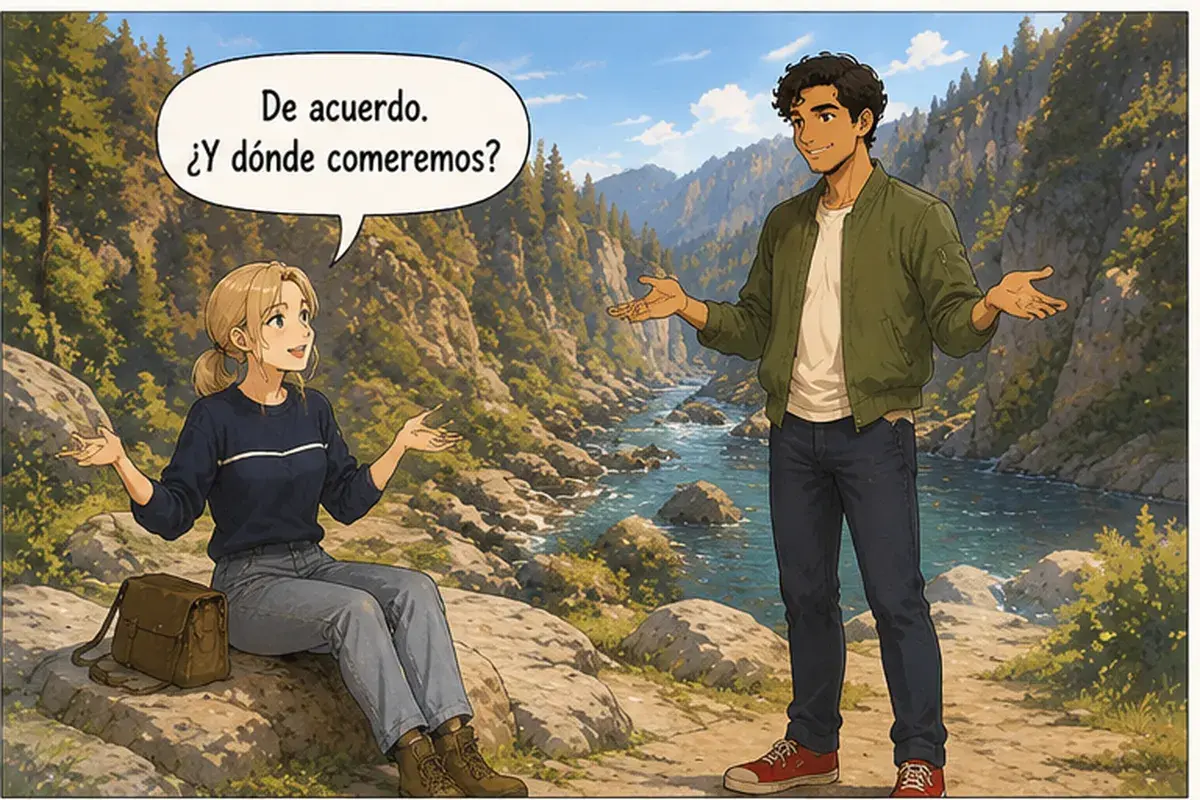
- Ana
De acuerdo. ¿Y dónde comeremos?
All right. And where will we eat?
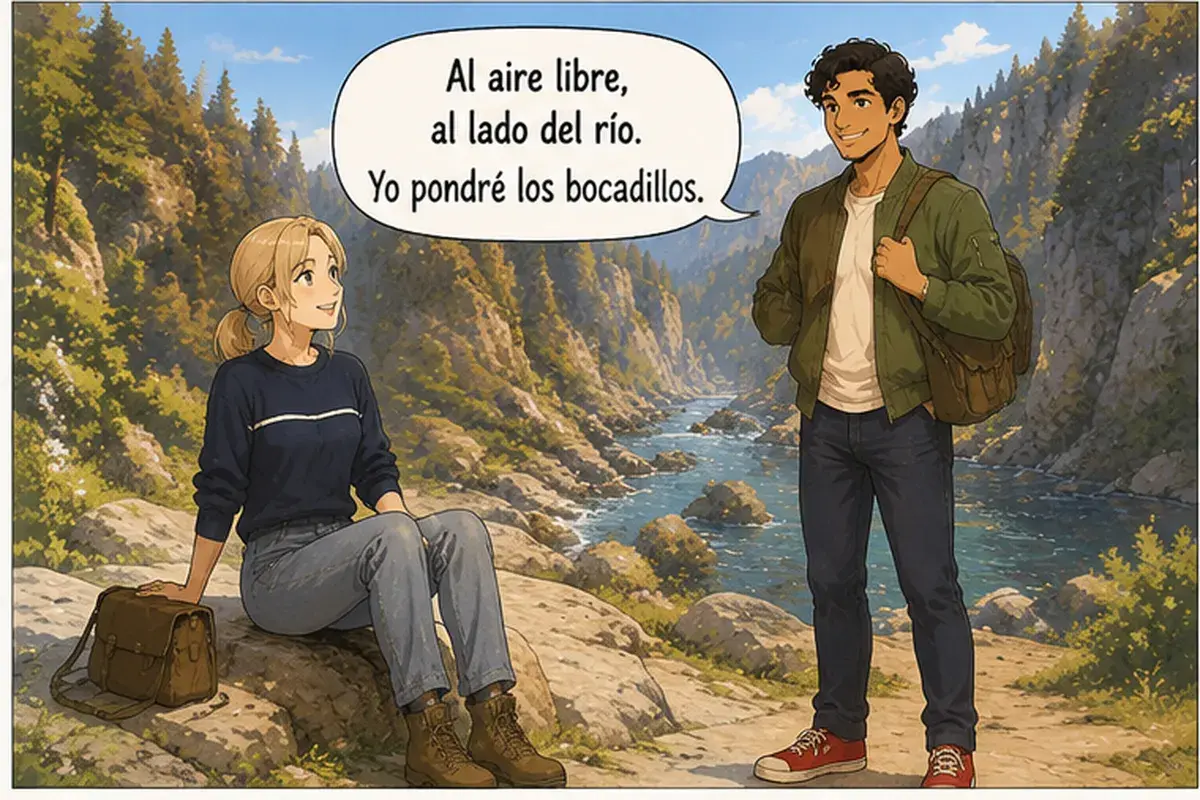
- Pablo
Al aire libre, al lado del río. Yo pondré los bocadillos.
Outdoors, next to the river. I'll bring the sandwiches.
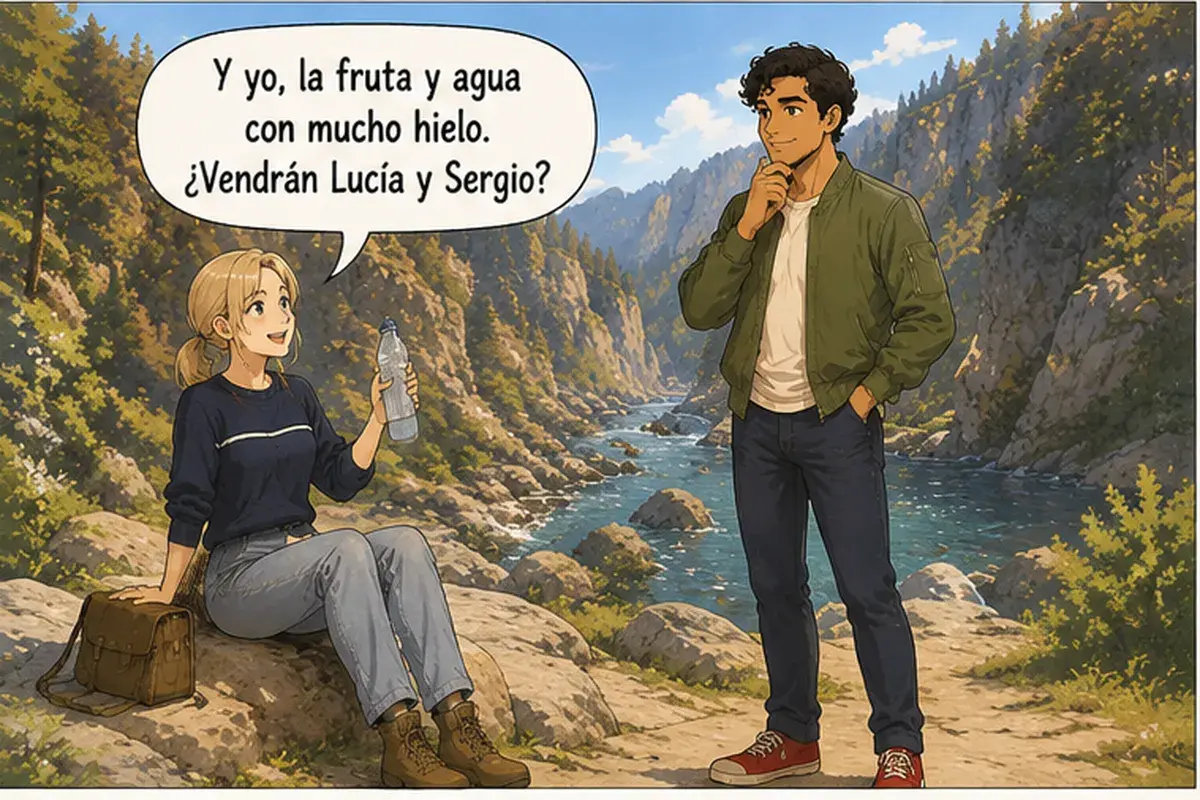
- Ana
Y yo, la fruta y agua con mucho hielo. ¿Vendrán Lucía y Sergio?
And I'll bring the fruit and water with lots of ice. Will Lucía and Sergio come?
- Pablo
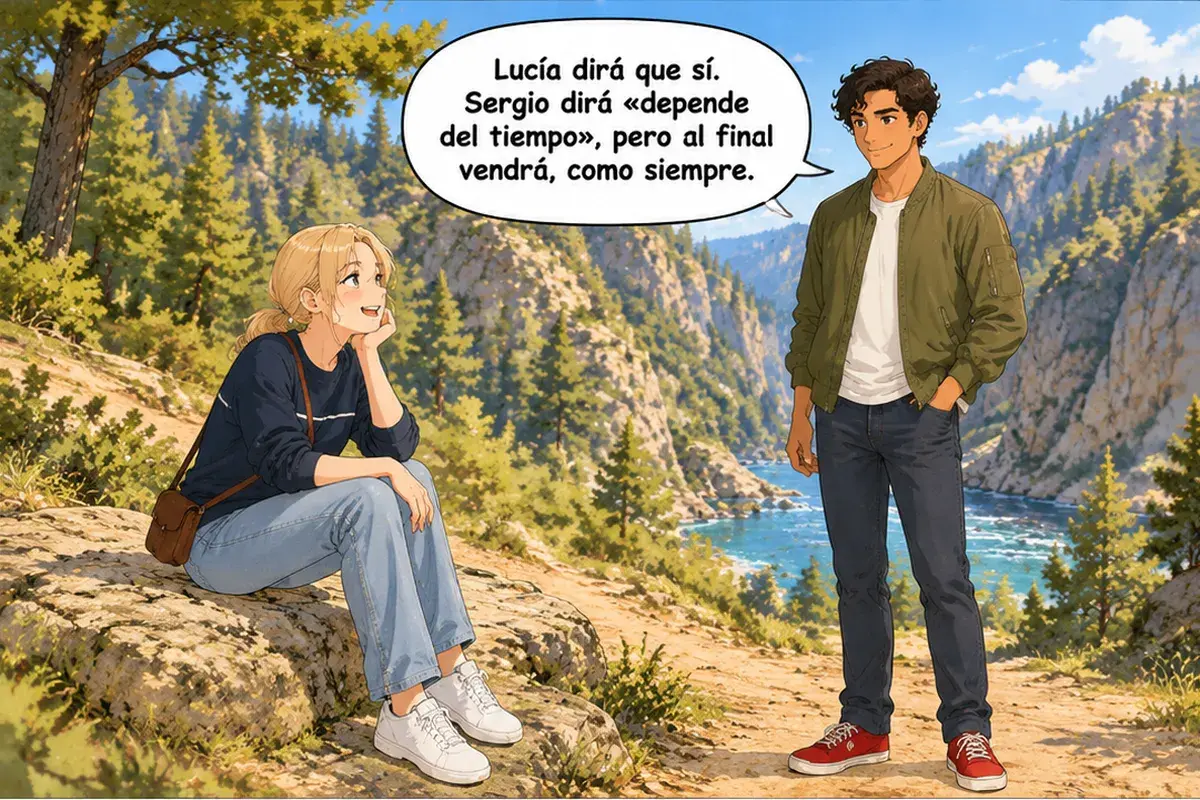
Lucía dirá que sí. Sergio dirá «depende del tiempo», pero al final vendrá, como siempre.
Lucía will say yes. Sergio will say "it depends on the weather", but in the end he'll come, as always.
- Ana
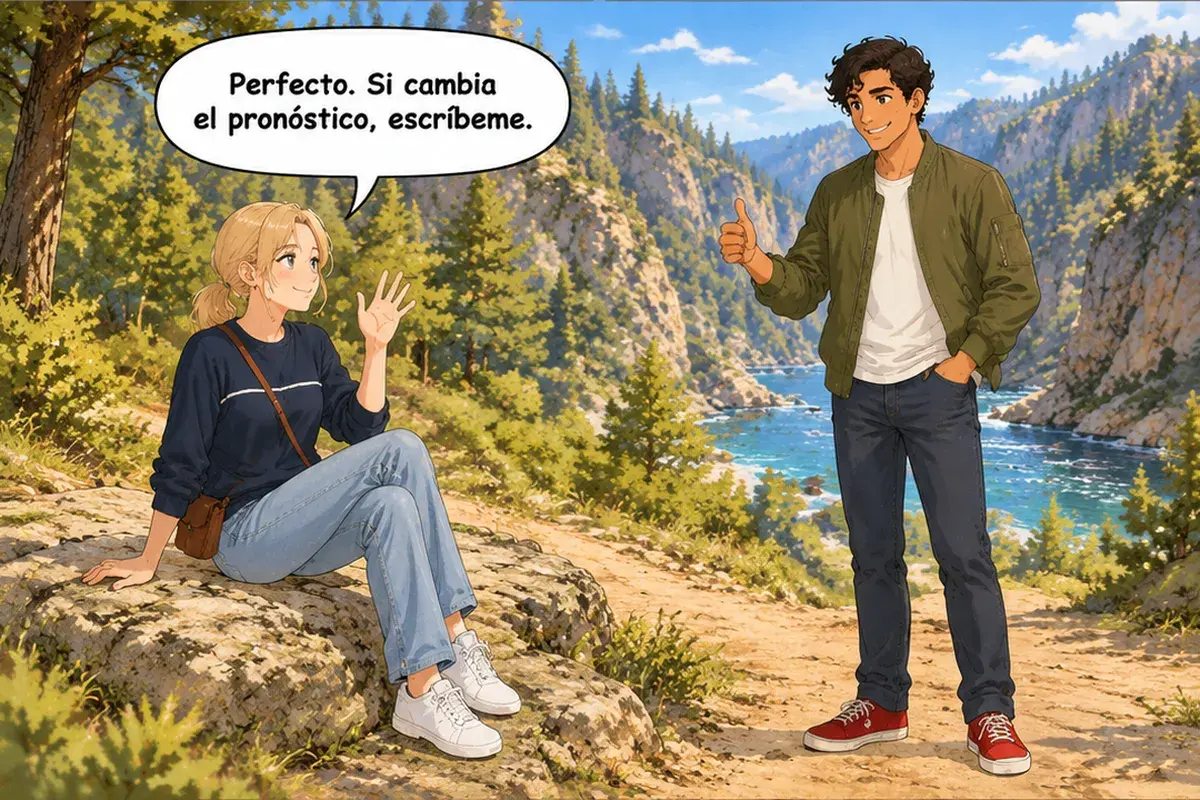
Perfecto. Si cambia el pronóstico, escríbeme.
Perfect. If the forecast changes, text me.
Grammar for this text
Future with a special stem. ¿Vendrás?, vendrán, vendrá come from venir; nos pondremos, pondré from poner; dirá from decir; habrá nubes is the future of hay: "there will be clouds".
Venir and ir. Pablo asks ¿vendrás conmigo? — venir means "to come" to the place where the speaker will be. English would answer "Of course I'll come!", but Ana switches to ir: ¡Claro que iré! — "Of course I'll go!" She's talking about going to a place where she isn't now.
Si + present. Si cae uno, nos pondremos el impermeable — "if one comes, we'll put on our raincoats". Just like English "if we leave early", Spanish uses the present after si: si salimos temprano. The other half has the future or a request: pídele uno a Lucía, escríbeme.
Poner has two meanings here: ponerse el impermeable — to put on a raincoat, and yo pondré los bocadillos — "I'll bring the sandwiches" (people say this when everyone brings food to share).
Chulilla is a village an hour from Valencia; people go there for a hiking trail with bridges over the river.
Words and grammar of the unit: Make plans in case it rains.
Learn the words from the texts with flashcards
In the app, you can tap any word in a text to see its translation, forms and examples, and new words stick with flashcards. 15 minutes a day.
Start for freeEverything is open for free. No card needed to sign up.