

Spanish dialogue with translation · B1 · 16 lines
Mudanza sin ascensor Moving without an elevator
Comic · 16 panels
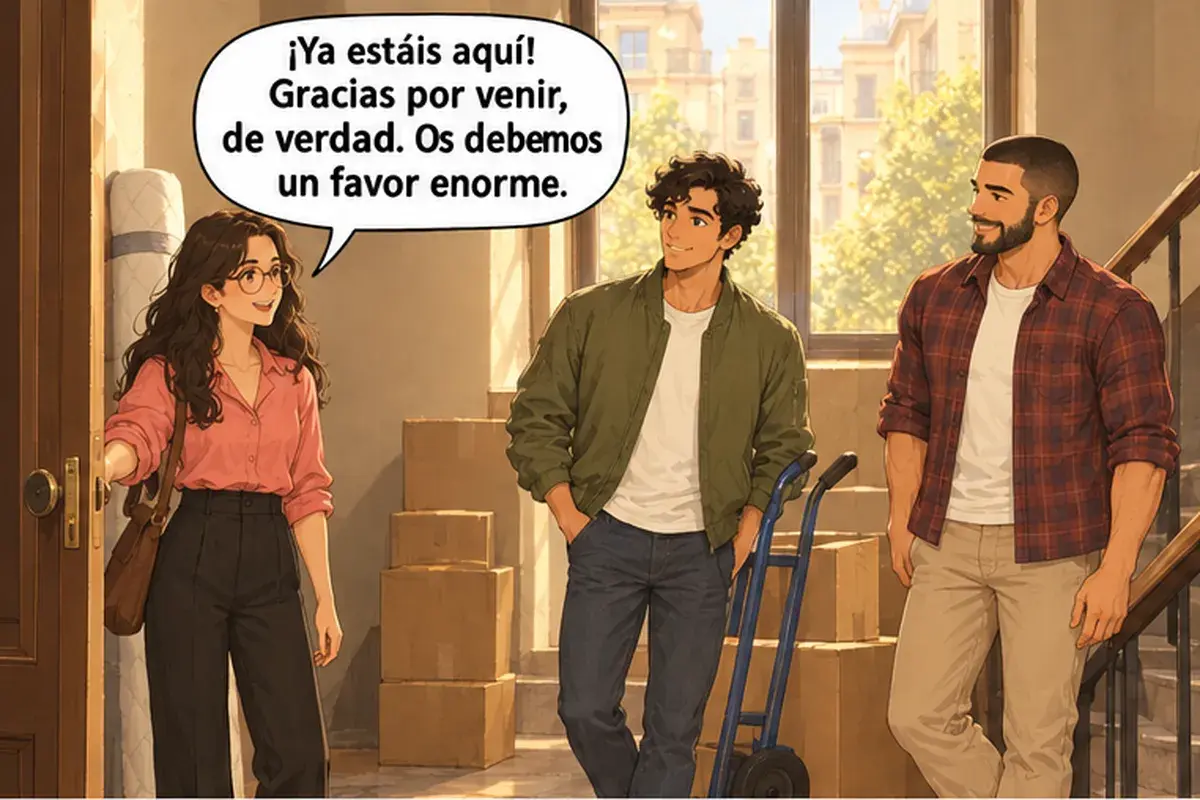
- Lucía
¡Ya estáis aquí! Gracias por venir, de verdad. Os debemos un favor enorme.
You're here! Thank you for coming, really. We owe you a huge favor (to several people).
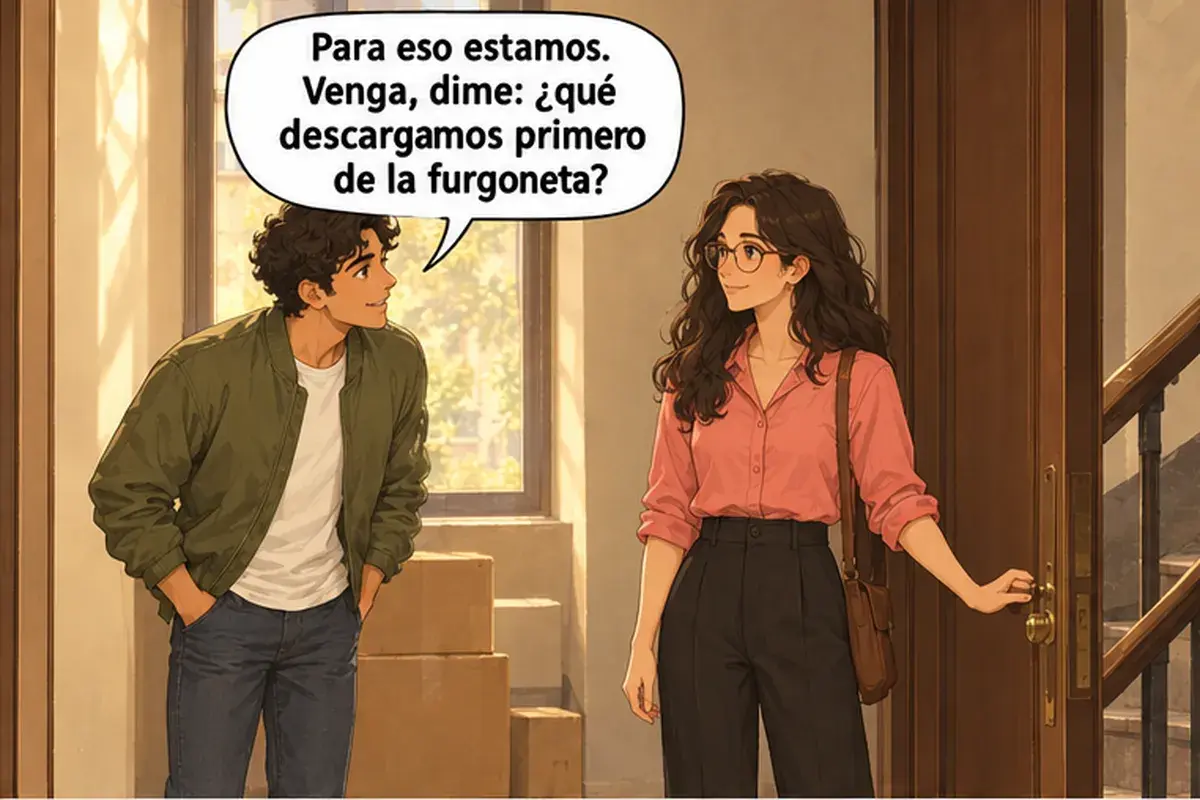
- Pablo
Para eso estamos. Venga, dime: ¿qué descargamos primero de la furgoneta?
That's what we're here for. Come on, tell me: what do we unload from the van first?
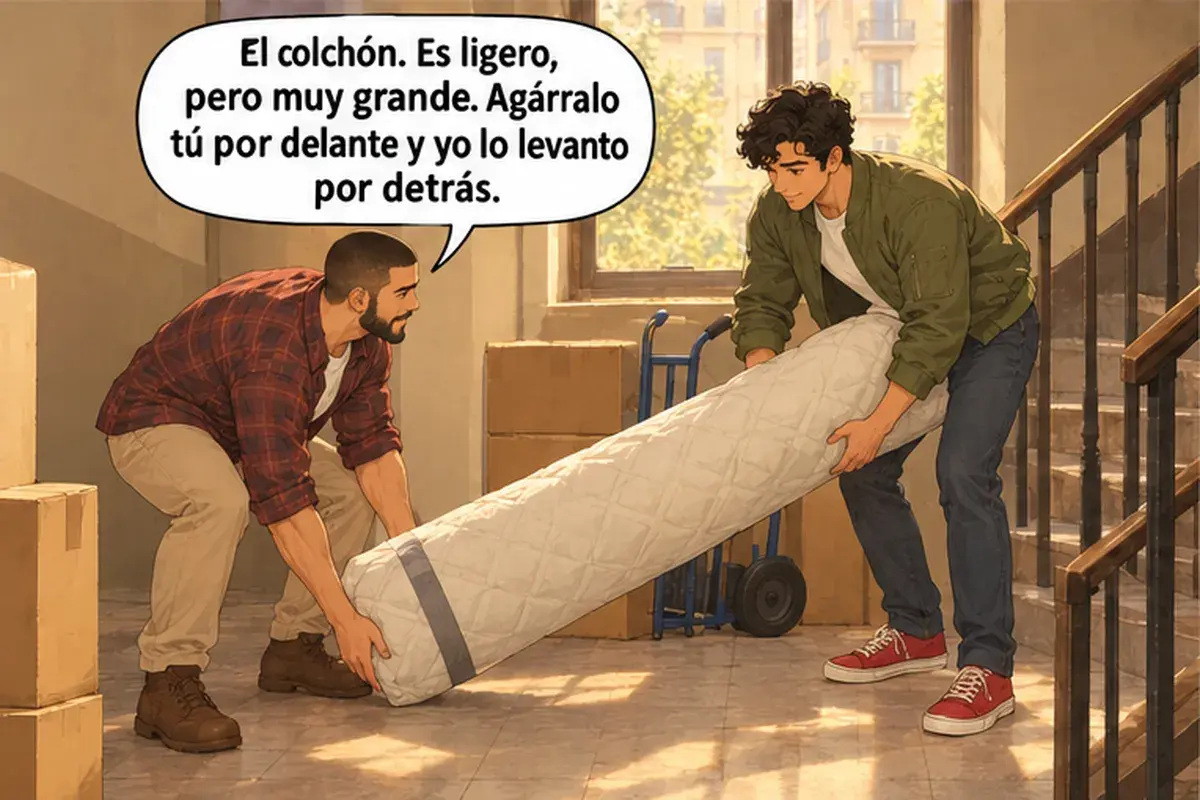
- Sergio
El colchón. Es ligero, pero muy grande. Agárralo tú por delante y yo lo levanto por detrás.
The mattress. It's light, but very big. You grab it at the front and I'll lift it at the back.
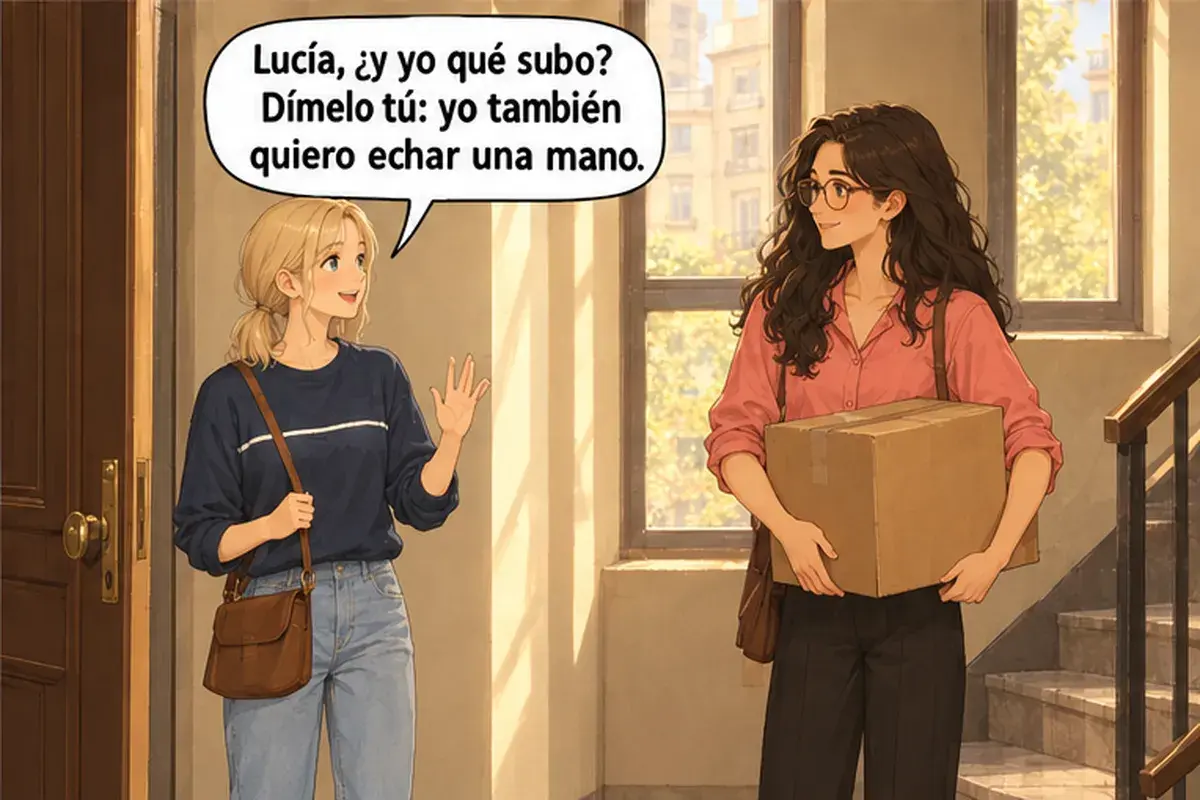
- Ana
Lucía, ¿y yo qué subo? Dímelo tú: yo también quiero echar una mano.
Lucía, and what do I carry up? You tell me: I want to give a hand too.
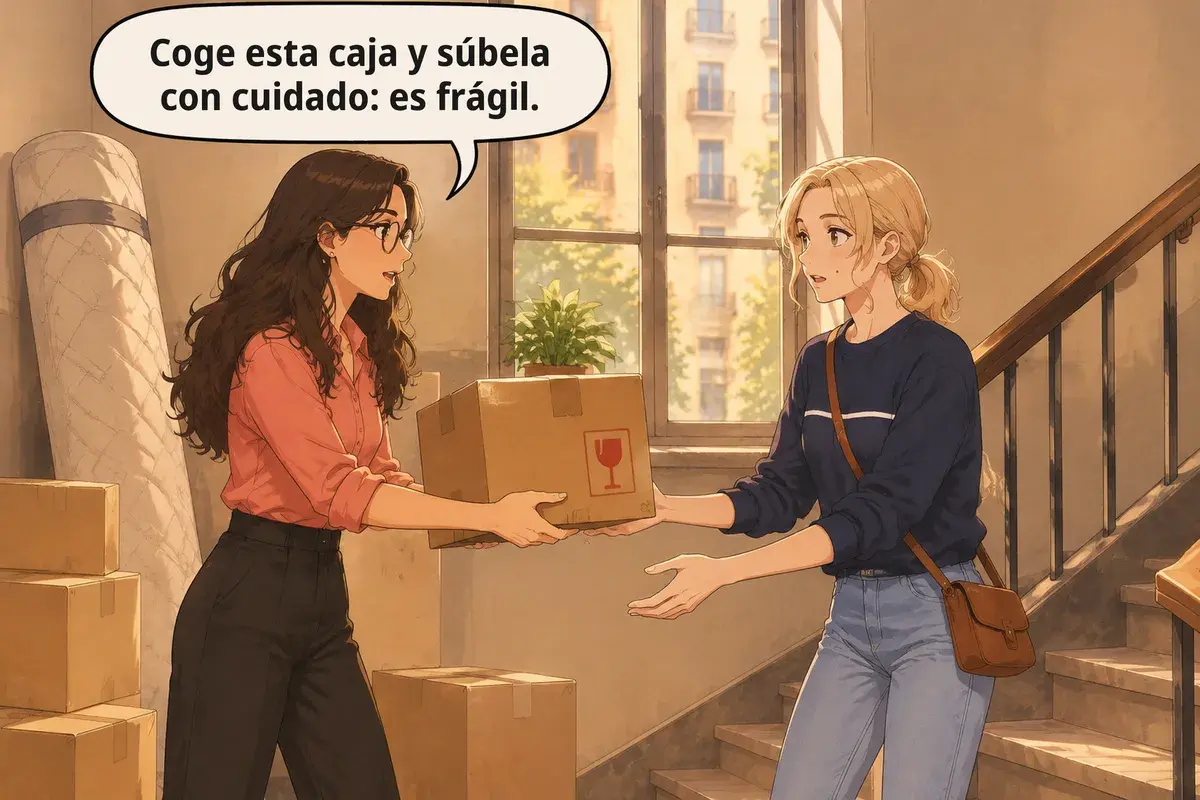
- Lucía
Coge esta caja y súbela con cuidado: es frágil.
Take this box and carry it up carefully: it's fragile.
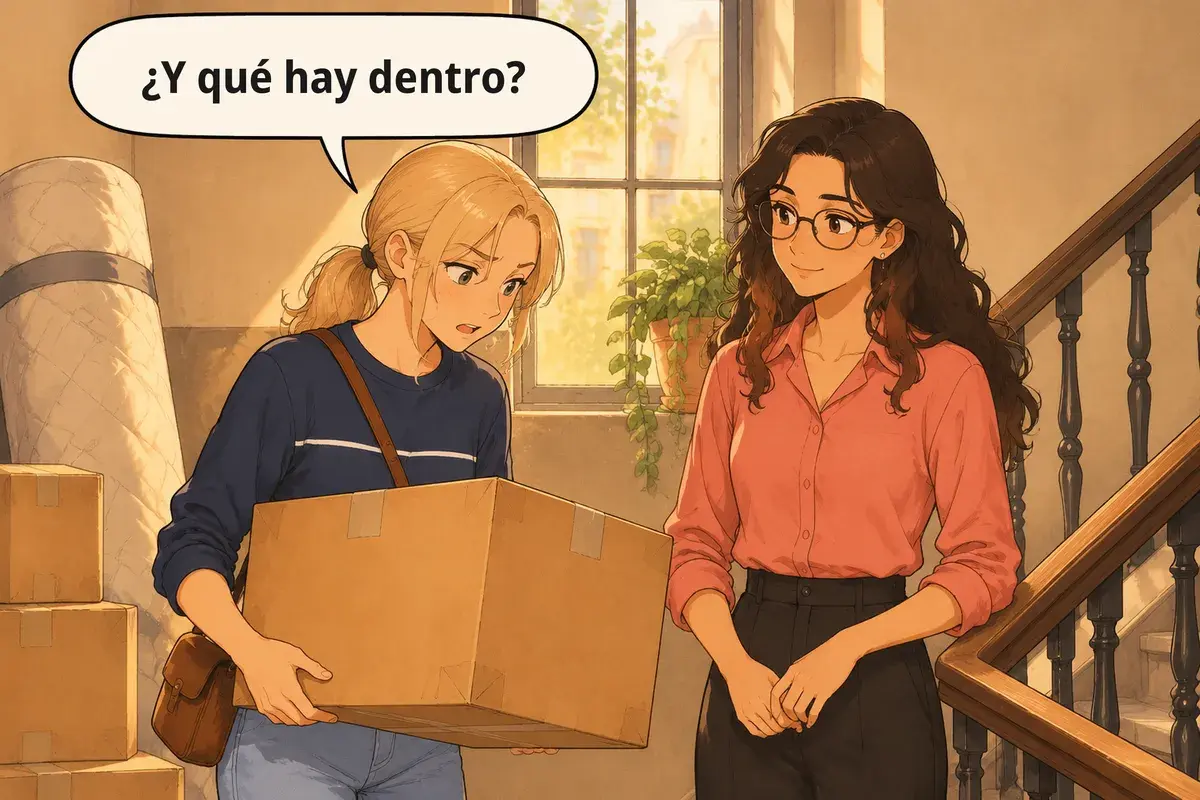
- Ana
¿Y qué hay dentro?
And what's inside?
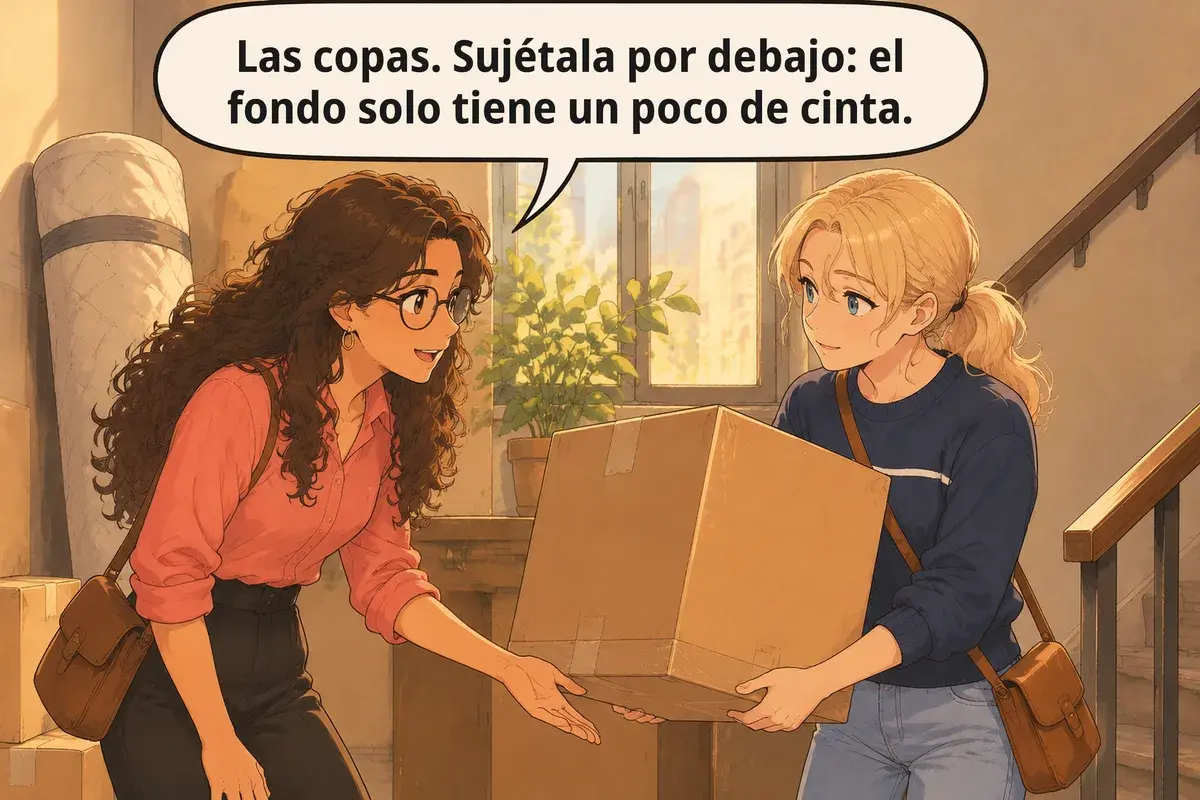
- Lucía
Las copas. Sujétala por debajo: el fondo solo tiene un poco de cinta.
The wine glasses. Hold it from underneath: there's only a little tape on the bottom.
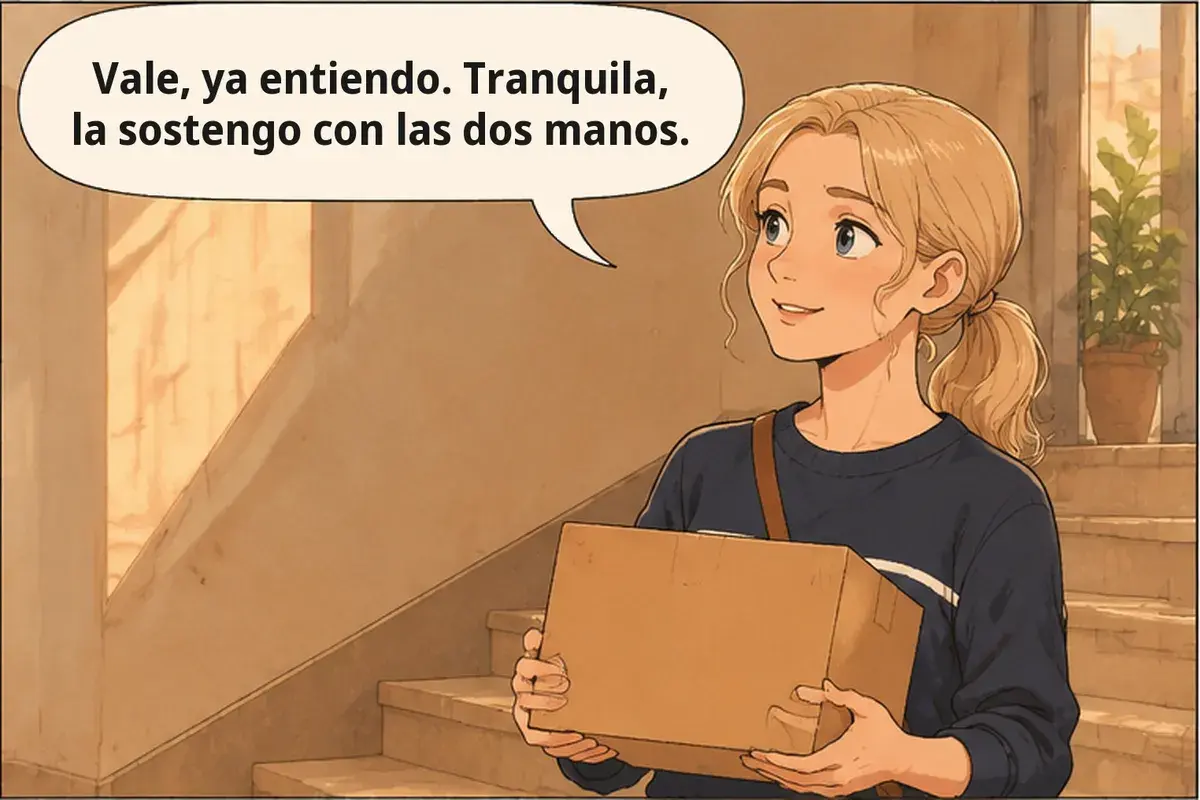
- Ana
Vale, ya entiendo. Tranquila, la sostengo con las dos manos.
OK, I get it. Don't worry, I'm holding it with both hands (to a woman).
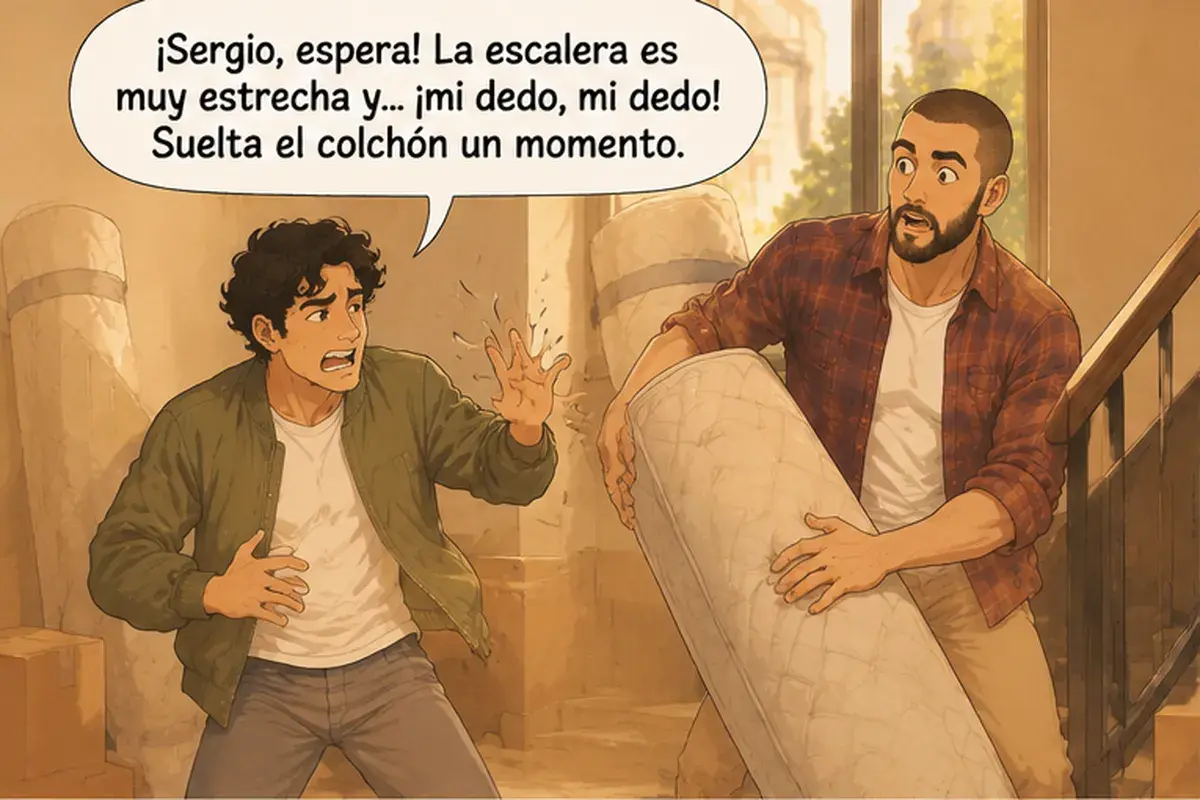
- Pablo
¡Sergio, espera! La escalera es muy estrecha y… ¡mi dedo, mi dedo! Suelta el colchón un momento.
Sergio, wait! The stairs are very narrow and… my finger, my finger! Let go of the mattress for a second.
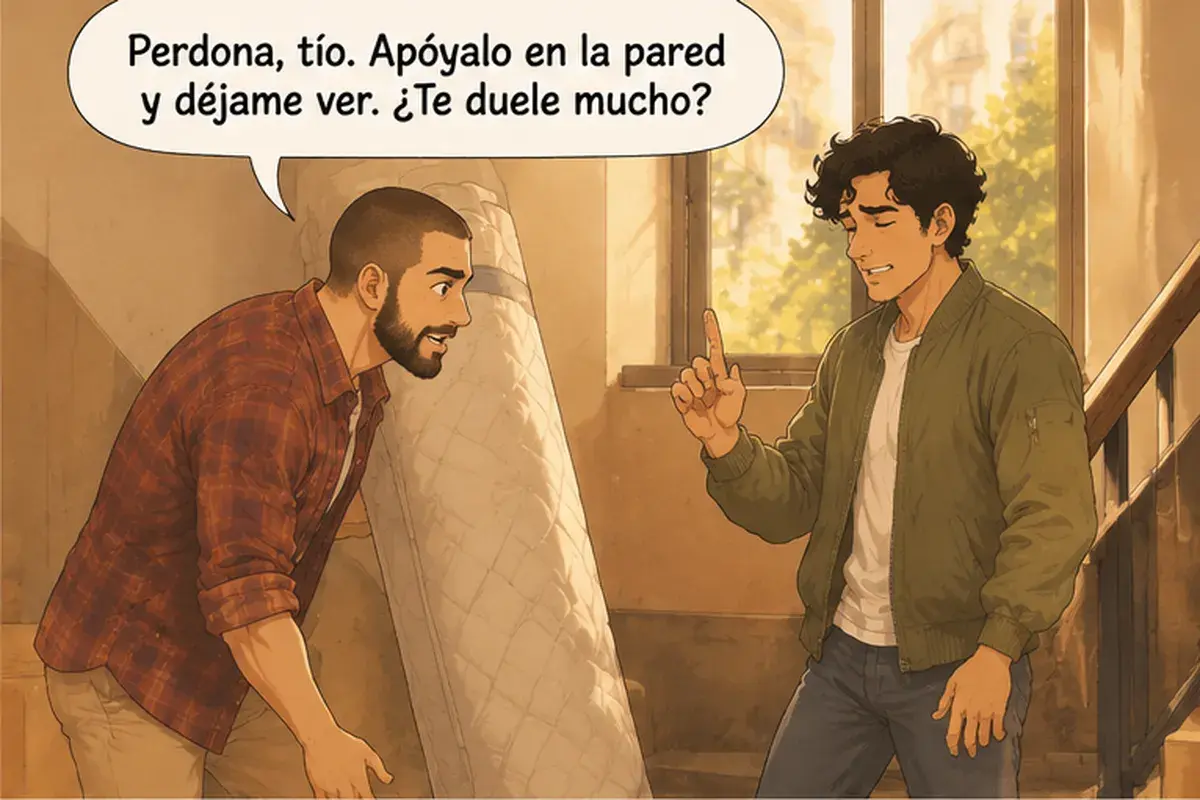
- Sergio
Perdona, tío. Apóyalo en la pared y déjame ver. ¿Te duele mucho?
Sorry, dude. Lean it against the wall and let me see. Does it hurt a lot?
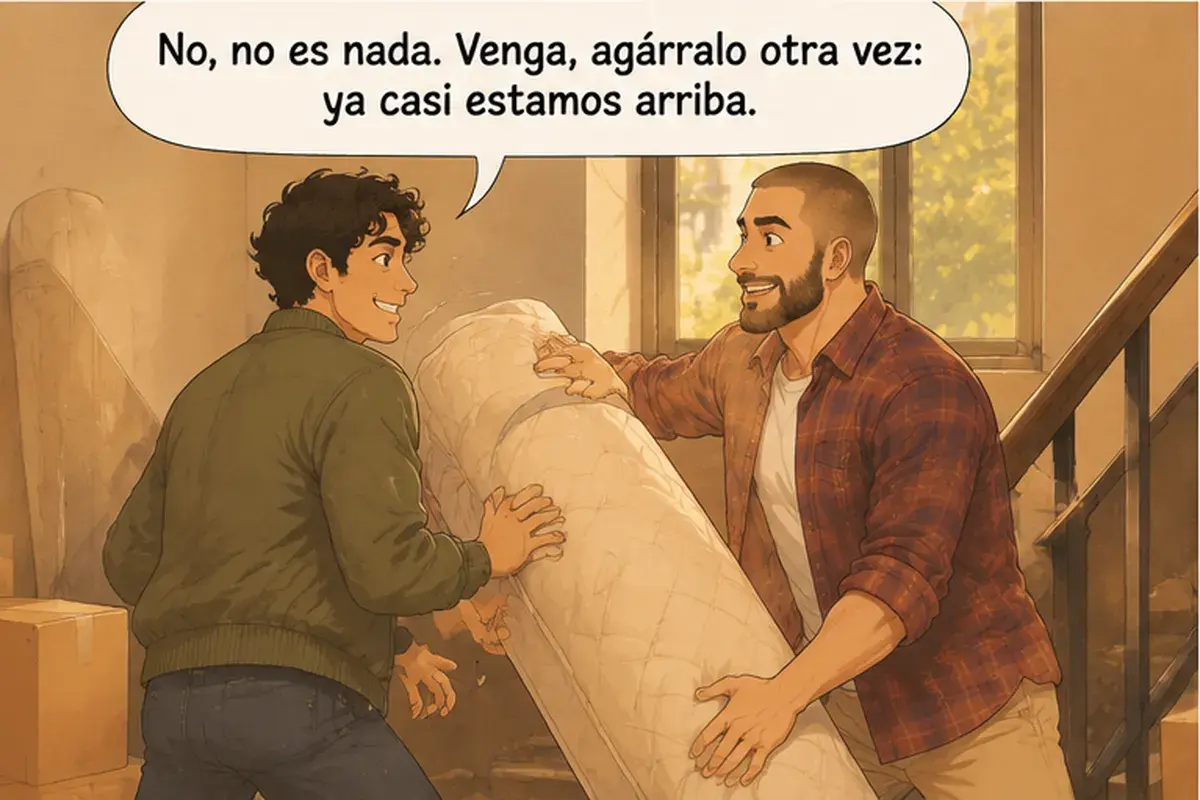
- Pablo
No, no es nada. Venga, agárralo otra vez: ya casi estamos arriba.
No, it's nothing. Come on, grab it again: we're almost at the top.
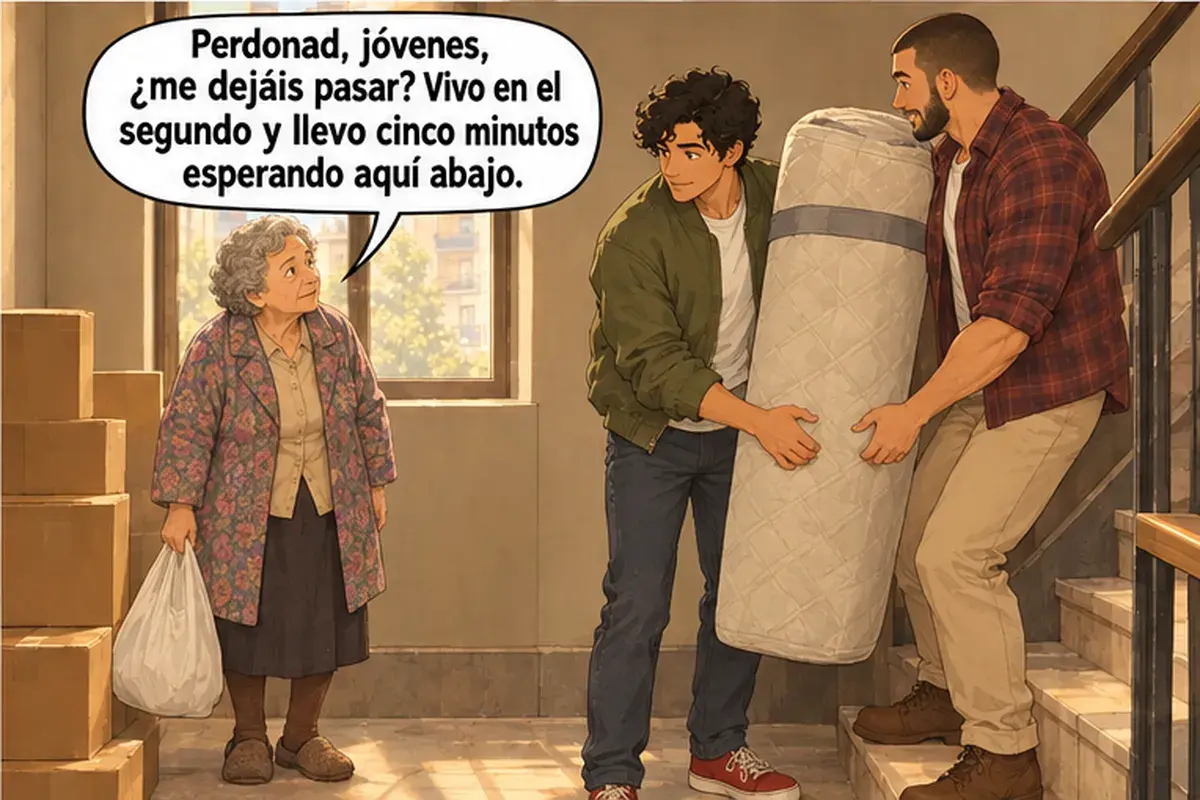
- Vecina
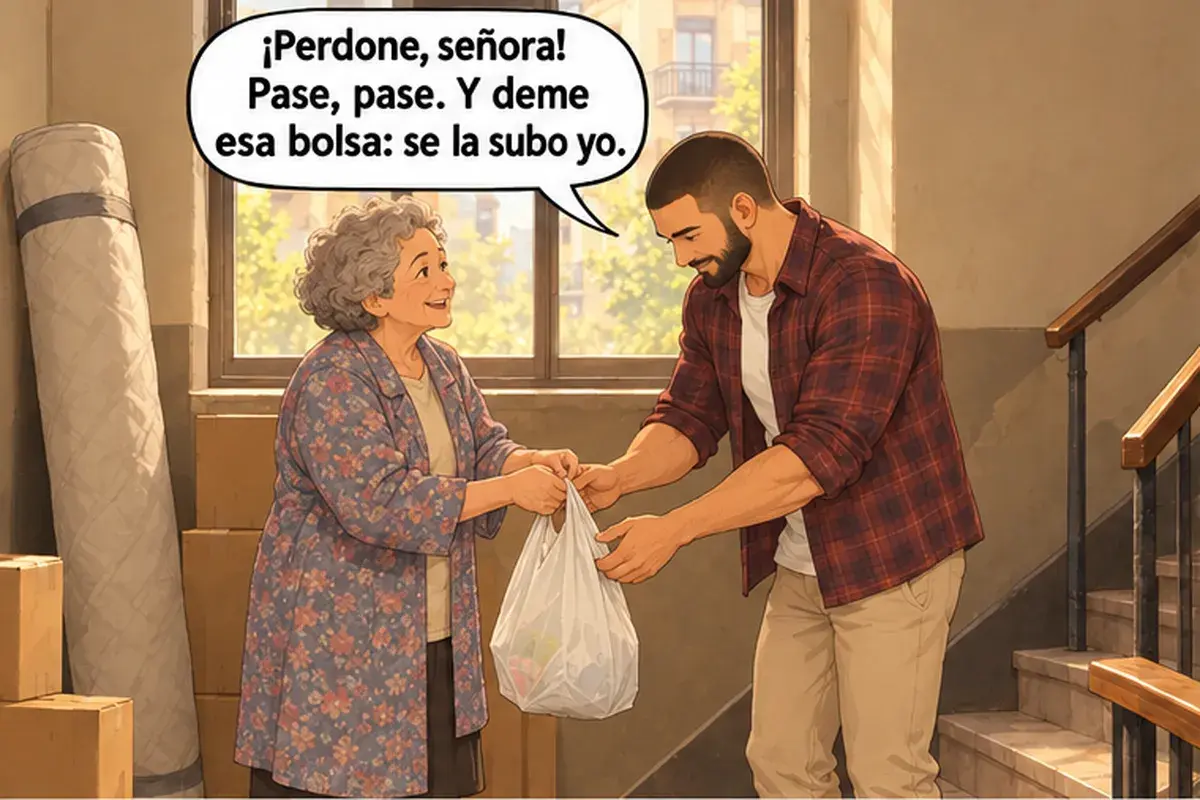
Perdonad, jóvenes, ¿me dejáis pasar? Vivo en el segundo y llevo cinco minutos esperando aquí abajo.
Excuse me, young people, will you let me through? I live on the second floor and I've been waiting down here for five minutes (to several people).
- Sergio
¡Perdone, señora! Pase, pase. Y deme esa bolsa: se la subo yo.
Sorry, ma'am! Go ahead, go ahead. And give me that bag: I'll carry it up for you (formal).
- Vecina
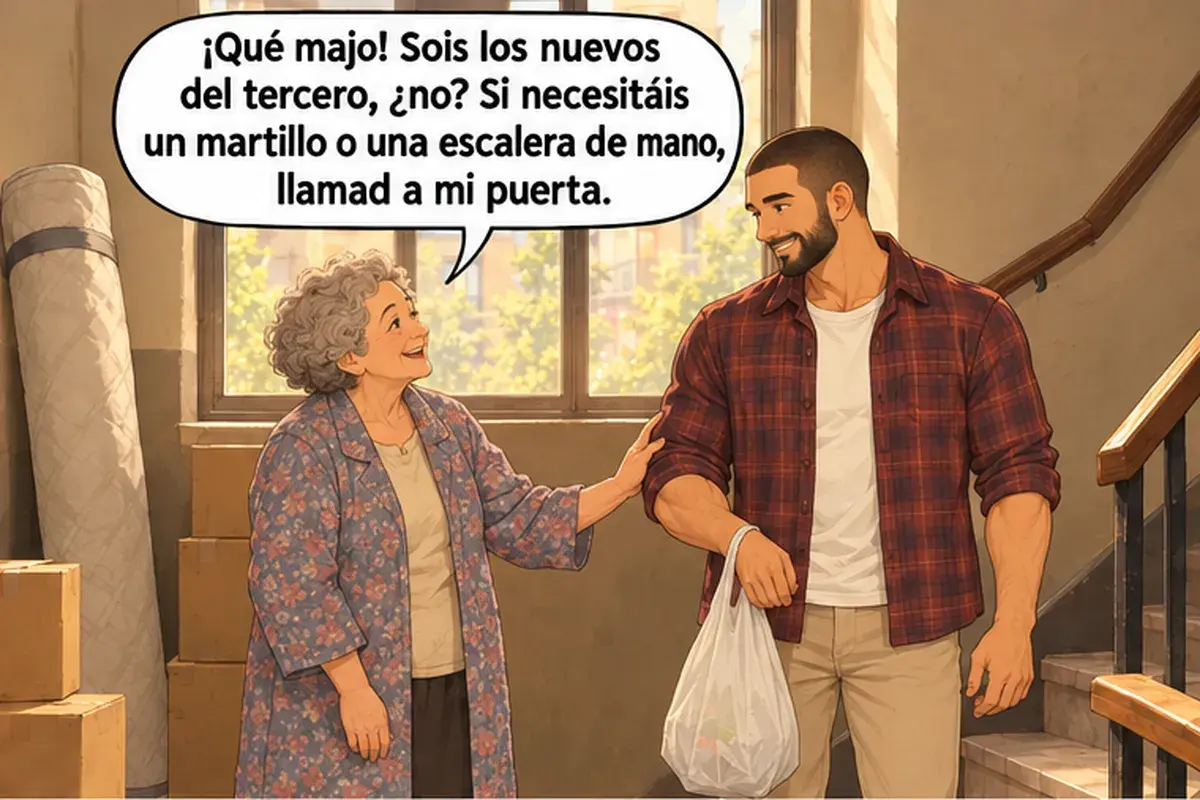
¡Qué majo! Sois los nuevos del tercero, ¿no? Si necesitáis un martillo o una escalera de mano, llamad a mi puerta.
What a nice young man! You're the new people on the third floor, right? If you need a hammer or a stepladder, knock on my door (to several people).
- Sergio
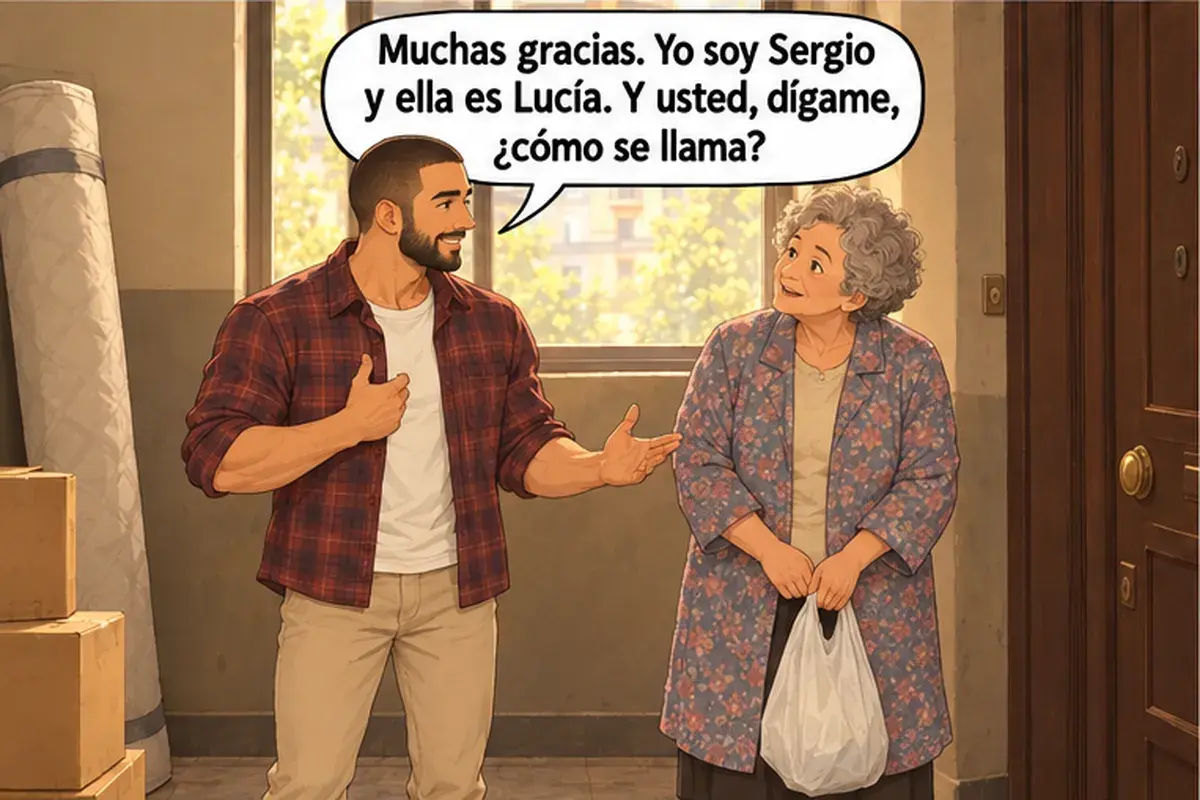
Muchas gracias. Yo soy Sergio y ella es Lucía. Y usted, dígame, ¿cómo se llama?
Thank you very much. I'm Sergio and this is Lucía. And you, tell me, what's your name? (formal)
- Vecina
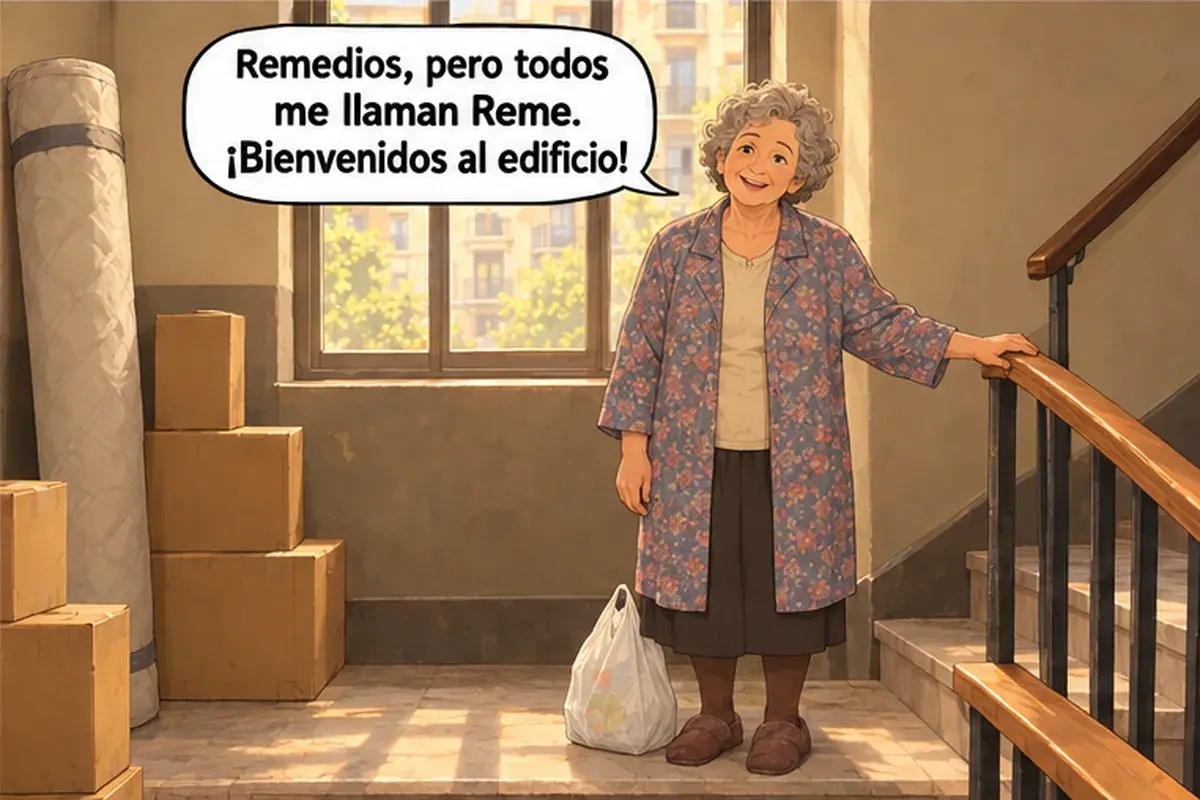
Remedios, pero todos me llaman Reme. ¡Bienvenidos al edificio!
Remedios, but everyone calls me Reme. Welcome to the building! (to several people)
Grammar for this text
Command + pronoun. The pronoun is attached to the end of the command: dime (tell me), dímelo (tell me it: di + me + lo), agárralo (grab it: the mattress), súbela and sujétala (carry it up, hold it: the box), apóyalo (lean it), déjame ver (let me see).
Formal you. Sergio talks to the elderly neighbor with usted: perdone (sorry), pase (go ahead), deme esa bolsa (give me that bag), dígame (tell me). She talks to the young people informally, with vosotros: perdonad (excuse me) and llamad (knock, call) are vosotros commands.
Se la subo yo — I'll carry it up for you: le + la = se la (unit 10).
Colloquial. Venga means "come on" or "OK then". It's a frozen form of venir (the usted command), but people say it to friends too (Venga, dime; Venga, agárralo otra vez). Los nuevos del tercero — the new people on the third floor. Escalera de mano is a stepladder; plain escalera is the stairs in a building.
Words and grammar of the unit: Ask friends to help you move.
Learn the words from the texts with flashcards
In the app, you can tap any word in a text to see its translation, forms and examples, and new words stick with flashcards. 15 minutes a day.
Start for freeEverything is open for free. No card needed to sign up.