

Spanish dialogue with translation · B1 · 18 lines
Llamaré yo al número de mi tarjeta I'll call the number on my card myself
Comic · 18 panels
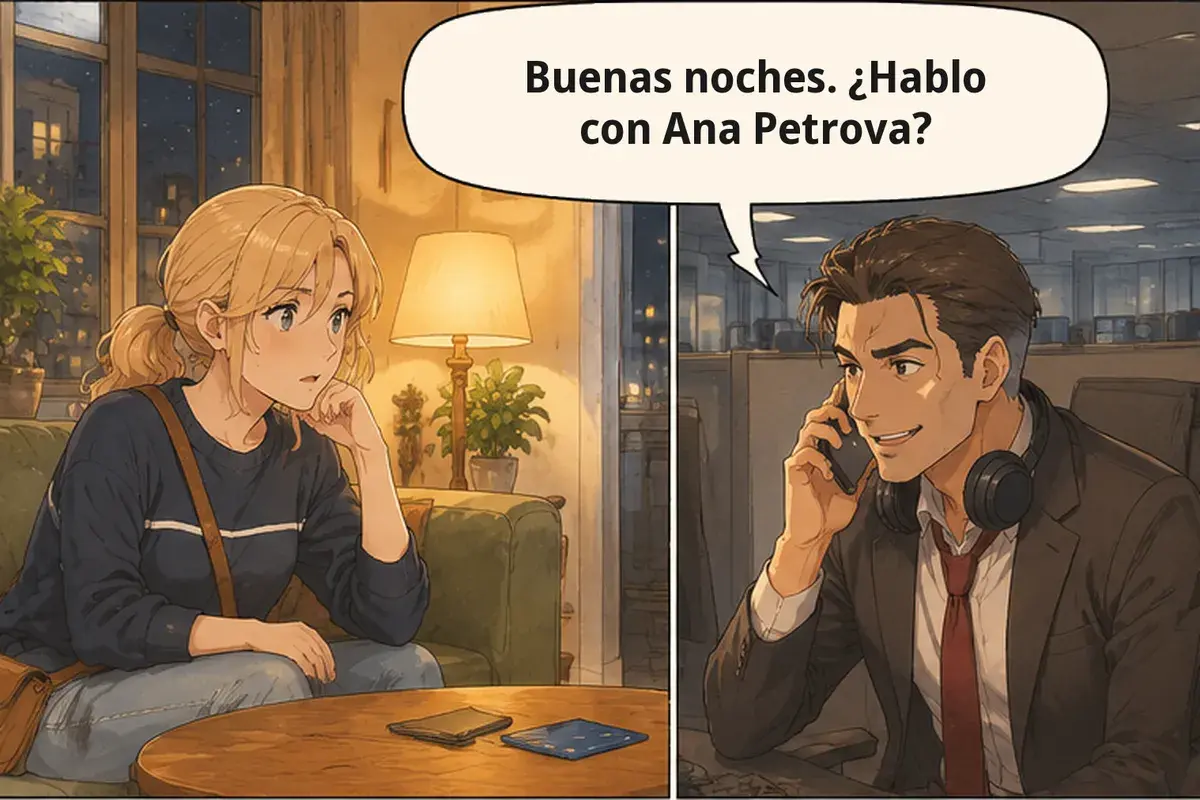
- Rodrigo
Buenas noches. ¿Hablo con Ana Lind?
Good evening. Am I speaking with Ana Lind?
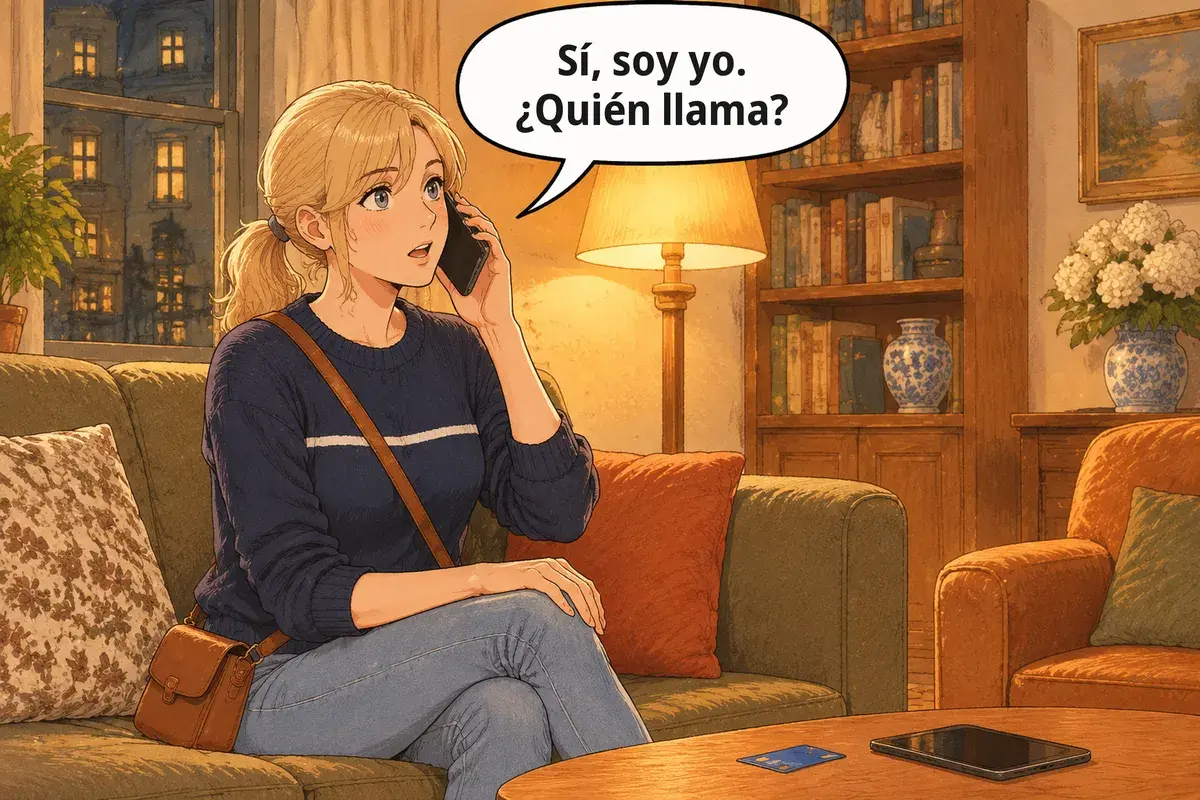
- Ana
Sí, soy yo. ¿Quién llama?
Yes, it's me. Who's calling?
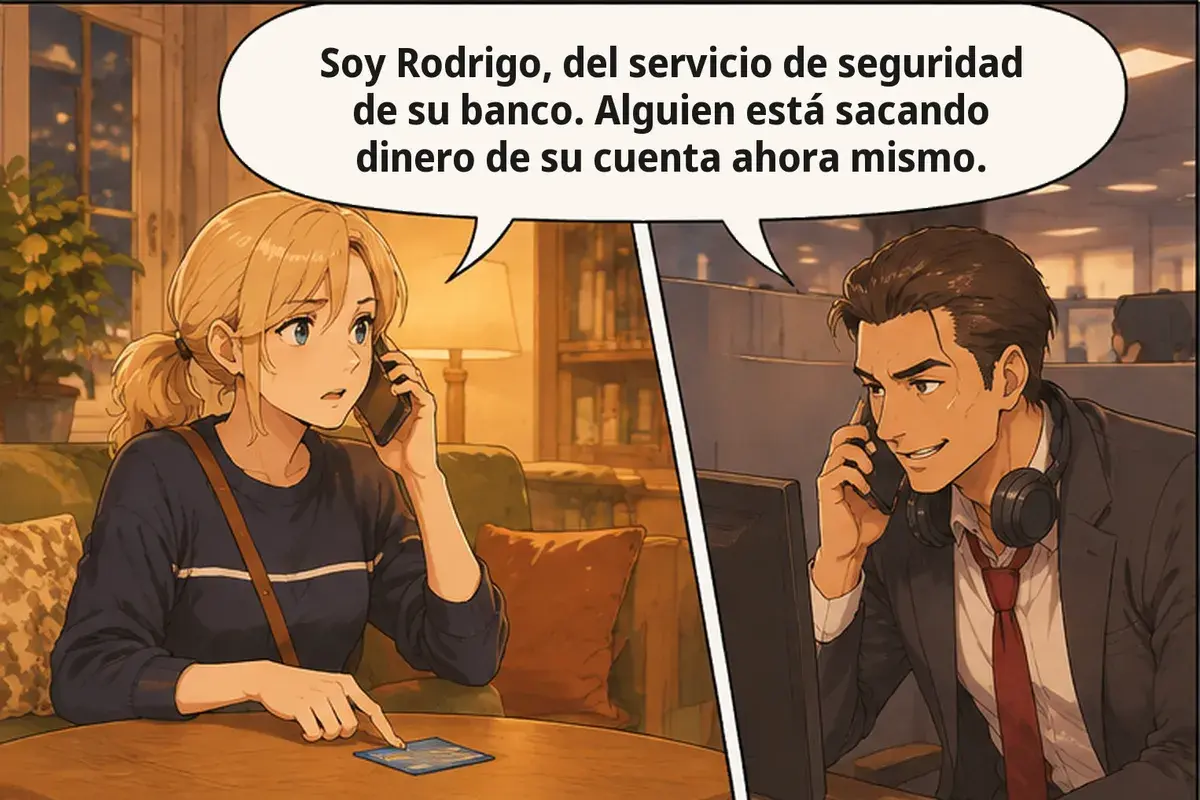
- Rodrigo
Soy Rodrigo, del servicio de seguridad de su banco. Alguien está sacando dinero de su cuenta ahora mismo.
This is Rodrigo, from your bank's security department. Someone is taking money out of your account right now. (formal)
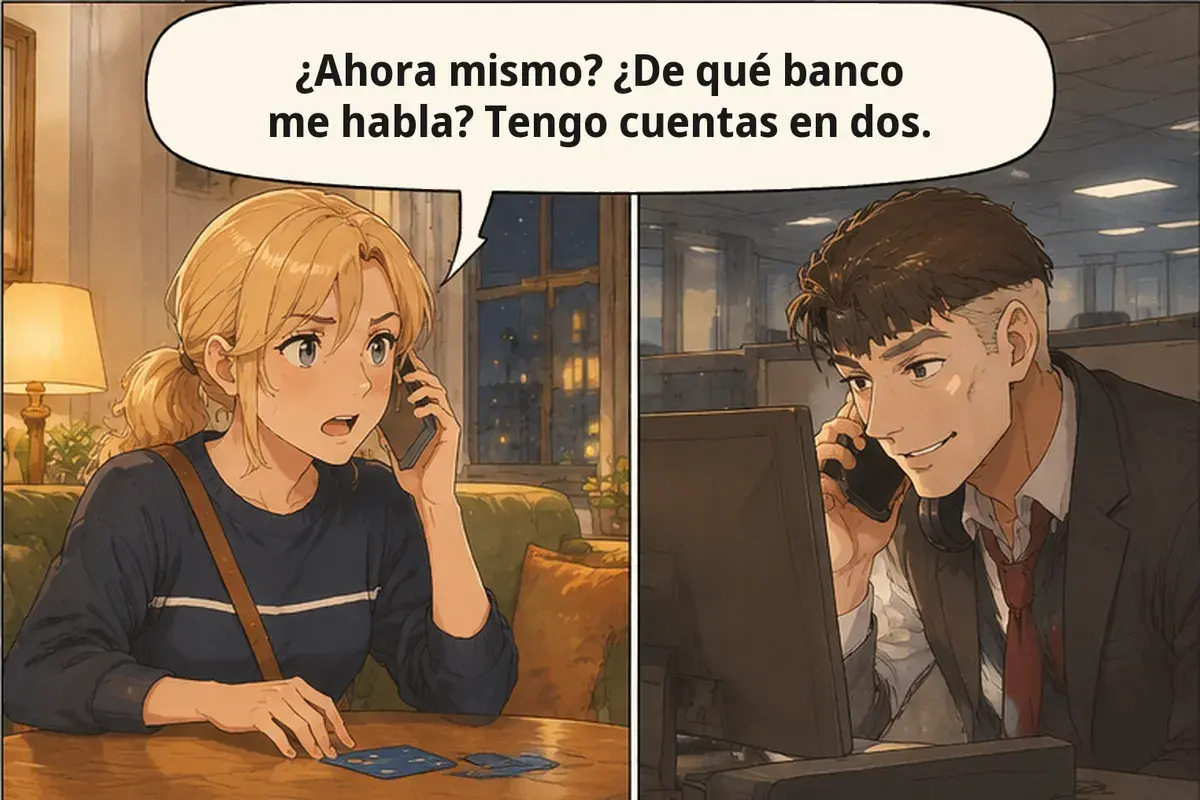
- Ana
¿Ahora mismo? ¿De qué banco me habla? Tengo cuentas en dos.
Right now? Which bank are you talking about? I have accounts at two. (formal)
- Rodrigo
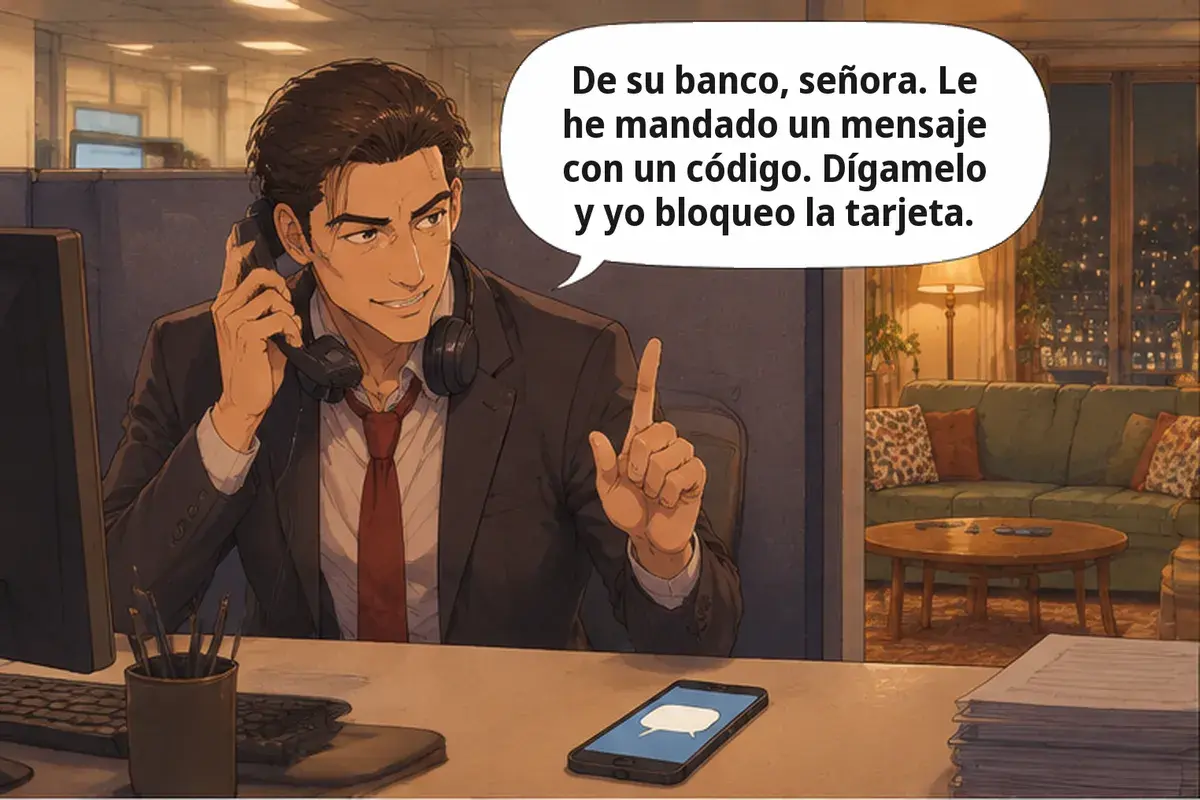
De su banco, señora. Le he mandado un mensaje con un código. Dígamelo y yo bloqueo la tarjeta.
Your bank, ma'am. I've sent you a message with a code. Tell it to me and I'll block the card. (formal)
- Ana
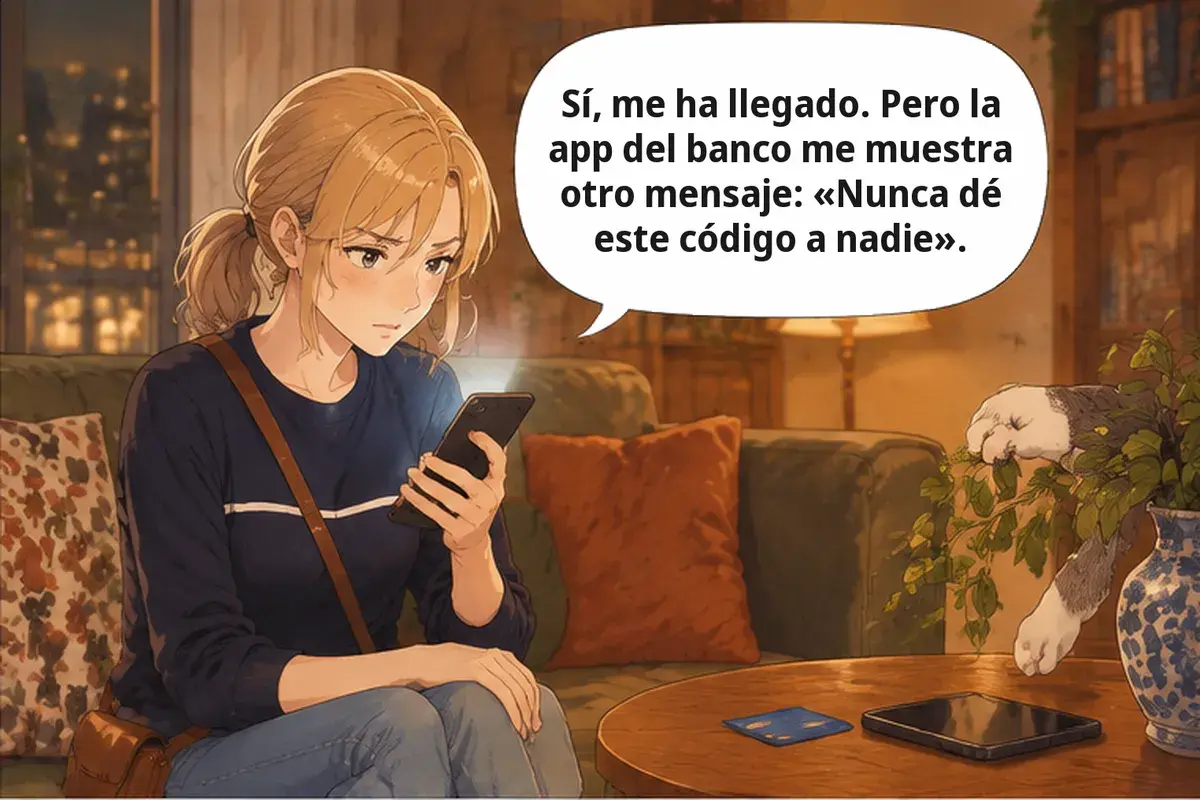
Sí, me ha llegado. Pero la app del banco me muestra otro mensaje: «Nunca dé este código a nadie».
Yes, I got it. But the bank's app is showing me a different message: "Never give this code to anyone." (formal)
- Rodrigo
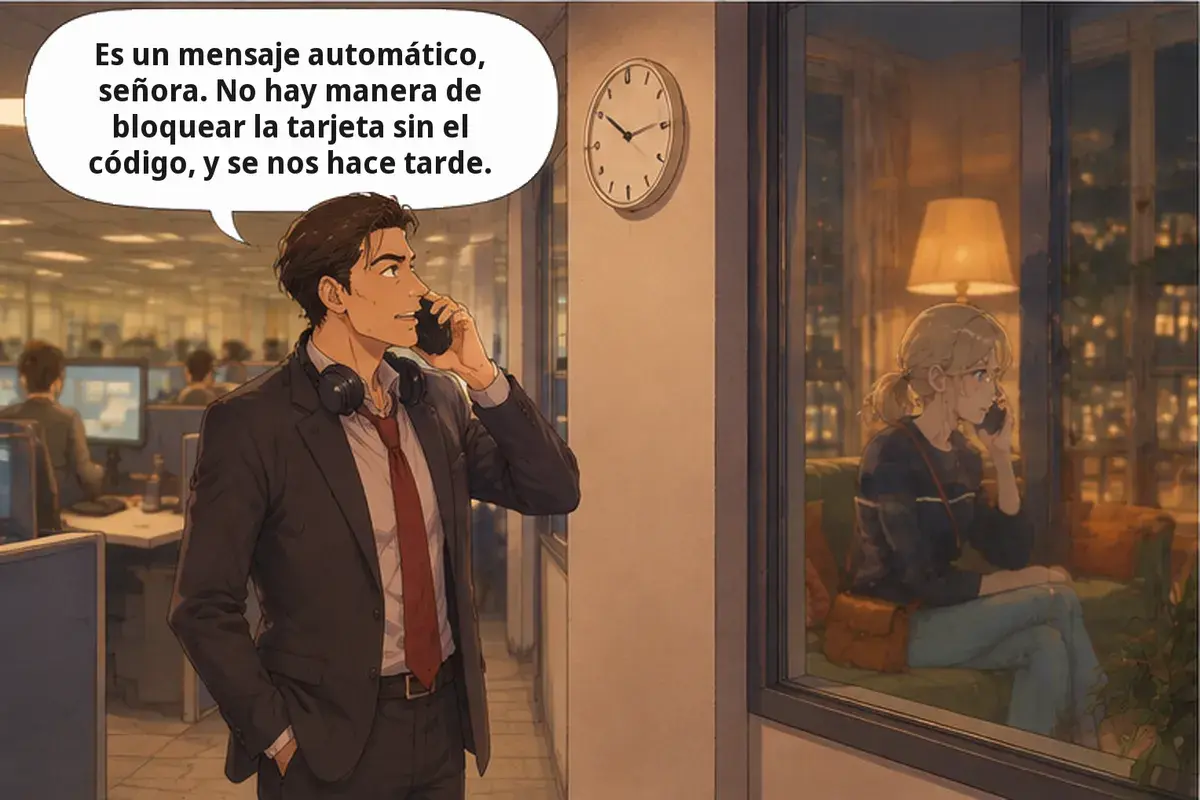
Es un mensaje automático, señora. No hay manera de bloquear la tarjeta sin el código, y se nos hace tarde.
It's an automatic message, ma'am. There's no way to block the card without the code, and we're running out of time.
- Ana
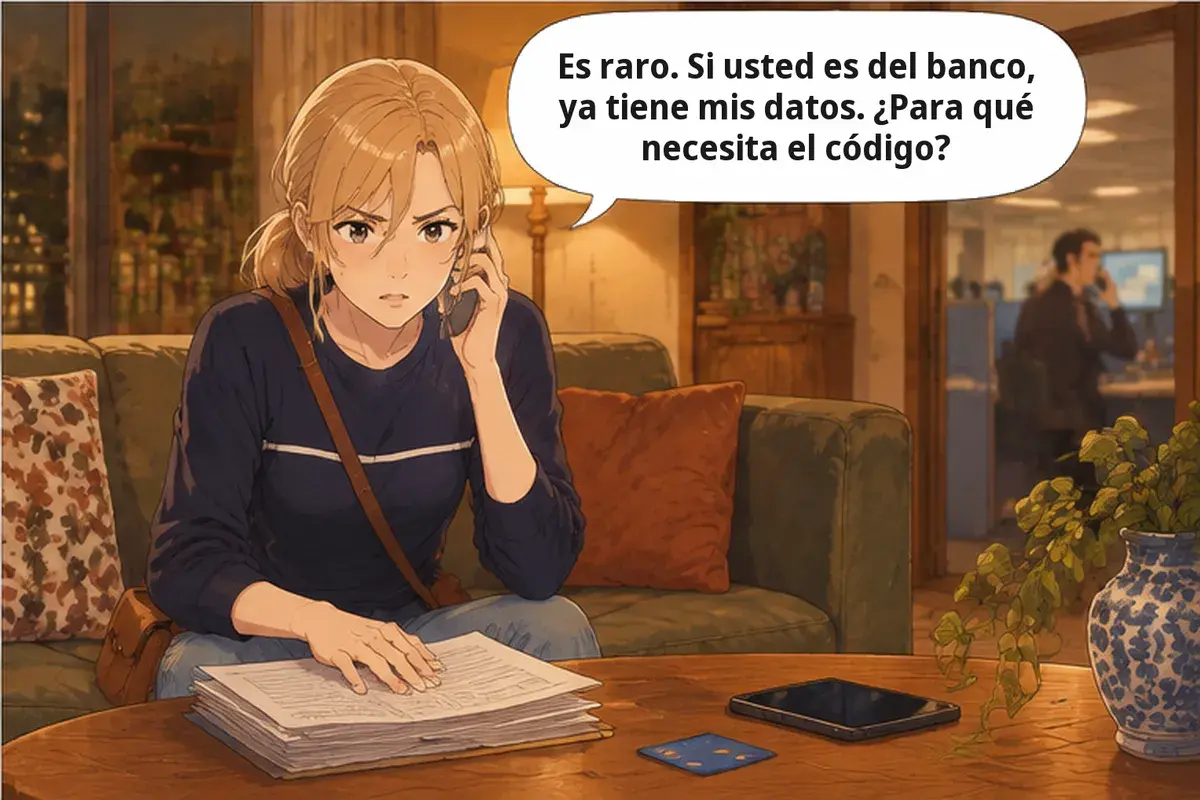
Es raro. Si usted es del banco, ya tiene mis datos. ¿Para qué necesita el código?
That's strange. If you're from the bank, you already have my details. What do you need the code for? (formal)
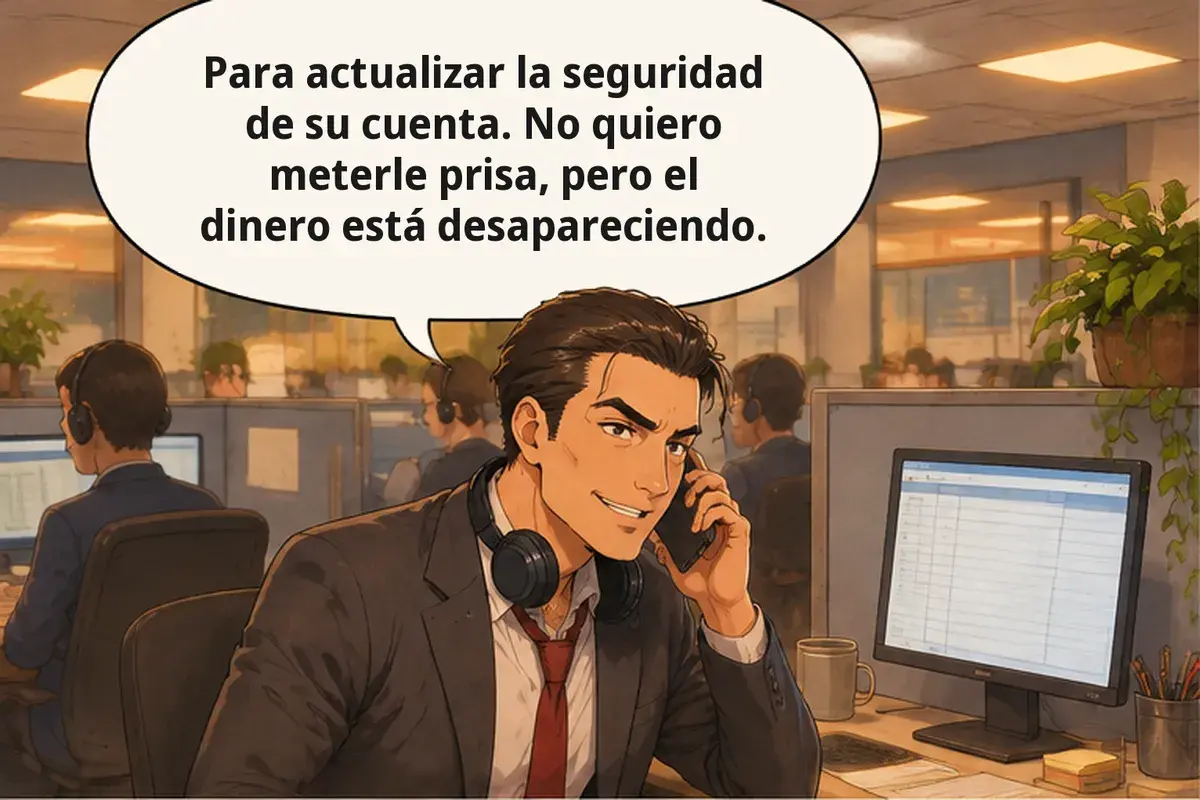
- Rodrigo
Para actualizar la seguridad de su cuenta. No quiero meterle prisa, pero el dinero está desapareciendo.
To update your account's security. I don't want to rush you, but the money is disappearing. (formal)
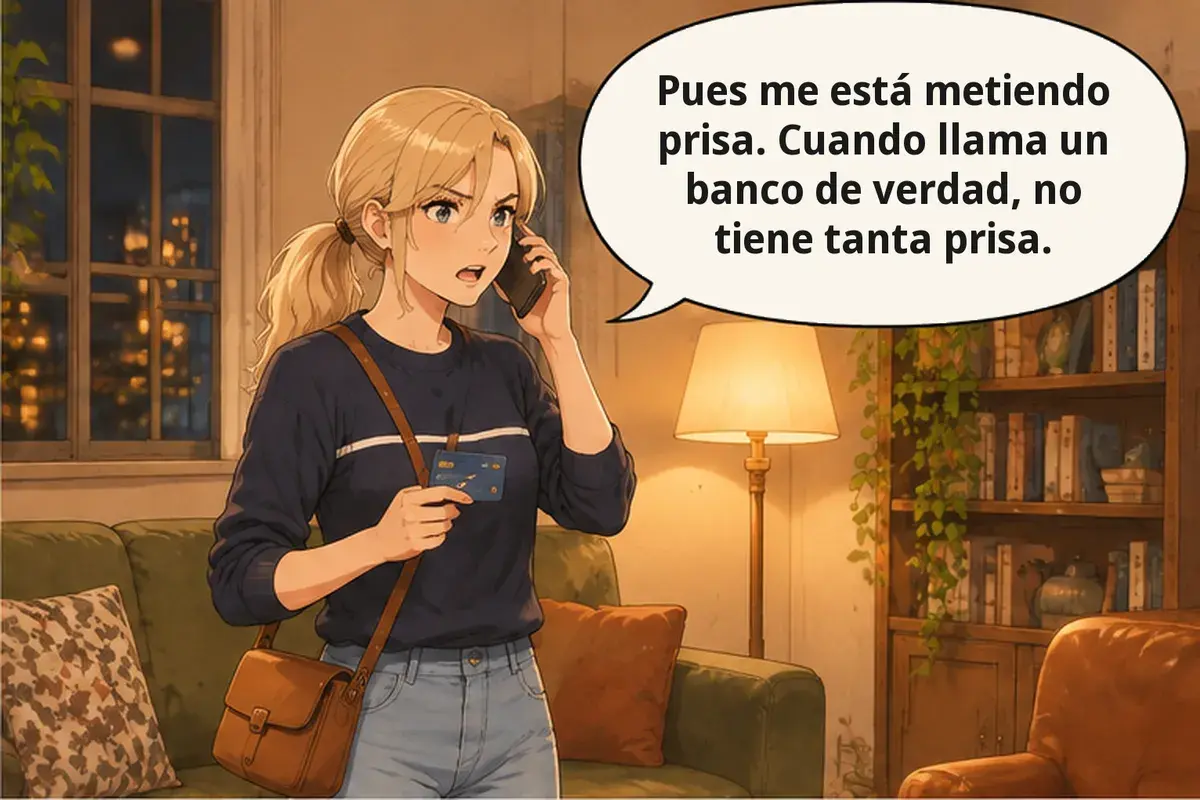
- Ana
Pues me está metiendo prisa. Cuando llama un banco de verdad, no tiene tanta prisa.
Well, you are rushing me. When a real bank calls, it isn't in such a hurry. (formal)
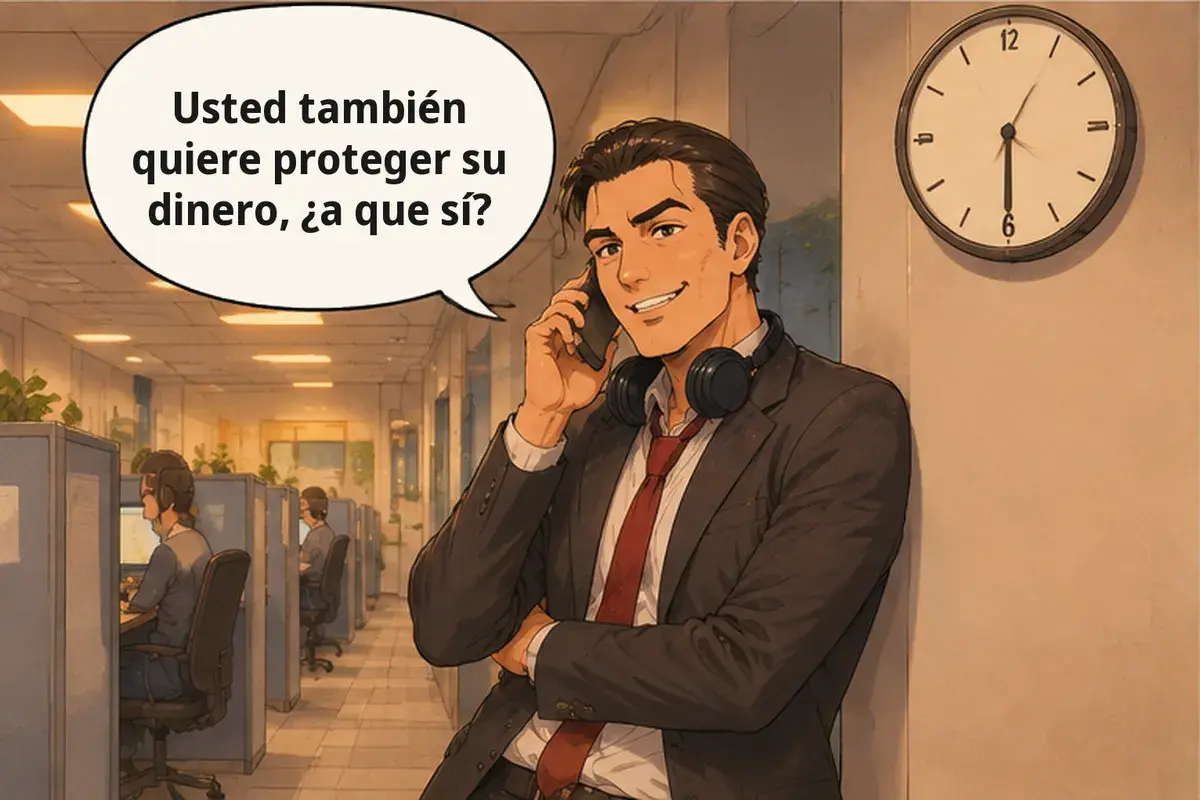
- Rodrigo
Usted también quiere proteger su dinero, ¿a que sí?
You want to protect your money too, right? (formal)
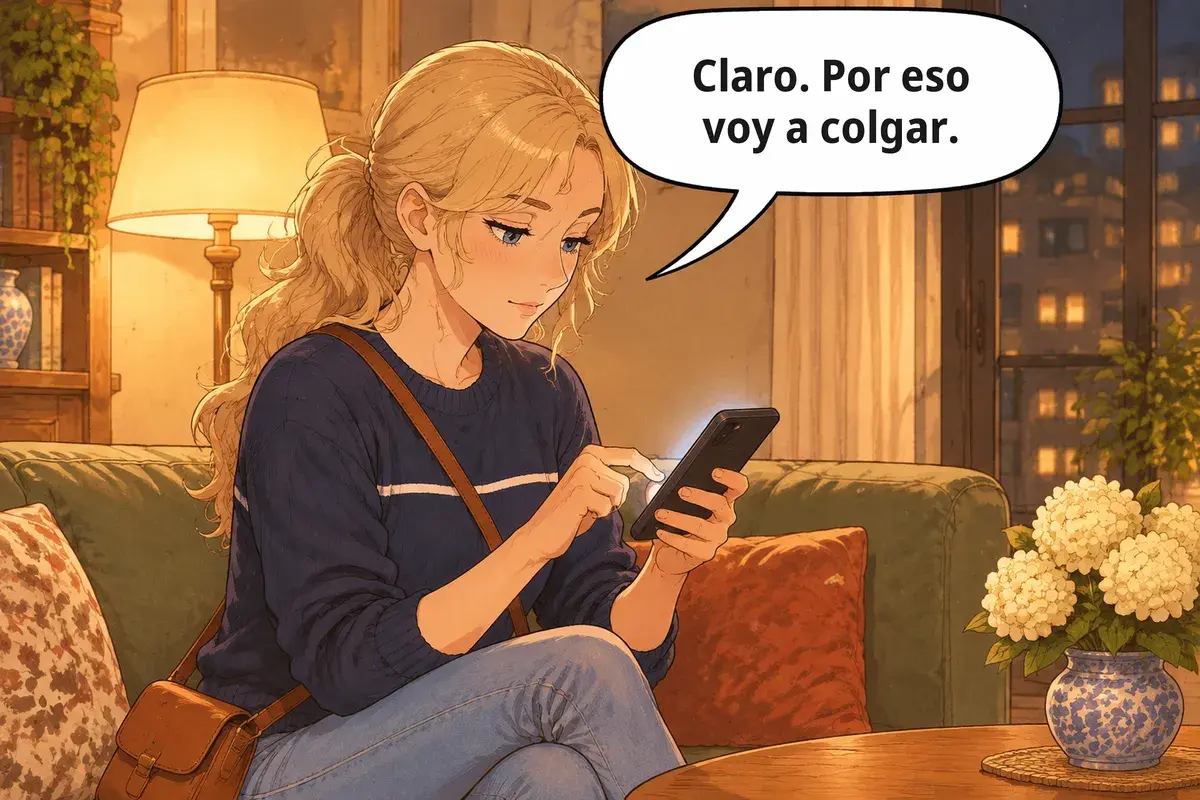
- Ana
Claro. Por eso voy a colgar.
Of course. That's why I'm going to hang up.
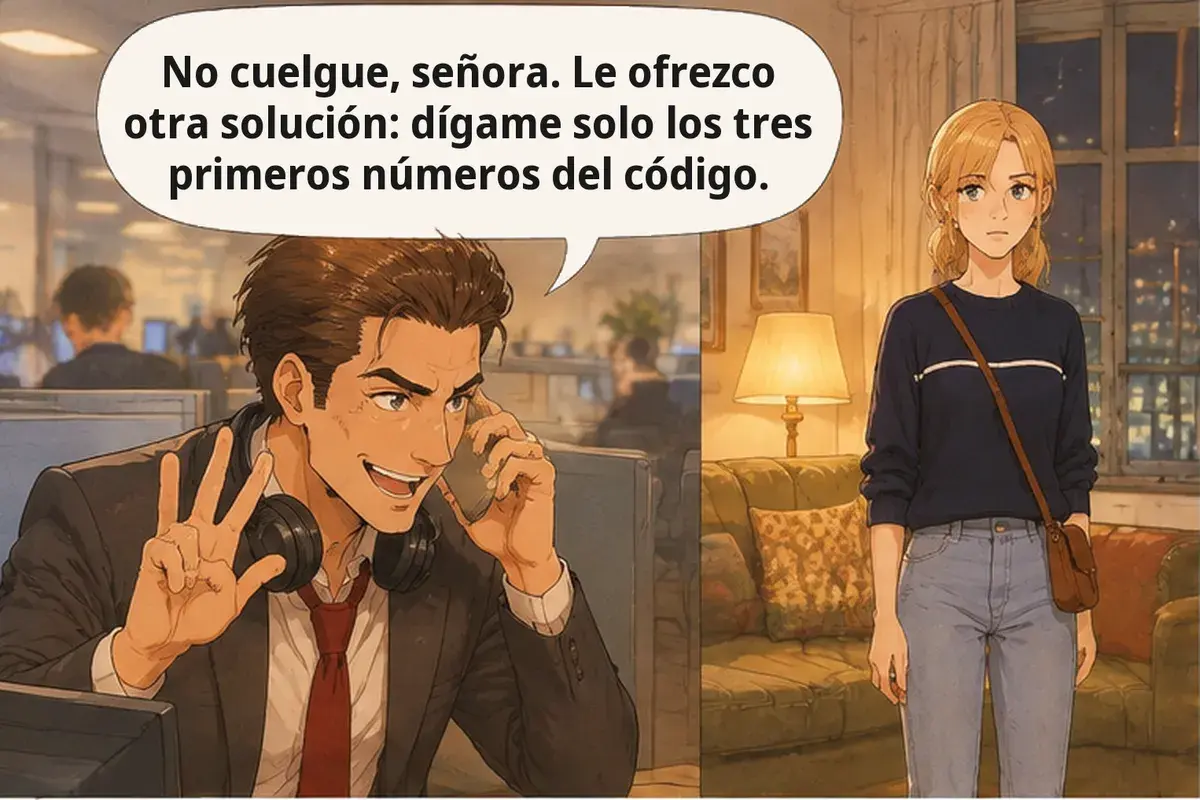
- Rodrigo
No cuelgue, señora. Le ofrezco otra solución: dígame solo los tres primeros números del código.
Don't hang up, ma'am. Let me offer you another solution: just tell me the first three numbers of the code. (formal)
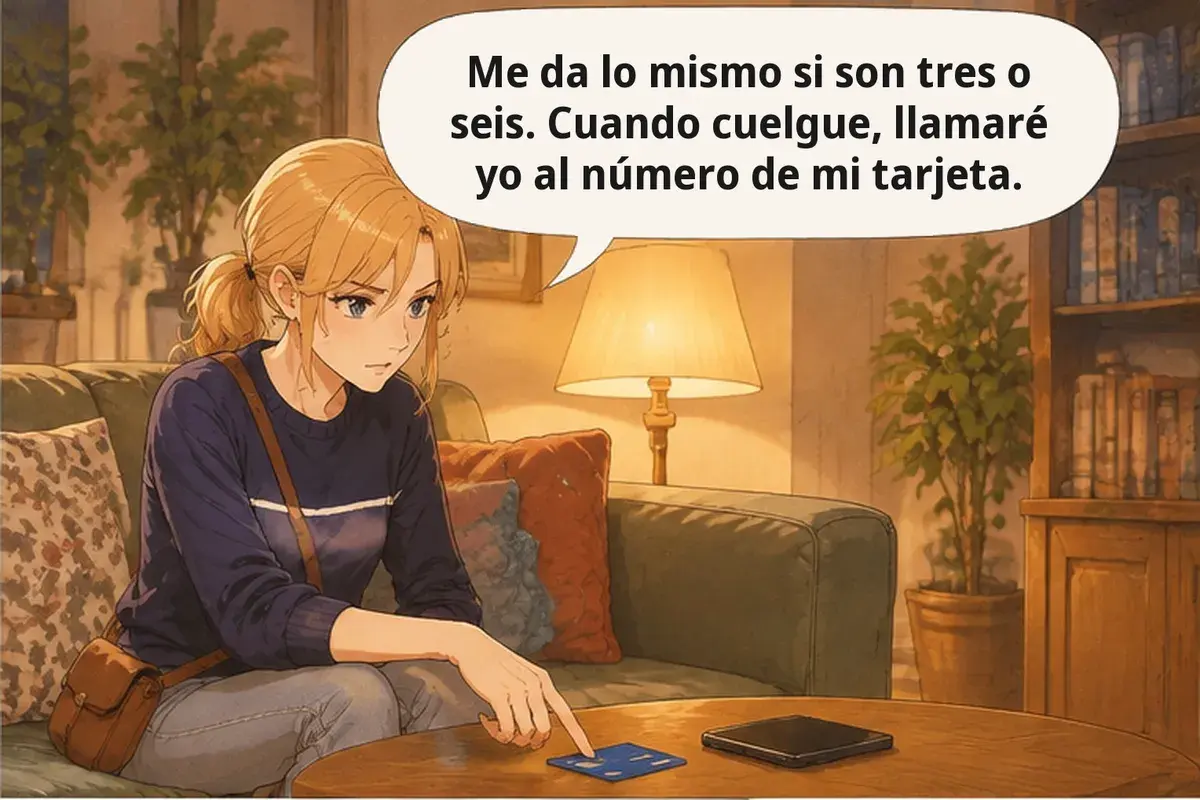
- Ana
Me da lo mismo si son tres o seis. Cuando cuelgue, llamaré yo al número de mi tarjeta.
I don't care if it's three or six. When I hang up, I'll call the number on my card myself.
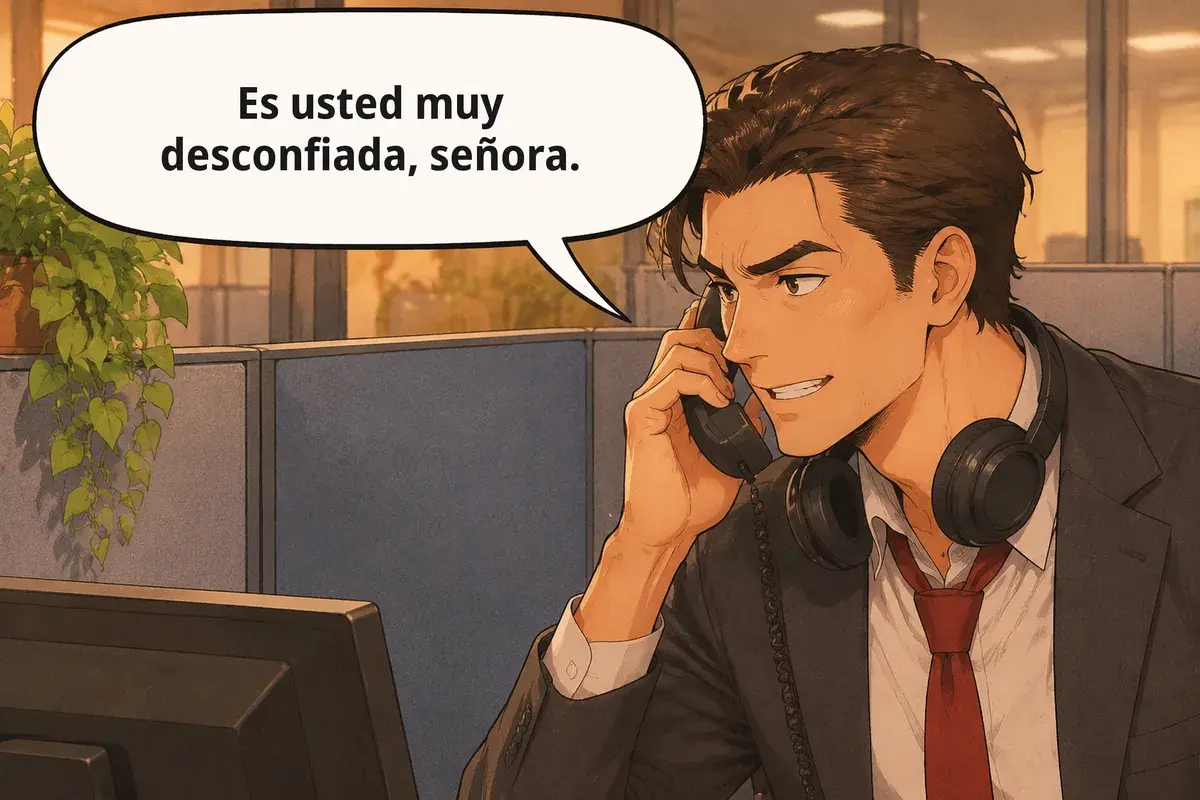
- Rodrigo
Es usted muy desconfiada, señora.
You're very distrustful, ma'am. (formal)
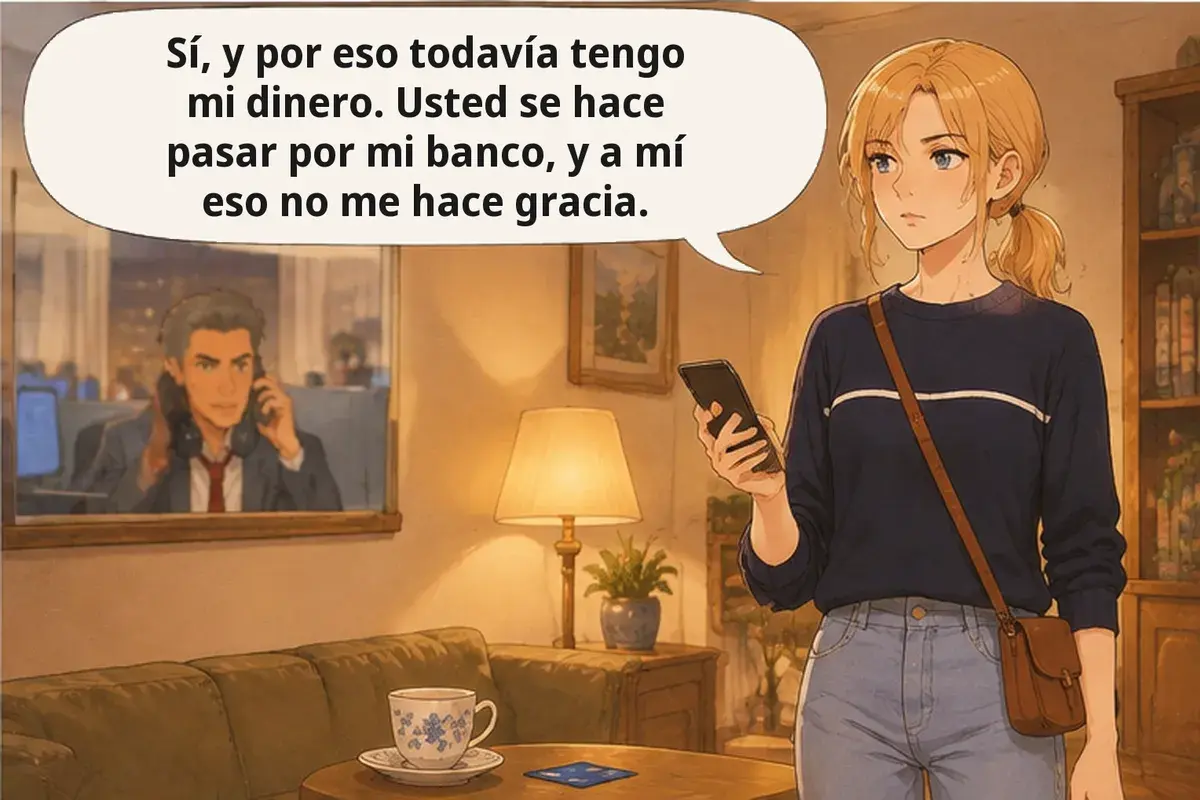
- Ana
Sí, y por eso todavía tengo mi dinero. Usted se hace pasar por mi banco, y a mí eso no me hace gracia.
Yes, and that's why I still have my money. You're pretending to be my bank, and I don't find that funny. (formal)
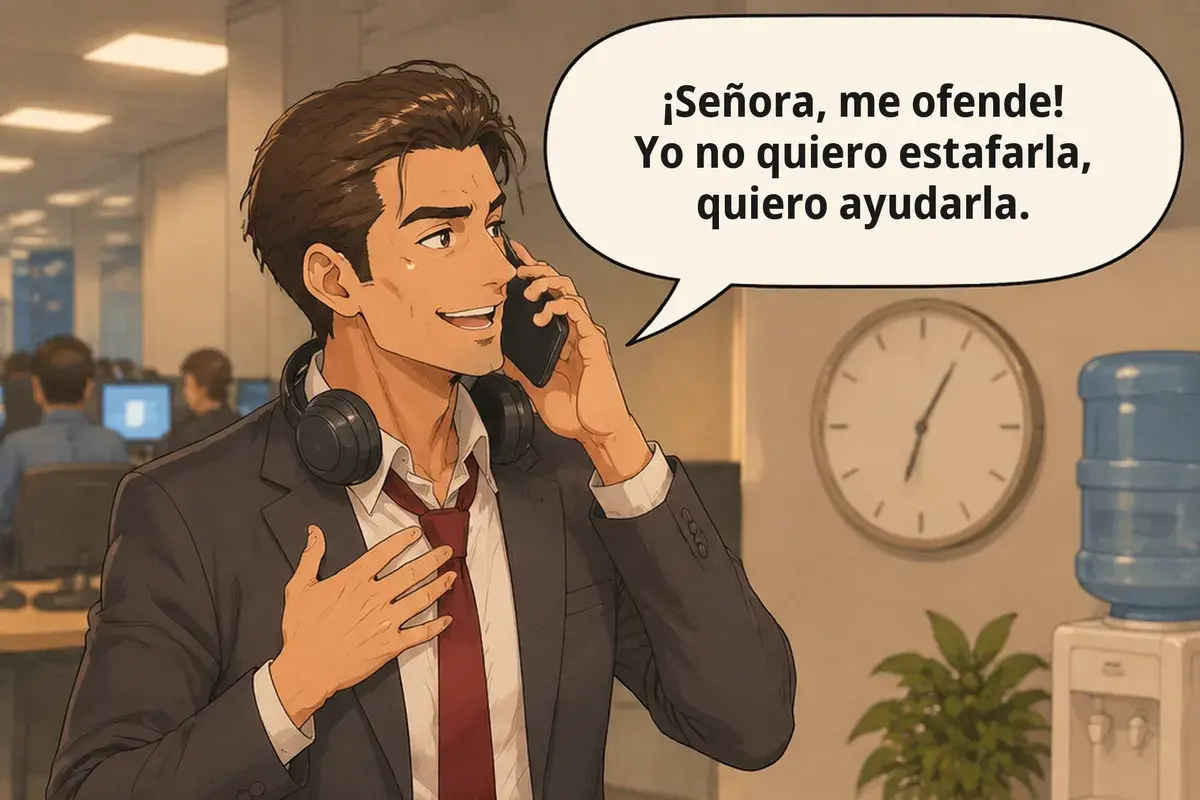
- Rodrigo
¡Señora, me ofende! Yo no quiero estafarla, quiero ayudarla.
Ma'am, you're offending me! I don't want to scam you, I want to help you. (formal)
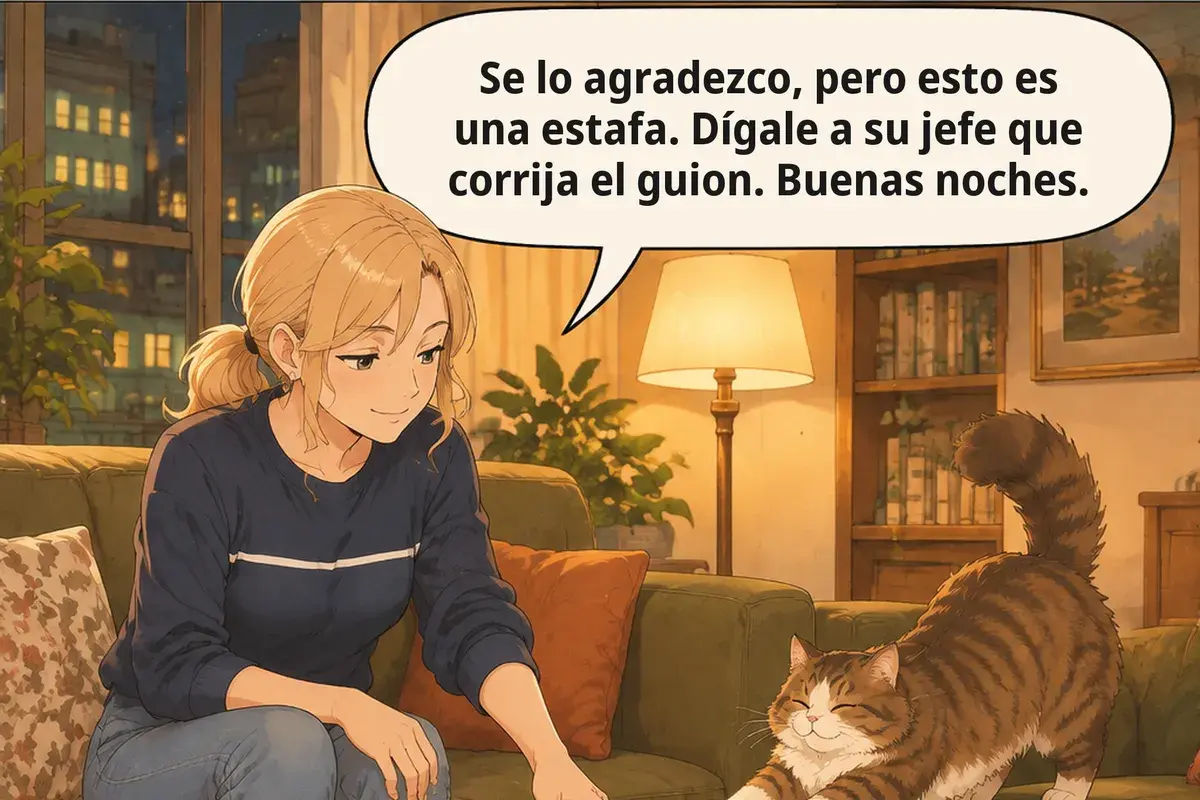
- Ana
Se lo agradezco, pero esto es una estafa. Dígale a su jefe que corrija el guion. Buenas noches.
I appreciate it, but this is a scam. Tell your boss to correct the script. Good night. (formal)
Grammar for this text
Cuando cuelgue, llamaré yo al número de mi tarjeta: after cuando about the future, Spanish uses the subjunctive, cuelgue (from colgar: o → ue, g → gu). English uses the present here: "when I hang up". The second half is the normal future, llamaré (unit 21).
No cuelgue and Nunca dé este código a nadie: negative commands for usted. They use the subjunctive, just like negative tú commands (unit 16). Dé comes from dar; the written accent tells it apart from the preposition de.
Dígamelo means "tell it to me": an usted command with two pronouns attached, me + lo (units 10 and 12). Dígale a su jefe que corrija el guion means "tell your boss to correct the script": after que comes the subjunctive (unit 18); corrija is from corregir (e → i, g → j).
No quiero meterle prisa: meter prisa means "to rush someone", and le is Ana, the person being rushed. Se nos hace tarde: "it's getting late, we're running out of time". No hay manera de bloquear la tarjeta: "there's no way to block the card". Me da lo mismo: "I don't care" (the same as me da igual).
A mí eso no me hace gracia: "I don't find that funny". Hacer gracia works like gustar, and the person is me. ¿A que sí?: "right?", and the speaker expects a yes. Me ofende: "you're offending me"; the subject (usted) isn't said.
Words and grammar of the unit: Spot a scammer.
Learn the words from the texts with flashcards
In the app, you can tap any word in a text to see its translation, forms and examples, and new words stick with flashcards. 15 minutes a day.
Start for freeEverything is open for free. No card needed to sign up.