

Spanish story with translation · A2 · 13 lines
La fiesta de Lucía Lucía's party
Comic · 13 panels

El lunes pasado llegó una invitación de Lucía: «Sábado, 13 de junio: celebro mi cumpleaños en casa».
Last Monday an invitation came from Lucía: "Saturday, June 13: I'm celebrating my birthday at home."

Pablo y yo compramos un regalo juntos. «¿Ya tienes disfraz? Es una fiesta de disfraces», me preguntó.
Pablo and I bought a present together. "Do you have a costume yet? It's a costume party," he asked me.

¡Qué sorpresa! Busqué en mi armario y encontré ropa negra.
What a surprise! I searched my closet and found black clothes.
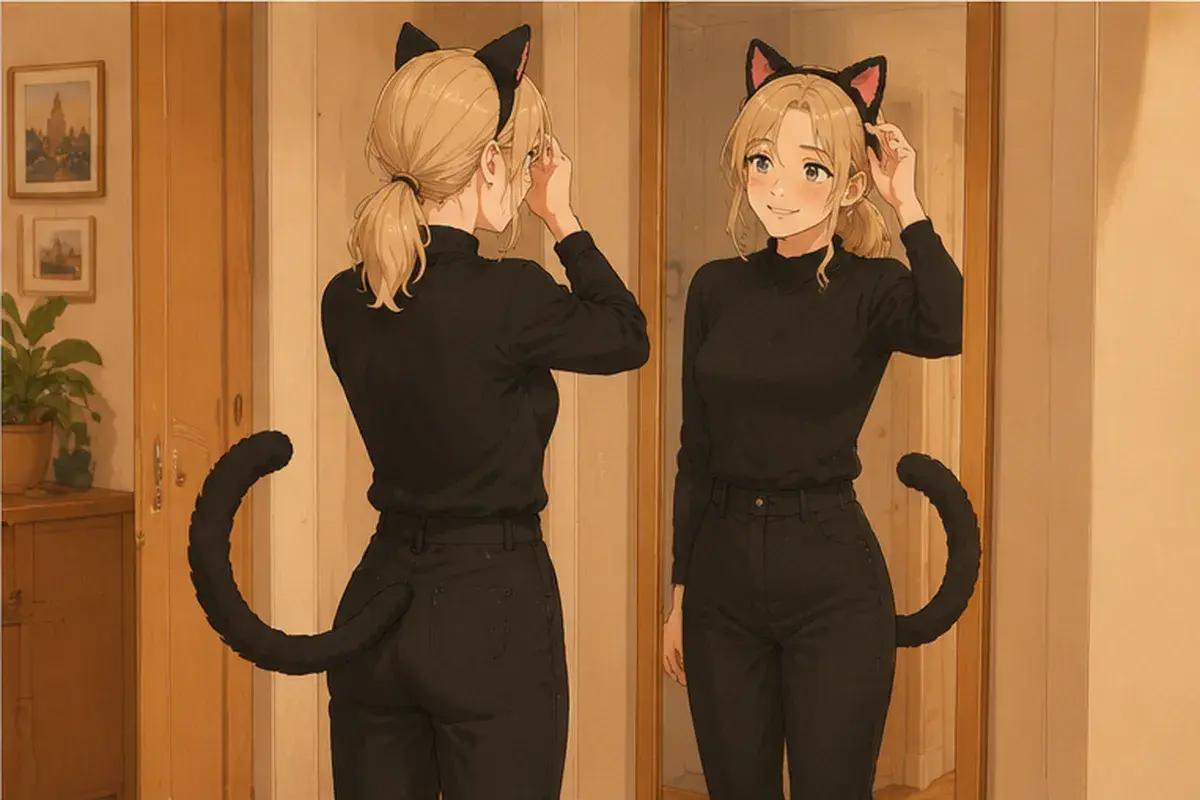
El sábado me disfracé de gato: ropa negra, orejas y una cola muy larga.
On Saturday I dressed up as a cat: black clothes, ears and a very long tail.
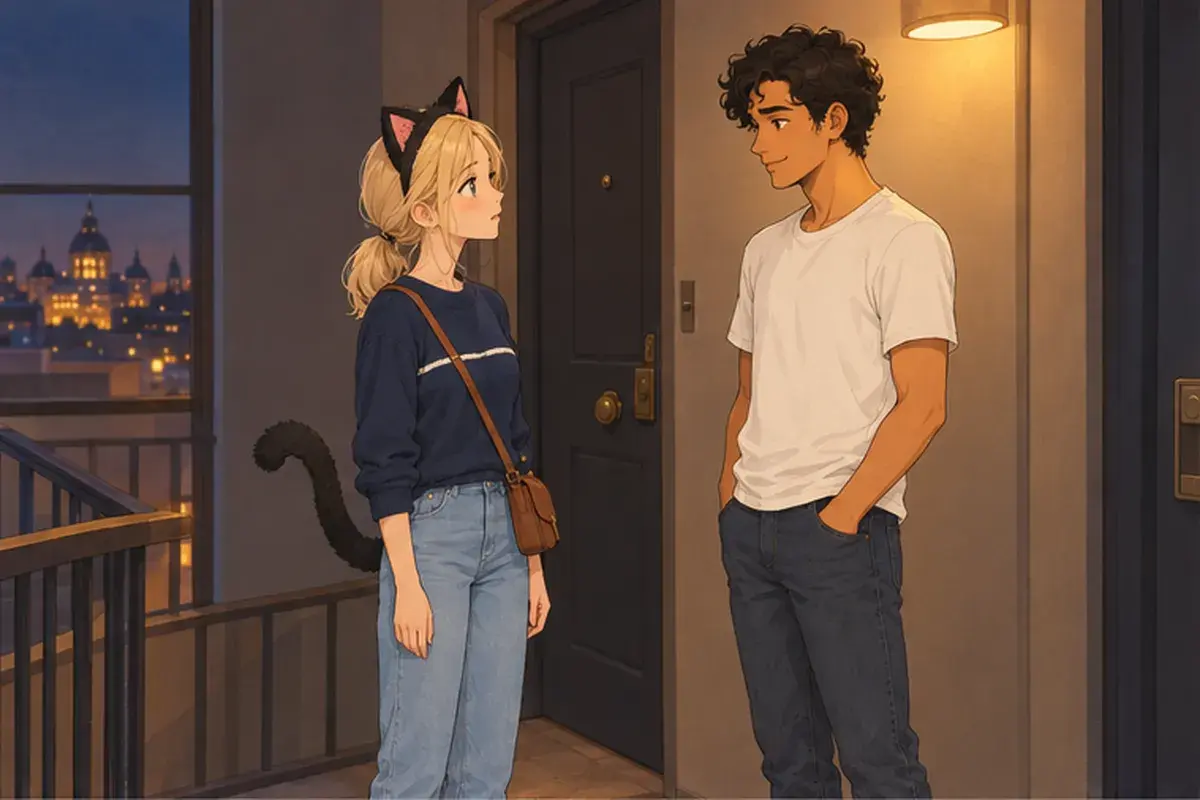
A las nueve me encontré con Pablo en la puerta de Lucía. Él, con camisa blanca y sin disfraz.
At nine I met Pablo at Lucía's door. Him: a white shirt and no costume.
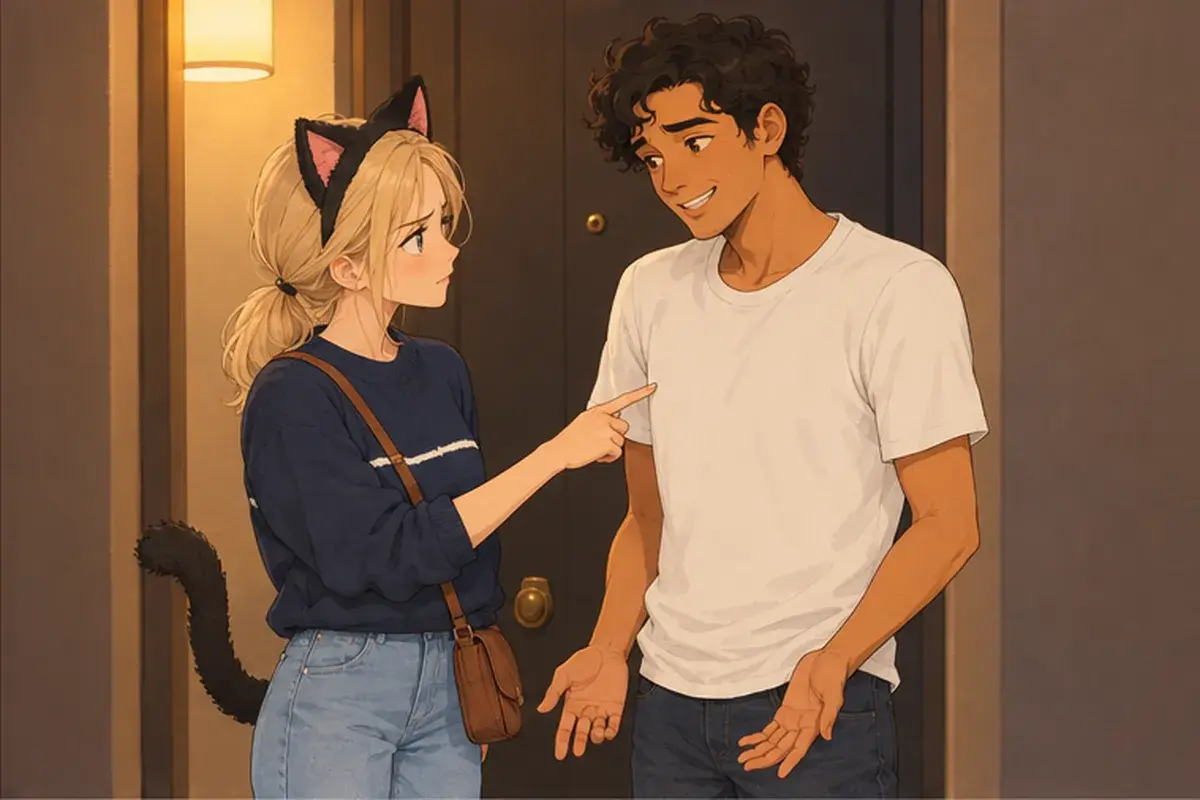
«¿Y tu disfraz?», pregunté. «Lo siento, Ana… Es una broma».
"And your costume?" I asked. "I'm sorry, Ana… It's a prank."

Entramos, y todos me miraron: nadie con disfraz, solo yo.
We went in, and everyone looked at me: nobody in a costume, only me.

Pero a Lucía le encantó: «¡Qué guay! ¡Un gato en mi cumpleaños!»
But Lucía loved it: "How cool! A cat at my birthday party!"

Cenamos, bailamos y Pablo contó chistes muy malos.
We had dinner, we danced, and Pablo told really bad jokes.

Luego llegó la tarta con las velas. «¡Lucía, tú eres de 1996, del siglo pasado!», bromeó Pablo.
Then the cake with the candles came. "Lucía, you're from 1996, from the last century!" Pablo joked.

Su hermana Inés nos contó una noticia: en enero nace su segundo hijo. Brindamos por Lucía y por el bebé.
Her sister Inés told us some news: her second child is due in January. We drank to Lucía and to the baby.
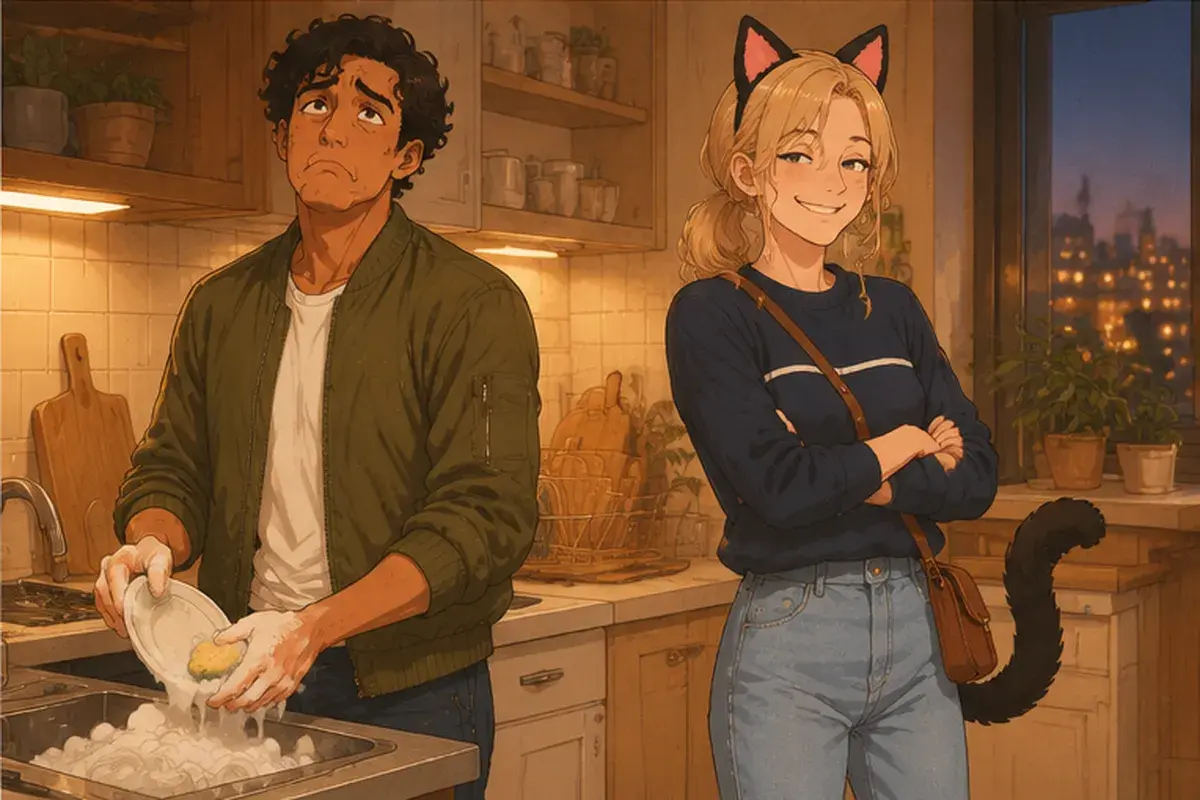
Al final Pablo, por la broma, fregó todos los platos. ¡Con mis orejas de gato!
In the end, because of the prank, Pablo washed all the dishes. Wearing my cat ears!
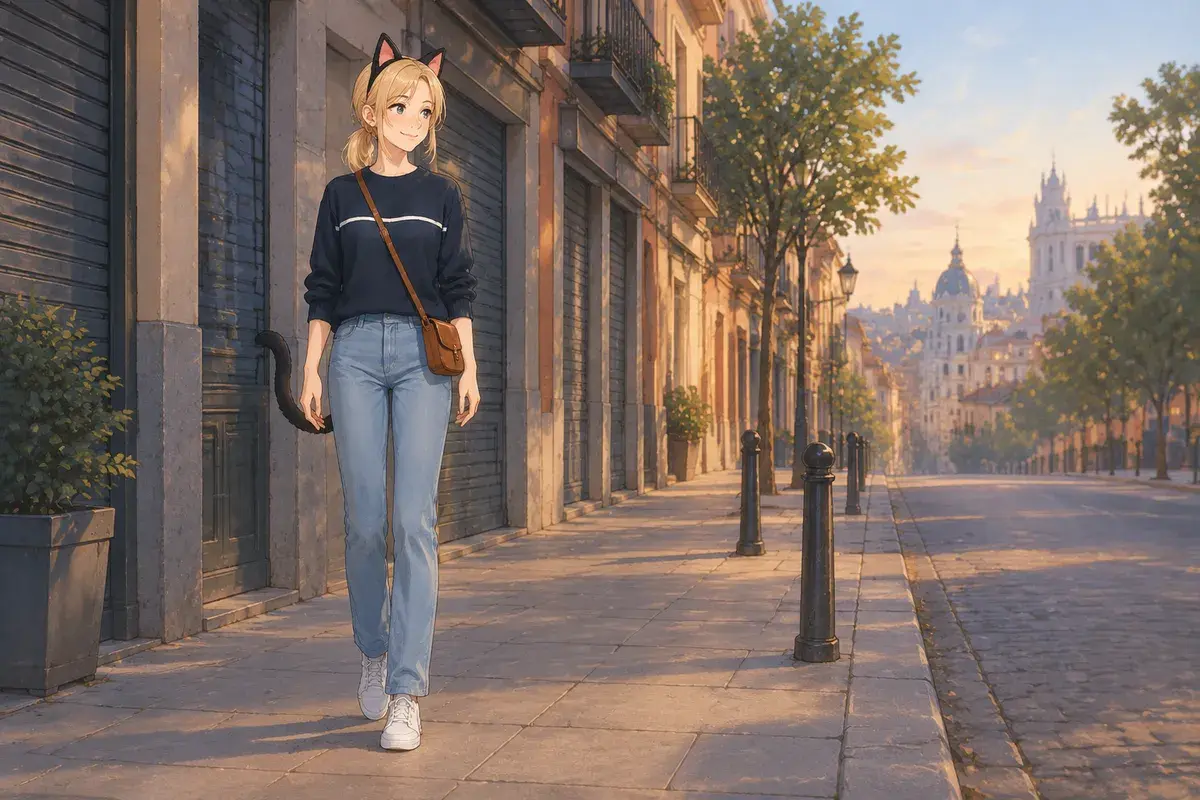
Llegué a casa de madrugada. Nunca me he reído tanto en una fiesta.
I got home in the early morning. I've never laughed so much at a party.
Grammar for this text
A story in the preterite. A story is a chain of finished actions: llegó — arrived, compramos — we bought, miraron — they looked, fregó — he washed. In the yo form some verbs change a letter: buscar — busqué, llegar — llegué, disfrazarse — me disfracé (z → c before e).
Me encontré con Pablo — "I met Pablo": encontrarse con. Without me the meaning is different: encontré ropa negra — "I found black clothes".
A Lucía le encantó — the same pattern as le gusta, just in the past: "Lucía loved it".
Nunca me he reído tanto — "I've never laughed so much". This isn't the new tense: it's he + past participle, the present perfect. With nunca it's about your whole life up to now (unit 3), just like in English.
En enero nace — the present tense about the future: "is due in January". The year 1996 is read mil novecientos noventa y seis. Cola here means "tail", not "line".
Words and grammar of the unit: Talk about your weekend.
Learn the words from the texts with flashcards
In the app, you can tap any word in a text to see its translation, forms and examples, and new words stick with flashcards. 15 minutes a day.
Start for freeEverything is open for free. No card needed to sign up.