
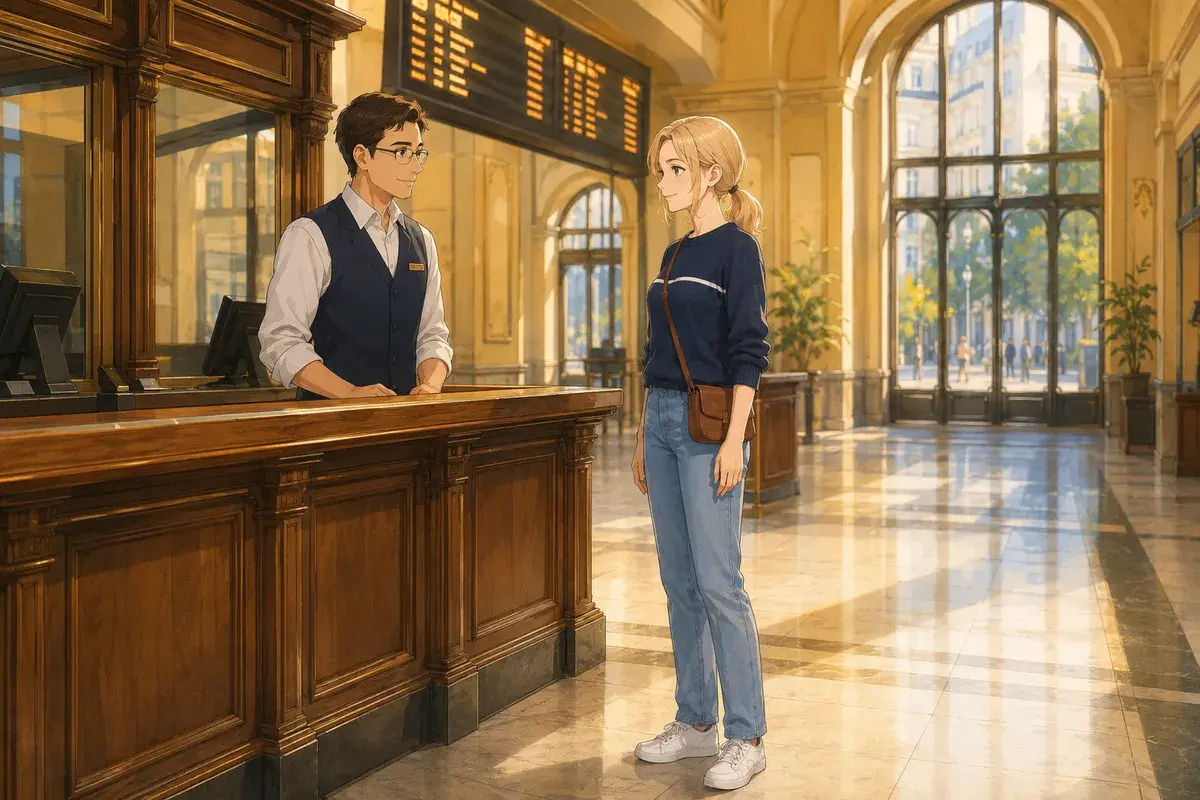
Spanish dialogue with translation · A2 · 16 lines
¿Transbordo? Perdón, no conozco esa palabra Transbordo? Sorry, I don't know that word
Comic · 16 panels
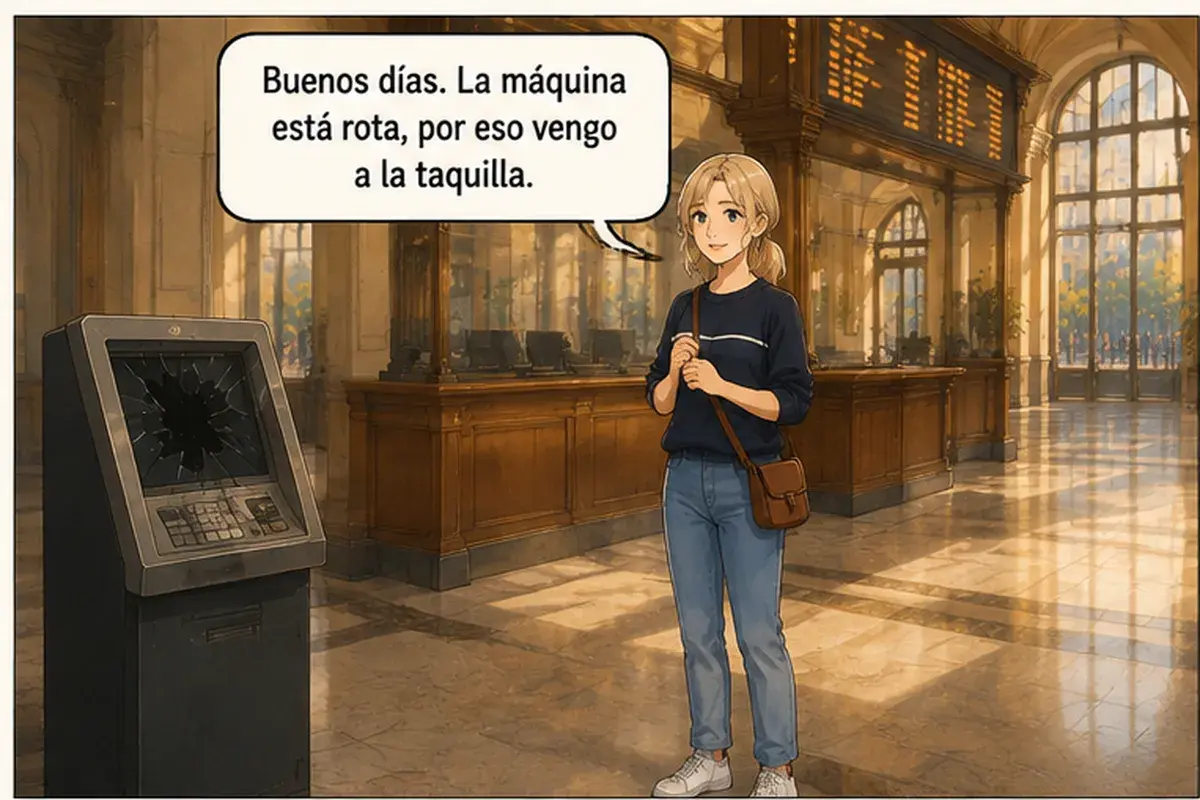
- Ana
Buenos días. La máquina está rota, por eso vengo a la taquilla.
Good morning. The machine is broken, so I've come to the ticket office.
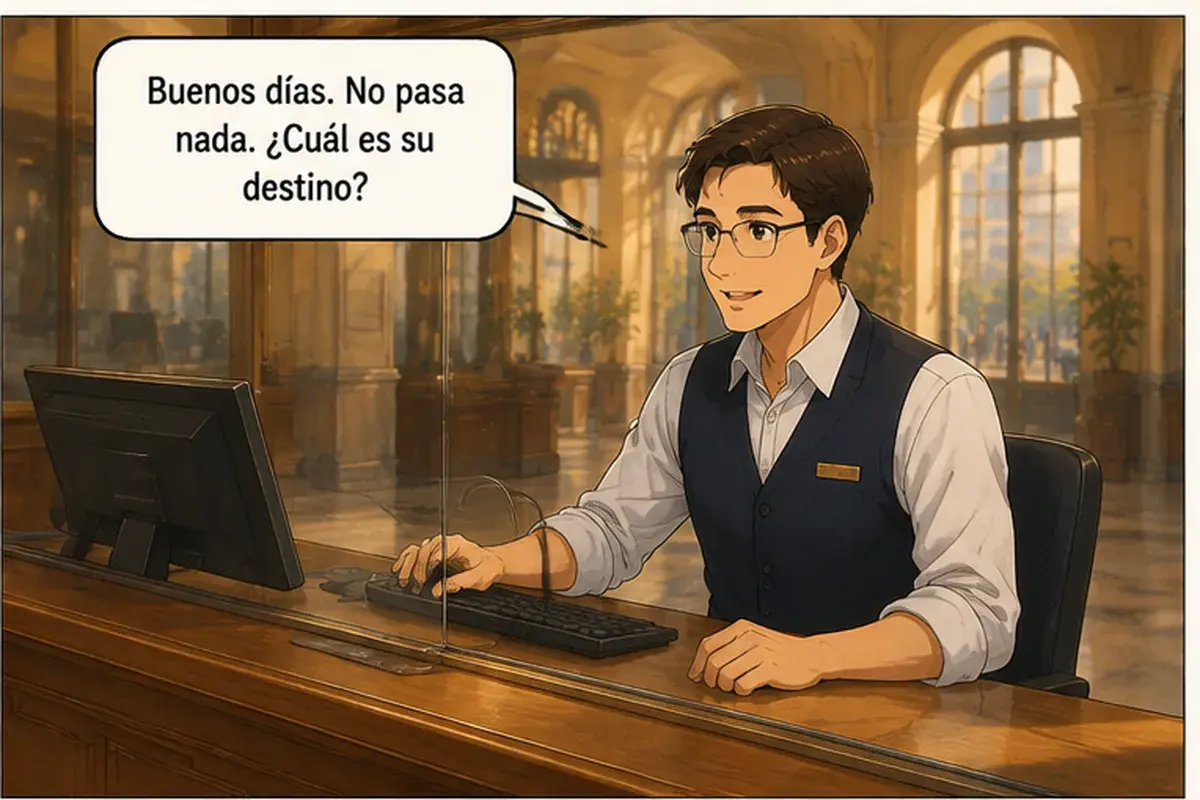
- Empleado
Buenos días. No pasa nada. ¿Cuál es su destino?
Good morning. No problem. What's your destination? (formal)
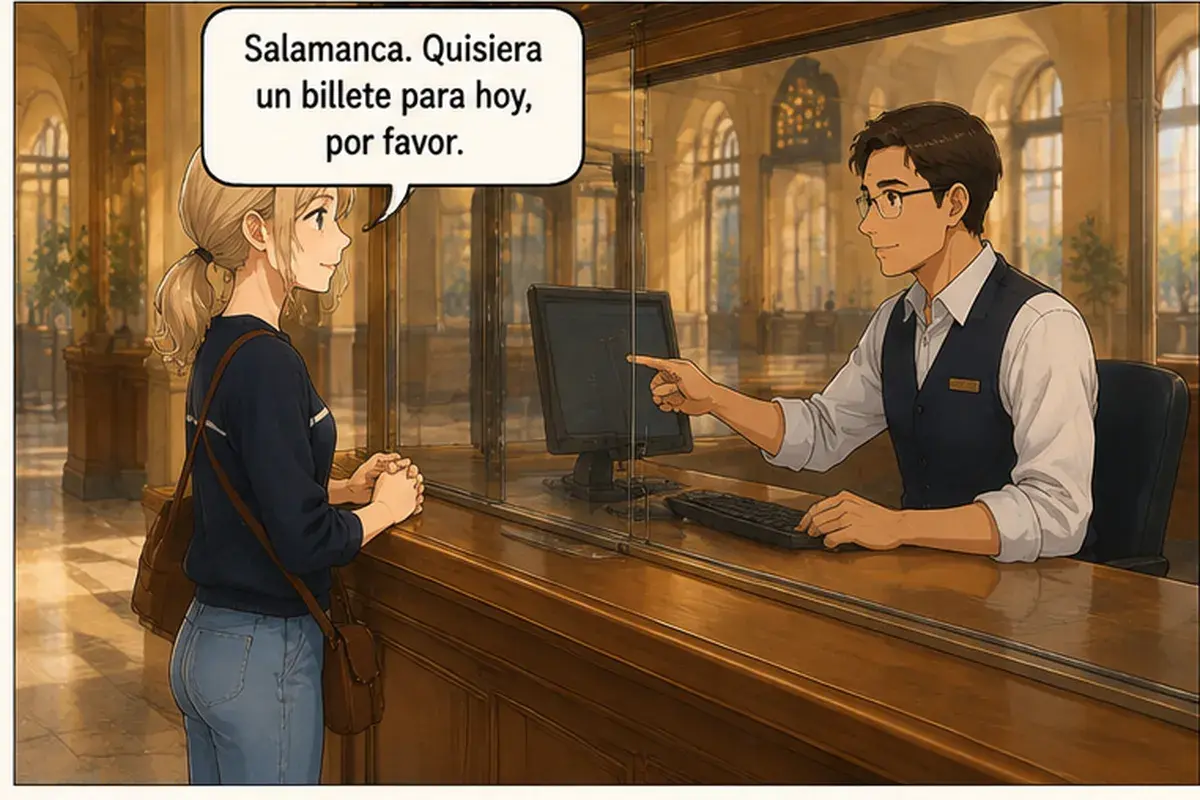
- Ana
Salamanca. Quisiera un billete para hoy, por favor.
Salamanca. I'd like a ticket for today, please.
- Empleado
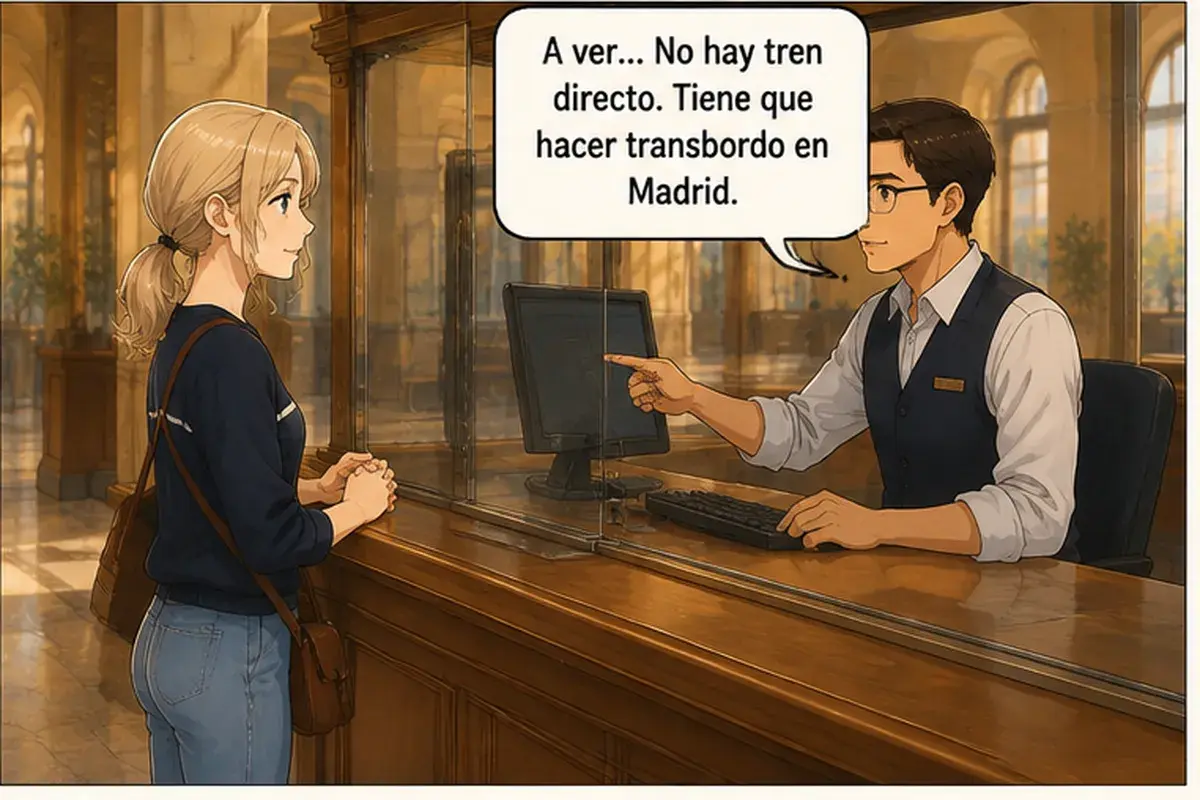
A ver... No hay tren directo. Tiene que hacer transbordo en Madrid.
Let's see... There's no direct train. You have to transfer in Madrid (formal).
- Ana
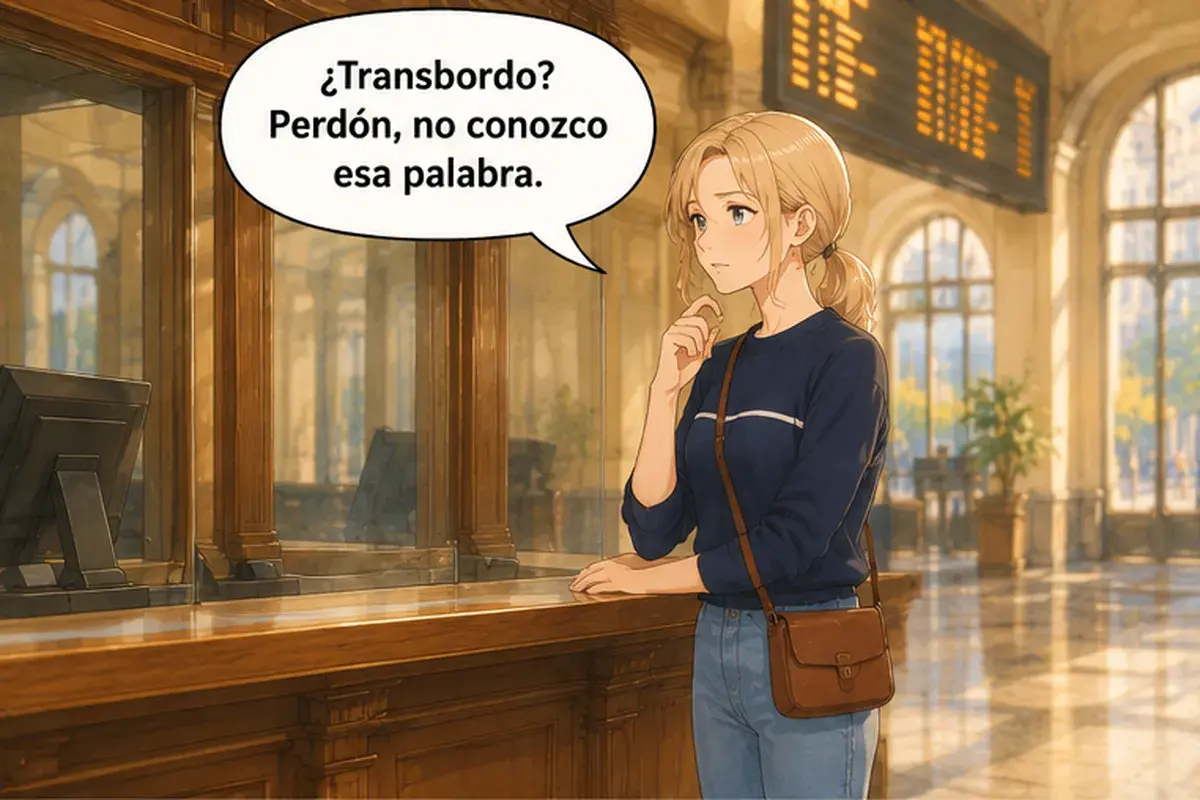
¿Transbordo? Perdón, no conozco esa palabra.
Transbordo? Sorry, I don't know that word.
- Empleado
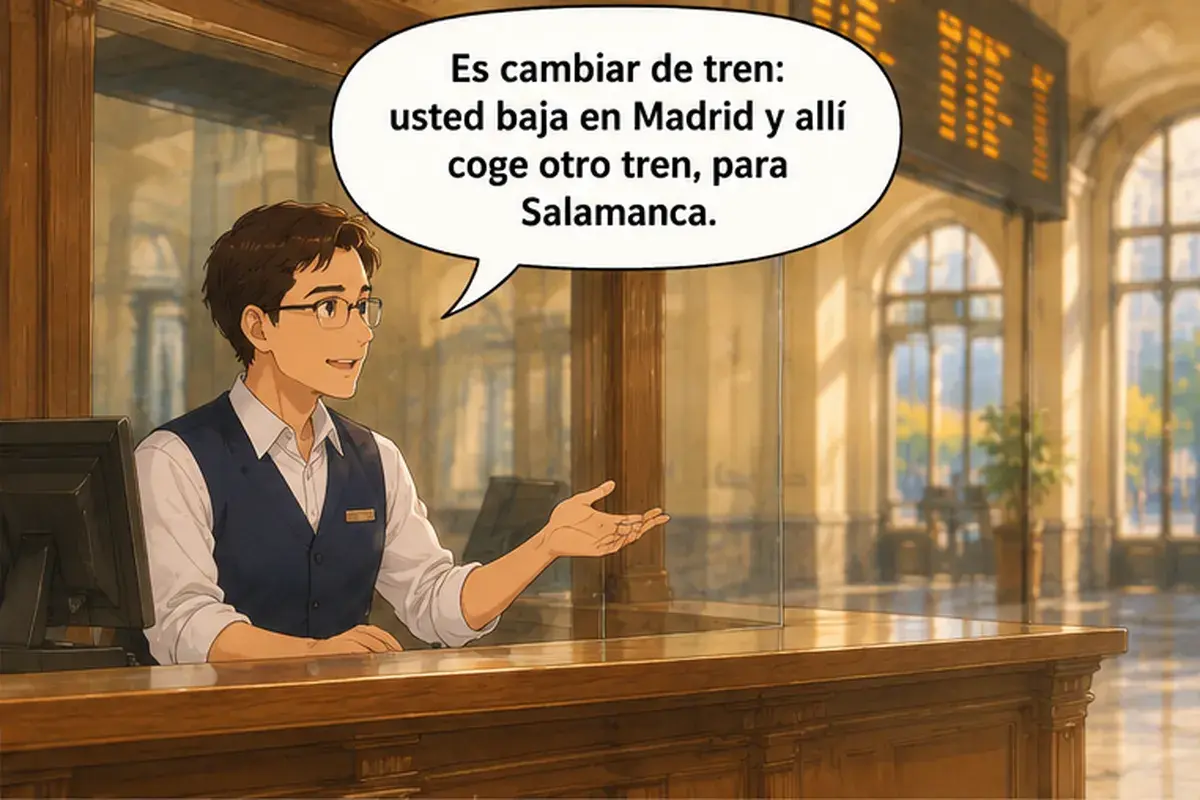
Es cambiar de tren: usted baja en Madrid y allí coge otro tren, para Salamanca.
It means changing trains: you get off in Madrid and take another train there, to Salamanca (formal).
- Ana
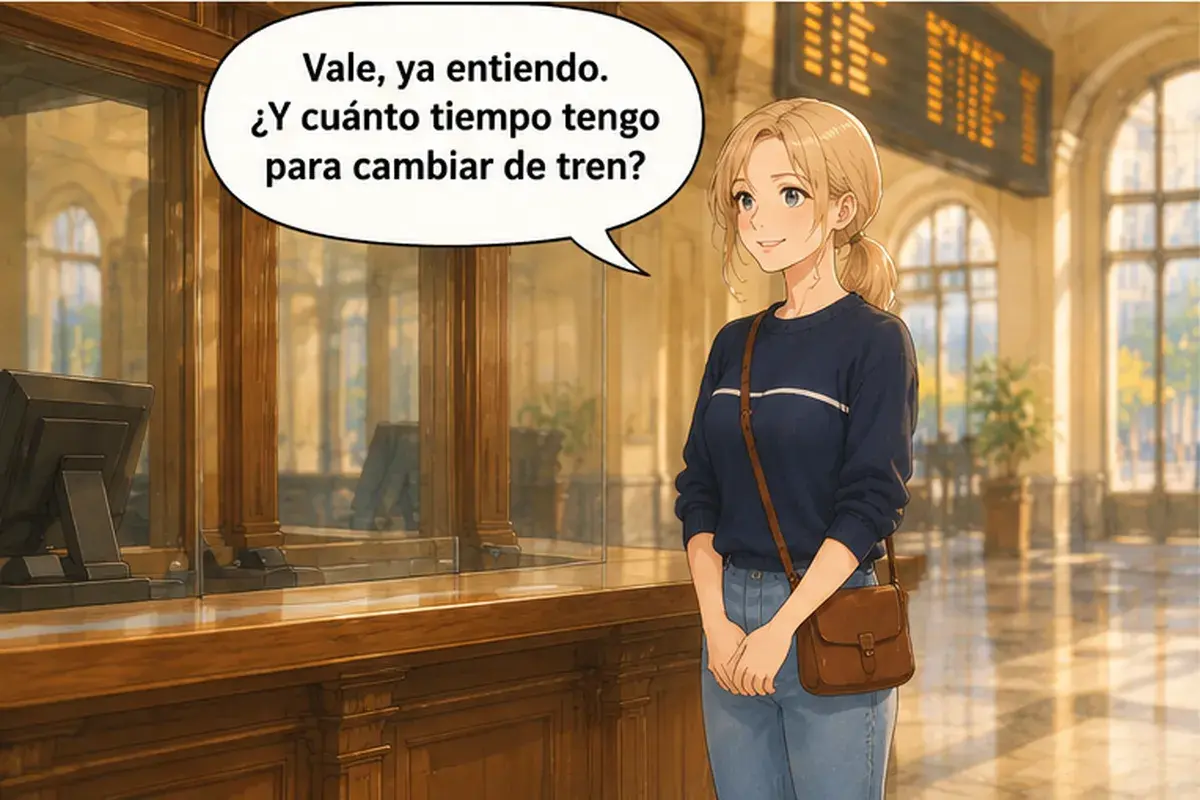
Vale, ya entiendo. ¿Y cuánto tiempo tengo para cambiar de tren?
OK, now I get it. And how much time do I have to change trains?
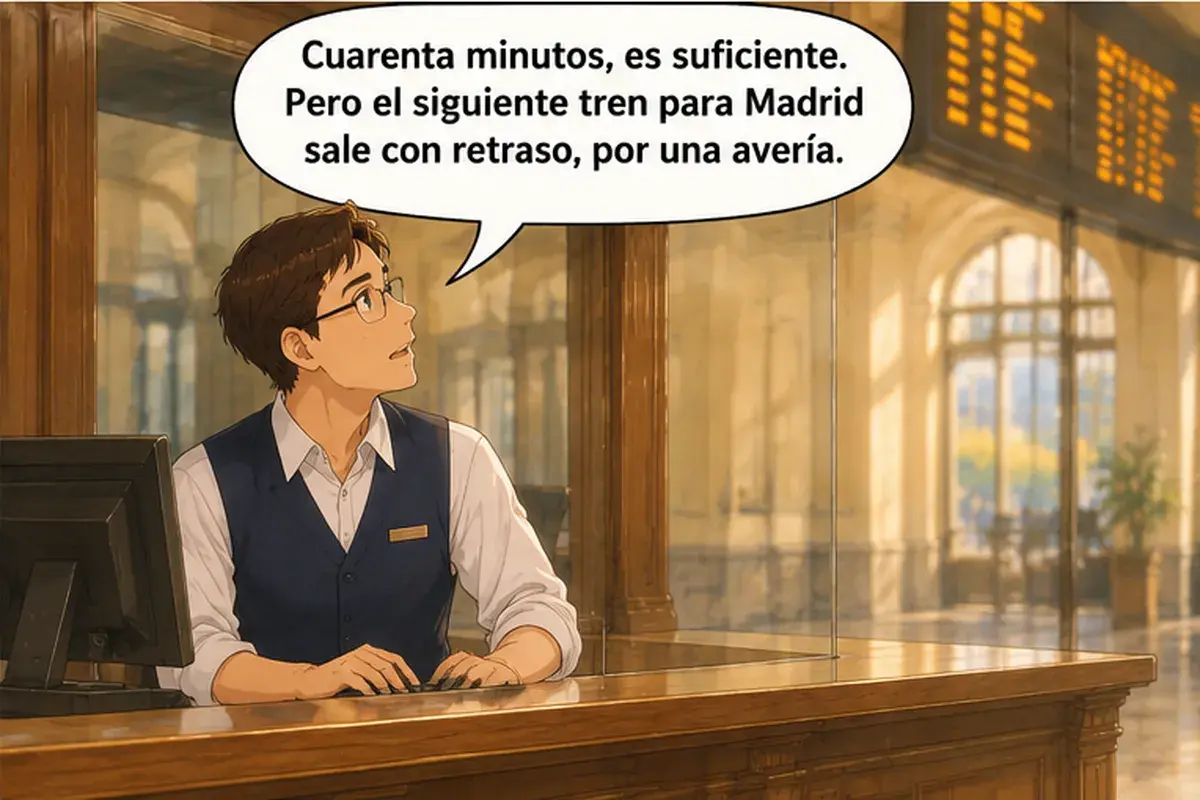
- Empleado
Cuarenta minutos, es suficiente. Pero el siguiente tren para Madrid sale con retraso, por una avería.
Forty minutes, that's enough. But the next train to Madrid is leaving late, because of a breakdown.
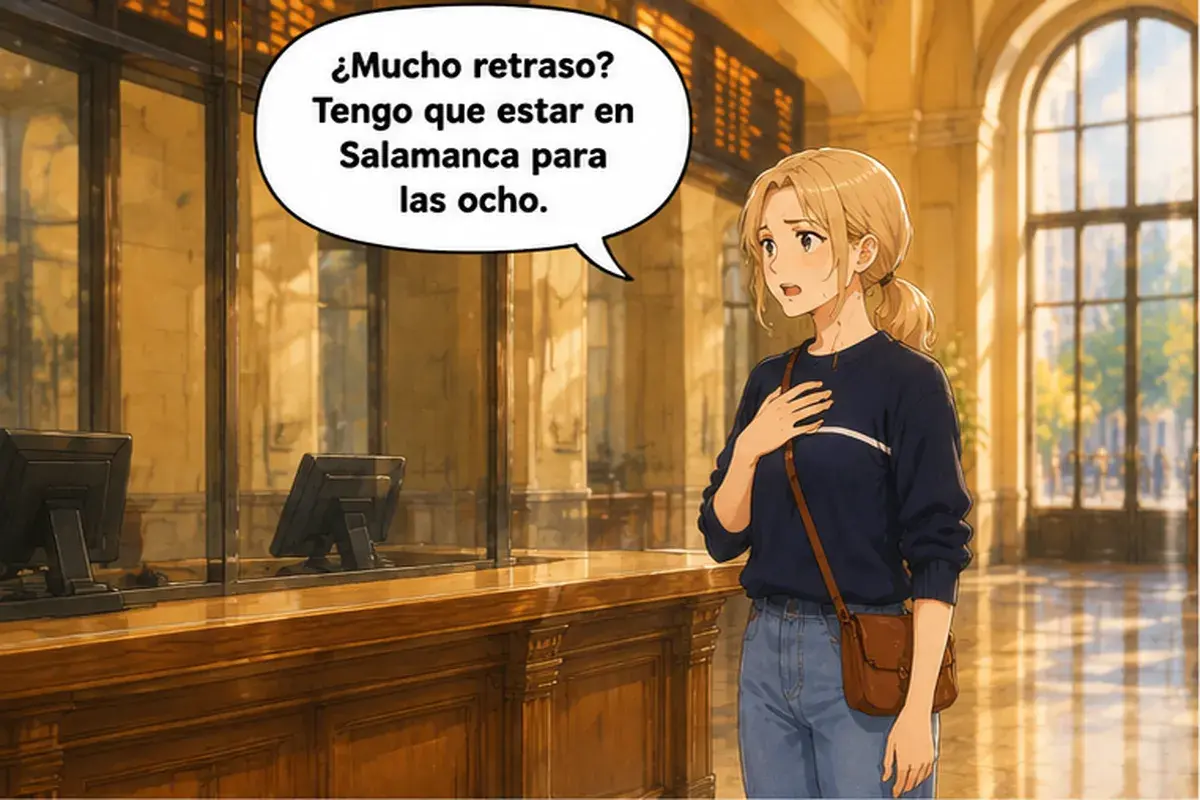
- Ana
¿Mucho retraso? Tengo que estar en Salamanca para las ocho.
A long delay? I have to be in Salamanca by eight.
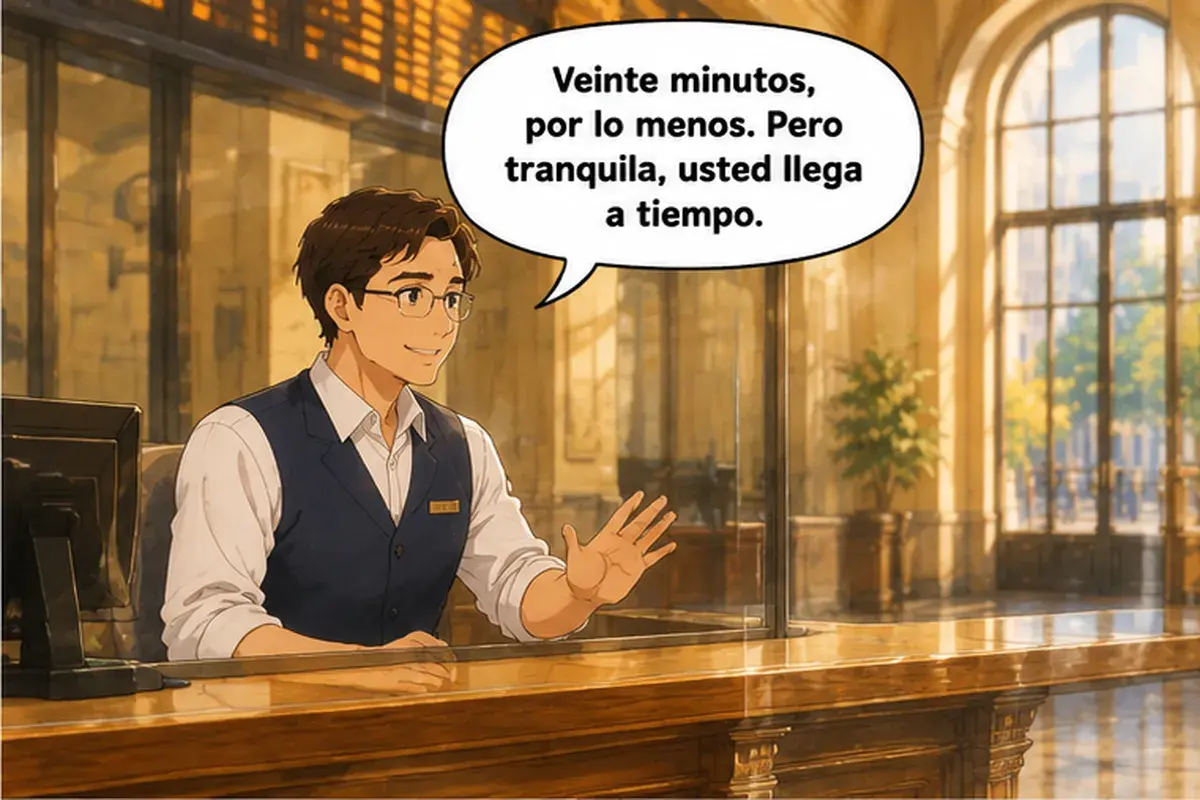
- Empleado
Veinte minutos, por lo menos. Pero tranquila, usted llega a tiempo.
Twenty minutes, at least. But don't worry, you'll get there on time (to a woman, formal).
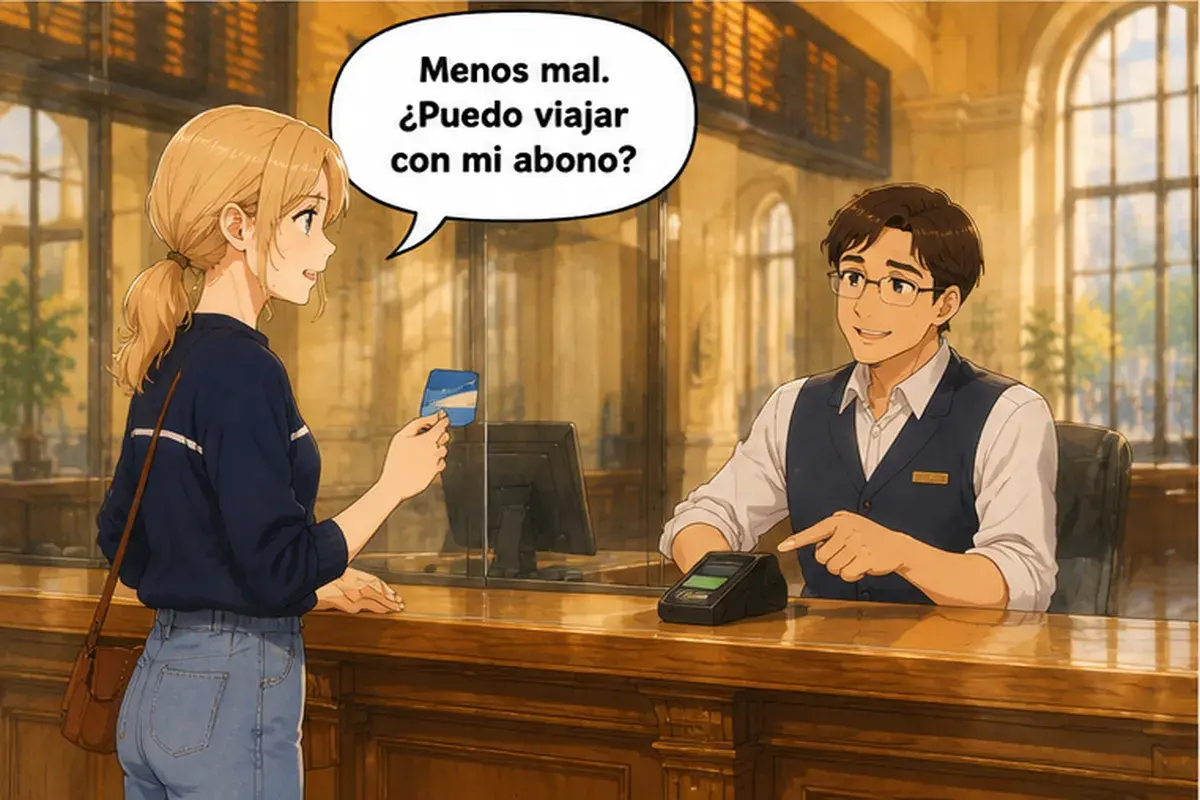
- Ana
Menos mal. ¿Puedo viajar con mi abono?
Thank goodness. Can I travel with my pass?
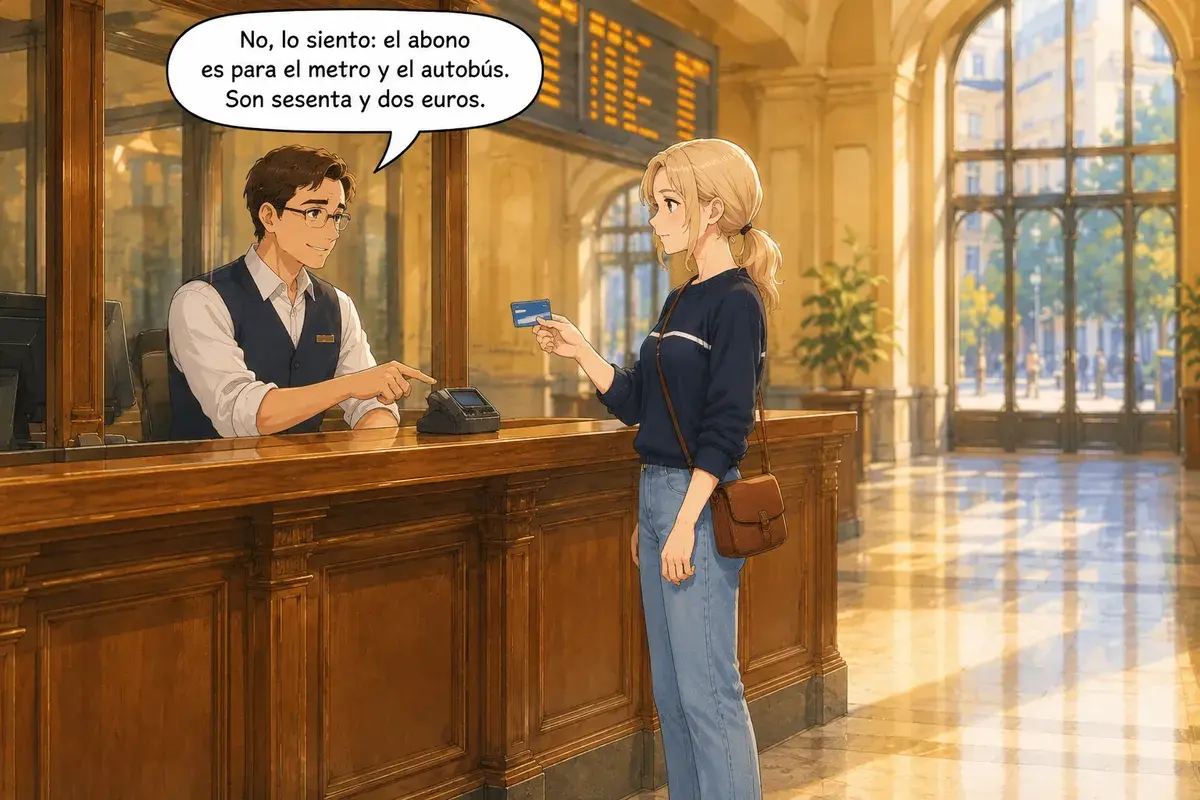
- Empleado
No, lo siento: el abono es para el metro y el autobús. Son sesenta y dos euros.
No, I'm sorry: the pass is for the metro and the bus. That's sixty-two euros.
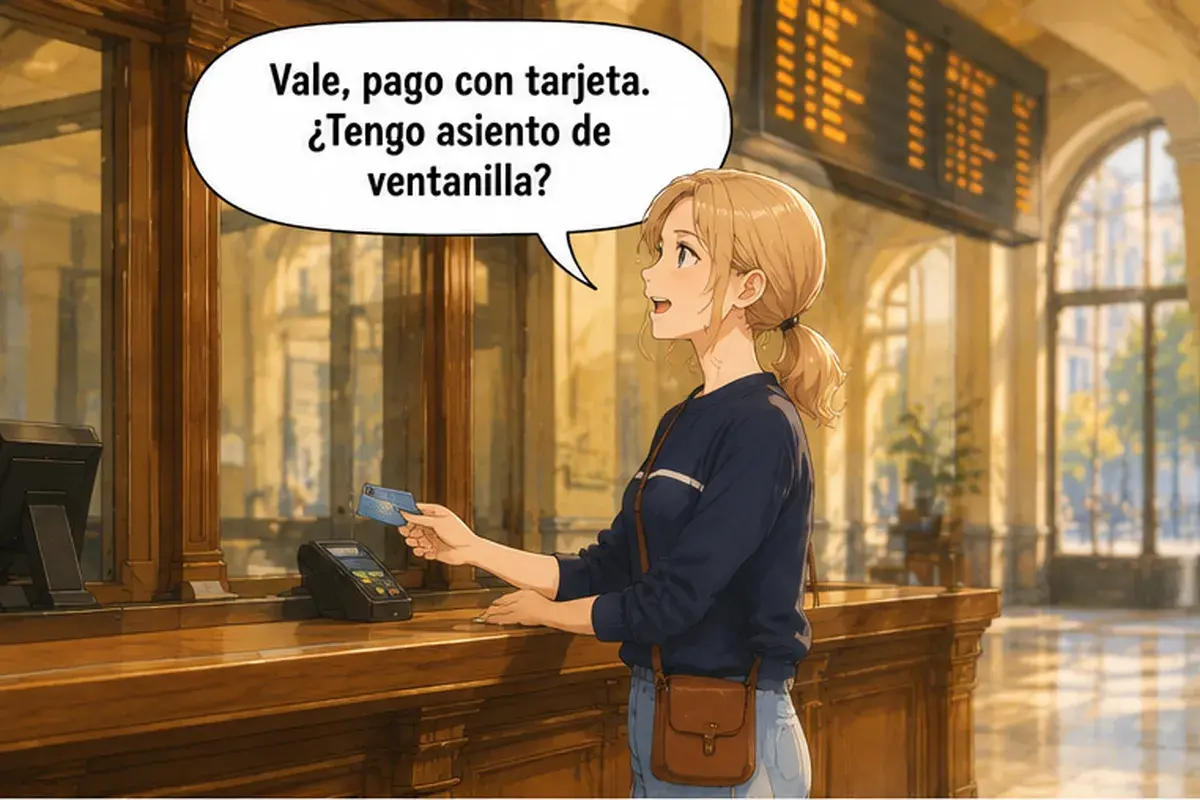
- Ana
Vale, pago con tarjeta. ¿Tengo asiento de ventanilla?
OK, I'll pay by card. Do I have a window seat?
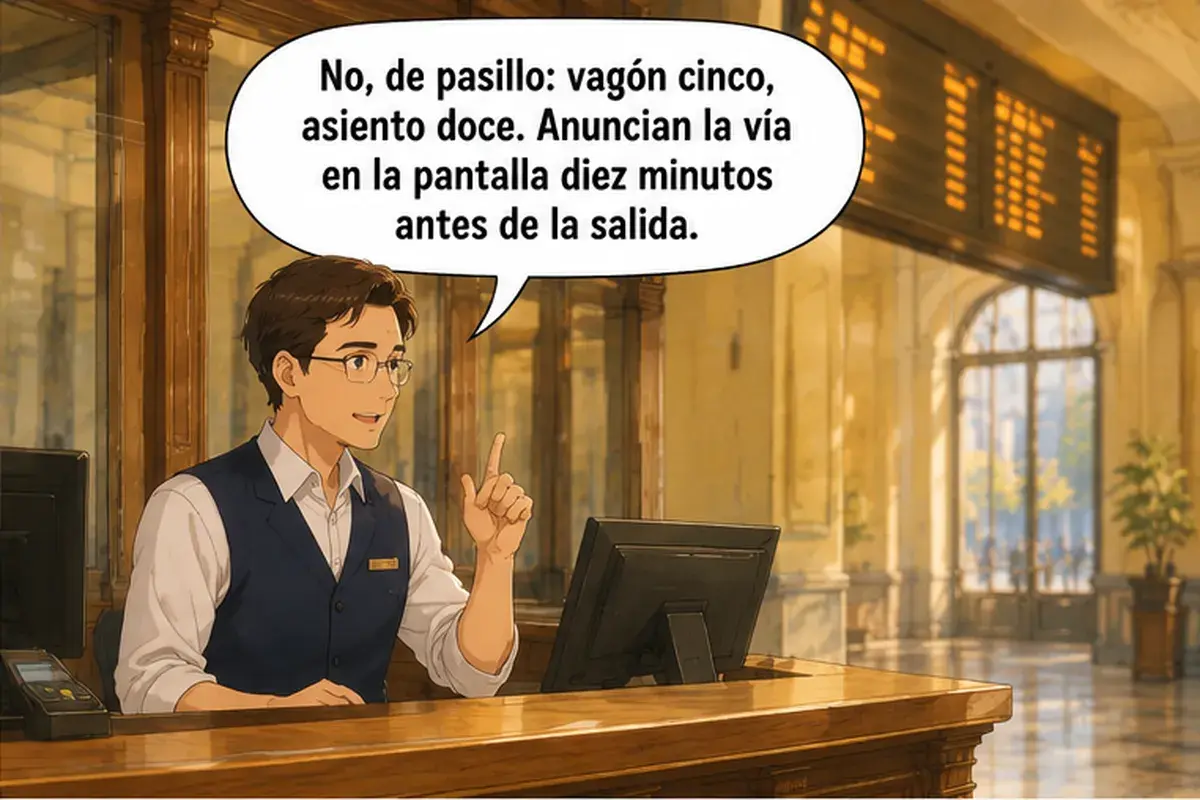
- Empleado
No, de pasillo: vagón cinco, asiento doce. Anuncian la vía en la pantalla diez minutos antes de la salida.
No, an aisle seat: car five, seat twelve. They announce the track on the screen ten minutes before departure.
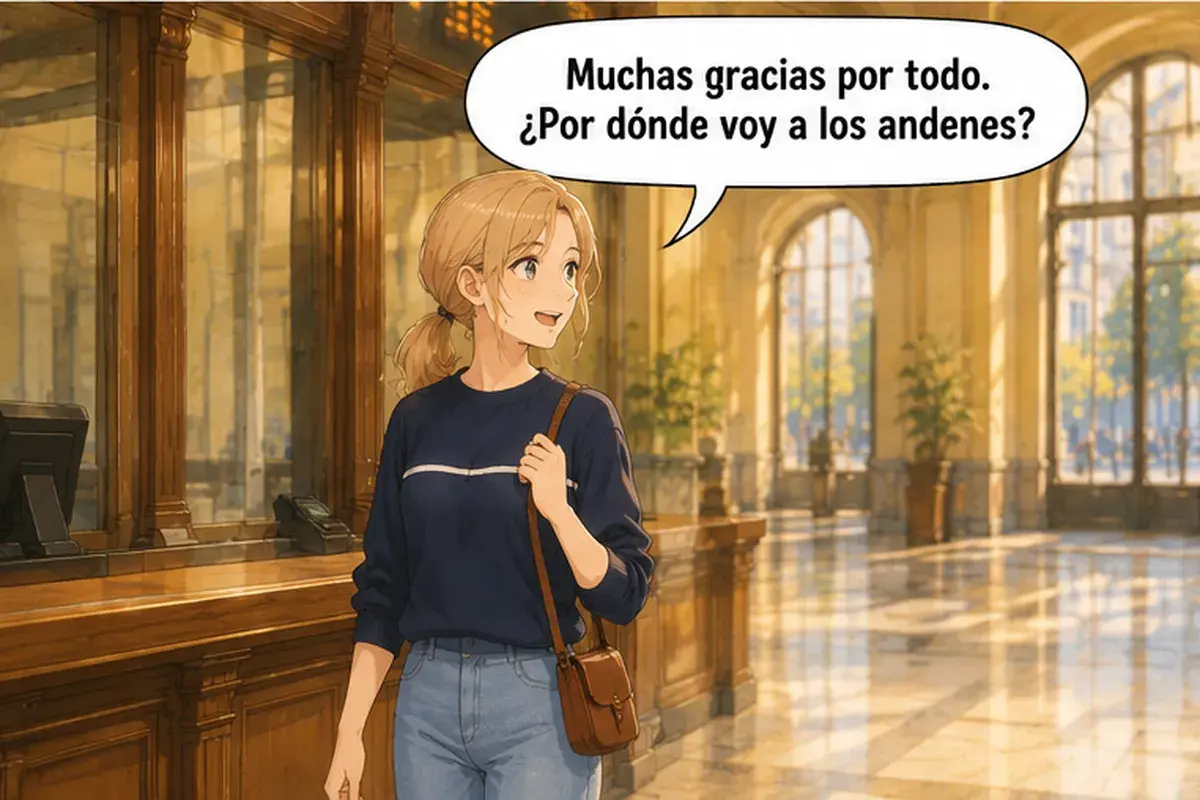
- Ana
Muchas gracias por todo. ¿Por dónde voy a los andenes?
Thank you very much for everything. Which way do I go to the platforms?
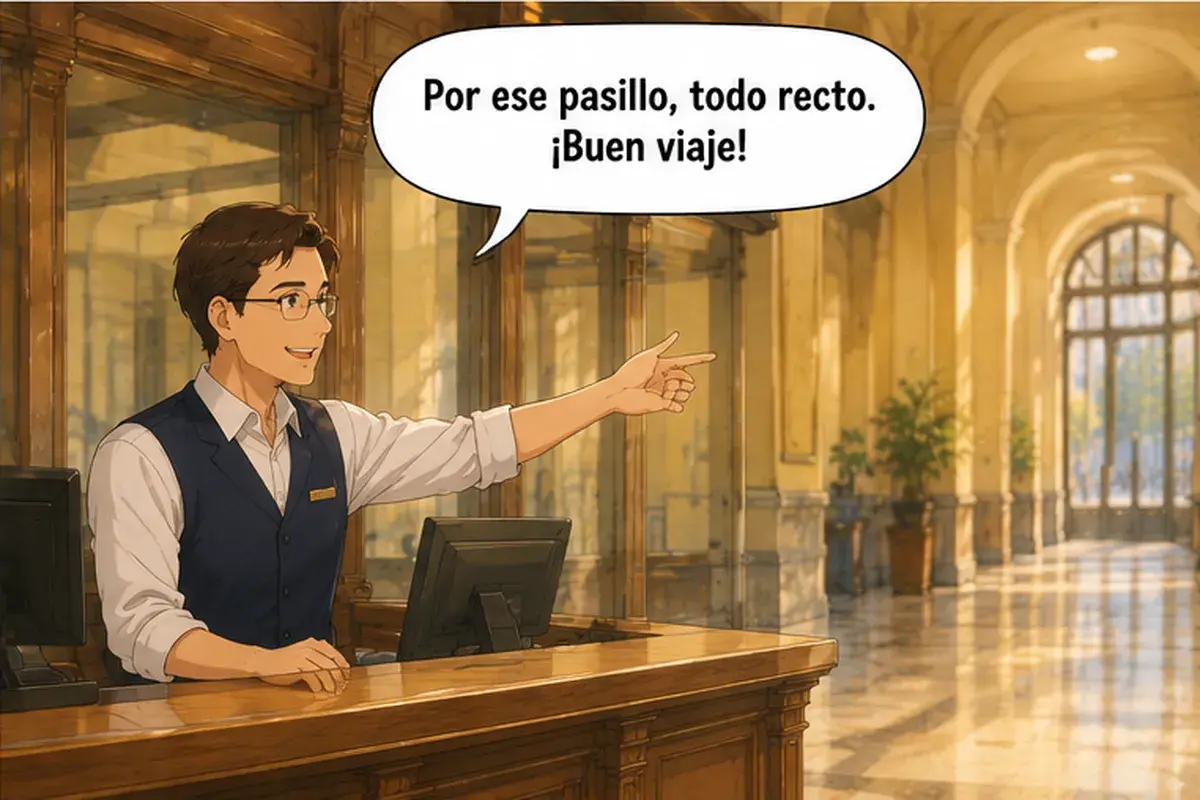
- Empleado
Por ese pasillo, todo recto. ¡Buen viaje!
Down that hallway, straight ahead. Have a good trip!
Grammar for this text
Para: purpose and end point. un billete para hoy — a ticket for which day; otro tren, para Salamanca — where to; para las ocho — by what time; para cambiar de tren — in order to change trains; el abono es para el metro — what it's for.
Por: cause and route. por una avería — because of a breakdown; gracias por todo — thanks for everything. ¿Por dónde voy…? — Por ese pasillo: which way? Down that hallway.
por eso (that's why), por lo menos (at least) and por favor (please) are set phrases: learn them as a whole.
Usted. The ticket clerk talks to Ana formally, with usted: the verb has the same form as for "he" or "she": usted baja, tiene que hacer transbordo, llega a tiempo.
A ver… — "let's see...": people say it when they're looking for something or checking something.
Quisiera — "I'd like": this is how Ana politely asks for a ticket, softer than quiero ("I want"). It's a form of querer (to want) that follows a rule you'll learn much later (the stem quis- and the ending -iera), so for now just learn it as a ready-made word.
Words and grammar of the unit: Ask about platforms and transfers.
Learn the words from the texts with flashcards
In the app, you can tap any word in a text to see its translation, forms and examples, and new words stick with flashcards. 15 minutes a day.
Start for freeEverything is open for free. No card needed to sign up.